

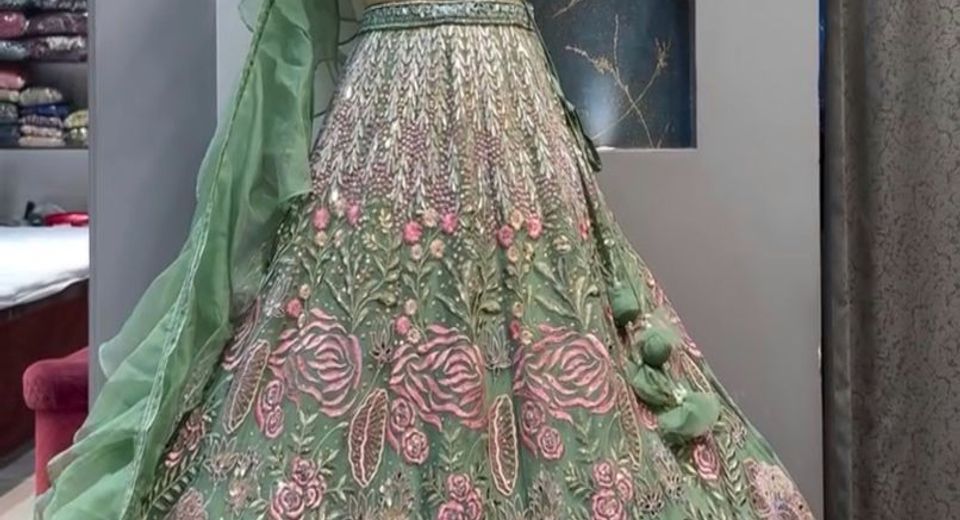
Storing a Lehenga in a Small Wardrobe Without Damaging the Embroidery becomes much easier when the outfit is treated as a group of layered textiles rather than one bulky garment. Sequins, zari, beads, dori, foil work and net panels can snag, flatten or transfer colour when they're folded carelessly. A compact wardrobe can still protect a lehenga if you remove moisture first, separate embellished surfaces, control the folds and avoid placing heavy clothes on top.
The most important rule is simple: clean and completely dry the lehenga before storage, then cushion embroidered areas with soft, acid-free tissue or a clean cotton muslin layer. The method below works for a fully stitched choli, a readymade lehenga set, a semi-stitched design and a bridal outfit that may remain unworn for several months.
Storing a Lehenga in a Small Wardrobe Without Damaging the Embroidery: Why does embroidery get damaged?
Embroidery gets damaged in a crowded wardrobe because pressure, friction, humidity and sharp embellishment edges work together over time. A folded lehenga pressed beneath denim or a stack of heavy sarees may develop crushed sequins, bent dori, pulled threads or permanent creases along the can-can and hem.
Embellishments can also damage one another. Rough zari can catch on net, while sequins can scratch satin, organza or another sequined panel when two decorated surfaces touch. A pale garment stored against a damp or dyed textile may develop colour transfer, particularly during humid monsoon weather.
Small wardrobes create one additional problem: garments are often pushed sideways until the stack becomes tightly compressed. Compression prevents air circulation and makes it difficult to remove one outfit without dragging neighbouring embroidery across the lehenga. A storage plan should reduce both the height of the stack and contact between decorated surfaces.
Storing a Lehenga in a Small Wardrobe Without Damaging the Embroidery: How should it be prepared?
A lehenga should be prepared by airing, inspecting, cleaning and drying every component before the outfit enters the wardrobe. Preparation prevents body oil, perfume, food particles and trapped moisture from becoming stains or attracting insects during storage.

Inspect the outfit after wearing
Check the lehenga, choli and dupatta under bright light, paying particular attention to the waistband, underarm area, neckline, hem and areas where jewellery touched the fabric. Look for loose sequins, open hooks, pulled threads and missing beads. Photographing loose embroidery before storage can help a professional cleaner or tailor understand the original arrangement.
Remove safety pins, brooches, artificial flowers and detachable latkans before folding. Metal accessories can leave marks or press into delicate fabric. Store detachable pieces separately in a small fabric pouch rather than inside the folded skirt.
Choose cleaning based on the material
Professional dry cleaning is the safest choice for heavily embellished bridal lehengas, silk blends, velvet, metallic fabrics and garments with glued or stitched decorations. Do not rub a sequined or zari surface at home, and don't place a lehenga in a washing machine simply because the base fabric feels washable.
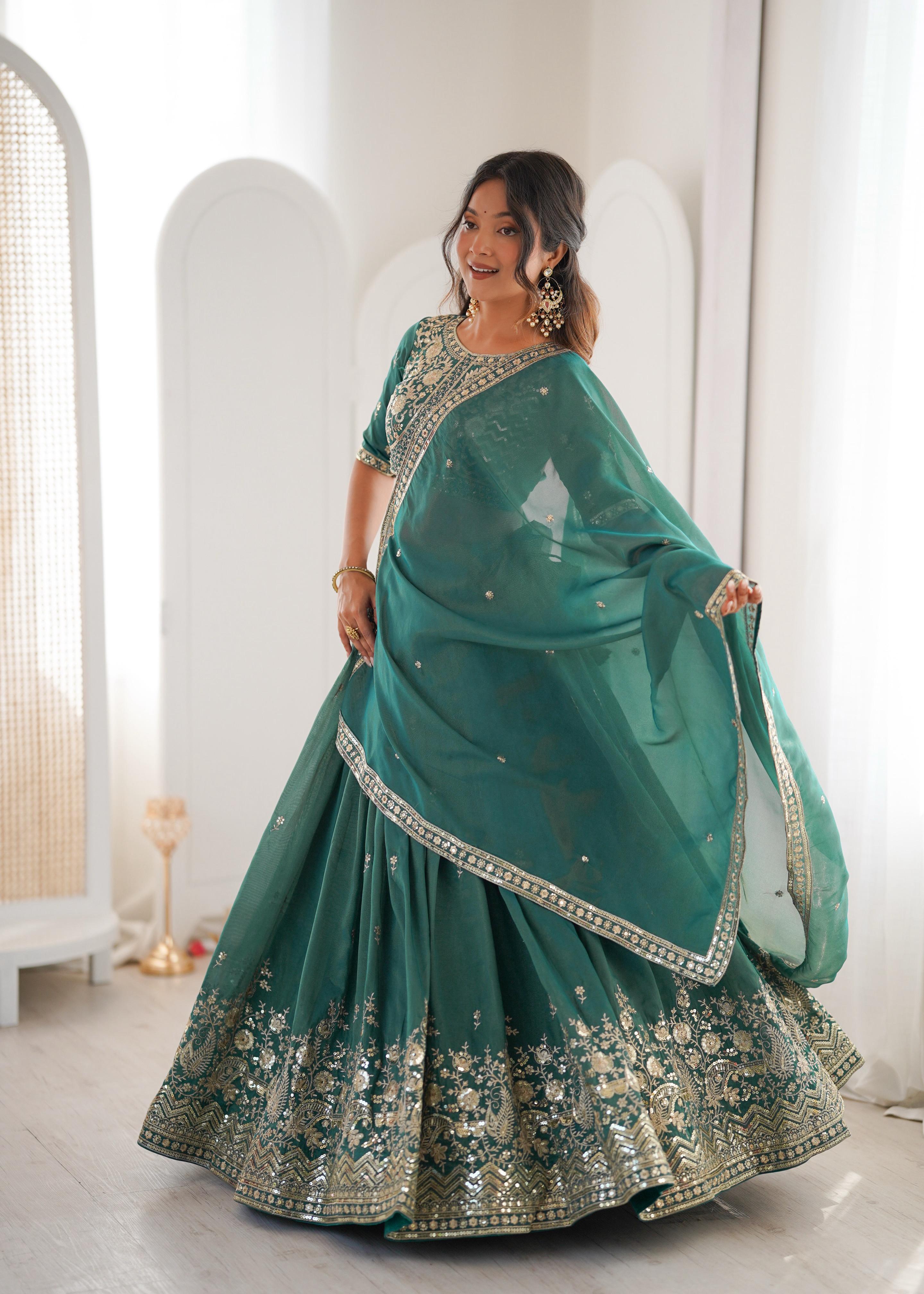
Lightly soiled polyester or synthetic pieces may sometimes be spot-tested on an inner seam, but a cleaner should handle stains near embroidery. Green Chinon Silk Sequins Embroidered Lehenga Set and Dusty Pink Satin Embroidered Lehenga Set Online combine smooth surfaces with decoration that can snag or lose shape under rough washing.
Dry before folding
Air the lehenga in a shaded, well-ventilated room for two to four hours after cleaning or wearing. Direct afternoon sunlight can fade dyed fabrics and weaken some synthetic decorations, so avoid leaving the garment on a balcony in harsh sun. Never pack a garment that feels cool and damp to the touch, because the cool sensation can indicate retained moisture rather than freshness.
Storing a Lehenga in a Small Wardrobe Without Damaging the Embroidery: What is the safest fold?
The safest folding method places soft tissue or cotton muslin between decorated surfaces, keeps the heaviest embroidery away from sharp fold lines and creates a broad, loose package rather than a tightly compressed bundle.
- Prepare a clean surface. Use a bed or table covered with a clean cotton sheet. Wash and dry your hands before handling light-coloured satin, organza or net.
- Separate the components. Fold the skirt, choli and dupatta individually. Keeping each piece separate prevents a hook, tassel or bead from pressing into another panel.
- Protect the first surface. Lay a large sheet of acid-free tissue or clean, undyed cotton muslin over the embroidery. Avoid newspaper, coloured tissue and plastic directly against the fabric because ink, dye and trapped condensation can cause damage.
- Fold along low-embellishment areas. Place the first fold through a relatively plain section whenever possible. Do not create a hard crease across a dense border, a raised motif or a line of three-dimensional beads.
- Cushion every contact point. Add a loose layer of tissue between the folded panels. Tissue should separate surfaces without packing them so tightly that sequins bend or press into the base fabric.
- Keep the package shallow. Make two or three broad folds instead of many narrow folds. A shallow package is easier to store on top of a shelf and develops fewer sharp pressure lines.
- Finish with a breathable cover. Place the folded set inside a cotton muslin bag or a breathable garment cover. Leave enough room for the fabric to lie flat rather than forcing the package into a small plastic pouch.
A full circular lehenga skirt can be folded into quarters after the lining and panels are smoothed, but a very stiff can-can should not be crushed into a narrow rectangle. For a high-volume skirt, fold the garment into a wide half-moon shape and store it horizontally. Horizontal storage distributes pressure more evenly than hanging a heavy, embellished skirt from a thin waistband.
Storing a Lehenga in a Small Wardrobe Without Damaging the Embroidery: How can space be saved?
A small wardrobe can hold a lehenga safely when the outfit is stored horizontally in a breathable, shallow stack and the wardrobe is divided into clear zones for heavy and delicate garments.
Use the top shelf for occasional wear
The top shelf is usually the best location for a lehenga worn only for weddings, festivals or family celebrations. Place the protected lehenga above daily-use clothing, but keep the stack low enough to remove the package without dragging it across the shelf. Leave a few centimetres of air around the cover if the wardrobe allows.
don't place books, handbags, suitcases or storage boxes on top of a folded embroidered lehenga. Extra weight can flatten sequins and create permanent folds in satin, organza and net.
Store the choli and dupatta separately
Separate storage reduces bulk and protects the most decorated portions of the outfit. Fold the choli flat with tissue inside the sleeves and around the neckline, then place the dupatta in a wider, looser fold so its border doesn't form a sharp line.
A smaller outfit such as Mint Embroidered Lehenga Set with Net Dupatta for Women may fit into one breathable box only if the net dupatta isn't compressed against raised embroidery. A cotton pouch inside a wardrobe shelf can be more practical than a large box, provided the pouch isn't packed tightly.
Use vertical space selectively
Vertical hanging works for a light lehenga with a stable waistband, but a heavy embellished skirt should not hang for months from a narrow loop. Long-term hanging can stretch the waistband, distort the pleats and place stress on stitched motifs.
If hanging is necessary, use a broad padded hanger and fold the skirt over the hanger bar with a muslin layer underneath. Hang the choli on a separate padded hanger, and keep the dupatta folded over a wide bar rather than allowing a narrow clip to mark the border.
Storing a Lehenga in a Small Wardrobe Without Damaging the Embroidery: Which materials help?
Breathable cotton muslin, acid-free tissue and smooth padded hangers provide the most useful protection for zari, sequins, beads and net. These materials reduce friction while allowing residual air movement around the garment.

- Undyed cotton muslin: Use muslin as an outer cover or separator. Choose a tightly woven, clean fabric that doesn't shed lint.
- Acid-free tissue: Use tissue between embroidered folds, especially around dense borders and metallic work. Replace tissue if it becomes yellowed, dusty or damp.
- Padded hangers: Use broad hangers for cholis and light skirts. Thin wire hangers can leave pressure marks and distort shoulder seams.
- Breathable storage boxes: A rigid fabric-sided or archival box can protect a folded set, but the box must be large enough to avoid crushing the embroidery.
- Silica gel: A sealed silica-gel sachet placed beside the covered garment can help reduce local humidity. Do not place loose powder or a leaking sachet directly on the fabric.
Plastic covers are suitable for short transport, not for long-term wardrobe storage. Plastic traps humidity and can make sequins, metallic trims and glued decorations more vulnerable in a warm cupboard. Cedar blocks or neem leaves may repel insects, but they should be kept in a separate breathable pouch because direct contact can transfer oils or colour.
Garments such as Cream Peacock Embroidered Net Lehenga Set for Women and Pastel Grey Embroidered Butterfly Net Lehenga Set need especially careful separation because net can catch on zari, hooks and rough tissue edges. A smooth muslin layer should cover the embroidery before the package is folded.
Storing a Lehenga in a Small Wardrobe Without Damaging the Embroidery: How often should it be checked?
A stored lehenga should be checked every three to four months, and the garment should be aired in shade during each inspection. Regular checks reveal dampness, insects, colour transfer, flattened embroidery and loose threads before a small problem becomes permanent.

Choose a dry day for inspection. Remove the cover, unfold each component on a clean surface and look between pleats, inside sleeves and around the waistband. Replace damp tissue or muslin immediately. If the garment smells musty, keep it in a shaded ventilated room until fully dry and consult a professional cleaner if the odour remains.
Rotate the main fold lines every few months when the fabric allows it. Changing the position of the fold prevents one crease from receiving pressure for an entire year. Never iron directly over sequins, zari, beads or foil work. A professional can steam or press the reverse side using a protective cloth and an appropriate temperature.
Collections designed around specific celebrations can also help organise storage by use rather than by colour. Mehendi Lehengas and Green Lehengas may be placed in a clearly labelled seasonal section, while Yellow Lehengas can be grouped for Haldi ceremony dressing. Ready Made Lehenga and Semi Stitched Lehengas Collection pieces should be stored according to their construction, because a fully stitched choli and an adjustable semi-stitched skirt require different folding space.
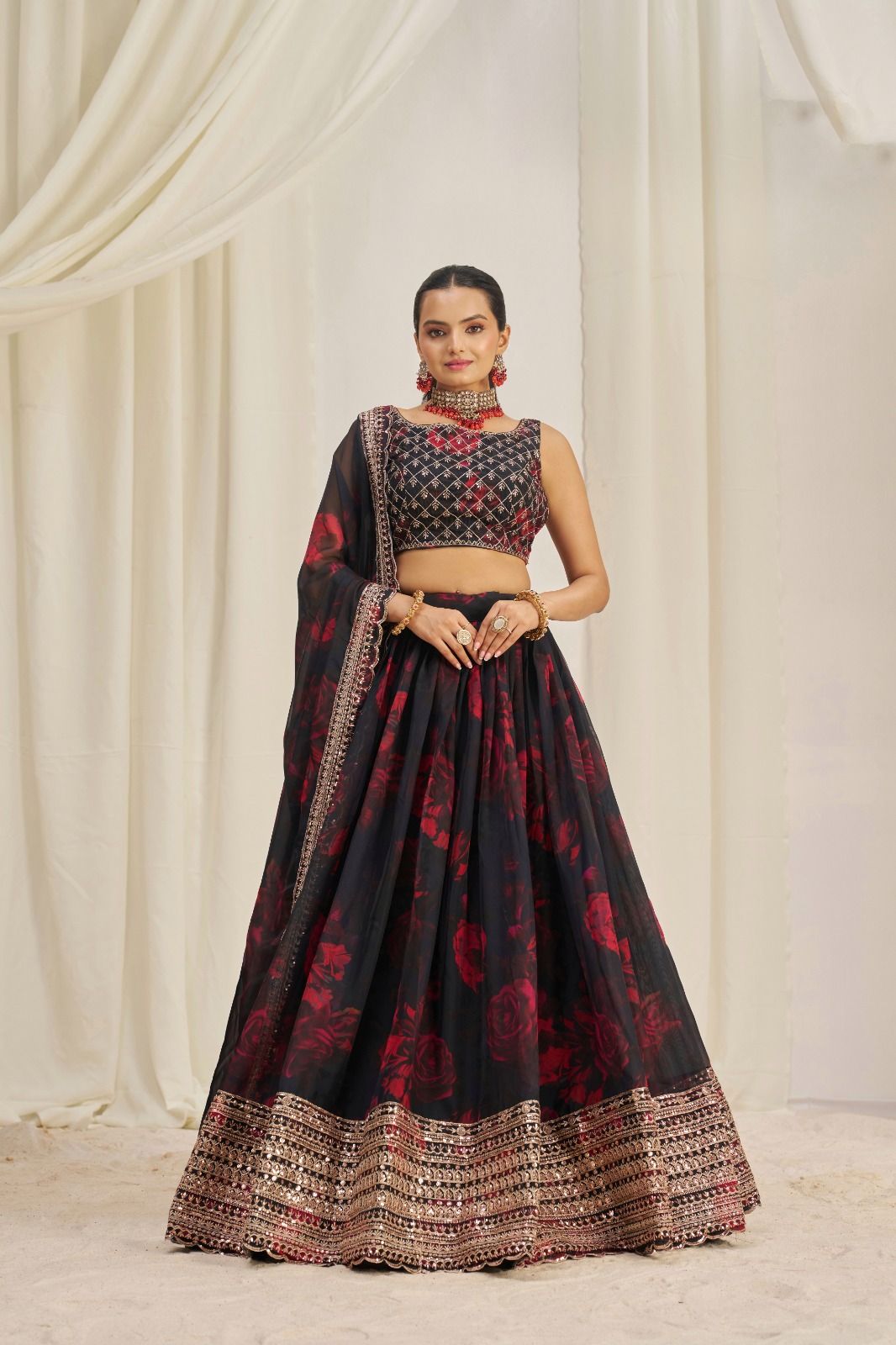
Other decorative surfaces need the same restraint. Floral Digital Printed Organza Lehenga with Zari, Dori and Sequin Embroidery should be folded with organza panels supported by tissue, while Moonlight Charm Foil Sequin Organza Lehenga should be kept away from rough hook fasteners. Lime Floral Embroidered Butterfly Net Lehenga Set benefits from a smooth breathable cover because butterfly net can catch easily on adjacent garments.
Good storage doesn't require a large dressing room. A clean, dry garment, two or three broad folds, breathable separators, limited stacking and quarterly inspections are enough to protect most embroidered lehengas in a compact wardrobe. The same habits also make shopping for a fully stitched choli, a designer set or a bridal lehenga more practical because the wardrobe can accommodate the garment without sacrificing its surface work.
Common Questions About Storing an Embroidered Lehenga in a Small Wardrobe
Can I store an embroidered lehenga in a plastic garment bag?
A plastic garment bag is suitable for short transport but not for long-term storage. Plastic traps humidity, so use a breathable cotton muslin cover for wardrobe storage and keep the lehenga completely dry first.
Should a heavy bridal lehenga be folded or hung?
A heavy bridal lehenga should usually be folded horizontally with acid-free tissue or muslin between embellished surfaces. Long-term hanging can stretch the waistband and distort the skirt, especially when the outfit contains dense zari, beads or sequins.
How often should I take a stored lehenga out of the wardrobe?
Inspect and air a stored lehenga every three to four months on a dry day. Check the folds, waistband, hem, net panels and tissue for dampness, insects, colour transfer or loose embroidery.
How do I store a lehenga with a net dupatta?
Fold the net dupatta separately and place smooth muslin or acid-free tissue between it and any zari, sequins or hooks. Avoid tight folds and narrow clips because net can snag and develop permanent pulls.
Can I iron an embroidered lehenga at home?
Do not place a hot iron directly on sequins, zari, beads, foil work or net. A professional cleaner or presser should handle heavily decorated garments; light pressing should be done from the reverse side through a protective cloth at a suitable temperature.
Where should a lehenga be placed in a small wardrobe?
A top shelf is generally suitable for a folded lehenga because occasional-wear garments are disturbed less often there. Keep the package shallow, leave some air around it and never place heavy boxes, handbags or books on top.


