

Small Motifs vs Large Motifs for Embroidery Scale and Body Proportion can change the apparent balance of an outfit before colour, fabric or neckline even enters the picture. A dense field of tiny butis creates a different visual rhythm from three oversized florals, even when both garments use the same thread and base colour. The useful question isn't whether one motif size is universally flattering, but whether the embroidery scale supports your height, frame, garment length and preferred visual emphasis.
Motif scale refers to the size and spacing of individual embroidered elements, while body proportion describes how the torso, shoulders, hips and legs relate visually. A motif can be small but heavily repeated, or large but widely spaced. Those two arrangements don't create the same effect. Understanding both measurements helps you choose an embroidered saree, kurta set, anarkali or gown with intention rather than relying on a vague rule about petite or fuller figures.
What does embroidery scale do to body proportion?
Embroidery scale directs the eye and can make a body area appear broader, longer, shorter or more prominent. Large motifs create noticeable visual stops, while small motifs produce a finer, more continuous texture.
A large floral motif on the chest draws attention to the bust and upper torso. A wide embroidered border at the hem creates a strong horizontal line that can visually shorten a long skirt or anarkali. Vertical vines, narrow panels and repeated motifs placed from shoulder to hem encourage the eye to travel up and down, which can make a garment appear longer.
Small motifs usually distribute attention more evenly across a surface. Tiny butis on a straight kurta can keep the silhouette calm, especially when the garment already has a strong sleeve, neckline or dupatta detail. Small embroidery doesn't automatically make a person look slimmer, however. Closely packed small motifs can form a busy, high-contrast surface that looks visually dense.
Large embroidery doesn't automatically add size either. A single large motif surrounded by generous plain fabric can look lighter than hundreds of tiny sequins covering the same area. Spacing, contrast, shine and placement matter as much as the motif's measured width.
Small Motifs vs Large Motifs for Embroidery Scale and Body Proportion
Small motifs generally suit delicate, detailed styling and uninterrupted silhouettes, while large motifs work best when their placement and spacing are deliberately balanced with the wearer and garment.
For a practical starting point, compare the motif with the garment's visible panel rather than with the whole body. A 3-centimetre buti on a narrow sleeve may look moderate, while the same 3-centimetre buti repeated across a wide skirt may read as tiny. A 15-centimetre flower can look elegant on the lower half of a saree but overwhelming on a small yoke.
- Small motifs: usually measure about 1 to 5 centimetres and include tiny butis, dots, miniature leaves and fine geometric repeats.
- Medium motifs: commonly measure about 6 to 12 centimetres and suit many kurta fronts, blouse panels and dupatta layouts.
- Large motifs: often measure 13 centimetres or more and include oversized florals, peacocks, paisleys and statement medallions.
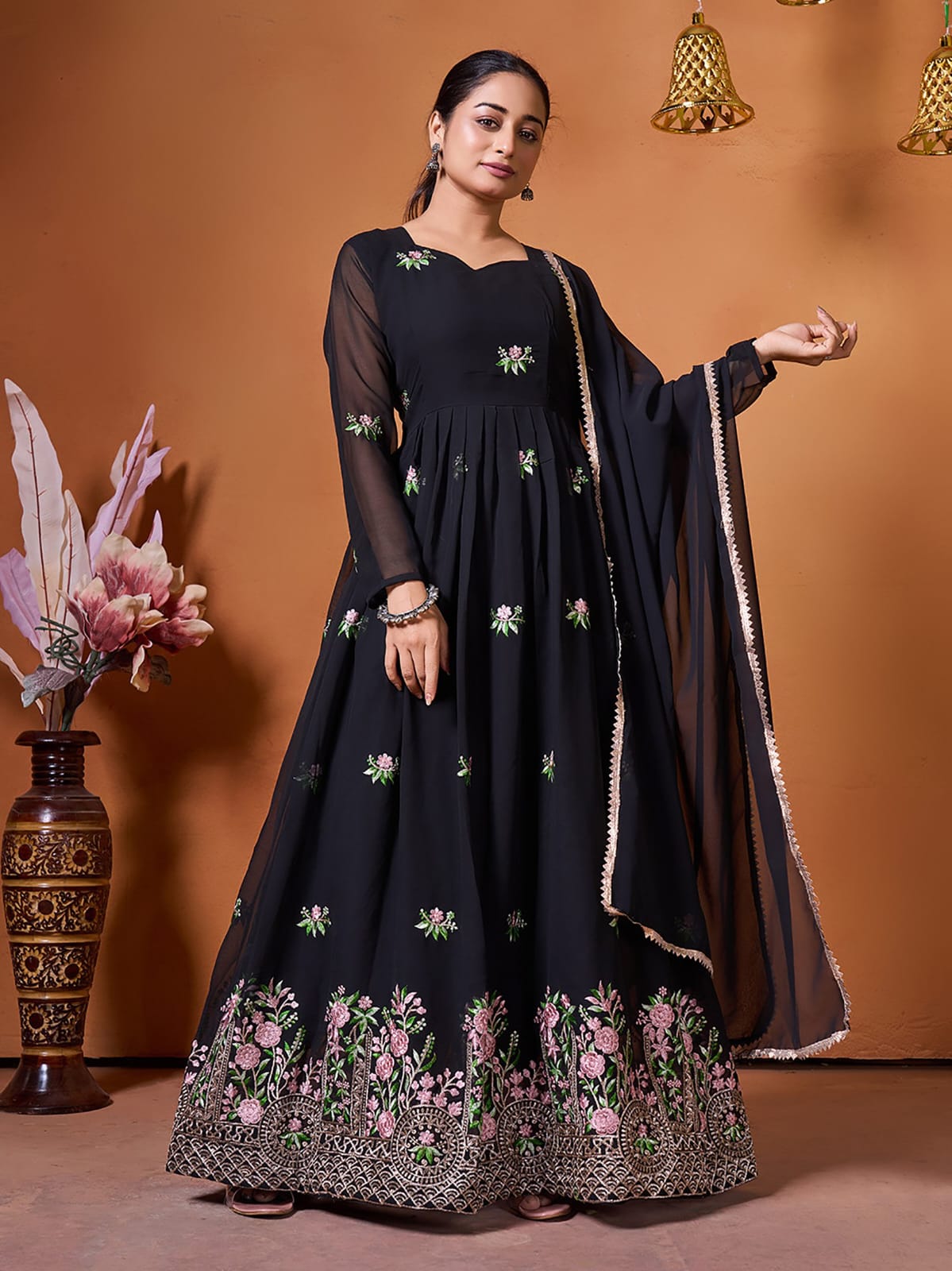
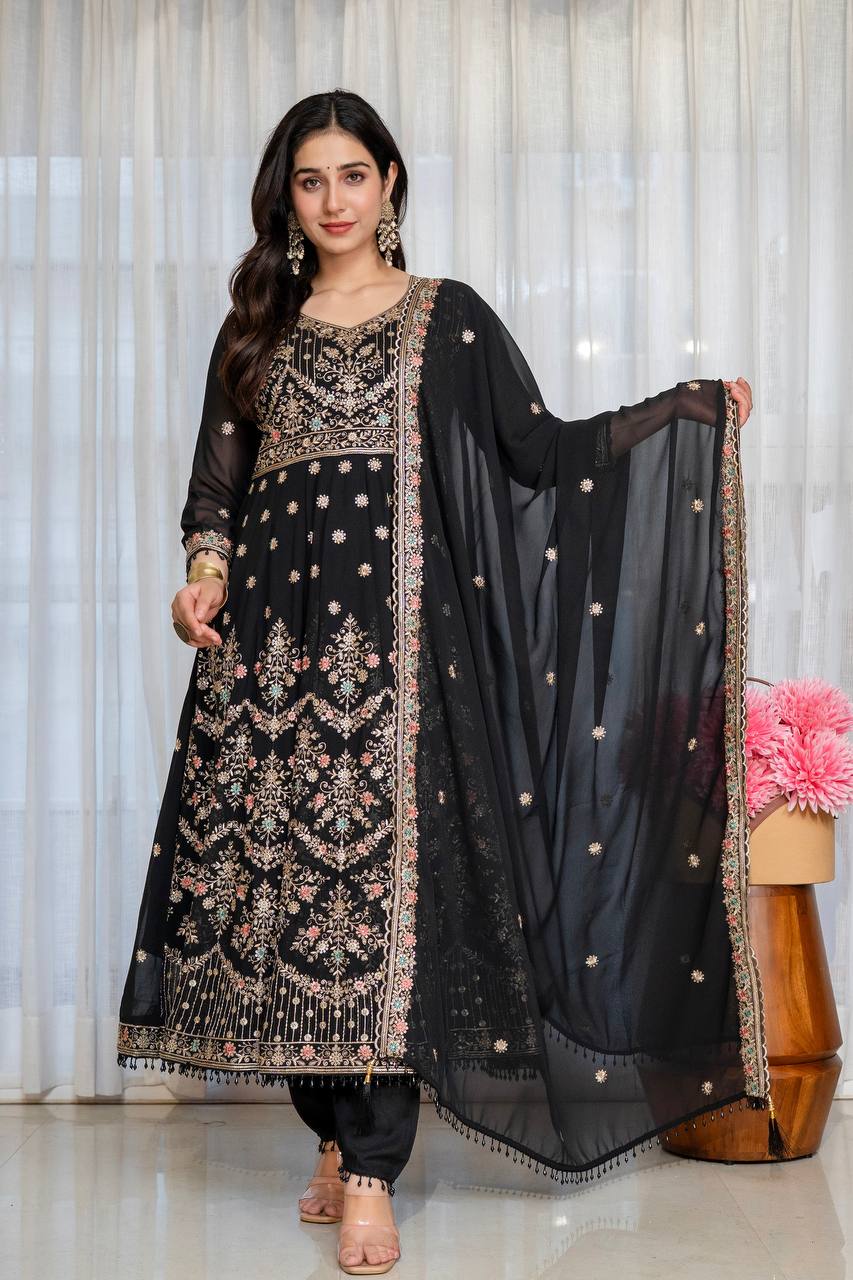
These measurements are useful benchmarks, not rigid rules. A 4-centimetre motif with metallic zari and sequins may command more attention than a muted 12-centimetre cotton applique. Black Anarkali Suit Set with Sequin Zari and Moti Lace Work demonstrates how reflective materials can increase the apparent scale of a detailed surface even when individual floral or ornamental elements are not very large.
Which motif scale works best for petite frames?
Petite frames usually benefit from small to medium motifs, moderate spacing and embroidery that preserves visible vertical length.
Small butis on a long straight kurta, narrow vertical vines on a dupatta or a restrained border can keep the outfit in proportion. A very large motif isn't forbidden, but one oversized flower occupying most of a short bodice can make the garment appear to wear the person rather than the reverse. Large motifs work more successfully when they're placed below the waist, split across panels or surrounded by plain fabric.
Garment length changes the calculation. A petite wearer in a floor-length anarkali has more vertical surface available for a large motif than a wearer in a cropped kurta. A full-length garment can carry a large lower panel if the bodice remains relatively quiet. A short kurta with a wide contrast border may need a smaller motif to avoid several competing horizontal breaks.
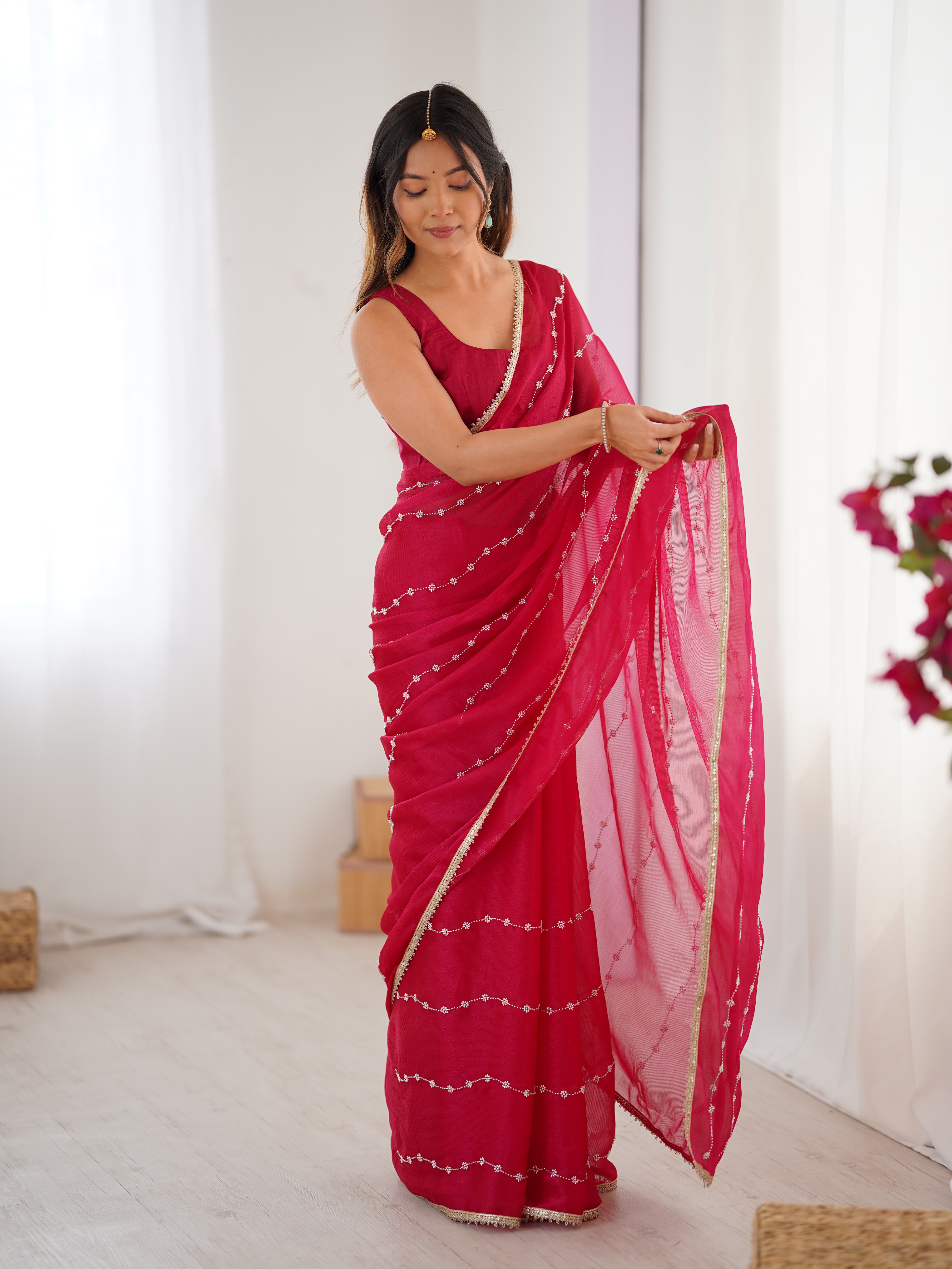
Pink Rangoli Silk Saree with Cording Embroidery and Double Sequins Work offers a useful styling lesson: raised cording and double sequins already create shine and texture, so the saree can remain balanced when jewellery and blouse details are kept controlled. Petite wearers can also choose a similar statement surface by keeping the blouse neckline clean and avoiding an equally heavy dupatta border.
When do large motifs flatter taller or fuller proportions?
Large motifs often flatter taller or fuller proportions when the garment has enough surface area and the embroidery is spaced rather than crowded.
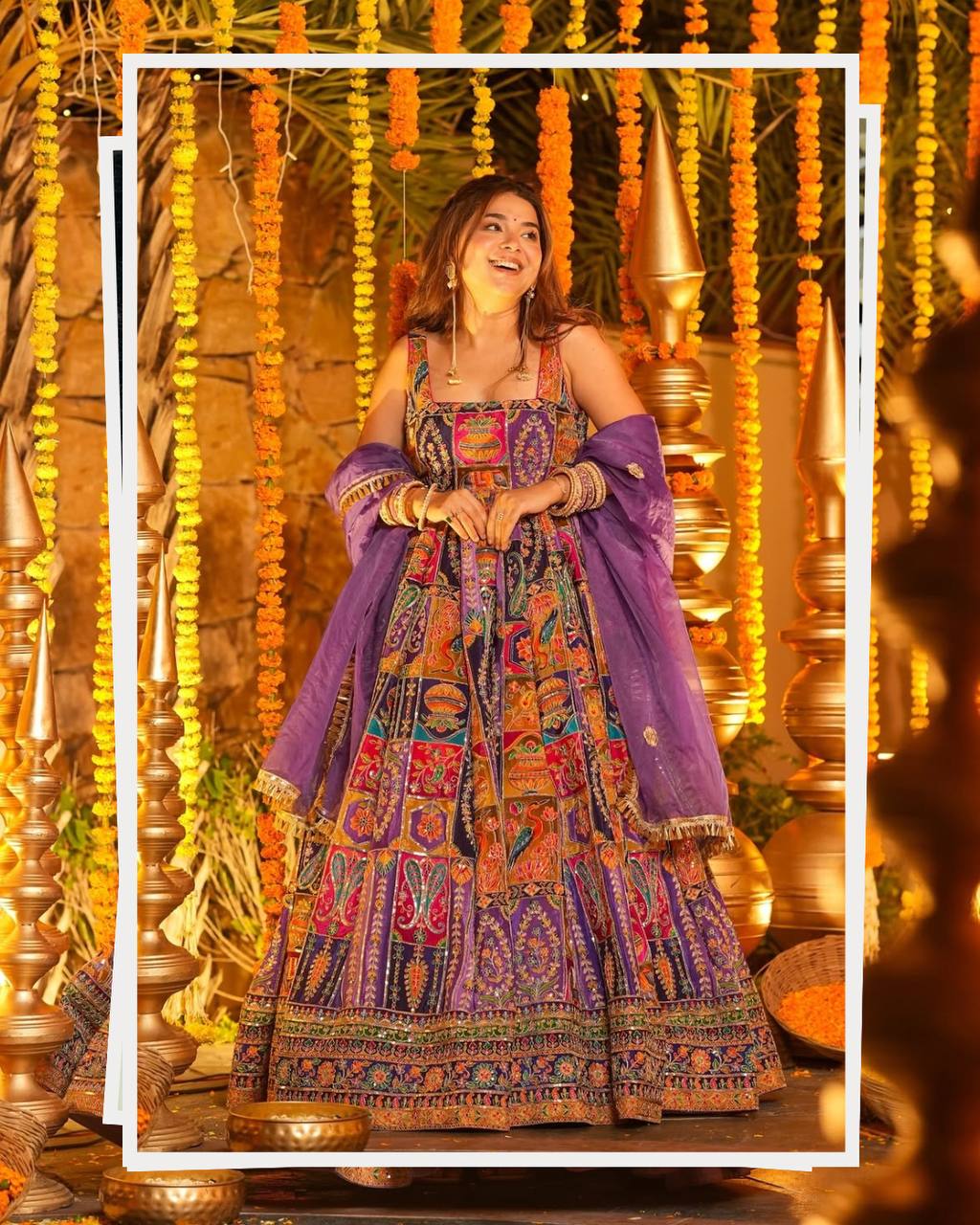
A tall frame can carry an oversized floral arrangement on a saree pallu, skirt panel or floor-length gown without losing the motif's visual clarity. A fuller frame may also benefit from larger, clearly separated motifs because the eye reads the garment as a few intentional zones instead of a tightly packed field. The best result comes from placement that follows the garment's construction.
For example, a large motif centred on the mid-torso creates a focal point. If the wearer prefers less attention at the bust, the same motif can be moved towards the lower skirt, side hem or pallu. A vertical arrangement down one side can create direction, while a wide band across the widest part of the body can emphasise width.
Elegant Black Ethnic Gown with Floral Embroidery shows why garment length matters. Floral embroidery spread across a long gown can look proportional because the eye has ample vertical space to absorb the design. The styling becomes more balanced when the earrings, footwear and hairstyle don't introduce several additional oversized shapes.
Large motifs are especially effective on fabrics with enough body to hold their outline. Vichitra silk can support a defined embroidered element, while soft cotton may create a more relaxed impression. Maroon Embroidered Vichitra Silk Kurta Pant Set uses the richness of silk and a deeper colour to carry visible embroidery without requiring an overloaded silhouette.
How should embroidery placement change across garments?
Embroidery placement should follow the garment's strongest structural lines: the neckline and yoke on a kurta, the border and pallu on a saree, and the panels and hem on a lehenga or anarkali.
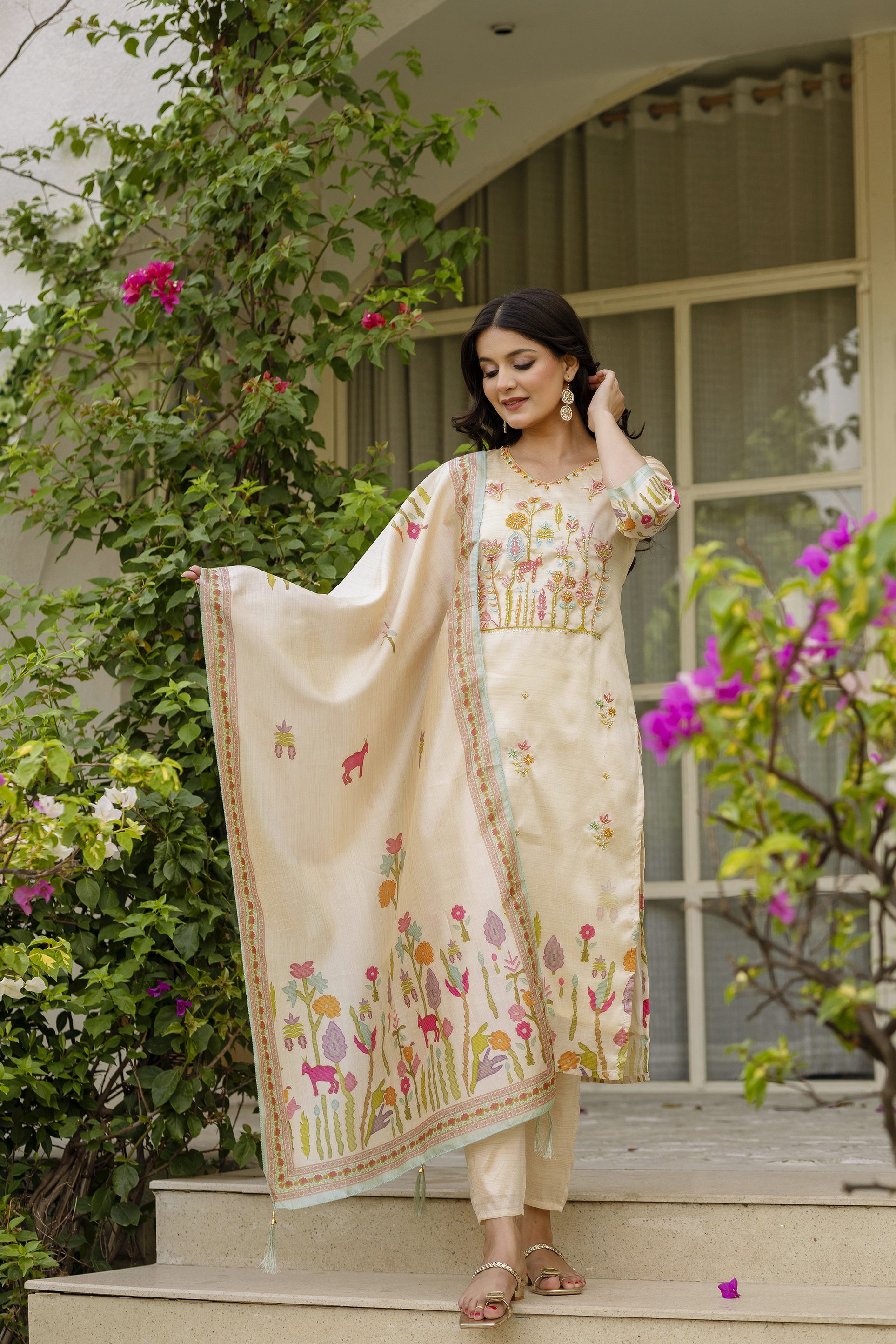
Kurta and salwar sets
Kurta fronts with small repeated motifs look polished when the neckline, sleeves and dupatta remain relatively simple. A medium motif placed only on the yoke can frame the face without adding equal emphasis to the entire torso. Brown Embroidered Cotton Kurta Pant Dupatta Set Women illustrates how a cotton set can use embroidery as surface interest while retaining an easy daytime character.
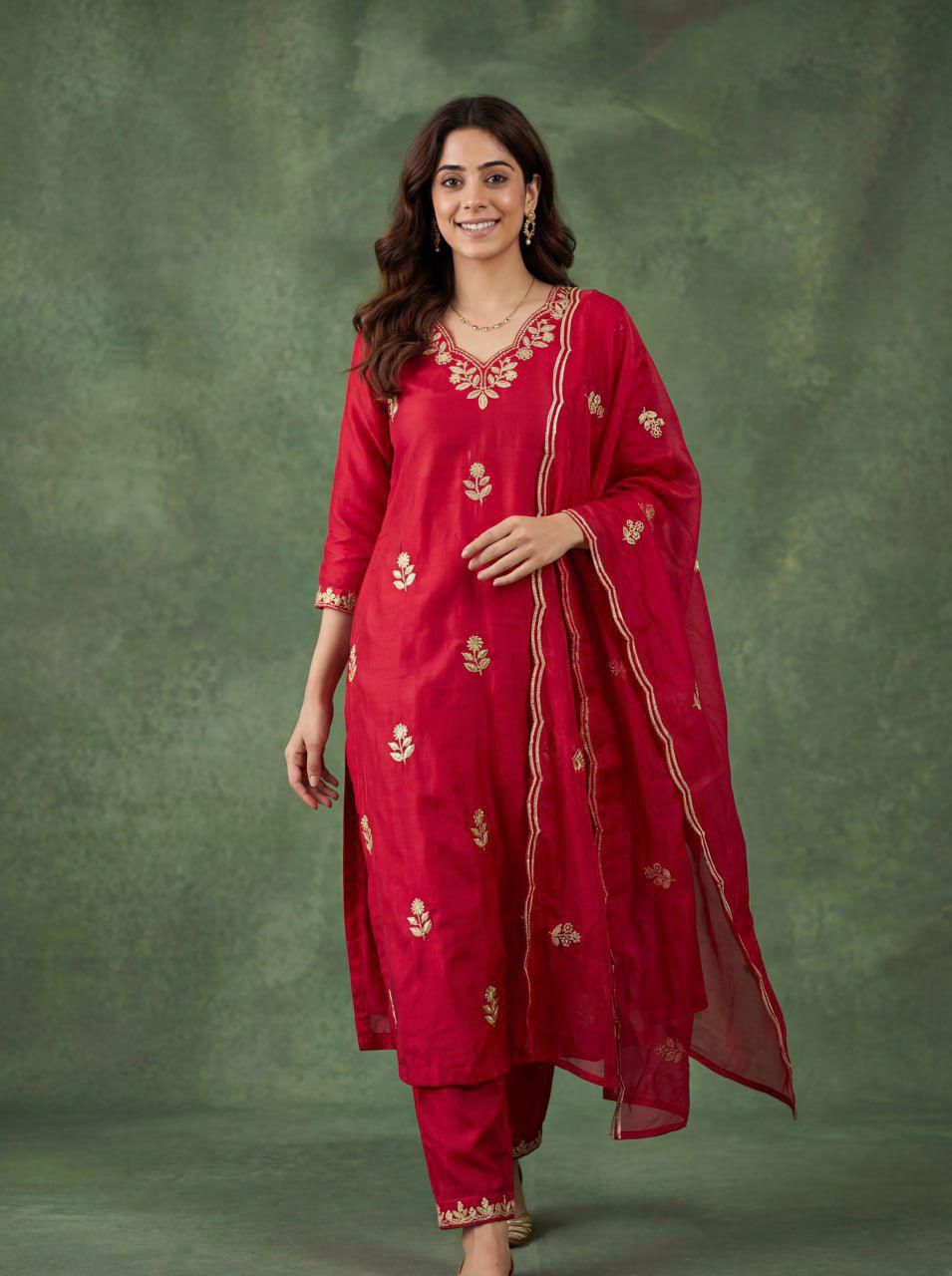
Red Cotton Embroidered Kurta Pant Dupatta Set Women makes colour an important part of scale selection. Strong red already creates visual impact, so medium or small embroidery can provide definition without competing with the base colour. If the embroidery is concentrated around the neckline, a plain or lightly bordered dupatta creates useful breathing room.
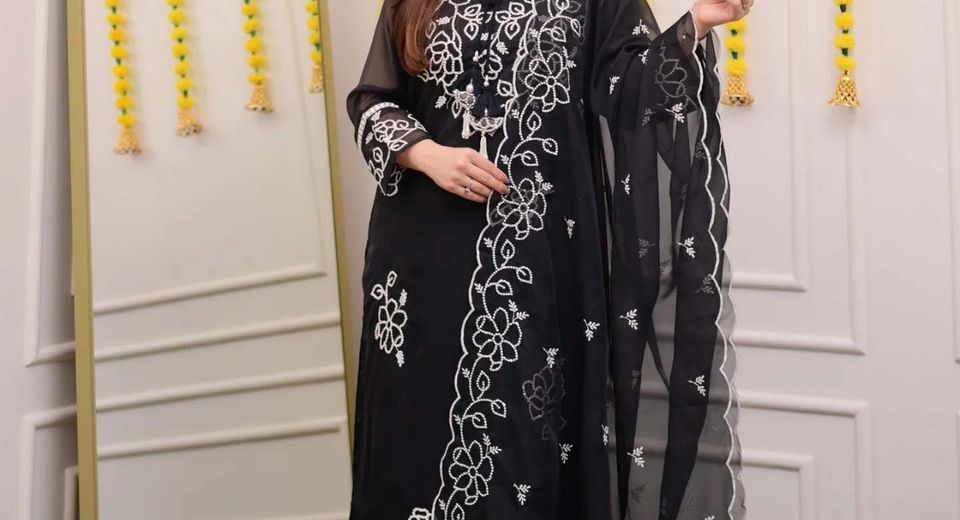
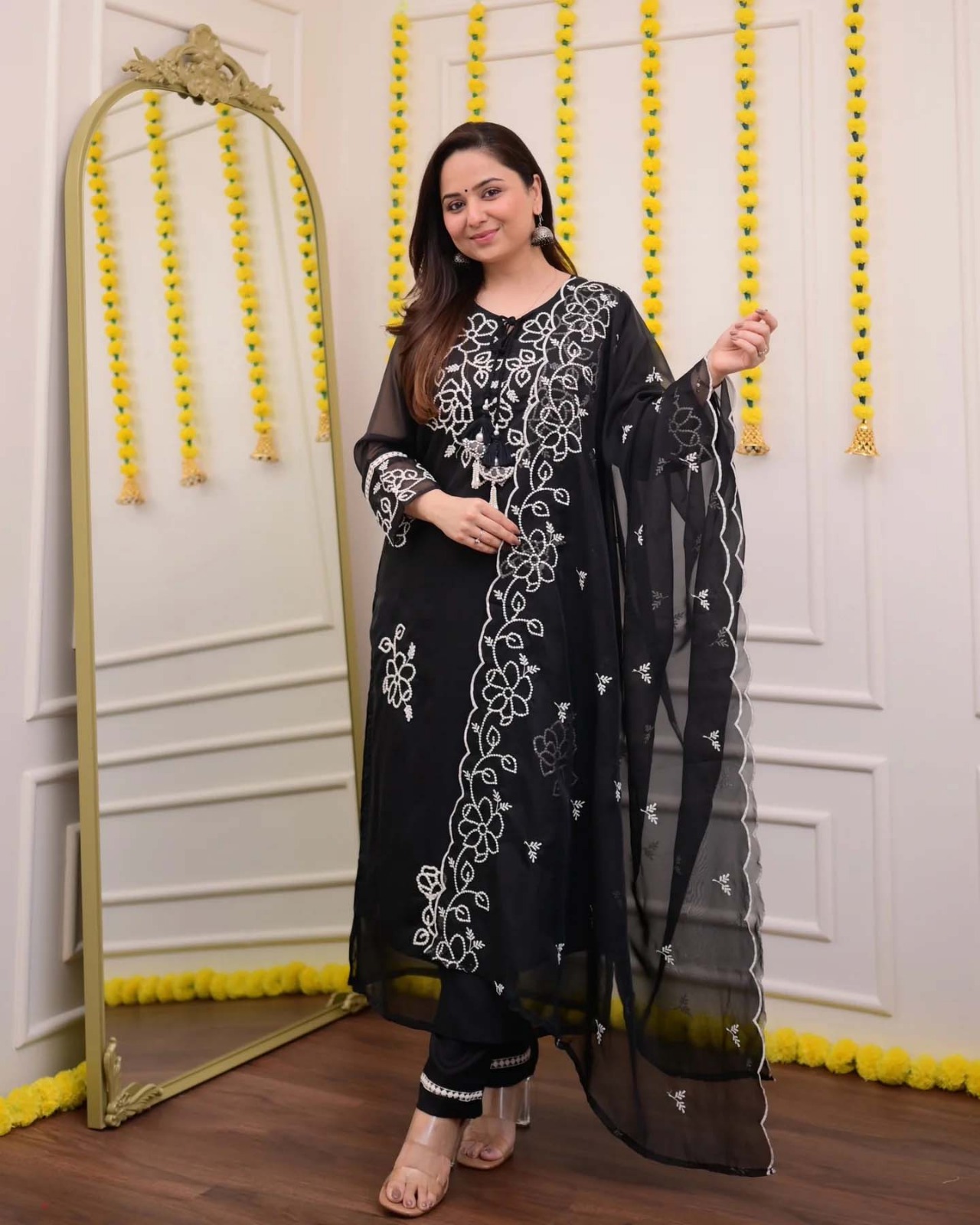
White embroidery on a dark base produces high contrast, which can make small motifs look sharper and more numerous. Stylish Black Kurta Pant Dupatta Set with White Embroidery therefore needs to be judged by contrast as well as motif size. A wearer wanting a quieter effect can choose minimal jewellery and let the white embroidery remain the main focal point.
Sarees and blouses
Sarees divide the body into visible zones, so a large motif on the pallu doesn't necessarily affect proportion in the same way as a large motif across the blouse. A statement pallu can be balanced with a quieter blouse, while a heavily embroidered blouse may need a simpler saree body.
A small buti across a saree body creates continuity and allows the border or pallu to lead. A wide zari border adds a horizontal break at the feet, which can be elegant with a long drape but may visually reduce leg length when paired with a short blouse and low pleat placement. Banarasi silk with large zari motifs often benefits from a simple blouse cut because the weave already supplies scale and shine.
Anarkalis and gowns
Anarkalis and gowns need attention to the point where the skirt begins to flare. Large embroidery above the flare emphasises the waist and torso, while large panels below the flare make the lower half the focal area. Black Anarkali Suit Set with Sequin Zari and Moti Lace Work uses sparkle and lace to establish several visual lines, so a clean dupatta drape can prevent the upper body from appearing crowded.
How do spacing, shine and contrast alter motif size?
Spacing, shine and contrast can make embroidery appear substantially larger or smaller than its physical measurement.
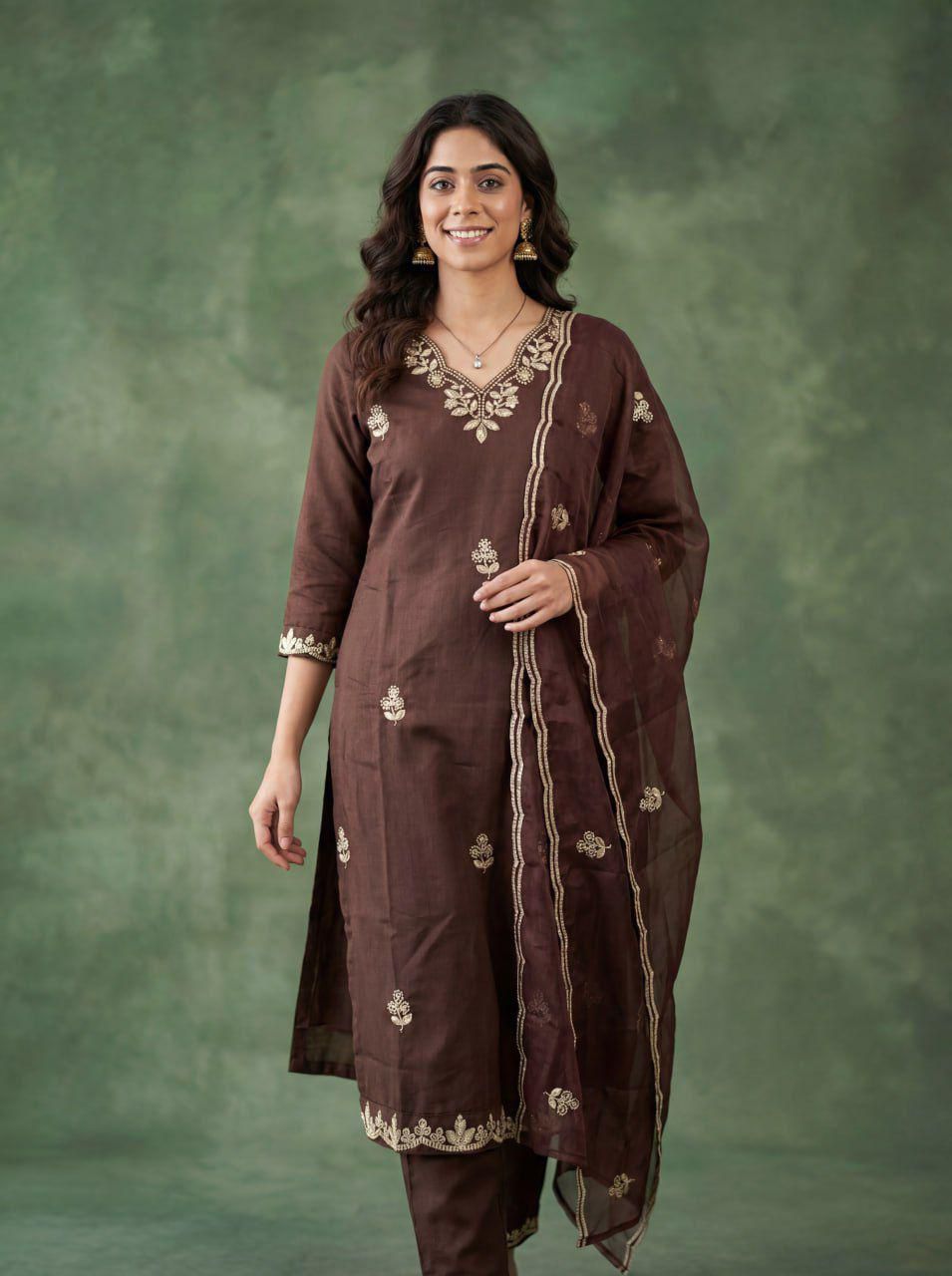
Closely packed motifs create a near-solid texture. Spaced motifs allow the base fabric to show and make each element easier to read. A field of tiny gold sequins may appear heavier than a few large matte thread flowers because metallic reflection multiplies the number of points that catch the eye.
Contrast has a similar effect. White embroidery on black creates crisp edges and a stronger visual pattern than tonal black embroidery on black. Brown thread on brown cotton can support a quieter look even when the motifs are medium-sized. Premium Brown Cotton Kurta Set with Chanderi Dupatta is a useful example of how a lighter, more translucent Chanderi dupatta can separate the embroidered kurta from the plain space around it.
Texture also changes perceived scale. Cording gives motifs a raised outline, zari introduces reflective definition, and sequins create repeated flashes. Moti work adds rounded highlights that can make a floral arrangement feel more ornate. When three or more of these techniques appear together, reduce competing accessories before assuming the motif itself is too large.
What should you check before buying embroidered ethnic wear?
Before buying, check a garment photograph at full length, inspect the embroidery's placement, and compare motif width with the visible panel where it will sit.
- Measure the motif: Use a ruler or the listed garment dimensions to estimate whether a flower, buti or paisley is small, medium or large.
- Check the repeat: Note whether motifs are scattered, packed, aligned in columns or arranged in a broad band.
- Locate the focal area: Identify whether the strongest embroidery sits at the bust, waist, hip, hem, shoulder, pallu or sleeve.
- Assess the garment length: A long Anarkali, gown or saree pallu can absorb larger designs than a short kurta panel.
- Separate shine from size: Zari, sequins and crystals can make medium motifs look visually dominant.
- Plan the supporting pieces: Match a statement embroidered garment with a calmer blouse, dupatta, jewellery or footwear where needed.
A useful fitting test is to photograph the outfit from three metres away. Close-up images reveal thread detail, but distance reveals whether the motif creates a balanced overall rhythm. A garment that looks delicate in a product photograph may become visually dense when repeated across the entire front.
How can accessories balance small and large embroidery?
Accessories should repeat the embroidery's visual weight without competing with its focal point.
Small-motif outfits can accept a more noticeable necklace, textured dupatta or statement earrings because the garment surface leaves room for an accessory to lead. Large-motif outfits generally look more coherent with one dominant accessory category. For example, large floral embroidery and chandelier earrings may work together, but adding a heavily embellished choker, ornate bangles and a large hair accessory can divide attention.
Dupatta placement changes perceived scale. A plain Chanderi dupatta can soften a dense kurta front, while a heavily bordered dupatta adds another strong line. A narrow drape close to the body supports vertical direction; a wide spread across the shoulders increases the visual width of the upper frame.
Colour matching also matters. Tonal accessories reduce contrast and let large motifs appear more integrated. Contrasting accessories create a second focal point, which can be useful when the embroidery sits away from the face. A dark embroidered kurta with bright earrings directs attention upward, while a decorated hem with understated jewellery keeps attention lower.
Which practical rule is safest when choosing motif scale?
The safest rule is to match motif size to garment surface, place the strongest design where you want attention, and control contrast when the embroidery is dense or reflective.
Small motifs suit narrow panels, shorter garments and understated daytime dressing, but they need enough spacing to avoid a busy result. Large motifs suit long surfaces and statement dressing, but they need plain breathing room and thoughtful placement. Medium motifs are the most adaptable choice for a kurta yoke, saree body or dupatta because they provide detail without dominating every proportion.
Personal preference remains important. A petite wearer can absolutely wear a large floral saree, and a tall wearer can look elegant in delicate butis. The deciding factors are motif placement, negative space, contrast, fabric structure and the complete outfit rather than height or body size alone. Treat embroidery scale as a design tool, and each choice becomes easier to evaluate before purchase.
Common Questions About Choosing Embroidery Motif Size
Are small embroidery motifs better for petite women?
Small to medium motifs are often easy to balance on a petite frame because they preserve visible garment length. Large motifs can also work when they are spaced, placed on a long panel or concentrated below the waist rather than covering a short bodice.
Do large motifs make the body look bigger?
Large motifs can draw attention to the area where they are placed, but they do not automatically make the body look bigger. Spacing, contrast, shine and the width of the embroidered panel determine whether the design appears bold, balanced or visually dense.
Which embroidery is best for a fuller body shape?
Medium or large, well-spaced motifs often create a clearer visual rhythm on a fuller frame than tightly packed tiny motifs. Vertical arrangements and embroidery placed on preferred focal areas can support balance, while wide horizontal bands across the broadest area may add emphasis there.
Can petite women wear large floral embroidery?
Yes, petite women can wear large floral embroidery when the motif has surrounding plain fabric and the garment provides enough vertical surface. A large pallu motif, lower skirt panel or single yoke design is usually easier to balance than several oversized motifs across a short kurta.
Does zari make embroidery look larger?
Zari can make embroidery look visually larger because its reflective surface catches light and defines the motif's edges. Sequins, crystals and mirror work have a similar effect, so shiny embroidery often needs simpler accessories and more surrounding space.
How do I choose embroidery for a saree blouse?
Choose blouse embroidery according to the saree's border, pallu and overall motif density. A heavily embroidered blouse pairs well with a quieter saree body, while a statement saree pallu usually looks balanced with a simpler blouse neckline and fewer competing details.


