

A Slippery Satin Saree? Draping Changes That Give You More Control begins with one practical fact: satin moves differently from cotton, raw silk and textured georgette. The smooth surface creates a graceful fall, but the same low friction can make waist pleats spread, the pallu slide from the shoulder and the lower edge twist while walking. Changes to the base layer, pleat structure and pin placement make a satin saree considerably easier to manage without removing its fluid shine.
Satin sarees are particularly sensitive to rushed draping because pressure gathers in small areas. A tight knot can leave a visible ridge, while one pin can pull a printed section out of alignment. The most reliable method creates gentle resistance underneath, distributes weight across several points and leaves enough ease for sitting, stairs and arm movement.
Slippery Satin Saree? Draping Changes That Give You More Control: Why Does Satin Move?
A satin saree slips more readily because its smooth woven face creates less friction against a blouse, petticoat and shoulder. Glossy surfaces also make small changes in tension visible, so loose pleats and a shifting pallu appear faster than they would in a matte cotton saree.
Satin describes a weaving method rather than one single fibre. Polyester satin is common in accessible printed sarees, while silk satin has a different hand-feel and may require gentler care. Both can glide over a smooth nylon or polyester petticoat, especially when the wearer is walking quickly or sitting down.
Three movements cause most problems. Downward migration begins when the saree slides over an underskirt that's too smooth or loosely tied. Sideways movement begins when broad pleats are tucked without enough compression. Shoulder drift begins when a pallu is placed over a polished blouse and left unsupported.
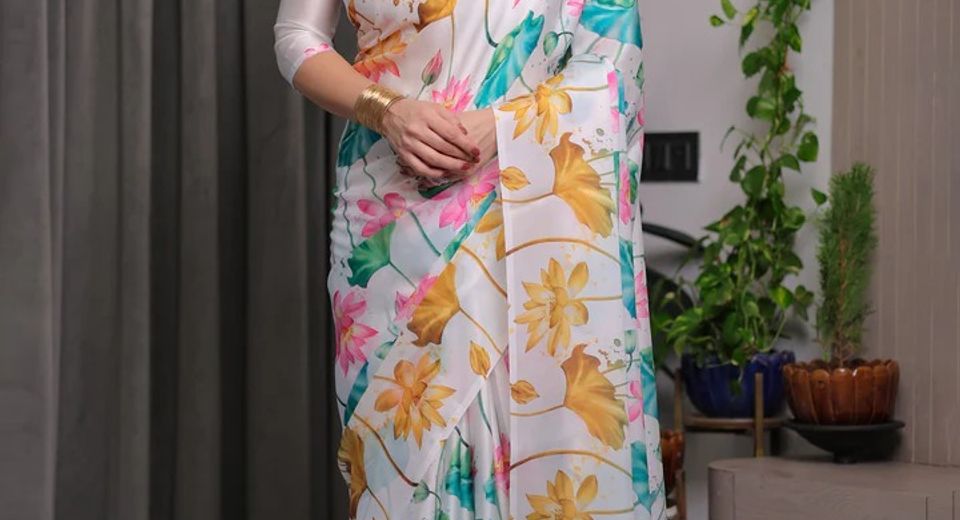
Print placement can add another complication. A dense floral border may make one edge heavier, and a digital print can make a fold line more noticeable. The White Satin Floral Print Saree with Unstitched Blouse Piece shows why an even foundation matters: a light base makes uneven pleat edges and shadow lines easier to see.
Slippery Satin Saree? Draping Changes That Give You More Control: Which Petticoat Works?
A fitted cotton, cotton-satin or lightly textured petticoat usually gives a satin saree more grip than a very smooth nylon or polyester underskirt. The petticoat should sit securely at the natural waist and end close to the ankle without creating a bulky lower edge.

Choose a drawstring or adjustable waistband that stays level as you walk. A petticoat that loosens during wear allows the entire saree to descend even when the outer drape is pinned correctly. Tie the waist firmly enough to hold the garment, but leave room for normal breathing and sitting because excessive tightness creates a visible ridge beneath satin.
A shaped petticoat can improve the lower fall because it follows the body instead of forming a wide cone. The lower edge should not flare dramatically unless the saree has enough fabric to cover it. A narrow or gently A-line underskirt often creates cleaner front pleats for a straight satin fall.
Test the base before completing the drape. Wrap a small section of the saree around the petticoat and move your hand across the layers. If the satin glides with almost no resistance, use a cotton voile or cotton lining layer underneath rather than adding many pins. Avoid adhesive products directly on satin because residue can mark the surface and attract dust.
Slippery Satin Saree? Draping Changes That Give You More Control: How Tight Should the First Wrap Be?
The first wrap should be firm enough to stay at the waist but loose enough to allow one comfortable step and a seated position. Keep the lower edge parallel to the floor and place the saree at ankle level before making the final tuck.
Make the first round a controlled foundation instead of a tight spiral. Tuck the upper edge evenly, check that the saree doesn't slope at the back, and walk for a few seconds before forming pleats. Satin often reveals a poor first wrap only after the pallu is arranged, when correcting the waist becomes inconvenient.
Slippery Satin Saree? Draping Changes That Give You More Control: How Should You Pleat?
Make narrower, evenly compressed pleats and secure the top section temporarily before final tucking. Six to eight front pleats measuring approximately 10 to 12 centimetres each are a useful starting point, although the exact number depends on saree width and body proportions.

Lay the pleats on a flat surface or smooth bed rather than forming them entirely while standing. Align the lower edges first, then run your fingers down the folds so every pleat faces the same direction. Satin responds better to light, repeated alignment than to one hard squeeze.
Use a temporary fabric-safe clip at the upper edge while positioning the pleats at the waist. A wide, blunt clip is less likely to leave a sharp impression than a narrow metal clamp. Remove the temporary clip after the saree is tucked and replace it with a concealed safety pin if the bundle still moves.
don't over-pleat the front. Very narrow pleats may look tidy while standing but can fan out when you sit or climb stairs. A slightly wider group with a firm upper fold gives satin room to move without losing central alignment. Keep the pleat bundle centred below the navel unless the chosen drape calls for an offset position.
The Red Satin Floral Print Saree with Unstitched Blouse Textile demonstrates why pleat width should respect the print. Large floral motifs can be cut awkwardly by too many narrow folds, while moderate pleats preserve more of the pattern and reduce the number of surfaces that can slide apart.
Slippery Satin Saree? Draping Changes That Give You More Control: Where Should You Pin?
Pin a satin saree at several low-tension points: the inner waist pleats, the top of the front pleat bundle and the shoulder pallu. Multiple small supports are safer and neater than one large pin carrying the full weight of the drape.

At the waist, insert a safety pin horizontally through the inner fold and petticoat rather than vertically through the visible front layer. Keep the pin near the upper edge while avoiding the outermost fold. A second pin can connect the pleat bundle to the petticoat from inside, reducing downward movement without exposing hardware.
At the shoulder, fold the pallu to its final width and place one pin from the underside near the blouse shoulder seam. Add a second concealed pin lower down if the pallu is long or the border is heavy. Pinning only the top corner often allows the lower pallu to rotate and pull the shoulder fold out of shape.
Choose small, sharp, rust-free safety pins with a secure clasp. Test each pin on an inconspicuous inside edge before using it on the main body. Do not push a pin repeatedly through the same hole because smooth satin can show punctures or tiny pulls more readily than a textured weave.
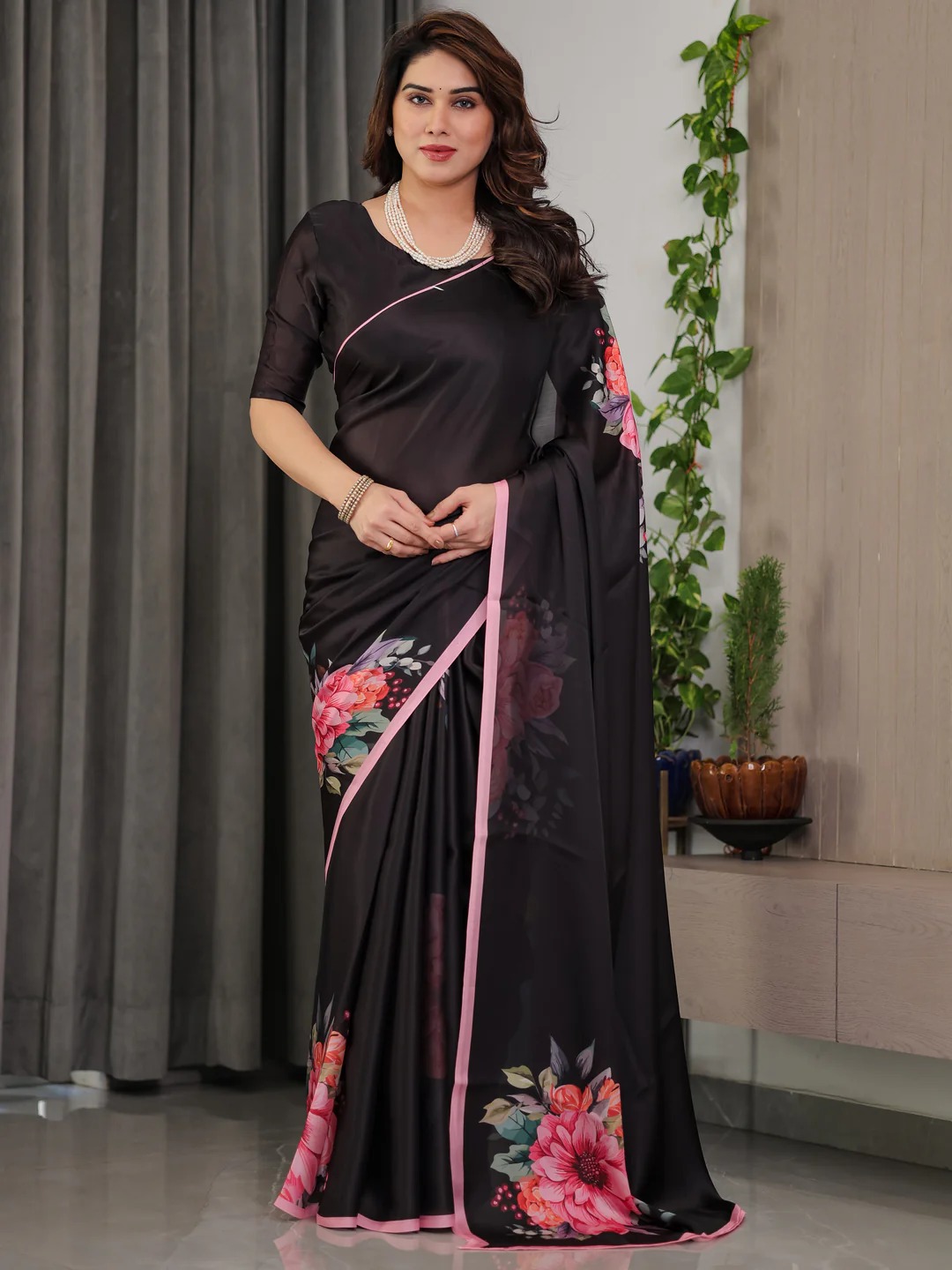
For the Black Satin Saree with Leaf Print & Blouse | Varnavi, a dark ground can conceal a discreet inner waist pin, but pin placement still matters because a metallic clasp may catch light against the leaf print. Position the clasp toward the body and cover it with an inner fold.
Slippery Satin Saree? Draping Changes That Give You More Control: How Can You Secure the Pallu?
Control a satin pallu by deciding its width, weight and shoulder direction before pinning it. A pallu measuring about 40 to 45 centimetres across is usually manageable for a classic shoulder drape, while a wider pallu carries more weight and needs support lower on the shoulder.

Fold the pallu with the print or border aligned before placing it over the shoulder. For a formal finish, make equal pleats and keep the lower edge parallel to the floor. For a softer party look, leave the pallu open but pin the inner top edge near the shoulder seam and anchor one lower point inside the blouse or petticoat line.
A brooch can add weight, but a large metal brooch may pull satin into a sharp diagonal. Use a lightweight brooch only when the fabric can support it, and place it close to the shoulder rather than at the far edge. A discreet internal pin is usually better for long wear, especially at a Haldi ceremony involving frequent movement.
The Orange Satin Floral Print Saree with Matching Blouse Fabric can be styled with a narrower pleated pallu when the floral design is busy. A controlled pallu lets the colour and print remain visible without adding extra sliding layers. The Pastel Blue Satin Floral Print Saree with Unstitched Blouse can similarly benefit from a shoulder pin beneath the top fold, where the hardware won't interrupt the pale surface.
Slippery Satin Saree? Draping Changes That Give You More Control: Which Blouse and Shoes Help?
A blouse with a matte or lightly textured finish and footwear with a stable heel generally improves satin saree control. Very glossy blouse fabric encourages the pallu to slide, while an unstable heel changes floor clearance as you walk.
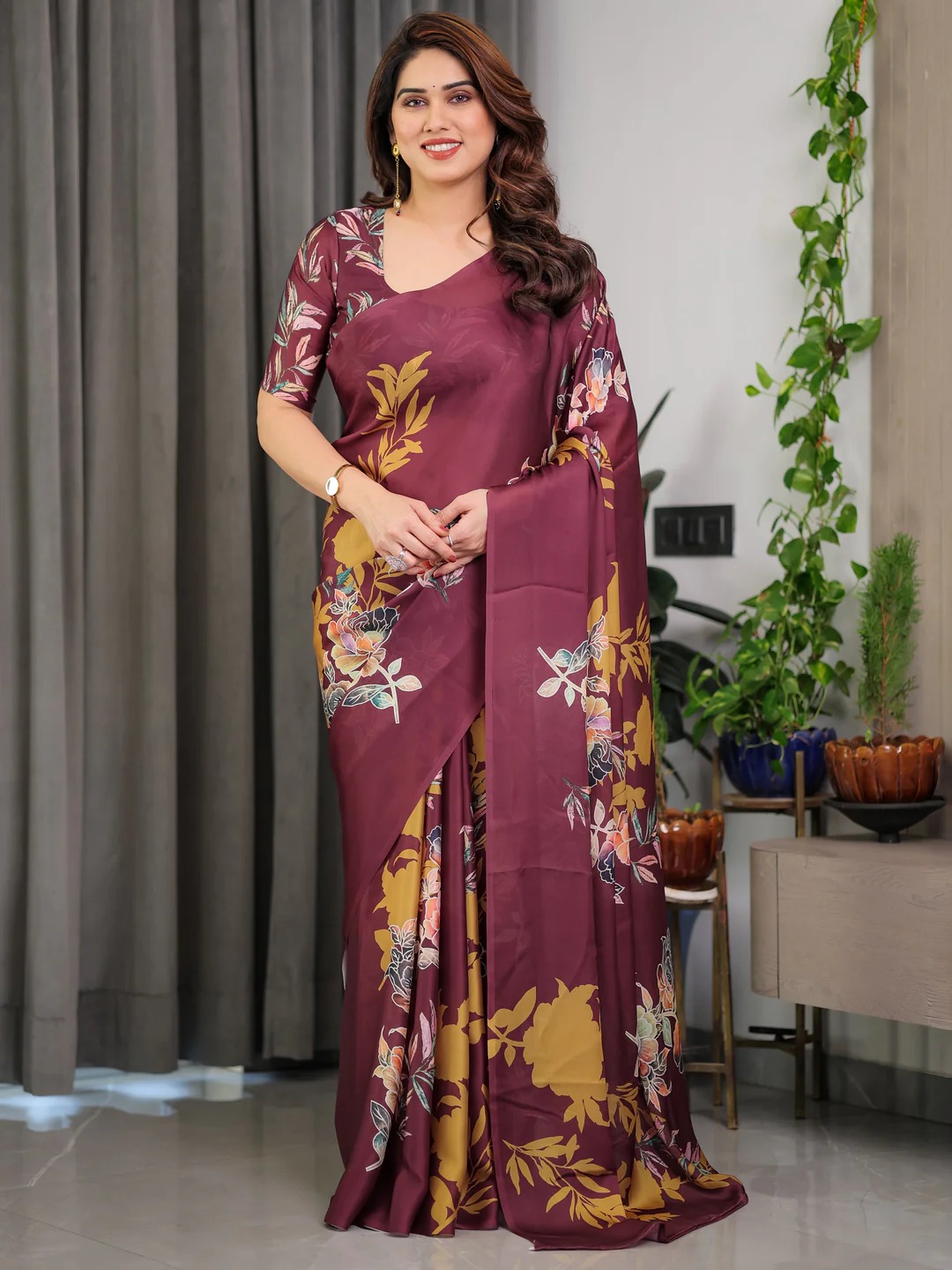
Raw silk, cotton silk, velvet accents and lined brocade can create more resistance than a completely polished blouse. The blouse should fit closely at the shoulder and upper arm without pulling across the back. A loose shoulder seam gives the pallu room to migrate, while a tight seam can drag the drape forward.
Wear the exact footwear before finalising the hem. A 2 to 5 centimetre heel can help the saree fall cleanly, but only if walking remains comfortable and the heel can't catch the lower edge. Put on the shoes before the final tuck, take at least 20 steps, sit once and use stairs if the event requires them.
Keep jewellery from snagging the pallu. Long chains, sharp bangles and rough handbag hardware can catch satin during movement. Carry a clutch on the side opposite the pallu's main fold so the fabric isn't repeatedly brushed against a hard edge.
Shopping by budget doesn't remove the need to assess construction. Satin Sarees Under 1500 may be useful for a printed party look, but check blouse-piece details, edge finishing and fabric weight before purchase. A fluid saree with a neat finished edge is easier to control than a heavier saree with poorly balanced borders.
Slippery Satin Saree? Draping Changes That Give You More Control: What Should You Test Before Leaving?
Test a satin saree for 10 to 15 minutes by walking, sitting, raising both arms and turning in both directions. A successful drape should remain level at the hem, keep its pleat bundle together and leave the pallu comfortable at the shoulder after these movements.
Take at least 20 normal steps, including a few faster steps, before deciding that the pins are sufficient. Sit on a chair rather than only checking in front of a mirror. If the waist drops, tighten or replace the petticoat foundation; if the pallu moves, add a lower concealed support instead of tightening the shoulder pin.
Check the drape under indoor and direct light. Glossy satin can reveal pin marks, uneven pleat spacing and diagonal tension that's not visible in soft room lighting. Photograph the front and back with a phone because the camera often shows sloping borders more clearly than a mirror.
For a more relaxed event wardrobe, Party Wear Sarees can include satin, georgette and other fluid fabrics, but each fabric needs a different support system. Pink Georgette Sarees may require more attention to pallu volume, while satin usually requires more attention to friction and anchoring. A Red Banarasi Silk Sarees for Weddings Under 1100 selection will typically hold folds differently because Banarasi silk has more surface texture and body.
The Elegant White Floral Digital Print Saree for Women works well as a reminder that pale printed satin benefits from precise pleat alignment. The Multicolor Abstract Satin Saree with Unstitched Blouse Piece demonstrates a different styling point: when the print is visually busy, a simple, stable drape keeps the eye on the design instead of on shifting folds.
Slippery Satin Saree? Draping Changes That Give You More Control: How Should You Care for It?
Care for a satin saree by checking the fibre label, washing it gently when permitted and storing it away from rough surfaces. Polyester satin commonly tolerates careful hand washing better than silk satin, but the garment label should always determine the cleaning method.

Remove pins immediately after changing and inspect the pin areas for pulled threads. Do not drag the saree across a rough floor or place it beneath heavy embroidered garments. Fold the saree along broad, relaxed sections and store it in a breathable cotton cover rather than compressing it tightly in plastic for long periods.
Use low heat only when the care label permits ironing. Place a thin cotton pressing cloth between the iron and satin, and test an inside edge first because high heat can flatten shine unevenly or damage synthetic fibres. Hanging satin for several hours can release minor creases, but hanging weighty borders indefinitely may stretch the shoulder area.
A controlled satin drape comes from several small decisions rather than a single trick: a grippy petticoat, a level first wrap, moderate pleats, concealed support and a movement test. These changes preserve the fabric's fluid character while making the saree more dependable for photographs, dinner seating, dancing and long celebrations.
Common Questions About Controlling a Slippery Satin Saree
How do I stop a satin saree from slipping at the waist?
Use a fitted cotton or lightly textured petticoat with a secure drawstring, then make an even first wrap before pleating. A concealed horizontal pin through the inner pleat and petticoat can provide additional support without showing on the front.
How many pleats should a satin saree have?
Six to eight front pleats measuring about 10 to 12 centimetres each are a practical starting point. The best number depends on saree width, body proportions and the print, because very narrow pleats can fan out while large motifs may look interrupted.
How do I keep the satin saree pallu on my shoulder?
Fold the pallu to a controlled width and pin the inner top edge near the blouse shoulder seam. Add a second concealed pin lower down when the pallu is long or heavy, rather than relying on one pin at the outer corner.
Which petticoat is best for a satin saree?
A fitted cotton, cotton-satin or lightly textured petticoat generally provides more grip than a smooth nylon or polyester underskirt. The waistband should stay level during walking and remain comfortable while sitting.
Can I wear a satin saree to a Haldi ceremony?
Yes, but choose secure pleats, a pinned pallu and footwear that allows stable movement. Satin can be less forgiving around turmeric, oil and food stains, so avoid unnecessary contact and follow the garment's care label after the event.
How should I iron and store a satin saree?
Check the fibre label first, use low heat only when permitted and place a cotton pressing cloth between the iron and satin. Remove pins before storage, fold the saree loosely and keep it in a breathable cover away from rough or heavily embellished garments.


