

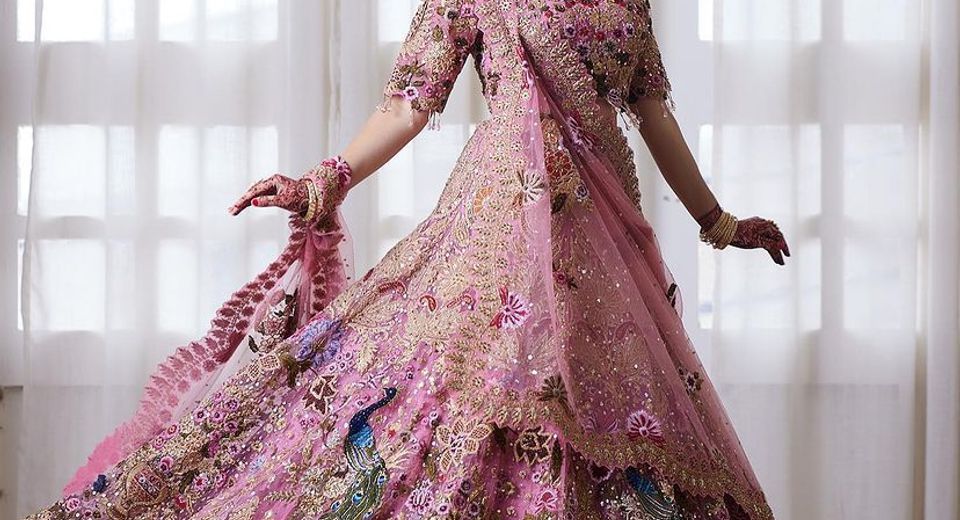
Choosing Silhouettes That Keep the Outfit Proportionate for Lehengas for Pear-Shaped Bodies begins with understanding where volume sits. A pear-shaped body commonly has a narrower shoulder line, a defined waist and fuller hips or thighs. The aim isn't to hide the lower body. The aim is to distribute visual interest across the blouse, waist, skirt and dupatta so the complete outfit feels intentional.
Lehenga proportion depends on more than skirt width. Waistband height, flare placement, blouse length, shoulder detail, fabric weight, embroidery scale and dupatta position can each change the finished outline. A wide skirt can look balanced when the choli has enough structure, while a relatively slim skirt can appear bottom-heavy if the blouse is too plain or too narrow.
Silhouettes That Keep the Outfit Proportionate for Lehengas for Pear-Shaped Bodies: What should you assess first?
The first assessment should compare the garment's widest points with the body's widest points. A balanced lehenga generally fits the waist cleanly, skims the high hip and releases volume gradually towards the hem instead of adding bulk directly at the hips.
The high hip is the area between the waist and fullest hip. A skirt that fits tightly at the waist but catches at the high hip can create horizontal folds and make the lower half look wider. A skirt with sufficient ease through the high hip usually falls more smoothly, even when the hem has substantial flare.
- Measure the waist and high hip separately: the high-hip measurement is essential when buying a fitted or semi-stitched lehenga.
- Check the waistband position: a waistband near the natural waist generally gives clearer definition than one that cuts across the fullest hip.
- Look at flare distribution: gradual flare creates a longer line than concentrated gathers at the hip.
- Inspect the hem border: a border near the hem can anchor the skirt, while a wide horizontal band at hip level can add visual width.
- Compare blouse and skirt detail: upper-body embroidery, sleeves or neckline structure can balance an ornate lower half.
Online shopping requires more than viewing the model photograph. Check the actual waist measurement, skirt length, closure method, lining, number of panels and blouse construction. A model may be photographed at an angle or hold the dupatta away from the body, which can conceal how the skirt falls around the hips.
Silhouettes That Keep the Outfit Proportionate for Lehengas for Pear-Shaped Bodies: Which skirt shapes work?
A-line, panelled and softly flared skirts usually create the most balanced outline for pear-shaped bodies because they skim the hip before expanding towards the hem. These shapes provide movement without placing the greatest volume at the body's widest point.
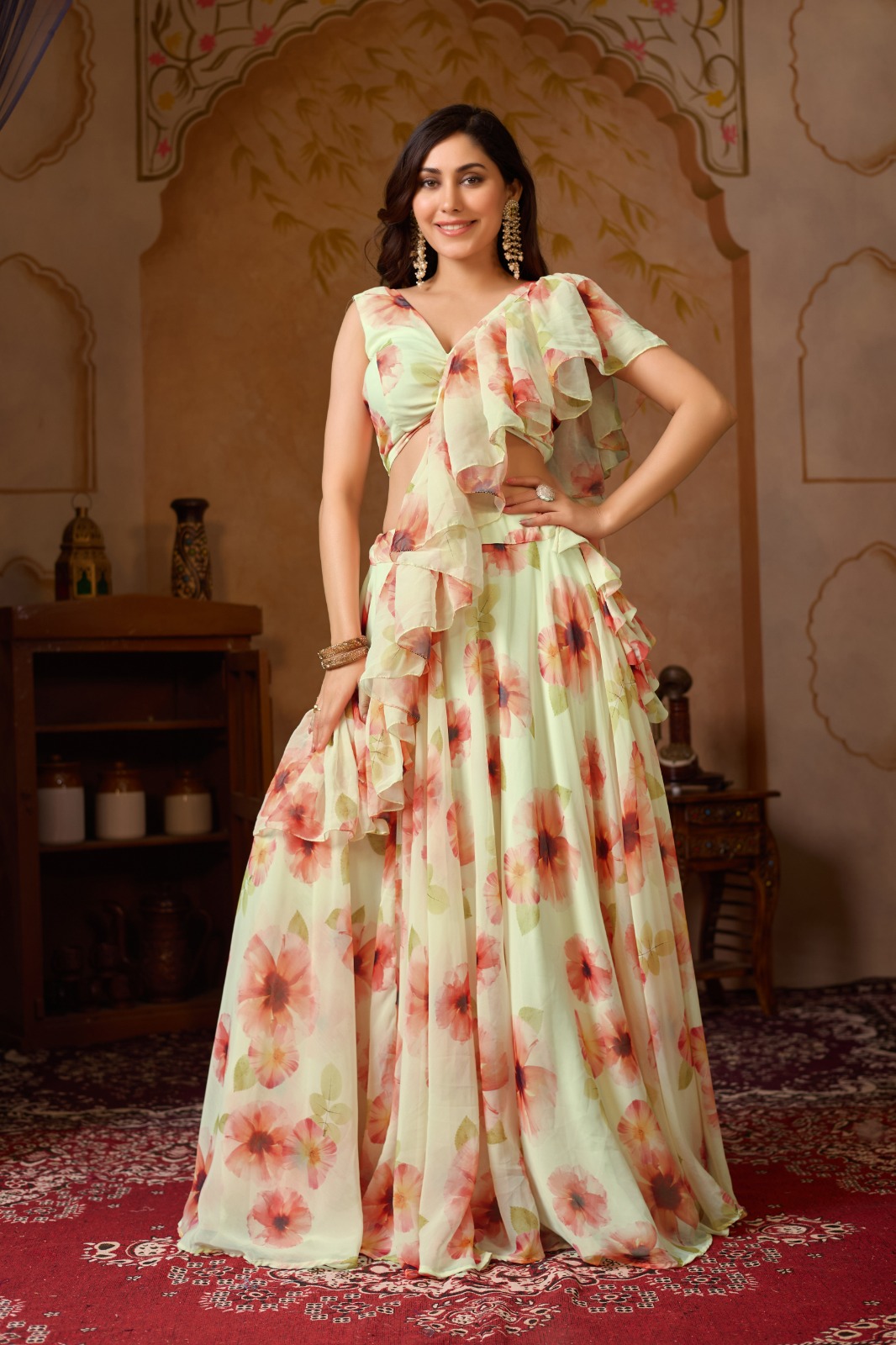
A-line and panelled lehengas
A-line skirts narrow at the waist and widen progressively towards the hem. Panelled construction offers additional control because seams guide the direction of the flare. Narrower panels can create a fluid vertical effect, while fewer broad panels can give the skirt a more structured appearance.
The Designer Threadwork Silk Lehenga Choli Set with Dupatta shows why embroidery direction matters. Threadwork that follows the panels or travels vertically can support a lengthened appearance. Dense horizontal threadwork concentrated across the high hip is more likely to emphasise width.
Silk and silk-like fabrics hold their shape, so lining and ease deserve attention. A skirt should not be so tightly lined that the outer fabric catches around the thighs. A small amount of room through the hip helps the panels fall instead of pulling sideways.
Soft circular flare
A circular skirt can suit a pear-shaped body when the waist is fitted and the flare begins smoothly below the high hip. The Pink Bridal Sequins Lehenga Set with Heavy Flare demonstrates an important styling principle: a dramatic skirt needs a blouse with enough visual presence to keep the upper body from disappearing beside it.
Heavy flare isn't automatically unsuitable. The more useful distinction is between smooth flare and concentrated bulk. Smooth flare creates movement from the waist towards the hem. Stiff net layers, excessive gathers or heavy appliqué placed directly over the hip can create unwanted width at one point.
Mermaid and fishtail shapes
Mermaid silhouettes emphasise the waist and follow the hip before widening near the knee or lower skirt. This shape can look elegant on a pear-shaped body, but it requires accurate hip measurements and enough walking ease.
A modified mermaid skirt is usually more practical than an extremely narrow fishtail design for a wedding. Sitting, climbing stairs and moving through a crowded venue become easier when the lining has several centimetres of ease beyond the body measurement.
Silhouettes That Keep the Outfit Proportionate for Lehengas for Pear-Shaped Bodies: How should the blouse fit?
The blouse should add controlled width, height or detail to the upper body while ending above or falling cleanly past the fullest part of the hip. Shoulder width, neckline, sleeve shape and hem position matter as much as blouse colour.
Necklines and shoulders
Boat necks, square necks, modest sweetheart necklines and wider V-necks can visually extend the shoulder line. Cap sleeves, structured shoulders and elbow-length sleeves can also add presence when the sleeve doesn't end at the widest part of the upper arm.
The Red Floral Organza Lehenga Set with One Shoulder Blouse illustrates how an asymmetric neckline creates an upward diagonal. The diagonal draws attention towards the face and shoulder while keeping the blouse connected to the skirt. One-shoulder designs should have secure internal support and enough arm movement for a long event.
Blouse length
A blouse ending just above the high hip can define the waist without creating a tight horizontal line across the fullest area. A longer blouse can also work when it falls straight and doesn't cling tightly around the hips. A narrow hem that ends exactly at the widest hip point is usually the least forgiving option.
During fully stitched choli shopping, inspect princess seams, darts, side zips, hooks and seam allowances. Princess seams can shape the bust and waist more smoothly than a flat front. A ready-made choli is convenient only when the bust, shoulder, armhole and sleeve measurements are compatible with the wearer.
The Pastel Floral Georgette Lehenga Set with Ruffle Blouse uses a ruffle as an upper-body detail. A controlled shoulder or neckline ruffle can balance a wide skirt. A large ruffle ending at the hip can produce the opposite effect by adding width at the lower edge of the blouse.
Silhouettes That Keep the Outfit Proportionate for Lehengas for Pear-Shaped Bodies: Where should colour and embroidery sit?
Colour and embroidery create balance when the strongest details appear on the blouse, neckline, shoulders, sleeves or upper dupatta, while skirt decoration follows vertical lines or remains distributed across the panels.
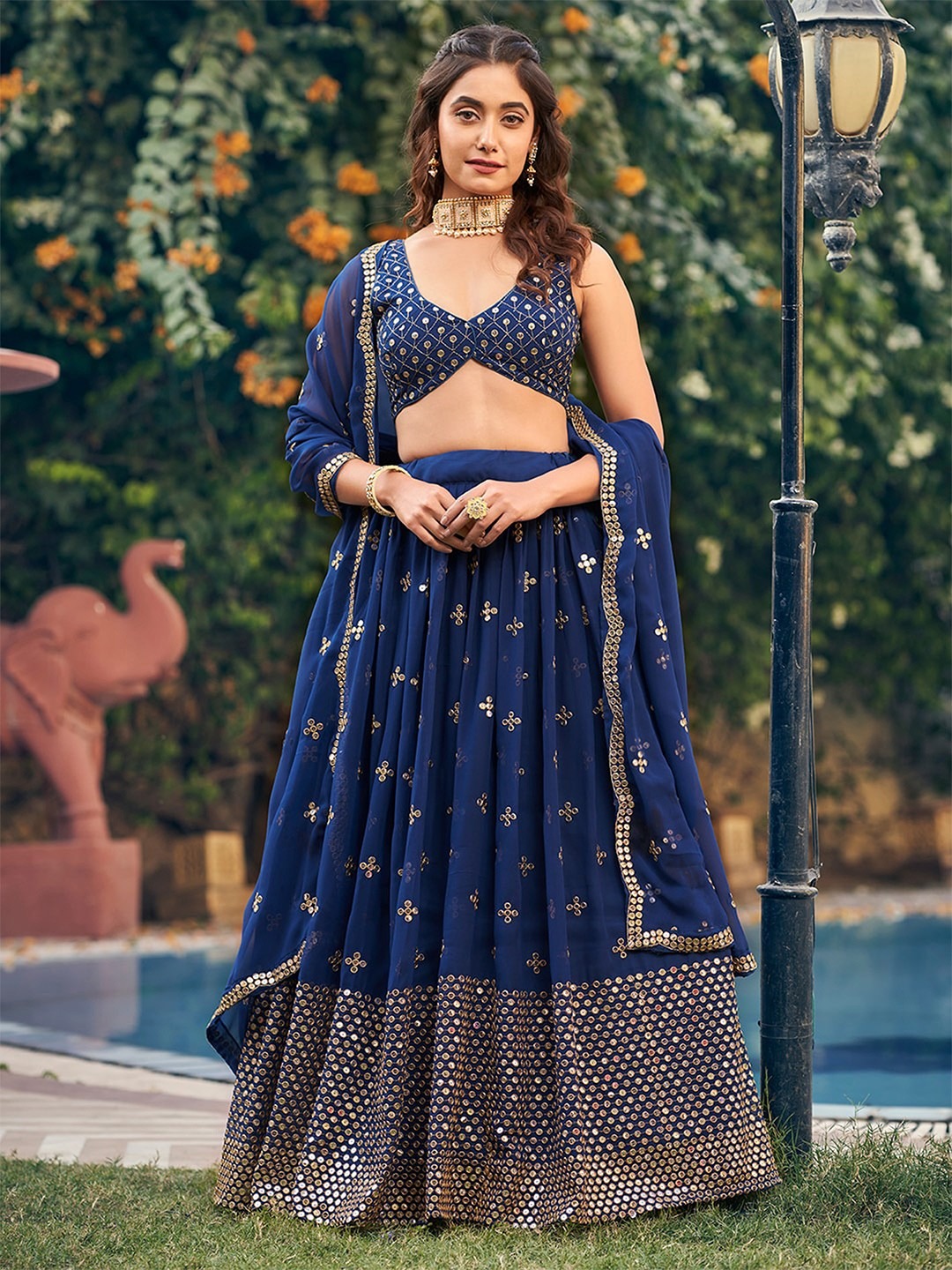
Small motifs arranged along panel seams guide the eye up and down. Vertical threadwork, narrow sequin trails and spaced floral motifs can lengthen the visual line. A wide horizontal border is usually less dominant when placed close to the hem rather than directly over the hip.
A lighter blouse with a deeper skirt brings attention towards the face and shoulders. A monochromatic outfit can also look elongated when the skirt has uninterrupted vertical panels and the dupatta doesn't create a broad horizontal break at the hip.
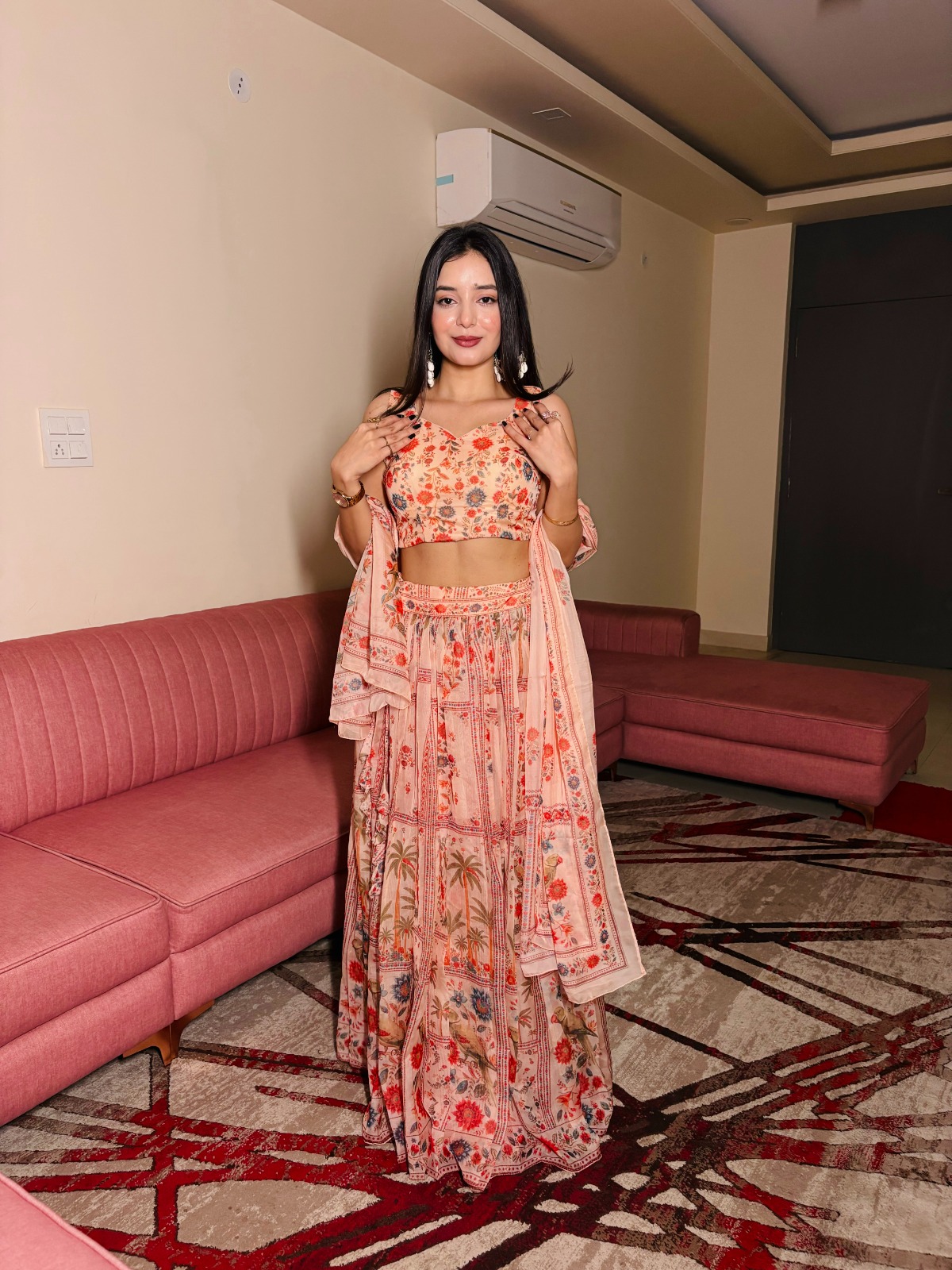
Colour alone doesn't determine whether a lehenga looks wide or narrow. Fabric shine, embroidery density, motif scale and surface texture often have a stronger effect. The Peach Floral Organza Lehenga Set with Printed Dupatta shows how a printed dupatta can bring upper-body interest when the floral scale is repeated or visually supported by the blouse.
The Pink Chinon Silk Sequins Embroidered Lehenga Set Sale can support a festive or bridal-style look when some shimmer is repeated above the waist through blouse embroidery, earrings or the dupatta border. Concentrating every sequin on the skirt can make the lower half dominate, even when the skirt itself is well cut.
The Pink Sequins Embroidered Butterfly Net Lehenga Set gives another useful styling consideration. Lightweight net can create volume without the same visual density as a heavily woven fabric, but multiple stiff layers can still add width. Check the number of lining and net layers before choosing a size.
Silhouettes That Keep the Outfit Proportionate for Lehengas for Pear-Shaped Bodies: Which dupatta drapes help?
A shoulder-focused dupatta drape usually balances a pear-shaped lehenga better than a loose hip-level drape because the fabric creates interest above the waist and leaves the skirt's flare visible.
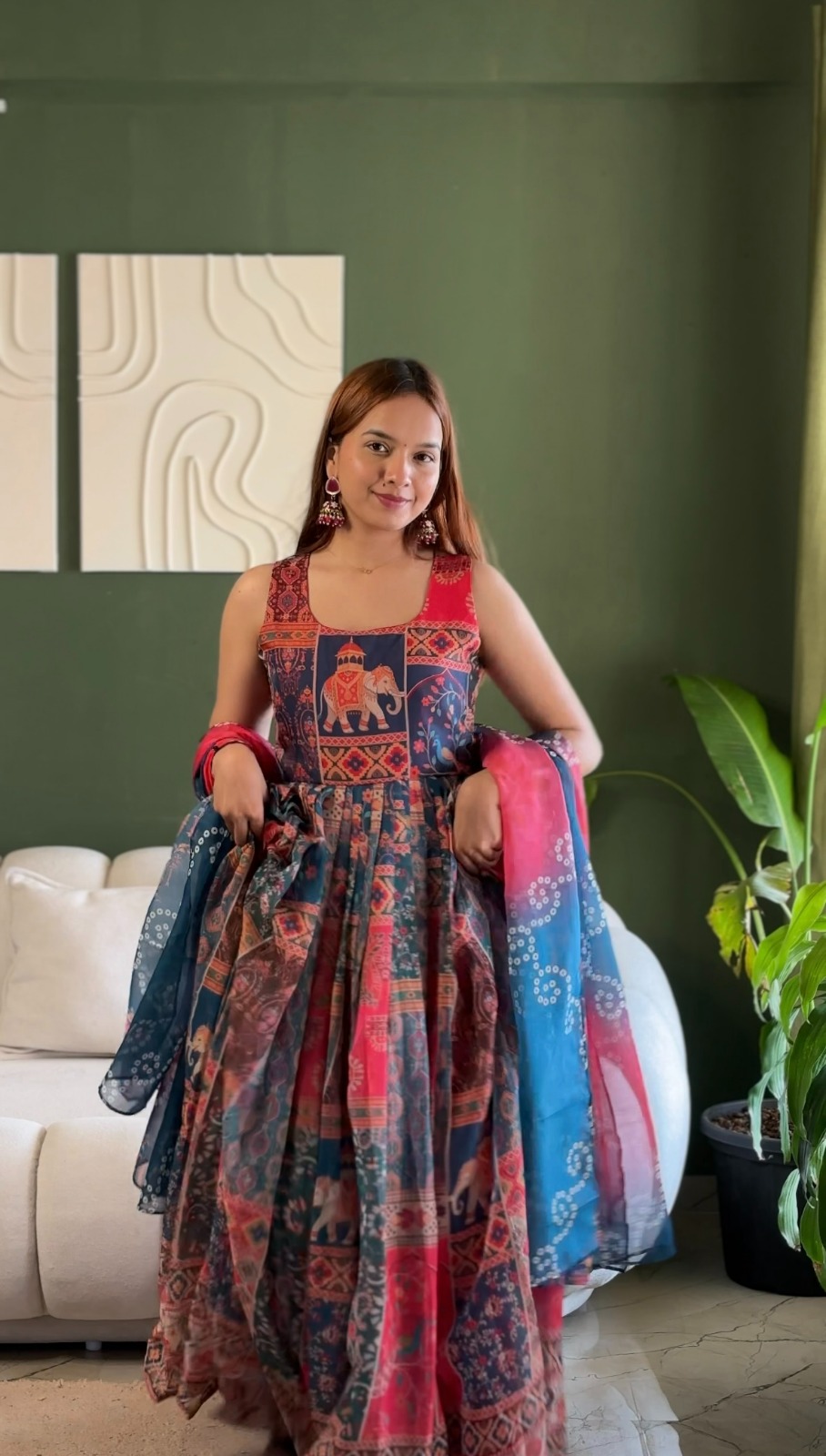
A classic pleated drape over one shoulder works when the pleats are narrow, secure and positioned high enough to frame the blouse. A second dupatta can be carried over the opposite shoulder or placed over the head for bridal styling, but excessive fabric around the hips can add bulk and restrict movement.
Georgette usually falls softly, while organza holds a more structured shape. The Coral Bloom White Georgette Lehenga Set can be paired with a clean shoulder drape that keeps the soft fabric close to the upper body without creating a bulky layer over the hip.
The Peach Floral Organza Lehenga Set with Printed Dupatta can use the firmer structure of organza to create a broader shoulder frame. Place the dupatta edge near the shoulder or upper arm rather than allowing the full width to settle at the hip.
Pinning improves proportion and practicality. One discreet pin near the shoulder seam can prevent slipping, while a second pin at the waist can keep pleats aligned. Avoid fastening the dupatta so tightly that it pulls the blouse sideways or compresses the bust.
Silhouettes That Keep the Outfit Proportionate for Lehengas for Pear-Shaped Bodies: How do fabric and occasion change the choice?
Fabric and occasion should determine how much volume, structure and surface decoration a lehenga can carry. A daytime Mehendi outfit usually benefits from lighter movement, while bridal and reception wear can support heavier flare when the blouse and drape are proportioned accordingly.
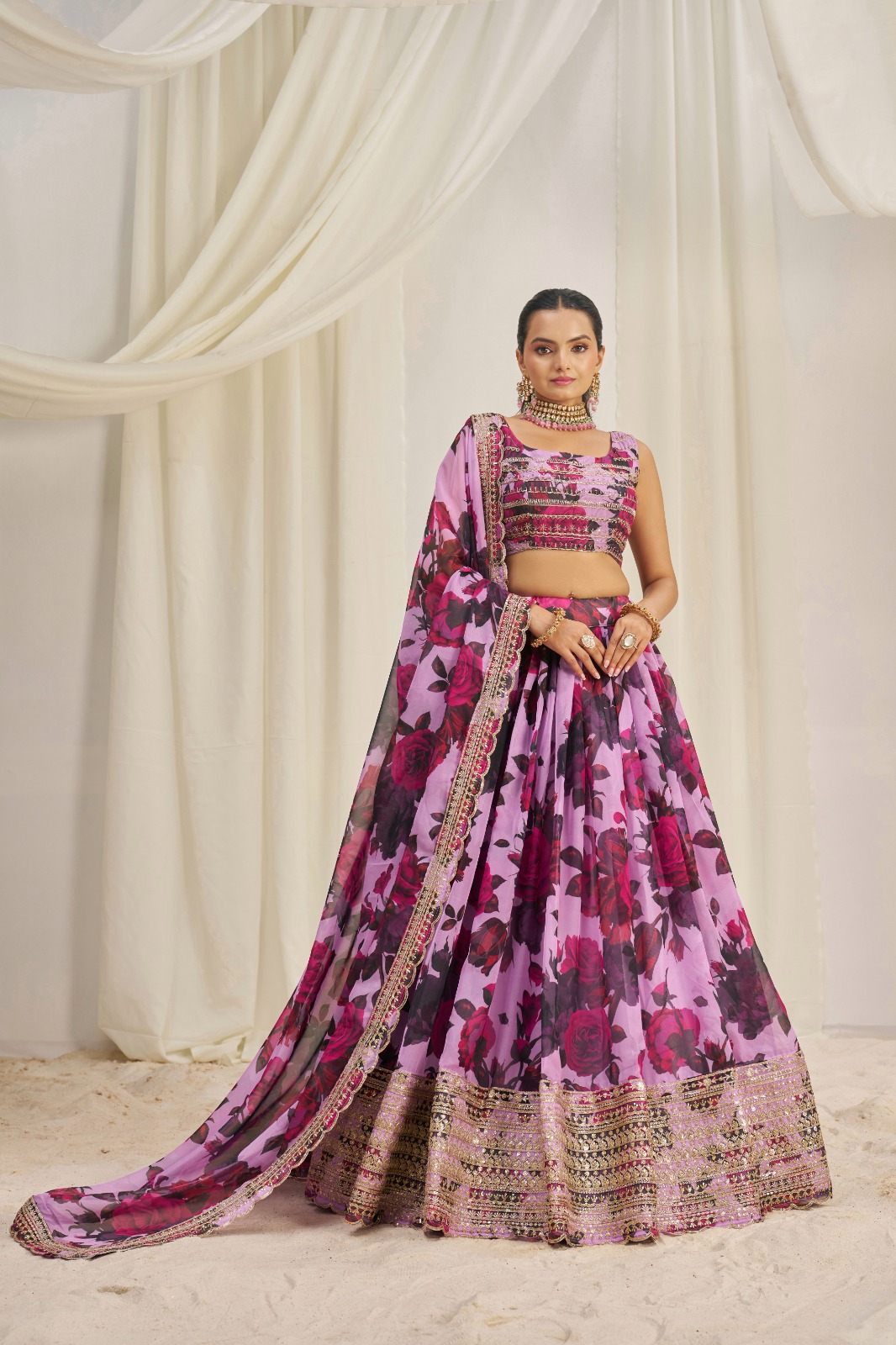
For a Mehendi ceremony, georgette, organza and lighter net can provide movement without making the outfit feel cumbersome. The Mehendi Lehengas collection is an useful direction for bright, celebratory styling, especially when a printed or floral dupatta supplies detail around the upper body.
Yellow lehengas naturally attract attention through colour, so blouse structure and neckline placement become important. A look from the Yellow Lehengas collection can remain balanced when the blouse includes shoulder detail or embroidery rather than leaving all decoration below the waist.
Green is frequently chosen for Mehendi functions and festive gatherings. Designs from the Green Lehengas collection can be styled with a lighter dupatta drape and a defined waistband so colour doesn't become a large, uninterrupted block across the lower body.
For convenient wedding shopping, a Ready Made Lehenga can save alteration time, but the waist and high hip still need to be checked carefully. A ready-made skirt can usually be altered at the waistband, whereas changing the position of heavy embroidery or rebuilding a tight hip section may be more difficult.
A Semi Stitched Lehengas Collection brings more flexibility for pear-shaped bodies because the waist and length can often be customised before finishing. Semi-stitched doesn't mean completely adjustable; ask which seams remain open, how much fabric is available for alteration and whether the blouse is included.
For a formal bridal look, the Pink Bridal Sequins Lehenga Set with Heavy Flare can be balanced with a blouse that has a broad neckline, defined shoulders and enough embroidery to match the skirt. For a lighter wedding guest look, the Coral Bloom White Georgette Lehenga Set can keep the outline softer through a restrained drape and moderate jewellery.
Girls and younger wearers often need a different priority: comfort, secure closures and freedom to move should come before maximum flare. A lighter skirt, a properly fitted waistband and a blouse with comfortable armholes are more useful than a very heavy design that requires constant adjustment.
The most reliable fitting test is movement. Walk up several steps, sit on a chair, raise both arms and turn once while wearing the lehenga. If the waistband rolls, the blouse pulls, the dupatta slips repeatedly or the skirt catches at the thighs, the outfit needs alteration regardless of how attractive it looks in a product photograph.
Balanced dressing doesn't require following a fixed body-shape rule. The strongest choice is the silhouette that gives the wearer comfort, secure movement and a clear focal point. When flare, blouse construction, embroidery and dupatta placement work together, a pear-shaped body can carry both dramatic bridal lehengas and understated festive styles with equal confidence.
Common Questions About Proportionate Lehengas for Pear-Shaped Bodies
Which lehenga silhouette is best for a pear-shaped body?
A-line, panelled and softly flared lehengas usually create a balanced outline because they skim the high hip and widen gradually towards the hem. Modified mermaid styles can also work when the skirt has enough ease through the hip and thigh.
Does a heavy-flare lehenga suit a pear-shaped body?
A heavy-flare lehenga can suit a pear-shaped body when the blouse has enough structure or embellishment to balance the skirt. Smooth flare is generally easier to style than concentrated gathers or stiff layers placed directly over the hips.
What blouse length is most flattering with a pear-shaped body?
A blouse that ends just above the high hip or falls cleanly past the fullest hip usually creates a smoother line. A narrow blouse hem ending exactly at the widest hip point can emphasise width and may require alteration.
Which dupatta drape balances a pear-shaped lehenga?
A pleated shoulder drape usually works well because it adds visual interest above the waist and keeps the skirt visible. Avoid allowing large amounts of fabric to gather at the hips, where the additional layer can create unnecessary bulk.
Are ready-made lehengas suitable for pear-shaped bodies?
Ready-made lehengas are suitable when the waist, high hip, skirt length and blouse measurements match the wearer. A semi-stitched lehenga can offer more adjustment, but the available seam allowance and unfinished sections should be confirmed before purchase.
How can embroidery make a lehenga look more proportionate?
Vertical motifs, panel-aligned threadwork and upper-body embellishment can distribute attention across the outfit. A very wide horizontal border placed at the fullest hip can add visual width, while a border closer to the hem usually anchors the skirt more discreetly.


