

Silhouettes That Keep the Outfit Proportionate for Lehengas for Broad Shoulders begin with a practical styling principle: add enough visual presence below the waist while keeping the blouse neckline and shoulder line controlled. Broad shoulders don't need to be hidden; the aim is to distribute attention across the complete outfit.
Skirt volume, waist placement, blouse construction, fabric weight, border width and dupatta draping all change how a lehenga looks on the body. A well-balanced design allows the eye to move from the face to the waist and then towards the flare and hem. A heavily decorated shoulder line paired with a narrow skirt usually creates the opposite effect.
Silhouettes That Keep the Outfit Proportionate for Lehengas for Broad Shoulders: Which skirt shape works best?
An A-line or graduated-flare skirt usually creates the most balanced proportion for broad shoulders because the skirt widens gradually from the waist to the hem. The shape gives the lower half enough visual presence without requiring an excessively wide circular cut.
An A-line lehenga is particularly useful for fully stitched choli shopping because the waist placement and flare are already established. A skirt with approximately 3 to 5 metres of fabric can provide movement without making the hips appear unnecessarily bulky. A softer flare suits daytime functions, while a firmer flare can support bridal or evening embellishment.
A panelled lehenga is another strong choice. Vertical panels guide the eye downward and can make the body appear longer. Panels in alternating shades, textures or embroidery patterns create direction without introducing a broad horizontal band across the upper body. A narrow waistband or gently shaped yoke also separates the blouse from the skirt and defines the natural waist.
Very high-volume circular skirts can work when the fullness begins around the hip rather than exploding directly below the blouse. Excessive volume at the waist can make the torso look wider by comparison. The Pink Bridal Sequins Lehenga Set with Heavy Flare illustrates an important styling point: when the skirt carries substantial flare and shine, the blouse should remain fitted and the dupatta should fall vertically instead of spreading across both shoulders.
Mermaid and fishtail cuts require more caution. A narrow skirt through the hip can make the upper body appear wider, especially when the blouse has strong shoulder embellishment. A mild flare beginning above the knee is more balanced than a sharply fitted skirt that opens only at the bottom.
Silhouettes That Keep the Outfit Proportionate for Lehengas for Broad Shoulders: How should the blouse be cut?
A blouse balances broad shoulders when its neckline creates vertical or diagonal movement and its sleeves avoid adding unnecessary horizontal width. V-necks, soft sweetheart necklines and moderate scoop necks generally draw the eye inward.
A V-neck doesn't need to be deep to be effective. A modest V ending a few centimetres above the bust line can lengthen the centre of the torso while remaining suitable for a family wedding. A sweetheart neckline creates a similar effect because its centre dips lower than its outer edges.
A square neckline can also work when its width stops short of the shoulder edges. A very wide boat neck, broad straight neckline or off-shoulder cut can emphasise the shoulder line because each style creates a horizontal visual path. A high neckline isn't automatically unsuitable, but it works best with a lower skirt border or a longer vertical dupatta to restore balance.
Sleeve length matters as much as neckline shape. Sleeves ending around the elbow create a clean side line, while three-quarter sleeves can make the arms and torso look longer. Cap sleeves, puff sleeves and stiff shoulder details may add width, so those features should remain small or use a soft fabric.
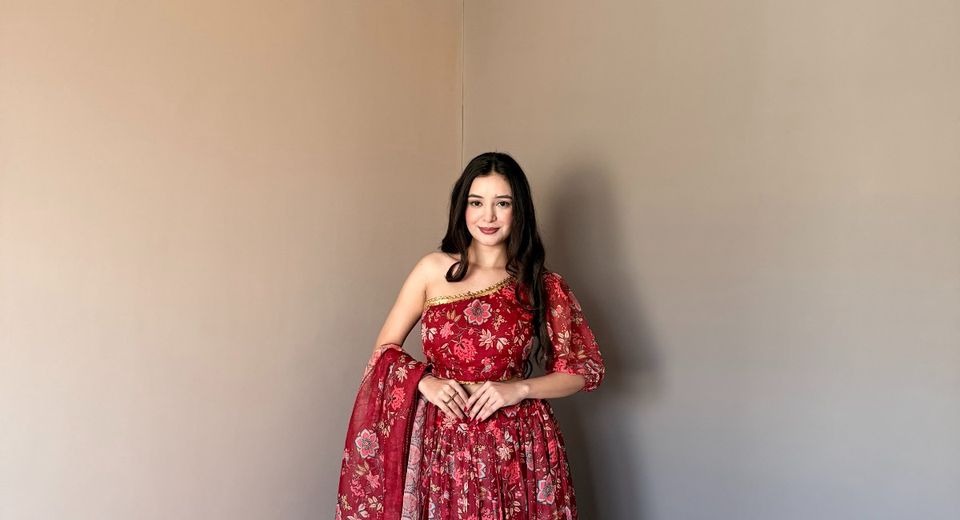
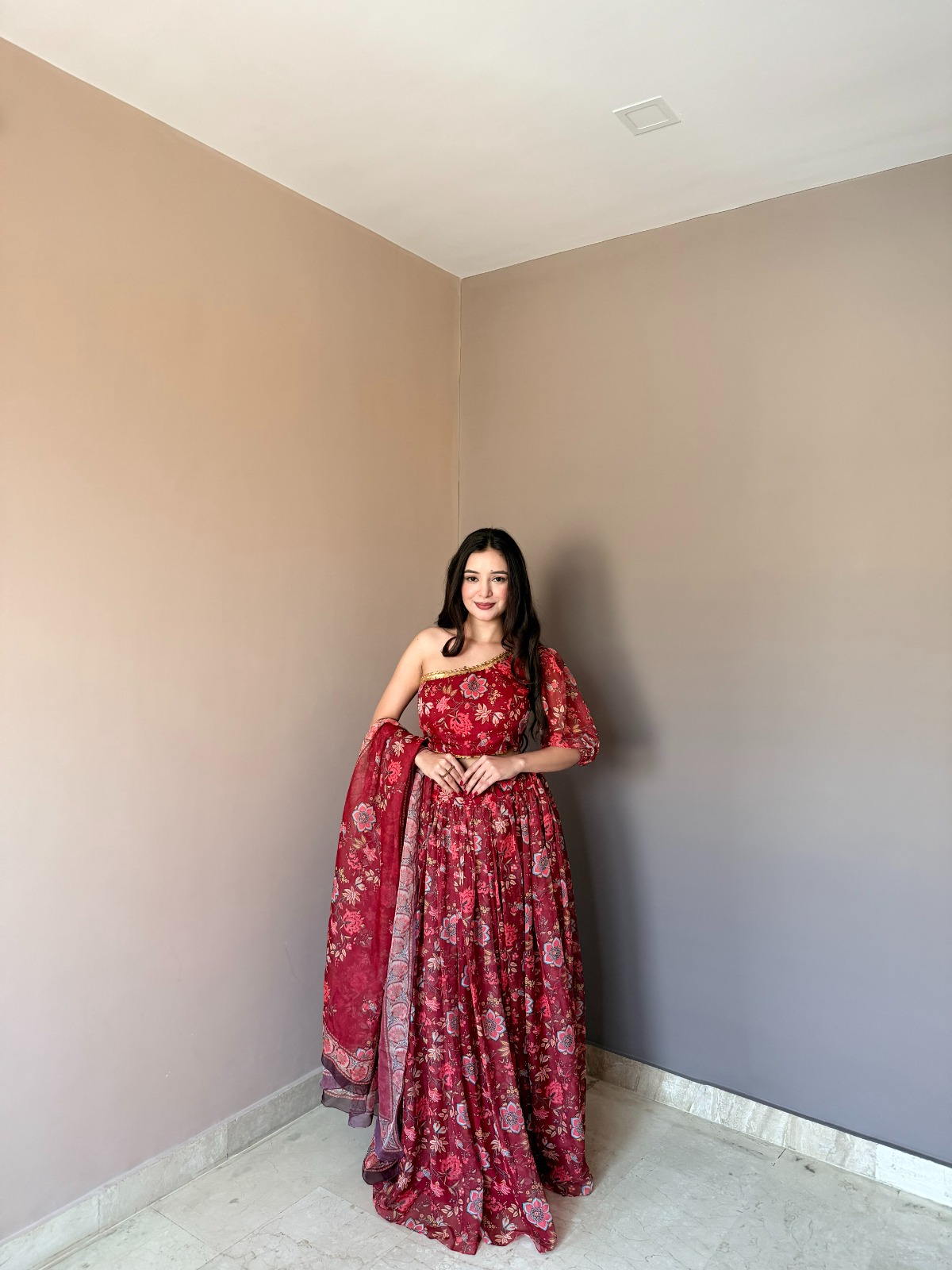
The Red Floral Organza Lehenga Set with One Shoulder Blouse shows why asymmetry can be effective. A one-shoulder neckline shifts attention away from a straight horizontal shoulder line. The rest of the styling should remain controlled because a dramatic neckline combined with oversized earrings, a wide waist belt and a broad dupatta can make the upper half feel crowded.
Blouse embellishment should not stop entirely at the shoulders. Dense work concentrated on the shoulder caps increases attention at the widest point. A more balanced arrangement places embroidery along the neckline, centre front or lower blouse edge and repeats some detail on the skirt or hem. The Designer Threadwork Silk Lehenga Choli Set with Dupatta can be styled this way by allowing the threadwork to connect the blouse and skirt rather than ending abruptly at the shoulder seam.
Silhouettes That Keep the Outfit Proportionate for Lehengas for Broad Shoulders: Which skirt details help?
Vertical panels, a defined waist and a graduated hem are the most reliable skirt details for balancing broad shoulders. These features strengthen the lower half without forcing the outfit into an excessively wide shape.
Hem borders are particularly useful because a substantial border gives the eye a destination at the bottom of the outfit. A border approximately 10 to 20 centimetres wide can anchor a festive lehenga, especially when the blouse is relatively simple. A very broad, heavily embellished border needs enough skirt flare so that the hem doesn't look visually heavy.
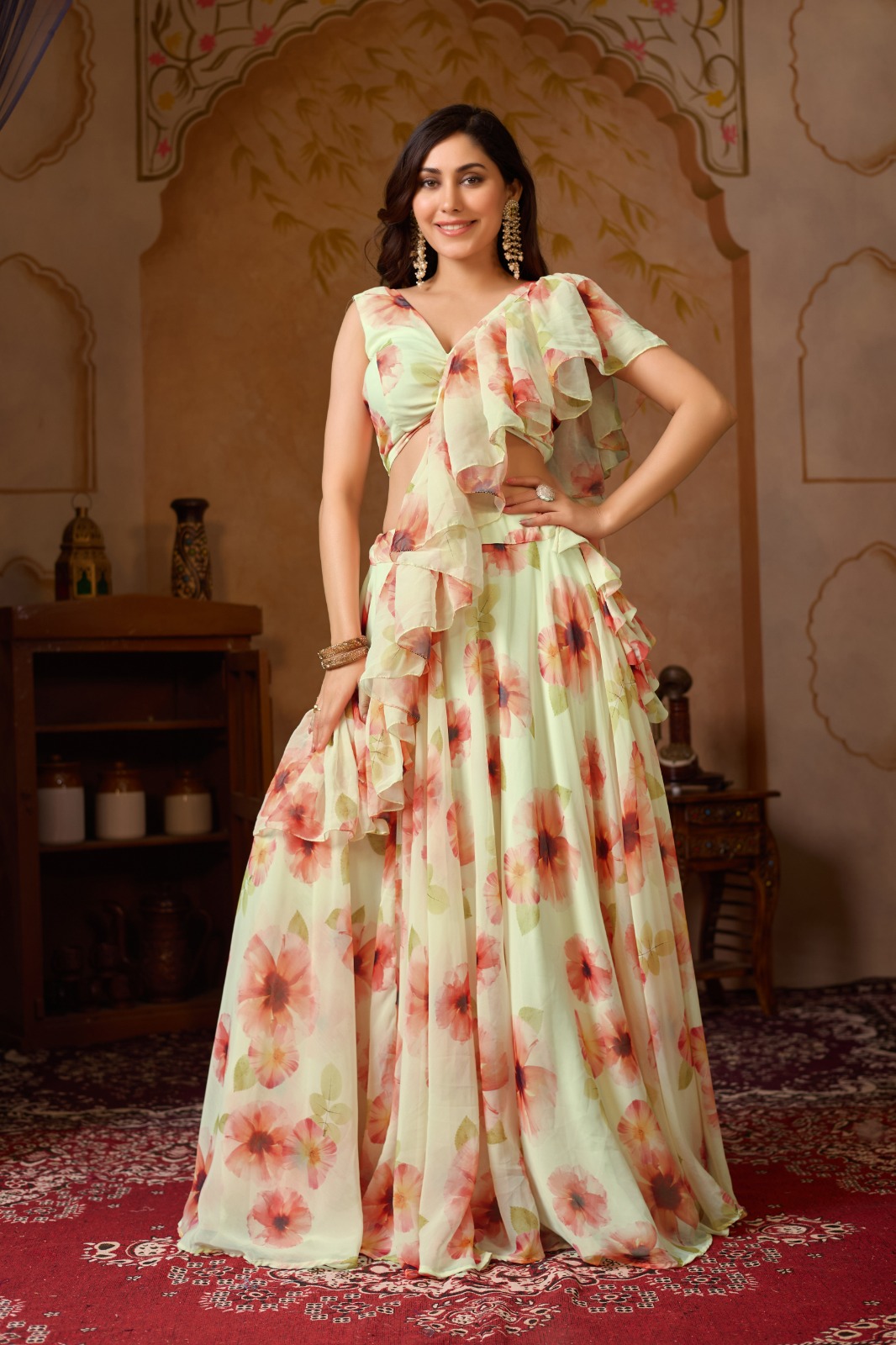
Floral prints and scattered motifs can support the same effect. Motifs that increase slightly in size towards the hem create a gentle sense of expansion. Small motifs concentrated only around the shoulders or bust produce the reverse effect. The Pastel Floral Georgette Lehenga Set with Ruffle Blouse shows how a soft floral pattern can be paired with movement in the lower half; the ruffle should be positioned carefully so it doesn't form a stiff shelf across the shoulders.
Horizontal bands don't need to be avoided completely. A single lower border, a narrow waist trim or two restrained bands around the skirt can break up length attractively. Several thick bands at the waist and upper hip can shorten the torso and make the blouse appear wider.
Gathering also affects proportion. Gentle gathers beginning below the waist create softness, whereas dense gathers directly beneath the blouse can add bulk around the midsection. If a lehenga has dramatic gathers, a clean blouse and narrow dupatta will usually produce a more polished result.
Silhouettes That Keep the Outfit Proportionate for Lehengas for Broad Shoulders: How do fabric and colour change the look?
Fabric and colour placement affect perceived proportion as strongly as the cut of the lehenga. A structured skirt can support the lower half, while a fluid skirt can create length and movement without adding bulk.
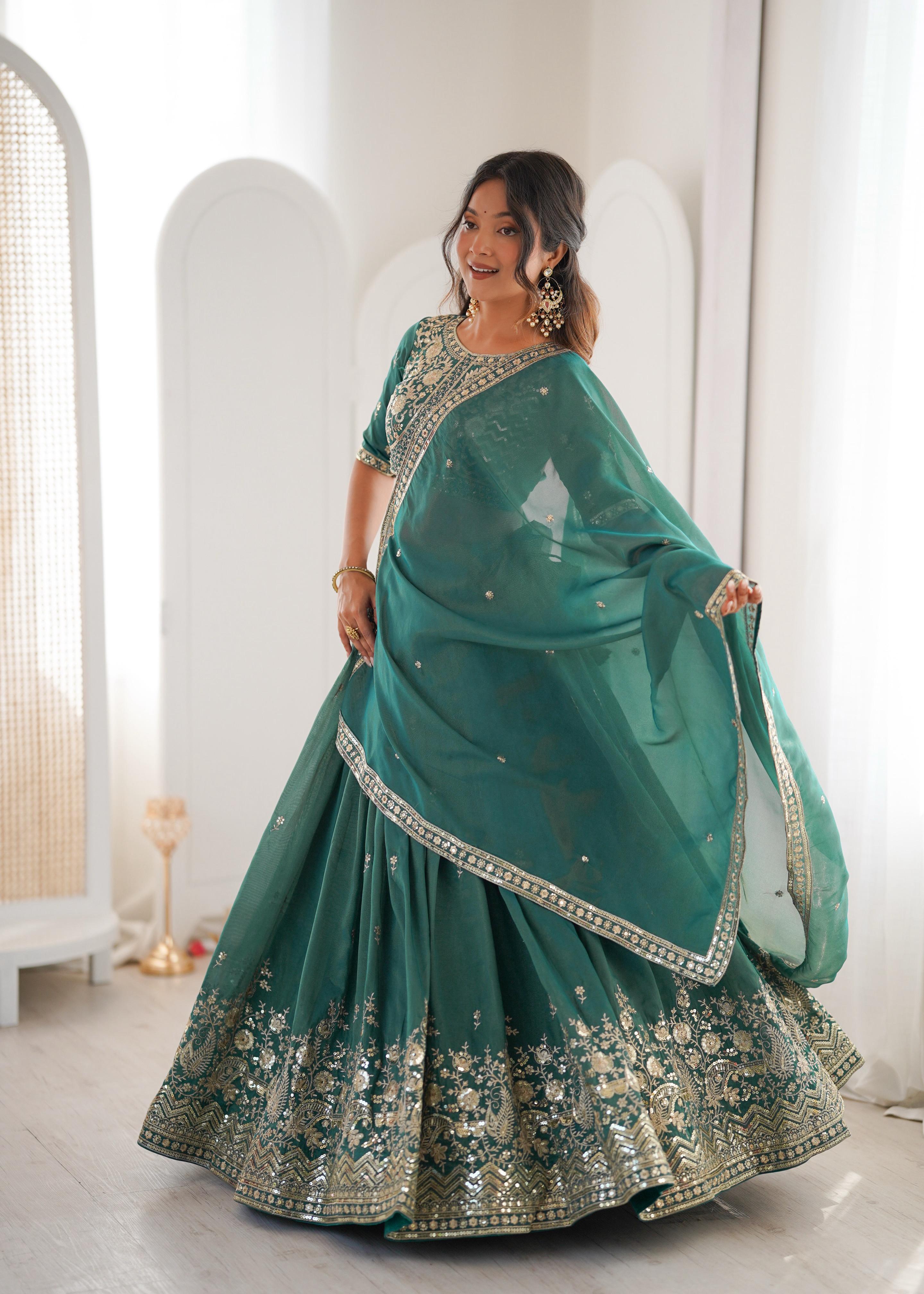
Georgette and chiffon usually fall close to the body, organza creates a crisper outline, and silk can hold a more structured flare. Chinon silk with sequins can appear visually rich, so the blouse should avoid additional raised shoulder decoration. The Green Chinon Silk Sequins Embroidered Lehenga Set can be balanced with a clean neckline, fitted sleeves and a dupatta that falls in a long, narrow line.
Colour placement also matters more than colour family alone. A quieter blouse with a brighter or more detailed skirt shifts attention downward. Equal intensity across blouse and skirt creates a unified silhouette, while a very light blouse paired with a dark, plain skirt can make the upper body the dominant area.
A monochrome lehenga can be flattering when the skirt contains vertical seams, panels or a strong hem. Similar shades allow the cut to do the work. A blouse in a slightly deeper version of the skirt colour can define the waist without creating a harsh horizontal break.
Shine increases visual emphasis because sequins, metallic thread and zari catch light. A high-shine blouse can look disproportionate if the skirt is matte and narrow. When both pieces contain shine, repeat the finish in a lower border or scattered skirt motif instead of placing all reflective work near the collarbone.
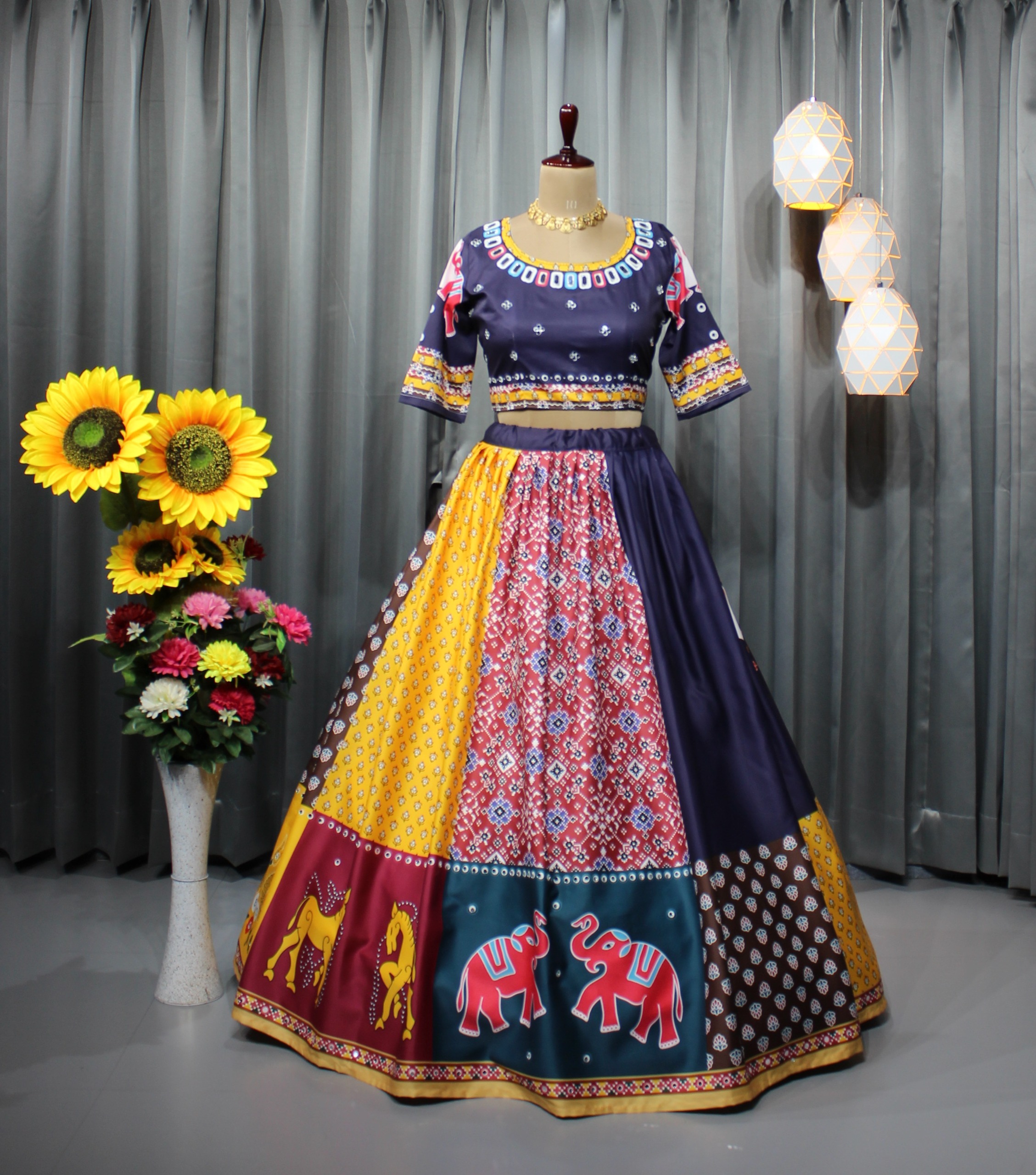
The Blue Floral Georgette Lehenga Set with Heavy Flare is a useful evening reference because the lower half has enough volume to support a detailed blouse. The shoulder area should still remain streamlined. The Stylish Multicolor Butter Silk Lehenga Choli Set can be styled similarly by keeping the dupatta long and narrow, allowing the multicolour skirt to provide visual width below the waist.
Silhouettes That Keep the Outfit Proportionate for Lehengas for Broad Shoulders: Which dupatta drape is most balanced?
A single long vertical dupatta drape usually suits broad shoulders better than a wide wrap placed across both shoulders. A fall from one shoulder towards the opposite hip creates a diagonal line and adds length through the centre of the outfit.
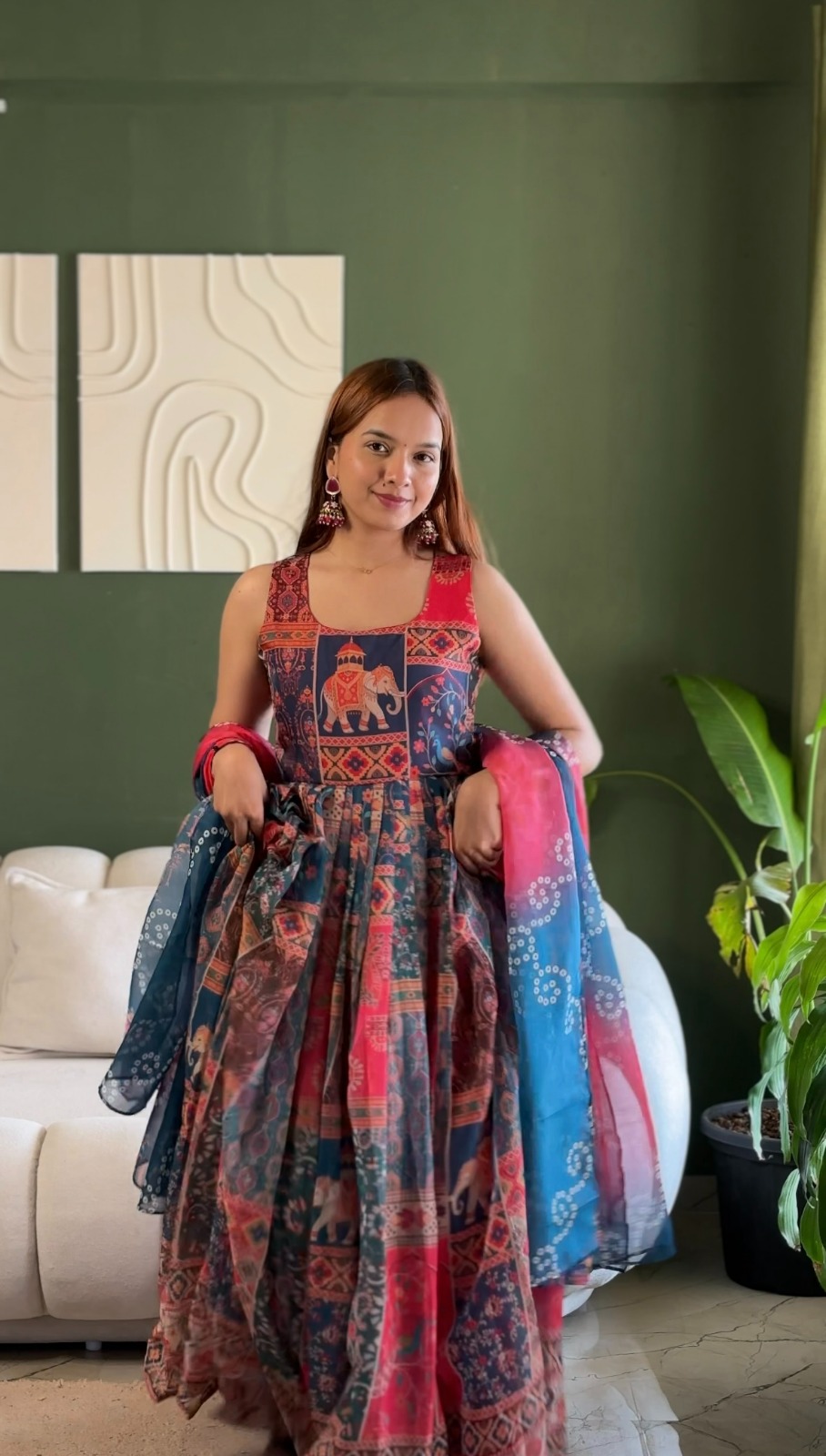
For a traditional wedding look, pin the dupatta at one shoulder and allow the front edge to fall close to the body before placing the remaining length over the opposite forearm. The front edge should ideally finish below the hip or near the knee, depending on height. A short front drop that ends at the widest part of the torso can make the upper body look broader.
A single-side pleated drape is practical for dancing and movement. Narrow pleats secured at the shoulder produce a clean line, while a waist pin prevents shifting. A wide belt over the pleats can create another horizontal break, so a small hidden pin is often more effective.
A second dupatta may be worn over the head for a bridal look, but the first dupatta should retain a narrow diagonal path across the body. Two broad dupattas spread across both shoulders can overwhelm the blouse and conceal the waist definition that helps balance the skirt.
Heavy embellished borders should not sit directly across both shoulders unless the blouse and skirt are otherwise simple. Broad borders, stiff fabric and large tassels add width at the point where the outfit needs visual calm. A lightweight georgette or chiffon dupatta with a moderate border often creates more movement than a rigid layered arrangement.
Silhouettes That Keep the Outfit Proportionate for Lehengas for Broad Shoulders: How should you choose for each occasion?
Occasion, construction and movement requirements should guide the final lehenga choice after body proportion has been considered. A bridal lehenga, Mehendi outfit and reception lehenga can all suit broad shoulders, but each needs a different balance of structure and ornament.
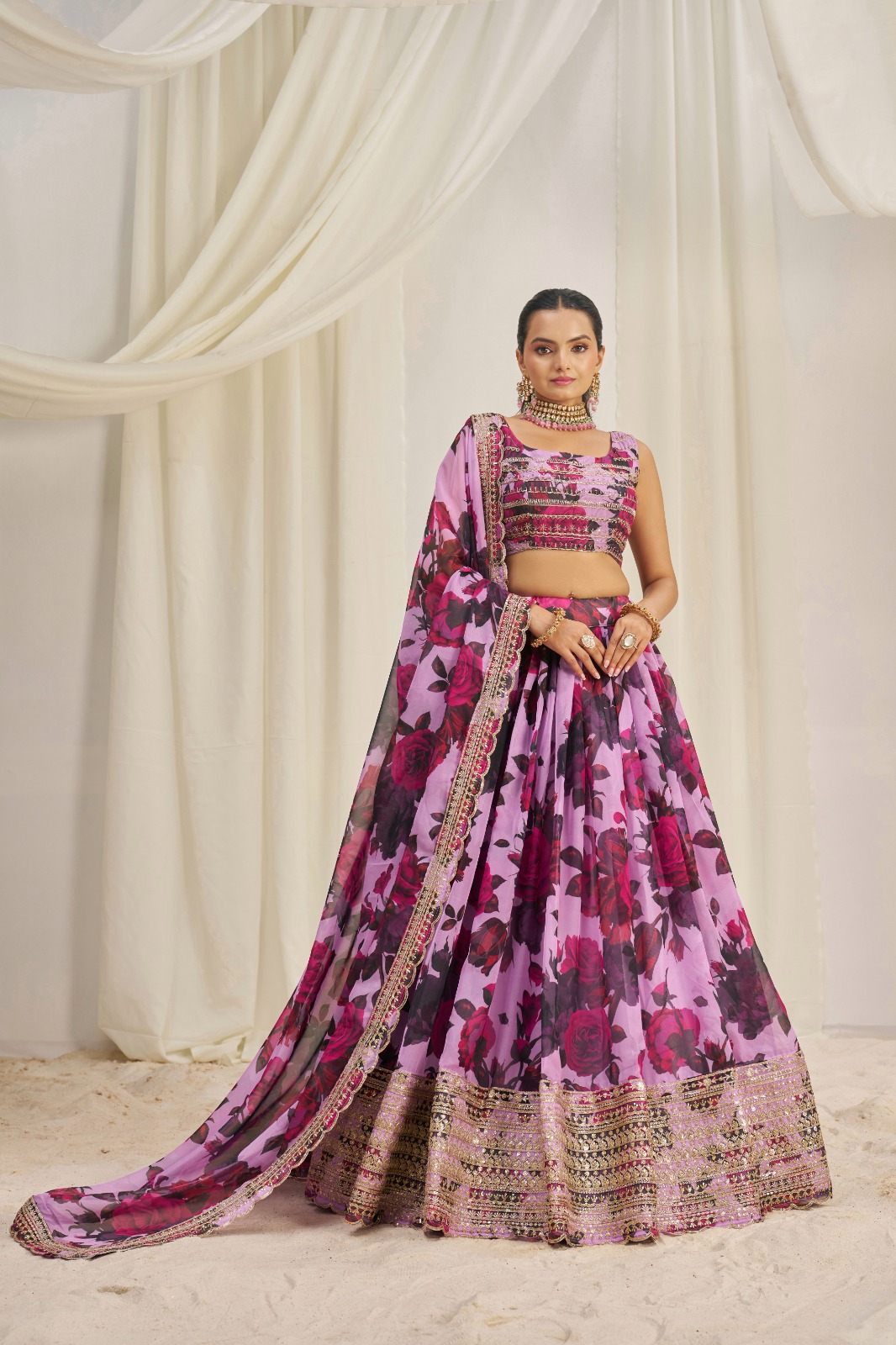
For bridal dressing, a defined waist, controlled shoulder embellishment and a skirt with substantial but graduated flare create a dependable foundation. A second dupatta can add ceremony without requiring extra decoration on the blouse. The Pink Chinon Silk Sequins Embroidered Lehenga Set Sale can be considered for a festive bridal-related event when the blouse remains neat and the dupatta is draped diagonally rather than wrapped broadly.
Mehendi dressing allows more freedom with colour and print. The Mehendi Lehengas collection can be approached through floral motifs, bright lower borders and lightweight fabrics that support movement. Green Lehengas and Yellow Lehengas are also useful directions for daytime ceremonies because colour can be concentrated on the skirt while the blouse remains visually clean.
For a Sangeet or reception, a heavier flare can create movement during walking and dancing. A panelled skirt with a firm hem holds its shape in photographs, while a fitted blouse and elbow-length sleeve keep the upper body defined. A reception outfit doesn't need a deep neckline to look contemporary; asymmetry, clean tailoring and a long dupatta can provide modernity without widening the shoulders.
Readymade construction is helpful when time is limited, but measurements still matter. Check the shoulder seam, armhole depth, bust ease, waist placement and skirt length before ordering. A Ready Made Lehenga may need minor alterations at the waist or blouse hooks, while a Semi Stitched Lehengas Collection gives more flexibility for customising the waist and flare.
A fully stitched choli should fit smoothly at the shoulder seam without pulling across the back. Pulling indicates insufficient ease, while a dropped shoulder seam can make the upper body look wider. For online shopping, compare the garment measurement chart with a well-fitting blouse rather than relying only on a general size label.
Silhouettes That Keep the Outfit Proportionate for Lehengas for Broad Shoulders: What should you check before buying?
Before buying, check the relationship between shoulder width, blouse neckline, waist placement, skirt flare and hem detail rather than judging the product photograph alone. A photograph can hide construction differences created by pinning, camera angle and styling.
- Measure the blouse: Compare shoulder, bust, armhole and sleeve measurements with a comfortable blouse. A correct shoulder seam is more important than choosing a smaller size for a sharper look.
- Check the waist position: The waistband should sit at the natural waist or slightly above it. A low waist can shorten the legs, while a very high waist can make the blouse appear broader.
- Assess the first point of flare: Look for volume that develops gradually from the waist or hip. Avoid a skirt that's narrow through the entire lower body and opens only at the hem.
- Study the embellishment map: Identify whether sequins, zari or threadwork are concentrated at the shoulders. Lower borders, vertical panels and repeated motifs usually distribute attention more effectively.
- Check the dupatta dimensions: A length of approximately 2.5 to 2.75 metres is commonly practical for a shoulder-to-hip drape, but the final choice depends on height and preferred styling. A very short dupatta may stop at the widest part of the torso.
- Consider movement: Sit, walk and raise the arms when trying a lehenga. A tight armhole or rigid shoulder can distort the blouse and make the entire outfit appear wider.
The best choice is the one that makes the whole outfit feel intentional from neckline to hem. Broad shoulders can carry dramatic colour, embroidery and bridal detail when the skirt, blouse and dupatta share a clear proportion plan.
Common Questions About Balancing Lehengas for Broad Shoulders
Which lehenga silhouette is best for broad shoulders?
An A-line or graduated-flare lehenga is usually the most balanced choice for broad shoulders. The skirt widens gradually from the waist and gives the lower half enough visual presence without adding unnecessary bulk.
Is a one-shoulder lehenga blouse suitable for broad shoulders?
A one-shoulder blouse can suit broad shoulders because its asymmetrical line breaks up a straight horizontal shoulder shape. Keep the skirt and dupatta relatively streamlined so the upper half does not become visually crowded.
Should women with broad shoulders avoid off-shoulder lehengas?
Women with broad shoulders do not have to avoid off-shoulder lehengas, but a wide off-shoulder neckline can emphasise horizontal width. A narrower asymmetric neckline, soft sweetheart shape or modest V-neck usually creates more visual balance.
Which dupatta drape is most flattering for broad shoulders?
A long one-shoulder drape falling diagonally towards the opposite hip is usually the most flattering choice. A broad wrap across both shoulders can add width, especially when the border is stiff or heavily embellished.
Are heavy-flare bridal lehengas suitable for broad shoulders?
Heavy-flare bridal lehengas can suit broad shoulders when the flare begins gradually and the blouse remains fitted. A defined waist, controlled shoulder embroidery and a vertical or diagonal dupatta prevent the skirt volume from looking disconnected from the upper body.
What should I check when buying a readymade lehenga online?
Check the blouse shoulder, bust, armhole, sleeve and waist measurements against a well-fitting garment before ordering. Also verify the skirt length, waistband position, flare, dupatta length and alteration allowance instead of choosing only by the general size label.


