

A beautifully photographed kurta or saree can hide uneven thread tension, loose ends and rough finishing unless you know where to look. The most reliable Signs of Better Finish Before You Order for Embroidery in Product Photos appear in small details: motif edges, thread density, backing, seam placement, colour consistency and the way embroidery follows the garment's shape.
Product photos can't replace touching fabric in person, but they can reveal more than a front-facing model shot suggests. A buyer who studies close-ups, borders, sleeve ends and reverse-side images can often distinguish controlled machine embroidery, careful handwork and rushed decoration before placing an order.
What should you inspect first in embroidery product photos?
Inspect the sharpest close-up first, then compare the embroidery with the full garment, sleeve edges and seams. The first check should establish whether the threadwork remains clean at both the centre of a motif and its outer edge.
Begin with a magnified image rather than the main catalogue photograph. Look for continuous lines, filled areas without bald patches and motifs that retain their intended shape. A floral buti should have recognisable petals; a paisley should have a defined outline; zari borders should show a regular metallic path instead of scattered flashes.
Next, compare repeated motifs across the front panel. Repetition doesn't need to be perfectly identical, especially in hand embroidery, but substantial differences in size, spacing or alignment may indicate inconsistent production. A border that rises and falls noticeably along a hem can also point to poor stabilisation during stitching.
Check whether the photograph is sharp enough to show individual threads. Heavy filters, strong blur or a model image photographed from several metres away make quality assessment unreliable. A trustworthy product page usually includes at least one front image, one close-up and useful views of the neckline, cuffs, hem or pallu.
Signs of Better Finish Before You Order for Embroidery in Product Photos
Signs of Better Finish Before You Order for Embroidery in Product Photos include even thread tension, tidy motif edges, secure starts and stops, appropriate density, clean backing and embroidery that follows the garment's construction.
Thread tension and stitch direction
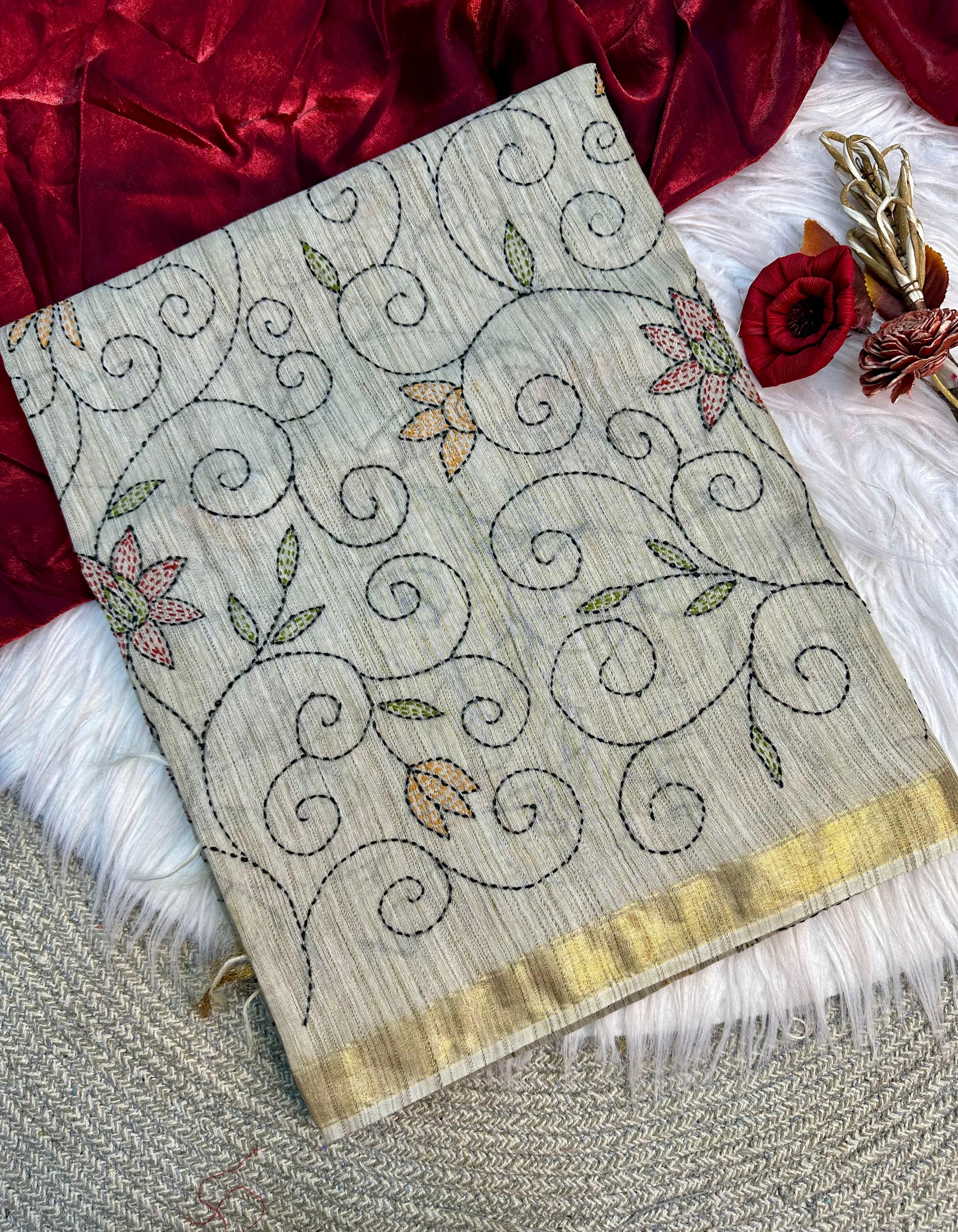
Even thread tension produces smooth surfaces without puckering, loops or sunken sections. Dense satin stitches should lie beside one another with minimal gaps, while running stitches should follow a consistent direction instead of zigzagging unpredictably.
Thread direction also affects how light reflects from zari and silk embroidery. In a well-controlled motif, stitches usually turn deliberately around a leaf, petal or geometric shape. Random changes in direction can make the design look rough even when the colour and pattern are attractive.
Edges, corners and motif boundaries
Clean edges are a strong indicator of careful embroidery finishing. Examine the corners of geometric motifs, the tips of leaves and the ends of lines for stray threads, blunt shapes or thread bunching.
Metallic zari embroidery deserves special attention because loose metallic thread catches easily on jewellery and handbags. A close-up should show a border that ends decisively rather than dissolving into loose filaments. Small thread tails may be normal on the reverse side, but visible tails on the front usually deserve caution.
Density without unnecessary stiffness
Appropriate density means that the thread covers the design area evenly without making the fabric excessively hard or distorted. A heavily filled neckline can look luxurious, but a thin cotton base may pucker if the embroidery is too dense for the fabric.
Compare embroidered and unembroidered areas in the same image. If the decorated section appears sharply gathered, wavy or much darker because of compressed stitches, the fabric may not have been adequately stabilised. A Premium Handloom Silk Saree with Handkatha, for example, calls for a different visual reading from a cotton kurta because handloom silk naturally has subtle slubs and movement; the embroidery should not erase that character through excessive stiffness.
How can a close-up reveal the quality of the embroidery backing?
A close-up of the inside or a partially visible seam can reveal whether the embroidery backing is smooth, secure and suitable for skin contact. The backing should support the stitching without appearing excessively bulky, sharply cut or covered in loose adhesive residue.
Many product pages show only the front, so inspect the neckline, armhole and hem edges for clues. If a close-up exposes the reverse side, look for tangled bobbin threads, large floating jumps and cut threads that could snag. Machine embroidery can have some thread movement on the reverse, but long unsecured spans are less reassuring than short, anchored transitions.
Skin-facing embroidery needs a separate comfort check. Dense threadwork on the inside of a neckline or sleeve can scratch during a long event, particularly when metallic yarn or sequins are involved. A lining, soft backing or neatly finished facing helps protect the wearer, while rough exposed knots may become irritating after several hours.
don't assume that every white area in a product photo is a defect. Some designs intentionally use a stabilising mesh or backing that shows through open embroidery. The important questions are whether the backing is neatly trimmed, whether it follows the motif and whether the product description identifies it when the construction materially affects comfort.
Does embroidery placement matter as much as stitch quality?
Embroidery placement matters because accurate alignment affects fit, visual balance and the garment's durability. Good threadwork can still look poorly finished when motifs land awkwardly across darts, seams, pockets or closures.
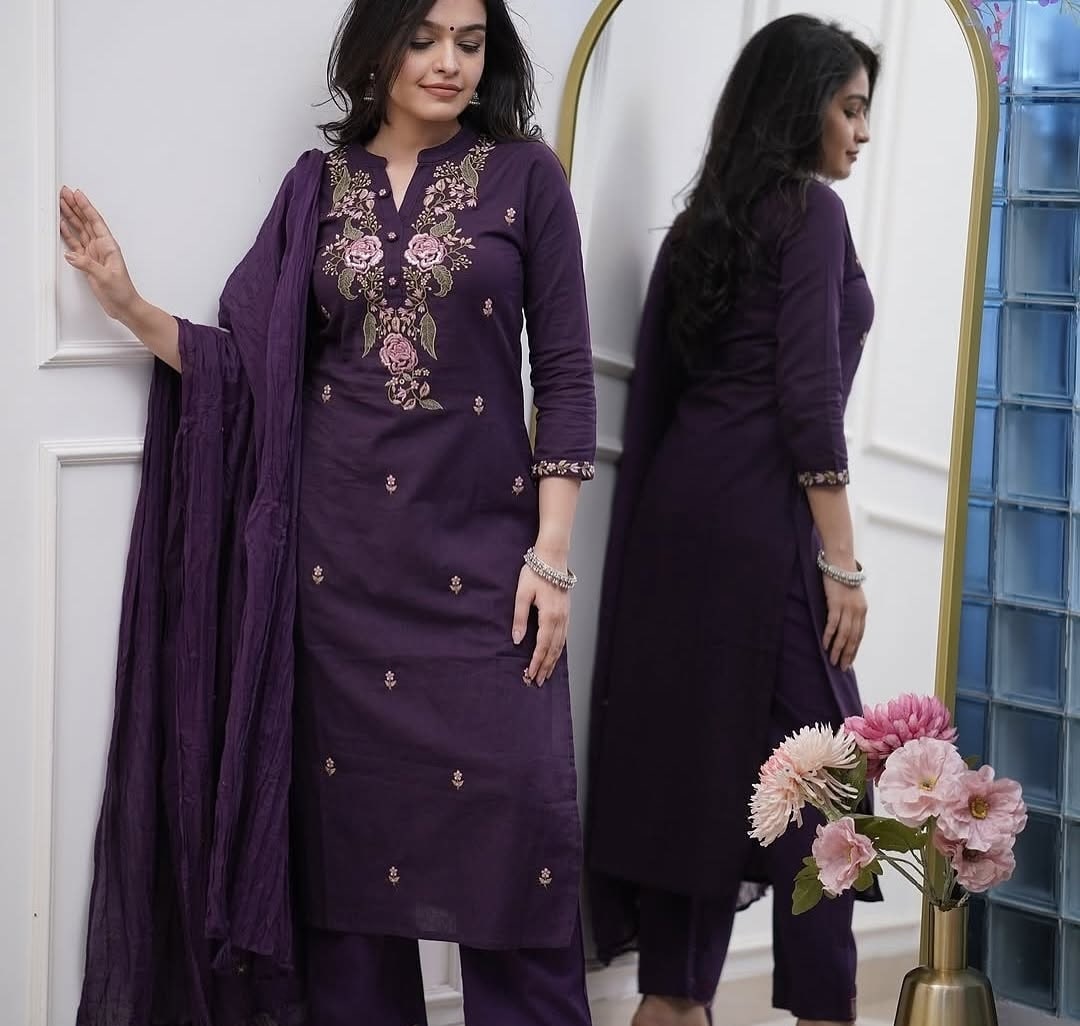
Inspect the neckline first. A symmetrical neckline design should sit evenly from left to right, unless the pattern is intentionally asymmetric. Check whether the embroidery stops before the seam allowance or is carried neatly across it. A motif cut abruptly at a shoulder seam may be unavoidable in a mass-produced garment, but repeated placement errors across several areas suggest weak pattern planning.
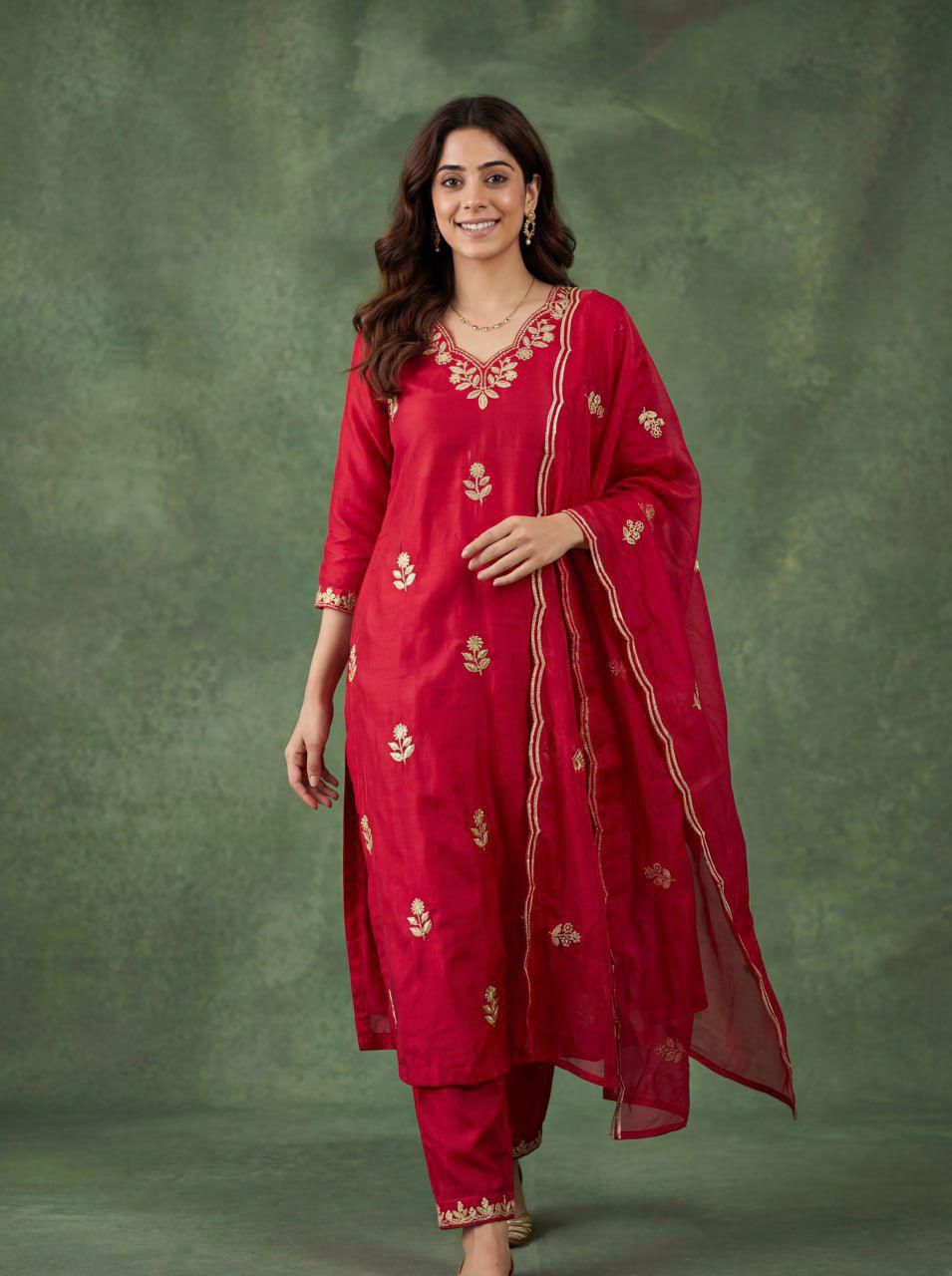
Examine sleeve borders and trouser hems for parallel alignment. The border on a Red Cotton Embroidered Kurta Pant Dupatta Set Women should appear consistently positioned on both sleeves in the product images. A small difference can result from the model's pose, so compare flat-lay photographs where available before deciding that the garment is misaligned.
Motif scale should suit the garment's proportions. Large embroidery on a short kurti may be intentionally dramatic, whereas delicate scattered butis can disappear on a wide dupatta. The Cream Silk Embroidered Kurti Pant with Printed Dupatta and the Cream Embroidered Silk Kurti Pant with Designer Dupatta can be assessed by asking whether the embroidery creates a clear focal point without making the printed or designed dupatta appear visually disconnected.
Which photo details help you judge colour and material accurately?
Use several photographs under different lighting conditions to judge embroidery colour and material accurately. One warm indoor image can make ivory fabric appear yellow, while direct flash can exaggerate the shine of zari or sequins.
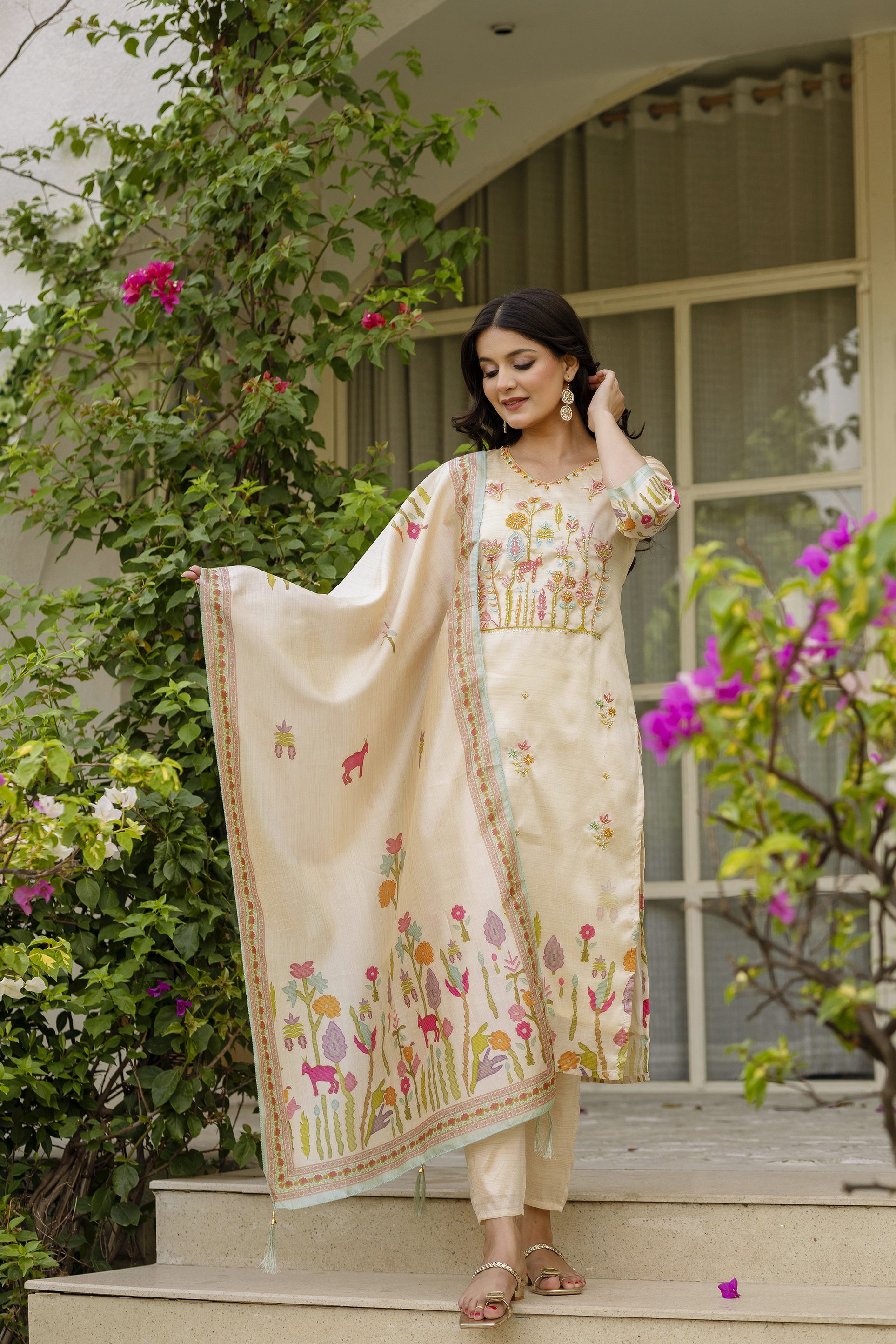
Compare the embroidery with an unembellished section of the same garment. Thread should look integrated with the base colour rather than appearing unexpectedly fluorescent because of editing. Cream, ivory and beige are especially difficult to distinguish online, so product descriptions that name the shade are more useful than vague terms such as "light tone."
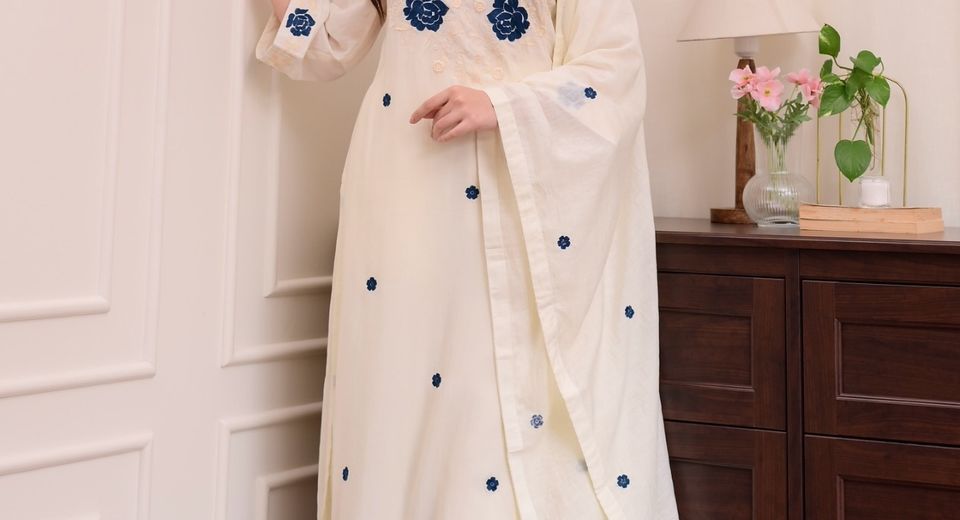
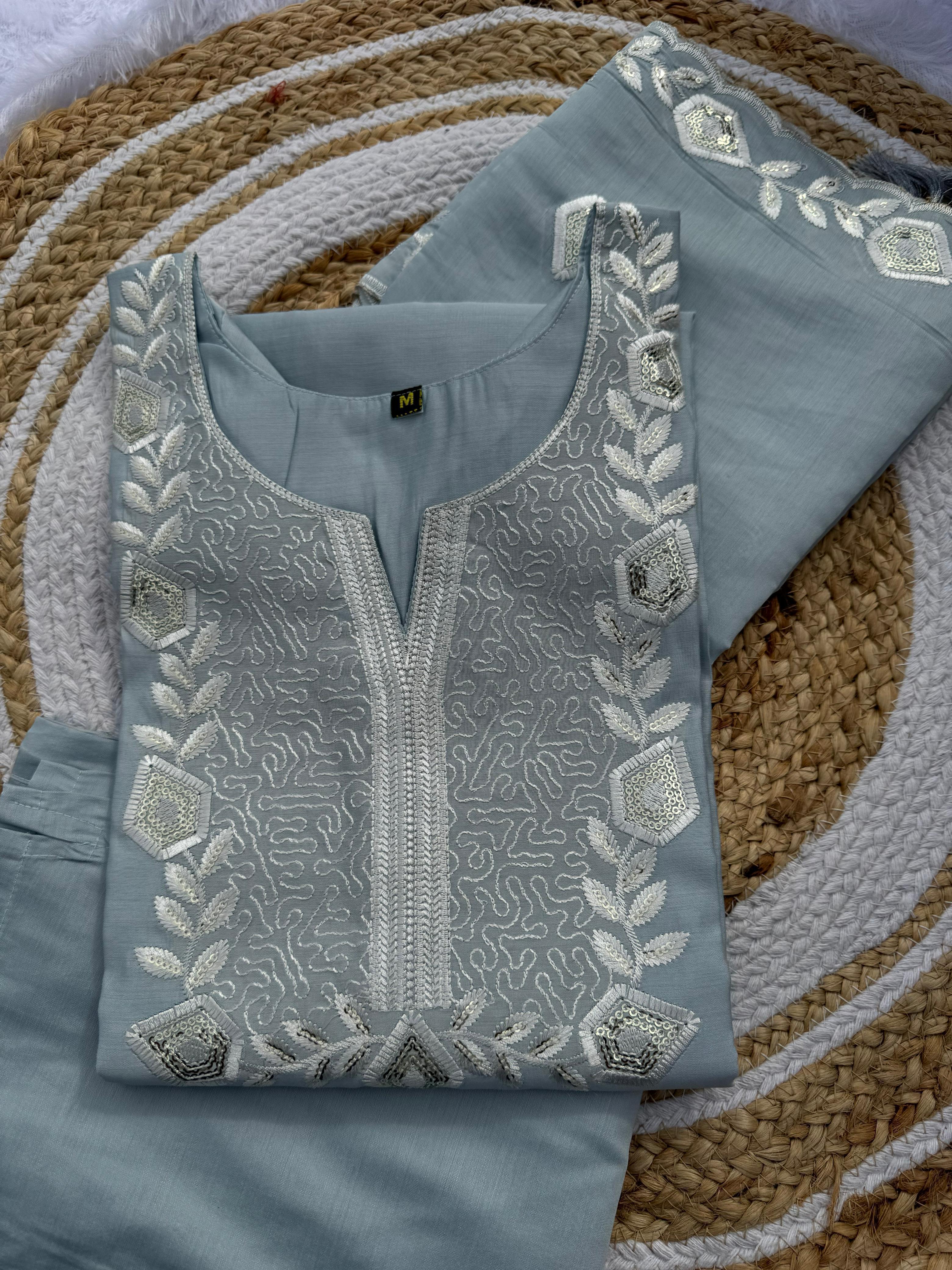
Material names also change how a close-up should be interpreted. Silk embroidery often reflects light in narrow highlights, while cotton threadwork appears more matte. Viscose can show a soft, fluid fall, so slight movement around the motifs may be normal. The Cream Blue Embroidered Viscose Kurti Set should be judged for even colour transitions and clean blue threadwork, not against the crisp stiffness expected from a heavily starched cotton textile.
Hand embroidery may contain minor variations in stitch length and motif spacing. Those variations are not automatically flaws. A handworked design should still have secure threads, intentional composition and a stable outline. Perfect uniformity is more typical of controlled machine work, while a completely chaotic result isn't evidence of valuable handwork.
How do garment construction and embroidery work together?
Garment construction supports good embroidery when stitching is placed on stable fabric areas and doesn't interfere with movement, seams or closures. Inspect how the decoration interacts with the garment rather than judging each motif in isolation.
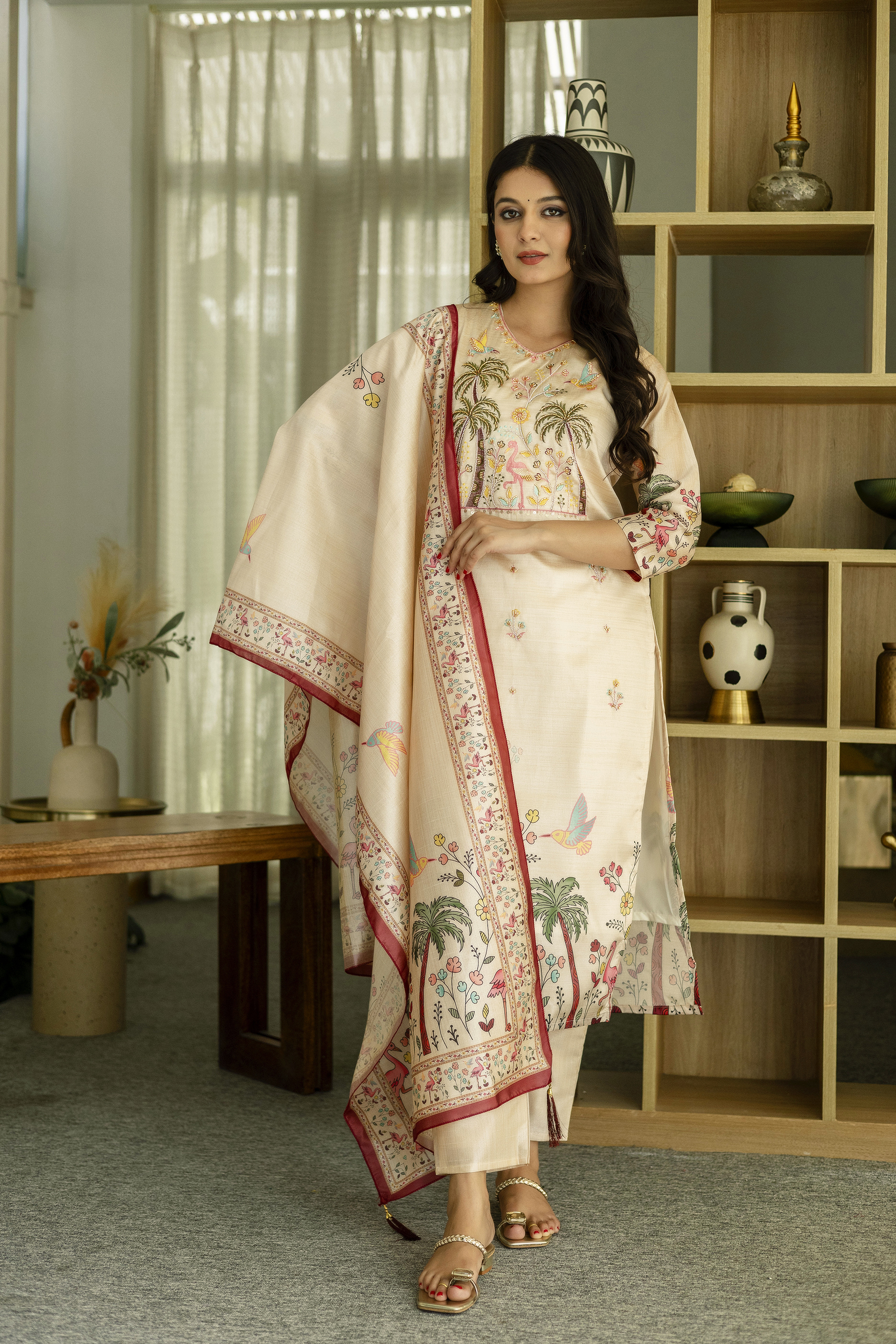
On a kurta, check whether dense work sits near side seams, underarms and sleeve joins. These high-friction areas need secure thread ends and enough seam allowance. On a palazzo, look at the hem and outer leg because embroidery placed too close to the edge can catch during walking or washing.
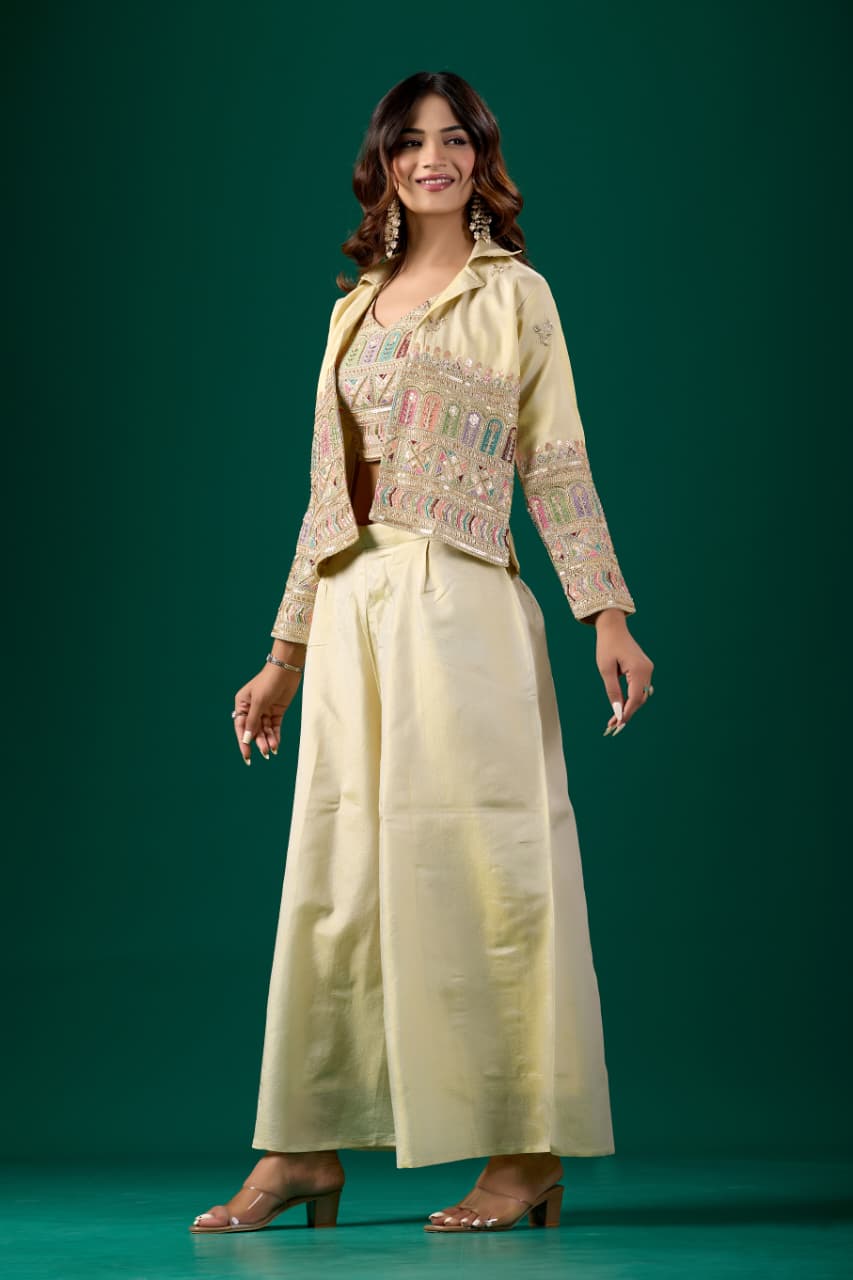
A Women's Embroidered Crop Top & Jacket Palazzo Set | Varnavi illustrates why the complete outfit needs to be assessed as a system. The crop top, jacket and palazzo may use different motif densities, and the finish looks more deliberate when the three pieces share a coherent thread colour, border rhythm or placement logic.
Dupattas require checks of both the central field and the four-sided border. Inspect whether the border turns neatly at the corners and whether the embroidered edge is weighted enough to drape without twisting. The Cream Handwork Roman Silk Kurti Pant Dupatta Set can be examined for the relationship between handwork, fabric drape and border placement rather than only the brightness of the embellishment.
What questions should you ask before placing an online order?
Ask for precise information about embroidery technique, lining, care, measurements and close-up photographs before ordering. Clear answers reduce uncertainty more effectively than a product page filled with decorative adjectives.
- Is the embroidery handwork, machine work or a combination? The answer helps you set realistic expectations for variation, price and maintenance.
- Does the garment have a lining or backing? This matters for comfort, transparency and the feel of dense threadwork against the skin.
- Are the dimensions of the embroidered panel provided? Panel measurements help you understand whether the neckline, sleeve or hem design will sit where you expect.
- What care method is recommended? Zari, sequins, silk and hand embroidery often need gentler care than plain cotton.
- Can the seller provide a close-up of the actual item? A studio sample may not show production variation in a ready-to-ship garment.
- Are colour differences caused by lighting? Ask for a daylight image when the shade is important for coordinating footwear, jewellery or a dupatta.
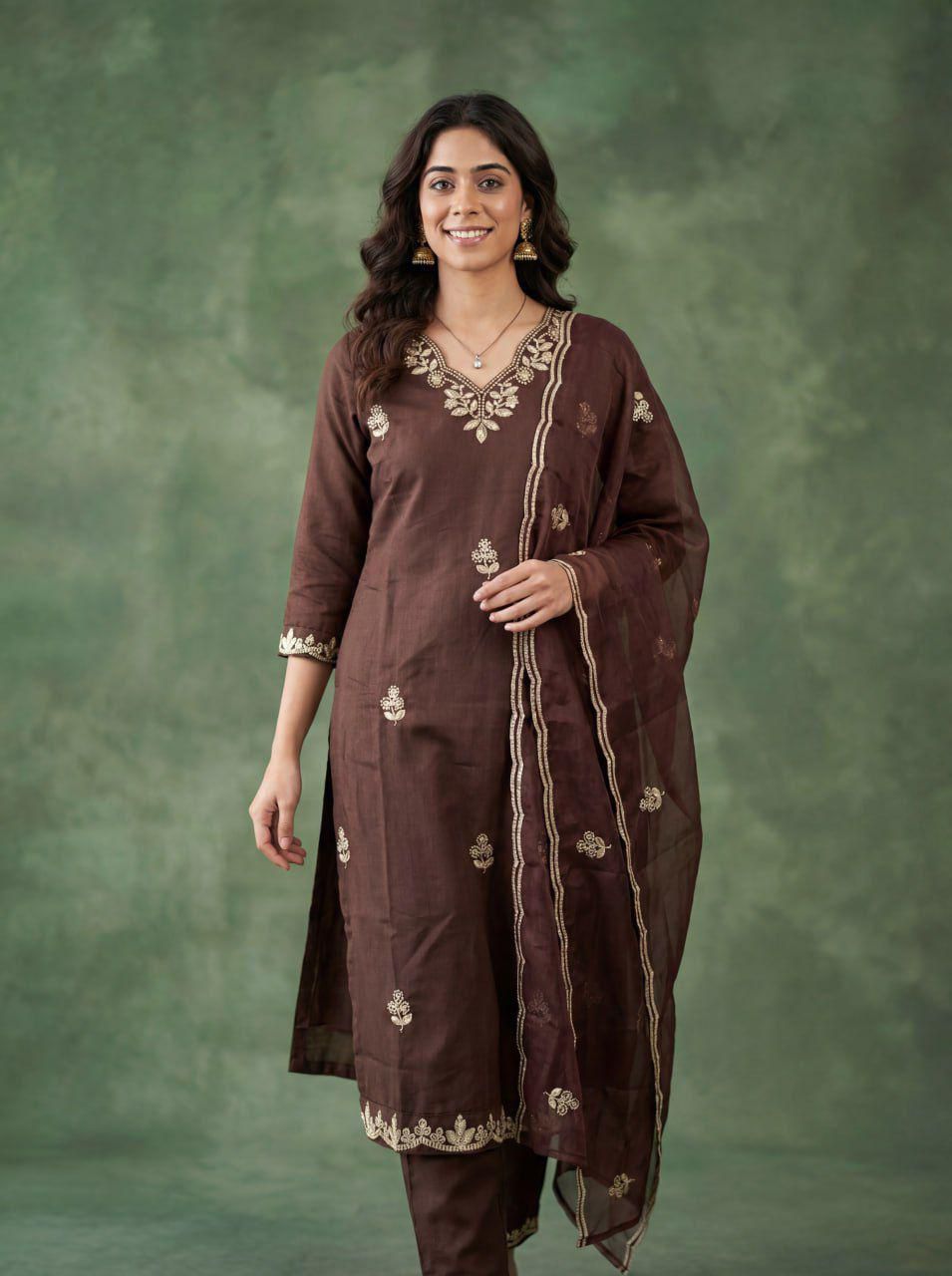
A product description that answers these questions demonstrates stronger quality communication. For example, the Brown Embroidered Cotton Kurta Pant Dupatta Set Women can be evaluated more confidently when the listing clarifies cotton composition, embroidery placement, pant measurements and whether the dupatta border is embroidered or printed.
How should you compare embroidery across different garments?
Compare embroidery by construction, density, comfort and maintenance rather than by shine alone. A highly reflective surface can attract attention while hiding loose threads or uncomfortable backing.
Start by ranking the garments according to use. A cotton embroidered set for daytime wear should have breathable fabric, washable or clearly stated care requirements and decoration that can withstand ordinary movement. A silk or Roman silk set may be chosen for a celebration, but the buyer should expect more careful storage and cleaning.
The Cream Embroidered Silk Kurti Pant with Designer Dupatta and the Cream Handwork Roman Silk Kurti Pant Dupatta Set may both appear festive, yet the deciding factors should include the softness of the reverse, the security of embellishment and the drape of the dupatta. "Heavy work" doesn't automatically mean better finish; balanced workmanship is more useful than maximum surface coverage.
Finally, compare the garment's photos with the care burden you're prepared to accept. Loose zari, dense sequins and delicate silk can require folding in soft cotton, protection from moisture and professional cleaning. A carefully finished garment deserves suitable care, but a buyer should know that commitment before ordering rather than after the first wear.
A practical five-minute photo inspection
A five-minute inspection can identify most visible embroidery concerns before payment. The process works best when you review the product page on a large screen or zoomed mobile image.
- Minute one: Check the sharpness of the closest image and confirm that the colour looks consistent across photographs.
- Minute two: Inspect motif edges, corners, thread tails and filled areas for gaps, puckering or irregular outlines.
- Minute three: Examine the neckline, cuffs, hem, seams and closures to see whether embroidery is aligned and securely finished.
- Minute four: Look for lining or backing information, then assess whether the reverse side appears comfortable against the skin.
- Minute five: Match the fabric, embroidery technique and care instructions to your intended use, climate and willingness to maintain the garment.
Photographs can't show every quality variable, including fabric hand feel, garment weight or the security of a knot hidden beneath a motif. Photos can still provide strong evidence when you inspect specific construction points rather than relying on overall sparkle. That habit turns online browsing into a more informed buying decision and helps you choose embroidery that remains attractive beyond the first photograph.
Common Questions About Judging Embroidery Quality in Product Photos
How can I tell if embroidery is good quality from a product photo?
Look for even thread tension, clean motif edges, secure-looking thread ends and embroidery that does not pucker the base fabric. Close-up images of the neckline, hem and sleeve borders are more useful than a distant model photograph.
Is minor unevenness a defect in hand embroidery?
Minor variation in stitch length or motif spacing can be normal in hand embroidery. Loose front-facing threads, large gaps, distorted motifs and insecure ends are stronger warning signs than small differences in uniformity.
What does dense embroidery indicate about garment quality?
Dense embroidery indicates extensive thread coverage, but it does not automatically indicate better workmanship. Check whether the fabric remains smooth, whether the backing is comfortable and whether the garment has been stabilised without excessive stiffness or puckering.
How do I check embroidery backing when only the front is photographed?
Inspect the neckline, armholes, seams and any visible inside edge for clues about backing and thread tails. If the reverse cannot be assessed, ask the seller whether the garment is lined, backed or finished with a soft facing.
Should embroidery align perfectly across a garment?
Embroidery should align consistently across borders, sleeves and major panels, although small differences can occur through handwork or model movement. Flat-lay photographs are the best way to distinguish actual misalignment from a pose-related optical effect.
What care does embroidered ethnic wear usually need?
Care depends on the base fabric and decoration, but zari, silk, sequins and hand embroidery commonly need gentle handling and professional or low-agitation cleaning. Follow the garment-specific instructions, store embellished pieces folded in soft cotton and avoid hanging heavy embroidery for long periods.


