

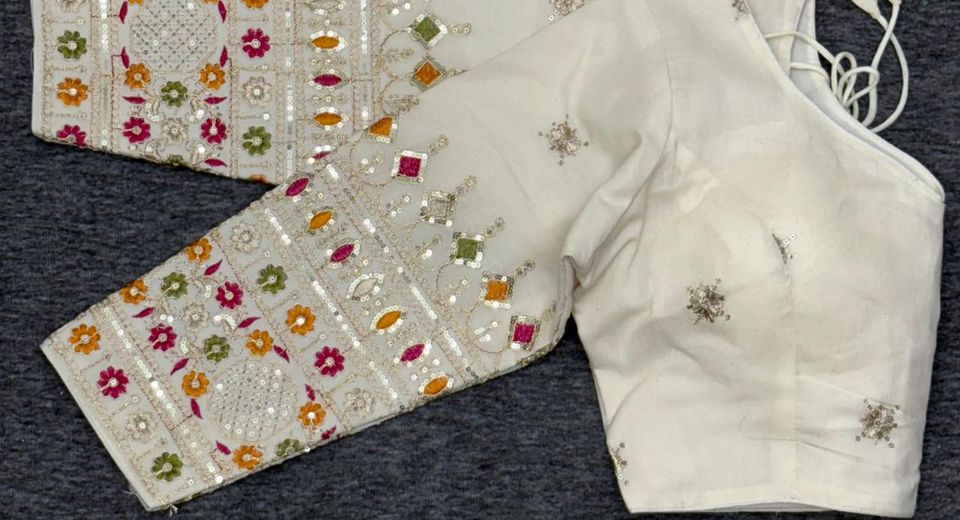
Shoulder Seam Falling Off the Shoulder? Blouse Fit Check begins with the seam, but the real cause may be the shoulder width, bust measurement, armhole depth or neckline balance. A saree blouse can feel comfortable around the waist and still fit incorrectly across the upper body. Checking each measurement in the right order helps you decide whether a readymade blouse needs a small alteration, a different size or a completely different cut.
A well-fitting blouse keeps the shoulder seam close to the natural shoulder edge, holds the bust without pulling, sits smoothly under the arm and allows normal arm movement. The correct fit also matters for fabric: cotton, silk and padded designs don't respond to looseness in exactly the same way. This guide explains what to inspect before buying or wearing a blouse with a saree.
What should the shoulder seam of a saree blouse look like?
The shoulder seam should end near the point where the shoulder slopes into the upper arm, usually within about 1 centimetre of the natural shoulder edge. The seam should not sit halfway down the upper arm, bunch toward the neck or create a ridge when the arm hangs naturally.
Stand in front of a mirror with both arms relaxed. The shoulder seam should run in a clean line from the neckline toward the armhole. A seam falling outward usually indicates excessive shoulder width, a sloping-shoulder mismatch or a blouse size chosen mainly from the bust measurement.
A shoulder seam moving slightly during arm movement is normal, especially in a sleeveless or padded blouse. Constantly sliding outward, exposing the bra strap or forming diagonal drag lines means the garment isn't stabilising on the body. A very tight seam can also be wrong: if the seam cuts into the shoulder, the blouse may have insufficient shoulder width or a shallow armhole.
How can you check the seam without a tape measure?
You can check the seam by comparing it with the bony shoulder point and observing the fabric while standing, sitting and raising one arm. Keep the blouse on for at least five minutes because a seam that looks correct while standing may drift when the body moves.
Place one finger at the outer shoulder bone and look at the seam position. More than one finger-width of fabric beyond that point is a strong sign of excess shoulder width. A seam that sits inside the shoulder edge may indicate a narrow cut, but it can also result from a tight bust pulling the entire blouse inward.
Why does a blouse shoulder seam fall off the shoulder?
A blouse shoulder seam falls off the shoulder when the shoulder width, upper-bust shape or neckline construction doesn't match the wearer's body. The most common causes are oversized shoulders, a sloping shoulder line, excess fabric at the upper bust and a neckline that's too wide or too low.
Readymade blouses are typically graded between sizes using regular proportions. Two people with the same bust circumference can have different shoulder widths, back lengths and armhole shapes. Choosing a size only from the bust number may therefore create a blouse that fits the chest but extends too far over the shoulders.
Sloping shoulders are another frequent cause. The body slopes down from the neck toward the arm, while the blouse pattern may assume a straighter line. Extra fabric then travels outward and downward. A heavy Banarasi silk or embellished blouse can show the problem more clearly because fabric weight pulls the seam away from the shoulder.
A wide neckline can contribute to slipping because the neckline has fewer points of contact with the upper chest. A narrow neckline doesn't automatically solve the issue; a narrow neck combined with a broad shoulder can cause wrinkles between the neck and sleeve. The entire upper-body pattern must be assessed together.
How do you perform a complete blouse fit check?
A complete blouse fit check examines the shoulder, bust, armhole, neckline, waist and back in that order. Checking only the bust or waist can hide the reason a seam is moving.
Check the shoulder width first
The shoulder seam should sit at the shoulder edge without excess fabric beyond the arm bone. Compare both sides because many bodies have one shoulder slightly lower or narrower than the other. A difference of 1 to 1.5 centimetres between sides is common and may require a minor adjustment rather than a different overall size.
Check the bust and upper bust
The bust area should have enough room for breathing and movement without horizontal pulling across the fullest point. Measure the full bust around the fullest part and the upper bust above the bust line; the difference helps explain why a blouse can fit the chest but feel loose near the shoulders.
For many structured blouses, approximately 5 to 8 centimetres of total wearing ease may be comfortable, but the correct amount depends on the fabric, lining, cup construction and desired silhouette. A padded blouse may need less visible ease because padding provides shape. A non-stretch cotton blouse may need more movement room than a flexible fabric.
Check the armhole
The armhole should sit close to the underarm without cutting into the flesh or dropping several centimetres below the armpit. A low armhole often causes the side seam to shift and can make the shoulder seam fall outward. A very high armhole restricts movement and creates diagonal wrinkles from the underarm toward the bust.
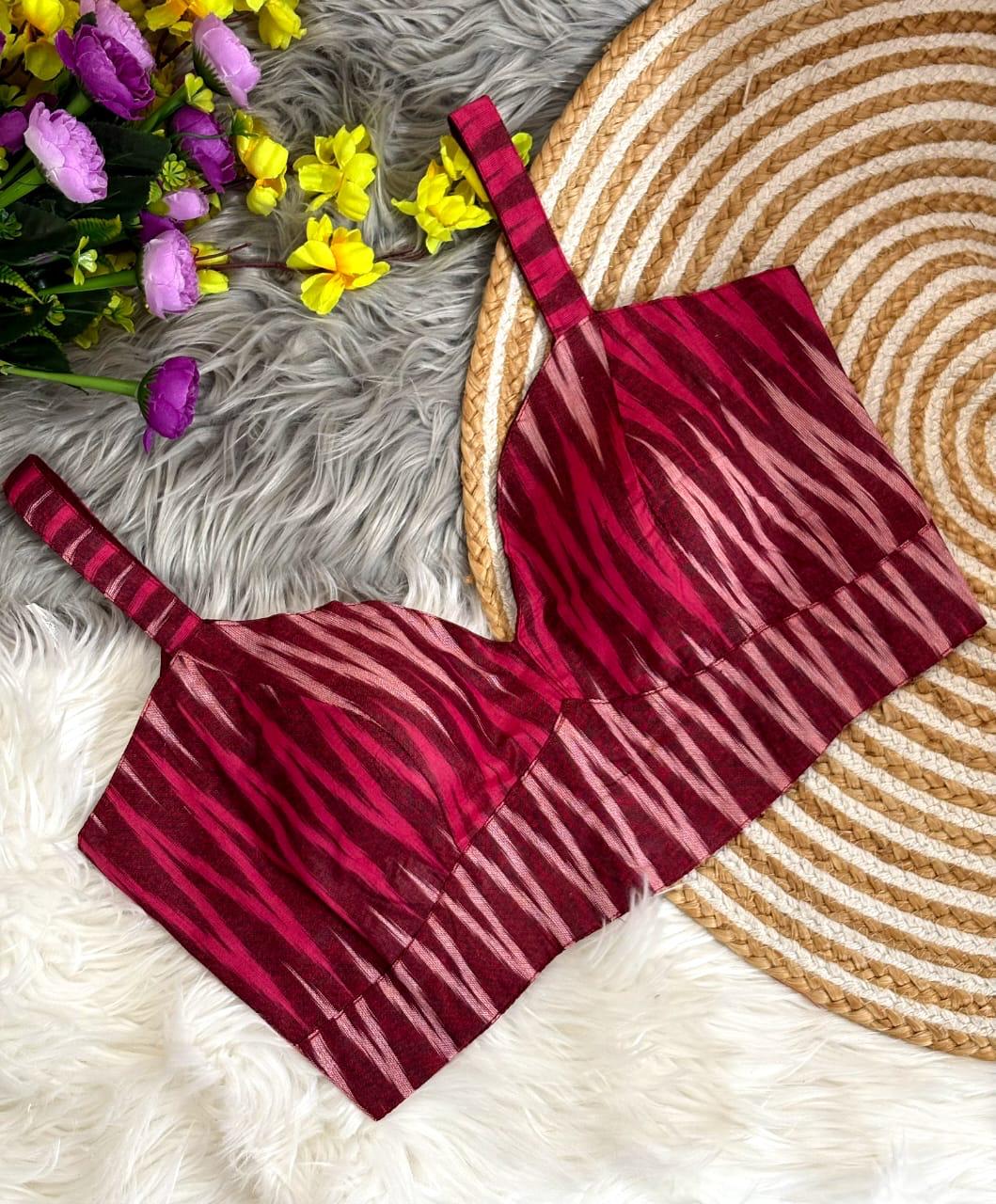
Raise both arms to shoulder height. The blouse should move with the body without exposing excessive side-bust area or pulling the neckline forward. Sleeveless designs such as Ikkat Cotton Padded Blouse for Women Sleeveless require especially careful armhole checking because there's no sleeve head to disguise an incorrect cut.
Check the neckline, back and hem
The neckline should lie flat against the body without gaping, choking or pulling toward the back. A back neckline that stands away from the nape can indicate excess upper-back fabric, while horizontal strain across the back can indicate insufficient width.
Look for diagonal lines running from the shoulder seam toward the bust or armhole. Lines pointing toward the bust usually signal insufficient bust room. Lines pointing toward the neck can indicate excess shoulder width or a neckline that needs adjustment.
The waist should follow the body without riding upward when you lift your arms. A blouse hem that rises repeatedly may be too short, too tight at the waist or pulled upward by an insufficient bust measurement. A hem that flares away may need shaping, especially in a silk or brocade design.
Which blouse measurements matter most when buying readymade?
Shoulder width, full bust, armhole depth and blouse length matter most when selecting a readymade blouse. Sleeve length, waist circumference and neckline depth become important after those primary measurements are close.
Measure the shoulder from one shoulder point to the other across the back, keeping the tape flat rather than following the curve. Measure the full bust without tightening the tape, then measure the upper bust if the size chart gives it. Record blouse length from the highest shoulder point near the neck to the intended hem.
Use a thin blouse or fitted top for measuring rather than a thick kurta or loose T-shirt. Take each measurement twice and write down the larger reliable result. If your measurements sit between two sizes, compare the shoulder and bust separately instead of automatically selecting the larger size.
Alteration possibilities should influence the choice. Shoulder seams and side seams can often be taken in, but increasing shoulder width or deepening an armhole is more complex. A blouse with a shaped neckline, dense zari work or fixed padding may offer less alteration flexibility than a simple lined cotton design.
How do cotton and silk blouses behave when the fit is wrong?
Cotton blouses usually reveal fit problems through stiffness, wrinkling and restricted movement, while silk blouses reveal problems through slipping, drag lines and weight-related stretching. Fabric behaviour should guide both the size decision and the correction method.
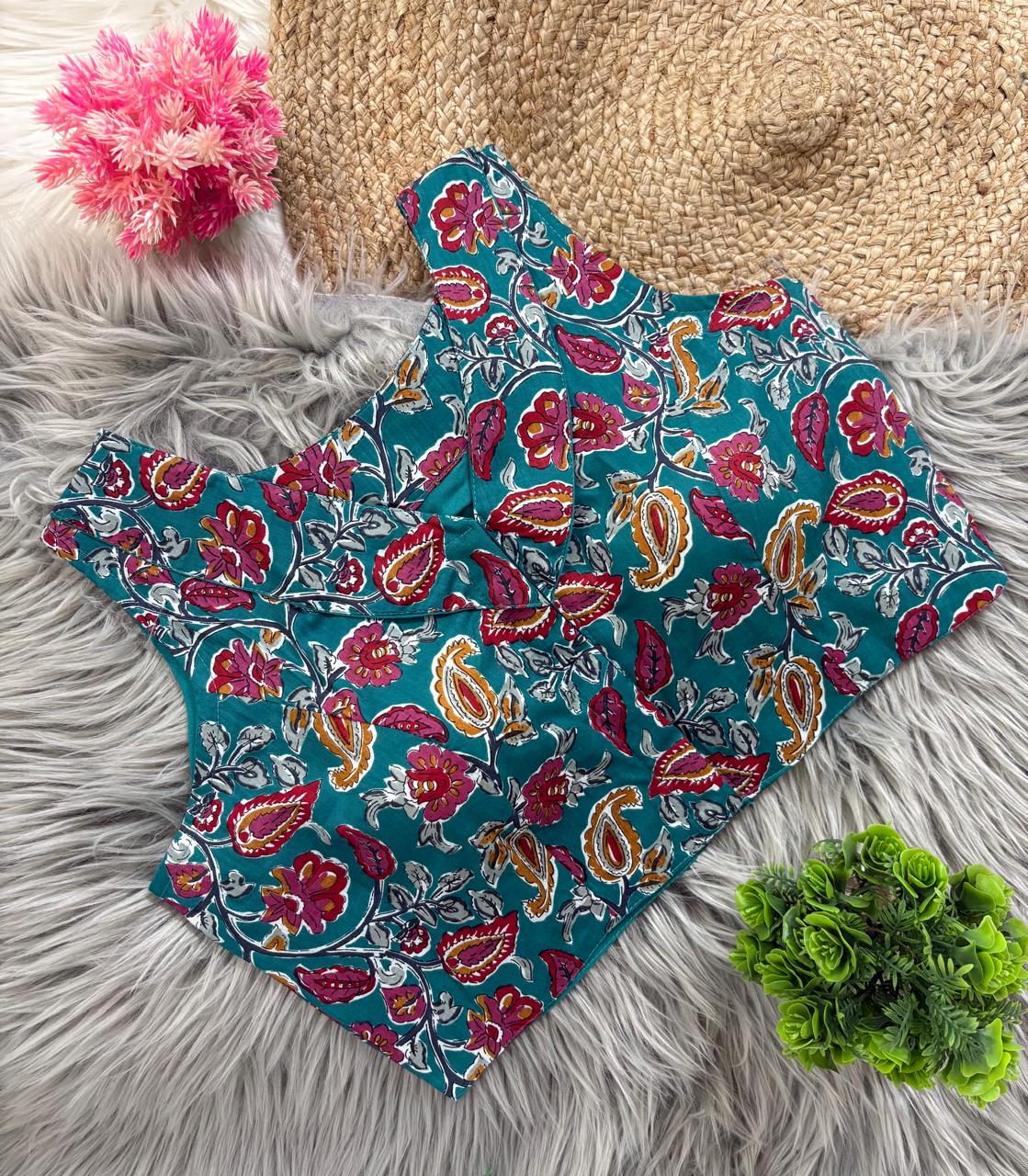
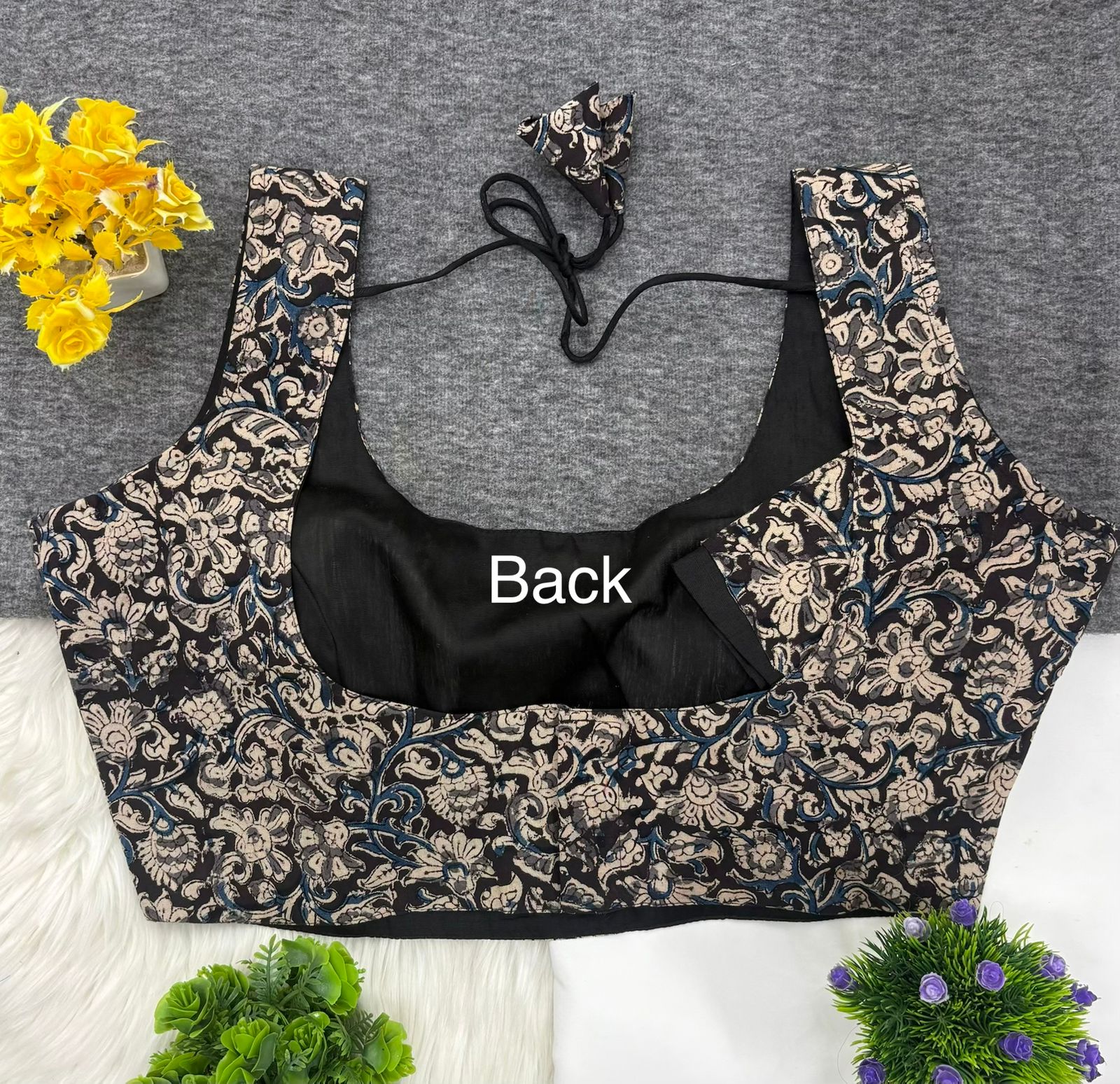
A cotton blouse such as Kalamkari Cotton V Neck Collar Blouse for Women may feel firm when new and soften after washing. Do not choose a visibly tight cotton blouse expecting washing to create extra room; cotton can shrink if washed in hot water. Pure Kalamkari Cotton Padded Blouse for Women may also need room for its lining and padding, not just the outer fabric.
Ikat cotton has a comparatively structured hand, so excess shoulder width can remain visibly boxy rather than collapsing softly. Ikkat Cotton Padded Blouse for Women Sleeveless and Brown Ikat Cotton Padded Blouse Sleeveless Stylish should be assessed at the armhole because sleeveless edges make gaping easier to notice.
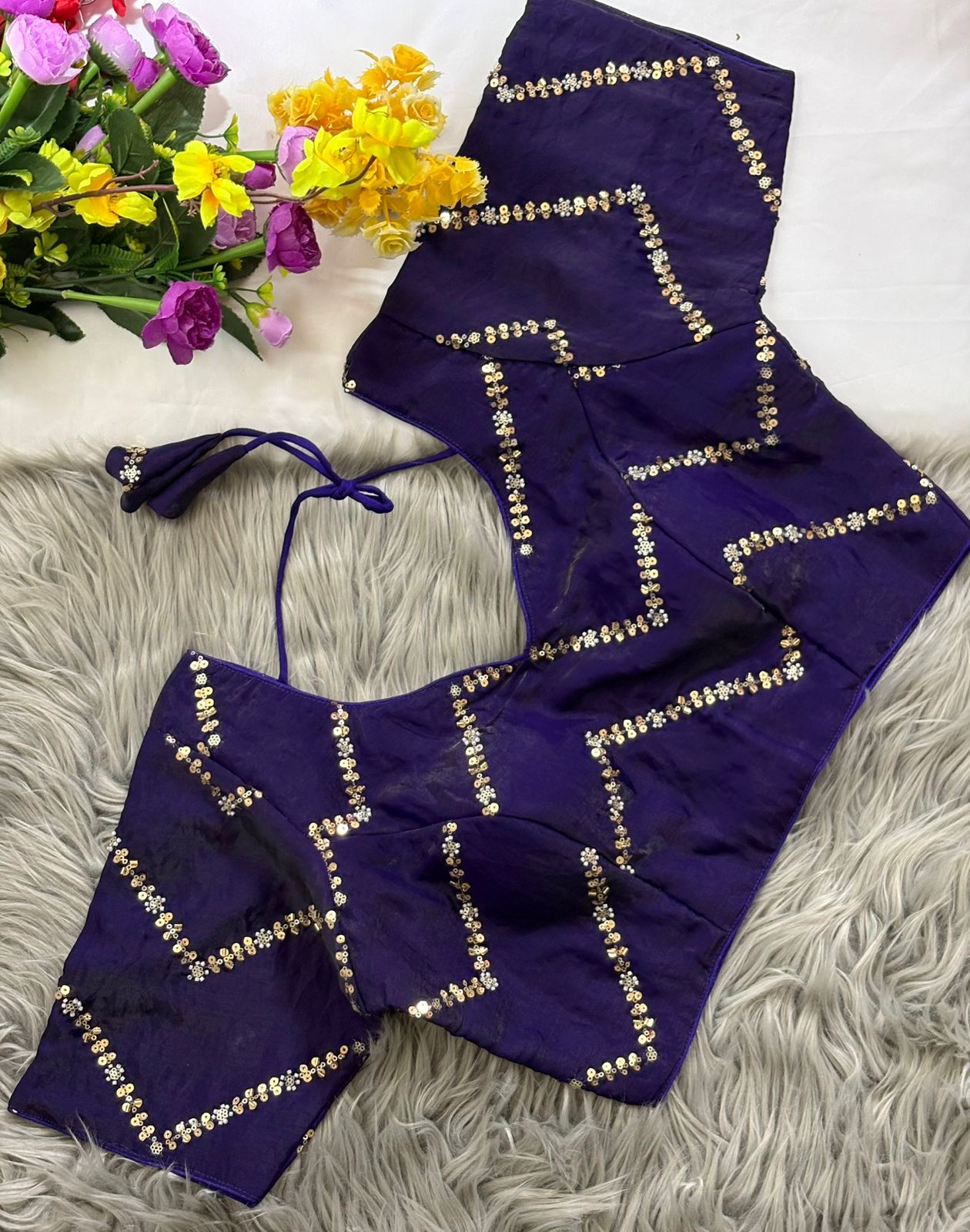
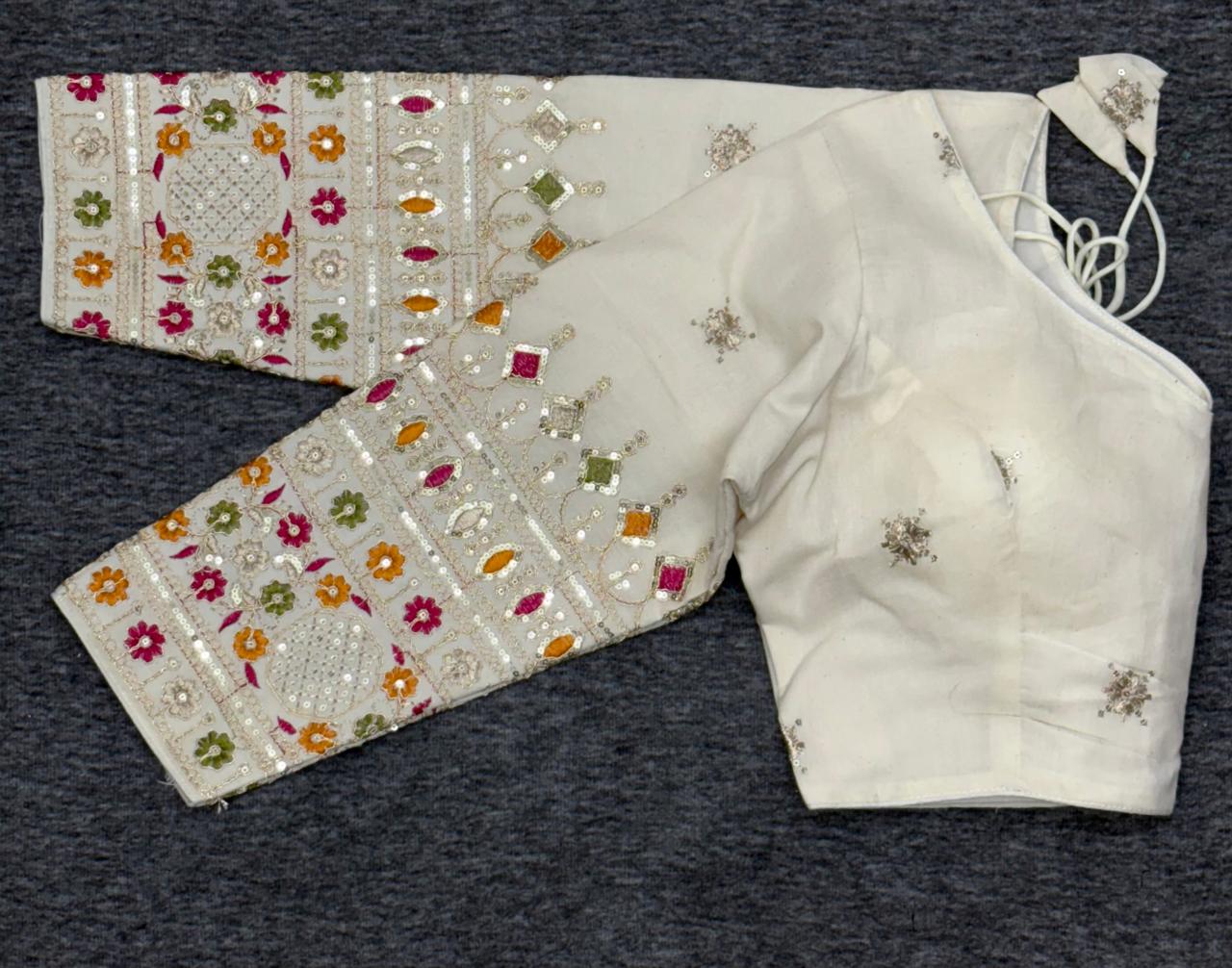
Silk has a smoother surface and may slide over the shoulder even when the measurements look close. Fendy Silk Zigzag Moti Work Readymade Blouse can require attention to both seam position and garment weight because embellishment adds downward pull. Banarasi Silk Golden Jari Padded Blouse for Women may benefit from a secure neckline, correctly positioned straps and careful storage to prevent stretching at the shoulders.
Can a falling shoulder seam be fixed without changing the size?
A falling shoulder seam can often be corrected with a shoulder adjustment, neckline adjustment or narrow tuck when the bust and armhole already fit. The safest alteration depends on where the excess fabric appears and whether the blouse has lining, padding, embroidery or zari.

A tailor may remove 1 to 2 centimetres from the shoulder seam and reshape the armhole. This correction works when the shoulder is too wide but the bust, waist and sleeve opening are otherwise comfortable. Both shoulders should be checked separately rather than removing the same amount automatically from each side.
A neckline tuck may help when excess fabric gathers between the neck and shoulder. The tailor should check whether the tuck changes the neckline depth or distorts embroidery before stitching. A shoulder adjustment is usually cleaner when the seam line is plain and the blouse has a conventional sleeve.
don't rely on safety pins for a long event. Pins can pull delicate silk, catch zari and create an uneven shoulder line. Temporary clips are useful for testing an alteration, but a finished blouse should be basted and tried on before permanent stitching.
A size change is more sensible when the bust pulls, the armhole cuts in, the blouse length is wrong and the shoulder seam falls simultaneously. Taking in the shoulder can't create missing bust room. Similarly, choosing a larger blouse may solve a tight bust but leave the shoulders too broad; side-seam alteration or custom tailoring may produce a better result.
How should you test a blouse with a designer saree?
Test the blouse with the actual saree, petticoat or shapewear and jewellery you plan to wear because layers can change posture, shoulder movement and perceived length. A designer saree paired with a structured readymade designer blouse needs more precise checking than a casual drape with a soft cotton blouse.

Put on the intended bra and secure the saree at the waist before judging the blouse. Walk for five minutes, sit on a chair, lift both arms, turn your torso and raise one arm as if adjusting the pallu. The shoulder seam should remain close to the shoulder edge during these movements.
Check the pallu path as well. A pallu that's pinned tightly over one shoulder can pull a loose blouse outward, while a heavy border can drag a silk blouse down. Pin the pallu only after the blouse fits independently; otherwise, the saree may temporarily hide a shoulder problem.
Classic Festive Wear Blouse for Stylish Saree Look can be judged by the same process as a more embellished designer readymade blouse. Fit should come before decorative details because an attractive neckline can't compensate for a moving shoulder seam, restricted armhole or unstable bust line.
When should you choose tailoring instead of a readymade blouse?
Choose tailoring when your shoulder-to-bust proportions differ substantially from standard size charts or when the blouse requires major changes in length, cup shape and armhole depth. Choose a readymade blouse when the key measurements are close and only a small adjustment is needed.
Readymade blouses offer convenience, especially for occasional saree styling, but size labels are not universal. Compare the garment's actual measurements with your body measurements instead of treating S, M, L or XL as fixed standards. A blouse that's labelled designer readymade may still need shoulder alteration.
Custom tailoring is particularly useful for asymmetrical shoulders, a fuller bust with narrow shoulders, a long torso or a pronounced difference between upper bust and full bust. Tailoring also allows you to specify neckline depth, padding thickness, sleeve length and back coverage.
If alteration is needed, photograph the blouse from the front, side and back before taking it to a tailor. Mark the natural shoulder point with removable chalk and explain whether the problem appears while standing, walking or lifting the arm. Clear information reduces the risk of correcting the wrong seam.
The most reliable final test is simple: the blouse should remain comfortable after ten minutes of movement, the shoulder seam should stay near the shoulder edge, and the neckline should lie flat without constant adjustment. That combination indicates a functional fit rather than a garment that merely looks correct in a still photograph.
Common Questions About Saree Blouse Shoulder Fit
Why does my blouse shoulder seam keep slipping down?
The shoulder seam usually slips because the shoulder width is too broad, the shoulder slopes more than the pattern allows, or the neckline is too wide. A tight bust or low armhole can also pull the blouse out of position, so check the entire upper-body fit before altering the seam.
How should a readymade blouse fit on the shoulders?
A readymade blouse should place each shoulder seam close to the natural shoulder edge, generally within about 1 centimetre. The seam should remain stable when you walk, sit and raise your arms, without exposing the bra strap or creating diagonal drag lines.
Can a tailor fix shoulders that are too wide on a saree blouse?
A tailor can usually reduce excess shoulder width by taking in the shoulder seam and reshaping the armhole. The alteration works best when the bust, waist and blouse length already fit; a shoulder adjustment cannot solve a tight bust or an armhole that cuts into the underarm.
Should I buy a larger blouse if the bust feels tight?
Buy a larger blouse only if the larger shoulder, armhole and length measurements can be altered successfully. If the bust is fuller but the shoulders are narrow, side-seam adjustment, cup alteration or custom tailoring is usually better than accepting oversized shoulders.
How much ease should a cotton or silk blouse have?
Many structured blouses need approximately 5 to 8 centimetres of total wearing ease, although the correct amount depends on the cut, lining, padding and fabric. Cotton often needs movement room because it has little give, while smooth silk may need a secure neckline because it can slide even when the measurements are close.
How do I test a blouse before wearing it with a saree?
Wear the intended bra and saree layers, then walk, sit, raise both arms and practise adjusting the pallu for at least five minutes. The blouse passes the fit test when the shoulder seam stays near the shoulder edge, the neckline lies flat and the armhole allows movement without gaping or cutting in.


