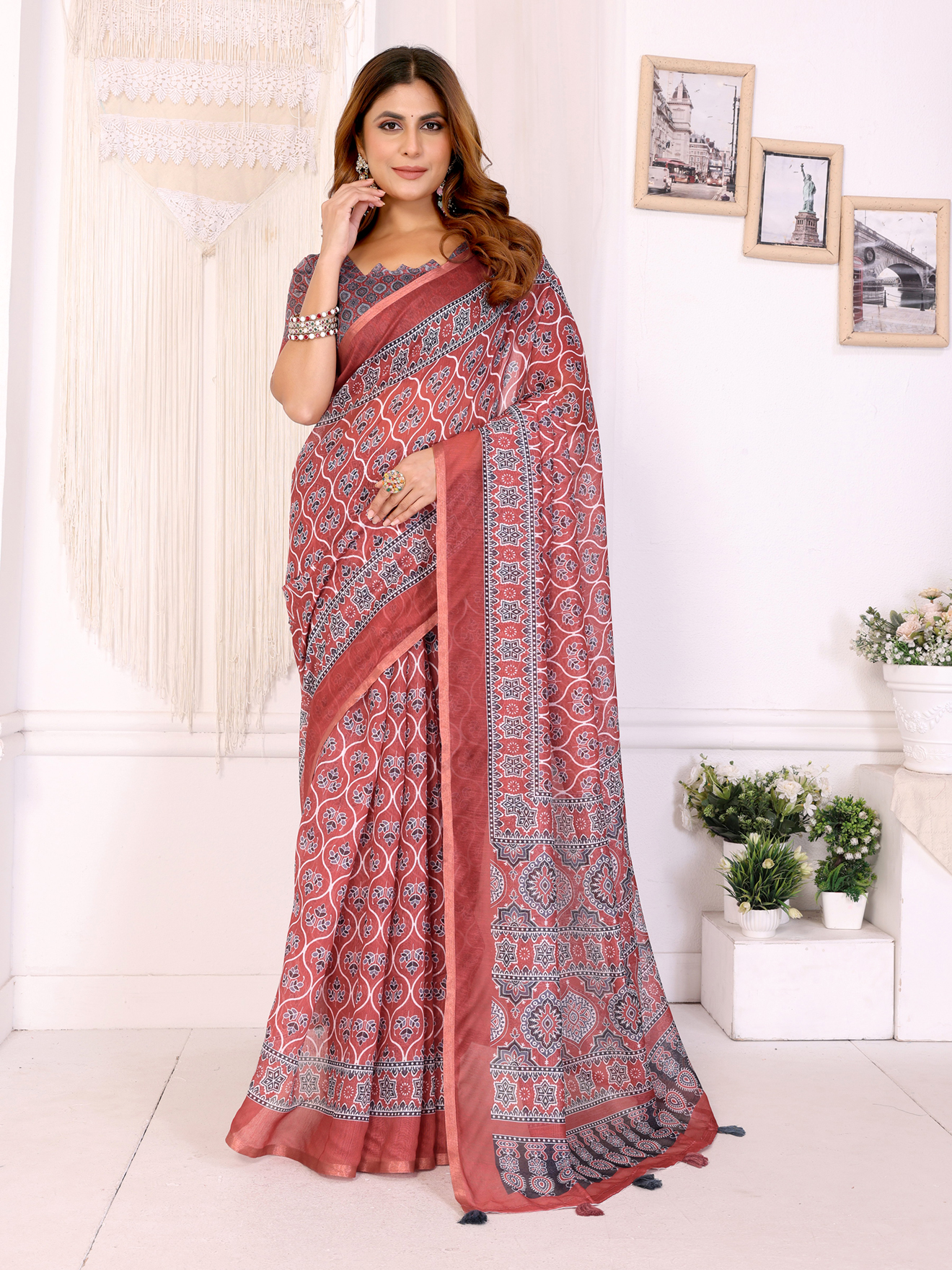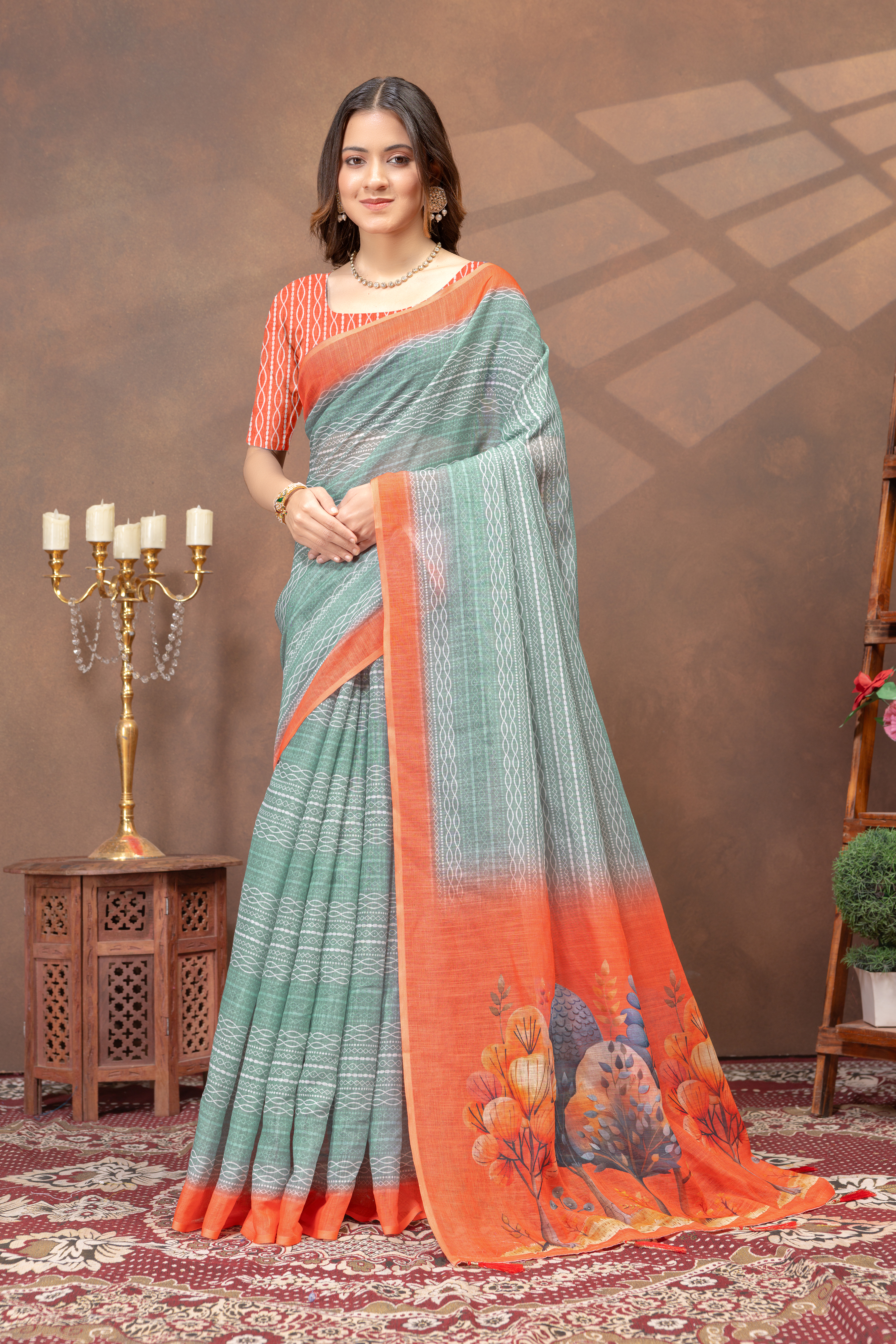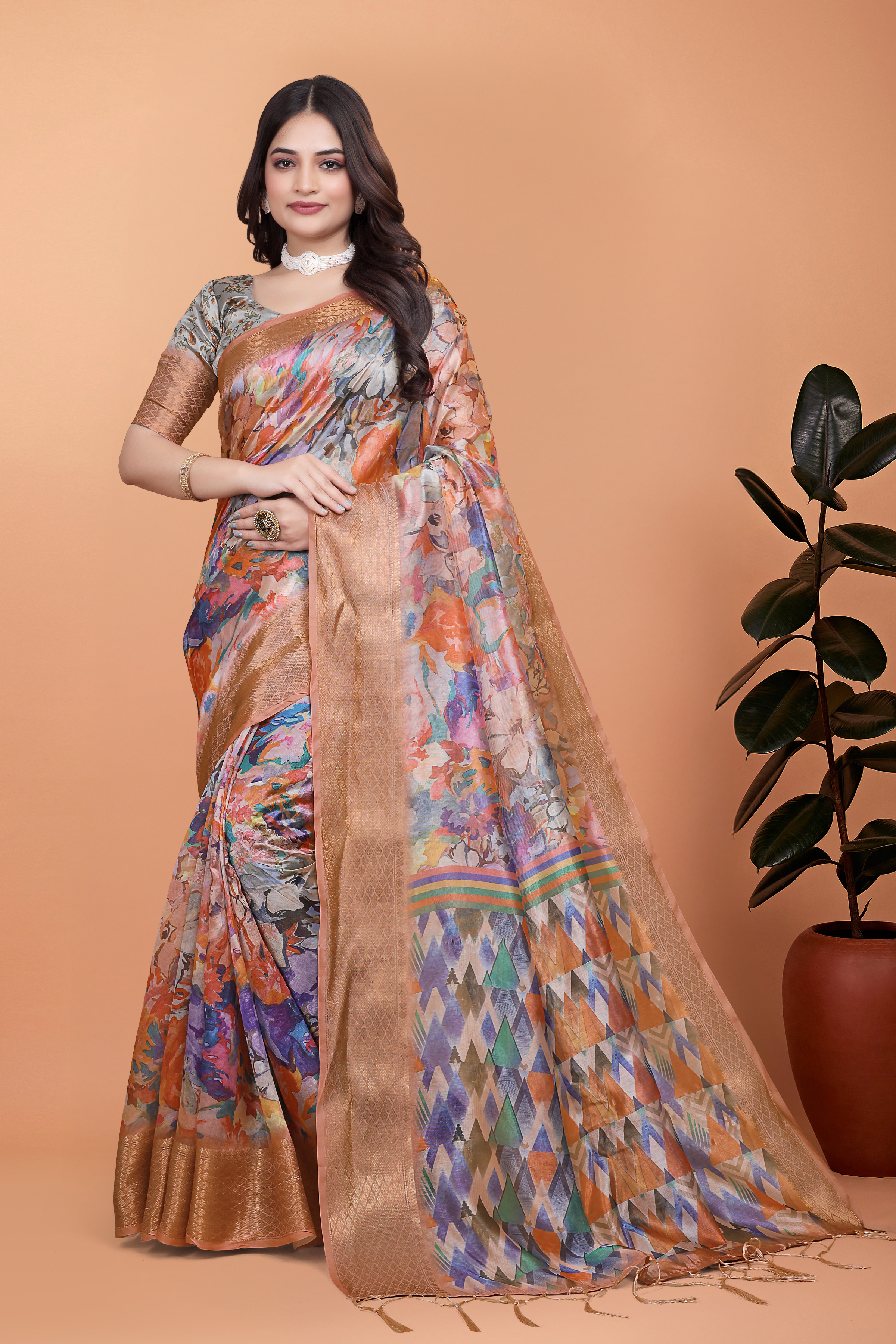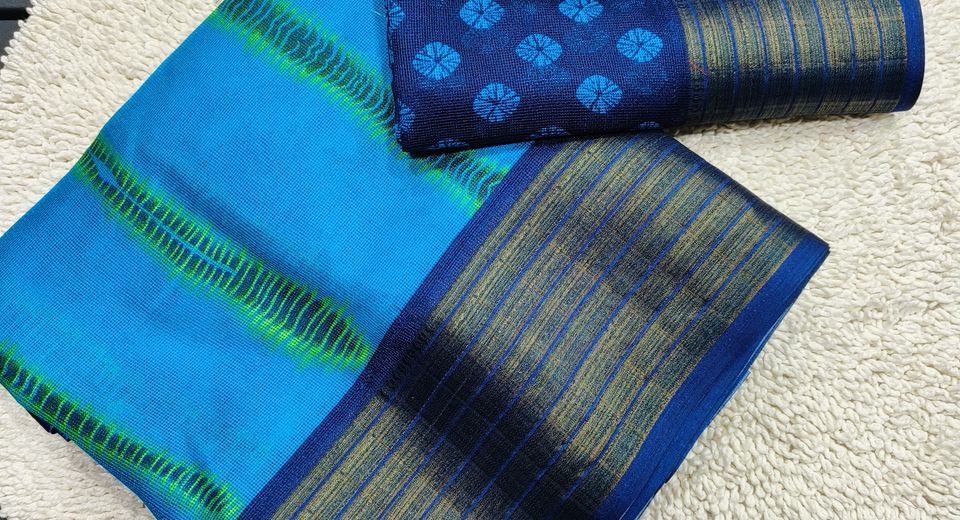
One folded length of cloth can hold several shades, soft edges and tiny shifts that no perfectly repeated print can reproduce. Shibori Sarees Make Imperfect Dye Patterns Part of the Beauty by allowing colour to respond to folds, pressure and resistance instead of forcing every mark into a uniform grid. The result is a saree with movement, depth and an individual surface character.
Shibori belongs to the wider family of resist-dyeing techniques. Sections of fabric are folded, compressed, stitched, bound or otherwise protected before colour is applied. Protected areas receive less dye, while exposed areas take in more colour. Small differences in folding and dye penetration create the rings, clouds, stripes and feathered transitions associated with Shibori.
Why Shibori Sarees Make Imperfect Dye Patterns Part of the Beauty
Shibori patterns look beautiful because controlled resistance produces variation without losing design intention. Each pale crease, darker junction and softened border records part of the physical process used to colour the fabric.
Traditional Japanese Shibori includes named approaches such as arashi, which creates pole-wrapped diagonal effects, and itajime, which uses folded fabric compressed between shaped blocks. Indian fashion often adapts the broader resist-dyeing idea into printed, tie-dyed or digitally interpreted saree designs. A saree described as a Shibori print may therefore show a printed interpretation rather than a fully hand-bound textile, so the product description remains important.
Irregularity also changes how the eye reads a drape. A neatly repeated motif can appear static when the saree is pleated. Shibori-style marks continue to shift across the shoulder, pleats and pallu, so the same fabric looks different when worn, folded or photographed.
What counts as desirable variation?
Desirable variation means differences in colour density, line softness and motif scale that remain visually balanced across the saree. Variation should not mean unexplained holes, loose threads, broken zari or stains unrelated to the design.
Natural dye movement may create a paler area near a fold or a darker edge where colour collected. Such changes are part of the aesthetic when the description identifies the saree as Shibori, tie-dyed or hand-finished. A buyer should distinguish process variation from damage by examining close-up images and asking about the fabric before purchase.
How does resist dyeing change the look of a saree?
Resist dyeing changes a saree by controlling where colour can travel, producing layered marks instead of a single flat field of pigment. The amount of pressure, tightness of binding, fibre content and dyeing sequence all affect the final pattern.
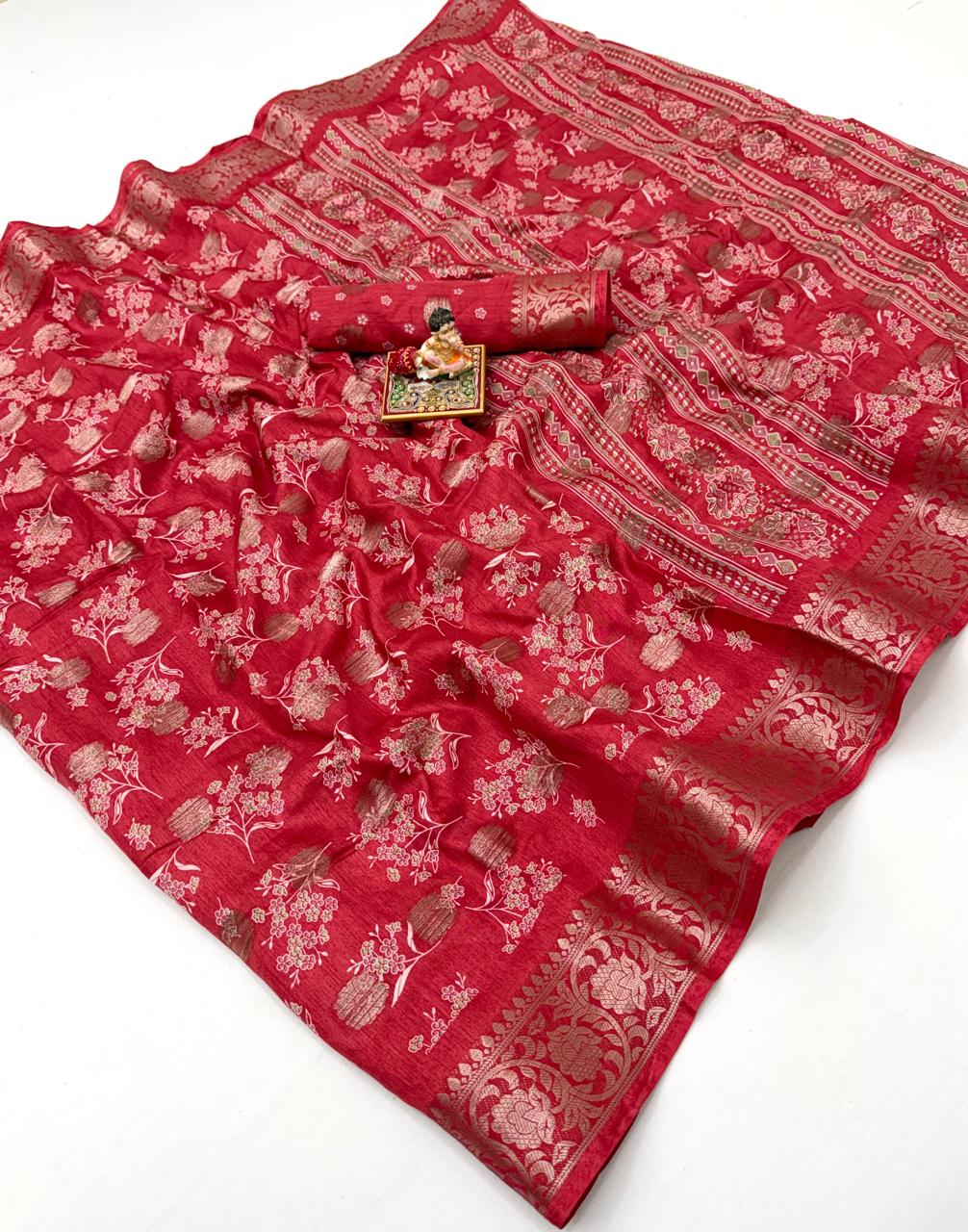
Silk fibres generally absorb colour with clarity and develop a luminous surface, while cotton can give resist marks a softer, more matte appearance. Kora silk has a light, slightly crisp presence that can help a border or pallu hold its shape. Tussar silk usually brings a textured, earthy character that makes blurred colour transitions feel especially organic.
The Premium Grey Silk Saree with Pink Zari & Shibori Print illustrates how an understated base can make irregular colour work easier to notice. Grey gives pink zari and Shibori marks room to breathe, while the contrast can suit both minimal jewellery and more festive accessories.
A saree with a printed interpretation of Shibori may offer a more predictable repeat and easier care than a heavily hand-resisted piece. Neither approach is automatically superior. The useful question is whether the surface, fibre and level of variation suit the way the saree will be worn.
How can you read colour variation before buying?
You can read colour variation by inspecting the pallu, border, pleat area and a close-up image rather than judging a saree only from its first photograph.
- Check whether the motif repeats mechanically or changes gradually across the width.
- Look for whether pale areas are intentional negative space or signs of uneven finishing.
- Compare the displayed colour under different images because silk sheen can make grey, blue and pink appear lighter.
- Ask whether the saree has a separate blouse piece and whether the blouse fabric carries the same dye pattern.
- Read measurements for saree length, blouse length and border width before deciding how to pleat the fabric.
How should you choose fabric and colour?
The right Shibori saree depends on the fabric's movement, the intended occasion and the amount of pattern you want near the face. Lightweight silk or kora silk can create a fluid drape, while a more textured textile gives a relaxed handloom appearance.

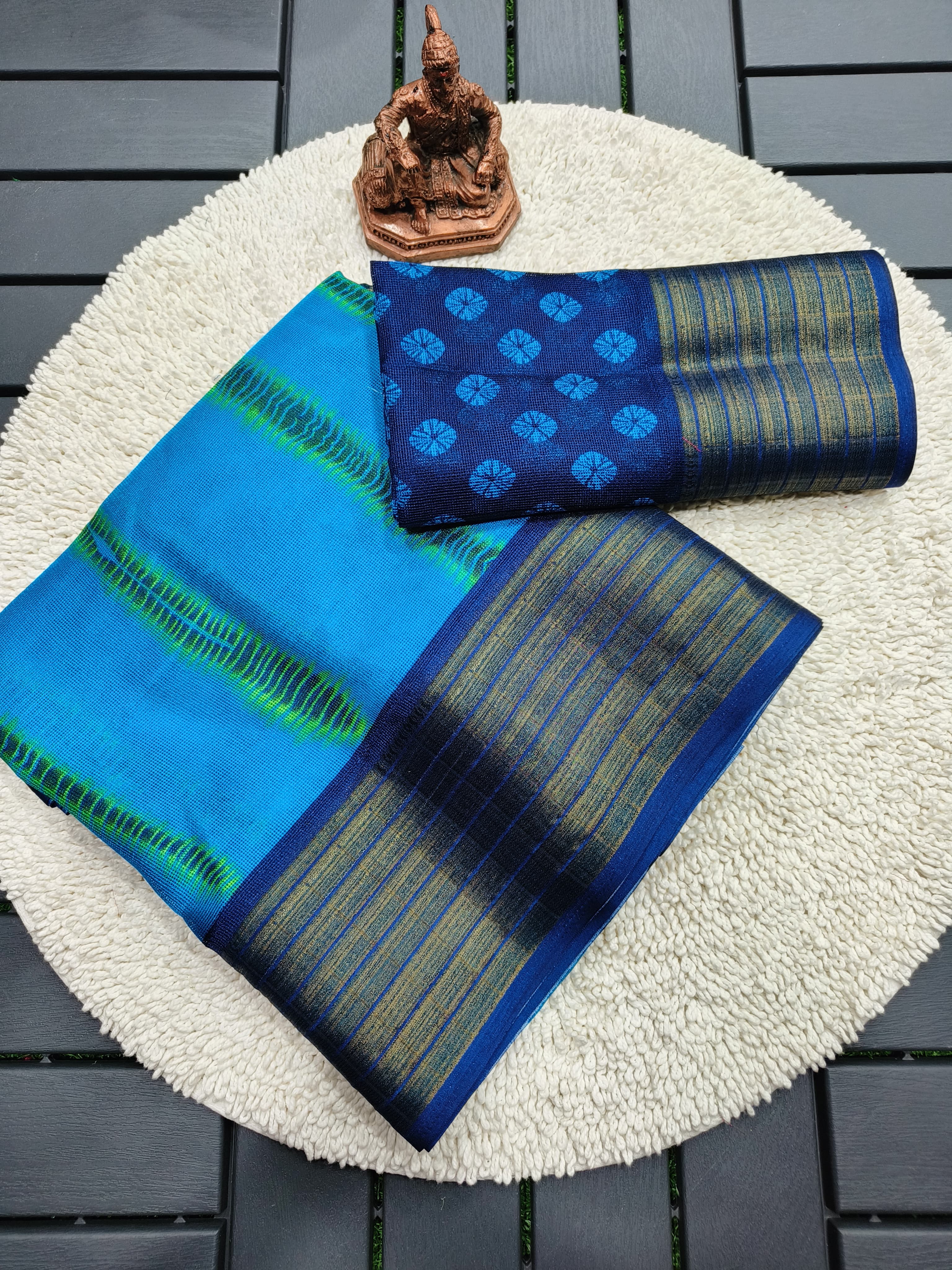
Blue Kora Silk Saree with Zari Border demonstrates why a restrained border can anchor a fluid body. The crispness of kora silk can help narrow pleats stay defined, making the saree practical for a daytime celebration or a formal gathering where you want structure without heavy embellishment.
Deep blue, grey and green work well when the saree will be worn repeatedly because those colours accommodate silver, gold and oxidised jewellery. Pink, yellow and lighter pastels create a more noticeable colour story and can be useful for daytime festivities. Traditional Yellow Saree with Blue Zari Border Design shows how a strong base-and-border relationship can create definition even without a dense all-over motif.
For a more overtly festive direction, Festive Wear Blue Silk Saree for Women can be considered alongside Shibori-inspired accessories or a contrasting blouse. Green Kora Silk Saree with Pink Jacquard Border offers another lesson in colour balance because the border supplies pattern concentration while the body remains easier to style.
Budget also affects fabric expectations. Sarees from Rs 1000 to Rs 1500 can be an useful starting point for shoppers comparing accessible sarees, but price alone can't confirm whether a design is hand-dyed, printed, pure silk or blended. Fibre composition and finishing details matter more than the word designer in a listing.
Discount collections such as Sarees Under 20% Off, Sarees Under 10% Off, Sarees Flat 60% Off and Sarees Flat 50% Off can help with price comparison, but a reduced price should not replace checking measurements, fabric composition, colour description and care instructions.
How can you style a Shibori saree without hiding its pattern?
A Shibori saree is easiest to style when the blouse and accessories repeat one colour from the fabric instead of competing with every irregular mark.
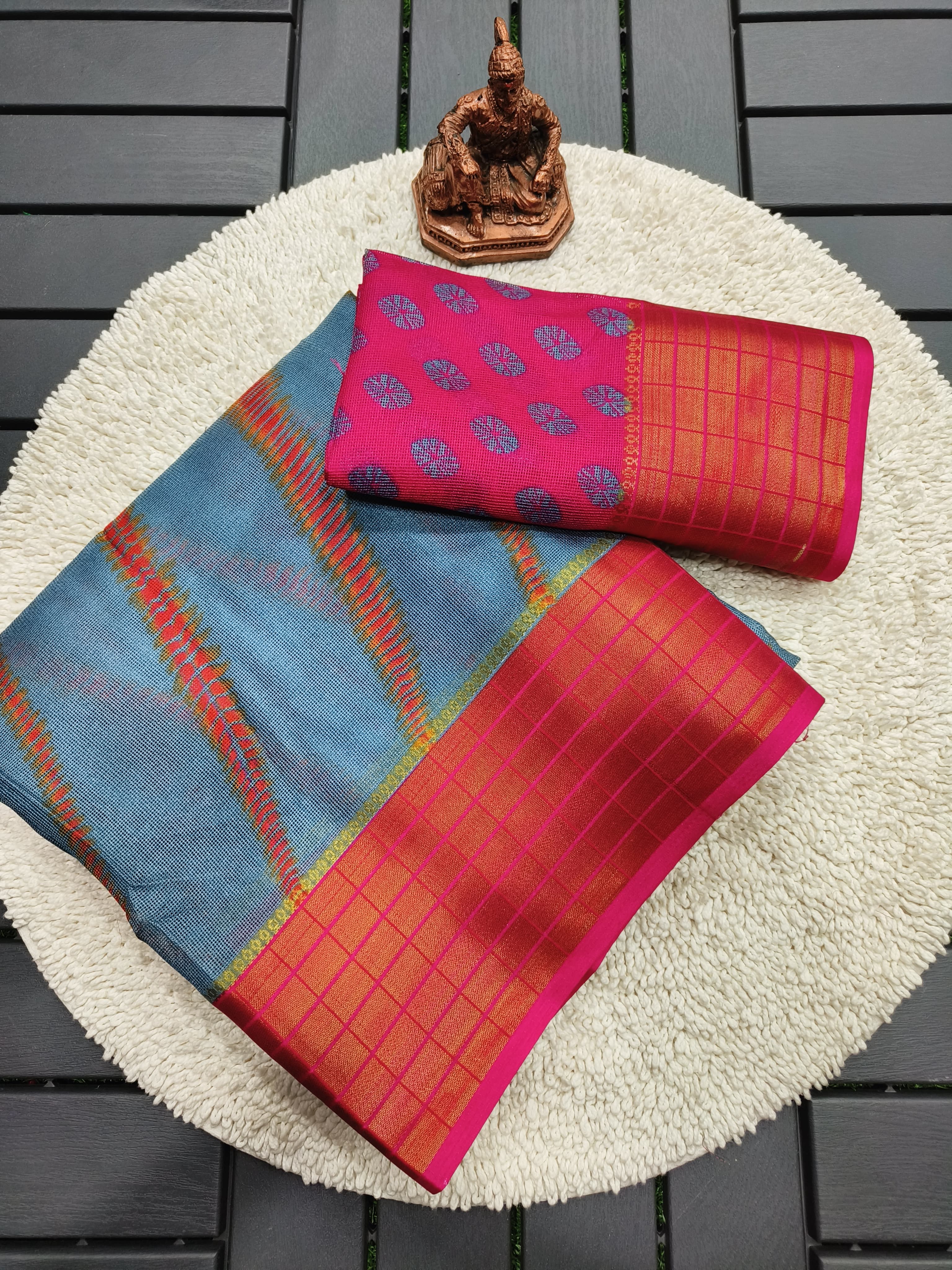
Choose a solid blouse in the deepest shade of the border or in a muted neutral drawn from the saree's background. A grey Shibori saree with pink accents can take a dusty-rose, charcoal or ivory blouse. A blue saree with zari can take navy, cream or metallic gold, depending on whether the intended result is quiet or ceremonial.
Keep pleats moderately narrow when the pattern contains bands or directional marks. Very wide pleats can conceal the resist effect, while extremely narrow pleats can compress the design into visual noise. Five to seven front pleats often provide a practical middle ground, although the correct number depends on saree width, fabric thickness and the wearer's height.
Let the pallu fall openly when the pallu contains the strongest variation. A shoulder pleat or a single loose fall can display more of the colour transition than tightly accordion-folding the entire pallu. Pinning at the shoulder and waist improves stability without flattening every fold.
Stylish Pink Silk Saree with Rich Green Pallu Design gives an useful styling principle: allow one area to lead. If the pallu is rich in colour, use a simpler blouse and smaller earrings. If the saree body is the main focus, choose a narrow bangle stack and a clean hair arrangement.
What jewellery works with Shibori patterns?
Gold, silver, pearl and oxidised-metal jewellery can all work with Shibori patterns when the metal echoes the saree's border or strongest colour.
- Gold zari pairs naturally with warm gold earrings, a slim kada or a small pendant.
- Pink and mauve accents suit pearls, rose-toned metal or uncut-style jewellery.
- Blue and green combinations can take silver, enamel or oxidised finishes.
- A busy Shibori surface usually benefits from one focal accessory rather than several competing statement pieces.
Makeup can follow the same logic. A defined eye and a neutral lip keep attention on a multicoloured saree, while a stronger lip can balance a pale pastel base. These choices are styling options rather than rules; the useful principle is to preserve a clear visual hierarchy.
Where can you wear a Shibori saree?
Shibori can suit daytime gatherings, festive lunches, cultural events and evening celebrations when fabric weight and accessories are adjusted to the setting.
For a Haldi ceremony, choose a breathable saree with a bright yellow, green or pink connection and keep jewellery lightweight. For a family puja, a silk saree with a modest zari border and a neatly pinned pallu gives a composed finish. For an evening reception, stronger earrings, a structured blouse and a deeper colour palette can make the same resist-dyed language feel more formal.
Pink Ombre Tussar Silk Printed Saree with Zari Border shows how gradual colour movement can bridge daytime and evening dressing. The ombre effect gives the drape depth, while the zari border supplies a clear festive cue. The saree can be styled with a solid blouse rather than adding another printed layer.
Light cotton works well for long hours, travel and warm weather. Pastel Floral Tissue Handloom Cotton Saree with Zari Weaves isn't a Shibori saree, but it demonstrates how a soft base, handloom texture and restrained zari can create visual interest without a heavy surface. The same styling principle applies to a lighter Shibori design.
How should you care for a Shibori saree?
You should care for a Shibori saree according to its fibre and dye instructions, beginning with dry cleaning for delicate silk unless the care label specifically permits another method.
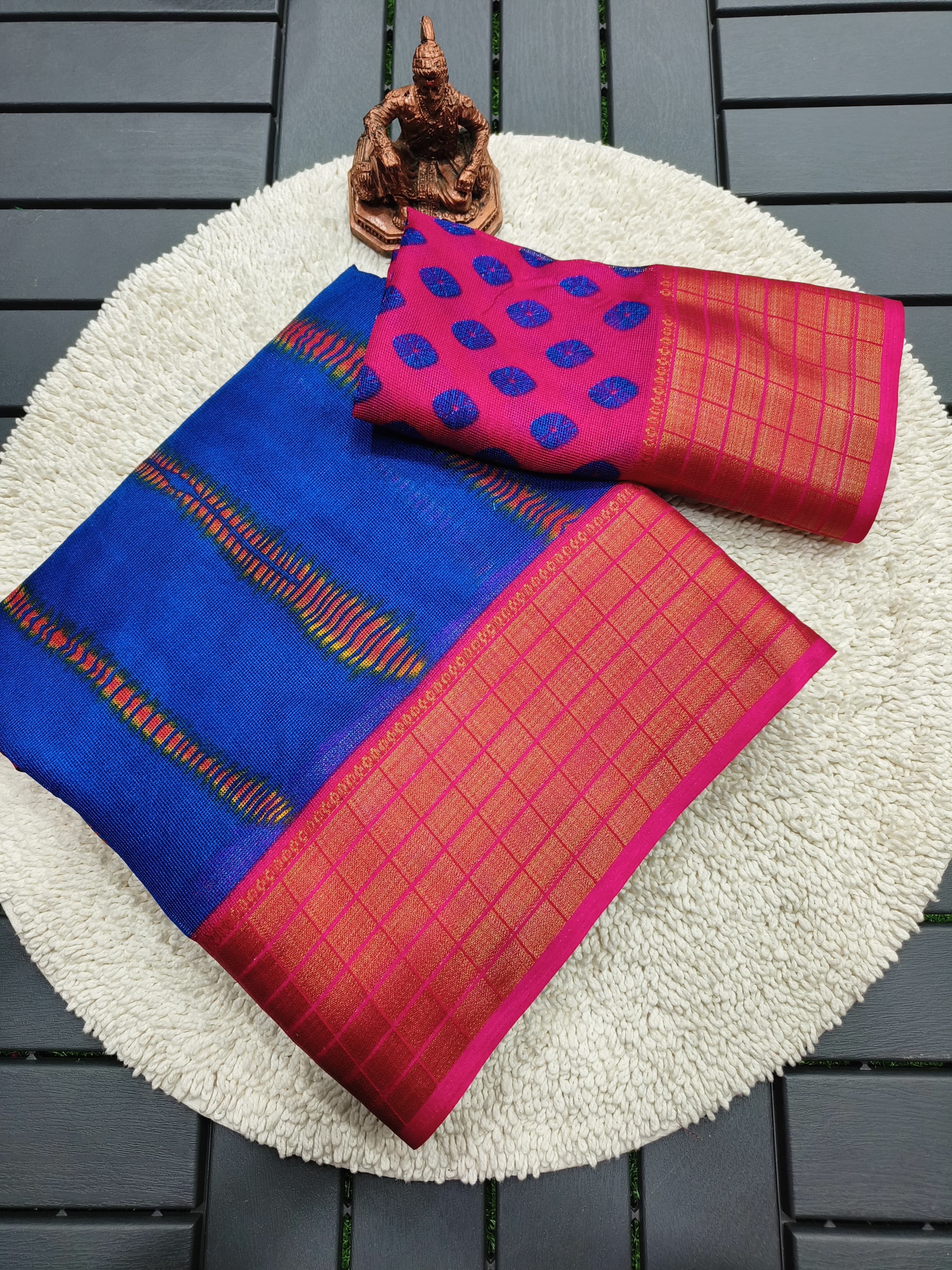
Keep silk sarees away from prolonged direct sunlight because ultraviolet exposure can fade pink, blue, yellow and darker resist-dyed areas. Store the saree in a clean cotton or muslin cover rather than sealed plastic. Refold the saree every few months so sharp permanent creases don't form in one position.
don't soak a zari saree for an extended period. Water, detergent and friction can affect silk texture, metallic threads and surface colour. Avoid rubbing a small mark at home because rubbing can spread dye or create a lighter patch that looks unlike the original design.
Air a saree fully after wearing it before folding it away. Perfume, body moisture and food particles should not remain trapped between folds. If a saree becomes damp, dry it in indirect shade on a broad hanger or clean surface rather than placing it against strong heat.
Can Shibori colour bleed?
Shibori colour can bleed when excess dye remains on the surface or when the fabric is exposed to unsuitable washing conditions. The risk depends on the fibre, dye type, finishing process and colour intensity.
Ask the seller for washing guidance before attempting home cleaning. If the saree is labelled dry clean only, follow that instruction. Never test colourfastness on the visible pallu with water or detergent; an invisible inner edge is safer only when the care instructions permit testing.
What should you check before placing an order?
Before ordering a Shibori saree, check the fabric, saree length, blouse-piece details, border width, colour description and stated care method.
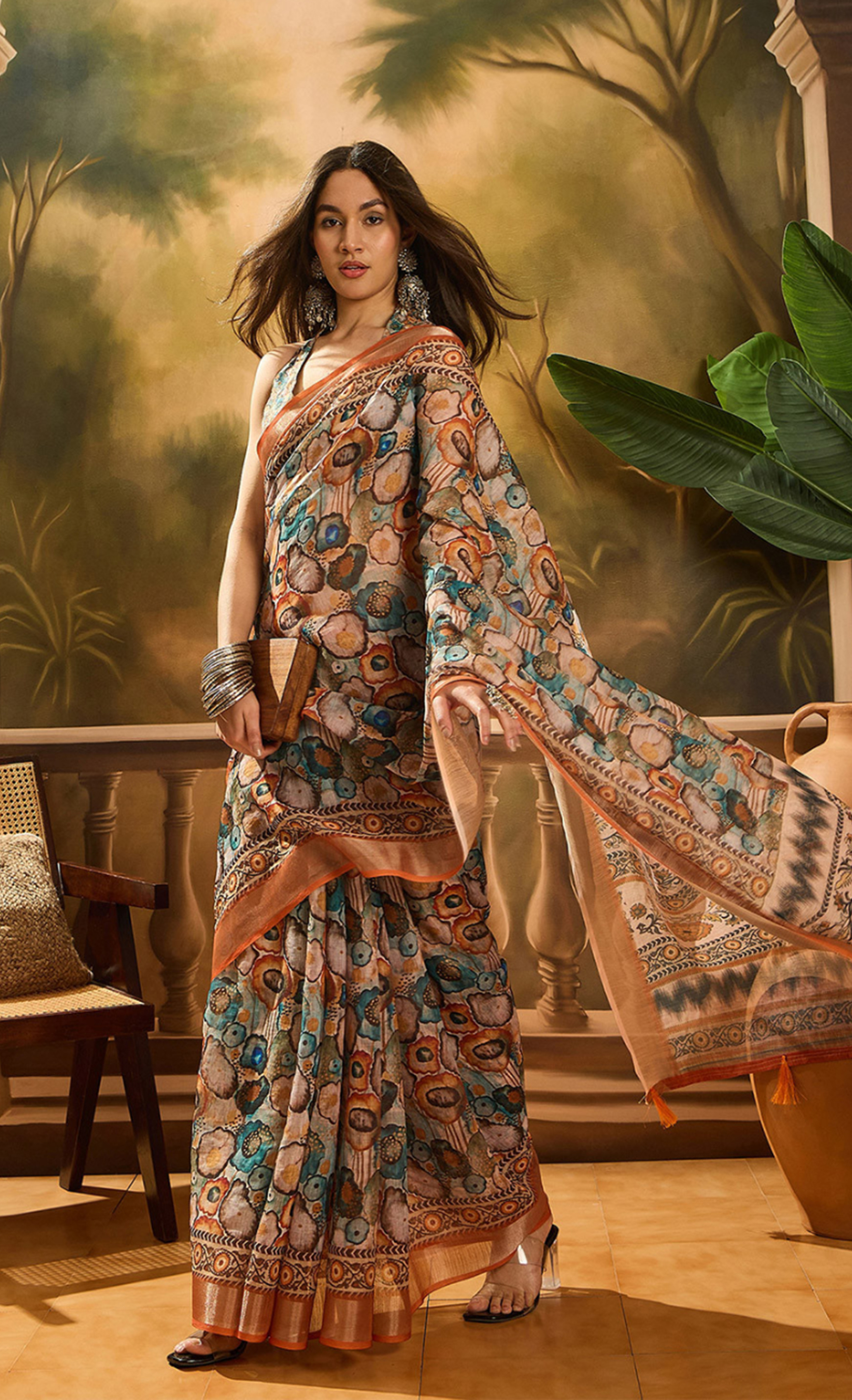
- Confirm whether Shibori refers to hand resist dyeing, tie-dyeing, screen printing or a digital print.
- Check whether the displayed saree includes a blouse piece and note its length.
- Read the fibre composition instead of assuming that the word silk means pure silk.
- Inspect close-up photographs for zari quality, weave texture and intentional colour variation.
- Compare the return or exchange conditions, especially for colour differences caused by lighting and screen settings.
- Choose a saree whose degree of irregularity matches your taste rather than expecting a just right identical repeat.
The appeal of Shibori lies in the conversation between control and chance. Folds determine the broad design, while dye movement supplies the small differences that make the finished saree feel personal. Shibori Sarees Make Imperfect Dye Patterns Part of the Beauty because those differences give the drape a visible record of process, colour and movement.
Common Questions About Wearing and Caring for Shibori Sarees
Are Shibori sarees hand-dyed or printed?
Shibori sarees can be hand-resist-dyed, tie-dyed, printed or digitally interpreted. The product description should specify the technique, so buyers should not assume that every saree with a Shibori-style pattern was individually bound and dyed.
How do you style a Shibori saree?
Style a Shibori saree with a solid blouse that repeats one shade from the border or body. Moderate pleats, an openly displayed pallu and one focal jewellery piece help preserve the irregular pattern rather than hiding it.
Can I wear a Shibori saree to a Haldi ceremony?
A Shibori saree can suit a Haldi ceremony when the fabric is breathable and the colour palette includes yellow, pink or green. Lightweight jewellery and secure shoulder and waist pins make the drape more practical for movement and warm weather.
How should I wash a Shibori silk saree?
A Shibori silk saree should usually be dry-cleaned unless its care label specifically permits hand washing. Avoid soaking, rubbing and direct sunlight because water, friction and ultraviolet exposure can affect silk, zari and colour intensity.
Why do Shibori sarees have uneven colour patterns?
Shibori sarees have uneven colour patterns because folds, bindings, stitching or compression resist dye from reaching every part of the fabric equally. Differences in pressure and dye penetration create the soft edges and colour variation that define the technique.
How can I tell whether a Shibori saree has intentional variation or a defect?
Intentional variation usually follows a repeated or balanced resist pattern across the body, pleats or pallu. Holes, loose threads, broken zari, unexplained stains and isolated damage are defects and should be clarified with the seller before purchase.