

The difference between a graceful saree drape and a constantly shifting one can be less than two centimetres at the hem. Setting the Hem Correctly for Saree Length With Heels or Flats keeps the lower border above the floor, helps front pleats fall evenly and reduces the risk of stepping on the fabric. Footwear choice, petticoat length, fabric weight and the wearer's height all affect the final measurement, so a standard one-length approach rarely works.
A saree hemmed while wearing flats may look noticeably short after switching to heels. A saree adjusted for high heels can trail under the feet when worn with sandals. The safest method is to decide the footwear first, wear the complete understructure, pin the saree temporarily and walk before any permanent alteration.
Why footwear changes the correct saree hem
Footwear changes the distance between the waist and the floor, so the same saree needs a different finished hem for flats and heels. Even a 5-centimetre heel can lift the lower edge enough to alter the way the front pleats fall.
Most sarees measure approximately 5.5 to 6.5 metres in length, but usable vertical length depends on where the saree is secured at the waist. A higher waistline reduces the fabric available from waist to floor, while a lower drape requires more length. Platform sandals and block heels also change effective height differently from narrow stilettos because the sole may raise the entire foot.
Flats usually work best when the hem sits about 1 to 2 centimetres above the floor while the wearer stands naturally. Low heels between 3 and 5 centimetres may require an additional 2 to 4 centimetres of usable length. Heels above 7 centimetres often need a separate hem setting, particularly when the saree has a wide zari or printed border.
The goal isn't to make the saree visibly short. The goal is to keep the lower edge close enough to the floor for an elegant fall while leaving room for walking, stairs and turning. A hem sitting 4 to 5 centimetres above the floor can be practical, but the height may make the front pleats and lower border appear visually disconnected.
Setting the Hem Correctly for Saree Length With Heels or Flats
Setting the Hem Correctly for Saree Length With Heels or Flats begins with measuring the saree while wearing the exact footwear planned for the event. A tailor should not rely on a waist-to-floor measurement taken while the wearer is barefoot.
What to wear during the fitting
Wear the blouse, petticoat, shapewear or underskirt, and chosen footwear during the fitting. A thick petticoat can change the saree's waist position by 1 to 3 centimetres, while a long blouse can affect where the top edge is secured.
Fasten the petticoat firmly at the natural waist or at the intended saree-wearing position. A loose drawstring can allow the petticoat to slide down during the day, making a correctly measured saree appear too long. A stable waistband also gives the front pleats a firm base.
How to take the vertical measurement
Measure from the top edge of the secured saree at the waist to the floor, not from the top of the petticoat to the floor. Keep the measuring tape straight beside the front pleats. Add approximately 1 to 2 centimetres of clearance for flats, increasing the clearance only when the wearer needs extra freedom on stairs or uneven outdoor surfaces.
For heels, measure while standing with weight distributed across both feet. Do not measure while leaning forward, lifting one heel or standing on tiptoe. Mark the intended point, then pin the hem at several places around the lower edge.
Walking is the essential test. Take ten normal steps, climb two or three stairs, sit on a chair and turn in both directions. If the border catches under the foot, the hem needs to be raised. If the ankles are exposed too prominently or the pleats lose their fall, the hem may be too short.
How to choose one hem for both heels and flats
A single hem can work with both heels and flats when the height difference is small and the saree has a flexible or understated border. A 2 to 3-centimetre difference between footwear pairs is easier to accommodate than a difference of 6 centimetres or more.

When one saree must work with several shoes, measure for the lower pair and choose a heel that doesn't exceed the planned height by more than 2 to 3 centimetres. A saree hemmed for 5-centimetre block heels may work with embellished flats, but the same hem may drag with completely flat footwear.
Discreet saree clips or carefully placed safety pins inside the front pleats can provide a temporary adjustment. Clips should not carry the full weight of a heavy silk saree for several hours. A tailor can also create a concealed rolling hem, although the result depends on the fabric and border construction.
Separate alteration is the safer choice for a bridal saree, a heavy Banarasi silk saree or a saree with a broad zari border. Heavy fabric can pull down during wear, and repeated use may bring the border closer to the floor. Take a second pair of shoes to the fitting if the saree will be reused for different events.
Fabric and border details that affect hem accuracy
Fabric weight, surface structure and border width affect the clearance required at the hem. Linen cotton sarees usually hold crisp pleats and respond well to a precise 1 to 2-centimetre floor clearance, while slippery satin may shift downward after several hours.
A wide border makes a short hem more noticeable because the border creates a strong horizontal line around the ankles. A narrow printed edge is more forgiving, but every lower edge still needs enough clearance to protect it from dust and repeated stepping.
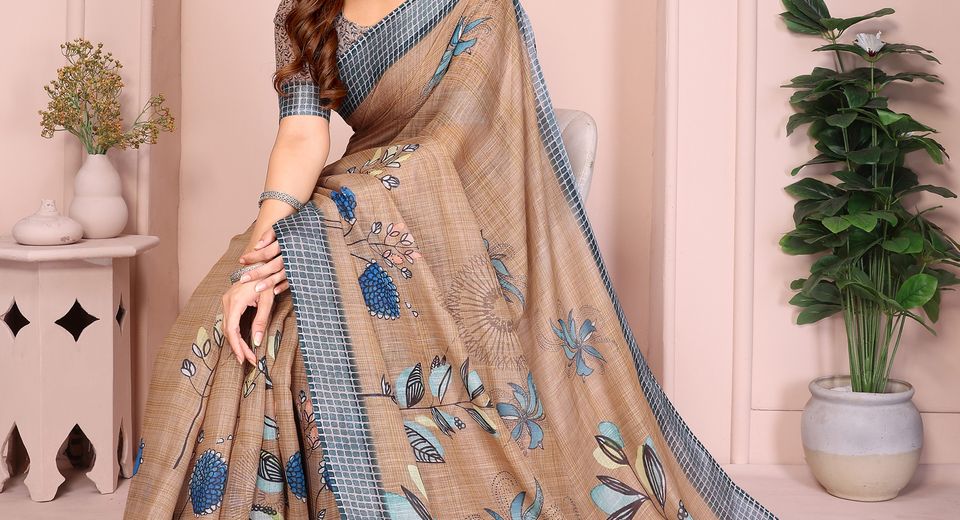
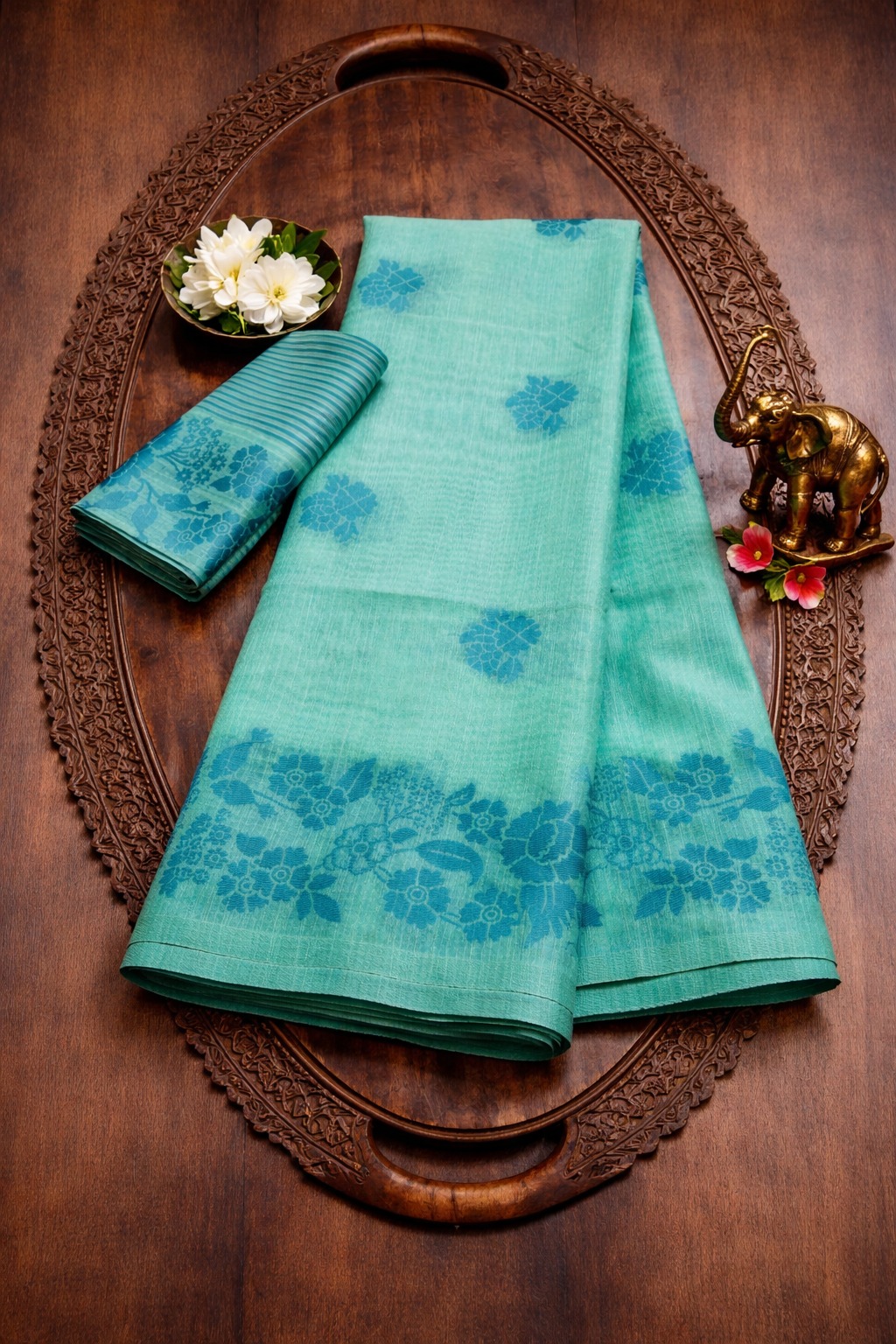
Beige Linen Cotton Floral Saree with Blue Contrast Borders demonstrates why border placement matters during fitting: a contrasting lower edge gives the eye a clear reference line. Sea Green Floral Linen Cotton Saree with Border and Lavender Linen Cotton Floral Print Saree with Contrast Border also benefit from an even, level finish because each border makes small height differences easier to notice.
Coral Floral Linen Cotton Saree with Designer Border and Wine Linen Cotton Floral Print Saree with Art Border should be checked from the front and side. The border should remain parallel to the floor when the wearer stands upright. A sloping line can indicate uneven pleat tension, a shifted petticoat or a hem marked while the body was tilted.
Red Satin Floral Print Saree with Unstitched Blouse Textile requires an additional movement test because satin can slide against a smooth petticoat. A cotton underskirt or a petticoat with a stable waistband can reduce movement, but the finished length should still be checked after sitting and standing.
The petticoat, pleats and footwear triangle
The petticoat, pleat width and footwear height must be considered together because changing one element changes the saree's final fall. A saree can't be measured accurately over a petticoat that won't be worn under the finished drape.
A standard petticoat ending close to the ankle can show beneath a saree that has been hemmed too short. The petticoat should normally finish slightly above the saree hem, but the exact gap depends on fabric opacity and movement. Sheer sarees require additional attention because a visible petticoat edge can distract from the lower border.
Arrange the front pleats before marking the hem. Narrow pleats can make the lower edge appear longer and more vertical, while broad pleats distribute fabric across a wider area. Keep the pleats straight from waist to floor, and pin them temporarily so the measurement reflects the final drape rather than a loose fabric bundle.
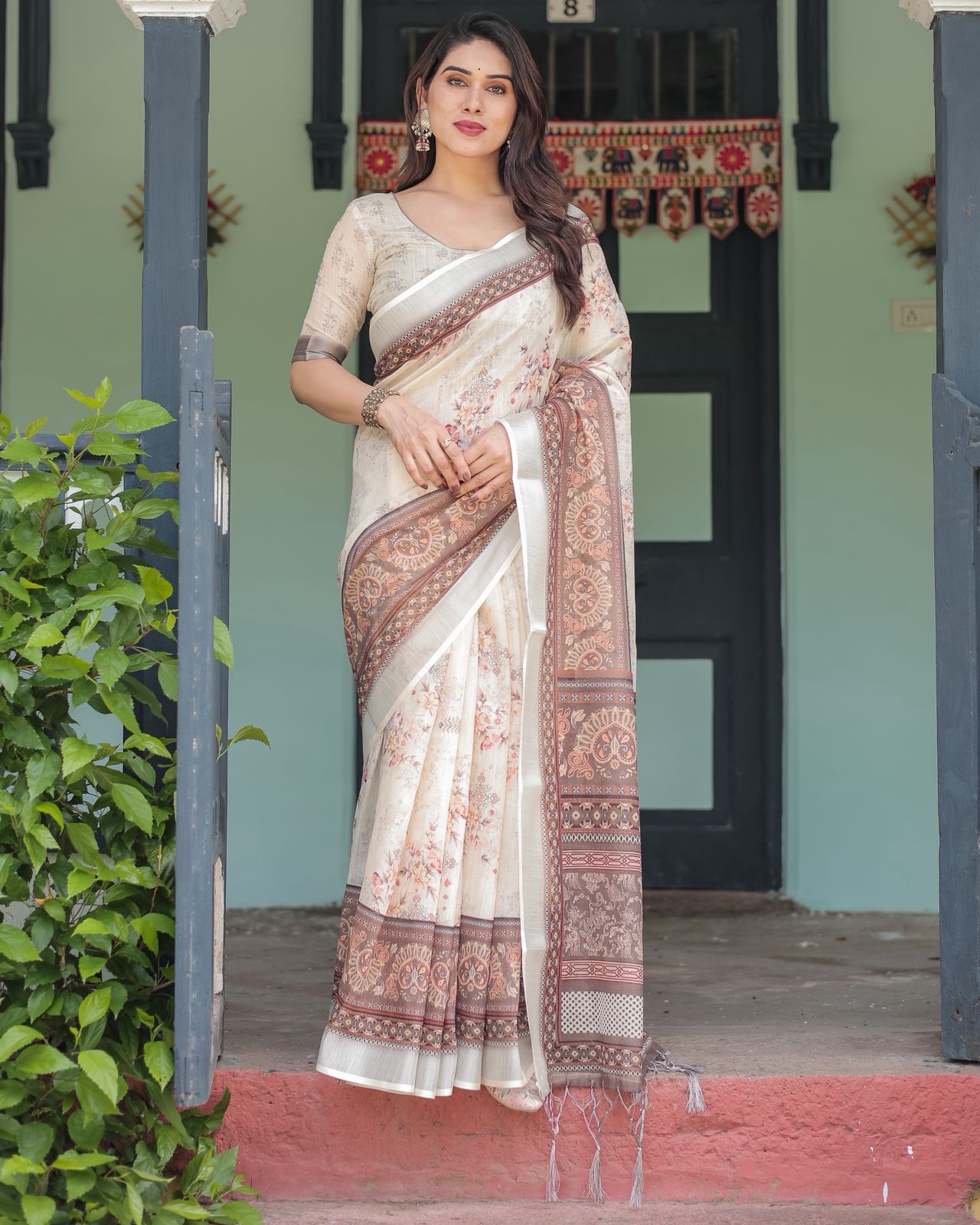
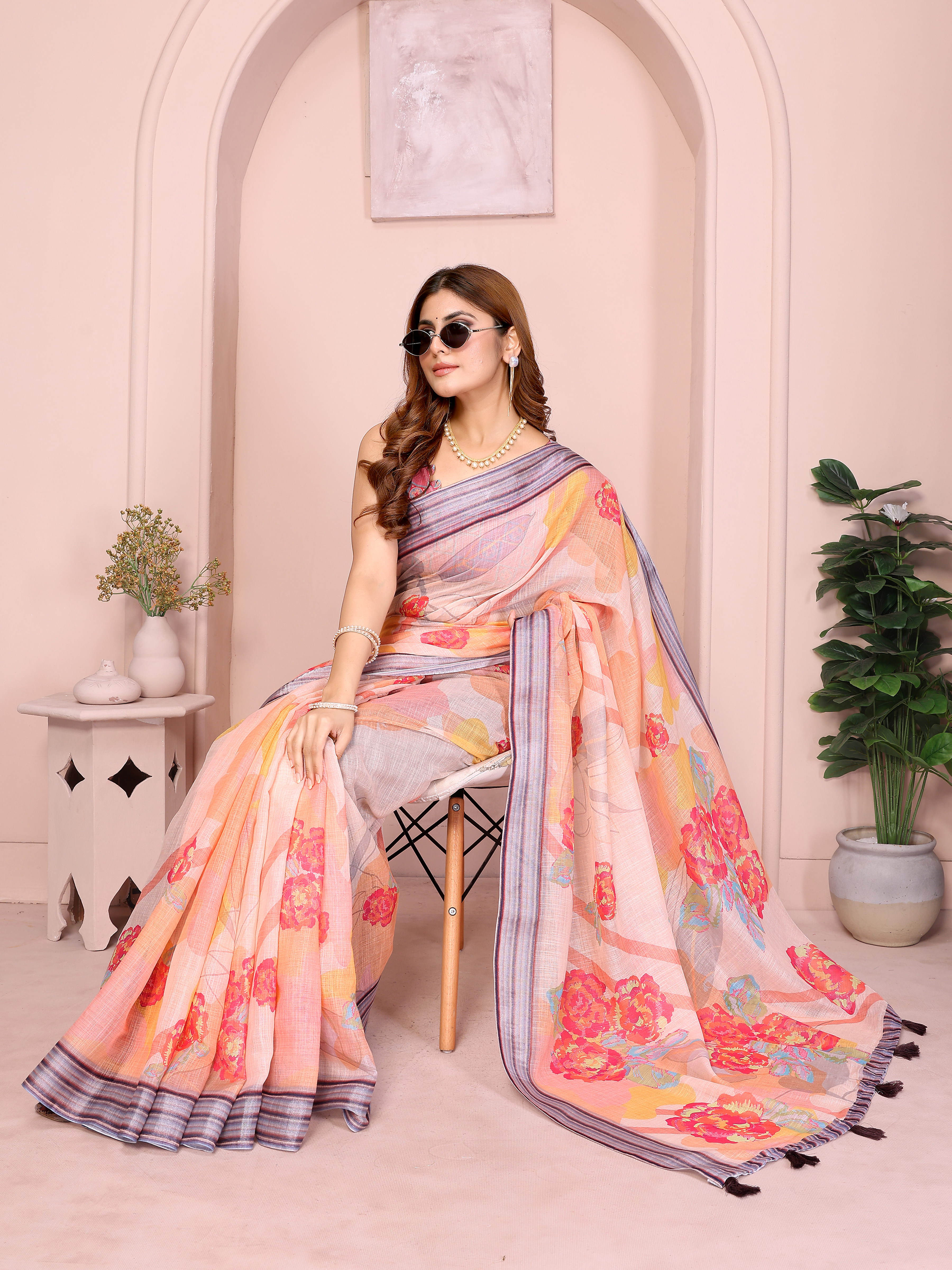
Peach Linen Cotton Floral Saree with Contrast Blue Border is a useful example of a saree where pleat alignment and hem height work together. Teal Floral Printed Linen Cotton Saree With Matching Blouse also shows why the lower edge should be checked from several angles: printed fabric can hide minor irregularities from the front but reveal them when the wearer turns.
Common hem mistakes and their practical fixes
The most common saree hem mistake is measuring barefoot and adding heels later. The practical fix is to bring the event footwear to the tailor and repeat the fitting with the complete outfit.

- Hem marked with the saree loose: A loose saree doesn't show final pleat tension. Secure the pallu, arrange the front pleats and mark the hem only after the drape is stable.
- Hem made exactly floor length: A zero-clearance hem is likely to catch under the foot. Leave a small gap above the floor and test the saree while walking.
- Petticoat tied too low: A low petticoat makes the saree appear short at the top and long near the feet. Retie the petticoat at the intended waist before measuring.
- One hem used for very different shoes: Flats and high heels can require separate settings. Use shoes with a moderate height difference or arrange two hems.
- Border ignored during alteration: Cutting through a decorative border can spoil the saree's proportions. Ask the tailor to preserve the border and place any adjustment above the finished edge where possible.
- Only standing tested: A saree that looks correct while standing may catch during stairs or sitting. Complete a movement test before approving the alteration.
Planning the purchase around fitting and budget
A saree purchase should include enough time for pressing, draping and hem testing, especially when the saree will be worn for a wedding or Haldi ceremony. Allow at least 7 to 10 days for a routine alteration and 2 to 3 weeks when blouse stitching or a complex border adjustment is also required.

Affordable linen cotton sarees can still deserve careful fitting because an uneven border is visible regardless of price. Sarees from Rs 1000 to Rs 1500 can be assessed using the same waist, footwear and movement checks as a more expensive saree.
Discount categories such as Sarees Under 20% Off, Sarees Under 10% Off, Sarees Flat 60% Off and Sarees Flat 50% Off may make it easier to purchase a second saree for a different drape or footwear plan. Discounted pricing doesn't remove the need to check measurements, fabric behaviour and alteration requirements before an event.
Record the finished waist-to-floor measurement with the shoe height written beside it. A note such as "1-centimetre clearance with 4-centimetre block heels" is more useful than a general label such as "party length." The written measurement helps when the saree is re-draped months later.
A final hem check before leaving home
A final hem check should confirm floor clearance, pleat alignment, petticoat coverage and freedom of movement. Stand in the exact footwear, walk across the room, climb stairs, sit and inspect the lower edge after each movement.
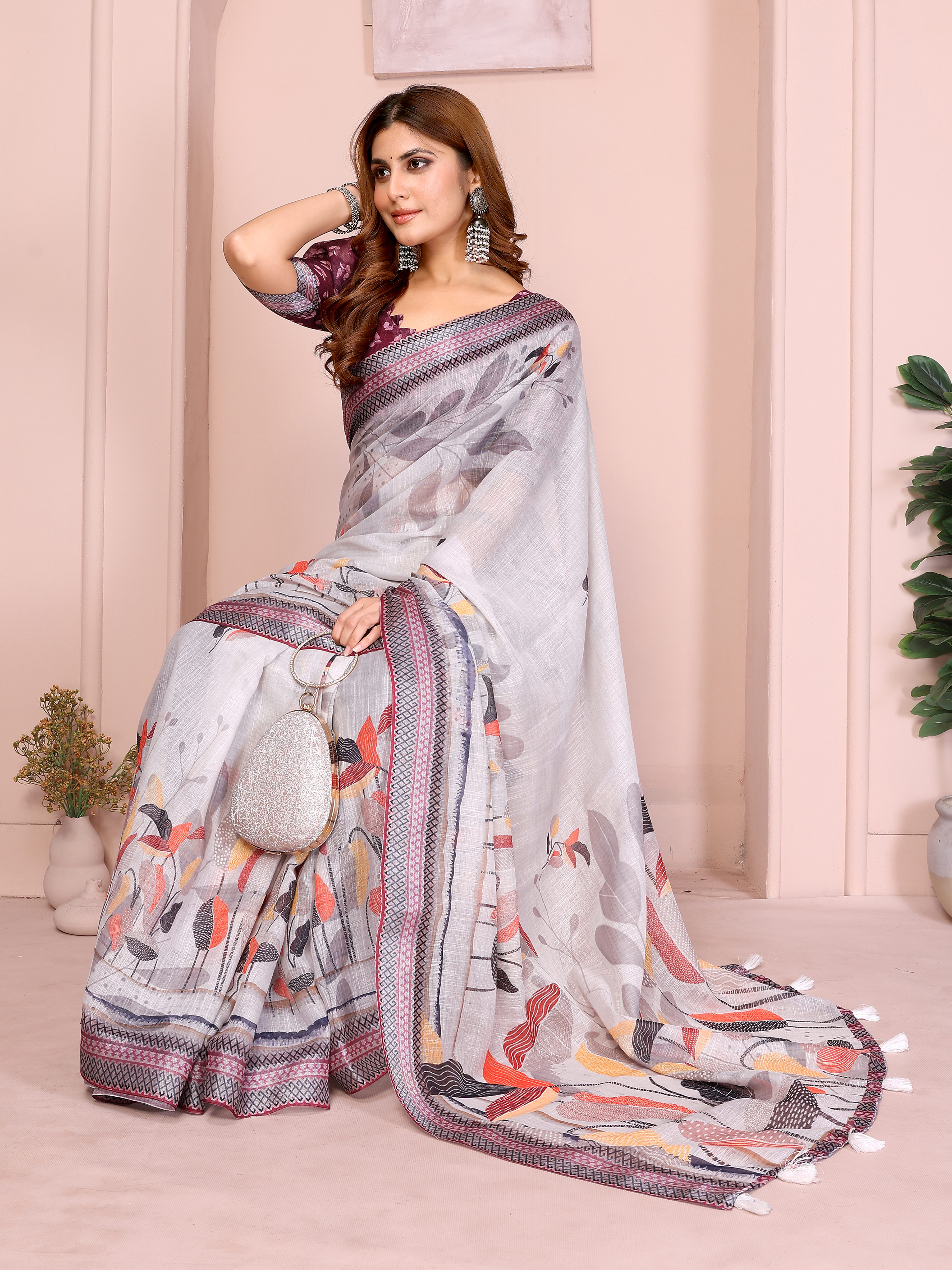
- Check the front: The pleats should hang straight, and the lower border should sit at a consistent height.
- Check the side: The saree should not trail behind the heel or bunch above the ankle.
- Check the back: The pallu and rear portion should not pull the saree downward on one side.
- Check the feet: No toe should be able to catch the lower edge during a normal step.
- Check after sitting: The saree should rise naturally without exposing the petticoat or pulling tightly across the knees.
A carefully tested hem makes the saree easier to wear for several hours, whether the footwear is a flat sandal, a low block heel or a taller platform. The most reliable result comes from treating footwear, petticoat and pleats as one fitting system rather than altering the saree in isolation.
Common Questions About Saree Hem Length for Heels and Flats
How much shorter should a saree be for flats?
A saree hem should usually sit about 1 to 2 centimetres above the floor when worn with flats. Test the saree while walking and climbing stairs because outdoor surfaces may require slightly more clearance.
Can I wear a saree hemmed for heels with flats?
A saree hemmed for heels may drag when worn with flats, particularly when the heel difference exceeds 3 centimetres. Use similar-height footwear or have a second hem setting prepared.
Should a saree touch the floor when wearing heels?
A saree should sit close to the floor without touching heavily or catching under the foot. A clearance of about 1 to 2 centimetres usually gives a polished fall while allowing comfortable movement.
Should I measure saree length with the petticoat on?
Yes, measure saree length while wearing the exact petticoat, blouse and footwear planned for the outfit. The petticoat's waistband and height change where the saree sits at the waist.
How do I stop a saree border from dragging?
Raise the hem slightly, secure the petticoat at the correct waist position and test the front pleats while walking. Heavy borders and slippery fabrics may need a separate hem for each footwear height.
How long before an event should I get a saree hemmed?
Arrange a routine saree alteration at least 7 to 10 days before the event. Allow 2 to 3 weeks when blouse stitching, border preservation or multiple fitting appointments are involved.


