

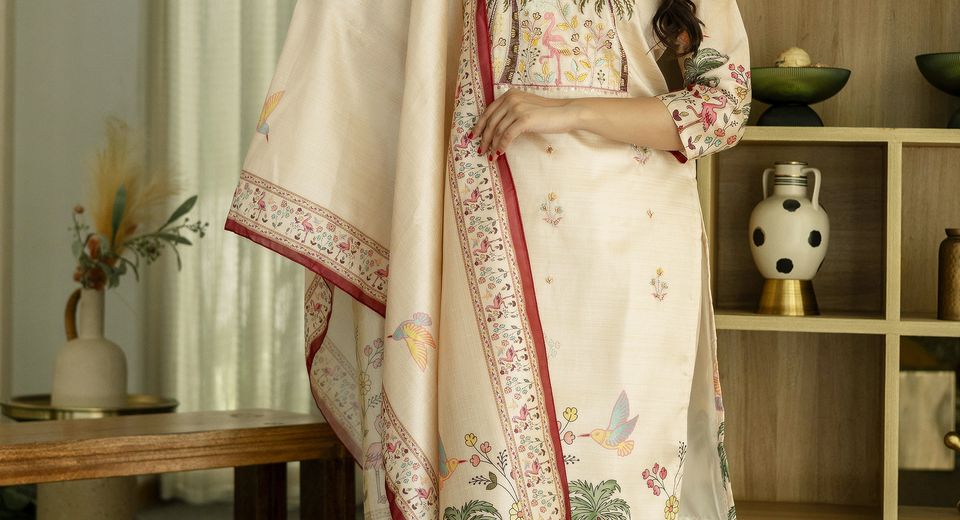
Seams Margins and Details That Make Salwar Suits Easier to Alter can determine whether a readymade outfit becomes a comfortable, polished fit or an expensive tailoring compromise. A tailor needs usable fabric inside the seams, enough hem depth, accessible closures and a construction that can be changed without disturbing embroidery or printing. Checking those details before purchase is especially important when buying a three-piece salwar suit online, because a size chart can't show how much extra cloth sits inside each seam.
A good alteration plan begins with the body areas that need the most precision: shoulder width, bust, armhole, sleeve length, waist, hip, trouser rise and garment length. A kurta that's slightly loose through the side seams is usually easier to adjust than one that's tight across the bust. A salwar or palazzo with a separate waistband may offer more flexibility than a heavily stitched elastic waist. The difference lies in construction, not merely in the printed size.
Why seam allowance matters in a readymade salwar suit
Seam allowance is the extra fabric between the stitching line and the cut edge, and it gives a tailor room to release or reshape a garment. A side seam containing 1.5 to 2.5 centimetres of usable fabric can often support a modest enlargement, while a seam cut close to the stitches may permit almost no release. Actual results depend on matching fabric, seam placement, embroidery and the garment's original shape.
Readymade garments often use different allowances at different points. A kurta may have a little extra cloth at the side seams but almost none at the shoulder. Trousers may have room at the inner leg while the crotch curve remains tightly cut. A tailor should inspect the inside rather than assume that every seam carries the same margin.
Which seams should be checked first?
Side seams, centre-back seams and waistband seams are the most useful areas to inspect for alteration potential. Side seams can change bust, waist and hip width; a centre-back seam can refine the upper-body fit; and a waistband seam can sometimes accommodate a small waist adjustment.
Look for a continuous seam rather than a narrow overlocked edge with no spare cloth. A serged or overlocked finish isn't automatically poor, but trimming close to the stitch line leaves little material for release. A tailor should also check whether the seam allowance is interrupted by pockets, lace, side slits, tassels or a change in fabric.
The Black Red Fendy Silk 3 Piece Readymade Salwar Suit Set illustrates why fabric and construction must be considered together. Fendy silk may show needle marks or press impressions after repeated alterations, so a tailor should mark the new line carefully and avoid unnecessary unpicking. A clean inside finish is valuable, but the amount of usable margin still decides whether the fit can be expanded.
How to assess a kurta before asking for alterations
A kurta should fit the shoulders and armholes first, because those areas are difficult to enlarge after cutting. A tailor can usually reduce the side seams or shorten the length more easily than rebuild a tight shoulder, narrow armhole or restrictive upper sleeve.
Shoulders and armholes
Shoulder width should sit close to the natural shoulder edge without pulling the sleeve head forward or creating a diagonal drag line. If the shoulder is too wide, it can often be narrowed, although the sleeve may need to be reset. If the shoulder is too narrow, the alteration may require fabric that the original cut doesn't contain.
An armhole should allow comfortable movement when the wearer raises both arms. A very deep armhole can sometimes be lifted by reshaping the side seam and sleeve, while a very small armhole is harder to enlarge without changing the entire sleeve attachment. Embroidered borders around the armhole make such work more complicated because the design may need to be repositioned.
Bust, waist and side slits
The bust area needs enough ease for breathing, sitting and arm movement; a practical starting point is often 7 to 12 centimetres of total ease, depending on fabric, silhouette and personal preference. A fitted straight kurta generally needs less visual volume than an Anarkali, but both still require movement room at the bust.
Side slits should begin below the fullest hip area unless the garment is intentionally fitted. Raising a slit can improve walking comfort, but lowering a slit may expose a seam that was never finished for that position. A tailor should preserve the original slit reinforcement and hem finish wherever possible.
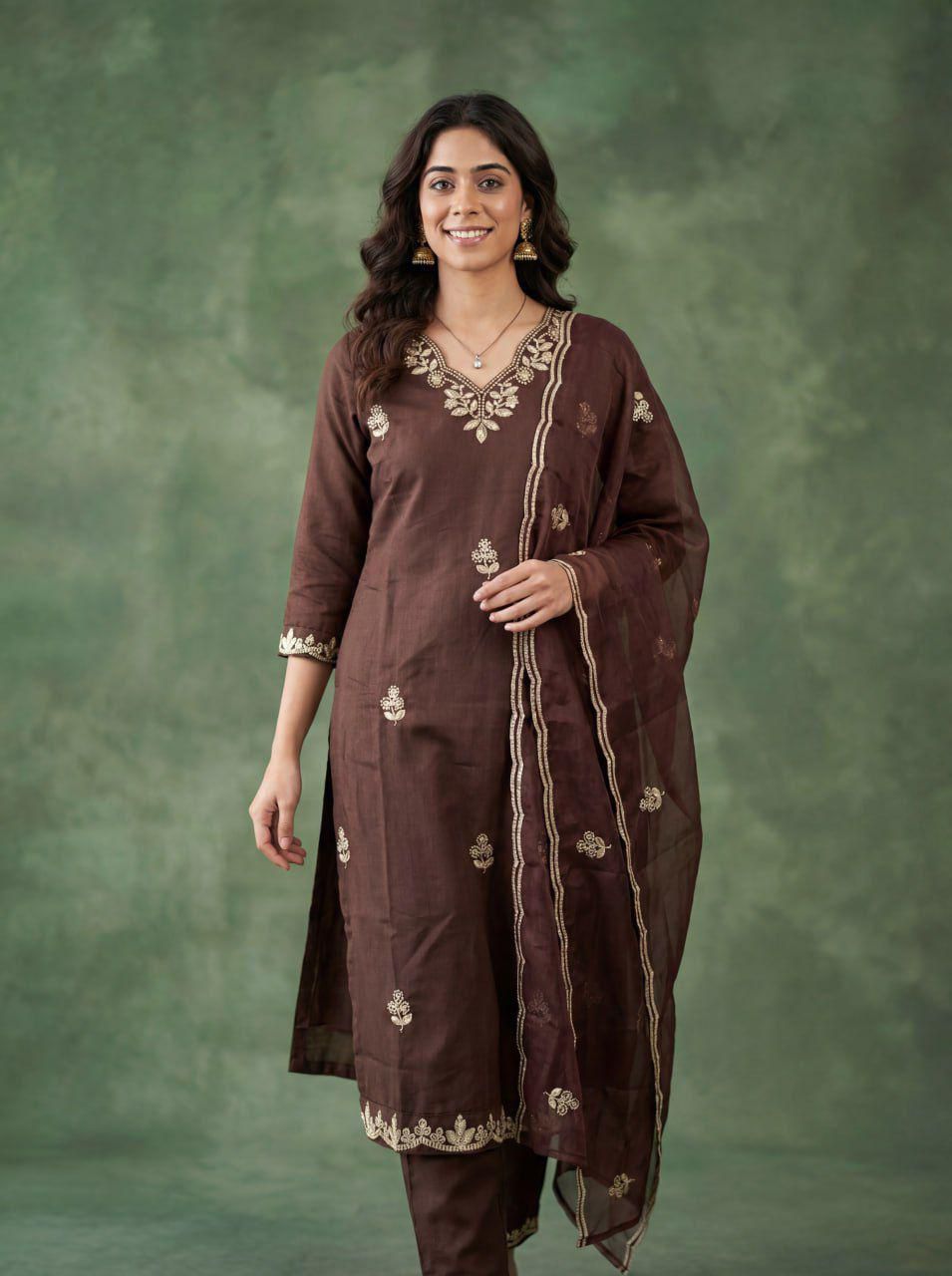
The Embroidered Salwar Suit Set for Women is a useful example of why decorative placement matters. Narrowing a side seam may also move the embroidery closer to the centre front, while shortening the kurta can cut into a border. Alterations are safest when the tailor marks the new length against the motif repeat rather than removing a random amount from the hem.
Seams Margins and Details That Make Salwar Suits Easier to Alter
Seams Margins and Details That Make Salwar Suits Easier to Alter include separate panels, plain seam lines, deep hems, removable trims, adjustable waist treatments and simple closures. These construction choices give a tailor more options than a garment covered in uninterrupted embroidery or cut from a single shaped panel.
- Separate side panels: Panelled kurtas can allow controlled changes across the bust, waist and hip, provided the pattern repeat and embroidery are not cut through.
- Deep bottom hems: A hem of around 4 to 7 centimetres can support length changes without creating a very narrow new edge.
- Plain side seams: Unembellished side seams are easier to open, restitch and press than seams crossed by zari, sequins or dense threadwork.
- Separate waistbands: A stitched waistband or facing may be easier to reshape than a narrow elastic casing sewn directly into the trouser body.
- Replaceable fastenings: Hooks, buttons and concealed zips can often be moved, while a fixed decorative closure may restrict adjustment.
- Matching extra fabric: A small attached facing, belt or spare swatch can help a tailor repair a cut edge or extend a hem.
A product description may mention a relaxed fit, but relaxed fit doesn't guarantee alteration room. The inside seam, hem and closure still need inspection. A loose silhouette can be created with a very narrow seam allowance, whereas a relatively neat straight suit may contain generous side seams.
Which fabrics respond well to salwar suit alterations?
Stable woven fabrics such as cotton, Chanderi cotton and many silk blends generally give a tailor predictable seam lines, although each fabric still requires a suitable needle and pressing method. Slippery silk blends, delicate zari surfaces and loosely woven fabrics need slower handling because unpicking can leave visible holes or distortion.
Cotton and Chanderi
Cotton usually tolerates ordinary unpicking and pressing better than fragile embellished fabric, making cotton salwar suits practical candidates for moderate fitting work. Chanderi cotton is lighter and may show needle marks if stitched repeatedly, so alterations should be measured accurately before the first seam is opened.
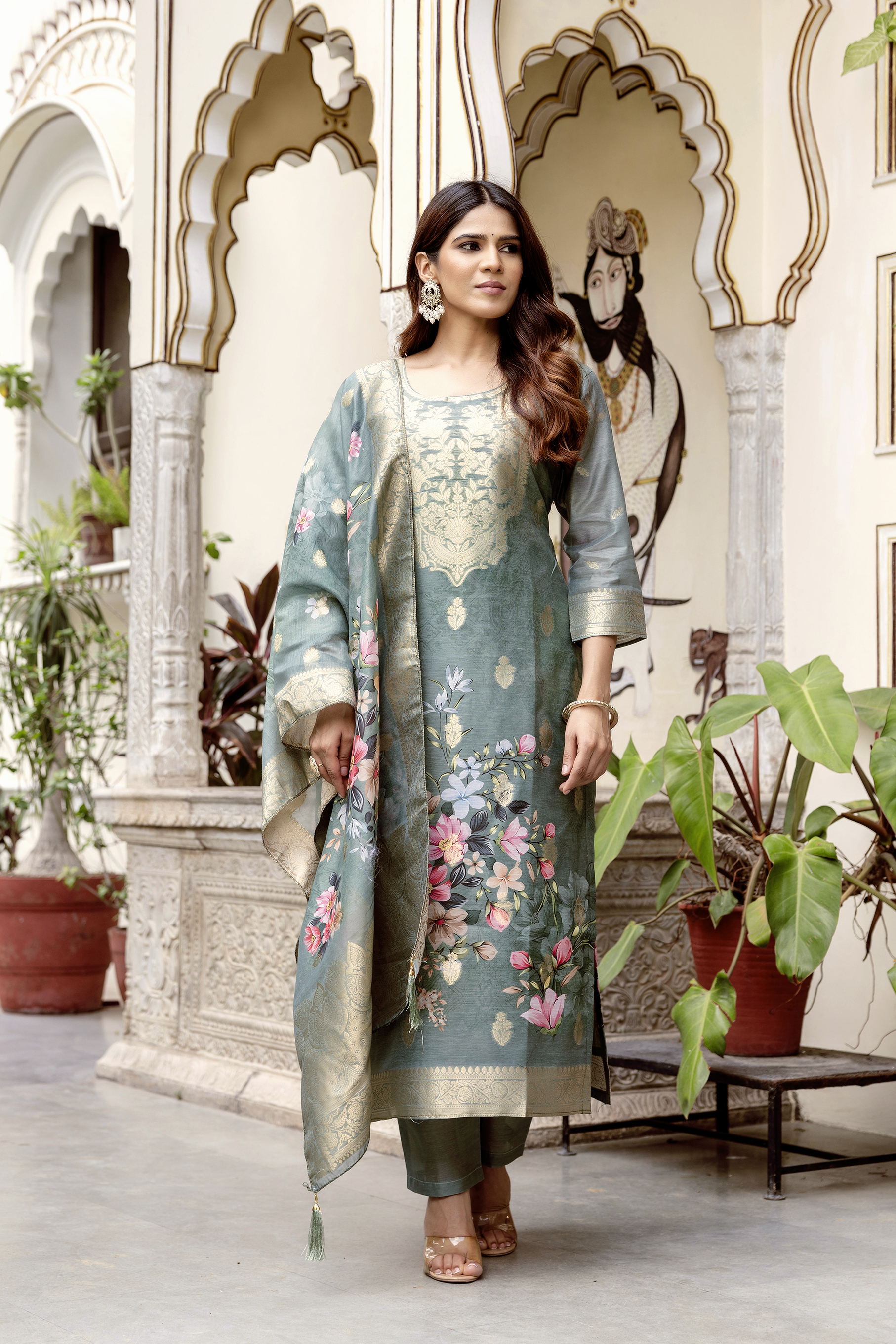
The Woven Chanderi Cotton Readymade Salwar Suit demonstrates why a lightweight fabric needs restraint. A tailor should use fine thread, avoid excessive tension and protect the cloth from direct high heat. Length adjustments are often safer at a plain hem than through a woven motif or decorative border.
Silk blends and embellished surfaces
Silk blends can be altered successfully when the seam allowance is generous and the surface isn't densely embellished. Needle holes may remain after a seam is released, particularly on smooth fabrics, so a tailor should make the new stitching line as close as possible to the original or use a concealed alteration point.
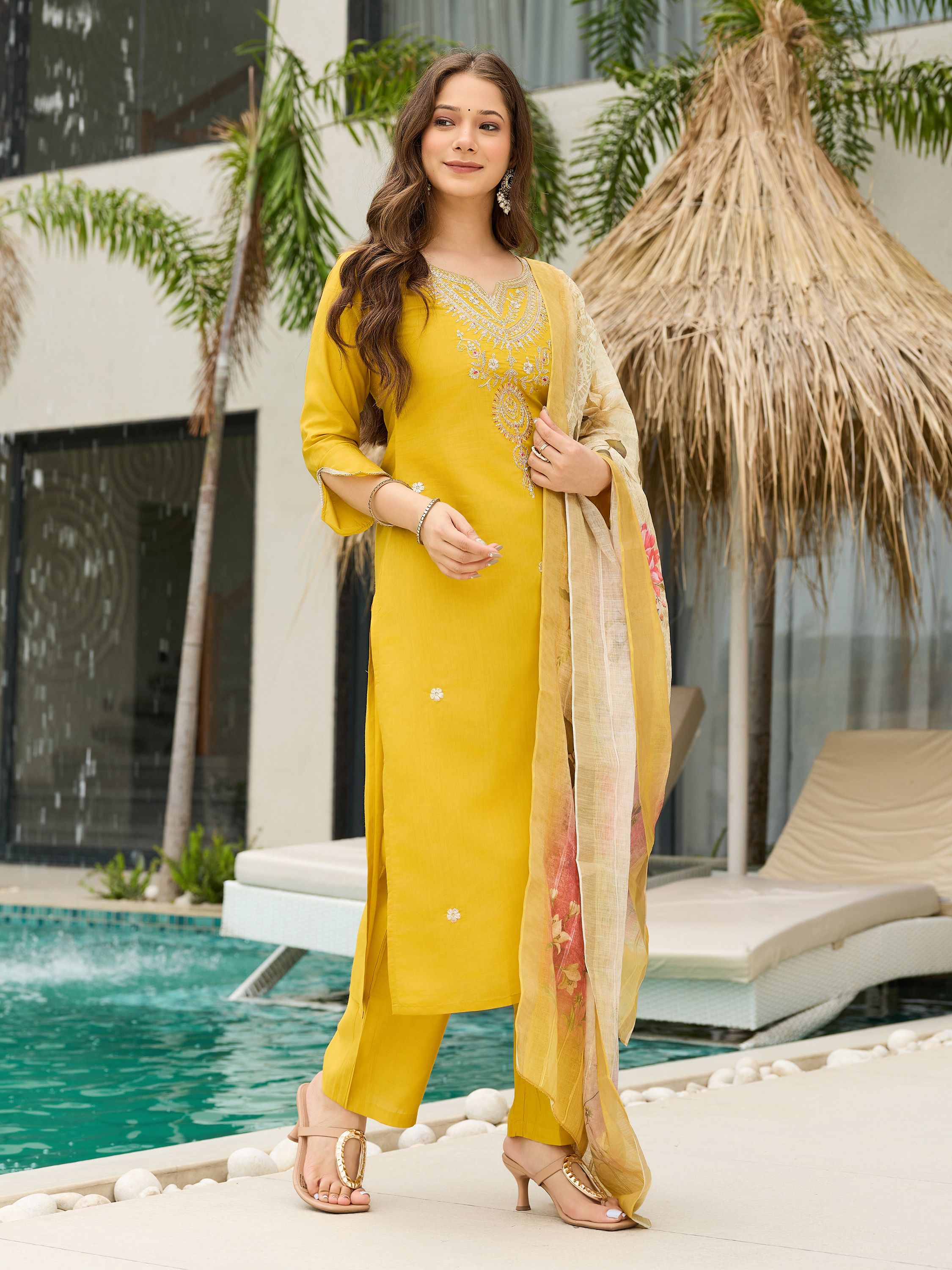
The Women's Mustard Silk Blend Kurta Set with Dupatta should be assessed for drape before the side seams are changed. Reducing too much at the waist can make the fabric pull above the hip, while shortening the kurta may change the balance between the kurta and dupatta. The final measurement should be tested while standing, sitting and walking.
Bottoms often decide whether the full set can be adjusted
Salwar bottoms should be checked at the waist, rise, hip, thigh, knee and hem because a comfortable kurta can't compensate for restrictive trousers. Waist circumference is usually easier to change than rise length, and rise alterations can affect pocket position, crotch comfort and the line of the leg.
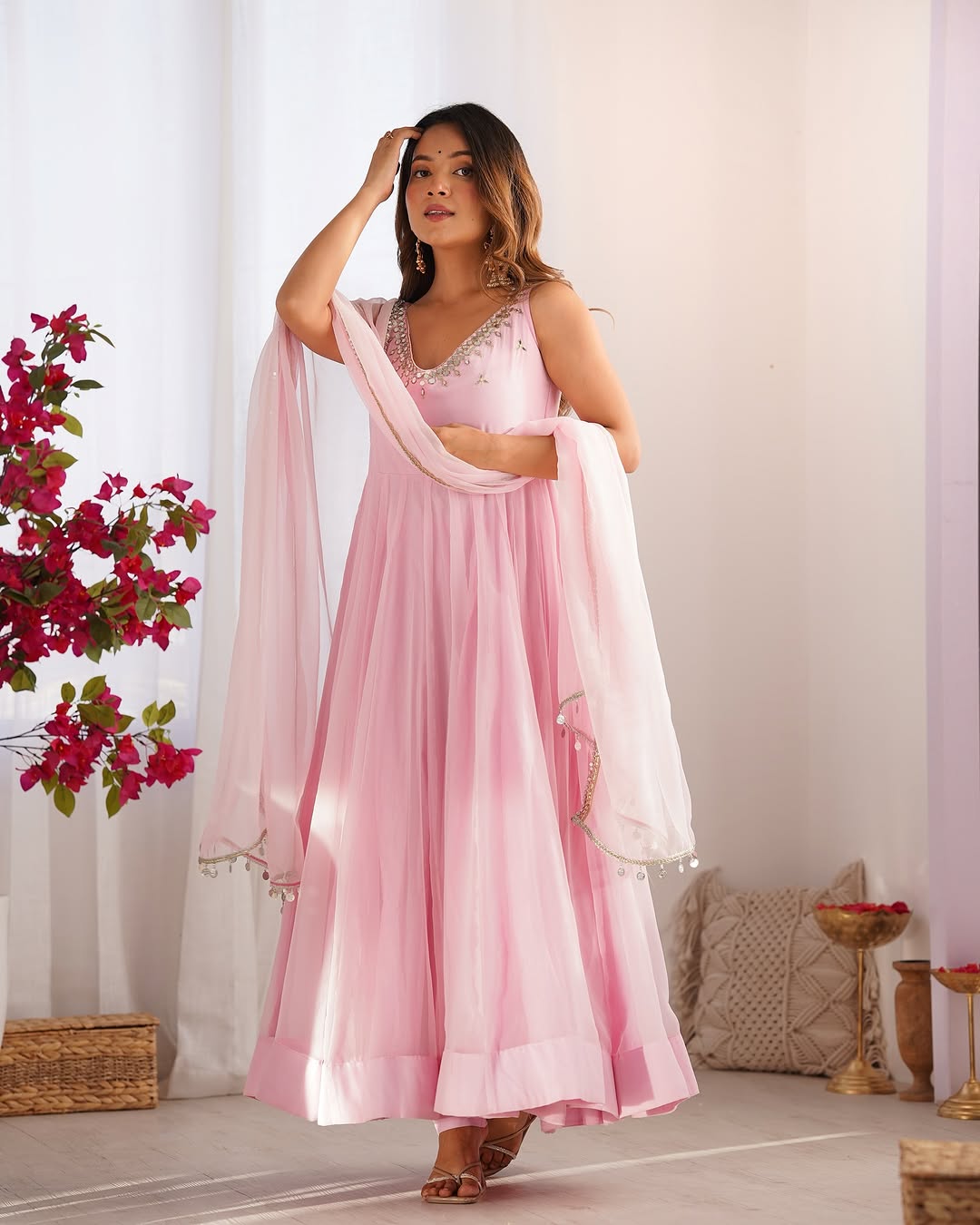
An elastic waistband can provide a small amount of flexibility, but stretched elastic isn't a substitute for correct hip and rise measurements. A waistband with a separate casing may permit elastic replacement. A narrow stitched-down elastic channel can be difficult to open without damaging the fabric.
Palazzo trousers need adequate width through the hip and thigh before the hem is considered. A tailor can shorten a palazzo relatively simply when the hem is plain, but reducing excessive width may disturb pleats or a printed border. Patiala-style bottoms contain generous folds by design, so the alteration must preserve the intended volume rather than treat every fold as spare cloth.
The Yellow Threadwork Readymade Salwar Suit and Navy Blue Threadwork Readymade Salwar Suit show why threadwork placement deserves attention on both kurta and bottoms. A change to the hem or ankle width can cut through a repeated motif. Mark the desired finished measurement with the garment worn over the footwear intended for the outfit.
Closures, lining and finishing details that help a tailor
Closures affect how easily a garment can be opened, fitted and closed again. A front placket with buttons provides more adjustment options than a fixed decorative panel, while a side zip may make a fitted kurta easier to put on but harder to reshape if the zip is positioned directly on the alteration line.
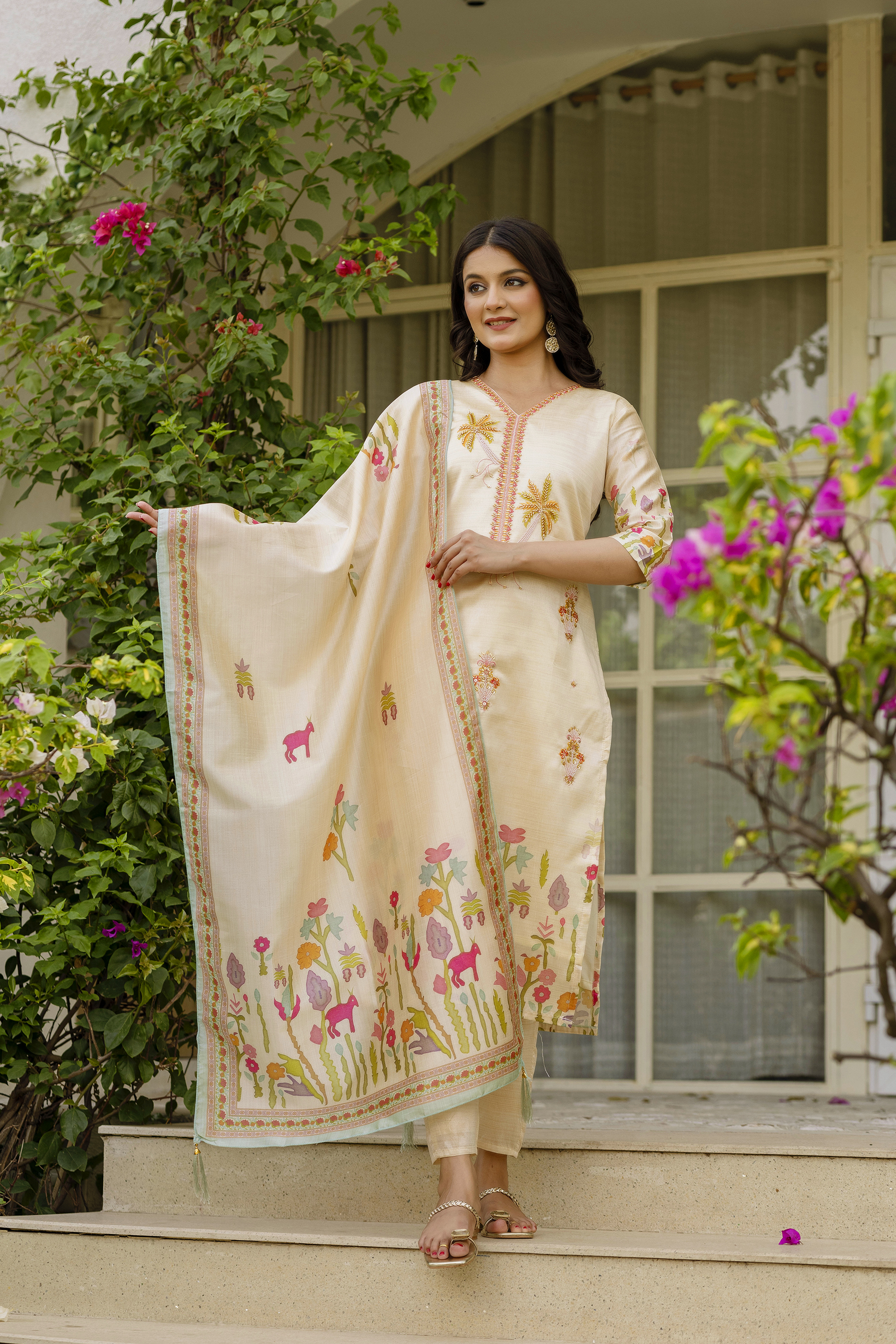
Lining should be attached with enough independent slack to follow the outer fabric after a change. A lining cut exactly to the original garment can pull, create drag lines or require complete removal. A tailor may need to alter the lining separately, especially around the armhole and side seam.
Check the finishing at hems, sleeve cuffs and neckline facings. A facing that extends several centimetres beyond the visible edge can support a small neckline change. A narrow turned edge has less flexibility. Neckline alterations also affect the balance of the front and back, so a deeper front neckline should not be cut without checking the shoulder and bust position.
The Midnight Black Blossom Salwar Suit is a reminder that dark colours don't make construction details irrelevant. Black fabric can hide seam lines during a quick inspection, but it may show shiny press marks after careless tailoring. Use inside-out inspection, strong daylight and a white measuring tape to identify the true seam allowance.
How regional styles affect alteration decisions
Regional design references influence silhouette, proportion and decorative placement, so alterations should preserve the garment's visual identity. A Patiala-inspired bottom needs fold volume, a Paithani-inspired design may rely on a strong border, and Bandhej or Kalamkari-inspired surfaces may have a directional print that can't be casually recut.
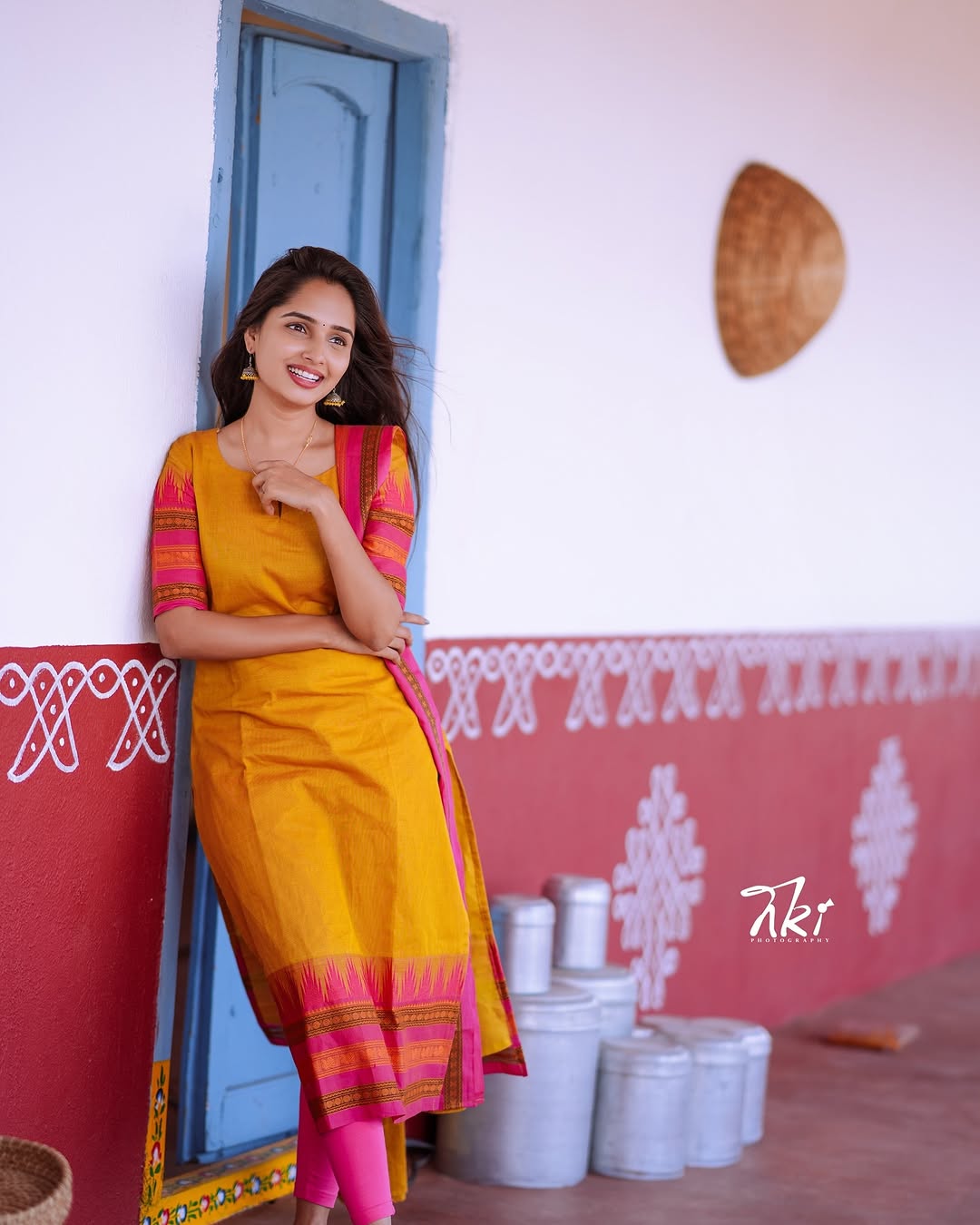
The Punjab Patiala Salwar Suits collection can require a different fitting approach from a narrow straight suit because the salwar's volume is intentional. Reduce the waist only after confirming that the pleats and drop remain balanced. The Maharashtra Paithani Inspired Salwar Suits collection may require special care around border placement, particularly when shortening a kurta or trouser.
Printed and woven motifs also need a cutting plan. The Kalamkari Print Salwar Suits (Copy) collection can contain a directional or repeat-based surface, so side-seam changes should be checked for continuity. The Gujarat Bandhej Salwar Suits collection may involve a tie-dye-inspired visual rhythm where a small shift is less noticeable than a cut through a concentrated motif, but the tailor should still preserve the overall balance.
Regional references don't automatically indicate a particular fibre, weave or tailoring allowance. The actual garment label and inside construction remain the reliable evidence. A buyer should avoid assuming that an inspired design has the same construction as a traditional handwoven garment.
A practical alteration checklist before buying online
A five-minute inspection can prevent many fitting problems after delivery. Record your body measurements in light clothing and compare them with the garment's finished measurements whenever those measurements are supplied.
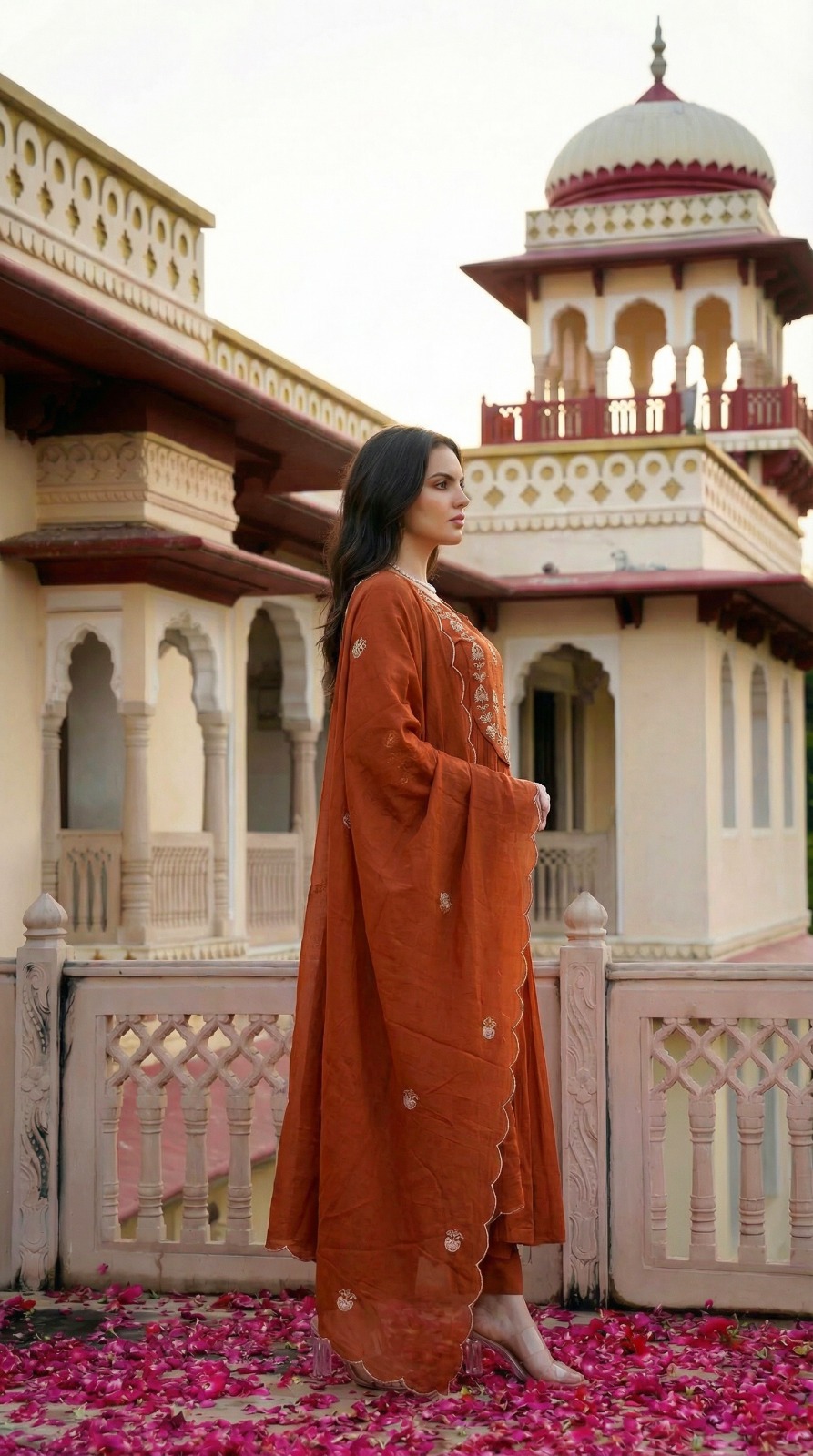
- Measure bust, waist, fullest hip, shoulder, armhole comfort, sleeve length and preferred kurta length.
- Compare the garment's bust and hip measurements with your own, allowing movement ease rather than choosing a size from bust measurement alone.
- Ask whether side seams, centre-back seams and waistbands contain usable extra fabric.
- Check the stated fabric and look for likely behaviour such as shrinkage, slippage, transparency or needle sensitivity.
- Inspect whether embroidery, zari, borders, pockets or side slits sit on the proposed alteration line.
- Confirm the bottom's rise, hip width, waistband type and hem circumference.
- Plan the alteration before removing tags, because some changes are practical only while the original construction remains intact.
Keep the original measurements, photos and packaging until the fit has been tested. Try the complete set with the intended inner layer and footwear. A tailor can then judge the finished proportions rather than altering a kurta in isolation.
When comparing options, a garment such as the Designer Yellow Salwar Suit with Dupatta should be assessed for its finished measurements, seam placement and embellishment, not only for colour or occasion. A visually simple suit with accessible seams may deliver a better final fit than a more elaborate suit with no release allowance.
When should a tailor refuse or limit an alteration?
A tailor should limit an alteration when the required change exceeds the available seam allowance, cuts through a major motif or would distort the armhole, rise or garment balance. Honest advice is safer than forcing a seam to release beyond its cut edge.

Major increases in bust or hip width are particularly risky when the garment has no side panels, no centre-back seam and no matching spare fabric. A large neckline change can also make the shoulder straps or lining unstable. In such cases, a tailor may suggest a small adjustment, a gusset in a less visible area or choosing a larger size and reshaping it down.
Alterations are most successful when they respect the original pattern. Preserve grain direction on woven fabric, keep borders level, match thread colour and press with a protective cloth. A careful fitting session before stitching is usually worth more than a rushed alteration after an event outfit has been washed or embellished further.
Questions About Altering Readymade Salwar Suits
How much seam allowance is needed to alter a salwar suit?
A side seam with about 1.5 to 2.5 centimetres of usable fabric can support a modest adjustment, although the exact amount depends on the garment shape and fabric. A tailor must check the full seam, because pockets, embroidery, slits and overlocking may reduce the usable margin.
Can a readymade salwar suit be made bigger?
A readymade salwar suit can usually be enlarged only when the seams contain enough release allowance or matching fabric is available. Small increases at the side seams or waistband are more realistic than major changes to a tight shoulder, armhole or trouser rise.
Is it easier to shorten or lengthen a salwar suit?
Shortening is usually easier when the hem is plain and has adequate depth. Lengthening requires extra matching fabric, a lowered hem allowance or a design-compatible border, and shortening may be unsuitable if it cuts through embroidery or a repeated motif.
Which salwar suit fabric is easiest to alter?
Stable cotton is generally among the easiest fabrics to alter because it tolerates careful unpicking, stitching and pressing. Chanderi cotton, silk blends and embellished fabrics can also be altered, but they require accurate marking and gentler handling to avoid needle holes, shine or distortion.
Can a tailor alter the shoulder of a salwar suit?
A tailor can often narrow an overly wide shoulder, although the sleeve may need to be reset. Making a narrow shoulder wider is much harder because it requires extra fabric and may disturb the armhole, neckline and sleeve balance.
What should I check before buying an alteration-friendly salwar suit online?
Check finished garment measurements, side-seam and waistband construction, hem depth, fabric behaviour, closure placement and the position of embroidery or borders. Choose the size that fits the shoulders and fullest hip comfortably, because those areas are usually harder to enlarge later.


