

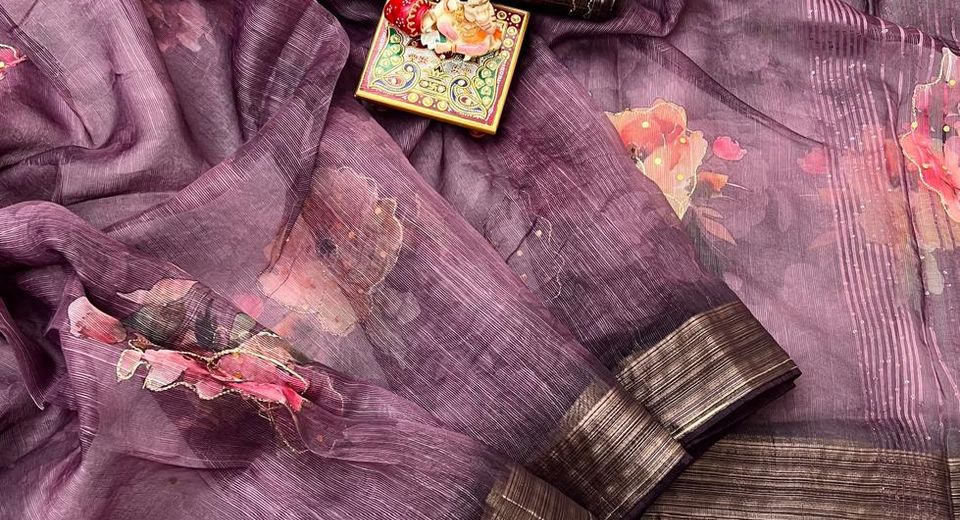
Saree Waist Looking Bulky? Pleating Changes That Reduce Extra Volume can make a visible difference without changing your blouse, petticoat or body shape. Waist bulk usually comes from stacked pleats, a thick lower layer, loose tucking or a stiff fabric that refuses to lie flat. Correcting the pleat count, width, direction and anchoring point can create a cleaner front while keeping the saree secure and comfortable.
The most useful adjustment is to spread the fabric over a slightly wider area instead of compressing the entire saree into one thick bundle. Narrower, even pleats, a smooth petticoat waistband and two correctly placed pins usually work better than pulling the tuck tighter. Linen cotton, organza cotton silk, satin and silk each need a slightly different approach.
Saree Waist Looking Bulky? Pleating Changes That Reduce Extra Volume by identifying the cause
A saree waist looks bulky when too much fabric is compressed into a small front section or when several layers meet at the same point. The petticoat waistband, underskirt drawstring, saree pleats, blouse hem and shapewear can all add thickness around the midsection.
Many draping problems begin before the first pleat is made. A petticoat tied too loosely allows the saree to slide, so the wearer compensates with a deeper, tighter tuck. A thick drawstring knot placed directly below the centre pleats creates a raised spot that remains visible through the saree.
Pleat compression creates a second common problem. If a six-metre saree is gathered into five very wide folds, every fold carries several layers of fabric. The resulting bundle projects outward even when the tuck is technically secure. A stiff Banarasi silk or zari-bordered saree can look especially dense when the border is folded repeatedly at the waist.
Fabric finish also changes the visual result. Organza cotton silk holds a crisp shape and can form pronounced ridges. Linen cotton has a structured fall and may need palm-pressing before pinning. Satin slides and bunches if the base is unstable. Soft silk generally settles more easily, although a dense zari border can still create a thick fold.
Saree Waist Looking Bulky? Pleating Changes That Reduce Extra Volume through fold width
The most effective pleating changes are narrower folds, an appropriate pleat count, an even top edge and a lower edge that remains aligned before tucking. These changes remove unnecessary thickness instead of simply tightening the saree around the body.
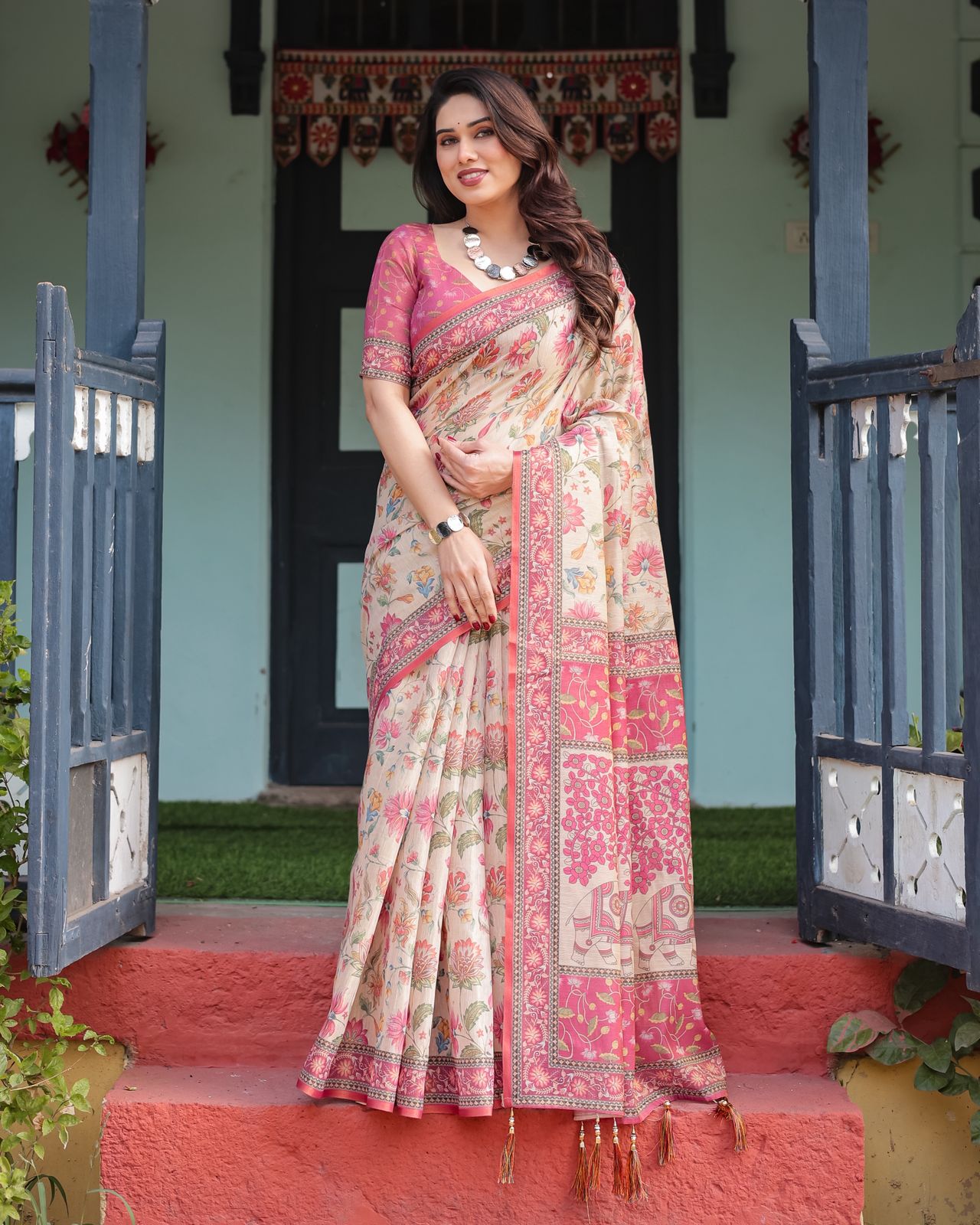
Saree Waist Looking Bulky? Pleating Changes That Reduce Extra Volume with narrower folds
Narrower pleats spread fabric across a wider horizontal area, so fewer layers sit directly on top of one another. For many everyday sarees, pleats measuring about 3 to 4 centimetres wide create a manageable front bundle. Very stiff fabrics may look better with 4 to 5 centimetre pleats because extremely narrow folds can stand away from the body.
Use the width of your palm as a measuring reference rather than guessing in a mirror. Keep every pleat close to the same width, then smooth the upper edge with your fingers. Uneven pleats produce ridges that add physical and visual volume even when the total fabric amount is correct.
Saree Waist Looking Bulky? Pleating Changes That Reduce Extra Volume by adjusting pleat count
Six to eight controlled pleats can reduce front thickness when the saree is wide or heavy, although seven to nine pleats are common for a standard drape. Removing pleats blindly can backfire because fewer, very wide folds may create a larger single lump than several narrow folds.
Lightweight organza cotton silk needs enough folds to prevent the fabric from spreading. Fluid satin can often be managed with fewer folds if the petticoat provides a firm base. Linen cotton with a contrasting border usually benefits from moderate-width pleats and careful hand pressing rather than an extreme reduction in count.
Saree Waist Looking Bulky? Pleating Changes That Reduce Extra Volume by aligning edges
Flat pleat tops prevent trapped air and twisted layers from creating extra depth at the waist. After making each fold, run your palm from the waistband down to the lower edge and correct any diagonal fold before making the next pleat.
Hold a completed bundle at two points approximately 8 to 10 centimetres apart instead of gripping only the centre. Two-point support keeps the lower edge level and stops one side from opening. A level hem creates a longer, cleaner fall and reduces the urge to make a second bulky tuck.
Saree Waist Looking Bulky? Pleating Changes That Reduce Extra Volume at the tuck
Positioning the pleat bundle slightly off-centre can reduce front congestion, particularly when the pleats and pallu begin at the same point. The tuck should remain secure at the natural waist or high hip, but it doesn't need to sit exactly over the navel.
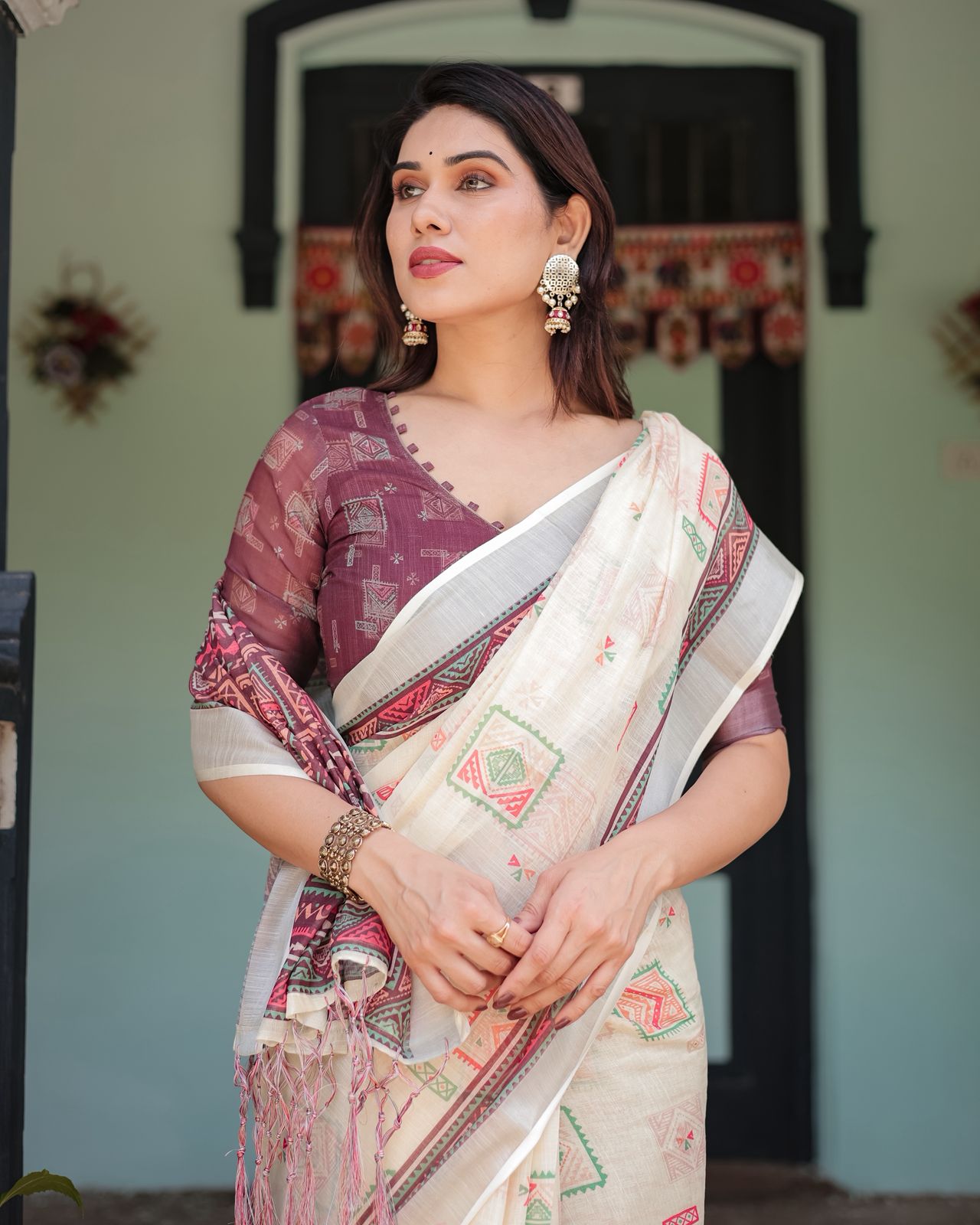
Place the pleat bundle 2 to 4 centimetres to the left or right of the centre front and check the saree from the front and side. The bundle should lie flat against the petticoat, while the pallu should leave the opposite side without pulling tightly across the waist.
An off-centre tuck should not be forced when the border becomes visibly diagonal or the saree feels unstable. A side tuck works best when the saree has enough fall and the petticoat has a firm, smooth waistband. A well-fitted petticoat is more useful than excessive tightness because a waistband that digs in can create a second ridge above the saree.
Pin the upper section of the pleat bundle to the petticoat with one strong safety pin, then add a second pin lower down if the fabric is slippery. Place pins horizontally through multiple fabric layers rather than vertically through a single fold. Horizontal pinning distributes weight and helps prevent the bundle from opening while walking or sitting.
Saree Waist Looking Bulky? Pleating Changes That Reduce Extra Volume for different fabrics
Fluid, moderately lightweight fabrics usually show less waist volume than stiff or heavily embellished fabrics, although correct pleating matters more than the fabric name alone. Linen cotton, soft silk, satin and lightweight cotton silk can all drape neatly when their individual behaviour is respected.
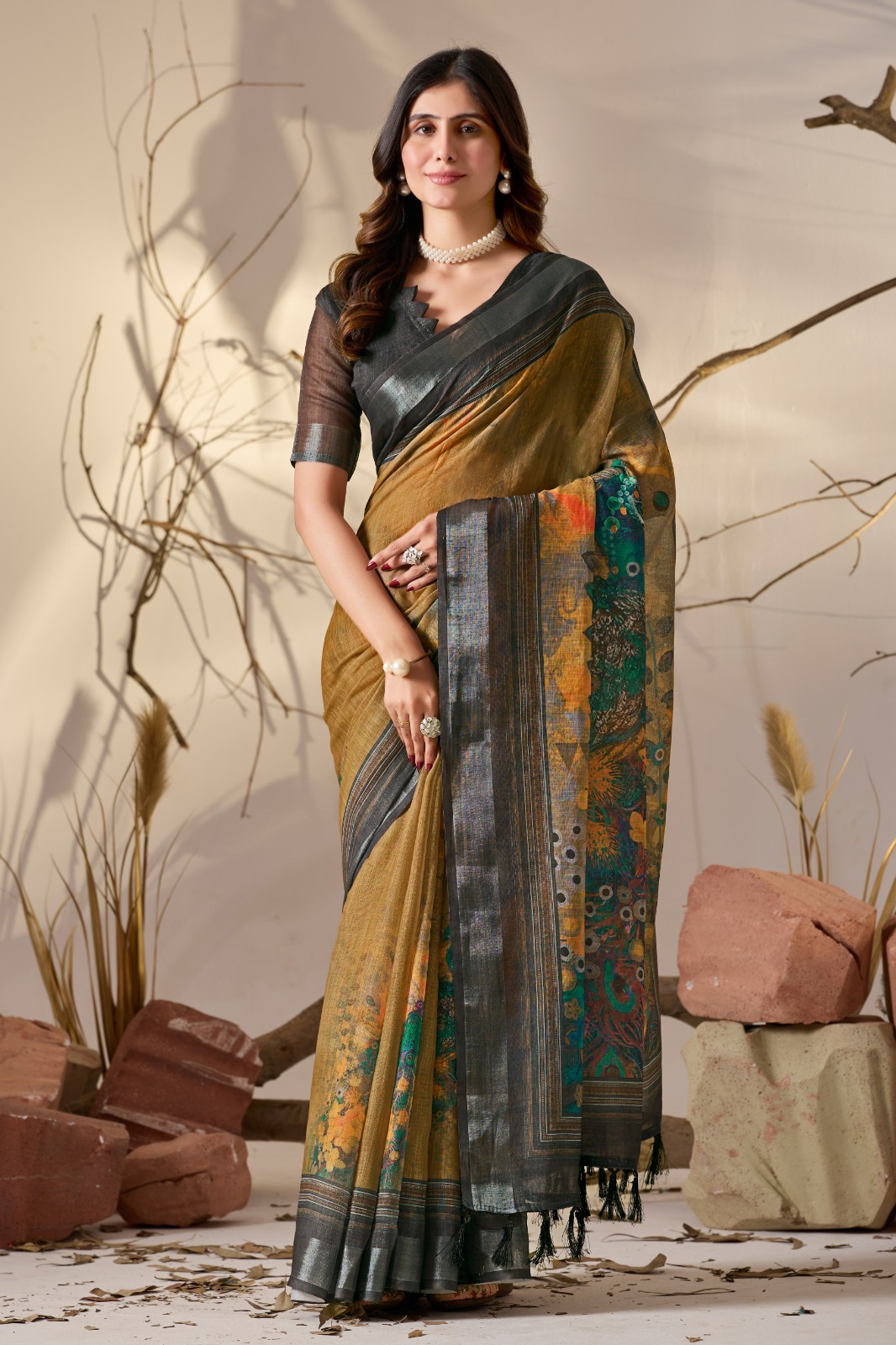
Saree Waist Looking Bulky? Pleating Changes That Reduce Extra Volume in linen cotton
Linen cotton holds a defined fold but can become thick if the border is repeatedly folded into the waist. Press the pleats with your palms, keep the border edge straight and avoid squeezing the entire border into the smallest possible tuck.
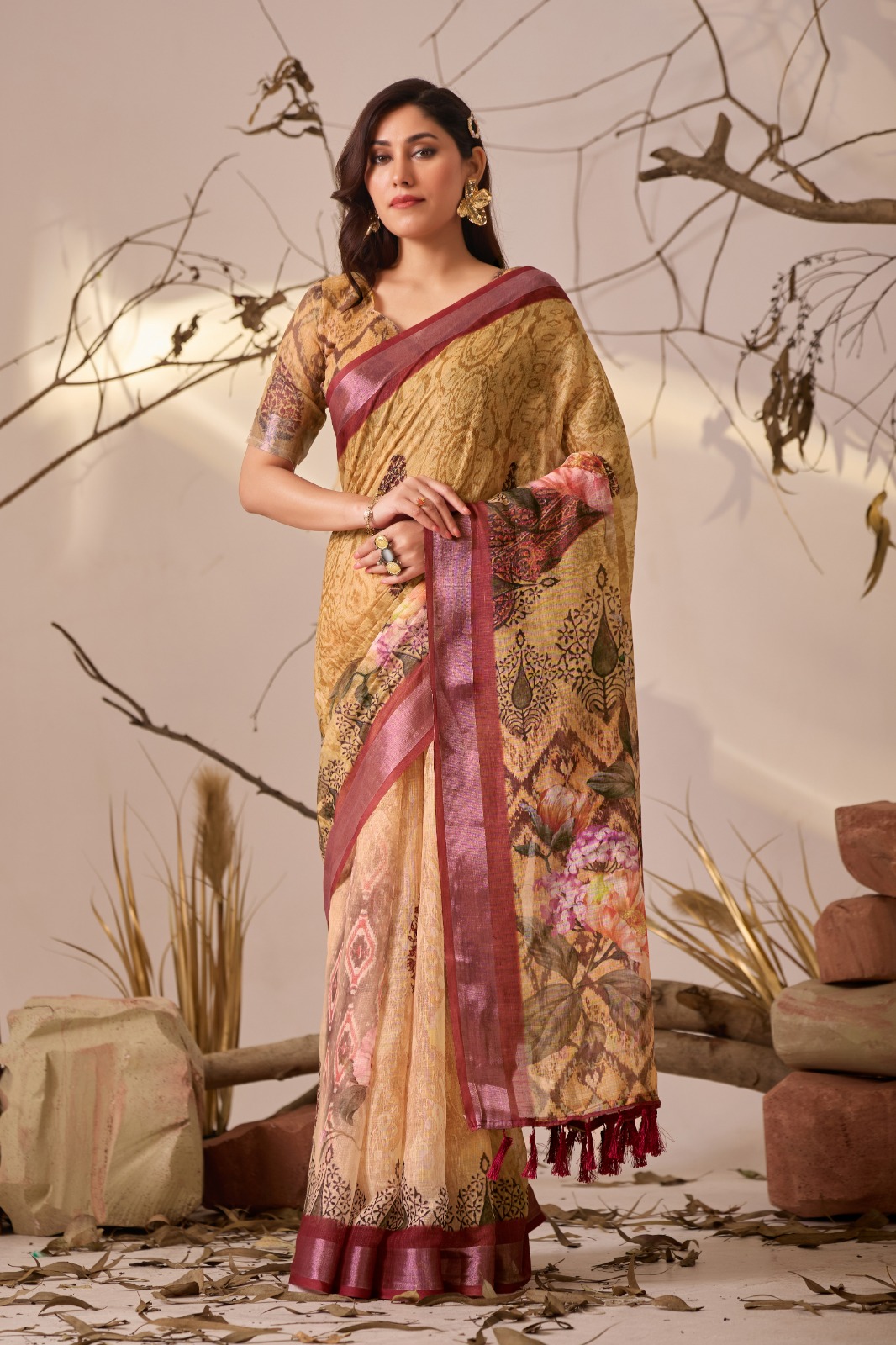
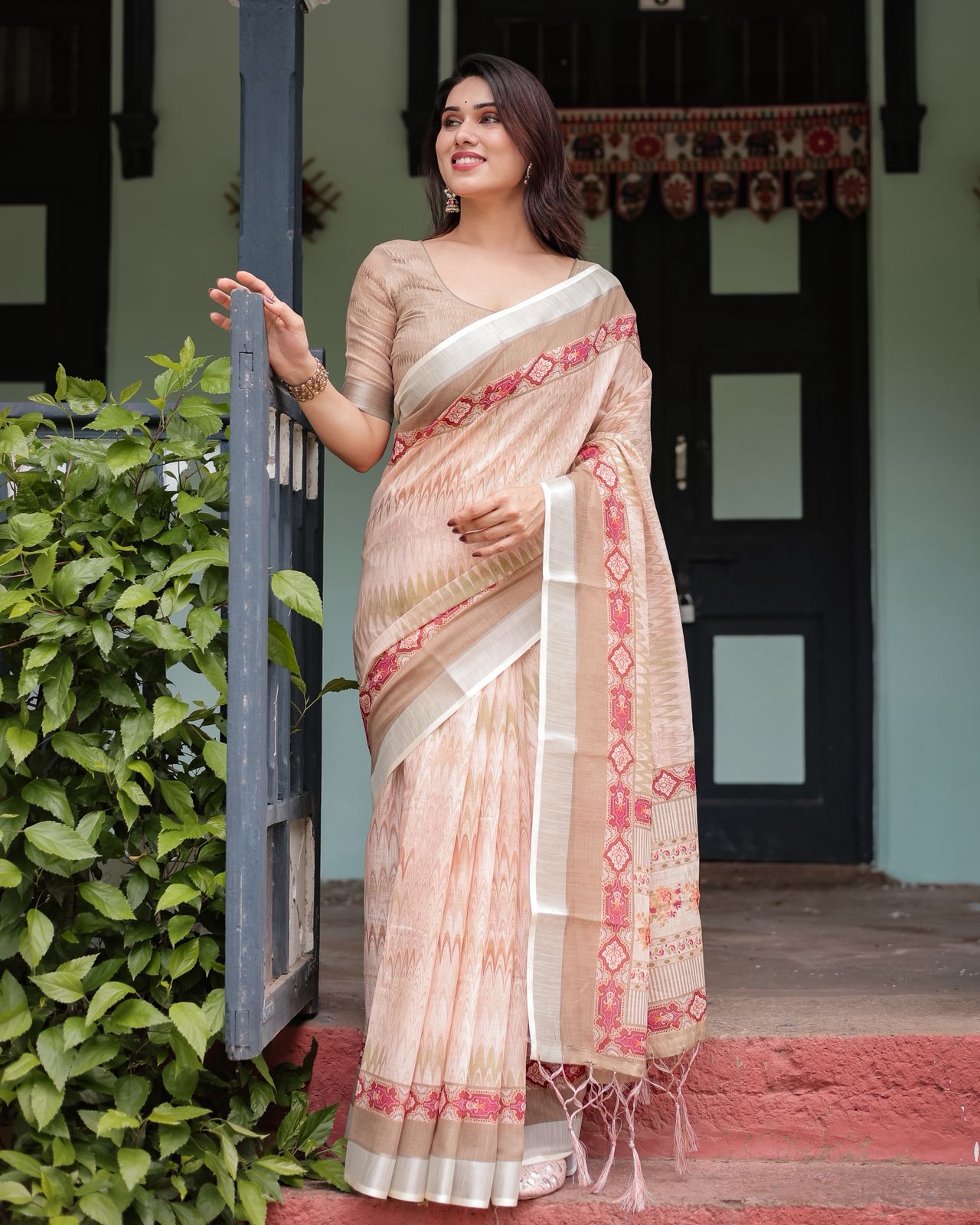
Peach Multicolor Linen Cotton Saree with Paisley Pallu shows why border placement matters. Peach Floral Linen Cotton Saree with Beautiful Blue Border and Peach Floral Linen Cotton Saree with Statement Blue Border! Also benefit from keeping the decorative edge at the lower hem while using narrower folds above it.
Peach Linen Cotton Floral Print Saree with Blouse for Women can be prepared on a flat surface before wearing. Laying the first six or seven folds flat makes it easier to check whether a printed section has doubled over and created unnecessary thickness.
Saree Waist Looking Bulky? Pleating Changes That Reduce Extra Volume in organza cotton silk
Organza cotton silk is crisp and holds pleats visibly, so a narrow but not excessive pleat width works better than loose gathering. Smooth each fold before pinning because small air pockets remain visible in a structured fabric.
Plum Floral Digital Print Organza Cotton Silk Saree and Peach Floral Organza Cotton Silk Saree can usually be handled with six to eight carefully aligned pleats, depending on the saree width and the desired coverage. Avoid over-tightening the tuck because crisp fabric can form a hard ridge against the waistband.
Saree Waist Looking Bulky? Pleating Changes That Reduce Extra Volume in satin and silk
Satin has a smooth surface and can slide out of place, while silk may settle flatter but become dense around a zari border. Use a firm petticoat, two well-placed pins and a controlled pleat stack rather than repeated retucking.
Plum Satin Floral Print Saree with Unstitched Blouse Fabric needs particularly careful anchoring because a slippery surface can loosen during movement. Navy Blue Floral Silk Saree with Peach Zari Border benefits from keeping the zari border close to the outer lower edge instead of folding a large section into the waist bundle.
Saree Waist Looking Bulky? Pleating Changes That Reduce Extra Volume with the right petticoat
A smooth, correctly fitted petticoat reduces saree waist bulk by providing a stable base and eliminating extra layers beneath the pleats. The petticoat should sit securely at the waist or high hip without a thick knot, gathered fabric or loose waistband.
Choose a petticoat with a flat waistband and a drawstring that can be tied at the side or back. A bulky front knot creates a raised point under the pleats. A skirt that's too full adds circumference around the hips, forcing the saree outward before the pleats even begin.
The petticoat should allow walking without pulling the saree upward. If the lower edge rises when you take a step, the saree may be tucked too tightly or the petticoat may be too narrow at the hem. Tightening the waist further won't solve that problem and can make the front look more compressed.
Shape-enhancing petticoats and shapewear should also be checked for seams, elastic edges and overlapping panels. A smooth slip layer can help satin and organza sit cleanly, but an additional thick layer beneath a structured saree may increase rather than reduce volume.
Avoid tying the petticoat immediately before a long event without testing the drape. Walk for five minutes, sit on a chair and climb a few steps. If the waistband rolls or the pleat bundle shifts, adjust the base before changing the saree pleats.
Saree Waist Looking Bulky? Pleating Changes That Reduce Extra Volume in a complete drape
The correct order is to secure the base, set the saree length, choose the front position, pleat on a flat surface, align the lower edge, pin the bundle and then complete the pallu. This sequence prevents repeated handling that loosens folds and adds random thickness.
- Secure the petticoat: Tie the waistband firmly enough to prevent slipping while leaving room for comfortable breathing and sitting.
- Set the lower length: Wear the footwear intended for the outfit and position the saree so the hem sits close to the floor without dragging.
- Choose the tuck position: Use the centre front or move the pleat bundle a few centimetres to one side if the centre becomes crowded.
- Make even folds: Create 3 to 4 centimetre pleats for many medium-weight sarees, adjusting for stiffness and border thickness.
- Press each fold: Run your palm down the pleat and keep the top edge level. Do not rely on pins to correct twisted folds.
- Align and pin: Hold the lower edge evenly, place one horizontal pin near the top and add another lower pin for satin or other slippery fabrics.
- Complete the pallu: Drape the pallu after the front bundle is stable so its weight doesn't pull the waist pleats sideways.
- Test movement: Walk, sit and raise one arm before leaving. A comfortable drape should remain secure without a tight, raised ridge.
For an affordable practice saree, the collections Sarees from Rs 1000 to Rs 1500, Sarees Under 20% Off and Sarees Under 10% Off can be useful places to compare how different weights fold. Sarees Flat 60% Off and Sarees Flat 50% Off may also help when choosing a second fabric for testing a new pleating method, but fabric composition should guide the decision more than the discount.
A flatter waist doesn't require hiding the saree's character. The goal is to control where fabric gathers, preserve the border's line and create enough support for comfortable movement. A few minutes spent preparing the petticoat and aligning the first pleats can make the final saree drape look noticeably smoother.
Common Questions About Reducing Saree Waist Bulk with Pleats
How many pleats make a saree look less bulky at the waist?
Six to eight well-aligned pleats can reduce front thickness for many medium-weight sarees. The best number depends on fabric width and stiffness; fewer very wide pleats can create more bulk than several narrow pleats.
What pleat width is best for a flatter saree drape?
Pleats measuring about 3 to 4 centimetres wide work well for many everyday sarees. Structured fabrics may need 4 to 5 centimetre folds so the pleats do not stand away from the body.
Should saree pleats be tucked in the centre or on the side?
A centre tuck works when the front remains flat and comfortable. Moving the pleat bundle 2 to 4 centimetres to either side can reduce congestion, provided the border stays straight and the saree remains secure.
Can a petticoat make a saree waist look bulky?
Yes, a thick waistband, front drawstring knot, gathered fabric or overly full skirt can add volume beneath the saree. A smooth, well-fitted petticoat with a flat waistband provides a cleaner base.
How can slippery satin saree pleats stay in place?
Use a firm petticoat and two horizontal safety pins through multiple layers of the pleat bundle. Smooth each fold before pinning and test the drape by walking and sitting.
Do zari borders increase saree waist bulk?
A zari border can increase bulk when several border layers are folded into the waist tuck. Keeping the border aligned at the lower edge and using moderate-width pleats limits the extra thickness.


