Saree Jewellery for an Afternoon Wedding in Harsh Sunlight requires a different balance from jewellery chosen for an evening reception. Direct sun intensifies yellow gold, reflects sharply from polished stones and makes heavy layered pieces feel warmer on the skin. The most successful look usually combines one noticeable focal piece with quieter supporting accessories, a comfortable blouse neckline and colours that complement the saree instead of competing with it.
Afternoon wedding photographs also reveal details that candlelight conceals: loose clasps, fingerprints on metal, uneven earring lengths and stones that throw distracting pure flashes. A considered jewellery plan therefore includes finish, weight, colour temperature, placement and a short comfort test before leaving home. The guidance below applies whether the ceremony takes place in an open courtyard, a temple, a lawn or a venue with hard west-facing windows.
Saree Jewellery for an Afternoon Wedding in Harsh Sunlight: the central styling rule
The central rule is to control reflection by choosing a clear focal point and limiting competing shine. If a necklace has high-polish gold and large stones, choose smaller earrings and a slim bangle stack. If the earrings are elaborate jhumkas or chandbalis, a delicate chain or no necklace may create a more balanced result.
Harsh sunlight doesn't make traditional jewellery unsuitable; it makes proportion more important. A broad zari border already creates a bright line around the body, while a heavily worked blouse may add another reflective surface near the face. Jewellery should fill a visual gap rather than repeat every decorative detail of the saree.
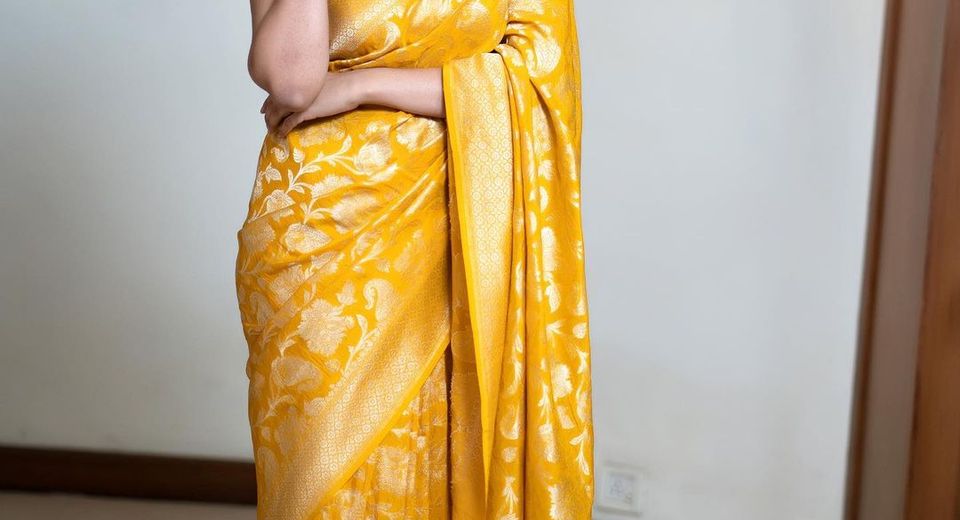
Begin with the saree's dominant colour and finish. Sunshine Yellow Silk Saree with Traditional Zari Motifs has a warm, luminous base, so antique gold, kundan with restrained white stones or small green accents can add definition without producing a completely metallic look. Yellow Banarasi Silk Saree With Rich Gold Zari Work already carries substantial gold, making medium-sized earrings and a single bracelet more effective than a full bridal set.
Match jewellery metal to the saree's colour and weave
Warm gold usually complements mustard, maroon, red and traditional yellow silk sarees, while silver, pearl and cool-toned stones bring clarity to turquoise, pink and blue palettes. The best metal choice depends on both the saree colour and the amount of zari visible near the face.
Gold with Banarasi silk and zari
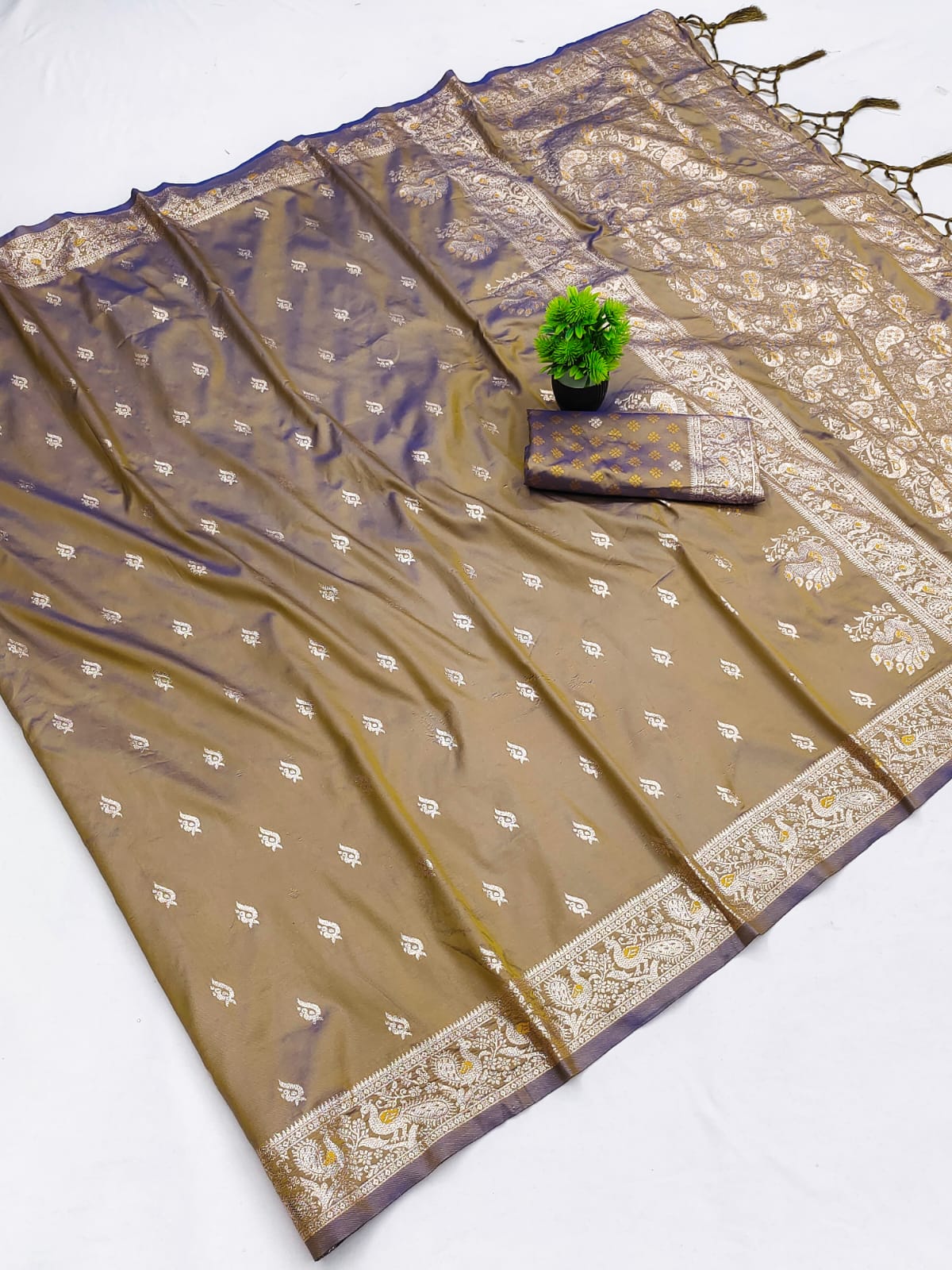
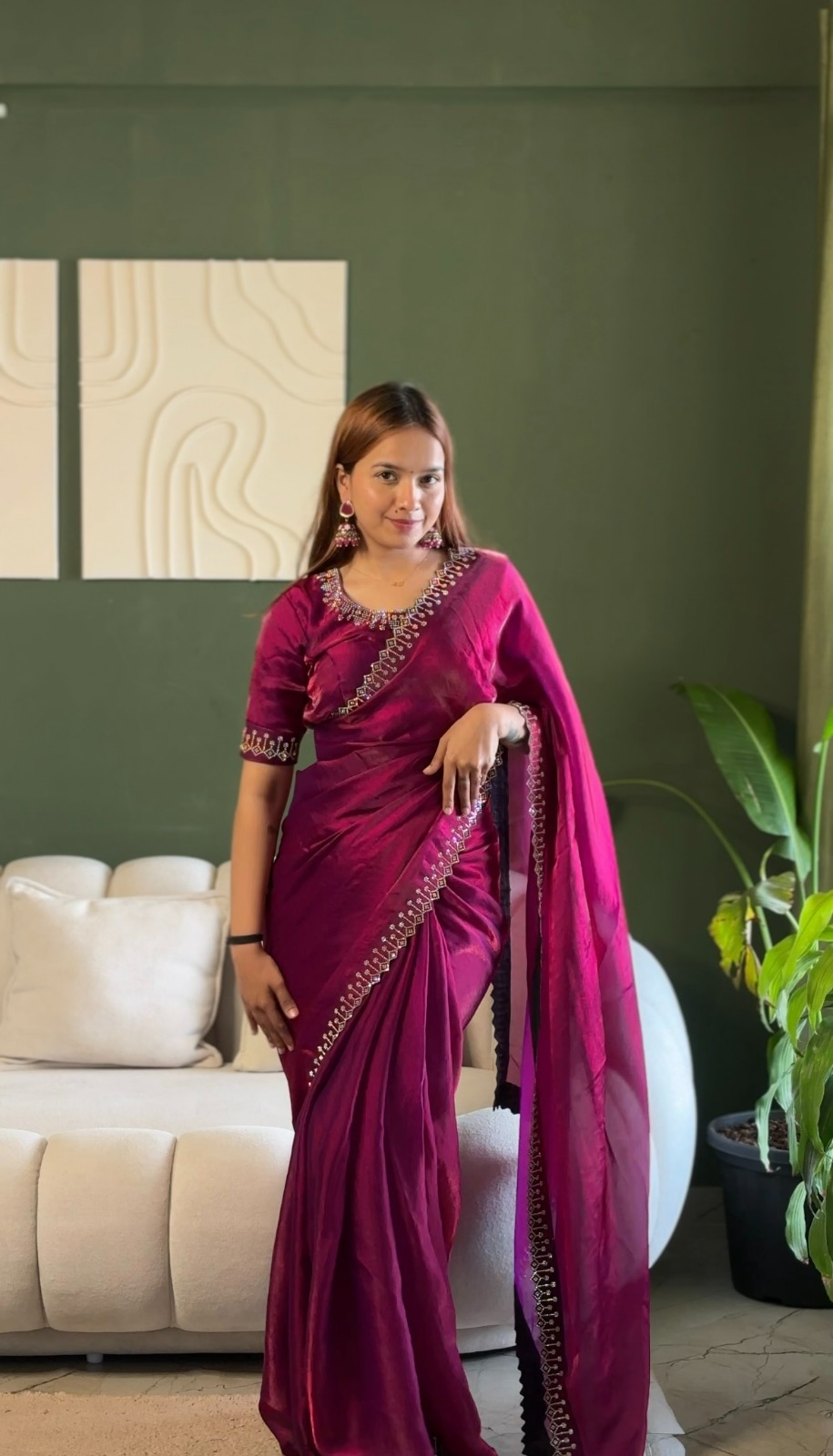
Gold jewellery works especially well with Banarasi silk because zari and gold share a warm visual temperature. Royal Mustard Bloom Banarasi Silk Saree can support antique gold earrings, a matte gold choker or a small temple-inspired pendant. A matte or brushed finish absorbs some sunlight and gives the weave room to remain visible.
Bright polished gold can look striking, but large uninterrupted surfaces may create hard highlights in close-up photographs. A useful compromise is a textured gold necklace with polished edges, or gold earrings featuring enamel, ruby-coloured glass, green stones or pearls. The additional colour breaks up reflection while keeping the traditional effect.
Contrasting metal for lighter or cooler sarees
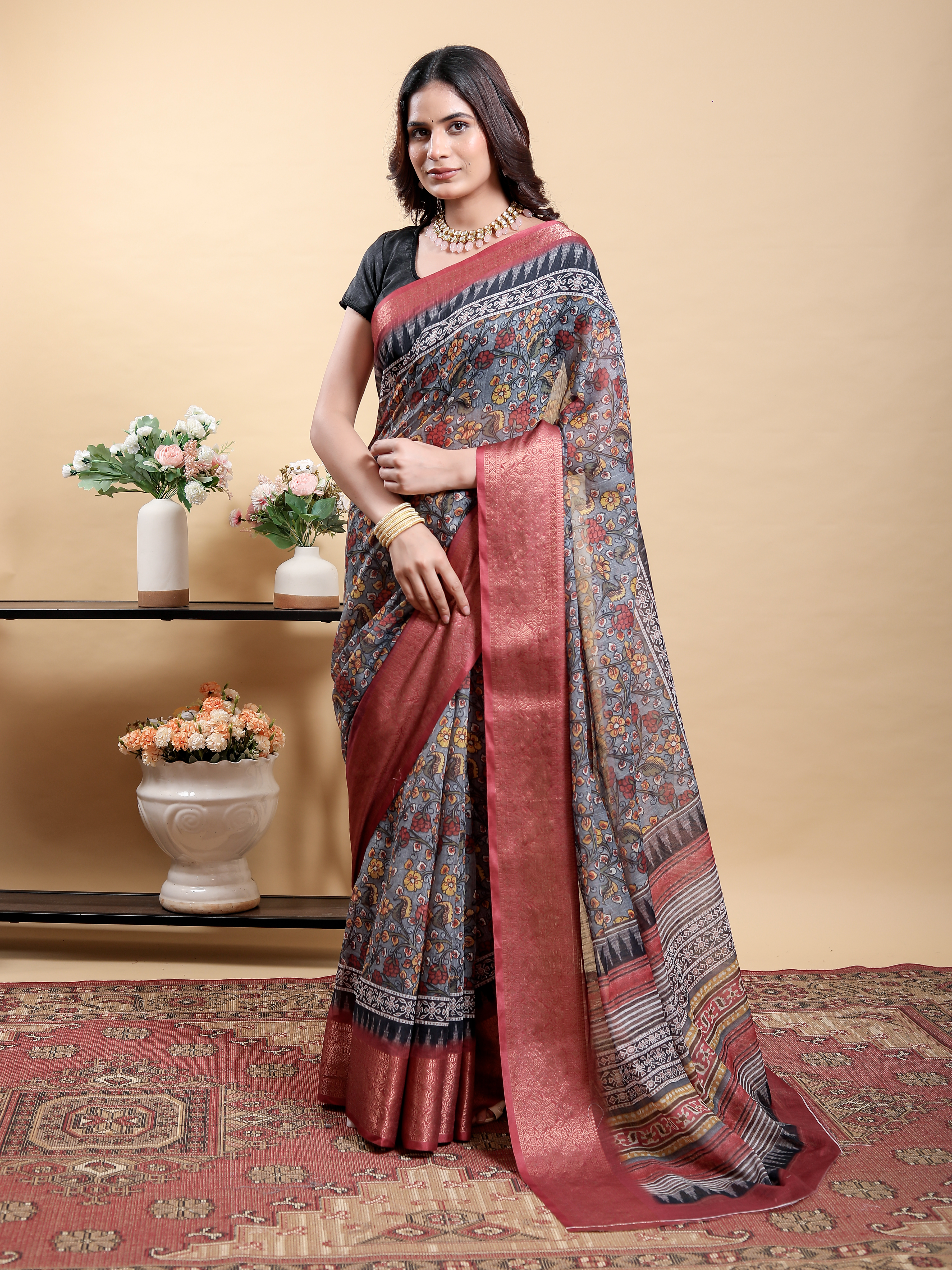
Silver-toned jewellery can sharpen a turquoise, lilac or cool pink saree, while pearls soften the contrast. Turquoise Saree with White Floral Motifs and Geometric Border can be paired with pearl drops, oxidised silver earrings or a white-stone pendant. Avoid mixing several unrelated finishes unless one metal clearly dominates; random combinations can appear unsettled in strong daylight.
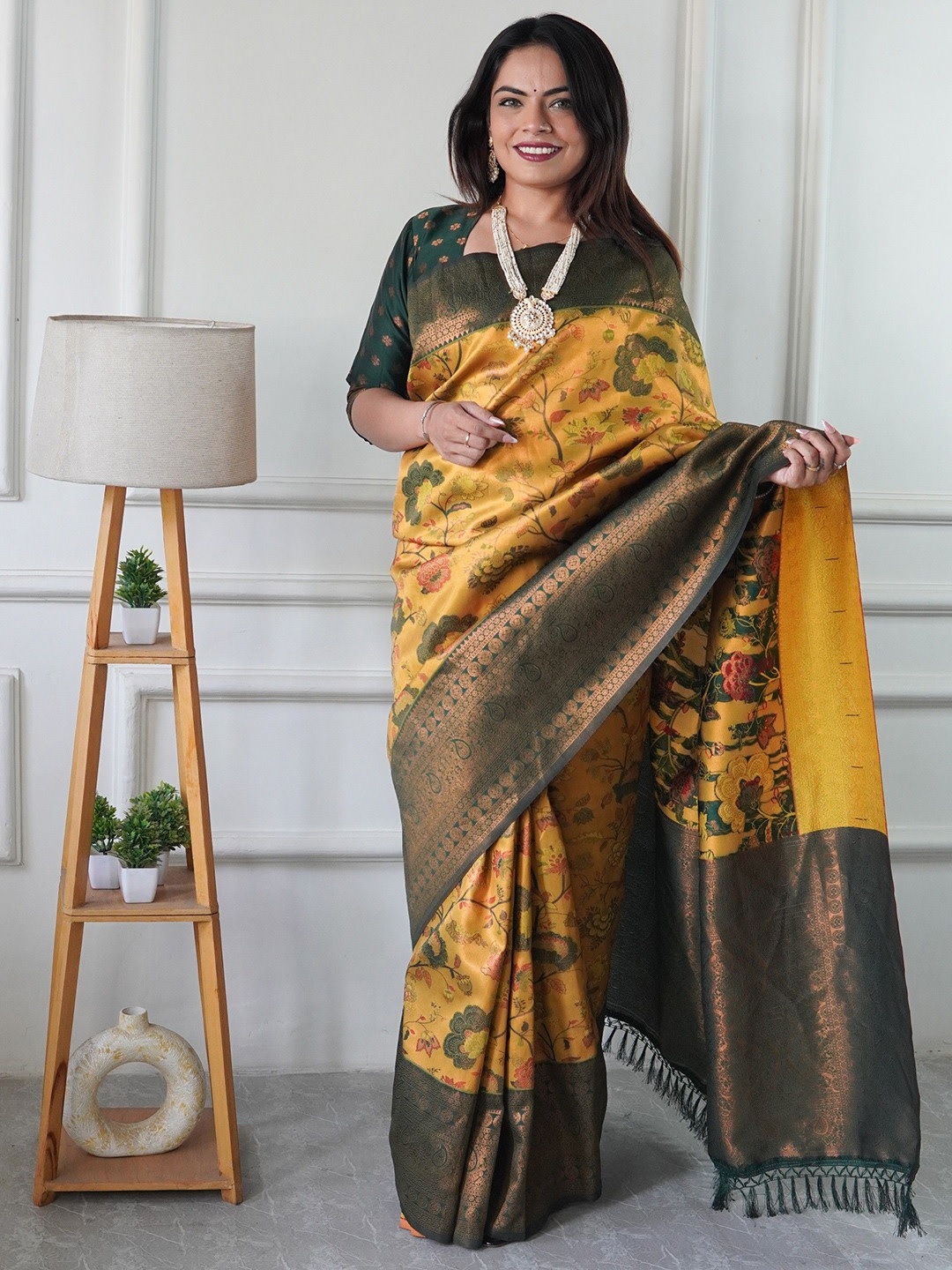
Mustard Satin Saree with Printed Pink Pallu & Blouse benefits from jewellery that connects both colour families. Rose-gold-toned pieces, antique gold with pink stones or pearls with a warm metal setting can bridge mustard and pink. Jewellery that repeats only the yellow base may make the outfit look flat, while jewellery that matches only the pink pallu can make the accessories feel disconnected from the saree body.
Choose the right earrings, necklace and bangles
A daytime wedding saree outfit generally needs one facial frame, one neckline accent and one wrist detail rather than multiple large pieces. Earrings frame the face, a necklace defines the blouse neckline and bangles add movement, so these three areas should not all carry maximum volume.
Earrings for photographs and outdoor movement
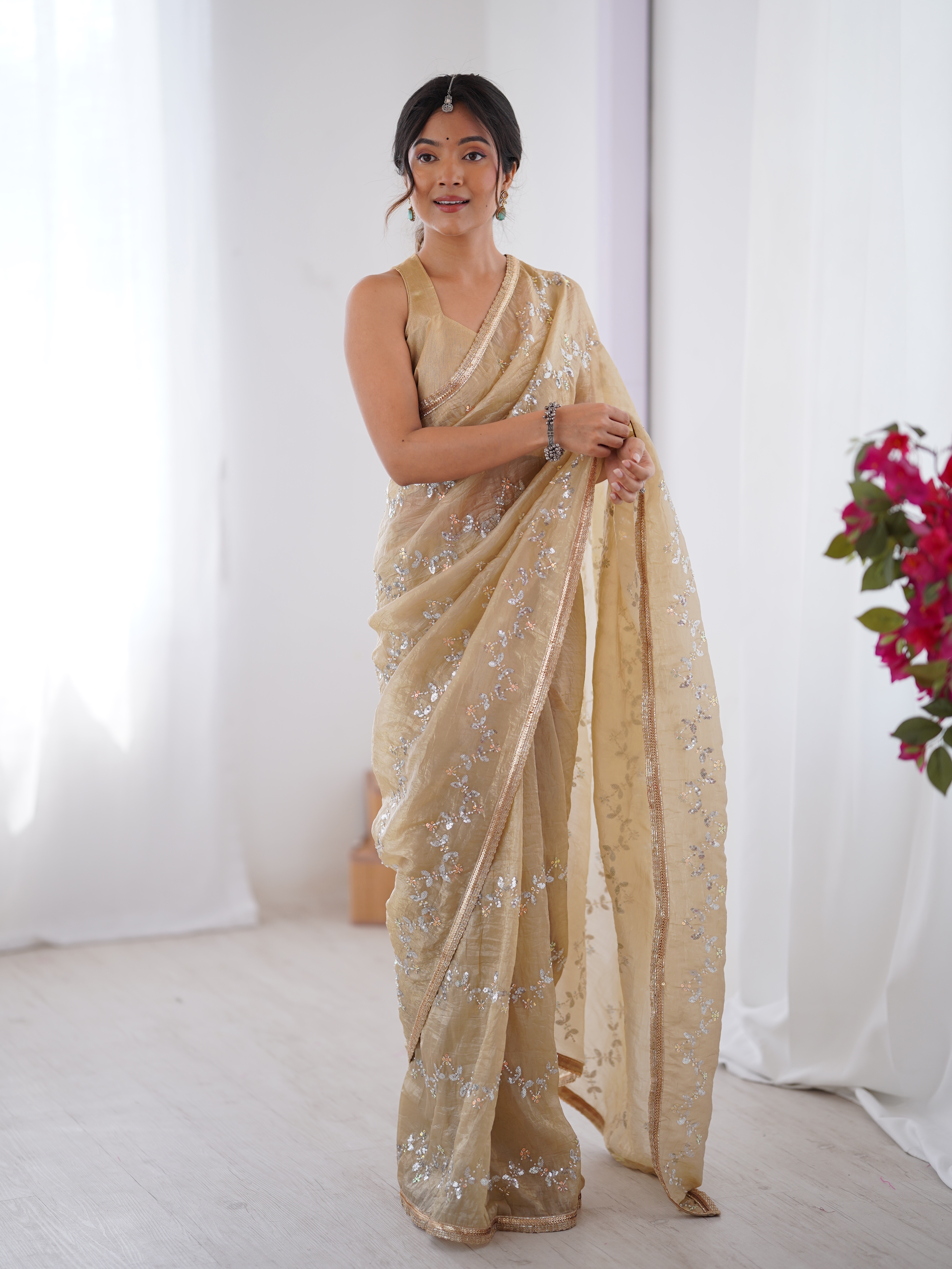
Medium jhumkas, pearl drops and structured chandbalis are reliable choices for an afternoon ceremony because their silhouettes remain visible without covering the face. Earring length should usually stop above the shoulder line when the saree includes a detailed pallu or a high-contrast blouse. Very long earrings can tangle in hair, catch on the pallu and pull uncomfortably during several hours of greetings.
Heavy earrings need support, especially when worn for more than three hours. Silicone earring backs, broad push backs and discreet earring stabilisers reduce downward pressure. Test the earrings while turning the head, smiling and pinning the pallu; a piece that feels acceptable for five minutes may become painful during a long ceremony.
Necklaces and blouse necklines
A necklace should follow the blouse neckline instead of sitting awkwardly across it. Chokers suit deep, square and sweetheart necklines, medium pendants suit round or V-neck blouses and longer chains work with higher necklines when the saree body is relatively quiet.
Red Banarasi Silk Saree With Gold Zari Floral Work can carry a traditional gold necklace because its red base and floral zari provide a strong festive foundation. Keep the necklace length moderate if the blouse already has embroidery near the collarbone. Maroon Banarasi Soft Silk Saree with Golden Zari Border can instead be styled with a pendant necklace and medium gold earrings, allowing the border to remain the main horizontal accent.
Bangles, bracelets and rings
Three to six slim bangles on one wrist usually create movement without the weight and sound of a large stack. A single broad kada can work when the saree has a simple border, but it may look too dense beside a heavily patterned Banarasi weave. Choose bangles with rounded edges if the pallu will be adjusted repeatedly.
Rings should remain practical for carrying a phone, greeting guests and eating. One statement ring or two slim rings are enough for most daytime wedding looks. A ring with a tall setting can catch on silk and snag delicate threads, so low-profile settings are safer for Banarasi silk, satin and georgette.
Use colour to reduce visual glare
Colour variation reduces the mirror-like effect created when a bright saree, yellow gold and clear stones all reflect light at once. Jewel tones, pearls, enamel and antique finishes provide controlled contrast without making the outfit look less festive.
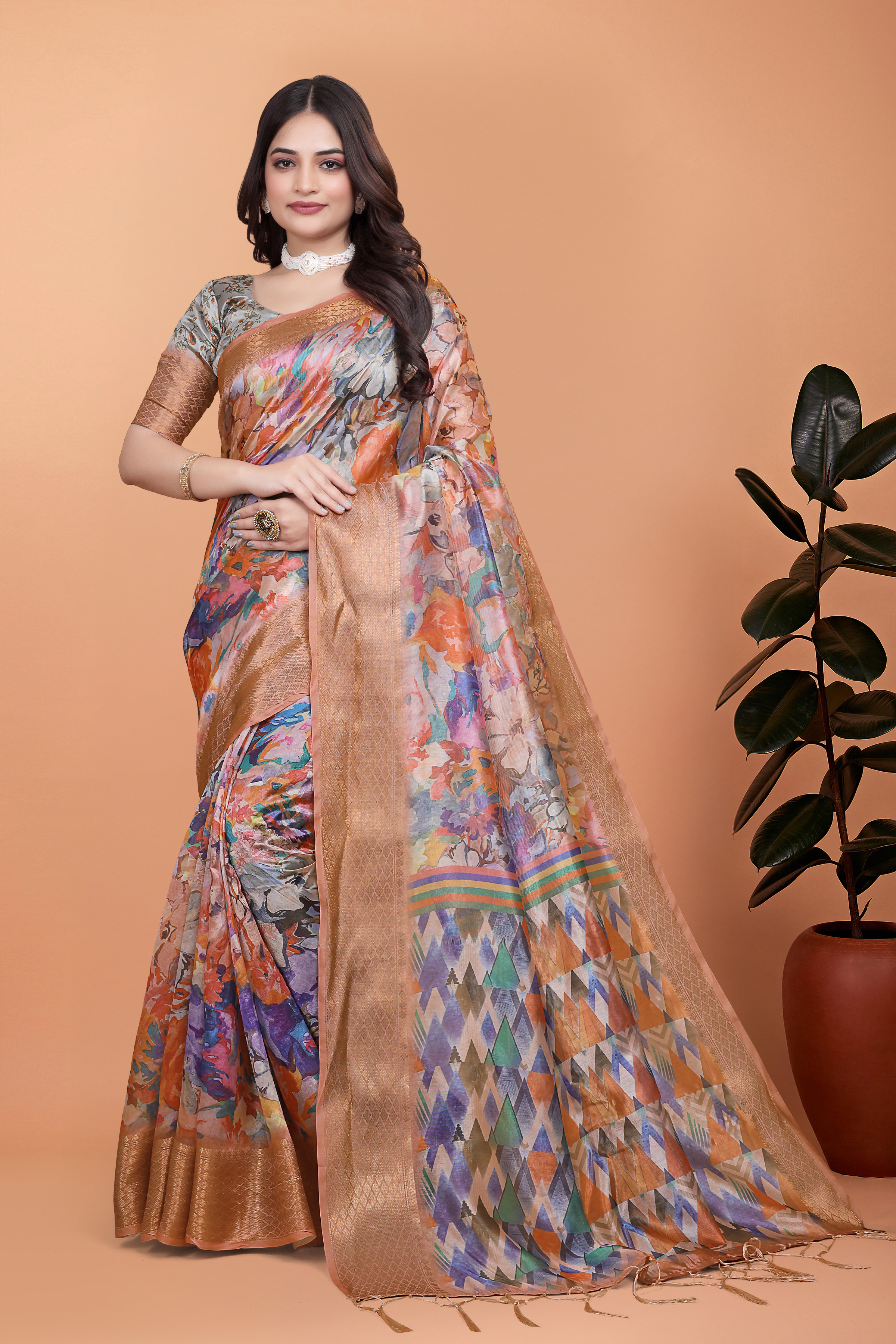
Yellow and mustard sarees pair well with green, ruby, garnet, coral and pearl accents because these colours define the face against a warm base. A small green stone in the earrings can make yellow silk look richer, while red accents create a more ceremonial effect. Avoid using large quantities of clear rhinestones with a highly reflective yellow saree unless the evening reception follows immediately and the jewellery must serve both settings.
Red and maroon sarees can handle gold, pearls, emerald green and uncut-style stones. Gold jewellery against Red Banarasi Silk Saree With Gold Zari Floral Work looks traditional, but a pearl drop can soften the combination for a daytime setting. Maroon Banarasi Soft Silk Saree with Golden Zari Border benefits from muted gold or antique finishes when the sunlight is especially intense.
Turquoise and pink offer an opportunity for lighter jewellery. White pearls, pale green stones, silver-toned metal and rose-gold accents can create definition without the visual heaviness of a full yellow-gold set. Pink Georgette Sarees is a useful colour direction for anyone seeking a softer daytime palette, particularly when the ceremony includes outdoor photographs.
Balance jewellery with fabric weight and drape
Jewellery weight should correspond to the saree's structure, border and drape rather than to the wedding label alone. Banarasi silk and heavier soft silk can support substantial earrings, while satin and georgette often look more graceful with lighter, cleaner accessories.
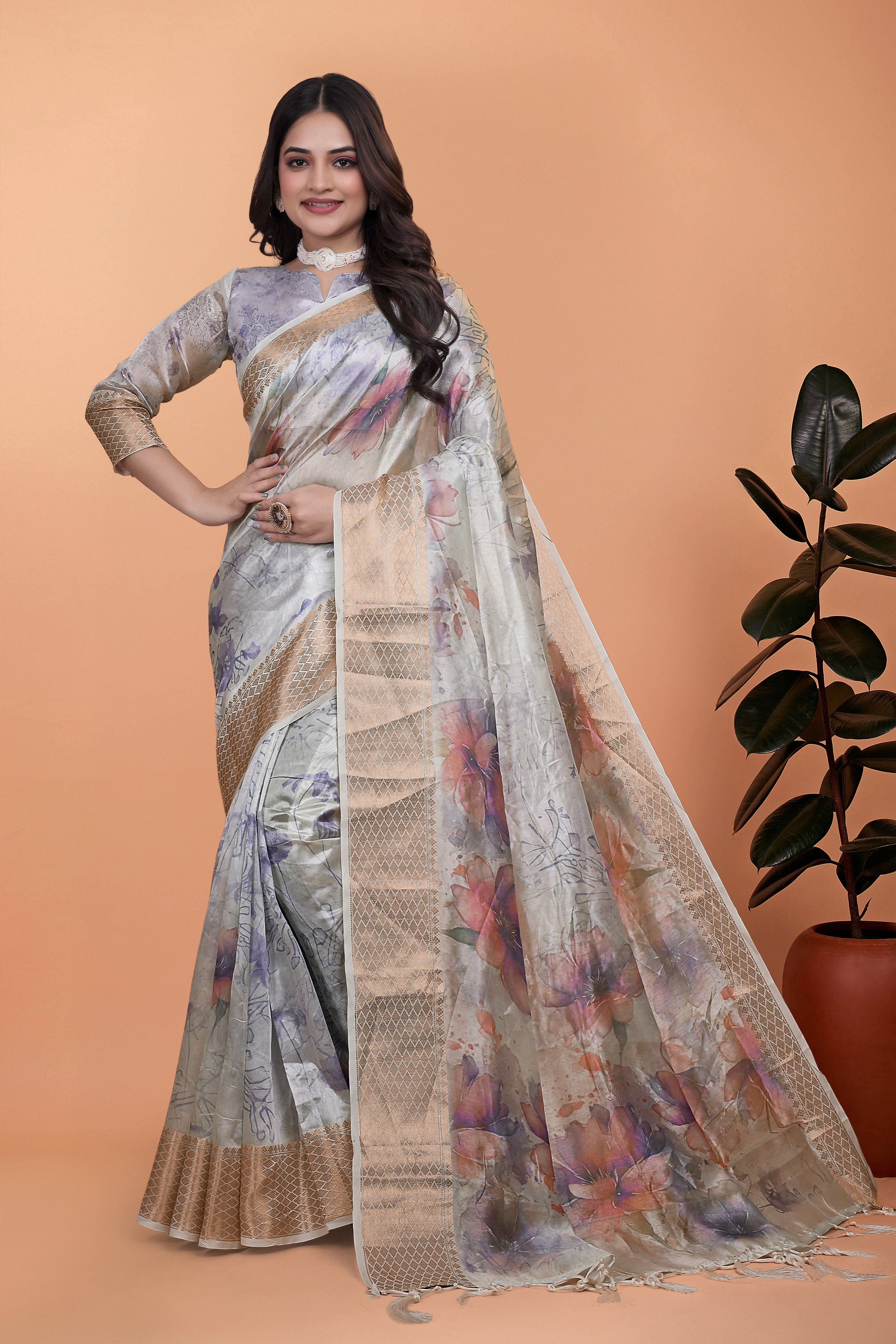
Mustard Moss Georgette Silk Saree With Foil Work already introduces shine through foil detailing, so a textured pendant and small drop earrings may be more effective than a large necklace set. Georgette moves with the body, and lighter jewellery preserves that movement. A very heavy necklace can pull attention downward and make the pallu sit unevenly.
Satin reflects light in broad, smooth areas. Jewellery with carved, matte or coloured surfaces helps break up those areas. A printed pallu also gives the eye several colours to process, so repeating one accent colour in the earrings is usually enough. A matching bangle or ring can complete the connection without adding another elaborate motif.
Silk sarees with zari borders can take more traditional jewellery, but a heavy set still requires a secure drape. Use a small number of concealed safety pins at the shoulder and waist, keep the jewellery away from the pin points and check that the necklace doesn't pull the blouse neckline forward. The Latest Wedding Sarees Collection can provide broader styling references across silk, Banarasi and lighter occasion fabrics, but the jewellery decision should follow the individual saree's construction.
Plan for heat, sweat and a long ceremony
Comfort depends on reducing contact, friction and trapped heat around the neck, ears and wrists. Choose hollow or lightweight metal forms where possible, avoid rough backs and allow a few minutes between skincare, perfume and jewellery application.
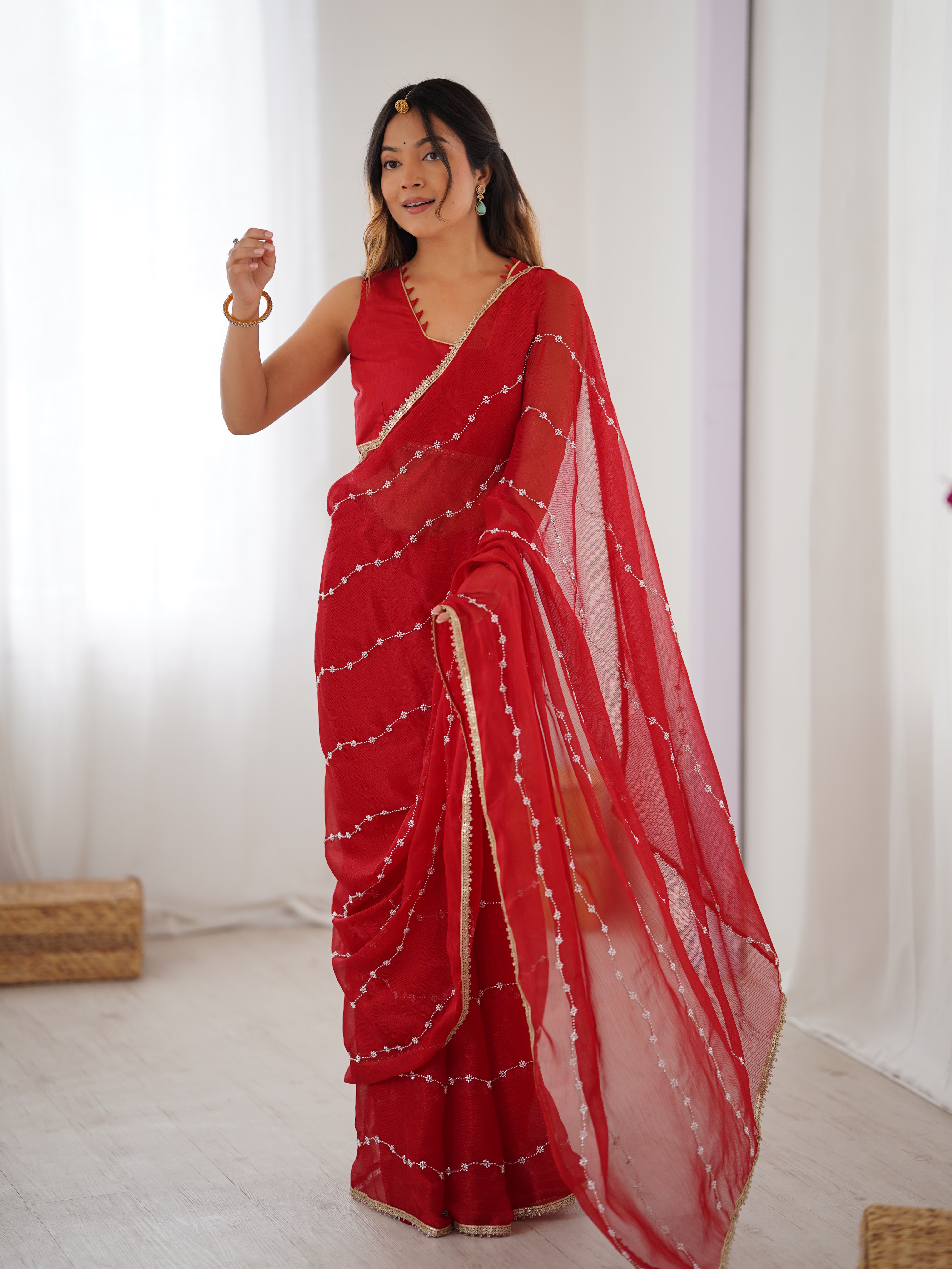
Perfume and hair products can discolour some plated finishes and irritate skin under tight jewellery. Apply fragrance to clothing or pulse points before putting on necklaces and earrings, then let the product dry fully. A clean cotton cloth, spare earring backs, blister plasters and a small pouch are practical additions to a wedding emergency kit.
Test the complete look at home for at least 30 minutes. Sit in a chair, walk outdoors, turn the head, raise both arms and carry a small bag. The test reveals whether a necklace twists, bangles strike the phone, earrings pull the lobes or the pallu catches on a ring. Jewellery that passes a movement test is more dependable than jewellery chosen only for a mirror photograph.
Sun protection also affects the styling plan. Apply sunscreen before dressing, allow it to settle and avoid rubbing the neck after the necklace is fastened. A breathable blouse lining can reduce sweat where metal touches skin. If the venue is outdoors, carry a compact pouch rather than leaving jewellery loose in a handbag where stones can scratch one another.
Build complete looks without over-accessorising
A complete afternoon wedding look needs coordination across jewellery, blouse, hair and makeup, but each area doesn't need equal intensity. The face should remain readable in photographs, the saree should retain its weave definition and the jewellery should look intentional from both close and medium distances.
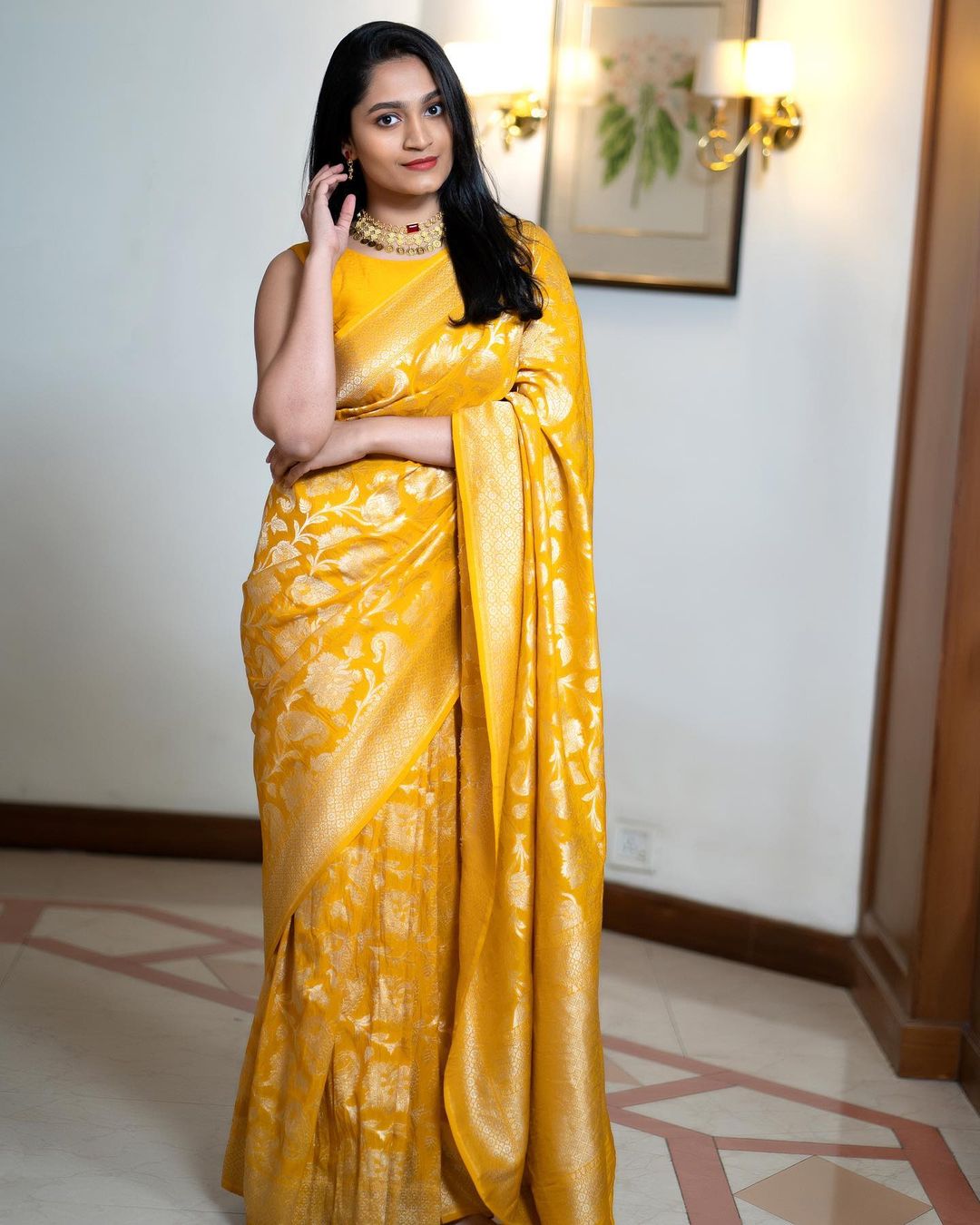
For a warm traditional look, pair Sunshine Yellow Silk Saree with Traditional Zari Motifs with medium antique-gold jhumkas, a slim bangle stack and a low bun decorated with a small floral accessory. Skip the heavy choker if the blouse has a high neckline or dense embroidery. This combination keeps the saree's yellow and zari visible without creating one uninterrupted reflective block.
For a richer festive look, style Royal Mustard Bloom Banarasi Silk Saree with a textured gold pendant, green-accent earrings and one broad kada. Keep the hair pulled away from the face so the earrings remain visible. The contrast between mustard, green and antique gold photographs more clearly than several layers of plain bright gold.
For a lighter outdoor look, wear Turquoise Saree with White Floral Motifs and Geometric Border with pearl drops, a white-stone bracelet and a simple ring. The white motifs already connect with the pearls, while the cool metal prevents the turquoise from appearing overly warm under direct sun.
For a budget-conscious wedding wardrobe, Wedding Sarees Collection Under 4000 and Silk Sarees Under 3000 With Discount can be useful starting points for comparing colour, border width and fabric before selecting accessories. Jewellery doesn't need to be expensive to look polished; clean surfaces, secure construction and suitable scale matter more than a large number of pieces.
A practical checklist before leaving for the wedding
Use a short checklist to confirm that the jewellery will survive heat, movement and photography. A polished appearance comes from preparation as much as from the pieces themselves.
- Reflection: identify the single brightest element, then reduce shine in at least one neighbouring area.
- Colour: repeat one saree accent in the earrings, necklace or bangles rather than matching every colour.
- Scale: keep only one statement category: necklace, earrings, bangles or hair jewellery.
- Security: check earring backs, necklace clasps, bangle edges and saree pins before leaving.
- Comfort: wear the complete combination for 30 minutes and move naturally before committing to it.
- Care: carry a soft cloth, spare backs and a separate pouch for jewellery after the ceremony.
The strongest daytime wedding styling looks deliberate from a distance and comfortable up close. Saree Jewellery for an Afternoon Wedding in Harsh Sunlight should frame the wearer, not compete with the sun, zari or photographs. When metal finish, stone colour, fabric weight and jewellery scale work together, even a simple accessory combination can look richly festive for the entire ceremony.
Common Questions About Choosing Jewellery for a Sunlit Saree Wedding
What jewellery looks best with a saree at an afternoon wedding?
Medium earrings, one controlled necklace or pendant and a small bangle stack usually work best in strong daylight. Antique, brushed or textured finishes reduce glare, while pearls and coloured stones add contrast to bright silk and zari.
Can I wear heavy gold jewellery in harsh sunlight?
You can wear heavy gold jewellery, but use one prominent piece rather than a full matching set. Pairing a heavy necklace with smaller earrings or pairing statement earrings with a slim chain keeps the face and saree from looking visually crowded.
Which jewellery suits a yellow or mustard saree for a daytime wedding?
Antique gold, green stones, pearls, ruby-coloured accents and textured gold suit yellow and mustard sarees. Bright polished gold can also work, but limiting clear stones and large reflective surfaces usually produces softer photographs.
Is silver jewellery suitable for a wedding saree?
Silver jewellery suits cool-coloured sarees such as turquoise, blue, lilac and some pinks. Pearls, white stones and oxidised silver can create contrast, although silver may look disconnected from a saree dominated by warm gold zari unless a deliberate mixed-metal detail links the two.
How can I stop saree jewellery from becoming uncomfortable in the heat?
Wear lightweight pieces, use supportive earring backs and test the complete outfit for at least 30 minutes before the event. Apply sunscreen and perfume before fastening jewellery, keep a soft cloth available and avoid rough edges that rub against sweaty skin.
How much jewellery should I wear with a heavily worked Banarasi saree?
A heavily worked Banarasi saree usually needs one statement jewellery area and quieter accessories. Medium jhumkas with a slim bangle stack, or a textured necklace with small studs, preserves the visibility of the zari while still looking wedding-appropriate.