

Saree Fabrics That Complement Velvet Blouse Pairing depend on more than colour. Velvet has a dense pile, a soft light-catching surface and noticeable visual weight, so the saree should either balance that richness with an equally substantial weave or create contrast with a lighter, more fluid drape. Silk, Chanderi, chiffon, georgette, organza and selected cotton sarees can all work, but each creates a different proportion, comfort level and occasion mood.
The most reliable method is to compare three things before dressing: the weight of the saree, the shine of the saree and the structure of the velvet blouse. A heavily embroidered velvet blouse needs a quieter saree surface, while a plain velvet blouse can support zari, a woven border or a more distinctive drape. The same principle applies whether you're choosing a readymade blouse or commissioning a designer saree blouse.
Why velvet needs a carefully chosen saree fabric
Velvet adds visual depth because its short pile absorbs and reflects light in different directions. A velvet blouse therefore looks fuller and richer than a blouse made from flat cotton or plain crepe, even when both garments use the same colour.
A saree made from a similarly heavy fabric creates a formal, regal effect. Banarasi silk, Kanjeevaram silk and substantial raw silk can carry a velvet blouse during winter weddings and evening receptions because their structure prevents the blouse from looking disconnected. A lightweight saree creates a more modern contrast, but the blouse should then have controlled detailing rather than excessive embroidery.
Texture also affects the visual balance. A matte velvet blouse beside a glossy satin-like saree produces strong contrast, whereas velvet beside Chanderi or organza creates a quieter interplay between pile and transparency. Neither approach is automatically better; the right choice depends on whether the outfit should look traditional, contemporary, understated or festive.
Saree Fabrics That Complement Velvet Blouse Pairing most reliably
Silk and Banarasi silk
Silk is the most dependable fabric for a velvet blouse because silk has enough body, sheen and occasion presence to balance velvet's density. Banarasi silk with zari motifs is especially effective for weddings, sangeet events and formal festive dinners.
A plain velvet blouse in deep wine, emerald, navy or black can anchor a Banarasi silk saree with gold or silver zari. Keep the blouse neckline and sleeve treatment relatively clean when the saree has dense jaal work or a broad zari pallu. A velvet blouse with heavy beadwork is better with a silk saree that has a restrained border.
Kanjeevaram silk gives the pairing a more time-honoured South Indian direction. Choose a blouse colour taken from the saree's border rather than matching the body exactly. For example, a plum velvet blouse can pick up a purple thread in a pink Kanjeevaram saree without creating a flat, head-to-toe block of colour.
Chanderi and tissue sarees
Chanderi is a strong choice when you want velvet to look festive without making the outfit excessively heavy. Chanderi's airy hand, subtle sheen and often-transparent texture allow a velvet blouse to become the visual focal point.
A solid velvet blouse works well with a Chanderi saree featuring a narrow zari border. The combination suits pujas, daytime receptions and intimate festive gatherings because the saree remains breathable while the blouse supplies depth. A gold velvet blouse with a pastel Chanderi saree can look polished in daylight, while maroon or bottle-green velvet gives a more dramatic evening result.
Tissue sarees create a brighter version of the same contrast. Since tissue catches light strongly, avoid pairing it with velvet that has dense sequins across the entire front unless the event specifically calls for high glamour. A matte or lightly embroidered velvet blouse gives the saree room to shimmer.
Chiffon, georgette and crepe
Chiffon, georgette and crepe are useful with velvet when you want a fluid, contemporary silhouette. These fabrics fall close to the body, so they offset a structured blouse and reduce the bulk that can appear when both garments are thick.
Georgette is usually easier to manage than chiffon for a velvet blouse because its slightly heavier fall gives the pleats more stability. Crepe creates a smooth, elegant line and works particularly well with a jewel-toned velvet blouse for cocktails or evening celebrations. Chiffon gives the lightest effect, but a very slippery chiffon may need careful pleating and secure pinning.
Use the pallu as the main area of restraint. A velvet blouse with a high neck or full sleeves can be paired with a plain georgette saree and a defined border. If the saree already includes printed florals, metallic edging and a contrast pallu, choose a simpler velvet blouse so the outfit doesn't compete at every point.
Cotton, handloom cotton and Ikkat
Cotton can complement velvet when the blouse design is simple and the cotton saree has enough colour or weave character to hold the pairing together. The result is best for daytime functions, cultural events, winter lunches and festive gatherings where comfort matters as much as ornamentation.
A plain dark velvet blouse with a crisp handloom cotton saree creates an useful high-low texture contrast. However, a heavily padded or embellished velvet design may feel too formal beside very light mulmul cotton. Medium-weight cotton, Ikkat cotton and cotton sarees with zari borders generally offer better balance.
The Blue Zari Work Cotton Saree for Wedding demonstrates why cotton doesn't have to look casual. Its zari detail can support a velvet blouse for a daytime wedding, especially when the blouse repeats the saree's blue or uses a closely related shade. Keep jewellery measured if the saree already has a visible metallic border.
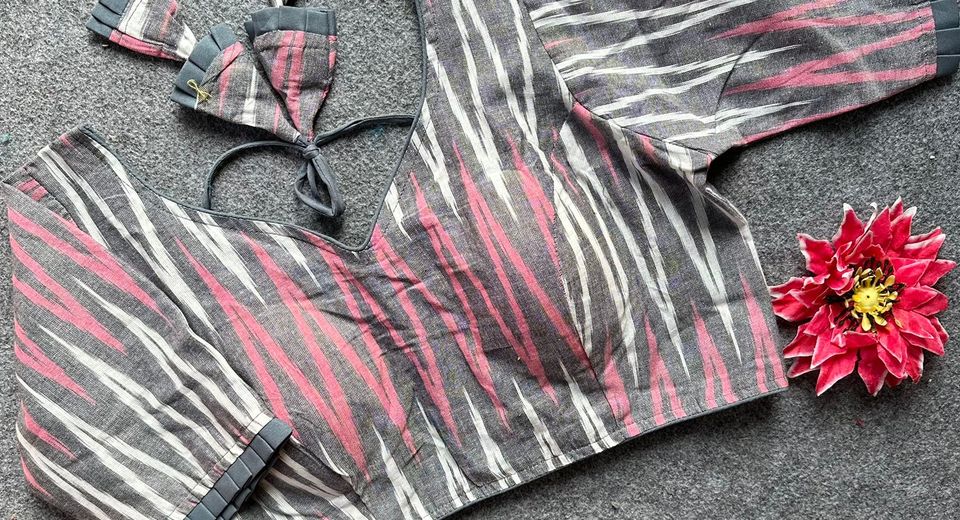
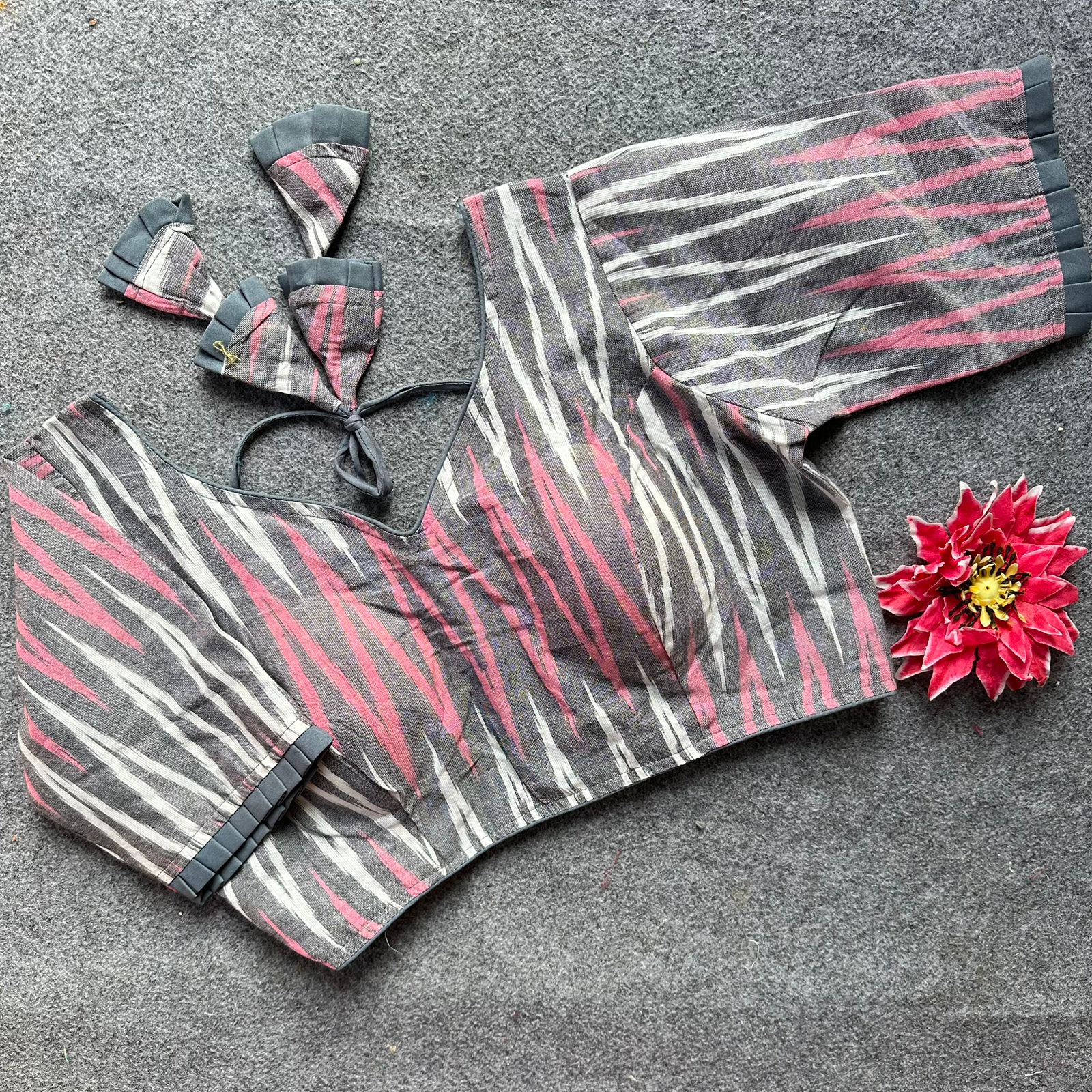
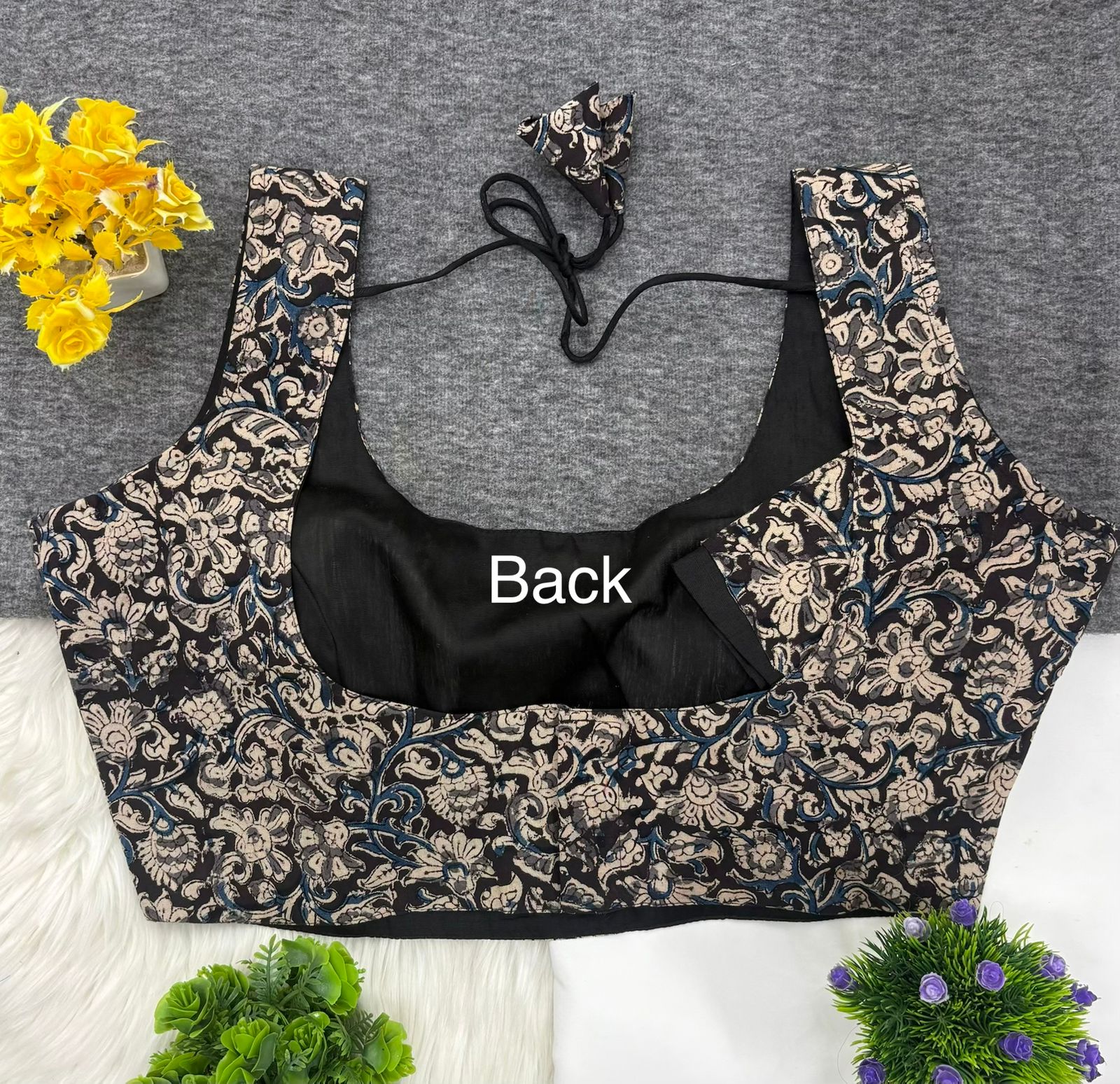
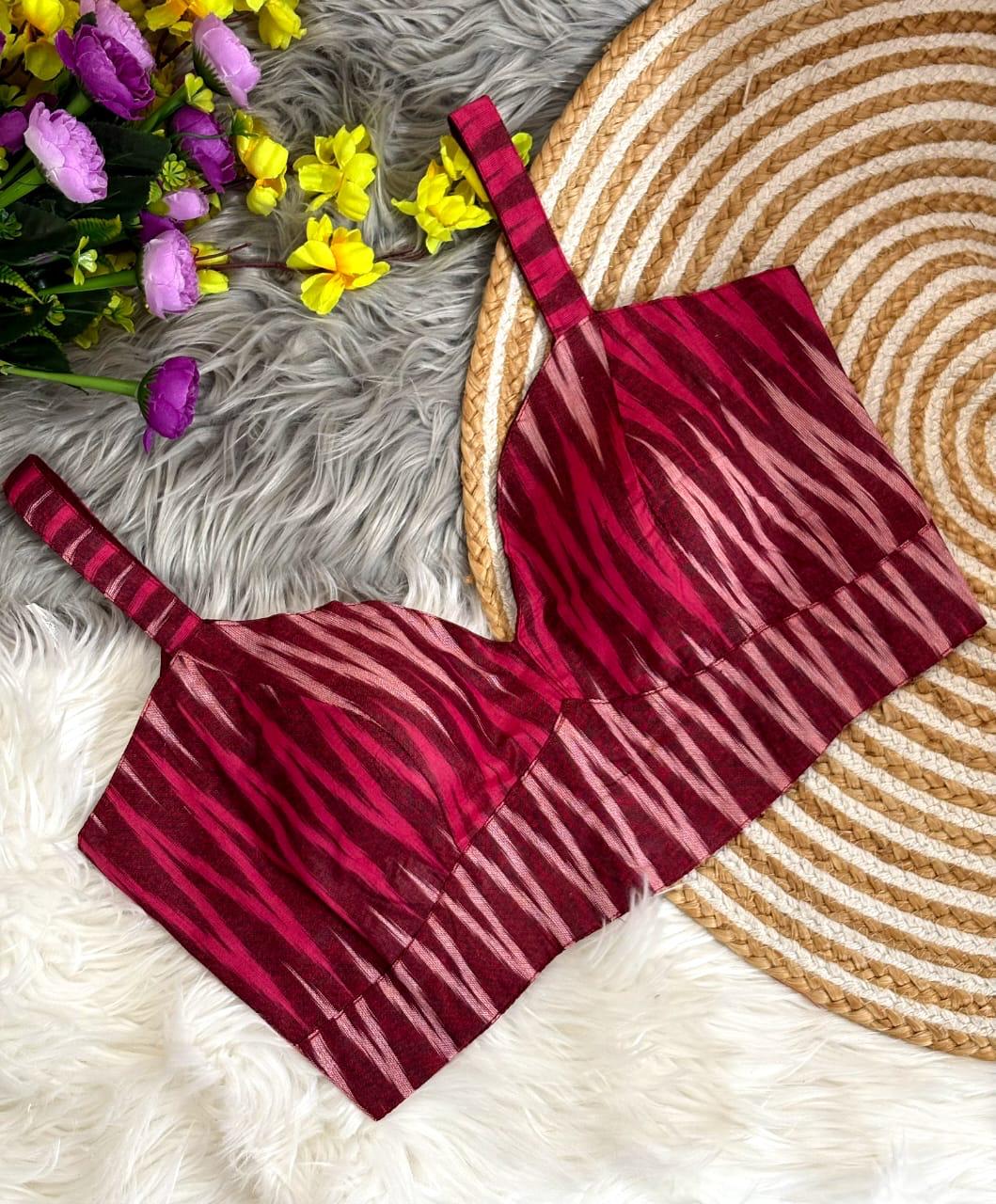
Cotton blouses can also be useful when the velvet blouse is reserved for cooler weather or evening wear. The Pure Kalamkari Cotton Padded Blouse for Women has a very different surface language from velvet, but it illustrates how a printed cotton piece can become the focal element when paired with a quiet saree. The Ikkat Cotton Padded Blouse for Women Sleeveless similarly shows how geometric weave and a clean sleeveless cut can create interest without relying on heavy embellishment.
How to match velvet blouse colour with the saree
The safest colour strategy is to match the velvet blouse with the saree border, pallu or a minor accent rather than automatically matching the saree body. A border-based match creates connection while preserving visual separation between the two garments.
- Gold velvet: Pair gold velvet with ivory, cream, mustard, rust, bottle green or a Banarasi silk saree containing warm zari. Gold velvet can look overpowering beside a fully metallic saree, so use a quieter body when possible.
- Black velvet: Black works with jewel tones, ivory, silver-grey and bold prints. A black velvet blouse is especially useful with chiffon, georgette and contemporary designer sarees because it sharpens a fluid drape.
- Wine, maroon and burgundy velvet: These shades suit beige, blush, dusty rose, antique gold and deep green sarees. Burgundy is usually more versatile than bright red for evening styling.
- Emerald and bottle green velvet: Green velvet pairs well with pink, magenta, peach, mustard and cream. Choose antique gold jewellery when the saree includes warm zari.
- Navy or royal blue velvet: Blue velvet complements silver, white, lavender, fuchsia and blue sarees with a contrasting border. Navy is often easier to repeat across formal wardrobes than a very bright royal blue.
Contrast should be intentional rather than random. A saturated velvet blouse with a saturated saree can look sophisticated when one garment is matte and the other is luminous. Two equally bright, heavily patterned pieces usually need a plain border or simpler jewellery to restore balance.
Choosing the right drape and blouse structure
The drape should support the weight and grip of the velvet blouse. Velvet can catch against some saree surfaces, so a secure shoulder pleat, a properly pinned pallu and a smooth inner lining make a noticeable difference.
For heavy silk sarees
Use broader, evenly pressed pleats because Banarasi silk and Kanjeevaram have enough body to hold their shape. A velvet blouse with elbow-length sleeves or a structured neckline suits the formal character of heavy silk. Avoid an oversized sleeve if the saree border is already broad, as both elements can visually shorten the upper body.
For lightweight sarees
Use a well-fitted velvet blouse with clean seams and moderate surface detail when wearing chiffon, georgette or organza. A fitted sleeveless, short-sleeved or high-neck blouse gives the light saree a defined anchor. Lightweight sarees benefit from a narrow waist tuck and carefully arranged pallu pleats so the velvet doesn't appear to float above the drape.
For cotton and handloom sarees
Choose a velvet blouse with minimal padding and a breathable lining for cotton sarees. A simple round neck, square neck or modest boat neck usually looks more harmonious than elaborate cut-outs. If the cotton saree has an Ikkat pattern, stripes or Kalamkari print, let the weave or print provide the detail and keep the velvet surface relatively calm.
Readymade and designer readymade blouse decisions
A readymade velvet blouse is practical when the shoulder width, bust fit, armhole and blouse length are already close to your measurements. Velvet reveals pulling more clearly than many matte fabrics, so a blouse that's too tight across the bust can create uneven nap and visible strain.
Check the lining before buying. A smooth lining helps the blouse slide over the saree and reduces friction during pleating. A lining made from a breathable fabric is more comfortable for long wedding functions, particularly when the velvet has full sleeves or dense embroidery.
Designer readymade options often use unusual necklines, sleeves or embellishment placements. Such details should be evaluated against the saree rather than in isolation. A statement sleeve is most effective with a plain georgette or crepe saree, while a heavily woven silk saree generally benefits from a quieter blouse silhouette.
Measure the blouse against the saree's intended drape before removing tags or altering seams. A low-waisted drape may require a slightly longer blouse than a conventional waist drape. A pre-stitched or neatly finished pallu can also change how much of the blouse remains visible.
Common pairing mistakes and how to correct them
The most common mistake is combining heavy velvet, dense zari, large jewellery and a highly embellished pallu without assigning one element a supporting role. The correction is simple: reduce surface detail in at least one garment and use the saree border or blouse neckline as the principal point of emphasis.
Another mistake is assuming that all silk sarees work identically. Lightweight silk blends, Banarasi silk and Kanjeevaram have different falls and visual weights. A blouse that suits a fluid silk blend may look too small against a broad-bordered Kanjeevaram saree.
Incorrect colour temperature can also weaken the pairing. Cool silver zari with an orange-red velvet blouse may appear disconnected, while antique gold zari generally sits more naturally with rust, maroon, olive and mustard. A deliberate warm-versus-cool contrast can work, but repeat the chosen metal or colour in jewellery, footwear or a small accessory.
Finally, don't ignore movement. A velvet blouse with stiff sleeves and a heavy silk saree may restrict arm movement during dancing or rituals. For long functions, georgette, Chanderi or medium-weight cotton can provide a more comfortable base than two dense fabrics worn together.
Care and storage for a velvet blouse and saree pairing
Velvet should generally be dry-cleaned when stained, because vigorous rubbing can flatten the pile and create a visible shiny patch. Do not iron velvet directly on the face; use steam from a short distance or press the garment from the reverse side with a protective cloth after checking the care label.
Store a velvet blouse on a broad padded hanger rather than a thin wire hanger. Keep the pile away from rough zari edges, sequins and hooks that can catch the surface. A breathable garment cover is preferable to sealed plastic for long-term storage.
Air a silk, Chanderi or cotton saree fully after wearing before folding it. Refold the saree every few months so permanent creases don't develop along the same fold lines. Wrap zari sarees in unbleached cotton or muslin, and keep perfumes, dampness and direct sunlight away from metallic threads.
A little planning makes Saree Fabrics That Complement Velvet Blouse Pairing much easier to apply. Start with the event and weather, select the saree's weight, match the blouse to a border or accent colour, and then adjust jewellery and drape detail. That sequence produces a balanced outfit more reliably than choosing two attractive pieces separately.
Questions About Pairing Sarees with Velvet Blouses
Which saree fabric looks best with a velvet blouse?
Silk is the most dependable choice because its body and sheen balance velvet's dense texture. Banarasi silk, Kanjeevaram silk, Chanderi, georgette and medium-weight cotton can also work when the blouse detailing and saree border are kept proportionate.
Can I wear a velvet blouse with a cotton saree?
Yes, a velvet blouse can work with a medium-weight cotton, Ikkat cotton or cotton saree with zari detail. Choose a simple blouse design and breathable lining, because heavily embellished velvet may look too formal or feel uncomfortable with very light cotton.
What colour saree goes with a black velvet blouse?
A black velvet blouse pairs well with jewel tones, ivory, silver-grey, bright prints and sarees with a contrasting border. Plain chiffon, georgette and silk sarees are especially effective because black adds structure to their fluid drape.
Is velvet suitable for a daytime wedding?
Velvet can suit a daytime wedding when the saree is breathable and the blouse uses restrained embellishment. Chanderi, medium-weight cotton with zari or a light silk saree keeps the combination festive without making it excessively heavy.
How do I stop a velvet blouse from looking too heavy?
Pair the blouse with a fluid saree such as georgette, chiffon or crepe, and limit dense embroidery on either the blouse or saree. A lighter pallu, smaller jewellery and a clean neckline also reduce visual bulk.
How should a velvet blouse be stored?
Store a velvet blouse on a broad padded hanger inside a breathable garment cover. Avoid direct ironing, rough zari contact and sealed plastic, and use dry cleaning for significant stains unless the care label gives different instructions.


