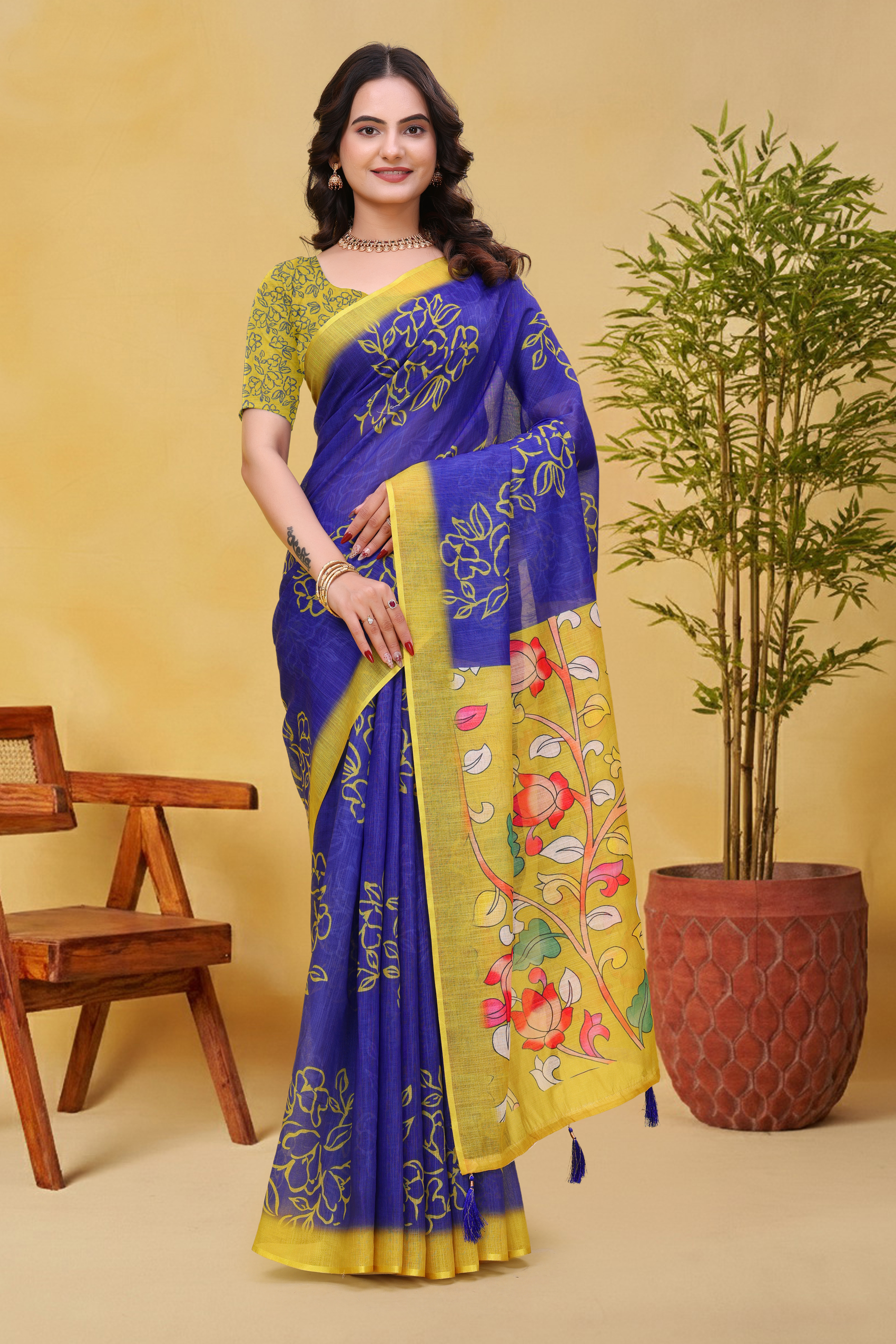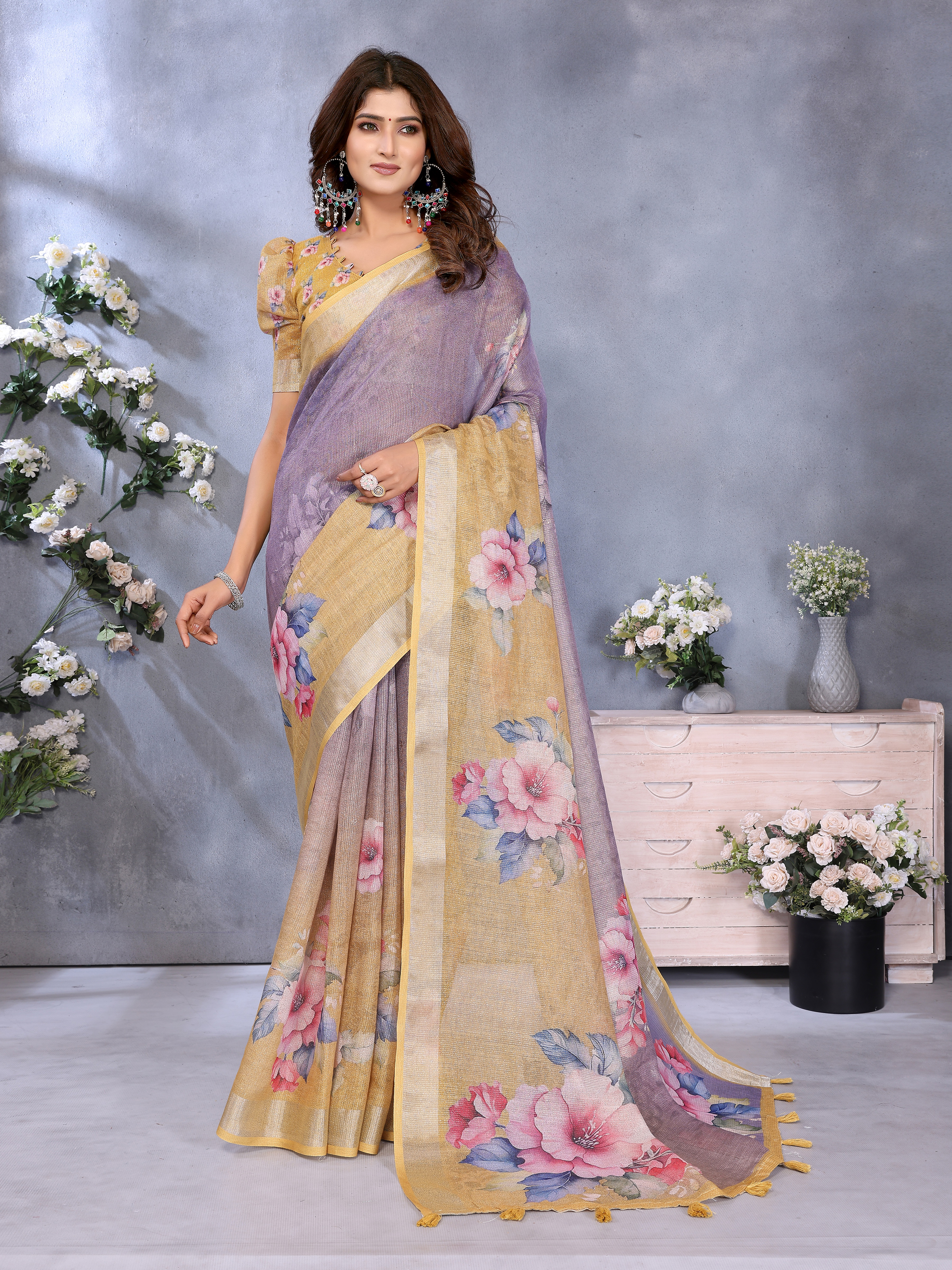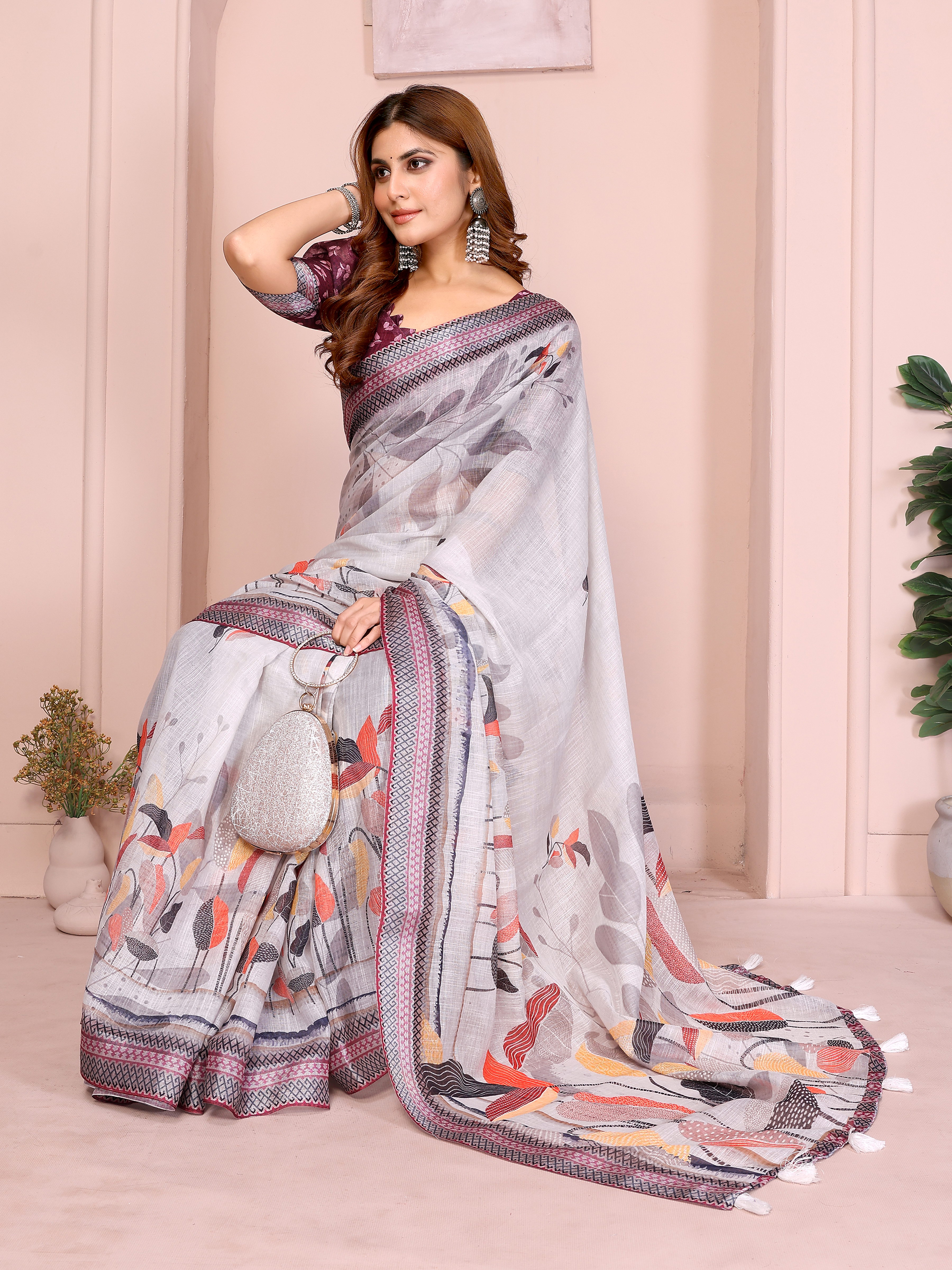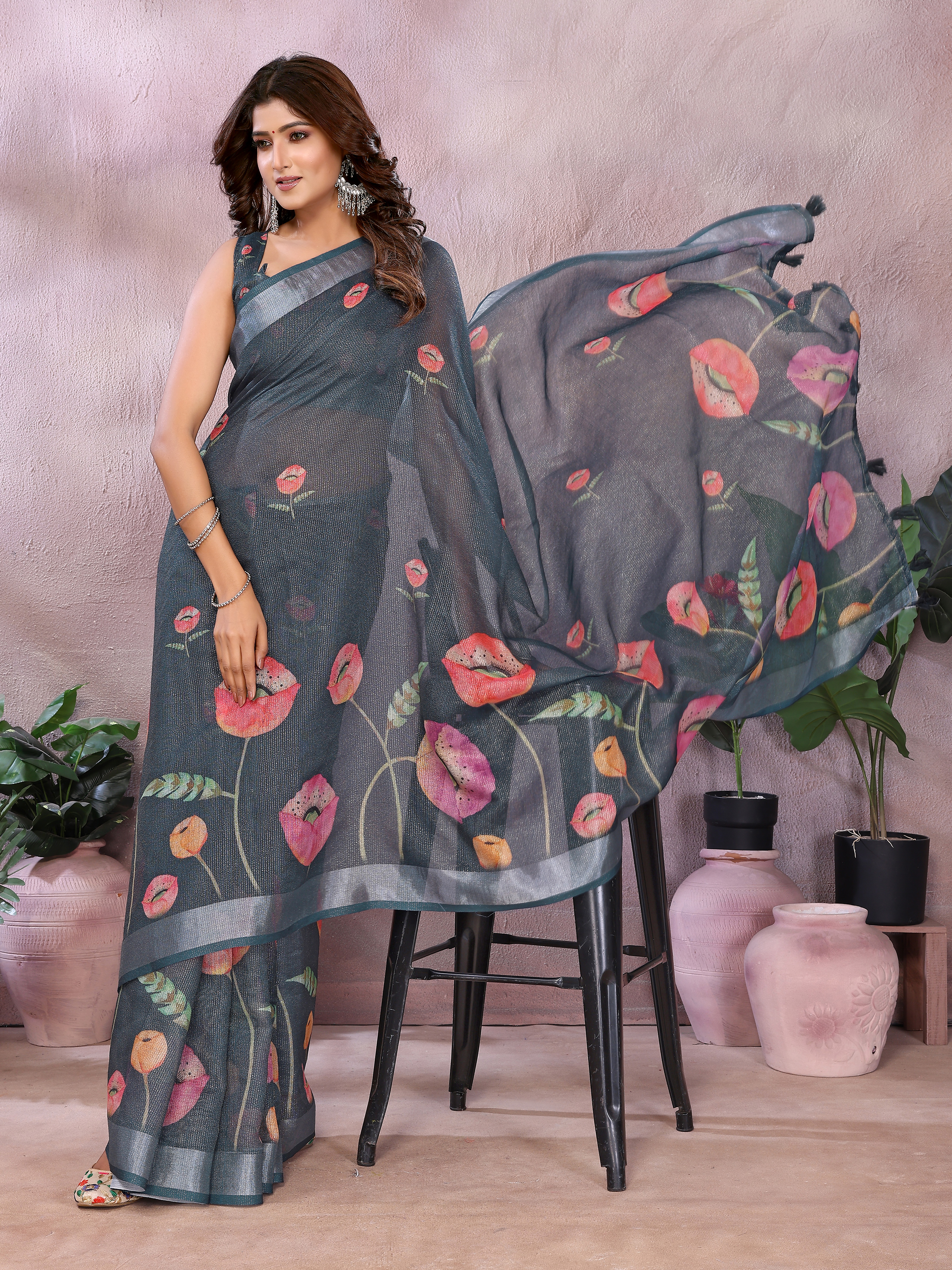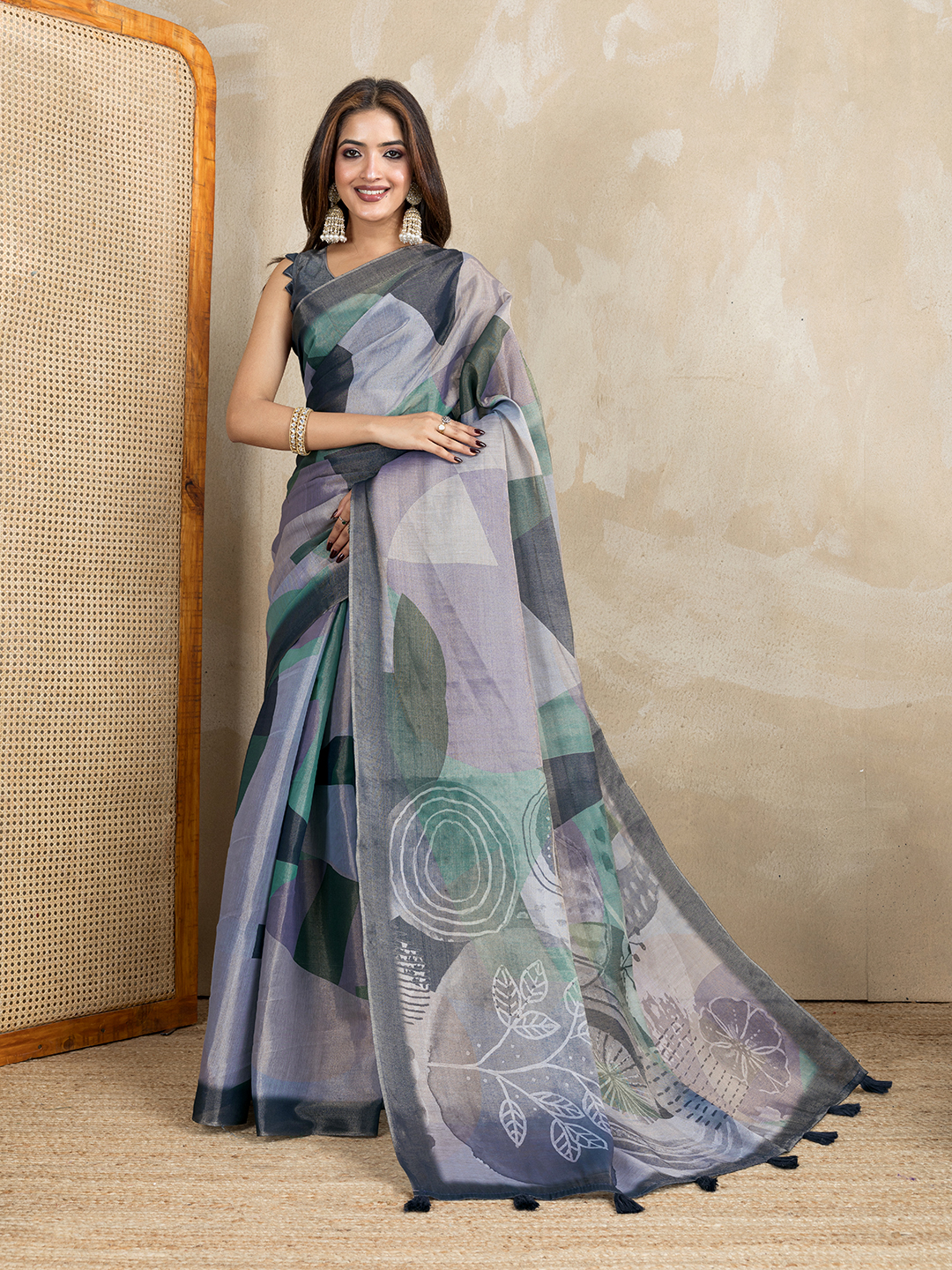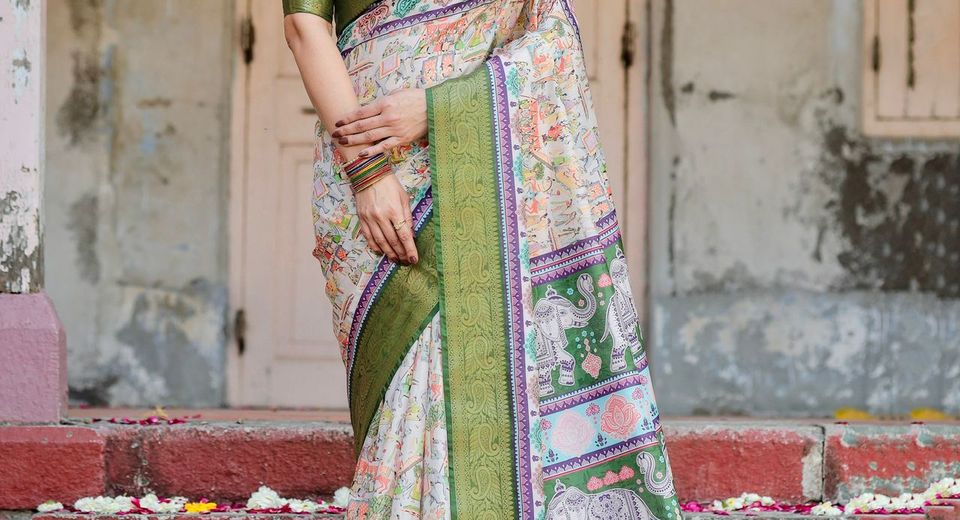
A border that turns toward the inside of a saree can hide the contrast edging, narrow the visible pleats and make the pallu sit unevenly. Saree Borders That Fold Inward and What Usually Causes It are concerns usually connected with fabric tension, pressing, washing, humidity or storage rather than immediate proof of serious damage. A close inspection can reveal whether gentle reshaping is enough or whether the saree needs professional pressing or repair.
The right remedy depends on the material. Banarasi silk, Tussar silk, linen, satin, printed silk and zari don't respond identically to heat or moisture. Checking the border before ironing prevents a temporary curl from becoming a shiny patch, colour mark or permanent crease.
Saree Borders That Fold Inward and What Usually Causes It
Saree Borders That Fold Inward and What Usually Causes It can usually be explained by uneven tension between the saree body and its decorative edge. A border may contain denser weaving, a separate selvedge, stitching, metallic zari, jacquard texture or a printed finish. Each element can relax, shrink or hold a crease differently.
During draping, the outer edge of a pleat travels a longer curve than the fabric nearer the waist. A border with less flexibility can roll inward to release the tension. Repeatedly pulling the edge outward while pinning pleats may reinforce the same movement instead of correcting it.
Storage creates a similar effect. A saree folded tightly with the border always facing inward can develop a directional memory. A heavy stack placed over the fold, a narrow shelf or a damp wardrobe can make the inward curl more persistent.
An inward fold is generally cosmetic when the edge relaxes after being laid flat and the border remains smooth. Puckering, broken threads, loose zari, a hard shiny line or a sudden change in border width indicates a problem that should be assessed by an experienced saree presser.
How Saree Borders That Fold Inward and What Usually Causes It Begin
Saree Borders That Fold Inward and What Usually Causes It often begin with one of four conditions: uneven construction, excessive heat, moisture-related shrinkage or repeated pressure during storage.
Uneven tension and construction
Uneven tension draws a saree border toward the body when the decorative strip is attached or woven more tightly than the surrounding fabric. A firmly stitched edge, compressed selvedge or dense border can contract slightly after use or cleaning.
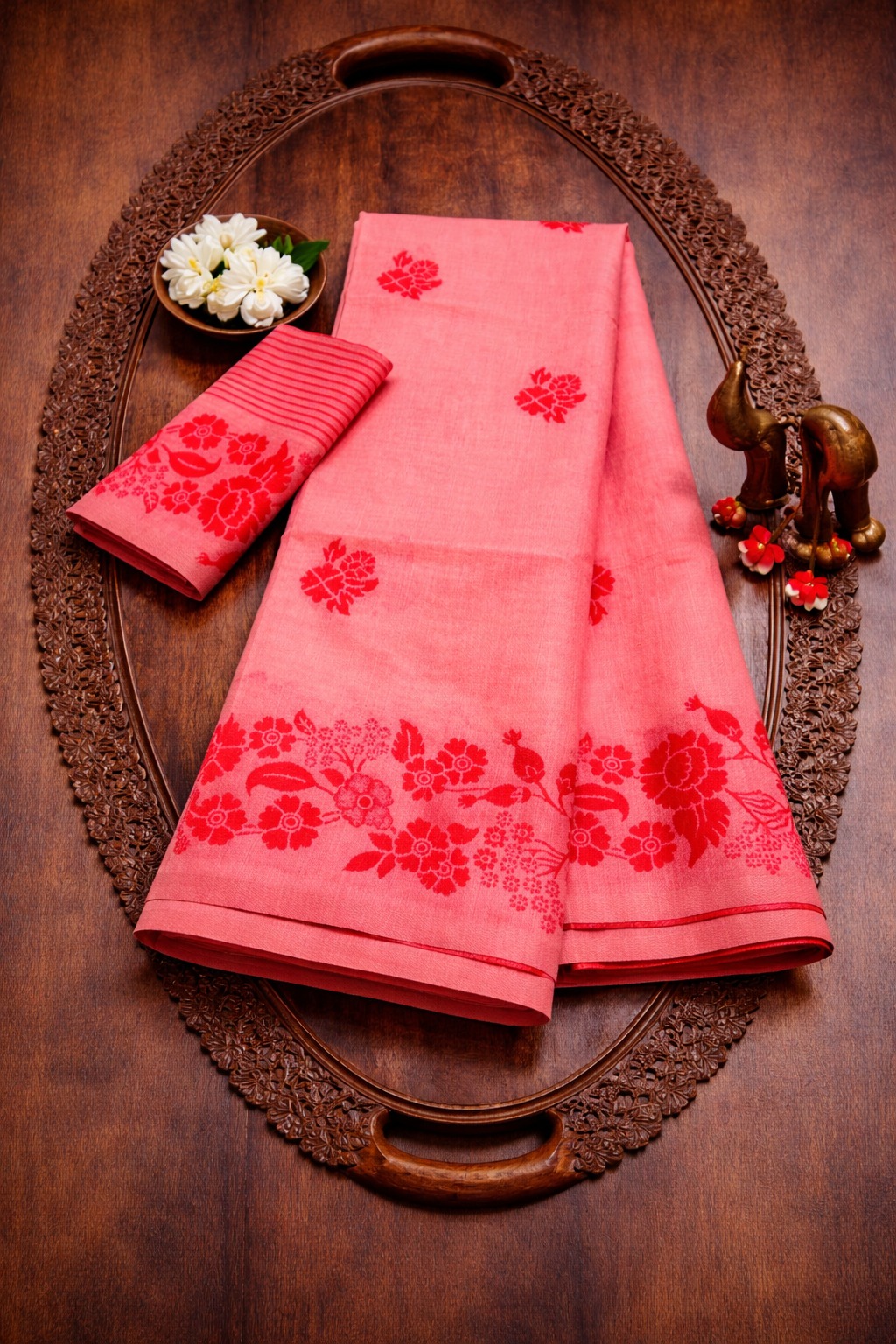
Printed satin can show this behaviour because a smooth surface has less visual forgiveness than a textured weave. The Teal Rust Floral Satin Saree with Printed Pallu and Borders should be handled without pulling the printed edge flat during draping, since tension may create a roll along the border.
Incorrect ironing direction
Incorrect ironing can set an inward curl when a hot iron presses the edge toward the saree body. Dragging the iron from the main fabric into the border can push excess material toward the edge and sharpen the fold.
High heat may flatten synthetic fibres or leave a glossy patch. Direct heat can also compress metallic zari and reduce its raised texture. An iron should never rest on one part of a border for several seconds.
Washing and drying stress
Washing can make a border fold inward when the border and the saree body shrink or relax at different rates. Partial soaking, detergent residue, vigorous rubbing and drying over a narrow line all create uneven stress.
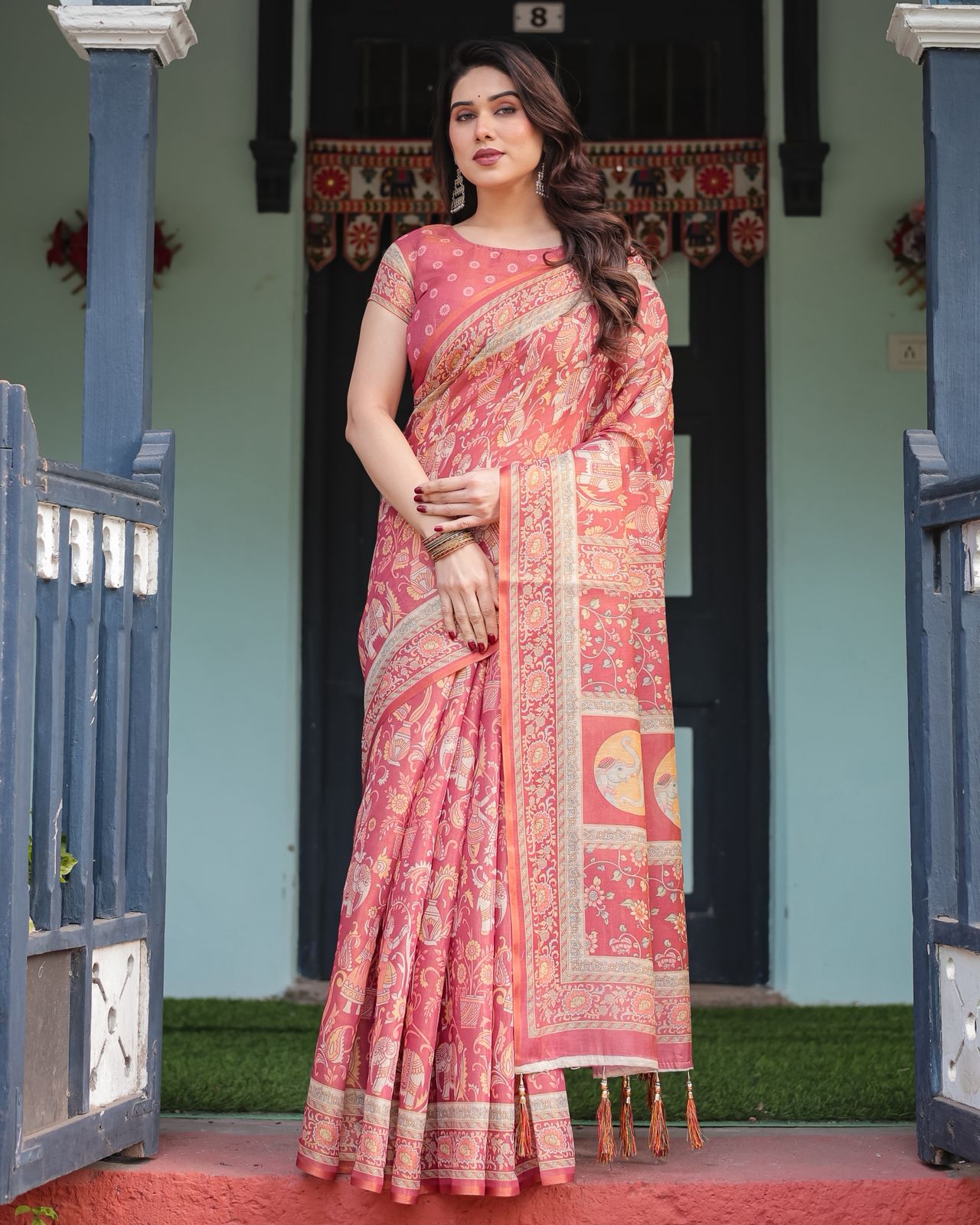
Silk sarees with zari or printed surfaces generally benefit from specialist dry cleaning rather than repeated home washing. The Green Ivory Printed Silk Saree with Zari Border and Pink Green Floral Silk Saree with Zari Border Festive should be protected from casual detergent washing unless their care labels expressly allow it.
Repeated storage creases
Repeated storage creases become stronger when the same fold is used for months. Plastic packaging can trap humidity, while heavy garments placed on top can compress the edge into an inward roll.
A breathable cotton cover and acid-free tissue provide safer long-term protection than airtight plastic. Folding the saree along a broad line and changing the fold direction periodically reduces pressure on one border section.
How to Diagnose Saree Borders That Fold Inward and What Usually Causes It
You can identify the likely cause by examining the curl's length, firmness, surface appearance and relationship to the border width. Diagnosis should come before steaming, wetting or ironing because an unsuitable treatment can fix the problem permanently.

- A soft curl running along the full border: Storage tension or a directional fold is the most likely explanation.
- A hard crease in one location: A narrow shelf fold, pin mark or concentrated pressing line may be responsible.
- Small waves or puckers: Uneven stitching, local shrinkage or tension between the body and border may be involved.
- A shiny or flattened patch: Excessive heat may have changed the surface, especially on satin or synthetic fabric.
- Loose metallic threads: The zari may have snagged or separated and requires professional attention.
- Different widths at different points: Shrinkage or construction tension may be more significant than simple storage.
Lay the saree flat on a clean bed or table without stretching it. Compare the border width near the pallu, at the centre and near the opposite end. A soft measuring tape can help, but the tape should rest on the fabric rather than pull it taut.
Check the reverse side as well as the visible side. A thread pulled on the underside, a line of tight stitching or a rough fold can explain why only one section turns inward. Photographing the border before and after resting it flat for an hour can show whether the curl is temporary.
How to Correct Saree Borders That Fold Inward and What Usually Causes It
The safest first correction is gentle relaxation: lay the saree flat, protect the border with clean muslin and use low, indirect steam without pulling the edge.
Safe home reshaping
A cautious home method is suitable only when the border has no loose zari, sequins, foil, glued embellishment or heat damage.
- Remove the saree from its tight fold and let it rest flat for 30 to 60 minutes.
- Place the border on a clean cotton sheet with the decorative surface protected.
- Cover the area with thin, clean muslin.
- Hold a garment steamer at least 15 to 20 centimetres away and keep it moving.
- Guide the relaxed edge outward with a flat palm without stretching the fabric.
- Leave the saree flat until it's completely dry.
- Refold the saree along a broad, different line.
Dry ironing is appropriate only when the care label permits it. Use the lowest suitable temperature, maintain the muslin barrier and lift the iron between short passes. Pressing from the reverse side is safer for zari and raised woven borders than polishing the visible surface repeatedly.
don't spray water directly on a silk border to force it flat. Local moisture can cause water marks, colour bleeding or uneven shrinkage, especially on dark dyes and printed silk. A professional saree presser is the better choice when one careful steaming attempt doesn't relax the edge.
Professional help is necessary when a border has a permanent shine, melted fibres, detached threads, broken zari, deep puckering or a width difference that remains after the saree has rested. A specialist can test the fabric before applying moisture or heat.
How Saree Borders That Fold Inward and What Usually Causes It Varies by Fabric
Saree Borders That Fold Inward and What Usually Causes It vary with fibre, weave and border material, so the same ironing setting should not be used across every saree.
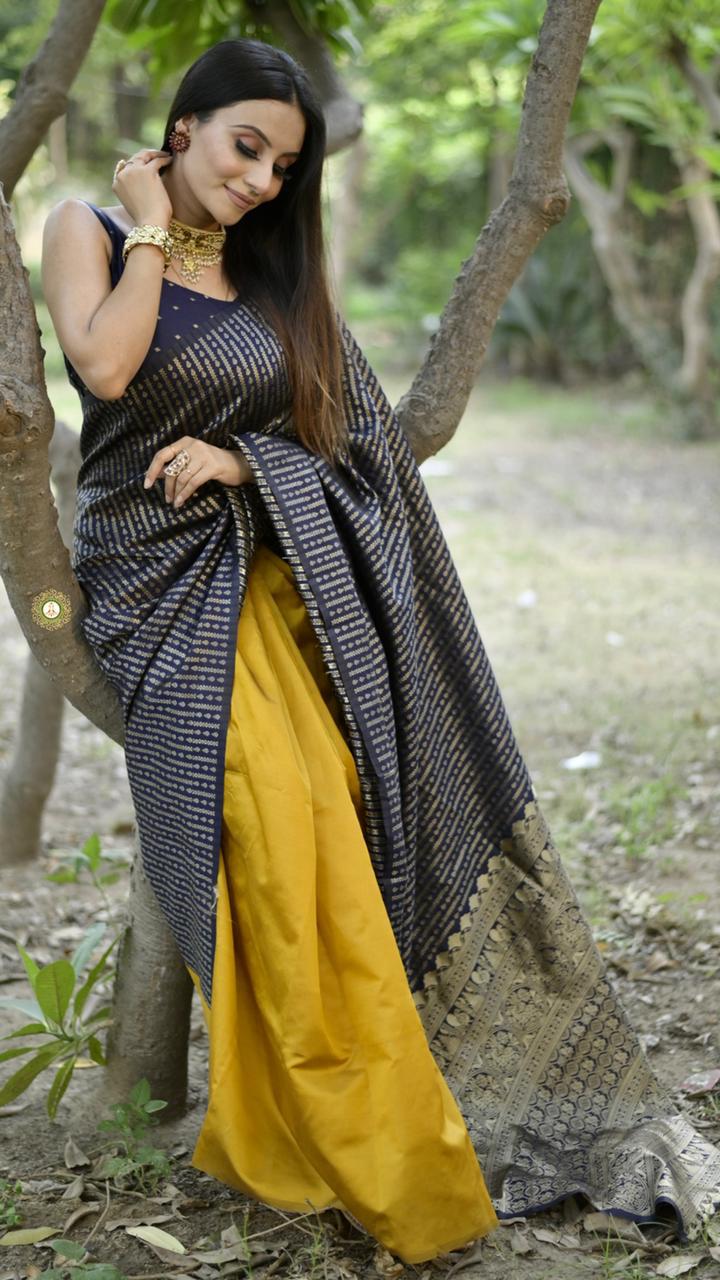
Banarasi silk has a rich woven structure and often includes zari. The Blue Pink Banarasi Silk Saree with Zari Border should be pressed through a cloth from the reverse side, with direct heat kept away from metallic threads. The Navy Blue Floral Silk Saree with Peach Zari Border also benefits from low pressure and short, controlled passes.
Tussar silk has a textured surface and can retain pressure marks. The Wine Red Bandhani Print Tussar Silk Saree with Zari should be stored with soft tissue protecting the printed surface and should not be crushed beneath heavy clothing.
Linen holds creases firmly because linen fibres have relatively low elasticity. The Elegant Beige & Peach Linen Saree with Designer Border may require controlled steam and a wide pressing surface rather than force applied only to the edge.
Jacquard borders are denser because the pattern is woven into the structure. The Red Yellow Soft Lichi Silk Saree with Rich Pallu & Jacquard Border should be folded with the jacquard edge supported instead of compressed beneath multiple sarees.
Printed satin and synthetic blends can react badly to high temperature and friction. Test an inconspicuous inner section first when the care label allows ironing. Stop immediately if the surface becomes shiny, sticky or distorted.
How to Prevent Saree Borders That Fold Inward and What Usually Causes It
Prevention requires reduced pressure, fewer sharp folds and better control of moisture. A saree stored with air space and periodically refolded is less likely to develop a permanent inward curl.
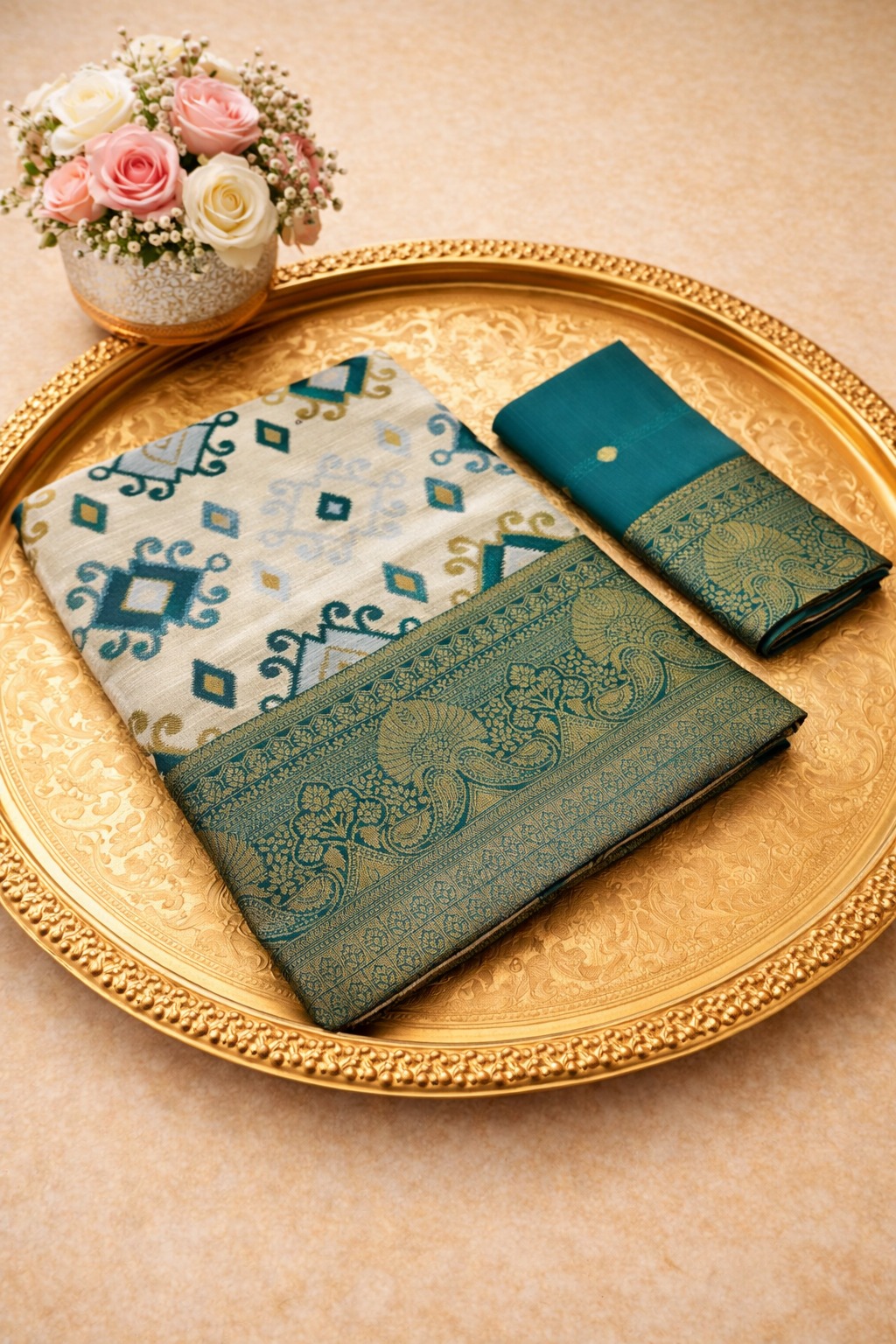
- Refold stored sarees every few months so one crease doesn't become permanent.
- Place soft, acid-free tissue along zari, jacquard and embellished borders.
- Use a wide padded hanger only for short-term hanging, because prolonged hanging can strain a heavy pallu.
- Keep sarees away from direct sunlight, damp walls and heat-producing cupboards.
- Allow a worn saree to dry fully before folding it for storage.
- don't stack blankets, boxes or heavy garments over delicate borders.
- Use a breathable cotton cover instead of airtight plastic for long-term storage.
- Keep dark and light sarees separated when colour transfer is a concern.
Budget doesn't determine whether a saree needs careful handling. Sarees from Rs 1000 to Rs 1500 may include printed, blended, linen or silk-like fabrics, each with a different heat tolerance. Sarees Under 20% Off and Sarees Under 10% Off can be useful for comparing fabric descriptions, but a discount doesn't replace checking the care instructions.
Sarees Flat 60% Off and Sarees Flat 50% Off may include varied construction details, so read the material, border and maintenance information before choosing a pressing method. When product information doesn't state whether a border contains zari, jacquard or synthetic fibres, low heat and professional cleaning are safer assumptions.
A border that folds inward is often recoverable when the fabric is otherwise intact. Gentle handling, a breathable storage method and careful temperature control protect the visible border while preserving the saree's drape.
Common Questions About Saree Borders That Fold Inward and What Usually Causes It
Why does my saree border curl inward after ironing?
A saree border can curl inward after ironing when heat or pressure pushes the edge toward the saree body, or when the border and body respond differently to heat. Use a muslin barrier, low temperature and short lifting passes; avoid direct heat on zari.
Can steam fix a saree border that folds inward?
Gentle indirect steam can relax a soft storage curl when the saree has no loose zari or heat damage. Keep the steamer 15 to 20 centimetres away, never stretch the edge and allow the saree to dry flat.
Can washing make a saree border fold inward?
Washing can cause inward folding when the border and saree body shrink or relax at different rates. Detergent, partial soaking and drying over a narrow line can increase the problem, especially on silk and zari sarees.
How should a saree with a zari border be ironed?
A saree with a zari border should be ironed from the reverse through clean muslin at the lowest suitable temperature allowed by the care label. Direct high heat can flatten, snag or discolour metallic zari.
Should I hang a saree to stop the border from folding inward?
Short-term hanging on a wide padded hanger can reduce sharp folding, but prolonged hanging may strain a heavy pallu or stretch the border. For long-term storage, a breathable cover and broad, periodically changed folds are safer.
When should a professional repair a curled saree border?
A professional should assess the saree when the border has broken threads, loose zari, deep puckering, a permanent shiny patch or different widths along its length. Those signs can indicate heat damage, shrinkage or construction tension rather than a simple storage crease.