

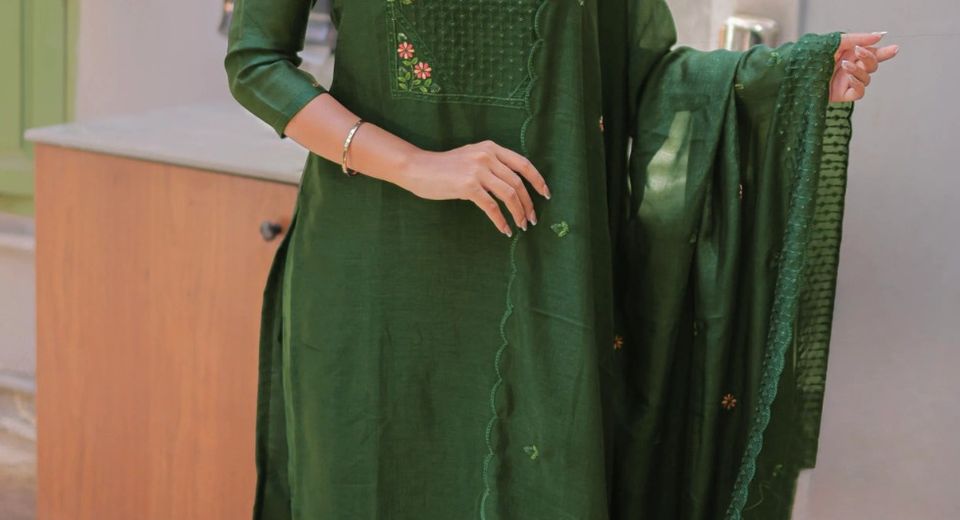
Salwar Suits for Office That Look Right Without Feeling Overdressed depend on small decisions: a breathable fabric, a controlled colour palette, a neat silhouette and a dupatta that stays in place. The most useful workwear suit isn't necessarily the most embellished one; it's the set that remains comfortable through desk work, meetings, travel and a full day of movement. A polished office wardrobe can include cotton kurta sets, straight kurta-and-pant combinations and restrained silk-blend styles without losing personal character.
What makes Salwar Suits for Office That Look Right Without Feeling Overdressed?
Salwar suits look office-appropriate when their fit, fabric, colour and surface decoration are balanced for the workplace. A straight or gently shaped kurta, ankle-length trousers or slim pants, and a light dupatta usually create a cleaner line than heavily flared bottoms or dense festive embroidery.
Professional dressing doesn't require removing every traditional detail. A small woven border, delicate embroidery, a considered print or a matte zari accent can add personality while remaining measured. The key distinction is visual concentration: one noticeable feature is easier to style for work than embellishment competing across the kurta, trousers and dupatta.
Length also changes the impression of a suit. A kurta that falls around the knee or slightly below it generally works well with straight pants because the proportions look composed without appearing ceremonial. Very short kurtas, voluminous shararas and heavily flared anarkali shapes can be attractive, but they usually need more careful styling to suit a conservative office.
Which office silhouettes are easiest to repeat?
Straight kurta-and-pant sets are the easiest office silhouettes to repeat because they layer simply, sit neatly under a blazer and don't require complex draping. A lightly flared kurta can also work when the fabric isn't stiff and the hem doesn't restrict walking.
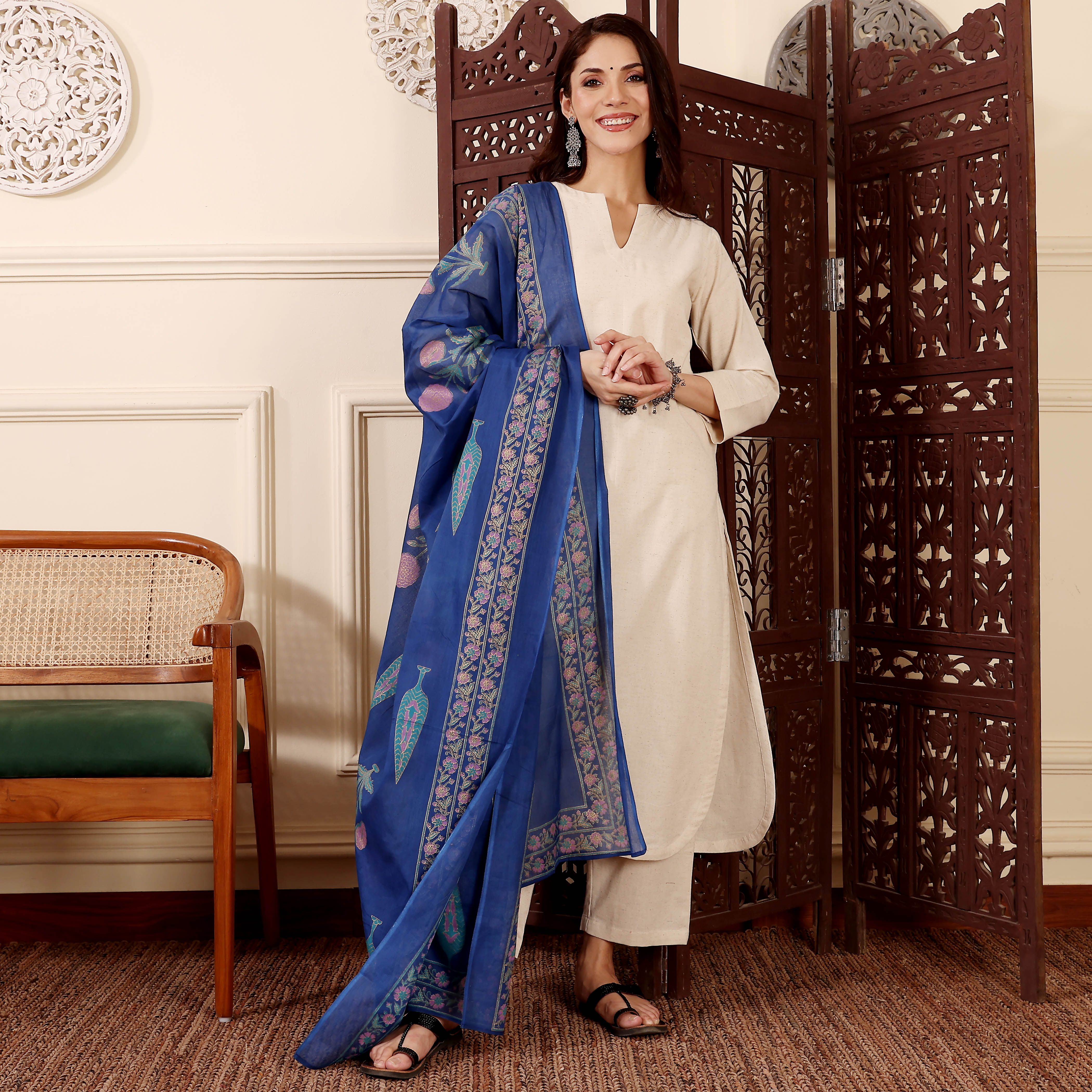
Kurta sets with matching or coordinated pants reduce morning decisions. Elegant Teal Embroidered Kurta Pant Dupatta Set demonstrates how a defined three-piece structure can look complete without relying on heavy ornamentation. Stylish Navy Floral Silk Kurta Pant Dupatta Set offers a more refined option for presentation days, provided the floral pattern and shine remain subtle in workplace lighting.
Which fabrics work best for formal salwar suits office wear?
Cotton, Chanderi cotton and lighter silk blends are practical fabric choices for formal salwar suits office wear because they offer different combinations of breathability, structure and polish. Fabric weight matters as much as fibre content: a thick, lined textile may feel warmer and less mobile than a lighter fabric in the same fibre family.
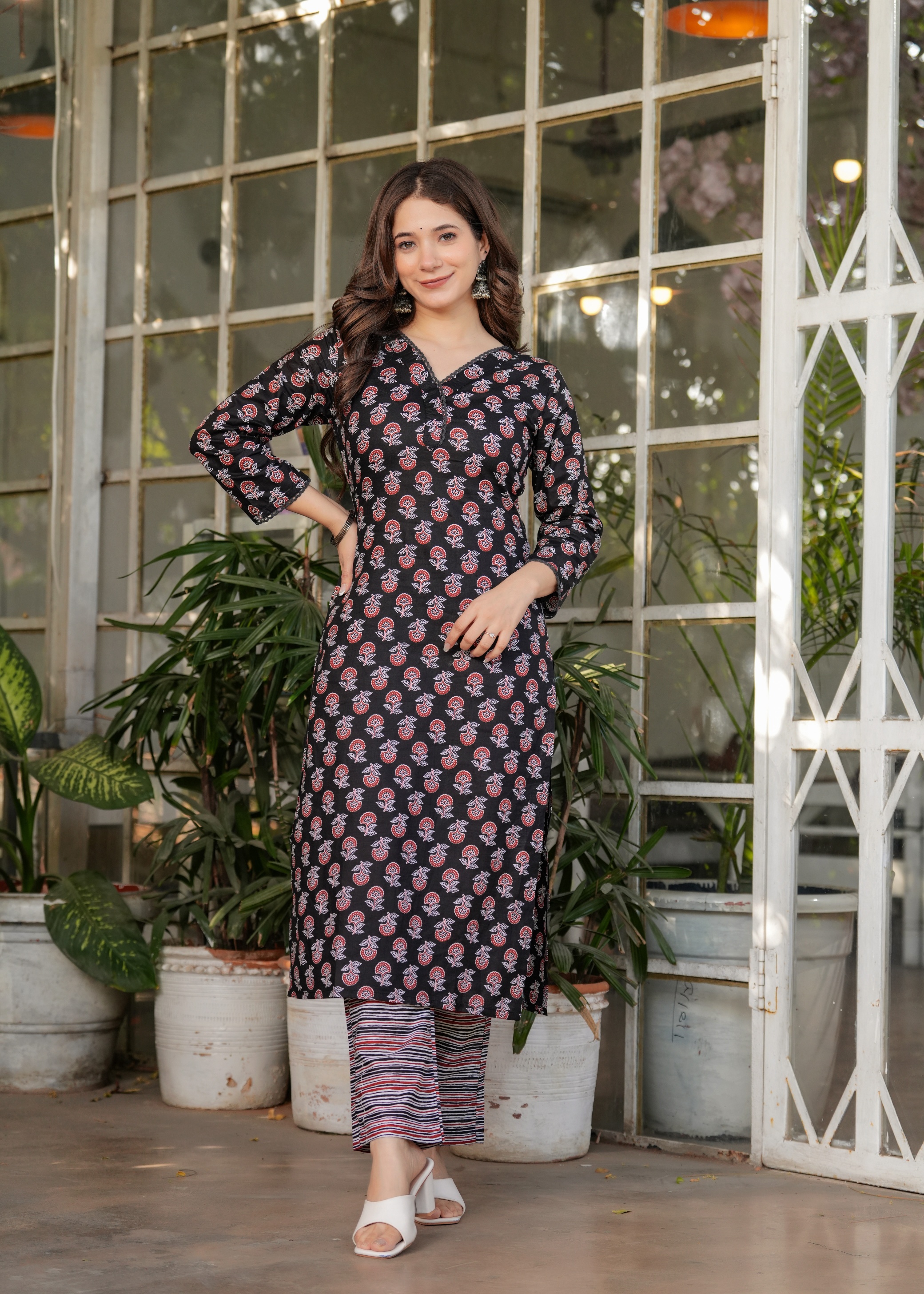
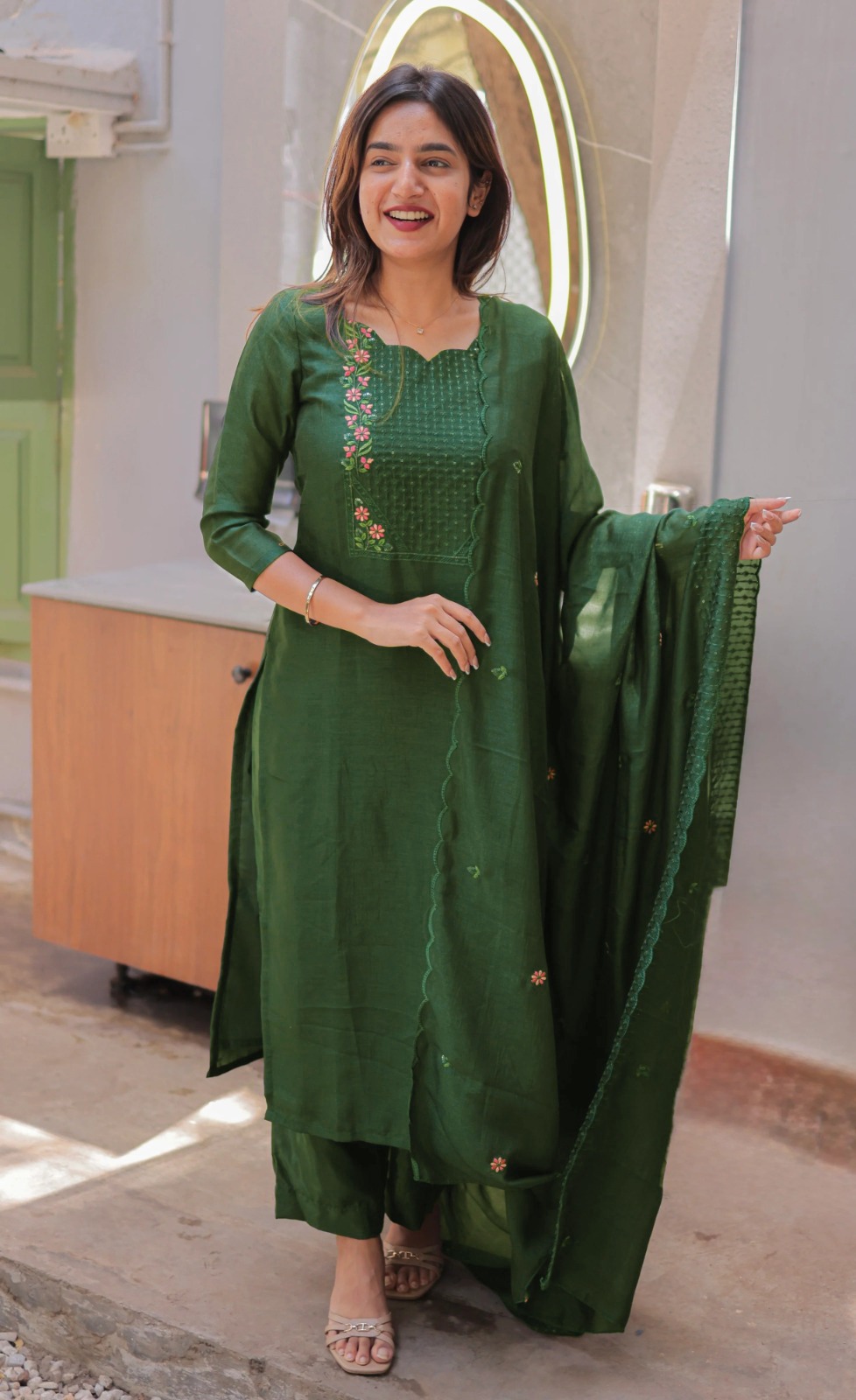
Cotton is usually the safest choice for long commutes, warm weather and ordinary workdays. Cotton absorbs moisture and tends to feel less clingy during movement, although cotton may crease more visibly after sitting. Emerald Green Cotton Kurta Set with Chanderi Dupatta combines a breathable kurta fabric with a more textured, dressy layer, making the set useful when the dupatta is kept neatly folded rather than loosely draped.
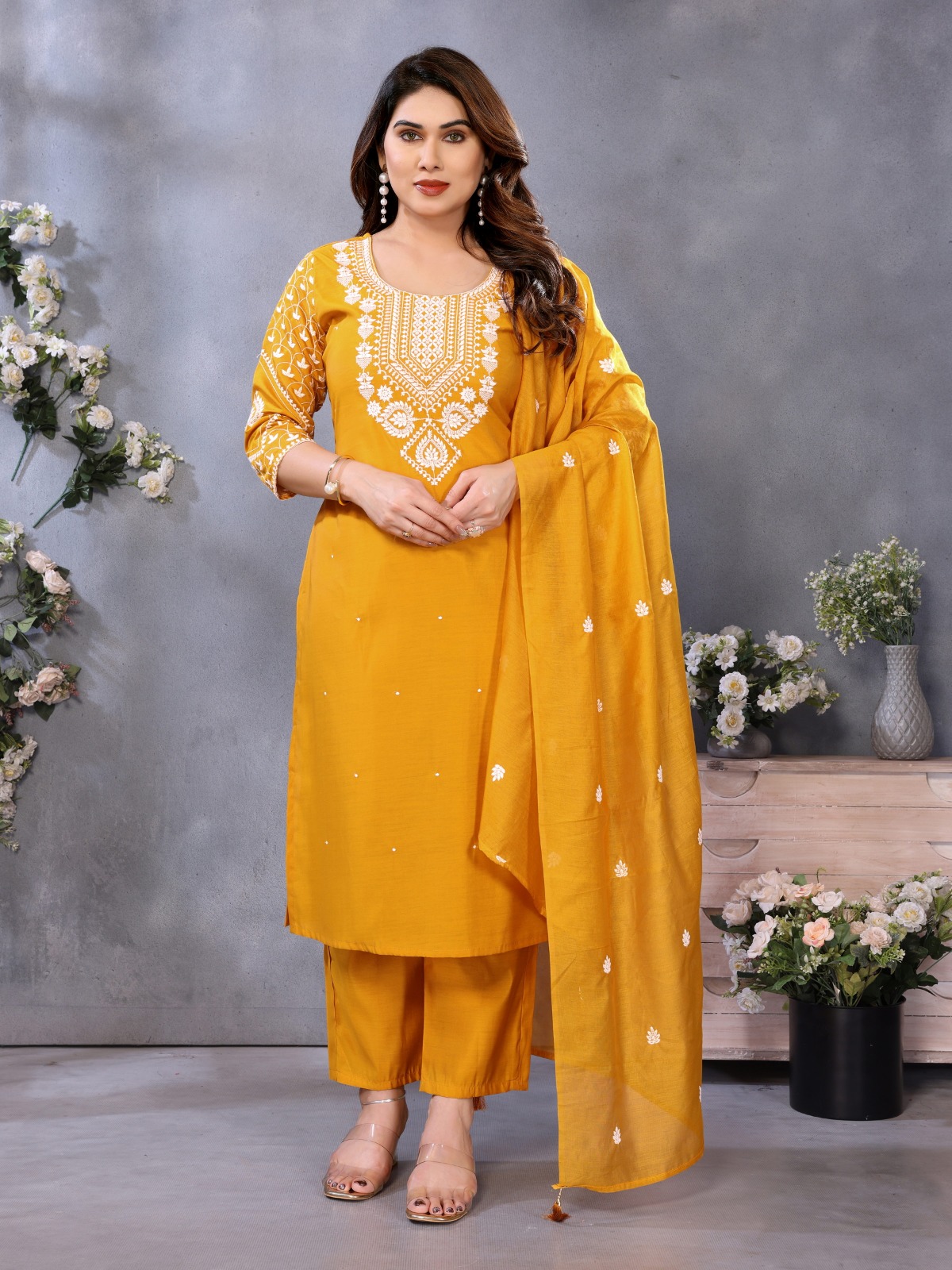
Chanderi cotton gives an useful middle ground between everyday cotton and occasion silk. Chanderi cotton has a light hand and a naturally dressier surface, so Chanderi cotton can look composed without requiring dense decoration. Elegant Mustard Chanderi Cotton Kurta Set with Embroidery is better suited to a workplace that welcomes colour and subtle craft details than to a highly conservative setting where muted shades dominate.
Blended silk can provide a smoother fall and a more formal appearance, but blended silk may feel warmer than cotton and can show light under office LEDs. Navy Blended Silk Zari Kurti Pant Dupatta Set is best reserved for client meetings, formal presentations or office celebrations when a slightly richer finish is appropriate. A blended silk suit should be balanced with simple footwear and restrained jewellery.
How should fabric choice change with the workday?
Choose cotton or Chanderi cotton for a day involving commuting, outdoor errands and extended sitting, and choose a silk blend when appearance and structure matter more than maximum breathability. A two-minute movement test before purchase can reveal practical issues: raise both arms, sit down, walk several steps and check whether the trousers pull or the dupatta slips.
Creasing should be treated as a styling consideration rather than an automatic flaw. Cotton can look intentional when pressed well and paired with clean accessories. If ironing time is limited, choose prints or textured weaves that disguise minor seat and elbow creases better than very smooth, solid fabrics.
How do colour and print affect professional dressing?
Muted, deep and medium-value colours usually create the most adaptable office salwar suits, while bright colour works best when the cut and embellishment remain quiet. Navy, teal, wine, beige, olive, mustard and controlled jewel tones can all work, but the surrounding styling determines whether the result feels professional or festive.

Dark colours often appear more formal because they create a continuous visual line, but dark doesn't mean black only. Elegant Wine Ethnic Kurti Set with Dupatta can suit an office with a smart-casual dress culture when paired with minimal jewellery and neutral footwear. Teal and emerald offer colour without the visual intensity of sequins or metallic embroidery.
Print scale is especially important for women salwar suits office wear. Small florals, restrained geometrics and heritage motifs with sufficient background space tend to look calmer than large, high-contrast prints. Elegant Pink Print Daily Wear Kurta Set is a practical example of how a softer print can make colour feel suitable for everyday work rather than a wedding function.
Beige and blue form a reliable office combination because the warm neutral grounds the look while the blue adds definition. Beige Kurta Set with Blue Chanderi Dupatta for Women can be styled with tan, navy or muted metallic accessories. The dupatta should remain the strongest contrast in the outfit; adding a bright bag and colourful jewellery at the same time can make the look feel busier than intended.
Can classic collections work in a corporate wardrobe?
Time-honoured collections can work in a corporate wardrobe when an outfit is selected for its scale, finish and comfort rather than its ceremonial associations. Kalamkari Print Salwar Suits (Copy) can suit creative workplaces when the print is balanced with plain shoes and a structured bag, while Maharashtra Paithani Inspired Salwar Suits are better used selectively if woven-inspired borders or colour contrasts are visually prominent.
Punjab Phulkari Embroidered Salwar Suits can add craft detail to a Friday wardrobe, but dense floral embroidery may be too decorative for a strict corporate environment. Karnataka Silk Salwar Suits and Kashmir Embroidered Salwar Suits can also be adapted for work when the design has moderate surface detail, the silhouette is straight and the accessories remain quiet.
What is the most practical dupatta for office wear?
A lightweight, medium-width dupatta with enough length to cover the torso without dragging is the most practical choice for office wear. Chanderi, light cotton and soft blended fabrics are generally easier to pleat, pin and carry than very slippery silk or heavily embellished net.
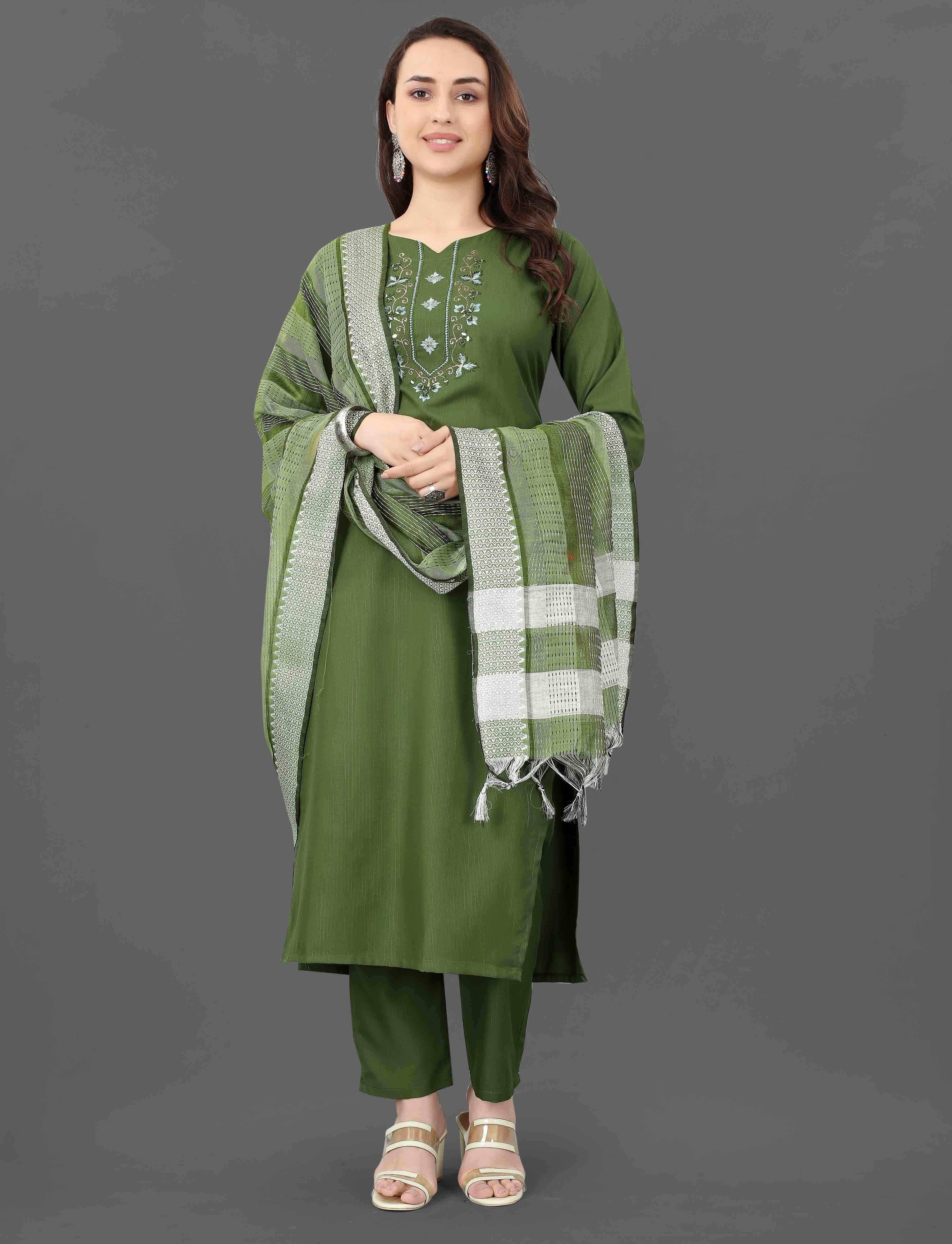
Formal salwar suits office wear dupatta styling should prioritise security and clean lines. Fold the dupatta lengthwise into two or three broad pleats, place it evenly over both shoulders for a symmetrical look, and use a small concealed pin near the shoulder if the workplace involves frequent movement. A single-shoulder drape can look elegant, but it's less reliable when carrying files, using public transport or moving between rooms.
A dupatta doesn't have to match the kurta exactly. A coordinated contrast can make a simple suit more versatile, especially when the kurta is a solid colour. Emerald Green Cotton Kurta Set with Chanderi Dupatta shows how a change in texture can provide enough interest without adding a second loud colour.
Very wide borders, heavy tassels and dense sequins can catch on chair arms, laptop bags and door handles. Those details are not inherently unsuitable, but they demand more maintenance during a workday. If a dupatta keeps slipping, shorten the drape visually with a neat fold instead of repeatedly adjusting it throughout a meeting.
How should a salwar suit fit for a full working day?
A workwear salwar suit should allow sitting, reaching, walking and climbing stairs without pulling across the shoulders, bust, waist or hips. Comfort should be tested in motion because a garment that looks neat while standing may become restrictive after several hours at a desk.
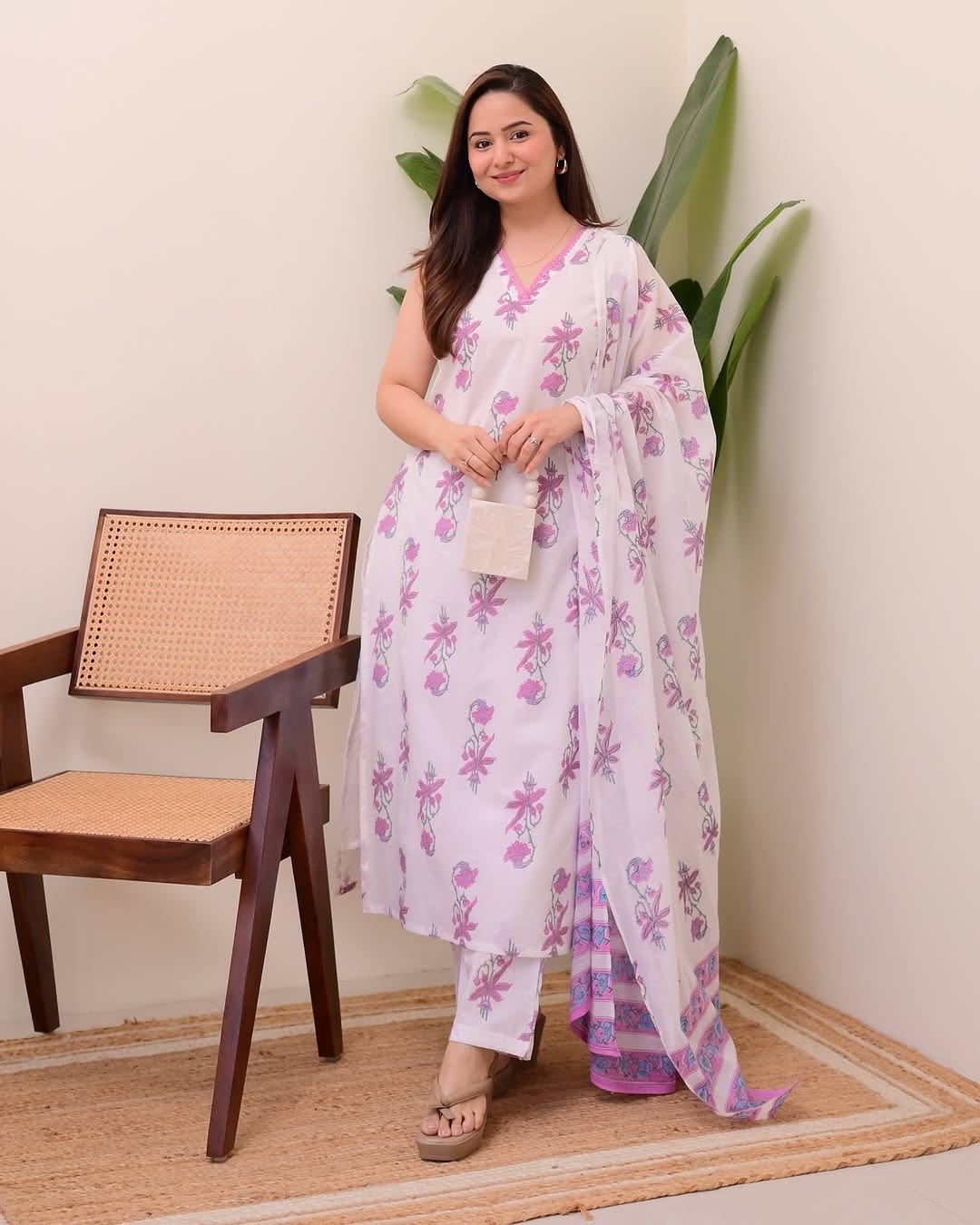
Check the shoulder seam first: the seam should sit close to the natural shoulder edge rather than dropping down the arm. The armhole should allow normal movement without cutting into the underarm. A kurta that's too tight across the chest can pull open at the placket, while excessive ease can create a less structured appearance.
Check trouser comfort while seated rather than only while standing. The waistband should not press into the abdomen after lunch, and the crotch seam should allow ordinary walking without pulling. Ankle-length pants are practical with flat shoes because they're less likely to drag, collect dust or catch under a chair.
Office-ready clothing also needs practical opacity. Hold the fabric near a bright window or under a strong light to check whether the kurta, pants or dupatta becomes transparent. A nude or colour-matched camisole and well-fitted slip can solve minor sheerness, but a very transparent garment may remain inconvenient throughout the workday.
How can one salwar suit create several office outfits?
One salwar suit can create several office outfits by changing the dupatta, footwear, jewellery and layering piece while keeping the main silhouette consistent. The most efficient wardrobe includes solid or quietly patterned kurtas that can work with at least two accessory combinations.
For a regular day, pair a cotton or Chanderi cotton set with small studs, a watch, flat loafers and a structured tote. For a presentation, use the same kurta with a pressed dupatta, low block heels and a slim watch. For a smart-casual Friday, replace the formal footwear with clean leather or fabric flats and add one craft-led accessory rather than several decorative pieces.
A neutral dupatta can reduce the formality of a richly coloured kurta, while a coordinated darker dupatta can make a pale suit look sharper. A navy, beige or tan bag usually works across several combinations and prevents the wardrobe from becoming dependent on one exact colour match.
Jewellery should follow the surface detail of the suit. Small gold or silver studs, a narrow bracelet, a watch or one pair of understated earrings are enough for a printed or embroidered kurta. If the suit has a prominent zari border, avoid adding a large necklace and stacked bangles unless the workplace has a distinctly festive dress culture.
How should office salwar suits be maintained?
Office salwar suits last longer when they're aired after use, washed according to the care label and stored without crushing the dupatta. Cotton and Chanderi cotton should be pressed at the recommended heat setting, while blended silk and zari details should not be exposed to unnecessarily high heat.
Allow a worn suit to air for several hours before placing it in a closed wardrobe. This simple step helps release commuting odours and reduces the need for frequent washing. Remove pens, keys and cosmetics from pockets before laundering, and keep dupattas folded along their existing length to reduce sharp creases.
Spot-test any stain treatment on an inside seam before applying it to a visible area. Oil-based marks should be handled promptly, while rubbing embroidery or zari can damage the surface. For a silk-blend suit or a heavily embellished dupatta, professional cleaning is safer than repeated machine washing.
A small wardrobe rotation improves appearance as well as garment life. Wearing the same suit on consecutive days can increase creasing and odour, particularly in warm weather. Three to five dependable sets in different fabrics can cover a working week more comfortably than a larger wardrobe built around one material.
How should shoppers choose a formal salwar suit for ladies?
Shoppers should choose a formal salwar suit for ladies by matching the fabric and silhouette to the workplace, checking measurements, and deciding how much dupatta management the day will allow. A suit that looks attractive online still needs practical checks for length, opacity, sleeve comfort and trouser ease.
Before buying, note the kurta length, sleeve length, garment measurements and the type of bottom included. A three-piece suit can be more adaptable than a two-piece set, but a dupatta that requires constant pinning may be less useful for a busy commute. Buyers searching for suits office wear ladies can narrow the choice by first deciding whether the office is conservative, creative, client-facing or hybrid.
Price should be judged against repeat use rather than decoration alone. A moderately priced cotton suit worn weekly may provide more value than an elaborate set reserved for rare events. A more formal blended silk set can still be worthwhile when it fills a specific wardrobe gap, such as presentations or annual office celebrations.
The strongest office wardrobe isn't built from identical suits. A cotton set for hot days, a Chanderi cotton set for polished everyday dressing, a printed set for relaxed workdays and a silk-blend option for formal meetings provide useful variety without overbuying.
Common Questions About Choosing Salwar Suits for Office
What is the best salwar suit for office wear?
A straight kurta with comfortable pants in cotton, Chanderi cotton or a light silk blend is usually the best salwar suit for office wear. Choose a moderate print or restrained embroidery, a secure dupatta and a fit that allows sitting, walking and reaching comfortably.
Where can I buy women's suits for work?
Women's suits for work are available through established ethnic-wear websites, brand stores and curated marketplaces that provide garment measurements, fabric information and clear care instructions. Compare the kurta length, trouser measurements, dupatta dimensions and return terms before purchasing.
What type of dupatta is suitable for formal salwar suits office wear?
A lightweight cotton, Chanderi or soft blended dupatta is suitable for formal salwar suits office wear because it is easier to pleat and secure. A symmetrical two-shoulder drape with a concealed pin is more practical than a loose single-shoulder drape for commuting and meetings.
Are cotton salwar suits suitable for corporate offices?
Cotton salwar suits are suitable for corporate offices when the silhouette is neat, the fabric is opaque and the print or embroidery is restrained. Pressed cotton works especially well for warm weather, long commutes and regular workdays.
Can silk salwar suits be worn to work?
Silk salwar suits can be worn to work when the shine, zari and embellishment are moderate. Blended silk is more appropriate for formal meetings, presentations or office celebrations than for a physically demanding commute in hot weather.
How many salwar suits does a working woman need?
A practical starting wardrobe is three to five salwar suits in different fabrics and colour families. A cotton set, a Chanderi cotton set, a printed everyday set and a more formal silk-blend set can cover most office situations without creating unnecessary duplication.


