

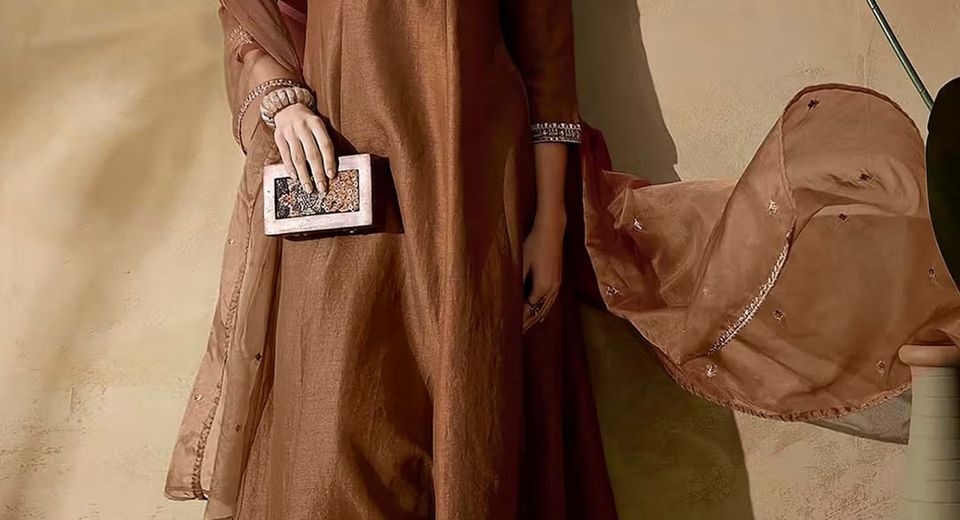
Salwar Suit Proportions That Flatter Short Torsos depend on where the kurta ends, where the waist appears, and how much visual weight sits above the hips. A well-balanced salwar suit doesn't require a very short hem or high heels. Small changes to neckline depth, vertical lines, trouser width and dupatta placement can make the upper body appear longer while keeping the outfit comfortable and traditionally polished.
The useful starting point is your body's actual division. Measure from the top of your shoulder to your natural waist, then from the waist to the floor or ankle. The goal isn't to hide a short torso; the goal is to prevent the kurta, neckline, embroidery and dupatta from crowding the same small area.
Salwar Suit Proportions That Flatter Short Torsos: What Creates Balance?
A short torso looks more balanced when a salwar suit creates one clear vertical line from the shoulder to the hem and places visual emphasis slightly below the natural waist. A moderate V-neck or open U-neck, a straight or gently shaped kurta, and a narrow bottom usually provide that balance.
Proportion matters more than clothing size. A correctly sized large kurta can still make the torso look compressed if the neckline is shallow, the yoke is broad and the dupatta is wrapped tightly around the chest. Conversely, a fitted suit with the right vertical details can look elongated even when the wearer is petite.
Use a simple visual test before buying: divide the outfit into the upper section from shoulder to waist and the lower section from waist to hem. If heavy embroidery, contrast piping and a folded dupatta all stop around the bust, the upper section becomes visually dense. If the kurta has uninterrupted length and the lower half remains relatively clean, the eye travels downward more easily.
Body proportion is separate from height. A tall woman can have a short torso, while a petite woman can have a relatively long upper body. Choose the kurta and bottom according to the relationship between shoulder, waist, hip and ankle measurements rather than relying only on a standard petite label.
Salwar Suit Proportions That Flatter Short Torsos: How Long Should the Kurta Be?
The most flattering kurta length for a short torso usually ends around the lower hip, mid-thigh or just above the knee, depending on height and the bottom worn underneath. The hem should create length without stopping at the widest part of the hip.
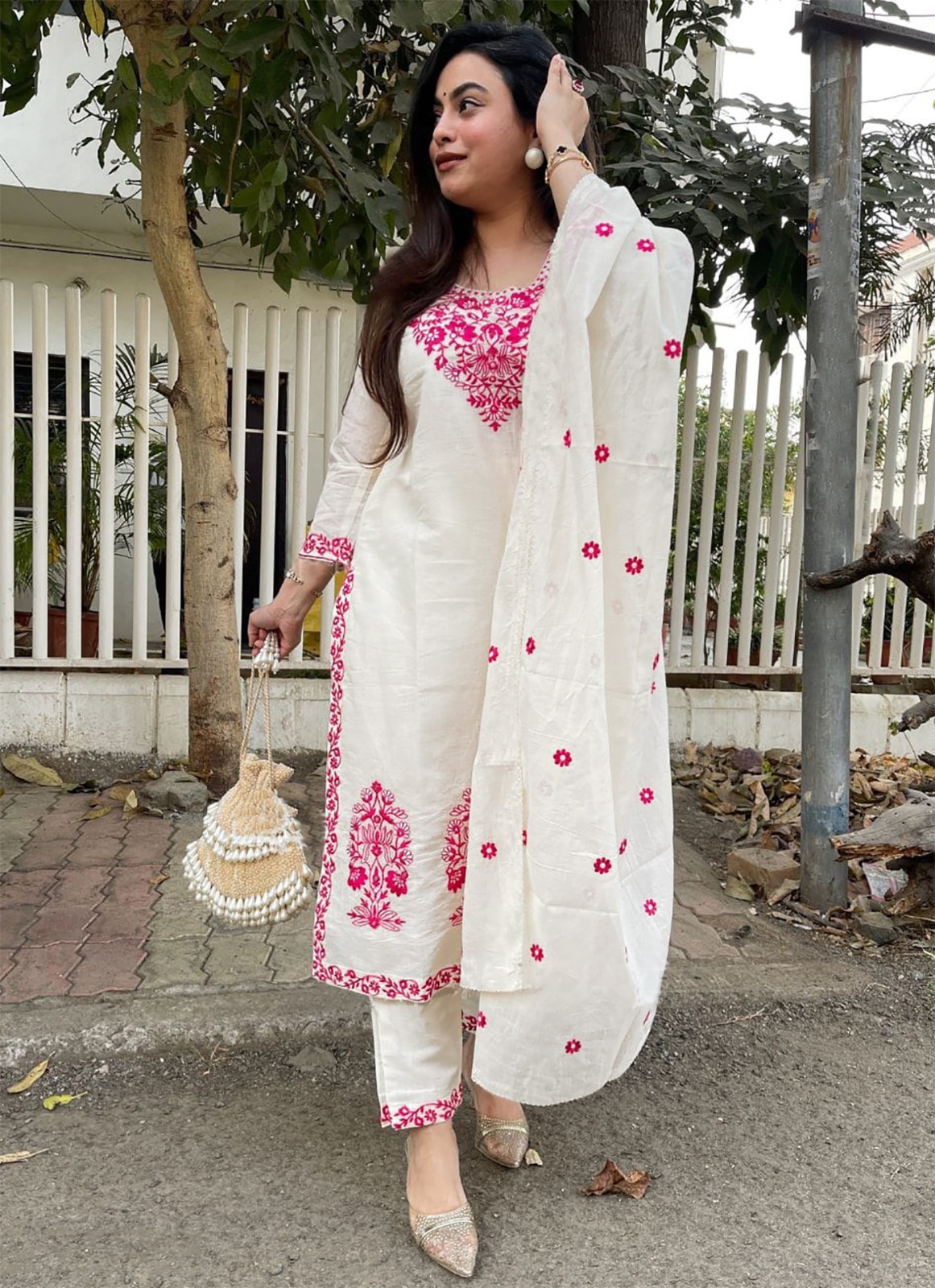
For straight pants, cigarette pants or narrow churidars, a kurta ending 5 to 8 centimetres above the knee often gives a clean vertical effect on a shorter frame. For palazzos, a slightly shorter kurta ending around mid-thigh can prevent the outfit from becoming one broad block of fabric. Ankle-length palazzos need enough fall and a visible shoe line; otherwise, extra width can overwhelm the lower body.
Avoid automatically choosing a very short kurta to add the appearance of longer legs. A hem that finishes immediately below the bust or at the high hip can make the torso seem even shorter by placing a strong horizontal line too high. The best hem is generally long enough to skim the hip and short enough to leave the lower silhouette readable.
Hem placement should also account for fabric weight. A light rayon straight suit can hang close to the body, while a stiff embroidered fabric may stand away from the hip and appear shorter. The Off White Floral Embroidered Straight Suit Set illustrates why embroidery placement matters: a vertical or evenly distributed surface design is easier to balance than a wide, concentrated band across the upper torso.
Salwar Suit Proportions That Flatter Short Torsos with Longer Kurtas
A short torso doesn't always need a short kurta; a long, narrow kurta can be more flattering when its neckline and side lines remain open. Anarkali-style volume, however, should begin below the bust rather than at the fullest part of the chest, and the flare should not be so broad that it erases the waist area.
A straight silhouette is usually the safest starting point because the side seams guide the eye downward. Midnight Black Blossom Salwar Suit uses the practical advantage of a darker base: a clean, uninterrupted line is less likely to look visually segmented. A side slit that begins around the upper thigh can also add movement without exposing too much of the lower body.
When ordering a custom alteration, ask for the finished kurta length rather than only saying that you want a shorter or longer suit. Measure from the highest shoulder point to the intended hem while wearing the bottom you plan to use. A 2-centimetre adjustment can change the position of a border or motif enough to improve the entire silhouette.
Salwar Suit Proportions That Flatter Short Torsos: Which Necklines Help?
Moderately deep V-necks, narrow U-necks and open notch necklines usually lengthen the upper body visually because they expose a vertical section of the chest. The neckline should remain proportionate to the bust and occasion rather than becoming excessively deep.
A neckline that extends roughly 10 to 15 centimetres below the base of the neck can create a useful vertical opening on many adult frames, although individual bust coverage and personal comfort matter more than a fixed measurement. A narrow V is often more elongating than a wide round neck because a wide curve adds horizontal breadth.
Plackets are especially useful. A row of three to five buttons, a narrow embroidered slit or a contrasting centre panel can continue the vertical line below the neck. The panel should remain slim; a broad yoke that spans shoulder to shoulder can make the upper body look shorter.
High band collars, boat necks and wide square necks are not forbidden, but they need balancing details. Pair a high collar with a long centre placket, narrow side panels or minimal chest embroidery. Pair a boat neck with a long kurta and a slim bottom so shoulder width doesn't dominate the entire silhouette.
Embroidery placement deserves the same attention as neckline shape. A dense floral spray across the bust creates a visual shelf, while small motifs that descend through the centre encourage the eye to move vertically. Embroidered Salwar Suit Set for Women is a useful example of how a decorated front can remain balanced when the decoration is distributed rather than concentrated at the neckline.
Salwar Suit Proportions That Flatter Short Torsos: Which Bottoms Work?
Narrow or moderately straight bottoms usually work best with a short torso because they keep the lower half visually continuous. Cigarette pants, slim salwars with controlled volume, straight trousers and streamlined churidars are reliable choices under a straight kurta.
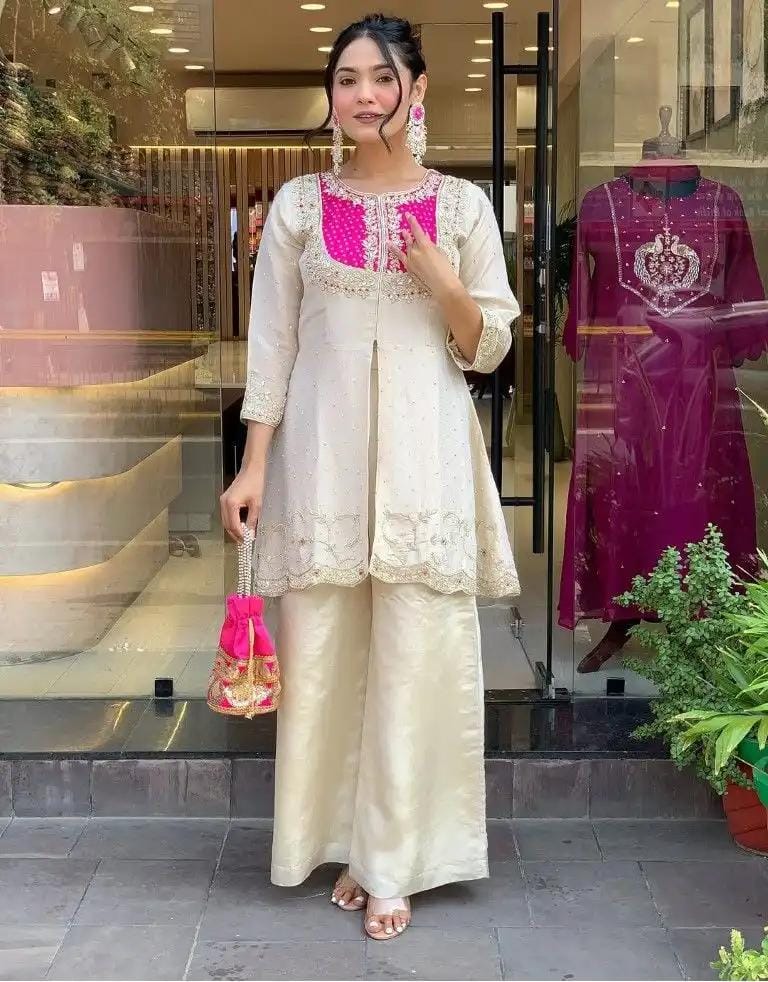
The rise of the bottom affects the apparent torso length. A very high-waisted trouser with a short kurta can move the waistline upward and reduce visible torso space. A mid-rise waistband that sits at or just below the natural waist generally creates a more comfortable and balanced division.
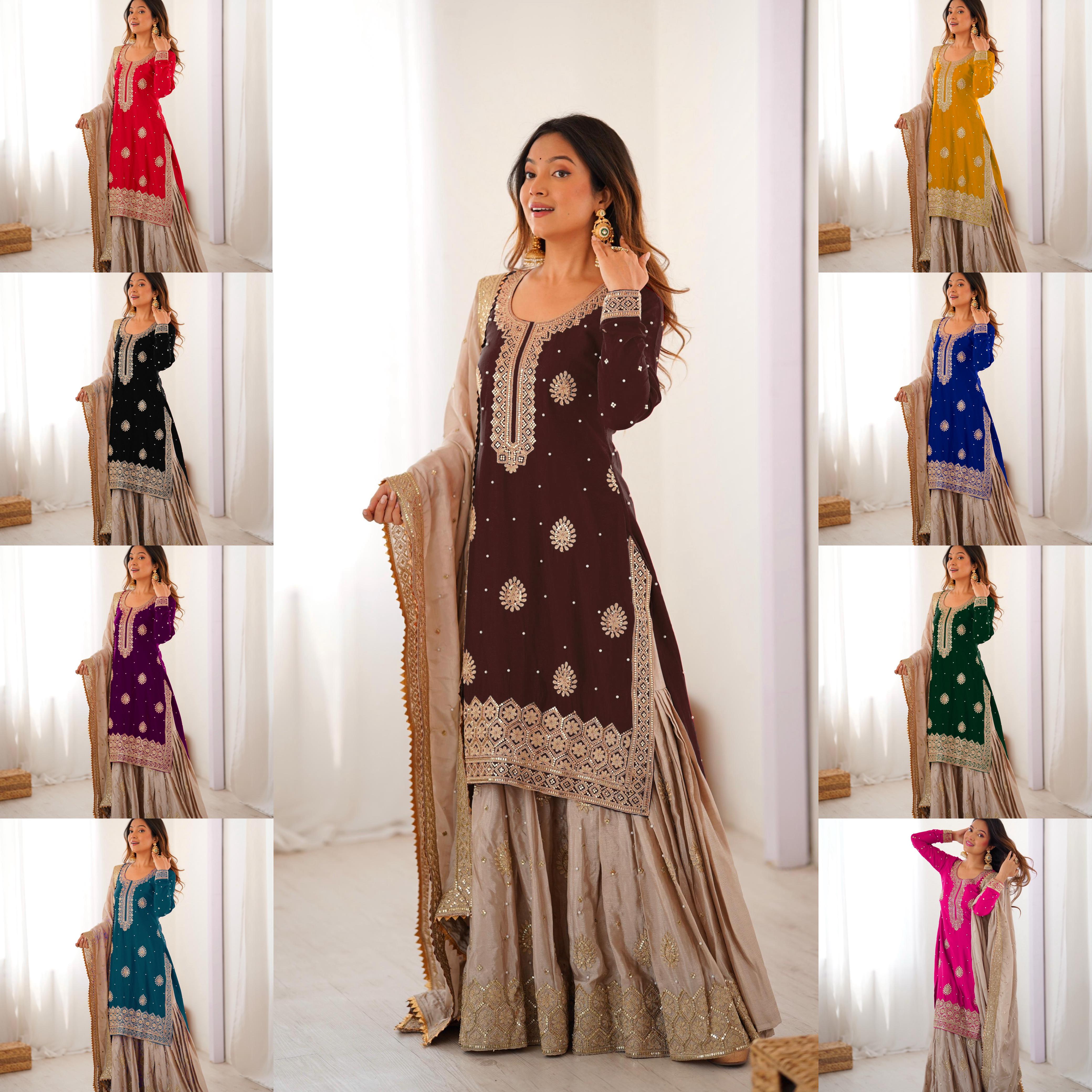
Salwars and Patiala trousers require special consideration. The generous pleats of Punjab Patiala Salwar Suits add horizontal and diagonal volume around the hips, so the kurta should be relatively long, the neckline open and the dupatta worn in a narrow, relaxed drape. A short, heavily embroidered kurta combined with a full Patiala bottom can make the upper body look crowded and the whole outfit look compressed.
Palazzos can work well when their width begins below the hip and the fabric falls vertically rather than standing away from the body. Choose a kurta with a clear centre line and avoid pairing very wide palazzos with a broad yoke. Brown Chinon Silk Sharara Suit Set for Women demonstrates a different approach: dramatic lower volume needs a controlled upper half, restrained neckline detail and a dupatta that doesn't add another wide layer across the chest.
Sharara volume is most successful when the flare begins below the knee or lower calf. A flare that begins at the upper thigh creates a strong horizontal expansion and can make the torso appear shorter by comparison. Keep footwear visible enough to preserve a continuous leg line.
A slim trouser isn't the only suitable choice. A softly falling rayon bottom can also work if the kurta has enough length and the hem doesn't compete with a contrasting ankle border. Cream Pink Printed Rayon Readymade Salwar Suit can be styled with minimal jewellery and a plain or lightly bordered dupatta when the printed fabric already supplies visual interest.
Salwar Suit Proportions That Flatter Short Torsos: How Should Prints Be Placed?
Vertical colour movement, low-contrast side details and smaller upper-body motifs generally create the most lengthening effect. A single dominant colour from kurta to bottom is especially effective when the outfit has substantial embroidery or a bold dupatta.
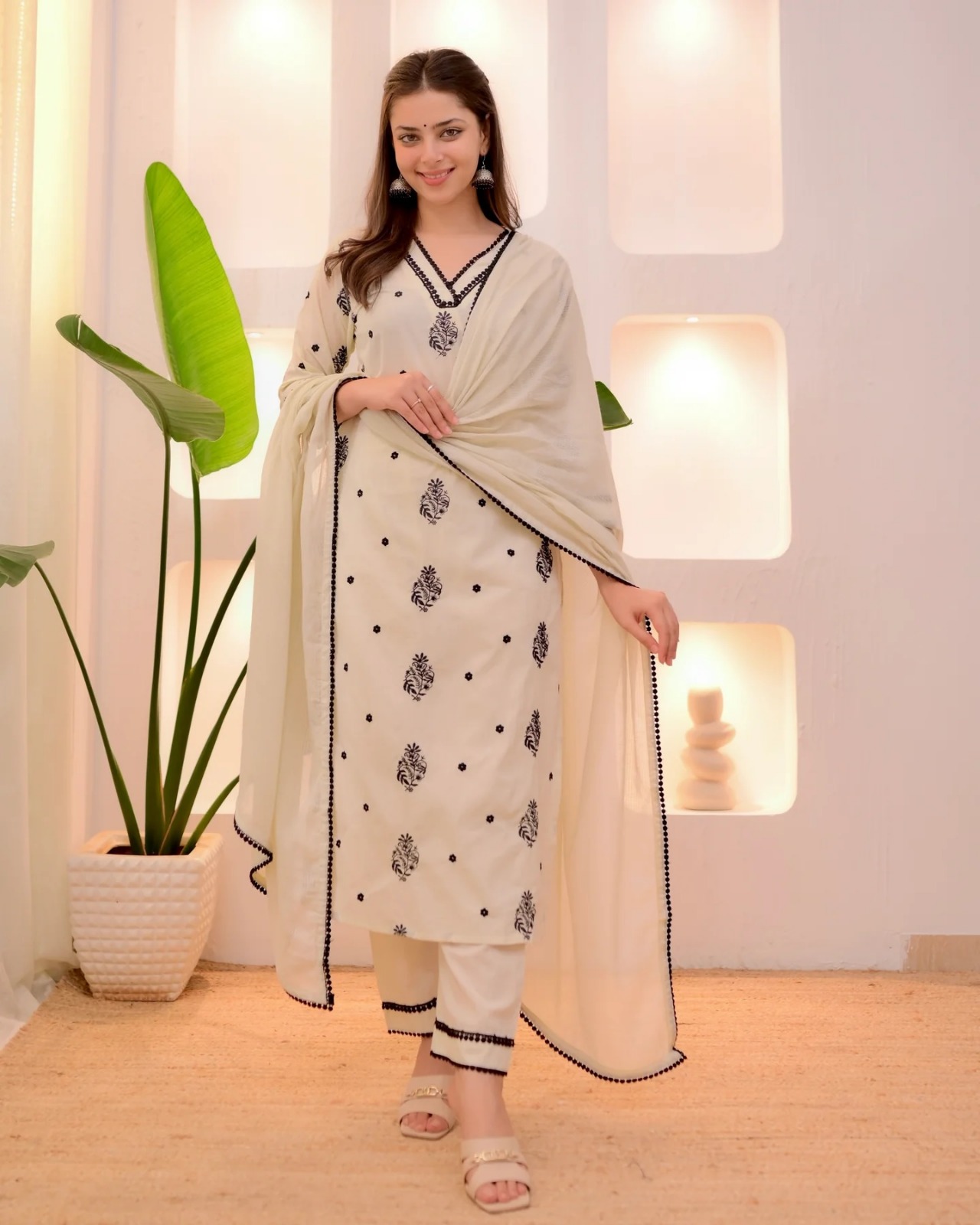
Contrast should be used deliberately. A bright border directly across the bust or a sharp colour break at the natural waist can shorten the upper body visually. A narrow contrast strip down the centre, vertical piping and side panels produce a more continuous line.
Small-to-medium prints are usually easier to balance than oversized motifs placed across the chest. Kalamkari Print Salwar Suits (Copy) can be styled effectively by selecting a print with a visible vertical repeat and keeping the neckline relatively open. If the print is busy, reduce competing jewellery and use a dupatta with a quiet border.
Traditional motifs don't need to be avoided. Maharashtra Paithani Inspired Salwar Suits may include strong woven-inspired borders, so place the broadest border at the hem rather than directly beneath the neckline. Gujarat Bandhej Salwar Suits can be balanced with a solid or minimally patterned bottom, preventing repeated dots and tie-dye contrast from making the outfit look segmented.
Dark colours can reduce visual width, but colour alone can't correct poor proportions. Elegant Camel Shade Salwar Suit Set shows how a soft neutral can look elongated when the silhouette is clean and styling avoids a thick horizontal waist break. Brown, camel, black and deep jewel tones are useful, but a well-cut pastel suit can be equally flattering.
Border width should match the scale of the wearer and the location of the border. A 2 to 4 centimetre hem border can finish a straight suit neatly, while a broad 10-centimetre border placed near the chest may dominate a short torso. Black White Floral Embroidered Readymade Salwar Suit can be kept balanced by allowing the black-and-white contrast to remain the main statement and limiting additional horizontal accessories.
Salwar Suit Proportions That Flatter Short Torsos: Where Should the Dupatta Fall?
A dupatta flatters a short torso most effectively when it falls in a long, narrow line from one shoulder instead of being wrapped tightly around the neck and chest. One open side and a visible centre placket prevent the upper body from becoming visually crowded.
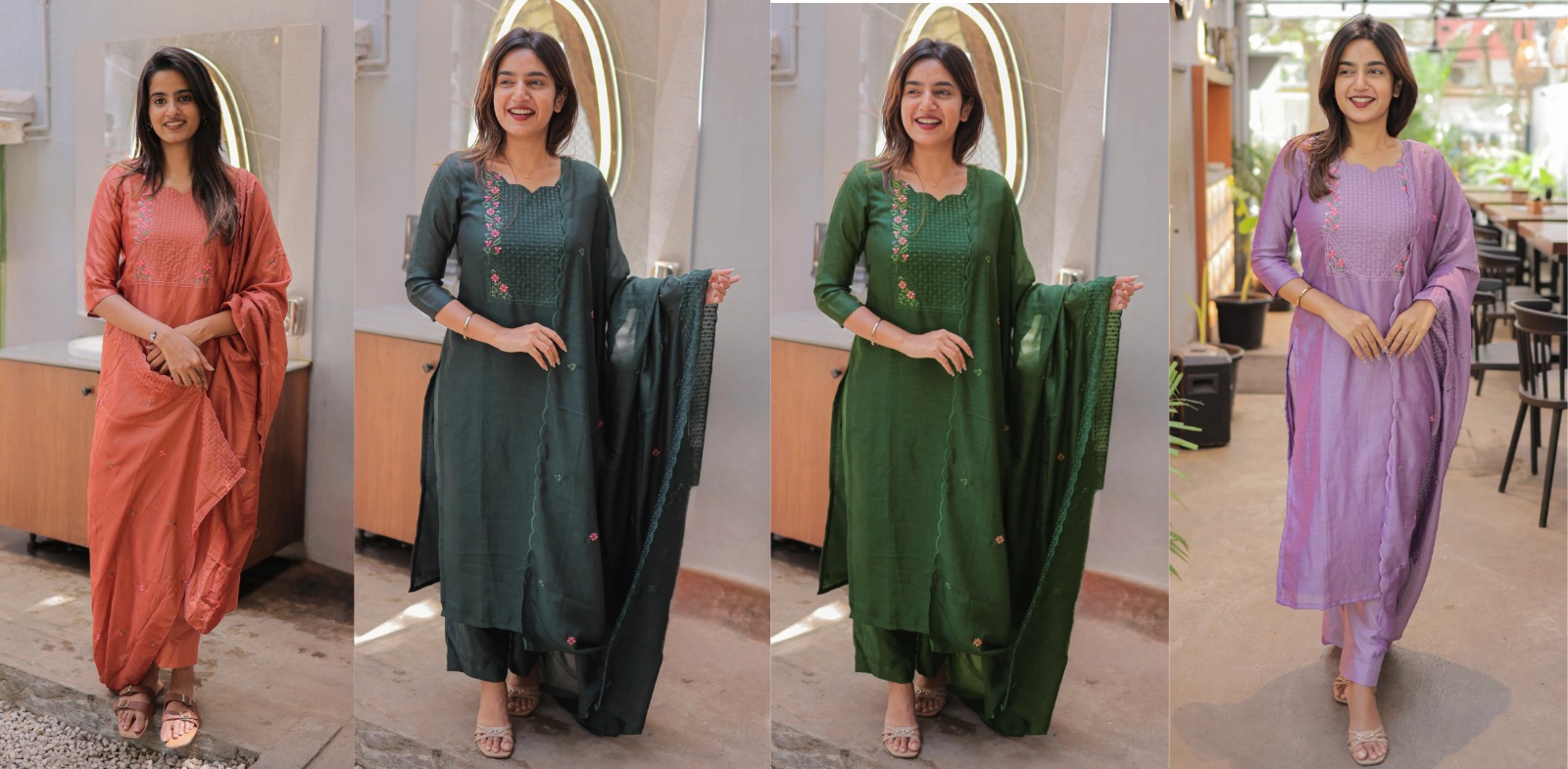
Place the dupatta on one shoulder with the front edge ending near the knee or below the hip. Pinning the fabric at the shoulder and allowing it to fall straight can maintain a vertical line. If you prefer the dupatta across the front, keep the fold narrow and let the inner edge sit slightly away from the neck.
Avoid creating a thick ring around the neckline with multiple folds. A tightly wrapped dupatta adds horizontal bands across the bust and can conceal the very placket or neckline that would otherwise lengthen the upper body. A lightweight fabric with a narrow border is easier to manage than a stiff, heavily embellished drape.
For festive styling, pin the dupatta at one shoulder and one wrist rather than crossing it several times over the torso. Orange Thread Embroidered Ethnic Suit Set can retain its embroidered character with a simple single-shoulder drape, small earrings and a low-profile bracelet instead of a large necklace that competes with the neckline.
Odisha Sambalpuri Salwar Suits may feature distinctive patterned fabric and a noticeable border. Let the border travel vertically along the dupatta edge or fall near the side of the body, rather than positioning the widest section directly across the bust. A clean side fall allows the textile detail to remain visible without shortening the upper body.
Salwar Suit Proportions That Flatter Short Torsos: What Should Be Checked Before Buying?
The most important pre-purchase checks are shoulder fit, neckline depth, finished kurta length, bottom rise, fabric fall and border placement. These details predict the final silhouette more accurately than a product photograph alone.
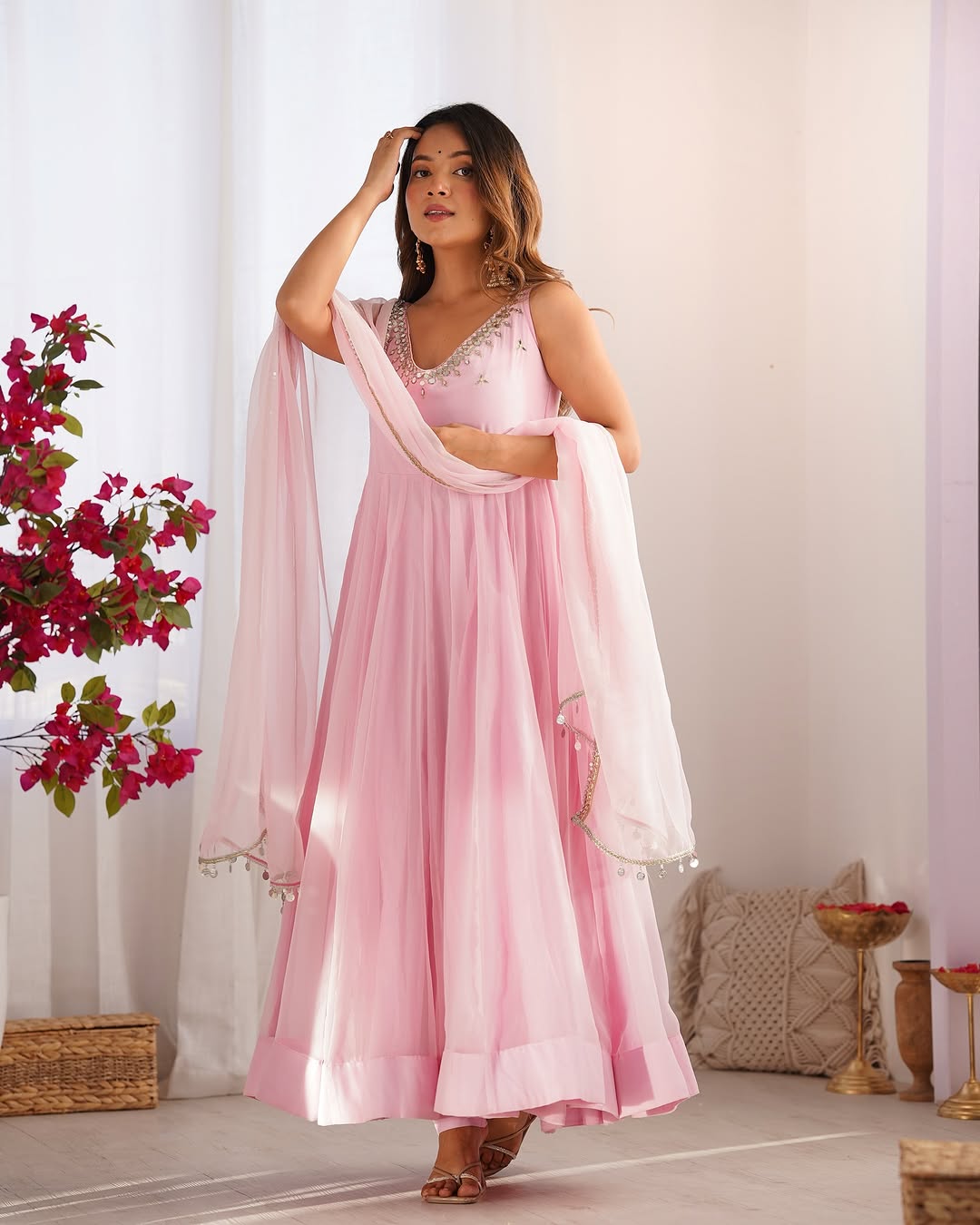
- Check the shoulder seam: The seam should sit close to the natural shoulder edge without dropping down the upper arm. A dropped shoulder widens the upper body and can make the torso appear shorter.
- Measure the kurta length: Compare the listed length with a garment you already own. Measure from the shoulder point to the hem, not from the collar or neckline.
- Inspect chest decoration: Identify whether embroidery, piping or a border forms a strong horizontal band across the bust. A vertical motif is generally easier to balance.
- Check the bottom rise: A waistband that sits too high can crowd the upper body when combined with a short kurta. Look for a comfortable mid-rise position.
- Consider fabric behaviour: Rayon usually falls softly, Chinon silk has fluid movement, and structured embroidered materials may add width. Select the silhouette with the fabric's drape in mind.
- Plan the dupatta: Confirm whether the dupatta is wide, heavily bordered or stiff enough to create bulk. Decide whether a shoulder fall or a narrow front drape will suit the neckline.
Fit adjustments can often solve proportion problems without replacing the entire suit. A tailor can shorten a sleeve, narrow a side seam, move a hook or reduce excess fabric at the shoulder. Alterations should preserve the original border and motif placement; cutting through a central embroidered panel can create an unintended horizontal break.
The most useful final test is movement. Sit down, raise both arms, walk several steps and check whether the kurta rides up or the dupatta needs constant adjustment. Salwar Suit Proportions That Flatter Short Torsos should create visual balance without requiring uncomfortable posture or repeated pulling at the waist.
Common Questions About Salwar Suit Proportions That Flatter Short Torsos
What is the best kurta length for a short torso?
A kurta ending around the lower hip, mid-thigh or just above the knee usually works well, depending on height and the bottom worn underneath. Avoid hems that stop at the high hip or at the widest point of the hip, because both positions can create a strong shortening line.
Which neckline is best for a short torso in a salwar suit?
A moderate V-neck, narrow U-neck or open notch neckline usually creates the most vertical space. A slim centre placket with three to five buttons can extend that line, while a very wide boat neck or broad yoke may add horizontal width.
Can short-torso women wear Patiala salwar suits?
Yes, short-torso women can wear Patiala salwar suits when the kurta is relatively long, the neckline is open and the dupatta is draped narrowly. Excessively short kurtas and heavy chest embroidery can make the pleated lower half look disproportionate.
Are palazzo pants flattering for a short torso?
Palazzo pants can be flattering when the fabric falls vertically and the width begins below the hip. Pair wide palazzos with a streamlined kurta, a clear centre line and a visible shoe line rather than a broad yoke and bulky dupatta.
How should a dupatta be draped on a short torso?
Wear the dupatta over one shoulder and let it fall in a long, narrow line, or use a slim front drape that leaves the neckline visible. Avoid wrapping multiple thick folds around the neck because horizontal layers can crowd the chest.
Do dark colours make a short torso look longer?
Dark colours can reduce visual width, but dark colour alone does not lengthen a short torso. A clean silhouette, vertical neckline, suitable kurta hem and controlled embroidery placement have a stronger effect on overall proportion.


