

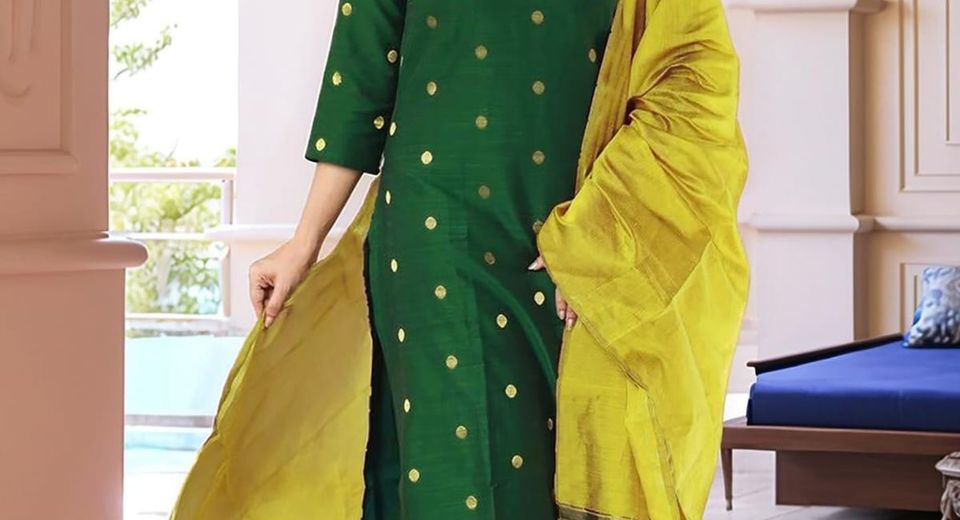
A well-cut salwar suit can create visual balance without asking you to conceal your natural shape. Salwar Suit Proportions That Flatter Apple-Shaped Bodies depend on a few measurable decisions: where the kurta ends, where volume begins, how a neckline opens the upper body, and whether the bottom adds width at the right point. The goal isn't to make the waist disappear. The goal is to let the eye travel smoothly from the face to the hem while keeping the outfit comfortable when you sit, walk and move.
An apple-shaped body commonly carries more volume around the midsection, with comparatively slimmer legs, arms or hips. Bodies are not fixed categories, so use the description as a fitting tool rather than a rulebook. A 42-inch bust, 40-inch waist and 42-inch hip will need different ease from a 38-inch bust, 36-inch waist and 39-inch hip, even if both figures are described as apple-shaped. Accurate measurements matter more than a body-shape label.
Salwar Suit Proportions That Flatter Apple-Shaped Bodies: What Creates Balance?
Balanced proportions combine a gently shaped upper half, a clean vertical line through the torso and controlled volume below the kurta. A practical starting point is a kurta that falls either two to four inches above the knee or below the fullest part of the calf, rather than ending exactly at the widest part of the abdomen or thigh.
Balance doesn't require looseness everywhere. Excess fabric around the bust, waist and hips can create a larger-looking outline, while a very tight fit can pull across the stomach and produce horizontal creases. The most useful fit has approximately 3 to 5 inches of total ease around the fullest body measurement for woven fabrics, with slightly more ease for non-stretch fabrics and comfortable sitting.
Vertical details help the eye move up and down. A centre placket, a long neckline, a continuous print, narrow borders and an open dupatta edge can all contribute to that effect. Large contrast bands placed directly across the waist tend to interrupt the line. A straight-cut suit can work particularly well when the side seams fall cleanly and the hem doesn't cling to the stomach.
How should you measure before buying a salwar suit?
Measure the bust, waist, hip, shoulder, armhole and preferred kurta length while wearing the bra or inner layer intended for the outfit. Measure the waist at the point where the salwar or trouser waistband will sit, rather than automatically measuring the narrowest part of the torso.
For a ready-made suit, compare garment measurements with body measurements and check whether a listing gives the full circumference or the measurement taken flat. A garment listed as 40 inches across the chest may mean 40 inches around the body or 20 inches from armpit to armpit. That difference can result in a two-size error.
Salwar Suit Proportions That Flatter Apple-Shaped Bodies Through Kurta Length
The most versatile kurta length for an apple-shaped body usually falls below the hip and avoids stopping at the widest point of the stomach. A length around mid-thigh to just above the knee gives a straight suit a clean line, while a calf-length kurta can make an Anarkali or panelled silhouette look intentional and fluid.
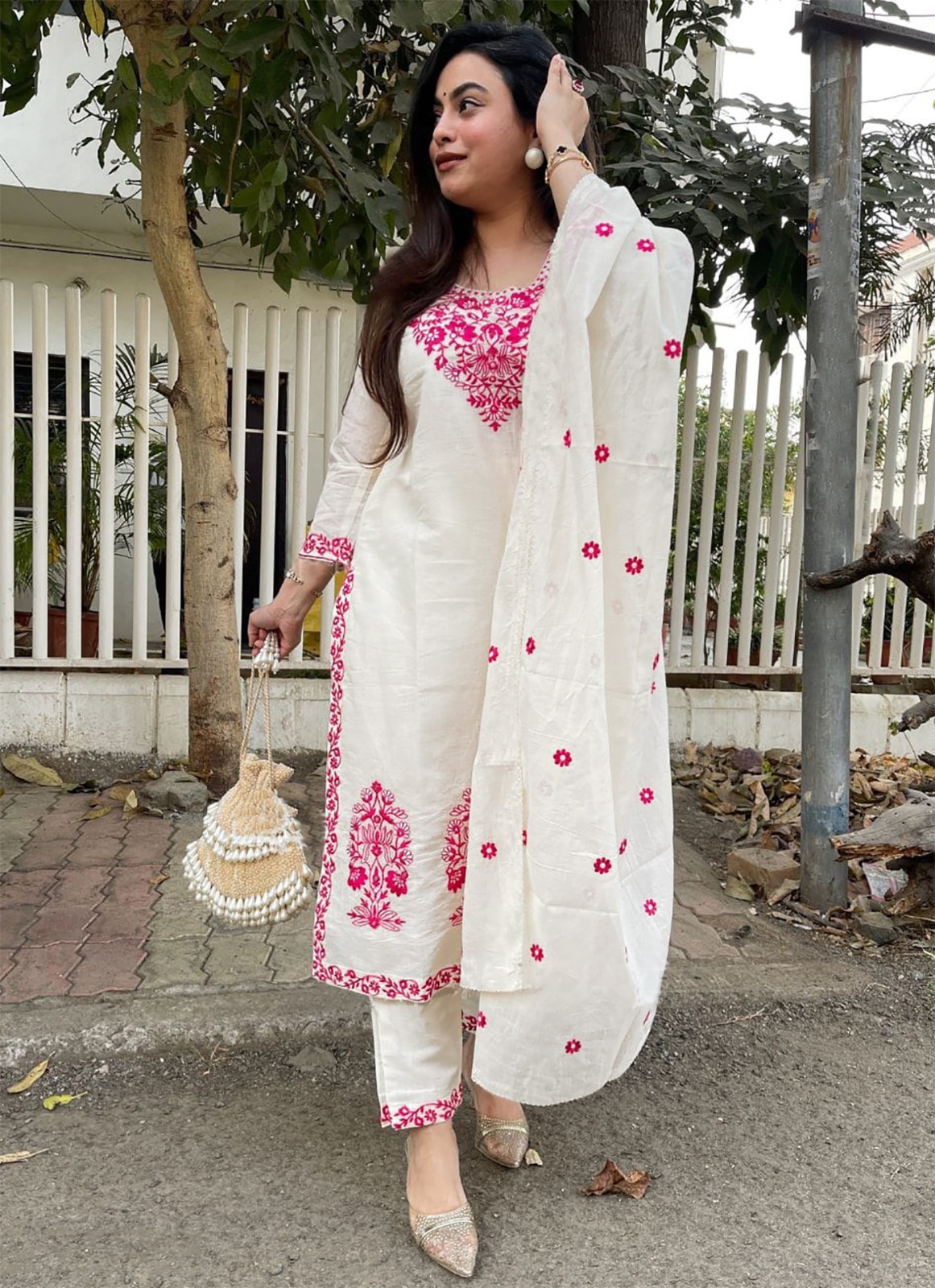
For everyday wear, a straight kurta with modest side slits creates definition without gripping the abdomen. Side slits that begin 8 to 12 inches above the hem allow walking room and prevent the fabric from ballooning at the hips. A slightly shaped side seam can follow the body without creating a tight waist seam.
Anarkali suits work when the flare begins above the fullest part of the stomach and releases gradually. A high empire seam can be comfortable, but a seam placed directly under the bust may look abrupt if the fabric is stiff or heavily embellished. A softly gathered Anarkali with six to eight panels distributes volume more evenly than a single, very full circular flare.
Women's Mustard Printed Anarkali Suit with Dupatta illustrates why print scale and flare should be considered together. A print with a continuous downward movement can support a longer Anarkali shape, while a busy horizontal motif near the waist may need a plain or low-contrast dupatta to restore visual calm.
A peplum-style kurta requires care because a gathered seam at the waist can add volume at exactly the point many apple-shaped figures already carry fullness. If you prefer the style, choose a longer peplum that extends over the upper hip and pair it with a narrow, straight bottom rather than a heavily flared palazzo.
Salwar Suit Proportions That Flatter Apple-Shaped Bodies With Necklines and Sleeves
Open vertical or gently angular necklines usually flatter an apple-shaped body because they lengthen the area above the bust. V-necks, keyholes, soft scoop necks and moderate sweetheart shapes can work well when the opening is secure and proportionate to the bust.
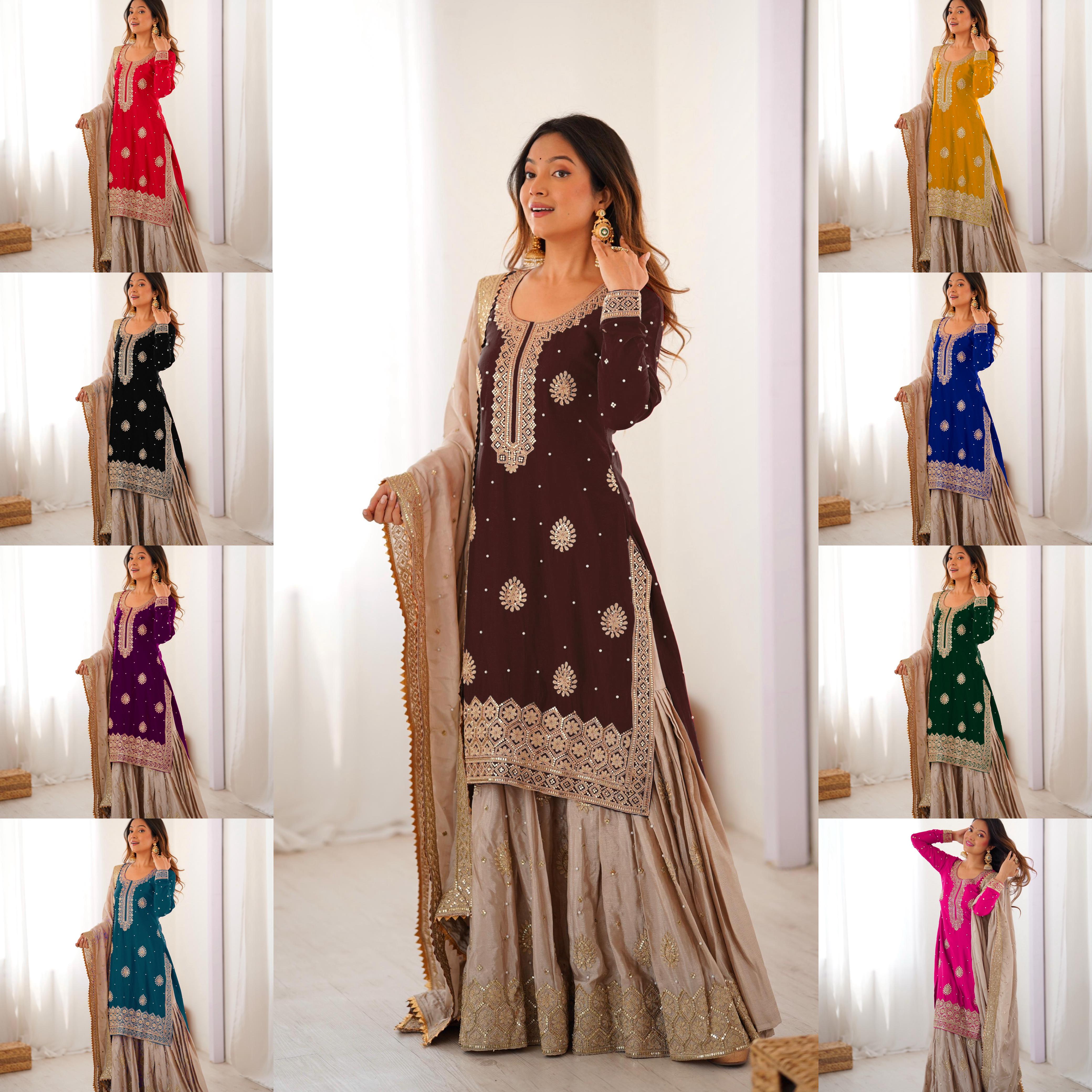
A neckline that's 6 to 8 inches deep often creates openness without requiring constant adjustment, although the correct depth depends on personal comfort and bust fit. A very shallow round neck can make the upper torso look compact, while an extremely wide neckline can make the shoulders appear broader than intended.
Use embroidery and colour near the face when you want attention to move upward. A vertical embroidered yoke, narrow front piping or a pendant-length neckline detail is usually more useful than dense horizontal work across the abdomen. If the kurta has prominent zari decoration, keep the centre placement deliberate so the embellishment doesn't form a widening band.
Sleeves between the elbow and three-quarter length are easy to balance because they reveal the forearm and keep the upper arm covered. A sleeve ending at the widest part of the upper arm can create an unwanted horizontal break. A 1 to 2 inch cuff, a narrow border or a small vertical slit can make a fuller sleeve look more structured.
Elegant Camel Shade Salwar Suit Set offers a useful styling lesson in restraint: a muted, continuous colour can allow the neckline, earrings or dupatta edge to provide the focal point. A monochromatic outfit doesn't need to be plain; texture, small motifs and controlled borders can add interest without dividing the torso.
Salwar Suit Proportions That Flatter Apple-Shaped Bodies With the Right Bottoms
Straight pants, narrow trousers and lightly tapered salwars usually create the cleanest balance because they keep the lower half visually controlled. A waistband should sit securely without cutting into the stomach; a flat front with side or back elastic can be more comfortable than a thick gathered waistband.
Palazzo pants can also work, especially with a shorter straight kurta or a kurta that skims the hip. Choose a fluid palazzo with moderate width rather than a very stiff, dramatically flared pair. The hem should clear the floor by approximately half an inch when worn with the intended footwear, preventing the wide leg from looking untidy.
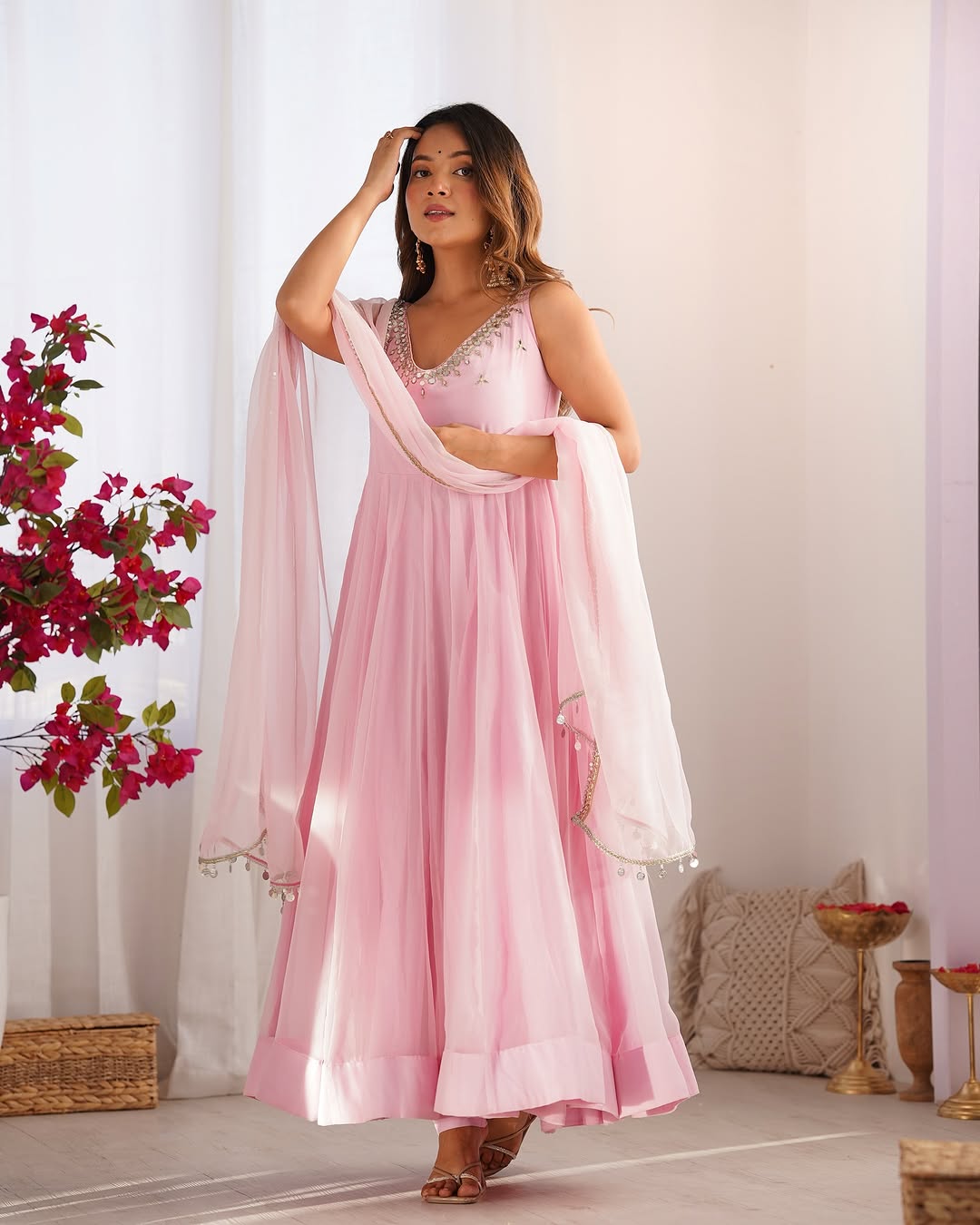
Sharara trousers introduce volume below the knee, so they need a kurta that ends above the flare or at a deliberately long, uninterrupted point. Brown Chinon Silk Sharara Suit Set for Women can be styled with a relatively simple kurta front and a dupatta worn in a long vertical fall. Too many competing flares, borders and waist-level gathers can make the outfit look crowded.
Patiala salwars have generous pleats around the hip and thigh. They are expressive, but their volume should be balanced with a kurta that has a clean, longer line. Punjab Patiala Salwar Suits can therefore suit an apple-shaped wearer when the kameez isn't too short and the dupatta doesn't bunch across the stomach.
Leggings are not automatically slimming. Very tight leggings can emphasise the contrast between a fuller middle and a narrow lower leg. Straight trousers with 1 to 2 inches of ease at the calf often look more polished and remain easier to sit in for long periods.
Salwar Suit Proportions That Flatter Apple-Shaped Bodies Through Dupatta Draping
A dupatta worn in a long, open fall on one side usually creates the strongest vertical effect for an apple-shaped body. Place one end near the shoulder, allow the fabric to fall past the hip, and keep the front layer relatively flat instead of gathering it across the waist.
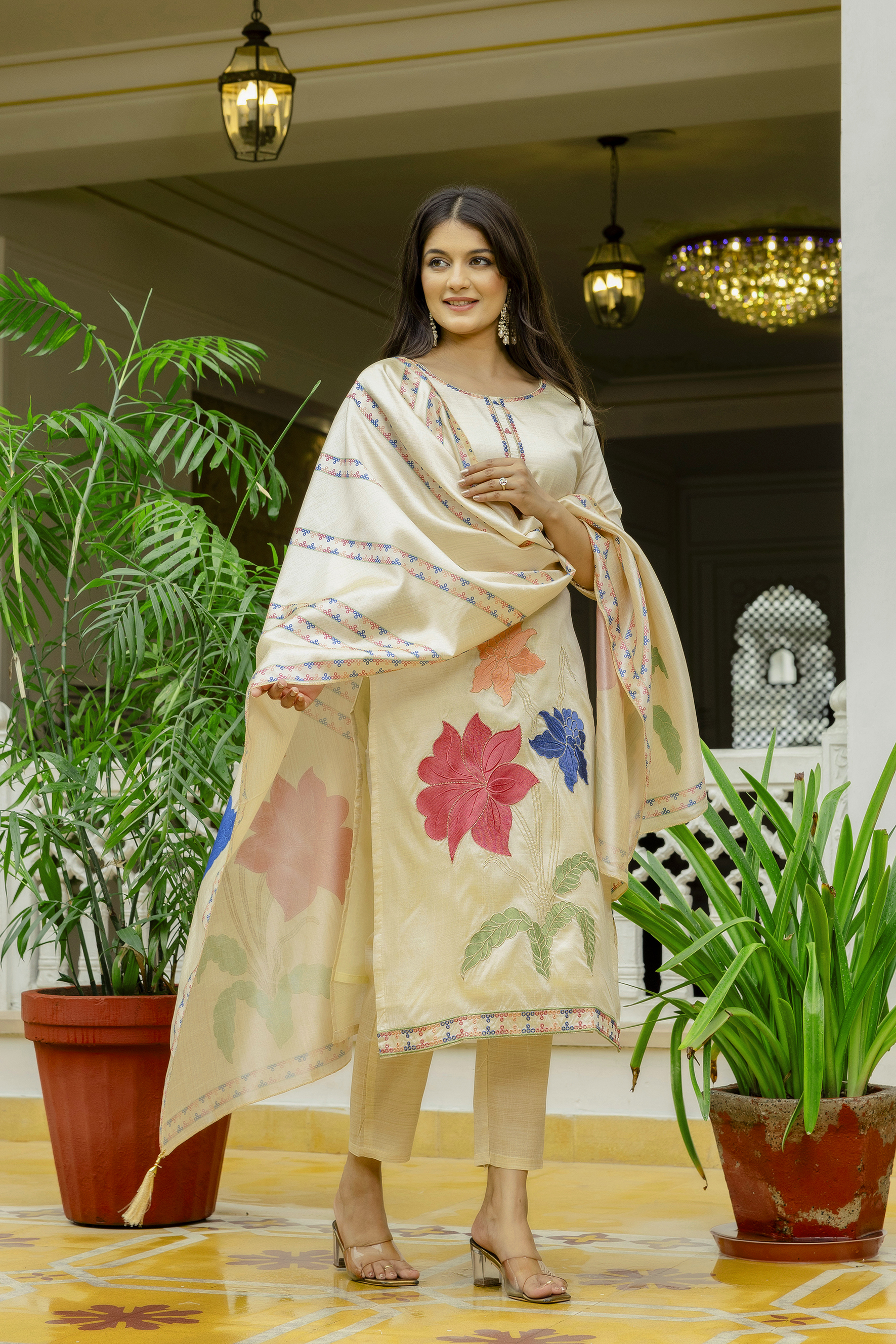
A single-shoulder drape works particularly well with a V-neck or open kurta because it leaves part of the neckline visible. Pin the shoulder point securely and use a second discreet pin near the side seam if the fabric slips. The lower end should finish around the knee or below the hip, depending on the kurta length, rather than stopping at the fullest point of the abdomen.
A front-open dupatta can work for formal wear when the two sides are kept narrow and even. Avoid wrapping a thick, folded dupatta tightly around the stomach because doubled fabric creates a horizontal block. Lightweight dupattas generally make a less bulky layer than heavily folded fabrics, although embroidery and border weight also affect the final result.
Print direction matters. Kalamkari Print Salwar Suits can look balanced when a long printed panel is allowed to fall vertically instead of being scrunched at the neck. Gujarat Bandhej Salwar Suits often contain lively dotted or tied patterns, so a plain, low-volume drape can prevent the overall outfit from becoming visually busy around the centre.
Salwar Suit Proportions That Flatter Apple-Shaped Bodies Through Fabric and Print
Medium-weight fabrics with controlled drape usually flatter an apple-shaped figure more reliably than fabric that's either rigid or very clingy. Fabric with enough body to hold a straight seam can smooth the outline, while fluid fabric can prevent a full skirt or dupatta from standing away from the body.
Rayon can provide a soft fall, but rayon garments still need sufficient ease because cling increases when the fabric is cut close to the body. Cream Pink Printed Rayon Readymade Salwar Suit demonstrates why print scale, fabric movement and fit should be assessed together. A small or medium print with breathing room around the waist can look more continuous than a large motif broken by tight seams.
Chinon silk has a fluid, dressy fall and can suit festive sharara styling, provided the inner layer and waistband don't add unnecessary bulk. Cotton and cotton-blend fabrics can be excellent for daytime wear, but crisp fabric needs enough side ease to prevent the stomach area from standing away from the body.
Print placement matters more than whether a print is technically large or small. Narrow vertical motifs, scattered but connected designs and low-contrast all-over patterns can support length. Broad stripes, heavy waist borders and strong colour changes at the midsection create a visual break. Maharashtra Paithani Inspired Salwar Suits and Odisha Sambalpuri Salwar Suits may include distinctive regional-inspired motifs, so styling works best when the dupatta and accessories don't compete with the central pattern.
Colour blocking can be effective when darker or quieter tones appear at the sides rather than as a harsh band across the stomach. A tonal outfit in camel, brown, mustard, cream or muted pink can create continuity, while a bright neckline, earrings or embroidered sleeve supplies interest near the face.
Salwar Suit Proportions That Flatter Apple-Shaped Bodies for Everyday and Festive Dressing
Everyday salwar suits benefit from moderate ease, breathable fabric, practical side slits and a trouser waistband that stays comfortable for at least six hours of wear. SunsetCharm Ethnic Suit can be approached as a styling example: keep the kurta line uncomplicated, use a side-falling dupatta and choose footwear that doesn't cause the hem to drag.
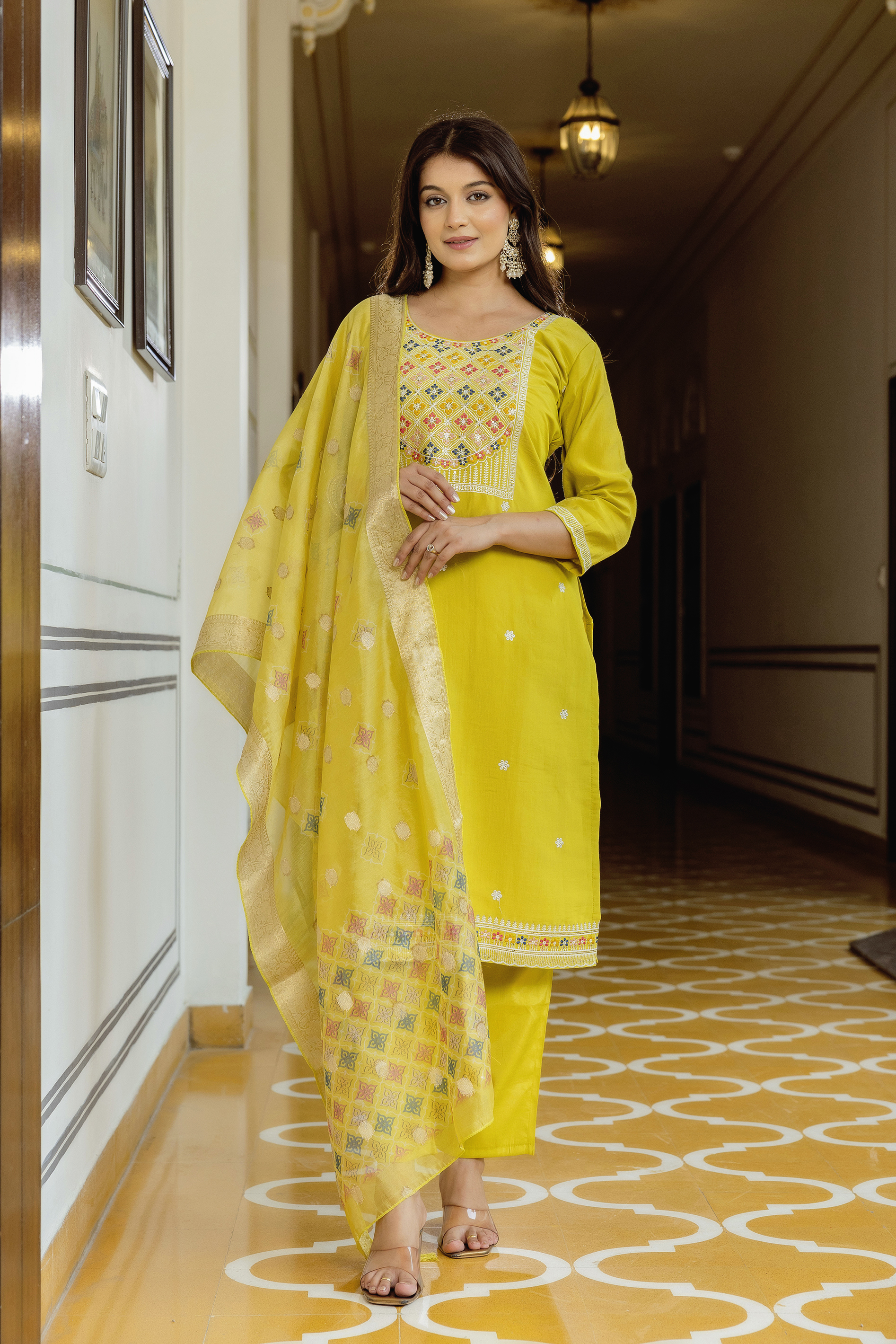
For a daytime Haldi ceremony, a bright suit can remain balanced when the kurta has a clean centre and the dupatta carries the colour or print. Designer Yellow Salwar Suit with Dupatta can be paired with small earrings, a low-volume hairstyle and straight trousers so the outfit retains a vertical line rather than collecting volume around the waist.
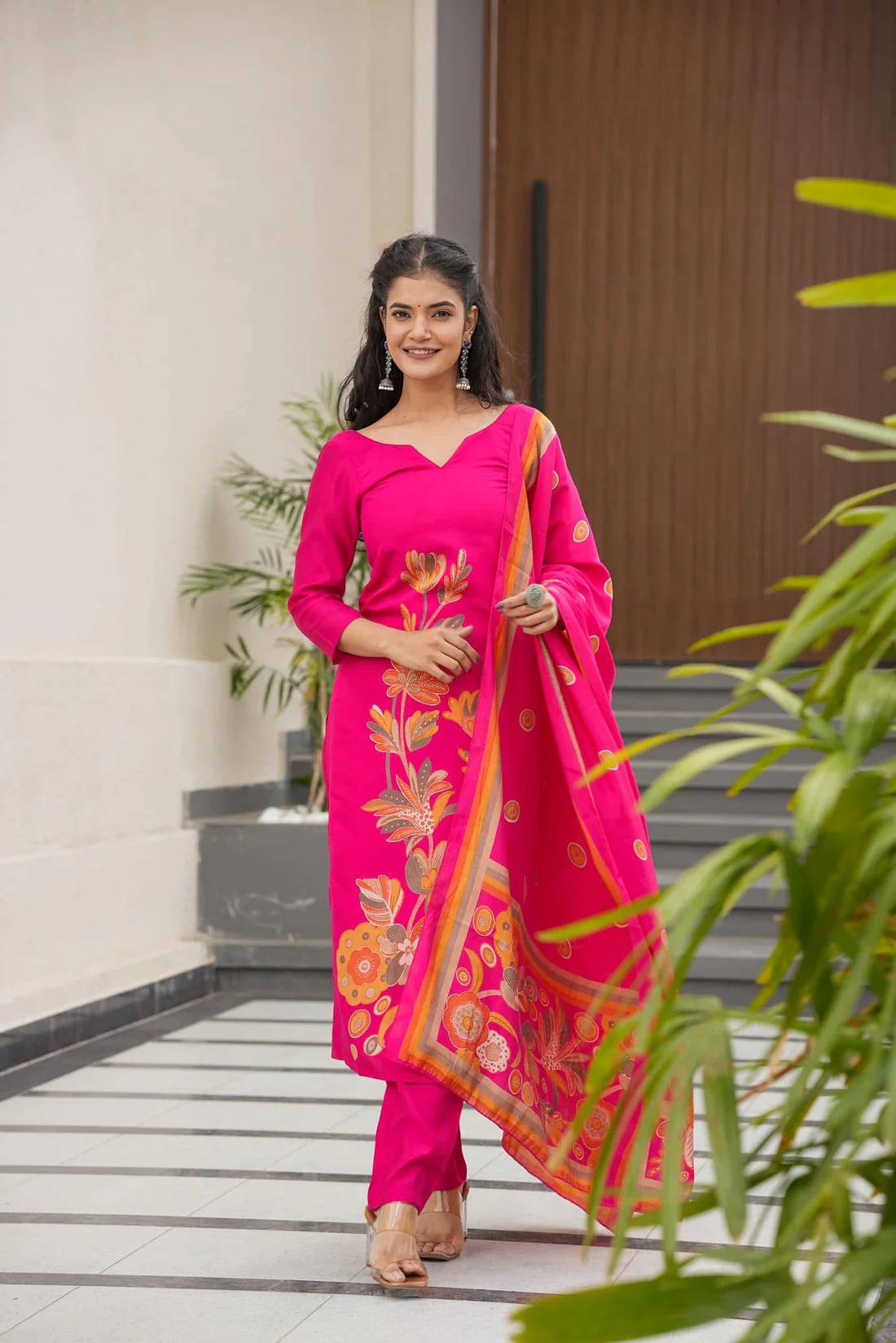
Pink Flower Printed Salwar Suit can work for a casual family gathering when the floral scale is balanced with a solid or lightly bordered dupatta. Orange Radiance Salwar Suit can make a strong festive choice with a simple neckline and controlled sleeve detail, particularly when the bottom is straight rather than heavily gathered.
Before buying, check five points: the shoulder seam should sit on the shoulder bone, the bust should lie flat without pulling, the armhole should allow a raised arm, the kurta hem should not stop at the widest stomach point, and the waistband should remain comfortable while seated. These checks are more reliable than choosing a size based only on height or the model's appearance.
Styling should support comfort rather than enforce a narrow idea of proportion. If you love a cropped kurta, a full palazzo or a Patiala salwar, adjust the other elements instead of rejecting the silhouette. A longer open dupatta, a plain centre panel or a cleaner neckline can make a dramatic outfit feel deliberate and wearable.
Common Questions About Salwar Suit Proportions for Apple-Shaped Bodies
What kurta length is most flattering for an apple-shaped body?
A kurta that falls below the hip and avoids ending at the widest part of the stomach is usually the easiest to balance. Mid-thigh, just-above-knee and calf-length options can all work when the hem and silhouette are intentional.
Are Anarkali suits suitable for apple-shaped bodies?
Anarkali suits can be very suitable when the flare begins above the fullest part of the stomach and releases gradually. Six to eight panels and moderate gathering usually create a smoother line than one extremely full circular flare.
Which salwar suit neckline is best for a fuller midsection?
V-necks, keyholes and moderate scoop necks usually create a lengthening vertical opening above the bust. A neckline between 6 and 8 inches deep often provides openness, but personal comfort and bust fit should determine the final depth.
Can apple-shaped women wear palazzo pants with salwar suits?
Yes, palazzo pants work best with a shorter straight kurta or a kurta that skims the hip. Moderate-width, fluid palazzos generally create better balance than very stiff or dramatically wide trousers.
How should an apple-shaped woman wear a dupatta?
A long, open side drape usually creates the clearest vertical line. Keep the front layer relatively flat and avoid tightly bunching a thick dupatta across the stomach.
Which fabrics are good for salwar suits for an apple-shaped body?
Medium-weight fabrics with controlled drape are usually practical because they neither stand rigidly away from the body nor cling excessively. Rayon, Chinon silk, cotton and cotton blends can all work when the garment has sufficient ease and the seams are well placed.


