

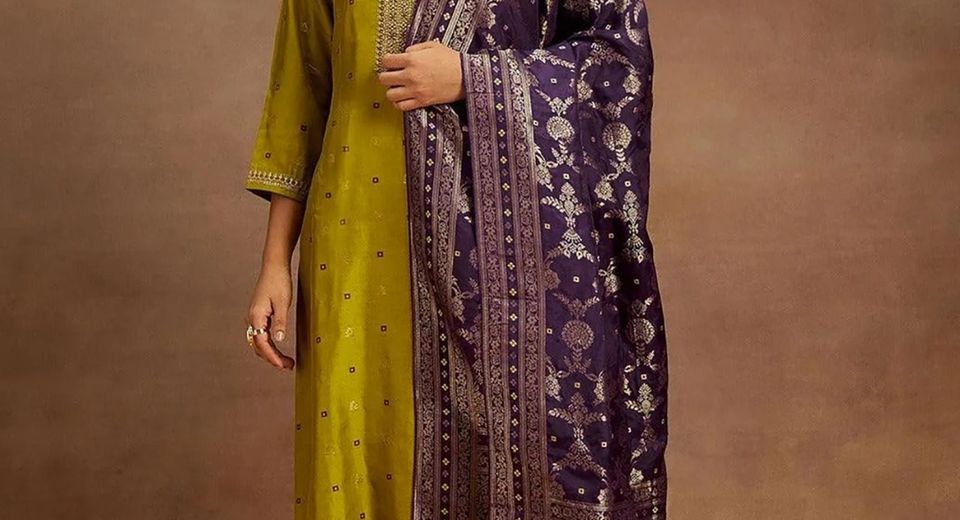
Salwar Suit Cuts Kurta Lengths and Bottoms for Tall Women need careful proportion, not simply extra fabric. A kurta that ends at the widest part of the calf, a low waist seam or a very narrow trouser can make a tall frame look visually longer than intended. The useful starting point is to measure the wearer from shoulder to preferred hem, then choose a cut and bottom that divide the outfit into balanced sections.
Tall women can wear almost every salwar suit silhouette, including straight suits, Anarkali suits, Patiala salwars, palazzos and cigarette pants. The best choice depends on height, torso length, shoulder width, footwear and the amount of movement required. Fabric weight matters too: Banarasi silk, Vichitra silk, Chanderi silk, jacquard and heavy silk crepe don't fall in the same way as lightweight rayon or cotton.
Why proportion matters in salwar suits for tall women
Proportion matters because the eye reads the kurta, bottom and dupatta as separate vertical and horizontal zones. A long torso may need a longer kurta or a stronger waist detail, while long legs can accommodate a shorter kurta with a wider bottom. The goal isn't to make a tall woman appear shorter; the goal is to prevent the outfit from looking accidentally elongated.
A practical measurement is the kurta-to-bottom ratio. A kurta ending around the upper thigh leaves more visual space for palazzos or Patiala salwars. A kurta reaching the knee or mid-calf reduces the visible area of the bottom, so the lower garment should usually remain streamlined. The same rule explains why a long straight kurta works with cigarette pants but can look heavy with a very full salwar.
Horizontal details can also create balance. Contrast borders, yokes, waist seams, embroidered panels, layered hems and a dupatta worn across the upper body interrupt an uninterrupted vertical line. A narrow contrast border at the kurta hem can be more effective than adding excessive surface embroidery from shoulder to ankle.
Salwar Suit Cuts Kurta Lengths and Bottoms for Tall Women
What kurta length works with a straight suit?
A straight kurta usually works best at mid-thigh, knee, or just below the knee, depending on the bottom and the wearer's torso length. A mid-thigh straight kurta gives palazzos and Patiala salwars enough room to be seen, while a knee-length kurta creates a polished line with cigarette pants. A below-knee kurta suits slim trousers and formal settings, provided the hem doesn't stop at the broadest point of the calf.
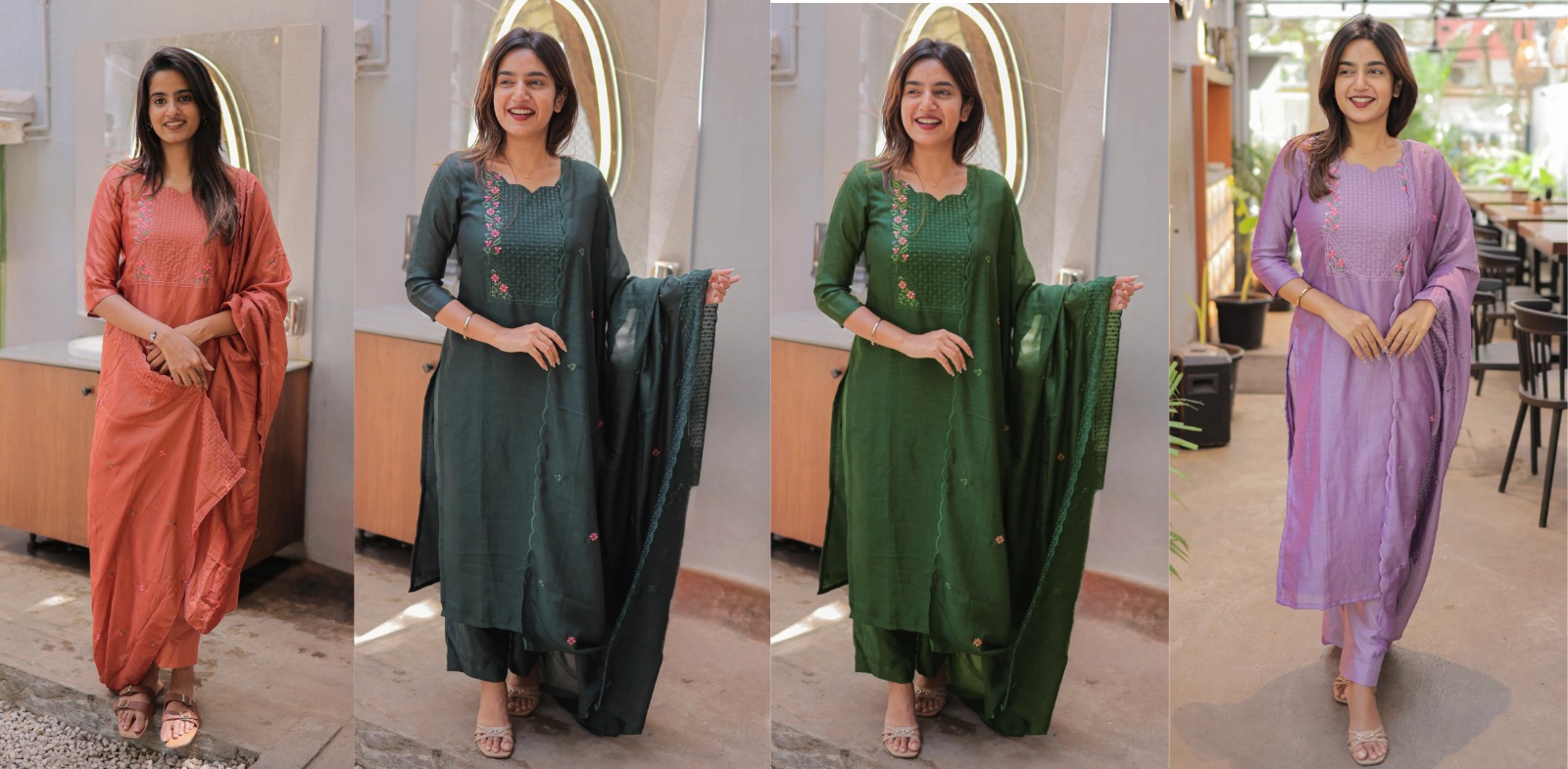
For a tall woman with a long torso, a 42 to 46-inch kurta often provides better balance than a very short 36-inch style, although the correct length must be taken from shoulder to hem rather than selected by height alone. A tall woman with a shorter torso may look more balanced in a 38 to 42-inch kurta with a defined yoke or waist seam.
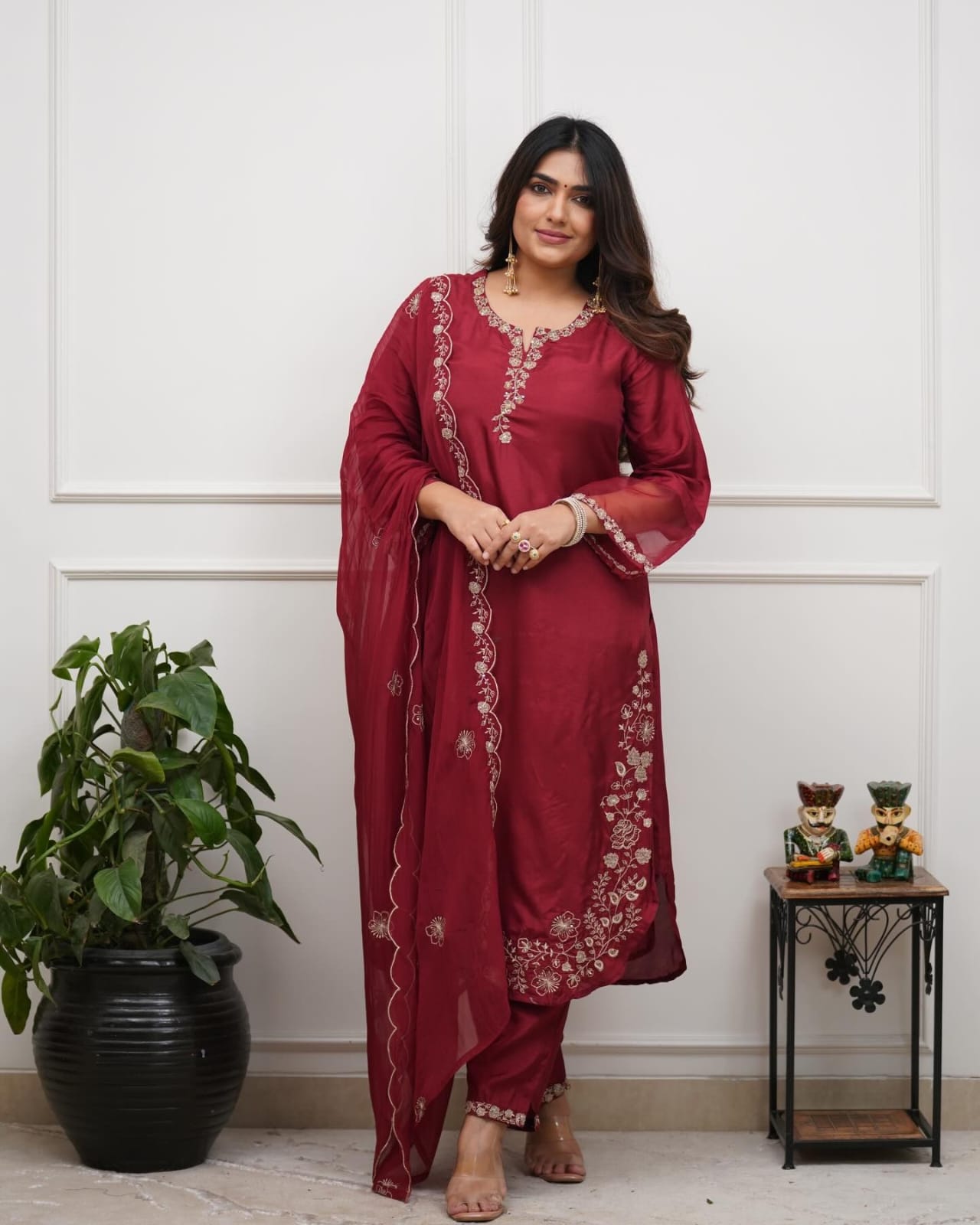
The Off White Floral Embroidered Straight Suit Set illustrates why a straight silhouette benefits from measured length and clean vertical detailing. The Maroon Viscose Chanderi Silk Embroidered Kurta Set for Women can similarly be assessed by checking whether the Chanderi silk surface, embroidery placement and lower garment create two distinct visual zones rather than one uninterrupted column.
When should a tall woman choose an Anarkali cut?
A tall woman should choose an Anarkali cut when the flare begins at a flattering point and the hem has enough length to display the full movement of the silhouette. A floor-skimming or ankle-length Anarkali generally looks more intentional than one ending several inches above the ankle.
High empire seams can make a tall frame appear even longer because the flare begins directly below the bust. A yoke ending near the natural waist usually creates a more balanced division. For a formal event, a measured hem that sits 1 to 2 centimetres above the floor with footwear on prevents tripping while preserving the elongated Anarkali line.
Heavy materials require special attention. Banarasi silk and Vichitra silk hold a fuller flare, while soft viscose Chanderi silk falls closer to the body. The Elegant Beige Vichitra Silk Embroidered Kurta Set for Women demonstrates why fabric structure should influence the chosen volume: a structured textile can support a sweeping shape without needing excessive layers.
Choosing bottoms that balance long legs
The best bottom for a tall woman is the one that complements the kurta's volume and creates a deliberate break near the ankle, calf or hemline. Bottoms should not be selected in isolation because a narrow trouser under a long, heavily embroidered kurta can make the upper half look dense, while a wide palazzo under a short, stiff kurta can overwhelm the outfit.
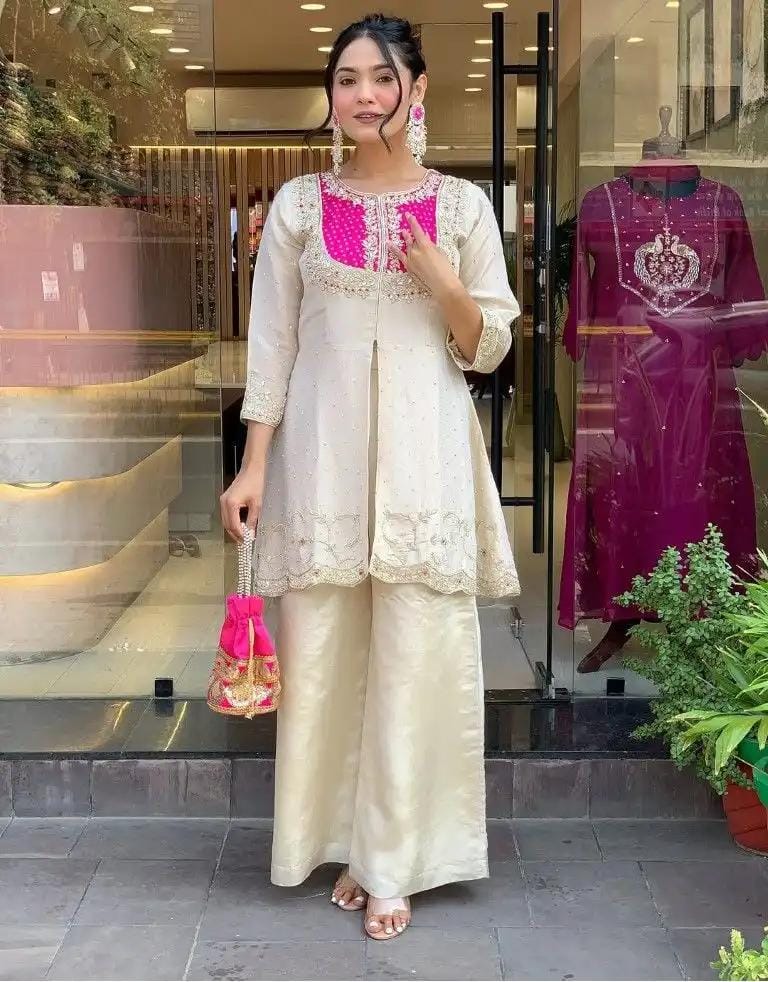
Are palazzos flattering on tall women?
Palazzos are flattering on tall women when the kurta ends above or around the knee and the palazzo has enough width to drape cleanly from the waist. A 12 to 16-inch flat measurement at the hem can create visible movement without making the outfit look costume-like, although the ideal width depends on fabric weight and body proportions.
Palazzos work particularly well with shorter straight kurtas, A-line kurtas and restrained embroidery. A fitted or semi-fitted upper half keeps a wide bottom controlled. If both kurta and palazzo are voluminous, a defined waistband, side slit or contrast dupatta helps restore structure.
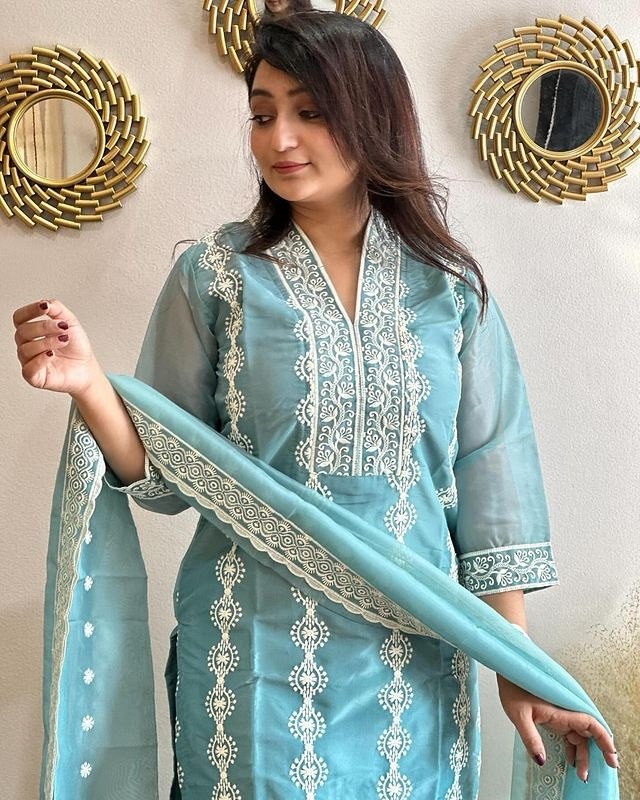
The Light Green Embroidered Ethnic Suit Set for Women can be used as a reference when considering colour and volume together. A light-coloured outfit already creates visual openness, so a wide bottom should be balanced with a clean neckline and a kurta that doesn't extend too far below the knee.
Do cigarette pants suit a tall frame?
Cigarette pants suit a tall frame especially well under knee-length or calf-length straight kurtas. Their narrow line shows the ankle and footwear clearly, making them suitable for office celebrations, festive lunches and semi-formal gatherings. The trouser hem should end close to the ankle bone rather than bunching above it.
A long straight kurta with cigarette pants looks more balanced when the side slits begin high enough to permit movement. A slit that ends below the knee can make walking uncomfortable, particularly when the fabric is embroidered or woven. Flat juttis, block heels and pointed mules each change the final trouser length, so trousers should be checked with the intended footwear.
How should a tall woman wear Patiala salwars?
A tall woman should pair Patiala salwars with a shorter kurta, commonly ending at the upper thigh or around the hip. Patiala pleats need visible space to read as deliberate volume, and a knee-length kurta can hide the distinctive folds. The Punjab Patiala Salwar Suits collection is a useful styling reference because Patiala construction depends on the relationship between a compact kurta and a generous, gathered bottom.
A short kurta doesn't have to look casual. Rich embroidery, a structured neckline, a dupatta with a defined border and a coordinated jutti can make the combination occasion-ready. Tall women with broad shoulders may prefer a slightly longer short kurta and a less exaggerated pleat count for a calmer silhouette.
Matching fabric weight, cut and occasion
Fabric weight should match the amount of volume in the cut. Heavy silk crepe, jacquard and dense zari work hold shape and can support straight or lightly flared kurtas. Soft viscose, Chanderi silk and lighter woven fabrics suit fluid palazzos, relaxed salwars and layered dupattas.
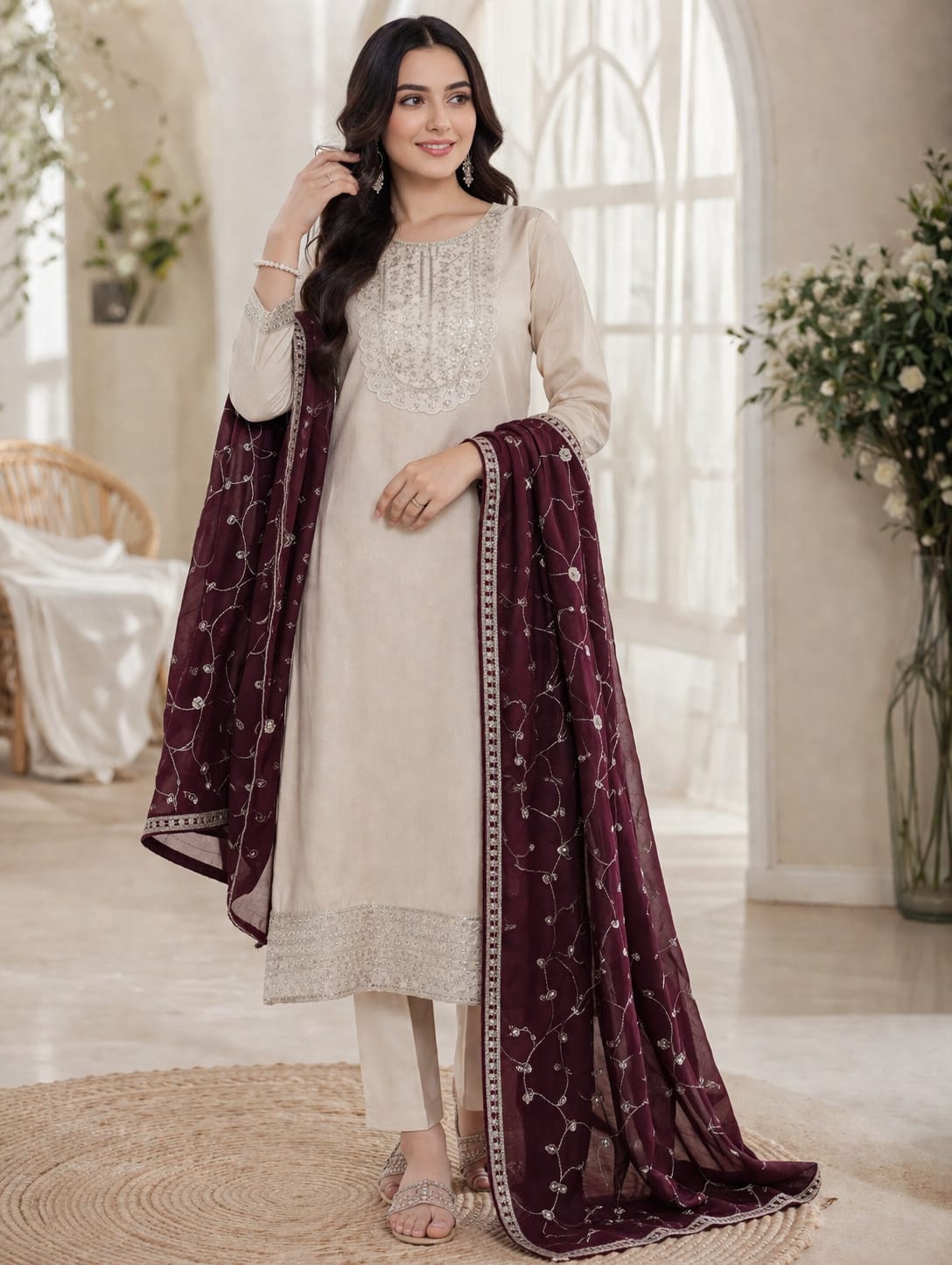
The Black Heavy Silk Crepe Kurta Set with Sequence Embroidery shows why a dark, structured outfit benefits from controlled volume. A narrow bottom or straight trouser keeps the heavy silk crepe from appearing bulky, while a long vertical embroidery panel can add formality without requiring a dramatic flare.
The Purple Jacquard Weave Kurta Set with Green Dupatta offers a different proportion lesson. Jacquard weave already supplies texture, and the contrasting green dupatta introduces a horizontal and diagonal colour break. A simple bottom lets those elements remain visible instead of competing with additional gathers or excessive flare.
For daytime wear, breathable cotton blends and lighter woven fabrics are easier to manage in a long kurta. For weddings and evening celebrations, Vichitra silk, Banarasi silk-inspired textures, jacquard, zari and sequins can carry the visual weight. The occasion should influence not just colour but also the amount of fabric, lining and embellishment a wearer can comfortably handle for several hours.
Using regional silhouettes without losing balance
Regional salwar suit traditions provide useful proportion ideas for tall women because each tradition places volume and pattern differently. Maharashtra Paithani Inspired Salwar Suits often suggest the impact of a strong woven border and rich colour contrast; a border near the kurta hem can visually divide a long silhouette.
Gujarat Bandhej Salwar Suits bring pattern density through bandhej dots and a lively dupatta. A relatively clean kurta with a patterned dupatta prevents the outfit from becoming visually busy from shoulder to ankle. Odisha Sambalpuri Salwar Suits can similarly use distinctive woven or printed pattern placement as a horizontal break, especially around the yoke, border or dupatta edge.
Kalamkari Print Salwar Suits (Copy) work well when the print scale is considered alongside height. A tall woman can generally carry a larger print, but a dense all-over Kalamkari pattern may benefit from a solid bottom or a plain dupatta. Regional inspiration doesn't require every component to be equally ornate; one patterned element can lead while the remaining pieces provide visual rest.
How to adjust a ready-made salwar suit
A ready-made salwar suit can be improved with three measurements: shoulder-to-hem length, sleeve length and bottom rise. Measure the shoulder point to the preferred hem while standing straight, then repeat with the footwear intended for the outfit. Record the natural waist, hip and ankle measurements before comparing them with the garment chart.
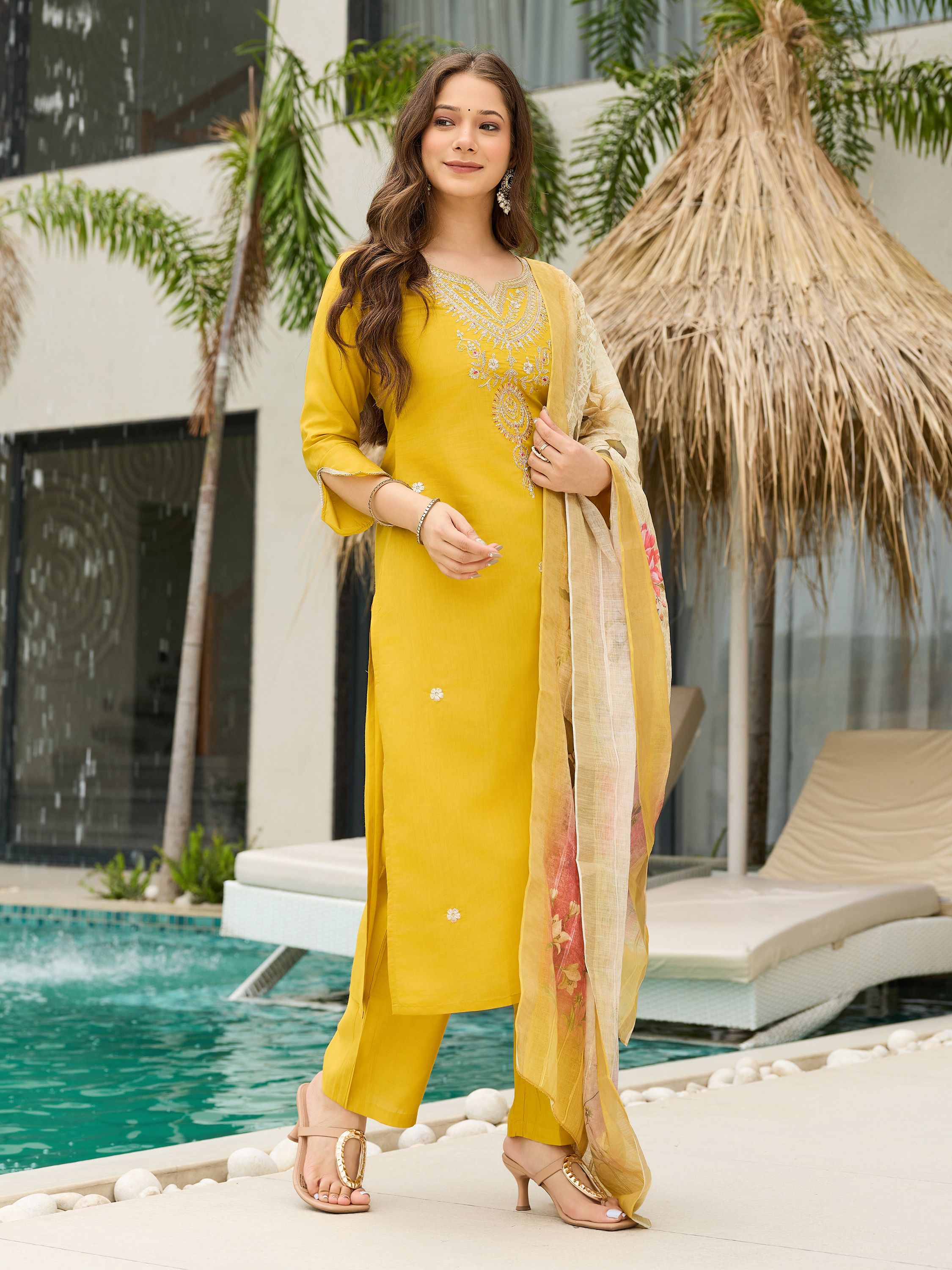
Lengthening a kurta is manageable only when the hem allowance, border placement and side seams permit alteration. A tailor may release a plain hem by 1 to 3 inches, but a fixed embroidered border can't always be moved without disturbing the design. A deep hem facing is therefore worth when buying a long straight kurta.
Bottoms need equal attention. A trouser that's short by 2 inches can't always be corrected if the hem has a finished border. A gathered salwar can sometimes gain length through the waist casing, while a palazzo may require a new hem and adjustment at the waistband. Check inseam, rise and hem circumference rather than relying on the labelled size.
The Embroidered Salwar Suit Set for Women and the Maroon Vichitra Silk Kurta Set with Elegant Embroidery Work are useful examples for comparing embellished surfaces with alteration possibilities. Dense embroidery near a hem or cuff leaves less flexibility, so measurements should be confirmed before ordering rather than assumed from the model's height.
A fitting checklist before buying online
Before buying a salwar suit online, compare the garment's stated kurta length with a kurta already owned and liked. Lay the existing kurta flat, measure from shoulder to hem, and note whether the hem sits above the knee, at the knee, below the knee or near the calf. That comparison is more reliable than a generic height recommendation.
- Check whether the product measurement is finished garment length or body measurement.
- Confirm the bottom's waist, hip, rise, inseam and hem width separately.
- Look for side slits on long straight kurtas and enough ease for sitting.
- Measure sleeve length from the shoulder seam, not from the neckline.
- Account for a 2 to 3 centimetre change in apparent length when wearing heels.
- Check whether embroidery, zari, sequins or a woven border limits alteration.
- Choose a dupatta length that can cross the torso without ending awkwardly at the hip.
A final mirror check should assess the whole outfit from a distance of two to three metres. The kurta hem, bottom break, dupatta edge and footwear should create intentional stopping points. If every element runs vertically in the same colour and direction, add contrast through a border, waist detail, dupatta drape or textured bottom rather than piling on more jewellery.
Good Salwar Suit Cuts Kurta Lengths and Bottoms for Tall Women are measurable choices. A well-proportioned outfit may have a long Anarkali, a short Patiala kurta, a knee-length straight suit or a flowing palazzo set; success comes from matching hem, volume, fabric and body proportions rather than following a single rule.
Questions Tall Women Ask About Salwar Suit Proportions
What is the ideal kurta length for a tall woman?
The ideal kurta length depends on torso length and the bottom, but common useful ranges are 38 to 42 inches for a shorter torso and 42 to 46 inches for a longer torso. Measure from the shoulder to the desired hem instead of choosing by height alone.
Which salwar suit bottom is best for tall women?
Cigarette pants suit long or knee-length kurtas, palazzos suit shorter or knee-length kurtas, and Patiala salwars work best with short kurtas. The bottom should balance the kurta's volume rather than repeat it without structure.
Can tall women wear Anarkali suits?
Tall women can wear Anarkali suits very successfully when the flare begins near the natural waist and the hem reaches the ankle or nearly the floor. A hem that ends at the widest part of the calf can look less intentional.
Are short kurtas flattering on tall women?
Short kurtas are flattering when paired with a visibly full or detailed bottom such as a Patiala salwar or palazzo. A defined neckline, yoke, waist detail or bordered dupatta can make the shorter proportion look polished rather than incomplete.
How can a tall woman alter a ready-made salwar suit?
A tailor can often adjust a plain hem, sleeves, side seams and waistband, but embroidered borders and fixed zari panels limit alteration. Check finished garment measurements, hem allowance, rise and inseam before ordering.
Do prints and borders suit tall women in salwar suits?
Prints and borders suit tall women when they create deliberate horizontal breaks. Large Kalamkari prints, bandhej details, woven borders and contrasting dupattas can balance height, while a dense print from shoulder to ankle may need a solid bottom for visual rest.


