

A pale, waxy line beneath the arm can make a black kurta or dark green salwar suit look worn before the garment has had a chance to be properly cleaned. Safer Ways to Treat Them for Deodorant Marks on Dark Ethnic Wear begin with identifying the residue, checking the fibre and testing any method on a hidden seam. Deodorant marks are often surface deposits of aluminium salts, oils, fragrance and skin cells rather than permanent dye loss, so gentle treatment usually works better than aggressive scrubbing.
Why deodorant marks appear on dark ethnic clothing
Deodorant marks appear when product ingredients combine with sweat, body oils and fabric fibres, leaving a visible film after drying. White antiperspirant commonly contains aluminium-based compounds that cling to cotton, while roll-on formulas may add glycerine, silicone or oils that create a slightly shiny patch. Dark colours reveal these deposits because light residue contrasts sharply with black, navy, maroon and deep green fibres.
Fresh marks are generally easier to remove than old, heat-set residue. A mark that has been repeatedly exposed to ironing, tumble-drying or hot washing can become bonded to the surface of cotton or synthetic fibres. Sweat acidity can also weaken some dyes over time, which means a brownish or reddish patch may be colour change rather than removable deodorant.
Ethnic clothing needs extra caution because one garment may combine several materials. A kurta can contain cotton with metallic zari, an organza dupatta, sequins, embroidered thread and a lining made from polyester or viscose. A cleaning solution that's acceptable for plain cotton may tarnish metallic thread, loosen adhesive-backed embellishment or leave a tide mark on organza.
Safer Ways to Treat Them for Deodorant Marks on Dark Ethnic Wear
The safest first treatment is to remove dry residue with a soft cloth, then dab the affected area with cool water and a small amount of mild liquid detergent. Turn the garment inside out, place a clean white towel beneath the mark and work from the outer edge towards the centre without rubbing embroidered or embellished surfaces.
- Read the care label. Separate instructions for dry-clean-only, hand-wash and machine-wash garments matter more than the colour of the fabric. A silk-blend kurta, zari border or heavily sequinned anarkali should be handled by a professional cleaner.
- Remove loose powder first. Allow a dry mark to remain completely dry, then lift it with a soft clothes brush or microfiber cloth. Do not use a stiff nailbrush, rough towel or abrasive sponge.
- Test for colourfastness. Dab diluted detergent on an inside seam, underarm allowance or hem corner. Press the area with a white cloth after one minute. Any transfer of dark green, black or maroon dye means the garment needs professional cleaning.
- Use minimal moisture. Dampen the mark instead of soaking the entire bodice. Controlled moisture reduces rings, dye migration and drying time.
- Rinse by blotting. Use a second cloth dampened with cool water to lift detergent. Repeatedly pressing and lifting is safer than twisting or scrubbing.
- Air-dry in shade. Hang the garment inside out in moving air, away from direct sunlight. Sunlight can fade dark dyes, especially when fabric is still damp or contains detergent residue.
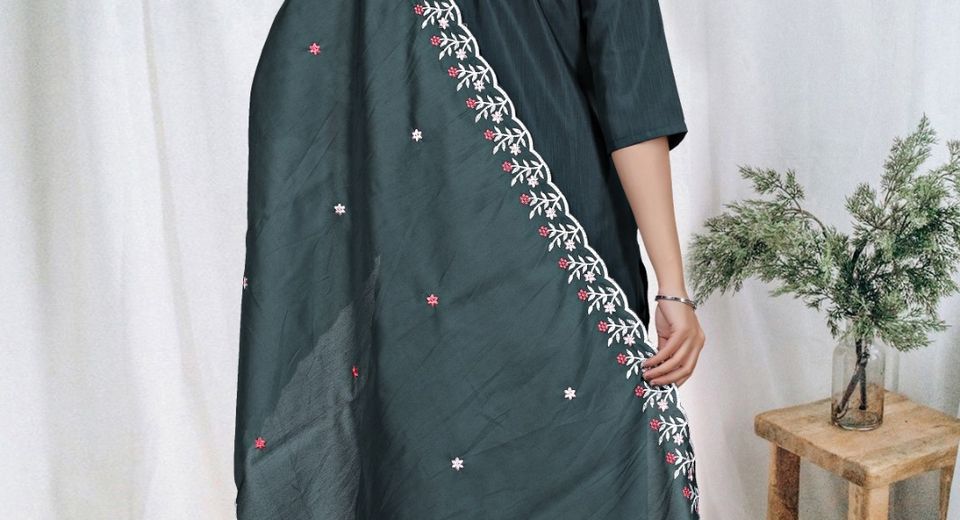
These Safer Ways to Treat Them for Deodorant Marks on Dark Ethnic Wear work particularly well when the mark is recent and the garment is washable cotton. A product such as Graceful Dark Green Cotton Kurta Set for Women Online should still be checked for colour transfer before the underarm area is treated, because cotton dyes can behave differently from one production batch to another.
Which cleaning method suits cotton, Chanderi and blended fabrics?
Plain cotton usually tolerates a careful cool-water treatment, while Chanderi, organza, silk blends and embellished fabrics require lower moisture and less manipulation. Fabric content, surface decoration and dye stability should determine the method rather than the garment's apparent sturdiness.

Plain cotton and cotton-blend kurtas
Plain cotton can be treated with cool water and a drop of pH-neutral or mild liquid laundry detergent. Mix approximately one teaspoon of detergent into 500 millilitres of water, dip a white cloth into the solution and wring it almost dry before dabbing. Leave the diluted solution for no longer than five minutes, then blot with clean water.
don't apply undiluted detergent directly to a dark garment. Concentrated detergent can produce a pale patch, especially on black cotton. Do not use hot water because heat can set oily deodorant residue and encourage colour bleeding.
Chanderi, organza and silk-blend fabrics
Chanderi, organza and silk-blend garments should receive spot treatment only after a hidden-area test, and a dry cleaner is the safer choice for valuable or structured pieces. Water can alter the handle of organza, create visible rings on silk and disturb the finish of Chanderi fabric.
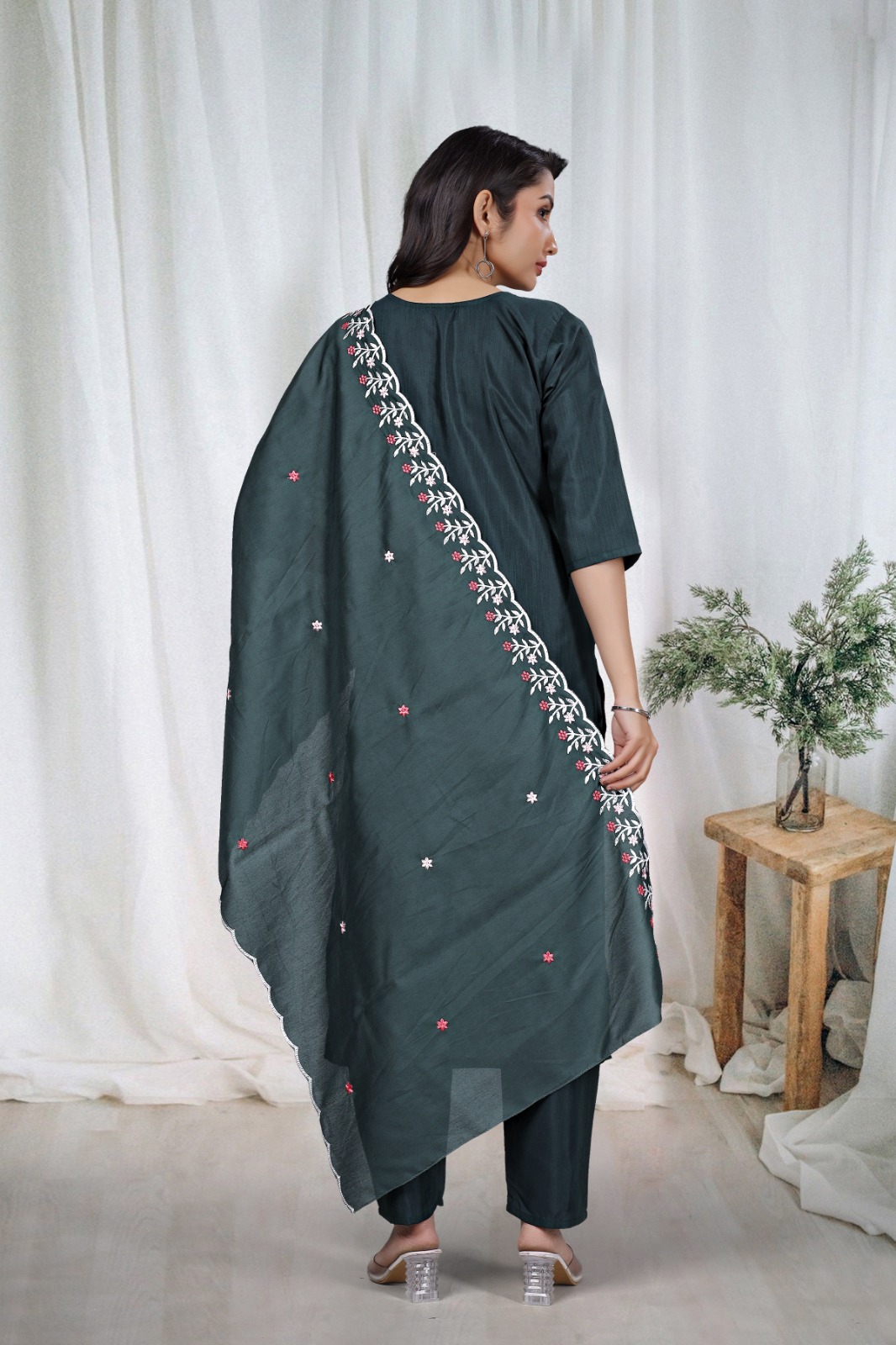
Royal Dark Green Chanderi Cotton Kurta Set with Elegant Organza Dupatta illustrates why component-by-component care matters. The cotton kurta may tolerate cautious dabbing, but the organza dupatta should not be scrubbed or saturated. Keep any solution away from zari, scalloped edges and areas where embroidery is attached.
Embroidered, sequinned and zari-work garments
Embroidered and sequinned garments should be dry-cleaned when deodorant has reached the decorated panel, because rubbing can catch threads and dull sequins. If the mark is only on an undecorated cotton lining, use a barely damp cloth and stop immediately if colour or metallic sheen transfers.
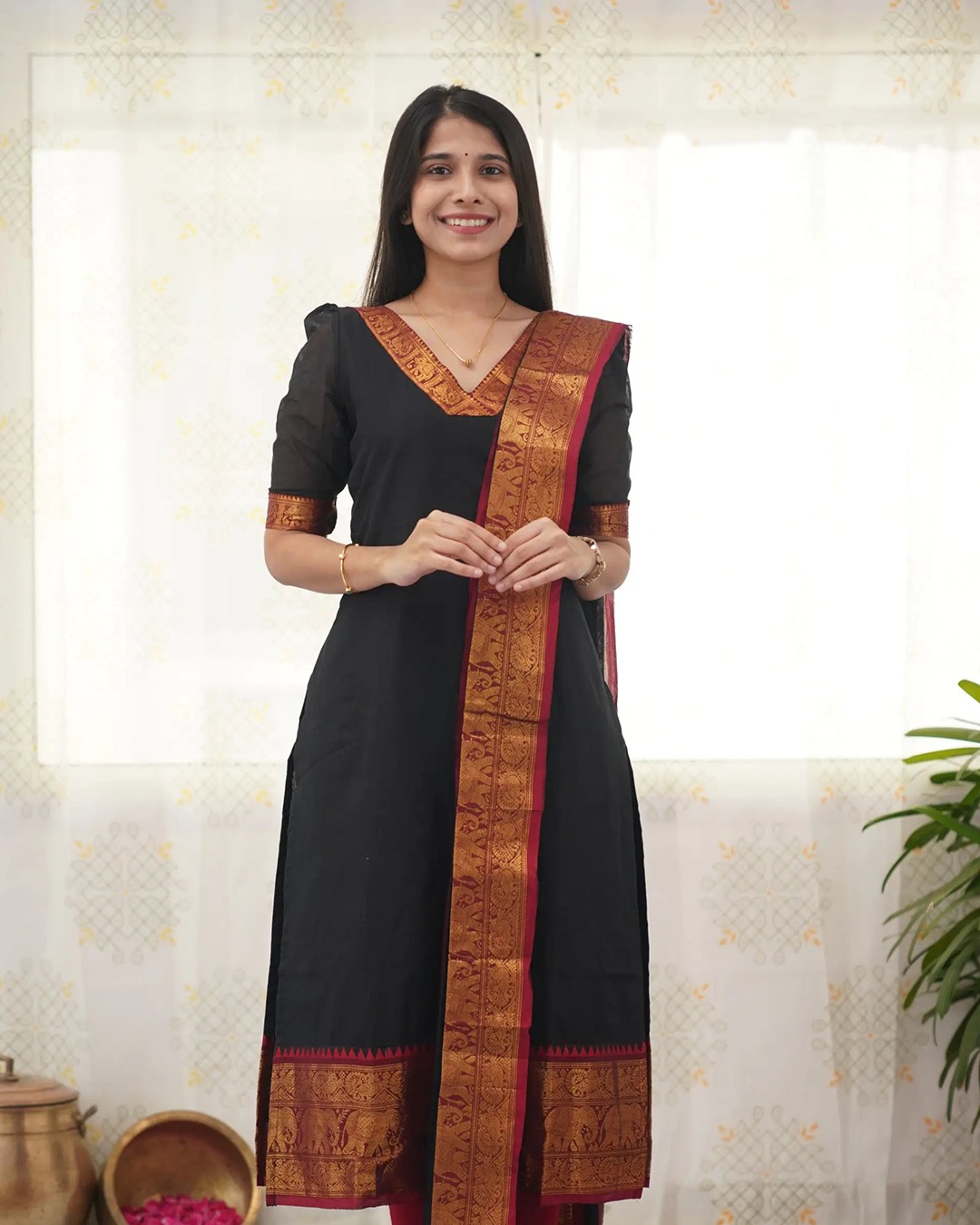
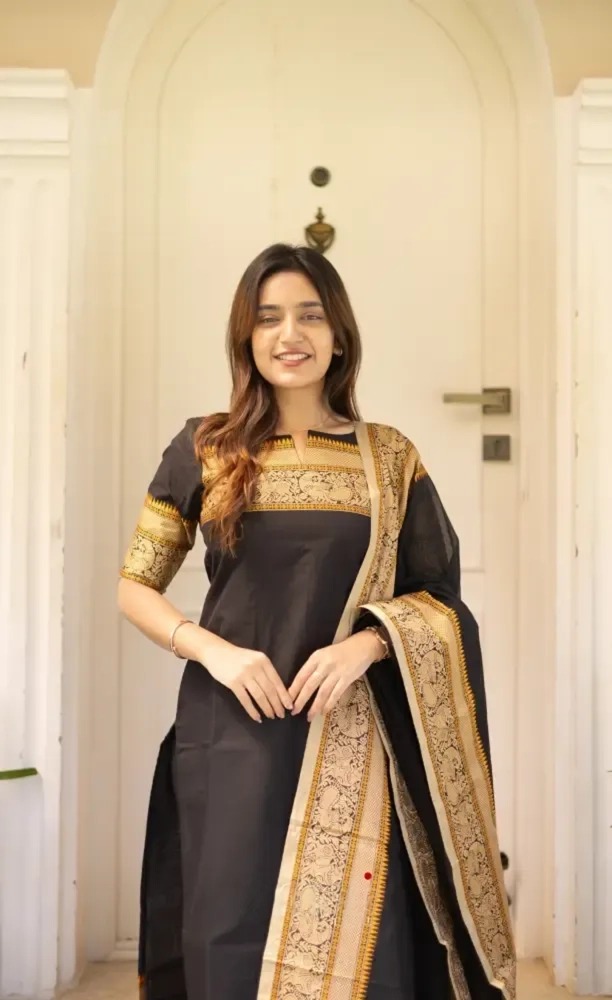
Black Heritage Weave Kurti Dupatta Set and Dark Green Embroidered Kurta Pant Dupatta Set should be stored only after complete drying. Folding a damp underarm area traps odour and may cause metallic details to oxidise or leave a darker moisture line.
Household remedies that can damage dark ethnic wear
Vinegar, lemon juice, baking soda, hydrogen peroxide and chlorine bleach are not universally safe stain removers for dark ethnic garments. Acids can affect some dyes and metallic trims, alkaline powders can roughen fibres, peroxide can lighten colour and chlorine bleach can cause irreversible yellowing or orange discolouration.
Baking soda is often recommended for deodorant stains because it absorbs odour, but a dry powder paste can be abrasive when rubbed into black cotton. Lemon juice is riskier because sunlight may intensify bleaching on the treated area. A remedy that works on a plain white T-shirt can leave a permanently lighter patch on a maroon kurta.
Alcohol-based sprays and makeup removers also deserve caution. Alcohol may dissolve some finishes or spread oily residue, while micellar water can contain surfactants that leave a visible ring. Dishwashing liquid is designed for grease removal and may be too strong for dyed fabric, embroidery or soft viscose.
Never combine cleaning agents. Mixing bleach with vinegar or ammonia can release dangerous fumes, and combining several mild products makes it difficult to identify which ingredient caused fading. One tested, diluted product is safer than a succession of improvised remedies.
How to remove an old deodorant mark without setting it
An old mark should be softened gradually with cool moisture and mild detergent, not attacked with heat or force. First brush away surface powder, then place the garment flat on a white towel and dab the residue from the reverse side.
For washable cotton, apply the diluted detergent solution for up to five minutes and gently press the fabric between two clean cloths. Inspect the area before repeating the process. Two short treatments are safer than one prolonged soak because repeated wetting can cause dye migration and a visible drying ring.
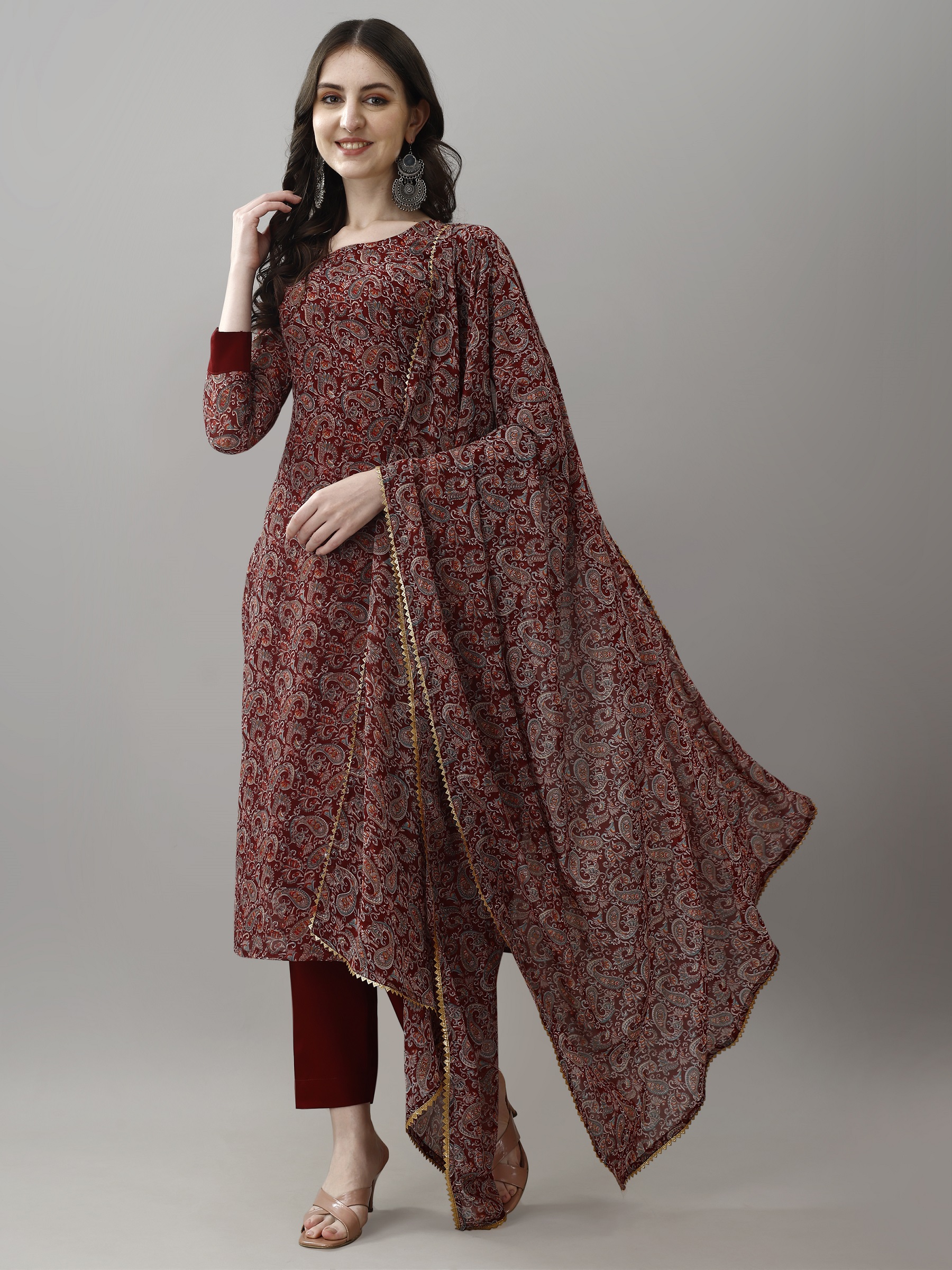
For a garment such as Black Maroon Cotton Printed Kurta Set with Dupatta, check whether the print itself bleeds before treating the underarm panel. Printed cotton may have a stable base but unstable surface pigment. Keep the dupatta separate during testing so detergent solution from the kurta doesn't transfer to a lighter border or printed section.
Stop cleaning when the residue has reduced but the fabric begins to look lighter, rougher or shinier. A change in texture or colour indicates possible fibre or dye damage, not a need for more scrubbing. A professional textile cleaner can sometimes reduce the appearance of a set mark, but no cleaner can reliably restore dye that has already been removed.
Preventing deodorant residue before wearing ethnic outfits
Prevention reduces both cleaning frequency and fabric wear. Apply deodorant to clean, dry skin and wait until the product has fully dried before putting on a kurta, blouse or anarkali. A practical waiting period is two to five minutes for a light spray and longer for a wet roll-on.

- Choose a clear, fast-drying formula when wearing black, maroon or dark green clothing.
- Use less product rather than adding several layers; excess antiperspirant creates more residue without necessarily improving protection.
- Wear a washable cotton camisole under heavily embellished or dry-clean-only garments when the neckline and sleeve shape allow it.
- Air a garment after wearing it instead of folding it immediately, especially around the underarm seams.
- Wipe fresh surface residue with a dry microfiber cloth before it mixes with sweat.
- Rotate frequently worn kurtas so each garment has at least 24 hours to air before its next use.
Dark Green Threadwork Anarkali Suit Set for Women | Varnavi has threadwork that deserves protection from repeated rubbing, while a plain cotton lining can be aired and spot-treated more easily. The useful distinction isn't simply dark versus light clothing; the distinction is washable plain fabric versus decorated or unstable fabric.
Washing, drying and storing dark ethnic wear safely
Wash dark ethnic wear inside out in cool water, using a mild liquid detergent and a short cycle or gentle hand wash when the care label permits. Keep dark green, black and maroon garments separate from white items, and avoid overloading the machine because friction can create pale abrasion marks that resemble deodorant residue.
don't wring a kurta set, twist an embroidered yoke or hang a saturated dupatta from one corner. Press excess water between clean towels, reshape seams and dry the garment flat or on a broad padded hanger according to its structure. Direct sunlight, radiators and high-heat dryers can fade dyes, shrink cotton and set oily residue.
For garments such as Cream Khadi Cotton Straight Kurta Set with Dupatta, keep the cream fabric away from dark dyed pieces during washing because loose dye can transfer even when the garment itself has no deodorant mark. Fold completely dry clothing with plain, uncoloured tissue rather than newspaper, which can transfer ink and oils.
Store embellished ethnic wear with breathable space around it. Avoid sealing a slightly damp garment in plastic, since trapped humidity encourages mildew and stale odour. If a dark garment won't be worn for several months, clean it first, dry it fully and store it away from strong fragrance products that may leave oily deposits.
When professional cleaning is the safer option
Professional cleaning is the safer option for silk, velvet, heavily embellished garments, unstable dyes, zari panels, sequins and marks that remain after one gentle treatment. A cleaner should be told that the mark may contain antiperspirant residue, because heat and solvent choice can affect the result.

Take the garment to a cleaner promptly if the care label says dry clean only, if the underarm area has developed a yellow-brown stain, or if the fabric has become stiff or glossy. Ask for a test on an inconspicuous area before full cleaning, particularly for Kanjeevaram-inspired borders, metallic zari and hand-painted or block-printed textiles.
Safer Ways to Treat Them for Deodorant Marks on Dark Ethnic Wear depend on accepting that some marks are cosmetic residue while others are dye or fibre damage. A careful test can distinguish the two: removable residue softens or transfers to a white cloth, whereas dye loss remains as a changed-colour patch. Knowing when to stop protects the garment better than pursuing perfect whiteness at any cost.
Common Questions About Deodorant Marks on Dark Ethnic Wear
How can I remove white deodorant marks from a black kurta?
Brush away dry residue with a soft cloth, then dab the mark with cool water and diluted mild liquid detergent after testing a hidden seam. Blot rather than scrub, rinse by pressing with a clean damp cloth and dry the kurta inside out in shade.
Can vinegar remove deodorant marks from dark ethnic wear?
Vinegar is not a universally safe choice for dark ethnic wear because acidic solutions may affect dyes, metallic trims and delicate finishes. A tested, diluted mild detergent is usually safer for washable cotton, while embellished or dry-clean-only garments should go to a professional cleaner.
How do I clean deodorant marks from a Chanderi or organza dupatta?
A Chanderi or organza dupatta should receive only cautious spot treatment after a hidden-area test, and professional cleaning is safer for valuable or decorated pieces. Avoid soaking, rubbing, wringing and direct heat because water rings and texture changes can become permanent.
Why do deodorant marks turn yellow on ethnic clothes?
Yellow marks form when antiperspirant compounds react with sweat, body oils and repeated washing, especially when residue is exposed to heat. Yellowing may also indicate dye or fibre change, so stop treating the area if gentle dabbing does not lighten it.
Can I use baking soda on a dark green cotton kurta?
Baking soda can roughen or lighten dyed fabric when made into a paste and rubbed, so it is not the first choice for a dark green kurta. Use a small amount of diluted mild liquid detergent after a colourfastness test, and rinse by blotting.
How can I prevent deodorant marks when wearing a dark salwar suit?
Apply a small amount of deodorant to dry skin and allow it to dry for two to five minutes before dressing. Air the salwar suit after wearing it, wipe fresh surface residue with a soft cloth and avoid storing the garment while damp.


