

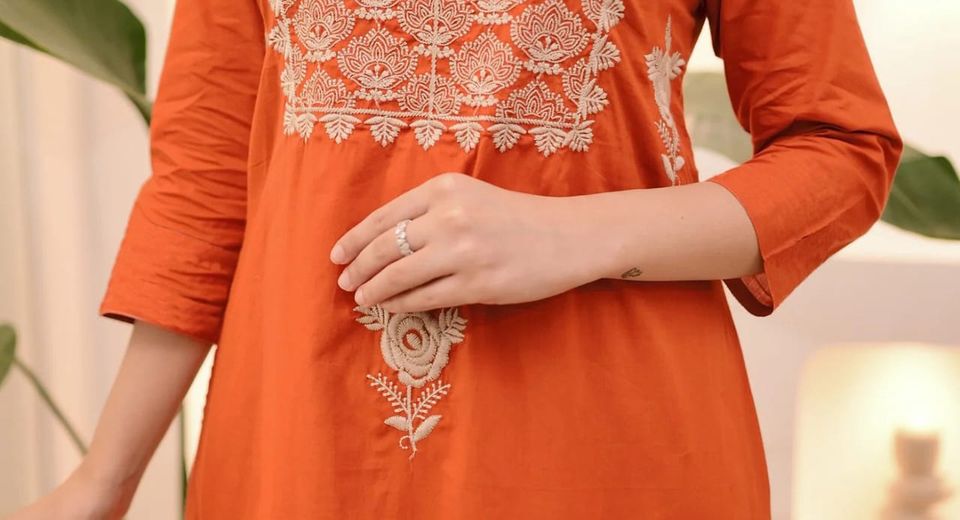
Rewearing a Festive Salwar Suit for Smaller Family Functions can make a beautiful occasion outfit useful beyond one major celebration. A heavily embroidered suit bought for Diwali, a wedding, or a milestone birthday doesn't need to remain at the back of the wardrobe. Changing the dupatta, footwear, jewellery, hairstyle, and level of makeup can make the same salwar suit appear considerably more relaxed and appropriate for a puja, family lunch, housewarming, or intimate anniversary gathering.
The most convincing repeat looks don't try to hide the original outfit. They change the visual balance around it. A silk kurta can become understated with a plain dupatta and flat sandals, while a printed suit can look festive again with jhumkas and a more sculptural drape. The useful question isn't whether relatives will recognise the suit, but whether the complete styling communicates the right amount of celebration.
Why Rewearing a Festive Salwar Suit for Smaller Family Functions Works
A festive salwar suit works for a smaller family function when the styling reduces visual intensity without removing the outfit's strongest detail. Embroidery, zari, contrast borders, rich colour, or a dramatic silhouette can remain present while the supporting accessories become quieter.
Smaller gatherings usually involve closer seating, daytime photographs, indoor lighting, and more movement between rooms. An outfit that felt appropriate under evening lights at a wedding may feel too formal at a morning puja if paired with a glittering potli, high heels, a layered necklace, and a heavily embellished dupatta. Removing two or three high-shine elements often creates the right adjustment.
Repeat wear also improves cost-per-wear. For example, a ₹4,000 suit worn twice costs ₹2,000 per wear; worn four times, the clothing cost becomes ₹1,000 per wear. The calculation makes sense only when the suit is cared for properly and styled differently enough to suit each setting.
Start by Reading the Suit's Visual Weight
The suit's visual weight comes from its fabric, surface decoration, colour contrast, silhouette, and the number of coordinated pieces worn together. Assessing those five elements first tells you which styling changes will have the greatest effect.
Separate the main feature from the supporting features
Choose one element to lead the outfit. The lead element might be a richly embroidered kurta, an unusual Anarkali shape, a bright dupatta, or a distinctive trouser silhouette. Keep the remaining elements simpler for a small family function.
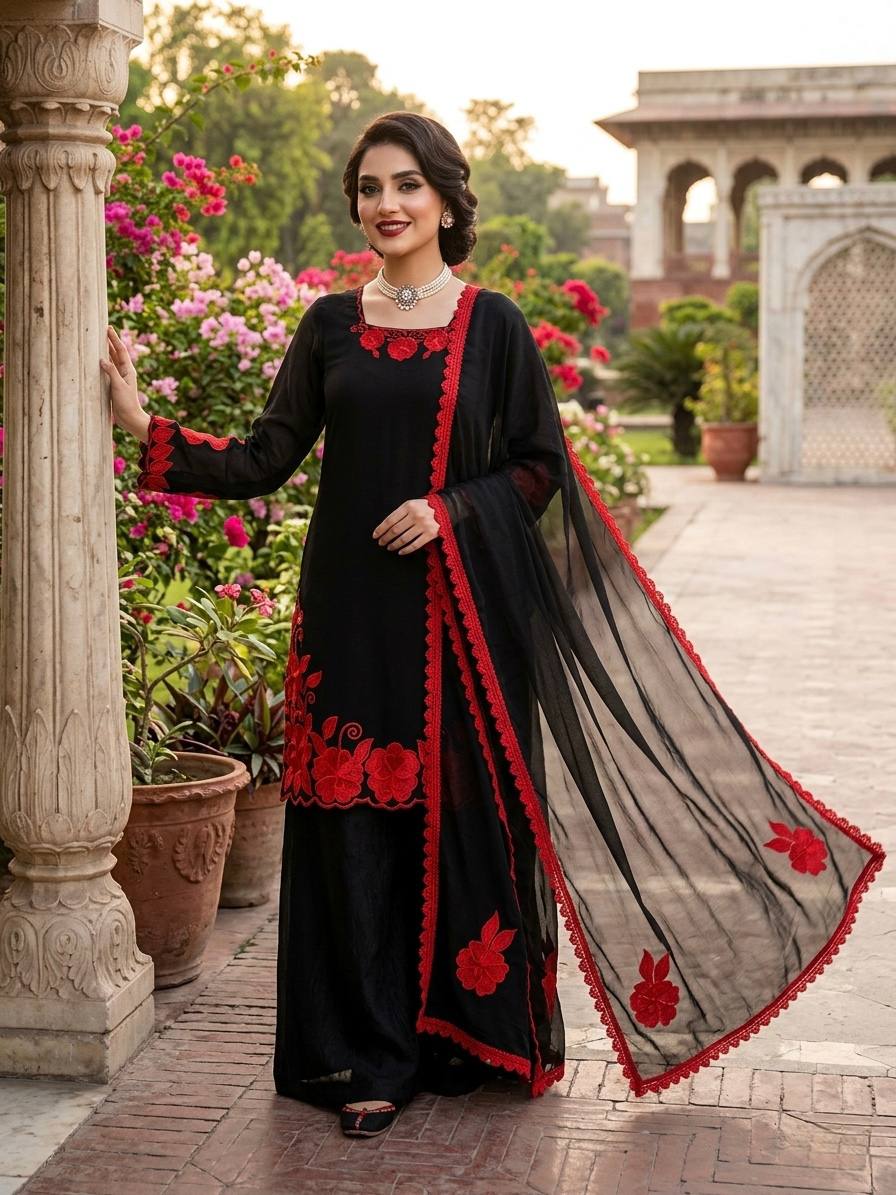
A black-and-red suit already has strong colour contrast, so extra red bangles, a red embellished dupatta, and dramatic eye makeup may make the outfit feel more suited to a large party. Black Red Fendy Silk 3 Piece Readymade Salwar Suit Set can be softened with a plain black or muted wine dupatta, small gold earrings, and comfortable juttis.
A pale or neutral outfit gives you more room to add colour through accessories. Cream Printed Anarkali Gown with Ethnic Motif Design can be styled for a daytime family lunch with tan sandals and a single-colour dupatta, then restyled for an evening prayer gathering with a deeper rust or maroon layer.
Use a simple formality test
Rate each component from one to five for formality, where one is everyday and five is grand occasion wear. A suit with a level-four kurta, level-three dupatta, level-four jewellery, and level-four footwear will look more formal than the same kurta with a level-two dupatta, level-two jewellery, and level-one footwear.
This test is especially helpful for readymade party wear suits and fully stitched salwar suits because the basic silhouette can't always be altered easily. Accessories and layering provide the most practical route to changing the overall impression.
Change the Dupatta Before Buying Another Outfit
Replacing or restyling the dupatta is usually the fastest way to make a festive salwar suit feel different. A lightweight printed, cotton, chiffon, or softly textured dupatta can reduce the intensity of a silk or embroidered kurta, while a contrasting dupatta can give a familiar suit a new colour story.
Match the replacement dupatta to one minor colour in the suit rather than automatically choosing the dominant colour. A rust accent from embroidery, for instance, can support an earthy printed dupatta without making the complete outfit look deliberately matched. A neutral dupatta can also allow statement earrings to become the new focal point.
Mustard Silk Embroidered Kurti Palazzo Dupatta Set already includes a coordinated three-piece structure, but the set doesn't have to be worn in its original arrangement every time. Wear the kurti and palazzo with a quieter cotton dupatta for a daytime event, or drape the original dupatta over one shoulder with minimal jewellery for an evening family celebration.
Try a new drape as well as a new fabric. A single-shoulder drape gives a polished appearance, a narrow front drape keeps both hands free, and a loose side drape creates a relaxed mood. Pinning the dupatta at the shoulder and forearm is practical when serving food or carrying a child, while leaving it unpinned creates softer movement for photographs.
Adjust Colour, Jewellery and Footwear for the Setting
Colour and accessories should respond to the time, location, and activity level of the family function. Daylight and compact indoor spaces generally suit lower contrast and less reflective jewellery, while evening functions can accommodate richer colour and greater shine.
For a daytime puja or family lunch
Choose matte or lightly polished accessories, breathable layers, and footwear that can be removed easily. Small jhumkas, pearl studs, a slim bangle stack, a watch, kolhapuri sandals, or embroidered flats usually provide enough finish without making a lunch outfit resemble wedding guestwear.
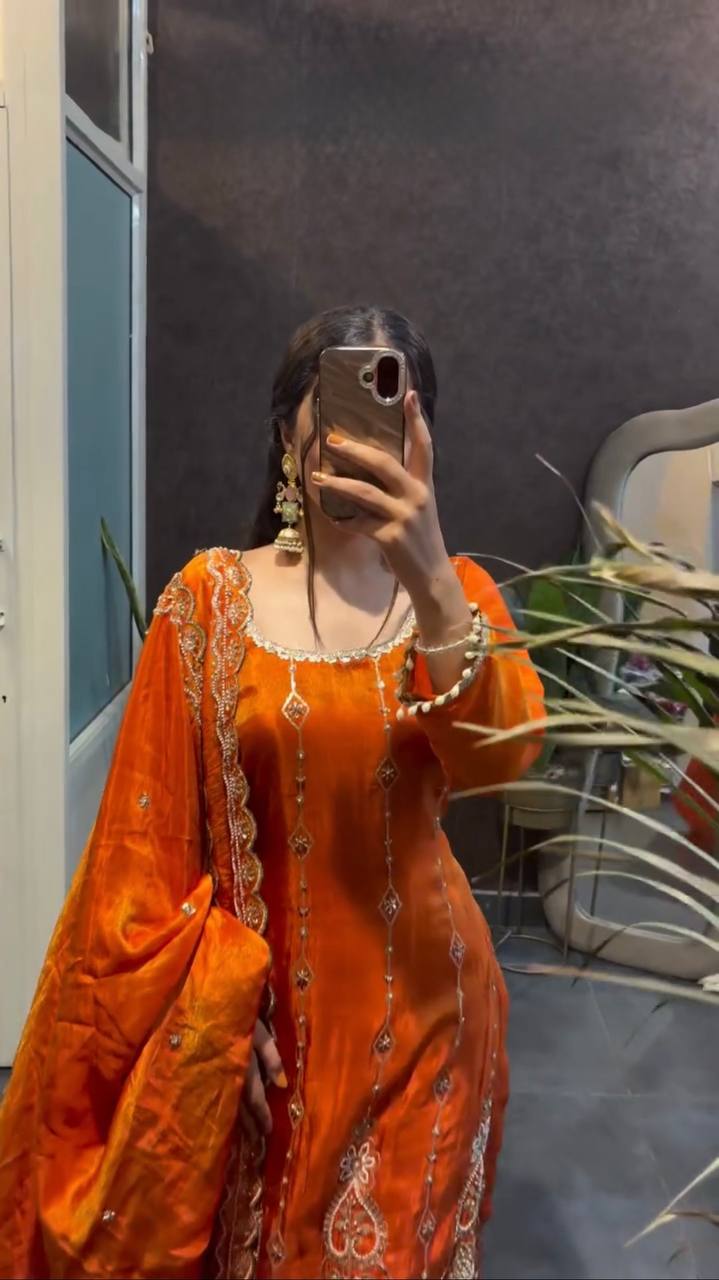
Rust Orange Embroidered Readymade Suit Set for Women can work particularly well for a daytime gathering when paired with antique-gold studs, a neutral sandal, and a low bun. Keep the makeup warm and restrained: tinted lip colour, defined brows, and a small amount of kajal are often more balanced than a heavily glittered eye.
For an evening birthday or anniversary at home
Add one deliberate evening element rather than increasing every accessory. A pair of chandbalis, a sleek metallic clutch, a deeper lip colour, or a low block heel can shift the outfit into evening without overwhelming a small room.
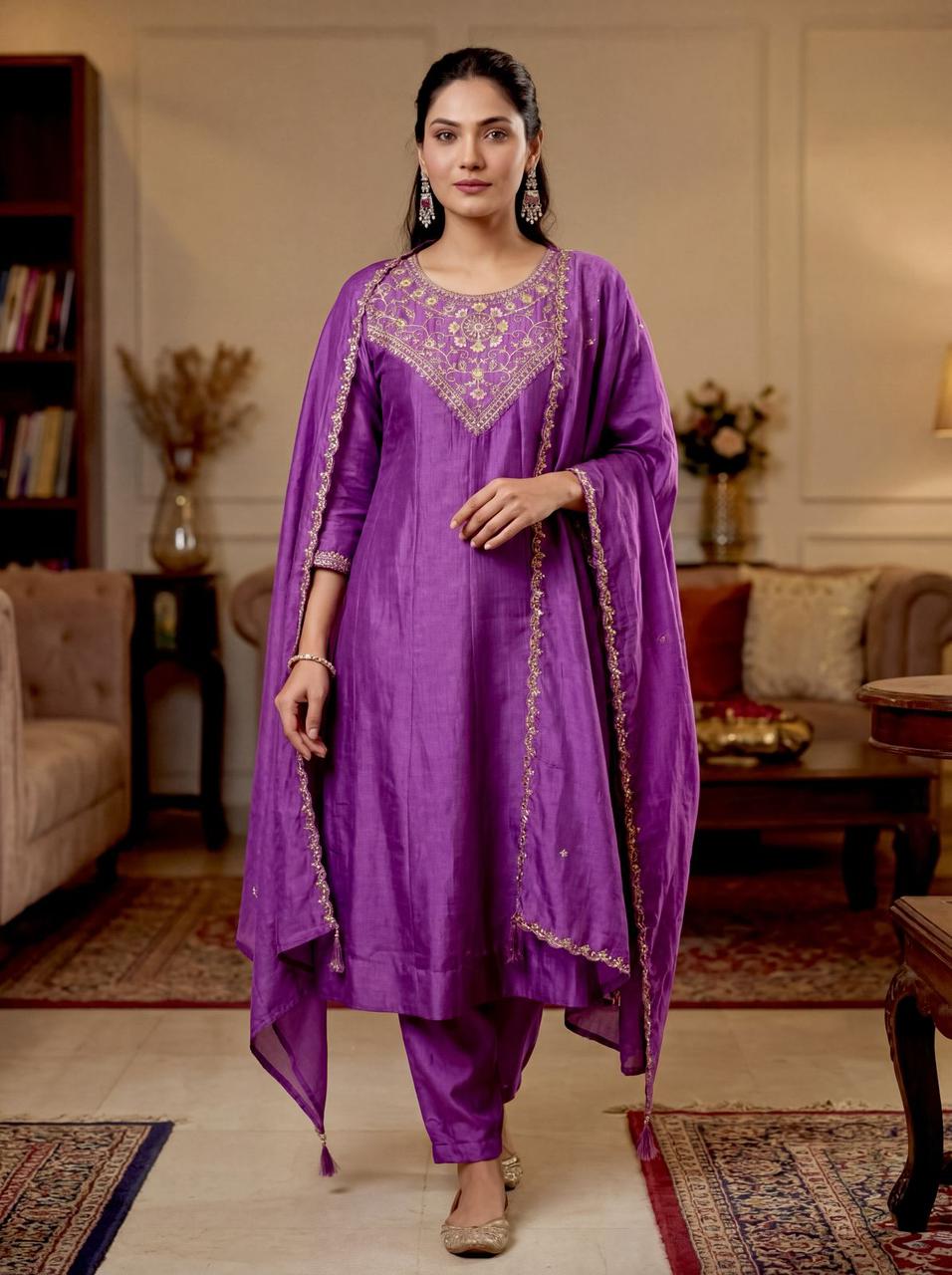
Purple Silk Embroidered Kurti Palazzo Dupatta Set can be updated with silver-toned earrings and a plain complementary dupatta. Avoid combining a high-shine necklace, large earrings, stacked bangles, and an embellished bag when the kurta already has prominent embroidery.
For an outdoor gathering
Prioritise movement, secure draping, and footwear suited to the ground. Flat juttis, low wedges, or cushioned sandals are safer choices for lawns, courtyards, and uneven walkways than narrow stilettos. Use hidden safety pins and a small brooch at the shoulder to stop the dupatta from slipping.
Orange Thread Embroidered Ethnic Suit Set can be made more practical outdoors with a compact crossbody bag worn under the dupatta and hair tied away from the face. A lighter accessory combination also prevents the look from competing with bright daylight and garden surroundings.
Make Small Tailoring Changes That Matter
Minor alterations can change the proportion of a familiar salwar suit more effectively than adding new decoration. A tailor can adjust sleeve length, narrow an overly loose side seam, shorten a kurta slightly, replace a heavy neckline finish, or alter the trouser hem when the garment construction permits it.
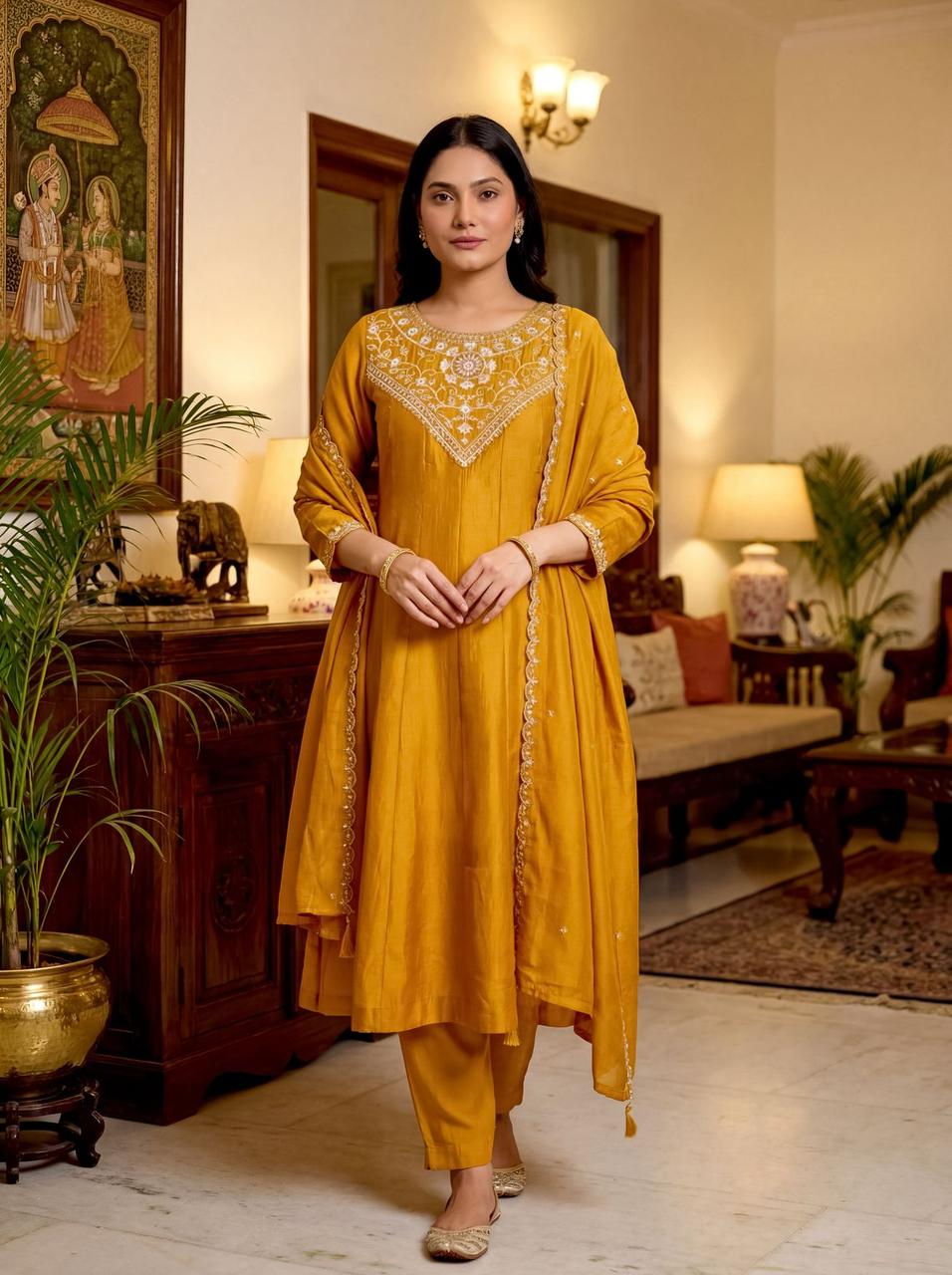
don't cut a valuable embroidered hem before testing the intended length with temporary tucks. Photograph the suit from the front and side while wearing the footwear planned for the function. A one-inch change can affect whether a palazzo, straight pant, or churidar looks balanced with the kurta.
A detachable sleeve cuff, removable brooch, or separate fabric belt can create a second silhouette without permanently changing the garment. A narrow belt can define the waist of a straight kurta, but it should not be used over dense embroidery if it causes puckering or pulls at the side seams.
Readymade salwar suits are convenient because the kurta, bottom, and dupatta are already coordinated, yet sizing still matters. Check shoulder width, bust ease, armhole comfort, trouser rise, and dupatta length before deciding that a suit needs alteration. A garment that restricts the arms or pulls across the hips will remain uncomfortable regardless of styling.
Use Regional Design References Without Making the Look Costume-Like
Regional textile references can guide colour and accessory choices, but one or two clearly chosen details are usually more elegant than mixing several motifs at once. A Phulkari-inspired colour story, a Paithani-like jewel tone, or a Kalamkari-style earthy palette can influence the styling without requiring every accessory to repeat the same language.
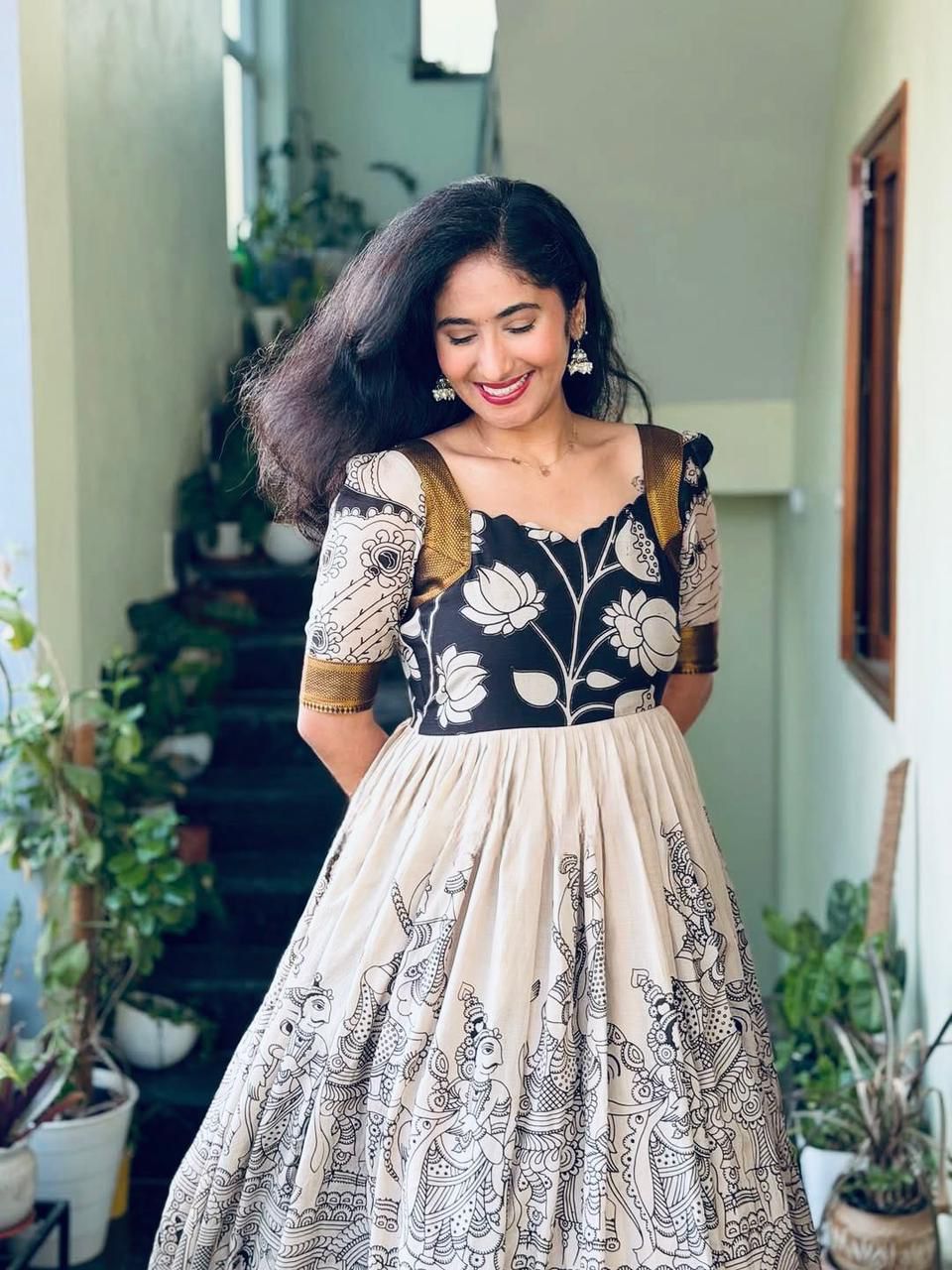
Kalamkari Print Salwar Suits (Copy) can be paired with terracotta earrings, a plain leather or fabric sandal, and a solid dupatta drawn from one print colour. The result feels considered because the accessories respond to the print without competing with its multiple motifs.
Maharashtra Paithani Inspired Salwar Suits suit jewel-toned accessories and restrained gold accents. Choose either a traditional-looking earring or a statement bangle, not a complete set of heavily ornate jewellery, when wearing the outfit to a small home gathering.
Punjab Phulkari Embroidered Salwar Suits can be balanced with simple footwear and a solid dupatta. Bright embroidered surfaces already carry energy, so a clean hairstyle and one strong colour in the accessories help the outfit look intentional rather than crowded.
Karnataka Silk Salwar Suits and Kashmir Embroidered Salwar Suits suggest different styling directions through their names and visual associations. Pair silk-led looks with low-shine accessories when seeking restraint, while embroidered looks benefit from a plain handbag and uncluttered neckline. The aim is to respect the design character while keeping the outfit suitable for the scale of the gathering.
Build Three Repeat-Wear Formulas
Three repeat-wear formulas can cover most smaller family functions: quiet daytime, polished evening, and relaxed festive. Each formula changes at least three visible styling details while retaining the dependable fit of the original suit.
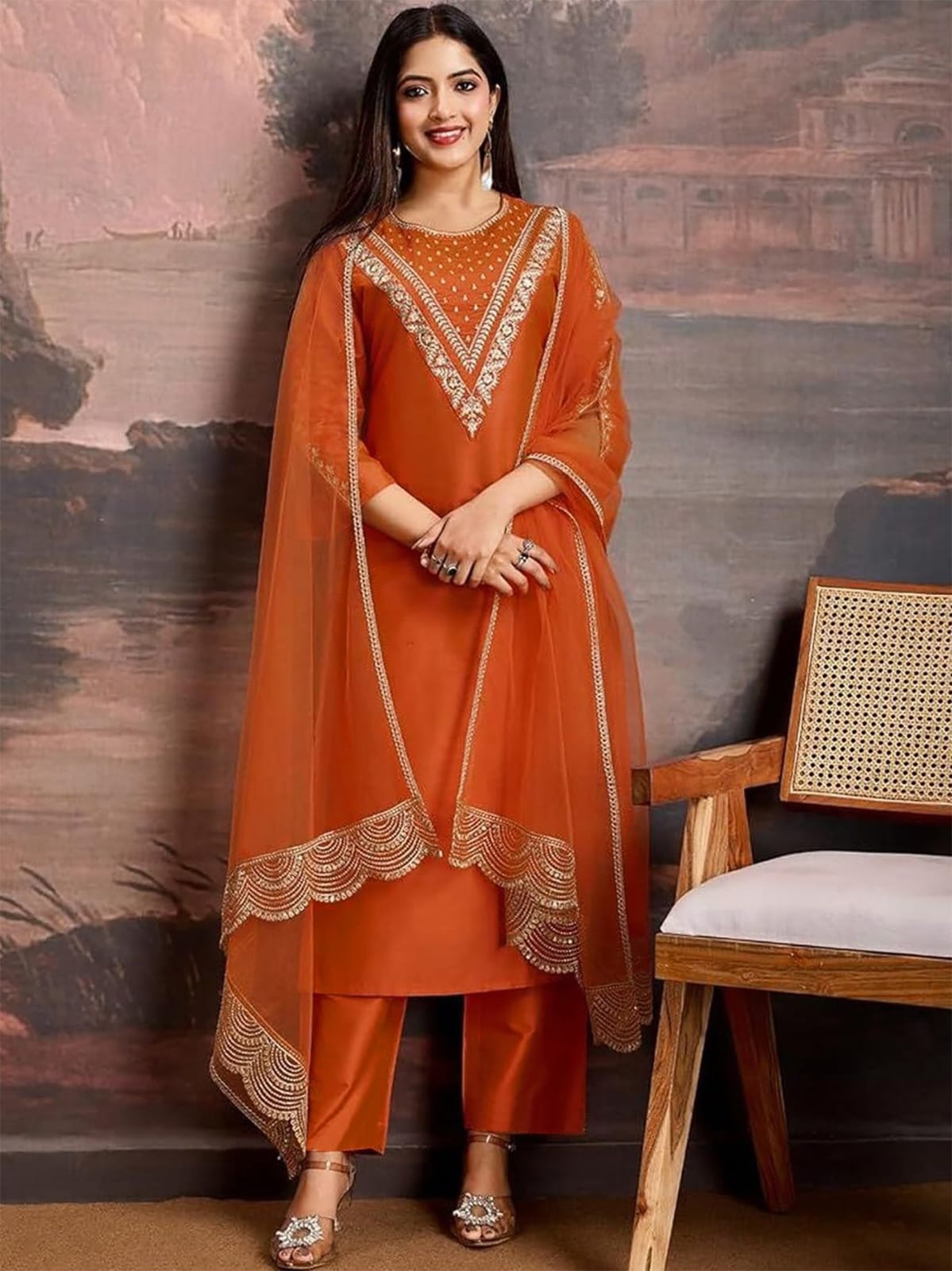
Quiet daytime formula
Wear the festive kurta with a plain or lightly printed dupatta, flat footwear, small earrings, and a low bun or braid. This combination works for a morning puja, naming ceremony, family lunch, or a daytime house visit.
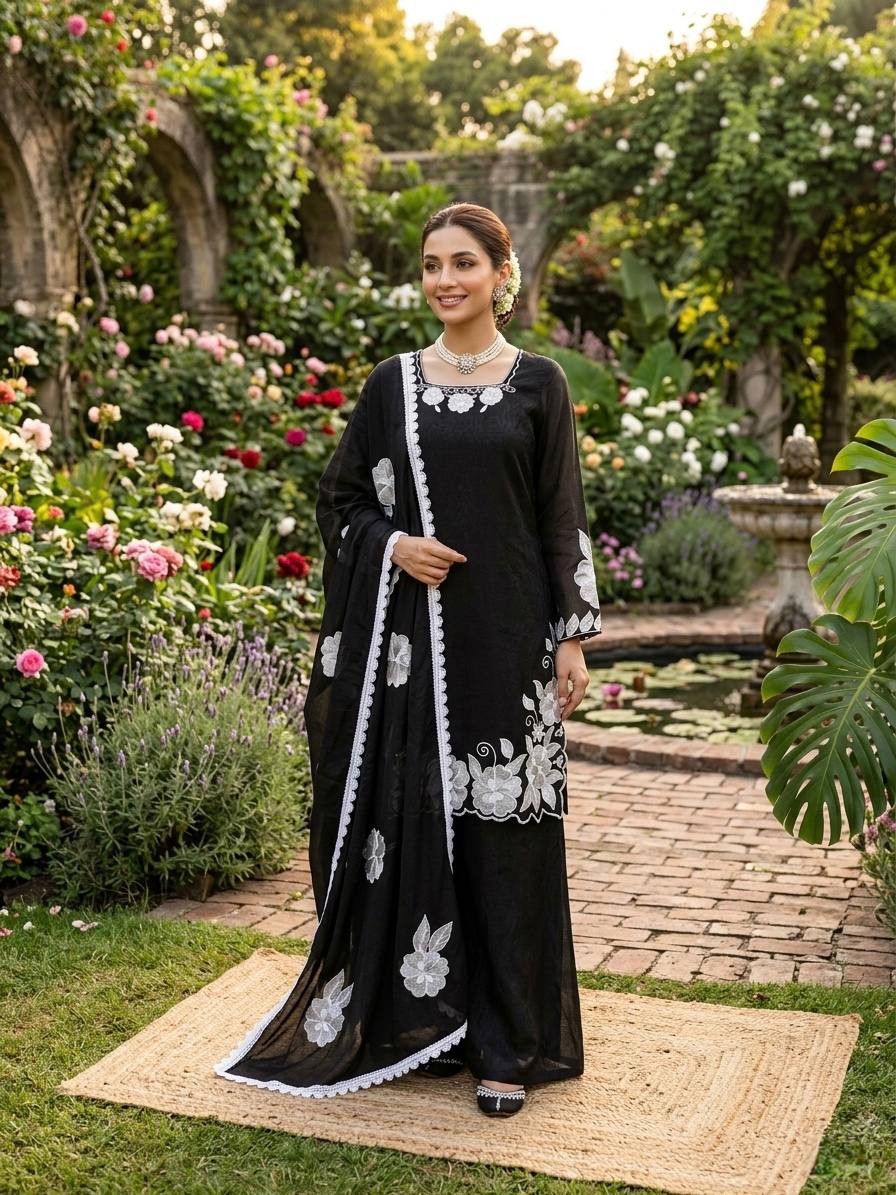
Black White Floral Embroidered Readymade Salwar Suit can take this direction with a muted dupatta and a single metallic accent. Keep the handbag structured but small, and choose makeup with a natural base rather than a high-coverage evening finish.
Polished evening formula
Retain the original dupatta, change the hairstyle, add one statement jewellery piece, and use a compact clutch or low block heel. A side-parted bun, defined eyeliner, or a deeper lip colour can visibly distinguish the evening version from a daytime repeat.
Shop Maroon Pure Vichitra Silk Embroidered Kurta Set Online can be treated as the focal garment for an intimate evening function. Let the maroon colour and silk surface lead, then limit the remaining accessories to one metal family and one practical bag.
Relaxed festive formula
Pair the kurta with a contrasting bottom or a softer dupatta where the original set allows separates to be worn independently. Add colourful earrings, comfortable sandals, and a half-up hairstyle for a festive but informal appearance.
When separates are interchangeable, check that the undertones match. Warm rust, mustard, maroon, and antique gold generally sit comfortably together, while cool purple, silver, blue, and bright white create a different effect. Colour harmony matters more than exact matching when combining pieces from different sets.
Care for a Suit That You Plan to Wear Again
Proper care preserves the fit, colour, embroidery, and surface finish needed for repeat wear. Air the outfit in shade after use, remove pins before folding, and store the dupatta separately if its embellishment can catch on the kurta.
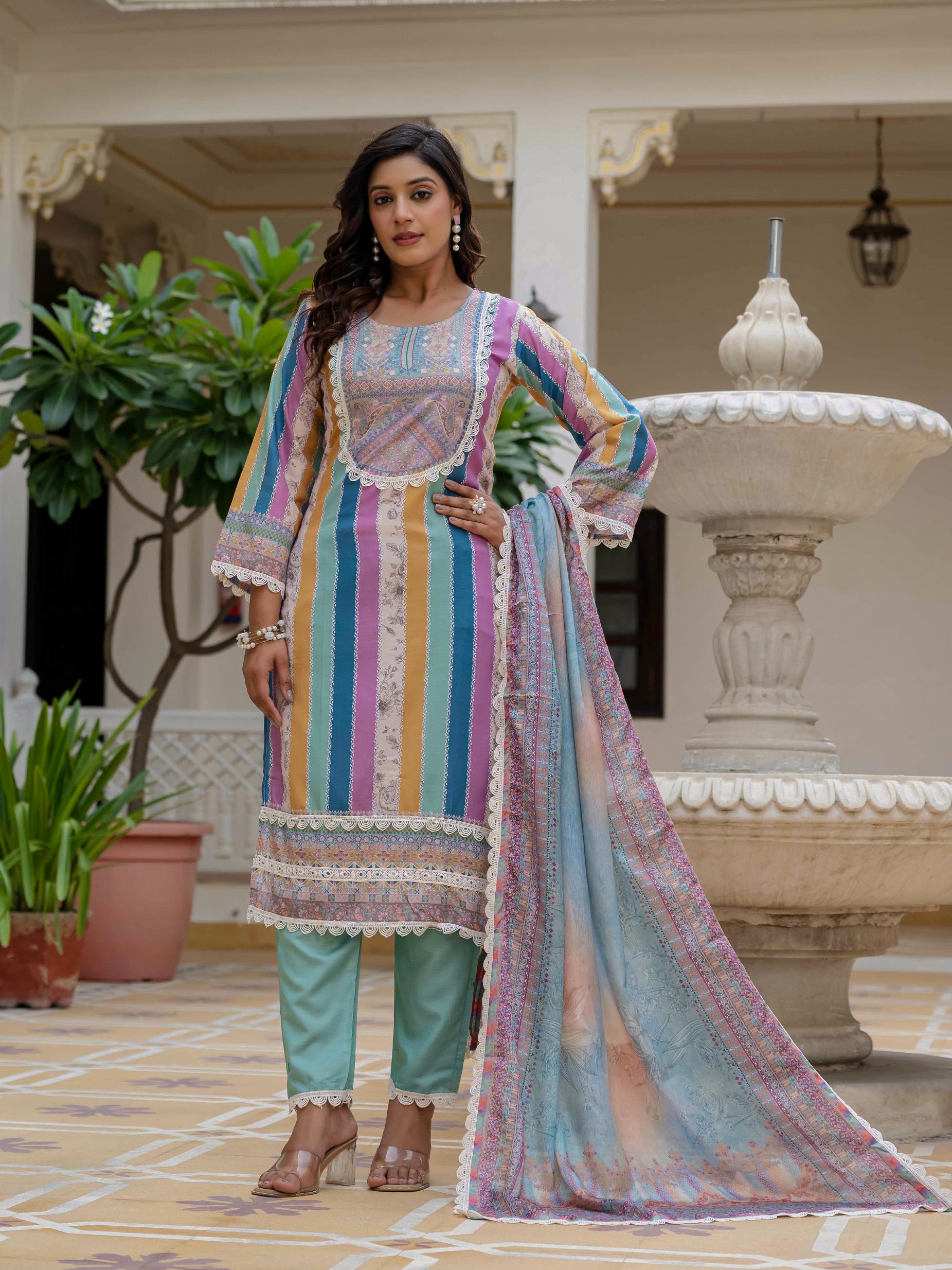
Follow the care label instead of assuming that every festive suit can be machine washed. Silk, zari, dense embroidery, and structured embellishment may need professional dry cleaning, while some cotton salwar suits can tolerate gentle hand washing in cold water. Never wring embroidered panels or leave coloured garments soaking for long periods.
Fold heavy embroidered pieces with soft, acid-free tissue or clean cotton between decorated surfaces. Avoid hanging weighty garments on thin wire hangers because shoulder points can stretch and distort. Store the outfit in a breathable fabric cover rather than sealed plastic, especially during humid weather.
Before a family function, inspect hooks, zips, inner seams, and dupatta borders at least three days in advance. A small repair made early is less stressful than discovering a loose hook while dressing. Press from the reverse side at the temperature recommended for the fabric, and place a pressing cloth over embroidery.
How to Decide Whether the Repeat Styling Is Successful
A repeat styling is successful when the outfit feels appropriate for the gathering, remains comfortable for at least four hours, and has at least three visible differences from its previous appearance. Those differences might be the dupatta, earrings, footwear, hairstyle, makeup, bag, or silhouette.
Take one full-length photograph and one seated photograph before leaving home. The seated image reveals whether the dupatta bunches, the palazzo overwhelms the kurta, or the neckline becomes hidden under jewellery. Practical comfort matters because family functions involve sitting on floors, greeting relatives, eating, and moving between indoor and outdoor spaces.
Rewearing a Festive Salwar Suit for Smaller Family Functions becomes much easier when the wardrobe is treated as a system of interchangeable layers rather than a set of one-time outfits. A familiar suit can look fresh because the surrounding choices tell a different story, and thoughtful repetition is often more stylish than purchasing a new garment for every invitation.
Questions About Rewearing Festive Salwar Suits at Family Functions
Which salwar suit is suitable for a small family function?
A suit with comfortable ease, manageable embroidery, and a breathable or season-appropriate fabric is suitable for a small family function. A silk or embroidered suit can work well when paired with quieter jewellery, flat footwear, and a less ornate dupatta.
How can I wear the same festive salwar suit without looking repetitive?
Change at least three visible details, such as the dupatta, earrings, footwear, hairstyle, handbag, or makeup. Keeping the original kurta while changing the colour balance and styling level can make the complete outfit look substantially different.
Are cotton salwar suits suitable for a family function?
Cotton salwar suits are suitable for daytime family functions, summer gatherings, pujas, and informal lunches when the finish is neat and the accessories are festive enough. Embroidered cotton, printed cotton, or a polished cotton-blend look can be elevated with earrings, a structured bag, and well-finished footwear.
Are fully stitched salwar suits a good choice for repeat wear?
Fully stitched salwar suits are practical for repeat wear because the coordinated kurta, bottom, and dupatta reduce dressing time and usually provide a consistent fit. Check shoulder, bust, armhole, trouser, and dupatta measurements before purchase because ready-made sizing may not suit every body proportion.
What is a good salwar suit for a 50-year-old woman attending a family function?
A good choice is a well-fitted straight kurta, Anarkali, or kurta-palazzo set in a comfortable fabric with balanced embroidery and a wearable neckline. Solid colours, refined prints, supportive footwear, and a lighter jewellery combination often create an elegant look without excessive styling.
Which salwar suit style is trending for women’s party wear?
Kurta-palazzo sets, embroidered straight suits, Anarkali silhouettes, and coordinated readymade sets remain versatile party-wear choices. The most useful style is one that suits the wearer's movement, climate, body proportions, and the formality of the specific family function rather than a short-lived trend.


