

Readymade Blouse Sizing When Your Bust and Waist Fall Into Different Sizes becomes much easier when you treat the bust, shoulders and armhole as the main fit points instead of forcing every measurement into one number. A blouse can often be taken in at the waist, but a blouse that's too small across the bust or upper back is difficult to rescue without changing its shape. The right size depends on construction, fabric, lining, neckline, closure and the amount of alteration that remains possible.
Indian blouse size charts are not fully standardised. One brand's medium may have a 36-inch finished bust, while another brand's medium may measure 38 inches. Some charts show body measurements, while others show finished garment measurements. Measuring your body, checking the garment measurements and understanding the fabric together gives a more reliable result than choosing by S, M or L alone.
Why Bust Fit Usually Comes Before Waist Fit
The bust and armhole should usually determine the starting size because those areas control movement, coverage and the blouse's overall balance. A waist that's slightly loose can often be reduced through the side seams or darts, but extra room can't always be added to a tightly fitted bust.
Measure the fullest part of the bust while wearing the bra you expect to wear with the saree. Keep the tape level across the shoulder blades and avoid pulling it tight. Measure the underbust separately because the underbust helps assess support and whether a padded or structured blouse will sit correctly.
The waist measurement still matters, especially for cropped blouses that end close to the natural waist. However, a 2-inch difference between your waist and the blouse's waist measurement is generally easier to address than a 2-inch shortage across the bust. A blouse that wrinkles horizontally across the bust, cuts into the armhole or pulls at the hook line is usually too small even when the waist looks neat.
- Prioritise the bust: Select the size that accommodates the fullest bust without strain.
- Check the shoulders: Shoulder seams should sit near the shoulder edge, not fall down the arm or pull inward.
- Inspect the armhole: The armhole should allow comfortable movement without digging into the underarm.
- Plan for the waist: A looser waist can often be shaped with a side-seam alteration.
How to Read a Readymade Blouse Size Chart
A blouse size chart should be read by identifying whether each number describes your body or the finished garment. A body chart may recommend a size for a 36-inch bust, while a garment chart may list a 36-inch blouse intended for a smaller body measurement because the design includes little or no ease.
Look for labels such as bust, chest, waist, shoulder, armhole and blouse length. "Bust" can mean the circumference around the garment, while "front bust" can mean the measurement across only one flat side. A flat measurement usually needs to be doubled, although curved seams and overlap at the front closure can make the result less straightforward.
Ease means the additional room between your body and the garment. A close-fitting padded blouse may have approximately 1 to 2 inches of ease at the bust, while a softer cotton blouse can feel comfortable with slightly more room. A heavily embroidered silk blouse with a firm lining may need a greater practical allowance than an unlined stretch design, even when both show the same nominal bust size.
Compare your measurements with the actual product details instead of relying on a generic Indian size conversion. If your bust measures 37 inches and a blouse's finished bust measures 36 inches, the garment is unlikely to feel comfortable unless the fabric stretches or the construction allows adjustment. If the finished bust measures 39 inches and the waist measures 34 inches while your waist is 31 inches, a tailor may be able to refine the waist without disturbing the bust fit.
Readymade Blouse Sizing When Your Bust and Waist Fall Into Different Sizes
Readymade Blouse Sizing When Your Bust and Waist Fall Into Different Sizes works best when you choose for the larger required area and alter only the smaller area. For example, a person with a 38-inch bust and a 32-inch waist may need a size 38 or its nearest equivalent, followed by waist shaping.
Many readymade blouse patterns are cut with side seams that make this adjustment relatively simple. A tailor can remove small amounts from both sides so that the waist narrows evenly. Taking 1 inch from each side seam removes approximately 2 inches from the total circumference, although the exact result depends on seam allowance, lining and the location of darts.
Alteration becomes more complicated when the blouse has princess seams, elaborate zari borders, heavy beadwork, a fixed peplum shape or a back closure positioned close to the side seam. A tailor should preserve the alignment of embroidery and piping. Removing fabric from the wrong seam can distort a motif, shorten the armhole or make the neckline sit off-centre.
A waist difference of up to about 2 inches is often manageable in a straightforward blouse. A difference of 3 to 4 inches may require changes to darts, side panels or the back closure. When the bust, shoulder and armhole are all too small, buying a larger size and reshaping the waist is usually safer than buying a smaller size and attempting to enlarge the upper body.
When should a blouse be altered before wearing?
A blouse should be altered before wearing when the neckline gaps, the hooks strain, the armhole restricts movement or the waist prevents the blouse from sitting at its intended length. Slight waist looseness is less urgent than pressure across the bust because tension can damage hooks, lining and decorative stitching.
Try the blouse with the actual saree and bra whenever possible. A blouse may appear correctly fitted with trousers or a petticoat but ride upward when the saree is wrapped and tucked. Sit down, raise both arms, bring the arms forward and take a deep breath during the fitting. These movements reveal pressure that a static mirror check may miss.
How Fabric Changes Readymade Blouse Fit
Fabric determines how much a blouse can accommodate different bust and waist measurements. Cotton generally offers a stable, breathable structure but limited recovery, while silk and silk-like fabrics may respond differently to movement, lining and body heat.
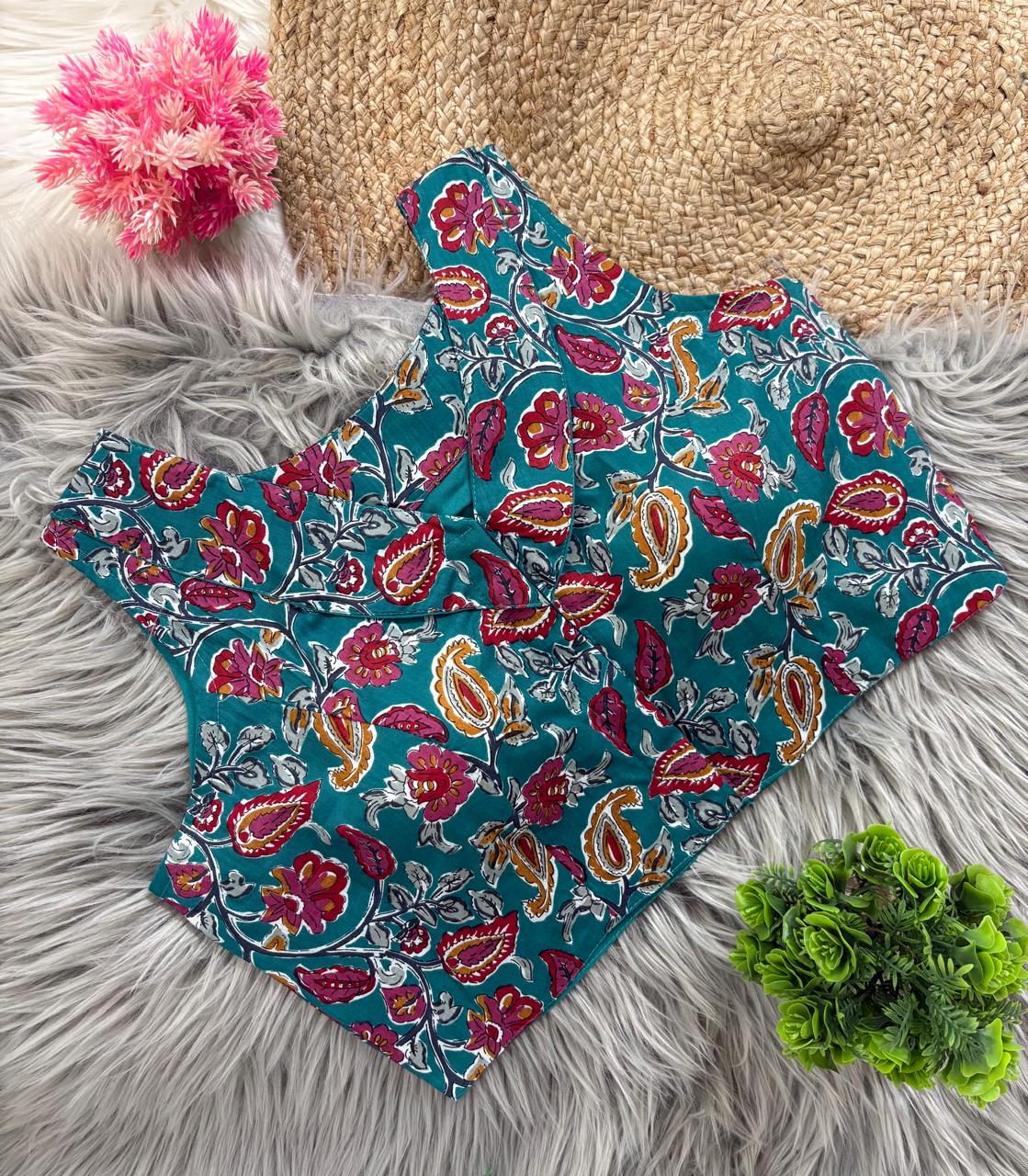
Pure cotton styles such as the Kalamkari Cotton V Neck Collar Blouse for Women and Pure Kalamkari Cotton Padded Blouse for Women should be judged by their actual bust and armhole measurements because cotton doesn't automatically expand enough to correct a close fit. Cotton can soften after wear, but softening should not be treated as a substitute for adequate room.
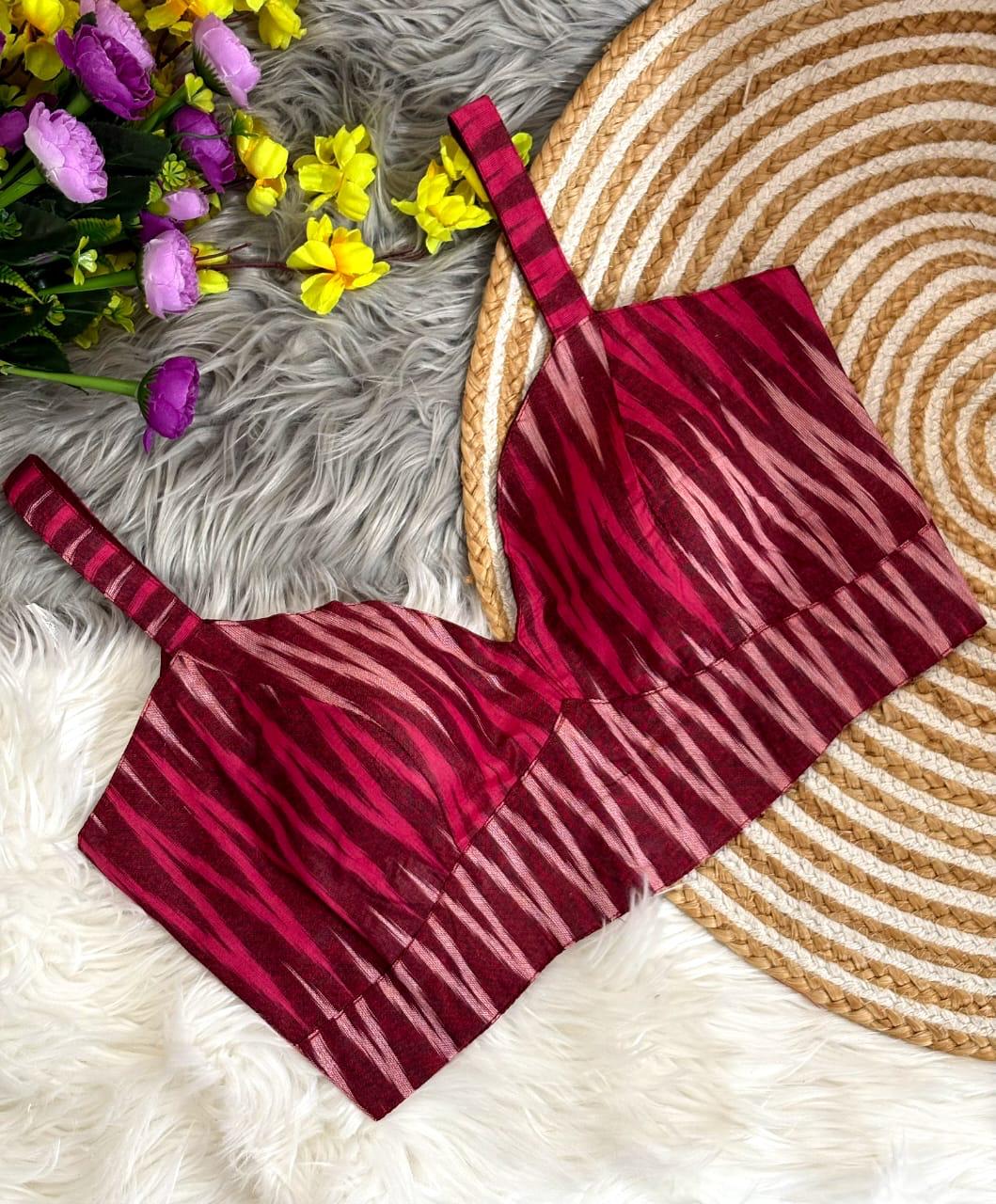
The Ikkat Cotton Padded Blouse for Women Sleeveless and Brown Ikat Cotton Padded Blouse Sleeveless Stylish illustrate why padding and sleeveless construction deserve separate checks. Padding adds structure at the bust, while a sleeveless armhole may feel more restrictive if it's cut high under the arm. Check the cup placement, underarm depth and side seam instead of assuming that sleeveless means flexible.
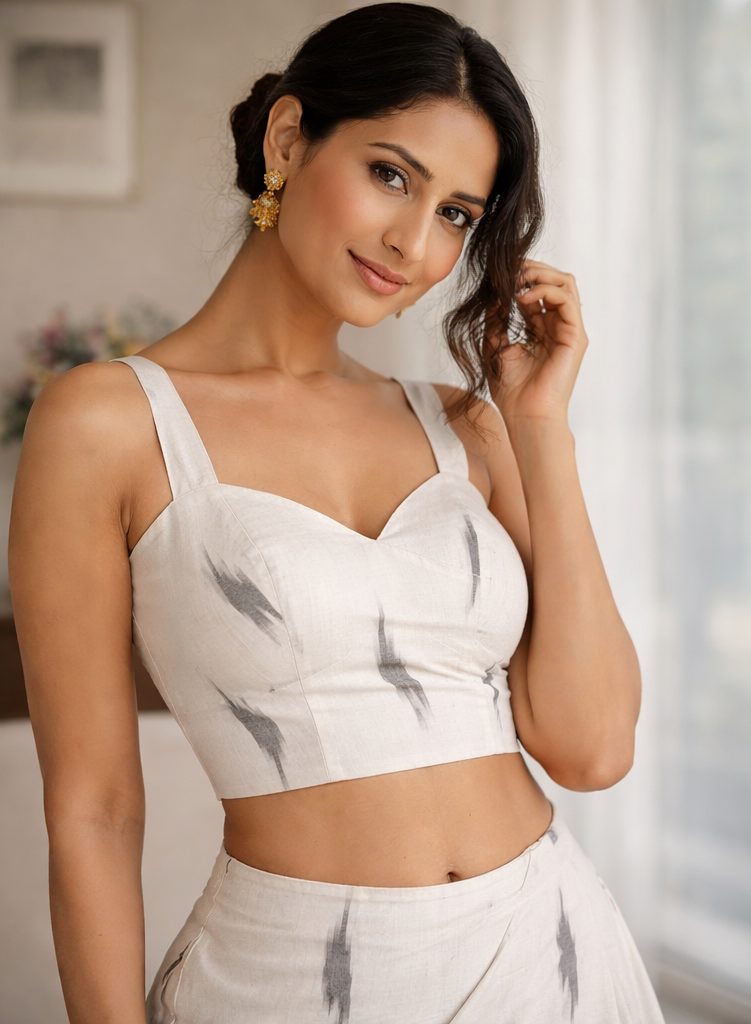
The Cream Ikat Cotton Padded Blouse Sleeveless Trendy may work well when the bust measurement is correct and the shoulder line sits securely. A padded blouse should not compress the bust to create a sharper silhouette. The centre of the padding should align with the fullest part of the bust, and the lower edge should lie flat rather than folding upward.
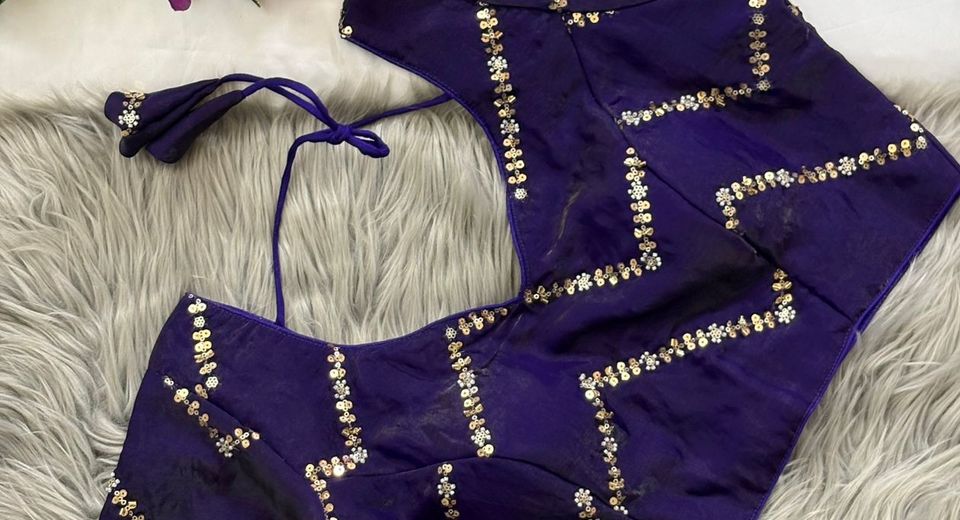
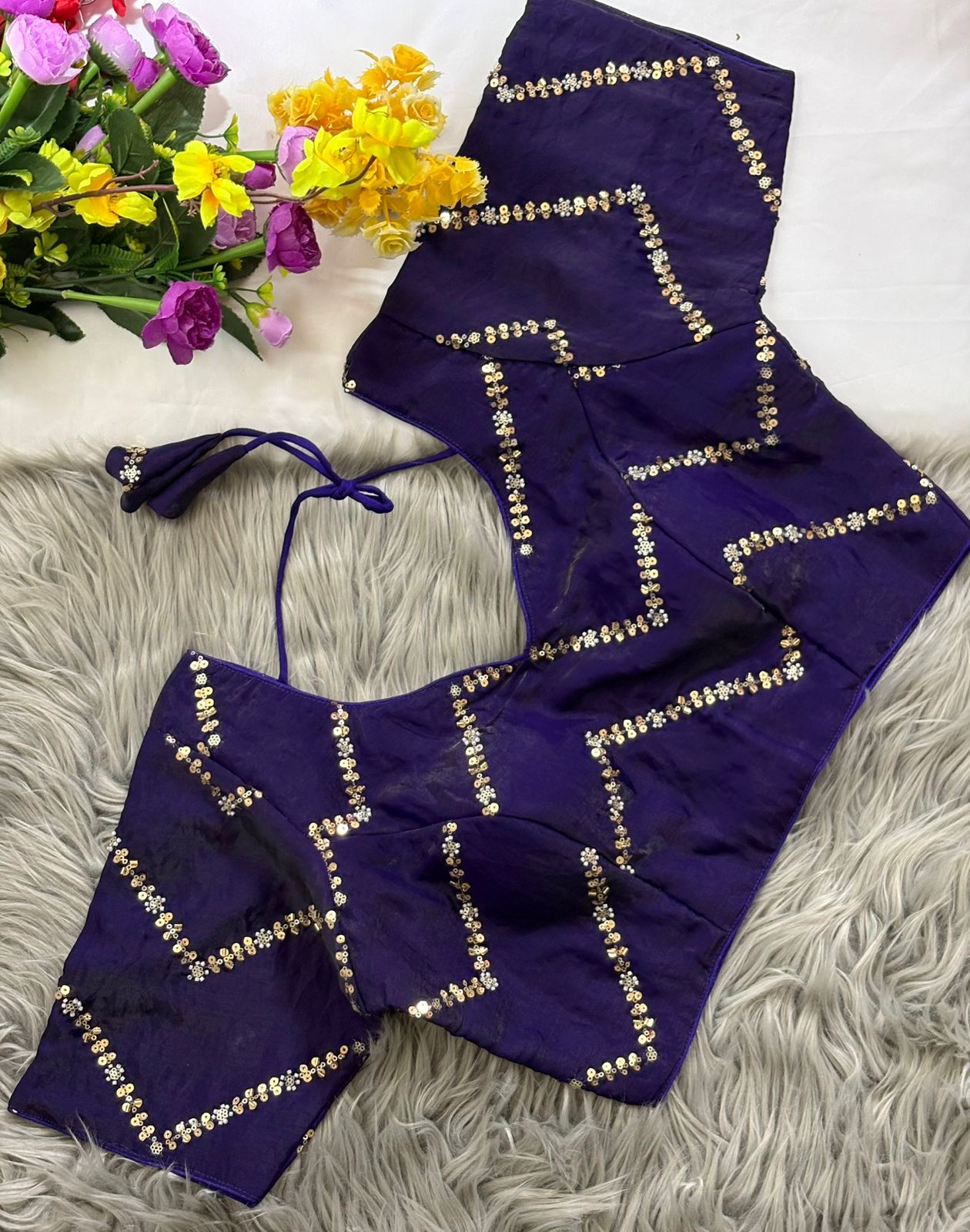
Silk and silk-like fabrics often show fit problems quickly because wrinkles catch light across a taut bust. The Fendy Silk Zigzag Moti Work Readymade Blouse has decorative surface work that makes seam alteration more technical. A tailor should avoid cutting through the zigzag motif or removing too much near the embellished edge because even a small change can interrupt the visual rhythm.
What Necklines, Closures and Padding Reveal About Size
Neckline and closure design can make the same nominal size feel very different. A deep V neck may provide more visual openness but still feel tight at the bust, while a high collar may need extra room through the upper chest and neck.
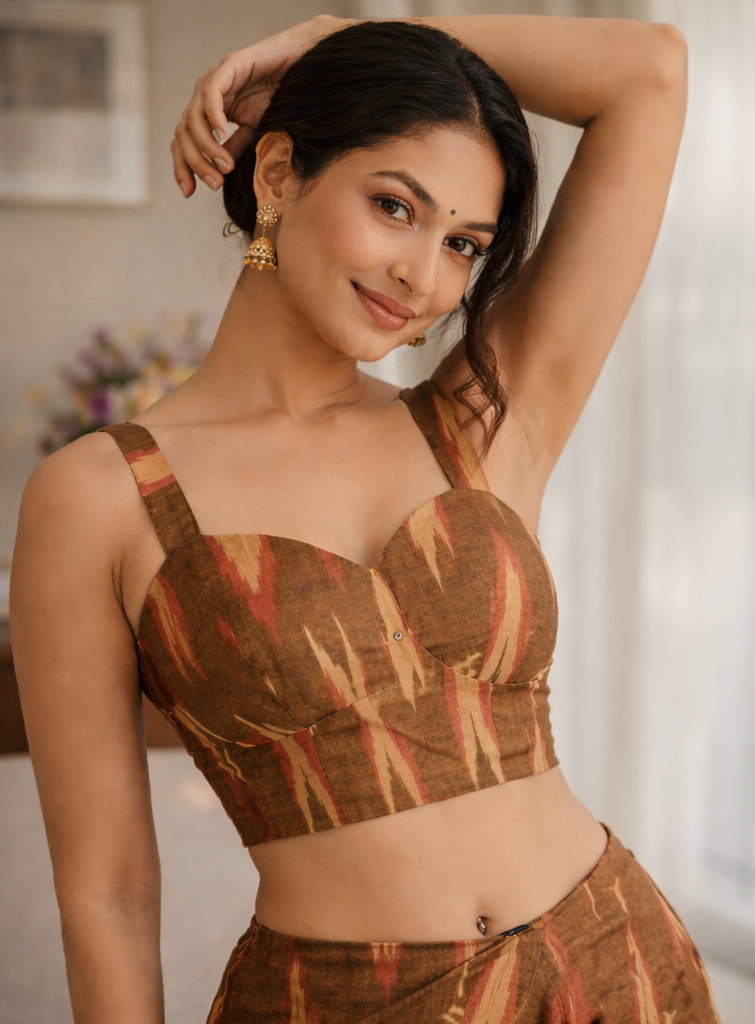
Hooks and eyes provide an useful fit test. Hooks that sit under constant tension indicate insufficient room even if they close. A zipper should lie flat without rippling, and a back tie should not be used to compensate for a blouse that's too small across the bust. A front or back opening with multiple hook positions brings more flexibility than a fixed side zipper.
Padded blouses require attention to cup shape as well as circumference. A bust measurement can be technically correct while the cups sit too high, too low or too far apart. Try the blouse with your usual bra and check whether the padding follows the natural bust rather than creating a separate, rigid contour.
A collar or high neckline can also change the shoulder impression. The Kalamkari Cotton V Neck Collar Blouse for Women combines a defined neckline with cotton structure, so the collar should lie flat without pulling away from the neck. Gaping at the neckline can indicate excess fabric at the bust, an incorrect shoulder slope or a need for a modest dart adjustment.
Choosing a Blouse for a Designer Saree
A designer saree usually benefits from a blouse whose fit is intentional because uneven sizing becomes more visible when the saree has a formal drape, contrast border or detailed pallu. Fit should be checked before matching colour, embellishment or neckline.
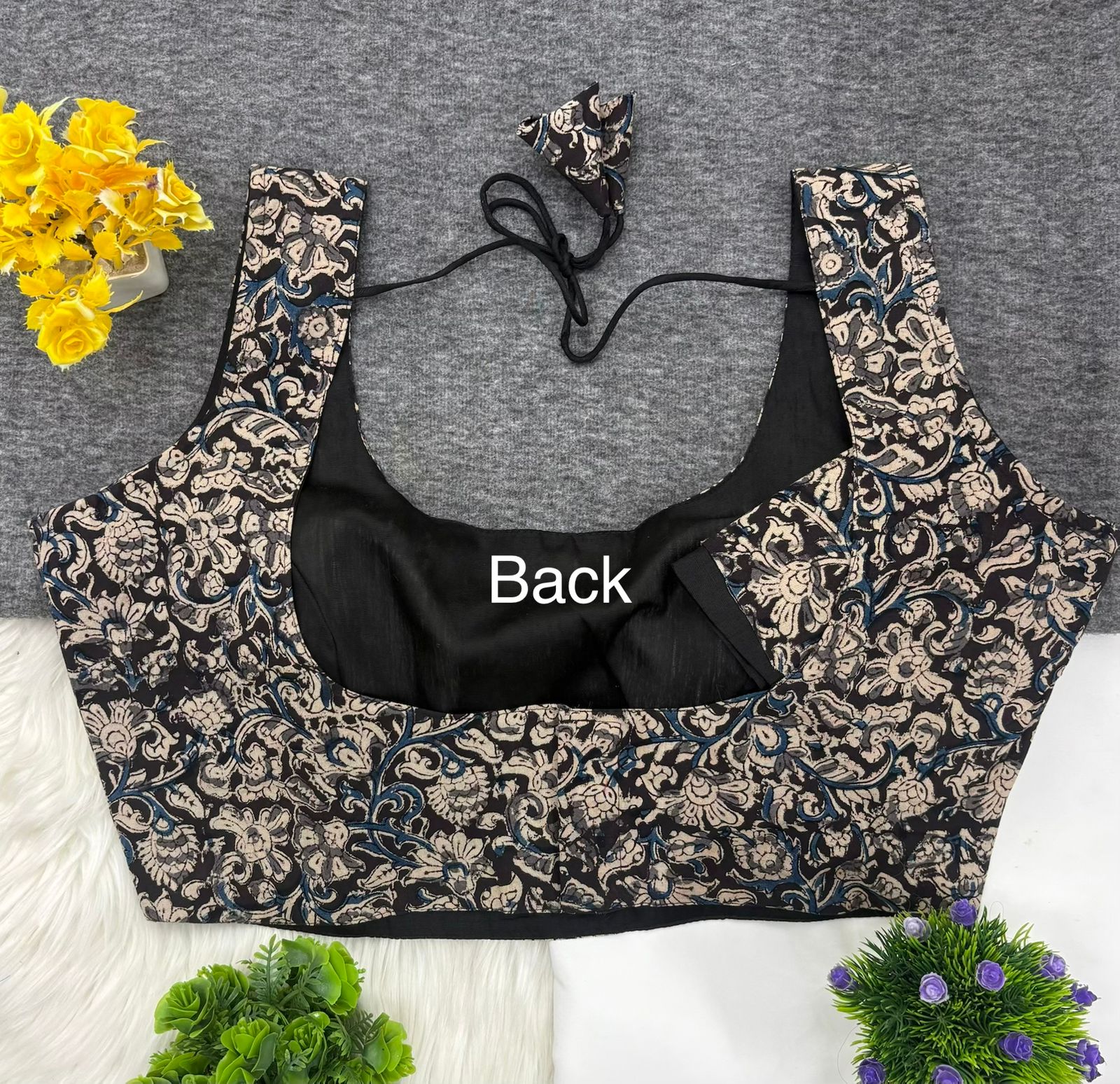
A structured blouse can balance a printed or heavily bordered saree. The Classic Festive Wear Blouse for Stylish Saree Look may suit a formal drape when the shoulder and bust sit smoothly, while a less rigid cotton blouse may be more forgiving for regular wear. A blouse should support the saree's visual weight without creating horizontal pulling lines.
The Blue Linen Cotton Floral Print Saree with Plain Dark Border gives an useful styling example because a plain border creates a clean visual line near the blouse and waist. If the waist is loose, excess fabric can interrupt that line when the pallu is pinned. A small, symmetrical alteration usually looks more polished than tightening only one side.
For a silk saree or an embellished designer saree, examine the blouse under daylight and indoor lighting. Silk highlights ridges and wrinkles, while zari and moti work draw attention to uneven closures. A properly fitted readymade designer blouse can look more refined than a more elaborate blouse that pulls at the bust.
A Practical Fitting and Alteration Checklist
A ten-minute fitting can identify most serious blouse-size problems before a blouse is altered or worn. Use the following sequence rather than judging the garment only from the front.
- Measure first: Record full bust, underbust, waist, shoulder and desired blouse length in inches or centimetres.
- Check the size chart: Confirm whether the chart lists body measurements or finished garment measurements.
- Try the intended foundation: Wear the bra and saree understructure planned for the final outfit.
- Close the garment normally: Do not pull hooks, zipper or tie strings beyond their natural position.
- Test movement: Raise both arms, reach forward, sit down and take a deep breath.
- Inspect the lines: Look for bust strain, diagonal wrinkles, armhole cutting, shoulder slipping and waist gaping.
- Mark alteration points: Use pins or tailor's chalk while standing naturally, not while holding the stomach in.
- Ask about seam allowance: A tailor should check whether the side seams contain enough fabric before promising enlargement.
don't wash or steam a blouse aggressively before confirming the fit. Cotton can shrink if exposed to unsuitable heat, and a firm lining can respond differently from the outer fabric. Keep embellishment away from rough surfaces during the trial because zari, sequins and moti work can snag.
For an important wedding or festive event, complete the final fitting at least 5 to 7 days before wearing the blouse. That timeframe leaves room for a second adjustment and a full saree drape rehearsal. A same-day alteration can solve a small waist issue, but it's risky for changes involving the bust, shoulders, neckline or armhole.
When a Different Blouse Is the Better Choice
A different blouse is the better choice when the bust is smaller than the body measurement, the shoulders can't sit correctly, the armhole restricts movement or the neckline remains distorted after a trial adjustment. Not every readymade blouse contains enough seam allowance for safe alteration.
Choose a larger size when the larger measurement is at the bust or upper back and the waist is only modestly smaller. Choose a different design when the size difference is substantial and the blouse has fixed padding, heavy embellishment or no usable side seam. A blouse with adjustable hooks, ties or a forgiving back panel may provide a better result than a rigid silhouette.
Comfort is also a practical measure of quality. A blouse worn for six hours at a wedding should allow normal breathing, sitting, eating and arm movement. Correct readymade blouse sizing protects the garment from strained hooks and helps the saree maintain a clean drape throughout the day.
Common Questions About Blouse Fit Between Bust and Waist Sizes
What size should I choose if my bust and waist measurements fall into different blouse sizes?
Choose the size that fits the bust, shoulders and armhole, then have the waist taken in if the side seams and lining allow it. A blouse that is too small across the bust is usually harder and more expensive to alter than a blouse with a slightly loose waist.
How much can a readymade blouse waist be altered?
A simple blouse can often be reduced by about 1 to 2 inches in total through the side seams, depending on available seam allowance. Larger changes may affect darts, embroidery, the armhole or the closure and should be assessed by a tailor before purchase.
Should I measure my body or an existing blouse for a readymade blouse?
Measure your body first and use an existing well-fitting blouse as a second reference. Body measurements show what you need, while the existing blouse helps you compare finished bust, waist, shoulder, armhole and length measurements.
Are cotton readymade blouses easier to fit than silk blouses?
Cotton readymade blouses can be easier to alter when they have simple side seams, but cotton itself has limited stretch and should not be bought too tight. Silk blouses may show pulling more visibly, and zari or moti work can make seam alterations more delicate.
How can I tell if a padded blouse is the wrong size?
A padded blouse is likely the wrong size if the cups sit too high or low, the padding compresses the bust, the hooks strain or the underarm cuts into the skin. Try the blouse with the bra intended for the saree and assess cup position, arm movement and closure tension together.
When should I avoid buying a readymade blouse for a large bust-waist difference?
Avoid the blouse when the bust and shoulders are already too small, the garment has no usable seam allowance or heavy work crosses the alteration area. A larger size with waist shaping is safer when the upper body fits, but a custom-made blouse may be more practical for a very large difference.


