


Protecting Zari and Embroidery During Long-Term Storage starts with controlling three risks: moisture, pressure and chemical contact. Zari can tarnish when exposed to humidity, perfumes or acidic paper, while embroidery can flatten, snag or transfer colour when garments are folded carelessly. A clean, dry cupboard, acid-free tissue and a six-month inspection schedule protect most sarees more effectively than a sealed plastic bag.
Long-term storage means keeping a saree or embroidered garment unworn for several months, often between wedding seasons, festivals or family occasions. Wedding sarees, heirloom Banarasi silk and heavily embellished blouses need more preparation than everyday cotton because metallic threads and raised surface work react differently to friction, dampness and weight.
Protecting Zari and Embroidery During Long-Term Storage: Why Materials Need Care
Zari and embroidery need special storage because metallic threads, decorative stitches and the base fabric age at different rates. Zari may use metallic-coated yarn, while embroidery may contain silk, rayon, polyester, sequins, beads or stones. Each material responds differently to moisture, pressure and heat.
Real zari can darken or lose brightness when airborne pollutants, skin oils and humidity remain against the thread for long periods. Synthetic zari usually resists tarnish better, but synthetic zari can still become dull from dust, abrasion or unsuitable packaging. Zari borders also create firm folds that can leave permanent stress marks in silk or tissue fabrics.
Raised embroidery is vulnerable to crushing. Beads and sequins can catch on loose threads, and heavy motifs can pull the fabric when a saree hangs for months. Cotton sarees tolerate folding well, but damp cotton can develop mildew and transfer dye onto pale embroidery or tissue weaves.
Protecting Zari and Embroidery During Long-Term Storage: Preparing Sarees
A saree should be clean, completely dry and free from perfume before entering long-term storage. Invisible traces of perspiration, body oil, food or fragrance can attract insects, create odour and accelerate tarnish during months of confinement.
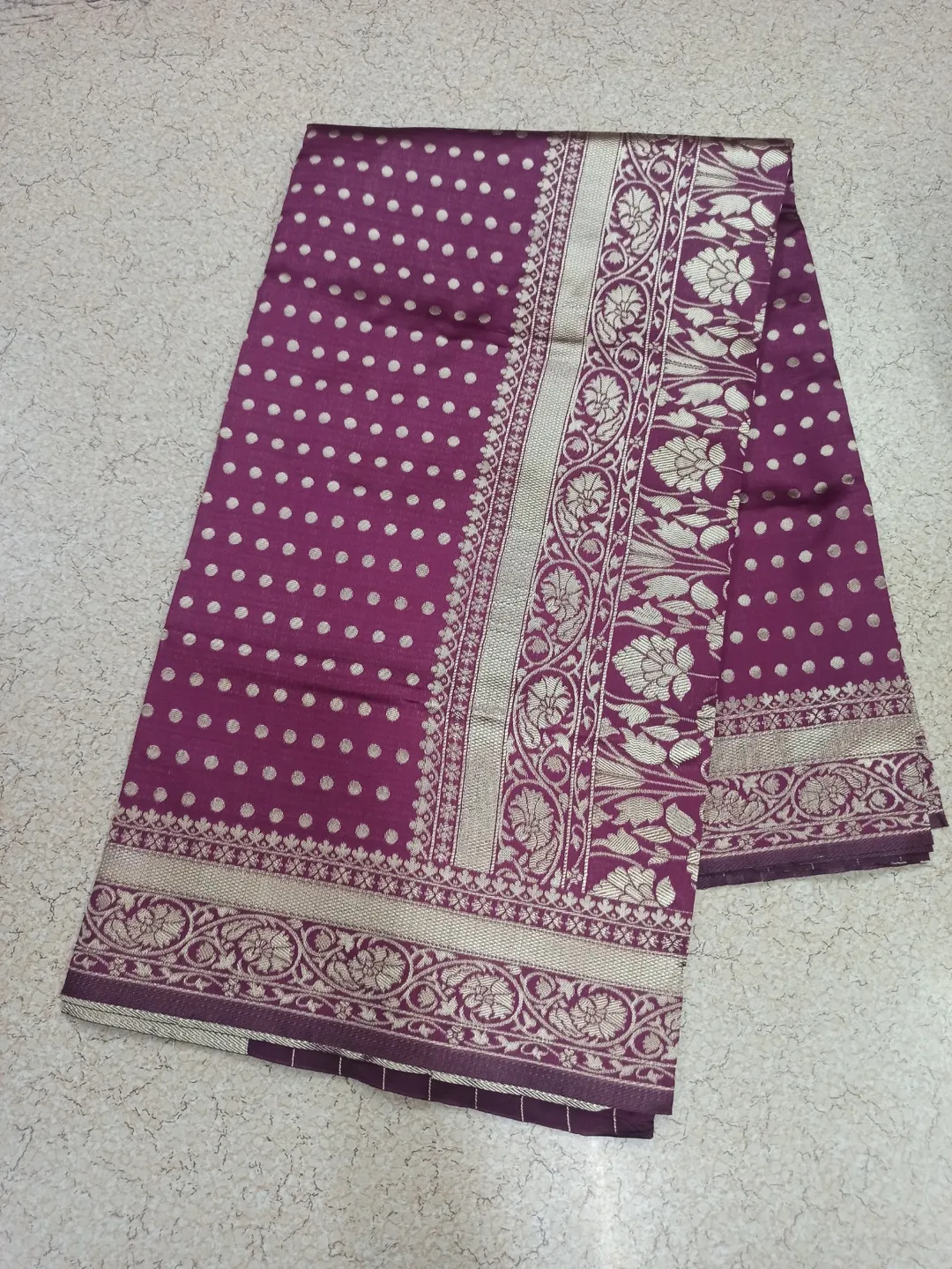
Cleaning before packing
Professional dry cleaning is the safest choice for heavily embellished silk, velvet, tissue, bridal wear and garments with uncertain colourfastness. Washable cotton sarees should follow their care labels, receive a thorough rinse and dry in shade rather than intense sunlight. A Blue Zari Work Cotton Saree for Wedding should not be packed immediately after use if the blouse area or underarm section feels damp.
don't apply starch, fabric softener, perfume or aerosol freshener before storage. Starch can attract moisture and insects, while fragrance compounds may react with metallic thread or leave oil marks. A clean, dry Maroon Cotton Saree with Zari Work for Wedding still benefits from several hours of indoor airing before folding.
Checking the garment
Inspect the pallu, border, blouse piece and embroidered areas for loose threads, missing beads, stains and damp patches. Repair loose hooks, broken seams and hanging embellishments before storage because a small snag can enlarge when the folded saree is moved later.
Remove detachable brooches, safety pins, artificial flowers and metal accessories. Hard objects create pressure points, and uncoated metal can leave green or dark marks after prolonged contact with silk or cotton. Photographing the garment before packing also creates a useful record of its original condition.
Protecting Zari and Embroidery During Long-Term Storage: Choosing Wrapping Materials
The safest primary wrapping material is clean, unprinted, acid-free tissue placed around the saree before the saree enters a breathable cotton or muslin cover. Acid-free tissue reduces direct friction and helps prevent dyes or metallic surfaces from rubbing against one another.
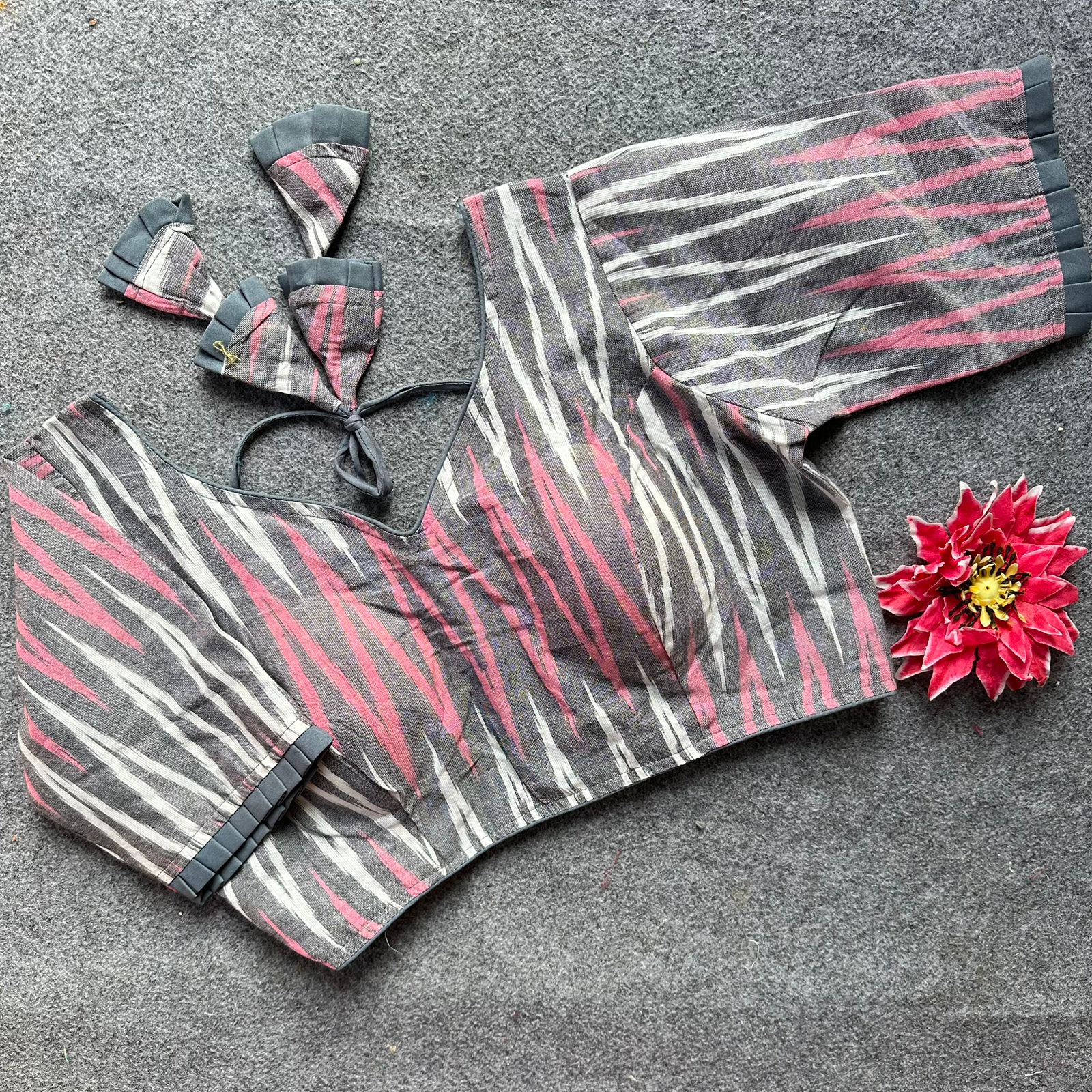
Avoid newspaper, coloured tissue, brown paper, cardboard boxes with unknown acidity and ordinary plastic bags. Newspaper ink can transfer, paper can release acids as it ages, and sealed plastic traps condensation. Vacuum bags are particularly unsuitable because compression crushes raised motifs and creates sharp folds.
Use one full-length cotton or muslin cover for each saree rather than placing several garments together. The cover should be clean, undyed or colourfast, and large enough to avoid squeezing the folded bundle. A Pastel Floral Tissue Handloom Cotton Saree with Zari Weaves deserves especially gentle wrapping because tissue surfaces can crease and snag more readily than dense cotton.
Silica-gel sachets can help inside a dry storage container, but sachets must not touch the saree and should be replaced according to their instructions. Do not use mothballs, naphthalene balls or strong insect repellents beside garments. These chemicals can leave an odour, stain fabric and expose household members to unnecessary fumes.
Protecting Zari and Embroidery During Long-Term Storage: Folding Methods
Fold the saree along broad, relaxed sections with acid-free tissue between areas of zari, embroidery or heavy texture. The goal is to distribute pressure rather than create one narrow crease across a metallic border.

Lay the saree on a clean, dry bed or table and place tissue over the full surface. Fold the body in wide sections, keeping the embroidered pallu and zari border as flat as practical. Turn the folded saree every few months so the same crease doesn't remain compressed for years.
For a heavy Banarasi saree, fold the garment with the zari face inward only when the reverse side is smooth and won't abrade the motif. If the reverse has exposed threads, knots or rough finishing, place tissue on both sides before folding. A Banarasi Soft Silk Jacquard Zari Saree should never be forced into a small box merely because the box is available.
don't stack heavy textiles on top of delicate embroidered sarees. Keep heavily embellished garments near the top of a storage stack, with lighter cotton pieces below. A Black Banarasi Soft Silk Jacquard Zari Saree and a Purple Banarasi Soft Silk Jacquard Zari Saree can share a cupboard, but each should have its own tissue layer and breathable cover to prevent colour transfer and surface friction.
Protecting Zari and Embroidery During Long-Term Storage: Choosing a Location
The best storage location is a dark, cool, dry cupboard away from exterior walls, kitchens, bathrooms, windows and direct sunlight. Stable indoor conditions are more protective than a loft, balcony trunk or damp basement.
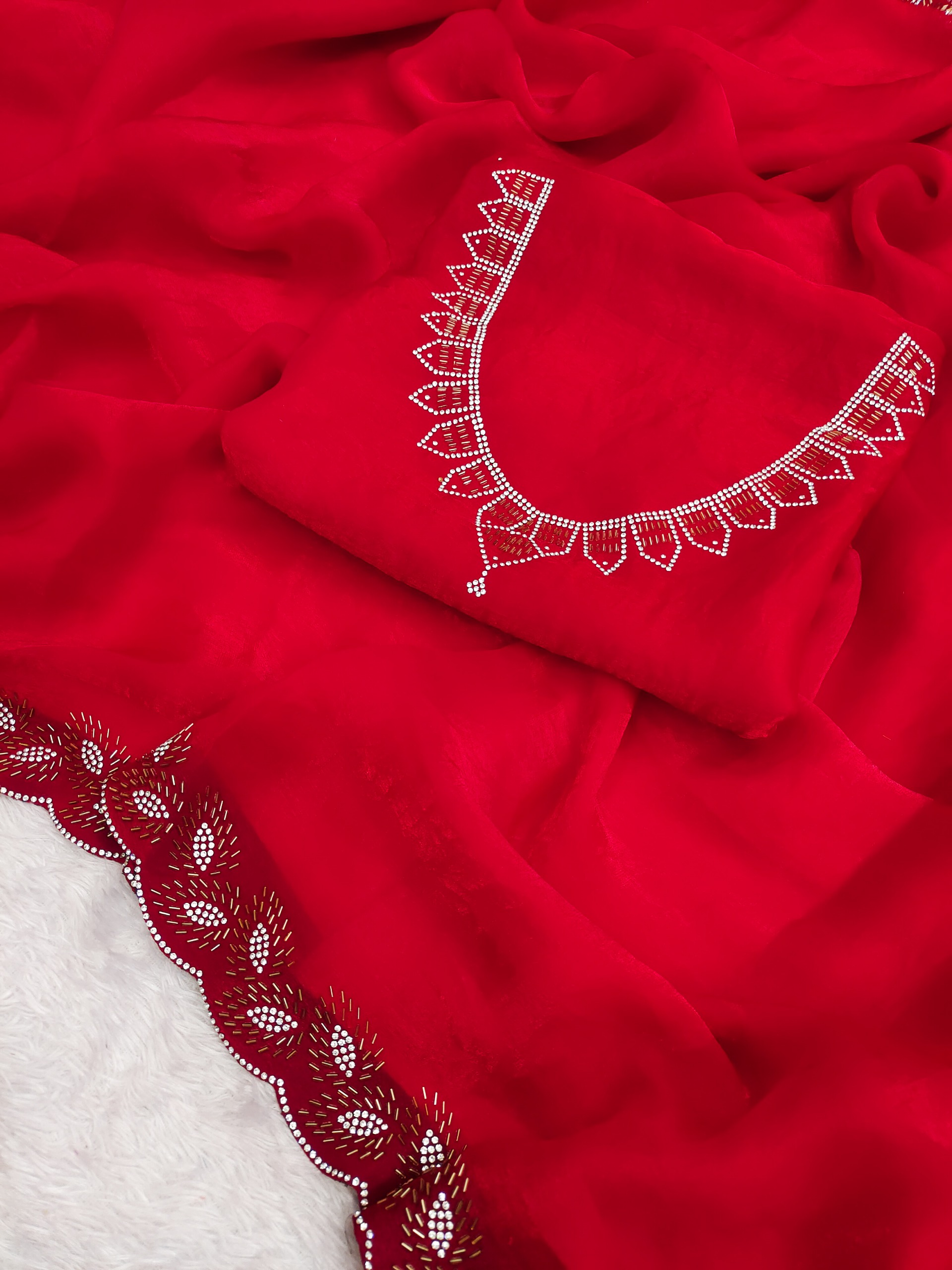
Relative humidity between approximately 45% and 55% is a useful target for textile storage. Homes without a hygrometer can watch for condensation, musty odour, peeling paint or a cupboard that feels clammy; these signs indicate that storage conditions need attention. A small digital hygrometer provides a more reliable reading than touch.
Keep the storage shelf several centimetres away from the wall and off the floor when possible. Elevation reduces exposure to minor leaks, floor-level dampness and dust. Leave air space around garment bundles instead of packing the cupboard so tightly that folds can't breathe.
Light fades dyes and weakens some fibres over time, so opaque cupboard doors or a secondary cloth cover are preferable to transparent display boxes. A Royal Banarasi Soft Silk Zari Weave Saree should not remain in a sunlit glass cabinet, even when the cabinet looks dust-free.
Protecting Zari and Embroidery During Long-Term Storage: Inspection and Pest Control
Inspect stored sarees every three to six months, even when the garments appear perfectly protected. Regular inspection catches moisture, insects, colour transfer and crushed embroidery before the damage becomes difficult or expensive to correct.

Open the cover with clean, dry hands and air the saree indoors in indirect light for 30 to 60 minutes. Do not leave silk, zari or bright dyes in harsh sunlight as a routine treatment. Look for silverfish, moth cases, tiny holes, powdery residue, mildew spots, unusual odour and newly loosened threads.
Refold the saree along a different line during each inspection. Replace tissue that has become yellow, dusty or damp, and wash or replace the cotton cover if it smells musty. Never brush zari aggressively; loose dust can be removed with a very soft, clean brush used in the direction of the weave.
Keep cupboards clean with a dry cloth and address the source of pest activity rather than placing mothballs beside the sarees. Cedar blocks or herbal sachets may provide fragrance, but they should not touch textiles and are not a substitute for cleaning, ventilation and sealing cracks. A Blue Tissue Handloom Cotton Saree with Zari Floral Print should be isolated from any garment showing mould or insects until the storage area has been treated.
Protecting Zari and Embroidery During Long-Term Storage: Handling Existing Damage
Stop rubbing, washing or ironing a tarnished or snagged garment until the fibre and embellishment have been assessed. Aggressive cleaning can remove plating from zari, spread a stain or pull embroidery away from the base fabric.

For light creasing, place the saree on a padded surface and use professional steam treatment when the care label permits it. Keep the steamer several centimetres away from zari and beads, and never press a hot iron directly onto metallic thread, sequins or stones. A professional textile cleaner should handle oil stains, mildew, colour bleeding and extensive tarnish.
Separate a damp garment from other textiles and dry it in moving air indoors, away from direct heat. Do not seal mildew-affected fabric in plastic because trapped moisture allows fungal growth to continue. A textile conservator or experienced saree cleaner can identify whether a mark is mildew, dye transfer, oxidation or ordinary surface dust.
don't attempt to polish zari with jewellery cleaner, toothpaste, vinegar or household metal polish. Zari is attached to a textile substrate and may have a delicate coating that household cleaners can dissolve. Cleaning tests should be performed only by a qualified professional on an inconspicuous area.
Protecting Zari and Embroidery During Long-Term Storage: A Practical Schedule
A simple storage schedule prevents most avoidable damage. Clean and dry the saree before packing, wrap it in acid-free tissue, place it in a breathable cover, store it in a dry dark cupboard and inspect it every three to six months.

- After wearing: Air the saree indoors until perspiration and humidity have disappeared.
- Before packing: Remove accessories, check for stains and repair loose threads.
- During folding: Use broad folds and tissue around zari, embroidery, beads and sequins.
- During storage: Keep garments away from direct light, damp walls, heat and compressed plastic packaging.
- Every three to six months: Inspect, air briefly in indirect light, replace damaged tissue and change the fold line.
- After any damage: Isolate the garment and seek professional advice before applying water, heat or cleaning chemicals.
These steps work for Banarasi silk, Kanjeevaram, Chanderi, cotton, tissue and blended sarees, although individual care labels take priority. Consistent handling matters more than expensive storage furniture: a breathable cover, stable humidity and reduced friction provide the foundation for preserving zari and embroidery.
Common Questions About Protecting Zari and Embroidery During Long-Term Storage
How should a zari saree be stored for several years?
A zari saree should be cleaned, completely dried, wrapped in acid-free tissue and placed in a breathable cotton or muslin cover. Store the saree in a dark, dry cupboard and refold it every three to six months.
Can zari sarees be stored in plastic bags?
Ordinary sealed plastic bags are not recommended for long-term zari saree storage because they can trap condensation and encourage mildew. Use a breathable fabric cover, with acid-free tissue separating the folds and metallic work.
How can zari tarnishing be prevented?
Zari tarnishing can be reduced by keeping the saree dry, away from perfumes, body oils, acidic paper, direct sunlight and household chemicals. Stable humidity near 45% to 55%, clean hands and periodic airing also help.
Should embroidered sarees be hung or folded?
Most embroidered sarees should be folded with acid-free tissue because long-term hanging can stretch the fabric and pull heavy motifs downward. Very light garments may be hung briefly on a padded hanger, but heavy beadwork is safer when stored flat.
How often should stored sarees be checked?
Stored sarees should be checked every three to six months. Look for dampness, insects, mildew, colour transfer, tarnish and crushed embroidery, then replace any damaged tissue and change the fold line.
Can a tarnished zari saree be cleaned at home?
A tarnished zari saree should not be cleaned with toothpaste, vinegar, jewellery polish or strong detergent. Professional textile cleaning is safer because household products can remove the zari coating, spread stains or damage the base fabric.


