

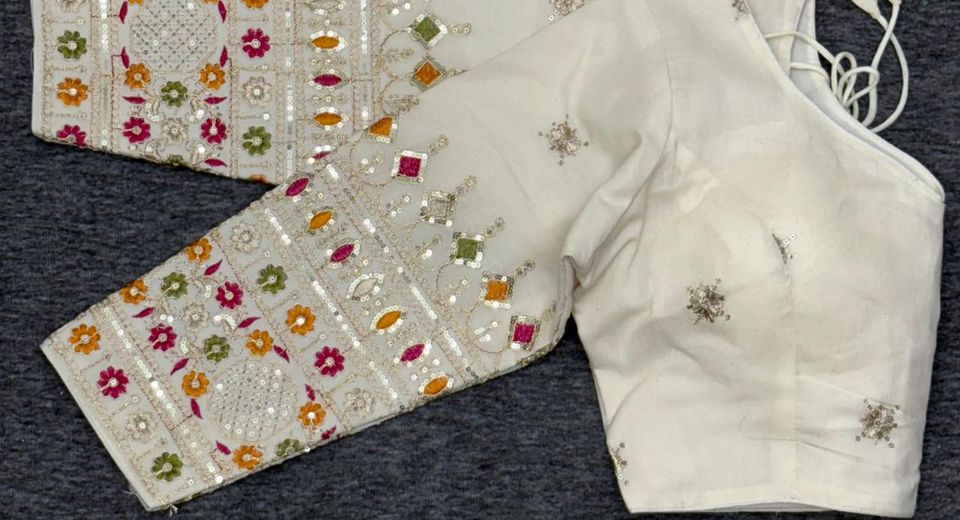
Proportion, Comfort and Saree Pairings for Full Sleeve Blouses determine whether a saree outfit feels elegant or visually heavy. A full sleeve blouse can lengthen the upper body, balance a broad pallu and provide useful coverage, but the result depends on sleeve volume, neckline depth, fabric weight and the way the saree is draped. The most successful pairing isn't simply a matching colour; it's a conversation between the blouse structure and the saree's weave, border and fall.
Full sleeves also solve practical dressing problems. Full sleeve blouses can make a lightweight cotton saree feel more polished for dinner, give a silk saree a composed formal finish and offer extra coverage during cooler evening events. Accurate measurements matter more than a fashionable neckline. A sleeve that pulls at the upper arm or ends at an awkward point can make even a beautiful saree uncomfortable.
Proportion, Comfort and Saree Pairings for Full Sleeve Blouses: why balance matters
Proportion matters because the blouse occupies the visual space between the wearer's face, waist and saree drape. A fitted sleeve and a clean neckline usually balance a saree with a wide border, while a fuller sleeve works better with a relatively quiet saree.
The first proportion to check is the relationship between blouse length and saree waistline. A blouse ending close to the natural waist creates a defined break and works well with high-waisted pleats. A longer blouse can look refined with a narrow border or an open-front drape, but excessive length may shorten the visible leg line. For most saree drapes, the lower edge should sit securely without bunching above the waistband.
The second proportion is sleeve volume. A close sleeve keeps the upper body streamlined and suits Banarasi silk, Kanjeevaram and other substantial sarees with prominent borders. A lightly relaxed sleeve can complement Chanderi, cotton and soft printed sarees because the overall look remains breathable rather than rigid. Puffy sleeves, gathered cuffs or heavy embellishment need a simpler saree so the outfit has one clear focal point.
The third proportion is the neckline-to-sleeve relationship. A high neck and full sleeve create a covered, formal silhouette. A V-neck, square neck or modest boat neck introduces breathing space around the face. A high collar can look especially balanced with a plain saree, while a V-neck can prevent a long-sleeved blouse from appearing too closed.
Proportion, Comfort and Saree Pairings for Full Sleeve Blouses: making sleeves comfortable
Comfort comes from accurate upper-arm ease, a stable shoulder seam, breathable fabric and a sleeve hem that doesn't press into the wrist. A full sleeve blouse should allow the wearer to bend the elbow, lift the forearm and manage saree pleats without pulling across the back.
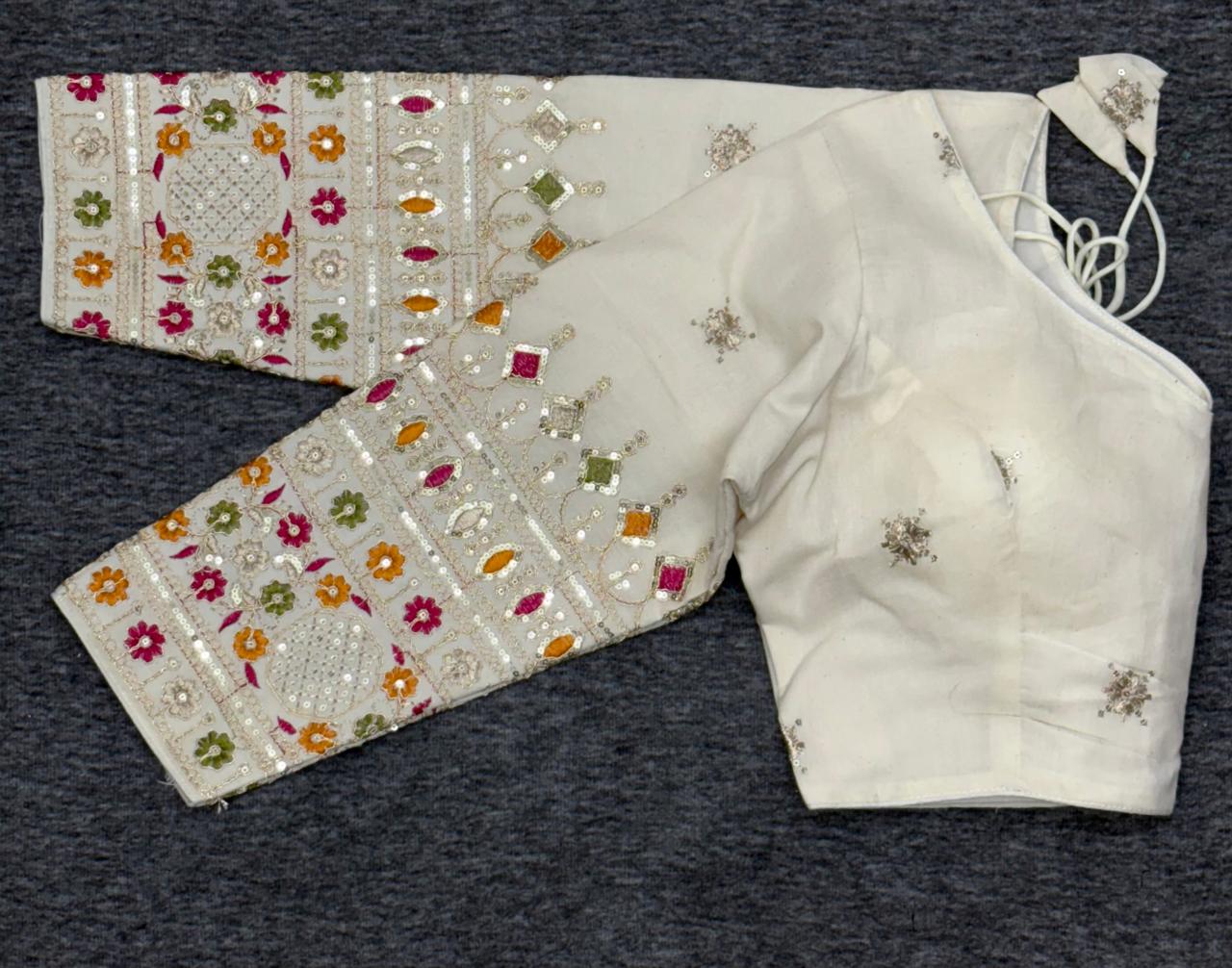
Measurements that affect movement
The upper-arm measurement is especially important because a sleeve can feel restrictive even when the bust measurement is correct. Measure around the fullest part of the upper arm with the tape level and add enough ease for the blouse fabric and intended movement. Stretch fabrics require less extra room than woven cotton or silk, but a very tight sleeve can still crease and pull.
Check the shoulder seam next. The seam should sit near the natural shoulder edge rather than dropping several centimetres down the arm. A misplaced shoulder seam changes the sleeve angle and often causes wrinkling near the underarm. Sleeve length should also be judged with the arm naturally bent, because a sleeve that reaches the wrist while standing may ride up when the elbow bends.
Choosing the sleeve finish
A narrow cuff gives a full sleeve a neat finish and prevents fabric from interfering with bangles or saree pleats. A plain hem works for everyday cotton and office dressing. A zari border, piping or embroidered cuff can dress up a sleeve for a wedding, but the cuff should remain light enough to move comfortably.
Elbow-length and three-quarter sleeves are useful alternatives when a full wrist-length sleeve feels too warm. These lengths preserve the vertical line of a long sleeve while exposing the wrist for jewellery. Wrist-length sleeves are most useful for evening celebrations, air-conditioned venues and formal silk saree styling.
Proportion, Comfort and Saree Pairings for Full Sleeve Blouses with silk sarees
Silk sarees pair well with fitted full sleeve blouses in silk blends, brocade-like textures or coordinated woven fabrics. Banarasi silk benefits from a blouse with a clean shoulder line because zari and dense motifs already create visual richness. A blouse in a close colour can make the saree border appear continuous, whereas a contrasting blouse can create a sharper festive statement.
Banarasi Silk Golden Jari Padded Blouse for Women illustrates how a metallic surface can become the focal point of a silk saree outfit. Pairing a golden zari blouse with a saree that has a restrained border prevents competing metallic patterns. If the saree already contains heavy gold zari, choose simpler earrings and keep the sleeve silhouette close to the arm.
Kanjeevaram sarees generally suit structured blouses with clear necklines and sleeves that don't add unnecessary width. A full sleeve in a jewel tone can work for an evening wedding, especially when the saree has a contrasting border. The blouse need not copy every saree colour; repeating one border shade is often enough to make the combination look deliberate.
Silk blouse details that affect the final look
Silk woven surfaces appear more formal when the blouse has a crisp shoulder and controlled sleeve width. Excessive gathers can compete with a heavily patterned pallu. A close-fitting sleeve, moderate neckline and small jewellery scale usually let zari remain the main feature.
A padded blouse can provide shape and reduce the need for an additional inner layer, but padding doesn't replace correct bust and armhole measurements. The pad should lie smoothly without creating a hard ridge at the neckline. A blouse that fits at the bust but cuts into the underarm may need a different size or a more generous armhole rather than a longer sleeve.
Proportion, Comfort and Saree Pairings for Full Sleeve Blouses with cotton sarees
Cotton sarees pair well with breathable full sleeve blouses that have enough ease for long wear. Printed cotton and Kalamkari sarees can carry a solid blouse in one of the print's secondary colours. A printed blouse with a printed saree needs careful scale control: small motifs on one piece and larger motifs on the other are easier to balance than two equally dense prints.
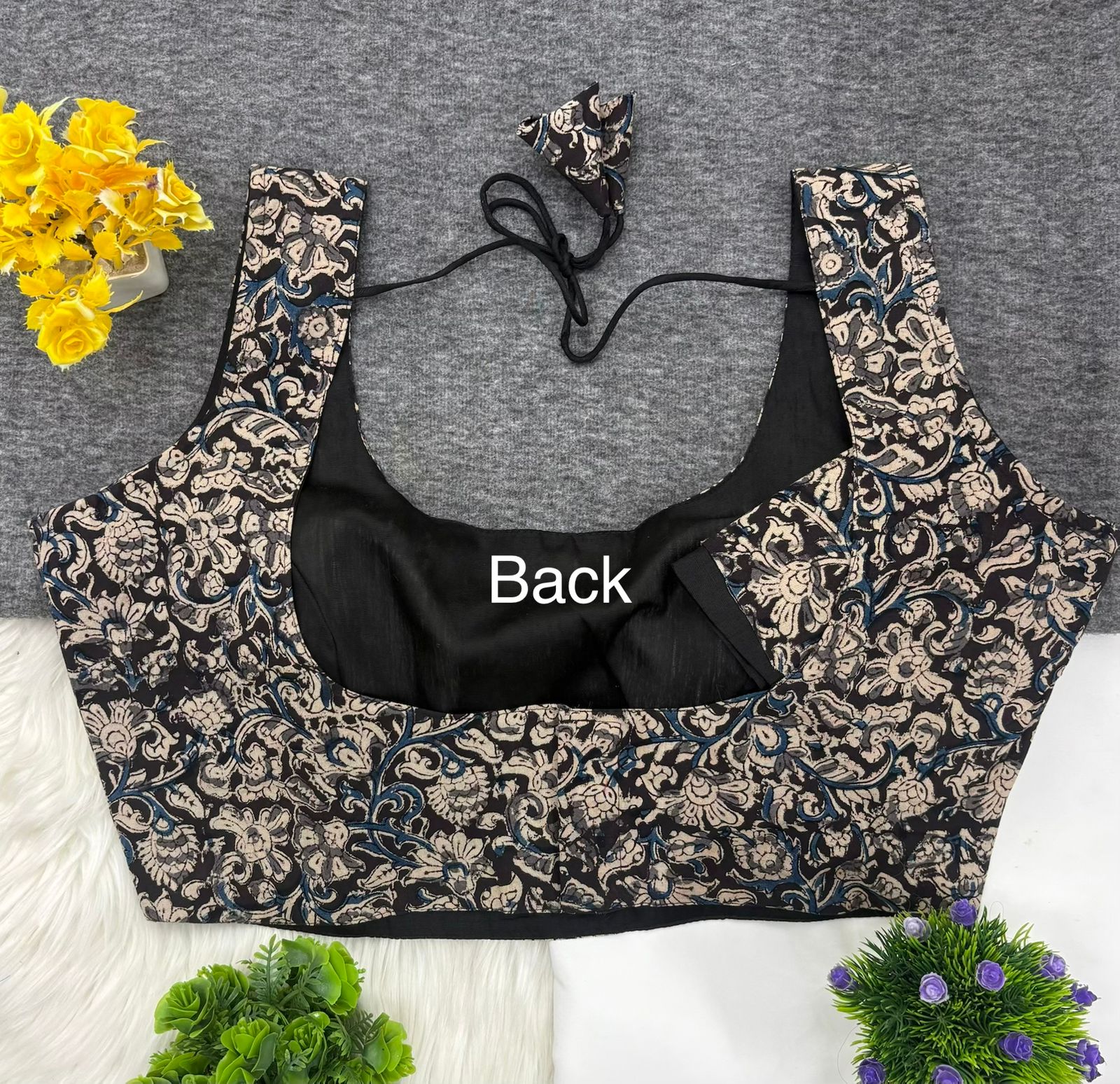
Pure Kalamkari Cotton Padded Blouse for Women suits a cotton saree when the rest of the outfit allows the print to remain visible. Pairing the blouse with a plain indigo, maroon, mustard or earthy cotton saree creates a grounded day-to-evening look. A V-neck or gently open neckline can keep a long-sleeved cotton blouse from looking too formal in hot weather.
Kalamkari Cotton V Neck Collar Blouse for Women offers another useful styling direction because the collar adds definition while the V opening prevents excessive coverage around the neck. A plain handloom saree, small jhumkas and a low bun can support the collar without adding another busy pattern.
Using colour without making the outfit busy
Choose one dominant pattern and let the other garment provide visual rest. A printed Kalamkari blouse can pair with a solid cotton saree, while a striped or checked saree can take a plain blouse in a colour drawn from its border. This approach is especially useful when a full sleeve already adds a strong vertical line.
Cotton is also practical for daytime ceremonies because it absorbs moisture more readily than many synthetic fabrics. A slightly relaxed sleeve, breathable lining and soft seam finish make a cotton blouse more comfortable during a Haldi ceremony, family lunch or outdoor puja.
Proportion, Comfort and Saree Pairings for Full Sleeve Blouses with lightweight drapes
Chanderi sarees pair effectively with full sleeve blouses when the blouse isn't too dense or heavily padded. A matte cotton blouse can give a sheer-looking Chanderi saree more structure, while a lightly embellished blouse can make the outfit suitable for a daytime ceremony. Keep the sleeve slim if the saree has a broad translucent border.
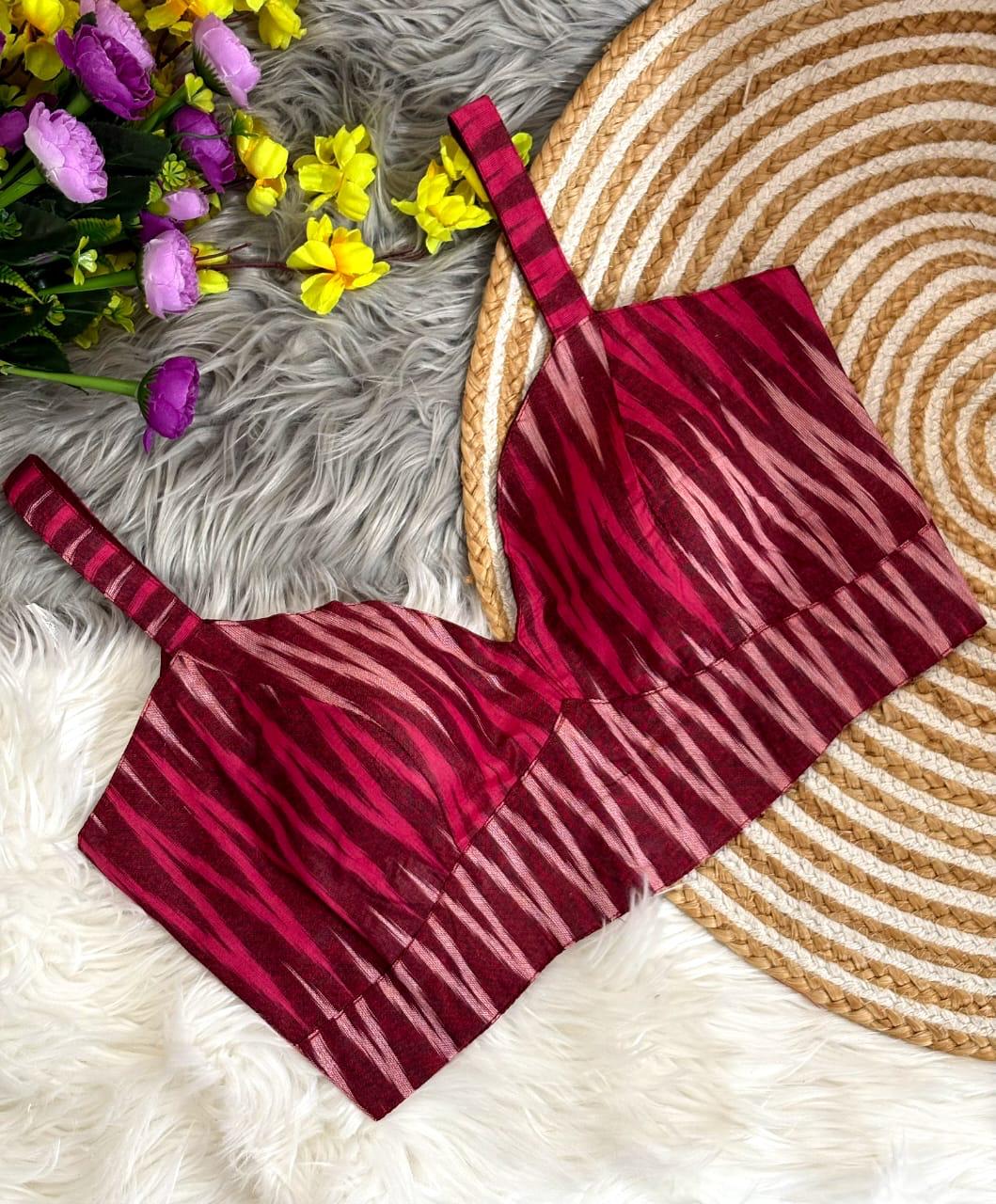
A designer saree doesn't always require an ornate blouse. A plain full sleeve blouse can give a printed or sculptural saree a cleaner, runway-inspired finish. Conversely, a simple saree can support a designer readymade blouse with a collar, zari detail or distinctive fabric surface.
For a lightweight saree, consider a blouse with a stable shoulder and moderate padding if the drape needs definition. Avoid very heavy cuffs because they can pull the sleeve downward and create uneven folds in a soft pallu. A narrow sleeve ending near the wrist keeps the outfit graceful without adding unnecessary bulk.
Classic Festive Wear Blouse for Stylish Saree Look can serve as a practical reference for a polished festive base. Pairing a versatile blouse with multiple sarees makes sense when the neckline and colour work across fabrics. Use the first trial to check whether the sleeve remains comfortable under bangles, a watch or a heavier pallu.
Proportion, Comfort and Saree Pairings for Full Sleeve Blouses in readymade styling
A readymade blouse should be assessed at the shoulder, bust, armhole and sleeve before its neckline or embroidery is judged. A good fit holds the saree securely without producing horizontal strain lines across the chest or diagonal folds from the underarm to the bust.
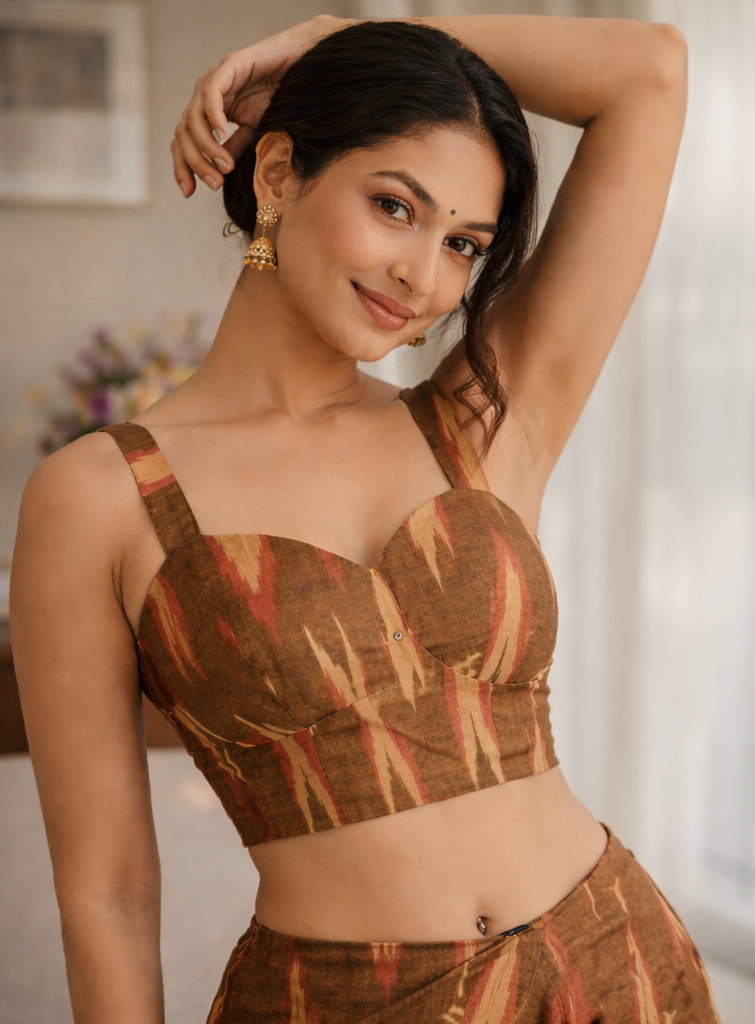
Try the blouse with the real saree, not with jeans or a skirt. Pin the saree at the waist, create the intended pleats and ordering whether the blouse hem stays level. Sit down for several minutes, lift both arms and reach ahead as though adjusting the pallu. These movements reveal pressure points that standing in front of a mirror can hide.
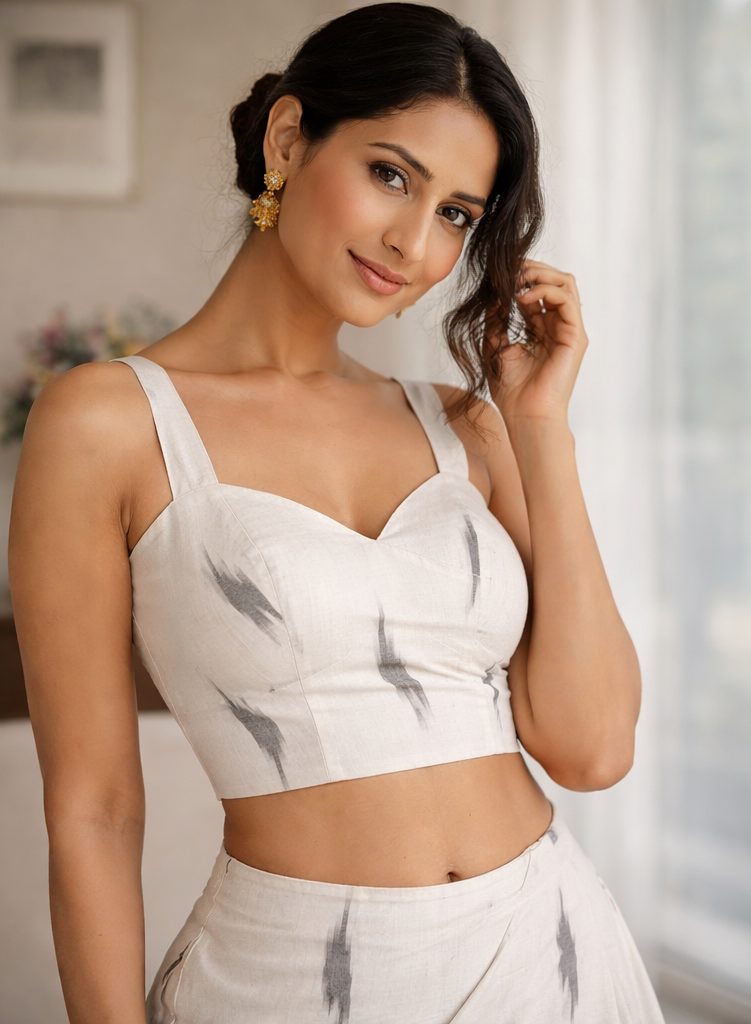
The Ikkat Cotton Padded Blouse for Women Sleeveless, Cream Ikat Cotton Padded Blouse Sleeveless Trendy and Brown Ikat Cotton Padded Blouse Sleeveless Stylish are sleeveless examples rather than full sleeve options. These pieces still clarify an important styling principle: fabric scale and colour can create structure even without sleeve coverage. The same principle applies to full sleeves; the sleeve should support the fabric story instead of competing with it.
Readymade sizing should be compared with a garment that already fits, rather than with a remembered clothing size. Measure the bust, underbust, shoulder, upper arm and preferred blouse length. A tailor may adjust a hem or hook placement, but changing a narrow armhole or heavily structured sleeve can be more complicated.
For a wedding outfit, test the blouse at least one week before the event. This timeframe leaves room for minor alterations, a different saree drape or a lighter petticoat. Wear the planned jewellery during the trial because a high neck, full sleeve and large necklace can crowd the upper body.
Proportion, Comfort and Saree Pairings for Full Sleeve Blouses through colour and care
Colour placement can make a full sleeve silhouette appear lighter or more substantial. A blouse close to the saree colour creates a continuous vertical impression, while a high-contrast blouse makes the torso a separate visual block.
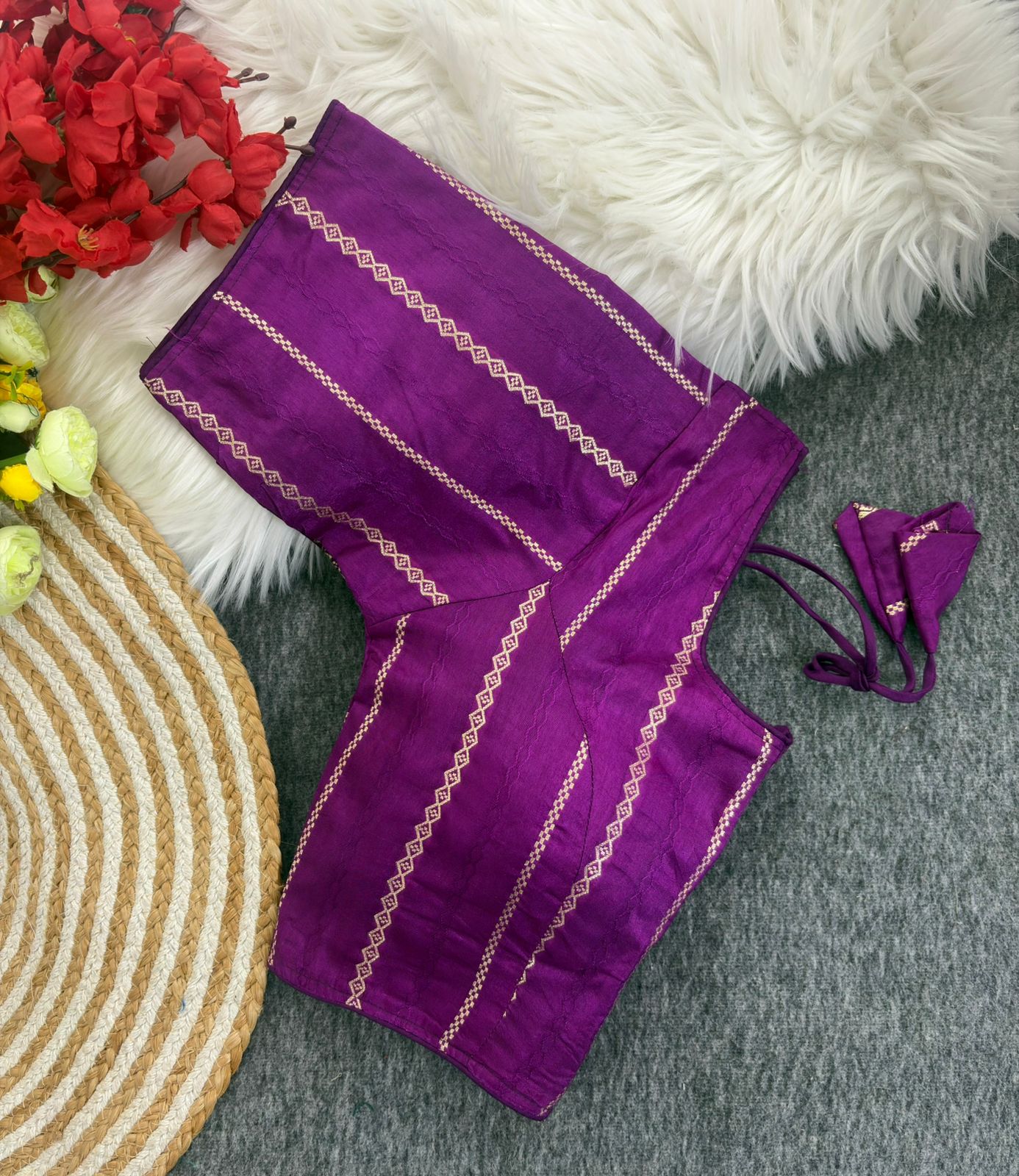
Monochromatic combinations work particularly well with full sleeve blouses because the long sleeve doesn't interrupt the colour flow. A deep green blouse with a slightly lighter green saree, or a wine blouse with a muted rose saree, can look elongated without being monotonous. Match zari tones where possible: gold zari generally sits naturally with warm ivory, mustard, rust and red, while silver zari complements cool pink, blue, grey and lavender.
Care affects comfort as much as construction. Air a blouse after wearing it, remove surface dust with a soft brush and avoid storing padded or embroidered pieces under heavy folded sarees. Cotton blouses can usually be washed according to their care label, but zari, silk and structured padded blouses are safer with gentle professional cleaning.
Store full sleeve blouses flat or on a broad hanger so the shoulder doesn't develop sharp points. Fold sleeves along their natural seam instead of crushing them across the bust. Keep dark cotton and printed pieces away from prolonged direct sunlight because repeated exposure can fade concentrated colour areas.
Blue Zari Work Cotton Saree for Wedding demonstrates how a cotton saree can move into formal dressing when zari and colour provide enough occasion detail. A fitted full sleeve blouse in ivory, navy, blue or antique gold can echo the saree without overwhelming its cotton texture. Soft makeup, a low bun and limited metallic accessories keep the combination balanced.
Proportion, Comfort and Saree Pairings for Full Sleeve Blouses: a practical checklist
A balanced full sleeve saree outfit usually passes five checks: the shoulder seam sits correctly, the upper arm has movement ease, the sleeve hem doesn't pinch, the blouse length works with the waistline and the saree has enough visual space around the blouse.
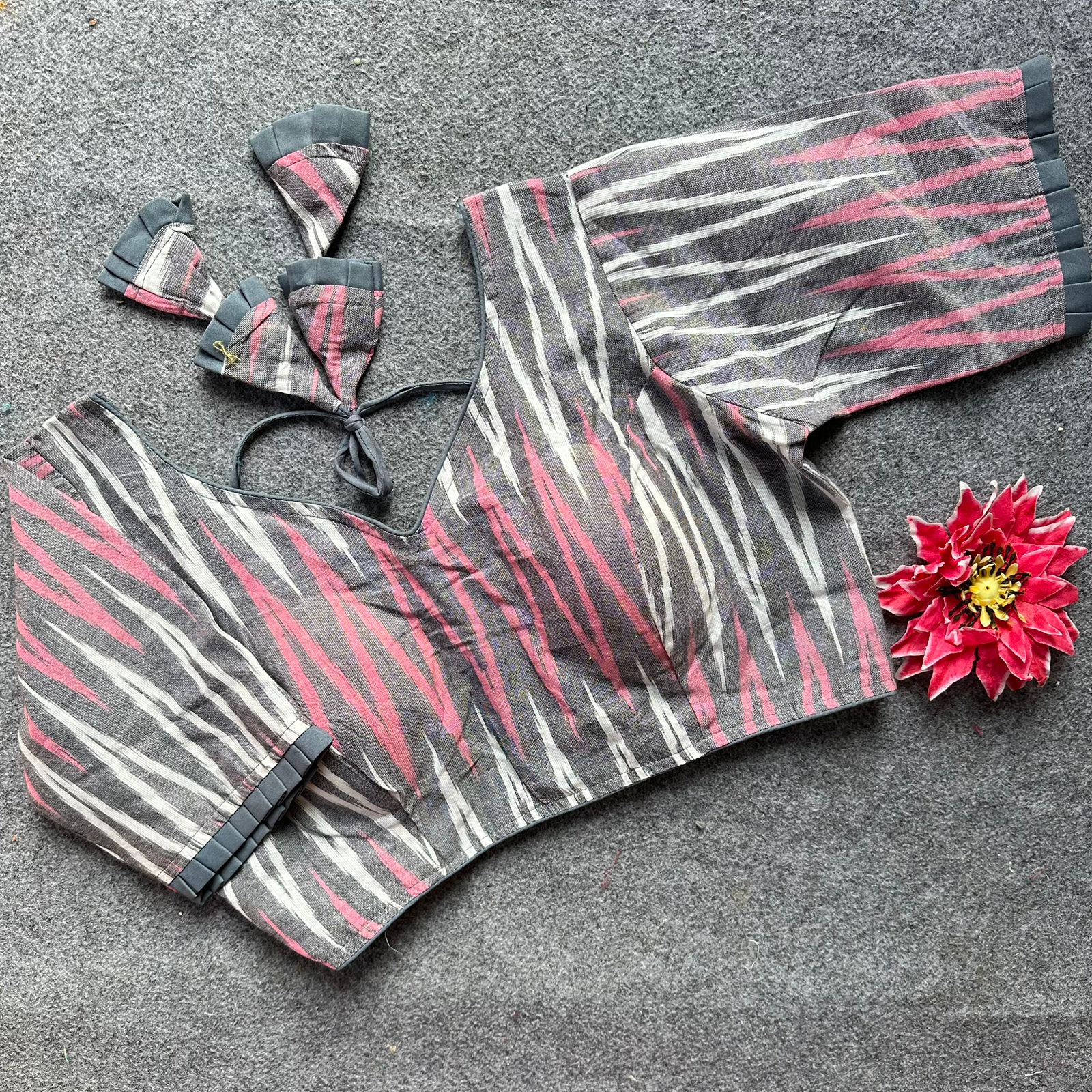
Check the blouse with the intended saree, petticoat and drape before finalising the outfit.
Match sleeve volume to saree weight: controlled sleeves for Banarasi silk and Kanjeevaram, breathable ease for cotton and slim structure for Chanderi.
Use one main focal point, such as zari, a bold print, a collar or a wide border, and simplify the remaining details.
Move, sit and lift the arms during the fitting so comfort is tested beyond a standing mirror pose.
Plan jewellery around the neckline and sleeve coverage rather than adding accessories after the outfit is complete.
Good proportion doesn't require a rigid formula. A full sleeve blouse can be traditional with a silk saree, relaxed with cotton, refined with Chanderi or contemporary with a designer saree. The dependable method is to balance visual weight, preserve arm movement and let either the blouse or saree lead the outfit.
Common Questions About Full Sleeve Blouse Proportions and Saree Pairings
Which saree suits a full sleeve blouse best?
Silk, cotton and Chanderi sarees can all suit full sleeve blouses when the sleeve volume matches the saree weight. Fitted sleeves work especially well with Banarasi silk and Kanjeevaram, while breathable cotton sleeves are more comfortable with everyday cotton sarees.
Are full sleeve blouses comfortable in Indian weather?
Full sleeve blouses can be comfortable when they use breathable cotton or light woven fabric and include enough upper-arm ease. For hot daytime events, choose three-quarter sleeves, a relaxed armhole and minimal lining instead of a tight, heavily padded sleeve.
How should a readymade full sleeve blouse fit?
A readymade full sleeve blouse should sit correctly at the shoulder, lie smoothly across the bust and allow the wearer to bend the elbow without pulling. Try the blouse with the actual saree and test sitting, reaching and lifting both arms before wearing it for a long event.
Can a full sleeve blouse be worn with a designer saree?
A full sleeve blouse can work with a designer saree when the blouse and saree do not compete for attention. Use a plain fitted blouse with a heavily embellished saree, or choose a detailed collar, zari surface or print when the saree has a restrained design.
What blouse colour goes with a blue zari cotton saree?
Ivory, navy, blue, antique gold and selected shades from the saree border can pair well with a blue zari cotton saree. A close colour creates a continuous look, while antique gold or ivory produces a more visible contrast for wedding dressing.
How should full sleeve saree blouses be stored?
Store full sleeve blouses flat or on a broad hanger, folding sleeves along their natural seams. Keep padded, zari and silk blouses away from heavy garments and follow the care label, with gentle professional cleaning for delicate structured pieces.


