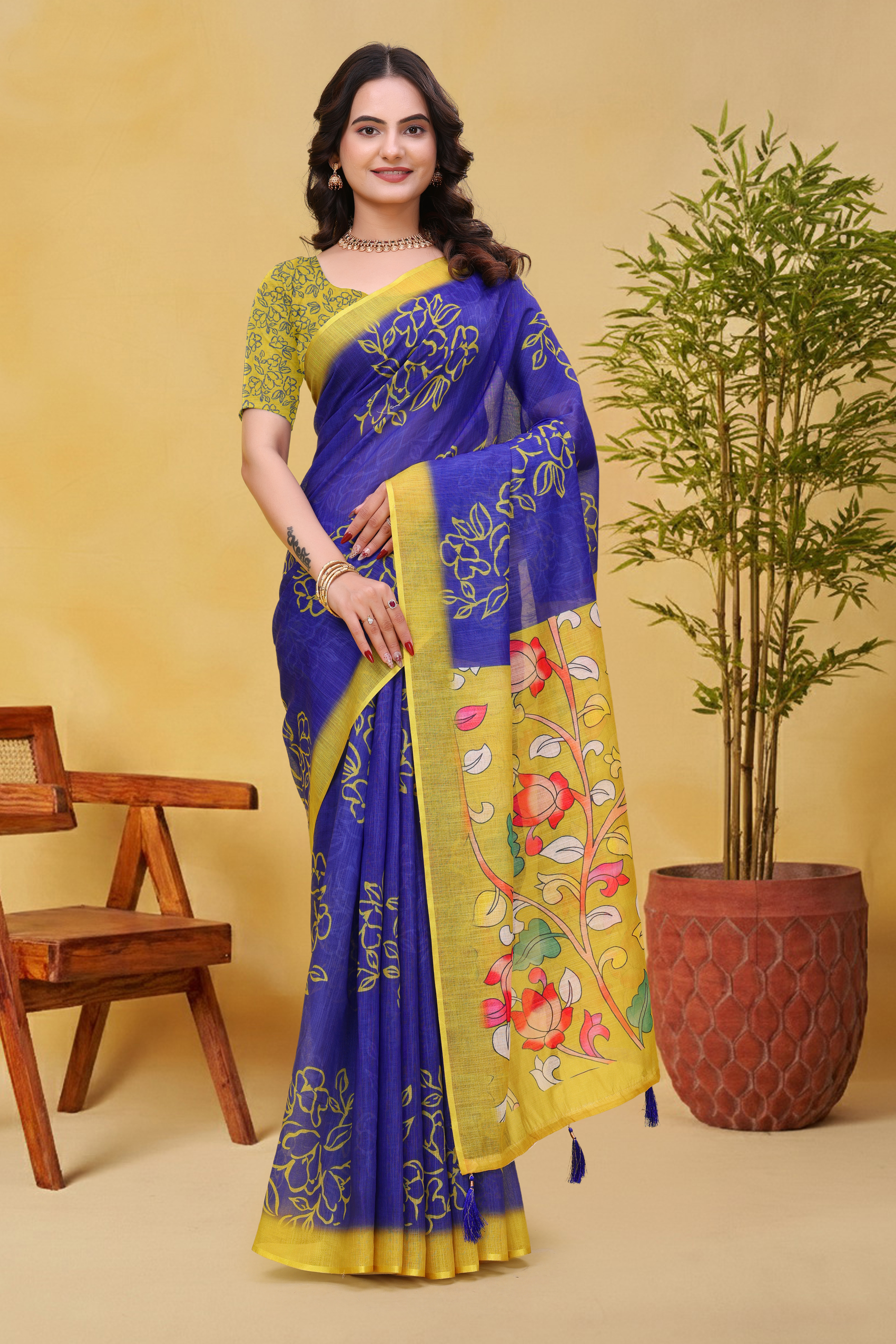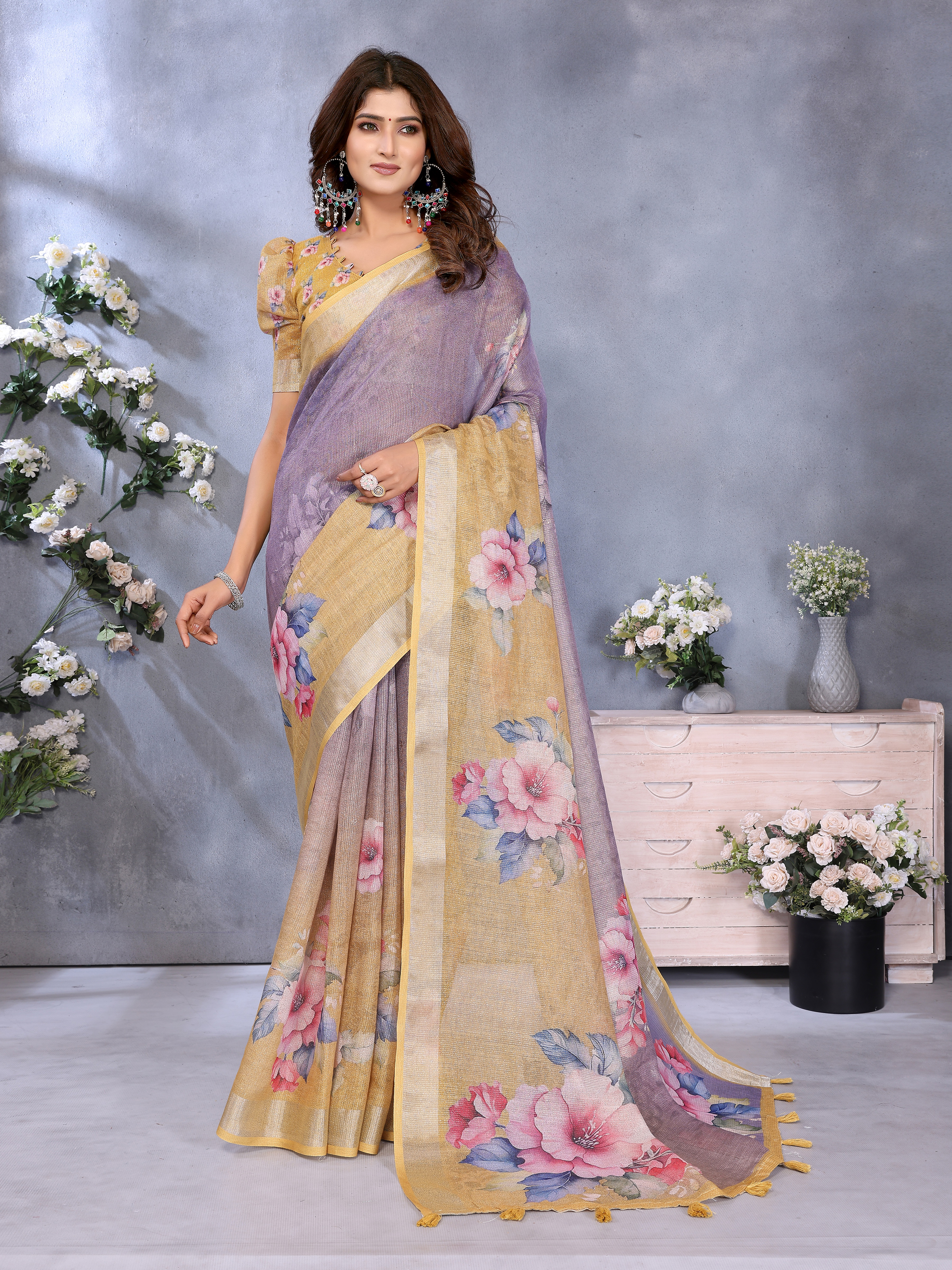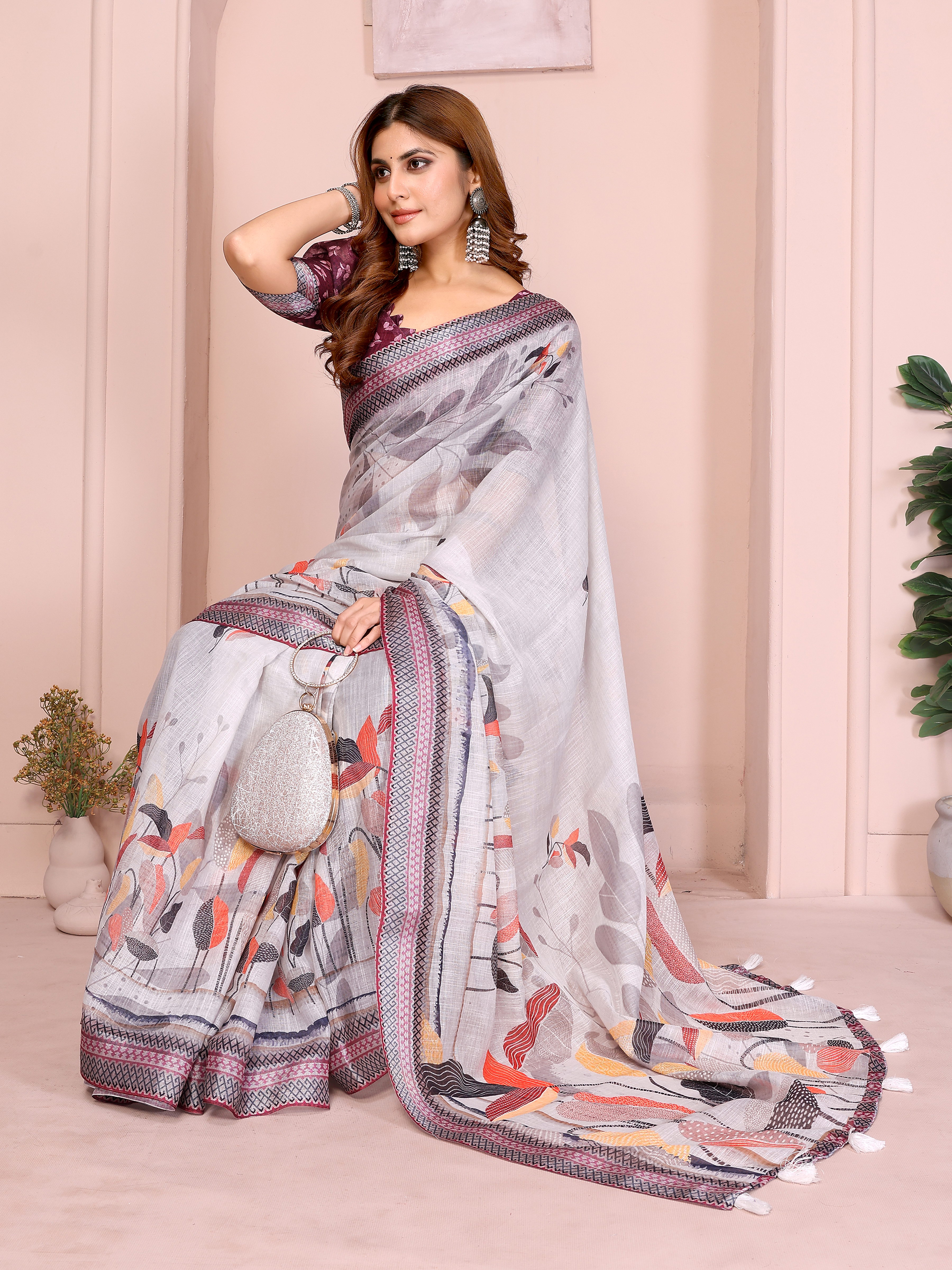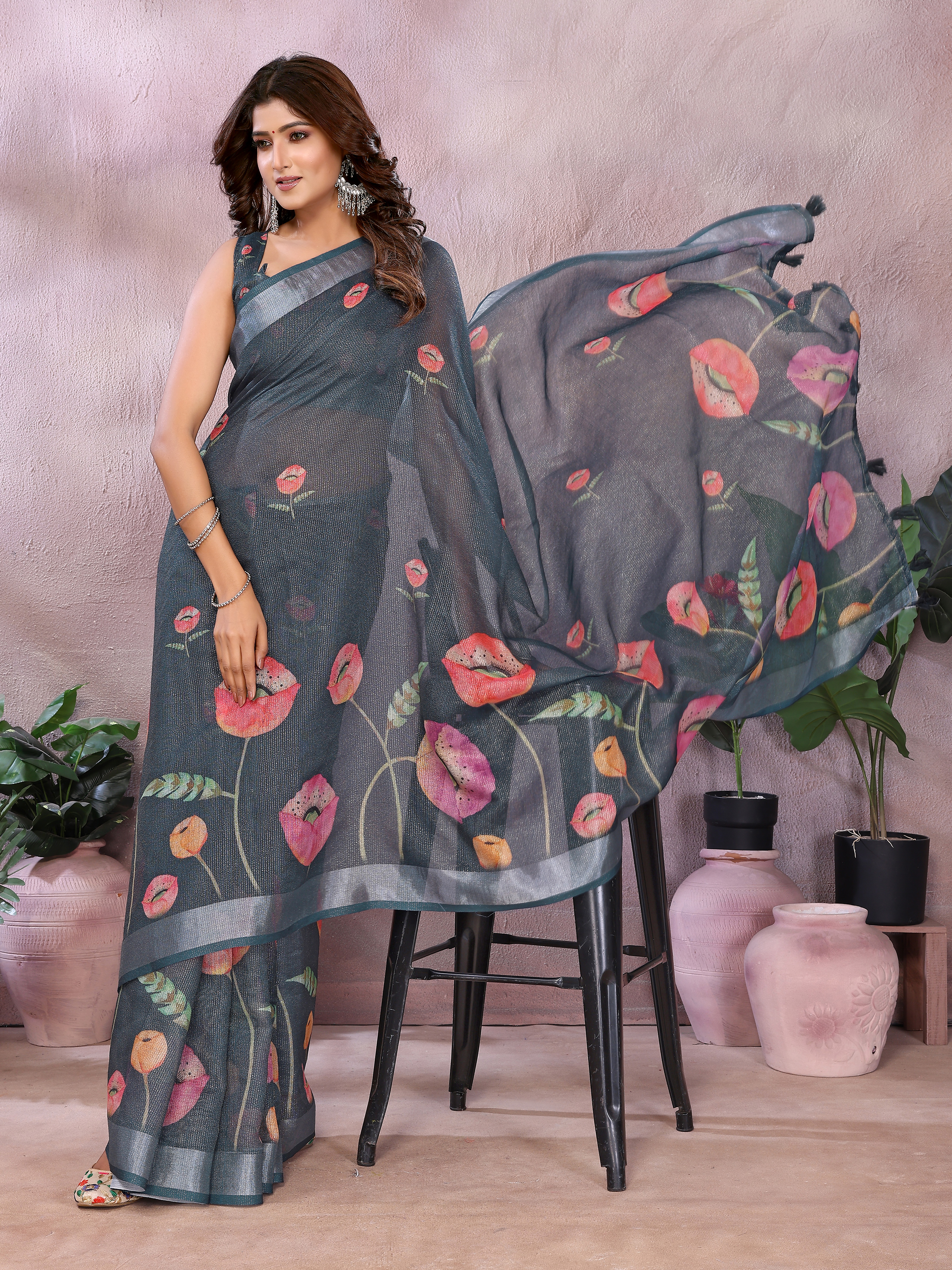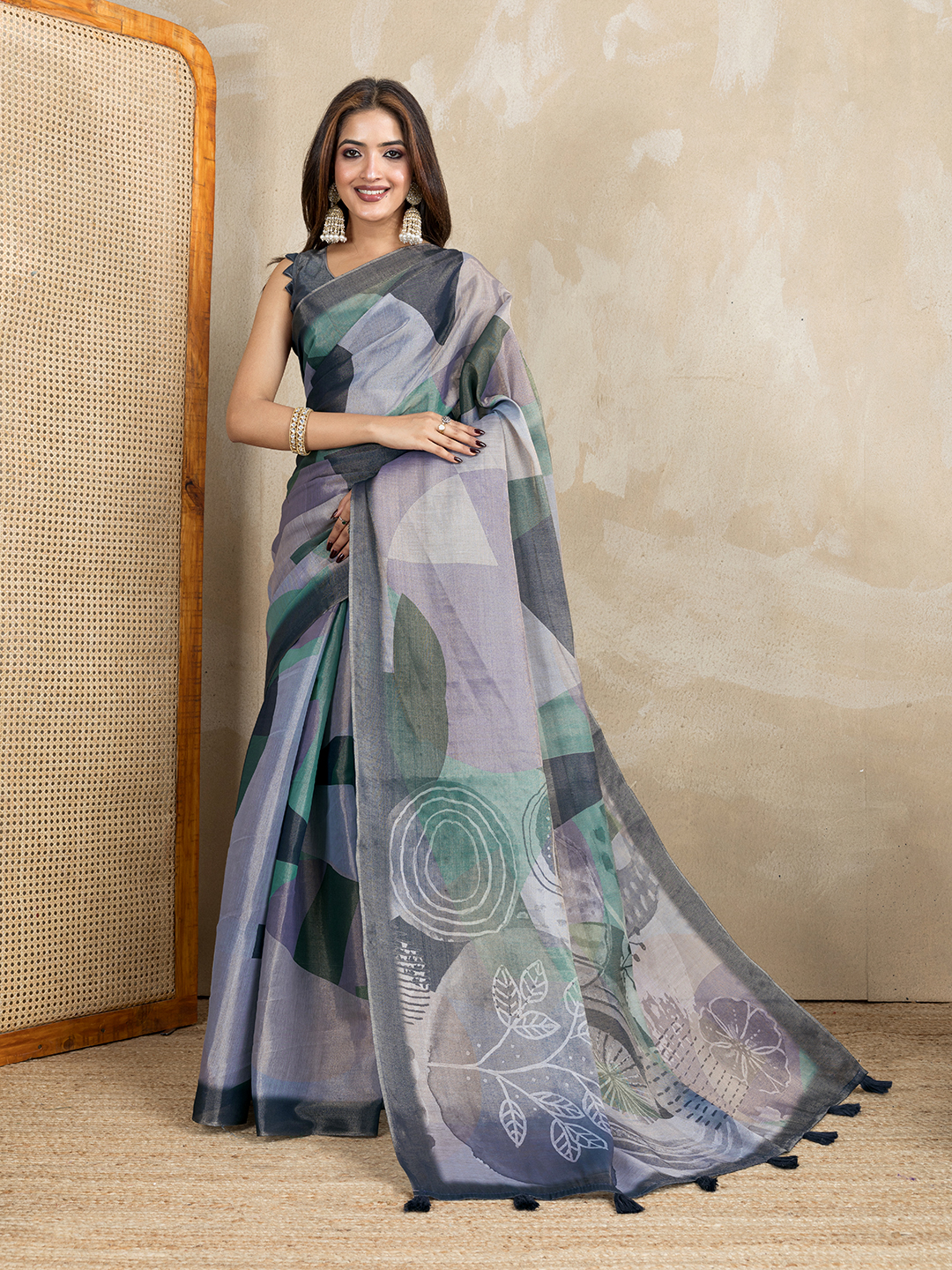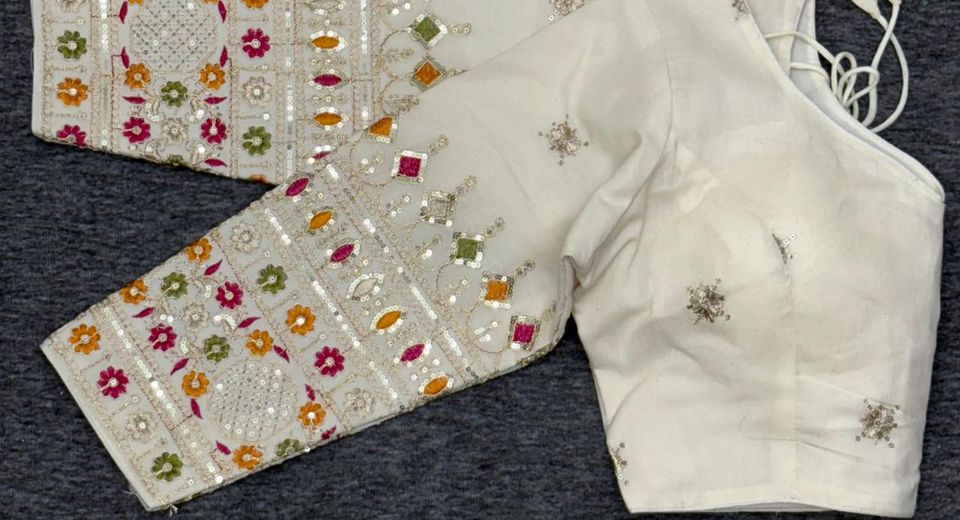
Princess seams give a blouse a different shape from traditional darts because the shaping travels through a long curved seam instead of ending in a short fold. That construction changes how a saree blouse follows the bust, waist and torso. The difference matters when you're comparing a readymade blouse, checking measurements or deciding whether a silk or cotton design will sit smoothly under a saree.
A dart removes excess fabric at one point, usually near the bust, while a princess seam distributes shaping along a panel line. Neither method is automatically better. The right choice depends on body proportions, fabric weight, neckline, padding, movement and the amount of alteration a blouse allows.
How Princess Seams Change a Blouse's Shape
Princess seams create a continuous contour from the armhole or shoulder towards the bust and waist, giving the blouse a longer, smoother shaping line. The seam usually passes over the fullest part of the bust and then narrows the garment below it.
Traditional darts create shaping by stitching two lines together over a limited section of fabric. A bust dart may point towards the bust apex while beginning at the side seam, armhole or waist. The dart intake controls fullness, but the rest of the bodice remains comparatively flat.
Princess-seam construction divides a blouse into separate panels. A centre-front panel and side panels can each be cut on a slightly different curve, allowing the pattern maker to control bust projection and waist indentation more gradually. The result often looks more sculpted, especially in a fitted blouse.
A seam also creates a visible design line. The line may be highlighted with piping, embroidery, contrast fabric or zari, making construction part of the visual style. A dart is usually concealed within the surface, although dart placement can still influence the blouse's silhouette.
Where the shaping begins matters
A princess seam beginning at the armhole tends to create a strong vertical effect and can visually lengthen the upper body. A shoulder princess seam can make the neckline and shoulder area look more structured. A waist-origin seam gives a more pronounced panelled appearance and may require careful matching with the saree drape.
A side bust dart generally offers a simpler alteration path because the shaping remains at the side. A waist dart can provide strong shaping but may be more noticeable beneath a thin saree. The position of shaping affects both comfort and appearance, not only garment size.
Princess Seams Give a Blouse a Different Shape From Traditional Darts in Fit
Princess seams give a blouse a different shape from traditional darts by contouring the entire front panel rather than concentrating fabric reduction at one dart intake. The difference is easiest to see at the bust, underarm and waist.
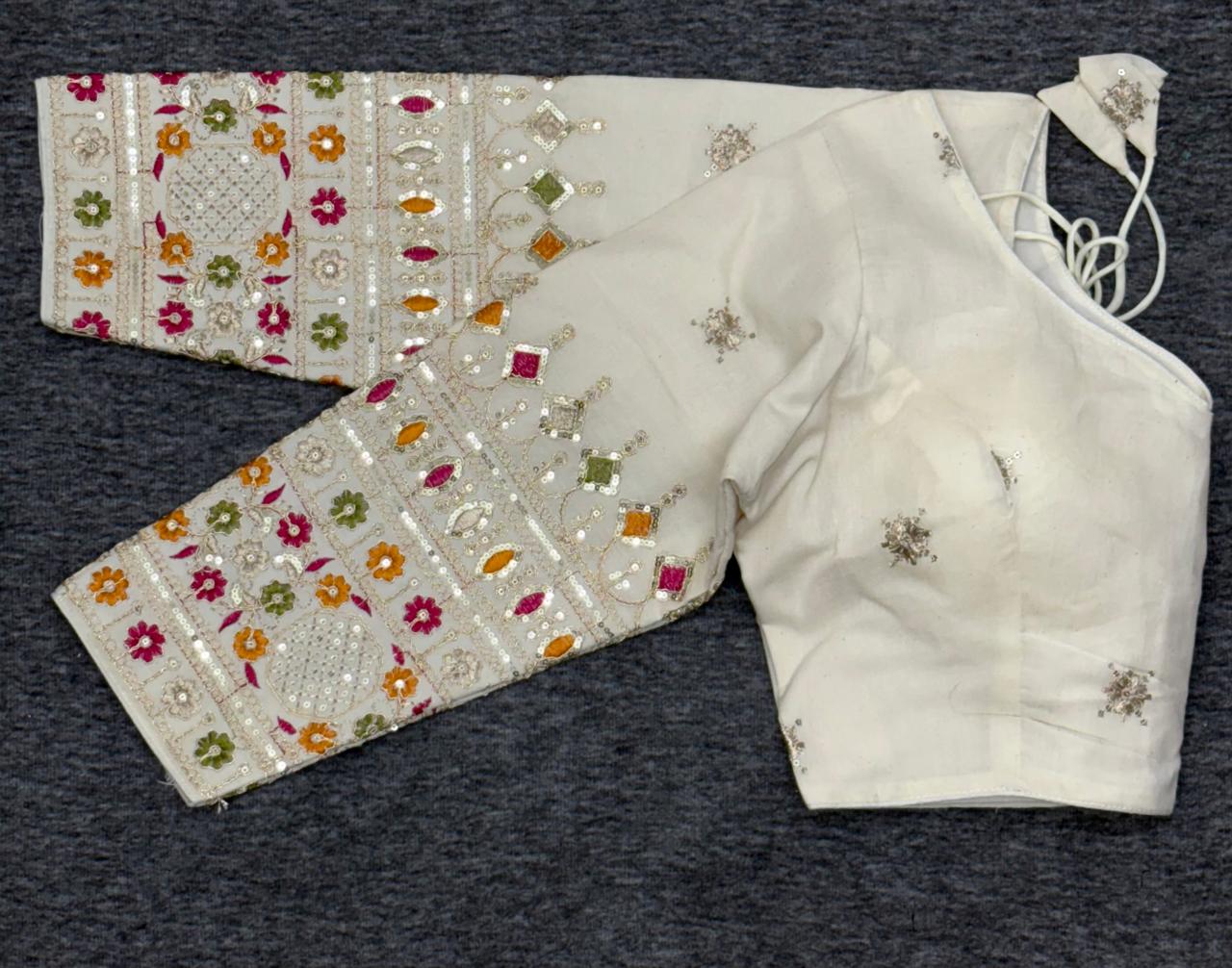
A well-cut princess-seam blouse can accommodate a fuller bust without adding the boxy width that sometimes appears in an untailored bodice. The curved seam follows the body more closely, while the separate panels preserve a defined waist. A well-placed dart can achieve a similar result, but the shaping is concentrated in a shorter area.
Princess seams may also reduce diagonal pulling across the bust when the pattern has been drafted correctly. Horizontal drag lines usually indicate insufficient bust room, while vertical or diagonal wrinkles can point to excess fabric, a misplaced seam or an incorrect cup-to-band proportion.
Readymade sizing still matters. A princess seam can't compensate for a blouse that's too narrow at the armhole, too short at the waist or too tight across the back. Check bust, underbust, waist, shoulder and blouse-length measurements rather than relying on a familiar small, medium or large label.
Padding changes the fitting equation
Padded blouses need enough room for pad thickness as well as the body's natural bust measurement. A fitted princess seam can look smooth with light, evenly placed padding, but a thick or poorly positioned pad may create a raised line near the seam.
The Banarasi Silk Golden Jari Padded Blouse for Women illustrates why construction and fabric must be judged together. Banarasi silk has a firm woven body and decorative zari, so a seam must lie flat without distorting the golden pattern. Padding should support the shape without making the bust area look rigid.
Measure over the type of innerwear or padding that will actually be worn. Measuring only over a thin camisole can produce a tight result when the blouse is later worn with a structured bra or built-in cups.
Traditional Darts Still Have Practical Advantages
Traditional darts remain useful because they provide targeted shaping with fewer cut panels and fewer visible seams. A dart can preserve a clean, uninterrupted front, which suits minimalist saree blouses and delicate printed fabrics.
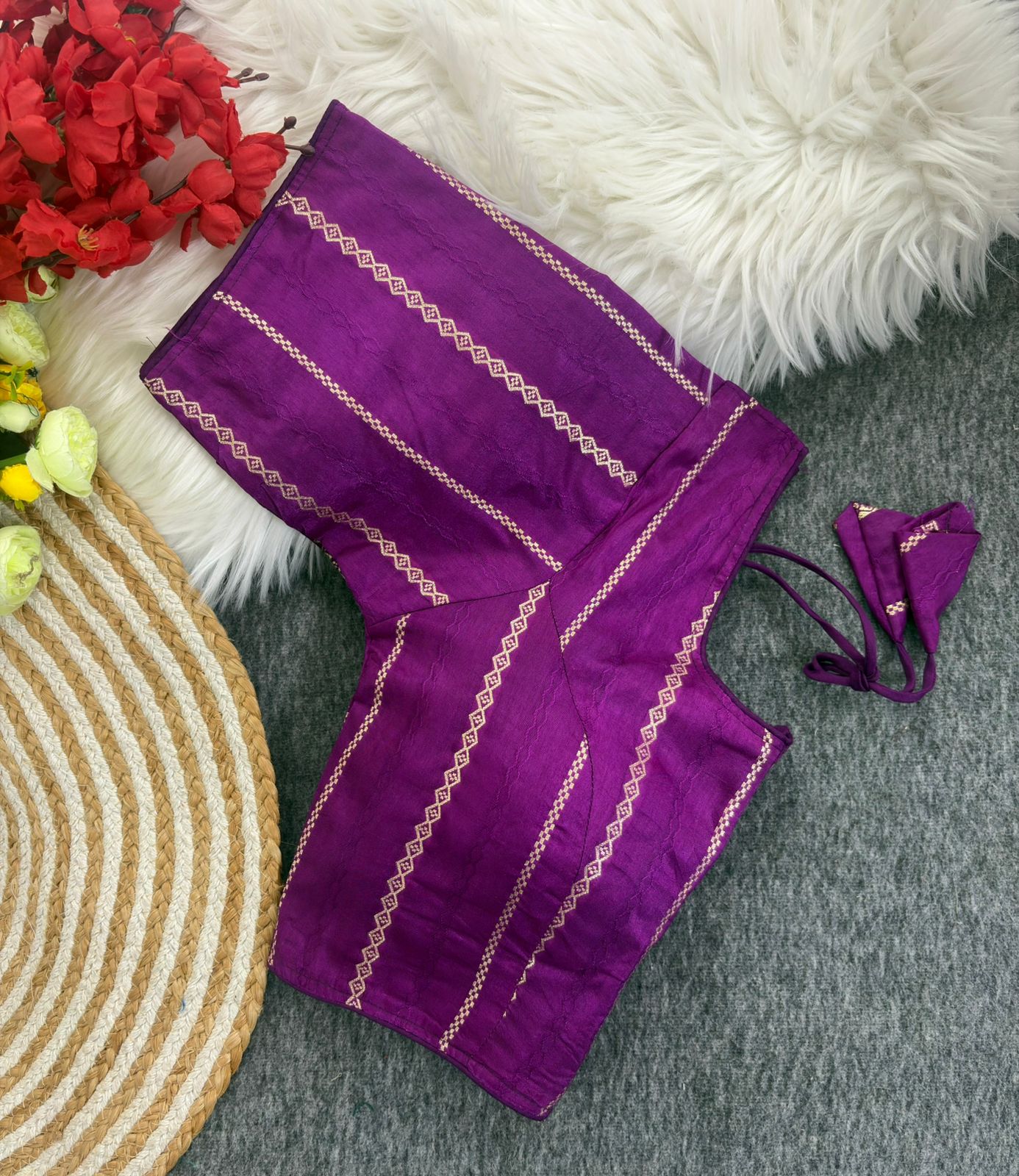
Darts are often easier to alter in small increments. A tailor can release or deepen a dart, adjust the dart point or shift the intake towards the side seam. Altering a princess seam may require opening a longer seam, reshaping multiple panels and matching any piping or embroidery.
A darted blouse can also be more economical to produce because the pattern uses fewer pieces. That benefit doesn't make a darted blouse less refined. A carefully placed dart can give excellent fit, especially when the fabric is soft and the blouse has moderate ease.
The main limitation is that a dart can create a local concentration of fullness. A large bust dart in a stiff fabric may produce a pointed appearance if the dart ends too close to the bust apex. Correct dart-point distance, pressing and fabric choice help prevent that problem.
When a darted blouse may be the better choice
A traditional darted blouse may suit a wearer who wants a smooth printed front, a simpler alteration or a less visibly tailored appearance. Cotton blouses, lighter Chanderi fabrics and relaxed silhouettes often work well with darts when the pattern includes sufficient ease.
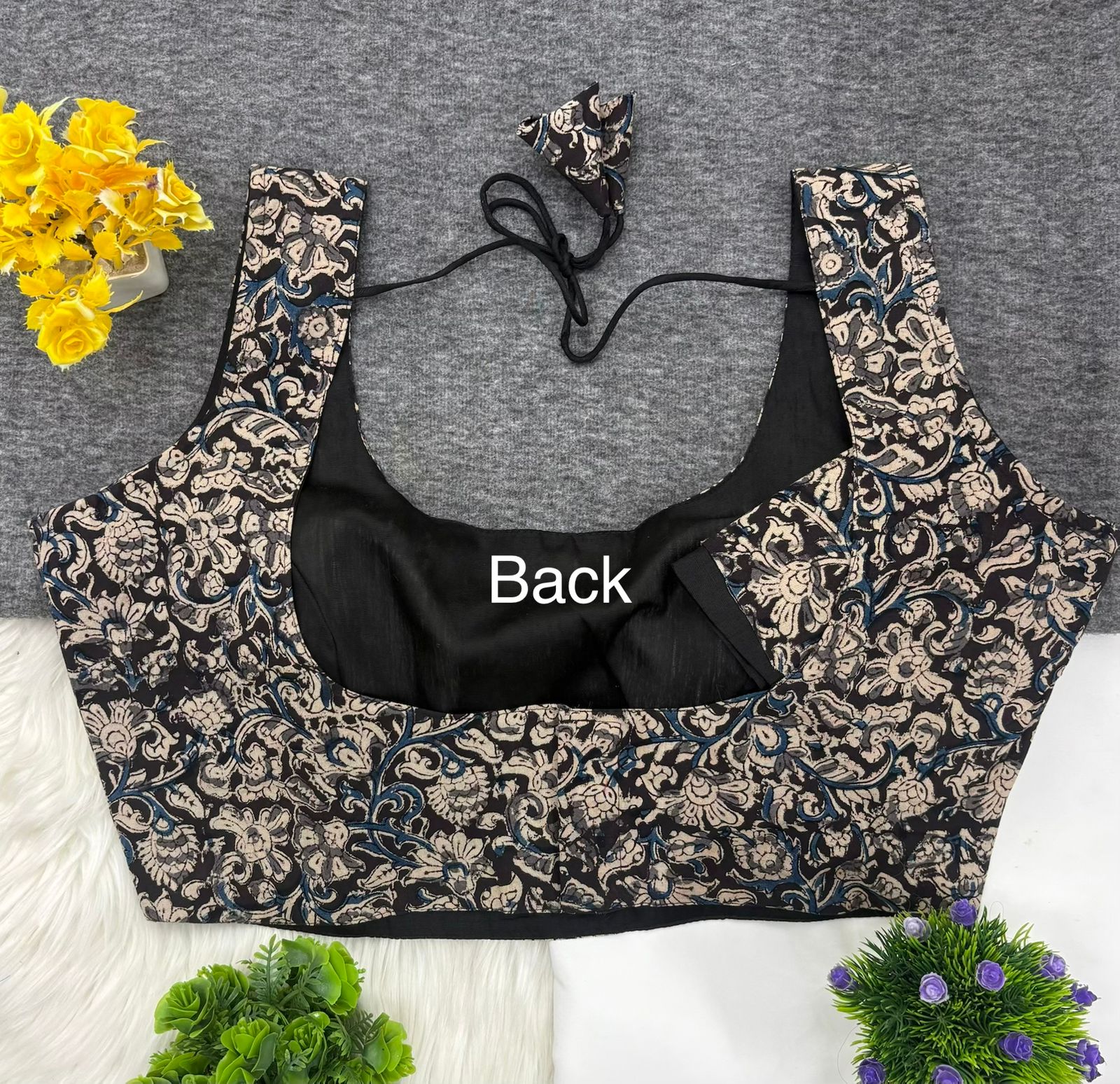
The Pure Kalamkari Cotton Padded Blouse for Women demonstrates the importance of print continuity. A dart can preserve more of a Kalamkari motif across the front than a curved panel seam, although the dart still needs to be pressed carefully to avoid puckering.
A darted design is also practical when the blouse has a short length, a simple round neck or minimal embellishment. Fewer seams can make washing and maintenance less demanding, particularly for everyday cotton saree styling.
Fabric Determines How Each Construction Performs
Fabric weight, stability and surface texture determine whether princess seams or darts produce the cleaner result. A pattern that works beautifully in silk may behave differently in soft cotton or a loosely woven fabric.
Banarasi silk and other structured silks hold a curved seam clearly, but seam allowances need accurate trimming and pressing. Heavy zari areas can add bulk at the seam, so excessive topstitching or thick lining may make the bodice feel stiff.
Cotton is breathable and easy to wear, but cotton prints can reveal puckering if darts are sewn with uneven tension. A cotton blouse should be pre-shrunk when possible, because even a small change in length or width affects bust and waist balance.
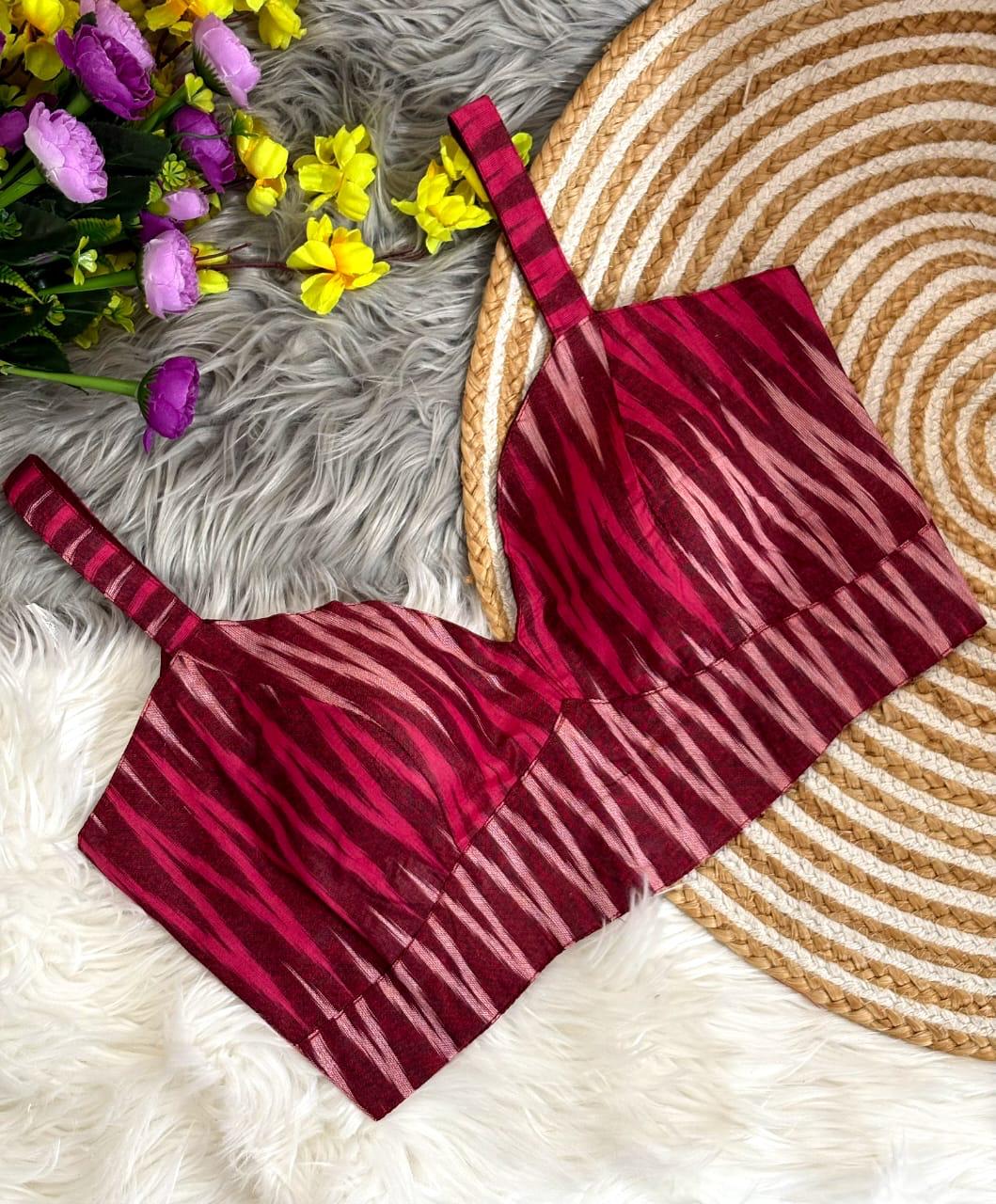
Ikkat cotton has a distinct woven pattern that can shift visually across a curved seam. The Ikkat Cotton Padded Blouse for Women Sleeveless shows why panel direction, motif placement and seam matching deserve attention before purchase. A seam may enhance the geometry, but a poorly matched seam can interrupt it.
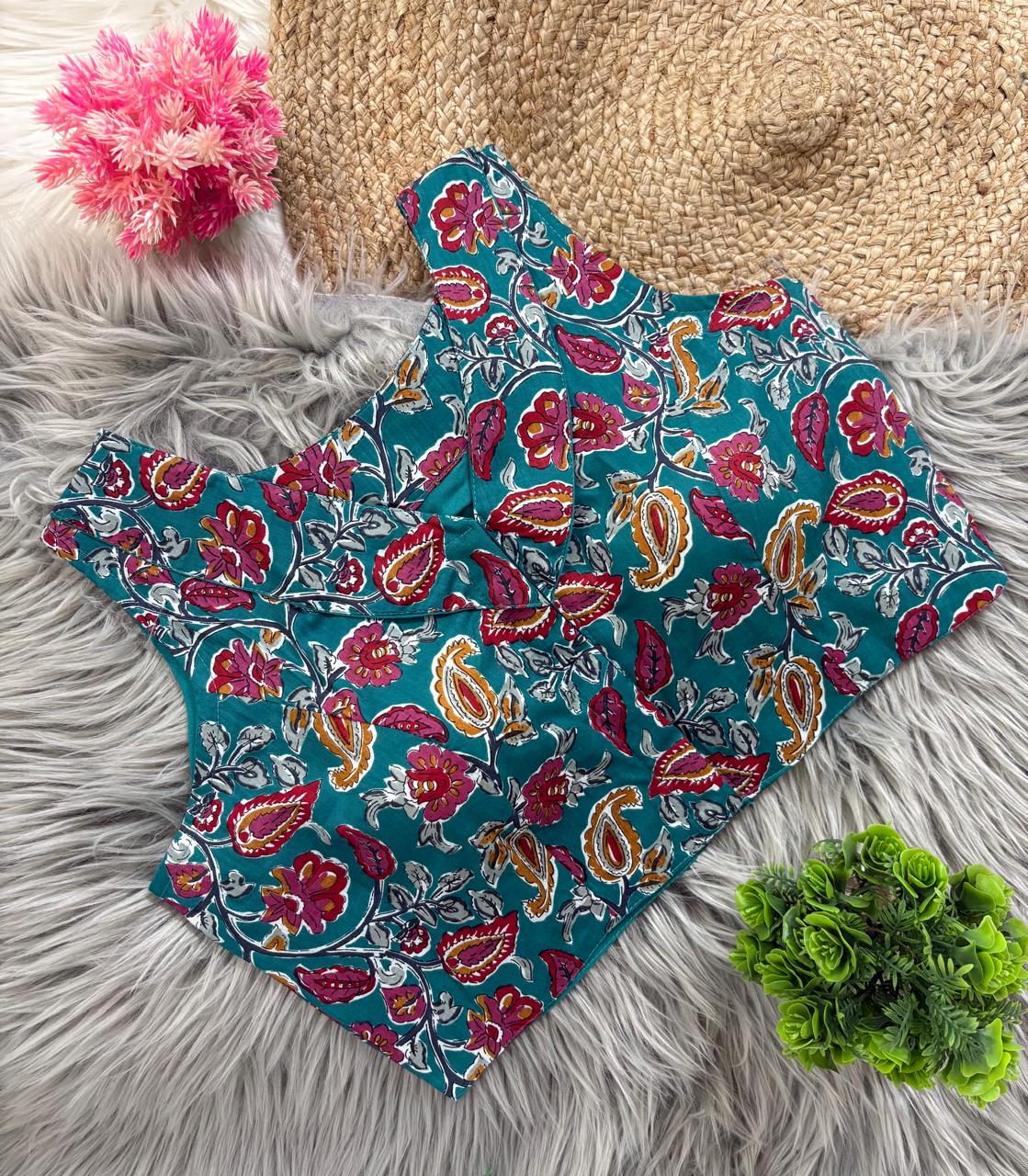
Kalamkari cotton benefits from a pattern plan that respects the scale of its printed motifs. The Kalamkari Cotton V Neck Collar Blouse for Women combines neckline structure with printed cotton, so the collar, V point and front shaping must remain balanced rather than competing for attention.
Silk, cotton and designer readymade choices
A silk readymade blouse usually benefits from a firm lining, stable shoulder seams and accurate bust shaping. A designer readymade blouse may use princess seams as both a fitting device and a decorative feature, especially around a deep V neck, collar or embellished armhole.
Cotton readymade blouses are often more forgiving in warm weather, but fabric softness doesn't eliminate the need for correct armhole depth. A loose armhole can expose the inner blouse while a tight armhole can pull the front seam upwards.
The Classic Festive Wear Blouse for Stylish Saree Look can be assessed by looking at the relationship between neckline, sleeve opening and waist shaping. A festive blouse should not be judged only from the front photograph; the back length and underarm fit determine whether the saree pallu sits comfortably.
How to Read a Readymade Blouse Before Buying
A readymade blouse should be assessed through measurements, construction and intended saree use rather than through size label alone. Compare the product chart with your body measurements and allow for the garment's stated stretch or padding.
- Measure the bust: Keep the tape level across the fullest point and avoid pulling it tight. Record the measurement in the innerwear you expect to use.
- Measure the underbust: This is especially important for padded or closely fitted blouses because the lower band controls stability.
- Check the shoulder: A shoulder that's too broad can make the armhole fall away from the body, while a narrow shoulder pulls the neckline backwards.
- Check blouse length: Measure from the shoulder or high point of the shoulder to the waist position where the blouse will end. A saree waistband may sit higher or lower than the natural waist.
- Inspect seam direction: Princess seams should curve smoothly over the bust and continue towards the waist without sudden angles. Darts should point towards, but not directly finish on, the bust apex.
- Test arm movement: Raise both arms, sit down and move the shoulders forward. A blouse that looks smooth while standing can still pull at the armhole during movement.
Readymade sizing is particularly important for saree blouses because the garment is usually worn close to the body. If the blouse has no adjustment margin, choose the size that accommodates the largest relevant measurement and have a tailor refine smaller areas where possible.
Signs of a well-made princess seam
A well-made princess seam follows a smooth curve, remains symmetrical from left to right and lies flat without puckering. The seam should not twist at the bust apex or form a sharp ridge beneath the arm.
Check whether the lining follows the outer seam. A lining that's cut differently can pull the fashion fabric out of shape. Check whether decorative zari, piping or embroidery continues evenly across both sides, because misalignment becomes more visible along a long curved seam.
The Classic Festive Wear Blouse for Stylish Saree Look and the Banarasi Silk Golden Jari Padded Blouse for Women represent different styling directions. But both should be judged by the same construction checks: balanced shoulders, a stable neckline, smooth bust shaping and a secure lower edge.
Choosing the Construction for a Saree and Occasion
Choose princess seams when you want sculpted shaping, a visibly tailored design line or a fitted blouse that benefits from several body-contouring panels. Choose darts when you prefer a cleaner uninterrupted front, simpler alterations or a softer everyday silhouette.
Wedding and reception sarees often pair well with structured silk or zari blouses because the fabric can support defined shaping. A princess seam can echo vertical saree borders, while a dart can keep attention on embroidery, a statement neckline or a brocade motif.
A Haldi ceremony usually calls for breathable, easy-moving cotton rather than a rigid, heavily constructed bodice. A cotton darted blouse may feel more comfortable for extended wear, while a lightly structured princess-seam design can work when the fabric remains soft and the armhole isn't restrictive.
A sleeveless blouse exposes more of the armhole, making seam placement and underarm comfort especially important. The Ikkat Cotton Padded Blouse for Women Sleeveless should be checked for a clean armhole edge, stable shoulder and sufficient bust room before it's chosen for a long event.
Designer saree styling doesn't require the most complicated construction. A restrained princess seam in a solid silk blouse can look more polished than excessive surface decoration, while a carefully placed dart can allow a printed cotton blouse to retain its visual character.
Care and Alteration Considerations
Care instructions should follow the fabric and embellishment rather than the seam type alone. Banarasi silk with zari generally benefits from gentle dry cleaning or the specific care method supplied by the maker, while cotton may tolerate careful hand washing when colourfastness has been confirmed.
Press a dart from the wider end towards the point using moderate heat and a pressing cloth when the fabric is delicate. Press a princess seam over a tailor's ham so the curve retains its shape. Directly flattening a curved seam on a hard ironing board can create unwanted creases.
Alter a princess seam from the seam allowance only when there's sufficient extra fabric and when the alteration won't disturb embroidery or piping. A tailor may adjust the side panel, centre panel or both, but large changes can alter the bust curve and neckline balance.
Small dart adjustments are often easier, but a dart can't solve every fit issue. A blouse with an incorrect shoulder, back width or armhole depth may need broader pattern changes regardless of whether it uses darts or princess seams.
For a final decision, compare construction with your wearing habits. A silk padded blouse for a formal reception, a cotton blouse for daytime sarees and a sleeveless Ikkat design for a festive gathering may each need a different balance of contour, ease and maintenance.
Common Questions About Princess-Seam and Darted Saree Blouses
What is the main difference between a princess seam and a dart in a blouse?
A princess seam shapes the blouse through a long curved seam that usually runs from the armhole or shoulder over the bust and towards the waist. A traditional dart shapes the garment by folding and stitching fabric over a shorter section.
Are princess seams better for a fuller bust?
Princess seams can provide smooth, distributed shaping for a fuller bust, but the pattern still needs correct bust, shoulder, armhole and back measurements. A well-drafted darted blouse can also fit a fuller bust successfully.
Do princess seams make a blouse look slimmer?
Princess seams can create a visually lengthening vertical line and define the waist, which may make the blouse appear more sculpted. The effect depends on seam placement, colour contrast, fabric weight and overall blouse length.
Can a readymade princess-seam blouse be altered?
A readymade princess-seam blouse can often be altered when the side seams and panel seams contain enough allowance. Major changes may disturb the bust curve, neckline, embroidery or piping, so a tailor should inspect the construction before altering it.
Which blouse construction works better for cotton sarees?
Both constructions can work for cotton sarees. Traditional darts suit soft printed cotton when a clean front and easy alteration are priorities, while princess seams work well when the cotton blouse is lightly structured and the panel lines complement the print.
How should a padded blouse be measured for a saree?
Measure the bust and underbust while wearing the innerwear or padding that will be used with the blouse. Compare those measurements with the product chart, and also check shoulder width, armhole depth and blouse length.