A Polki Necklace for a Reception Lehenga Without Heavy Earrings gives the face and neckline a clear focal point while keeping the ears comfortable through a long celebration. The key isn't simply choosing the largest necklace available. Necklace length, blouse neckline, embroidery density, metal colour, hairstyle and the weight of the remaining jewellery must share the same visual scale. A well-planned combination can look bridal in photographs without making the outfit feel crowded.
Reception lighting also changes how jewellery reads. Warm indoor lights bring out the glow of uncut-style polki stones, while flash photography catches high-contrast white stones and reflective sequins. The best pairing begins with the lehenga's surface and neckline, not with jewellery alone. This guide explains how to make that decision with specific, repeatable checks.
Polki Necklace for a Reception Lehenga Without Heavy Earrings: Why the balance works
A polki necklace can replace heavy earrings when the necklace has enough width, brightness and detail to frame the face on its own. A collar-length choker or a short layered necklace draws attention towards the jawline and upper chest, so earrings only need to provide a small finishing point.
Heavy earrings often become uncomfortable because bridal styles combine metal, stones, backing plates and long drops. A necklace-led arrangement distributes visual interest across the centre of the body instead of placing all the weight on the earlobes. Small studs, pearl buttons or lightweight drop earrings can then echo the necklace without competing with it.
The approach works particularly well for a reception because reception lehengas frequently contain sequins, metallic thread, crystals or dense embroidery. A polki necklace adds a traditional jewellery reference while allowing the lehenga to remain visible. The result is most successful when the necklace is the strongest accessory and the earrings are deliberately quiet.
Comfort also matters during a reception. A necklace may feel substantial, but the pressure is spread across the neck and shoulders rather than concentrated at two small points. Try the complete jewellery combination for at least 30 minutes before the event. Check whether the necklace twists, catches on the blouse or presses against the throat when you sit, greet guests and turn your head.
Polki Necklace for a Reception Lehenga Without Heavy Earrings: How to choose the scale
The necklace scale should match the blouse exposure, embroidery density and volume of the lehenga rather than the wearer's height alone. A narrow neckline with visible skin can support a broad choker, while a heavily embellished high neckline usually needs a shorter, more open necklace or no necklace at all.
Match the necklace length to the blouse neckline
A 14- to 16-inch choker generally suits a sweetheart, scoop or moderately deep V-neck blouse. A 17- to 20-inch necklace works better with a wider V-neck or a blouse that leaves more of the upper chest open. A high-neck blouse often looks cleaner with a necklace sitting above the neckline or with a delicate pendant rather than a wide, crowded collar.
A necklace should not end exactly where the blouse embroidery begins. Leave roughly 2 to 4 centimetres of visual separation when possible, because a small gap helps both jewellery and embroidery remain legible in photographs. If the blouse has a heavily worked border, choose a necklace that sits above the border or use a longer design that clearly crosses it.
Match visual weight to embroidery
A heavily sequinned lehenga needs a structured necklace with defined edges, while a lightly embroidered lehenga can carry more layered polki detail. Dense sparkle on both the blouse and necklace can merge into a single reflective patch under flash photography.
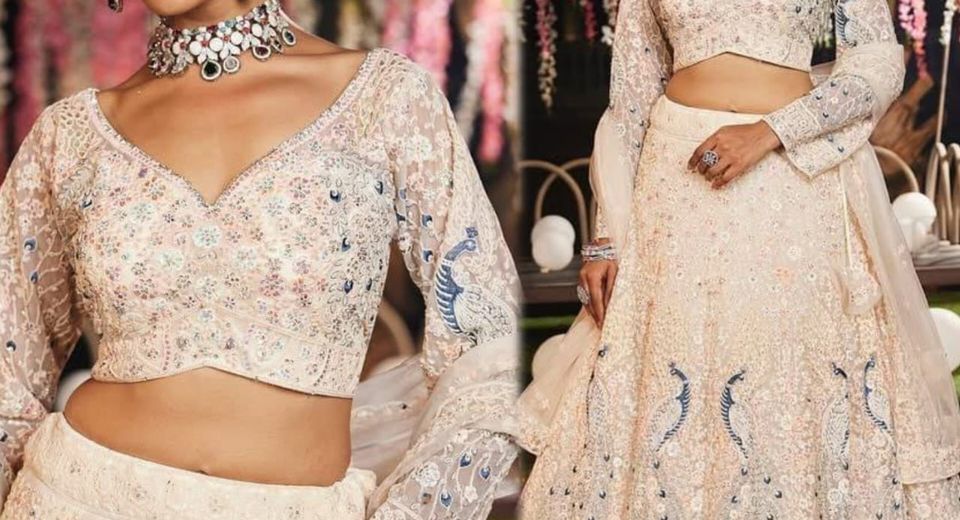
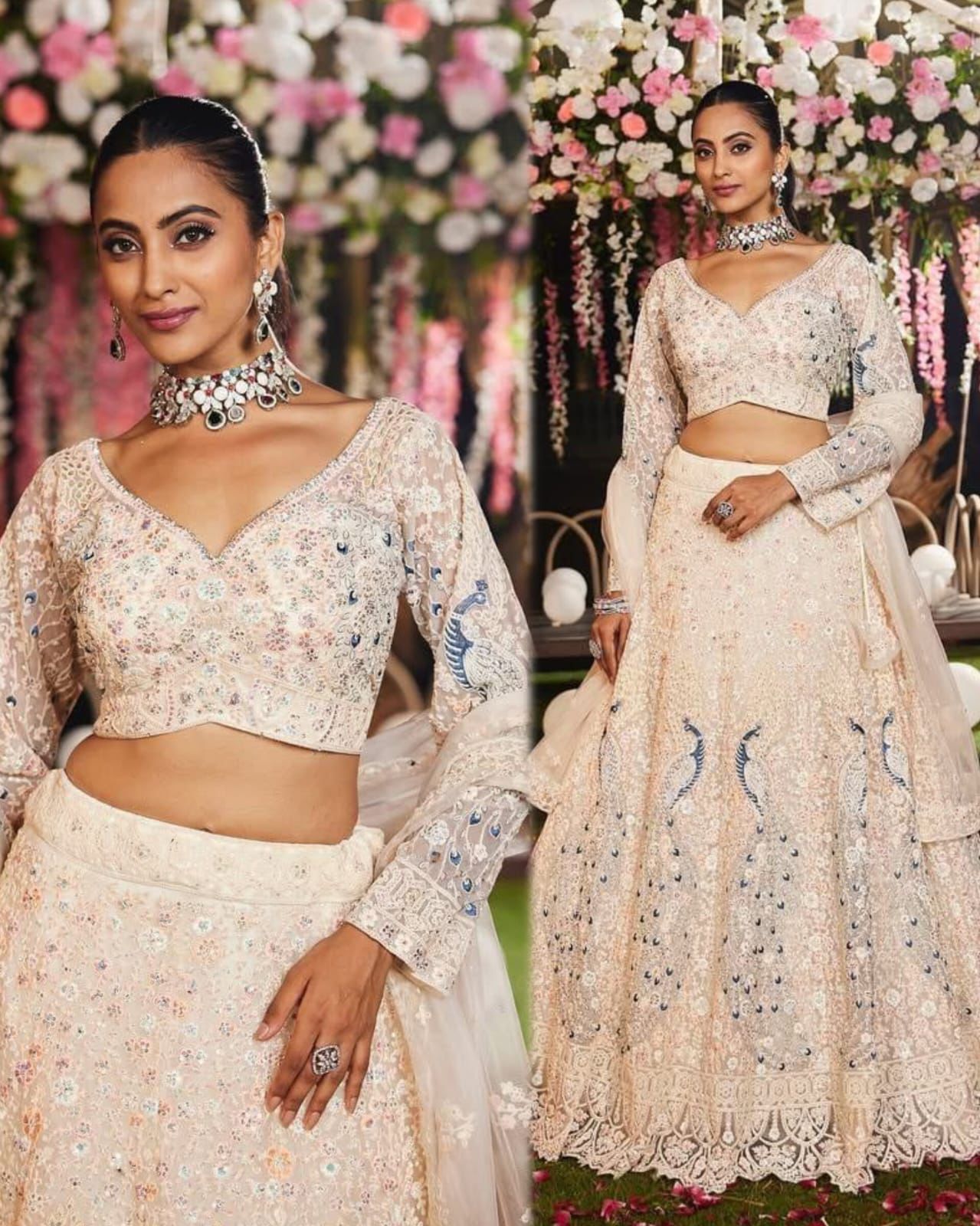
The Cream Peacock Embroidered Net Lehenga Set for Women, for example, introduces a clear motif and a light base. A medium-width polki necklace with a peacock, floral or uncut-stone pattern can reinforce that detail without requiring chandelier earrings. A softer earring silhouette will keep the neckline from becoming visually overloaded.
Body proportion can guide the final adjustment. A petite frame may look more balanced with one strong necklace layer and tiny studs, while a taller frame can carry a longer pendant or two fine layers. These are proportion guidelines, not rigid rules. The decisive test is whether the necklace remains visible without covering the blouse's most important embroidery.
Polki Necklace for a Reception Lehenga Without Heavy Earrings: Which metal suits the outfit
Gold-toned polki jewellery is the safest choice for warm reception lighting and lehengas with ivory, red, pink, peach or classic gold embroidery. White-polki settings with gold foil or gold-coloured metal retain a bridal appearance while blending naturally with zari, antique embroidery and warm-toned sequins.
Silver-toned or rhodium-finish jewellery works well with cool pastels, icy pinks, grey, lavender and blue. A mixed-metal necklace can be useful when the lehenga contains both silver sequins and gold thread. The mix should appear intentional through at least one repeated detail. Repeating the secondary metal in a bangle, hair accessory or blouse trim is enough.
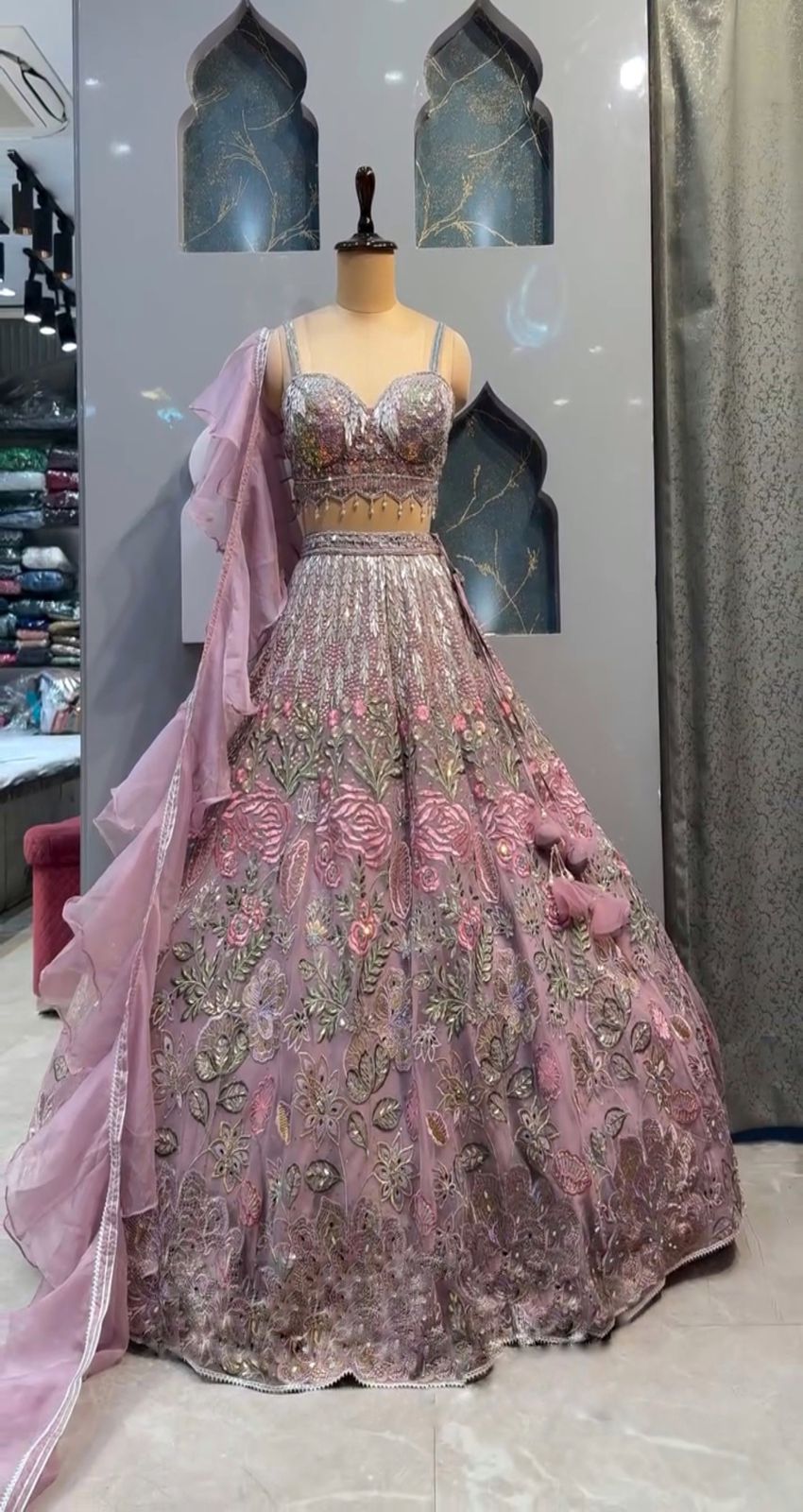
Pastel Grey Embroidered Butterfly Net Lehenga Set has a cooler visual base, so a polki necklace with white stones, pearls or a restrained silver-gold finish can preserve the softness of the colour. Bright yellow gold may still work, but it should be repeated in the blouse embroidery or paired with warm makeup so that the necklace doesn't look disconnected.
Colourful polki stones are best used as accents rather than as a second dominant palette. For a pink lehenga, ruby, rose, champagne or uncut-white details are easier to coordinate than several unrelated gemstone colours. For green, emerald accents can deepen the look. The necklace should still contain enough neutral stone or pearl detail to connect with the outfit.
Price can also affect the material choice. A necklace described as polki may use natural uncut diamonds, imitation polki stones, glass stones or a combination of materials. Ask whether the stones are natural or simulated, check the base metal, and look for secure clasps before purchase. An imitation polki necklace can create the desired reception look without the cost or weight of fine jewellery, but its finish should be checked under direct light.
Polki Necklace for a Reception Lehenga Without Heavy Earrings: What to wear on the ears
The ideal earrings for a necklace-led reception look are small studs, compact jhumkas, pearl drops or slim three-dimensional drops weighing substantially less than the necklace. Earrings should repeat one necklace detail, such as pearl, gold, white stone or a single coloured accent, instead of introducing a new design language.
Studs are the most reliable option when the necklace has multiple layers or a wide pendant. Small jhumkas suit a time-honoured polki arrangement, particularly when the lehenga includes zari or a classic bridal palette. Pearl drops soften a high-shine necklace and work well with pastel net lehengas. Long linear drops can be used with a compact choker, but they should stop above the shoulder rather than competing with the blouse and dupatta.
Skip a large maang tikka if the necklace already has a dramatic central pendant and the blouse is richly embellished. A small tikka or a delicate matha patti can still balance the forehead. Nose jewellery should remain equally restrained unless the reception look is intentionally heritage and the necklace has a relatively simple structure.
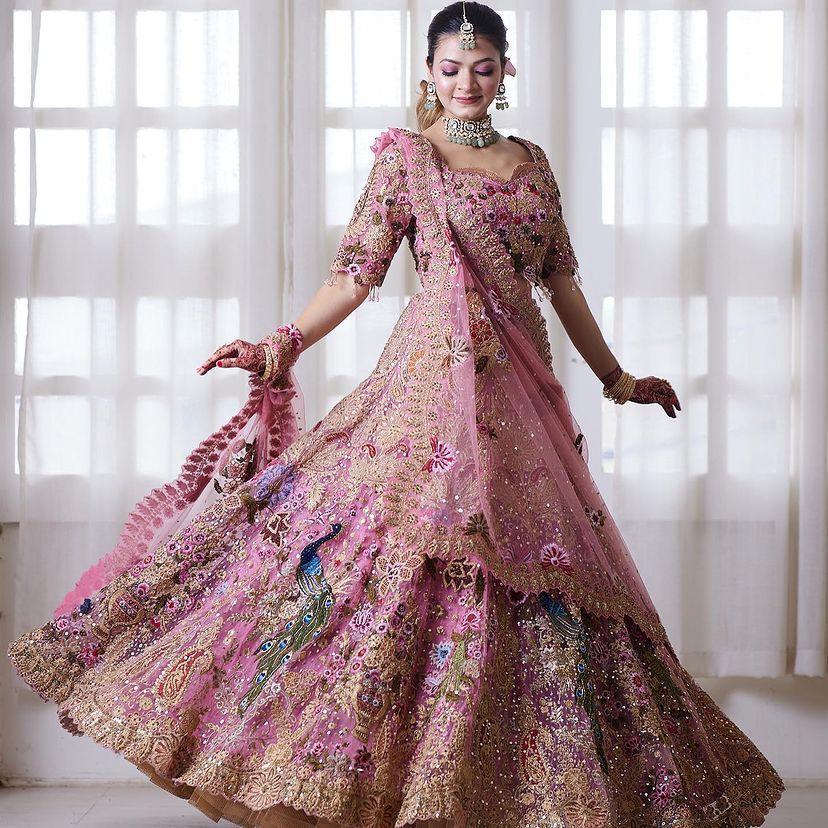
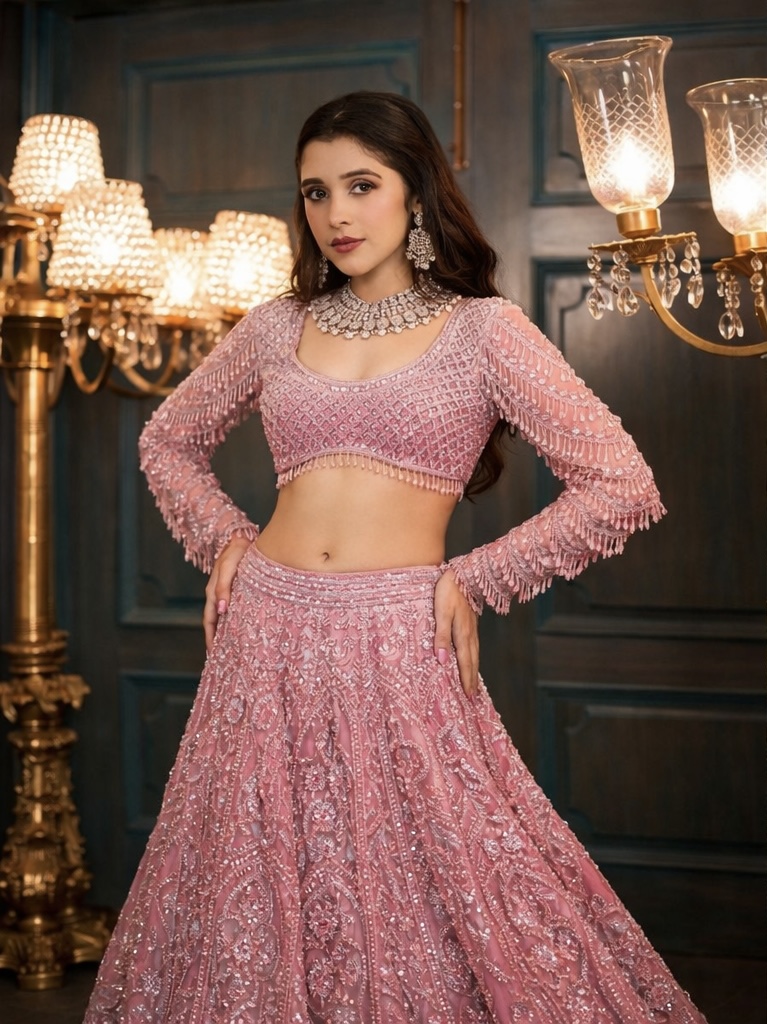
For a pink-heavy outfit, the Pink Bridal Sequins Lehenga Set with Heavy Flare can support a gold polki necklace and compact pearl or stone studs. The flare creates movement below the waist, so a necklace with a defined central pendant supplies structure near the face without adding oversized earrings.
Test earring comfort with the hairstyle and dupatta already in place. Earring backs can catch in a bun, while a dupatta border can pull on a long drop. Lightweight earrings are not automatically comfortable if their shape catches fabric, so inspect the hook, post and backing as carefully as the stone weight.
Polki Necklace for a Reception Lehenga Without Heavy Earrings: How to coordinate blouse and hair
The blouse neckline must leave enough visible space for the necklace to be read clearly. If the blouse is already decorated with a broad neckline border, select a necklace with a clean outline. If the blouse is plain or minimally worked, a more detailed polki design can become the principal embellishment.
A dupatta placed over both shoulders can hide a long necklace and make a choker the more practical choice. Draping one dupatta over a shoulder and allowing the other side of the neckline to remain visible gives a longer necklace room to show. Pin the dupatta below the necklace rather than directly across its pendant, especially for photographs taken from the front.
Hair should create an open frame around the necklace. A low bun, side-swept waves or a half-up style exposes the neck and allows small earrings to remain visible. Very full hair on both sides of the face can make small earrings disappear, while a sleek centre-parted bun can make a broad necklace look more deliberate and balanced.
The Pink Sequins Embroidered Butterfly Net Lehenga Set has a surface that already catches light across the skirt and blouse. A low bun with a clean centre part can prevent the necklace, sequins and hair texture from competing. Small polki studs or pearl buttons will remain visible without adding another large shape near the cheeks.
Take a front-facing photograph from approximately two metres away before finalising the styling. A mirror shows immediate detail, but a photograph reveals whether the necklace disappears beneath the dupatta or whether the earrings create distracting points beside the face. Check one image with flash and one without flash because reception venues may use both warm ambient lighting and direct camera flash.
Polki Necklace for a Reception Lehenga Without Heavy Earrings: Three outfit formulas
Three practical formulas cover most reception lehenga combinations: a compact choker with studs, a medium necklace with pearl drops, or a longer necklace with minimal ear jewellery. Each formula creates a different proportion and should be selected according to the neckline and embroidery.
For a high-shine sequinned lehenga
A compact polki choker with small studs is the most controlled choice for a high-shine sequinned lehenga. Avoid adding a large pendant, layered haar and chandelier earrings together because several reflective surfaces can flatten into visual noise.
The Pink Chinon Silk Sequins Embroidered Lehenga Set Sale and the Green Chinon Silk Sequins Embroidered Lehenga Set both call for attention to the relationship between silk sheen and sequin sparkle. A defined gold polki choker can sit close to the collarbone, while tiny stone studs repeat the light without adding length beside the face.
For a pastel or grey net lehenga
A medium-length polki necklace with pearls or white stones gives a pastel net lehenga enough definition for evening photographs. Keep the earrings to pearl drops or small round studs so that the pale palette remains airy rather than becoming overly metallic.
The Pastel Grey Embroidered Butterfly Net Lehenga Set benefits from a necklace with open spaces between the stones. Openwork prevents the jewellery from appearing too dense against grey net, and a cool-toned or mixed-metal finish can echo delicate embroidery more effectively than an entirely opaque gold collar.
For a bold red or dramatic bridal colour
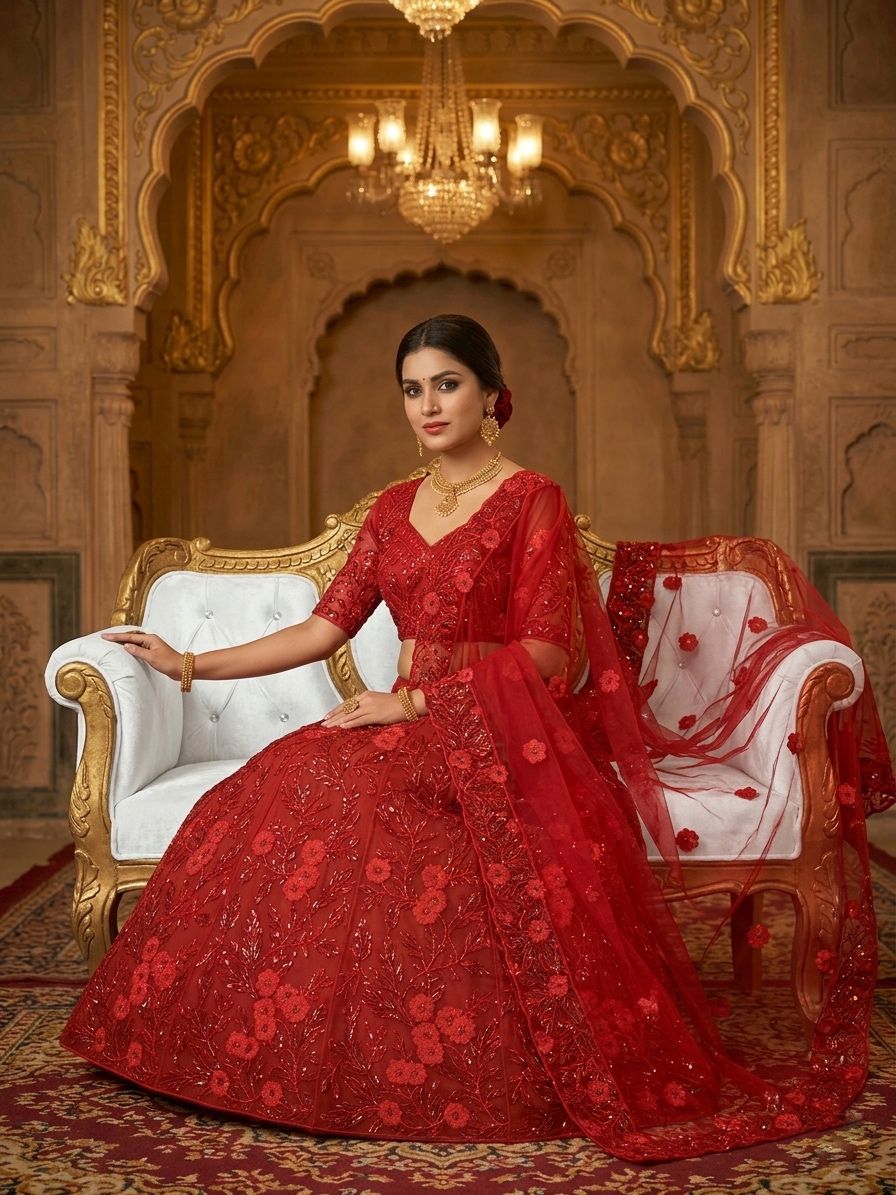
A red reception lehenga can carry a classic gold polki necklace with a modest pendant and small jhumkas. Red fabric already provides strong colour contrast, so the necklace should add texture and light rather than introduce multiple competing gemstone colours.
The Red Butterfly Net Sequins Lehenga Set Wedding Wear can be styled with antique-gold polki, a small red stone accent and compact dome earrings. A pinned dupatta over one shoulder will keep the neckline visible and prevent a longer necklace from being concealed during photographs.
Polki Necklace for a Reception Lehenga Without Heavy Earrings: Shopping and finishing checks
Measure the blouse neckline and note the position of its embroidery before buying the necklace. A simple paper or ribbon placed around the neck can help estimate whether a 15-inch choker or an 18-inch necklace will sit in the intended area. Allow extra room for a necklace that has a rigid collar structure, because the stated length may not correspond to the way the necklace curves.
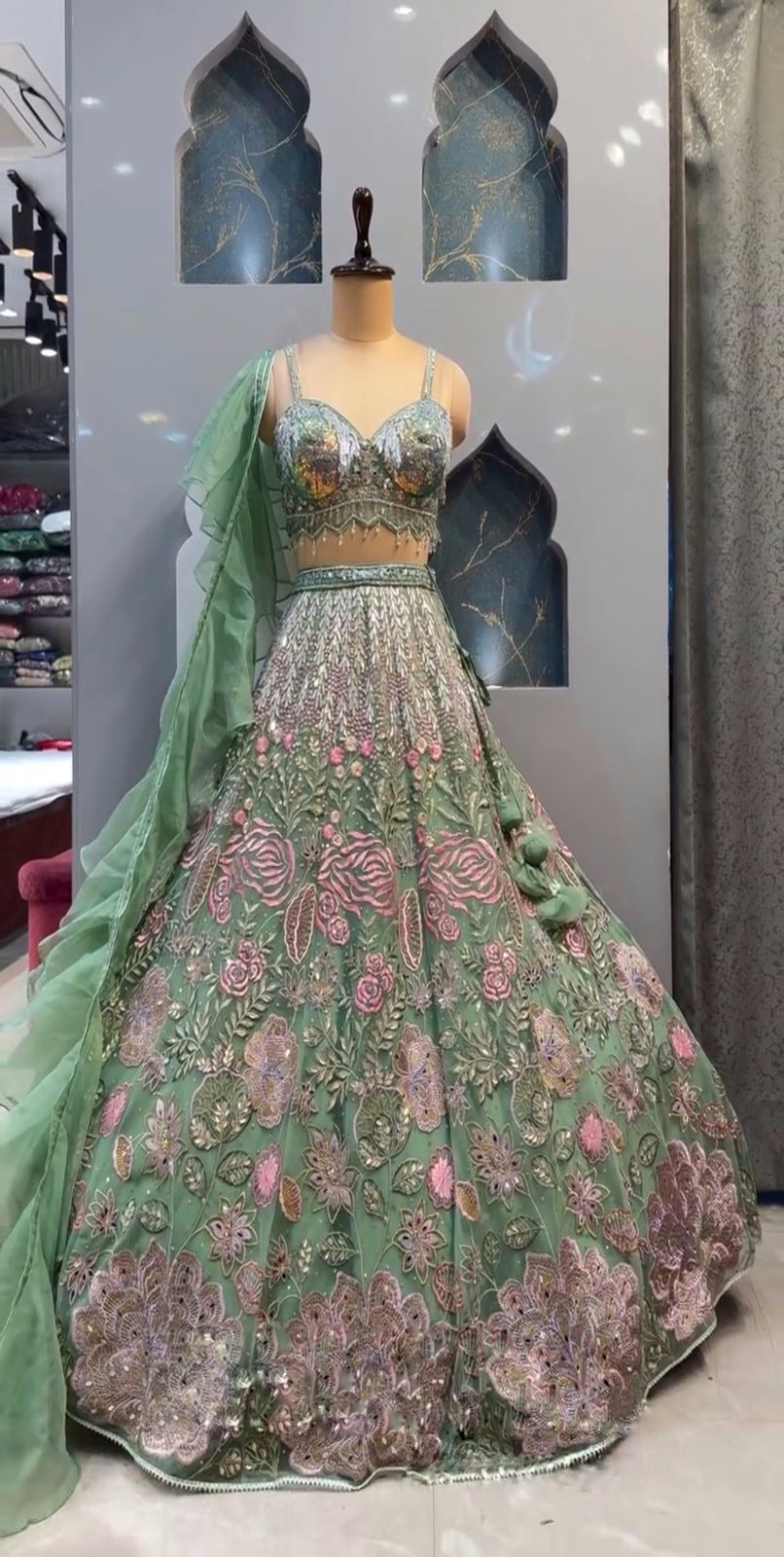
Compare the jewellery with the actual lehenga rather than relying only on online colour names. Pink can range from dusty rose to fuchsia, while gold embroidery can be yellow, champagne or antique. Collections such as Reception Lehengas Under 5500 with Up to 51% Off and Bridesmaid Lehengas Under 5500 can be useful starting points for comparing silhouettes and budgets, but the jewellery decision should follow the specific blouse neckline and fabric.
For a lighter-budget reception look, Pink Lehengas Under 4000 with 50% Discount and Silk Lehengas Under 3000 may offer colour and fabric options that work with imitation polki. Net Lehengas Under 4500 with 51% Discount can be paired with openwork necklaces that don't visually overwhelm sheer or embroidered net. The most convincing result comes from matching surface finish and proportion, not from selecting the most expensive-looking accessory.
Before the event, secure the necklace with a safety chain, carry spare earring backs, and keep a small jewellery pouch in the reception kit. Wipe imitation polki with a soft dry cloth after wearing it. Avoid perfume, hairspray, body oil and water on stones or plated metal, because moisture and chemicals can dull reflective surfaces and loosen some adhesive-set stones.
One clear focal point is enough for a polished reception outfit. If the polki necklace has a broad centrepiece, let the earrings, maang tikka and bangles support it quietly. When every accessory has a large pendant, a long drop or dense sparkle, the outfit loses hierarchy. A necklace-led look succeeds because the eye knows where to rest.
Polki Necklace for a Reception Lehenga Without Heavy Earrings: A final styling checklist
A successful combination should pass five checks before you wear it. The necklace should sit in the open space created by the blouse neckline, the metal should relate to the embroidery, the earrings should echo rather than compete, the dupatta should not cover the centrepiece, and the complete jewellery should remain comfortable while sitting and moving.
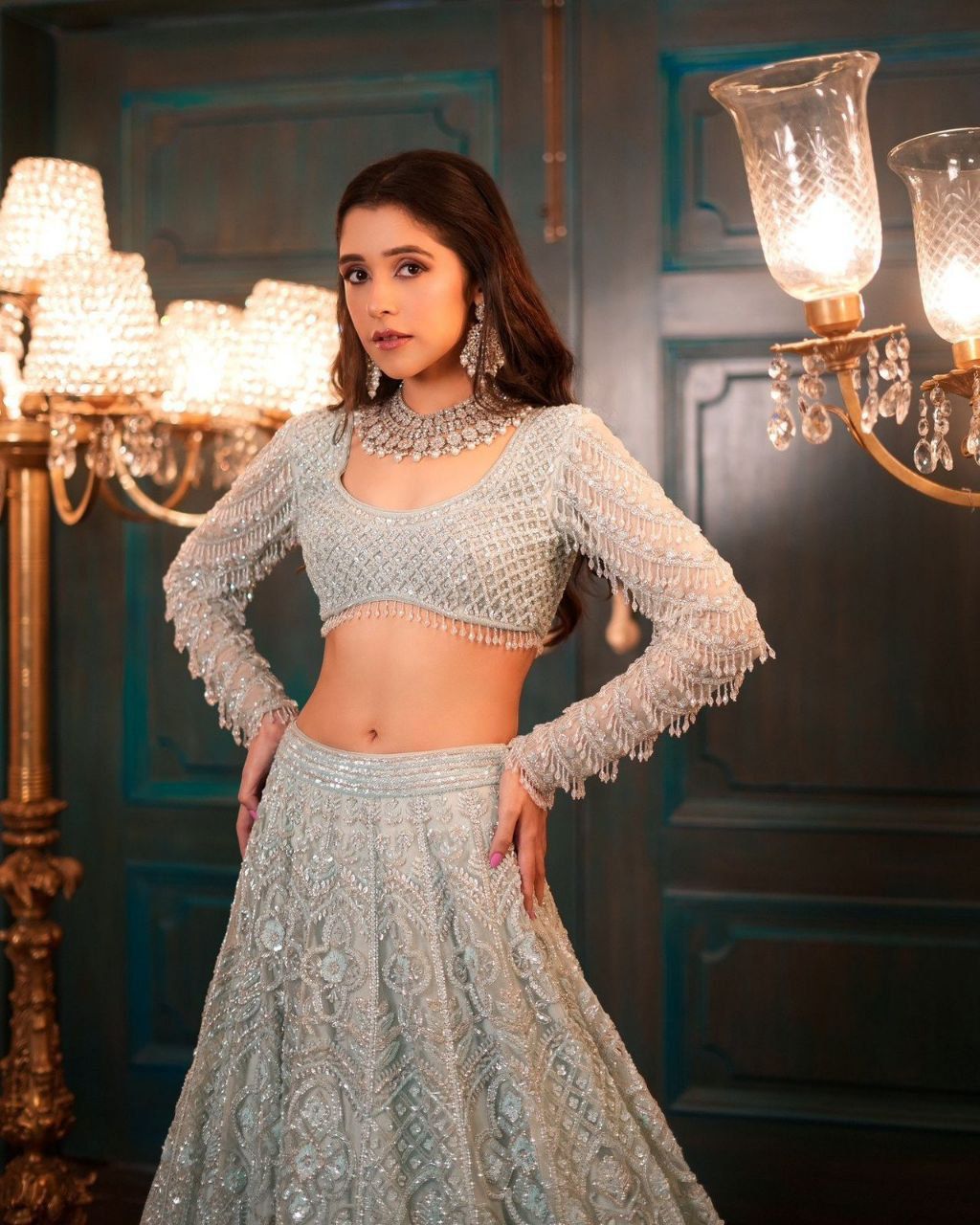
- Neckline: Confirm that the necklace doesn't collide with the blouse border or disappear under it.
- Scale: Use one dominant accessory, usually the necklace, and keep the earrings visibly smaller.
- Colour: Repeat gold, silver, pearl or one gemstone shade at least twice across the look.
- Photography: Test the outfit in warm light and flash from the distance used for portraits.
- Comfort: Wear the full combination for 30 minutes and check the clasp, chain, earring backs and dupatta pins.
A considered Polki Necklace for a Reception Lehenga Without Heavy Earrings can provide bridal richness without the strain of oversized earrings. Start with the blouse neckline, select the necklace scale, repeat its metal or stone detail in small accessories, and let the lehenga's embroidery remain visible. That sequence creates a look that feels complete in person and remains clear in reception photographs.
Common Questions About Styling Polki with a Reception Lehenga
Can I wear a polki necklace with a lehenga without wearing heavy earrings?
Yes, a polki necklace can carry the main jewellery focus when the earrings are small studs, pearl buttons, compact jhumkas or lightweight drops. Choose a necklace with enough width or a defined centrepiece so the face and neckline do not appear under-accessorised.
Which necklace length works best with a reception lehenga blouse?
A 14- to 16-inch choker usually suits sweetheart, scoop and moderate V-neck blouses. A 17- to 20-inch necklace generally works better with a wider or deeper V-neck, while a high-neck blouse often needs a short necklace or a design that sits above the neckline.
What earrings should I wear with a statement polki necklace?
Small studs, pearl drops, compact jhumkas and slim lightweight drops are the most suitable choices. Match one detail from the necklace, such as pearl, gold, white stone or a single coloured accent, instead of adding a separate bold earring style.
Does gold or silver polki jewellery suit a reception lehenga better?
Gold-toned polki suits warm colours such as red, pink, peach, ivory and gold embroidery, particularly under warm reception lighting. Silver-toned or mixed-metal polki generally complements grey, lavender, icy pink and cool pastel lehengas.
How can I stop my polki necklace from looking too heavy with a sequinned lehenga?
Use a compact choker or a necklace with open spaces instead of combining a wide collar, large pendant and layered haar. Keep the earrings small, choose one dominant metal, and leave a visible gap between the necklace and the blouse embroidery whenever possible.
How should I test a reception lehenga jewellery combination before the event?
Wear the complete lehenga, blouse, dupatta, hairstyle and jewellery for at least 30 minutes. Take front-facing photographs in warm light and with flash, then check whether the necklace remains visible, the earrings stay comfortable and the dupatta covers any important detail.