

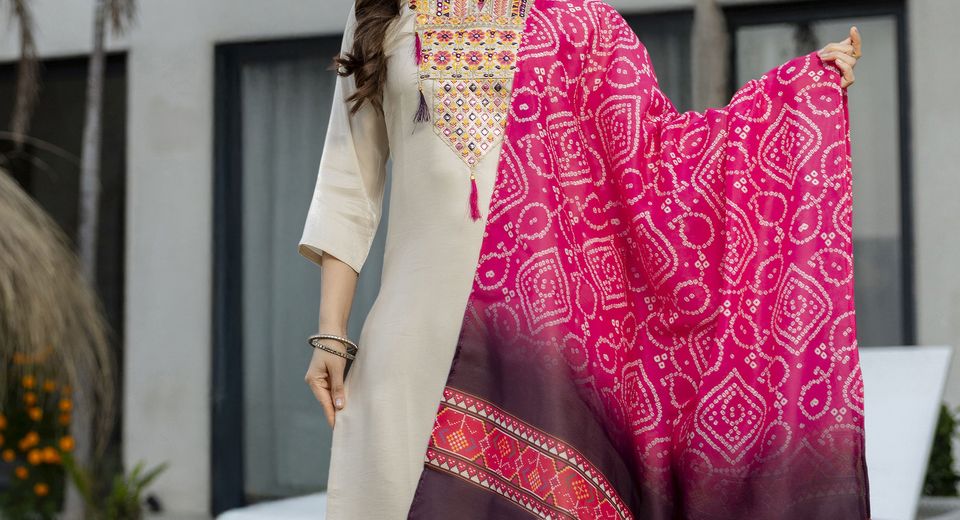
Polished Kurtis for Small Festive Gatherings That Never Feel Overdone should look considered, comfortable and appropriate to the scale of the celebration. A home puja, intimate Diwali dinner, family lunch or small office festive event rarely needs the heavy shine, sweeping volume or elaborate jewellery suited to a wedding. The most reliable outfit usually combines one refined detail, a breathable fabric, a controlled colour palette and a silhouette that lets you sit, move and eat comfortably.
The distinction matters because festive dressing isn't only about looking dressy. A heavily embellished outfit can feel out of place in a living room, while an everyday cotton kurta may look under-finished beside diyas, flowers and dressed-up guests. A readymade salwar suit solves that middle-ground problem by giving you coordinated colour, trousers and dupatta without requiring the visual intensity of bridal or reception wear.
Polished Kurtis for Small Festive Gatherings That Never Feel Overdone: what makes a set feel refined?
A kurti set feels polished when its fabric, ornamentation, fit and accessories are balanced instead of competing for attention. One visible focal point, such as delicate embroidery, a lustrous weave or an organza dupatta, is usually enough for a small festive gathering.
Start by identifying the strongest element in the outfit. A Chanderi silk kurti with a subtle sheen already catches light, so it needs less jewellery. A plain kurta with detailed earrings can carry a stronger accessory. A dupatta with a decorative border can become the focal point when the kurta and pants remain relatively quiet.
Scale also affects polish. Large motifs, dense sequins and multiple metallic surfaces create a high-impact appearance that works beautifully at weddings but can overwhelm a close family gathering. Fine thread embroidery, small buti patterns, restrained zari and a clean neckline generally look more intentional in a smaller setting.
Fit creates the other half of the effect. Shoulder seams should sit close to the shoulder edge, the armhole should allow comfortable movement and the kurta should fall without pulling across the bust or hips. Trousers should have enough ease to sit cross-legged or climb stairs. An outfit that needs constant adjustment won't look polished for long.
Polished Kurtis for Small Festive Gatherings That Never Feel Overdone: which fabrics work best?
Chanderi silk, silk blends, cotton and lightweight woven fabrics are practical choices because they combine visual refinement with manageable comfort.
Chanderi silk for quiet luminosity
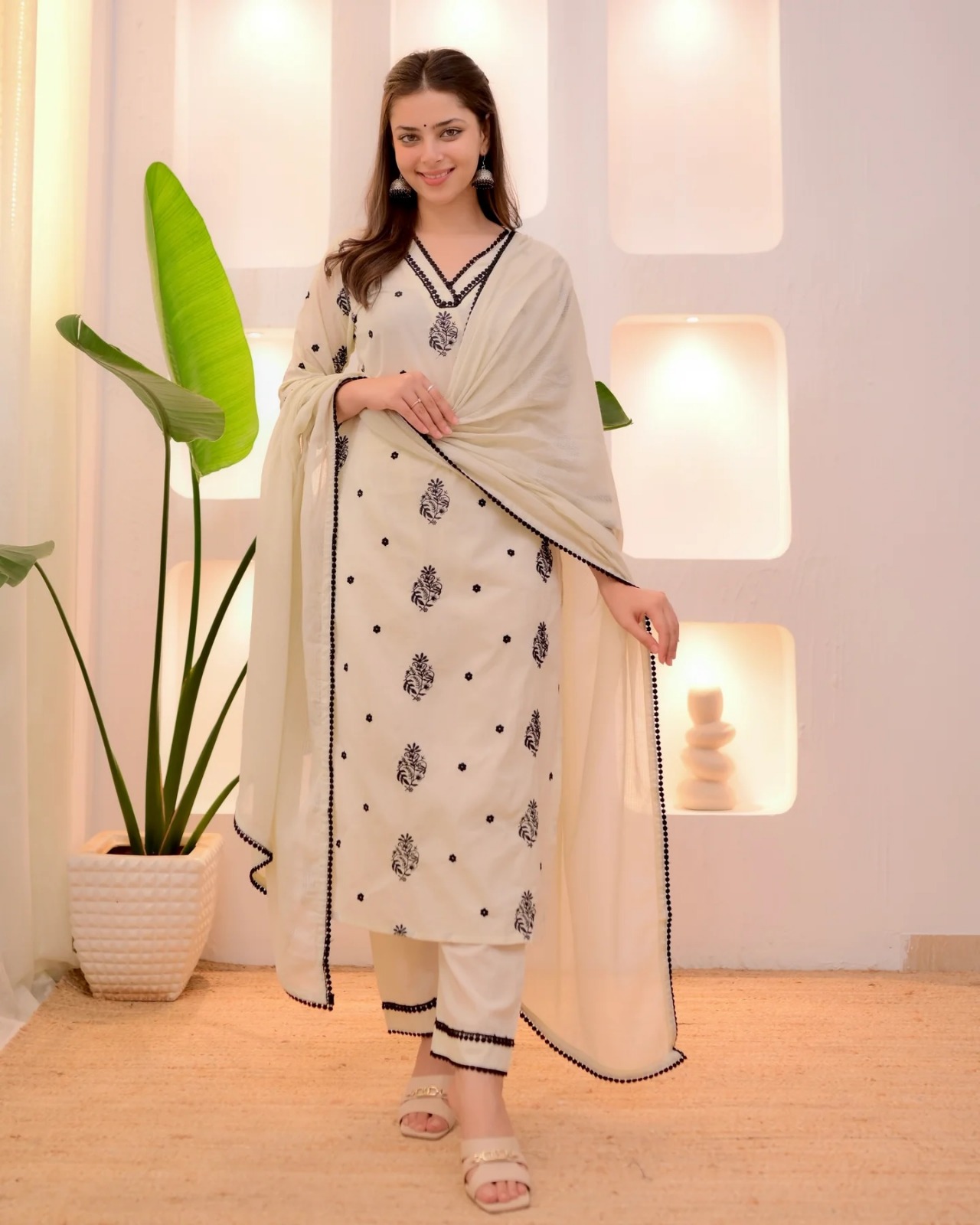
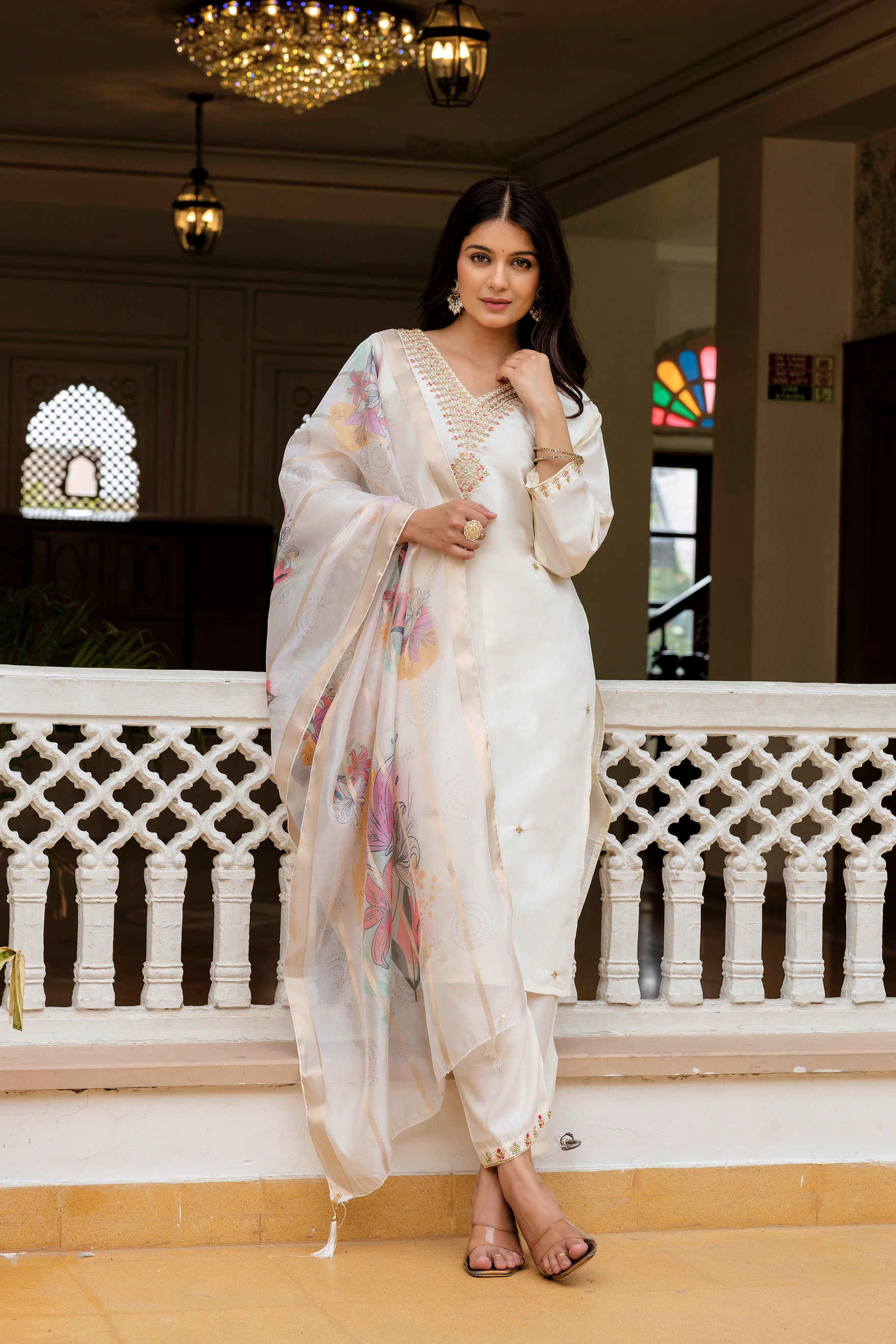
Chanderi silk has a fine, light hand and a gentle surface sheen that photographs well without looking glittery. The fabric suits afternoon pujas, festive lunches and early-evening gatherings, particularly when paired with tonal embroidery. Cream Chanderi Silk Kurti Pant Dupatta Set for Women demonstrates how a pale, lustrous base can feel festive through texture rather than heavy decoration.
Elegant Green Chanderi Silk Kurti Pant Dupatta Set offers a stronger colour direction while retaining the graceful quality associated with Chanderi. Green works especially well for celebrations involving marigold flowers, brass lamps or natural outdoor light because the colour feels festive without depending on metallic sparkle.
Silk for evening gatherings
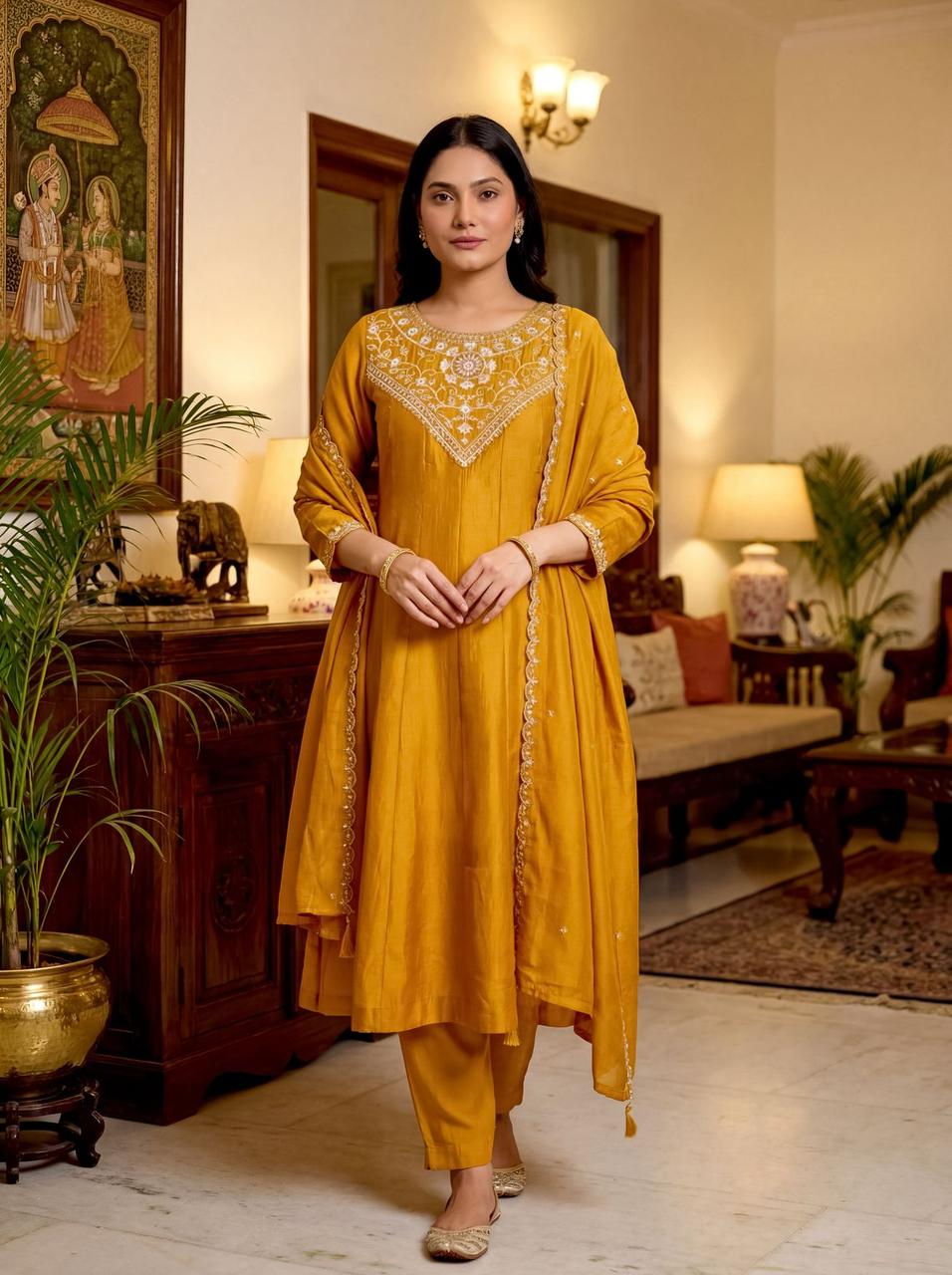
Silk and silk-rich fabrics are useful when a gathering begins after sunset or takes place in a more formal home setting. Silk reflects warm indoor light and gives a straight kurta or palazzo silhouette enough presence without requiring a full anarkali shape. Mustard Silk Embroidered Kurti Palazzo Dupatta Set brings warmth and movement through the palazzo while keeping the outfit coordinated.
Cotton for warm-weather comfort
Cotton salwar suits festive outfits work best when the print, border or finishing supplies enough visual detail for the celebration. Choose a crisp cotton with embroidery, a woven border or a carefully placed motif rather than a very plain daily-wear fabric. Cotton is particularly useful for daytime Ganesh Chaturthi visits, Haldi ceremony functions held outdoors and festive gatherings in warm or humid cities.
Fabric weight should match the event and the weather. A dense fabric can become uncomfortable in a crowded home, while a very sheer or flimsy fabric may need constant arranging. Lining, sleeve length and the number of layers under the dupatta also affect comfort more than the fabric name alone.
Polished Kurtis for Small Festive Gatherings That Never Feel Overdone: how should colour be chosen?
Choose one festive colour with either a soft neutral or a controlled tonal companion, rather than combining several high-intensity shades at once.
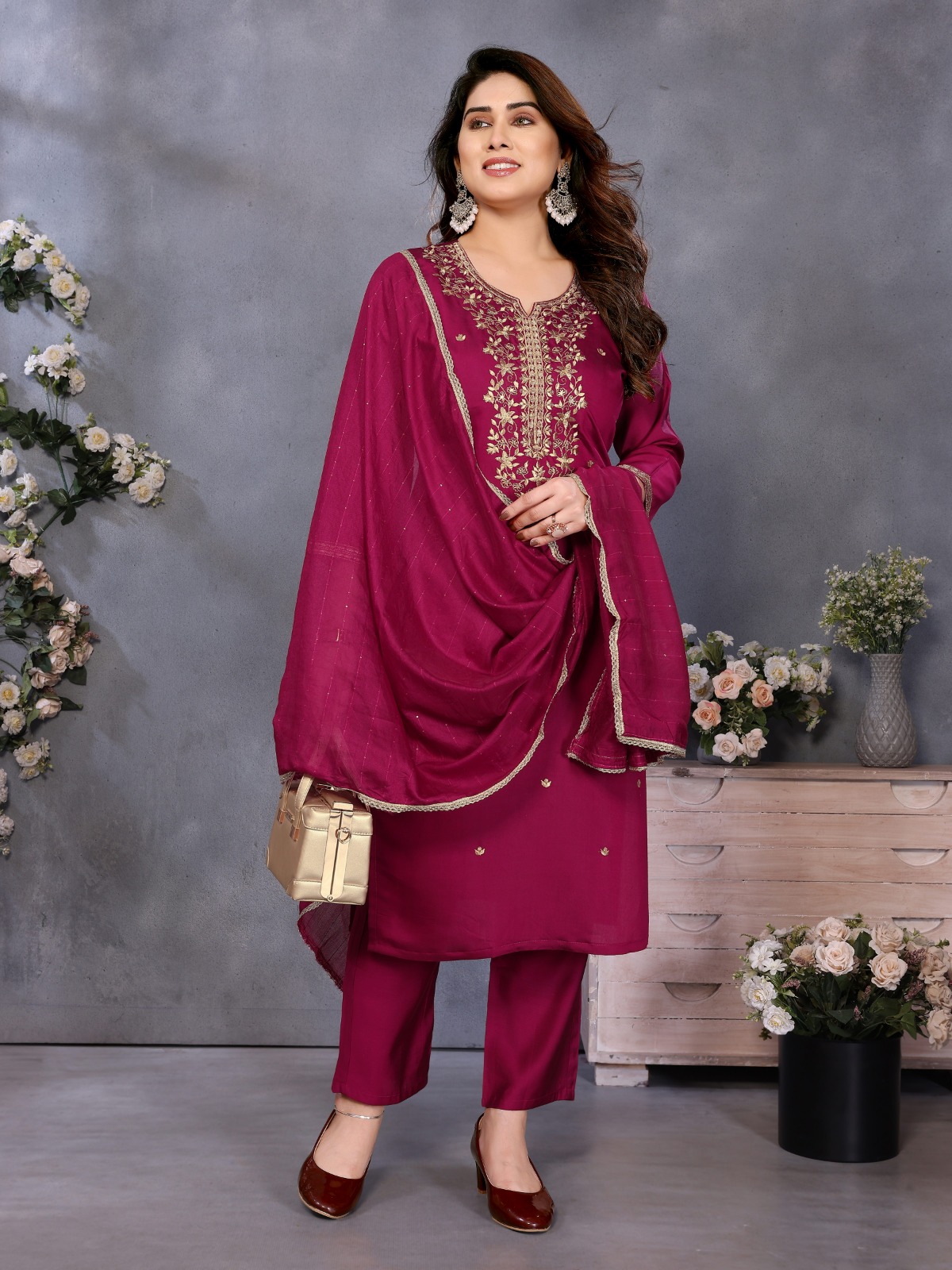
Wine, rani pink, teal, mustard, cream and green offer different levels of visual impact. Elegant Wine Ethnic Kurti Set with Dupatta creates a rich evening impression, so antique gold earrings and neutral footwear can complete it without adding another bright colour. Elegant Rani Pink Ethnic Kurti Set with Organza Dupatta feels more celebratory through colour and translucency, making simple pearl or gold-toned accessories sufficient.
Cream is useful when the invitation calls for elegance but not spectacle. Festive Wear Cream Embroidered Kurta Set gains interest from embroidery while keeping the overall appearance calm. Cream Embroidered Chanderi Kurti Pant Dupatta Set gives a similar principle with a more textured, woven foundation.
Teal can bridge daytime and evening because it has the depth of a jewel tone without the conventional intensity of red or fuchsia. Elegant Teal Embroidered Kurta Pant Dupatta Set can be styled with tan, champagne, muted gold or brown accessories. A mustard outfit pairs naturally with ivory, warm brown and antique gold, while green works with gold, beige and even a small amount of pink in the accessories.
Colour should also respond to the setting. Bright daylight reveals saturated colours and sharp contrasts, whereas warm indoor bulbs deepen wine, mustard and green. For photographs, cream, teal and mid-tone pink generally retain visible detail better than an all-black outfit or very pale beige under dim lighting.
Polished Kurtis for Small Festive Gatherings That Never Feel Overdone: which silhouettes are practical?
Straight kurta sets, lightly flared kurtas and kurta-pant combinations are the most versatile silhouettes because they look dressed-up without requiring excessive volume.
Straight kurta with pants
A straight kurta with tailored pants creates a neat vertical line and works well for family lunches, office celebrations and puja visits. The silhouette suits women who prefer a formal salwar suit ladies style without the drama of a floor-length anarkali. A clean side slit and a hem that falls around the knee or mid-calf make the outfit easy to walk in.
Kurta with palazzo pants
Palazzo pants add movement and visual softness while remaining more relaxed than a heavily flared skirt. The width of the palazzo should be balanced with the kurta length; a shorter kurta can make the leg line look longer, while a longer kurta creates a more fluid, modest proportion. Mustard Silk Embroidered Kurti Palazzo Dupatta Set shows how one decorative surface and one flowing component can provide enough occasion character.
Lightly flared and embroidered sets
A lightly flared kurta is suitable when you want more movement than a straight cut but less volume than a formal anarkali. Embroidery concentrated around the neckline, cuffs or hem keeps the eye directed without covering the entire garment. The approach is useful for a Salwar Suit Design Girl style that feels current and youthful while remaining appropriate for family celebrations.
Readymade construction is convenient when the kurta, pants and dupatta already share a colour story. Check the size chart rather than choosing only by your usual size, because brands measure bust, waist, hip, shoulder and garment length differently. If a set is between sizes, prioritise comfort at the bust and upper arm; a minor alteration at the side seam or trouser waist is usually easier than correcting a garment that's too tight across the shoulders.
Polished Kurtis for Small Festive Gatherings That Never Feel Overdone: what can regional style add?
Regional inspiration can guide colour, surface design and draping while still allowing the outfit to remain understated.
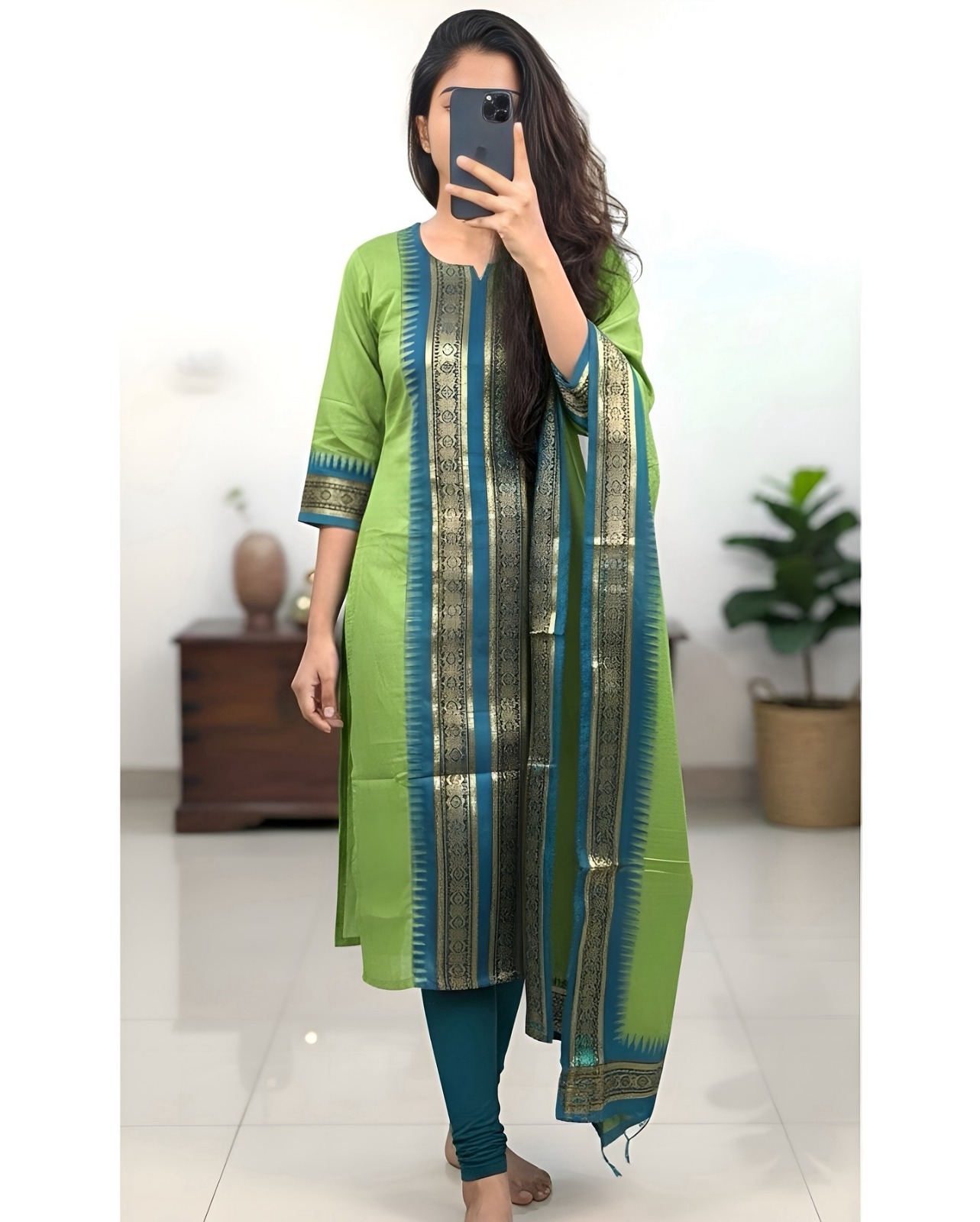
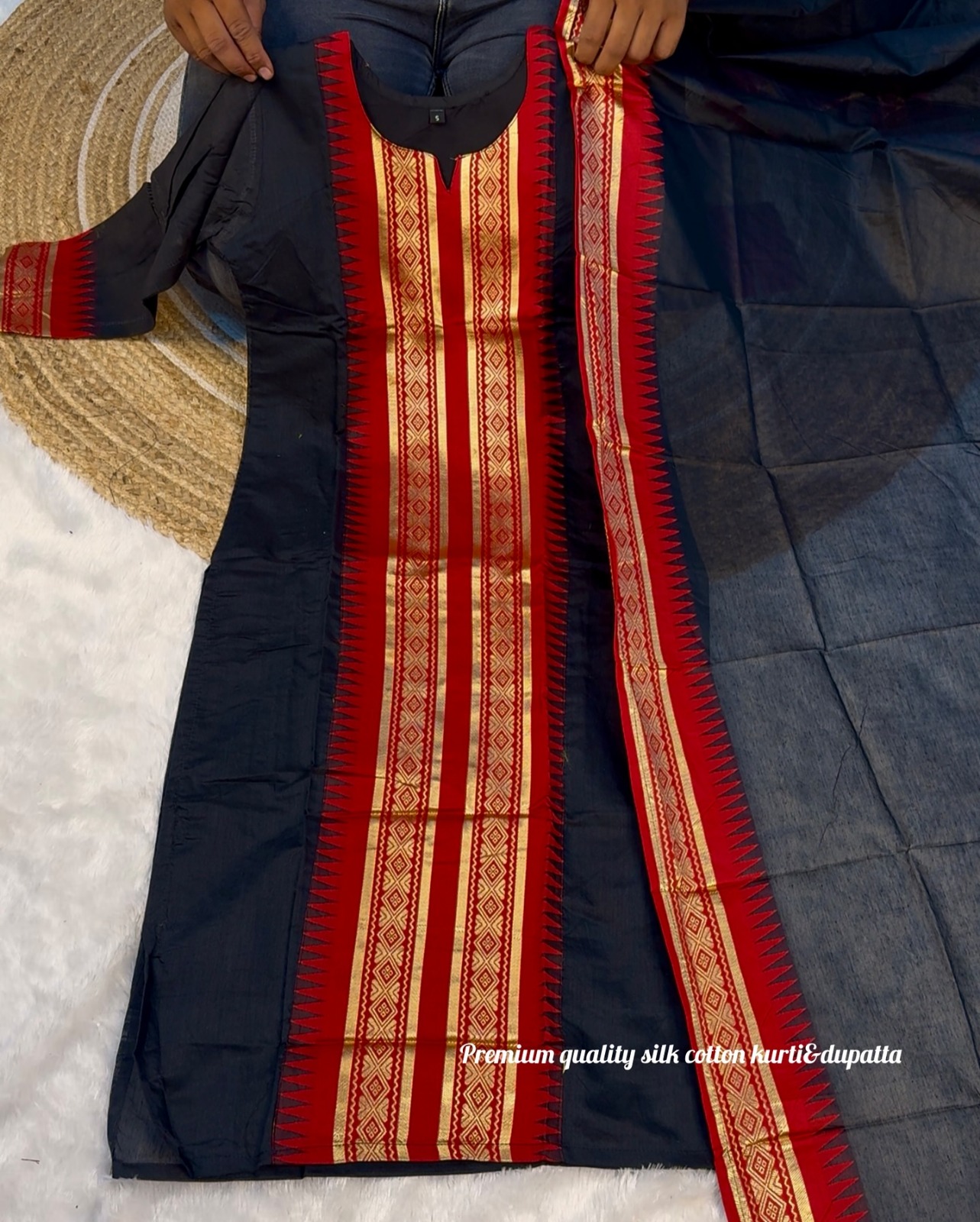
Gujarati Festive Salwar Suits can suggest lively colour combinations and celebratory detailing, but a small gathering calls for selecting one such element instead of stacking mirror work, contrast borders and dramatic jewellery together. Marwari Style Festive Salwar Suits can inspire warm palettes, ornamental accents and a more traditional mood; balance those details with plain footwear and a compact handbag.
Maharashtra Paithani Inspired Salwar Suits are useful references for jewel tones and heritage-inspired borders. A teal or green set with a controlled gold accent can echo that richness without becoming ceremonial. Punjab Phulkari Embroidered Salwar Suits offer another route through colourful threadwork and floral motifs, especially when the rest of the styling remains simple.
Kalamkari Print Salwar Suits (Copy) can suit a daytime festive lunch because narrative prints bring interest without relying on sequins. When a print is prominent, choose a dupatta in one background colour from the pattern and keep jewellery to one noticeable piece.
Polished Kurtis for Small Festive Gatherings That Never Feel Overdone: how should the dupatta be styled?
A dupatta looks most polished when its drape is secure, proportionate to the outfit and free from unnecessary layers.
For a seated puja or family lunch, place the dupatta over both shoulders or pin one shoulder lightly so the front neckline remains visible. A narrow pleat at the shoulder creates structure, while a loose fall over one arm gives a softer appearance. Organza dupattas need particularly careful pinning because their crisp surface can shift when you move.
A readymade salwar suit with dupatta should be checked as a complete outfit rather than as three separate pieces. Compare the dupatta border with the kurta embroidery, check whether the length reaches at least the hip on both sides and test whether the fabric catches on jewellery. A small safety pin placed from the inside can secure a shoulder without visibly disturbing the drape.
Dupatta placement can also adjust visual proportion. A vertical fall at the front creates length, while a shoulder-to-shoulder drape adds width around the upper body. Women who prefer less volume can let one end fall behind the shoulder and keep the front clear. Women who want more coverage can use a soft front drape without wrapping the fabric tightly around the neck.
Polished Kurtis for Small Festive Gatherings That Never Feel Overdone: which accessories complete the look?
Small gold-toned earrings, a structured potli or compact clutch, comfortable footwear and one restrained bangle stack are usually enough to complete a festive kurti set.
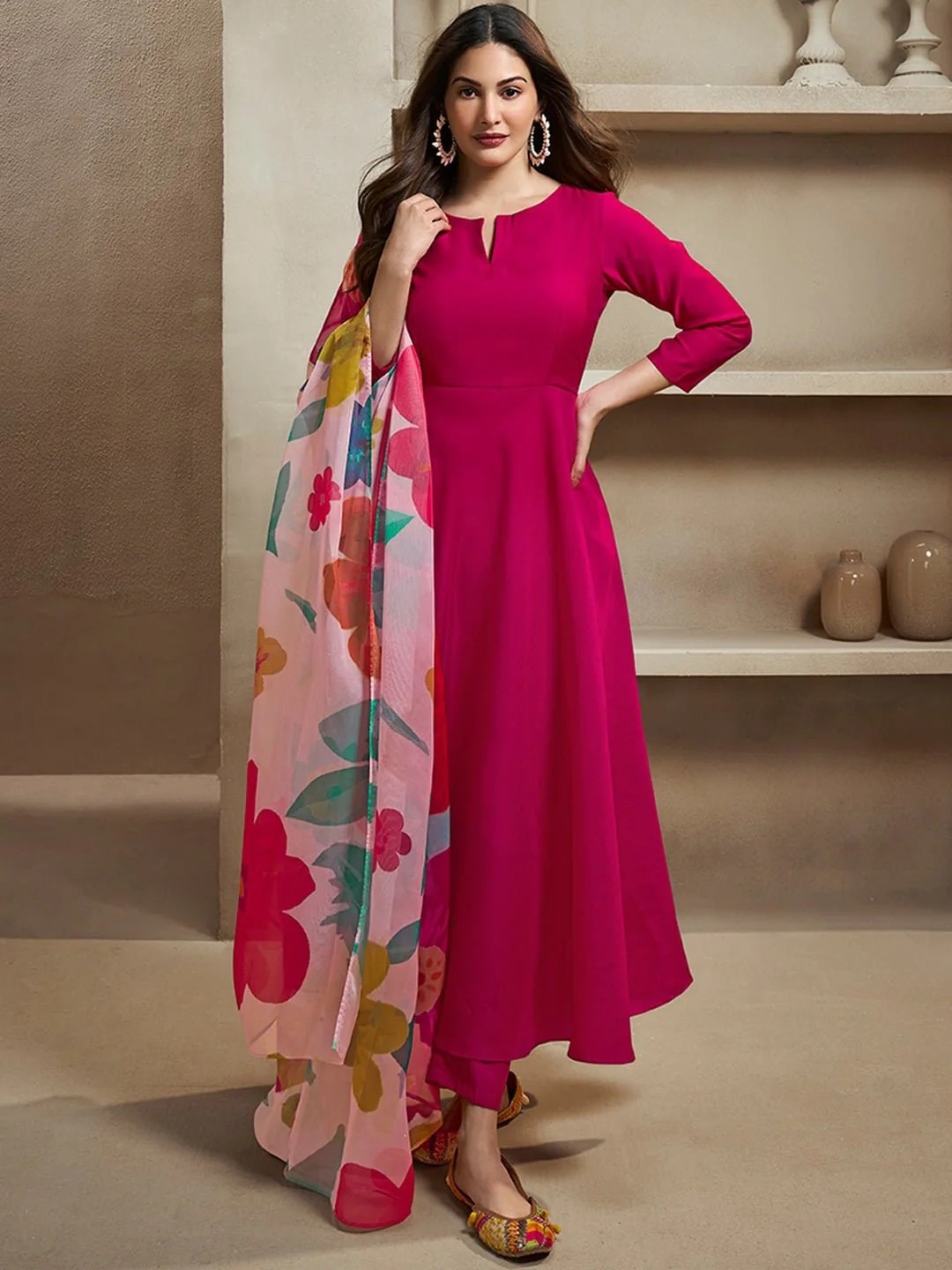
Match jewellery to the outfit's strongest finish. Antique gold complements mustard, wine and warm embroidery, while pearls and polished gold work well with cream, rani pink and organza. Oxidised silver can suit a printed cotton set, but it may compete with zari or a strongly gold-toned border.
Footwear should support the occasion and the hemline. A low block heel, embellished jutti or clean sandal works better for a home gathering than a shoe that makes standing and walking difficult. Check the trouser hem with the chosen footwear before leaving, because a wide palazzo can catch under a very flat sole.
Hair and makeup can remain deliberate without becoming theatrical. A low bun, soft braid or controlled open hairstyle keeps attention on the neckline and dupatta. Warm blush, defined eyes and a comfortable lip colour often suit intimate gatherings better than heavy contouring or glitter that may transfer onto the dupatta.
Care after the event protects the finish. Air the outfit before storing it, follow the garment's washing instructions and keep embellished or silk pieces away from direct sunlight. Fold Chanderi silk with soft cotton or muslin between layers, and avoid hanging a heavy dupatta from a narrow hanger because the fabric can develop stress marks at the fold.
Polished Kurtis for Small Festive Gatherings That Never Feel Overdone: a simple selection checklist
The most dependable selection process takes five minutes and checks the event, fabric, focal detail, fit and movement before considering accessories.
- Match the formality: choose embroidery, sheen or print according to whether the gathering is a daytime puja, a family lunch, an office event or an evening dinner.
- Choose one focal point: let the kurta, dupatta, fabric or jewellery lead, and keep the other elements quieter.
- Check practical movement: sit, raise both arms, walk several steps and confirm that the neckline, armholes and trousers remain comfortable.
- Read the care instructions: silk, Chanderi silk, organza and embellished garments may need gentler handling than cotton.
- Complete the colour story: select footwear and a bag in neutral, tonal or intentionally contrasting shades rather than adding another unrelated bright colour.
A successful festive outfit should make the wearer feel prepared rather than costumed. The right kurti set respects the intimacy of the gathering, photographs with clarity and remains comfortable through greetings, meals, rituals and conversation. That balance is what gives understated festive dressing its lasting appeal.
Common Questions About Polished Kurtis for Small Festive Gatherings
What should I wear to a small festive gathering at home?
A straight or lightly flared kurta set in Chanderi silk, silk, cotton or a lightweight woven fabric is usually appropriate. Choose one refined detail, such as embroidery, an organza dupatta or a subtle zari border, and pair it with simple jewellery and comfortable footwear.
Are readymade salwar suits suitable for festive occasions?
Readymade salwar suits are suitable for festive occasions when the fabric, fit and finishing match the event. Check the size chart carefully, test movement through the shoulders and hips, and confirm that the kurta, pants and dupatta create a coordinated colour story.
Can cotton salwar suits look festive?
Cotton salwar suits can look festive when they include considered details such as thread embroidery, a woven border, a distinctive print or a well-finished dupatta. Crisp cotton is especially practical for daytime celebrations and warm-weather gatherings.
How much jewellery should I wear with an embroidered kurta set?
One or two coordinated jewellery pieces are generally enough with an embroidered kurta set. Choose earrings or a necklace as the main focus, then add a slim bangle or ring instead of combining heavy earrings, a necklace and multiple metallic accents.
Which colours work well for an intimate festive celebration?
Wine, teal, mustard, rani pink, cream and green all work well, but the best choice depends on the light and time of day. Cream and mid-tone colours show detail in daylight, while wine, mustard and green gain depth in warm evening lighting.
How can I keep a festive dupatta from slipping?
Use a small concealed safety pin at the shoulder and create two or three neat pleats before placing the dupatta. Organza and other smooth fabrics may need an additional pin at the waist or under the opposite arm, especially when the wearer will be moving or sitting frequently.


