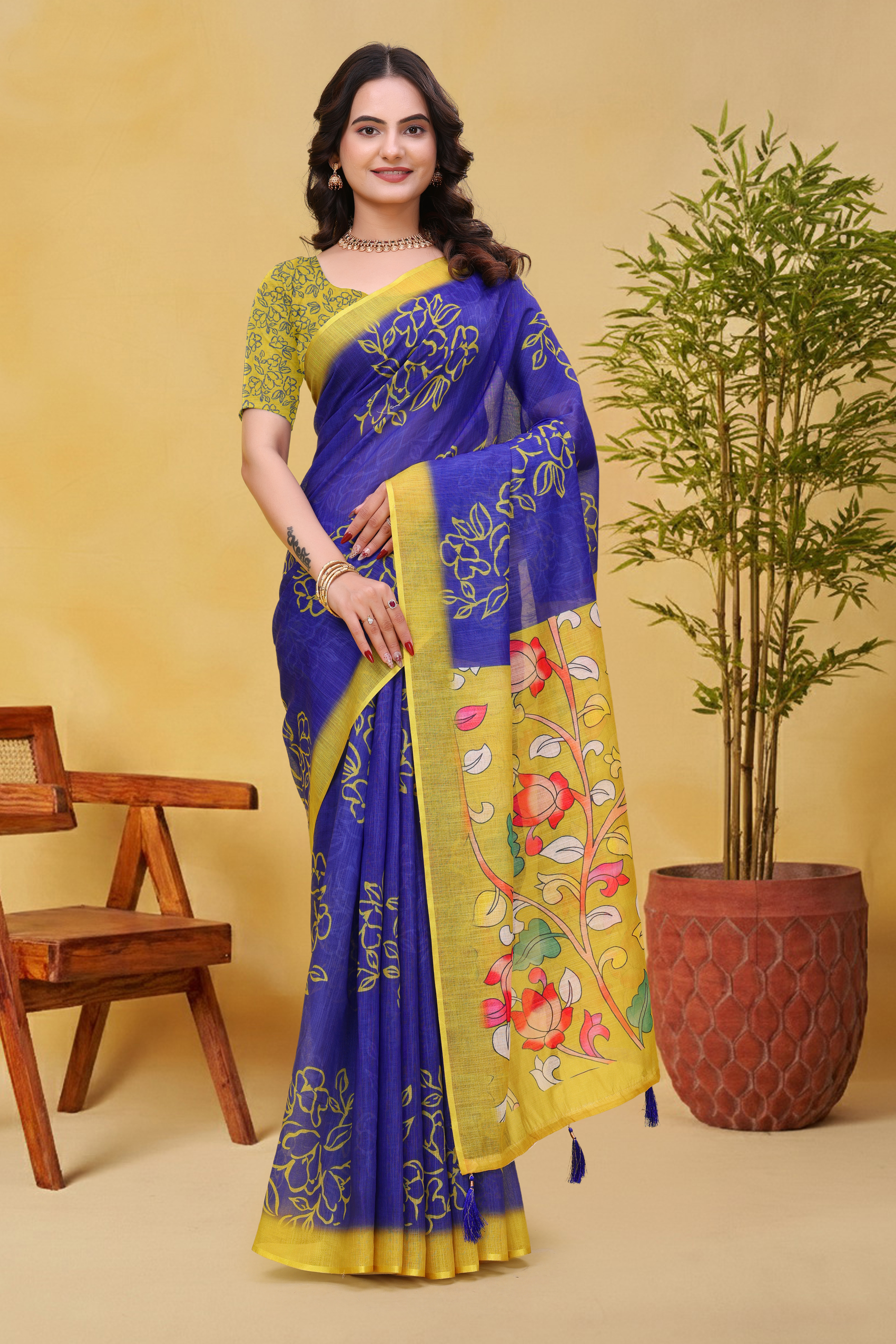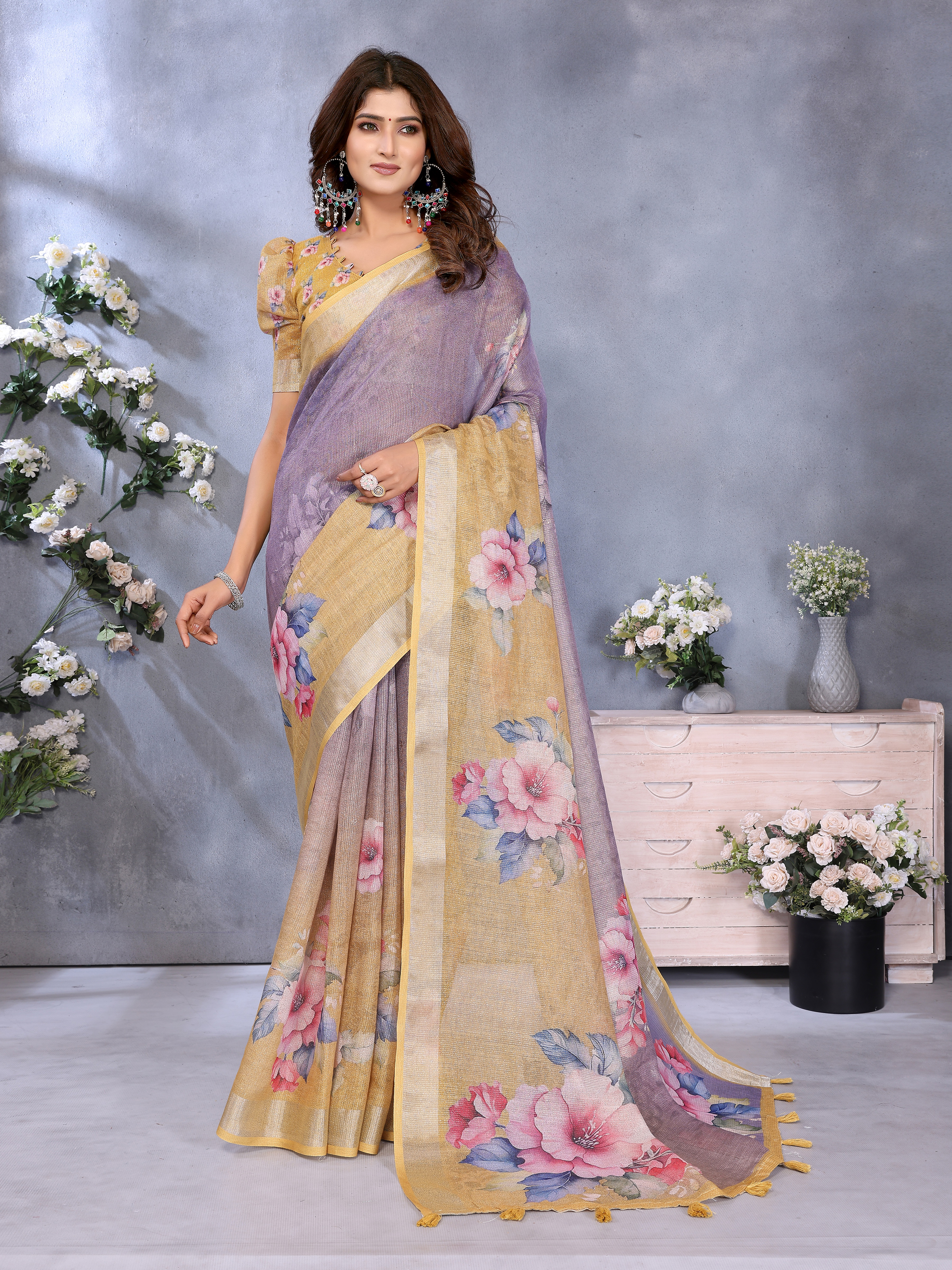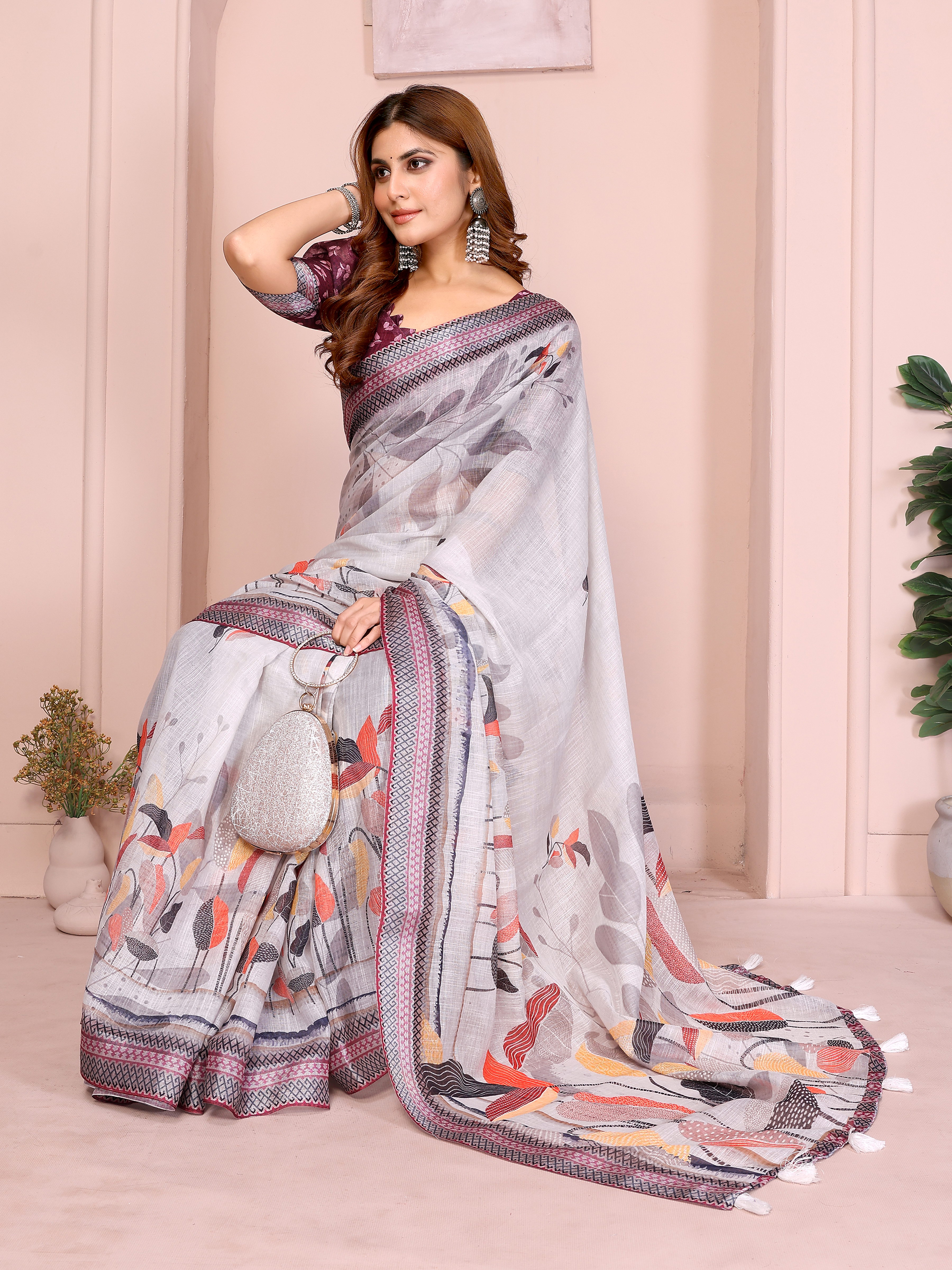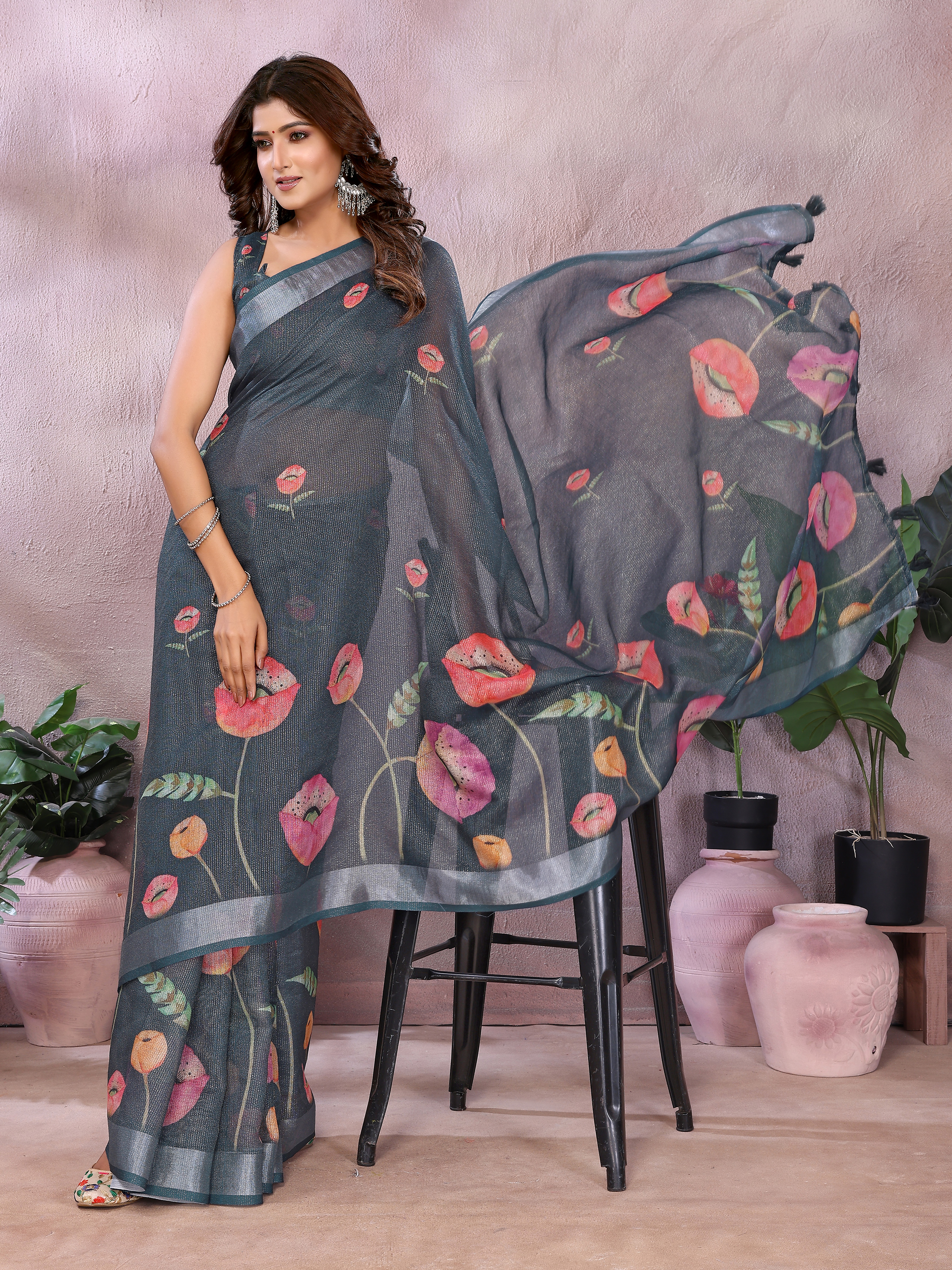
Pitta Work on Salwar Suits Gives Gold Detail a Softer Look because small metal embellishments scatter light instead of creating one dense, mirror-like surface. The effect is especially noticeable on golden, mustard, yellow and muted beige salwar suits, where texture matters as much as colour. Pitta embroidery can make a festive outfit feel polished without making the wearer look overdressed for a daytime gathering.
The difference comes from construction. Pitta work traditionally uses small, lightweight metal elements, often shaped as discs, leaves, stars or petals, which are attached to fabric at measured intervals. Zari, by contrast, is a thread or wire-based embellishment that can form dense borders, broad motifs and highly reflective areas. Both techniques can look luxurious, but pitta work usually leaves more fabric visible between motifs. That visual breathing space creates a gentler interpretation of gold.
Pitta Work on Salwar Suits Gives Gold Detail a Softer Look: Why the effect works
Pitta work looks softer because its small reflective elements create broken highlights, while dense zari or large sequins can produce a continuous, high-shine surface.
A salwar suit with closely packed gold zari may appear formal from a distance because the eye reads the embroidery as a solid metallic field. Pitta work gives the eye separate points to follow. The fabric colour remains visible around each motif, and the embellishment changes brightness as the wearer moves rather than shining uniformly from every angle.
Motif spacing also affects perceived weight. Pitta butis placed 5 to 8 centimetres apart will generally feel lighter than a full jaal, even when both use gold-coloured material. A narrow pitta border on a dupatta can frame the outfit without competing with the kurta neckline. Small pitta flowers across the yoke, cuffs or hem can add celebration while keeping the silhouette visually calm.
Finish matters as much as size. Bright polished gold gives stronger flash, whereas antique gold, champagne gold and slightly matte metal create a lower-contrast effect. A warm mustard base further softens gold because the two colours sit close together. A pale yellow base creates more contrast and can make the same pitta work look livelier.
How does pitta work differ from zari, gota and sequins?
Pitta work uses small attached metal elements, zari uses metallic thread or wire, gota uses ribbon-like metallic trim, and sequins are flat discs made from metal or synthetic material.
Zari is particularly effective for fine woven lines, paisley outlines and traditional borders. Gota is commonly applied as a flat ribbon or cut into shapes, making it useful for structured geometric decoration. Sequins usually provide a stronger all-over sparkle because their reflective surfaces catch direct light quickly. Pitta work occupies a middle ground: it has the dimensional presence of metal embellishment but can remain delicate when the motifs are small and widely spaced.
These categories can overlap in one salwar suit. A designer may combine pitta flowers with zari stems, a gota border and small sequins around the neckline. Identifying the dominant technique helps when choosing jewellery and accessories, because a heavily mixed surface needs fewer additional shiny elements.
Pitta Work on Salwar Suits Gives Gold Detail a Softer Look: Choosing fabric and colour
Silk blends, Chanderi, cotton-silk, viscose and lightweight georgette make golden pitta work look refined when the fabric has enough structure to support the embellishment.
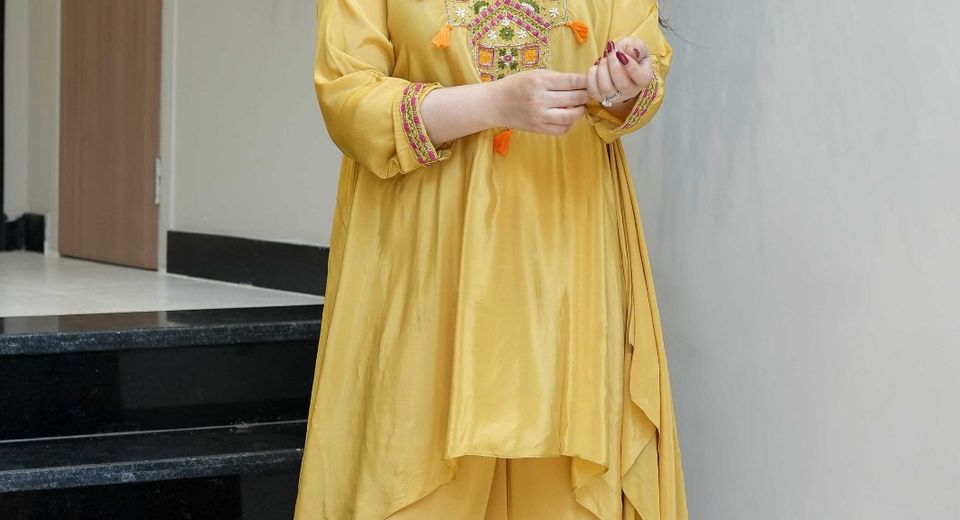
Silk blend fabric gives pitta motifs a smooth base and a controlled festive sheen. Mustard silk blend salwar suits are especially versatile because mustard sits between yellow and brown, allowing gold details to look warm rather than stark. Women's Mustard Silk Blend Kurta Set with Dupatta illustrates how a warm base can make a golden accent read as part of the colour story instead of an added metallic layer.
Chanderi offers a different effect. Chanderi has a light hand, subtle transparency and a characteristic surface glow, so pitta embroidery should be used selectively on the yoke, sleeves or border. Mustard Viscose Chanderi Kurta Set with Sequence Embroidery demonstrates why a lighter fabric benefits from controlled embellishment: the fabric's airy quality remains visible instead of being concealed under decoration.
Viscose and rayon blends can provide fluid drape at a lower price than pure silk. These fabrics suit pitta work placed on a kurta front, palazzo hem or dupatta edge, but very heavy metal decoration can pull at a soft base. Look for even stitching and secure backs on each motif, particularly around areas that bend when sitting or carrying a handbag.
Colour pairing determines whether gold looks soft, bright or dramatic. Mustard with antique gold produces a grounded, autumnal effect. Ivory with champagne gold looks understated and suitable for a day event. Bottle green, wine and deep teal create richer contrast and make gold more visible. Lemon yellow with bright gold feels more energetic, while peach, dusty rose and muted lavender reduce the visual hardness of metallic detail.
Does yellow always make gold embroidery look brighter?
Yellow doesn't always make gold embroidery look brighter; the outcome depends on undertone, saturation and contrast.
A pale, cool yellow can make bright gold appear crisp because the metallic surface stands apart from the fabric. A deep mustard has a similar warm undertone to gold, so the embellishment blends more gently. Yellow Floral Embroidered Kurti Pant Set Online shows how a yellow base can shift the mood toward cheerful daytime dressing when floral embroidery breaks up metallic or decorative detail.
Pitta Work on Salwar Suits Gives Gold Detail a Softer Look: Placing the embellishment
Pitta work should be concentrated on one or two visual areas, such as the neckline and dupatta border, rather than distributed heavily across every garment panel.
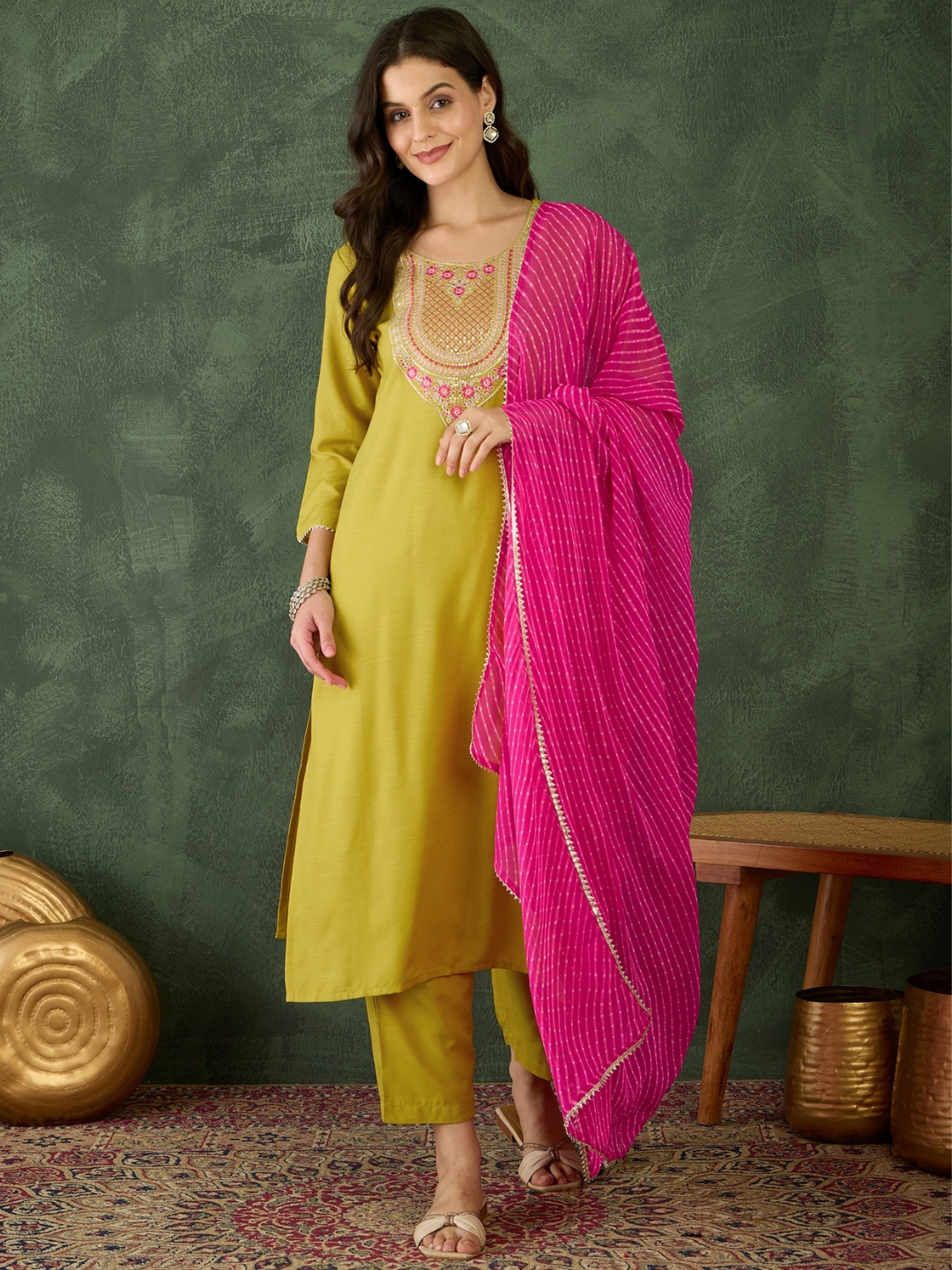
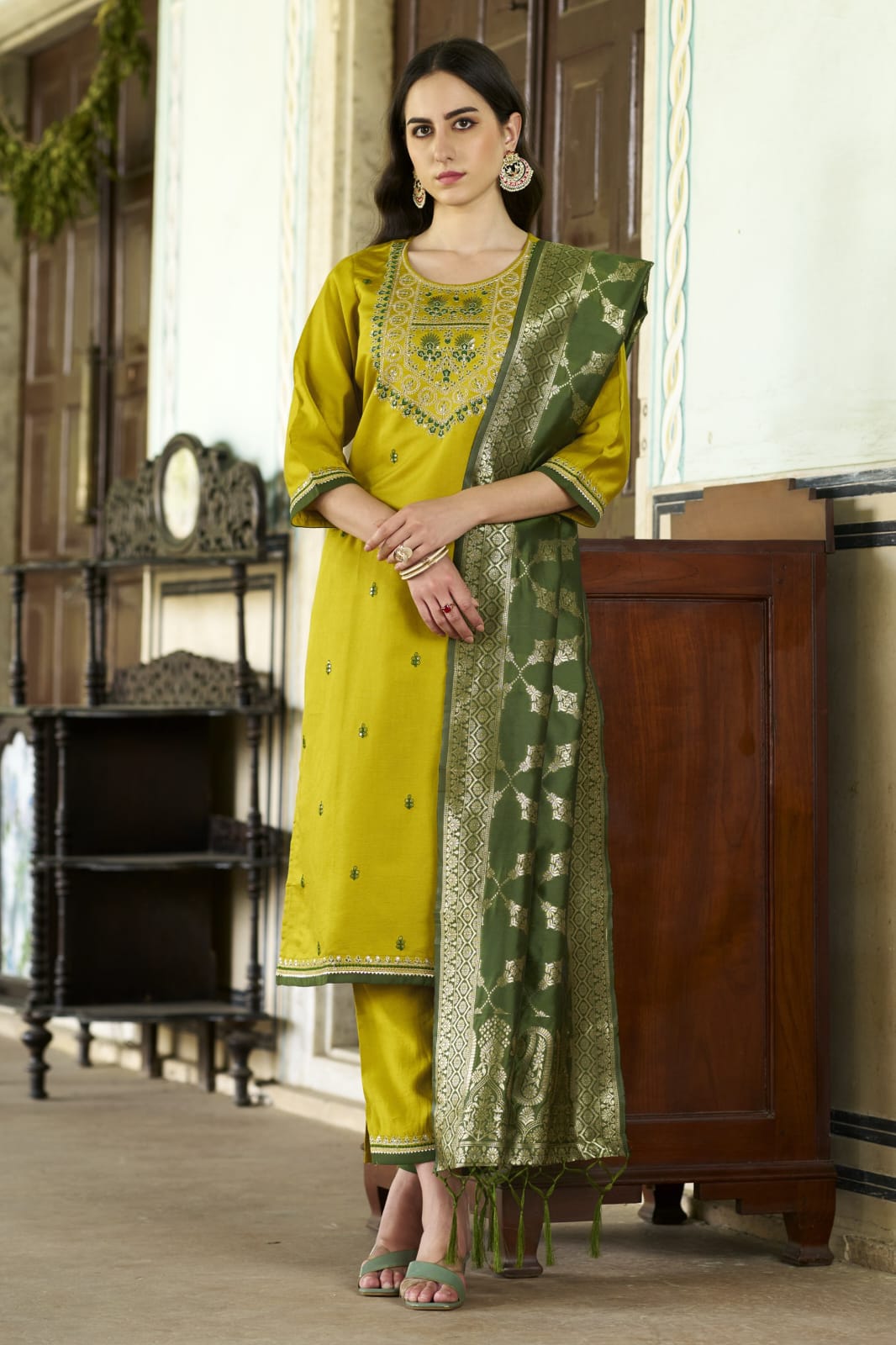
The neckline is a natural focal point because it frames the face. A shallow V, rounded neck or modest keyhole with pitta outlining can draw attention upward without requiring a large necklace. Cuffs and sleeve borders are useful when the kurta has a plain front. Movement from the hands allows small metal pieces to catch light in a restrained way.
A pitta border on a dupatta creates continuity between the upper body and the lower half of the outfit. A border between 2 and 5 centimetres is generally easier to style than a very wide metallic edge. If the kurta already has dense work, a narrow dupatta border is enough. If the kurta is mostly plain, a wider pitta or zari border can provide the festive focus.
Palazzo and sharara hems can carry pitta work, but the decoration should be attached securely because the hem moves and may brush against the floor. Mustard Silk Embroidered Kurti Palazzo Dupatta Set is an useful example of how a flowing lower silhouette can balance a decorated kurta without needing a separate heavy skirt.
Anarkali panels benefit from vertical placement. Small motifs arranged along panel seams can support the length of the garment, while a concentrated hem border adds weight at the bottom. Mustard Silk Embroidered Anarkali Kurti Pant Set Sale demonstrates the visual logic of pairing a long, fluid shape with embroidery that follows rather than interrupts the silhouette.
Pitta Work on Salwar Suits Gives Gold Detail a Softer Look: Styling without excess shine
A golden pitta salwar suit looks balanced when the accessories repeat one colour or texture instead of introducing several competing metallic finishes.
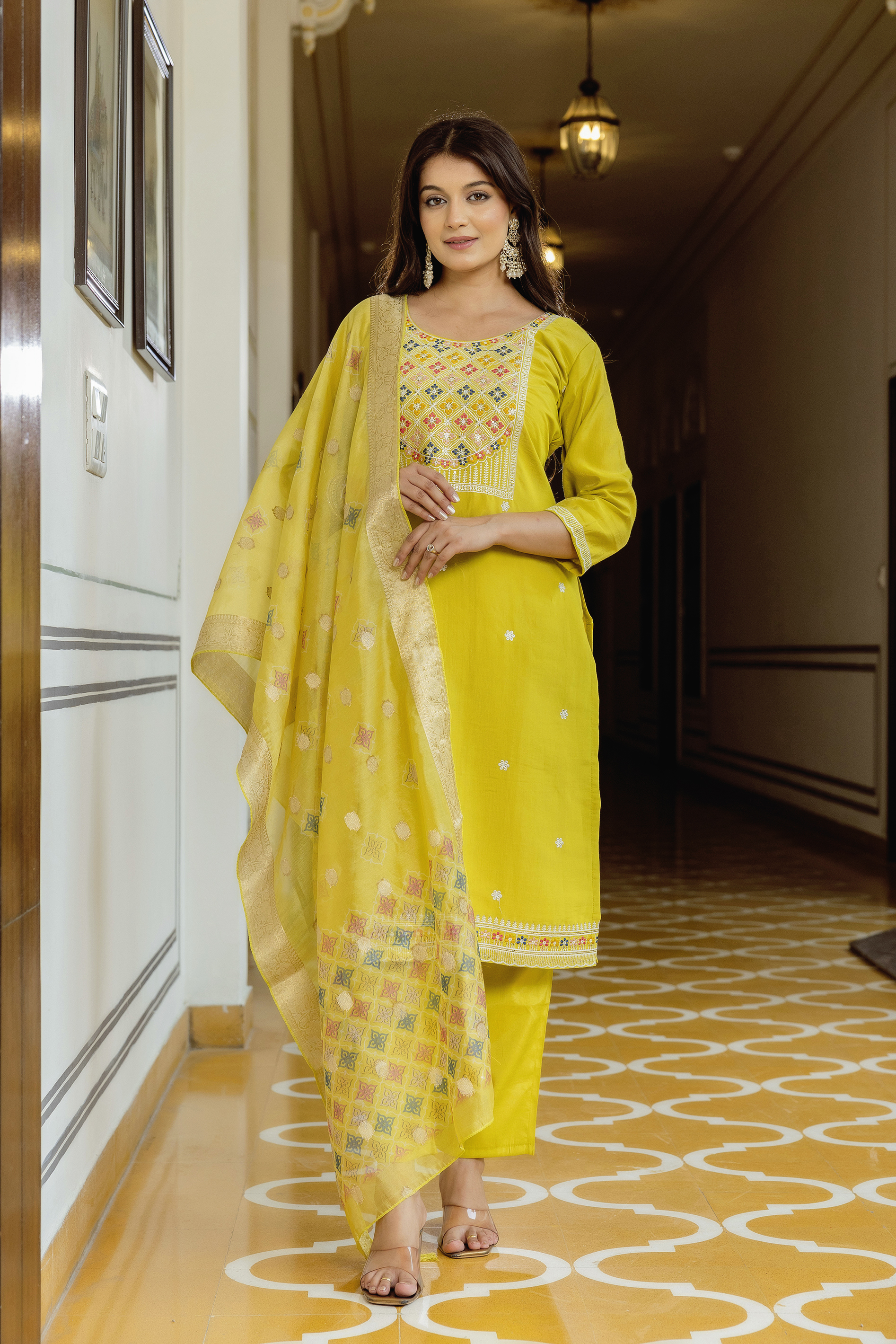
For daytime wear, choose small gold-toned studs, pearl drops or a slim bangle stack. A tan, beige or muted gold jutti keeps the palette connected without adding another strong contrast. A cotton or tissue dupatta in ivory, cream or the same mustard family can make the outfit suitable for a festive lunch, puja or family visit.
For an evening event, use one stronger accessory: chandelier earrings, a short choker or a structured potli. Avoid pairing a heavily embellished neckline with a large necklace and elaborate earrings. The face should remain the visual centre, particularly when pitta work already outlines the neck.
Makeup can reinforce the softer effect. Warm brown eyeliner, peach blush and a rose-brown lip sit comfortably with mustard and gold. A sharp metallic eyeshadow may duplicate the shine of the garment, whereas a satin rather than glitter finish provides dimension without excess reflection.
Dupatta draping changes the amount of gold visible. A front drape exposes both borders and makes the outfit more formal. A single-shoulder drape shows less metallic trim and works well for daytime movement. A loose side drape is practical for a salwar suit with a decorated sleeve or cuff because it doesn't cover the garment's main detail.
Regional dress references can also guide proportion. Maharashtra Paithani Inspired Salwar Suits suggest the value of balancing a luminous border with a controlled body. Punjab Phulkari Embroidered Salwar Suits point toward a different approach, where colourful thread-led motifs can soften a gold accent and stop the outfit from becoming monochrome.
Pitta Work on Salwar Suits Gives Gold Detail a Softer Look: Matching the occasion
Pitta-worked golden salwar suits suit daytime festive events, small wedding functions, religious gatherings and evening celebrations when the motif scale matches the formality.
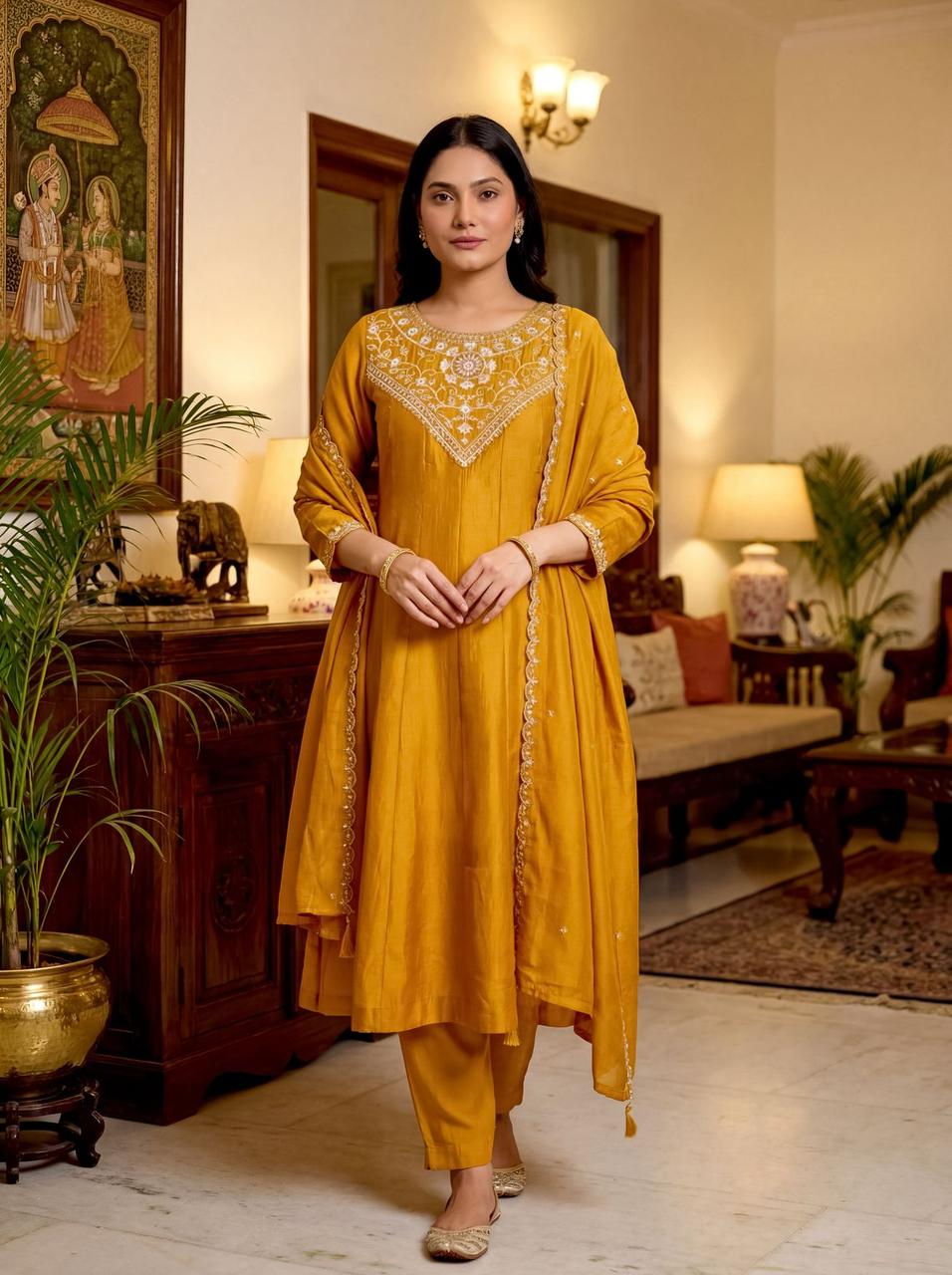
A lightly embellished mustard kurta set works for a Haldi ceremony, especially when paired with fresh flowers, flat sandals and a light dupatta. Yellow and mustard also photograph well in outdoor settings because they retain warmth without depending on harsh artificial light. Mustard Embroidered Kurti Pant Dupatta Set Women can suit a family celebration where a coordinated three-piece outfit feels festive but remains comfortable for several hours.
A more structured set with a defined neckline and heavier border works for an engagement lunch or intimate reception. Mustard Embroidered Kurta Pant Dupatta Set for Women gives the kind of coordinated base that can be made more formal with embroidered footwear, a compact clutch and statement earrings.
For a work-adjacent festive gathering, reduce the shine around the face and choose a plain dupatta or minimal jewellery. Mustard Embroidered Kurta Pant Set for Women can be styled with neutral sandals and a fabric tote when the event calls for polish without bridal-level embellishment.
Regional collections can broaden the styling reference. Karnataka Silk Salwar Suits favour the richness of silk and controlled sheen, while Kashmir Embroidered Salwar Suits show how intricate surface pattern can coexist with warm, layered colour. Kalamkari Print Salwar Suits (Copy) offer another useful contrast: printed motifs can provide visual interest beside restrained gold, preventing the outfit from relying on metallic decoration alone.
Pitta Work on Salwar Suits Gives Gold Detail a Softer Look: Buying and care checks
A well-made pitta salwar suit has secure embellishment, balanced placement, a stable base fabric and care instructions that protect both the metal details and the dye.
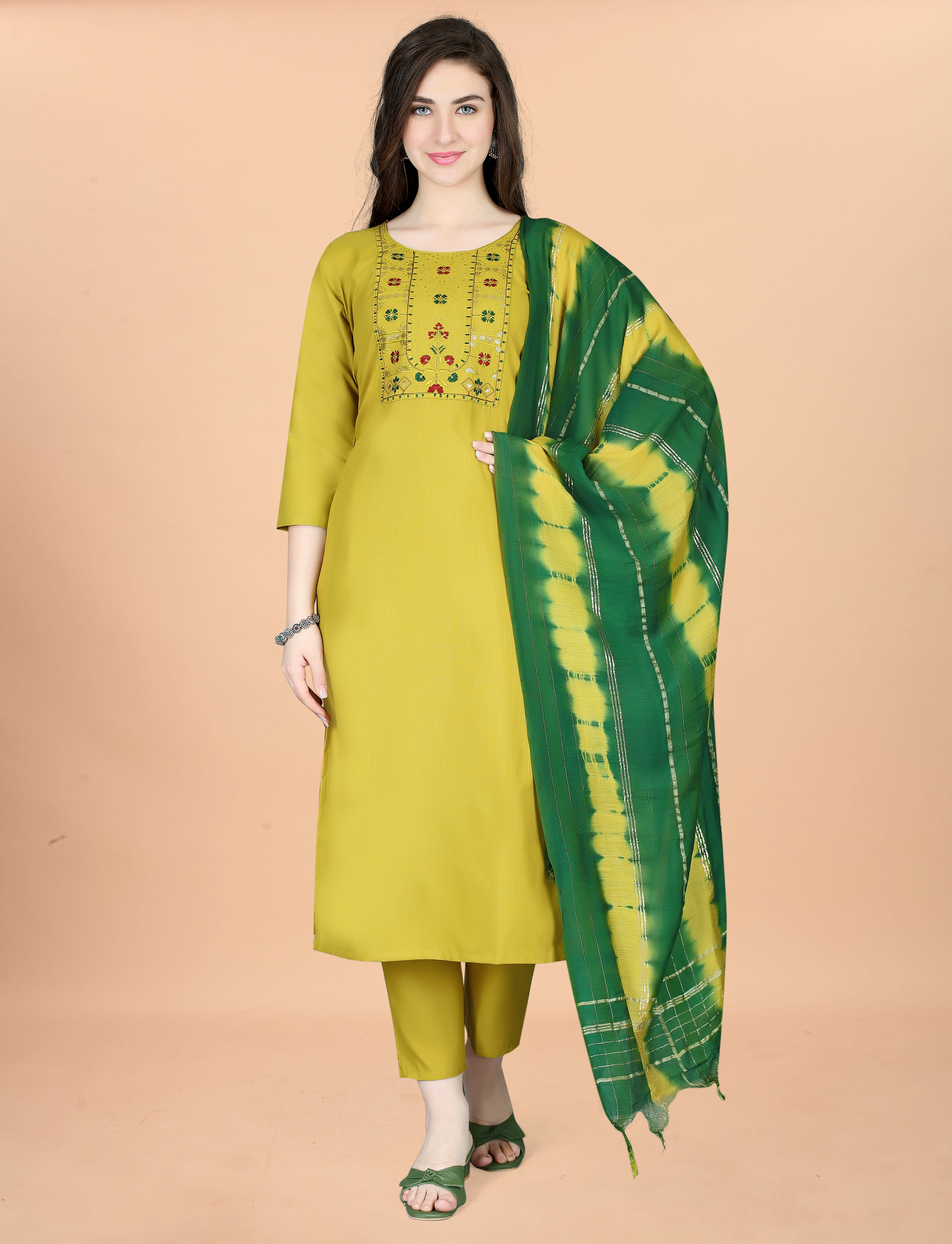
Run a clean fingertip gently over the embroidered area before buying. Sharp catches, loose metal edges and raised threads can indicate finishing problems. Check the reverse side of the kurta or dupatta where possible; knots should be secure, and the backing should not feel excessively stiff or scratchy against the skin.
Inspect motif consistency across the front panel. Small variations are normal in handwork, but visibly uneven spacing or a border that twists may affect how the garment hangs. Check whether pitta elements have been applied over seams, because repeated bending at a seam can loosen decoration faster than embroidery placed on a flat panel.
Price depends on several factors: fabric composition, amount of handwork, metal finish, lining, tailoring and whether zari or sequins are combined with pitta. A lightweight viscose set with limited neckline work will usually cost less than a silk-blend Anarkali with dense borders and multiple handcrafted techniques. Comparing embellishment coverage rather than only the product's total price gives a more accurate value assessment.
Store pitta-worked clothing folded with acid-free tissue or a clean cotton layer between embellished surfaces. Keep the garment away from direct sunlight, damp cupboards and unprotected metal hangers. Do not spray perfume, hair spray or deodorant directly onto pitta work, because alcohol and moisture can dull finishes and stain delicate fabric.
Dry cleaning is usually safer for heavily embellished salwar suits, but the care label should take priority. Avoid machine washing unless the label specifically permits it. If a small spill occurs, blot it with a dry, clean cloth instead of rubbing the metal motifs. Allow the garment to dry completely before folding it for storage.
A considered choice of motif spacing, fabric, colour and accessory scale explains why Pitta Work on Salwar Suits Gives Gold Detail a Softer Look. The technique doesn't remove the festive character of gold; it distributes that character more gently across the garment, making golden salwar suits easier to wear for both intimate celebrations and larger family occasions.
Common Questions About Soft Gold Pitta-Work Salwar Suits
What is pitta work on a salwar suit?
Pitta work is surface embellishment made with small metal elements such as discs, leaves, stars or petals, which are attached to fabric in spaced motifs. The technique creates reflective detail without covering the fabric as densely as some zari or sequin designs.
Is pitta work softer than zari on golden salwar suits?
Pitta work usually looks softer than dense zari because separate metal motifs create broken highlights and leave more fabric visible. A fine zari outline can still look delicate, but a broad zari panel generally produces a stronger continuous shine.
Which colour suits gold pitta embroidery best?
Mustard, ivory, champagne, deep green, wine, teal and muted peach all work well with gold pitta embroidery. Mustard and antique gold create the most blended effect, while pale yellow or jewel tones create greater contrast.
Can I wear a golden pitta salwar suit to a Haldi ceremony?
Yes, a lightly embellished yellow or mustard pitta salwar suit is suitable for a Haldi ceremony. Choose breathable fabric, comfortable footwear and limited jewellery so the outfit remains practical around turmeric, outdoor heat and extended movement.
How should I wash a pitta-worked salwar suit?
Dry cleaning is generally safer for heavily embellished pitta-worked salwar suits, while the garment care label should always take priority. Avoid rubbing, wringing, direct perfume and machine washing unless the label explicitly allows it.
What jewellery works with a golden pitta salwar suit?
Small gold-toned earrings, pearls, a slim bangle stack or one statement earring style work well with a golden pitta salwar suit. Avoid combining a heavily worked neckline with a large necklace and elaborate earrings, because too many reflective surfaces can overwhelm the softer embroidery.