

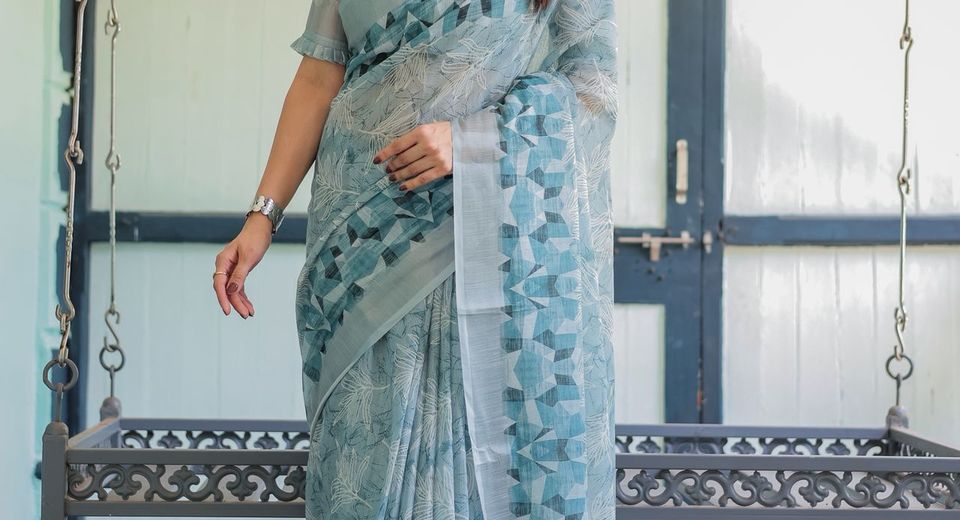
Petticoat Blouse and Drape Choices for Transparent Sarees decide how much structure, coverage and polish a sheer saree will have. Organza, tissue, linen cotton and silk-cotton sarees can look airy and sophisticated, but a mismatched petticoat or bulky blouse may create visible lines, uneven colour and awkward pleats. The most reliable approach is to treat the petticoat, blouse and drape as one coordinated outfit rather than three separate decisions.
Why does a transparent saree need more planning?
A transparent saree needs careful planning because its fabric reveals the colour, shape and texture underneath. A solid saree can conceal small fitting mistakes, while a sheer saree may show the petticoat seam, blouse edge, waistband, extra pleats or a contrasting lining.
Transparency also changes the way colour appears. A pale pink tissue saree worn over a bright red petticoat may look warmer and darker at the lower body, while a nude or blush petticoat can preserve the original tone. A printed linen-cotton saree may require a different solution because its print already provides visual density.
Light direction matters as well. Indoor lighting may make a saree appear modestly translucent, but sunlight or camera flash can reveal more of the petticoat and blouse. A practical test is to stand near a window, turn sideways and take a flash photograph before wearing the saree to a wedding, reception or Haldi ceremony.
Petticoat Blouse and Drape Choices for Transparent Sarees
Which petticoat works best under a sheer saree?
A well-fitted satin, cotton-satin or lightweight shapewear petticoat in a close colour match usually works best under a transparent saree. The petticoat should follow the body without pulling tightly, bunching at the hip or forming a visible horizontal ridge beneath the fabric.
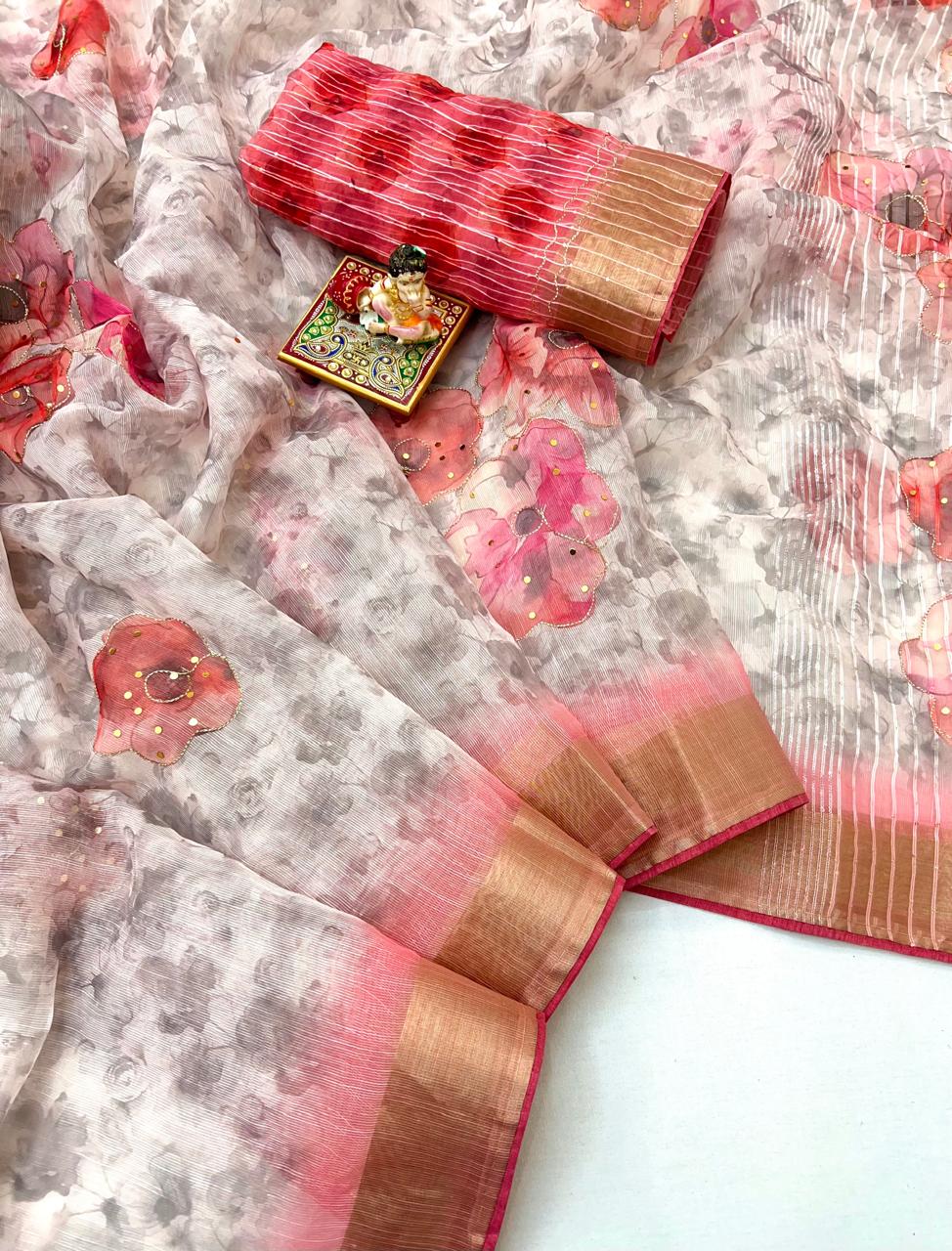
A fishtail or mermaid petticoat can create a controlled flare near the hem, but the cut should suit the saree's weight. A soft organza saree may hold a graceful outward shape over a lightly flared petticoat, whereas a fluid linen-cotton saree usually looks better over a straighter petticoat. A very stiff underskirt can make a lightweight saree sit away from the body and disturb the fall.
Choose the petticoat colour according to the saree's dominant visual tone, not only the blouse colour. Ivory works beneath cream, champagne and some pastel sarees. Blush, peach or dusty rose can support pink-toned fabrics. A skin-close beige may be useful under pale neutrals, but the shade should be tested in daylight because an overly pale beige can appear grey through sheer fabric.
- For white or ivory sarees: use ivory, cream or a carefully matched nude shade rather than stark white unless the saree itself is bright white.
- For pastel sarees: select a petticoat one shade deeper or very close to the saree's base colour to avoid a washed-out lower half.
- For printed sarees: match the petticoat to the background colour, not the strongest floral or border colour.
- For dark transparent sarees: use a petticoat in the saree's base shade so the silhouette remains even from waist to hem.
The waistband deserves attention because it sits at the most visible part of a transparent saree. A narrow, flat waistband is less likely to show than a thick elastic band. The drawstring should be tied securely at the side or back and tucked flat before pleating.
How should the blouse be chosen for a transparent saree?
The blouse should repeat either the saree's base colour or one deliberate accent colour while offering enough coverage to keep the transparency intentional. A blouse that's too bright, heavily embellished or sharply different from the saree can become the main focus instead of supporting the drape.
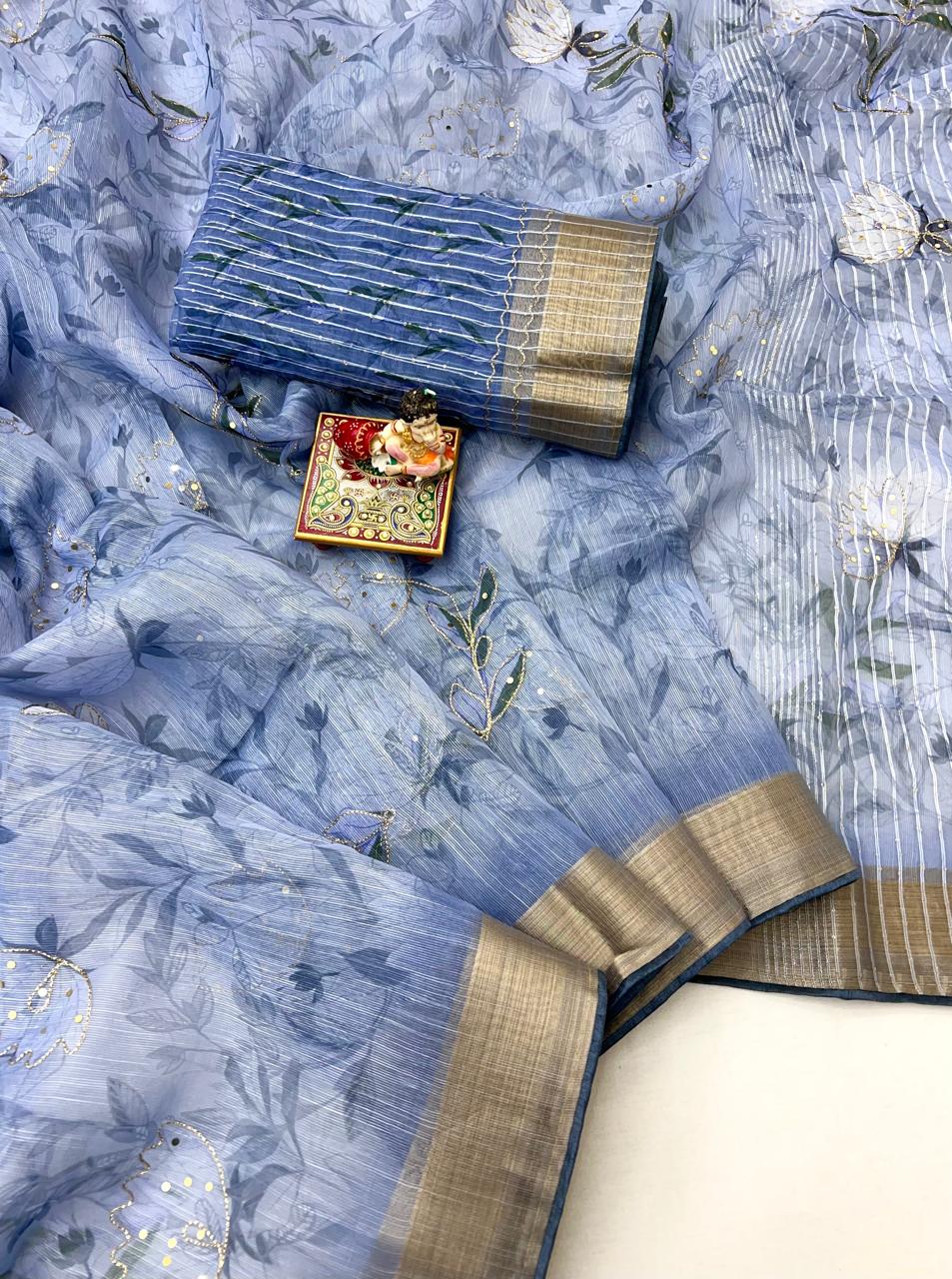
For a delicate saree, a lined blouse with a clean neckline usually gives the most composed result. Sleeves between the elbow and three-quarter length can balance a sheer fabric, particularly for daytime functions. A sleeveless blouse can look modern, but the armhole should be fitted neatly because loose edges may be visible through the pallu.
Blouse length also affects the final appearance. A blouse ending around the natural waist allows the saree to fall cleanly, while an overly long blouse can create an additional horizontal line beneath a transparent pallu. The lower edge should sit smoothly against the body without riding up when the arms are raised.
Matching doesn't always mean using identical fabric. A matte blouse can add contrast beneath a glossy tissue saree, while a lightly textured blouse can complement a plain organza drape. The important factor is controlling shine: pairing a high-shine blouse, metallic petticoat and zari border may make the outfit look visually crowded.
The Pastel Linen Cotton Floral Print Saree with Designer Blouse demonstrates a useful approach for daytime styling because a coordinated blouse can keep a light floral saree visually anchored. The Pastel Blue Pure Linen Printed Saree with Blouse can similarly be styled with a blouse close to its blue base rather than introducing a third strong colour.
Should the blouse match the petticoat?
The blouse and petticoat don't have to match exactly, but both should belong to the same colour family unless contrast is intentional. A blush blouse over a nude-beige petticoat can look seamless under a pink saree, while a black blouse with a beige petticoat may create two unrelated blocks beneath a translucent fabric.
For a saree with a strong zari border, a blouse matching the border can work better than a blouse matching the field. For example, a muted gold blouse may connect with zari without overpowering a pastel body. Keep jewellery in the same visual register: antique gold, polished gold and silver each create a different effect with transparent fabrics.
How do draping techniques change the appearance of sheer sarees?
Drape a transparent saree with fewer, flatter folds and a firmly secured pallu so the fabric looks intentional rather than accidental. Excessive gathering can make a sheer fabric appear bulky, while too few pleats can expose the petticoat unevenly.

Front pleats
Five to seven front pleats are often sufficient for a lightweight transparent saree, depending on the fabric width and the wearer's height. Each pleat should be approximately the same width, pressed or finger-shaped consistently, and pinned near the waist before the pallu is arranged.
Very narrow pleats can create a striped effect when the saree is translucent. Very wide pleats may open while walking. A practical method is to make the pleats on a flat surface, align the lower edges, and then check whether the pleats remain straight when standing.
Pallu placement
A shoulder pallu with medium-width pleats is generally the safest choice for transparent sarees because it controls the amount of visible layering. Pin the pallu at the shoulder and once near the upper torso if the fabric is slippery. Letting a sheer pallu hang completely loose can cause it to shift, expose the blouse unevenly and lose its border alignment.
A narrower pallu can look elegant for an evening event, but it offers less coverage. A wider, more closely layered pallu works well for formal settings, religious gatherings or family functions where a more covered silhouette is preferred. Avoid placing the pallu pleats directly over a heavily embellished blouse because the combined texture may look raised and uneven.
How much should the saree be pinned?
A transparent saree usually needs three to five discreet pins: one at the shoulder, one near the pallu's upper chest area, one securing the pleats at the waist and optional pins near the hip or side seam. Too many pins can pull the fabric and create small visible dimples.
Use small safety pins with smooth closures and insert them from the underside wherever possible. A pin should hold the inner layers, not pierce an exposed zari thread, delicate floral print or fragile edge. Test the pin on an inside fold before wearing the saree for a long event.
How do fabric types affect petticoat and blouse decisions?
Fabric weight and surface finish determine whether a transparent saree needs a structured petticoat, a matte blouse or a softer drape. The same petticoat can behave differently under organza, tissue and linen cotton.
Organza sarees
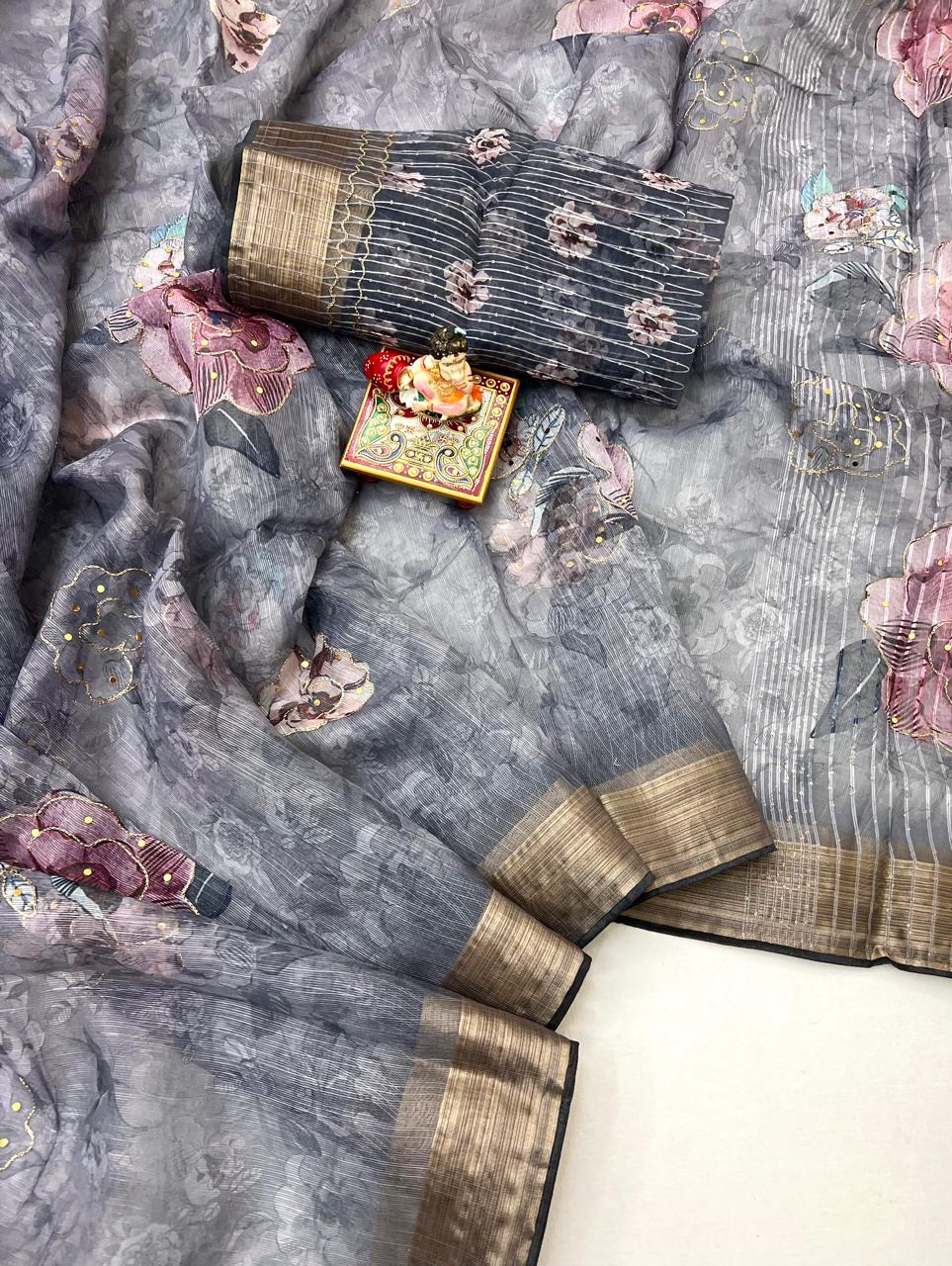
Organza sarees benefit from a smooth petticoat and a blouse with clean, stable seams because the fabric tends to hold shape. The Blush Petal Organza Cotton Silk Designer Saree can be paired with a blush, ivory or muted rose petticoat, depending on its exact base tone. Keep the pallu controlled because organza can stand away from the body instead of falling closely.
Tissue sarees
Tissue sarees need special attention to shine and layering because metallic-looking threads or zari can reflect light through the pallu. The Pastel Floral Tissue Handloom Cotton Saree with Zari Weaves calls for a petticoat with a flat surface and a blouse that doesn't compete with the woven detail. A matte blouse in a floral accent colour can make the zari appear more deliberate.
The Wine Tissue Handloom Cotton Saree with Zari & Floral Prints can support a deeper wine or muted neutral petticoat, depending on the saree's background. Avoid a very bright red underskirt if the saree already contains wine, gold and floral contrasts because the translucent layers may become visually harsh.
Linen-cotton sarees
Linen-cotton sarees usually need a breathable, lightly structured petticoat rather than a glossy, body-hugging one. The Pastel Linen Cotton Floral Print Saree with Designer Blouse and Peach Linen Cotton Floral Print Saree with Blouse for Women can be styled with a petticoat close to the floral background colour. Linen-cotton tends to look best when the pleats retain a natural fall instead of being pressed into a rigid fan.
A second listing of the Pastel Linen Cotton Floral Print Saree with Designer Blouse is a reminder to inspect the blouse construction before adding accessories. A coordinated blouse can reduce the need for a contrasting camisole or extra visible layer beneath a lightweight printed saree.
Silk and pashmina-silk sarees
Silk sarees with a translucent surface often need a petticoat that supports the fall without creating stiffness. The Pink Soft Pashmina Silk Printed Saree With Patola Border can be balanced with a pink, rose or neutral petticoat, while the blouse may pick up the Patola border instead of copying every printed detail.
What accessories keep a transparent saree balanced?
Accessories should reinforce the saree's colour and fabric weight without adding competing layers over the transparent sections. A lightweight blouse and sheer pallu can look overwhelmed by a large necklace, heavy waist belt and oversized brooch used together.
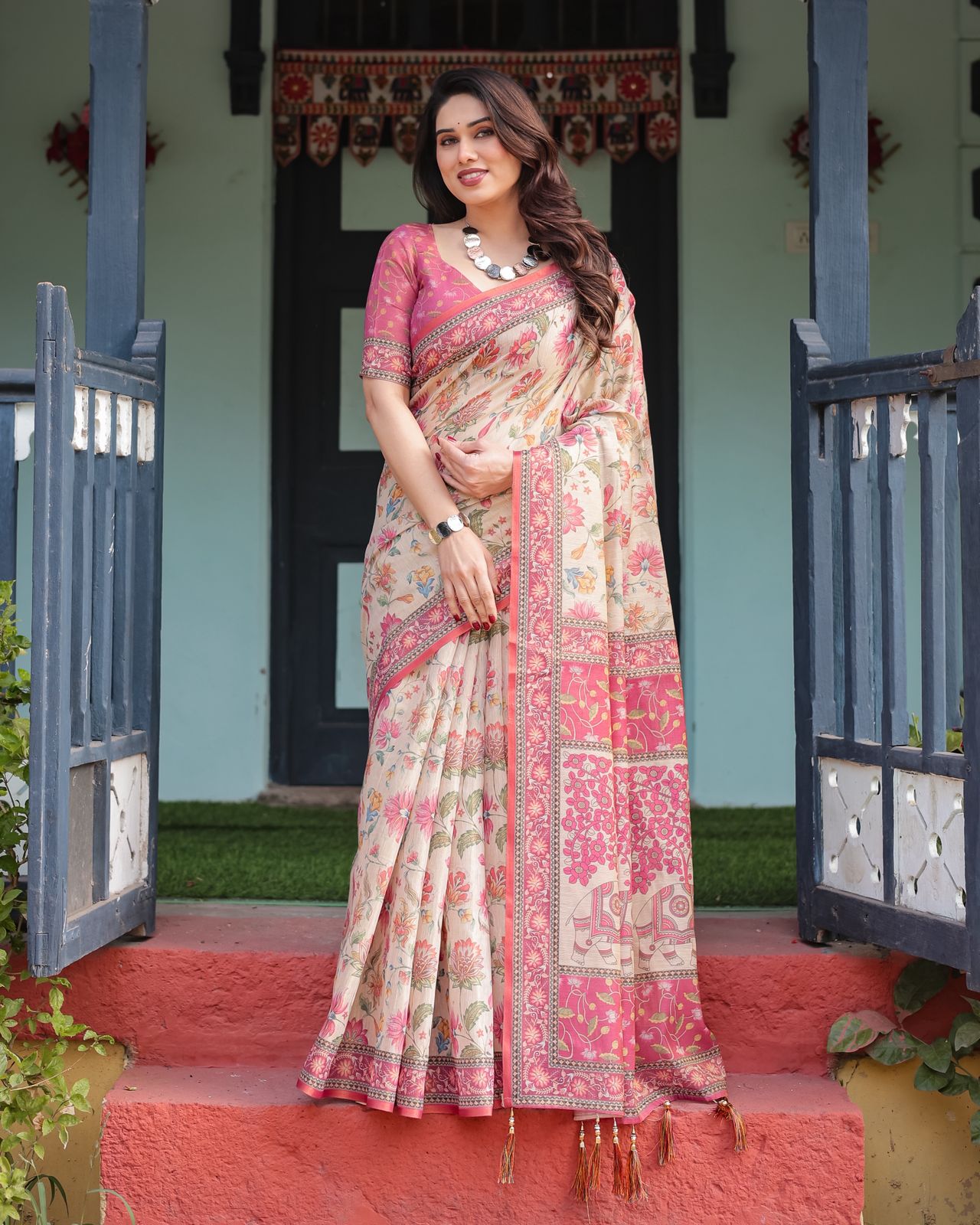
Choose one primary focal accessory. A zari border may need only small gold earrings and bangles, while a plain organza saree can support a necklace or sculptural earrings. A brooch placed at the shoulder can secure the pallu, but a sharp or heavy brooch may snag organza, tissue or fine printed fabric.
Footwear also affects the drape. Set the saree length after wearing the intended heels or flats, and keep the front hem approximately 1 to 2 centimetres above the floor so the fabric doesn't drag. A transparent saree that's too long can collect dust at the hem and pull the front pleats out of alignment.
How can you check the final drape before leaving home?
Check the final drape in daylight, seated posture and walking motion before leaving home. A standing mirror alone can't show how the saree behaves when the waist bends, the arms move or the pallu shifts.

- Stand near a window and check whether the petticoat waistband, drawstring or seam is visible.
- Turn sideways and confirm that the petticoat doesn't extend beyond the saree's silhouette.
- Raise both arms to test whether the blouse armholes or pallu pins pull.
- Sit on a chair and check whether the front pleats open or expose the petticoat unevenly.
- Walk for two minutes and inspect whether the lower hem twists around the ankles.
- Take one flash photograph and one outdoor photograph to identify unexpected transparency.
If the petticoat shows strongly, first adjust the colour before adding another garment layer. If the blouse edge shows through the pallu, reposition the pallu or use a more closely layered shoulder pleat. If the saree feels too stiff, reduce the petticoat flare rather than adding more pins.
Shopping by budget can still support careful styling. The Sarees from Rs 1000 to Rs 1500 collection may be useful for comparing affordable printed and lightweight options, while Sarees Under 20% Off and Sarees Under 10% Off can help when a coordinated blouse or new petticoat needs to be included in the total outfit cost. Discount depth should never replace checking fabric transparency, blouse measurements and border placement.
Transparent sarees reward precision. A close-colour petticoat, a lined blouse, controlled pleats and a secured pallu allow the fabric's print, zari or natural sheen to remain the focus. Collections such as Sarees Flat 60% Off and Sarees Flat 50% Off may broaden the choice, but the best final decision comes from matching the underlayers to the saree's actual colour, weight and transparency in daylight.
Questions About Styling and Draping Transparent Sarees
What colour petticoat should I wear under a transparent saree?
Choose a petticoat close to the saree's dominant base colour, such as ivory for cream, blush for pink and a matching wine or muted neutral for darker shades. Test the colour in daylight because a petticoat can look different through sheer fabric than it does on its own.
Which blouse is suitable for a sheer or transparent saree?
A lined blouse with a clean neckline and smooth seams is usually the safest choice. Match the blouse to the saree's base colour or one deliberate border accent, and avoid combining several competing shiny or heavily embellished surfaces.
How many pleats should a transparent saree have?
Five to seven front pleats commonly work well for a lightweight transparent saree, although saree width and body height can change the ideal number. Keep the pleats even and flat, because very narrow or irregular folds can make the petticoat show in stripes.
How do I stop a transparent saree pallu from slipping?
Use a small safety pin at the shoulder and another discreet pin near the upper chest or blouse seam. Medium-width pallu pleats provide more control than a completely loose pallu, especially with organza and tissue fabrics.
Can I wear a black blouse with a transparent pastel saree?
A black blouse can work only when black is repeated intentionally in the border, print or accessories. If the saree has a delicate pastel base with no dark accent, black may create a sharp block that becomes more visible through the transparent pallu.
How can I check whether a saree is too transparent before an event?
Stand near a window, turn sideways, sit down and take a flash photograph while wearing the complete outfit. Check the waistband, petticoat seam, blouse edge and lower silhouette rather than judging transparency from the folded saree alone.


