A Patan Visit and the Questions Worth Asking About Patola Weaving can turn a shopping stop into a lesson in textile engineering, family history and regional design. Patan, in Gujarat, is closely associated with the Salvi tradition of Patola, especially the demanding double ikat technique. Before buying a saree or admiring a loom, ask how the threads were prepared, where the silk came from, which dyeing method was used and whether the design was woven or printed. Those answers reveal far more than a label claiming that a saree is "Patola style."
Patan Visit and the Questions Worth Asking About Patola Weaving: Why Does Patan Matter?
Patan matters because the city preserves one of India's most technically exacting silk-weaving traditions. Patola weaving is strongly associated with the Salvi weaver community, whose work in Gujarat developed a reputation for precise geometric layouts, vibrant colours and designs that remain legible on both sides of the cloth.
A visit to Patan can include more than a textile appointment. Rani ki Vav, the celebrated stepwell commissioned in the eleventh century, places the region's artistic culture in a wider historical setting. Local museums and weaving spaces can help visitors connect architecture, sculpture, ritual imagery and cloth design without assuming that every motif has one fixed meaning.
Patola sarees have traditionally carried social and ceremonial importance. Gujarati families have used them for weddings, religious observances and inheritance, while related double-ikat traditions in Indonesia show how complex resist-dyeing techniques developed distinct regional identities. Patan's importance therefore comes from both living practice and historical influence.
An useful first question during a Patan visit is, "Which part of this saree was made here?" A seller may be showing a Patan-woven double ikat saree, a single-ikat textile, a printed design inspired by Patola, or a soft silk garment that borrows Patola colours. Each category can be attractive, but each involves a different process, labour time and price.
Patan Visit and the Questions Worth Asking About Patola Weaving: What Should You Ask First?
The first questions should establish the saree's technique, fibre, place of production and degree of handwork. Ask these points before discussing colour, discount or occasion styling.
- Is the design woven, printed or digitally reproduced? A woven ikat design is created through planned dyeing and interlacing of threads, while a print is applied after the fabric has been constructed.
- Is the saree double ikat or single ikat? Double ikat involves resist-dyeing both warp and weft threads so that the pattern forms when the threads intersect.
- What is the fibre? Confirm whether the saree uses pure silk, silk blended with another fibre, soft silk, pashmina silk or a synthetic base.
- Where was the saree woven? "Patan-inspired" describes a visual language and doesn't automatically prove that the saree was woven in Patan.
- How long did production take? A genuine handwoven double ikat may require many months, depending on pattern complexity, loom availability and the number of people involved.
- Are the colours from natural dyes, synthetic dyes or a combination? Dye choice affects colour variation, washing instructions and long-term lightfastness.
These questions are respectful when asked with curiosity rather than suspicion. A knowledgeable weaver or seller should be able to explain the construction in clear terms, even if the answer is that a particular saree is a printed or machine-made interpretation.
Patan Visit and the Questions Worth Asking About Patola Weaving: How Is Double Ikat Made?
Double ikat Patola is made by resist-dyeing selected sections of both warp and weft threads before weaving them together. The design depends on extremely accurate alignment, because a small shift in a dyed section can blur a border, break a parrot or distort a repeating geometric unit.
The process begins with silk yarn preparation. Threads are arranged, measured and marked according to the planned design. Portions that must remain undyed are tightly bound or otherwise protected, and the exposed areas are dyed. The sequence may be repeated for several colours, with each round requiring careful untying, inspection and re-binding.
Warp threads run lengthwise on the loom, while weft threads pass across the width. In double ikat, both thread systems carry parts of the image. The weaver must position them so that the dyed sections meet at the correct points during interlacing. This is why a complex Patola design can't be judged only by looking at the finished surface.
Ask to see a close-up of the reverse side. A truly woven design generally continues through the cloth rather than sitting as a surface layer. The reverse side may not look perfectly identical in every modern textile, and neatness alone doesn't prove handwoven origin, but a seller who can explain how the pattern aligns has stronger evidence than a vague claim about traditional print.
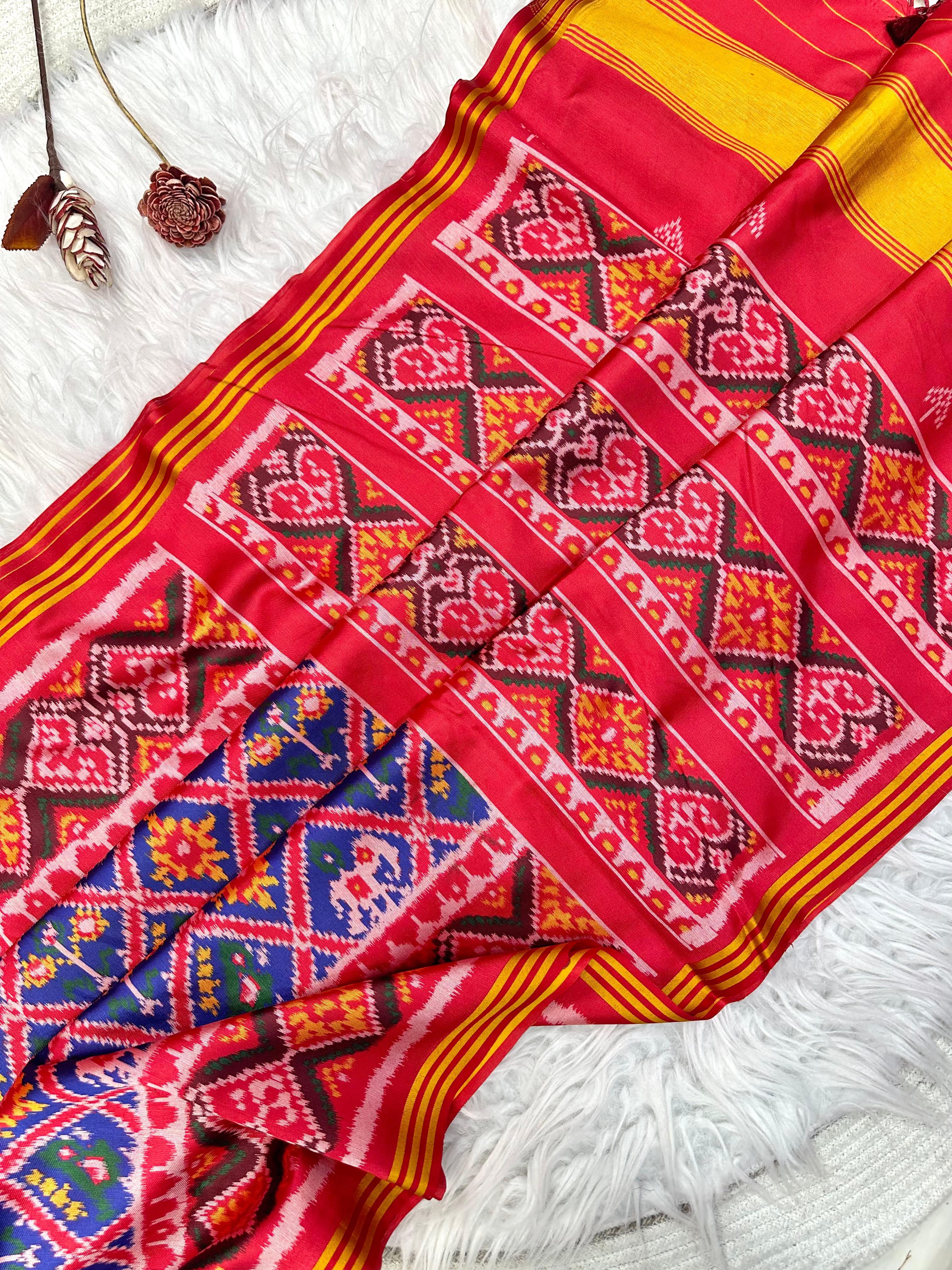
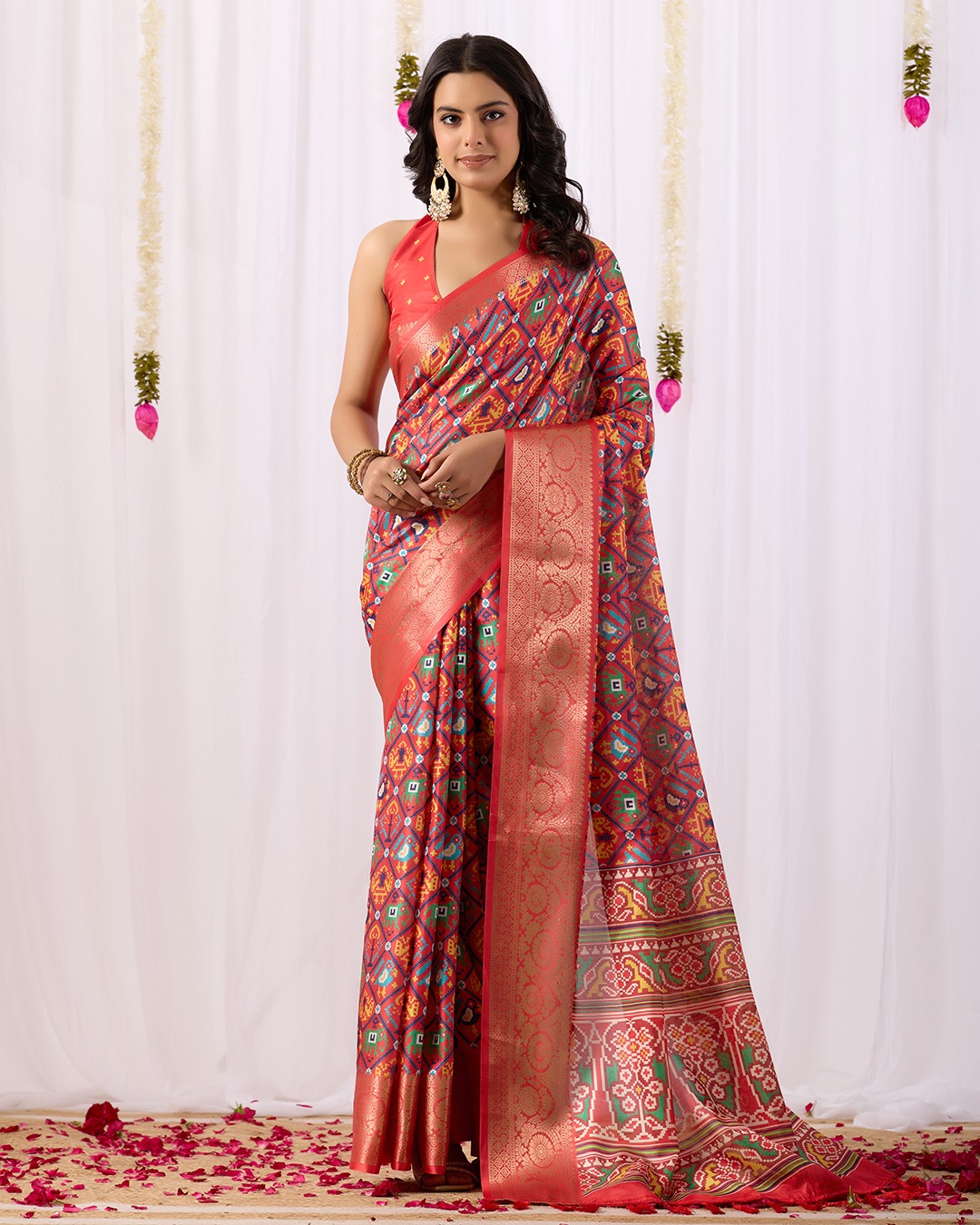
The Pure Patola Silk Double Ikkat Saree with Zari Border illustrates the vocabulary a buyer should understand. "Pure Patola silk" refers to the stated fibre and tradition, "double ikat" refers to the technique, and "zari border" refers to metallic-looking threadwork or metallic yarn in the border. Ask whether the zari is real metal-wrapped thread, imitation zari or a decorative synthetic yarn.
Patan Visit and the Questions Worth Asking About Patola Weaving: Which Motifs Matter?
Common Patola motifs include parrots, elephants, flowers, dancing figures, baskets, geometric grids and stylised forms linked to Gujarati visual culture. Motif names can vary between families and sellers, so ask what a design is called locally and whether its meaning is documented or simply a contemporary interpretation.

Parrots, known in Gujarati textile vocabulary through forms such as tota, frequently appear in wedding-oriented Patola designs. Elephants may suggest festivity, status or auspiciousness, while flowers and vines create rhythm across a border or pallu. A motif can have symbolic value without being exclusive to Patola, so an isolated figure should not be treated as proof of authenticity.
Colour planning is equally important. Traditional Patola palettes often use strong contrasts such as red, green, yellow, orange, blue and black, although present-day makers work with a much wider range. Red and green may be prominent in ceremonial sarees, while olive, wine and mustard shades suit contemporary wardrobes.
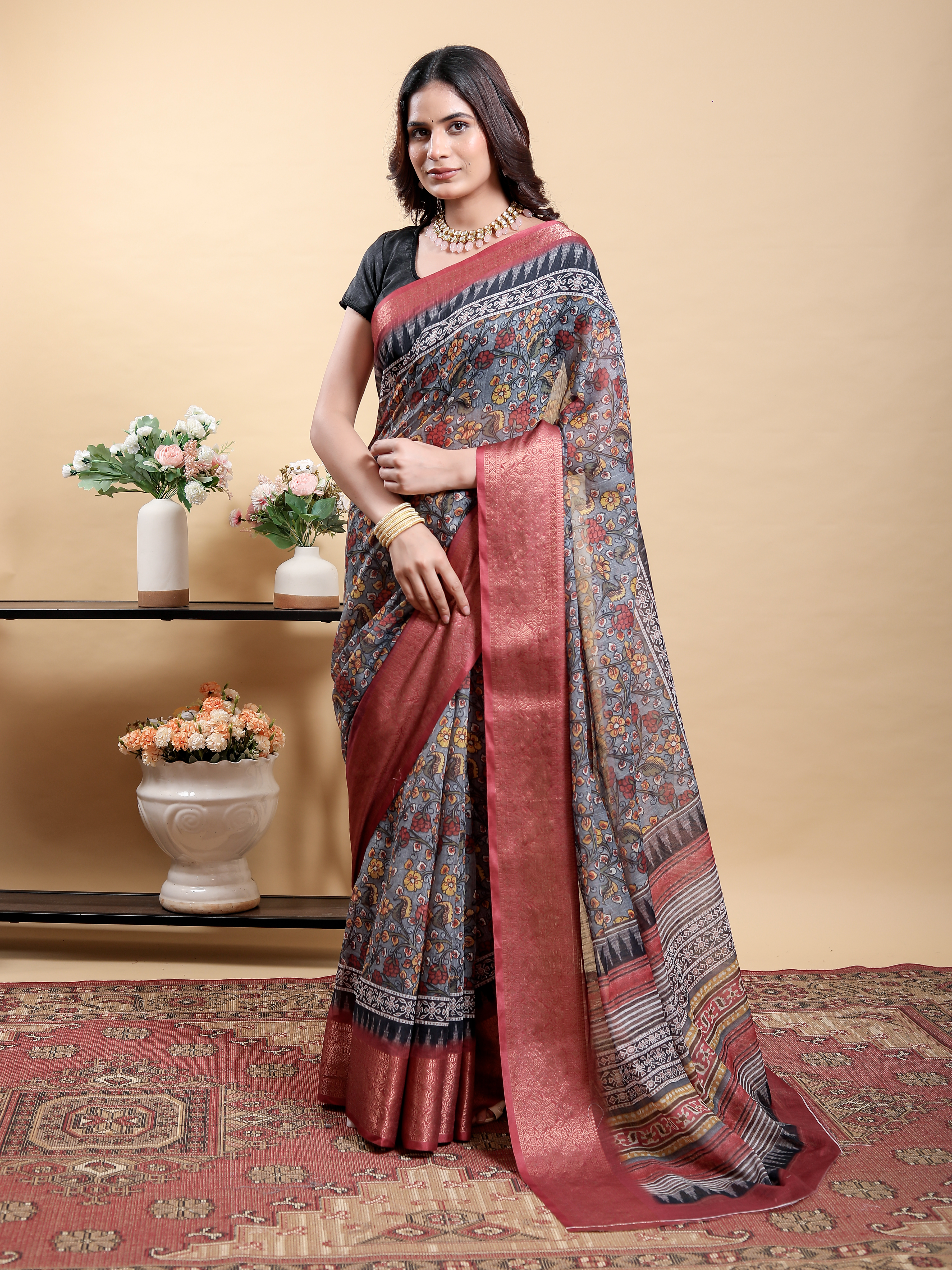
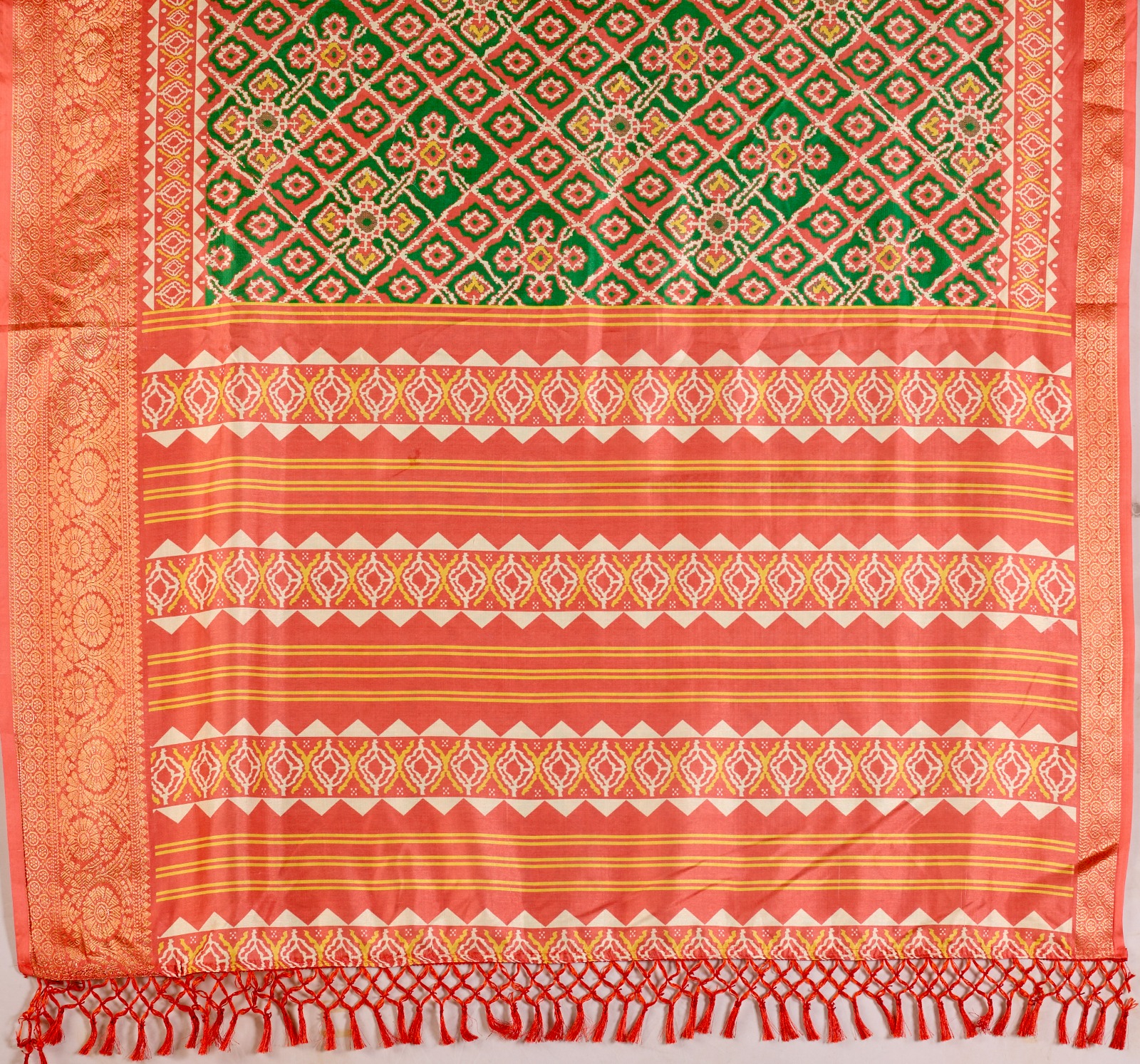
The Red Patola Design Lichi Silk Saree Online - Varnavi and the Traditional Bottle Green Patola Border Silk Saree show how Patola-derived visual language can be adapted for different styling needs. A buyer should still ask whether "design" or "border" indicates a woven ikat structure, a printed surface or a decorative interpretation. Product names can describe appearance, but construction details require a separate answer.
Patan Visit and the Questions Worth Asking About Patola Weaving: How Can You Check Authenticity?
You can distinguish woven Patola from Patola-inspired fabric by checking the construction, reverse side, edge details, pattern alignment and seller documentation together. No single visual test is conclusive for every textile.
What should you inspect at close range?
Inspect the pattern at close range, particularly around a motif, border and pallu. A woven ikat pattern usually shows small feathered or softened edges where dyed threads meet, although skilled work can appear remarkably sharp. A screen print or digital print may have a more uniform surface, and the reverse side may show little or no colour penetration.
Why do the selvedge and pallu matter?
The selvedge can reveal whether the design continues through the structure of the cloth, while the pallu often contains the most complex arrangement of motifs. Ask whether the border was woven as part of the design or added later. A zari border may be separately applied or integrated during weaving, depending on the textile.
What evidence should a seller provide?
Useful process evidence can include the name of the weaving cluster, a description of the loom, the fibre specification, a production video or a written invoice identifying handloom and silk details. A certificate or handloom mark can support a claim, but a certificate should be read alongside the product description because it may verify one characteristic rather than every marketing statement.
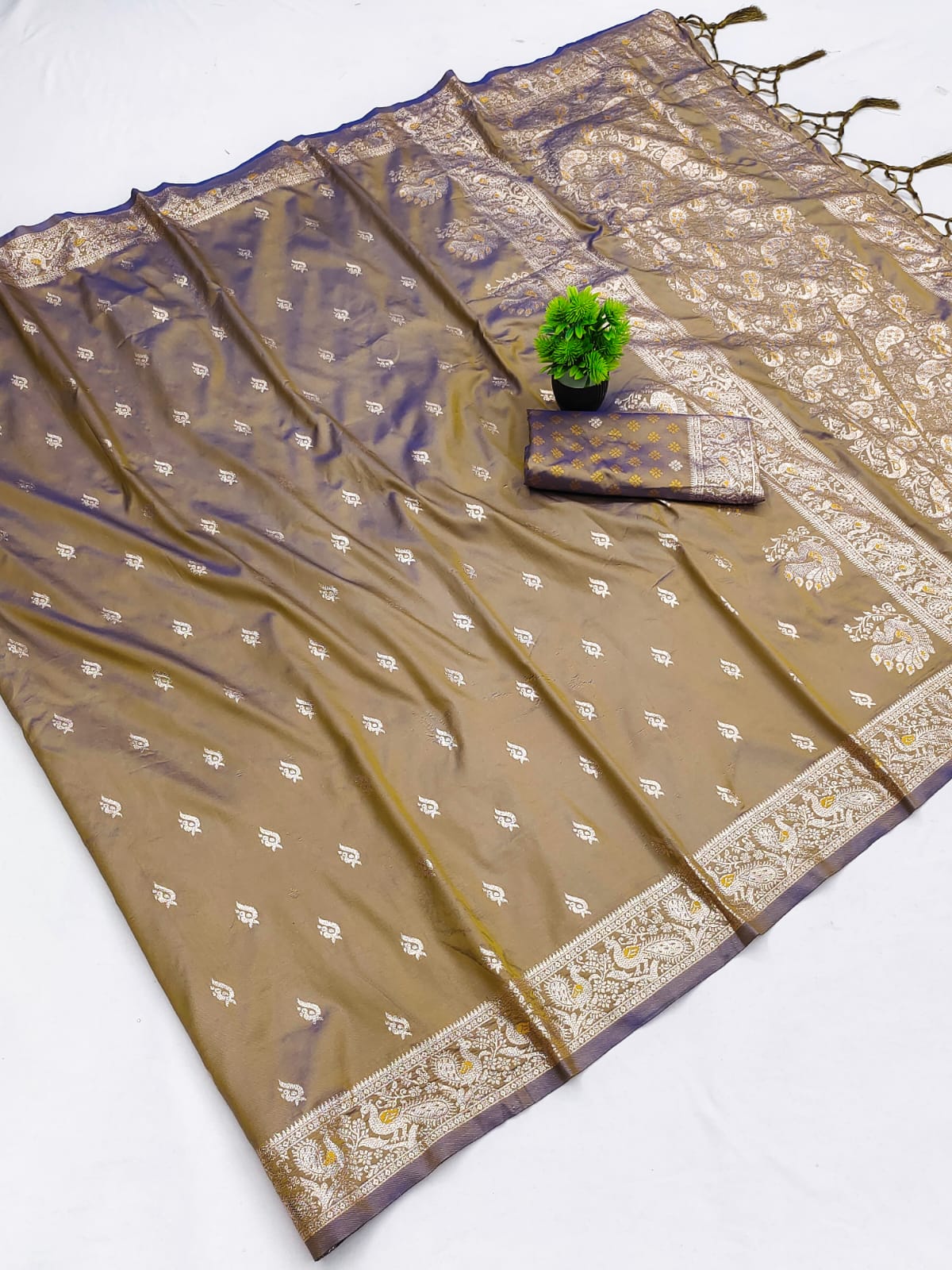
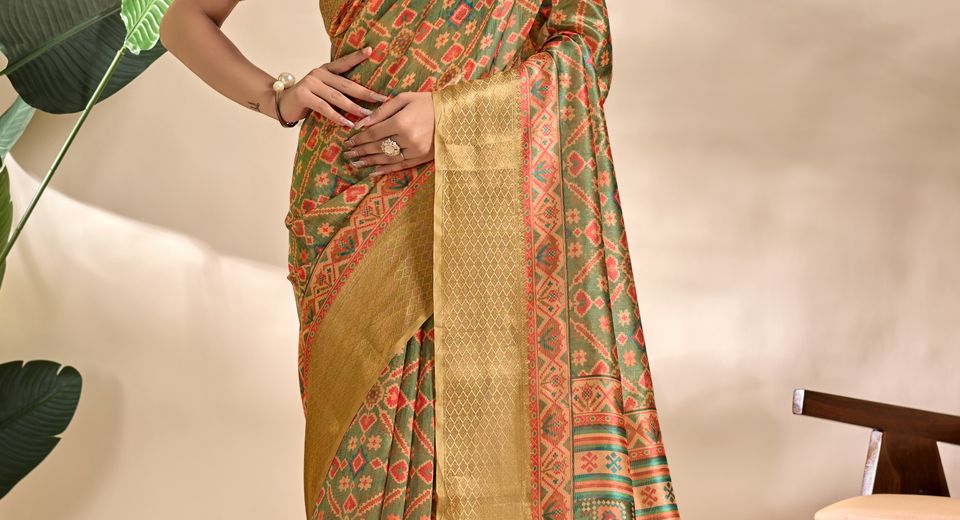
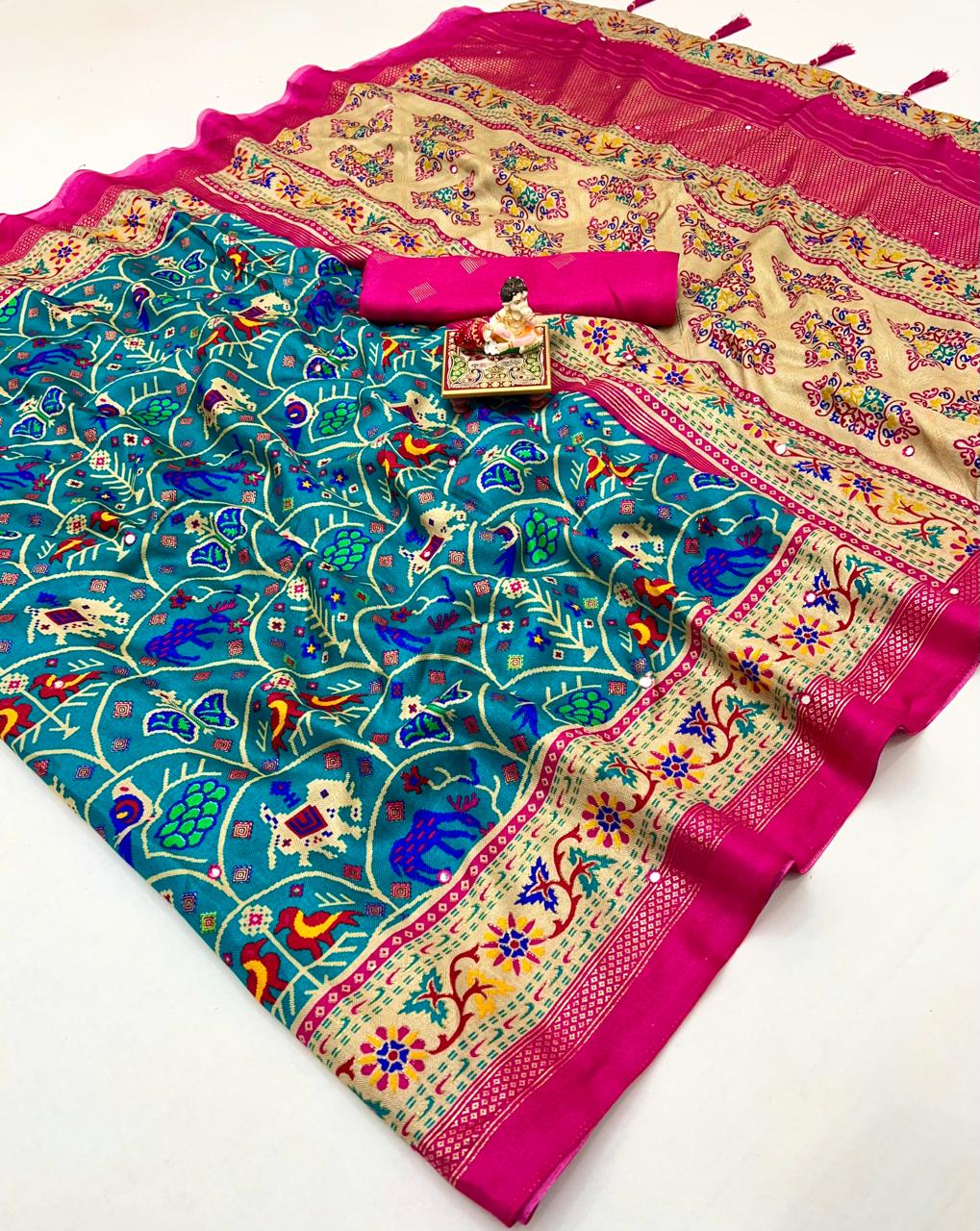
The Olive Green Patola-Inspired Geometric Soft Silk Saree and the Wine Patola Style Soft Pashmina Silk Party Wear Saree demonstrate why the words "inspired" and "style" matter. Such garments can offer accessible colours, lighter handling and festive styling without being presented as traditional double ikat Patola. Honest naming helps buyers compare like with like.
Patan Visit and the Questions Worth Asking About Patola Weaving: What About Silk, Dyes and Zari?
Ask for the exact fibre composition, dye category, zari material and care method before purchasing a Patola saree. These four details affect comfort, durability, price and storage.
Pure silk has a different handle, lustre and drape from a silk blend or soft silk interpretation. Pashmina silk may be marketed as a soft, warm-feeling blend or commercial fabric category, so request the fibre percentage rather than relying on the name alone. The Heritage Peacock Patola Pashmina Silk Saree and the Mustard Yellow Patola Print Soft Pashmina Silk Designer Saree are useful examples of why product descriptions should be read carefully: a Patola reference may describe a motif or print, while pashmina silk identifies a different material category from pure Patola silk.
Dyes deserve practical questions. Ask whether the colour has been tested for bleeding, whether the first wash must be dry cleaning, and whether strong sunlight should be avoided. Natural dyes can produce subtle variation and may need specialised care, while synthetic dyes can provide intense, repeatable colour but still require proper washing and storage.
Zari also needs clarification. Real zari traditionally uses a precious-metal coating or wire around a core, while contemporary zari commonly uses silver-coloured or gold-coloured metallised polyester. The difference affects price, weight, tarnishing and care. Never use perfume, bleach or harsh detergent directly on a zari border.
Patan Visit and the Questions Worth Asking About Patola Weaving: How Should You Buy and Care for It?
The safest purchase follows a written specification, a realistic price comparison and a clear care plan. Ask for fibre content, technique, place of weaving, dimensions, dye-care instructions and the seller's exchange terms before payment.
Price should be assessed against construction rather than colour alone. Handwoven double ikat requires skilled planning, repeated resist binding and slow alignment, so it generally costs more than printed silk or a machine-made Patola-inspired saree. A low price isn't automatically a bargain if the seller is making an unsupported claim about technique.
Carry a small notebook during a Patan visit and record the weaver or shop name, technique, fibre, width, length and quoted price. Photographing a sample may be useful when permitted, especially if several sarees use similar colours. Comparing three or four examples makes differences in density, finishing and pattern clarity easier to recognise.
Store a Patola saree folded in a clean cotton or muslin cover, away from direct sunlight and damp walls. Refold the saree every few months so permanent crease lines don't develop. Keep zari away from untreated wood, moisture and plastic that traps humidity. For a valuable silk saree, choose professional dry cleaning and explain the presence of zari before treatment.
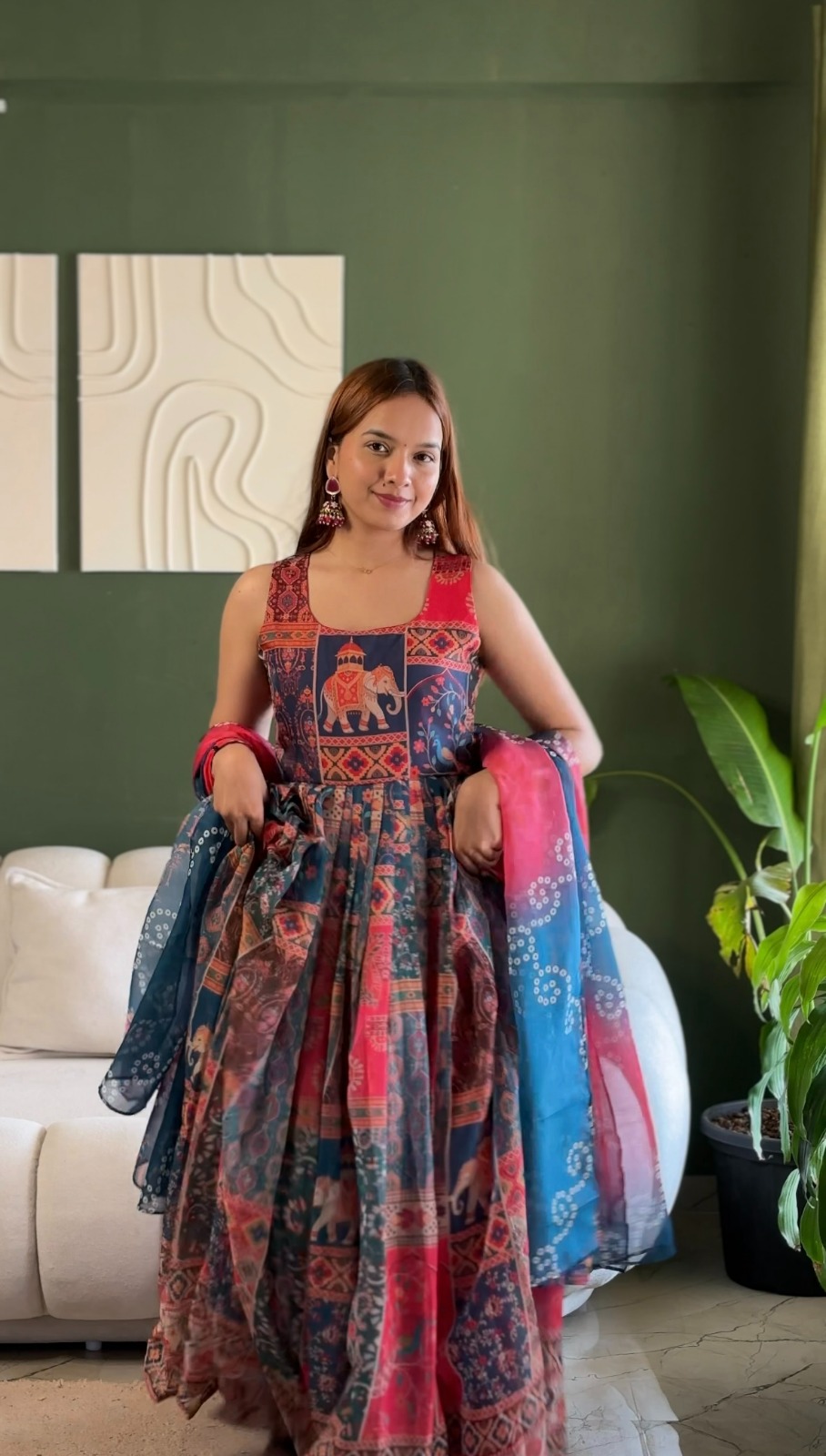
The Royal Patola Printed Designer Gown with Elegant Dupatta shows how Patola-inspired design can move beyond the saree into occasion wear. The garment may be a sensible choice when the priority is an easy-to-wear silhouette rather than handwoven provenance. A purchase becomes more satisfying when the buyer knows exactly which value matters: technique, fibre, design, comfort, heritage or styling versatility.
Patan Visit and the Questions Worth Asking About Patola Weaving: What Should You Remember?
The most useful conclusion is simple: ask what was woven, where it was woven, how the threads were dyed and what the fibre contains. Those four answers separate a traditional double ikat textile from a printed or inspired design without diminishing the beauty of either.
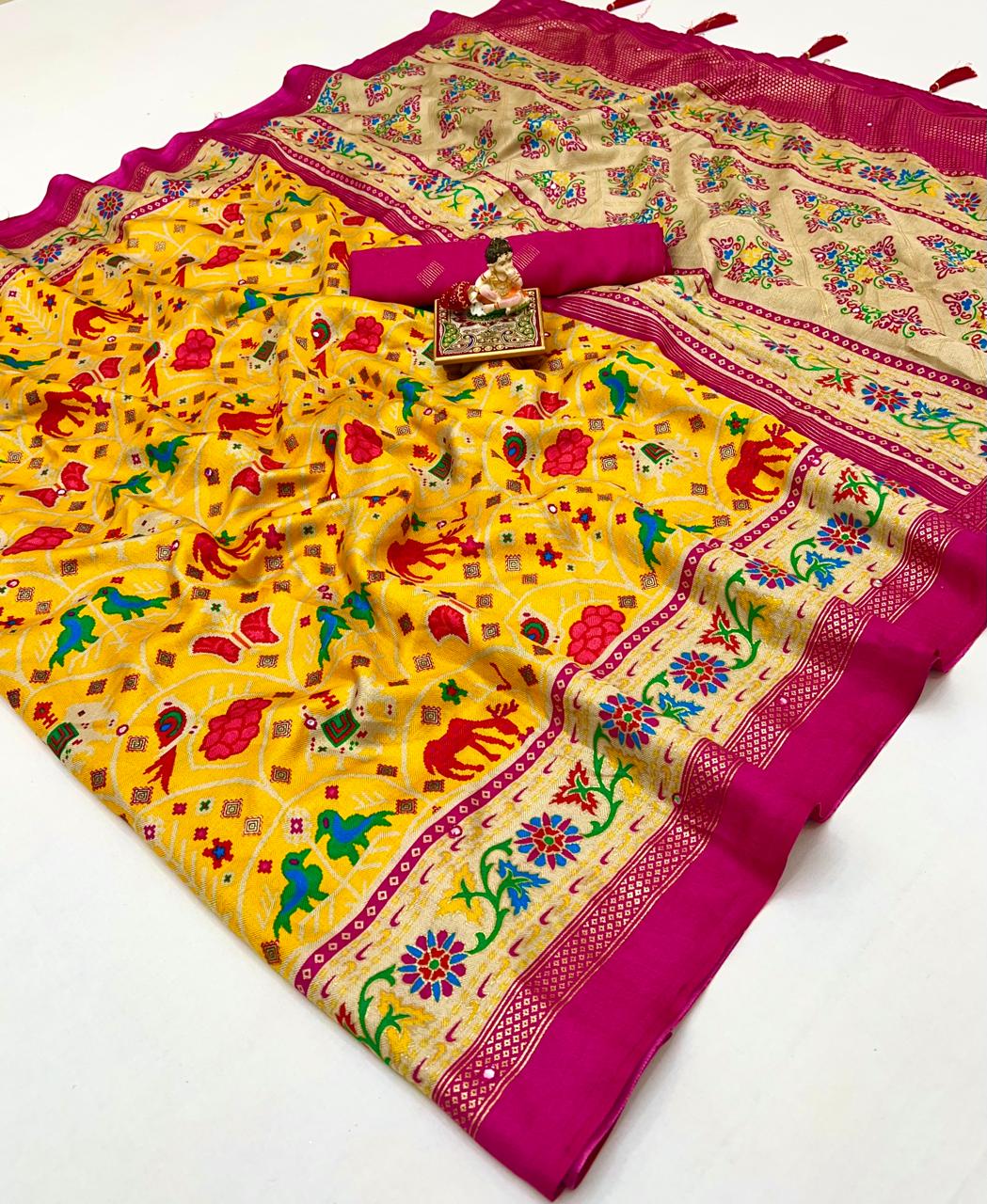
Patola weaving rewards patient looking. Notice how a pattern crosses the reverse side, how a pallu balances its motifs, how a border meets the body and how a seller explains the work. A thoughtful Patan visit therefore offers more than a purchase; it teaches you to see time, skill and material decisions inside a finished saree.
Questions Travellers and Saree Buyers Ask About Patan and Patola
What is the difference between Patola and Patola-inspired sarees?
Traditional Patola generally refers to a woven textile associated with Gujarat, especially the double ikat tradition of Patan. Patola-inspired sarees may use printed, digitally reproduced, single-ikat or machine-made designs that borrow Patola colours and motifs.
How can I tell whether a Patola saree is double ikat?
Check whether both the warp and weft carry resist-dyed sections that align to create the design. Examine the reverse side, ask how the threads were prepared, and request written details about the weaving technique rather than relying only on the product name.
Why are authentic double ikat Patola sarees expensive?
Double ikat requires precise preparation of both thread systems, repeated tying and dyeing, careful alignment and slow weaving. Production can take many months, so the price reflects skilled labour, silk quality, design complexity and provenance rather than colour alone.
Which questions should I ask a Patola seller in Patan?
Ask whether the saree is woven or printed, whether it is single or double ikat, which fibre it uses, where it was made, which dyes were used and what the zari contains. Also ask about production time, care instructions and any available handloom or origin documentation.
How should I wash and store a Patola silk saree?
Follow the seller's written care instructions and choose professional dry cleaning for valuable silk or zari sarees. Store the saree folded in a breathable cotton or muslin cover away from sunlight, dampness, plastic and direct contact with perfume or chemical products.
Are all Patola motifs symbols of Gujarati weddings?
No, many Patola motifs are associated with festive or ceremonial textiles, but individual meanings vary by design, family and region. Parrots, elephants, flowers and geometric forms should be interpreted with local context rather than treated as universal symbols.