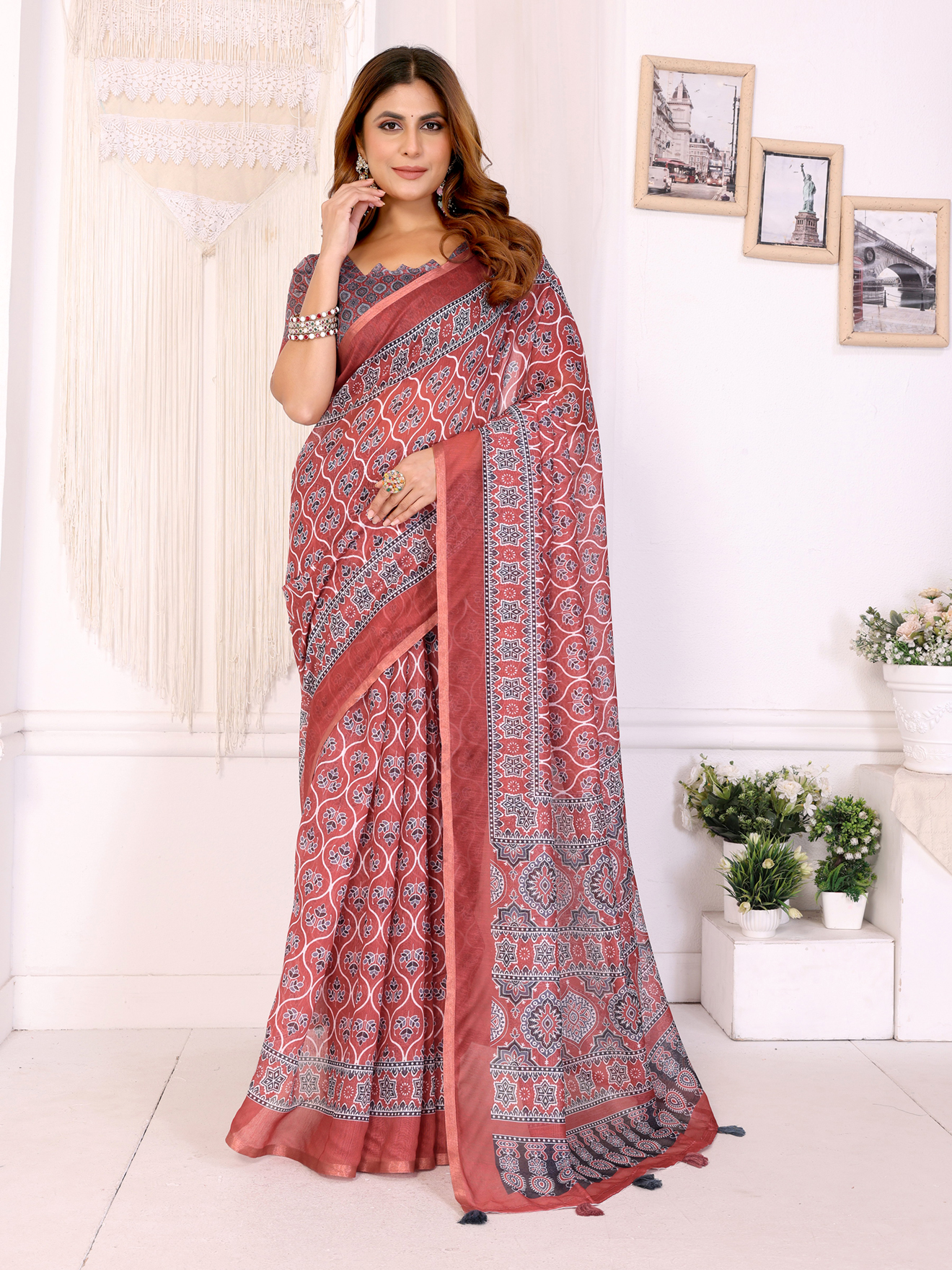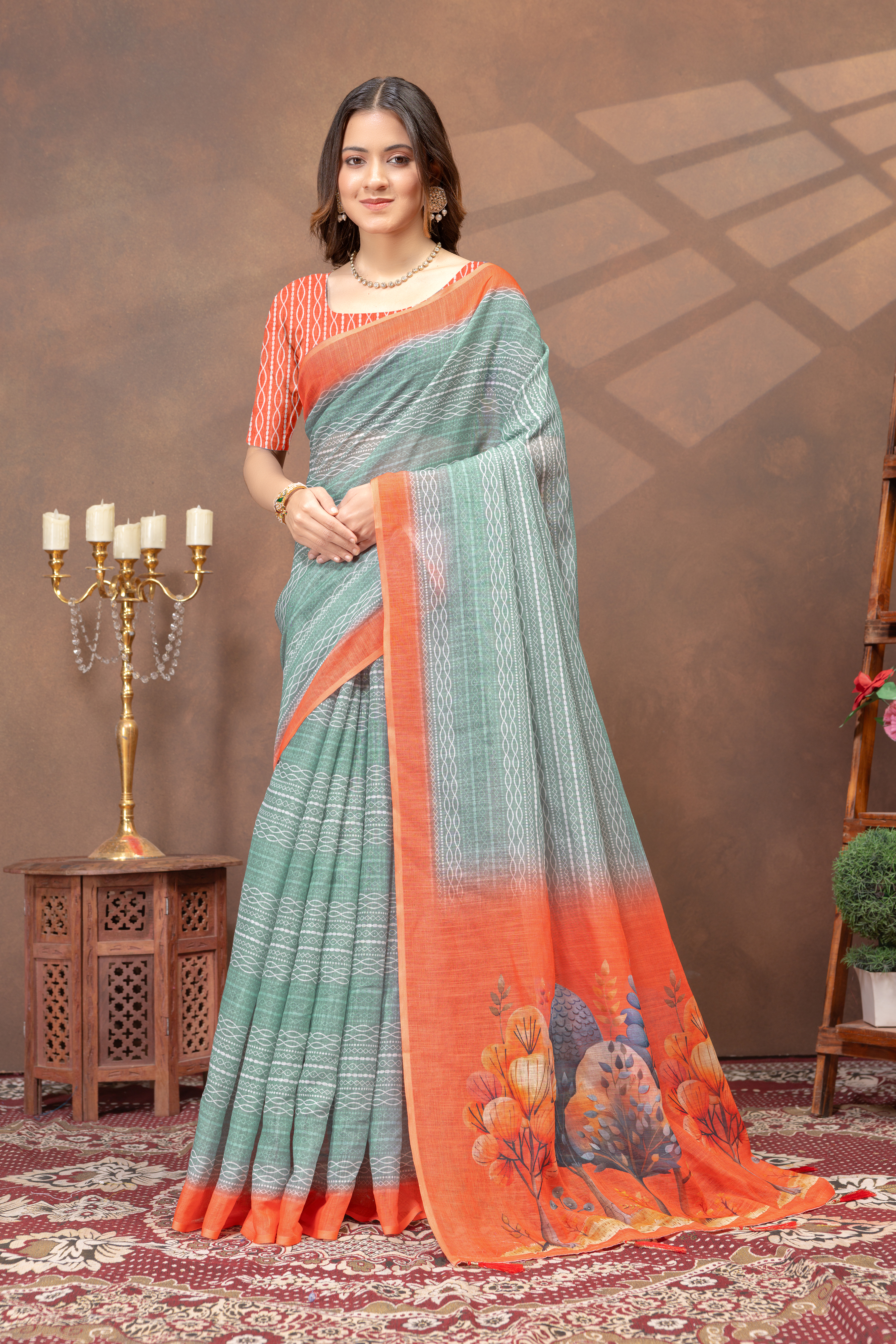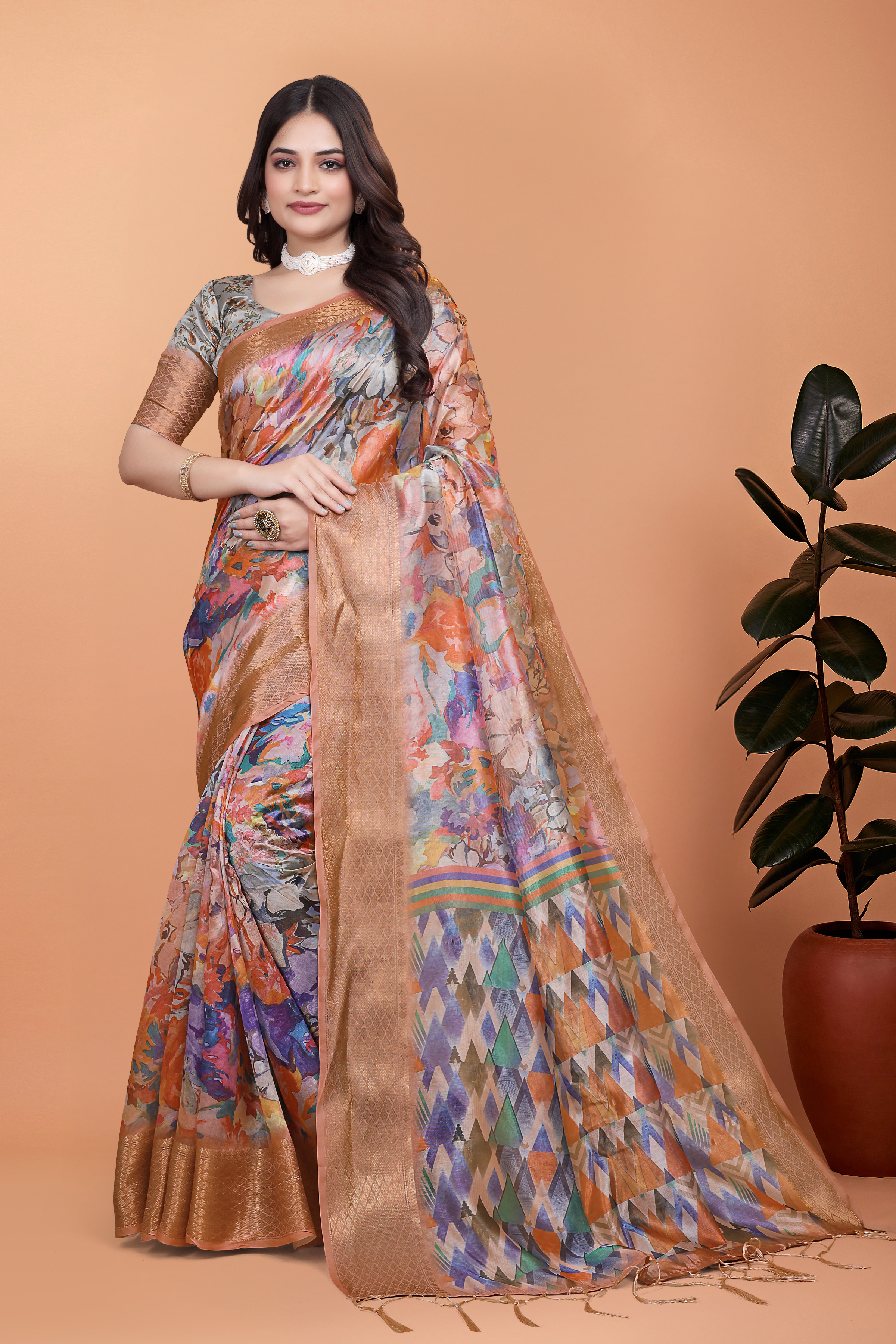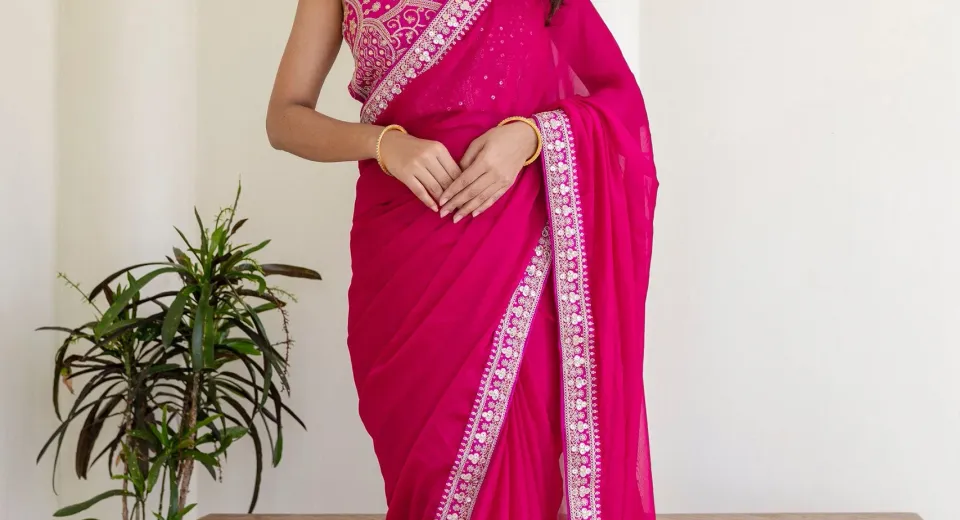
Parsi Gara Sarees Turn Embroidery Into Storytelling through birds, flowering vines, fish, insects and architectural forms arranged across silk. A Gara saree can preserve family memory, migration history and a community's visual language in a single six-yard garment. The value lies in the number of stitches, and also in the way motifs are placed, repeated and balanced against empty fabric.
Gara embroidery developed among the Parsi Zoroastrian community in western India, particularly in Bombay, now Mumbai, through historic trade connections with China. Parsi merchants encountered Chinese embroidered textiles and adapted that visual vocabulary for saris, gara jackets, torans and other ceremonial textiles. Indian silk, local taste and Parsi wedding customs gradually gave the form its distinctive identity.
Modern embroidered sarees don't all qualify as traditional Gara textiles. Understanding the difference helps a buyer appreciate a handworked heirloom, judge a contemporary interpretation fairly and choose suitable care for silk, net, georgette or synthetic fabric.
Parsi Gara Sarees Turn Embroidery Into Storytelling Through History
Parsi Gara sarees emerged from cultural exchange, especially between Parsi communities in India and Chinese textile traditions encountered through maritime trade. The resulting textiles were adapted for Indian draping and Parsi ceremonial life rather than copied unchanged from an overseas source.
Historic Gara textiles may appear as sarees, shawls, jackets, borders or household decorations. The term "Gara" can refer to the embroidered textile itself, so there's no single mandatory format, colour or motif arrangement. Some examples feature a densely worked pallu, while others use scattered scenes on the body or a strong embroidered border.
Parsi merchants travelled widely between the nineteenth and early twentieth centuries, and imported embroidered silks became desirable within affluent Parsi households. Indian artisans and workshops interpreted floral, animal and landscape imagery using local materials, techniques and proportions. That process made Gara a living Indian textile tradition with Chinese visual influences.
How did Chinese influence shape Parsi Gara embroidery?
Chinese influence shaped Parsi Gara embroidery through motifs, composition and imported silk textiles, while Parsi patrons and Indian artisans gave the tradition its distinctive identity.
Peonies, chrysanthemums, bamboo, flowering branches, pagodas, fish, birds and insects are usually associated with the visual exchange. Similar imagery may appear in Chinese decorative art, but its arrangement on an Indian saree reflects local wearing practices and Parsi taste. A Gara saree is therefore best viewed as evidence of trade, adaptation and community identity.
Parsi Gara Sarees Turn Embroidery Into Storytelling Through Motifs
Parsi Gara motifs create a narrative through repetition, direction, scale and placement rather than through written words. A viewer reads the pallu, border and body as connected scenes, much as a reader follows panels in an illustrated manuscript.
- Birds: Birds often provide the most recognisable focal point, especially when they face one another or sit among flowering branches. Paired birds can suggest companionship, harmony or an auspicious domestic setting.
- Flowers: Peonies, chrysanthemums and other blooms fill space, create rhythm and communicate ideas of abundance, beauty or renewal. Large flowers can establish the main scale, while smaller blossoms connect the composition.
- Fish: Fish introduce movement and are often arranged as paired or repeating forms within a border or pallu. Their curved bodies help break up rigid lines.
- Insects and butterflies: Small winged forms add scale variation and prevent a dense floral arrangement from appearing flat. Their placement can make a garden scene feel animated.
- Pagodas and garden elements: Architectural details recall the travel and trade routes that shaped Gara's visual vocabulary. These details can turn a pallu into a miniature landscape.
- Vines and foliage: Curving stems connect isolated motifs and create a continuous route for the eye. Foliage also fills negative space without overpowering the principal figures.
Motif meanings are not universal rules. A family may associate a particular bird or flower with a wedding, a relative or a treasured heirloom, while another wearer may simply value the motif for its beauty. The story belongs partly to the textile and partly to the person who wears it.
Colour changes the emotional effect of the narrative. A cream, ivory or muted silk ground allows embroidery to resemble an illustrated garden, while deep red, black, purple or jewel-toned grounds create stronger contrast. Gold zari, coloured silk floss and metallic highlights can separate foreground birds from background foliage, but heavy shine should not be mistaken for proof of classic workmanship.
Parsi Gara Sarees Turn Embroidery Into Storytelling Through Craft
The most useful way to assess embroidered workmanship is to inspect the reverse, stitch consistency, motif definition and fabric stability together. No single visual feature can prove that a saree is antique, hand embroidered or historically authentic.
Hand embroidery usually produces small changes in stitch length, direction and density. Those changes should look intentional rather than careless. On the front, curves around petals and feathers should remain legible. On the reverse, thread movement may reveal how the artisan built a motif, although a neat reverse isn't always evidence of machine work and a messy reverse isn't always evidence of handwork.
Examine the silk under natural or neutral light. Check whether the embroidery pulls the fabric into puckers, whether the selvedge is stable and whether the pallu falls evenly. Loose threads, brittle metallic elements, powdering zari or darkened silk require professional advice before cleaning or wearing.
How can a buyer distinguish Gara embroidery from a printed design?
A buyer can distinguish embroidery from printing by checking the raised surface, reverse threadwork, edge definition and weight of the motif, although professional examination may be needed for valuable textiles.
Printed motifs remain flat and usually show ink or pigment spreading slightly into the fabric. Embroidered motifs have thread direction, tactile relief and small changes in coverage. Machine embroidery may look highly regular, while handwork often contains controlled variation. A printed bird inspired by Gara imagery can still be attractive, but it should not be described as handworked Gara embroidery.
Contemporary versions may use machine embroidery, appliqué, sequins, thread work or digital prints inspired by Gara motifs. These sarees can be practical for a first purchase. Accurate description matters because a printed net saree, a sequin georgette saree and a hand-embroidered silk heirloom require different expectations and care.
Parsi Gara Sarees Turn Embroidery Into Storytelling in Modern Wardrobes
A current buyer should choose the base fabric, motif density and occasion before deciding whether a Gara-inspired saree suits her wardrobe. Classic visual references can work on contemporary textiles when proportions remain balanced and the saree is comfortable to wear.
Silk gives embroidery a stable, rich foundation and is appropriate for weddings, religious ceremonies and long-term storage. Net creates a lighter, more transparent look but needs careful blouse coverage and support at the seams. Georgette drapes close to the body and suits evening events, although dense embroidery can make the pallu heavier than the rest of the saree.
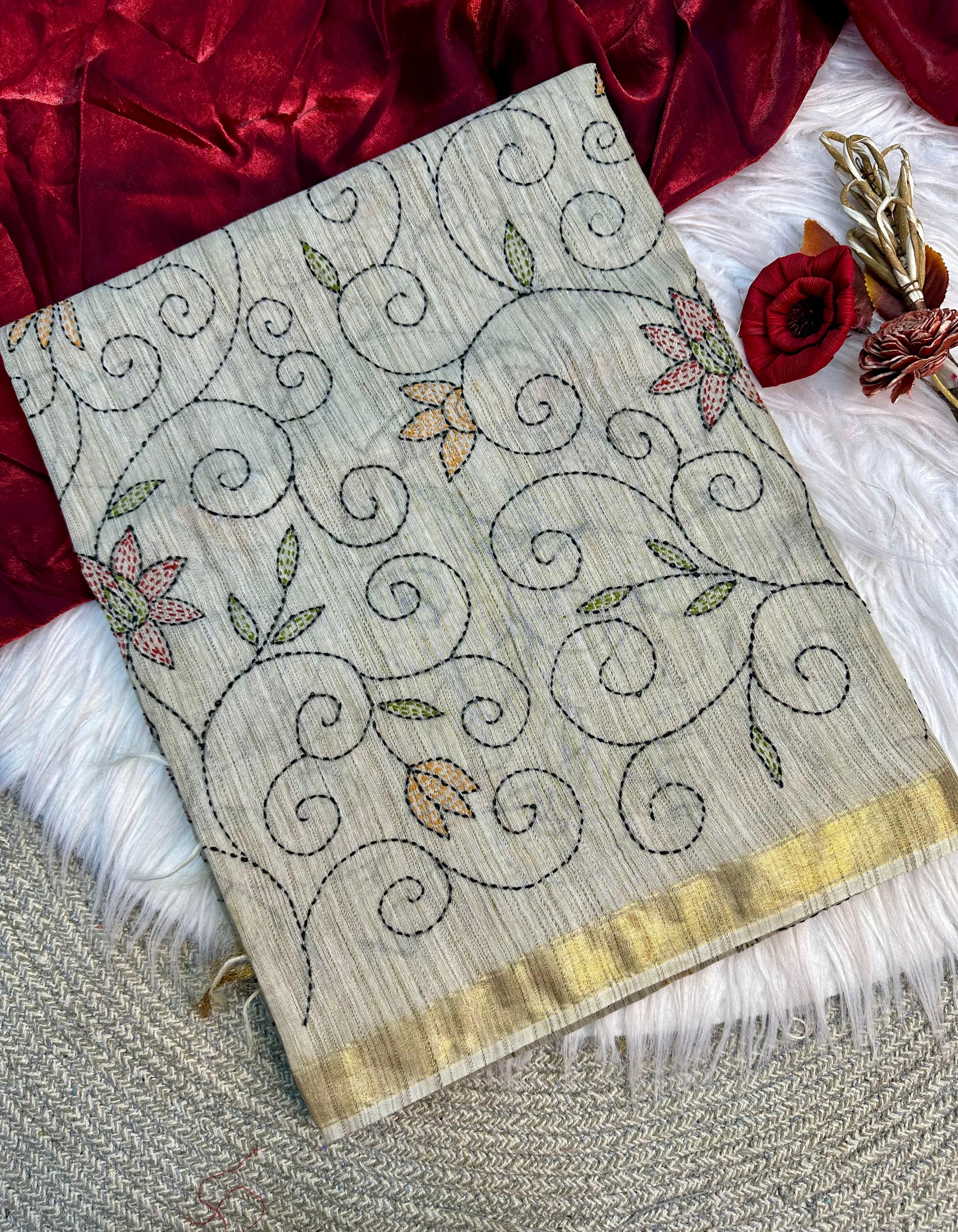
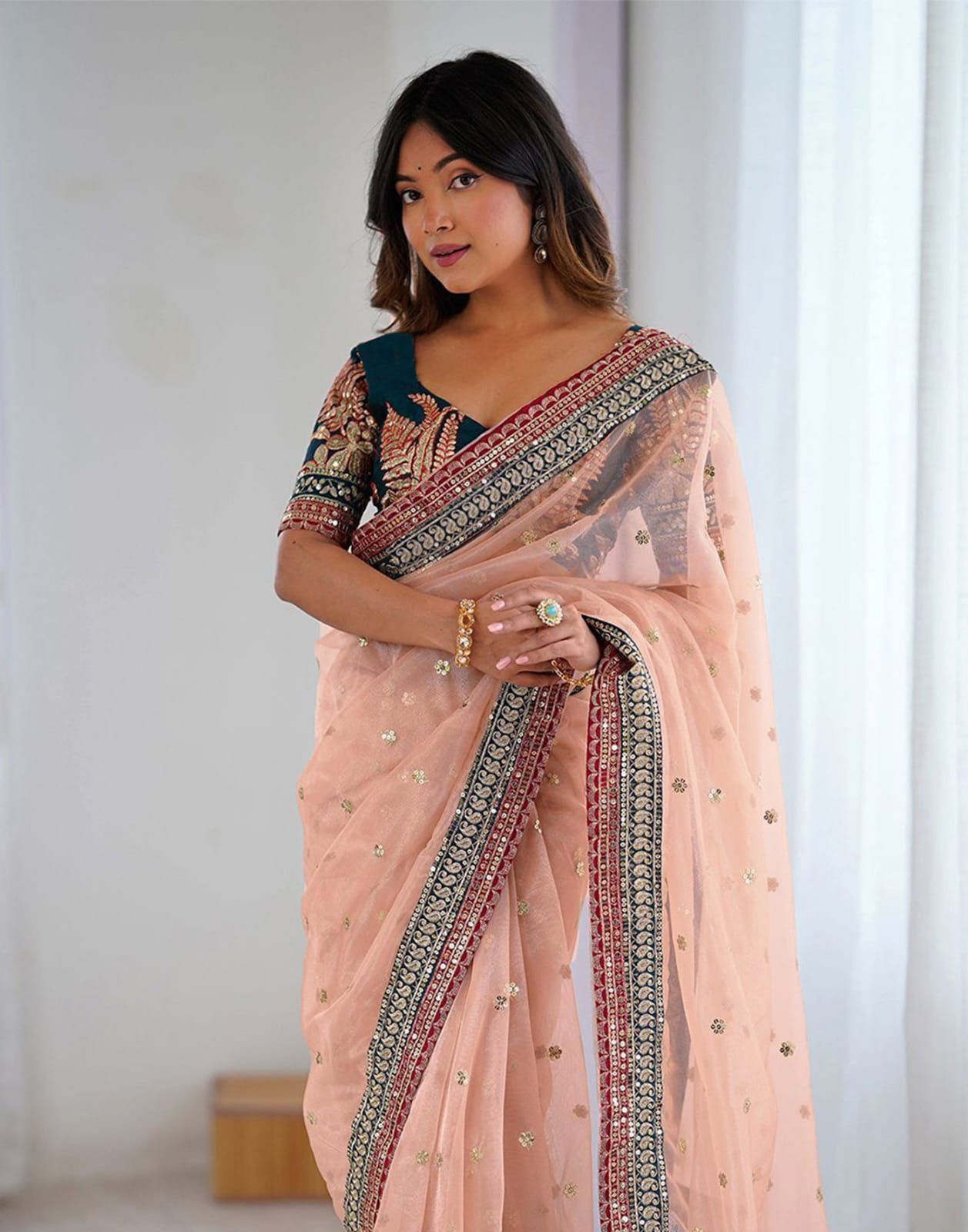
Premium Handloom Silk Saree with Handkatha demonstrates why a textured silk base benefits from a controlled amount of surface work. Peach Embroidered Net Party Wear Saree with Blouse offers a contemporary route for a reception or festive dinner, where transparency and sparkle are part of the styling language rather than evidence of historical Gara construction.
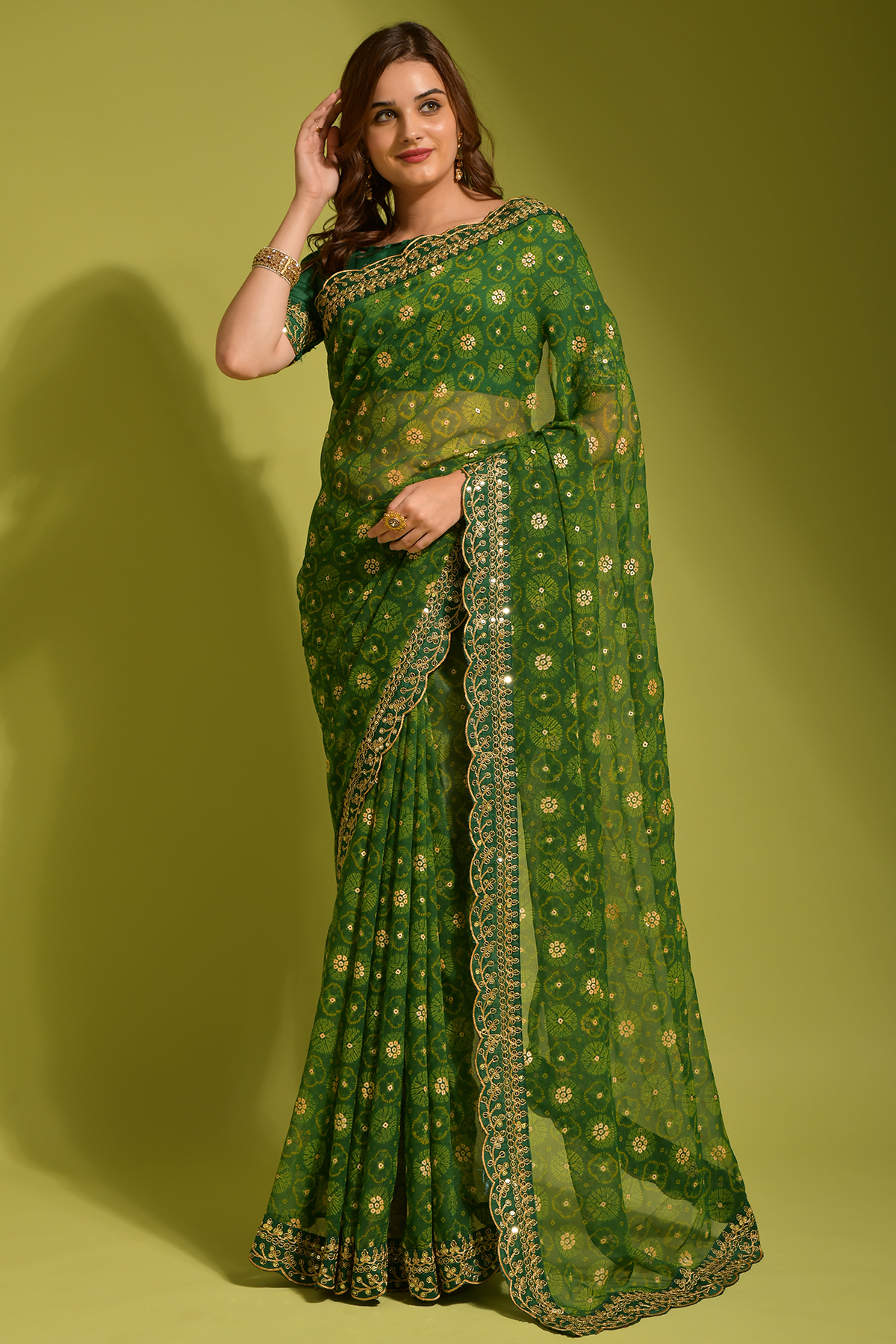
Designer Emerald Georgette Saree with Sequin Lace uses colour and reflective detail to create evening drama. Pink Rangoli Silk Saree with Cording Embroidery and Double Sequins Work shows how cording and sequins can build dimension without reproducing a time-honoured Gara scene exactly. Both examples belong to the wider conversation about embroidered sarees, not automatically to the historical category of Parsi Gara.
A buyer comparing Silk Sarees Under 3000 With Discount should check fibre composition, lining, embroidery method and finishing rather than relying on the word "silk" alone. A saree described as silk blend, art silk or silk-like fabric will behave differently from Banarasi silk, Kanjeevaram silk or handloom silk.
Parsi Gara Sarees Turn Embroidery Into Storytelling Through Styling
The safest styling approach is to let the embroidery remain the visual centre and keep competing accessories controlled. A plain or lightly textured blouse allows birds, flowers and borders to remain readable from a conversational distance.
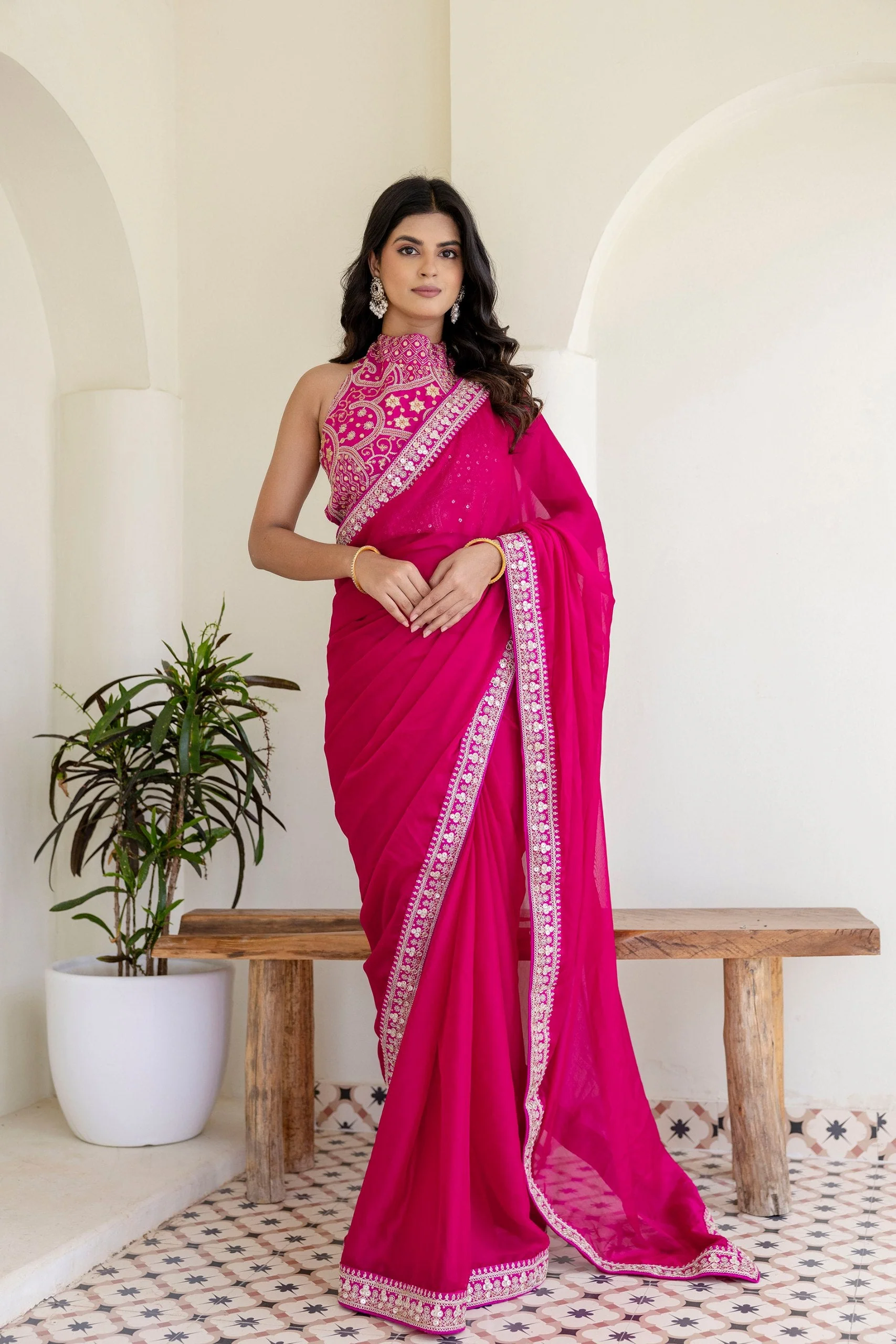
A high-neck blouse can echo the formal character of a heavily worked pallu, while a simple round neck creates a softer daytime balance. Match the blouse to a secondary embroidery colour instead of forcing an exact match. A muted green blouse can pick up foliage, while a soft pink blouse can repeat a flower without competing with the entire motif field.
Jewellery should follow the density of the saree. Pearl studs, a single pendant, small gold earrings or an heirloom brooch can complement fine embroidery. Heavy layered necklaces may obscure a pallu worn over the shoulder. Keep the pleats narrow enough to preserve the border, but don't compress raised embroidery with very tight pinning.
Colour-based collections can help with event planning, although colour alone doesn't determine whether a saree is Gara. Pink Georgette Sarees suit daytime celebrations and cocktail settings when paired with restrained jewellery. Red Banarasi Silk Sarees for Weddings Under 1100 can provide a festive alternative for a ceremony, while Party Wear Sarees offer broader options for receptions and evening gatherings. Gray Color Sarees Under 1000 can work for a quieter, contemporary interpretation with silver-toned accessories.
For a Haldi ceremony, avoid placing delicate silk embroidery directly against turmeric paste, oil or damp seating. Choose a washable contemporary saree for pre-wedding activities and reserve an heirloom Gara textile for a cleaner ceremony, reception or family portrait session.
Parsi Gara Sarees Turn Embroidery Into Storytelling Through Care
Embroidered Parsi Gara sarees should be stored flat or loosely rolled in breathable cotton, away from sunlight, moisture, perfume and pressure. Correct storage prevents silk creases, metallic thread damage and colour transfer.
Never place an embroidered saree in direct sunlight for long periods. Sunlight can fade silk dyes and weaken fibres, particularly along exposed folds. Refold a stored saree every few months along different lines, or roll it around a wide, acid-free tube with the embroidery facing inward only when the surface is well protected.
Wrap the saree in unbleached muslin or clean cotton. Avoid plastic bags for long-term storage because trapped humidity can encourage mildew and create a stale odour. Keep zari and sequins away from rough wood, sharp jewellery boxes and garments with hooks that can catch raised threads.
Can a Parsi Gara saree be washed at home?
A valuable or heavily embroidered Parsi Gara saree should not be washed at home; professional textile cleaning is safer than detergent, soaking or machine washing.
For a contemporary saree, follow the care label and test colourfastness on an unseen area before any spot treatment. Do not scrub embroidery, wring silk or leave a wet saree folded. Blot a fresh spill with a clean white cloth, keep friction low and consult a specialist for oil, turmeric, perfume or ink stains.
Use a padded hanger only briefly before an event because prolonged hanging can strain a heavy embroidered pallu. After wearing, air the saree in shade until body moisture has evaporated, then store it without compressing the motifs.
Parsi Gara sarees remain compelling because their embroidery records more than decoration. Birds, flowers, fish and vines carry traces of travel, trade, craftsmanship and family ceremony. Whether a buyer chooses a historic handworked textile or a modern saree inspired by its visual language, knowing how to read the motifs and protect the fabric makes the garment more meaningful and more enduring.
Questions Readers Ask About Parsi Gara Saree Stories
What is a Parsi Gara saree?
A Parsi Gara saree is a saree decorated with the distinctive narrative embroidery associated with the Parsi Zoroastrian community in India. Traditional examples often use silk and feature birds, flowers, fish, insects, vines and landscape-inspired imagery shaped by historic Chinese and Indian textile exchange.
What motifs are common in Parsi Gara embroidery?
Common Parsi Gara motifs include paired birds, flowering branches, peonies, chrysanthemums, fish, butterflies, insects, bamboo, pagodas and curling foliage. Motif meanings vary by family and textile, so no single symbolic interpretation applies to every saree.
Is every embroidered saree a Parsi Gara saree?
No, every embroidered saree is not a Parsi Gara saree. A traditional Gara textile is identified by its particular motif vocabulary, composition, cultural history and embroidery tradition; contemporary printed, sequinned or machine-embroidered sarees may only be Gara-inspired.
How can someone check whether Gara embroidery is handworked?
A buyer should inspect the front and reverse for stitch direction, controlled irregularity, motif definition and fabric stability. These signs can suggest handwork, but they cannot prove age or authenticity on their own, so valuable textiles should be assessed by a qualified textile specialist.
What blouse works with a heavily embroidered Parsi Gara saree?
A plain or lightly textured blouse usually works best with a heavily embroidered Parsi Gara saree because it keeps the pallu and motifs visible. A high-neck blouse suits a formal look, while a simple round neck creates a softer balance; matching a secondary embroidery colour is more refined than copying every colour.
How should a Parsi Gara saree be stored?
A Parsi Gara saree should be stored in breathable cotton or muslin, away from sunlight, humidity, perfume and rough surfaces. Valuable embroidered silk should be professionally cleaned, refolded periodically or loosely rolled on a wide archival tube, and never machine washed or wrung.