


Packing a Lehenga for a Flight Without Crushing the Embroidery takes more than folding the skirt and closing a suitcase. Zari, sequins, beads, threadwork, net and organza can snag, flatten or transfer colour when garments rub against shoes, toiletries and hard luggage edges. A careful packing system protects the surface while reducing deep creases that are difficult to remove at the destination.
The safest method uses a breathable garment bag, acid-free tissue or clean cotton cloth, a wide suitcase and deliberate placement of every component. The method works for a light festive lehenga as well as a heavily embellished bridal lehenga, although very dense bridal embroidery may be safer in cabin luggage than in checked baggage.
Packing a Lehenga for a Flight Without Crushing the Embroidery: What should you prepare first?
Prepare the lehenga, blouse, dupatta, tissue paper, a breathable garment bag, a wide suitcase and a small repair kit before making the first fold. Packing supplies in advance prevents rushed folding, which is a common cause of crushed sequins and distorted borders.
Inspect the lehenga under bright light at least one day before travel. Check whether zari is loose, whether sequins have sharp edges, whether hooks are secure and whether the blouse cups or can-can layers are holding their shape. A loose thread should be secured by a tailor rather than cut close to the embroidery.
Clean, dry hands are important because oil and moisture can mark silk, satin, velvet and pale net. Remove jewellery, watches and rings before handling the garment. Keep the lehenga away from perfume, hair oil, makeup and food during the packing process.
Choose a suitcase with a broad, uninterrupted interior surface. Hard-sided luggage with a smooth lining generally protects embellished clothing better than a soft bag with exposed zippers and rough seams. A suitcase that's too small forces sharp folds, while an overfilled suitcase presses continuously against the embroidery.
A breathable garment bag is preferable to a sealed plastic cover for the main garment. Plastic can trap humidity during long journeys, especially when luggage moves between air-conditioned aircraft cabins and warm, humid airports. A short-term plastic cover may protect against rain during a transfer, but it should not remain sealed around a damp garment.
Packing a Lehenga for a Flight Without Crushing the Embroidery: How should the skirt be folded?
Fold the lehenga skirt with the embroidered side facing inward only when a soft tissue barrier separates the decorated surfaces. Keeping embroidery directly against embroidery creates friction, and placing a hard fold across dense zari or beadwork can leave a permanent pressure mark.
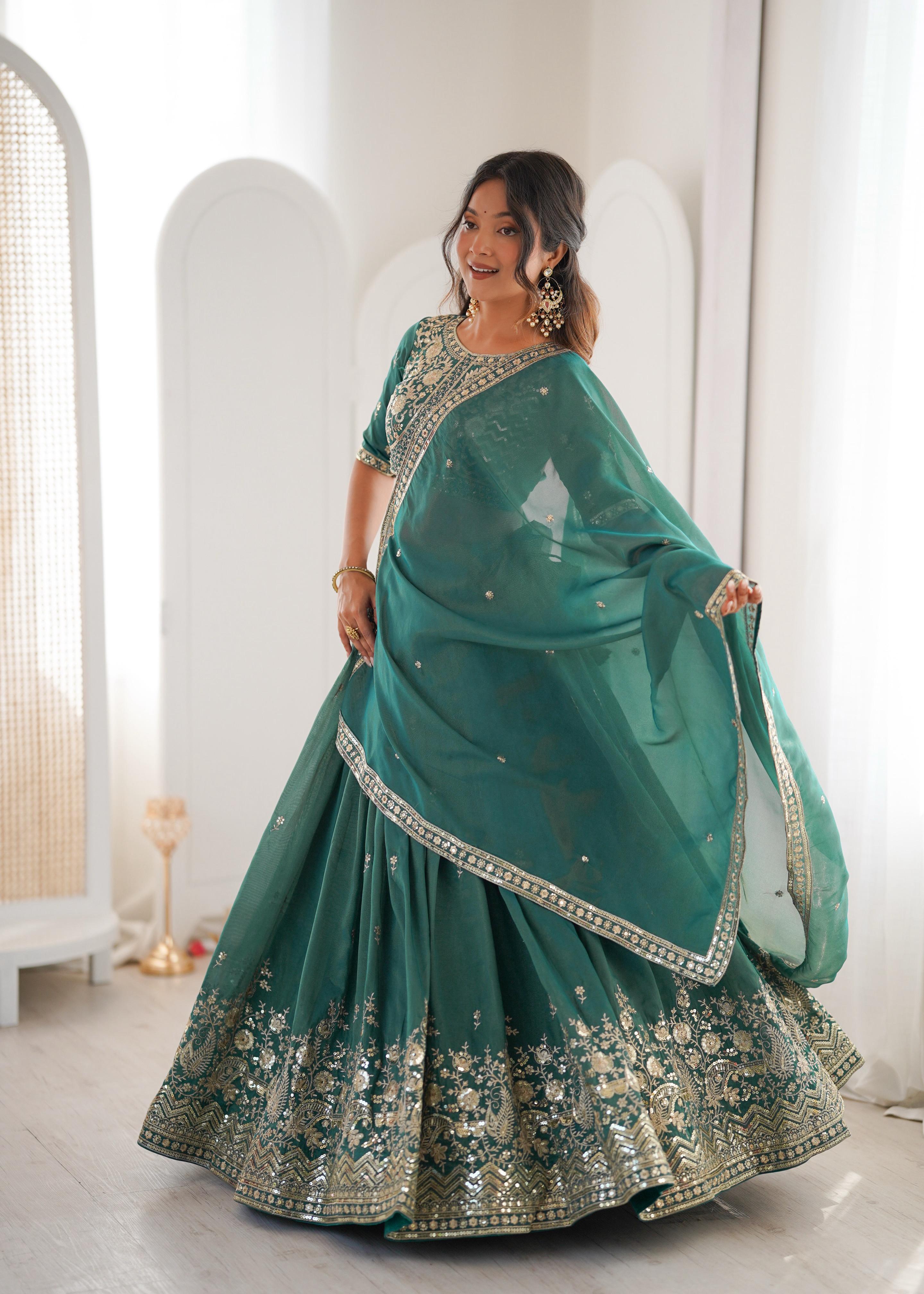
Lay the skirt face down on a clean bed or table and spread the waistband flat. Place a full-length sheet of acid-free tissue, unprinted white cotton muslin or a clean, smooth dupatta over the embroidery. Avoid newspaper, coloured tissue and rough towels because ink, dye and lint can transfer to delicate fabric.
Identify the skirt's strongest structural lines before folding. Side seams and areas between major embroidered motifs usually tolerate folding better than raised borders, large floral appliqués, mirror work or densely sequined panels. Fold the skirt vertically along a relatively plain panel instead of folding directly through the heaviest design.
For a circular or heavily flared lehenga, make broad accordion folds rather than compressing the flare into a small rectangle. Each fold should be wide enough to avoid a sharp crease. Keep the embroidered hem aligned loosely rather than pulling it tightly into a narrow stack.
Place another tissue layer over the first folded surface before making the next fold. Tissue allows neighbouring embroidered panels to slide slightly instead of grinding against each other. Do not press down with your hands or kneel on the folded skirt while arranging the suitcase.
A fabric-covered hanger can help during the first stage of folding because the waistband remains supported. Remove the hanger before placing the garment in luggage unless the suitcase is specifically designed for hanging clothes. Metal hangers can create pressure points and may catch on net fabric.
Cream Peacock Embroidered Net Lehenga Set for Women needs particular care around raised peacock motifs and net panels. Green Chinon Silk Sequins Embroidered Lehenga Set should be folded with the sequined face protected because sequins can catch on adjacent fabric when the suitcase shifts.
Packing a Lehenga for a Flight Without Crushing the Embroidery: How should the blouse and dupatta be protected?
Pack the blouse flat with tissue inside the bodice and between any embellished front and back surfaces. Tissue supports the shape without stretching the fabric, while a folded cotton cloth can cushion hooks, padded cups or heavy neckline work.

Turn the blouse inside out only if the lining is smooth and the embroidery doesn't catch during turning. Otherwise, keep the decorated side outward and cover it with tissue. Never force a structured blouse into a tight fold at the bust, underarm or sleeve opening because those areas can retain angular creases.
Stuff sleeves lightly with rolled tissue rather than filling them firmly. Excess stuffing stretches sleeve openings and can distort sequin work. Keep hooks, tassels and dori ties secured in a small muslin pouch so they can't snag the blouse or skirt.
Pack the dupatta separately from the skirt if the dupatta is made of net, organza or fine chiffon. Lay the dupatta flat, place tissue on both sides, then fold it in large sections. Avoid folding a scalloped, embroidered or zari border sharply across itself.
Pastel Grey Embroidered Butterfly Net Lehenga Set and Mint Embroidered Lehenga Set with Net Dupatta for Women both illustrate why net dupattas should not be compressed under footwear or toiletry bags. Net can develop pulled threads even when the heavier skirt beneath it appears undamaged.
Organza deserves similar protection because its crisp structure can develop obvious fold lines. Floral Digital Printed Organza Lehenga with Zari, Dori and Sequin Embroidery should travel with tissue between the zari border and the printed panels. A separate flat layer prevents the raised dori and sequins from pressing into the organza during transit.
Packing a Lehenga for a Flight Without Crushing the Embroidery: Should it go in cabin luggage?
An embroidered lehenga should go in cabin luggage when the garment is valuable, heavily embellished, difficult to replace or needed soon after landing. Cabin luggage reduces exposure to rough baggage handling, compression from other suitcases and the risk of delayed checked baggage.

Check the airline's current cabin-bag dimensions and weight before choosing this option. A fully packed lehenga can occupy substantial space, especially when the skirt has a wide flare or can-can. Do not overstuff a cabin case to the point that the zipper presses against the embroidery.
If the lehenga must be checked in, place the packed garment in a rigid suitcase surrounded by soft, non-shedding clothing. Keep the garment in the centre, away from wheels, corners, telescopic handles and the zipper track. Shoes should remain in separate dust bags, and toiletries should be sealed in a leakproof pouch far from the garment.
don't place a lehenga in a vacuum bag. Vacuum compression removes the air that cushions sequins, zari and beadwork, and it can flatten net or can-can permanently. Compression also creates hard, narrow folds that are difficult to relax without professional steaming.
Semi Stitched Lehenga with Organza Dupatta should not be forced into the smallest possible travel pouch. Semi-stitched panels and crisp organza can retain compression marks, while unstitched or partly finished sections may shift during folding.
For a destination wedding, keep the blouse, skirt and dupatta together in one clearly labelled garment bag inside the suitcase. Separate packing can cause one component to arrive in checked luggage while another remains behind, particularly when a bag is opened for inspection.
Packing a Lehenga for a Flight Without Crushing the Embroidery: Where should it sit in the suitcase?
Place the lehenga in the middle third of the suitcase, between soft clothing layers and away from hard objects. A stable centre position limits movement and prevents the embroidered surface from bearing direct pressure from suitcase walls.

Start by lining the base with two or three smooth cotton garments. Place the protected skirt on top, followed by the blouse and dupatta in separate tissue layers. Add soft nightwear or cotton scarves around the sides rather than pushing them directly onto raised motifs.
Keep belts, chargers, hair tools, cosmetics, shoes and jewellery away from the garment. A charger brick or perfume bottle can create a concentrated pressure point, even when the object is wrapped. Small accessories should go into compartments or pouches outside the garment's protective zone.
Leave a little breathing room around the folded lehenga. A suitcase that closes only after strong pressure is too full. The lid should settle naturally, and the zipper should move without dragging across fabric. If the lid bows upward, remove items instead of compressing the garment further.
Use a luggage strap only around the suitcase, never directly around the garment bag. Direct straps can press lines into zari and sequins. A bright luggage tag and an internal name card can help identify the bag without opening the garment packaging unnecessarily.
Pink Lehengas Under 4000 with 50% Discount and Net Lehengas Under 4500 with 51% Discount may include lighter styles that fit more easily in cabin luggage, but price and weight don't determine packing risk. A lightweight net skirt can snag more easily than a heavier silk skirt, so surface construction matters more than garment price.
Packing a Lehenga for a Flight Without Crushing the Embroidery: What should happen after landing?
Remove the lehenga from the suitcase as soon as practical after landing and hang the skirt and blouse in a cool, dry room. Early unpacking allows compressed fibres to relax before the garment is worn.

don't place the lehenga directly in bright sunlight, beside a radiator or under a hot hair dryer. Heat can affect synthetic net, adhesive embellishments, metallic threads and colour stability. Keep the garment away from kitchen steam and humid bathrooms as well.
Hang the skirt from a padded hanger with a strong clip positioned on the waistband or inner seam. Avoid clipping directly onto sequins, zari borders or delicate net. Support a heavy skirt from more than one point if the waistband feels strained.
Allow at least 12 to 24 hours for ordinary travel folds to relax. For deeper creases, use a professional cleaner or steamer experienced with embellished Indian garments. A household iron should not touch zari, sequins, beads, velvet, net or organza directly.
If a steamer is used at home, keep the nozzle several centimetres away from the fabric, test a hidden area first and use short passes rather than saturating one section. Some sequins can melt, warp or lose their coating under concentrated heat, while moisture can mark silk and leave water spots.
Designer Threadwork Silk Lehenga Choli Set with Dupatta and Blooming Georgette Sequins and Thread Embroidered Lehenga Set with Georgette Dupatta deserve professional handling when dense threadwork or sequins develop strong creases. Professional steaming is safer than repeatedly ironing the same decorated area.
Packing a Lehenga for a Flight Without Crushing the Embroidery: Which details prevent last-minute damage?
A small repair pouch prevents minor travel problems from becoming visible damage. Pack a needle, matching thread, spare hooks, safety pins, clear thread, tiny scissors in checked luggage and a few pieces of acid-free tissue.

Keep a photograph of the packed arrangement on your phone. The photograph helps you rebuild the layers after security inspection or when repacking for the return journey. Write the fibre information and care instructions on a card inside the garment bag.
don't spray perfume on the lehenga before wearing it. Apply fragrance to skin and allow it to dry fully before dressing, because alcohol and oils can stain silk, satin, organza and pale embroidery. Makeup should be completed before the blouse is put on.
For a Haldi ceremony, protect the lehenga from turmeric paste, flower water and oily food by wearing a washable cover-up until the event begins. Yellow turmeric stains can be difficult to remove from net, organza and silk, and vigorous rubbing may loosen embroidery.
Collections such as Silk Lehengas Under 3000, Bridesmaid Lehengas Under 5500 and Haldi Lehengas Under 5500 may contain different fibre blends and embellishment weights, so the care label should guide the final decision. A lower-priced garment still needs tissue separation and careful suitcase placement when it has raised zari or sequins.
The most reliable travel sequence is simple: inspect the garment, cushion every decorated surface, fold along low-embellishment areas, separate accessories, place the lehenga in the suitcase centre and unpack it promptly. That sequence protects both the visible embroidery and the fabric structure supporting it.
Common Questions About Packing an Embroidered Lehenga for Air Travel
Can I pack a lehenga in a normal suitcase for a flight?
Yes, a normal suitcase can carry a lehenga if the suitcase is roomy, smooth-lined and not overfilled. Wrap the skirt, blouse and dupatta in tissue or clean cotton, keep them away from hard objects and place them in the suitcase centre.
Should I fold the embroidered side of a lehenga inward?
Fold the embroidered side inward only when a soft tissue layer separates the decorated surfaces. Direct embroidery-on-embroidery contact can create friction, snag sequins and flatten raised zari or beadwork.
Can I vacuum-pack a bridal lehenga?
No, vacuum packing is unsuitable for most bridal lehengas. Compression can flatten net, can-can, sequins and beadwork while creating sharp creases that may require professional restoration.
Is cabin luggage safer than checked baggage for a lehenga?
Cabin luggage is generally safer for a valuable or heavily embellished lehenga because the garment experiences less rough handling and compression. Airline size and weight limits still apply, so a rigid checked suitcase with careful internal cushioning may be necessary for a very full skirt.
How do I remove flight creases from a lehenga after landing?
Hang the lehenga in a cool, dry room for 12 to 24 hours so ordinary folds can relax. Use a professional steamer for deep creases, and never place a hot iron directly on zari, sequins, net, organza or beadwork.
How should I pack a net dupatta for air travel?
Lay the net dupatta flat between smooth tissue layers and fold it in broad sections. Keep it away from zippers, jewellery, shoes and rough fabrics because net can snag or develop pulled threads even when packed under light pressure.


