Overlock Quality Inside a Kurti Can Predict How Long the Seams Last, especially when the garment is worn often, washed repeatedly or made from a loosely woven fabric. The overlock is the line of interlocking thread visible along a raw seam allowance inside the garment. It prevents cut fabric edges from unravelling and helps the stitched seam tolerate movement. A polished outer design matters, but the inside construction often gives the clearest evidence of how a kurti will perform after six months of use.
A useful inspection takes less than two minutes and requires no tailoring experience. Turn the kurti inside out, examine the side seams, armholes and sleeve openings, and look for even loops, secure thread ends and fabric that remains fully captured by the stitch. The same checks apply to a salwar suit, kurti pant set or three-piece outfit.
Overlock Quality Inside a Kurti Can Predict How Long the Seams Last: What Does It Reveal?
Overlock quality reveals whether the cut fabric edges have been securely enclosed and whether the seam has been finished consistently. A good overlock has regular stitch spacing, balanced thread tension and no long gaps where the fabric edge is exposed.
Overlocking isn't the same as the main seam. A sewing machine may first join two panels with a straight stitch, while an overlock machine trims and wraps the raw edge with thread. Some garments use a five-thread safety stitch that joins and finishes in one operation; other garments use a three- or four-thread overlock beside a separate straight seam. Both methods can be durable when correctly executed.
Look for a narrow, continuous band of thread that follows the edge without wandering onto the body of the fabric. The thread should sit close enough to contain the cut edge, but not so tightly that it puckers the cloth. A seam allowance that disappears into the overlock may have very little reserve for future alteration, while a small, consistently captured allowance is easier to repair.
- Even loops: each loop should resemble the next, without loose ladders or sudden dense knots.
- Complete edge coverage: the overlock thread should wrap the raw edge rather than float beside it.
- Stable tension: the seam should lie flat when gently stretched, without thread snapping immediately.
- Clean starts and finishes: underarm and side-seam ends should be secured instead of left as short, unravelling tails.
Overlock Quality Inside a Kurti Can Predict How Long the Seams Last at High-Stress Points
Armholes, side seams, sleeve joins and hem corners need the most careful finishing because these areas experience repeated pulling, rubbing and washing stress.
Why do side seams matter?
Side seams carry tension whenever a wearer sits, reaches forward or raises an arm. A side seam should run straight from the underarm to the hem, with the overlock catching both layers evenly. A seam that narrows sharply at the waist or splits into exposed threads near the hip is vulnerable to opening.
Why do armholes need flexible finishing?
Armholes need flexible but secure finishing because circular seams are pulled in several directions. Check for small clipped sections, skipped stitches or a tight ridge that restricts movement. A well-finished sleeve join follows the curve smoothly and doesn't show thread loops on the outer side.
What should you inspect around the neckline and hem?
Necklines often use a facing or binding, so the overlock may not be visible. Inspect the inside edge for a facing that lies flat and remains attached. Hems usually receive a folded finish rather than a visible overlock alone, but an overlocked raw edge beneath the fold helps prevent fraying during laundering.
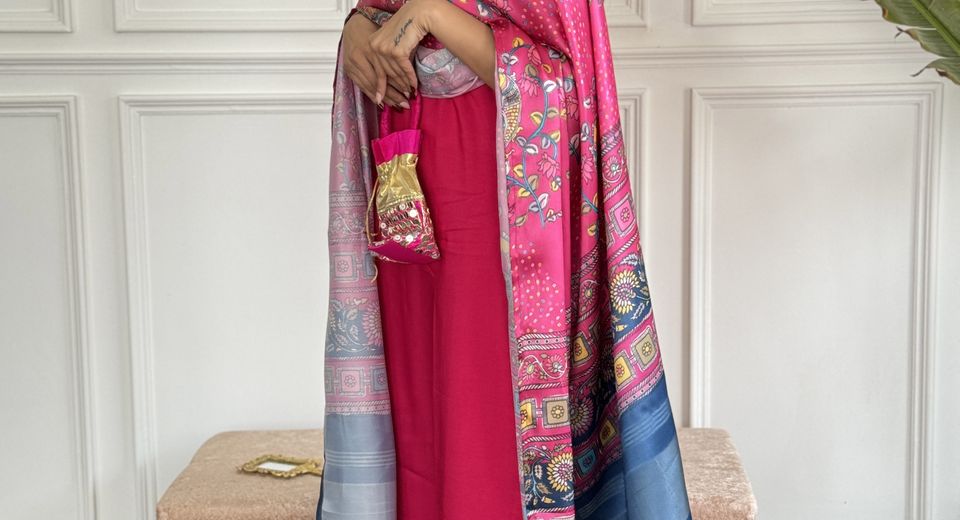
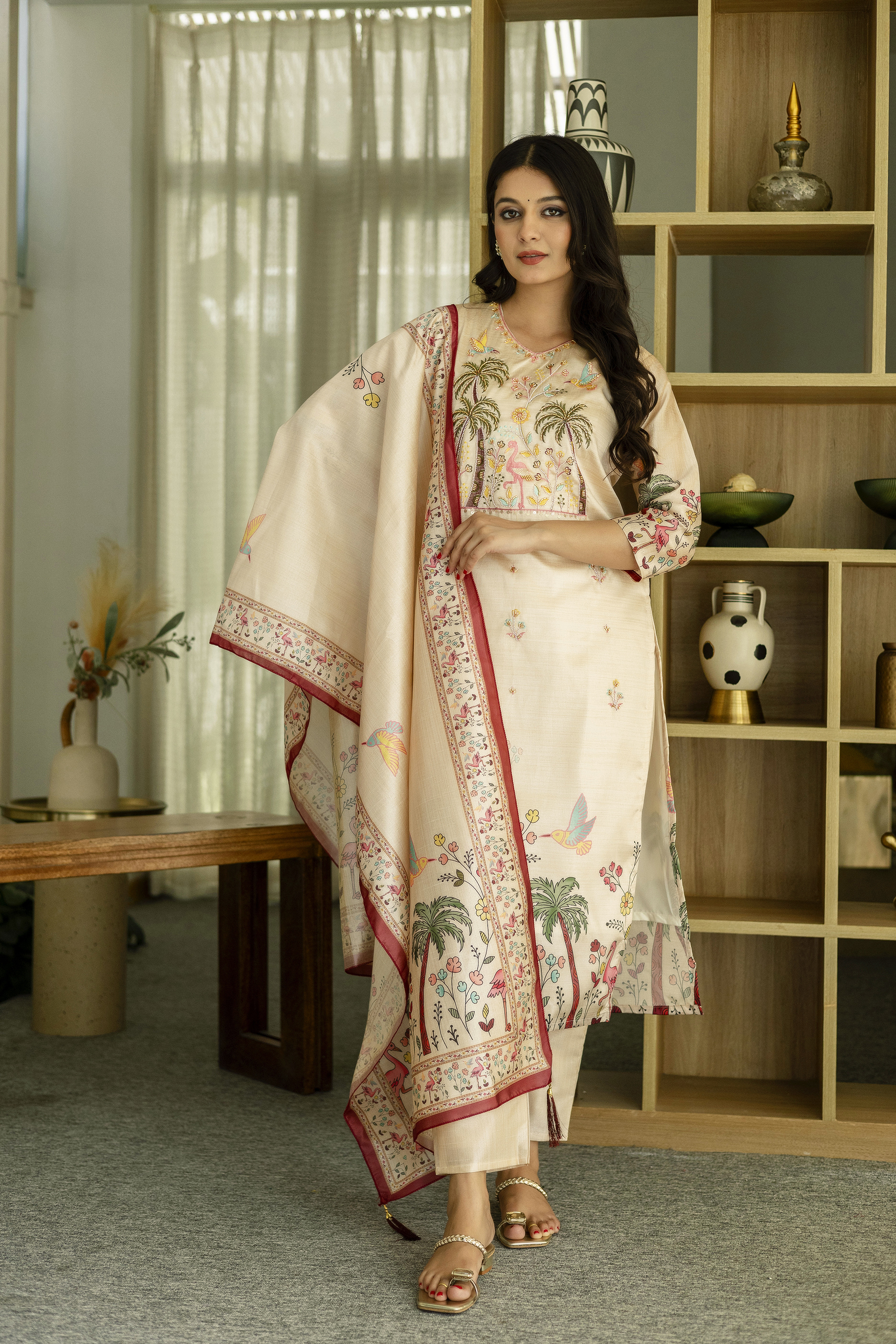
Garments with decorative work require additional attention around the attachment area. The Cream Embroidered Silk Kurti Pant with Designer Dupatta should be checked inside for embroidery threads that have been anchored rather than left as long loops. Loose decorative threads can catch on jewellery, bags and washing-machine drums even when the main seam is sound.
Overlock Quality Inside a Kurti Can Predict How Long the Seams Last: How to Inspect It Before Buying
You can inspect a kurti seam before buying by turning the garment inside out and checking five high-stress points in under two minutes.
- Start at the underarm: spread the seam gently and check whether both fabric layers are caught from top to bottom.
- Trace one side seam: look for consistent stitch width, no skipped sections and no exposed cut edge.
- Test a short section: pull the fabric on either side with light, even pressure; the seam may flex, but the thread should not pop.
- Examine the hem: confirm that the folded edge is even and that the inside finish doesn't unravel when rubbed lightly.
- Check thread tails: a secured chain or backstitched finish is safer than loose tails at the beginning and end of a seam.
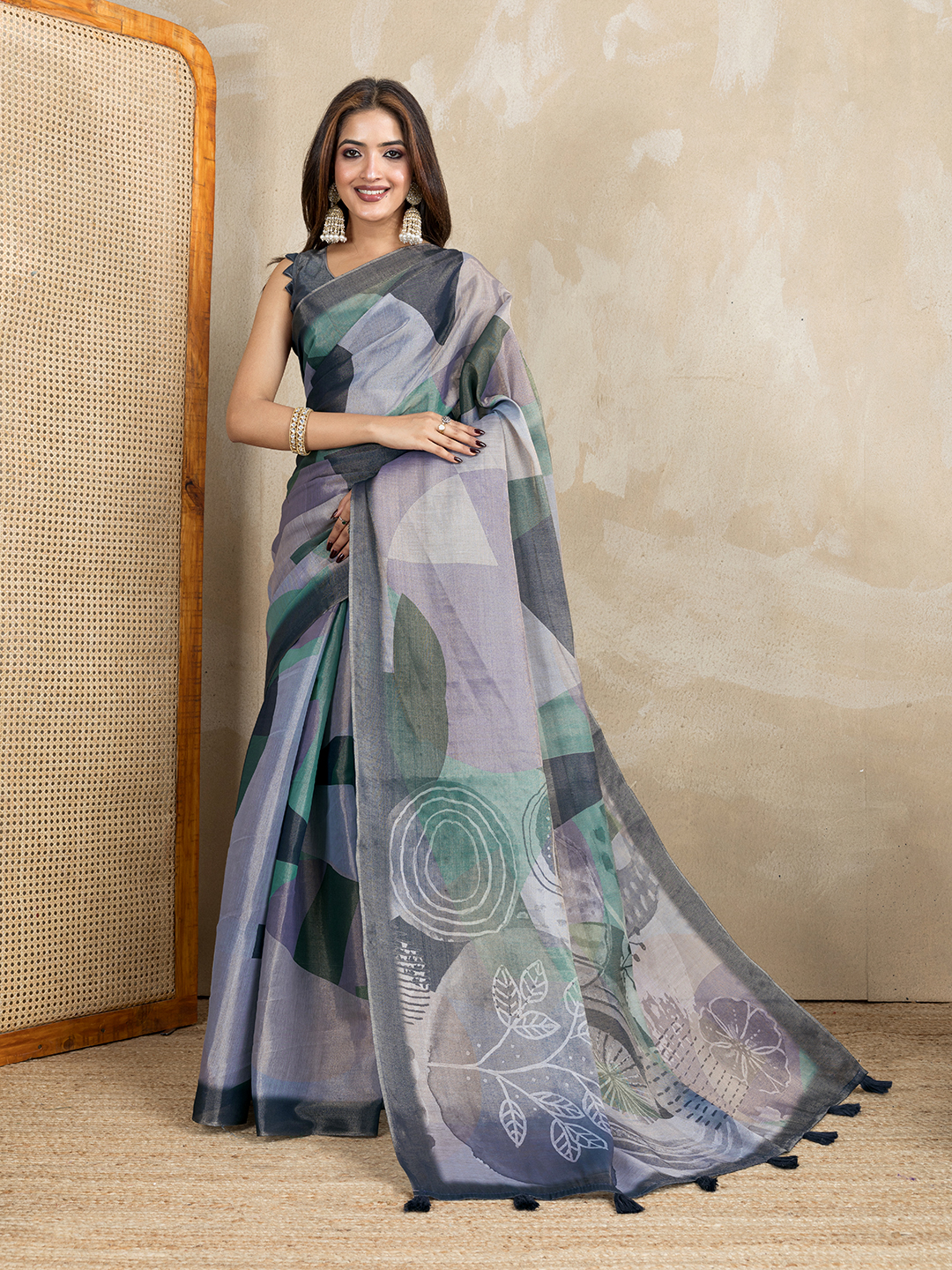
Colour and fabric can make inspection easier or harder. The overlock inside a dark garment such as the Black Heritage Weave Kurti Dupatta Set may be less visible, so use a phone torch or stand near a window. On a light garment such as the Brown Grace Cotton Kurti Set for Women, uneven thread tension and fabric puckering are usually easier to spot.
don't reject every visible irregularity automatically. Hand-finishing, thick zari, embroidery and textured weaves can create small variations without indicating a weak garment. The important question is whether the edge remains enclosed and whether the seam stays flat under gentle movement.
Overlock Quality Inside a Kurti Can Predict How Long the Seams Last Across Different Fabrics
Cotton, silk, jacquard and loosely woven textured fabrics place different kinds of stress on kurti seams, so construction should be judged alongside the material.
How does cotton affect seam durability?
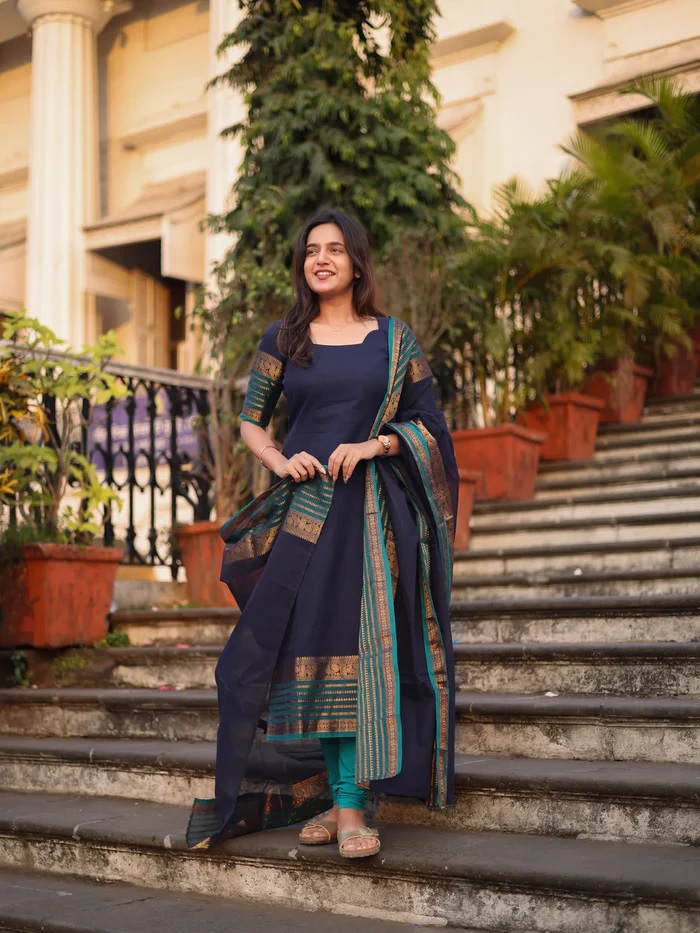
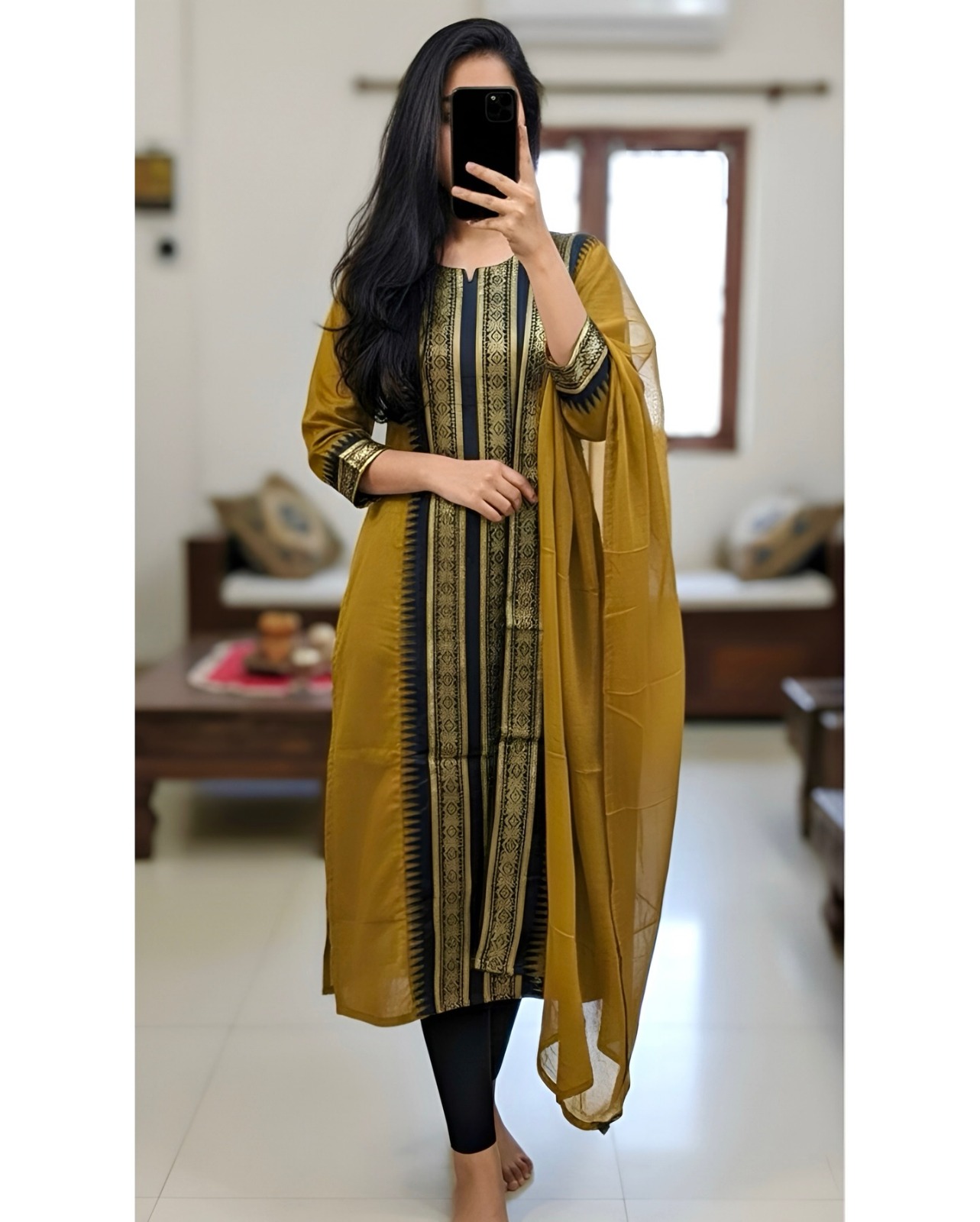
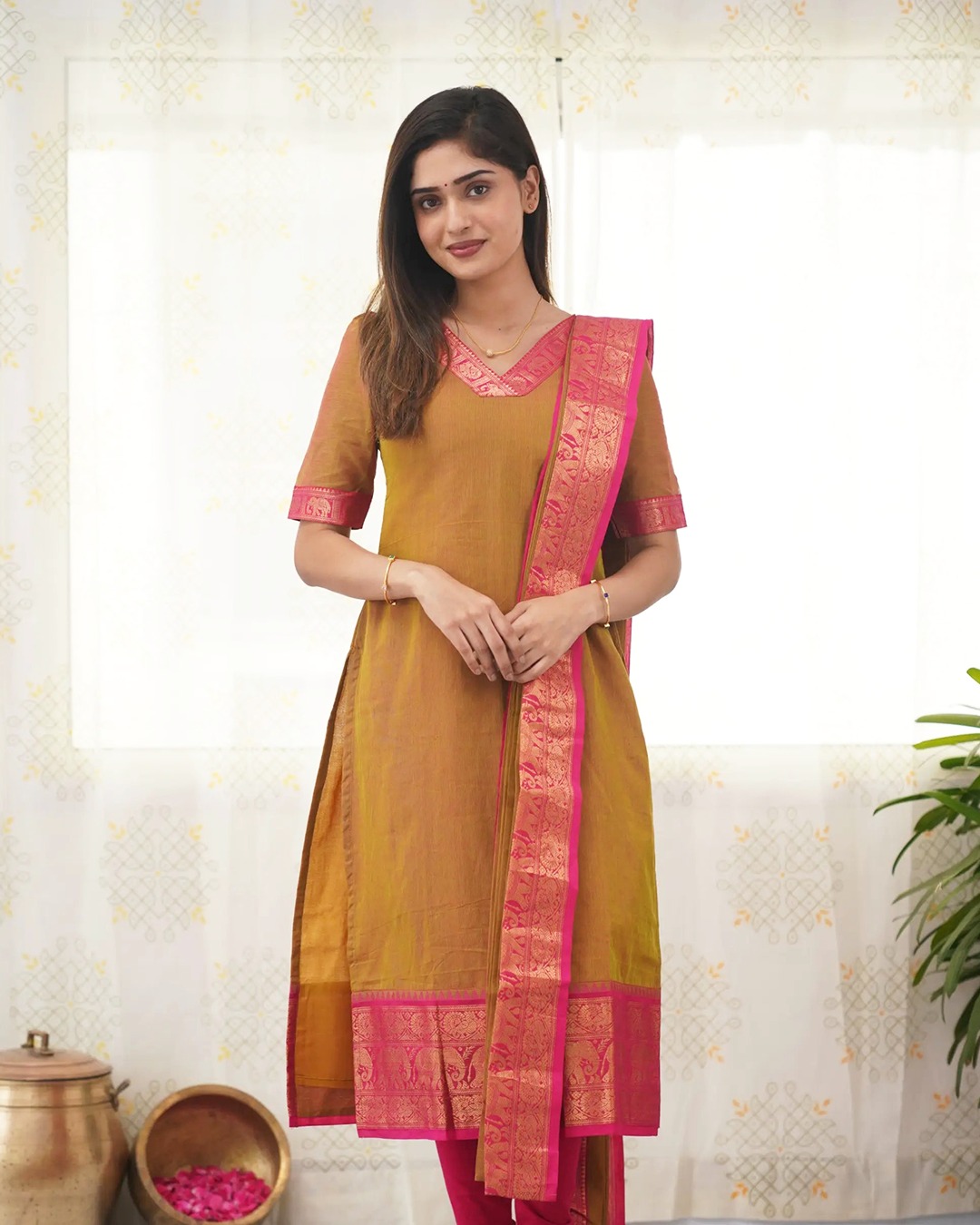
Cotton absorbs water, swells slightly during washing and may shrink when exposed to high heat. A cotton kurti benefits from a secure overlock because repeated laundering can make cut edges progressively fuzzy. The Navy Kanchi Cotton Kurti Set with Woven Dupatta and Mustard Kanchi Cotton Kurti Set with Zari Dupatta illustrate why both fabric handling and seam finishing matter: cotton needs laundering discipline, while a woven or zari dupatta needs protection from snagging.
What should you know about silk surfaces?
Silk can fray quickly when cut, and needle marks may remain visible if a seam is repeatedly opened. A narrow, neat finish is preferable to a bulky overlock that distorts the fall of the garment. Avoid pulling silk seams during inspection because the fabric may mark before the thread fails.
Why do jacquard and heritage weaves need inspection?
Jacquard and textured weaves can have raised yarns that catch on rough thread tails. The Black Kanchi Cotton Jacquard Kurti Dupatta Set and Maroon Heritage Weave Kurti Dupatta Set deserve an inside check for clipped yarns, loose floats and seam allowances that have been trimmed too aggressively.
Print and regional textile traditions don't determine seam strength by themselves. A Kalamkari Print Salwar Suits (Copy) design, a Maharashtra Paithani Inspired Salwar Suits design or a Gujarat Bandhej Salwar Suits design can all be durable when the cloth is cut accurately and the seams are finished properly. The print name tells you about visual or cultural language; the inside construction tells you more about daily wear.
Overlock Quality Inside a Kurti Can Predict How Long the Seams Last Through Thread Tension
Overlock thread tension affects seam life because thread that's too loose leaves the edge unprotected, while thread that's too tight can pucker the fabric or cut into delicate yarns.
Loose tension creates large, soft loops that can catch on rings, bangles or washing-machine components. A loose loop may also pull away from the edge after only a few washes. Excessive tension produces a hard, cord-like ridge, gathers the seam and may cause the thread to break when the garment stretches.
Balanced tension lets the overlock flex with the fabric. When you gently widen the seam, the thread should move slightly without producing a sudden crackle or visible gap. Thread colour matching is useful but not decisive; a perfectly matched thread can still be poorly tensioned, while a contrasting thread can make a strong, clean finish easy to inspect.
Stitch density matters as well. Very widely spaced stitches leave more distance for fraying to travel if one loop breaks. Extremely dense stitching can perforate lightweight fabric. Medium, regular spacing that fully captures the edge is generally more useful than simply counting stitches.
Overlock Quality Inside a Kurti Can Predict How Long the Seams Last After Washing
A kurti should be washed gently according to its fibre and embellishment because abrasion and heat can damage a sound overlock faster than ordinary wear.
- Turn cotton and printed kurtis inside out before washing to reduce surface abrasion.
- Use a mild detergent and avoid overloading the machine, which twists side seams against other garments.
- Choose a gentle or delicate cycle when the garment has embroidery, zari or a textured weave.
- Keep hook-and-loop fasteners, metal zips and rough denim away from fine overlock edges.
- don't wring silk or embellished garments; press water out with a clean towel instead.
- Dry garments in their natural shape and avoid high tumble-dryer heat unless the care label explicitly permits it.
Spot-repair a loose overlock thread early. Do not pull the entire thread chain, because removing one visible tail can release several centimetres of finishing. Trim the tail close to the seam only after securing it with a small hand stitch or fabric-safe seam sealant suitable for the fibre.
Storage also affects seam life. Fold heavy dupattas separately from lightweight kurtis so their weight doesn't pull at shoulder and sleeve joins. Avoid hanging damp cotton garments, since prolonged moisture can weaken fibres and encourage mildew around dense seam areas.
Overlock Quality Inside a Kurti Can Predict How Long the Seams Last When You Compare Construction
The most reliable buying decision compares seam finishing with fabric behaviour, fit and intended frequency of wear rather than judging embroidery or colour alone.
A daily cotton kurti should have smooth side seams, secure underarms and an edge finish that can tolerate repeated washing. A festive silk or zari garment may be worn less frequently, but its delicate fabric requires especially neat trimming and fewer exposed thread tails. A structured jacquard kurti needs enough seam allowance to accommodate a little movement without forcing the weave apart.
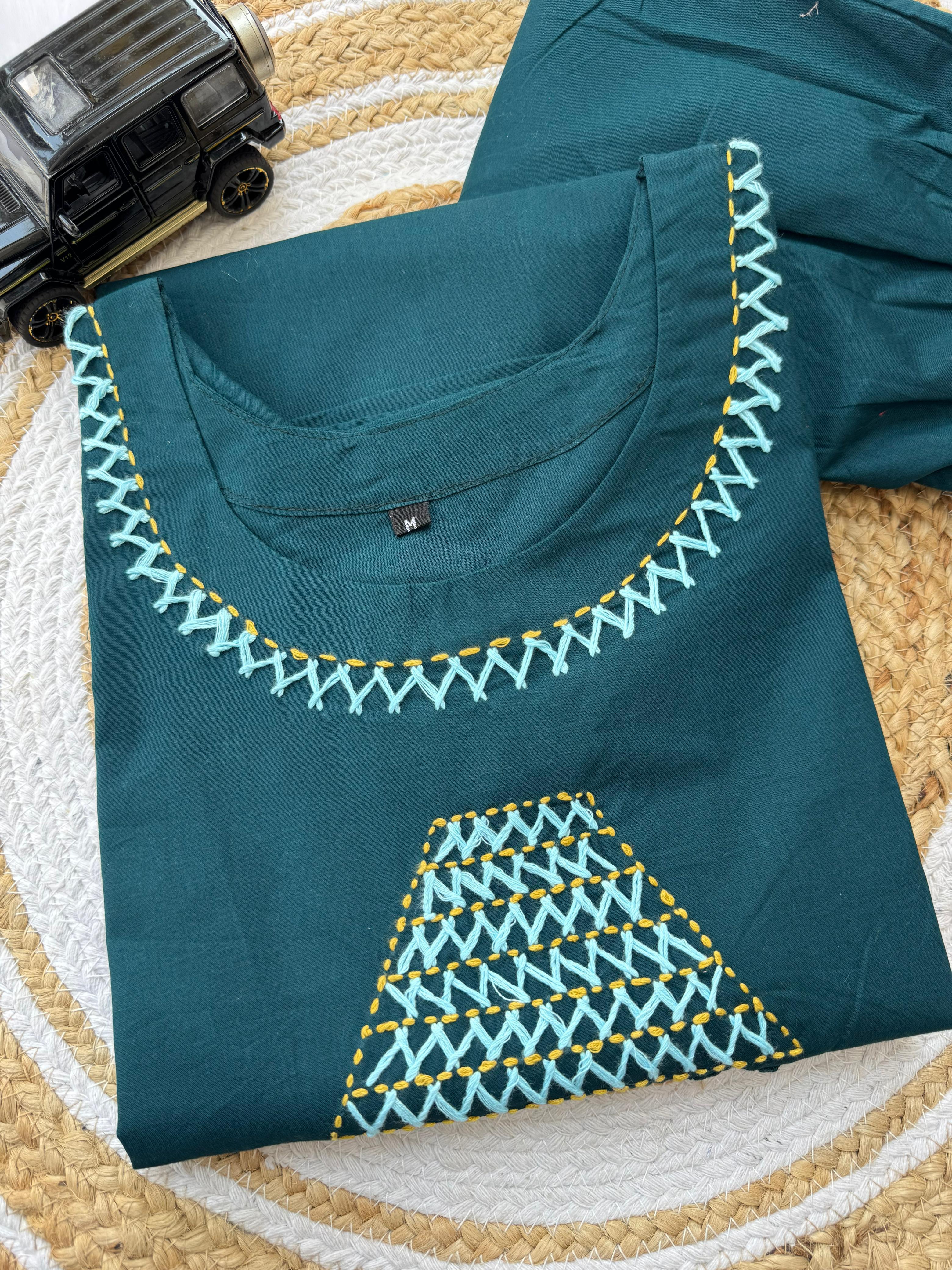
The Teal Cotton A-Line Kurti Pant Set with Handwork is a useful example of why the complete outfit deserves inspection. Check the kurti side seams, the pant waistband and the points where handwork begins and ends. Decorative stitching should not replace structural stitching, and a comfortable A-line shape should not disguise weak joining at the underarm.
Regional collections also show why construction should remain part of the selection process. Maharashtra Paithani Inspired Salwar Suits, Gujarat Bandhej Salwar Suits, Odisha Sambalpuri Salwar Suits and Punjab Patiala Salwar Suits may differ in surface design, silhouette and textile influence, but each garment still benefits from enclosed raw edges and reinforced stress points.
For a practical rule, reject a garment when several warning signs appear together: exposed raw edges, skipped overlock stitches, loose thread ladders, puckering at the side seam and unsecured seam ends. One minor visual irregularity may be harmless; a pattern of defects usually indicates that the garment will need repair sooner.
Inspecting the inside of a kurti changes the buying process from judging appearance alone to evaluating construction. Overlock quality can't guarantee a precise number of years because wear depends on fit, washing frequency and fabric, but consistent edge coverage, balanced tension and secure seam ends provide strong evidence of better durability.
Common Questions About Overlock Quality Inside a Kurti
What is overlock stitching inside a kurti?
Overlock stitching wraps and secures the raw fabric edge inside a kurti so the edge does not unravel easily. The overlock usually appears beside or around the main seam and may use three, four or five threads.
How can I tell whether a kurti overlock is strong?
A strong kurti overlock has even loops, complete edge coverage, balanced tension and secure thread ends. Gaps, loose ladders, skipped stitches, exposed fabric edges and heavy puckering are warning signs.
Which kurti seams should I inspect first?
Inspect the underarms, side seams, sleeve joins and hem corners first because these areas experience frequent movement and friction. Check the neckline as well when the garment uses a facing or decorative attachment.
Does cotton need better overlock finishing than silk?
Cotton needs finishing that withstands repeated washing and possible shrinkage, while silk needs a neat, non-bulky finish because cut silk can fray quickly. Both fabrics benefit from balanced thread tension and securely enclosed edges.
Can washing damage a kurti's overlock stitching?
Washing can damage overlock stitching through abrasion, high heat, twisting and harsh detergent, especially when the machine is overloaded. Turning the kurti inside out, using a gentle cycle and avoiding hot drying helps protect the seams.
Should I pull a loose thread from a kurti seam?
Do not pull a loose overlock thread because the action can release the entire thread chain. Secure the loose section with a small hand stitch or have a tailor repair it before washing the garment again.