

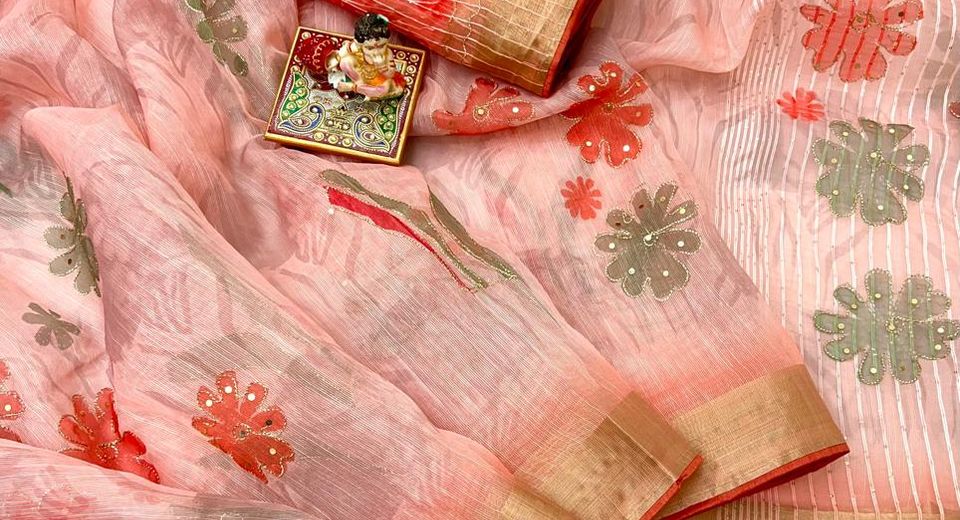
Organza Saree Looking Too Stiff? Drape Changes That Add Softer Movement can make a visible difference without changing the saree itself. Organza retains creases because its crisp yarn structure resists collapsing, so simply wearing the saree loosely doesn't always create fluidity. Softer movement comes from controlling where the fabric is compressed, how much fabric hangs from the shoulder and how firmly the saree is secured.
The most reliable adjustments are practical: make fewer, wider pleats; avoid crushing the entire pleat from waist to hem; give the pallu a longer fall; and use pins only at points that need support. Fabric composition also matters. Organza cotton silk may feel more structured than silk organza, while a floral print can make a crisp surface appear visually gentler even when the weave remains firm.
Organza Saree Looking Too Stiff? Begin by Understanding the Fabric
Organza looks stiff because its open, crisp weave holds shape instead of settling close to the body like georgette or soft crepe. The surface catches light sharply, which makes every crease appear more defined in photographs and under indoor lighting.
Many draping problems begin when the saree is pressed into too many narrow pleats. Narrow pleats create several hard vertical ridges, while excessive starch, forceful ironing or tight waist pinning can remove the small amount of natural relaxation available in the textile. A heavy border can also pull the pallu into a straight, formal line.
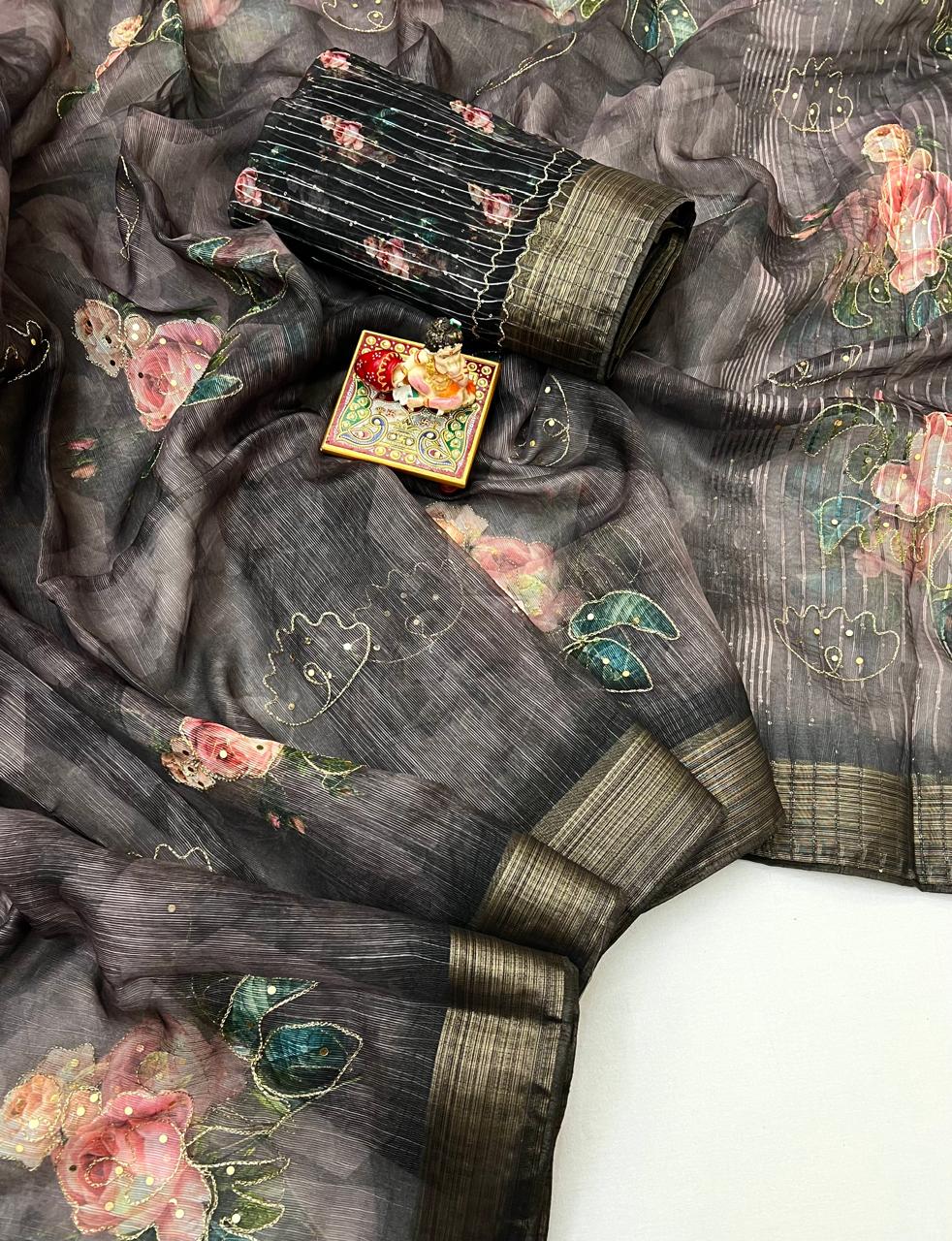
Organza cotton silk sarees balance body and softness differently from pure silk organza sarees. Elegant Charcoal Garden Organza Cotton Silk Saree, for example, can use its garden-inspired print to break up the visual severity of a rigid fold. A printed surface doesn't change the physical hand of organza, but the pattern prevents the eye from reading every fold as a hard line.
Checking the fibre description before buying is useful because the word organza doesn't identify one single feel. Cotton silk, silk, synthetic blends and different yarn densities can all produce different levels of crispness. Product descriptions should be read alongside close-up images of the weave, border and pallu.
Organza Saree Looking Too Stiff? Change the Width of the Pleats
The quickest way to soften an organza saree is to reduce the number of waist pleats and give each pleat more width. A practical starting point is five to seven pleats measuring approximately 12 to 15 centimetres across, depending on your height, waist placement and saree length.
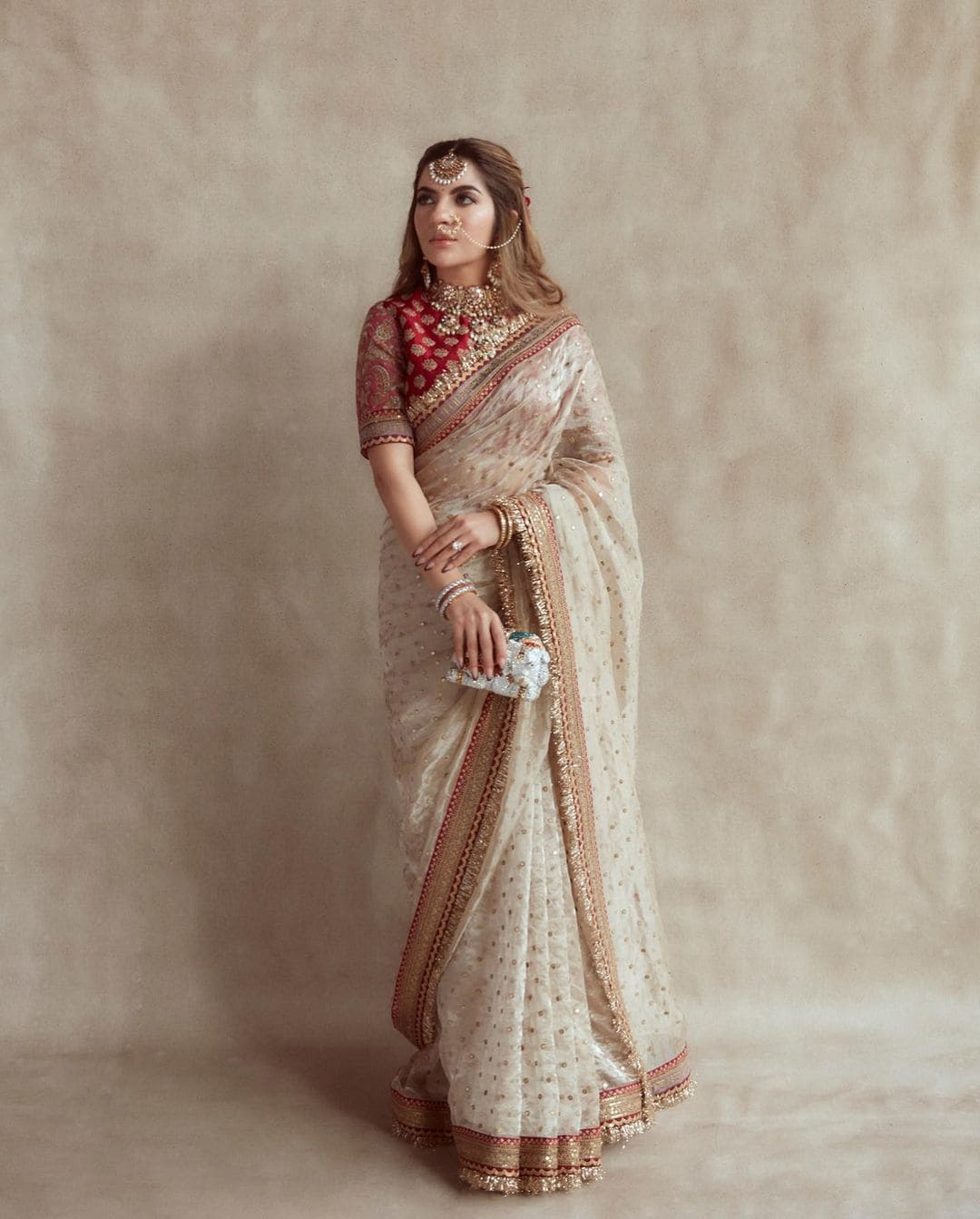
Bring the saree around the body once before forming the front pleats. Align the lower edges against a flat surface or along the leg rather than pulling every fold into a perfectly rigid stack. A small variation of a few millimetres between pleats can create a less mechanical finish while still looking neat.
Keep the upper part of each pleat organised and allow the lower section to relax. Pressing the complete pleat from waistband to hem creates a stiff panel, whereas pressing only the first 45 to 60 centimetres near the waist gives structure where it's needed and movement below.
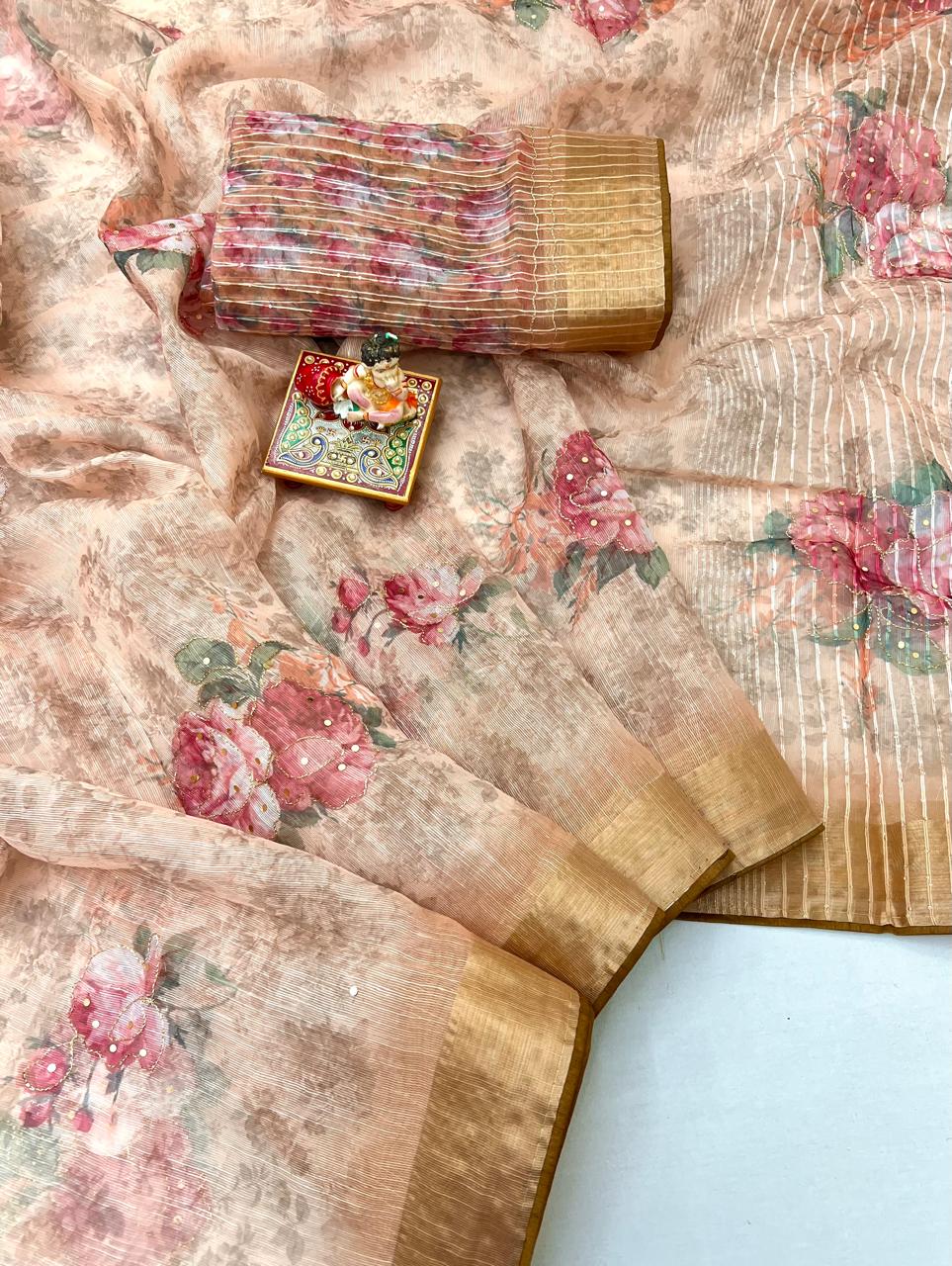
A peach floral design shows why pleat width matters. Peach Floral Organza Cotton Silk Saree can be arranged with five broader folds so the floral pattern remains visible instead of disappearing into a dense stack. Wider pleats also help large flowers retain their shape across the lower half of the saree.
How tight should organza saree pleats be?
Organza saree pleats should be firm enough to stay aligned but loose enough for one finger to slide between the folded layers near the knee. Pleats that can't be separated slightly will usually look stiff when walking or sitting.
Secure the top of the pleats with one pin placed horizontally or diagonally inside the waistband area. Avoid placing several pins down the length of the pleats because each pin restricts movement and can leave visible puncture points in a fine weave.
Organza Saree Looking Too Stiff? Give the Pallu a Longer Fall
A longer, lightly arranged pallu makes an organza saree look softer because unsupported fabric can curve and respond to movement. For many wearers, allowing the pallu to fall 5 to 10 centimetres below the hip line creates a more relaxed proportion than a short, tightly pinned shoulder drape.
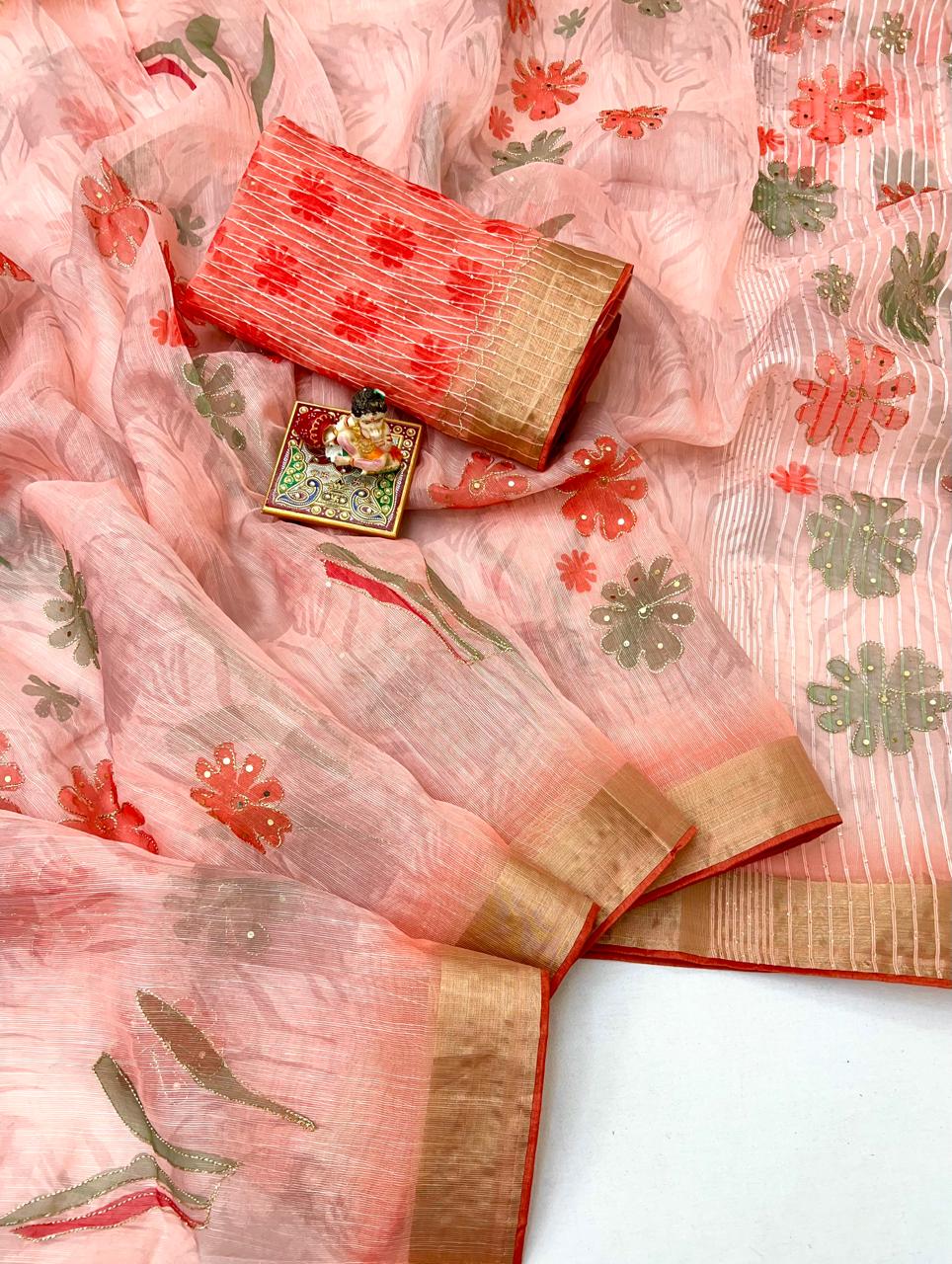
After bringing the pallu over the shoulder, make broad folds of approximately 10 to 13 centimetres rather than many narrow accordion pleats. Let two or three folds open slightly towards the lower edge. Secure the pallu at the shoulder with one concealed pin and add a second pin near the blouse seam only if the fabric slips.
Place the shoulder pin a little behind the collarbone instead of directly at the centre of the shoulder. This position allows the front edge to fall diagonally and stops the pallu from standing away from the torso. A pallu allowed to curve over the arm appears more fluid than one pulled straight across the chest.
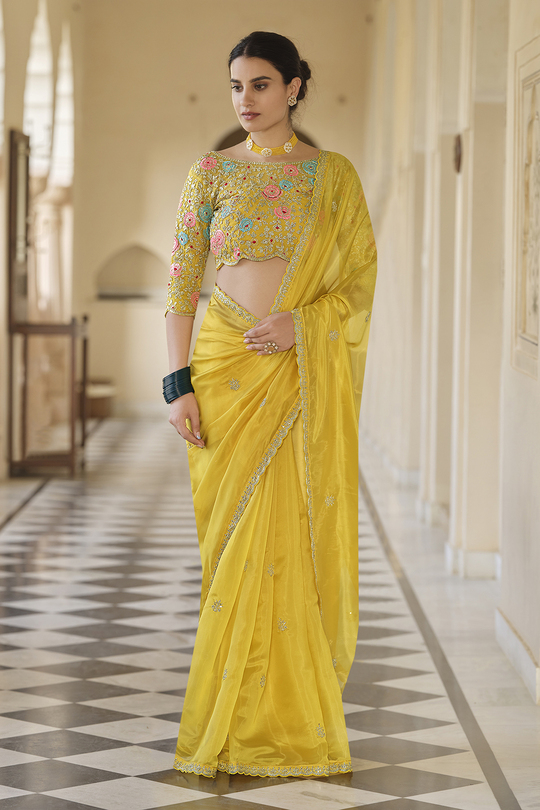
Soft Gold Blossom Organza Cotton Silk Designer Saree benefits from this treatment because broad pallu folds allow the blossom motif and gold tone to remain visible without turning the shoulder into a tightly constructed block. Understated Blush Beige Organza Silk Festive Saree can receive the same treatment when the desired result is polished softness rather than a sharply architectural drape.
Organza Saree Looking Too Stiff? Balance It with the Blouse and Petticoat
A correctly proportioned blouse and petticoat soften the silhouette by giving crisp organza a stable but not restrictive base. Blouse length, sleeve volume and petticoat flare determine how easily the saree can fall away from the waist.
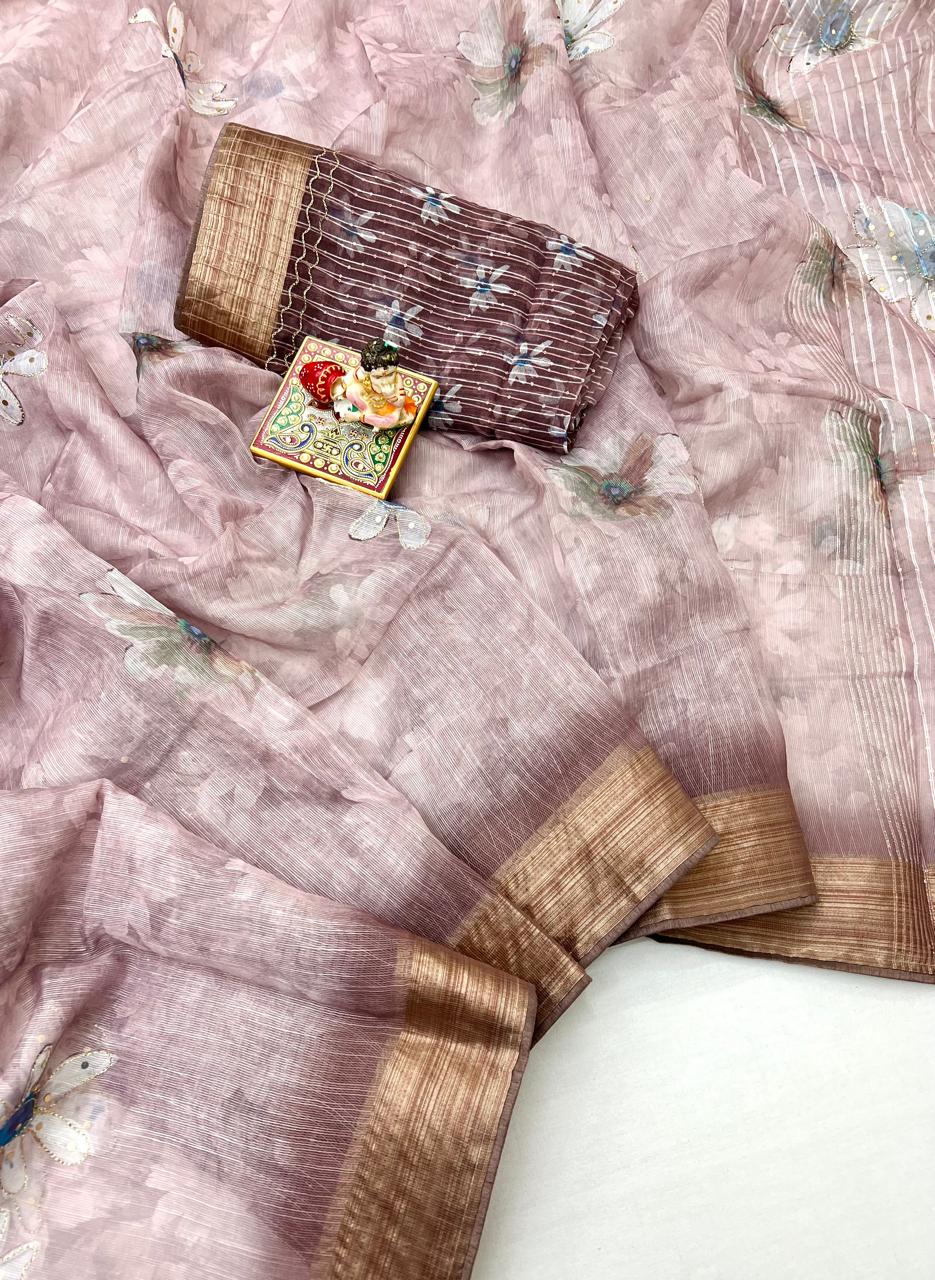
A blouse ending close to the natural waist usually helps the pleats fall cleanly without creating an extra horizontal break. A very short blouse can make the waistband prominent and make the saree appear tightly wrapped. A blouse extending too far below the waist can cause the pleat stack to bunch against it.
Matte or lightly textured blouse fabrics can balance the shine of organza. Cotton silk, raw silk or non-shiny crepe can provide contrast, while a high-shine blouse can make the entire outfit look more formal and rigid. The choice should account for the saree border, jewellery and lighting at the event.
A smooth, lightly flared petticoat prevents slipping without forcing the saree to be pulled tightly. A petticoat that's too flared may push the pleats outward and create a bell shape. A petticoat that's too narrow may restrict walking and force the pleats into a hard vertical line.
Blush Pink Bloom Organza Cotton Silk Festive Saree can work with a softly shaped blouse and open pallu for a daytime Haldi ceremony or family gathering. Royal Wine Floral Organza Cotton Silk Designer Saree can support a more controlled shoulder drape with restrained jewellery for an evening celebration.
Organza Saree Looking Too Stiff? Reduce Pinning and Tension
Minimal, strategic pinning preserves more movement than heavily secured draping. Organza generally needs support at the waist and shoulder rather than along every fold.
- Waist: Use one or two pins at the top of the front pleats, hidden under the waistband or blouse edge.
- Shoulder: Use one concealed safety pin through the inner pallu layers, avoiding the visible border.
- Blouse seam: Add a second shoulder pin only when the pallu slides during walking or dancing.
- Lower pallu: Leave the lower section unpinned unless the border is unusually heavy or the event involves extensive movement.
- Pin selection: Choose fine, smooth safety pins with a secure clasp and test one on an inner edge first.
Pin placement changes the silhouette. A pin close to the neck creates a narrow, upright pallu, while a pin closer to the shoulder allows more fabric to fan across the upper arm. Gather the fabric gently, check the fall in a mirror and secure the inner layers without pulling the pallu taut.
Remove safety pins by lifting the fabric around the pin rather than pulling the pin quickly through the weave. This practice reduces the risk of snags, especially on fine organza silk or organza cotton silk.
Organza Saree Looking Too Stiff? Use Colour, Print and Border Wisely
Floral prints, muted colours and moderate borders make a crisp organza saree appear visually gentler even when the fabric retains its natural body. Visual softness doesn't replace a better drape, but it can prevent the outfit from looking overly formal or rigid.
Small and medium floral motifs distribute attention across the saree, while a very broad contrast border emphasises straight lines at the hem and pallu. If the border is prominent, make the pleats broad enough for the border to show as one clean band instead of a heavily stacked strip.
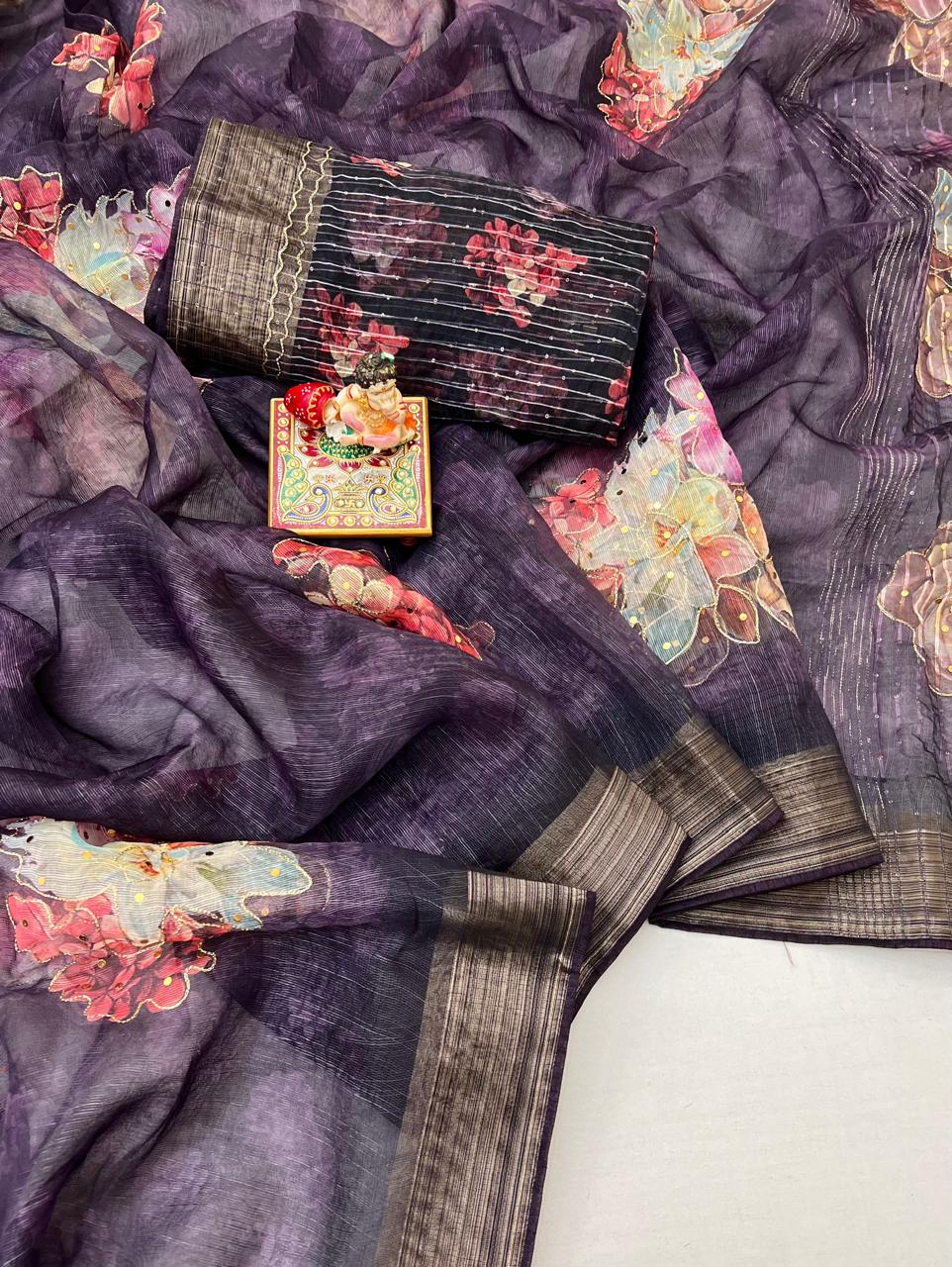
Royal Plum Floral Organza Cotton Silk Party Wear Saree can be styled with an open lower pallu and simpler jewellery so the dark colour doesn't become visually heavy. Floral placement also matters: a motif that crosses the pallu can make a relaxed fold look intentional rather than untidy.
Collections such as Organza Sarees Under 2500 with 66% Discount and Party Wear Sarees can help narrow a search by budget or use case, but fibre composition, border weight and care instructions should still be checked. A discounted price doesn't indicate whether the saree will feel soft, crisp or heavy.
Colour can also guide the amount of structure you use. Pastel shades often suit a wider, open pallu for daytime functions, while wine, plum and charcoal tones can carry slightly sharper pleats for evening wear without looking excessively stiff.
Organza Saree Looking Too Stiff? Follow This Ten-Minute Drape Routine
A ten-minute preparation routine can soften the final appearance without repeated re-draping. Begin by checking the care label and hanging the saree for 20 to 30 minutes so minor packing folds can relax.
- Wear a fitted, lightly flared petticoat with a secure but comfortable drawstring or waistband.
- Place the saree at the waist and make five to seven broad front pleats instead of many narrow folds.
- Align the hem, but avoid crushing the full length of the pleats with an iron.
- Pin only the top of the pleats and check whether the lower half can move when you take two steps.
- Arrange the pallu in broad folds measuring about 10 to 13 centimetres.
- Place the shoulder pin behind the collarbone and leave the lower pallu free.
- Walk, sit and raise one arm before adding any extra pin.
Movement testing is important because a saree that looks soft while standing may become rigid while walking. If the pleats separate, add one discreet pin near the waistband. If the pallu swings too widely, add a second pin at the blouse seam rather than securing the entire border.
Care also affects future draping. Store organza on a broad hanger or fold it along existing crease lines with soft cotton between heavily embroidered sections. Avoid compressing the saree under heavy garments for long periods, and follow the label for dry cleaning or hand washing because water and heat can alter the finish.
Organza Saree Looking Too Stiff? Choose the Right Style for the Occasion
The best organza drape depends on the event, movement required and visual weight of the saree. A daytime puja or Haldi ceremony usually suits broad pleats, an open pallu and lighter jewellery, while a reception can support more defined folds and a pinned shoulder.
For a long event lasting four hours or more, comfort should influence every adjustment. Keep the waistband secure without tightening it excessively, test the pallu while sitting and leave enough hem clearance for stairs. Organza's crispness can help the saree retain its shape through a long function, provided the drape isn't over-pinned.
For indoor photography, avoid placing a strong light directly against a heavily folded border because the reflected shine can make the saree appear harder. A diagonal pallu, slightly open pleats and textured jewellery create more variation in the frame.
The goal isn't to remove all structure from organza. The fabric's crisp body gives it elegance, clean borders and excellent shape retention. The better approach is to concentrate structure at the waist and shoulder while allowing the lower pleats and pallu to respond naturally as you walk.
Common Questions About Creating a Softer Organza Saree Drape
How can I make an organza saree look less stiff?
Use five to seven wider pleats, avoid pressing the full pleat length, and allow the pallu to fall 5 to 10 centimetres below the hip line. Secure the saree at the waist and shoulder without pinning every fold.
Should organza saree pleats be narrow or wide?
Wider pleats generally create a softer appearance because they produce fewer hard vertical ridges. Pleats measuring approximately 12 to 15 centimetres across are a useful starting point, although height and saree length affect the final number.
How do I keep an organza saree pallu from looking too rigid?
Make broad pallu folds, place the shoulder pin slightly behind the collarbone and leave the lower pallu unpinned. Avoid pulling the pallu tightly across the chest or securing its border at several points.
Can a blouse make an organza saree look stiffer?
Yes, a very short blouse, a highly shiny fabric or a blouse that extends too far below the waist can make the saree appear more structured. A well-fitted blouse ending near the natural waist and a calmer texture usually create better balance.
Is organza cotton silk softer than pure silk organza?
Neither fibre description guarantees one fixed level of softness because yarn density, finishing and construction also matter. Organza cotton silk and silk organza should be compared through the product composition, close-up images and care information.
How should I sit and walk in a softly draped organza saree?
Test the drape by walking, sitting and raising one arm before leaving home. Keep the waistband secure, leave adequate hem clearance and add only one extra pin near the blouse seam if the pallu moves too much.


