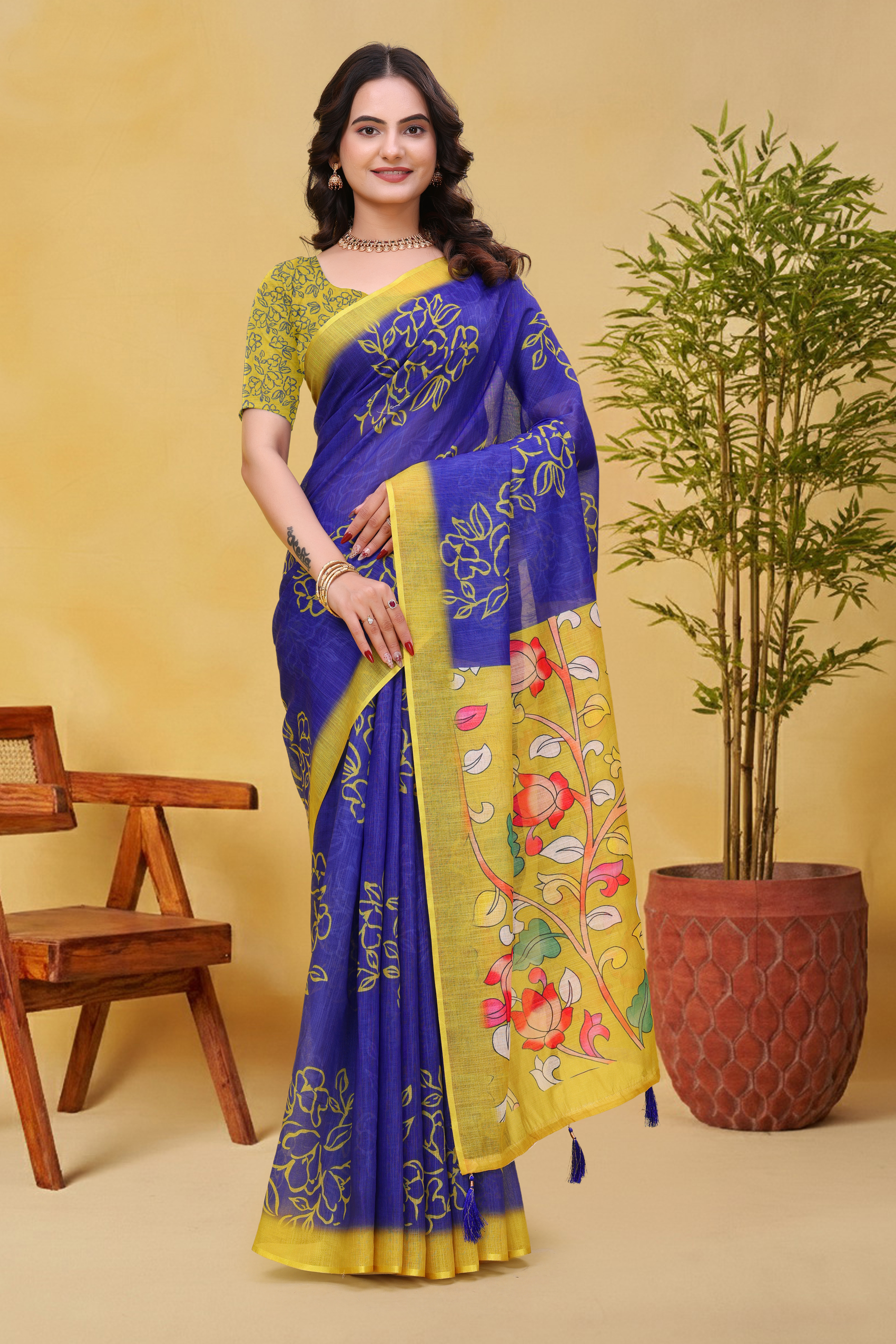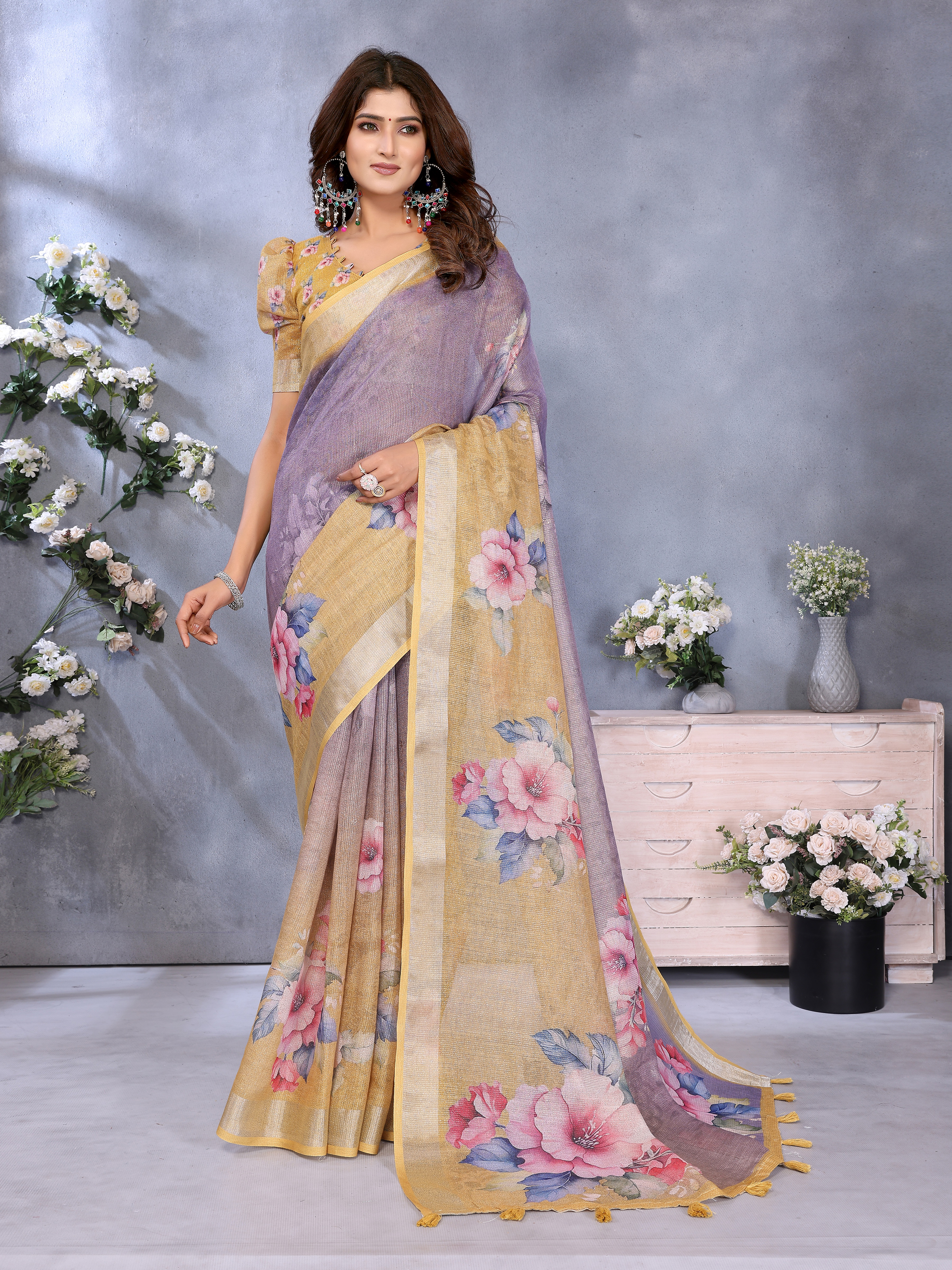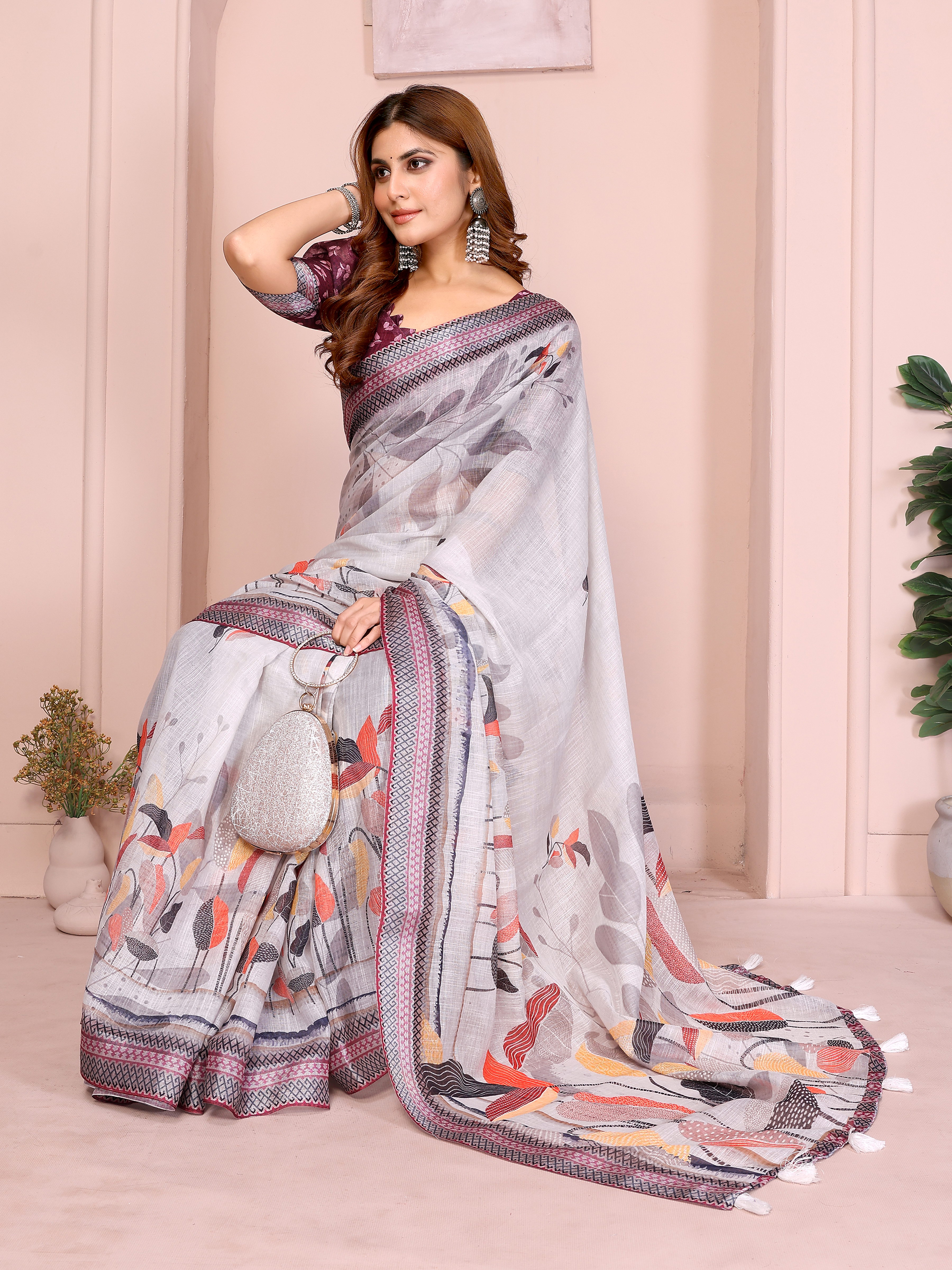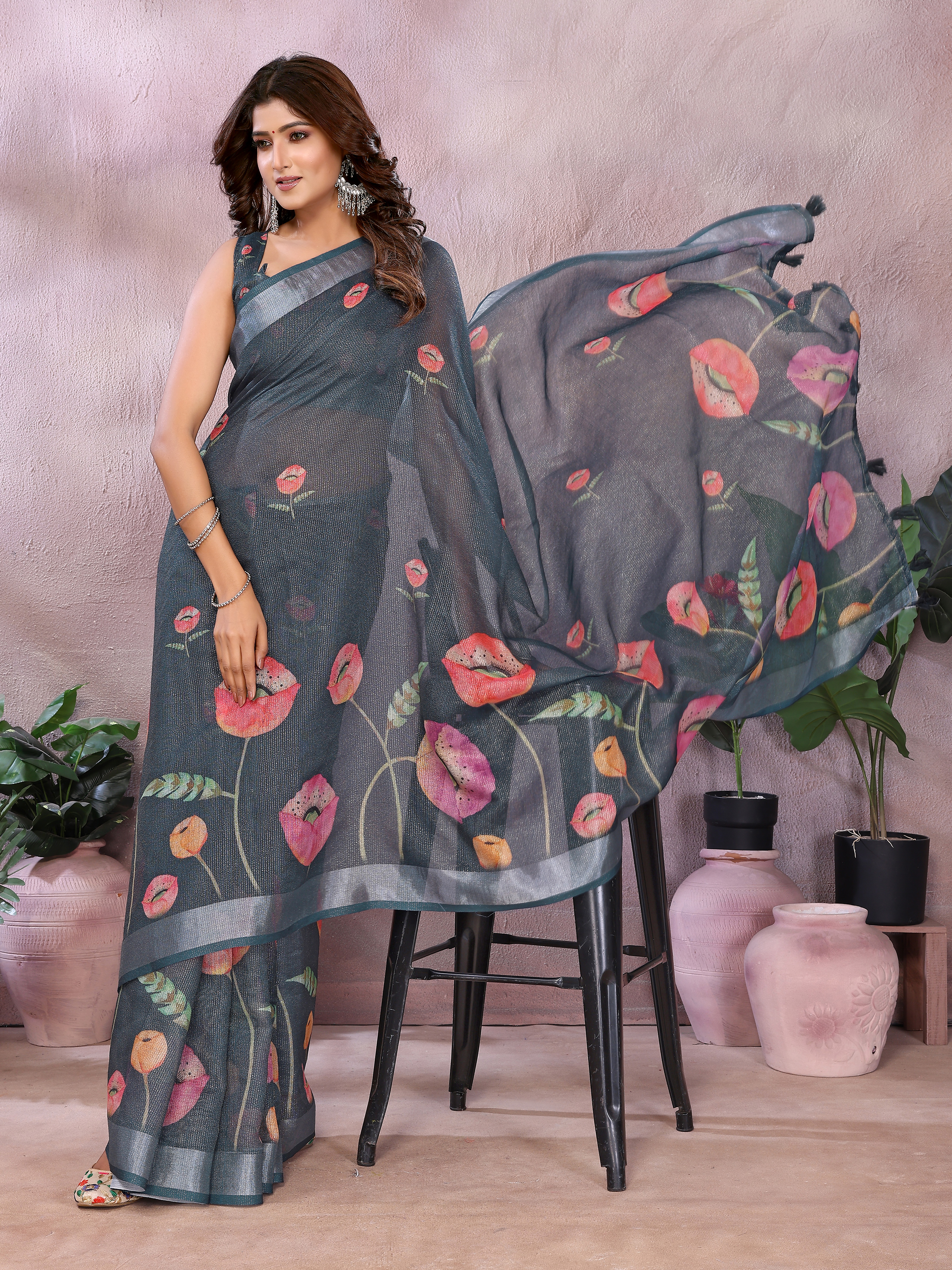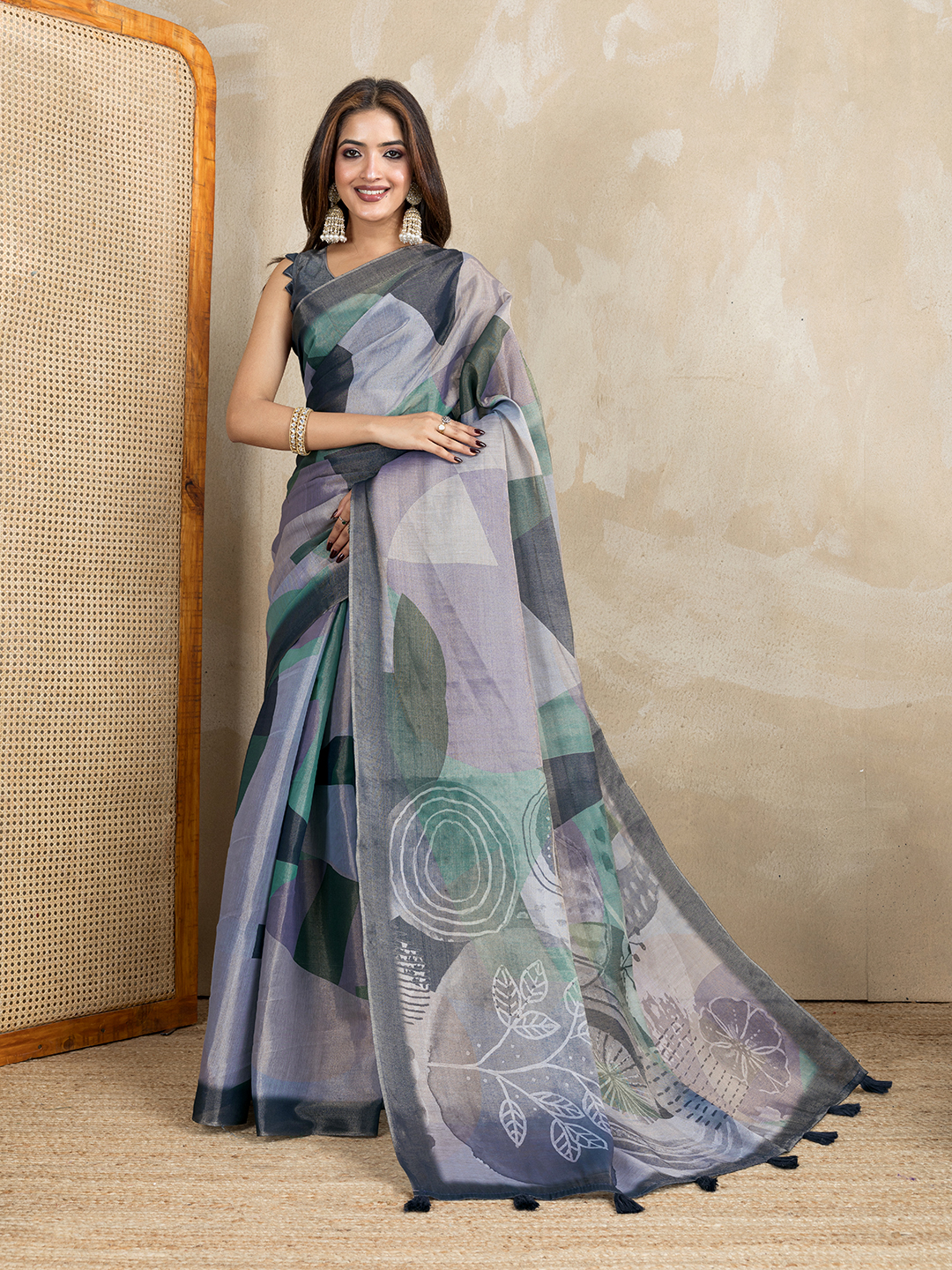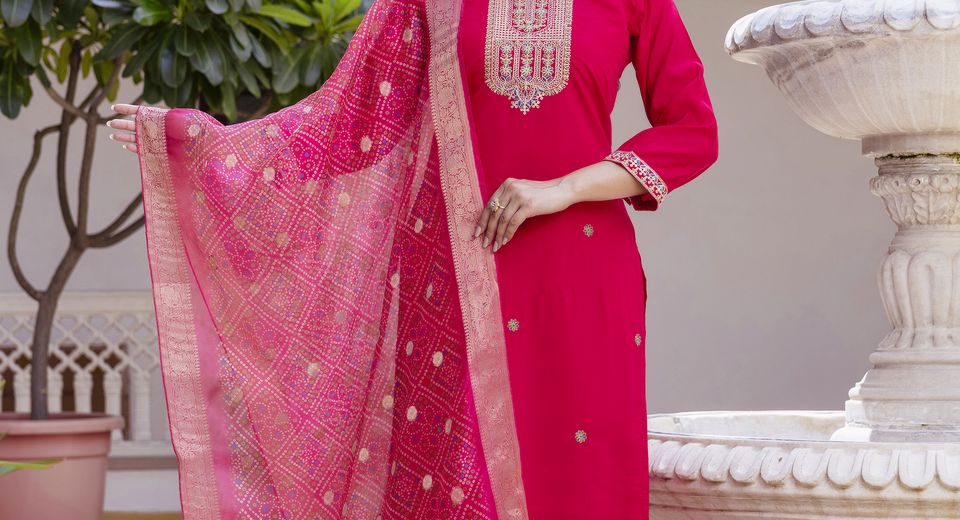
A kurti worn for six or eight hours has to manage movement, coverage, heat and layering as well as appearance. Neckline Depth on Everyday Kurtis Changes More Than Just the Look because a few centimetres can alter how a garment sits, how a dupatta behaves and how comfortable you feel while working, commuting or sitting. The right depth depends on the kurti fabric, shoulder width, bust fit, intended use and neckline shape.
Neckline selection is therefore a practical buying decision rather than a decorative afterthought. A shallow round neck may feel secure but visually shorten the neck, while a deeper V-neck can create length and ventilation but require more attention to coverage. Understanding the relationship between depth, width and fabric helps you choose salwar suits that remain useful after the first impression.
Neckline Depth on Everyday Kurtis Changes More Than Just the Look in daily comfort
Neckline depth affects comfort, visual proportion, coverage, airflow and the way a kurti works with jewellery or a dupatta. A neckline that looks attractive in a product photograph may feel restrictive when you bend forward, carry a bag or wear a camisole underneath.
Deeper necklines usually expose more of the upper chest and create a longer vertical line. That effect can make a short neck appear more elongated and can balance a broad face or fuller bust. The same neckline may need an inner layer for office wear, school runs or public transport, particularly when the kurti has a loose fit that shifts during movement.
Higher necklines provide more coverage and often suit air-conditioned offices, formal meetings and cooler weather. However, a high round neck can feel warm under a dupatta and may make a broad shoulder line look more prominent. A narrow opening is also less forgiving when the kurti is pulled over the head or when embroidery adds weight around the collar.
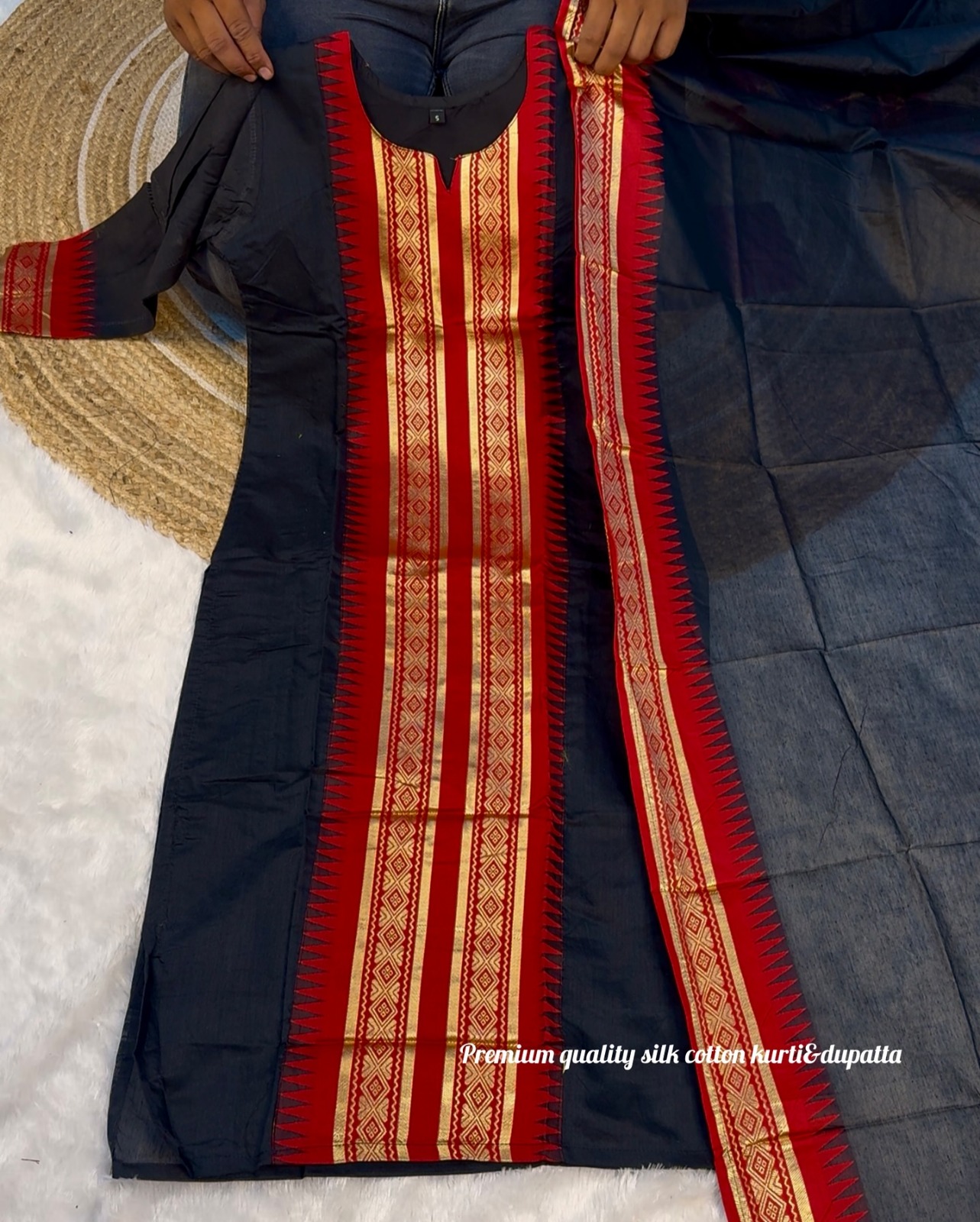
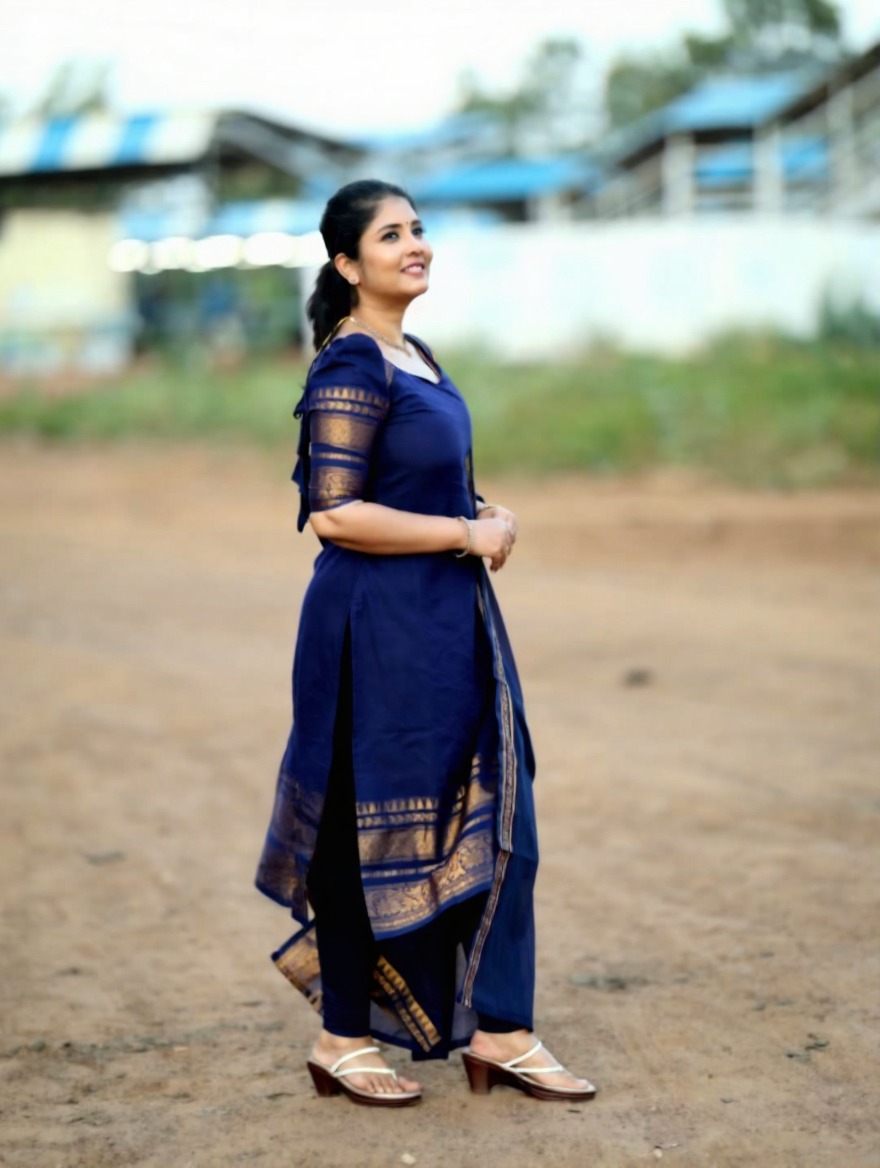
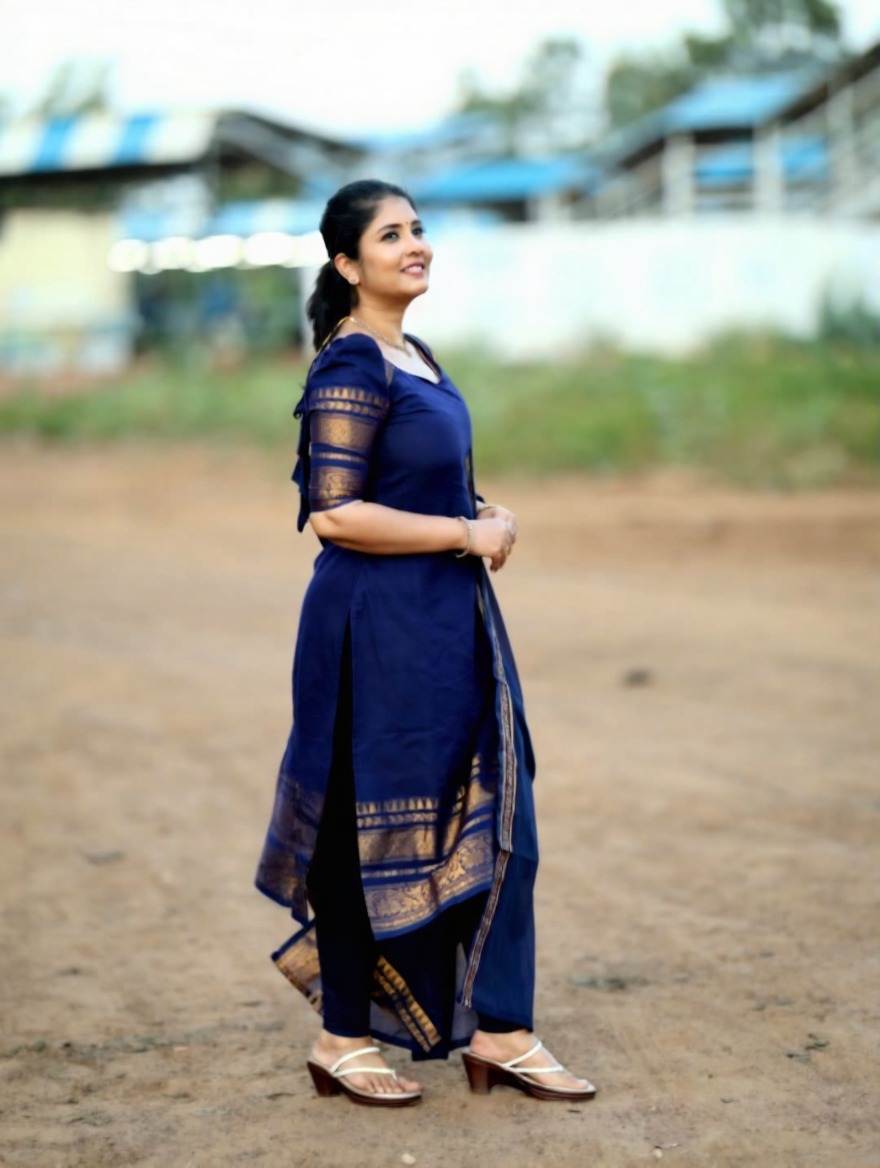
Neckline depth changes the placement of design details. A zari border, embroidered motif or printed panel can look balanced when the neckline leaves enough plain space around it. If the neckline cuts through a motif, the chest area can look crowded. A structured weave such as the Navy Kanchi Cotton Kurti Set with Woven Dupatta benefits from a neckline that leaves the textile pattern visible instead of interrupting it.
Neckline Depth on Everyday Kurtis Changes More Than Just the Look when measured correctly
Measure neckline depth from the highest point of the shoulder near the neck to the lowest point of the finished front opening. Measuring the front and back separately matters because a kurti can have a deeper front neck with a modest back neck.
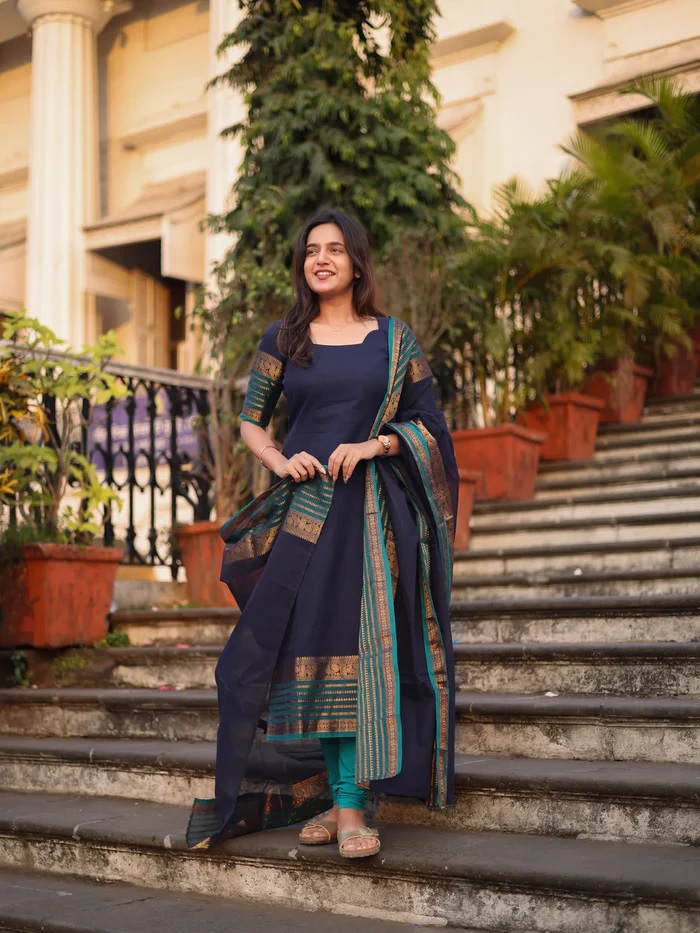
Lay a well-fitting kurti flat without stretching the fabric. Place one end of a flexible measuring tape at the shoulder-neck point, follow the centre front vertically and record the distance to the bottom of the opening. A neckline depth of roughly 6 to 7.5 centimetres generally gives a modest everyday opening, while approximately 8 to 10 centimetres creates a more open look. These ranges are guides rather than universal rules because a V-neck and a round neck distribute depth differently.
Measure neckline width as well. A narrow, deep V can look more dramatic than a wider, shallow U-neck even when both have the same centre-front measurement. A broad round neck may expose more shoulder area, while a deep V concentrates the opening along the centre line.
Check the shoulder seam, bust line and armhole before judging the neckline. A neckline can appear too deep because the shoulder is slipping outward or because the bust is pulling the front downward. A well-fitted kurti should lie flat across the upper chest without diagonal strain lines. If the neckline opens when you raise your arms, the problem may be shoulder or bust fit rather than neckline depth alone.
Neckline Depth on Everyday Kurtis Changes More Than Just the Look for work and errands
A medium-depth round, U-neck or modest V-neck usually works best for a kurti worn through a full day. A practical everyday opening allows breathing room at the throat, stays covered when you lean forward and leaves enough space for a small chain or pendant.
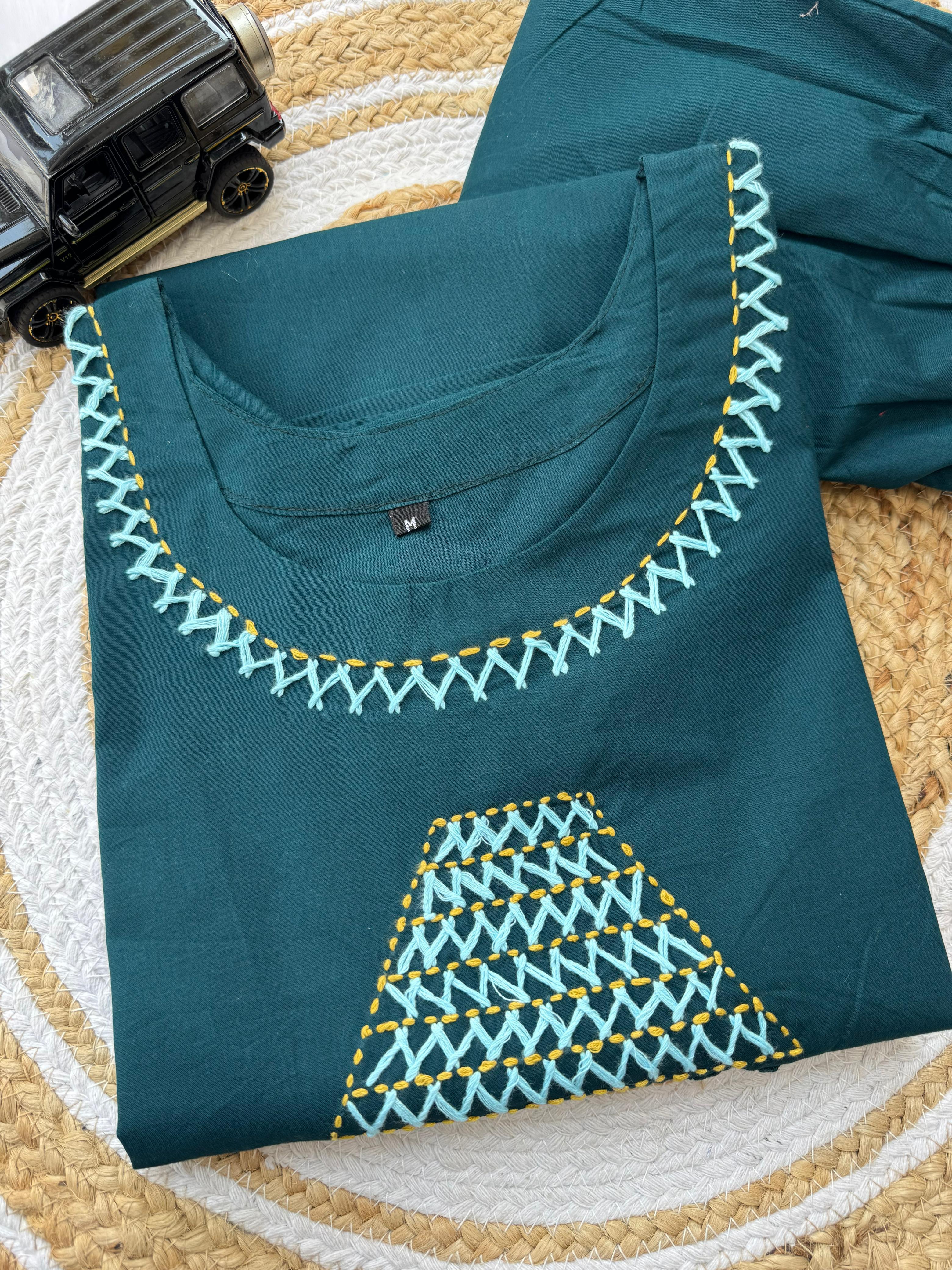
For office dressing, choose necklines that remain stable without constant adjustment. Cotton, Kanchi cotton and other firm fabrics often hold a round or square neckline neatly, while soft rayon can relax during the day. The Navy Blue Embroidered Rayon Kurta Set with Chinon Dupatta illustrates why fabric and neckline should be considered together: fluid rayon may benefit from a clean, moderate opening that doesn't collapse around the collar.
For commuting and errands, avoid a neckline that requires a carefully positioned dupatta to provide basic coverage. A securely finished round neck, shallow V or modest keyhole is easier to manage with a backpack, two-wheeler helmet or repeated bending. A neckline that remains comfortable without safety pins is usually more useful than one that looks striking only when perfectly arranged.
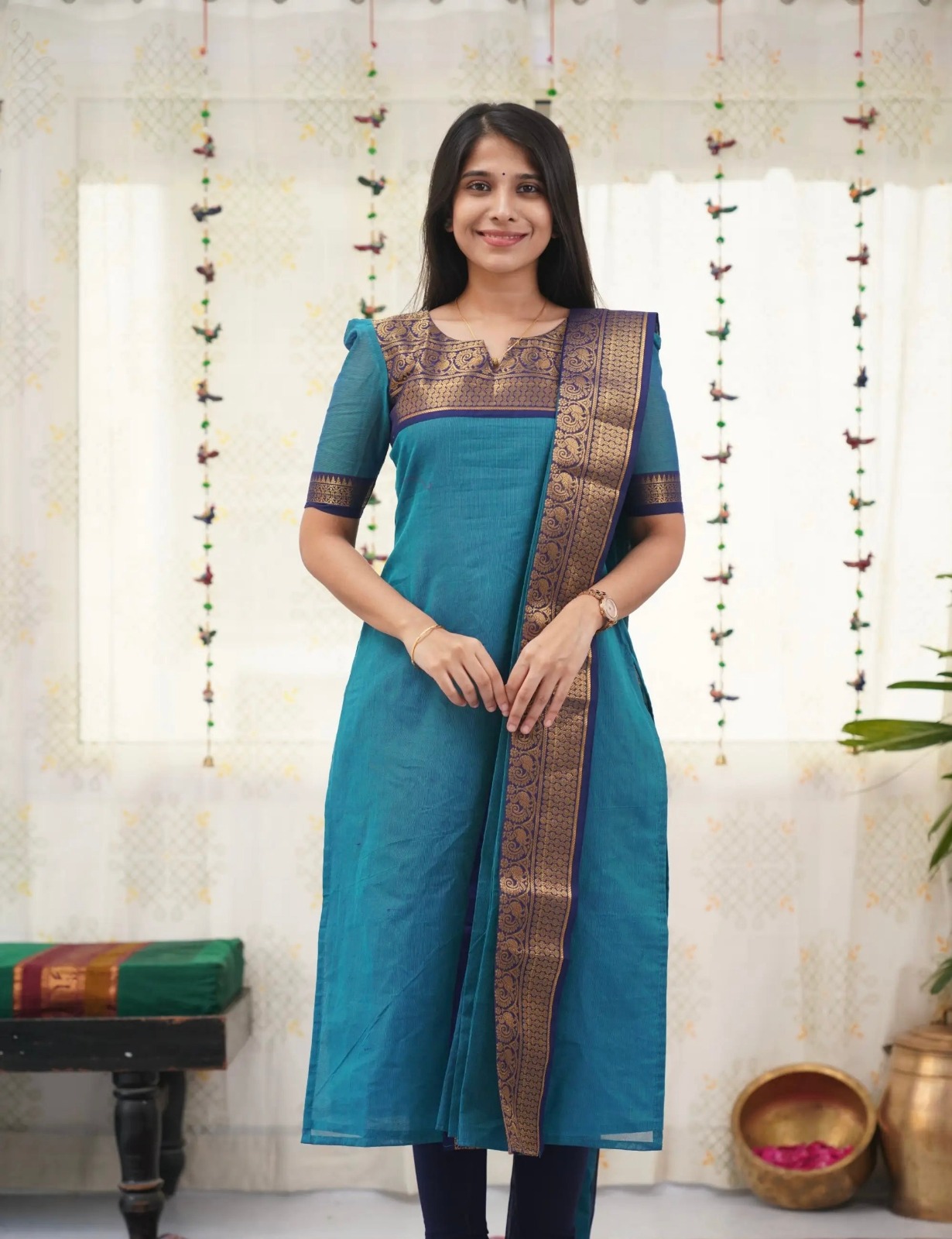
For hot weather, a slightly more open neckline can improve airflow, especially when the garment is made from cotton. The Kanchi Cotton Zari Woven Kurti Set with Traditional Dupatta can be styled with a breathable inner when required, but a very deep inner layer may add warmth and disturb the fall of the woven dupatta. Fabric weight, sleeve length and lining should all be assessed before choosing a lower opening for summer.
Neckline Depth on Everyday Kurtis Changes More Than Just the Look across body proportions
The most flattering neckline depth is the one that balances the face, shoulders and torso while remaining comfortable during movement. No single depth suits every body shape because neckline width, garment length and fabric drape change the visual result.
For a fuller bust
A moderate V-neck or open U-neck can create a vertical line without adding bulk across the chest. Very high crew necks and heavy embroidery placed directly around the collar may make the upper body look denser. A stable facing or concealed hook can provide coverage without forcing the neckline to sit high and tight.
For a smaller bust
A round, square or boat neckline with controlled width can add presence across the upper body. Textured embroidery, a woven border or a small yoke can also create visual interest. The Yellow Floral Embroidered Kurti Pant Set Online shows how surface detail can carry attention across the upper half without relying on an excessively deep opening.
For broad shoulders
A narrow V-neck or softly curved U-neck can break up horizontal width and draw the eye towards the centre. Very wide boat necks may extend the shoulder line further, particularly when sleeves also sit close to the shoulder edge. A dupatta worn in a long vertical fall can reinforce the same balancing effect.
For a shorter neck
A moderate V-neck, keyhole or open U-neck generally creates more visual space around the throat. A high collar can still work when the kurti is long and slim, but heavy contrast piping around a closed neckline may make the neck appear shorter. Necklaces should echo the opening rather than compete with it.
Neckline Depth on Everyday Kurtis Changes More Than Just the Look with different fabrics
Fabric determines whether a neckline holds its intended shape, stretches with wear or needs additional support. Cotton and Kanchi cotton tend to provide structure, rayon drapes closely, silk creates a richer surface and lightweight dupatta fabrics can alter how much of the neckline remains visible.
Embellishment adds both visual weight and physical weight. Dense embroidery around a small high neck may feel stiff, whereas embroidery placed lower on the chest can lengthen the design line. The Mustard Embroidered Kurti Pant Dupatta Set Women demonstrates why embroidery layout should be viewed with the neckline: mustard colour already creates warmth and presence, so a balanced opening can keep the upper body from looking overloaded.
Silk and silk-blend surfaces often suit a defined neckline because their sheen highlights the edge finish. The Mustard Silk Embroidered Kurti Palazzo Dupatta Set can support a shaped U-neck or V-neck for festive daytime dressing, provided the neckline is reinforced and the lining doesn't pull at the bust.
Print scale matters as well. Kalamkari Print Salwar Suits often contain detailed motifs that benefit from a clean neckline border, while Maharashtra Paithani Inspired Salwar Suits can carry a more deliberate, framed opening that respects their woven-inspired visual language. A complicated print doesn't always need a complicated neck design.
Neckline Depth on Everyday Kurtis Changes More Than Just the Look when styling dupattas
A dupatta should complement a neckline rather than compensate for an unsuitable one. A narrow, deeper V-neck can be left visible with a light drape over one shoulder, while a higher round neck may look better with the dupatta placed away from the collar so the face doesn't appear crowded.
Choose an inner layer according to coverage, colour and neckline shape. A V-neck camisole should follow the V rather than appear as a straight horizontal strip beneath it. A skin-tone or closely matched inner usually creates a quieter finish, while a contrasting inner can deliberately frame the opening for casual wear.
Jewellery should repeat the direction of the neckline. Short pendants work with open U-necks, longer chains echo V-necks and small earrings often balance high necklines more effectively than a large necklace. A statement necklace can work with a plain kurti, but it may compete with zari, embroidery or a heavily printed yoke.
Regional styling offers useful clues. Gujarat Bandhej Salwar Suits can handle lively contrast in the dupatta, so a simpler neckline often prevents colour and pattern from becoming concentrated near the face. Odisha Sambalpuri Salwar Suits can also benefit from a clean neckline when the weave or motif already supplies strong visual detail. Punjab Patiala Salwar Suits pair naturally with an open, stable neckline that leaves room for a relaxed dupatta arrangement.
Neckline Depth on Everyday Kurtis Changes More Than Just the Look during buying
A good buying decision starts with the garment's measurement chart, fabric description and intended use rather than the neckline photograph alone. Compare the listed bust, shoulder and kurti length measurements with a garment you already wear comfortably.
Inspect whether the neckline has a facing, piping, lining, hook or reinforced seam. A clean finish helps cotton retain its shape after washing, while delicate rayon or silk may need gentler handling around the collar. A neckline with embroidery should not feel stiff, scratchy or heavy against the throat.
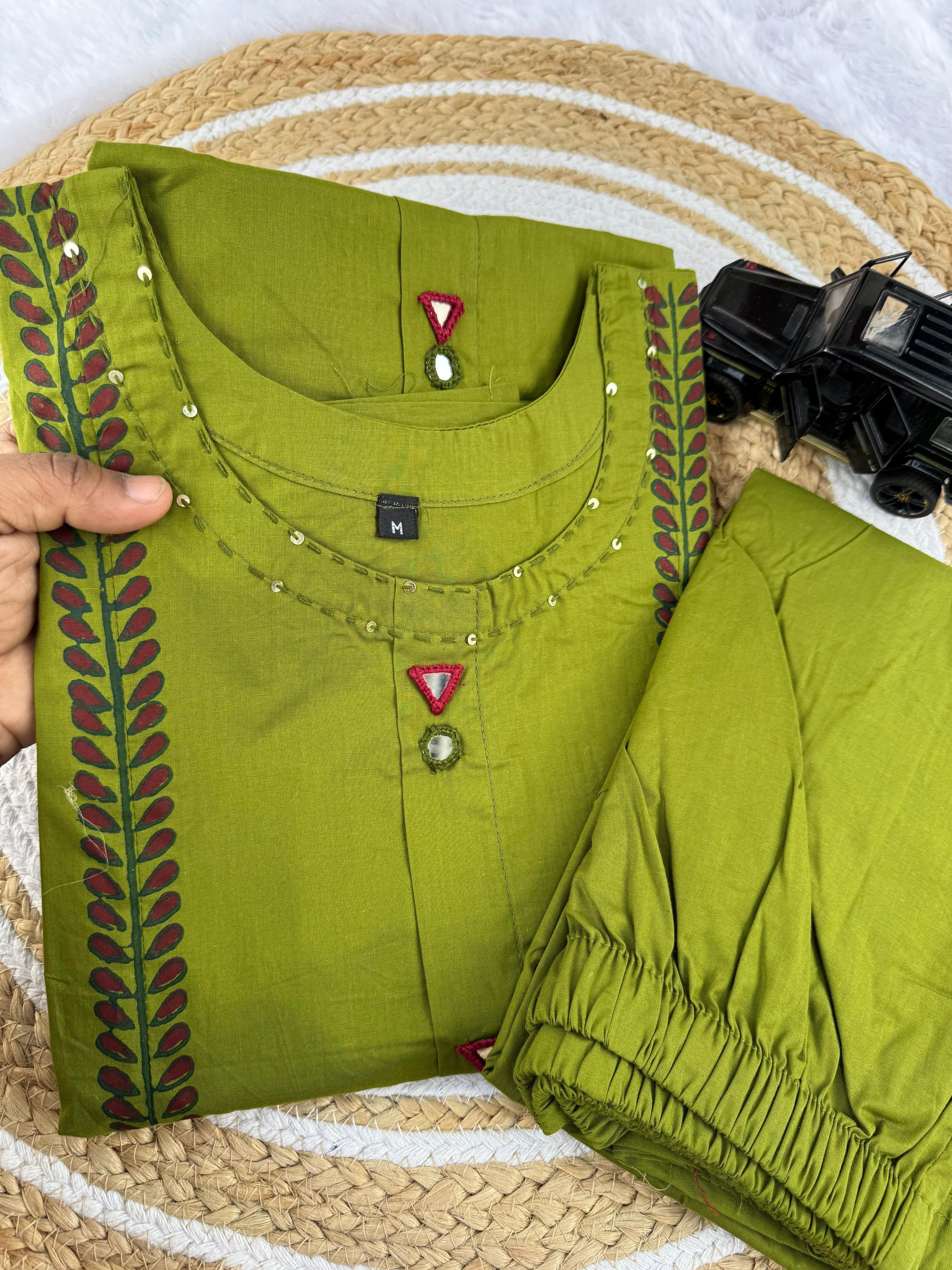
Consider the complete set before deciding that a neckline is too high or too low. The Olive Yellow Embroidered Kurti Set with Dupatta may read differently when the dupatta is worn loosely than when it's placed around the neck. The Maroon Ethnic Weave Kurti Set with Elegant Dupatta may need less jewellery because the weave supplies texture near the face.
Care can also change the fit. Wash cotton kurtis according to the care label, avoid twisting the neckline and reshape the garment while damp. Rayon and silk should not be wrung because uneven drying can distort the front opening. Store heavily embroidered kurtis flat or on a broad hanger so the neckline doesn't stretch under garment weight.
A useful final test is the movement check. Raise both arms, sit down, bend forward slightly, turn your head and place a bag strap over one shoulder. If the neckline remains comfortable and covered for the situations in which you'll wear the kurti, the depth is practical as well as attractive.
Neckline Depth on Everyday Kurtis Changes More Than Just the Look: questions readers ask
Neckline choices become easier when depth is judged with fabric, fit, movement and styling rather than appearance alone. The following answers address common everyday kurti decisions.
Questions About Neckline Depth on Everyday Kurtis
What is a comfortable neckline depth for an everyday kurti?
A front neckline depth of about 6 to 7.5 centimetres usually provides modest coverage and comfortable movement for everyday wear. A depth closer to 8 to 10 centimetres creates a more open look and may require an inner layer depending on the kurti fit and use.
How do I measure neckline depth on a kurti?
Lay the kurti flat and measure from the shoulder-neck point straight down the centre front to the lowest point of the finished neckline. Measure the width separately because a wide shallow neckline and a narrow deep neckline can look and feel very different.
Which kurti neckline is suitable for office wear?
A stable round neck, modest U-neck or shallow V-neck is generally suitable for office wear because it offers coverage without frequent adjustment. Choose a neckline with a firm facing or neat piping, especially when the kurti is made from fluid rayon.
Does a V-neck make the neck look longer?
A moderate V-neck usually creates a vertical line that can make the neck appear longer. The effect depends on the V-neck's width, depth, shoulder fit and the jewellery or dupatta worn with it.
What neckline works well for a fuller bust?
A moderate V-neck or open U-neck can create vertical space without adding bulk across the chest. Avoid choosing a neckline solely by depth; check whether the bust fit, lining and closure keep the opening stable when you sit or bend.
How should I style a dupatta with a deep kurti neckline?
Wear the dupatta in a secure one-shoulder or long vertical drape and use a matching or skin-tone inner when additional coverage is needed. The dupatta should support the outfit without being required to hold the neckline in place during normal movement.