

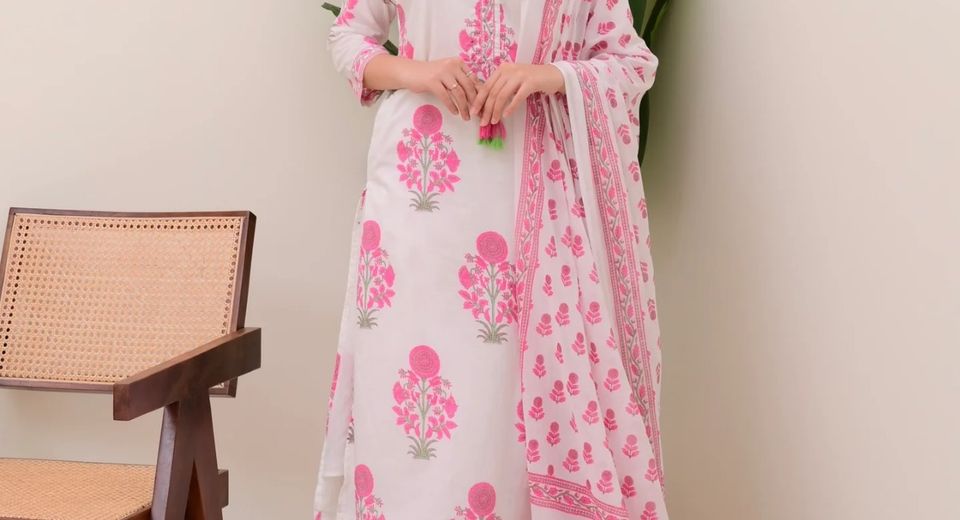
Muslin Kurtis for Everyday Comfort Drape and Styling can make daily ethnic dressing feel lighter, cooler and more polished without becoming difficult to maintain. The key is to match muslin's weight and fall with the right silhouette, lining, bottom, dupatta placement and footwear. A well-chosen muslin kurti can move from a morning commute to a family lunch with only a change of accessories.
Muslin is a finely woven cotton fabric known for softness, breathability and a fluid drape. Modern muslin garments may also contain viscose or blended fibres, so the label matters: fibre composition affects transparency, shrinkage, ironing temperature and how the kurta hangs after washing. Understanding those details helps you choose a daily-wear salwar suit for real movement rather than for a photograph alone.
Why muslin works for everyday Indian dressing
Muslin works for everyday dressing because its light construction allows air circulation and comfortable movement in warm weather. The fabric generally feels less restrictive than heavier silk blends, brocade or densely embroidered textiles, especially when the kurta has side slits and a relaxed sleeve.
Pure cotton muslin is particularly useful in humid climates because cotton absorbs moisture and usually feels breathable against the skin. Blended muslin can offer a smoother finish, stronger colour retention or less wrinkling, but a synthetic blend may feel warmer during long outdoor commutes. A garment described simply as "muslin" should therefore be checked for its fibre content before purchase.
Muslin also suits printed daily wear because its soft surface allows floral, block-print and hand-print motifs to remain visible without making the outfit visually heavy. Kalamkari Print Salwar Suits are an useful reference point for understanding how an expressive print can carry an outfit while the fabric keeps the overall appearance relaxed.
Lightweight fabric doesn't automatically mean see-through fabric. A lined bodice, darker ground colour, closely spaced print or a good-quality cotton weave can improve coverage. Hold the garment near natural light, check the front and back panels separately, and consider whether the lining ends at the hem or extends through the sleeves before deciding how practical the piece will be.
Choosing the right muslin kurti cut and fit
The right muslin kurti should provide room at the bust, armhole and hip while retaining enough structure around the shoulder to look intentional. A daily kurta that pulls across the chest, twists at the side seam or restricts the upper arm will feel uncomfortable even when the fabric itself is soft.
Match the silhouette to your movement
An A-line muslin kurti is a dependable choice for walking, commuting and sitting for long periods because the hem widens gradually from the chest. A straight kurta looks sharper with cigarette pants or straight trousers, while a panelled or flared cut pairs naturally with slim leggings or narrow pants. Anarkali-style muslin suits provide movement but may require more fabric management when climbing stairs or riding in a vehicle.
Side slits between 10 and 14 inches can improve stride without making a knee-length kurta appear too open. Three-quarter sleeves are practical for desk work and cooking, while elbow-length sleeves create a cooler option for summer. A curved hem can add visual length, but a straight hem is usually easier to tuck, layer or pair with palazzos.
Use measurements rather than size labels
Garment measurements are more reliable than a generic small, medium or large label. Compare bust, shoulder, armhole, sleeve length and kurta length with a garment that already fits well. Leave approximately 2 to 4 inches of ease around the bust for a relaxed daily fit, depending on the cut and whether the fabric has any stretch.
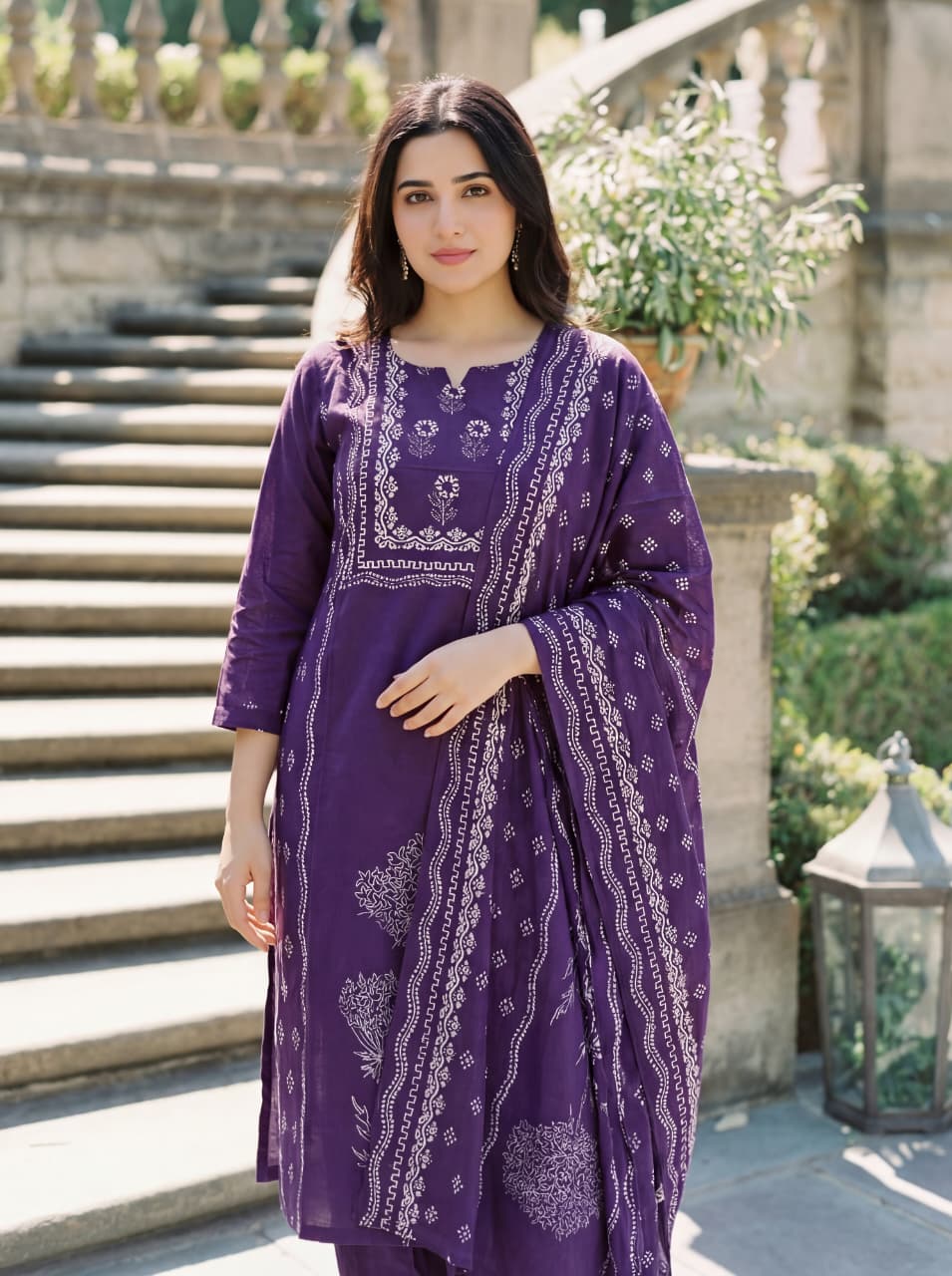
A muslin kurti should not rely on a tight fit to look elegant. Neat shoulder placement, a balanced neckline and a clean fall through the side seam create polish even when the body of the garment is loose. The Purple Hand Printed Muslin Kurta Set Women | Varnavi Online demonstrates why a coordinated print and easy fit can make a simple silhouette feel complete.
Building a comfortable outfit around the kurti
A muslin kurti becomes more versatile when the bottom and dupatta balance its volume. The simplest formula is one fluid piece with one controlled piece: a relaxed kurta with straight pants, or a flared kurta with a narrower bottom.
Straight cotton pants create a clean work-friendly line and are easy to sit in. Cigarette pants add definition to a longer kurta but should not be so narrow that they pull at the calf. Palazzo pants suit shorter or straight kurtas when the waistband is comfortable and the hem doesn't drag. Salwar bottoms provide a traditional proportion, especially with a shorter kurta, but excess fabric at the ankle can become inconvenient during daily travel.
A muslin dupatta can be worn in a narrow front drape for a tidy appearance or spread across the shoulders when sun protection is useful. A heavier dupatta changes the balance of the outfit, so a Banarasi silk or heavily embellished dupatta is better reserved for a kurta with a simpler body. A light printed dupatta works more naturally with a printed muslin suit when the colours share one grounding shade.
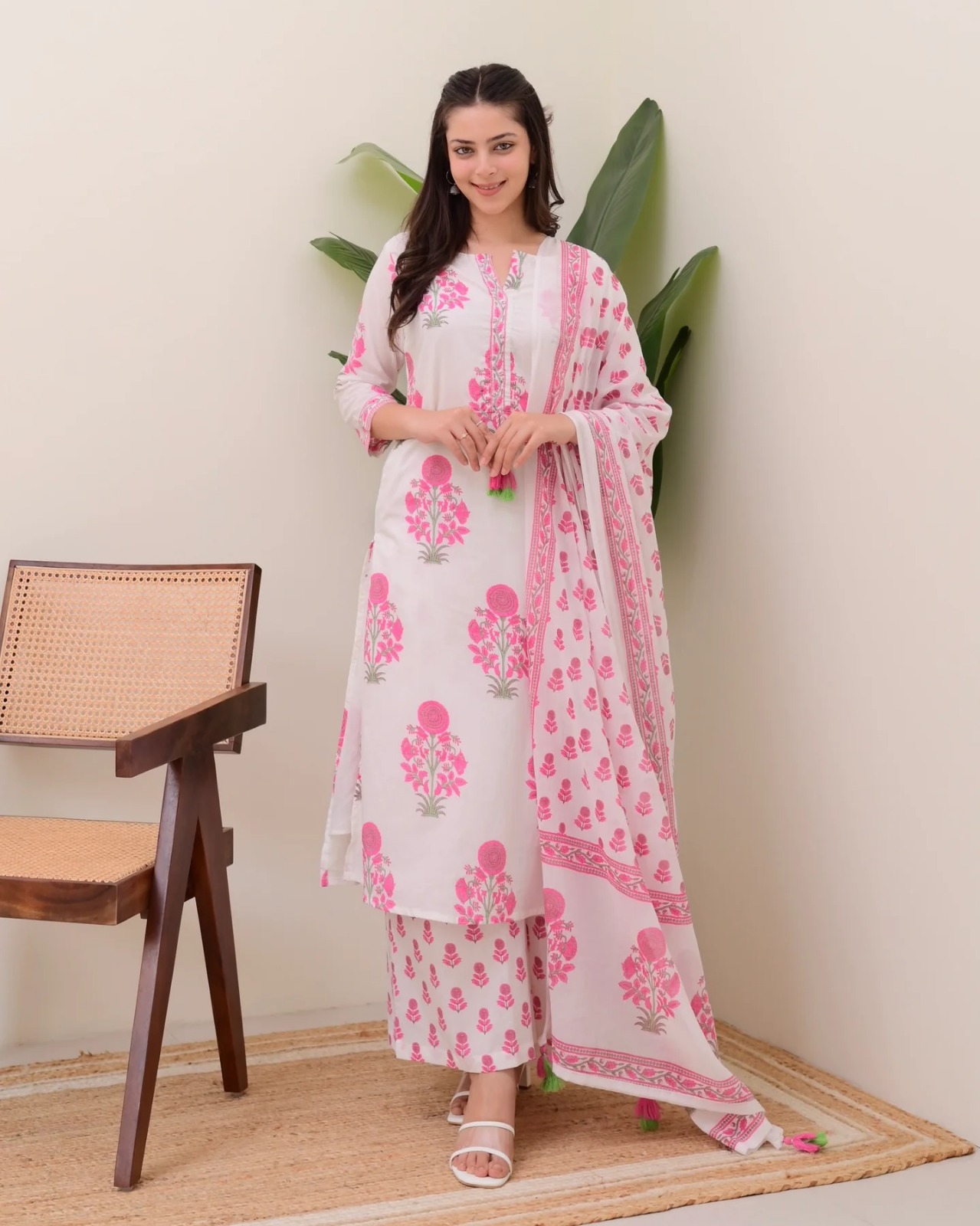
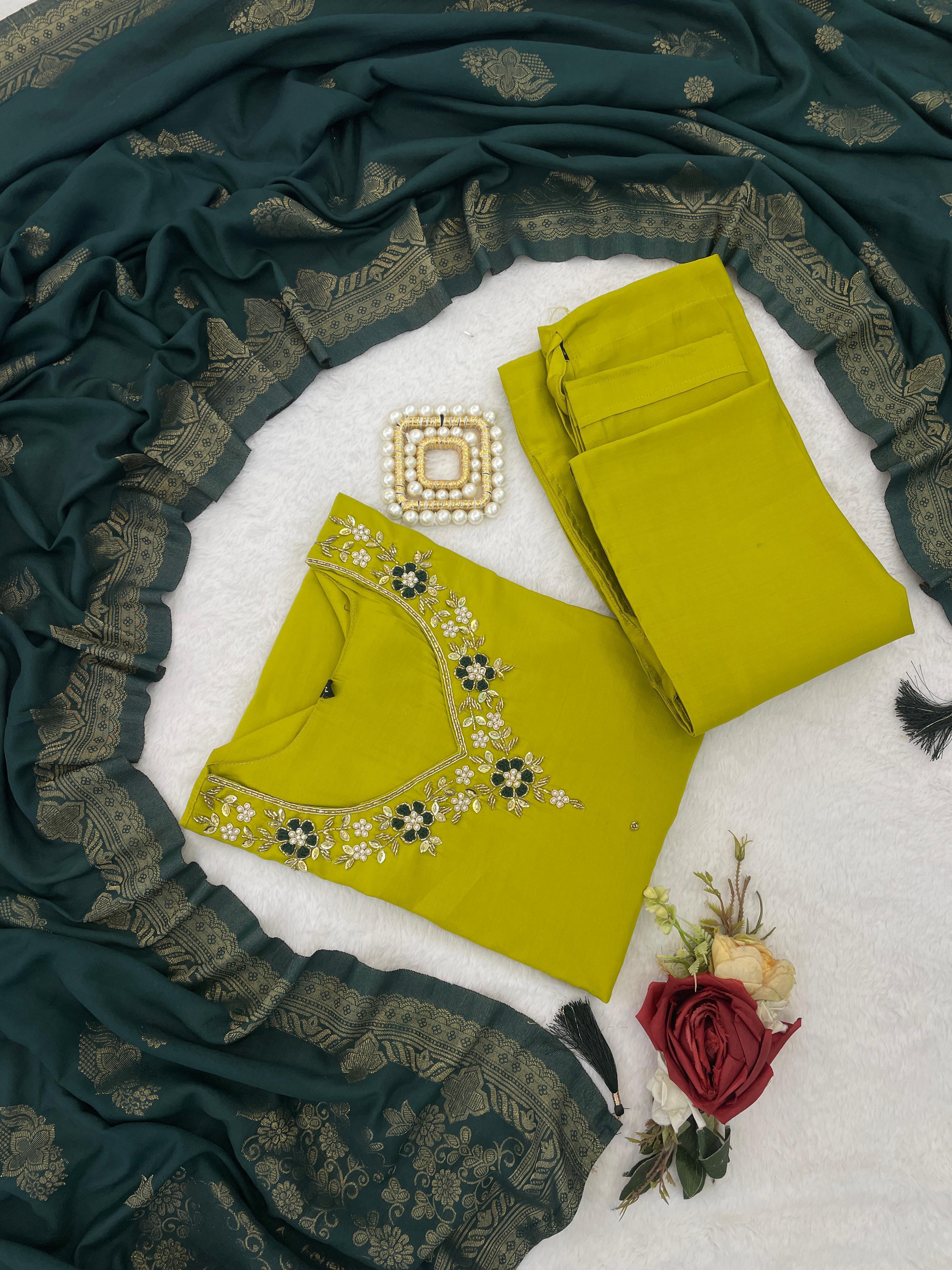
The Designer Pink Floral Kurta Set with Muslin Dupatta offers a practical example of coordinated softness: a floral kurta gains definition from colour while the matching muslin dupatta keeps the ensemble suitable for daytime use. For a quieter palette, the Mustard Yellow Designer Kurti Pant Dupatta Set Women shows how one saturated colour can replace elaborate jewellery and still look finished.
Three dependable daily outfit formulas
- Office and teaching: Pair a straight or A-line muslin kurti with ankle-length trousers, small metal studs, a structured tote and flat juttis. Keep the dupatta folded lengthwise and placed over one shoulder so the hands remain free.
- Errands and travel: Wear a knee-length kurti with straight cotton pants, a crossbody bag and cushioned sandals. Choose a shorter dupatta drape or secure the dupatta with a small hidden pin at the shoulder.
- Home gathering or lunch: Use a printed muslin kurta set with slim pants, kolhapuri-style flats and a pair of medium hoops. Add a lightweight stole or dupatta only if the neckline and print need a second layer.
Muslin Kurtis for Everyday Comfort Drape and Styling in different seasons
Muslin Kurtis for Everyday Comfort Drape and Styling work particularly well in spring, summer and early monsoon weather, but the styling should change with temperature and humidity. Fabric weight, sleeve length and layering determine whether a muslin outfit feels airy or underdressed.
For hot summer days, choose pale or mid-tone colours, three-quarter or elbow sleeves and a breathable cotton lining. Avoid placing a thick synthetic camisole under a lined kurta because the extra layer can reduce the fabric's cooling advantage. Cotton voile, soft cotton slips and seamless innerwear are usually more comfortable beneath lightweight muslin.
During the monsoon, a shorter kurta with a narrower hem is easier to keep clean than a floor-grazing flare. Darker prints can disguise small splashes, but they don't remove the need for prompt washing. Quick-drying bottoms and washable flat footwear make the outfit more practical when roads are wet.
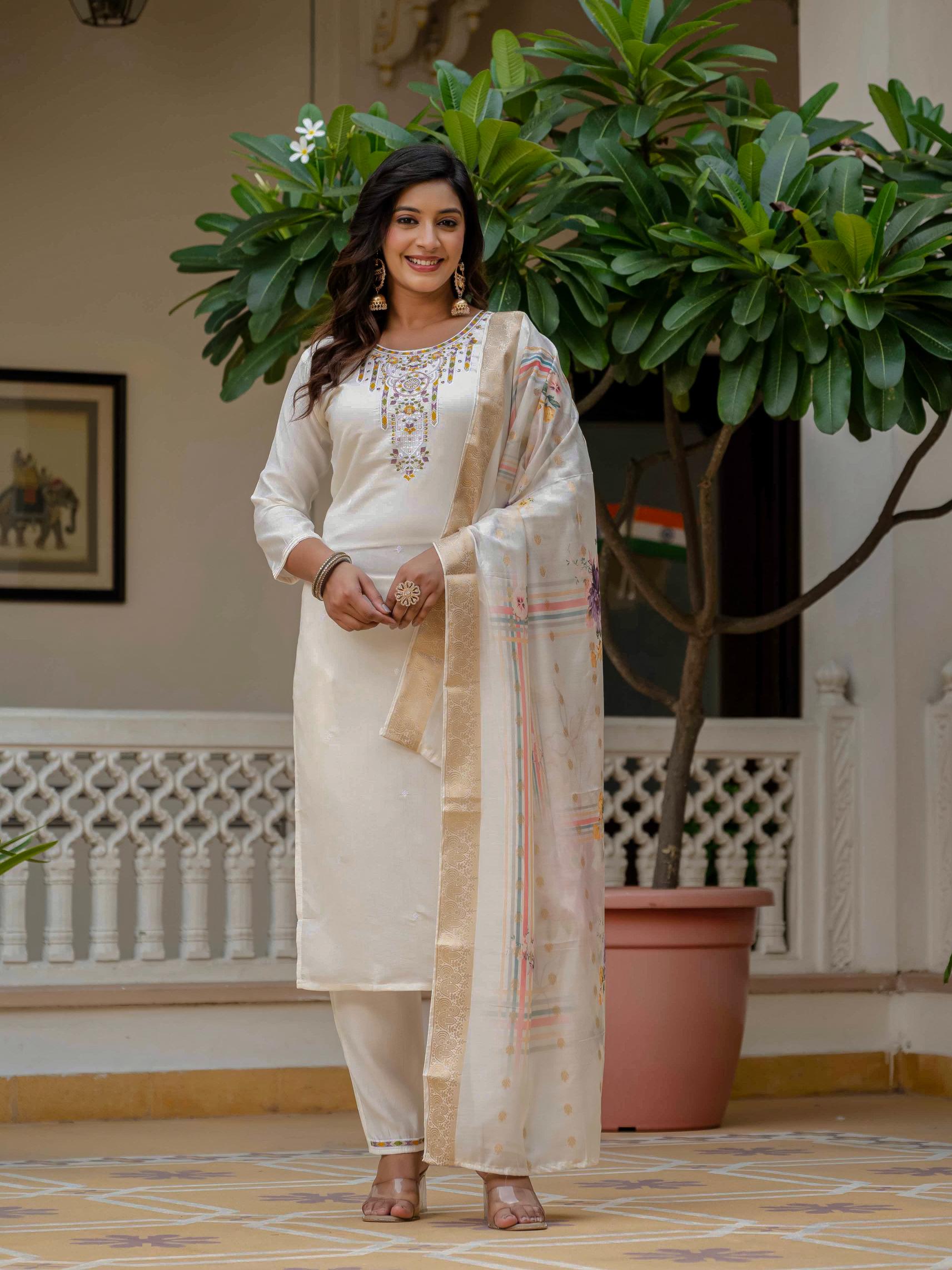
In mild winter weather, layer a muslin kurti with a cotton jacket, longline shrug or fine-knit cardigan. A beige or cream base allows a deeper outer layer to provide contrast. The Beige Roman Silk Elite Embroidered Suit Set illustrates a different, more structured direction for cooler or dressier daytime dressing; a muslin kurta can borrow that tonal layering idea while remaining lighter.
Using print, colour and regional references thoughtfully
Print scale should relate to the wearer's preferred visual proportion and the garment's silhouette. Small repeated motifs create a quieter surface on a wide flare, while a larger floral or heritage motif can give a straight kurta a stronger focal point.
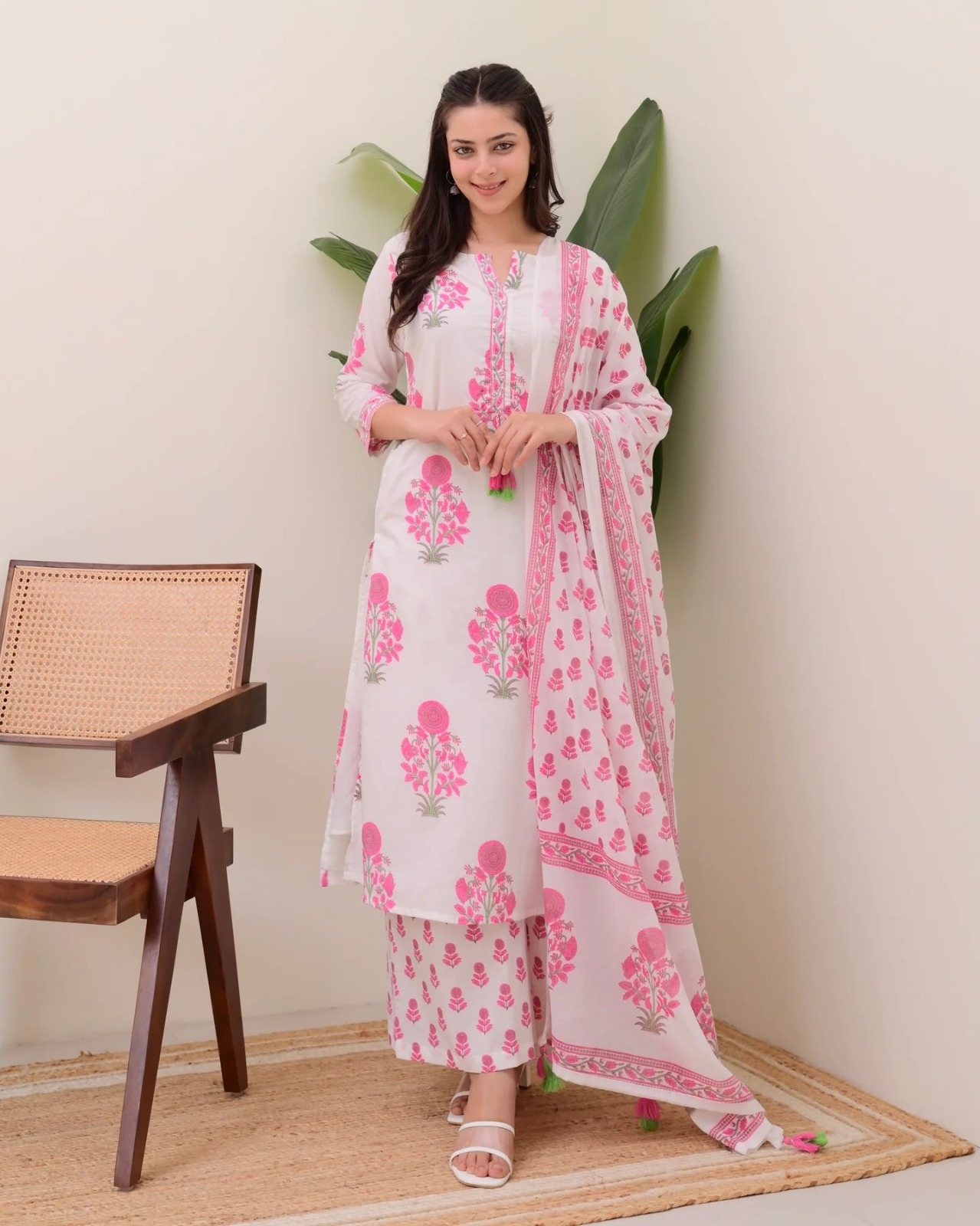
Printed muslin doesn't need heavy jewellery. Choose one repeated colour from the print for the bottom or dupatta, then add a contrasting accessory in a single material such as oxidised silver, wood or enamel. Too many unrelated colours can make a lightweight outfit appear busy.
Regional textile references can also guide styling without turning daily wear into costume. Maharashtra Paithani Inspired Salwar Suits suggest jewel-toned borders and controlled contrast; Punjab Phulkari Embroidered Salwar Suits point towards colourful threadwork and lively dupatta accents. Karnataka Silk Salwar Suits and Kashmir Embroidered Salwar Suits offer further examples of how border placement, surface texture and embroidery can define an outfit even when the base silhouette remains simple.
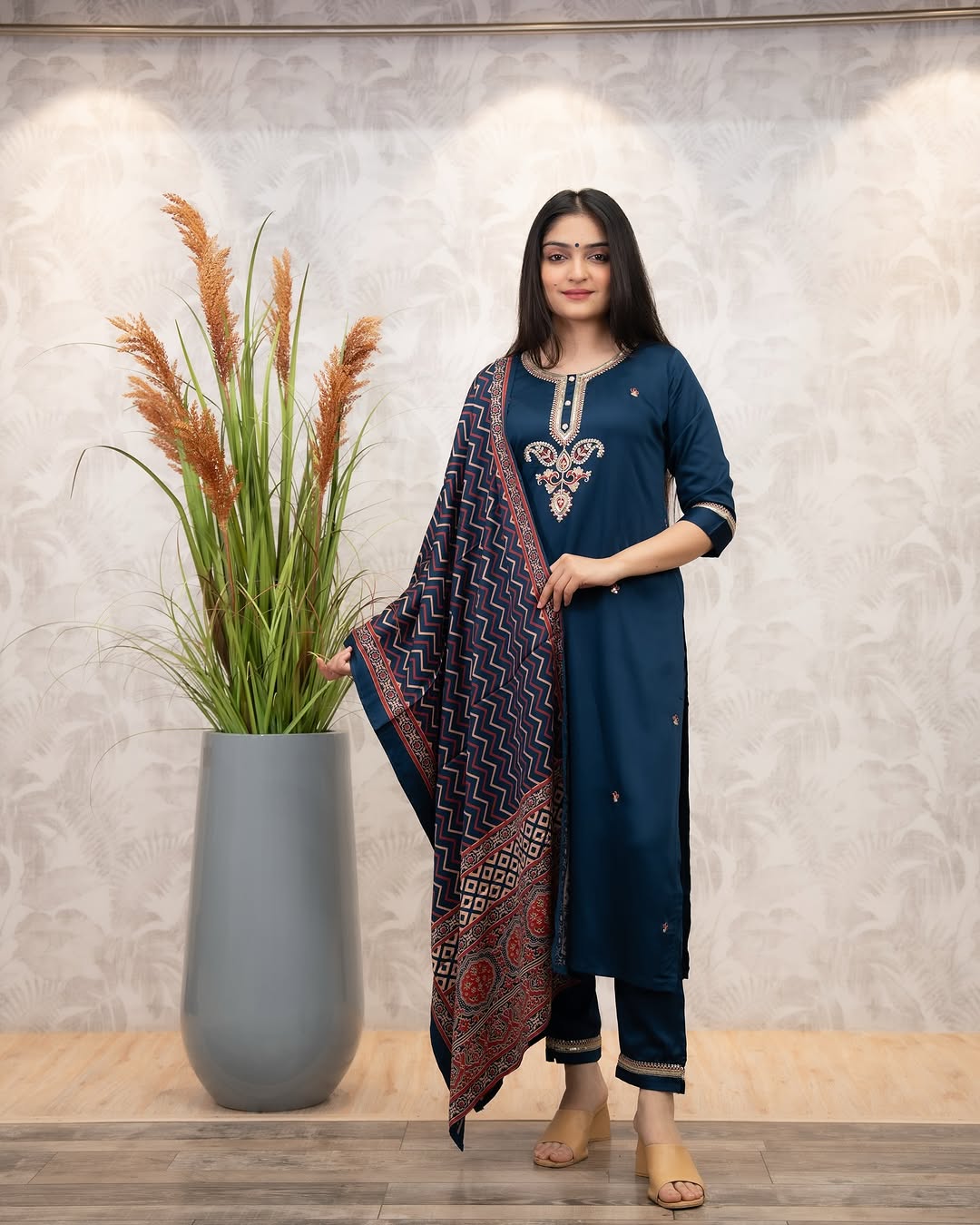
A Chanderi silk garment has a crisp, slightly sheer character that differs from soft muslin, while zari adds reflective detail and visual weight. The Navy Blue Chanderi Silk Kurta Set with Printed Dupatta is therefore an useful comparison when choosing between an airy everyday look and a more structured outfit for a meeting, celebration or formal lunch.
Care instructions that protect muslin's softness and shape
Muslin should be washed gently, dried away from harsh direct sun when possible and ironed at a low-to-medium temperature. These three habits reduce colour fading, fibre stress and unwanted stiffness.
- Read the care label first: Blended muslin, printed muslin and embellished muslin may require different methods. A care label that specifies dry cleaning should take priority over general cotton-washing advice.
- Test colour before soaking: Press a damp white cloth on an inside seam or hem. If colour transfers, wash the garment separately in cold water.
- Use mild detergent: Avoid bleach, optical brighteners and strong stain removers on hand prints and dark colours. A small amount of liquid detergent is usually sufficient for lightly worn daily clothing.
- Keep soaking brief: Ten to fifteen minutes is generally enough for a normal wash. Long soaking can encourage dye migration and weaken delicate surface prints.
- Dry with shape restored: Smooth the shoulder, side seams and hem before hanging the kurta in shade. Avoid wringing, which can stretch the neckline and distort the fall.
- Iron from the reverse: Use a low setting first and place a thin cotton cloth over printed areas if the design feels delicate. Do not press a hot iron directly over zari, sequins or raised embroidery.
Fold muslin only after it's completely dry. Store dark and light garments separately if colour transfer is a concern, and avoid overcrowding the wardrobe because compressed folds can create deep creases that require repeated ironing.
When muslin isn't the best daily choice
Muslin isn't the best choice when a garment must resist frequent abrasion, heavy rain, rough travel or repeated machine washing without attention. A very thin muslin kurta may also be unsuitable for workplaces that require opaque, sharply structured clothing.
Choose a denser cotton, rayon or silk blend when you need stronger crease resistance, more coverage or a heavier fall. The Cream Pink Printed Rayon Readymade Salwar Suit can be considered when a smoother drape and lower ironing requirement matter more than the distinctly breathable hand of cotton muslin.
Embellished muslin also needs careful judgment. Hand embroidery, mirror work and dense zari can make a lightweight base less comfortable for long commutes and more demanding to launder. For daily wear, embroidery concentrated at the neckline, cuff or hem is usually easier to manage than decoration spread across the entire garment.
A practical checklist before buying
Before buying a muslin kurti or salwar suit, check the fibre composition, garment measurements, lining, transparency, sleeve opening, pocket placement and care label. These details determine whether the outfit will work beyond its first try-on.
- Measure a well-fitting kurta and compare the listed bust, shoulder and length measurements.
- Check whether the kurta is lined through the body and whether the lining restricts movement.
- Look for side slits that allow walking without causing the hem to catch.
- Confirm that the dupatta is long enough for the intended drape but not so long that it becomes a tripping hazard.
- Inspect printed and embroidered areas for loose threads, uneven seams or colour transfer.
- Estimate the full outfit cost, including a suitable bottom, inner layer, tailoring adjustment and care requirements.
The strongest daily-wear choice is the one that suits your climate, commute, washing routine and existing wardrobe. Muslin Kurtis for Everyday Comfort Drape and Styling are most useful when softness is supported by the right fit, a sensible proportion and care habits that preserve the fabric's original fall.
Common Questions About Wearing and Caring for Muslin Kurtis
Are muslin kurtis suitable for daily wear in summer?
Yes, muslin kurtis are suitable for summer when the weave and lining allow airflow. Cotton muslin generally feels breathable, while synthetic blends may feel warmer, so check the fibre composition before buying.
How should a muslin kurti be styled for the office?
Pair a straight or A-line muslin kurti with ankle-length trousers, minimal jewellery, a structured bag and flat shoes. Fold the dupatta lengthwise over one shoulder or secure it discreetly so the outfit remains neat during work.
Do muslin kurtis need a lining?
A lining is useful when the muslin is lightweight, pale or slightly transparent, but a heavy or poorly fitted lining can reduce comfort. Check whether the lining extends through the sleeves and whether it allows free movement before purchasing.
Can muslin kurtis be machine washed?
Some muslin kurtis can be machine washed on a gentle cold cycle, but the care label should determine the method. Hand-printed, dark-coloured or embellished garments are safer when washed separately with mild detergent and minimal soaking.
What bottoms look best with a muslin kurta?
Straight pants suit A-line and flared muslin kurtas, while cigarette pants work well with longer straight kurtas. Palazzos balance shorter or narrow kurtas, but the hem and waistband should remain practical for walking and sitting.
How can a muslin dupatta be kept from slipping?
Place the dupatta over one shoulder with a small concealed pin near the shoulder seam or use a lightweight brooch. Folding the dupatta lengthwise reduces excess width and makes the drape easier to control during travel and work.


