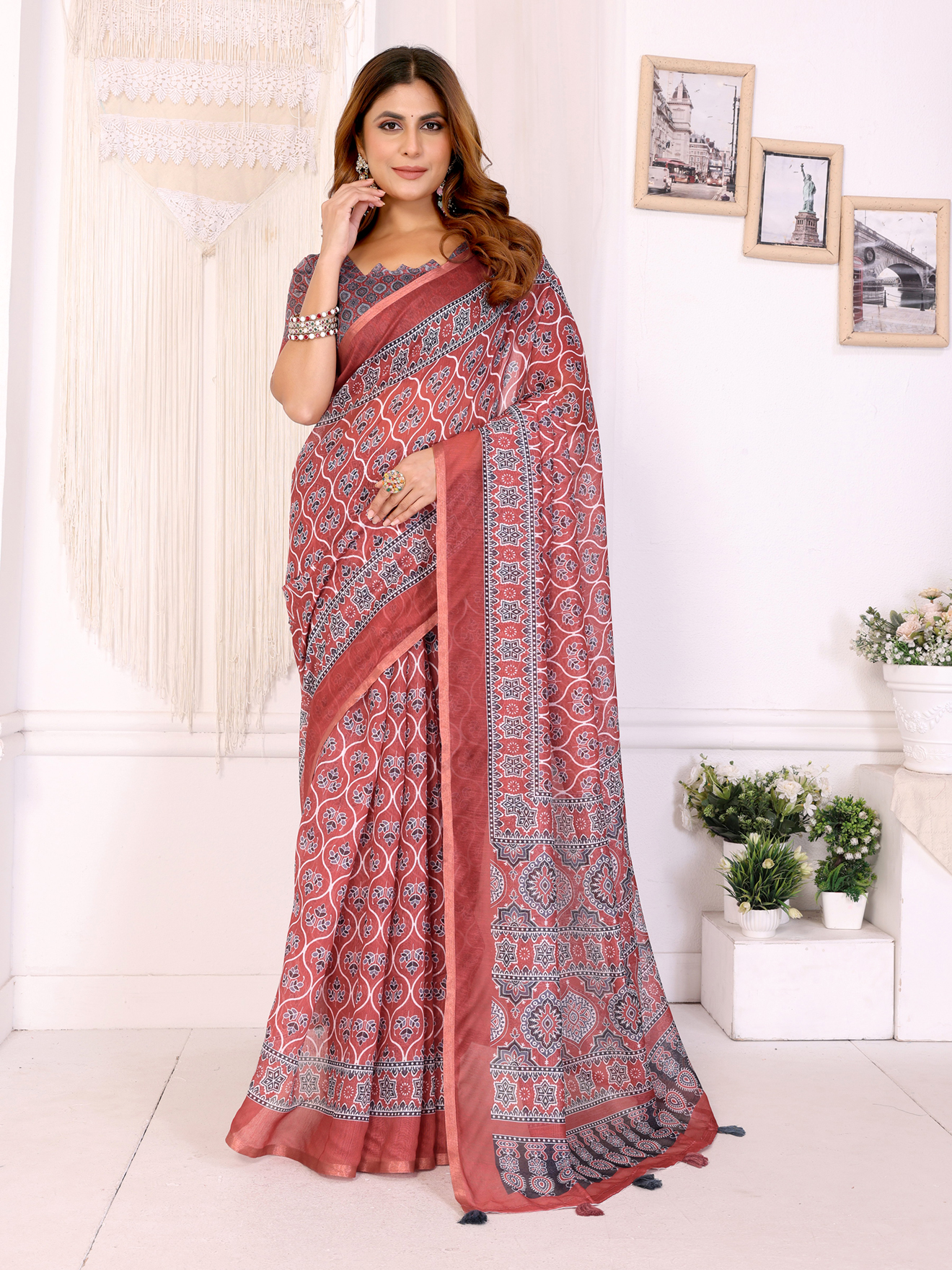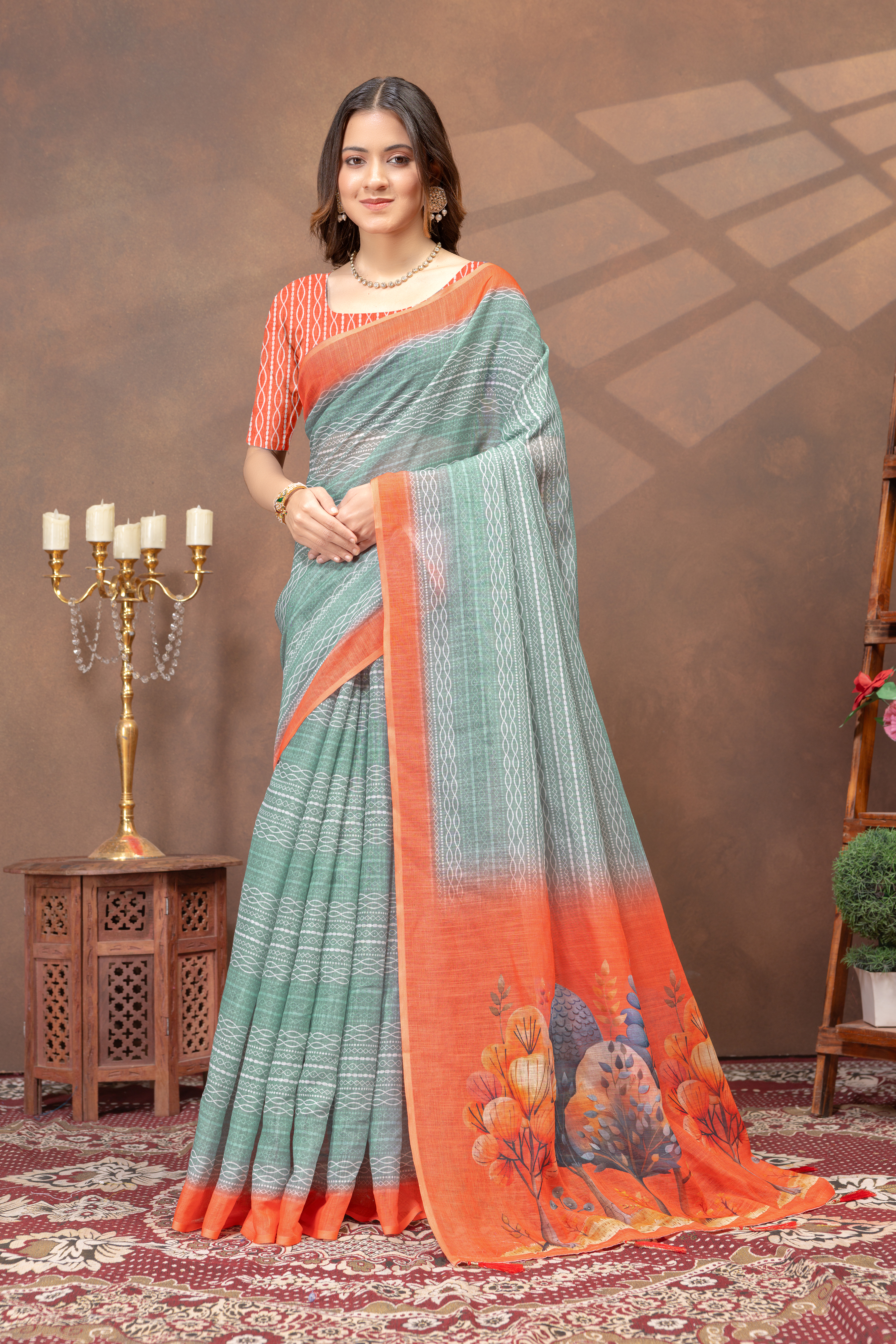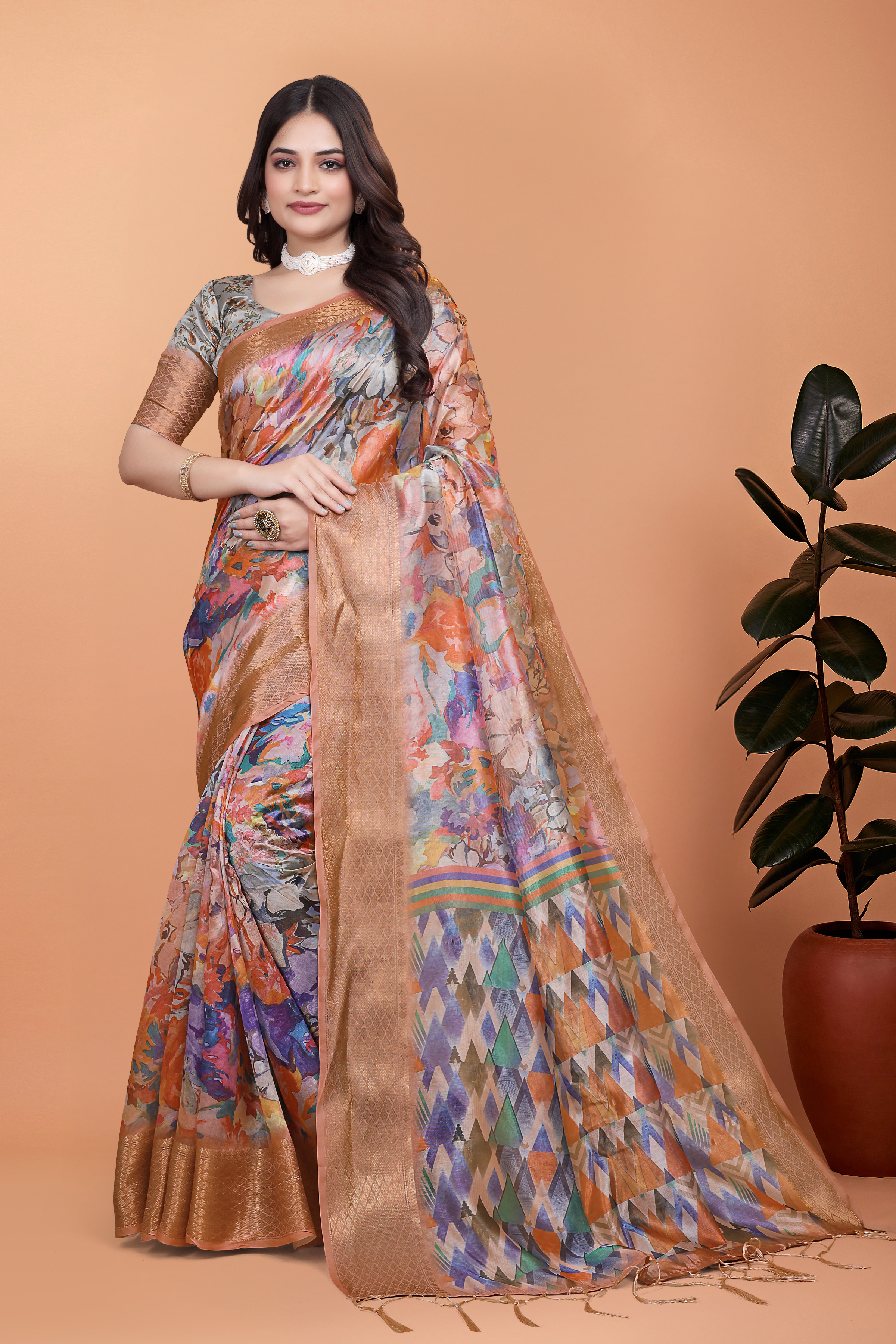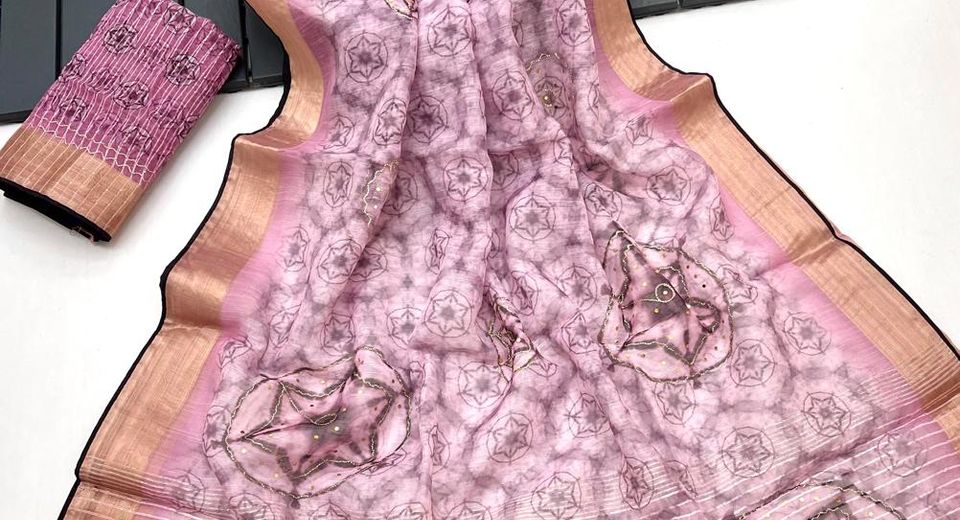
A festive saree doesn't need a dense field of sequins to catch the light. Mukaish Work Sarees Bring Shine Without the Weight of Heavy Sequins because small metallic elements create measured flashes across the fabric instead of covering it with a thick, continuously sparkling surface. The result is useful for weddings, pujas, dinner receptions and long celebrations where comfort matters as much as visual impact.
The phrase "Mukaish work saree" is also used loosely in online shopping, so understanding the technique helps you choose accurately. Traditional Mukaish involves tiny metal pieces, traditionally associated with badla or metallic thread, worked into fabric by hand to form dots, dashes, flowers or scattered highlights. Sequins, foil prints and mirror work can look similarly luminous but are different surface treatments.
Why Mukaish Work Sarees Bring Shine Without the Weight of Heavy Sequins
Mukaish work sarees look luminous because small metallic details reflect light at separate points across the cloth, creating a soft, broken shimmer rather than a solid glittering layer.
Traditional Mukaish, also called mukaish or kamdani work in different craft contexts, uses fine metallic elements inserted or couched into a base such as cotton, silk, georgette or organza. A maker can arrange the elements as tiny dots, elongated marks, stars, paisleys or floral butis. The spacing between motifs allows the underlying textile and its natural movement to remain visible.
That spacing changes how the saree behaves. A heavily sequinned saree may feel denser at the pallu and border, catch against jewellery or become warm during a crowded event. A lightly embellished saree distributes decoration more selectively, so the wearer gets sparkle when the pleats, pallu or shoulder moves without carrying a large amount of added trim.
Metallic colour also affects the effect. Silver-toned Mukaish suits cool pastels, ice blue and ivory, while antique gold or warm gold complements mustard, rust, rose, cream and deep green. The best choice depends on the saree's base colour, the event lighting and the jewellery metal you plan to wear.
How Mukaish Work Sarees Bring Shine Without the Weight of Heavy Sequins Compared with Other Embellishments
Mukaish is a fine metallic embellishment technique, while sequins are small reflective discs, foil is a surface-applied metallic finish and mirror work uses reflective pieces attached to the fabric.
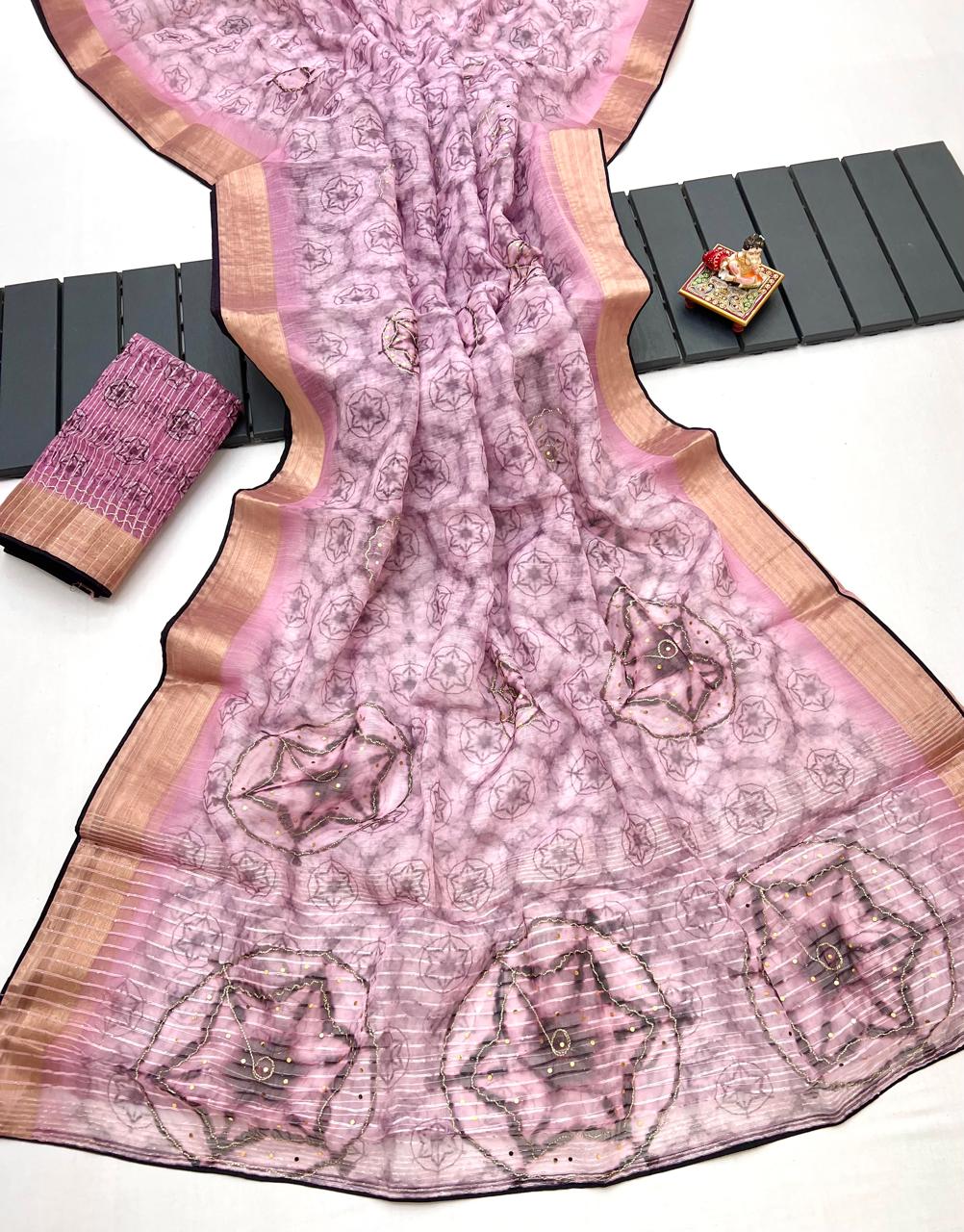
Mukaish: Mukaish work generally appears as small metallic dots, threads or motifs integrated into the textile. It tends to give a scattered, artisanal glimmer. The exact construction varies by region, workshop and fabric, so a seller's material description should be checked before purchase.
Sequins: Sequins are flat or slightly cupped discs, usually made from plastic, metal or coated material, stitched onto fabric. Dense sequin embroidery creates stronger all-over sparkle and can add more texture and weight. Sparse sequin butis can still produce a lightweight result, but they should not automatically be labelled Mukaish.
Foil work: Foil work transfers or applies metallic colour to the fabric surface. Foil can look bright and graphic, but the finish is printed or bonded rather than made from individually attached metallic pieces. Mustard Moss Georgette Silk Saree With Foil Work is an useful example of how a saree can achieve shine through a surface finish.
Mirror work: Mirror work uses small reflective discs or pieces secured with embroidery. Royal Raj Gharana Mirror Work Designer Saree creates a more visibly dimensional effect than a fine Mukaish scatter because each mirror has a defined edge and physical presence.
Product descriptions matter because "shimmering," "metallic," "designer," and "party wear" don't identify a construction method. Look for words such as Mukaish, badla, kamdani, sequin, foil, zari or mirror work, and treat each term as a separate clue rather than interchangeable vocabulary.
Which Fabrics Help Mukaish Work Sarees Bring Shine Without the Weight of Heavy Sequins?
Organza, georgette, silk cotton and lightweight cotton-silk blends suit a delicate metallic look because they hold a graceful drape without requiring heavy decoration.
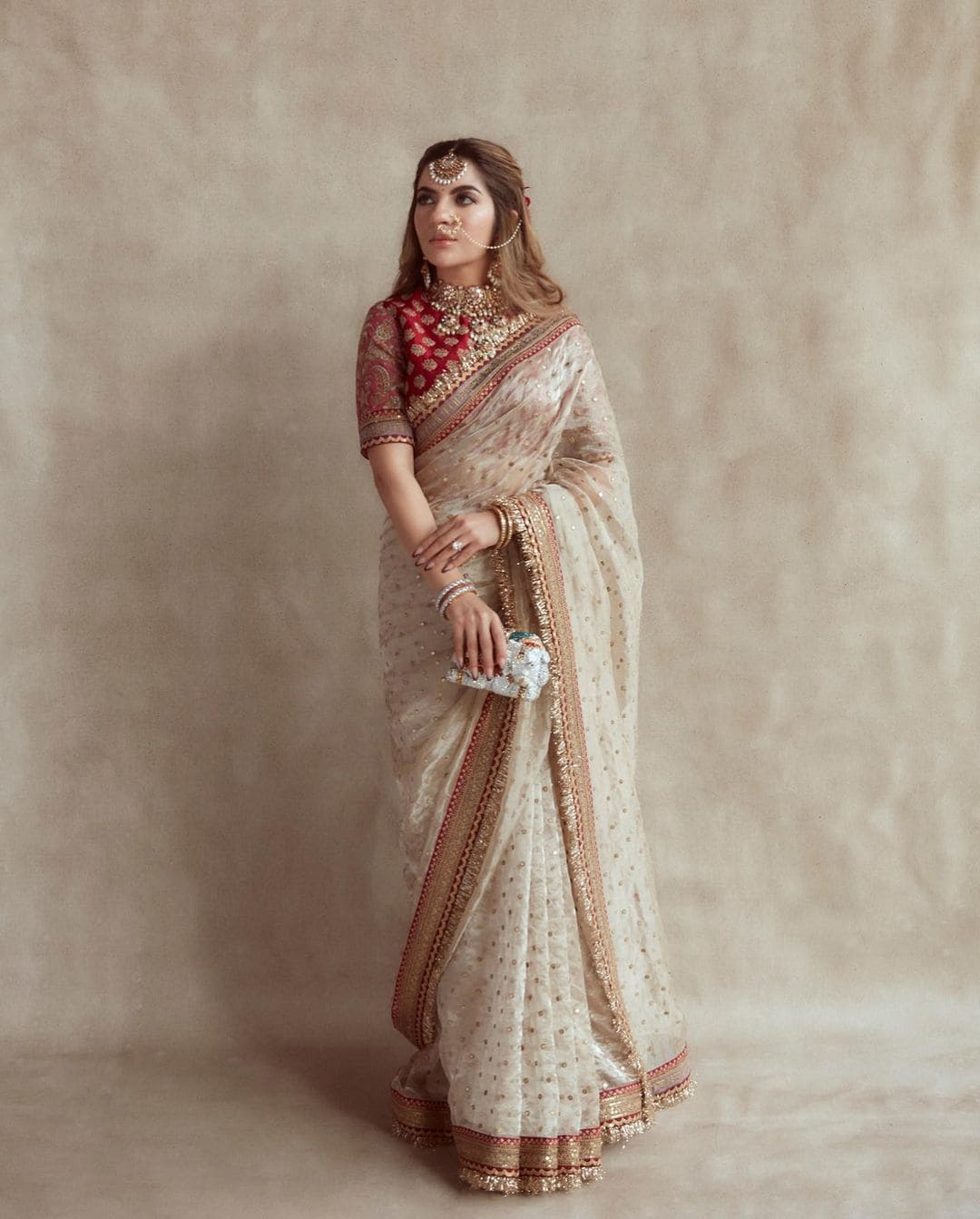
Organza for structure and light reflection
Organza has a crisp, airy body that helps pleats remain defined. A metallic detail placed on organza can appear especially sharp because light travels across the smooth surface. Mauve Organza Cotton Silk Saree With Thread & Sequin Work and Sky Blue Organza Cotton Silk Saree With Sequin Work show how restrained embellishment can work with soft, luminous colour.
Organza isn't always the easiest fabric for a first-time draper. Pleats may shift if the saree isn't pinned properly, and the fabric can show pressure marks. Use a well-fitted petticoat, secure the shoulder pleats with two small pins and avoid dragging the edge across rough walls or furniture.
Georgette for fluid movement
Georgette falls closer to the body and creates a fluid pallu. The fabric is practical for dancing, walking and long receptions because the drape doesn't stand away from the body as much as crisp organza. Mustard Moss Georgette Silk Saree With Foil Work illustrates a softer route to evening shine without relying on heavy attached embellishment.
Silk cotton for balance
Silk cotton combines some of silk's lustre with the easier hand of cotton. The blend can suit daytime weddings, festive lunches and indoor ceremonies where a formal silk saree may feel excessive. Cream Organza Cotton Silk Saree With Thread & Sequin Work and Lightweight Cream Saree with Designer Floral Pattern demonstrate two different ways to keep a cream saree visually interesting without a dense, dark border.
How to Choose Mukaish Work Sarees That Bring Shine Without the Weight of Heavy Sequins for Each Event
Choose the density, colour and fabric according to the event duration, lighting and amount of movement rather than choosing embellishment by sparkle alone.
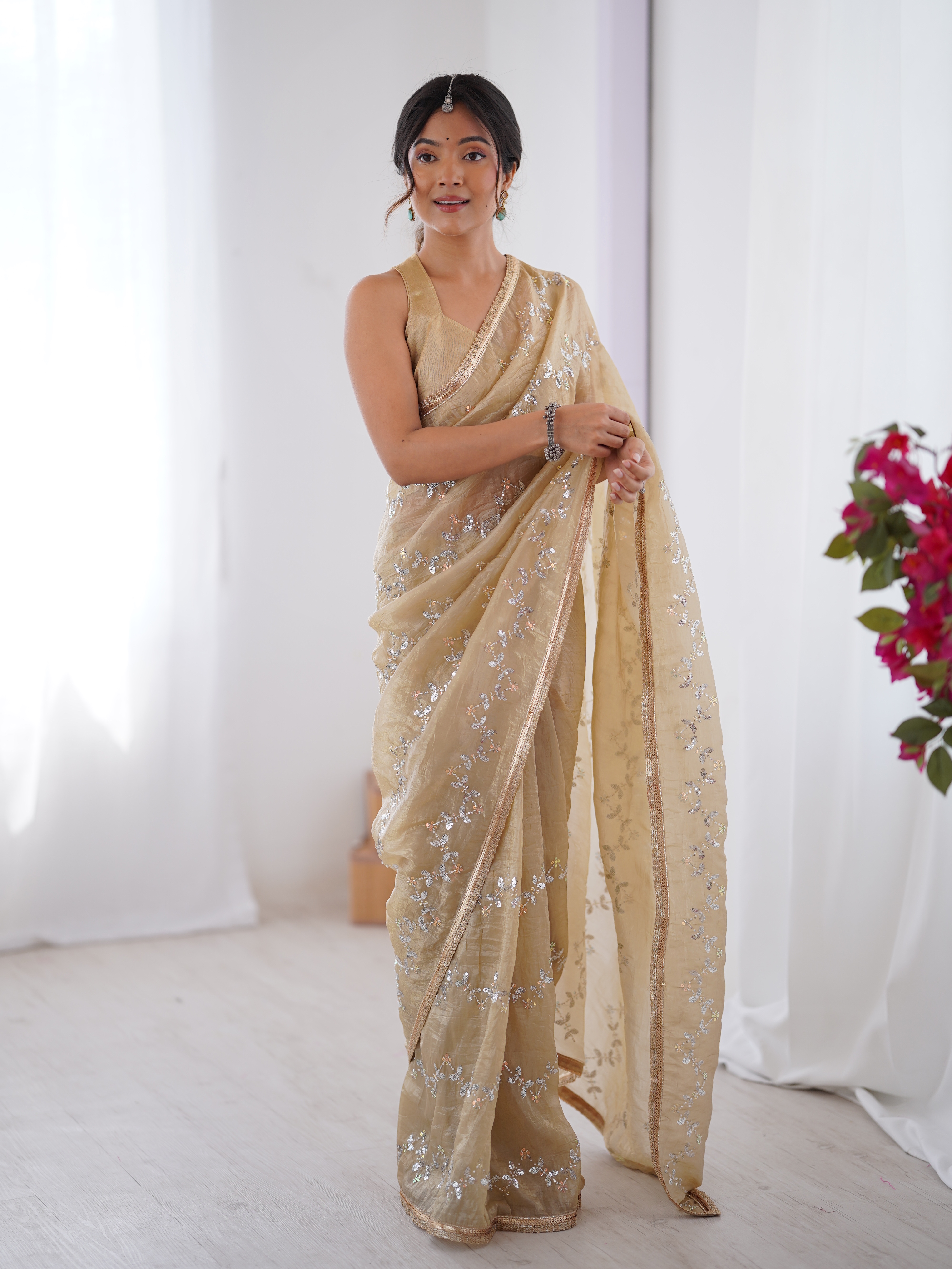
For a Haldi ceremony, daytime puja or garden lunch, a pastel or cream base with small metallic accents keeps the look festive without competing with bright natural light. Sky blue, mauve, ivory and soft peach photograph well outdoors because they provide contrast without absorbing too much heat. A saree with a narrow border also leaves room for comfortable walking and sitting.
For a sangeet or cocktail evening, a darker base or a stronger metallic contrast can stand up to low, warm lighting. Deep wine, navy, charcoal, emerald and black make silver or gold details more visible. A medium-width border or embellished pallu can provide enough definition for photographs while remaining lighter than a fully sequinned drape.
For a wedding reception, consider the visual distance between your saree and the bride's outfit. Fine Mukaish, restrained zari or scattered sequin butis create polish without producing the same volume as a bridal lehenga or heavily embroidered Banarasi silk saree. Off White Organza Silk Embroidered Saree with Sequin Butti Work - Party Wear offers a dressy direction, but its sequin butti work should be understood as sequin embellishment rather than automatically treated as traditional Mukaish.
Rani Pink Heavy Smooth Sitara Saree with Sequin Embroidery suits a wearer who wants a more noticeable, high-impact sparkle. The heavier sitara treatment belongs to a different styling category from delicate Mukaish, making the comparison useful when deciding how much surface shine feels comfortable.
Budget can guide the search without deciding the entire look. Sarees from Rs 1000 to Rs 1500 can be useful for testing a lightweight fabric or a new drape before investing in a more elaborate festive saree. Sarees Under 20% Off and Sarees Under 10% Off may also help you compare fabric, lining and embellishment details across price points.
How Mukaish Work Sarees Bring Shine Without the Weight of Heavy Sequins with Blouses and Jewellery
A simple blouse with one repeated colour or metallic detail usually sits well with delicate saree shine better than a blouse covered in competing embellishment.
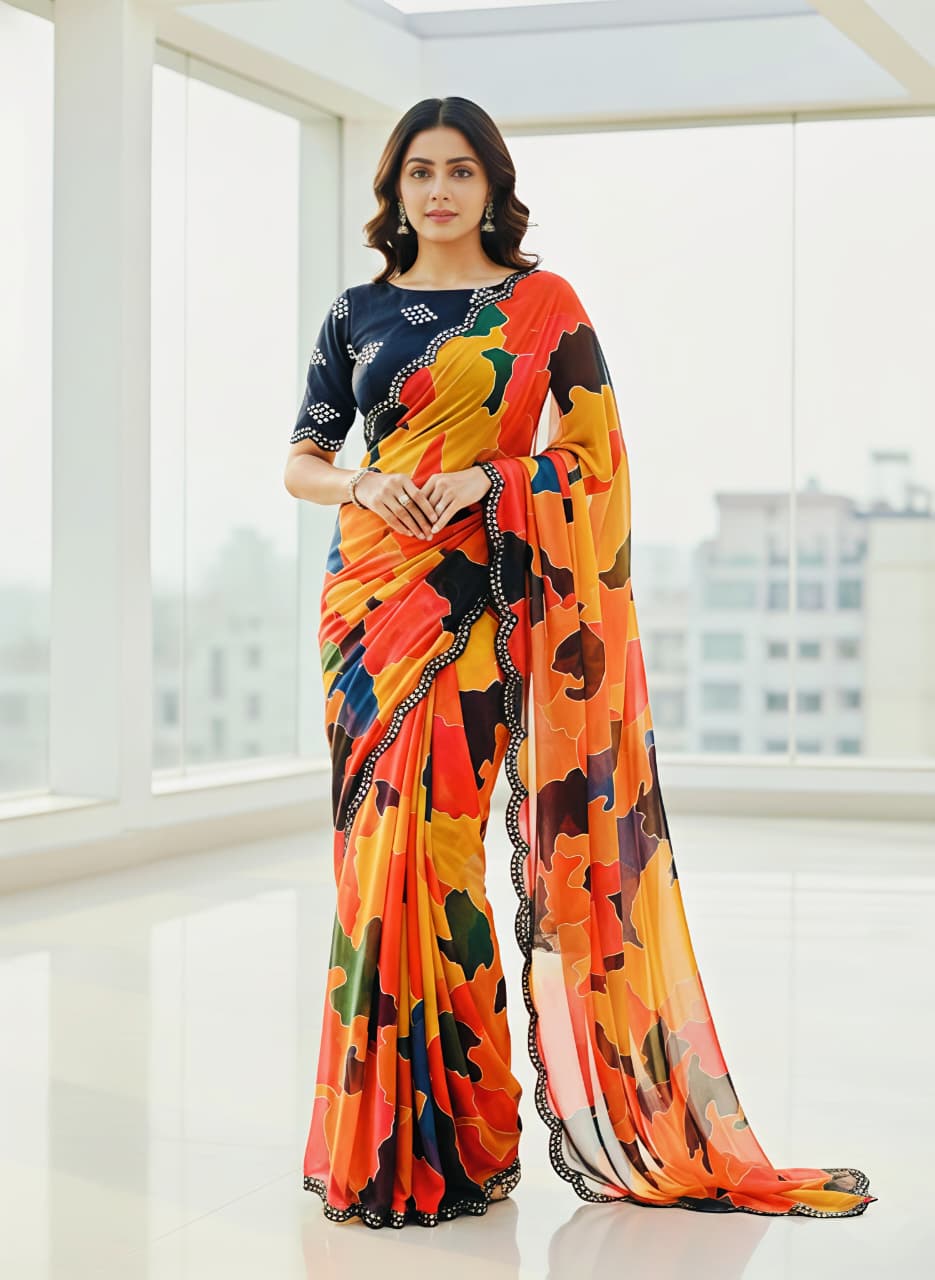
For a silver-toned saree, try a blouse in the saree's base colour with silver zari piping, a matte grey finish or a small matching buti. For gold-toned work, a blouse in ivory, champagne, muted mustard or the saree's deeper accent shade can create continuity. A contrasting blouse works best when the saree itself has a quiet pattern and the contrast is repeated in the border or pallu.
Neckline and sleeve length affect the balance. A boat neck or high round neck gives a composed appearance with a statement necklace, while a deeper V-neck leaves space for long earrings and a bare neckline. Elbow-length sleeves can make a light saree feel more formal; short sleeves keep the outfit easier for a summer event.
Jewellery should repeat the saree's metal rather than introduce several unrelated finishes. Silver Mukaish pairs naturally with kundan containing clear stones, pearls, oxidised silver or white-metal jewellery. Gold Mukaish works with kundan, antique gold, temple-style jewellery or warm polki tones. One substantial item, such as jhumkas or a choker, is usually enough when the saree already reflects light.
Keep the pallu visible when the metallic work is concentrated there. A loose open pallu reveals the surface pattern, while a carefully pleated pallu creates a more controlled formal look. Use transparent or colour-matched pins so the drape doesn't acquire visible interruptions.
How to Care for Mukaish Work Sarees That Bring Shine Without the Weight of Heavy Sequins
Protect delicate metallic work by following the saree's stated care instructions, limiting abrasion and storing the garment in a dry, breathable environment.
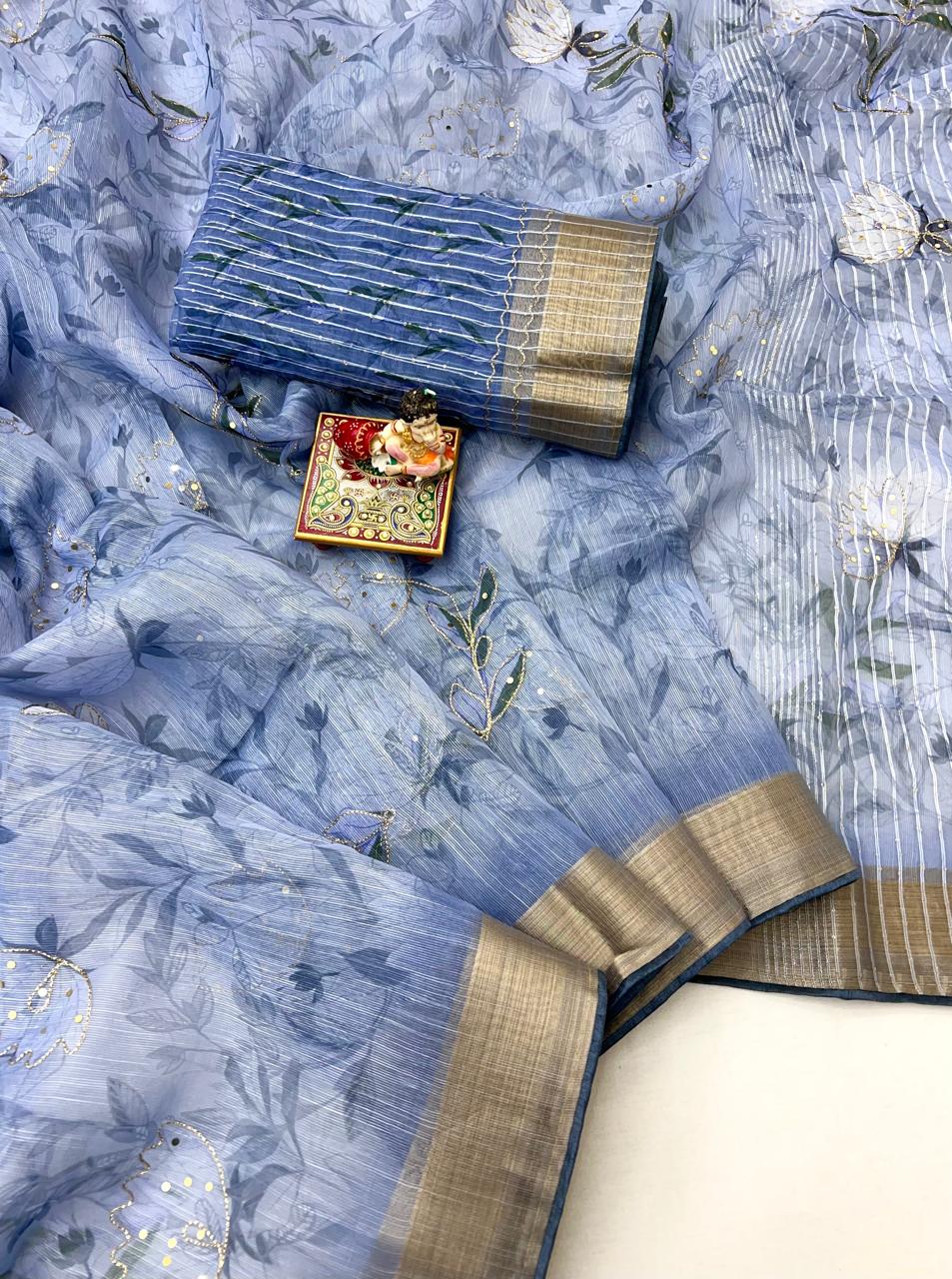
Check the fibre composition and embellishment before washing. Organza, georgette, silk cotton and blended fabrics can respond differently to water, heat and detergent. Professional dry cleaning is generally the safer choice for sarees with extensive metallic work, but the cleaner should be told about Mukaish, zari, sequins, foil or mirrors before treatment.
Never scrub a metallic motif to remove a stain. Blot a fresh liquid mark gently with a clean, dry cloth and avoid rubbing the surrounding fibres. Home stain removers can affect dyes, metallic finishes and adhesive-backed decoration, particularly on pale fabrics such as ivory and cream.
Store the saree folded along different lines each time so one crease doesn't become permanent. Wrap delicate embellished sections in uncoloured cotton or acid-free tissue, place the saree in a breathable fabric bag and keep it away from direct sunlight, damp cupboards and rough wooden shelves. Avoid sealed plastic for long-term storage because trapped humidity can encourage odour and fabric deterioration.
Use a low or medium ironing temperature only when the care label permits it, and place a pressing cloth between the iron and the saree. Direct high heat can flatten organza, mark silk blends or damage metallic details. Hanging the saree for several hours before draping can release minor folds without unnecessary pressing.
A lightweight metallic saree rewards careful handling because its appeal comes from the relationship between open fabric and small reflective details. Mukaish Work Sarees Bring Shine Without the Weight of Heavy Sequins when the embellishment remains visible, the drape remains fluid and the styling gives the surface enough room to speak.
Common Questions About Choosing and Wearing Mukaish Work Sarees
What is Mukaish work on a saree?
Mukaish work is a metallic embellishment technique in which small metal elements or metallic threads are worked into fabric as dots, dashes, butis or other motifs. Mukaish creates a scattered reflective effect and is different from foil printing, mirror work and densely attached sequins.
Are Mukaish work sarees lightweight?
Mukaish work sarees can be lightweight when the embellishment is sparse and the base is organza, georgette or silk cotton. The final weight depends on the fabric, border, pallu, lining and amount of metallic work, so the product description should be checked before purchase.
Can I wear a Mukaish saree to a Haldi ceremony?
Yes, a lightweight Mukaish saree can suit a Haldi ceremony, especially in ivory, pastel, yellow, mauve or sky blue. Choose breathable fabric, a manageable border and secure pleats because Haldi ceremonies involve movement and a higher risk of staining.
What is the difference between Mukaish and sequin work?
Mukaish usually consists of small metallic elements or threads integrated into the textile, while sequin work attaches reflective discs to the surface. Sparse sequins may also feel light, but sequin work and traditional Mukaish are not the same construction.
Which jewellery suits a Mukaish work saree?
Jewellery that repeats the saree's metallic tone usually works best. Silver Mukaish pairs with pearls, white metal and cool kundan, while gold Mukaish suits antique gold, temple jewellery, polki and warm kundan; one statement piece often provides enough emphasis.
How should I wash and store a Mukaish work saree?
Follow the care label and consider professional dry cleaning for sarees with extensive metallic work. Store the saree folded in breathable cotton or acid-free tissue, away from direct sunlight and dampness, and never scrub or apply high heat directly to embellished areas.