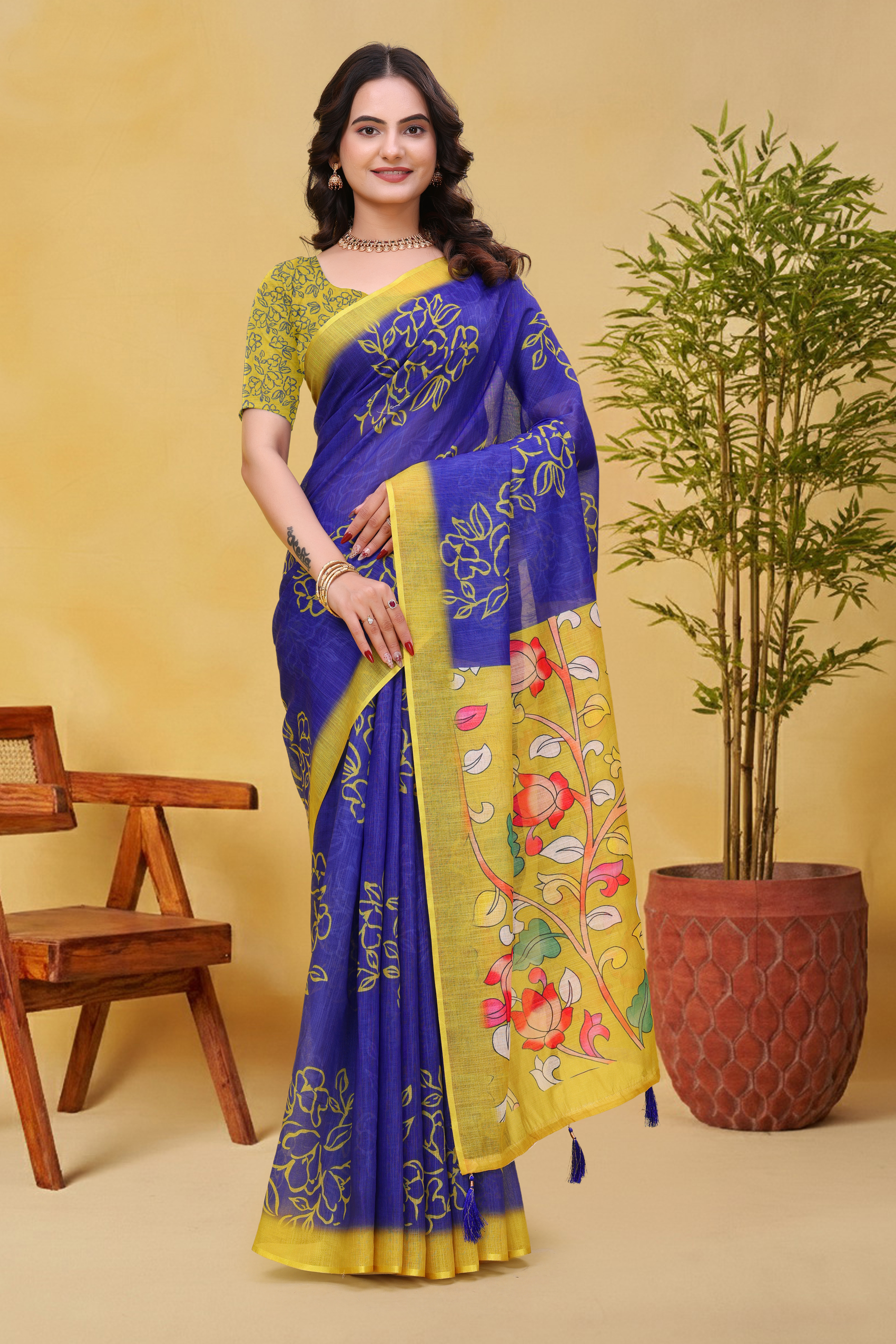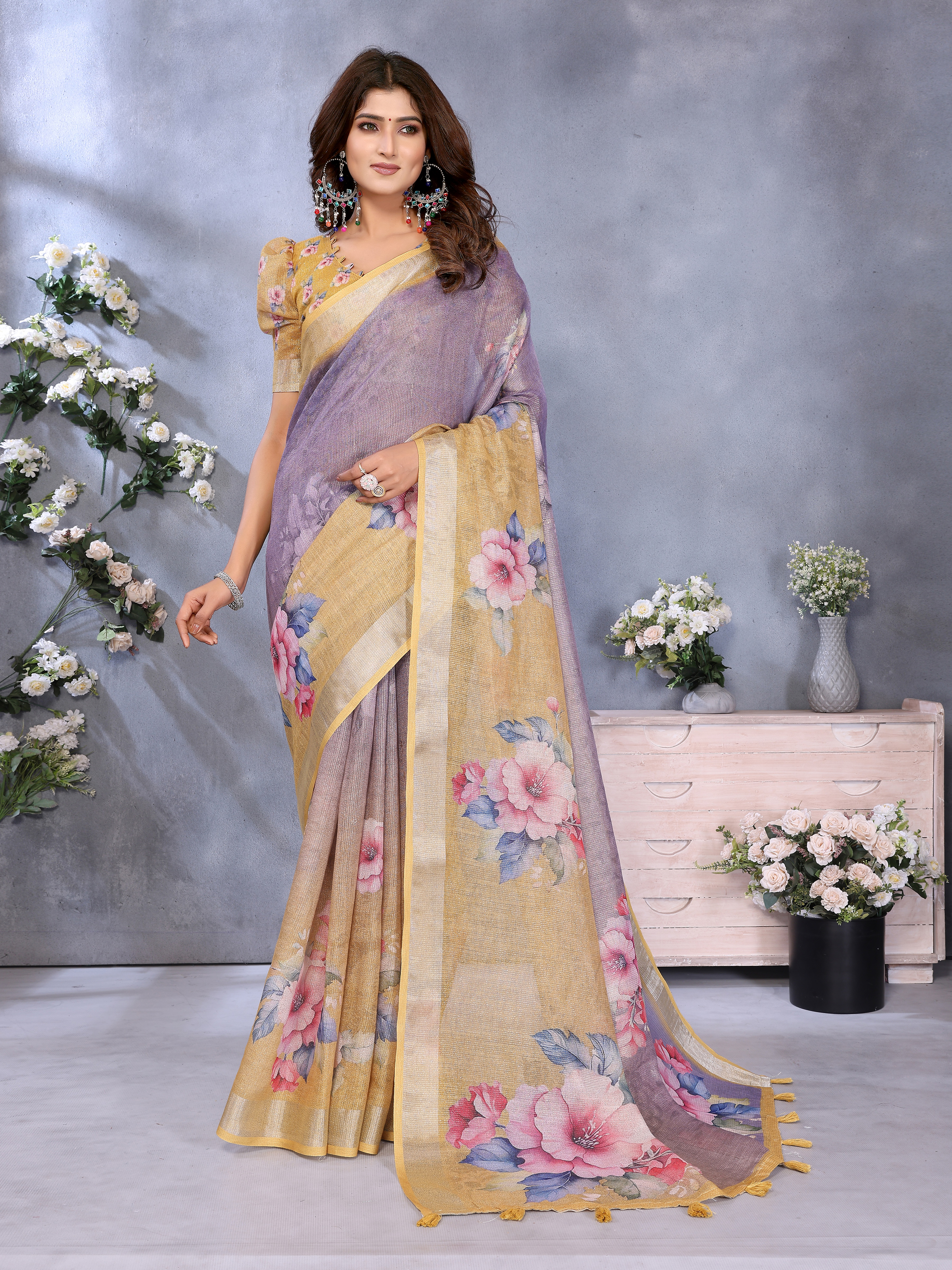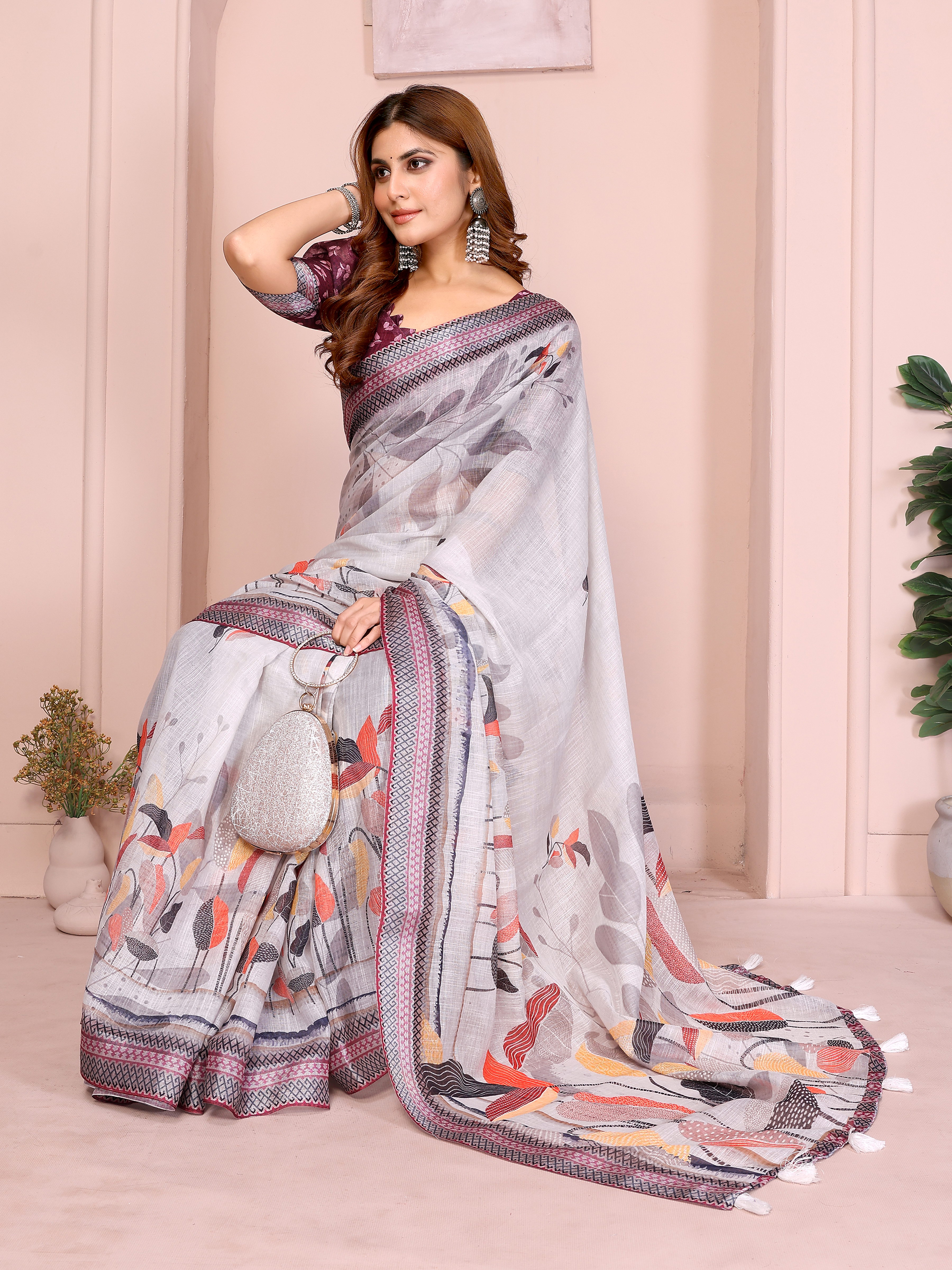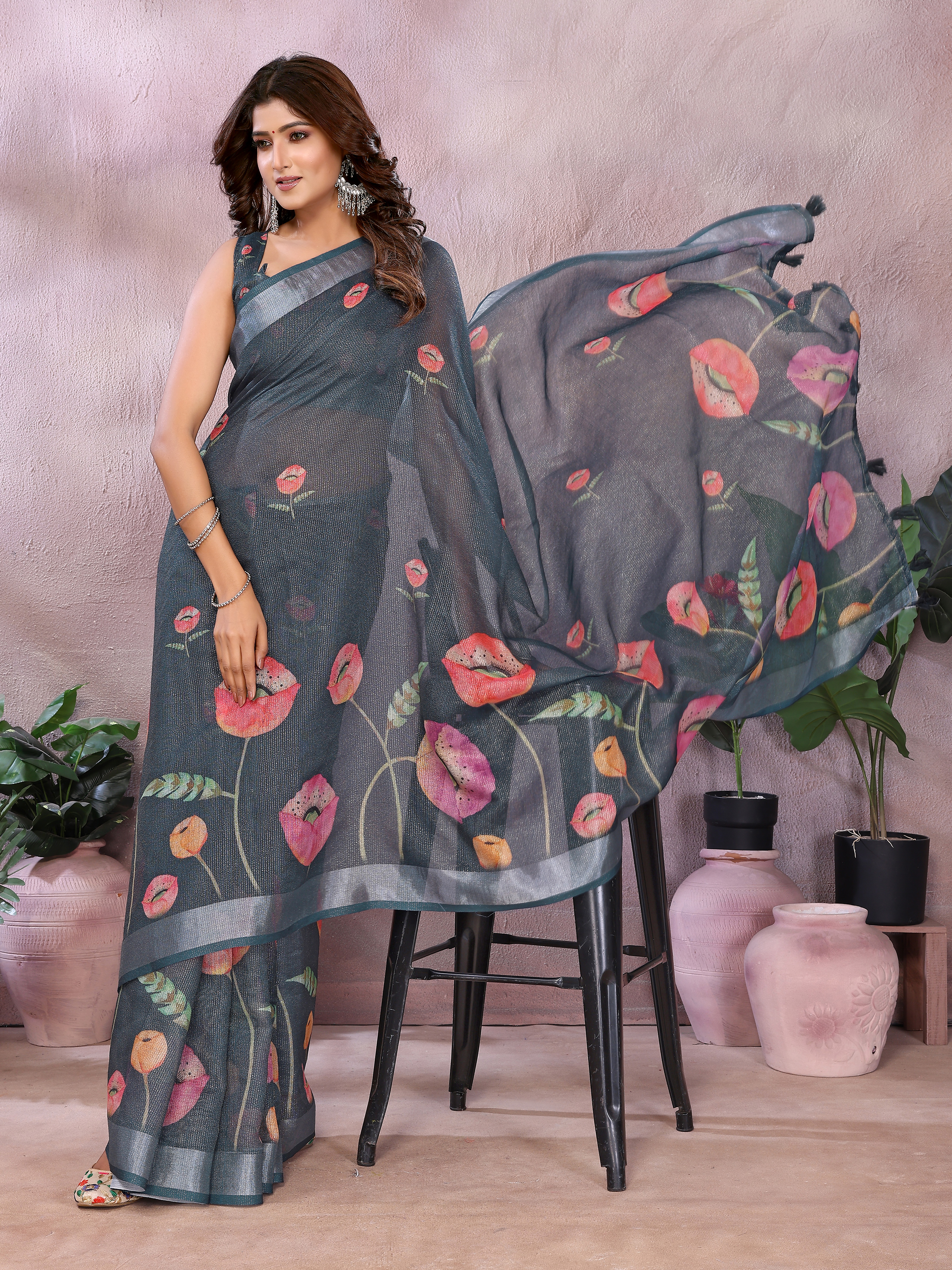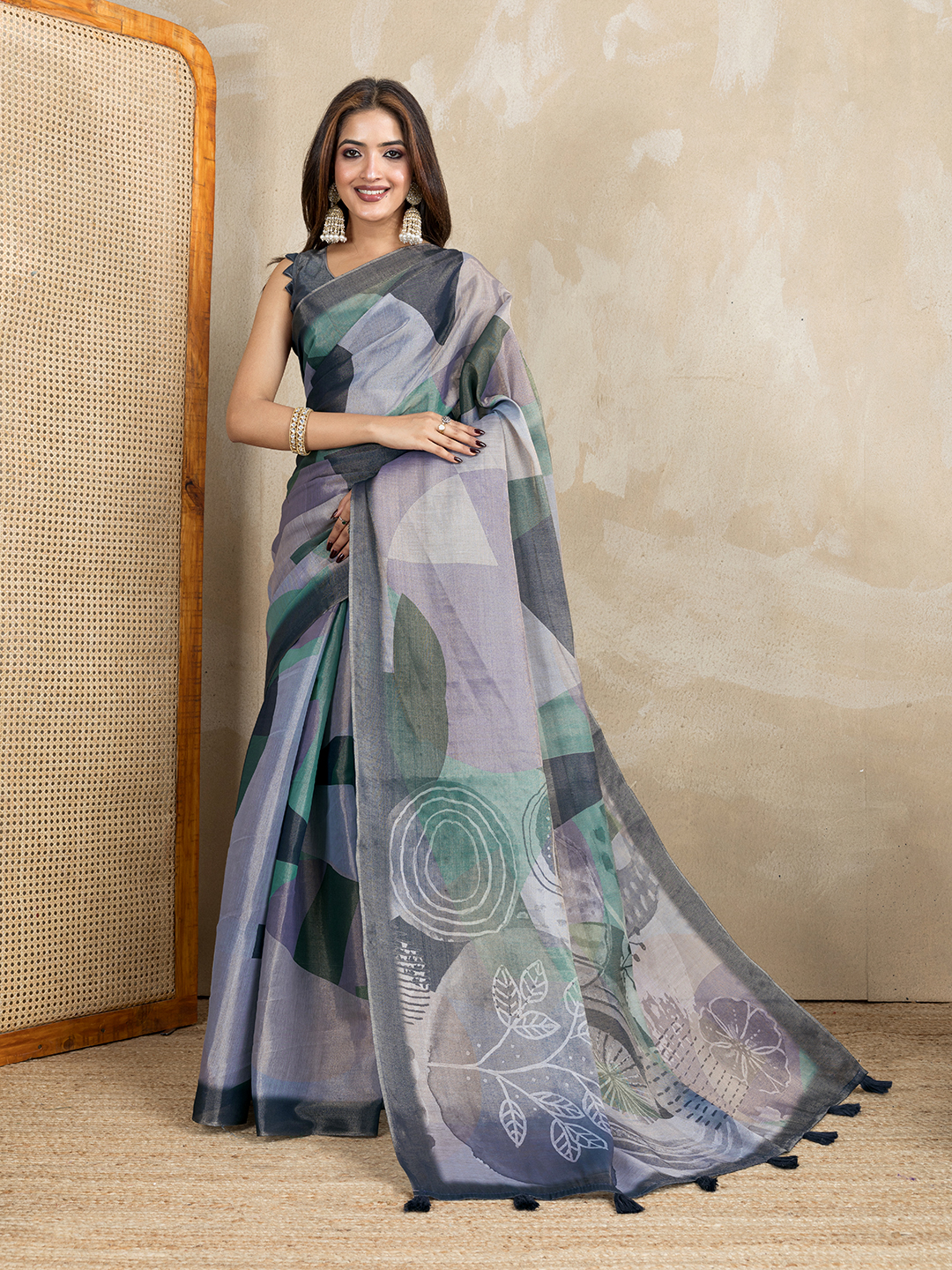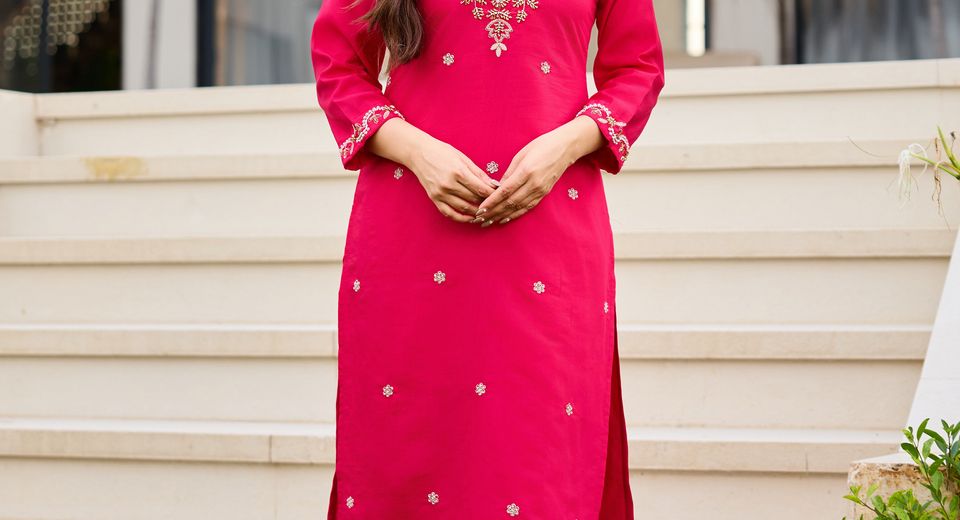
Mukaish Suit Sets Work When You Want Sparkle Without Dense Embellishment, especially for celebrations where a heavily embroidered outfit would feel too formal or restrictive. Tiny metallic accents catch the light across a kurta, dupatta or neckline while leaving enough fabric visible to show colour, texture and movement. The result suits intimate weddings, festive lunches, Eid gatherings, Diwali visits and evening dinners without making every element compete for attention.
The appeal depends on proportion. Mukaish work can look refined when the shine is spaced across a calm base, but the same metallic detail can look busy when combined with dense sequins, large motifs, a highly ornate dupatta and statement jewellery. Understanding the technique, fabric, silhouette and styling balance helps you choose a suit set that looks intentional rather than merely glittery.
Why Mukaish Suit Sets Work When You Want Sparkle Without Dense Embellishment
Mukaish work uses small metallic pieces or reflective stitches applied in scattered, dotted or patterned arrangements, creating a fine glint instead of a solid embroidered surface. Traditional mukaish may use flattened metal strips or small metallic elements worked into fabric by hand, while contemporary versions can use machine-assisted techniques or metallic thread interpretations.
Dense embellishment covers a larger proportion of the garment with sequins, beads, zari, crystals, stones or raised threadwork. Mukaish generally preserves more of the base textile, so the eye notices both the fabric colour and the points of light. That difference explains why a mukaish suit can feel festive without carrying the visual weight of a fully worked bridal or reception outfit.
Mukaish is also different from zari, although both can appear metallic. Zari is a metallic thread used to create borders, motifs and woven or embroidered surfaces. Mukaish refers more specifically to small metallic accents or placements that produce a dotted shimmer. A suit may combine mukaish-like accents with zari borders, gota patti, sequins or thread embroidery, so reading the product description matters before assuming that every gold glint represents the same craft.
An useful buying rule is to count the visual surfaces: if the kurta has sparkle, let the dupatta or trousers provide breathing space; if the dupatta is ornate, choose a quieter kurta.
How Mukaish Suit Sets Work When You Want Sparkle Without Dense Embellishment at Festive Events
Mukaish suit sets suit lighter festive dressing because they distribute shine in small visual intervals rather than building a continuous layer of ornament. The fabric remains flexible, the colour remains visible and the outfit can move between daytime and evening settings with fewer styling changes.
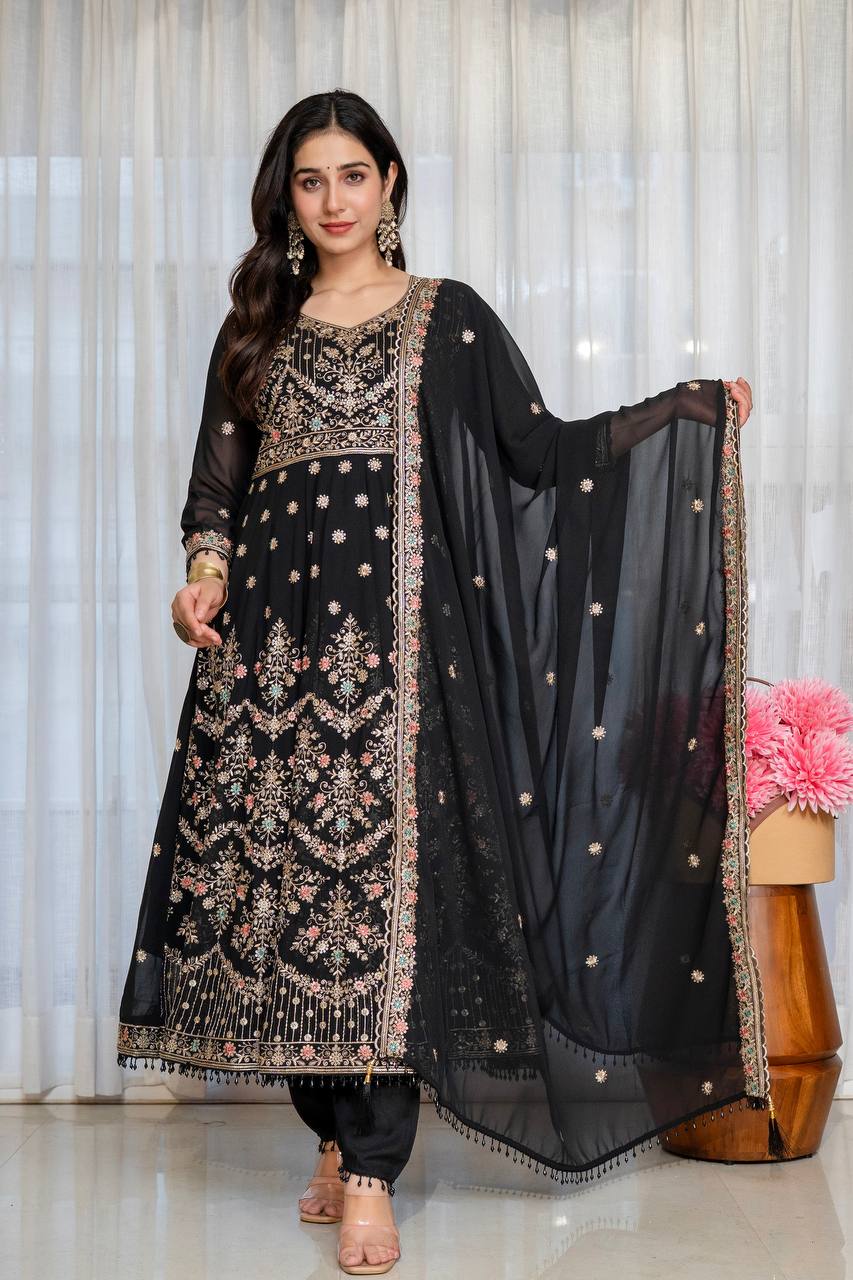
A lightly sparkling salwar suit also photographs well under mixed lighting. Small reflective points appear around the neckline, sleeves or dupatta when the wearer moves, while a plain section prevents the camera from flattening the whole outfit into one bright surface. This effect is useful at family events where you may spend time indoors, outdoors and under warm decorative lights.
Weight is another practical consideration. An outfit with scattered metallic work usually feels easier to wear for several hours than a heavily beaded suit, particularly when the kurta is paired with a soft palazzo or a relaxed salwar. The total comfort still depends on lining, seam finish and fabric, but a lower embellishment load reduces pulling at the shoulders and snagging around the arms.
For a graceful white base, White Embroidered Anarkali Suit Set with Gota Patti Dupatta shows how a comparatively clean colour story can gain occasion value from a crafted dupatta and controlled surface detail. Gota patti isn't identical to mukaish, but the comparison illustrates an important styling principle: metallic accents look more sophisticated when the surrounding colour field is allowed to remain legible.
Which Fabrics Help Mukaish Suit Sets Work When You Want Sparkle Without Dense Embellishment?
Chanderi, silk blends, georgette, crepe and finely woven cotton-silk fabrics can show delicate metallic work clearly, while the ideal choice depends on season, lining and the amount of structure you want. Smooth or lightly textured fabrics reflect small accents neatly; very rough or heavily printed fabrics can reduce the visibility of fine sparkle.
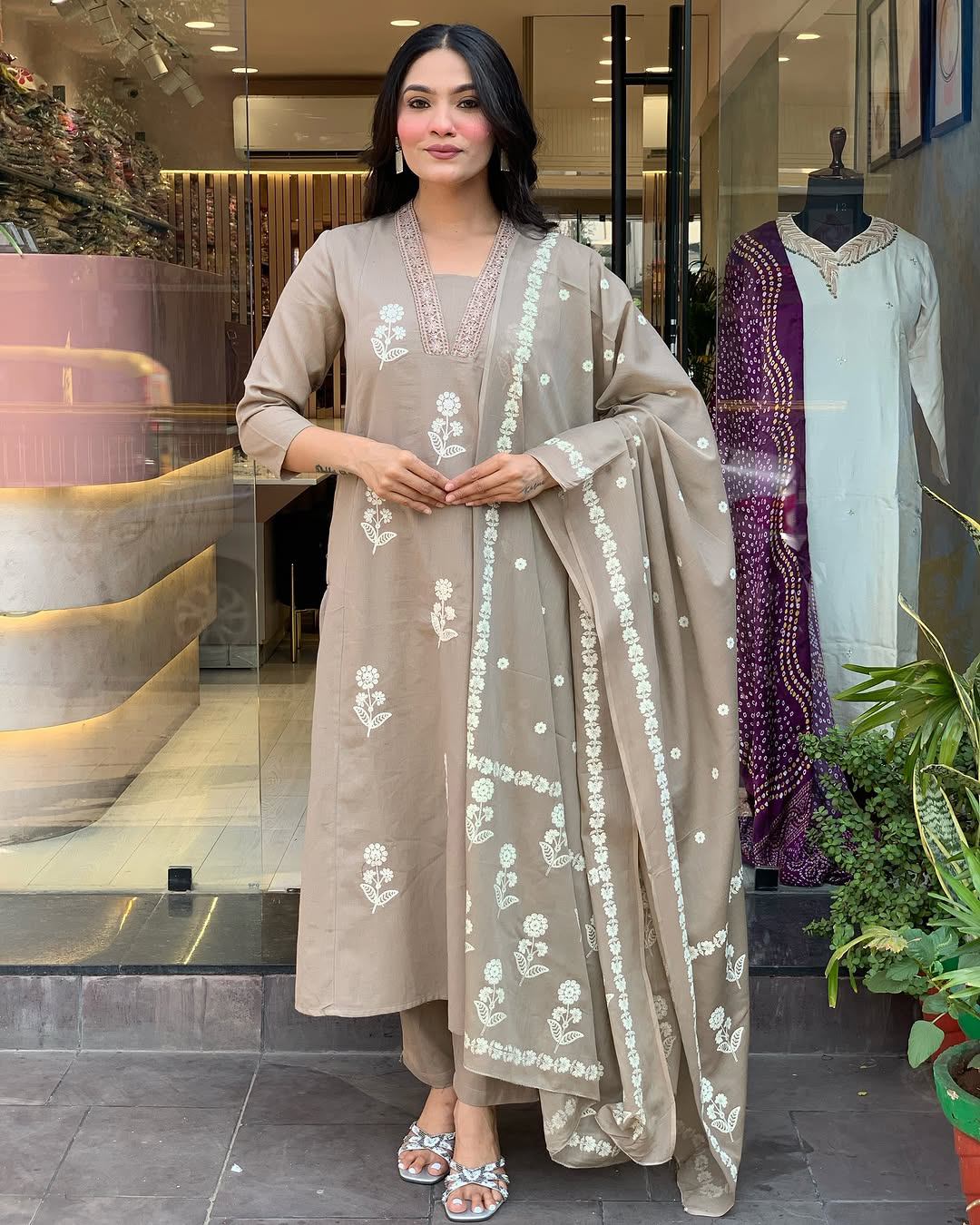
Fabric decisions for a lighter finish
Chanderi gives mukaish-style detailing an airy, dressy appearance because its light body and subtle sheen support small reflective marks. Elegant White Chanderi Threadwork Suit with Dupatta demonstrates why Chanderi is effective for understated occasion dressing, even though threadwork creates a softer finish than metallic mukaish.
Silk and silk-look fabrics create a richer evening effect because their surface already reflects light. Mauve Crunchy Silk Embroidered Kurti Palazzo Set for Women uses a more textured, polished direction; a similar fabric choice works well when you want sparkle to sit within a luxurious colour rather than dominate a pale base.
Cotton and cotton-silk options are useful for daytime celebrations, but metallic details should be checked for comfort at the neck, cuffs and underarms. A scratchy metallic edge can become irritating during a long Haldi ceremony, particularly when the outfit is worn in warm weather. A lining, soft inner facing and smooth seam allowance are more important than a high embellishment count.
Silhouette decisions that control shine
Anarkali silhouettes make scattered sparkle look romantic because the flare creates changing angles as the wearer walks. A straight kurta gives the shimmer a cleaner, more modern frame, while a palazzo suit adds volume below the waist and keeps the upper body visually balanced.
Black Anarkali Suit Set with Sequin Zari and Moti Lace Work illustrates a more ornamented black evening direction. Sequins, zari and moti lace are not the same as mukaish, but the example helps define the boundary: choose a design with fewer overlapping embellishment types when your aim is a restrained sparkle effect.
A narrow trouser or churidar can make a detailed kurta appear more focused. A palazzo or flowing salwar softens a fitted, embellished upper half. A dupatta with a fine border is often enough when the kurta already carries metallic dots around the yoke or hem.
How Do Mukaish Suit Sets Work When You Want Sparkle Without Dense Embellishment in Different Colours?
The best colour depends on lighting, event timing and the metal tone of the embellishment, with lighter neutrals creating airiness and deeper shades producing stronger evening contrast.

Ivory, pure, champagne and pale mauve make minor silver or gold accents look delicate. Black, bottle green, navy, wine and charcoal make the same accents look more luminous because the background absorbs more light. A white outfit therefore doesn't automatically look minimal; a black base with sequins, zari and lace can become extremely dramatic.
Ivory Zari Sequins Embroidered Anarkali Suit Set | Varnavi provides a useful example of a pale base with visible metallic contrast. Zari and sequins create a different surface from classic mukaish, yet the colour lesson remains relevant: ivory works best when accessories repeat one metal tone and don't introduce several competing colours.
Warm gold mukaish pairs naturally with camel, rust, marigold, olive, emerald, peach and warm ivory. Silver or cooler metallic details complement lilac, mauve, powder blue, rose pink, charcoal and true white. When the metal tone is unclear, neutral jewellery in pearls, antique gold or brushed silver is safer than highly polished mixed metals.
Prints require extra care. Kalamkari Print Salwar Suits (Copy) represents a strong visual language through motifs and colour variation. If a printed suit is paired with metallic accents, keep the mukaish placement small and select jewellery from one colour already present in the print. Dense sparkle can obscure the drawing quality of Kalamkari-inspired patterns.
How Can Mukaish Suit Sets Work When You Want Sparkle Without Dense Embellishment in Styling?
Style mukaish suit sets with one principal reflective element, one quiet supporting element and jewellery that repeats rather than competes with the metalwork.
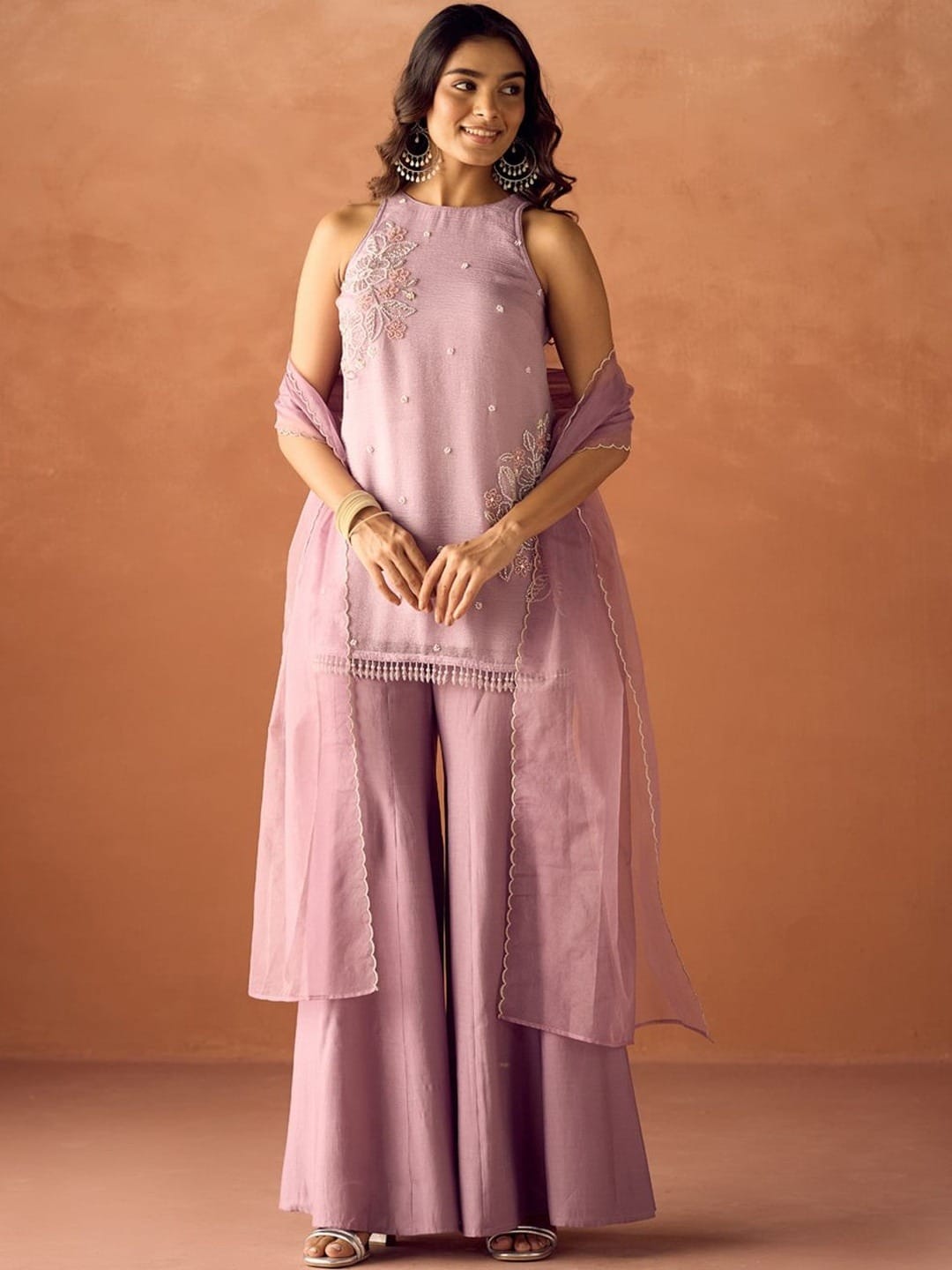
- Choose the dupatta deliberately: A sheer, lightly bordered dupatta keeps the kurta visible. A heavier dupatta can work when the kurta has minimal decoration, but avoid stacking a metallic border, dense sequins and large jewellery unless the event is especially formal.
- Match the jewellery scale: Small jhumkas, pearl drops, a slim bracelet or a single ring suit delicate shimmer. A large choker is more appropriate when the neckline is plain and the mukaish sits mainly on the hem or dupatta.
- Keep footwear textural, not excessively glittery: Metallic sandals, embroidered juttis or neutral heels can complete the outfit. Fully crystal-covered shoes may add shine in a place where the eye doesn't need more detail.
- Use makeup to preserve freshness: A soft luminous base, defined eyes and one clear lip colour usually support subtle sparkle better than heavy highlighter on the eyes, cheeks and lips simultaneously.
Black Embroidered Anarkali Suit Set with Zari Work shows why black can support a polished evening look with relatively simple accessories. Gold-toned earrings and a plain clutch may be enough when the kurta already carries metallic definition. A second heavily embellished accessory would reduce the clean contrast that makes black effective.
Regional styling references can also guide restraint. Maharashtra Paithani Inspired Salwar Suits, Gujarat Bandhej Salwar Suits and Odisha Sambalpuri Salwar Suits each suggest different relationships between colour, motif and textile identity. A mukaish accent should support those visual languages rather than cover them. A plain metallic sandal or a dupatta border that echoes one motif colour can connect the outfit without making it look overworked.
Where Do Mukaish Suit Sets Work When You Want Sparkle Without Dense Embellishment?
Mukaish suit sets work especially well for daytime-to-evening weddings, festive dinners, engagement gatherings, religious celebrations and family functions where polished dressing is expected but bridal-level ornament is unnecessary.
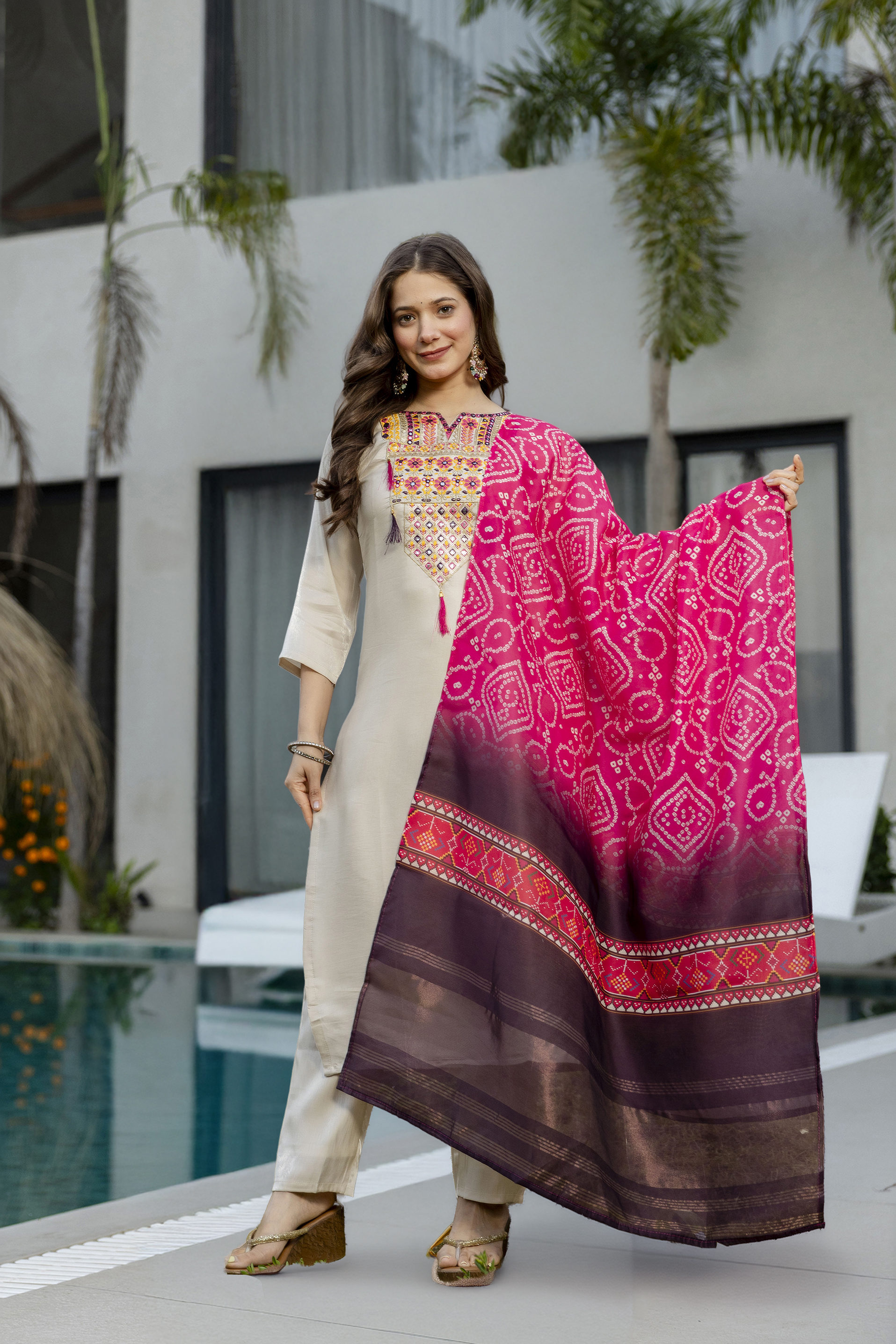
For a daytime puja or lunch, choose ivory, white, blush, mauve, camel or soft green with a light dupatta and minimal jewellery. Elegant Camel Shade Salwar Suit Set offers a useful direction for warm neutral dressing: camel creates a grounded base, so small gold accents can look intentional without becoming flashy.
For an evening reception or sangeet, black, wine, emerald, navy and deep plum create stronger contrast. Black Anarkali Suit with Zari, Sequins & Moti Lace Work belongs to a more visibly embellished category, so it can guide a formal styling decision: when the outfit already has zari, sequins and moti lace, keep the clutch, footwear and earrings controlled.
For a relaxed Punjabi celebration, Punjab Patiala Salwar Suits can inspire a more energetic silhouette. A Patiala-style volume, however, needs a kurta with enough structure to prevent the overall shape from becoming visually crowded. A restrained metallic accent at the neckline or dupatta border can provide festivity while leaving the distinctive lower drape visible.
Mukaish is less suitable when the event calls for strict minimalism, rough outdoor activity or repeated machine washing. Metallic details can catch on jewellery, bags and furniture, and delicate placements may lose their finish faster than plain embroidery. Suitability therefore depends not only on appearance but also on how the outfit will be worn, transported and cared for.
How Should Mukaish Suit Sets Work When You Want Sparkle Without Dense Embellishment for Buying and Care?
Choose a mukaish suit set by checking embellishment placement, fabric comfort, lining, size measurements and care instructions before judging its sparkle.
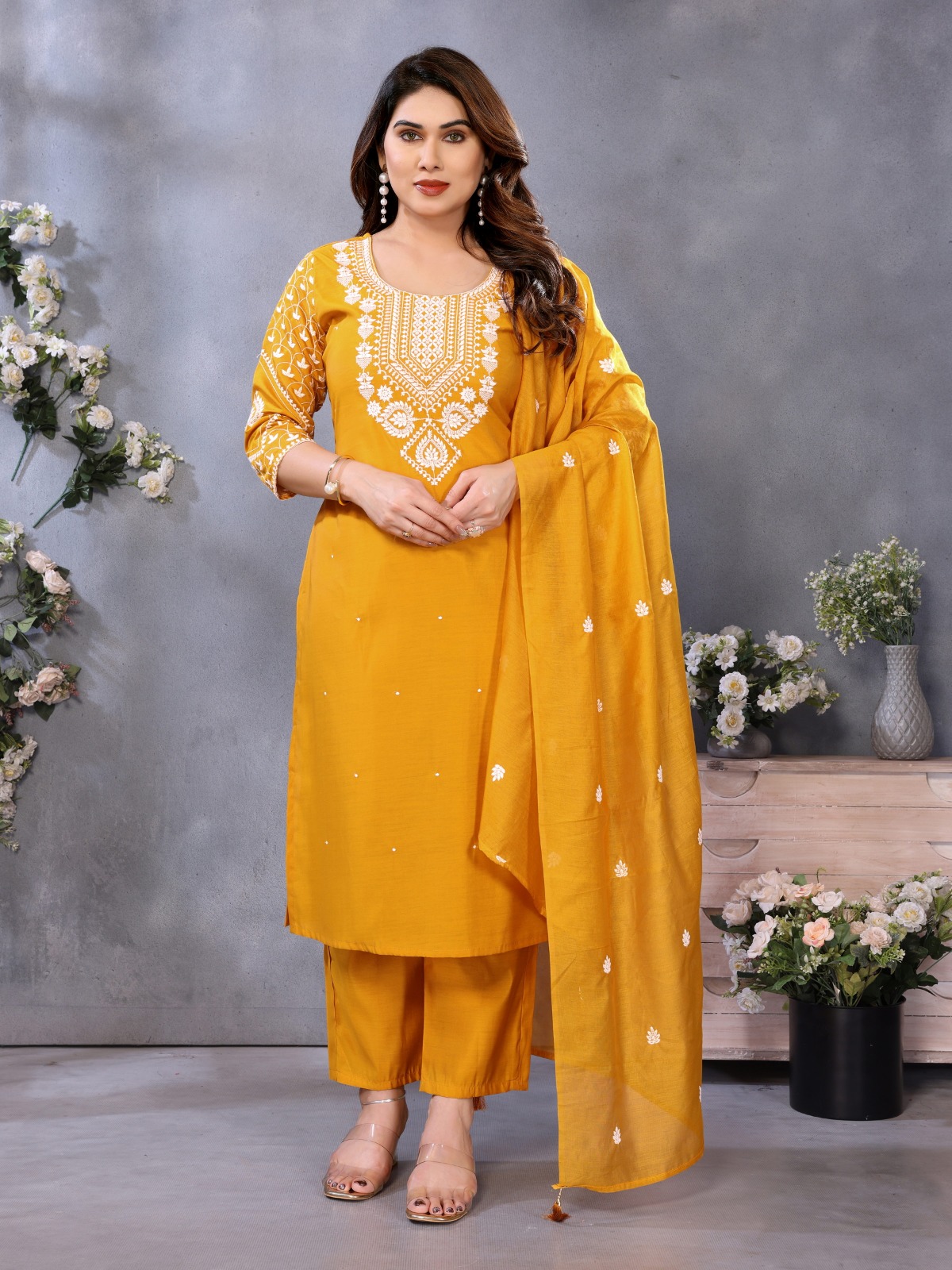
- Inspect the high-contact areas: Check whether metallic work sits under the arms, along the inner sleeve or at the neckline. These placements need smooth finishing because friction can affect comfort.
- Read the fibre composition: Chanderi, silk, viscose, cotton and polyester behave differently during wear and cleaning. Fabric composition also affects drape, breathability and ironing temperature.
- Check the garment measurements: Metallic work doesn't compensate for a tight shoulder or restrictive armhole. Compare bust, waist, hip, sleeve and garment-length measurements with a well-fitting suit.
- Assess the support pieces: Confirm whether the set includes a dupatta, bottom and lining. A heavily decorated kurta paired with a very thin or poorly matched dupatta can upset the intended balance.
- Examine the care label: Dry cleaning or gentle hand washing may be necessary. Avoid soaking metallic work, wringing the fabric or ironing directly over raised embellishment.
Fold embellished garments with a soft cotton cloth between layers to reduce friction. Store mukaish, zari and sequin pieces away from rough hooks and sharp accessories. If pressing is necessary, turn the garment inside out, use low heat appropriate to the base fabric and place a pressing cloth between the iron and the textile.
Keep the dupatta folded rather than hanging for long periods if the metallic border is heavy. Hanging can pull at the shoulder area and create uneven stress. A breathable garment bag is preferable to sealed plastic because trapped moisture can affect some fabrics and finishes.
A suit set should also earn repeat wear. Maharashtra Paithani Inspired Salwar Suits, Gujarat Bandhej Salwar Suits, Odisha Sambalpuri Salwar Suits and Punjab Patiala Salwar Suits offer regional styling directions that can be revisited with different jewellery and footwear. The most useful purchase isn't necessarily the brightest garment; it's the one whose colour, silhouette and ornament can adapt to at least two or three occasions.
Subtle sparkle works when every element has room to register. A calm base lets metallic detail catch the eye, a suitable fabric keeps the garment comfortable, and measured accessories protect the distinction between festive and overloaded dressing.
Common Questions About Mukaish Suit Sets and Subtle Festive Sparkle
What is mukaish work on a salwar suit?
Mukaish work is a decorative technique that places small metallic elements or reflective stitches across fabric to create a dotted shimmer. Mukaish usually leaves more of the base textile visible than dense sequin, bead or stone embroidery.
Are mukaish suit sets suitable for daytime events?
Yes, mukaish suit sets are suitable for daytime events when the base colour, fabric and embellishment density remain light. Chanderi, cotton-silk, ivory, white, soft mauve and camel can create a polished daytime look without excessive shine.
What is the difference between mukaish and zari?
Mukaish generally describes small metallic accents or placements that create scattered sparkle, while zari is a metallic thread used in weaving or embroidery. A salwar suit can contain both mukaish-style detailing and zari borders, so product descriptions should be checked carefully.
How should jewellery be styled with a mukaish suit set?
Choose jewellery that repeats the suit's metal tone without matching its entire level of shine. Small jhumkas, pearl drops or a slim bracelet work with a detailed neckline, while a larger choker is better reserved for a relatively plain neckline.
Which fabrics are best for subtle sparkle in salwar suits?
Chanderi, silk blends, georgette, crepe and cotton-silk fabrics can display delicate metallic work effectively. Smooth or lightly textured surfaces show small reflective accents more clearly than rough fabrics or very busy prints.
How should a mukaish suit set be cared for?
Follow the garment's care label, and use dry cleaning or gentle hand washing when recommended. Avoid soaking, wringing and direct ironing over metallic work; store the suit folded with a soft cotton layer between embellished sections.