

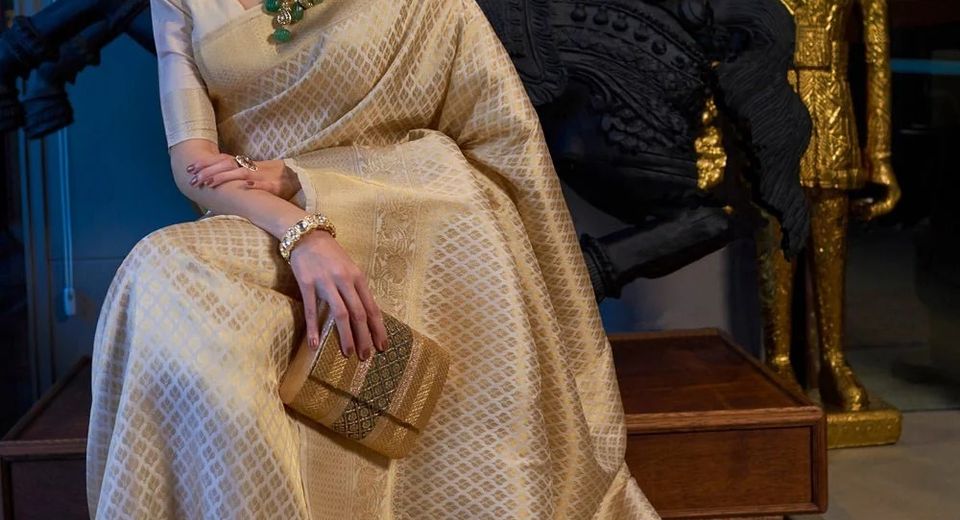
Mixing Gold and Silver Jewellery With Indian Ethnic Wear can make a traditional outfit feel considered rather than over-matched. The combination works because gold and silver provide different kinds of light: gold reinforces warmth and festivity, while silver adds contrast and a cooler, sharper finish. The key isn't to use equal amounts of every metal. A deliberate main metal, a supporting metal and one repeated visual detail create a more cohesive result.
A gold zari saree can therefore accommodate silver earrings, and a silver zari border can sit well beside a gold bangle, provided the jewellery has a clear relationship with the fabric, blouse and occasion. The next method explains how to choose that relationship, how much contrast to introduce and how to prevent mixed metals from looking accidental.
Why Mixing Gold and Silver Jewellery With Indian Ethnic Wear Works
Gold and silver jewellery work together when the outfit provides a shared colour, motif or finish that connects both metals. Indian textiles already contain many visual bridges, including zari, sequins, mirror work, thread embroidery, antique finishes and metallic borders.
Traditional Indian dressing has never depended on one universal metal rule. Kundan jewellery may combine gold-toned settings with white stones, oxidised silver may sit beside coloured glass, and temple jewellery may include several shades of yellow metal because of age and patina. Contemporary styling extends that flexibility by placing polished silver, white gold, antique gold or champagne gold in one outfit.
Mixed metals are especially useful when the saree contains more than one metallic cue. Teal Silk Saree with Silver Zari and Contrast Border naturally starts with silver, but a warm gold bangle can echo a gold-toned blouse, sandal or embroidered clutch. A gold-dominant saree can gain definition from a silver watch, silver jhumkas or a white-stone ring.
The most reliable principle is visual repetition. Repeat the secondary metal at least twice, such as silver earrings with a silver ring, or a gold bangle with gold threadwork on the blouse. One isolated silver item can look misplaced; two or three small references make the choice appear intentional.
Choose the Dominant Metal Before Selecting Jewellery
The dominant metal should occupy the greatest visible surface area or carry the strongest focal point, while the secondary metal should provide controlled contrast. This decision prevents a necklace, earrings, bangles and hair accessory from competing equally for attention.
When gold should lead
Gold should lead when the saree has dense gold zari, warm colours or a strongly festive surface. Yellow Banarasi Silk Saree With Rich Gold Zari Work already supplies a bright gold framework, so a gold necklace, bangles or waist belt can form the foundation while silver appears in a smaller ring, stone setting or pair of earrings.
Warm colours usually support gold well. Maroon, rani pink, mustard, rust, orange, deep red and cream create a connected palette with yellow gold. Cream Gold Lichi Silk Saree With Rich Jacquard Work can carry antique gold jewellery for a traditional appearance, while a small silver accent can make the styling less predictable without weakening the warmth of the saree.
When silver should lead
Silver should lead when the textile contains silver zari, cool jewel tones, mirror work or a strong contrast border. Teal Silk Saree with Silver Zari and Contrast Border is a clear example: silver earrings, a silver-toned necklace or oxidised bangles can establish the primary direction, while one gold ring or a narrow gold bangle adds warmth.
Navy, teal, emerald, lilac, icy pink and charcoal often make silver appear crisp. Navy Blue Banarasi Silk Saree With Gold Jacquard Work reverses that relationship because the gold jacquard supplies a warm focal point against a cool ground. Gold can lead in that case, with silver reserved for a restrained secondary detail.
Match Metal Finish to the Textile and Occasion
The finish of the jewellery should match the visual richness of the textile, because polished, matte, antique and hammered surfaces create different levels of formality.
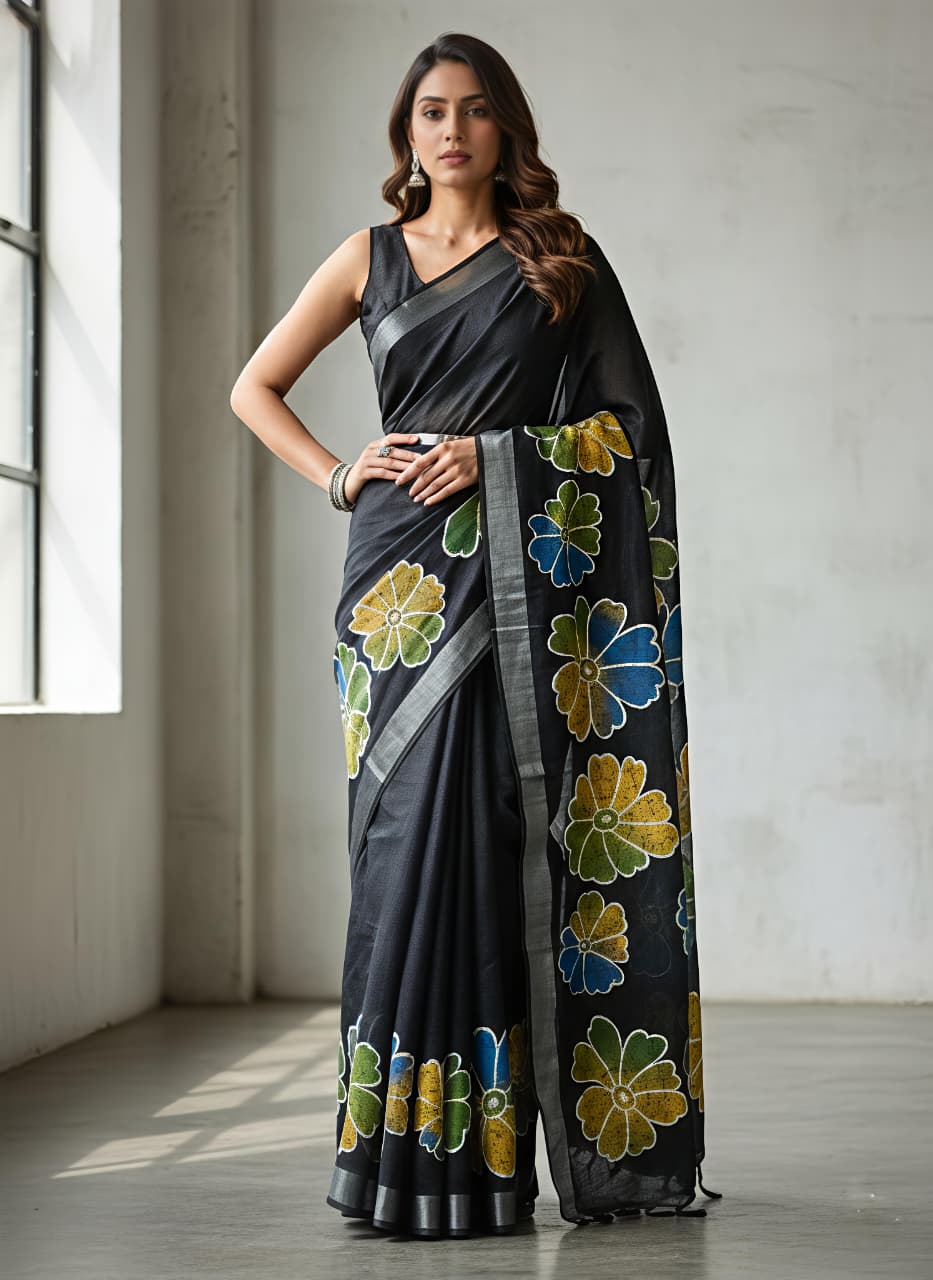
- Polished gold and polished silver: These finishes suit evening receptions, cocktail-style festive events and sarees with glossy silk, satin or dense zari. Keep the number of statement pieces limited because both surfaces reflect strong light.
- Antique gold and oxidised silver: These finishes work with handloom textures, earthy colours, temple motifs and daytime celebrations. Their lower shine makes mixed metals feel relaxed and artisanal.
- Matte gold and brushed silver: These finishes are useful for office festivities, intimate dinners and minimal saree styling. The reduced reflection allows larger shapes without making the outfit look excessively ornate.
- Hammered or textured metal: Texture gives a bridge between different colours of metal. A hammered gold cuff and textured silver jhumka feel more related than a mirror-polished cuff beside a heavily oxidised earring.
Gold Crush Embroidered Party Wear Saree for Women has a surface designed to catch light, so highly reflective jewellery should be edited carefully. A sculptural silver earring with a slim gold bangle may look more balanced than a full gold necklace, layered silver chains and several glittering rings.
Use Saree Colour, Blouse Colour and Zari as the Connecting Thread
The saree colour and the blouse usually provide a stronger connection between gold and silver than the metals themselves. A shared colour can make two different metals feel like parts of one palette.
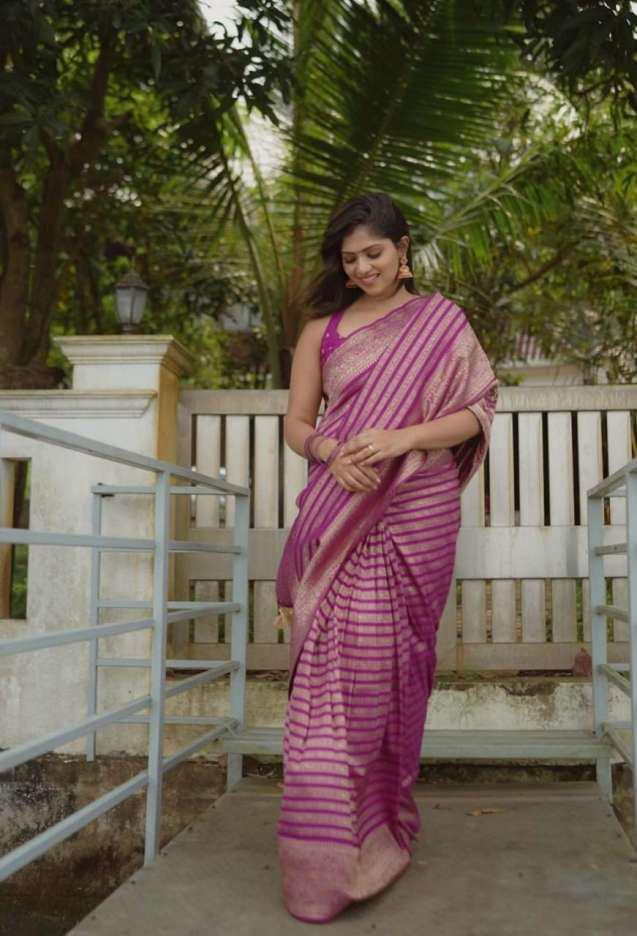
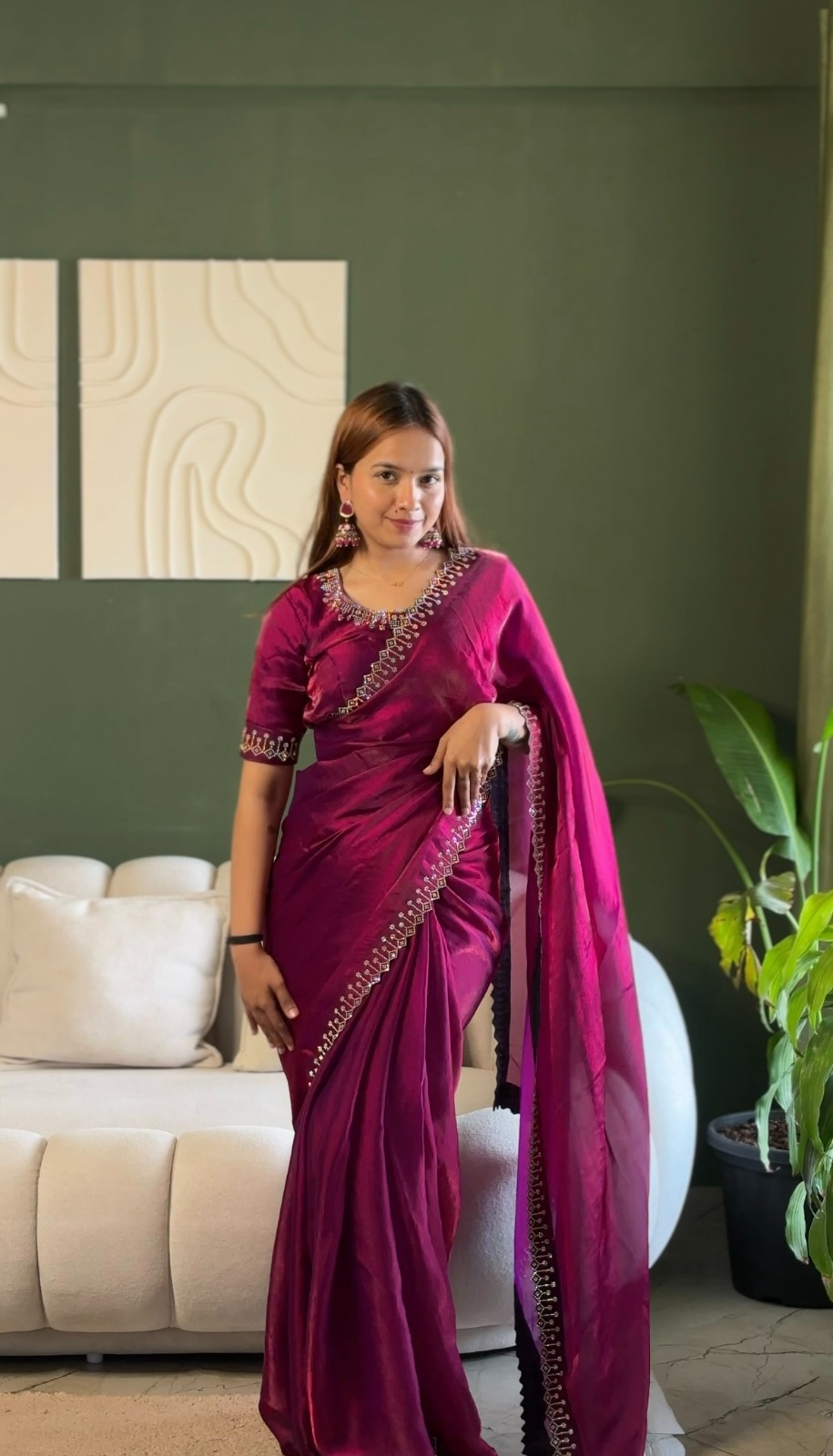
Pink Gold Zari Banarasi Lichi Silk Saree With Blouse contains a warm pink ground and gold zari, so gold can remain dominant while silver enters through white stones, a silver-toned clutch or a narrow bracelet. White stones are particularly useful because they visually soften the transition between yellow gold and silver.
Pink Gold Banarasi Lichi Silk Saree with Rich Zari Work can be styled with gold jhumkas and a silver-toned cocktail ring if the ring repeats a cool detail in the blouse, footwear or handbag. The cooler accessory should not appear as a single unrelated flash.
Contrast works best when it's repeated at a different scale. For example, a gold necklace can be paired with small silver studs and a silver embroidery detail on the blouse. Alternatively, silver earrings can be echoed by silver sandals while gold bangles connect with the saree border. Repeating colour in two locations is more important than repeating the exact jewellery design.
Balance Jewellery Scale and Placement
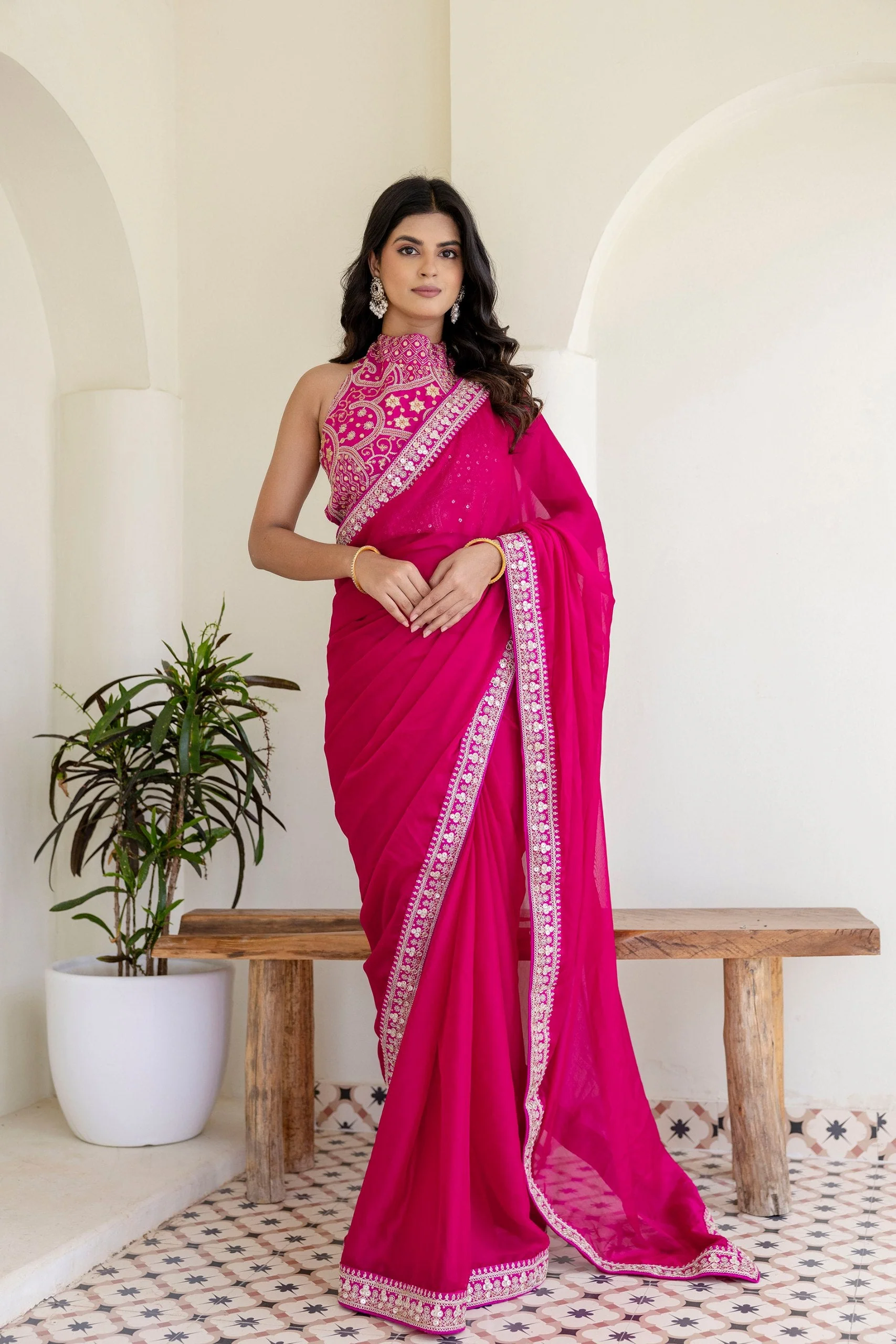
Mixed-metal styling looks polished when one area receives visual emphasis and the remaining jewellery supports that area. Scale matters because two metals become harder to read when every item is large, ornate and reflective.
For a statement necklace
A statement necklace should be paired with simpler earrings and restrained wristwear. A gold choker with a small silver drop earring can work, but a large silver choker, oversized gold jhumkas and stacked bangles would create three competing focal points.
For statement earrings
Statement earrings leave room for mixed-metal bangles, rings or a slim maang tikka. Silver jhumkas with a gold bangle are an easy combination because the jewellery sits in separate visual zones. Keep the necklace short, delicate or absent when the earrings extend below the jawline.
For stacked bangles
Stacked bangles can combine gold and silver most naturally when one metal forms roughly two-thirds of the stack. A practical starting point is three gold bangles with one silver bangle, or two silver bangles with one gold kada. The proportion doesn't need to be mathematically exact, but one metal should clearly lead.
Maroon Banarasi Soft Silk Saree with Golden Zari Border can support a gold bangle stack with one oxidised silver kada for contrast. The softer silk and defined golden border give the wrist enough structure to carry the combination without requiring a large necklace.
Build Reliable Combinations for Different Indian Occasions
The occasion should determine the amount of contrast, shine and jewellery layering. Daytime events generally benefit from fewer reflective surfaces, while evening celebrations can carry stronger metal contrast.
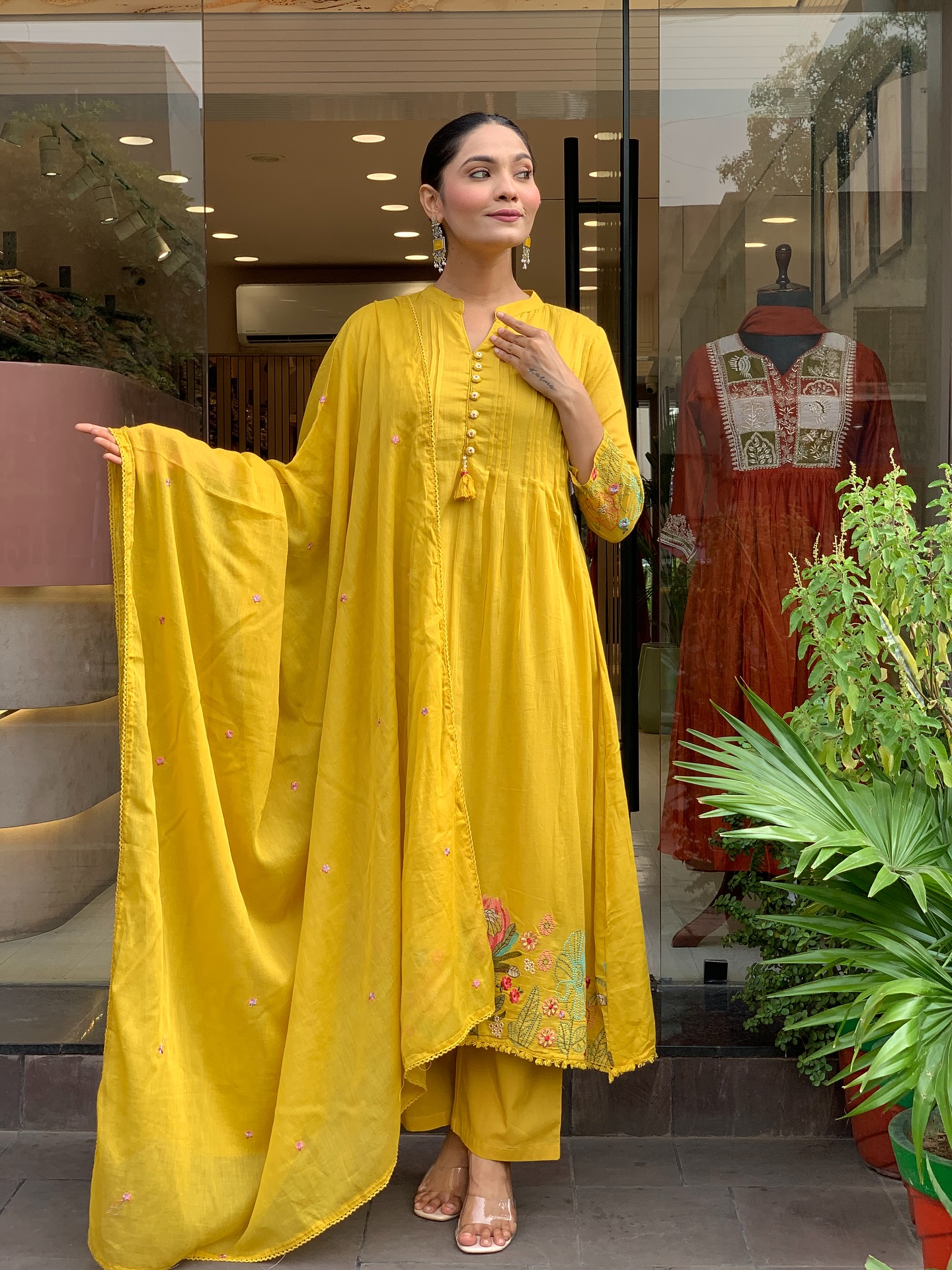
- Haldi ceremony: Choose one bright metal and one small contrasting accent. A yellow or ivory outfit with gold earrings, silver toe rings or a silver bracelet keeps the look festive without competing with turmeric-yellow décor and flowers.
- Wedding ceremony: Let the saree's zari determine the main metal. Gold jewellery with one silver or white-stone element works well with Banarasi silk, Kanjeevaram or heavily woven brocade.
- Reception: Stronger contrast is appropriate because artificial lighting rewards reflective surfaces. Pair a polished statement earring in one metal with a slimmer necklace or cuff in the other.
- Family puja: Antique gold and silver-toned pieces are often more comfortable than oversized high-shine jewellery. Choose designs that won't catch on a pallu or make sitting on the floor uncomfortable.
- Daytime cultural event: Matte, brushed or oxidised finishes reduce glare. A silver temple-style pendant with a gold bangle can complement cotton silk, Chanderi and handloom sarees.
Golden Glow Gold Crush Embroidered Party Wear Saree for Women is suited to a high-visibility evening setting, but the jewellery should still leave some embroidery visible. A single metallic focal point allows the saree's texture to remain part of the styling rather than turning the entire outfit into a field of competing sparkle.
Common Mistakes That Make Mixed Metals Look Unplanned
The most common mistake is adding a second metal without repeating it anywhere else. A lone silver pendant with otherwise yellow-gold jewellery can look accidental unless the pendant contains white stones, silver embroidery or another cool detail that explains its presence.
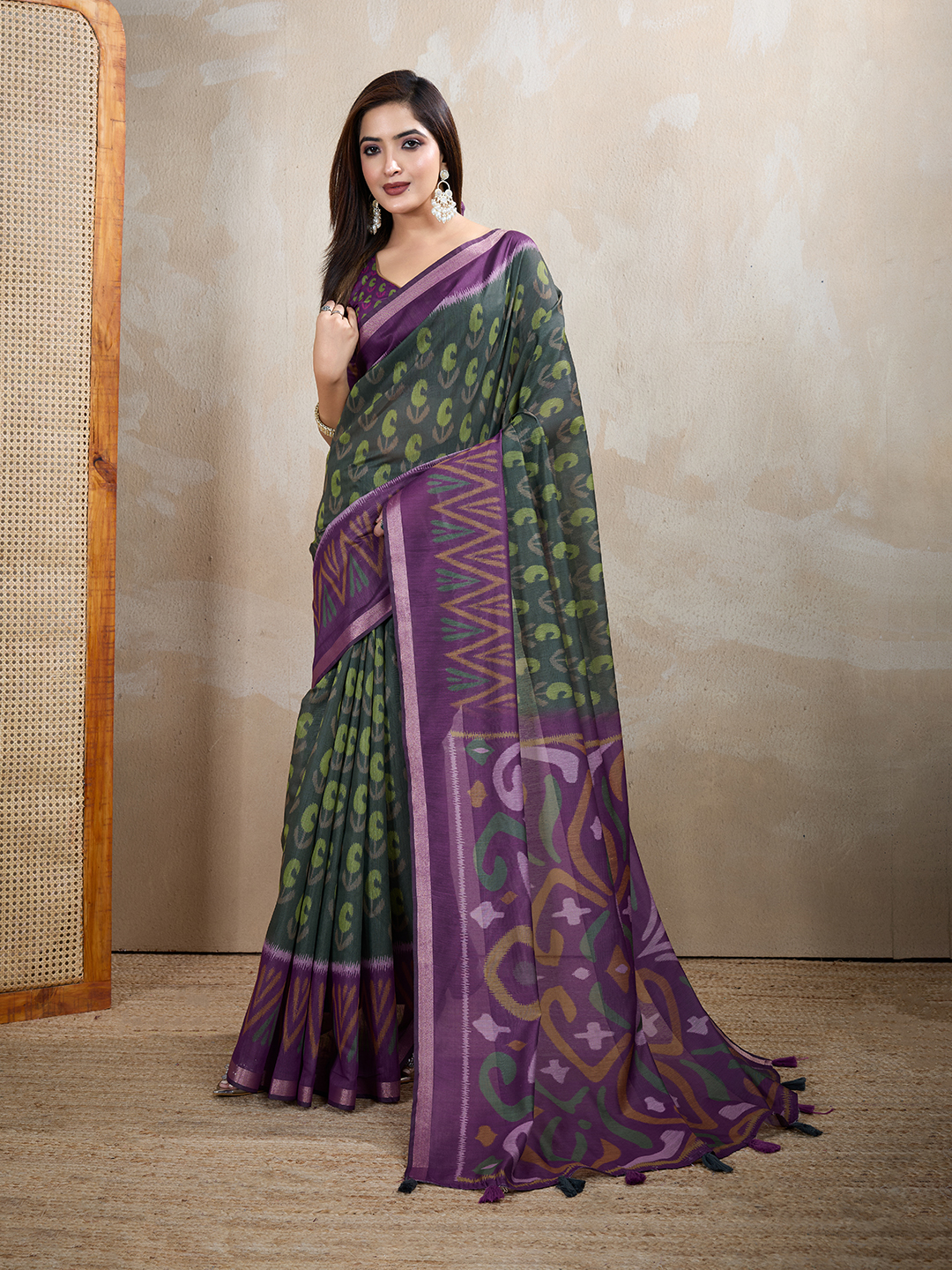
Another mistake is ignoring undertone. Bright yellow gold, icy polished silver and copper-toned antique gold can look disjointed when every piece has a different visual temperature. A shared texture, such as hammered surfaces, or a shared stone colour, such as pearls or clear crystals, can bring varied finishes together.
Over-layering also reduces clarity. Three necklaces in gold and silver may cover the neckline, blouse embroidery and saree border at once. If the outfit already includes a high-neck blouse, a broad zari border or elaborate pallu, earrings and bangles may provide enough jewellery.
Mixed metals should also respect the garment's craft language. A delicate silver chain can feel out of place beside dense temple jewellery, while a heavy antique-gold necklace may overwhelm a lightweight Chanderi saree. The right question isn't only whether gold and silver match, but whether their weight and craftsmanship belong with the textile.
A Simple Five-Step Method for Styling Mixed Metals
A five-step check can settle most mixed-metal decisions before you leave home.
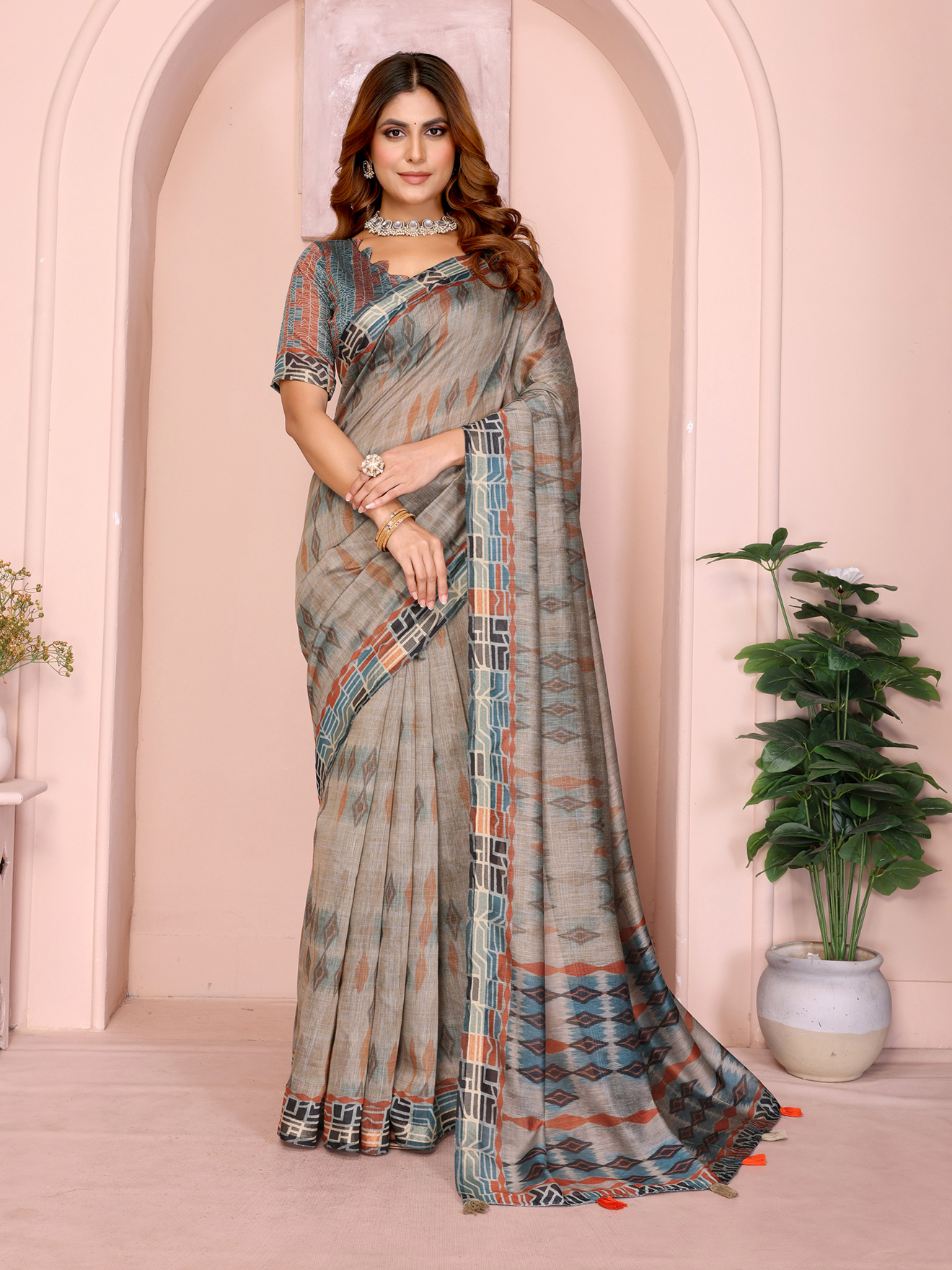
- Identify the strongest metallic cue. Look at the zari, embroidery, sequins, border and blouse before choosing jewellery.
- Select the dominant metal. Use the metal that repeats most visibly in the garment or creates the desired mood.
- Add one secondary-metal zone. Place the contrasting metal at the ears, wrist, neck or fingers instead of distributing it randomly everywhere.
- Repeat the secondary metal. Add a second small reference through a ring, bangle, hair accessory, footwear detail or handbag hardware.
- Check the full outfit in natural and indoor light. A combination that looks balanced in daylight may become overly reflective under event lighting.
For example, Navy Blue Banarasi Silk Saree With Gold Jacquard Work can begin with gold as the dominant metal. Add silver through a small ring and silver-toned stone settings in the earrings, then repeat silver in the clutch hardware. The result has contrast, but the gold jacquard still controls the outfit.
The same method works beyond sarees. A gold-embroidered lehenga can use silver polki-style earrings, while a silver-thread salwar suit can take a gold kada. Sharara trousers with mirror work can support mixed-metal earrings when the blouse or dupatta repeats at least one of the two finishes.
How to Care for Jewellery and Sarees After Mixed-Metal Styling
Separate storage protects both jewellery finishes and delicate Indian textiles. Store silver in an anti-tarnish pouch, keep gold-toned pieces away from perfumes and moisture, and use individual soft pouches to prevent one metal from scratching another.
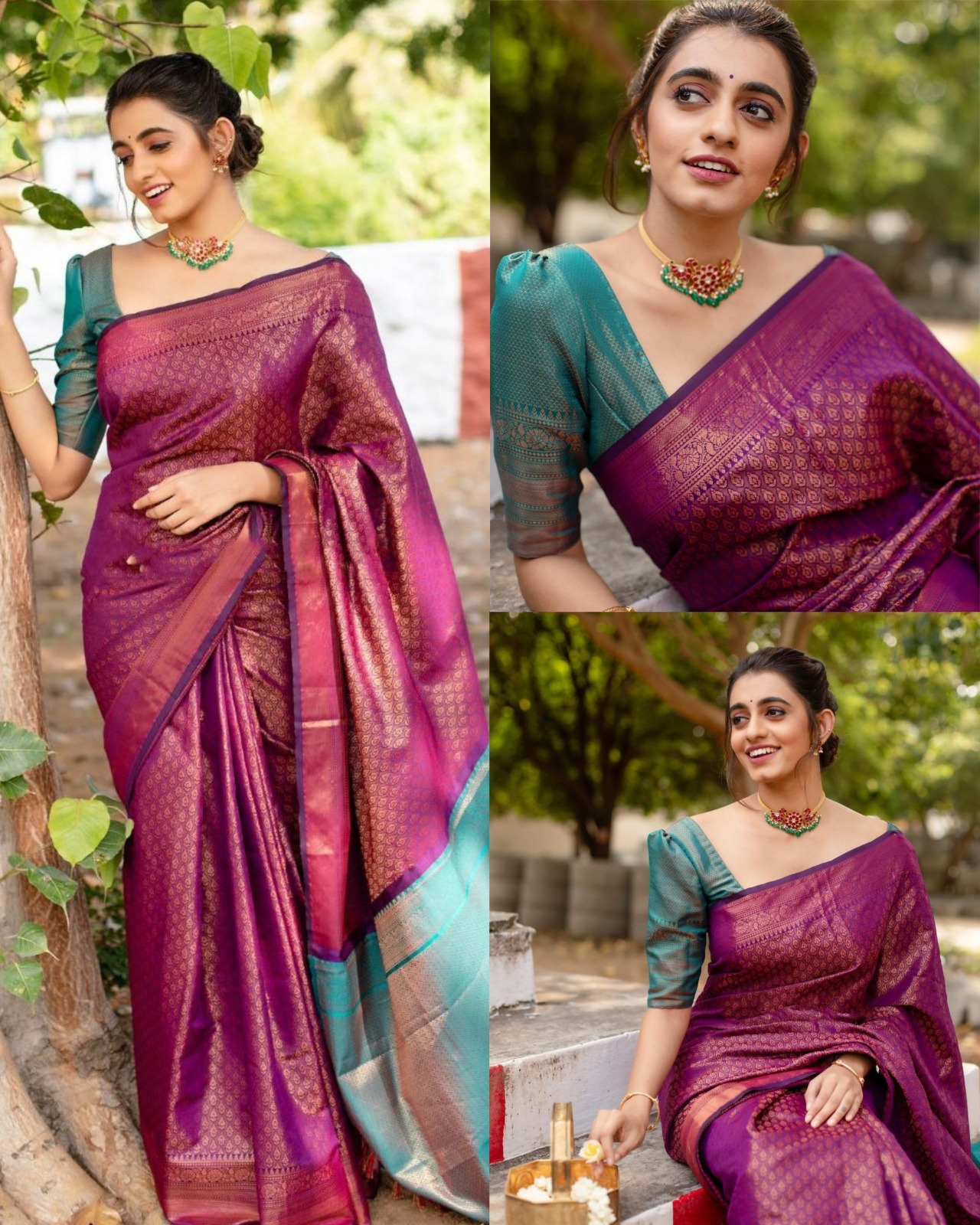
Remove jewellery before folding a saree because rough edges, hooks and stones can pull zari or snag silk. Fold Banarasi silk with clean muslin or cotton layers, avoid airtight plastic for long-term storage, and refold silk every few months so permanent crease lines don't form.
Clean silver only with a material-safe silver cloth, and don't use abrasive toothpaste on plated jewellery. Gold jewellery should be wiped with a soft dry cloth after wear. Professional cleaning is safer for pieces with pearls, kundan settings, enamel, glued stones or antique finishes.
A considered mixed-metal look depends as much on condition as on colour. Brightly maintained silver beside heavily tarnished gold will appear mismatched even when the design is sound, so inspect both metals before styling them together.
Practical Questions About Combining Gold and Silver With Ethnic Wear
Can gold and silver jewellery be worn together with a saree?
Yes, gold and silver jewellery can be worn together with a saree when one metal is dominant and the other is repeated in at least one additional detail. Saree zari, blouse embroidery, stones or handbag hardware can connect the two finishes.
What jewellery works with a saree that has silver zari?
Silver earrings, bangles or a necklace usually provide the clearest base for a saree with silver zari. A small gold bangle, ring or pendant can add warmth, especially when the blouse or footwear contains a warm colour.
How much gold and silver jewellery should be worn together?
Start with one main statement piece and one or two supporting pieces in the second metal. A useful proportion is roughly two-thirds dominant metal to one-third secondary metal, although the visual size of each piece matters more than counting items.
Does gold jewellery suit a navy or teal Indian outfit?
Gold jewellery suits navy and teal Indian outfits when the garment contains gold zari, warm embroidery or a warm-coloured blouse. Silver works better as the dominant metal when the outfit has silver zari, mirror work or cool-toned embellishment.
Can oxidised silver jewellery be paired with gold jewellery?
Oxidised silver can be paired with gold jewellery when both pieces share a substantial, textured or antique character. Avoid combining a very delicate polished gold chain with an extremely large oxidised necklace unless the outfit clearly supports the contrast.
How can mixed-metal jewellery look less cluttered?
Mixed-metal jewellery looks less cluttered when the outfit has one focal area, such as statement earrings or a necklace, and the secondary metal appears in smaller pieces elsewhere. Repeating a stone colour, texture or garment detail also creates visual order.


