

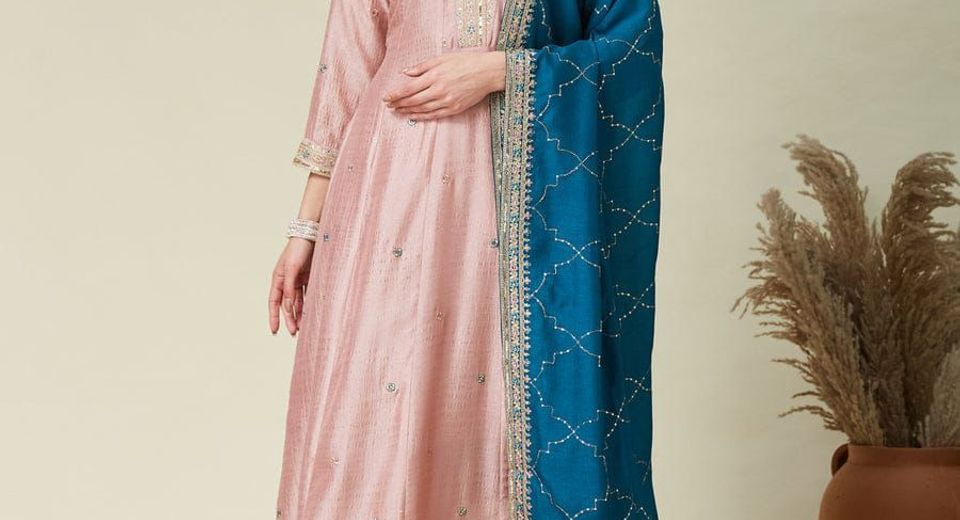
Mix-and-Match Ethnic Separates That Still Look Like a Complete Outfit become easier to create when every piece shares at least one visible design language. A mustard kurta can meet a printed palazzo, a plain dupatta can calm an embroidered top, and a silk co-ord can gain a new identity with a contrasting stole. The key isn't identical decoration; the key is controlled repetition through colour, fabric, motif, or silhouette.
A useful outfit formula is to choose one anchor garment, one supporting garment, and one finishing layer. The anchor carries the strongest colour or embroidery, the supporting garment repeats a quieter detail, and the finishing layer connects the two. Once that structure is clear, a wardrobe of kurtas, pants, palazzos and dupattas becomes much more versatile than a sequence of sealed three-piece sets.
Why do Mix-and-Match Ethnic Separates That Still Look Like a Complete Outfit appear coordinated?
Mix-and-Match Ethnic Separates That Still Look Like a Complete Outfit appear coordinated when two or three elements repeat a deliberate visual cue. The cue may be a shared colour, a similar embroidery finish, a related fabric texture, or a consistent level of formality.
Outfits often look accidental when every component makes a different statement. A heavily embroidered silk kurta, a sporty cotton jogger, a mirror-work dupatta and metallic party heels may each be attractive, but their combined messages compete. Coordination comes from giving one garment visual priority and allowing the other pieces to support it.
Use the three-point test before getting dressed. Identify the dominant colour, the dominant texture, and the dominant silhouette. If the same outfit contains bright yellow, glossy zari, and a wide palazzo, keep at least one other piece quiet so the eye has a clear route through the look.
Which garment should lead the outfit?
The anchor garment should be the piece with the strongest colour, print, embroidery, or shape. A richly detailed kurta usually works as the anchor, while plain trousers and a lightly worked dupatta provide balance.
A strong anchor doesn't have to be ornate. A sharply cut black kurta, a vivid rust-orange co-ord, or a wide Chanderi palazzo can lead an outfit because of its colour or silhouette. Select the anchor according to the setting: subtle tailoring suits a daytime puja, while silk, zari and dense embroidery can carry a wedding reception look.
How can Mix-and-Match Ethnic Separates That Still Look Like a Complete Outfit use colour?
Colour makes Mix-and-Match Ethnic Separates That Still Look Like a Complete Outfit feel intentional when one shade is repeated exactly or echoed through a close tonal family. Repeating one colour in the kurta and dupatta is usually enough to connect otherwise different garments.
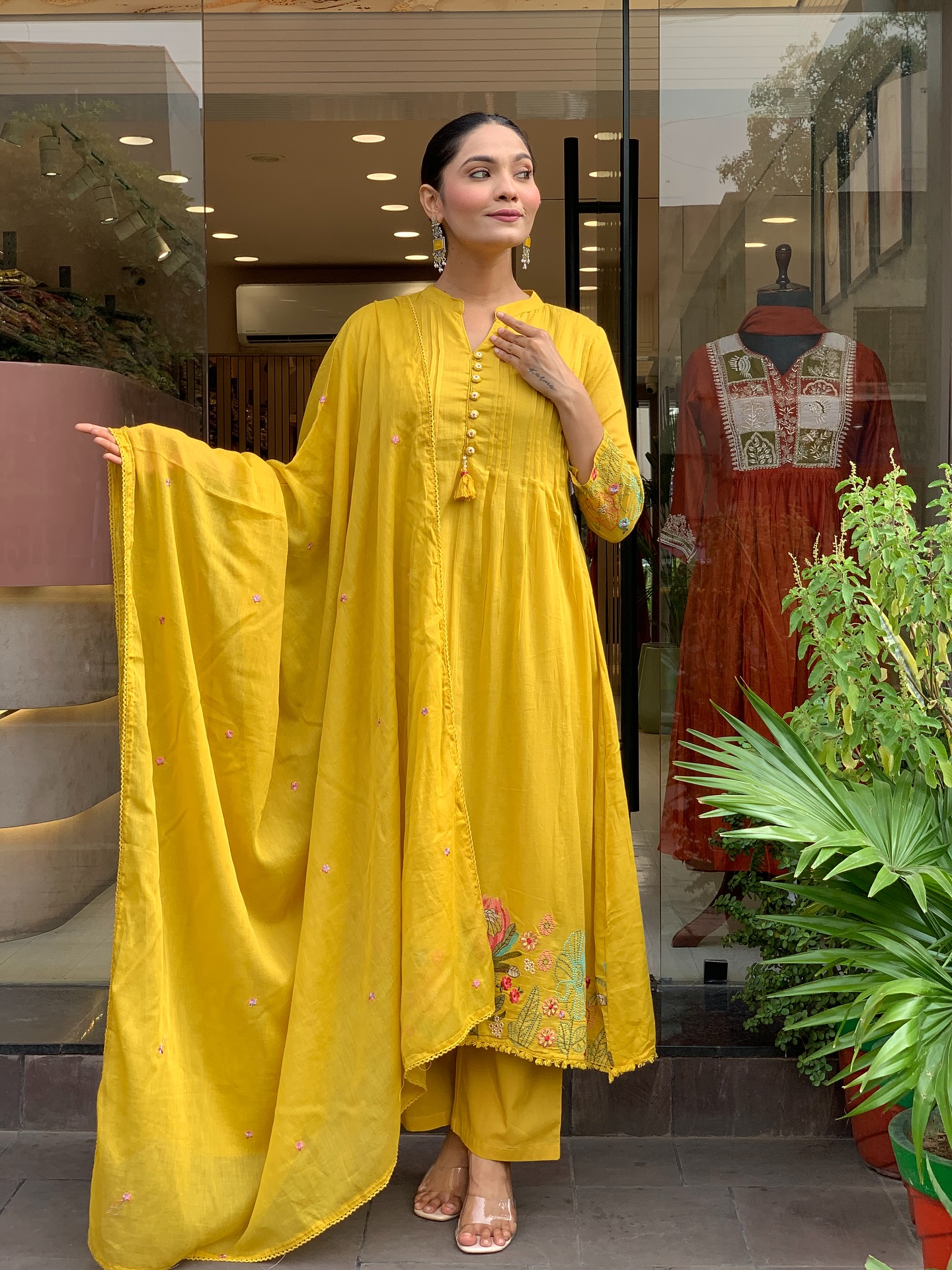
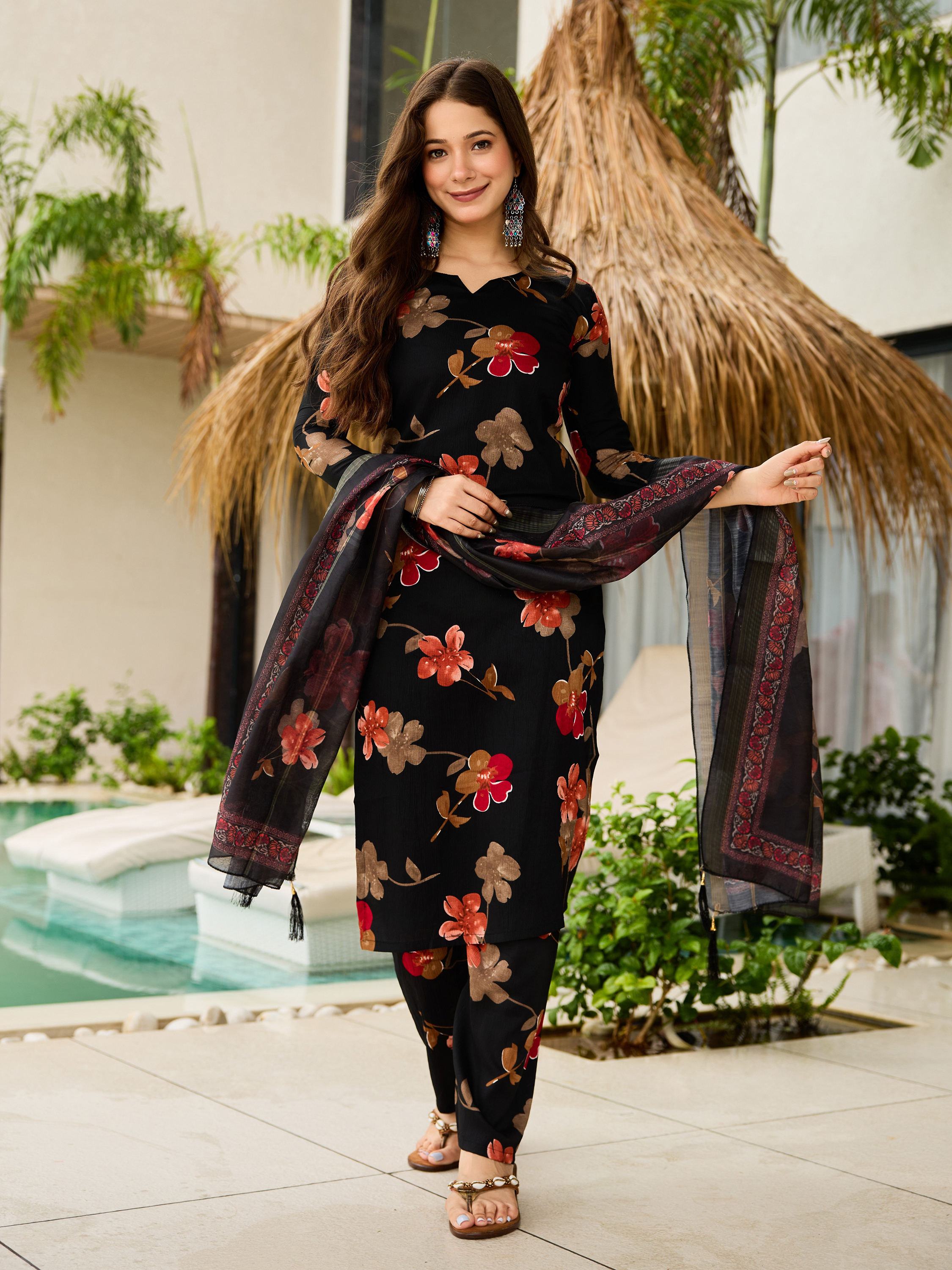
The easiest approach is the 60-30-10 balance. Let approximately 60 percent of the outfit be a dominant neutral or base shade, 30 percent be a secondary colour, and 10 percent be an accent. For example, a black kurta and pants can take a white floral dupatta, while a small rust or gold accent appears in jewellery or footwear.
Monochromatic dressing uses several intensities of one colour. A pista kurta can pair with sage trousers and a muted green dupatta, creating depth without demanding an exact match. Tonal dressing works particularly well with Chanderi, silk and cotton-silk because changes in surface texture make similar colours appear distinct.
Complementary colour pairing creates more energy. Mustard and deep teal, rust orange and indigo, or magenta and leaf green can look festive when one colour is clearly smaller in area. If both garments are equally saturated, use an ivory, beige, black or soft gold layer to interrupt the contrast.
The Mustard Silk Embroidered Kurti Palazzo Dupatta Set demonstrates why mustard can function as a complete colour story. A plain ivory palazzo from another outfit can soften the same kurti for daytime, while a deep brown or bottle-green dupatta can make the mustard feel more autumnal and formal.
Which fabrics help Mix-and-Match Ethnic Separates That Still Look Like a Complete Outfit work?
Fabrics can be mixed successfully when their weight and formality are reasonably compatible. Pairing one structured or lustrous fabric with one matte, breathable fabric often adds interest while preserving balance.
Banarasi silk, brocade and heavy velvet belong to a formal visual category because their surfaces reflect light and hold shape. These fabrics need a supporting piece with enough presence, such as silk trousers, a structured blouse, or a dupatta with a defined border. Very thin everyday cotton can look underdressed beside heavy Banarasi silk unless the contrast is intentional and limited to one small element.
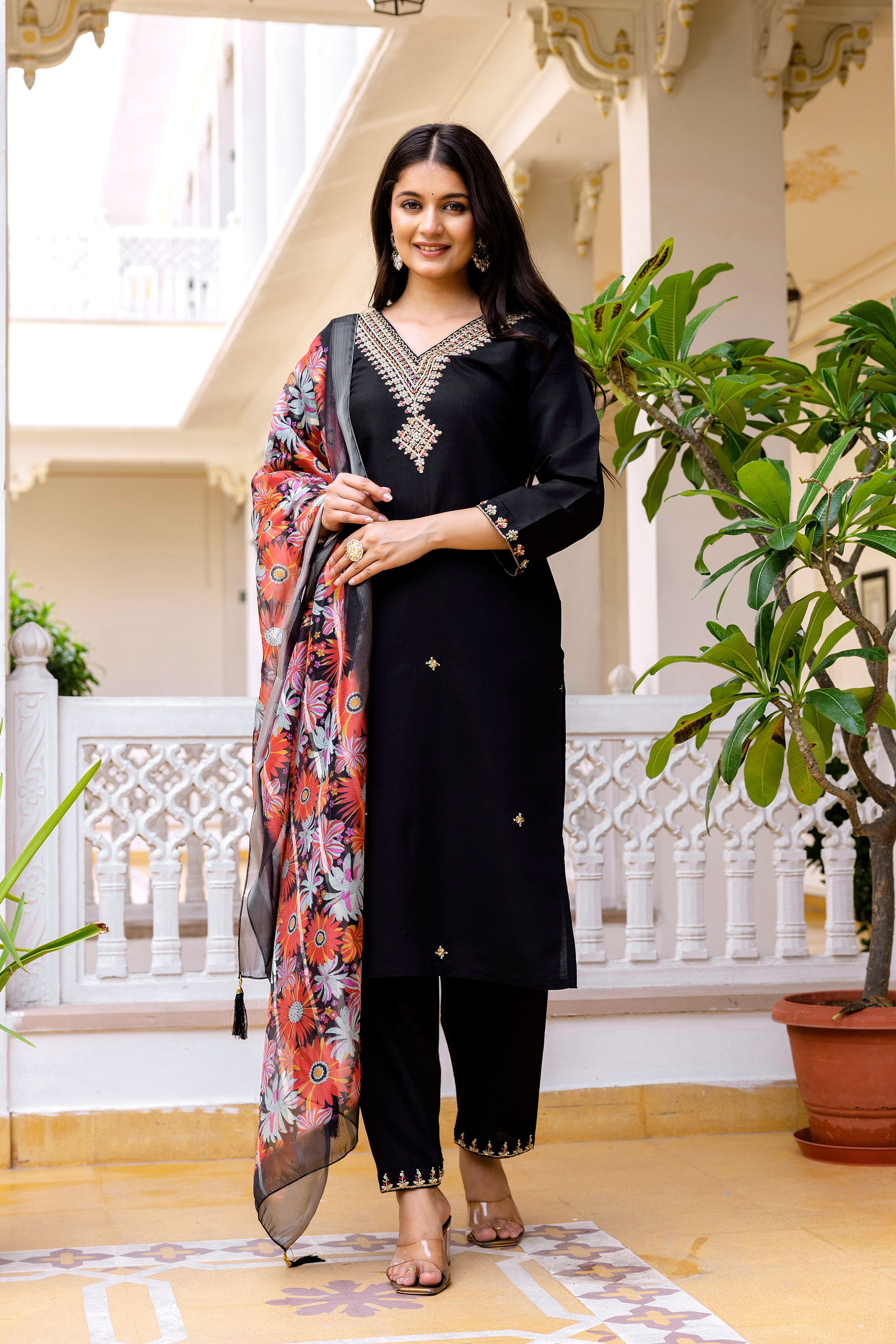
Chanderi has a useful middle position. Chanderi is light enough for daytime but has a translucent sheen that feels celebratory. A Chanderi kurta can work with cotton pants for comfort, silk trousers for a sharper finish, or a tissue-like dupatta for a festive event. Black Embroidered Chanderi Kurti Pant Dupatta Set and Mustard Chanderi Embroidered Kurta Pant Dupatta Set both illustrate how embroidery can supply structure without requiring a heavily ornamented fabric everywhere.
Texture matching is more important than fibre matching. A matte cotton kurta can sit beside a lightly shiny dupatta if the colours connect. A glossy silk kurta can pair with plain crepe or georgette trousers when the cut is clean. Avoid combining too many competing surfaces, such as sequins, velvet, metallic tissue and dense zari, in one look unless the event is exceptionally formal.
Can a dupatta connect separate garments?
A dupatta can connect separate garments when it contains at least one colour from each garment. A printed dupatta with mustard, teal and ivory can unite a mustard kurta with teal trousers more convincingly than a random solid scarf.
Border placement also matters. A wide zari border adds formality and visual weight, while a narrow printed edge keeps a mixed outfit relaxed. Drape a heavier dupatta over one shoulder when the kurta already has substantial embroidery; wear a lighter dupatta around the neck or over both shoulders when the outfit needs more vertical movement.
How do proportions make Mix-and-Match Ethnic Separates That Still Look Like a Complete Outfit feel deliberate?
Proportions look intentional when volume is balanced between the upper and lower halves of the outfit. A long, fluid kurta usually benefits from narrower straight pants, while a short structured kurta can support palazzos or a fuller sharara.
A knee-length kurta with wide palazzos creates a relaxed, contemporary line. Keep the kurta relatively clean if the palazzo has a bold print or border. A calf-length kurta with cigarette pants creates a longer vertical line and allows a dramatic dupatta, embroidered hem or statement earring to become the focal point.
Volume should also reflect the wearer's movement needs. A Haldi ceremony may involve sitting on the floor, walking outdoors and moving through crowded spaces, so a palazzo or straight pant with a secure waistband can be more practical than a trailing hem. For a seated dinner, a fluid sharara or wide trouser can create movement without requiring constant adjustment.
Elegant Pista Festive Wear Kurta Pant Set offers a useful reference for proportion because a coordinated kurta-and-pant silhouette leaves room for a contrasting dupatta or jewellery layer. The same logic applies to separate pieces: keep the base streamlined, then add volume in only one layer.
Hem lengths deserve attention. A very long kurta over a very wide palazzo can shorten the visible leg line, especially when both pieces are dark. Showing a few inches of trouser or choosing a tonal lower garment can preserve length. With a short kurta, a higher-waisted pant visually raises the waist and makes the combination look more deliberate.
Which formulas make Mix-and-Match Ethnic Separates That Still Look Like a Complete Outfit reliable?
Reliable formulas use one dominant garment, one quiet base, and one connecting accessory or layer. These formulas reduce guesswork while leaving enough freedom for personal style.
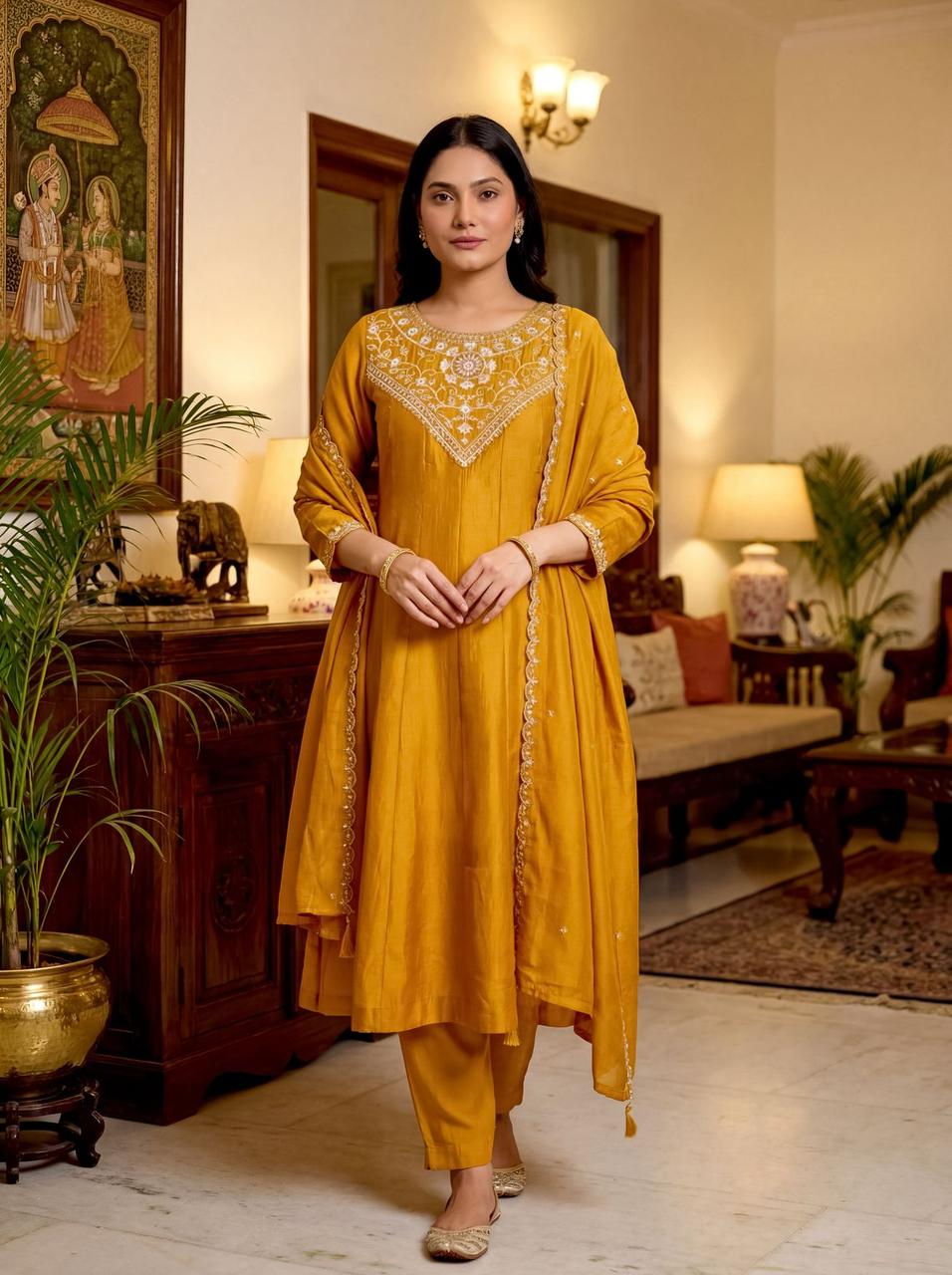
- Embroidered kurta plus plain pant plus printed dupatta: Repeat one kurta colour in the dupatta and keep the pant neutral. This is dependable for family lunches, pujas and daytime festive gatherings.
- Plain kurta plus patterned palazzo plus solid dupatta: Let the palazzo provide the print and use the dupatta to repeat its darkest or lightest shade. This keeps a wide lower silhouette from becoming visually noisy.
- Monochrome base plus contrasting dupatta: Pair a black, ivory, pista or rust base with a dupatta in a related jewel tone. The base creates unity while the dupatta supplies occasion-specific personality.
- Short kurta plus high-waisted wide pants: Use this contemporary proportion with minimal layering and pointed or low-profile footwear. A small potli or structured clutch reinforces the clean outline.
- Co-ord plus independent dupatta: Treat the co-ord as a complete base and add a dupatta only when its colour or border contributes something specific. A third piece should solve a styling need, not merely fill space.
Stylish Rust Orange Ethnic Co-Ord Set for Women can serve as a complete base with gold earrings, or the top can work with ivory pants while the lower piece works with a cream kurta. Modern Taupe Vichitra Silk Embroidered Co-Ord Set for Women has a quieter neutral foundation, making it suitable for a coloured dupatta, jewel-toned blouse layer or contrasting footwear.
How do details help Mix-and-Match Ethnic Separates That Still Look Like a Complete Outfit?
Embroidery creates unity when its scale and finish relate to at least one other detail in the outfit. Small floral embroidery can be repeated in earrings or a printed dupatta, while metallic zari can be echoed through a narrow border, bangles or footwear.
Motif scale should follow garment scale. Tiny florals can disappear on a very wide palazzo, while a large geometric motif can overwhelm a short fitted kurta. Pair a large motif with a plain supporting garment, and reserve small repeated motifs for accessories or the dupatta.
Black, white and metallic details are especially useful connectors. Black can ground bright colours, white can lighten dense embroidery, and antique gold can bridge warm shades such as mustard, rust and maroon. Black White Floral Embroidered Readymade Salwar Suit shows how a limited palette can feel complete even when floral detail provides most of the visual interest.
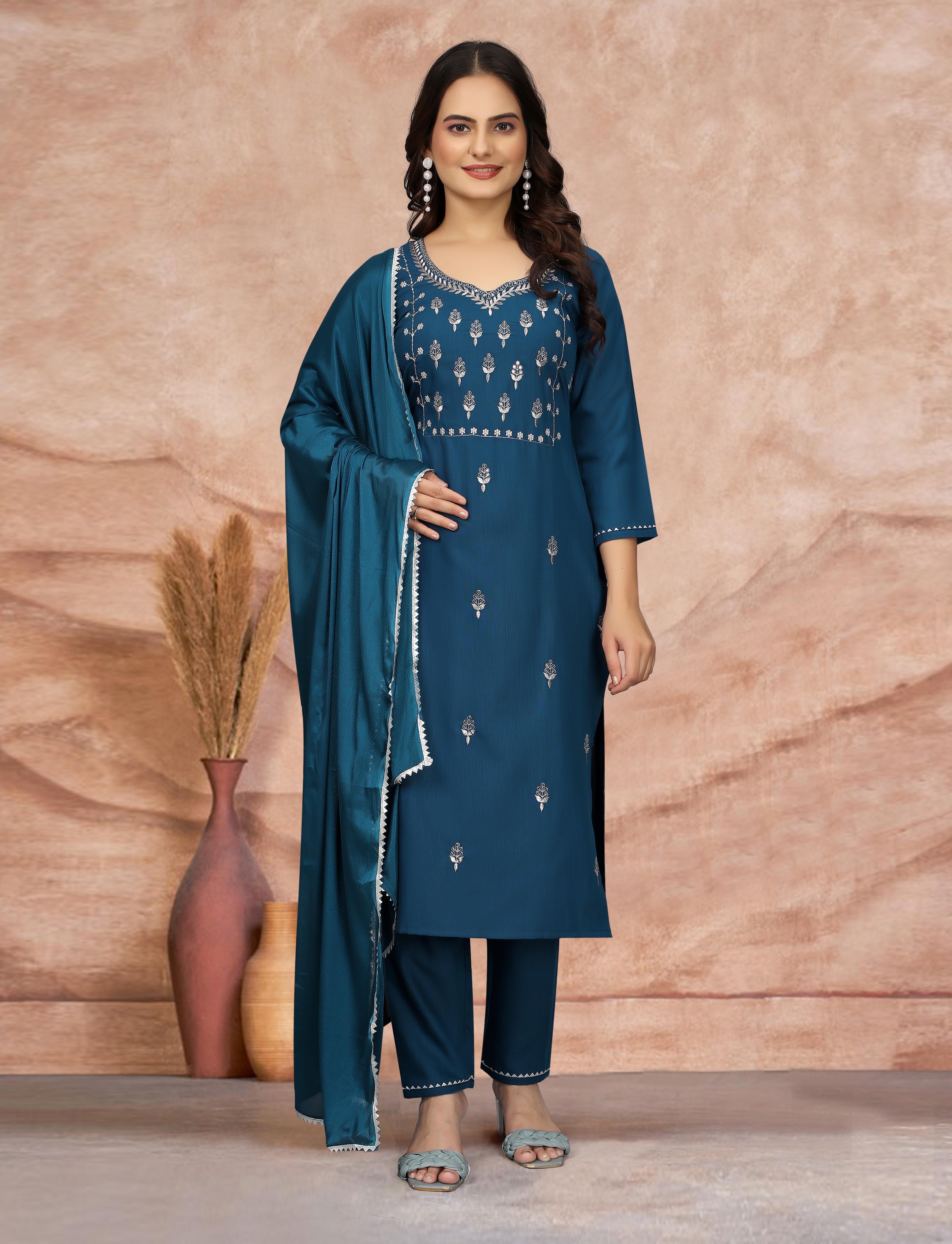
Elegant Teal Embroidered Kurta Pant Dupatta Set demonstrates another useful principle: a jewel tone can carry the outfit without excessive ornament. Teal can be separated into a kurta worn with ivory pants, or its dupatta can add depth to a plain mustard or beige base.
Jewellery should repeat either the outfit's temperature or its finish. Gold works naturally with mustard, rust, maroon and warm beige, while silver complements black, white, pista and cool teal. Kundan, meenakari, pearls and oxidised silver each create different levels of formality, so choose one dominant jewellery language rather than stacking unrelated finishes.
How should Mix-and-Match Ethnic Separates That Still Look Like a Complete Outfit be planned for each occasion?
Occasion planning should begin with movement, weather and dress code before colour or ornament. A successful combination looks polished because it fits the event as well as the wearer.
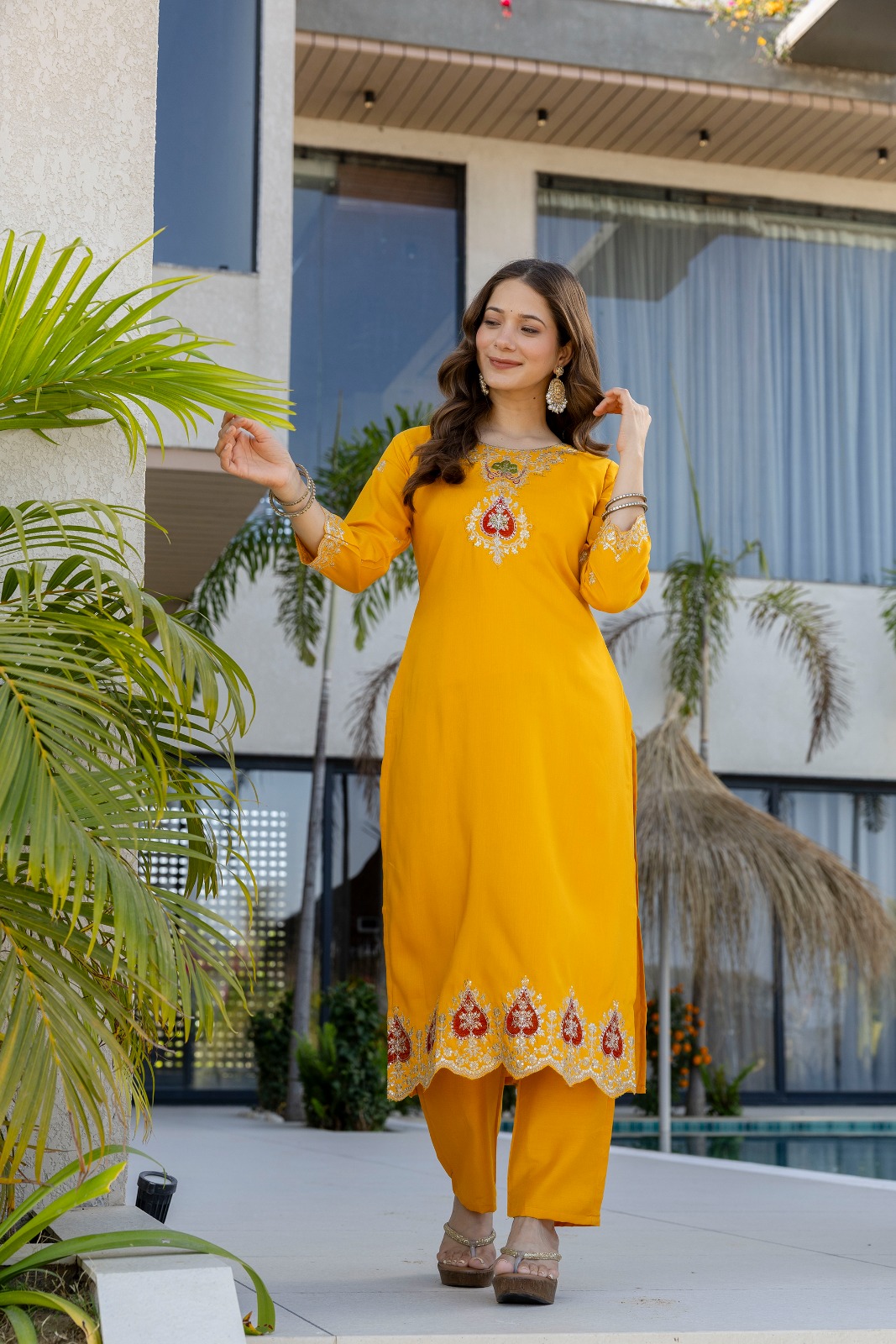
For office celebrations, choose a straight kurta, ankle-length pants and one controlled festive detail such as a printed dupatta or metallic earrings. Cotton, rayon, Chanderi and lightweight silk blends provide comfort for several hours, while a compact shoulder bag keeps the look practical.
For a puja or daytime family gathering, use breathable fabrics and moderate shine. A mustard, pista, ivory or teal kurta can pair with straight pants and a light dupatta. Keep hems manageable and choose footwear that allows standing, walking and removing shoes easily.
For a Haldi ceremony, washable or easy-care separates are valuable because turmeric, flower petals and outdoor dust can mark pale fabrics. A bright kurta with a plain palazzo gives freedom of movement, while a short dupatta drape reduces the chance of snagging. Avoid long trailing borders when the event involves active participation.
For a wedding reception, increase the visual weight through silk, zari, embroidered borders or a statement dupatta. A simple base can look formal when the finishing layer has a substantial border and the accessories are coordinated. Banarasi silk, Kanjeevaram-inspired borders and jewel-toned Chanderi are especially effective when the silhouette remains clean.
Black Embroidered Chanderi Kurti Pant Dupatta Set can move from a daytime gathering to an evening dinner by changing the footwear, earrings and dupatta drape. A light stole creates ease during the day, while a zari-edged layer and metallic clutch add evening definition.
How can you test Mix-and-Match Ethnic Separates That Still Look Like a Complete Outfit before wearing them?
A complete outfit should be tested in daylight, from several angles, and through ordinary movement. A mirror check alone can hide clashing textures, loose hems or uncomfortable armholes.
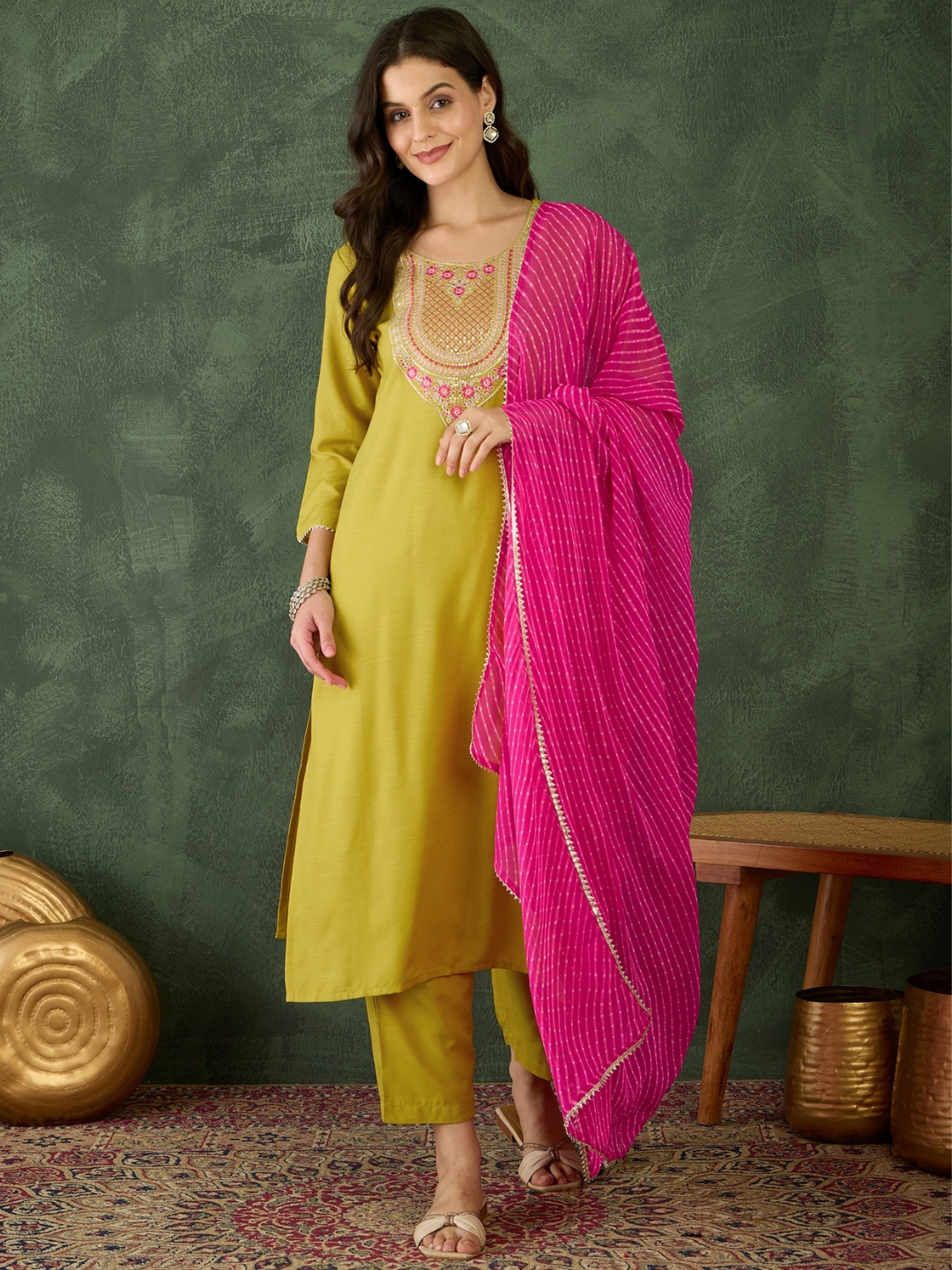
- Lay every piece together: Place the kurta, lower garment, dupatta, shoes and accessories on a bed or clean surface. Remove one item if the arrangement has more than three competing focal points.
- Check the colour distance: Photograph the outfit in natural light. Colours that appear similar indoors may clash under daylight, especially mustard, lime, coral and orange.
- Test the silhouette: Sit, walk, raise both arms and turn sideways. Confirm that the dupatta stays secure and that the kurta and trouser hems don't create an accidental bunching line.
- Inspect the formality: Ask whether the shine, embroidery and accessories match the event. A heavily embellished dupatta may make a simple cotton base feel more formal than intended.
- Repeat one detail: Add one shared cue through a border, earring, bangle, shoe, bag or hair accessory. Stop once the colour or finish has been repeated twice.
Mix-and-Match Ethnic Separates That Still Look Like a Complete Outfit don't require every piece to come from the same set. A deliberate anchor, a compatible fabric weight, a controlled colour story and a balanced silhouette are enough to create the impression of a finished ensemble. The reward is a wardrobe that can produce several distinct looks from a small number of well-chosen garments.
Common Questions About Styling Mix-and-Match Ethnic Separates
How do I mix ethnic separates without looking mismatched?
Choose one anchor garment and repeat at least one colour, texture or motif in the supporting pieces. Keep either the embroidery, the print or the silhouette quiet so the outfit has a clear focal point.
Can I wear a different dupatta with a kurta set?
Yes, a different dupatta works when it contains at least one colour from the kurta or lower garment. Match the dupatta's formality and border weight to the rest of the outfit rather than focusing only on an exact colour match.
Which pants go best with a long kurta?
Straight pants or cigarette pants usually balance a long, fluid kurta best. Wide palazzos can also work, but the kurta should be relatively clean or shorter so the lower half does not become visually heavy.
Can Chanderi and silk be worn together?
Chanderi and silk can be worn together when their colours and formality are compatible. A Chanderi kurta with silk trousers or a silk dupatta creates useful contrast, while excessive shine and heavy embellishment can make the combination look crowded.
What colours pair well with a mustard kurta?
Mustard pairs well with ivory, deep teal, bottle green, rust, brown, black and muted pink. Use one contrasting shade as an accent and keep the remaining garment neutral if the mustard is bright or heavily embroidered.
How can I style a co-ord set in more than one way?
Wear the co-ord together for a streamlined look, then separate the top and bottom with neutral garments from your wardrobe. An independent dupatta, contrasting earrings or a change from flats to embellished footwear can also shift the outfit from daytime to festive.


