Matching a Traditional Haathphool With a Minimal Bridal Lehenga requires more thought than matching jewellery to the lehenga colour. A haathphool connects a bracelet to one or more finger rings, so the accessory occupies the wrist, back of the hand and fingers at once. The most successful pairing keeps one visual element dominant, controls the amount of shine and leaves enough plain fabric around the body to make the jewellery look intentional.
A minimal bridal lehenga doesn't have to be completely plain. Minimalism can come from a restrained motif, a quiet base colour, a narrow border, matte embroidery or a clean blouse silhouette. A traditional haathphool can then supply ceremonial detail associated with Indian bridal dressing without requiring a heavily embellished choli, dense dupatta and layered jewellery everywhere else.
Matching a Traditional Haathphool With a Minimal Bridal Lehenga: what makes the pairing work?
A haathphool works best with a minimal bridal lehenga when the jewellery repeats one detail from the outfit and remains proportionate to the bride's hands. The repeated detail may be a gold tone, a pearl accent, a red stone, a floral motif or the geometry of the embroidery.
Begin by identifying the lehenga's strongest feature. A clean silk skirt may rely on its sheen and border, while a net lehenga may depend on scattered sequins or delicate threadwork. The haathphool should support that feature rather than compete with it. A gold haathphool with a small floral centre, for example, can echo threadwork without adding a second elaborate pattern.
Hand jewellery is especially visible during ring exchange photographs, mehendi portraits, greeting rituals and close-up images of the dupatta. A piece that looks small from a distance may appear large in photographs because the fingers and wrist are often held near the face or waist. The camera therefore rewards realistic shape and controlled sparkle more than excessive layering.
Matching a Traditional Haathphool With a Minimal Bridal Lehenga: which hand should wear it?
The haathphool should usually sit on the hand that will be most visible during important rituals, although comfort and ring placement matter more than a strict rule. If the engagement ring or wedding ring occupies the same finger, choose a haathphool with an adjustable chain or move the connected ring to a neighbouring finger.
Many brides wear the haathphool on one hand and keep the other hand visually lighter. That arrangement creates asymmetry, which suits a minimal lehenga better than wearing several identical pieces that make both hands look equally busy. A bride can balance the look with slim bangles on the opposite wrist instead of copying the entire hand accessory.
Matching a Traditional Haathphool With a Minimal Bridal Lehenga: how fabric changes the choice
Fabric determines how much visual weight a traditional haathphool can carry. Smooth silk, airy net, velvet and heavily sequined surfaces reflect light differently, so the same gold accessory won't produce the same result with every bridal lehenga.
Matching a Traditional Haathphool With a Minimal Bridal Lehenga in silk
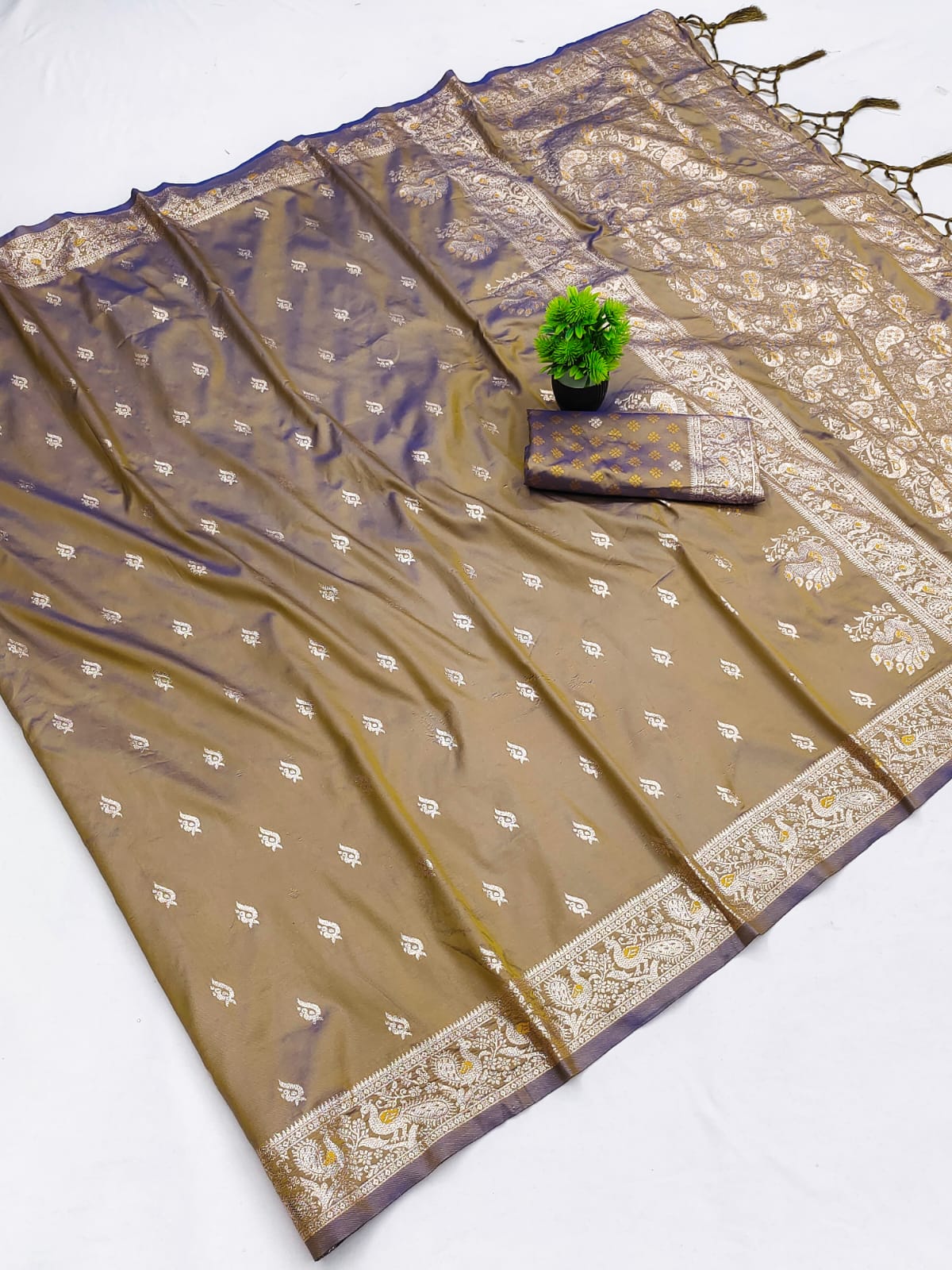
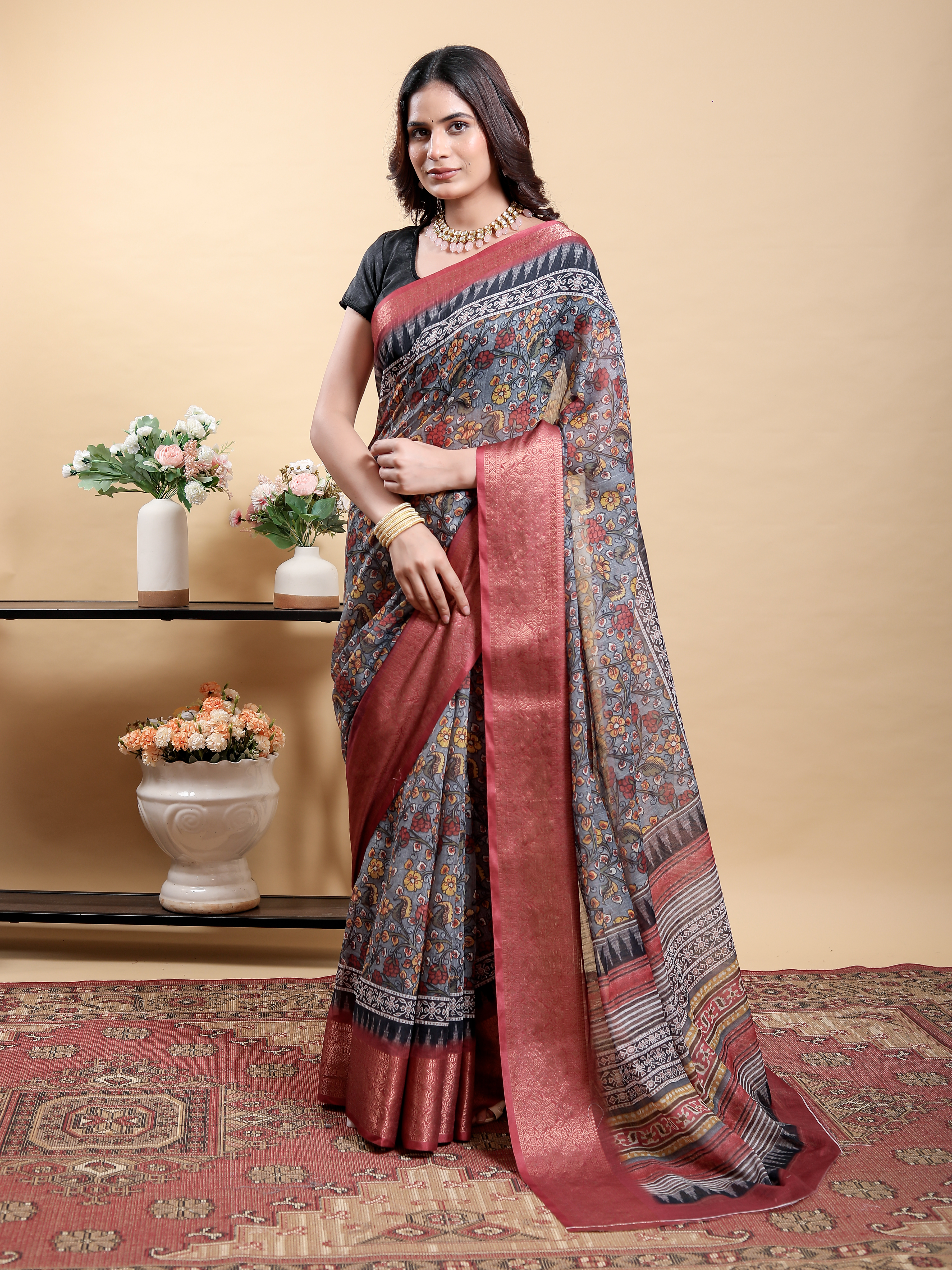
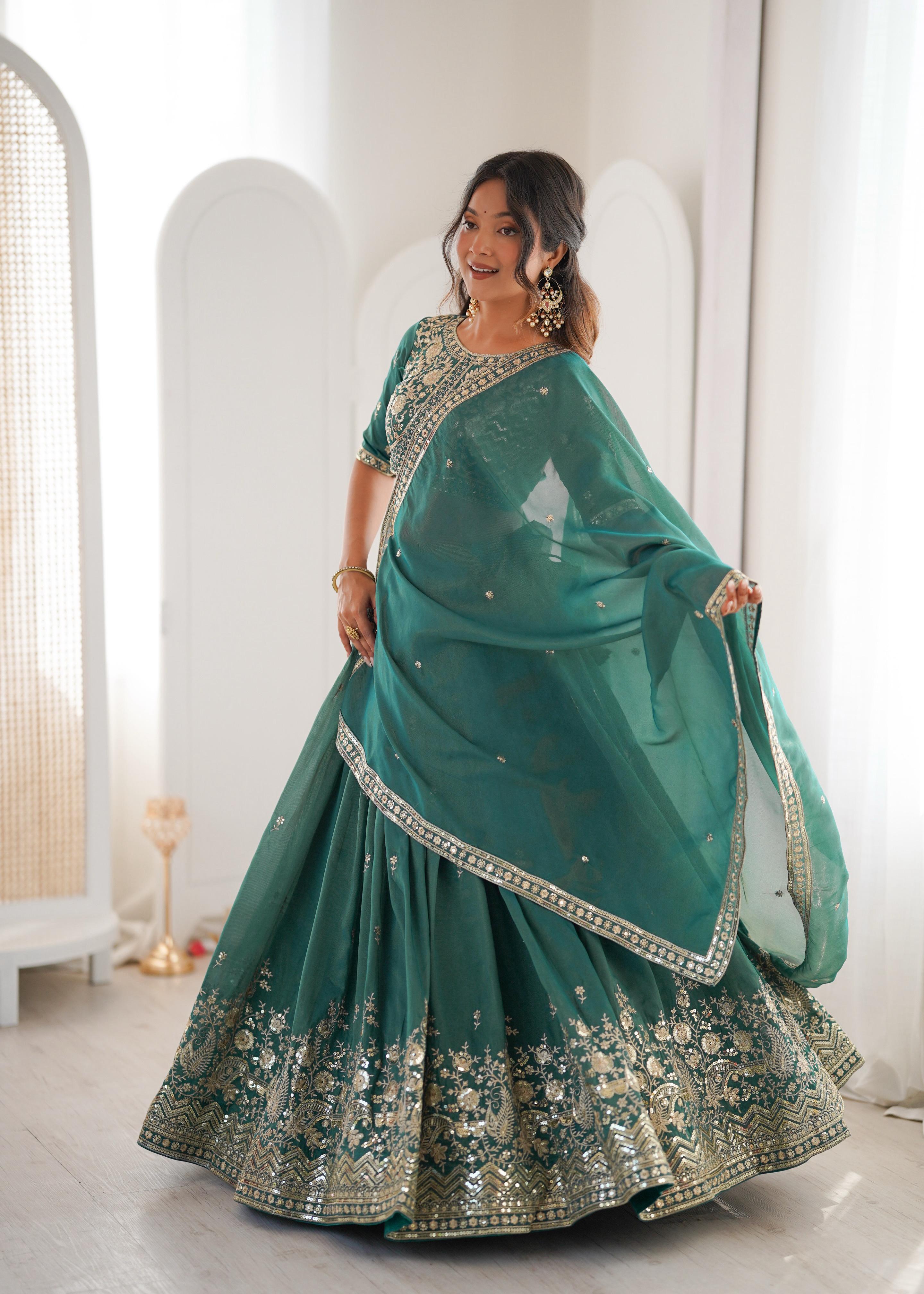
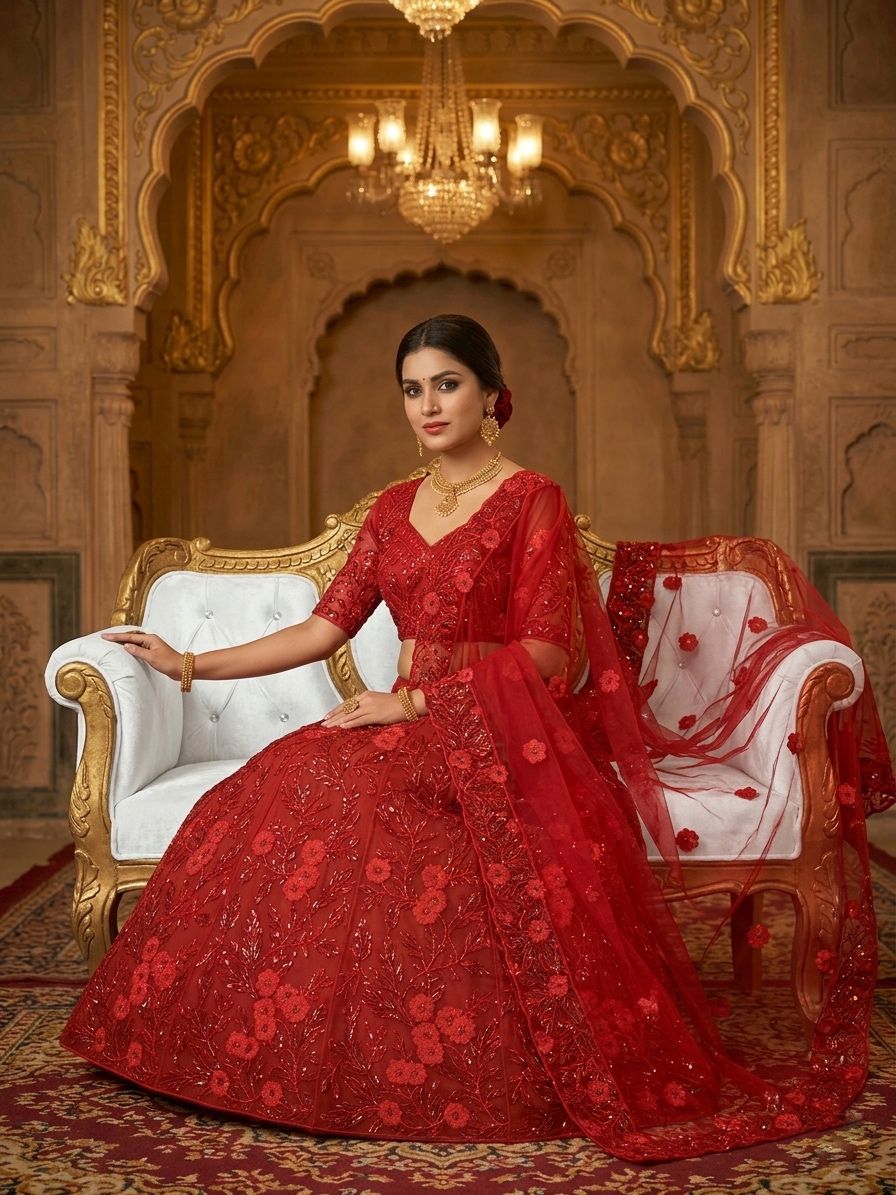
Silk pairs naturally with polished gold, antique gold and structured haathphool designs. Banarasi silk and other lustrous textiles already have a ceremonial presence, so a medium-width bracelet with a defined centre motif is usually more balanced than a wide, fully stone-covered cuff.
Designer Threadwork Silk Lehenga Choli Set with Dupatta demonstrates why embroidery density matters. A haathphool with fine gold-toned links or thread-like detailing can continue the outfit's linear quality, while a large necklace and oversized handpiece together may hide the blouse and overwhelm the silk's natural sheen.
Matching a Traditional Haathphool With a Minimal Bridal Lehenga in net and sequins
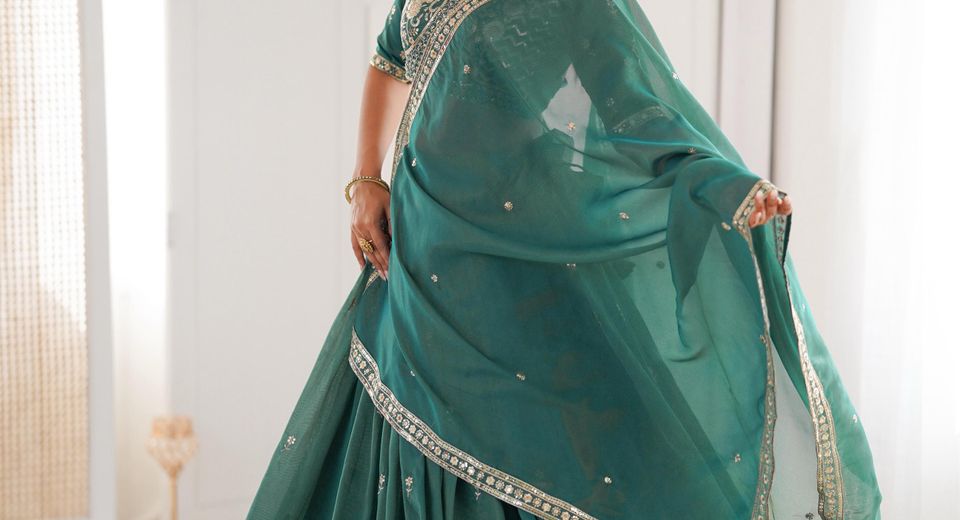
Net lehengas benefit from haathphools with solid outlines because delicate mesh can disappear beside scattered embellishment. A compact kundan-style centre, pearl drops or a clean floral medallion gives the eye a stable point against a translucent skirt or dupatta.
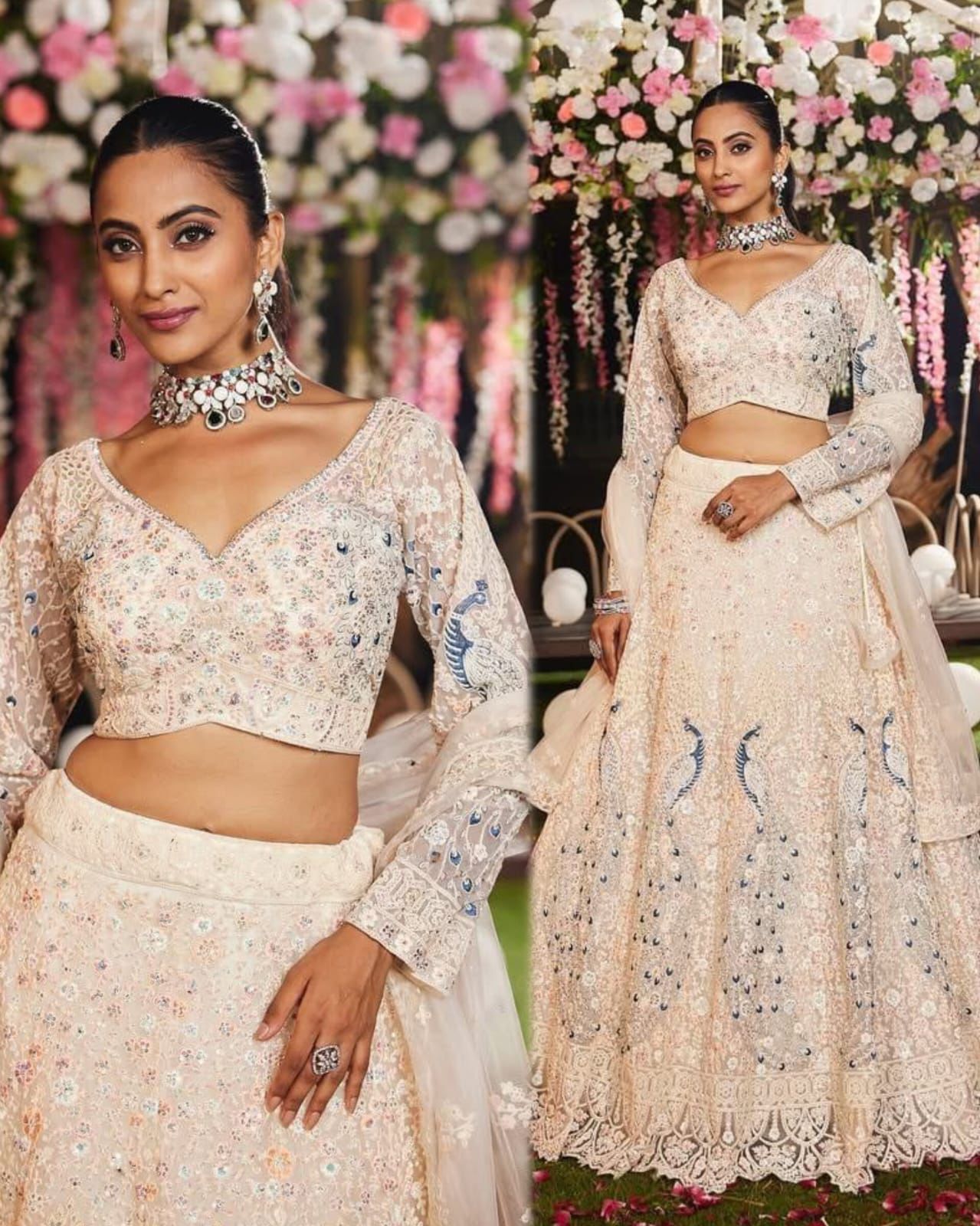
Cream Peacock Embroidered Net Lehenga Set for Women offers an useful styling direction: its peacock embroidery can be treated as the main motif, while the haathphool repeats only the colour or curve of that motif. Avoid adding peacock earrings, a peacock necklace and a peacock handpiece simultaneously, because repeating the same symbol three times can make styling look literal rather than refined.
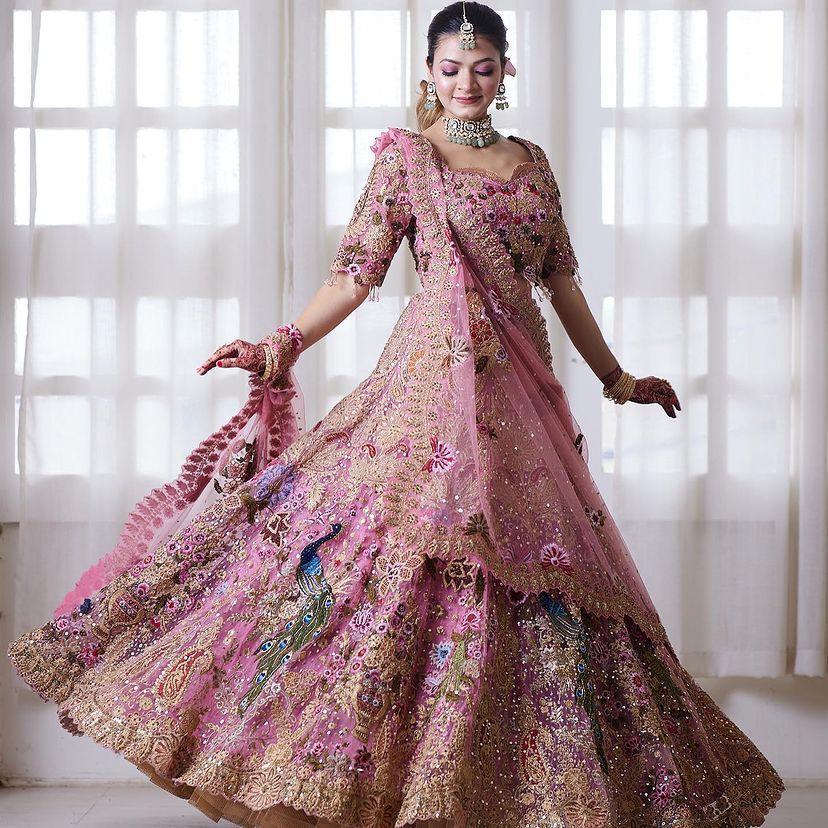
Sequins require particular restraint. Pink Bridal Sequins Lehenga Set with Heavy Flare already creates movement through shine and volume. A slim haathphool with a single stone or small floral plate will photograph more elegantly than a broad accessory covered in reflective stones.
Matching a Traditional Haathphool With a Minimal Bridal Lehenga: how to coordinate metal and colour
The haathphool metal should coordinate with the lehenga's embroidery and the rest of the bridal jewellery, but it doesn't need to match every colour exactly. Gold is the safest choice for warm reds, pinks, maroons, saffron and cream, while silver or white-metal finishes suit icy pastels, cool pinks and silver embroidery.
Use the three-colour rule for a controlled bridal palette: one dominant outfit colour, one metal family and one supporting accent. A cream lehenga with gold embroidery and green stones has a clear visual hierarchy. Adding pink, blue, red and silver stones to the haathphool can weaken that hierarchy even if each colour looks attractive on its own.
Mixed metals can work when the contrast is deliberate and repeated. An antique-gold haathphool may sit beside a slim white-gold ring if the earrings also contain both finishes. A random mixture of yellow-gold bangles, silver hand jewellery and rose-gold accessories usually looks accidental rather than contemporary.
Stone colour should also account for mehendi. Fresh mehendi begins green and deepens to brown over approximately 24 to 48 hours. Red stones, uncut kundan, pearls and clear stones remain legible against both stages, while green stones can blend into fresh mehendi and very pale stones may disappear against a dense design.
Matching a Traditional Haathphool With a Minimal Bridal Lehenga: how to balance the jewellery
Once the haathphool is selected, choose the remaining jewellery by assigning each area of the body a different level of emphasis. The handpiece already occupies a detailed visual zone, so the necklace, earrings, bangles and maang tikka should not all be statement pieces.
Matching a Traditional Haathphool With a Minimal Bridal Lehenga at the neckline
A simple blouse neckline can carry a necklace with a defined pendant, while an embroidered high neck often needs only earrings and a maang tikka. A broad choker, layered rani haar and large haathphool may be appropriate for a maximal bridal outfit, but the combination can erase the clean quality of a minimal lehenga.
Match the necklace length to the blouse rather than to the skirt. A short choker works with a sweetheart or deep round neckline when the collarbone is intentionally visible. A longer necklace can fill an open neckline, but it should not collide with the dupatta border or blouse embroidery.
Matching a Traditional Haathphool With a Minimal Bridal Lehenga through rings and bangles
Choose earrings that frame the face without repeating the exact scale of the haathphool. Medium jhumkas, slim chandbalis or compact drop earrings can provide bridal character while leaving the hands as the strongest accessory zone.
Limit bangles on the haathphool wrist to two or three slim pieces if the bracelet is detailed. A plain kada can provide useful contrast, but stacking many textured bangles beside a wide haathphool creates a single dense block from the wrist to the elbow.
Keep additional rings purposeful. One plain band on the opposite hand can balance a connected haathphool ring, while several large cocktail rings compete with the delicate chain that defines the accessory. Nail length and polish also affect the result: a short almond or rounded nail shape keeps the jewellery visible, and a single-colour polish prevents visual clutter.
Matching a Traditional Haathphool With a Minimal Bridal Lehenga through sleeves and dupatta placement
The sleeve and dupatta should leave the wrist and back of the hand visible during key photographs. A three-quarter sleeve can frame a bracelet neatly, while a very long or flared sleeve may cover the chain and make the haathphool appear disconnected.
For a clean bridal portrait, place the dupatta over the shoulder or secure it at the waist instead of allowing the edge to fall continuously across the wrist. A sheer net dupatta can remain near the hand if its border doesn't cover the bracelet. Pinning the fabric 5 to 8 centimetres above the wrist gives the photographer a clear accessory line without changing the overall drape.
When a bridal dupatta is heavily bordered, keep the haathphool more delicate. When the dupatta is plain or lightly edged, the haathphool can carry a larger motif because the hand remains the main decorated point. The same principle applies to the blouse: heavy sleeve embroidery calls for a narrower bracelet, while plain sleeves allow more metal texture.
Matching a Traditional Haathphool With a Minimal Bridal Lehenga for different ceremonies and budgets
A haathphool should be selected according to the ceremony schedule, not only the wedding photograph. A delicate chain is comfortable for a two-hour engagement or reception, but a bride wearing it through a long pheras ceremony should check that the chain doesn't pull when the fingers bend.
Test the accessory with the actual blouse and bangles at least one week before the wedding. Raise both arms, hold a phone, clasp the hands and sit cross-legged for several minutes. These movements reveal whether the chain is too short, whether the ring slips and whether the bracelet catches on sequins or zari borders.
Budget-conscious brides can prioritise the haathphool as the single detailed accessory and keep the rest of the jewellery simpler. Collections such as Pink Lehengas Under 4000 with 50% Discount and Silk Lehengas Under 3000 can suit a bride who wants to reserve more of the budget for a well-finished handpiece, tailoring and comfortable footwear.
Bridesmaids can adapt the same idea without copying the bride's exact jewellery. Bridesmaid Lehengas Under 5500 brings an useful direction for coordinated dressing: keep the lehenga colours related, then give the bride the more traditional haathphool while bridesmaids wear slim bracelets or one statement ring.
For a Haldi ceremony, avoid delicate pieces that may be damaged by turmeric paste, water or repeated hand washing. Haldi Lehengas Under 5500 can be styled with a lightweight imitation haathphool for photographs, while valuable bridal jewellery is kept safely for the main wedding ceremony. Net Lehengas Under 4500 with 51% Discount can similarly work for a lighter pre-wedding look when the hand accessory is kept compact and easy to remove.
A practical final check is to photograph the outfit in daylight, warm indoor light and flash. Gold may look soft in daylight but highly reflective under flash, while clear stones can disappear in a dim venue. Reviewing all three images helps determine whether the haathphool needs fewer stones, a stronger outline or a different metal finish.
Matching a Traditional Haathphool With a Minimal Bridal Lehenga: a final styling checklist
The finished look should have one clear focal point, comfortable movement and enough empty space for the lehenga to remain visible. A traditional haathphool doesn't need to be reduced to a tiny accessory; it needs to be given a defined role within the outfit.
- Check proportion: compare the bracelet width with the blouse sleeve and dupatta border.
- Check the metal: coordinate the haathphool with the embroidery and primary bridal jewellery.
- Check colour: limit the outfit to a dominant shade, a metal family and one supporting accent.
- Check visibility: keep the wrist and back of the hand clear for photographs and rituals.
- Check comfort: bend the fingers, lift the arms and wear the piece for at least 30 minutes.
- Check the full frame: photograph the complete lehenga, not only the jewellery close-up.
The strongest pairing usually feels deliberate from every angle: the lehenga provides a calm foundation, the haathphool supplies cultural character and the remaining jewellery supports both without competing for attention.
Common Questions About Matching a Haathphool With a Minimal Bridal Lehenga
Can I wear a traditional haathphool with a simple bridal lehenga?
Yes, a traditional haathphool can become the main statement accessory with a simple bridal lehenga. Choose a design that repeats the lehenga's metal or one small motif, then keep the necklace, bangles and rings comparatively restrained.
Which metal haathphool suits a bridal lehenga best?
Gold and antique gold suit warm bridal colours such as red, pink, maroon, cream and saffron, while silver or white metal suits cool pastels and silver embroidery. The haathphool should coordinate with the lehenga embroidery and the other main jewellery pieces.
How many bangles should I wear with a haathphool?
Two or three slim bangles are usually enough when the haathphool has a detailed bracelet or large centre motif. A plain kada can replace several bangles, especially when the blouse sleeve or dupatta border is heavily embellished.
Should the haathphool match the bridal lehenga exactly?
The haathphool does not need to match the lehenga exactly, but it should share one visual connection with the outfit. Matching the metal, a stone colour or a floral and geometric motif creates coordination without making every accessory identical.
How can I keep a haathphool visible in bridal photographs?
Keep the wrist and back of the hand clear by choosing a three-quarter sleeve or pinning the dupatta 5 to 8 centimetres above the wrist. Test the arrangement in daylight, indoor light and flash before the wedding.
Is a haathphool comfortable for a long wedding ceremony?
A haathphool can remain comfortable during a long ceremony when the chain has enough length, the ring does not restrict finger movement and the bracelet does not pinch. Wear the piece for at least 30 minutes during a trial and practise sitting, standing and joining the hands.