

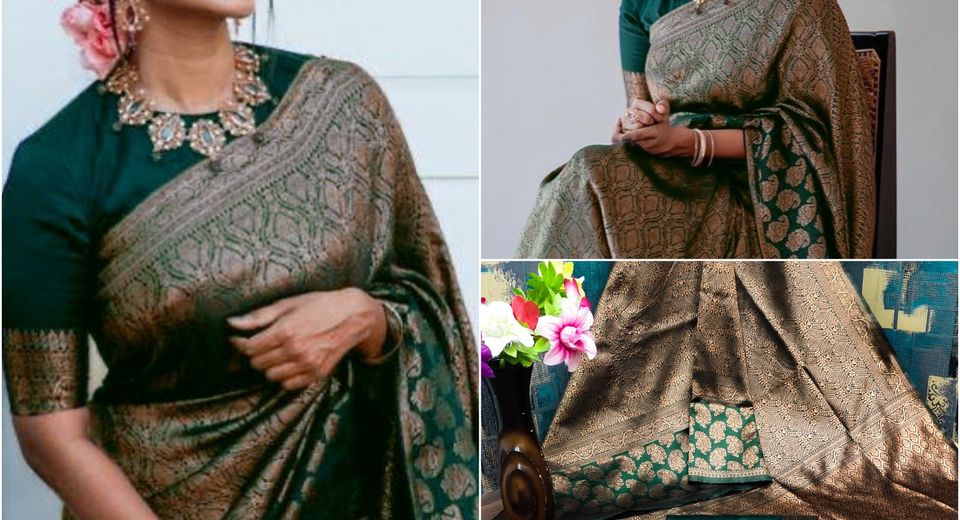
Making Deep Colours Feel Lighter for Dark Ethnic Wear for Daytime Functions starts with controlling visual weight rather than abandoning deep shades. A black, olive, forest green or navy saree can look graceful in sunlight when the fabric, border, blouse, pleats and accessories create enough breathing room. The practical aim isn't to make a dark outfit pale; the aim is to make the outfit appear balanced, breathable and appropriate from late morning through early evening.
Making Deep Colours Feel Lighter for Dark Ethnic Wear for Daytime Functions: why do dark colours feel heavier in daylight?
Dark colours feel heavier in daylight because strong sunlight reveals dense surfaces, concentrated zari and deep uninterrupted areas of colour more clearly than indoor lighting does. Black, deep green and maroon absorb visible attention, while a large metallic border adds another high-contrast element. A richly woven Banarasi silk saree with a wide gold pallu can therefore look more formal under direct sunlight than under warm evening lights.
Daytime styling also changes how fabric texture is perceived. Glossy Lichi silk reflects sharp highlights, whereas cotton, linen cotton, Chanderi and Maslin silk diffuse light more softly. The difference matters at a Haldi ceremony, daytime puja, garden lunch or family engagement, where photographs usually contain natural light and pale backgrounds.
The most reliable solution is to divide the outfit into visual zones. Keep the deep colour as the anchor, introduce a lighter or matte element near the face, reduce competing shine and allow the drape to show some movement. A dark saree can remain the strongest colour in an outfit without becoming the only feature the eye notices.
Making Deep Colours Feel Lighter for Dark Ethnic Wear for Daytime Functions: which fabrics help?
A breathable, softly textured fabric makes a deep ethnic outfit look lighter than a dense, highly reflective fabric in a comparable colour. Linen cotton, cotton, Chanderi cotton and lightweight Maslin silk are especially useful for daytime functions because their surfaces create texture without concentrating every highlight in one area.
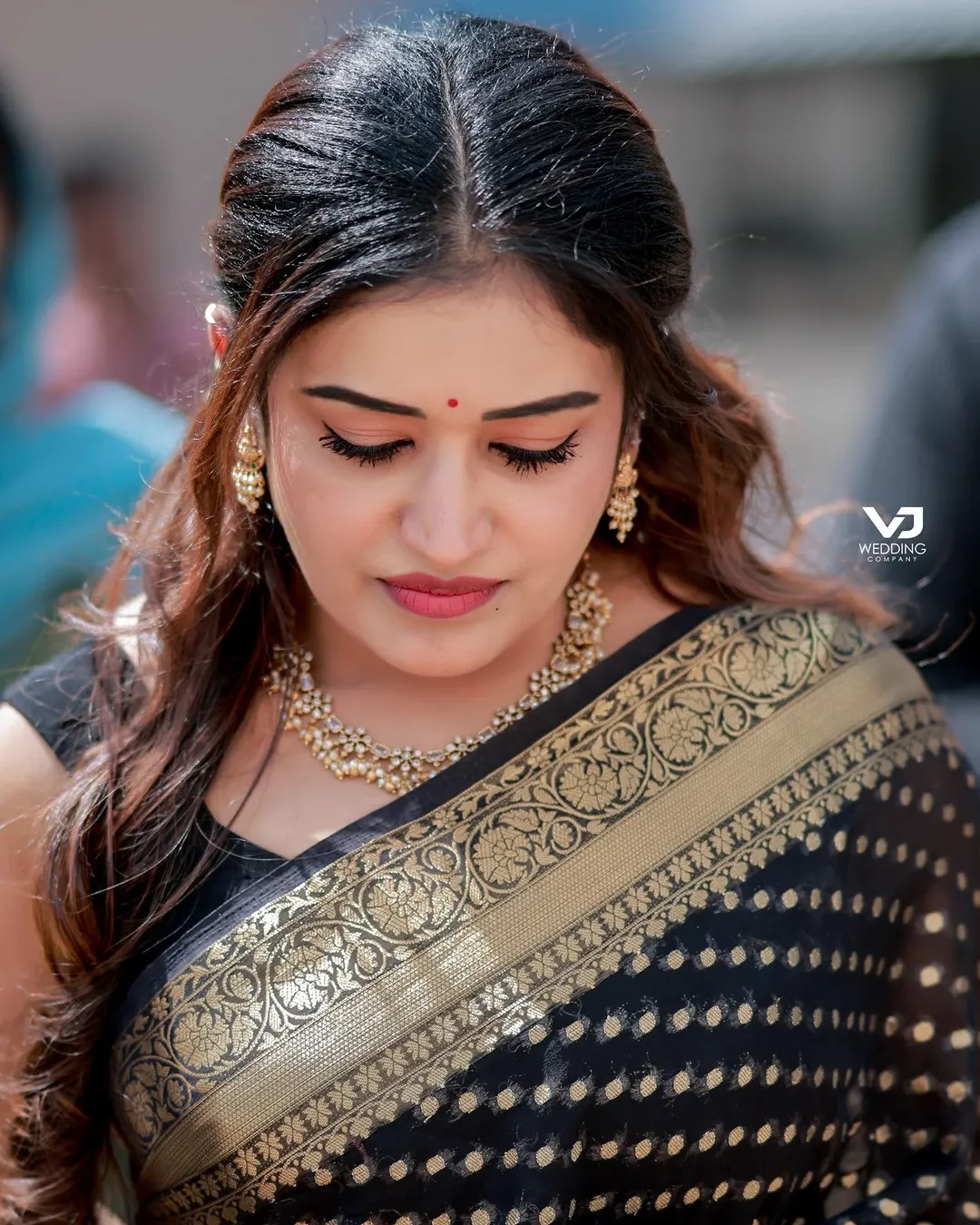
Making Deep Colours Feel Lighter for Dark Ethnic Wear for Daytime Functions with fabric selection
For a warm outdoor event, linen cotton and cotton are practical because they allow more air circulation and hold a relaxed drape. Olive Green Linen Cotton Printed Saree with Dark Border demonstrates how a muted deep shade can feel casual when a printed surface interrupts a solid block of colour. The print gives the eye smaller points of interest instead of one continuous dark field.
Chanderi cotton works well when the event requires polish without the density of bridal silk. Black Chanderi Cotton Saree with Contemporary Checked Weave uses a checked structure to break up black while retaining a refined ethnic character. Small geometric repeats are particularly effective for daytime because they add definition without the reflective intensity of all-over zari.
Maslin silk provides a softer middle ground between crisp cotton and formal silk. Dark Green Maslin Silk Zari Woven Saree with Rich Pallu can suit a daytime family function when the blouse is matte and the jewellery is edited. The saree retains richness, but the lighter fall of Maslin silk prevents the silhouette from looking rigid.
Very dense silk and broad metallic work suit functions where the styling can support their formality. Dark Green Lichi Silk Saree with Rich Golden Jacquard has a strong woven presence, so a simple blouse and restrained accessories make it more suitable for a daytime reception than a second layer of heavy embellishment.
Making Deep Colours Feel Lighter for Dark Ethnic Wear for Daytime Functions: which blouse colours work?
A light blouse, soft neutral dupatta or warm muted accent near the face lightens a dark saree most effectively. Ivory, ecru, beige, dusty rose, muted peach, champagne and soft sage usually create a gentler transition than stark white, which can make black or deep green appear more severe.
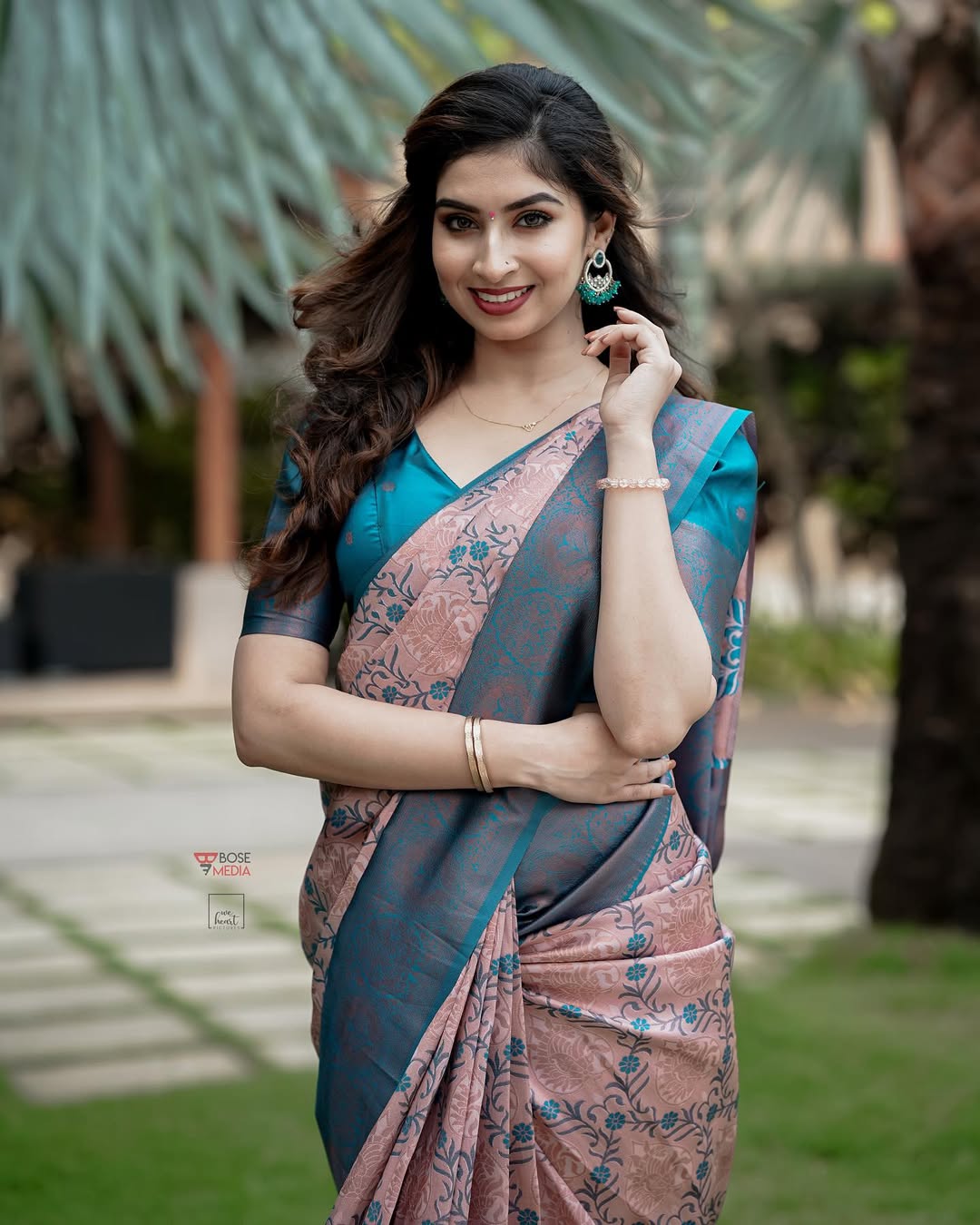
Blouse contrast should be intentional rather than random. An ivory blouse with a dark green saree reflects daylight towards the face and lets the saree act as a framing colour. A muted gold blouse can work with zari, but a brushed or matte finish is preferable when the saree already has a reflective border. A tonal blouse in a slightly lighter version of the saree colour creates a quieter result and visually lengthens the body.
For black, consider cinnamon, antique beige, pale olive, dusty lilac or warm grey instead of automatically choosing bright gold. Black Chanderi Cotton Saree with Contemporary Checked Weave can take a light grey, ivory or muted blush blouse because the checked weave already supplies visual variation. A plain blouse is usually preferable when the saree has a strong pattern.
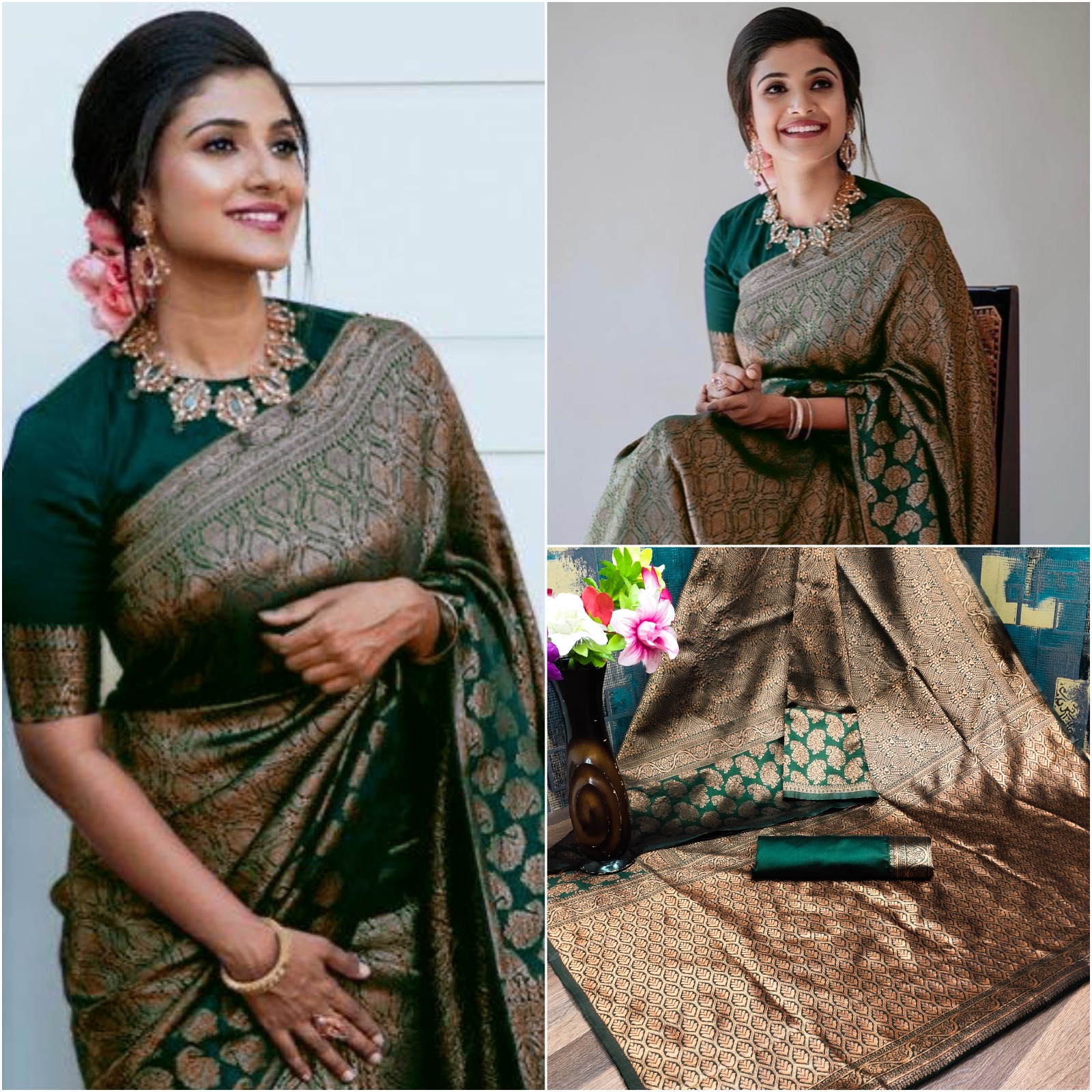
For deep green, cream, pale gold, terracotta and soft pink are useful options. Dark Green Banarasi Silk Saree With Gold Jacquard Work can be softened by a cream blouse with a modest sleeve, especially when the gold jacquard is concentrated at the border rather than spread across the entire saree body.
Making Deep Colours Feel Lighter for Dark Ethnic Wear for Daytime Functions: which draping choices help?
A clean, moderately narrow pleat arrangement and an uncluttered pallu reduce the visual weight of dark ethnic wear. The goal is to show enough of the saree body for the fabric or print to breathe while keeping the pallu secure and proportional to the wearer's frame.
Keep six to eight front pleats in a medium width rather than creating many very thin pleats. Extremely narrow pleats can make a dark saree look denser, while very broad pleats may create a single heavy panel. Pressing the pleats lightly and securing them at the waist gives the lower half of the outfit a clear vertical rhythm.
Let the pallu fall in a controlled, open line instead of piling it around the torso. A shoulder pleat width of approximately 10 to 14 centimetres generally gives structure without covering the entire blouse. On a petite frame, a shorter pallu ending around the hip can prevent a deep colour from overwhelming the body. On a taller frame, a longer pallu can create movement when the fabric is lightweight.
The open-pallu style is useful for a daytime function when the saree has a beautiful weave, print or border that deserves visibility. A neatly pinned pleated pallu is more practical for a Haldi ceremony or event involving movement. Excessive brooches, layered belts and multiple pallu clips can increase visual density when the saree already contains zari.
With a salwar suit or Anarkali, the same principle applies to the dupatta. Drape one side over the shoulder and allow the lighter inner layer or neckline to remain visible. Dark Green Sequins Anarkali Suit Set with Dupatta | Varnavi contains enough surface sparkle to benefit from a simple, vertical dupatta arrangement rather than a wide, heavily folded wrap around the neck.
Making Deep Colours Feel Lighter for Dark Ethnic Wear for Daytime Functions: how should zari be balanced?
Daytime balance comes from limiting high-shine elements to one or two clearly defined areas. If the saree has a rich pallu, keep the blouse, jewellery and handbag comparatively quiet; if the blouse is embellished, choose a simpler saree border and fewer metallic accessories.
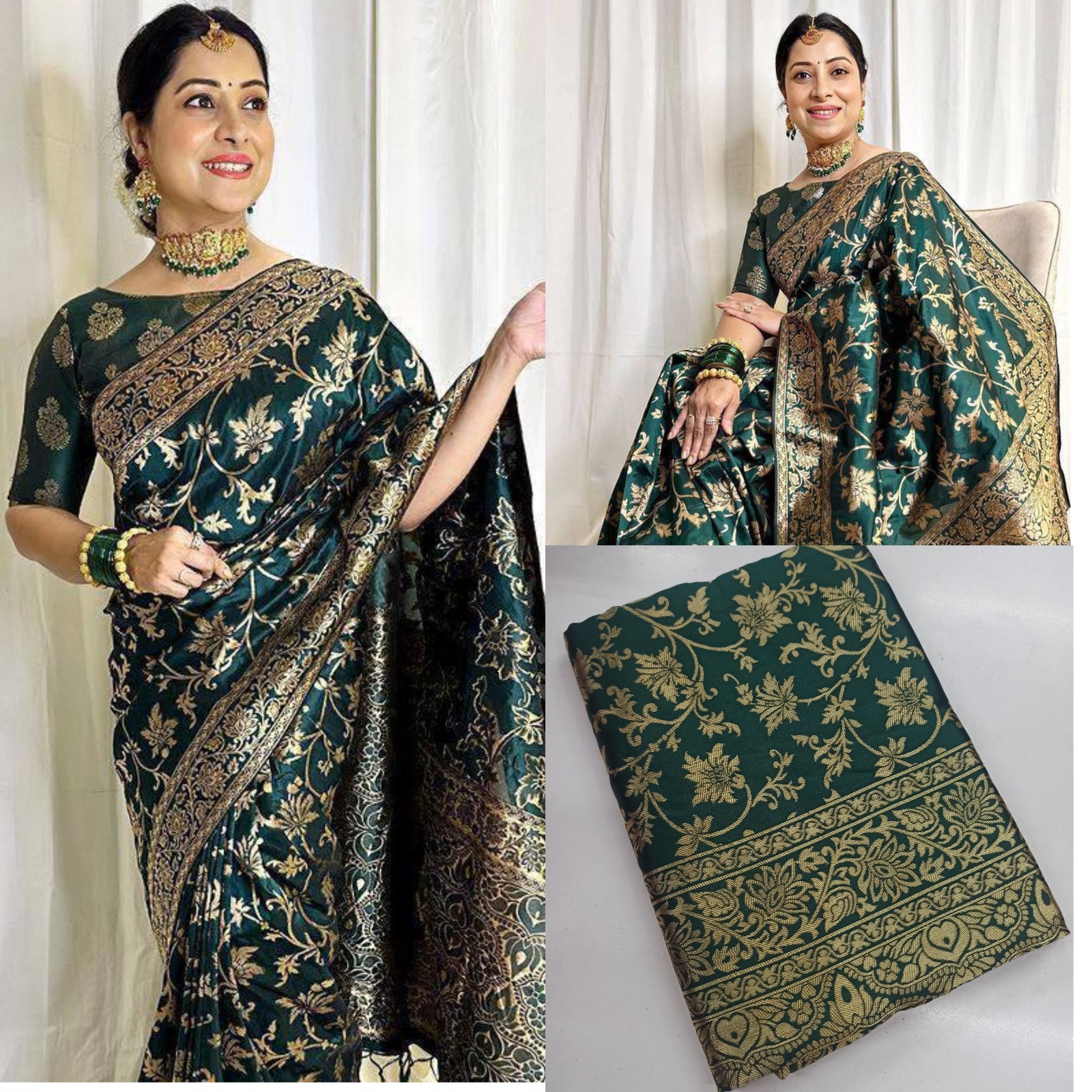
Zari isn't automatically unsuitable for daytime. Narrow zari lines, antique gold, dull silver and woven motifs tend to look softer than mirror-like sequins or broad, bright metallic panels. Dark Green Banarasi Lichi Silk Saree with Zari Work can be styled for daylight by pairing it with a matte blouse, small earrings and a neutral sandal. The woven zari remains visible without making the complete outfit look like eveningwear.
A rich pallu deserves visual space. Dark Green Banarasi Silk Saree With Gold Jacquard Work and Dark Green Banarasi Lichi Silk Saree with Zari Work both have enough detail to function as the focal point. Avoid adding a heavily embroidered jacket or a multi-layered necklace unless the function is formal and held indoors.
Sequins need a more careful approach because direct sunlight produces many small reflections. With Dark Green Sequins Anarkali Suit Set with Dupatta | Varnavi, choose fabric-covered footwear, a plain clutch and one pair of earrings. Soft makeup with a satin rather than glitter finish keeps the face from competing with the outfit.
Making Deep Colours Feel Lighter for Dark Ethnic Wear for Daytime Functions: which accessories look fresher?
Light-toned, matte or softly reflective accessories make dark ethnic wear feel fresher without weakening its colour impact. Pearl, ivory resin, champagne metal, brushed gold, wood, woven fibres and neutral leather are dependable daytime choices.
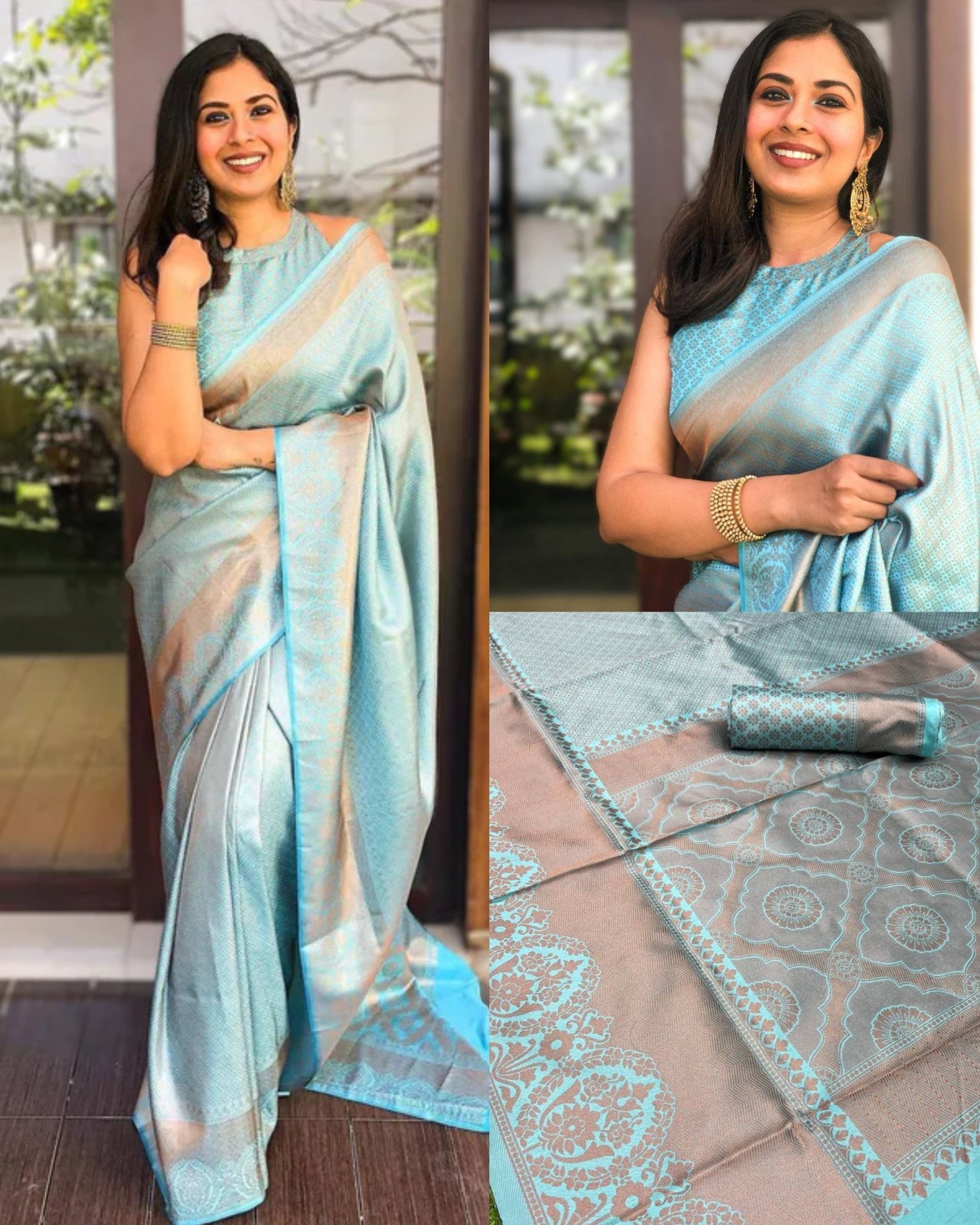
Choose one dominant jewellery direction. Small pearl drops can soften a black saree; antique gold jhumkas can connect with a zari border; and brushed silver can suit a cool-toned navy or charcoal outfit. Wearing a choker, long necklace, large earrings and stacked bangles together often creates the heaviness that the styling is trying to avoid.
Footwear also changes the perceived weight of a dark outfit. Tan, beige, champagne, muted gold and off-white sandals create a visual break below the hem. Black footwear is elegant, but it extends the dark colour to the floor and can make the full look feel more formal. A structured ivory or beige handbag produces a similar lightening effect near the hand and waist.
Hair and makeup should retain definition without adding another dramatic block. A low bun with fresh flowers, a soft braid or a half-up style leaves the neckline visible. Peach, rosewood, terracotta and muted berry lip colours generally harmonise with deep green and black more naturally than very dark wine lipstick during daytime.
Making Deep Colours Feel Lighter for Dark Ethnic Wear for Daytime Functions: how can you build a complete look?
A complete daytime look needs one dark anchor, one lightening element, one controlled shine point and comfortable movement. This four-part formula works for sarees, Anarkalis, salwar suits and sharara sets without making every outfit look identical.
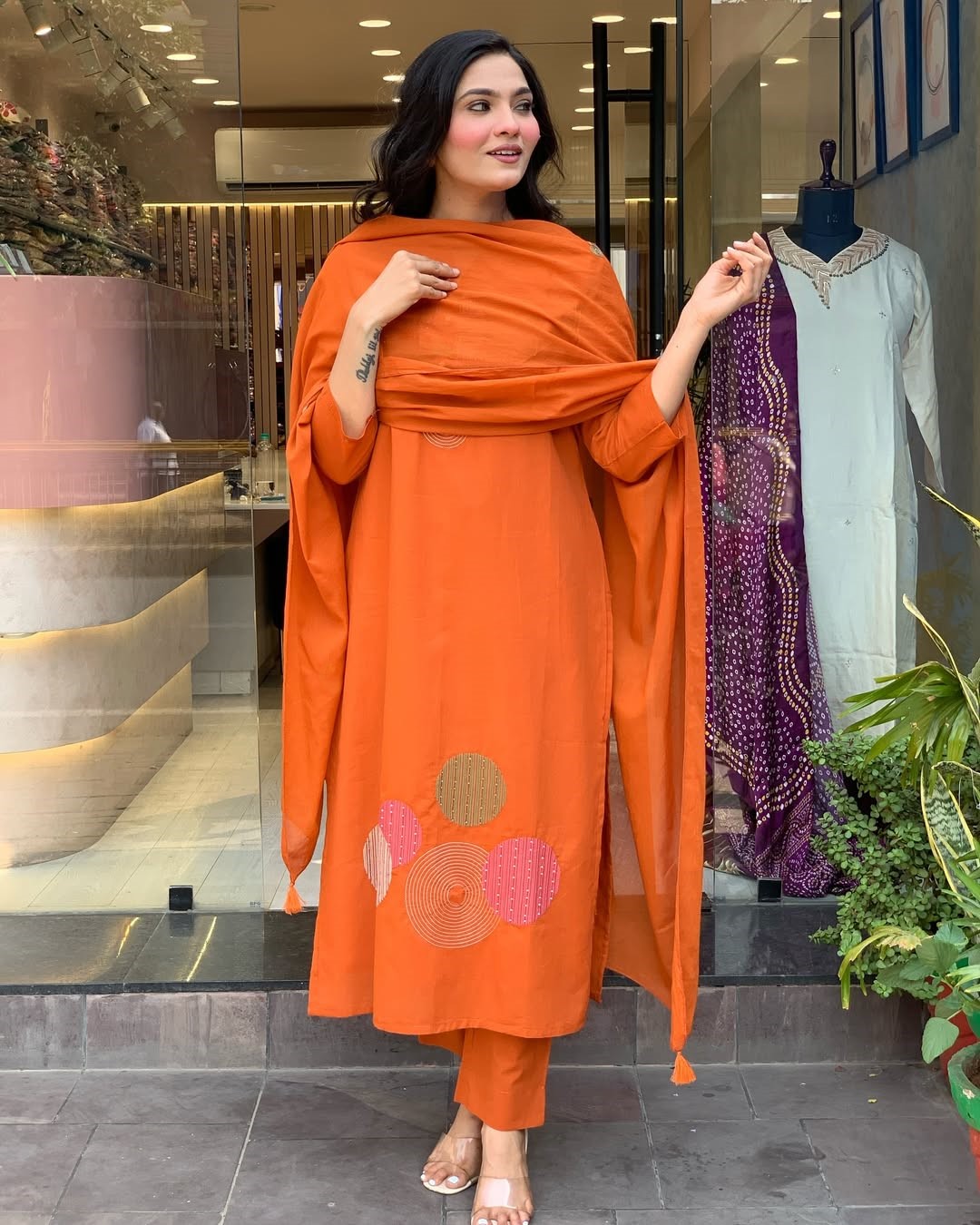
For a daytime puja, pair a deep green saree with an ivory or cream blouse, small gold earrings, a beige sandal and a neatly pinned pallu. Choose a matte handbag and avoid a heavy waist belt. The combination remains traditional while keeping the face and upper body visually open.
For a garden lunch, select a printed or textured fabric rather than a fully plain silk. Olive Green Linen Cotton Printed Saree with Dark Border works with tan footwear, pearl earrings and a soft peach or ecru blouse. A compact pallu arrangement is practical if the event involves walking, outdoor seating or moderate wind.
For a daytime engagement, a richer saree can remain appropriate when the accessories are edited. Dark Green Lichi Silk Saree with Rich Golden Jacquard or Dark Green Banarasi Silk Saree With Gold Jacquard Work can be paired with a plain blouse, one pair of statement earrings and a neutral clutch. Keep the makeup luminous but not glitter-heavy.
For a black outfit, use texture as the lightening tool. Black Chanderi Cotton Saree with Contemporary Checked Weave needs less jewellery than a plain black silk saree because its checked weave already breaks up the colour. Ivory, pale grey or muted blush near the face will usually appear softer than a high-contrast yellow-gold blouse.
Before leaving home, check the outfit in direct daylight for five minutes. Look for three practical issues: whether the blouse remains visible, whether the pallu creates a single heavy block and whether the metallic details overpower the face. Adjusting one of those elements is usually enough to make a deep colour feel lighter without changing the saree.
Common Questions About Making Deep Ethnic Colours Work in Daylight
Can I wear a black saree to a daytime function?
Yes, a black saree can work well for daytime when the fabric has texture or a lighter pattern and the styling includes a soft contrast near the face. Chanderi cotton, checked weaves, ivory blouses, pearl jewellery and beige footwear help prevent the outfit from looking too formal.
Which blouse colour makes a dark green saree look lighter?
Ivory, cream, muted peach, pale gold and soft pink are effective blouse colours for a dark green saree. A matte finish usually works better than intense metallic shine when the saree already contains zari.
Is zari suitable for a daytime function?
Zari is suitable for daytime when the metallic work is narrow, woven, antique-toned or concentrated on the border and pallu. Keep the blouse and accessories simpler if the saree has a rich gold pallu or extensive jacquard work.
How can I make a dark saree look less heavy?
Use a lighter blouse, medium-width pleats, an uncluttered pallu and matte or neutral accessories. Breathable fabrics such as linen cotton, Chanderi cotton and Maslin silk can also make a deep colour appear more relaxed.
What jewellery should I wear with a dark saree during the day?
Choose one jewellery direction, such as pearl drops, small antique-gold jhumkas or brushed-silver earrings. Avoid combining a large necklace, oversized earrings, multiple bangles and a heavy brooch when the saree already has zari or sequins.
How should I style a dark Anarkali for a daytime event?
Keep the dupatta in a clean vertical drape, use simple earrings and choose neutral or fabric-covered footwear. A satin-finish makeup look and a plain clutch balance sequins or dense embroidery more effectively than adding further shine.


