Loose Threads on a New Saree Are Not Always a Quality Problem. A few short fibres, floating yarn ends or an uncut thread near the selvedge can remain after weaving, finishing and folding. The important question isn't whether a thread is visible, but whether the thread belongs to the fabric structure and whether pulling it changes the weave.
A saree contains thousands of interlaced warp and weft yarns, and handloom fabrics can show more evidence of their making than tightly finished mass-produced cloth. Banarasi silk, Kanjeevaram, Chanderi cotton, handloom cotton and zari-woven sarees each behave differently. A calm inspection before cutting or wearing helps distinguish a harmless finishing end from a genuine construction problem.
Loose Threads on a New Saree Are Not Always a Quality Problem: What does one mean?
A loose thread usually means that a yarn end was left visible during weaving, cutting, finishing or packing; it doesn't automatically mean that the saree is damaged. A thread that lies on the surface, measures only a few millimetres and has no visible gap around it's commonly a finishing issue rather than a structural defect.
Weaving creates two main yarn directions. Warp yarns run lengthwise from the top of the saree to the bottom, while weft yarns pass across the width. A loose warp end can be more serious because it may create a lengthwise opening. A short weft tail at the edge or pallu may be harmless, especially when the surrounding rows remain compact.
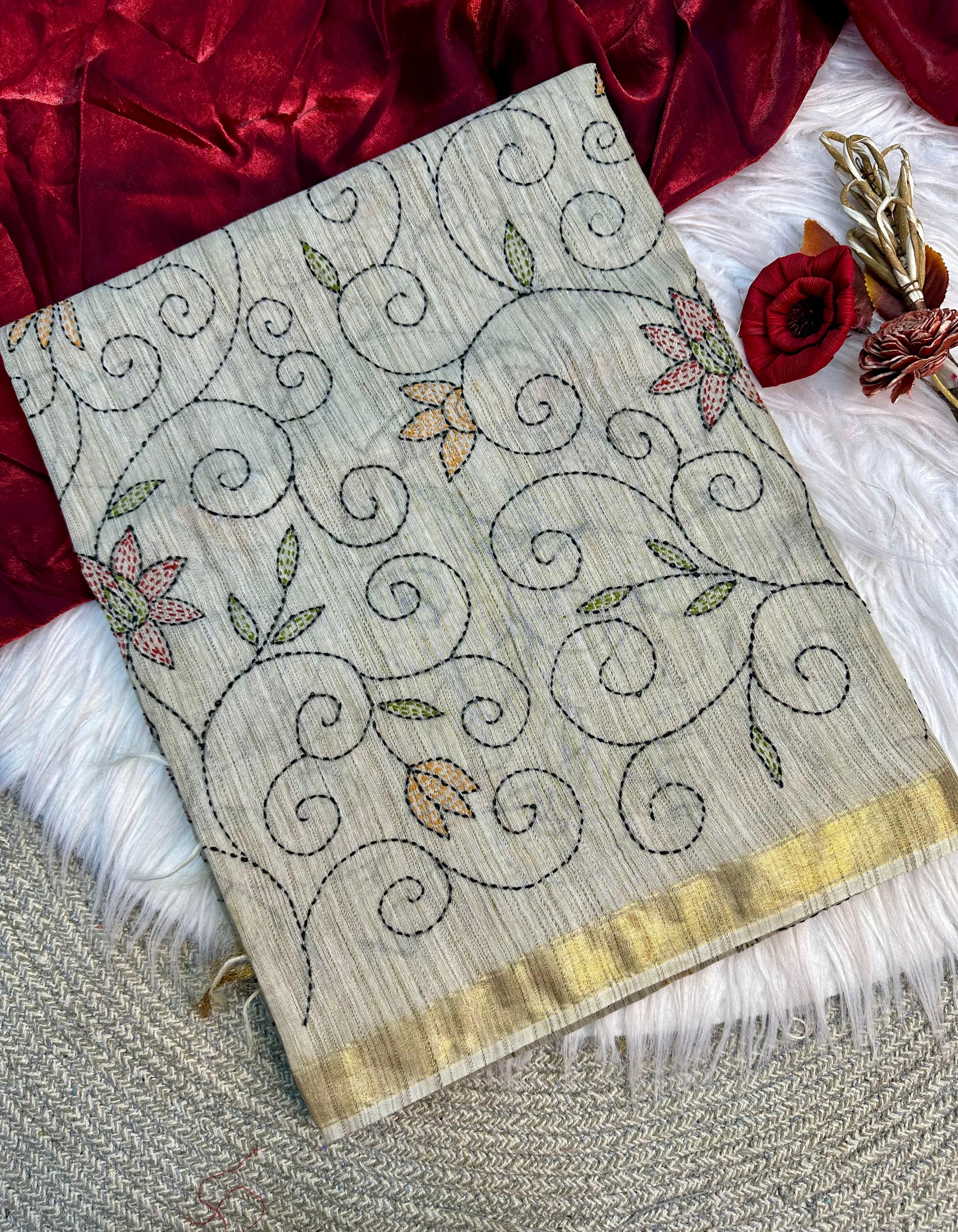
Handloom production can also leave small irregularities that reflect the process rather than poor quality. Handloom silk and cotton are guided, changed and secured by operators, so minor variations in yarn tension may appear. Premium Handloom Silk Saree with Handkatha should be examined for the stability of its weave and the condition of its borders rather than judged solely by one visible fibre.
Loose Threads on a New Saree Are Not Always a Quality Problem: Which fibres are harmless?
Short surface fibres, tiny yarn tails at the selvedge and threads tucked into a border are usually harmless when the surrounding fabric is intact. A thread that can be gently laid flat without resistance is less concerning than one that pulls several nearby lines out of alignment.
Floating yarns may occur where a design changes, particularly around a printed pallu, contrast border or zari motif. Pastel Floral Tissue Handloom Cotton Saree with Zari Weaves may show fine metallic or cotton ends around a woven motif because zari involves an additional visible material. The correct response is careful observation, not an immediate tug.
Loose Threads on a New Saree Are Not Always a Quality Problem: How can you identify a defect?
A real weaving defect usually affects the fabric around the thread: the saree may show a hole, an expanding gap, a pulled line, a ladder-like run or a border that no longer lies straight. A harmless fibre normally remains isolated and leaves the surrounding warp and weft undisturbed.
- Place the saree on a clean, flat surface. Natural daylight makes pale fibres, dark threads and zari irregularities easier to see.
- Check both sides. A surface tail may disappear on the reverse side, while a true broken yarn often creates a visible interruption on both sides.
- Measure the affected area. Note whether the issue is a single 2-5 millimetre end or a line extending several centimetres.
- Look for movement. Press the fabric gently beside the thread. If neighbouring yarns shift or a gap opens, stop handling the area.
- Inspect the selvedge and border alignment. A straight selvedge with stable edges is reassuring; a wavy, separating or fraying edge needs closer review.
A useful test is to photograph the area before touching it and then compare the thread after the saree has rested flat for a few minutes. Do not pull the thread to see where it leads. Pulling can convert a minor finishing end into a genuine snag, particularly in satin, tissue and loosely woven cotton.
Loose Threads on a New Saree Are Not Always a Quality Problem: When should you contact the seller?
Contact the seller when a thread creates an opening, runs continuously through several rows, loosens a motif, distorts the pallu or causes the fabric to separate under light handling. A cluster of unfinished ends in one concentrated area also deserves inspection, even if no hole is visible yet.
Record the product name, order number, close-up photograph, full-saree photograph and approximate location of the issue. A useful description says, "A 4-centimetre warp line is loose 18 centimetres above the lower border," rather than simply saying, "The saree has threads." Clear evidence helps the seller distinguish a repairable end from a manufacturing defect.
Loose Threads on a New Saree Are Not Always a Quality Problem: Why does fabric type matter?
Fabric structure determines how a loose thread looks and how much risk handling it creates. A dense silk weave may hold a short tail securely, while a smooth satin surface can reveal a pulled yarn quickly because reflected light exposes the disturbed area.

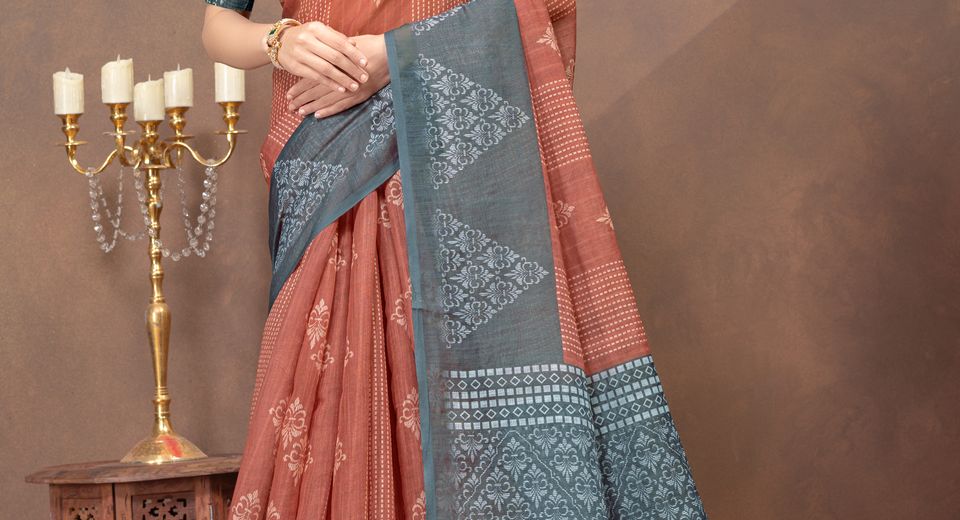
Handloom cotton often has a slightly more tactile surface, and small variations in yarn thickness can be visible without affecting wear. Black Chanderi Cotton Saree with Contemporary Checked Weave illustrates why the pattern matters during inspection: a displaced line is easier to identify against checks than against a scattered floral print.
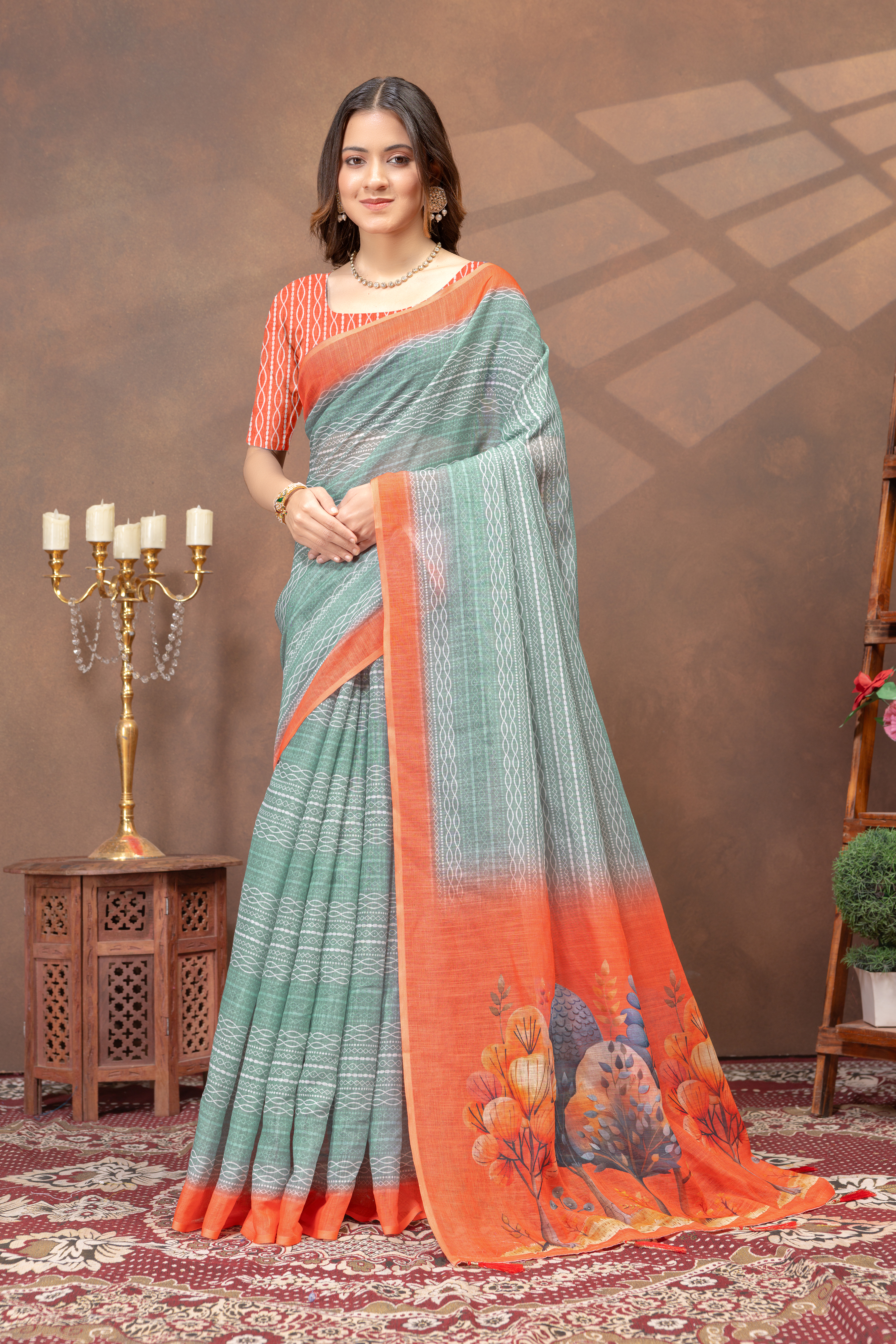
Printed designs can conceal small yarn changes but can't repair a broken weave. Teal Rust Floral Satin Saree with Printed Pallu and Borders should be checked for snags that interrupt the satin's smooth reflection, especially near the pallu and printed border. An uneven print isn't automatically a weaving fault, while a raised pulled line may be.
Zari requires additional care because metallic thread can catch on jewellery, rough furniture and adhesive fasteners. Zari can appear as a fine glinting end at a motif edge, but a long metallic strand that has pulled away from several design points should not be cut without documentation. A zari thread may be decorative and separate from the main structural yarn, yet it still needs careful handling.
Loose Threads on a New Saree Are Not Always a Quality Problem: How should you trim one?
Trim a confirmed surface tail with small, sharp embroidery scissors held parallel to the fabric; never yank, bite or burn the thread. Trimming is appropriate only when the surrounding weave is stable and the thread doesn't appear to be a structural warp or weft yarn.
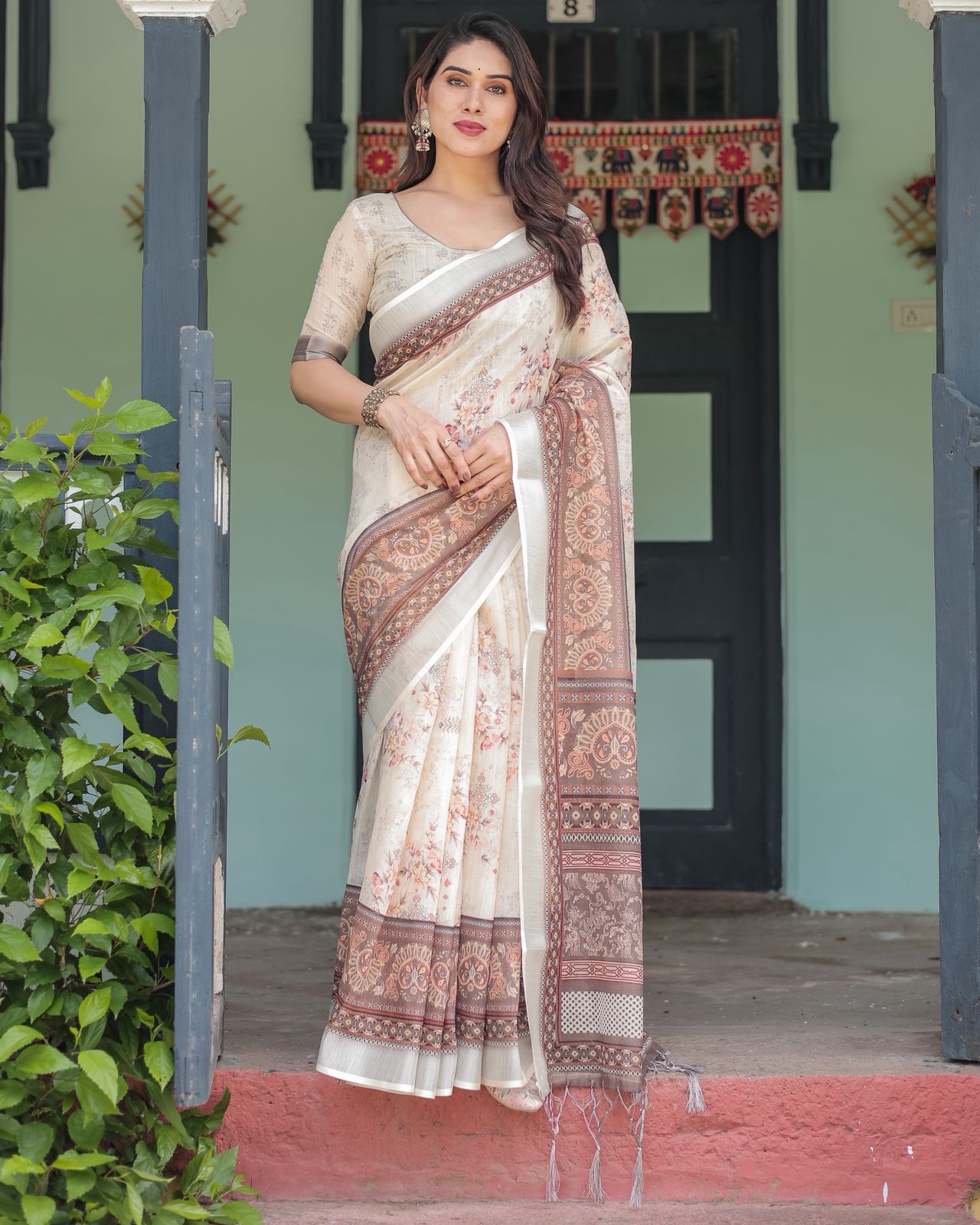
- Separate the saree from jewellery and rough surfaces. Place the saree on a clean cotton sheet.
- Take photographs first. Keep the original thread visible until you're satisfied that the issue is cosmetic.
- Use embroidery scissors or thread snips. Blunt household scissors can pull silk, satin and tissue.
- Cut close to the surface without touching the fabric. Leave a fraction of a millimetre rather than cutting into the weave.
- don't seal the end with a flame, glue or clear nail polish. Heat can damage silk, melt synthetic fibres and discolour zari.
After trimming, smooth the area with your palm and inspect it again in side light. Avoid rubbing the cut point. A tailor or textile conservator should handle a thread that enters a blouse-piece seam, pallu border or visibly patterned motif.
Loose Threads on a New Saree Are Not Always a Quality Problem: Does washing help?
Washing doesn't reliably remove loose threads and can make a weak area worse. Water movement, detergent, friction and wringing may enlarge a gap that was easy to document when dry.
Follow the care instructions supplied with the saree and avoid washing a new saree before recording a possible defect. Dry cleaning isn't automatically safer because solvents and pressing can affect dyes, finishes and metallic details. Sarees with zari, tissue or delicate handloom surfaces should be assessed according to their fibre and embellishment rather than treated as ordinary cotton garments.
Loose Threads on a New Saree Are Not Always a Quality Problem: What should you inspect after delivery?
The first 24 hours provide a practical inspection window because the saree can be checked before alteration, draping, washing or extended storage. Keep the packaging, tags and invoice until the inspection is complete.
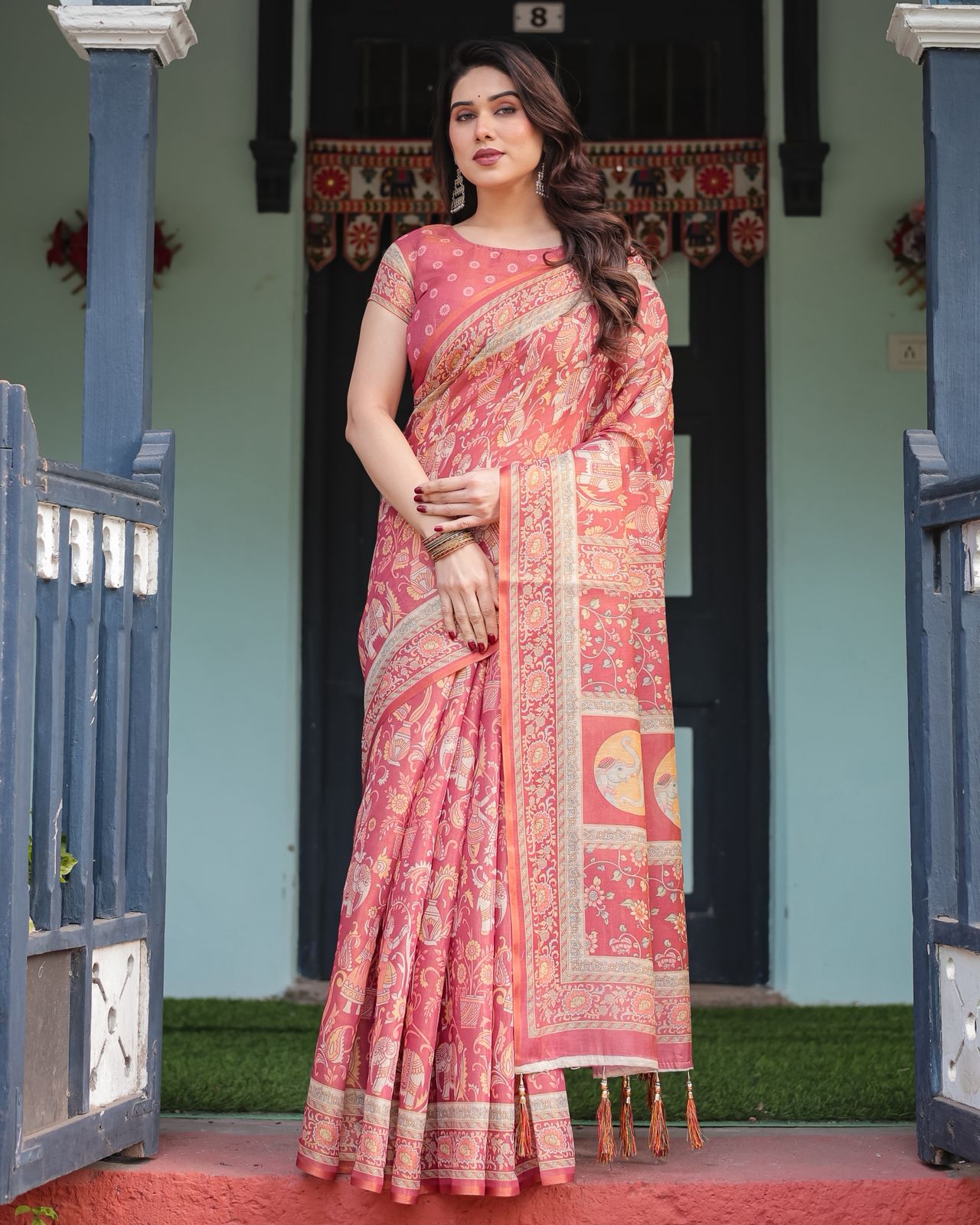
- Unfold the saree fully. Check the body, pallu, borders, pleat area and attached blouse piece.
- Compare both borders. Look for breaks in zari, uneven width, missing motifs or fraying that continues along the edge.
- Check the colour and print. Minor variations may occur with handloom processes, but stains, dye transfer or unprinted patches should be documented.
- Examine the fabric under daylight. Artificial light can hide snags and make metallic details appear smoother than they're.
- Photograph every concern before trimming. Include one close image and one image showing the thread's location on the entire saree.
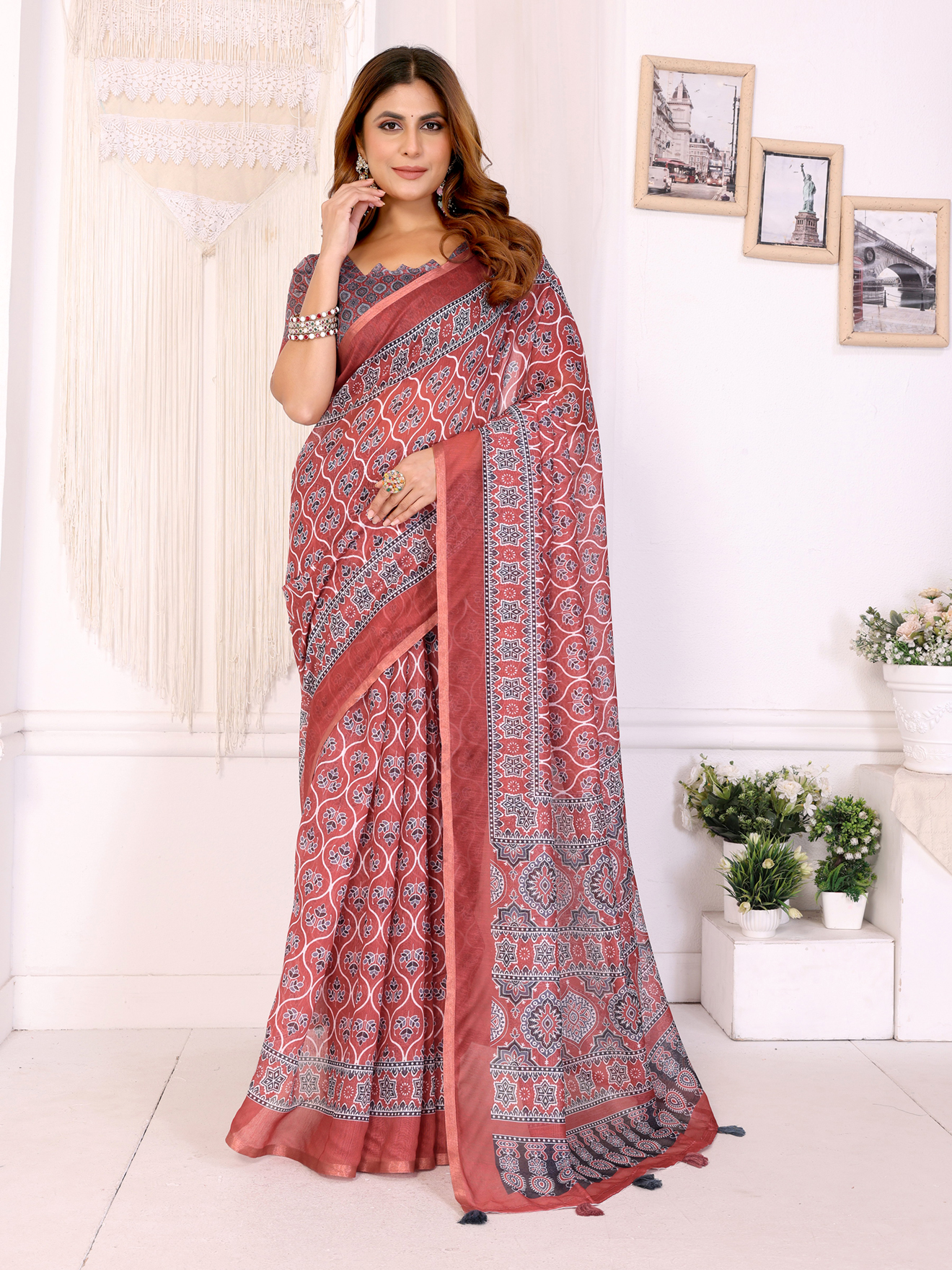
Blue Floral Satin Saree with Unstitched Blouse from Varnavi can be checked particularly well by spreading the satin flat and viewing it from several angles, because a snag may be more apparent through reflected light than by touch. Traditional Beige Multicolor Printed Saree may show print variation that should not be confused with a broken yarn. Rust Maroon Handloom Cotton Saree with Floral Print and Traditional may show surface texture associated with handloom cotton rather than fabric separation.
Loose Threads on a New Saree Are Not Always a Quality Problem: How should price affect expectations?
Price should change the level of inspection, not the basic expectation of a sound, wearable weave. An affordable saree can have a small finishing fibre, but price doesn't make a hole, continuous run or separating border acceptable.
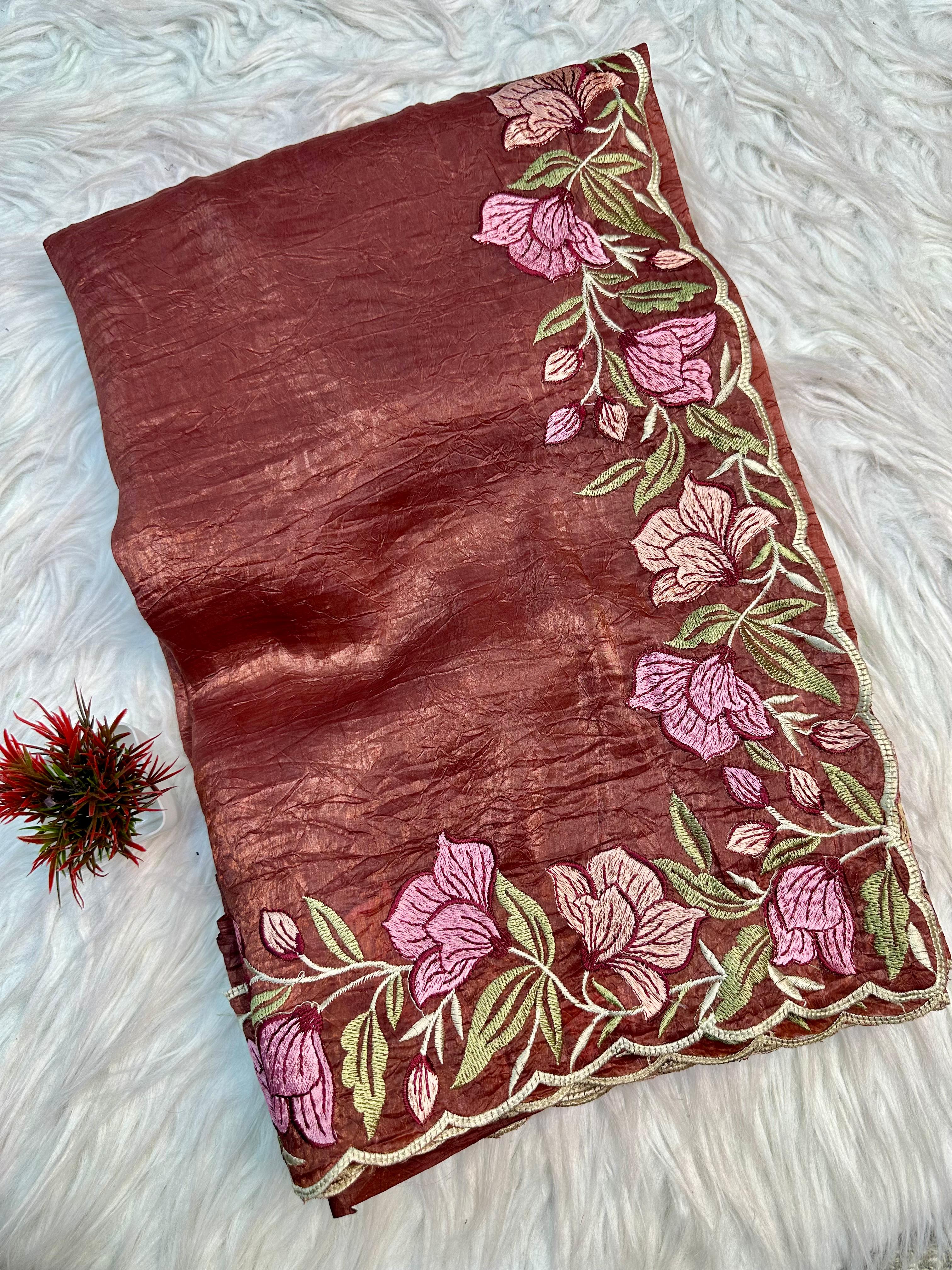
Premium Beige Cotton Handloom Saree with Maroon Ethnic Border and Heritage Printed Pallu should be assessed for structural integrity, border stability and print quality rather than for absolute visual uniformity. Handloom cotton, Chanderi and silk may show natural variation, while a construction failure remains a separate concern at every price point.
Price-led browsing can help set a realistic budget, but discount labels don't replace fabric inspection. Sarees from Rs 1000 to Rs 1500 may include practical everyday weaves with visible surface variation. Sarees Under 20% Off and Sarees Under 10% Off can be evaluated using the same checks as full-price purchases.
Deeper reductions such as Sarees Flat 60% Off and Sarees Flat 50% Off may relate to seasonality, discontinued colourways, inventory movement or minor disclosed imperfections. A disclosed cosmetic variation is different from an undisclosed hole or unstable weave. Read the product details, retain delivery evidence and ask for clarification before altering a heavily discounted saree.
Loose Threads on a New Saree Are Not Always a Quality Problem: What is the safest conclusion?
The safest conclusion is to inspect the thread's effect on the surrounding weave before trimming or requesting a return. An isolated short tail with no gap is generally cosmetic, while a moving line, hole, ladder, distorted border or repeated cluster indicates a problem worth documenting.
Good saree care begins with restraint. Do not pull an uncertain yarn, don't use heat or glue, and don't wash the saree before recording a concern. A few minutes of daylight inspection can protect both the fabric and your ability to explain a genuine defect clearly.
A loose thread is a reason to inspect the weave, not an automatic verdict on the saree's quality.
Common Questions About Loose Threads on a New Saree
Are loose threads on a new saree a sign of poor quality?
Loose Threads on a New Saree Are Not Always a Quality Problem. A short, isolated surface fibre or selvedge tail can be a normal finishing remnant, while a hole, expanding gap, pulled line or separating border indicates a possible defect.
Can I cut a loose thread from my new saree?
You can trim a loose surface tail when the surrounding weave is stable and no warp or weft line moves with it. Use sharp embroidery scissors, cut parallel to the fabric and never pull, burn, glue or seal the thread.
How can I tell whether a saree thread is part of the weave?
Check the saree on both sides in daylight and look for a gap, ladder, distorted motif or movement in neighbouring yarns. A structural thread usually interrupts the weave or shifts nearby rows, while a harmless tail remains isolated.
Should I wash a saree before reporting loose threads?
Do not wash a new saree before documenting a possible defect. Water, detergent, friction and wringing can enlarge a weak area and make it harder to establish its original condition.
Do handloom sarees naturally have loose fibres?
Handloom sarees can show short fibres, small yarn variations and occasional finishing ends because of their weaving and finishing processes. Natural variation is acceptable when the weave remains secure, but a hole, continuous run or unstable border should be reported.
Does zari make loose threads more difficult to assess?
Zari can make thread inspection more delicate because metallic strands may catch on jewellery and can be separate from the main fabric structure. Photograph a loose zari strand before touching it, and seek guidance if the strand extends across several motifs or has pulled the surrounding design.