

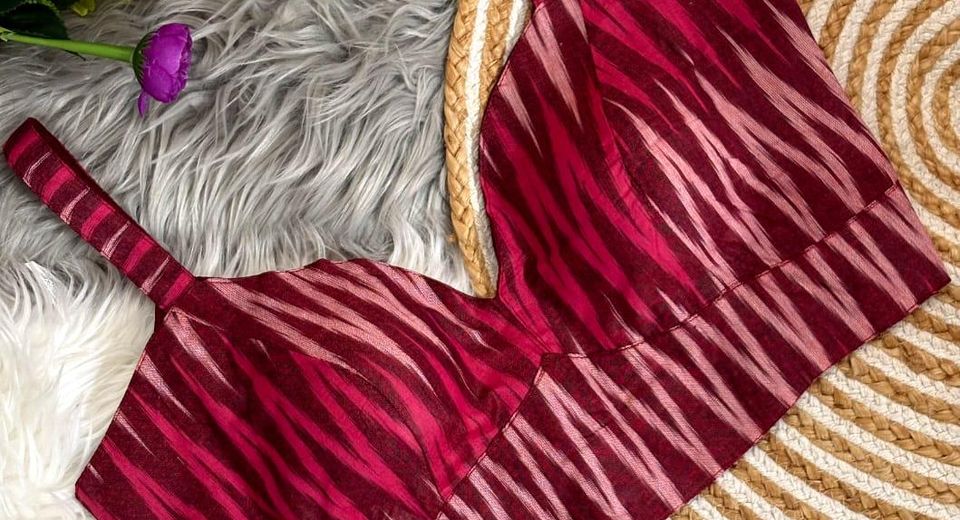
A cotton blouse can make a summer saree feel considerably cooler, but the wrong lining can turn a breathable outfit into a tight, sweaty layer. Lining Fit and Care for Cotton Blouse for Summer Sarees depends on three practical decisions: selecting a light inner fabric, allowing enough movement at the bust and armhole, and washing the finished blouse without damaging its shape. The same principles apply to printed cotton, handloom cotton, linen-cotton and zari-accented sarees.
A well-fitted cotton blouse should sit smoothly at the shoulder, leave comfortable room for breathing, and allow the wearer to raise both arms without the armhole cutting into the underarm. A lining should support the outer fabric without making the blouse noticeably warmer. Small construction choices, such as cotton voile instead of heavy polyester lining or hook placement that doesn't pull at the bust, often make a greater difference than a more elaborate design.
Why lining matters in a summer cotton blouse
Lining improves opacity, reduces direct friction against the skin and helps a blouse retain its shape. Lining also changes how much heat and moisture remain close to the body, so the lining material matters as much as the outer cotton fabric.
Unlined cotton can feel airy, but loosely woven cotton may become transparent under strong daylight and can stretch around the neckline or armhole. A light lining creates a cleaner finish and prevents embroidery, seams or printed colours from rubbing directly against the skin. A lining is especially useful for pale shades, fine mul cotton, Chanderi-cotton blends and blouses worn with a saree that has a structured drape.
Choose cotton voile, cotton cambric or soft mul cotton when breathability is the priority. These fabrics absorb perspiration better than standard polyester lining and generally feel less clammy during a long afternoon event. Cotton voile is particularly useful for a fitted blouse because its light weight adds coverage without creating much bulk.
Avoid thick satin, foam-backed lining and densely woven synthetic fabric for peak summer wear unless the blouse needs specific shaping. Polyester lining can dry quickly, but it may hold heat against the skin and can feel slippery beneath a saree. A padded blouse such as Ikkat Cotton Padded Blouse for Women Sleeveless already contains more structure, so adding a heavy full lining may be unnecessary.
Should a cotton blouse always have lining?
A cotton blouse doesn't always need full lining, but a partial or lightweight lining is helpful when the outer fabric is sheer, coarse or loosely woven. Unlined cotton works well when the fabric is opaque, soft and closely woven, and when the inside seams have been finished neatly.
A facing at the neckline and armhole can be enough for a sturdy cotton fabric. A full lining is more suitable for pale cotton, delicate prints, padded designs or blouses with surface embellishment. The tailor should avoid treating lining as a default layer because unnecessary lining can reduce airflow and make a summer blouse feel restrictive.
Lining Fit and Care for Cotton Blouse for Summer Sarees: choosing the right construction
The best construction for summer is a light lining with controlled ease, clean seam finishing and no unnecessary layers across the back. The lining should follow the outer blouse without pulling, bubbling or extending beyond the sleeve and neckline.
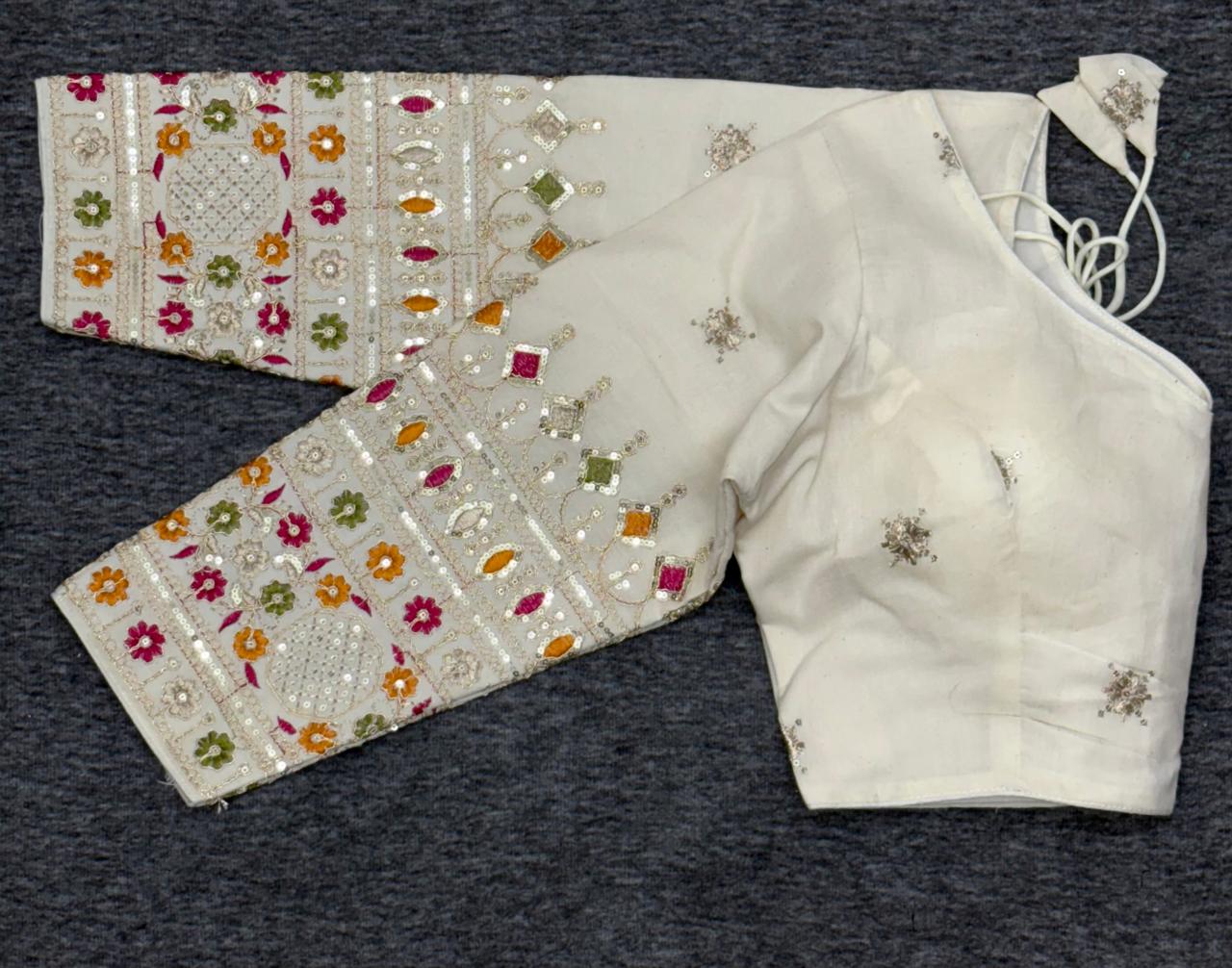
For a sleeveless blouse, the lining should be secured around the armhole with a narrow, flat finish. A bulky turned edge can press into the underarm and become uncomfortable after several hours. A blouse such as Brown Ikat Cotton Padded Blouse Sleeveless Stylish demonstrates why the inner structure matters: a sleeveless cut exposes the armhole to movement, so the seam must stay flat when the wearer reaches forward or lifts an arm.
For short sleeves, the lining can finish just inside the sleeve hem rather than extending beyond it. The outer cotton sleeve should not twist around the lining. For elbow-length sleeves, a very light lining or a carefully finished outer layer is often more comfortable than lining the entire sleeve.
Use breathable thread and avoid excessive seam allowance inside the armhole. French seams can give a clean finish in lightweight cotton, while bias binding made from soft cotton is useful around curved edges. Scratchy lace, stiff canvas and thick fusible interlining are poor choices for a blouse intended for humid weather.
When is a padded cotton blouse suitable for summer?
A padded cotton blouse can be suitable for summer when the padding is thin, breathable and correctly fitted. Padding should provide modesty and support without compressing the bust or replacing the need for accurate measurements.
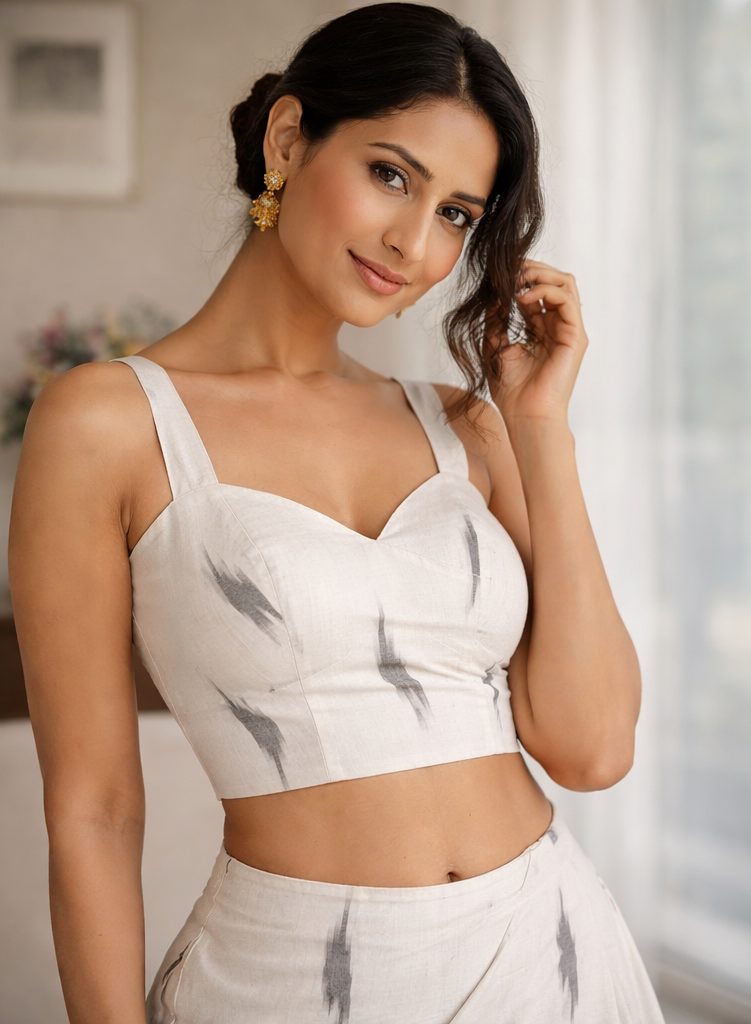
Thin cotton-covered cups or removable pads are more comfortable in heat than thick foam. The pad should remain centred when the wearer walks, bends and raises her arms. The Cream Ikat Cotton Padded Blouse Sleeveless Trendy is an example of a style where colour and silhouette may look simple, but the fit of the padded section determines whether the blouse feels easy to wear for several hours.
How to measure a cotton blouse for movement and comfort
Measure the bust, underbust, shoulder, armhole, blouse length and sleeve length while wearing the undergarment that will normally be worn with the blouse. Accurate measurements taken over a very thin garment can produce a blouse that feels tight during real use.
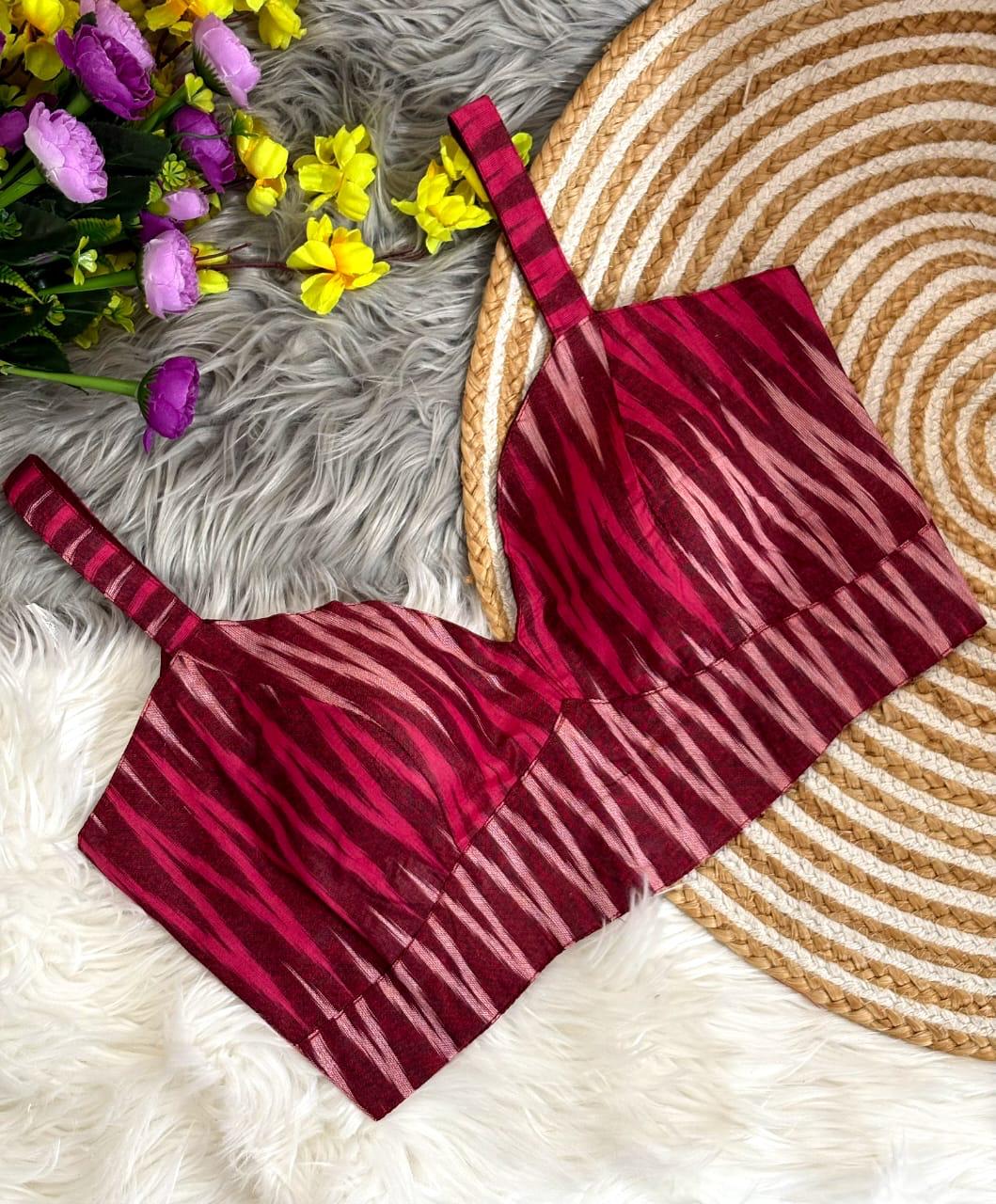
Measure the fullest part of the bust with the tape parallel to the floor and keep the tape firm rather than tight. Measure the underbust directly below the bust, especially when the blouse has cups, darts or a fitted waist. Record shoulder width from one shoulder point to the other and measure the armhole around the fullest part of the upper arm and shoulder curve.
Cotton may shrink after washing, so the finished garment needs practical ease. A closely fitted blouse commonly needs about 2.5 to 5 centimetres of bust ease, depending on the fabric, dart placement and closure. A relaxed blouse may need 5 to 7.5 centimetres. Stretch cotton can need less ease, while crisp woven cotton requires enough room for sitting, breathing and arm movement.
don't add ease only at the side seam. A balanced pattern distributes room through the bust, back and armhole. Excess fabric at the waist can create wrinkles, while insufficient room across the upper back can pull the neckline backwards. A side opening with hooks and a modest overlap is often more comfortable than a closure that ends exactly at the bust apex.
What does a correct armhole feel like?
A correct armhole follows the body without cutting into the underarm or gaping away from the chest. The wearer should be able to lift the arm to shoulder height without the blouse rising sharply or the lining digging into the skin.
Test the blouse by moving both arms forward, clasping the hands behind the back and sitting down. If the neckline pulls during these movements, the issue may be insufficient back width rather than a neckline problem. If the underarm pinches, the armhole may be too high or too narrow. Lowering an armhole excessively isn't a reliable fix because it can create gaping and reduce support.
Matching cotton blouse lining to summer sarees
Match the lining weight to the saree and the blouse design rather than choosing the same material for every outfit. A light saree needs a smooth, low-bulk blouse, while a heavier cotton or zari saree can support more structure.
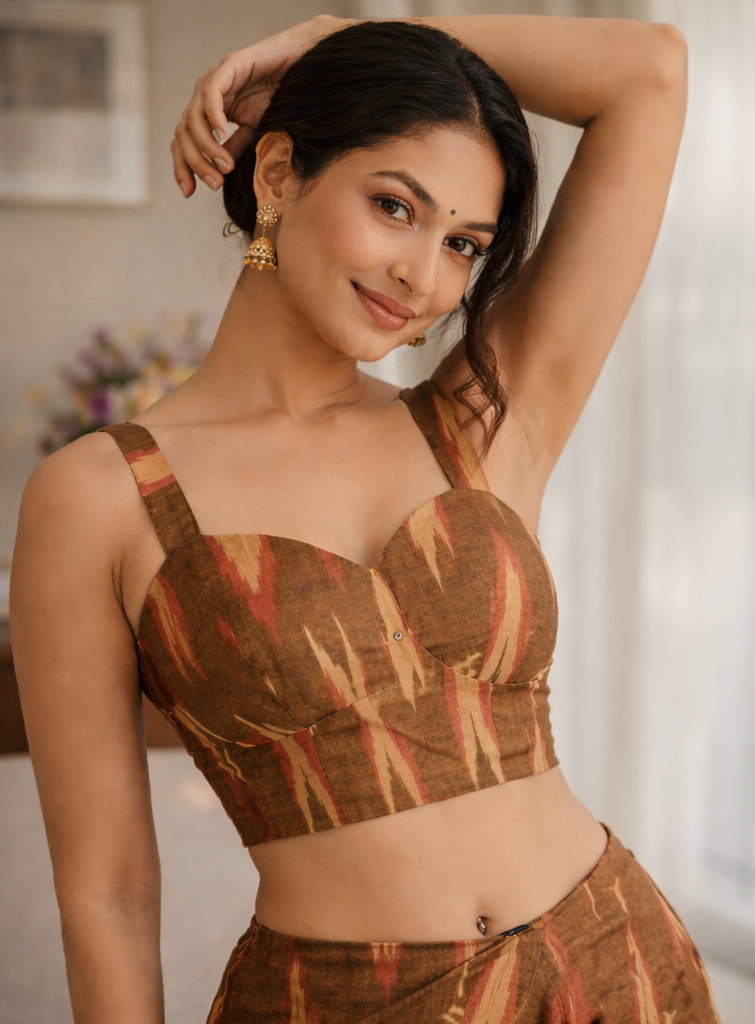
A Blue Linen Cotton Floral Print Saree with Plain Dark Border pairs naturally with a breathable cotton or cotton-voile blouse lining because linen-cotton already has a relaxed summer character. A plain lining in a coordinated shade can prevent the floral print from competing with the blouse neckline. The lining should not be so dark that it changes the apparent colour of a pale outer fabric.
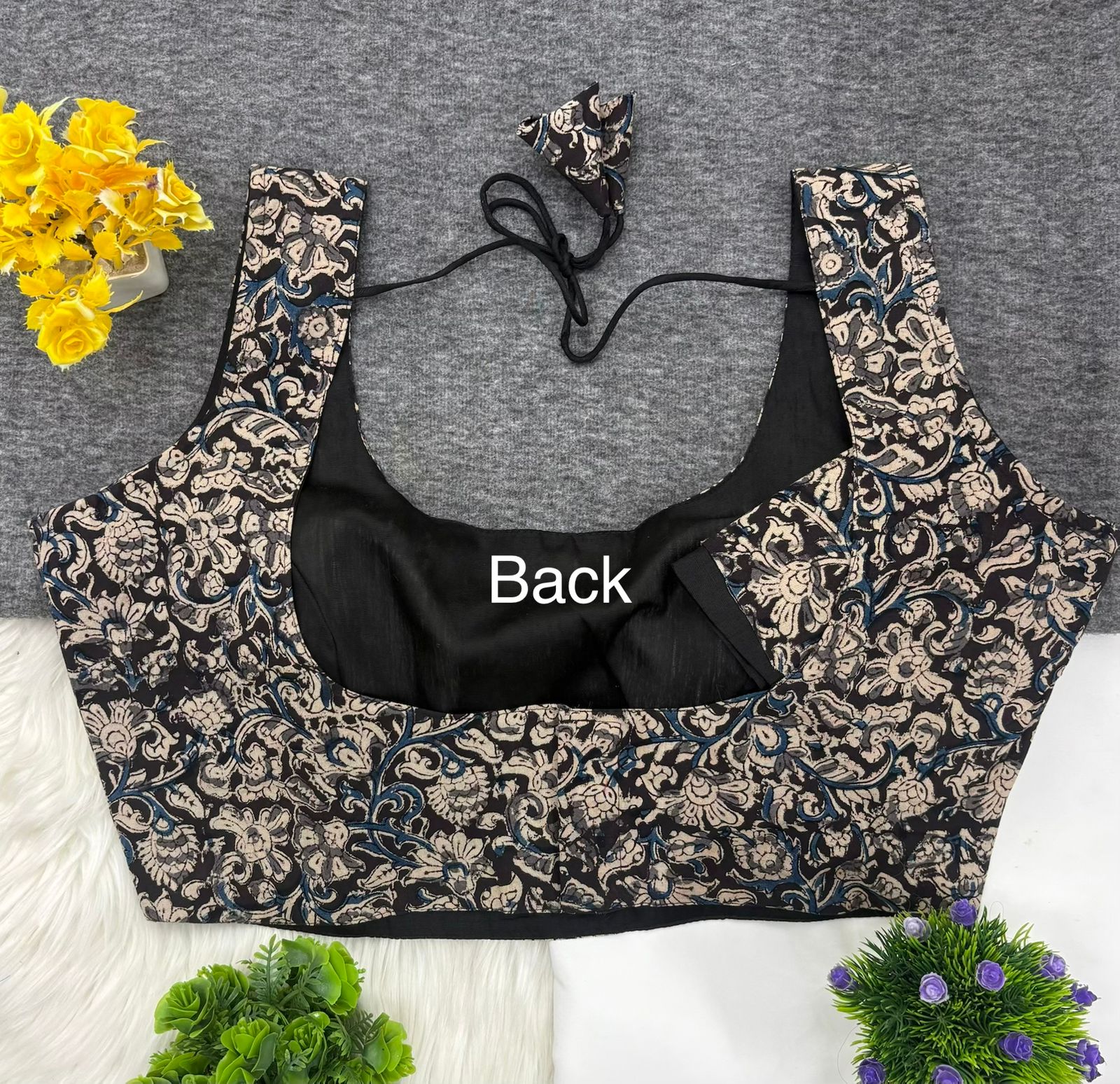
Kalamkari cotton often has a firm hand and a dense print, so it may not require a full lining if the reverse side is comfortable and opaque. Pure Kalamkari Cotton Padded Blouse for Women benefits from a soft lining around the bust and seam areas when the print or padding creates internal friction. Kalamkari Cotton V Neck Collar Blouse for Women may need particular care at the V point, where a stiff lining can cause the neckline to stand away from the chest.
For a festive cotton saree with metallic detail, choose a lining that doesn't snag against zari. Blue Zari Work Cotton Saree for Wedding can be worn with a structured cotton blouse, but a smooth cotton inner layer helps prevent rough zari edges from catching on the skin. Keep the lining slightly shorter than the outer hem when the blouse has a curved or scalloped finish.
A Classic Festive Wear Blouse for Stylish Saree Look can work beyond summer if the lining is removable or light enough for warm weather. The useful question isn't whether a blouse is labelled festive, but whether its inner construction permits airflow and comfortable movement during the number of hours it will be worn.
Washing and drying rules that protect cotton blouse shape
Wash a cotton blouse in cool or lukewarm water, use mild detergent, avoid prolonged soaking and dry it in shade. These steps reduce colour bleeding, shrinkage, seam distortion and unnecessary stress on lining and padding.
Before the first wash, check whether the outer fabric and lining have been pre-shrunk. If different fabrics are sewn together before washing, they may contract at different rates and cause bubbling or pulling. A tailor can pre-shrink washable cotton by gently washing and drying the fabric before cutting. Do not pre-shrink padded components unless the care instructions specifically allow it.
Turn the blouse inside out and fasten hooks before hand washing. Use a small amount of mild liquid detergent and press the blouse gently through the water instead of rubbing the neckline, underarm or padded cups. Rinse until no detergent remains. Residual detergent can stiffen cotton and irritate skin in hot weather.
don't twist a lined blouse to remove water. Press the garment between two clean towels, reshape the shoulder and neckline, and dry it on a broad hanger or flat surface in indirect light. Strong midday sunlight can fade Kalamkari prints, Ikat patterns and dark cotton dyes. Direct heat can also harden padding and weaken elastic components.
Iron cotton while it's slightly damp, using the temperature suitable for the outer fabric. Place a thin cotton cloth between the iron and zari, printed pigment or padded section. Avoid pressing directly over foam pads, plastic hooks or metallic embellishment. Steam can relax wrinkles, but excessive heat may set sweat marks or flatten textured cotton.
How often should a cotton blouse be washed?
Wash a cotton blouse after each heavy-sweat wear and after every one to three lighter wears, depending on skin contact and odour. Underarm areas and padded sections need more frequent cleaning because they retain perspiration.
Air the blouse immediately after wearing it and don't store it while damp. For a blouse worn only briefly over a saree and underskirt, airing may be sufficient for one repeat wear, but visible marks, strong odour or humidity require washing. Spot-clean small marks promptly rather than scrubbing the entire blouse repeatedly.
Storage and repairs between summer occasions
Store a clean, completely dry cotton blouse flat or on a wide padded hanger, away from compressed plastic covers. Folding heavy embellishment across the bust can create permanent creases, while a thin wire hanger can leave shoulder marks.

Keep padded blouses away from high humidity and place them in a breathable cotton garment bag. Avoid storing cotton with strong fragrance sachets, which can transfer oils or scent to the fabric. Refold a blouse every few months if it will remain packed for a long period.
Inspect hooks, eyelets, shoulder seams and underarm stitching before an event. A loose hook can place sudden strain on the centre front, and a small underarm tear can widen quickly during movement. Replace a stretched hook-and-eye strip rather than compensating by tightening the blouse at the side seam.
Leave a small alteration margin at the side seams when possible. Cotton can relax slightly with wear, and a blouse that's comfortable at the first fitting may need a minor adjustment after washing. A skilled tailor can release a seam, replace a lining section or alter the closure without disturbing the outer print.
A practical pre-event checklist for a summer saree blouse
Check the blouse at least 48 hours before wearing it so that washing, drying and alterations don't become last-minute problems. A simple test can prevent most comfort issues.
- Wear the intended undergarment and test the blouse while sitting, walking and raising both arms.
- Check that the lining lies flat at the bust, neckline, armhole and side seams.
- Confirm that the closure doesn't pull, gape or press into the bust.
- Look for colour transfer by rubbing an unseen inner edge with a damp white cloth.
- Inspect padding for lumps, shifted cups or hard edges.
- Air the blouse fully after steaming or ironing before packing it.
- Carry a few matching hooks, safety pins and a small needle-and-thread kit for a long event.
Comfort should guide the final styling decision. A saree blouse that allows normal breathing and arm movement will look more polished than a tighter blouse that creates pulling, wrinkles and repeated adjustment. Good lining fit and careful cotton care protect both the wearer's comfort and the garment's useful life.
Questions About Comfortable Cotton Blouse Linings for Summer Sarees
Which lining is best for a cotton blouse in summer?
Cotton voile, cotton cambric and soft mul cotton are practical summer linings because they are light and more breathable than heavy polyester. Choose the thinnest fabric that provides the required opacity and support.
How much ease should a fitted cotton blouse have?
A fitted woven cotton blouse commonly needs about 2.5 to 5 centimetres of bust ease, while a relaxed style may need 5 to 7.5 centimetres. The correct amount depends on dart placement, fabric firmness, padding and the wearer's movement needs.
Can a padded cotton blouse be comfortable in hot weather?
A padded cotton blouse can be comfortable when the pads are thin, the lining is breathable and the cups do not compress the bust. Thick foam, tight underbust seams and heavy synthetic lining can make the blouse noticeably hotter.
How should a lined cotton saree blouse be washed?
Hand wash a lined cotton blouse in cool or lukewarm water with mild detergent, and avoid prolonged soaking or twisting. Press out water with a towel, reshape the blouse and dry it in shade before ironing it on a suitable heat setting.
Why does my cotton blouse pull at the neckline when I move?
A neckline that pulls during movement often indicates insufficient back width, bust ease or shoulder balance rather than a neckline-only problem. Test the blouse while reaching forward and sitting, then have a tailor adjust the relevant seam instead of simply lowering the armhole.
Should a cotton blouse be lined if the outer fabric is opaque?
An opaque cotton blouse does not always need full lining if its seams are smooth and the fabric feels comfortable against the skin. A partial lining or neckline and armhole facing can provide a neat finish without adding unnecessary heat.


