

Linen Kurtis for Everyday Comfort Drape and Styling can make daily dressing feel lighter without making it look unfinished. Linen allows air movement, absorbs moisture, and develops a relaxed texture as it's worn. The most useful choice is rarely a completely rigid linen garment; a linen-cotton blend often gives better crease control, softer movement, and easier washing for a working wardrobe.
A practical linen kurti wardrobe begins with three decisions: the climate, the amount of movement required, and the level of structure you want. A straight kurti with trousers behaves differently from an A-line kurti pant set, while a dupatta changes both the visual balance and the heat around the neck. Understanding those differences helps you buy fewer pieces and wear each one more often.
Why Linen Works for Daily Salwar Suit Dressing
Linen works well for daily salwar suits because its breathable weave helps heat and moisture escape from the body. Linen fibres are naturally absorbent, and the slightly irregular surface of linen gives a garment visual texture even when the design is simple.
Pure linen can crease promptly, especially around the waist, elbows, and lap after sitting. That quality isn't a defect, but it does affect where the garment feels most practical. Linen-cotton blends usually offer a more forgiving drape for commuting, desk work, shopping, and repeated washing. Cotton contributes softness and recovery, while linen contributes airflow and a crisp, dry hand feel.
Fabric weight also matters. A very light linen may feel cool but can require a lining if the colour is pale. A medium-weight linen hangs more steadily and is better suited to structured kurtis, pockets, and decorative handwork. Hold the fabric near a window before buying: if the outline of your hand is clearly visible, check whether the garment includes a lining or choose a deeper colour.
Linen is especially useful in warm and humid conditions, but breathability doesn't mean every linen kurti feels cool. Tight sleeves, synthetic linings, dense embroidery, and a high neckline can reduce airflow. The complete garment, not the fibre name alone, determines comfort.
Linen Kurtis for Everyday Comfort Drape and Styling: Choosing the Right Silhouette
The right linen kurti silhouette should leave approximately 8 to 12 centimetres of ease around the fullest part of the body for comfortable daily movement. The required ease depends on the cut, fabric weight, and whether the kurti is worn with trousers, leggings, or a salwar.
Straight cuts for a clean working wardrobe
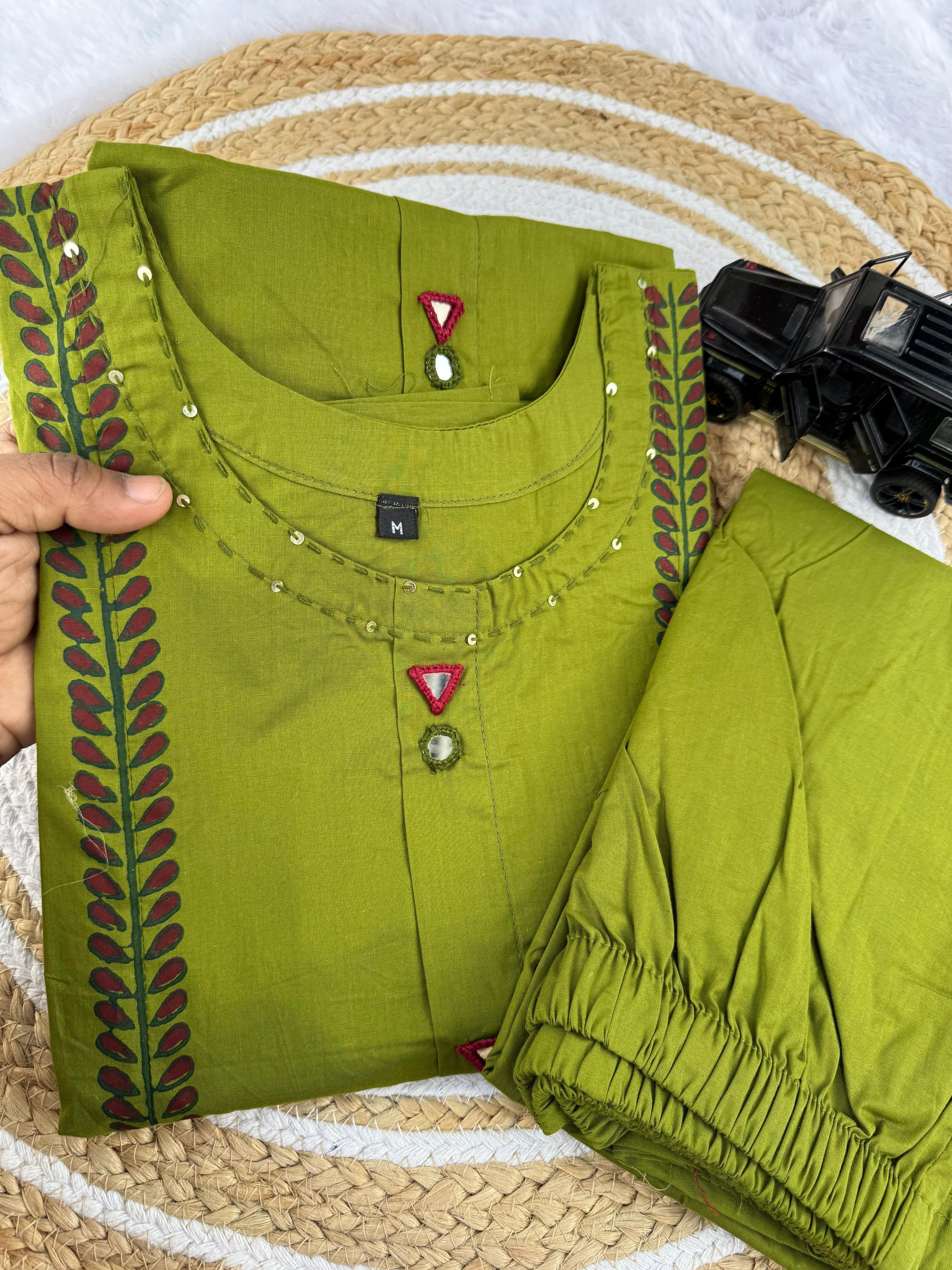
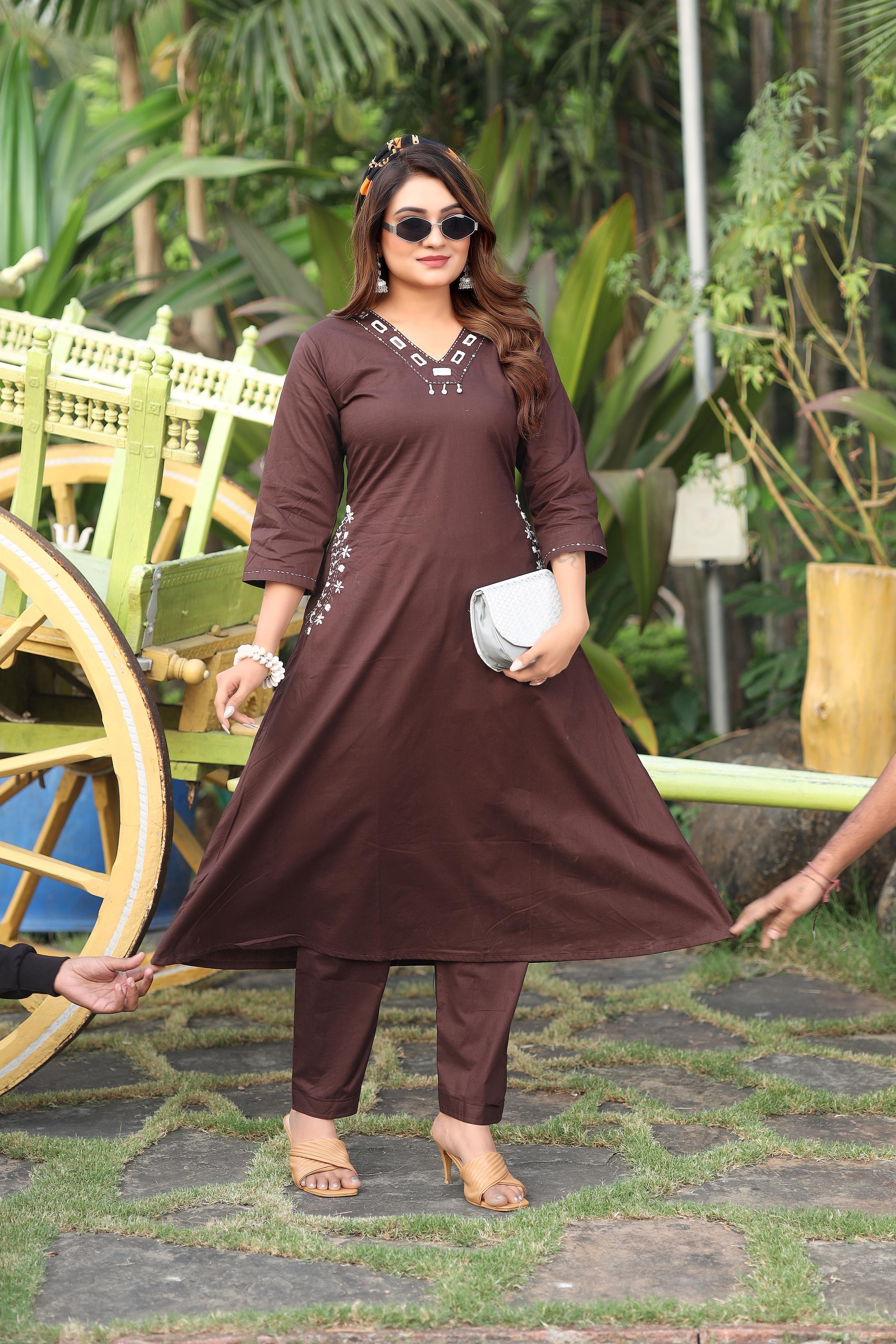
A straight kurti creates a vertical line and works particularly well with cigarette pants, slim trousers, or narrow palazzos. A side slit beginning around the knee improves walking comfort, while a slightly curved hem softens the formal appearance. The Designer Cotton A-Line Kurti Pant Set with Mirror Work demonstrates how modest surface detail can add interest without relying on a heavily layered outfit.
Choose a straight linen kurti when you want reliable proportions under a jacket or when you frequently carry a tote or laptop bag. Avoid making the garment too narrow at the hip, because linen-cotton fabric needs room to fall rather than pull across the side seams.
A-line shapes for movement
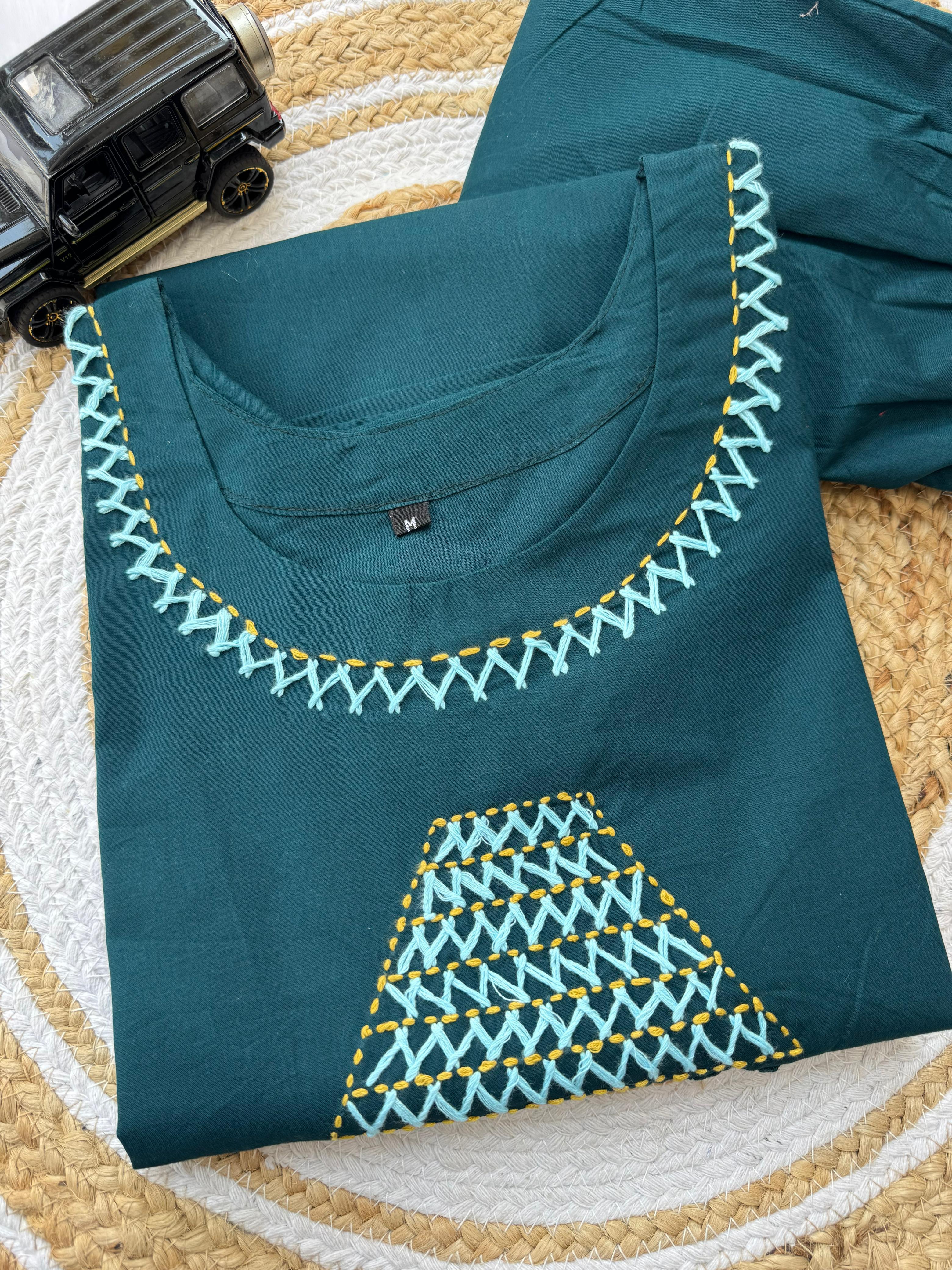
An A-line kurti widens gradually from the bust or waist and gives more room around the hips and thighs. The shape is useful for long commutes, household movement, and days when you prefer not to wear a close-fitting lower garment. The Teal Cotton A-Line Kurti Pant Set with Handwork shows how a stronger colour can carry a simple silhouette.
A-line volume should be balanced with a relatively neat bottom. Straight pants or ankle-length cigarette trousers prevent the outfit from becoming visually broad from shoulder to hem. If the kurti is very flared, select a light dupatta and keep jewellery close to the face rather than adding volume at the hip.
Panelled and layered shapes
Panelled kurtis create movement through seams rather than through extra decoration. Panels can also accommodate a fuller hem without making the upper body look oversized. The Brown Cotton A-Line Kurti Pant Set with Mirror Work is an useful reference for combining a grounded colour with controlled embellishment.
For a petite frame, a panelled kurti ending a few centimetres below the knee often looks more balanced than a floor-grazing style. For a taller frame, a longer hem and wider trouser can work, provided the dupatta doesn't add another competing horizontal line.
How to Build a Comfortable Linen Kurti Outfit
A comfortable linen outfit needs coordinated ease, breathable layers, and a lower garment that doesn't fight the kurti's drape. Start with the base fabric, then decide whether the outfit needs a dupatta, an outer layer, or only one visible accessory.
For office or daytime appointments, pair a medium-length linen kurti with straight pants, low-profile sandals, and a compact cross-body bag. Keep the dupatta on one shoulder or fold it into a narrow strip around the neck if it's lightweight. The Cotton Embroidered Kurti Pant Set with Nylon Dupatta for Women offers an useful lesson in contrast: a lighter, more fluid dupatta can prevent an embroidered cotton-linen look from appearing too dense.
For errands and travel, choose pull-on trousers or a softly elasticated waist, but check that the waistband doesn't create a bulky ridge beneath the kurti. Flat juttis, woven sandals, or cushioned slip-ons work better than delicate footwear when the outfit involves substantial walking. A functional pocket is worth prioritising over an extra decorative panel.
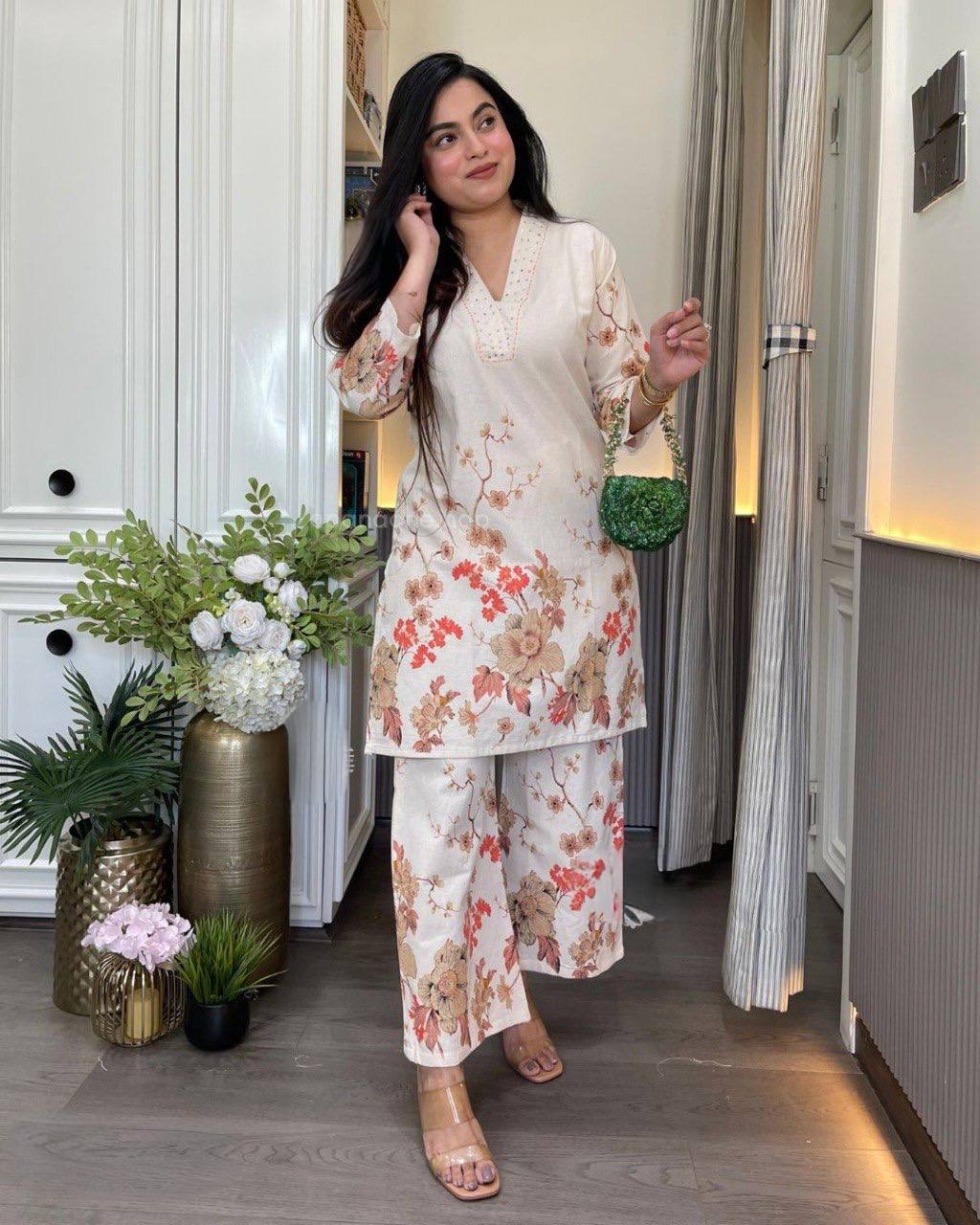
For a relaxed weekend, a linen-cotton co-ord can be styled as separates. The Ivory Floral Linen Cotton Co-Ord Set for Women from Varnavi combines the convenience of a matched set with the flexibility to wear its top with denim or its trousers with a plain cotton kurti. A muted ivory base also makes coloured earrings, a printed scarf, or a tan handbag easy to introduce.
When the weather is hot, don't automatically add a dupatta. A kurti with a modest neckline and three-quarter sleeves may already provide enough coverage. If a dupatta is required for cultural, professional, or personal reasons, select cotton voile, mulmul, or another light fabric instead of a dense synthetic weave.
Using Colour, Print and Embroidery Without Losing Ease
Daily ethnic wear looks polished when one visual element leads and the remaining elements support it. The lead element may be a print, a strong colour, embroidery, a textured dupatta, or distinctive jewellery.

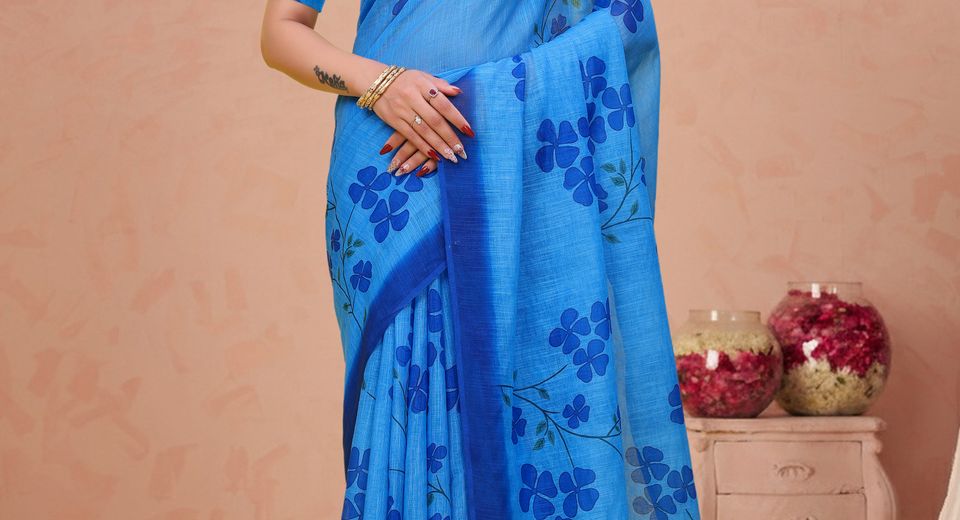
Floral prints suit linen because the fabric's natural texture prevents the pattern from looking overly glossy. The Blue Linen Cotton Floral Print Saree with Plain Dark Border illustrates an useful colour principle even when the garment category changes: a plain dark border can give a soft print a defined finish. Apply the same idea to a linen kurti by pairing a printed top with solid trousers in one of the darker colours from the print.
Mirror work and handwork need breathing space. If the kurti has reflective mirrors at the neckline or yoke, choose a plain dupatta and small earrings. The Teal Cotton A-Line Kurti Pant Set with Handwork can be styled with neutral footwear and a tan or ivory bag rather than another embellished accessory.
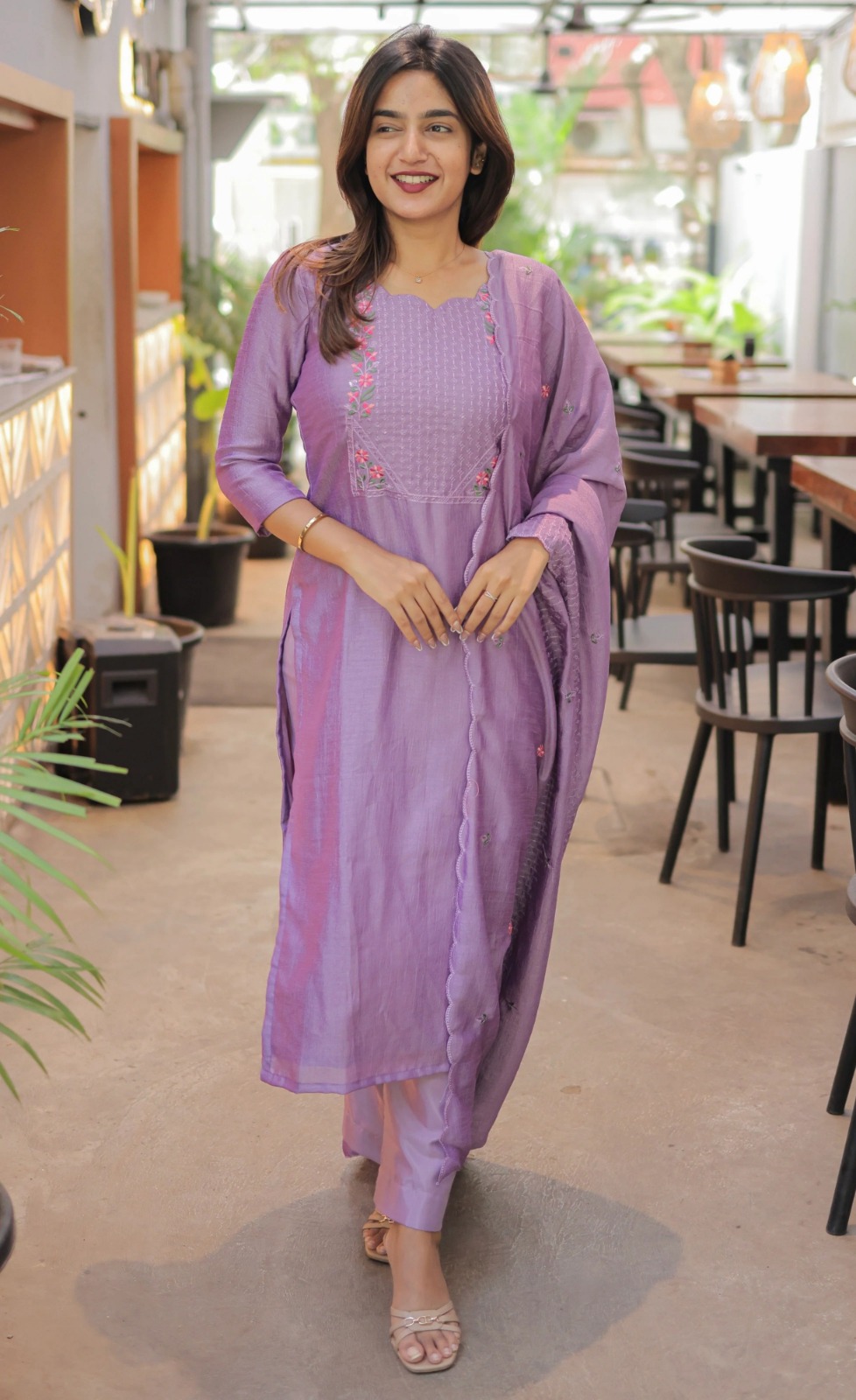
Embroidered sets can be made less formal by changing the styling around them. Wear the Lavender Embroidered Kurti Pant Dupatta Set Online with simple sandals and a plain watch for daytime, or remove the dupatta and add a structured tote for a more contemporary work look. Lavender also pairs well with stone, charcoal, cream, and muted olive.
Printed regional influences can guide colour choices without requiring a head-to-toe traditional outfit. Kalamkari Print Salwar Suits often use earthy rust, indigo, mustard, and cream; those colours can be repeated in a plain trouser, leather sandal, or fabric bag. Punjab Phulkari Embroidered Salwar Suits provide another useful lesson: vivid embroidery becomes more wearable when the base garment has a clear, uncomplicated shape.
Dupattas, Trousers and Proportion in Linen Sets
The dupatta should either extend the colour story or deliberately calm the outfit; a third unrelated print usually makes a daily linen set look busy. A plain dupatta is the safest choice for floral prints, mirror work, and dense embroidery.
A narrow front drape creates a longer vertical line and suits straight kurtis. A wider shoulder placement gives more coverage and works well with A-line silhouettes. If the fabric creases easily, avoid tightly folding the dupatta across the elbows; place it over one shoulder and let the ends fall naturally.
Trousers should match the amount of volume in the kurti. Cigarette pants balance long straight cuts, straight pants suit moderate A-line shapes, and wide-leg palazzos work best with shorter or more fitted kurtis. A salwar adds heritage volume, but the kurti must be long enough to cover the gathers cleanly without catching at the thigh.
Several regional collections show how proportion changes the personality of a salwar suit. Maharashtra Paithani Inspired Salwar Suits suggest jewel-toned borders and controlled contrast, while Karnataka Silk Salwar Suits demonstrate the visual authority of a stronger sheen and border. For everyday linen, borrow the colour discipline rather than copying the heavier fabric treatment.
Kashmir Embroidered Salwar Suits can inspire restrained floral placement around cuffs, yokes, or hems. A linen kurti doesn't need embroidery across every panel; concentrated detail at one area keeps the garment lighter, easier to iron, and more versatile.
Care Practices That Preserve Linen's Drape
Linen clothing lasts longer when it's washed gently, dried without excessive heat, and stored with enough room for air circulation. Care labels take priority because linen-cotton blends, dyes, linings, and embellishments can require different treatment.
- Wash thoughtfully: Use cool or lukewarm water and a mild detergent. A gentle machine cycle or hand wash is safer than a long, abrasive cycle, especially for embroidered linen kurtis.
- Control colour transfer: Wash dark indigo, teal, maroon, and black garments separately during the first few washes. Do not soak printed linen for several hours because prolonged water exposure can weaken colour definition.
- Dry with shape intact: Press water out rather than twisting the garment. Hang the kurti on a broad hanger or lay it flat until damp, then finish drying in shade. Strong midday sun can fade dyes and make some linen fibres feel harsh.
- Iron at the right stage: Iron linen while it's slightly damp, using a medium to high setting appropriate to the care label. A pressing cloth protects embroidery, mirror work, and dark prints from shine.
- Store carefully: Fold heavy linen and embellished sets instead of leaving them on thin hangers for months. Place tissue between mirror-work or metallic details so that surfaces don't scratch neighbouring fabric.
Some creasing is part of linen's character. If a fully crisp appearance is essential, choose a linen-cotton blend, use light starch sparingly, or steam the garment from the inside. Excessive starch can make natural fibres brittle over time and may alter the softness that makes linen comfortable.
Buying Checks for Linen Kurtis you'll Actually Wear
The most useful buying check is to examine the garment's composition, measurements, transparency, and finishing together rather than relying on the word linen alone.
- Read the fibre composition: Compare pure linen with linen-cotton blends and note whether the lining contains polyester or another less breathable fibre.
- Check shoulder and armhole ease: Raise both arms and sit down mentally or physically if fitting in person. Restriction at the armhole will make even a breathable fabric uncomfortable.
- Inspect seam finishing: French seams, overlocked edges, and secure side-slit reinforcement reduce fraying after repeated laundering.
- Assess embellishment: Turn the garment inside out and check whether embroidery, mirrors, or sequins have rough backing that could irritate the skin.
- Measure the length: A kurti that ends at the widest point of the calf can visually shorten the body. Choose the hem according to both your height and the volume of the trouser.
- Plan at least three outfits: If a kurti can't work with a second trouser, a different dupatta, or a simple sandal, it may be a special-use purchase rather than a daily staple.
Designer Roman Silk Kurti Set with Jacquard Dupatta is an useful comparison point when deciding how much sheen and structure your wardrobe needs. Roman silk and jacquard create a dressier effect, while linen-cotton generally serves repeated daytime wear better. Keeping both roles distinct prevents a daily kurti from being judged by occasion-wear standards.
Linen Kurtis for Everyday Comfort Drape and Styling becomes easier when comfort is treated as a design requirement rather than an afterthought. The best set allows the arms to move, keeps the waist uncompressed, handles realistic washing, and has enough colour flexibility to work with existing footwear and bags.
Common Questions About Linen Kurti Comfort and Styling
Answering a few practical questions can make linen shopping more precise and reduce disappointment after the first wash.
Common Questions About Linen Kurti Comfort and Styling
Are linen kurtis suitable for daily wear?
Yes, linen kurtis are suitable for daily wear when the weave, fit, and lining allow airflow. Linen-cotton blends are often easier for regular use because they crease less severely and usually feel softer against the skin.
Do linen kurtis crease easily?
Pure linen creases easily, particularly at the elbows, waist, and lap. A linen-cotton blend, careful hanging after washing, and light steaming while the garment is slightly damp can reduce visible creasing.
Which pants look best with a linen kurti?
Straight pants or cigarette trousers balance most long linen kurtis, while wider palazzos suit shorter or more fitted tops. A-line kurtis can accommodate straight pants, narrow trousers, or a lightly gathered salwar depending on the desired level of volume.
How should a linen kurti be washed?
Wash a linen kurti in cool or lukewarm water with mild detergent on a gentle cycle or by hand. Avoid twisting, dry the garment in shade, and iron it while slightly damp according to the care label.
Can linen kurtis be worn to work?
Linen kurtis can work well for offices when the fabric is opaque, the fit is not overly loose, and the print or embroidery is controlled. Pair a straight or moderate A-line kurti with neat trousers, low-profile footwear, and a structured bag.
How can a linen kurti look polished without heavy accessories?
Use clear proportions, pressed or lightly steamed fabric, and one coordinated accessory such as a structured tote, watch, or small earrings. A plain dupatta and shoes that repeat one colour from the print can make a simple linen set look intentional.


