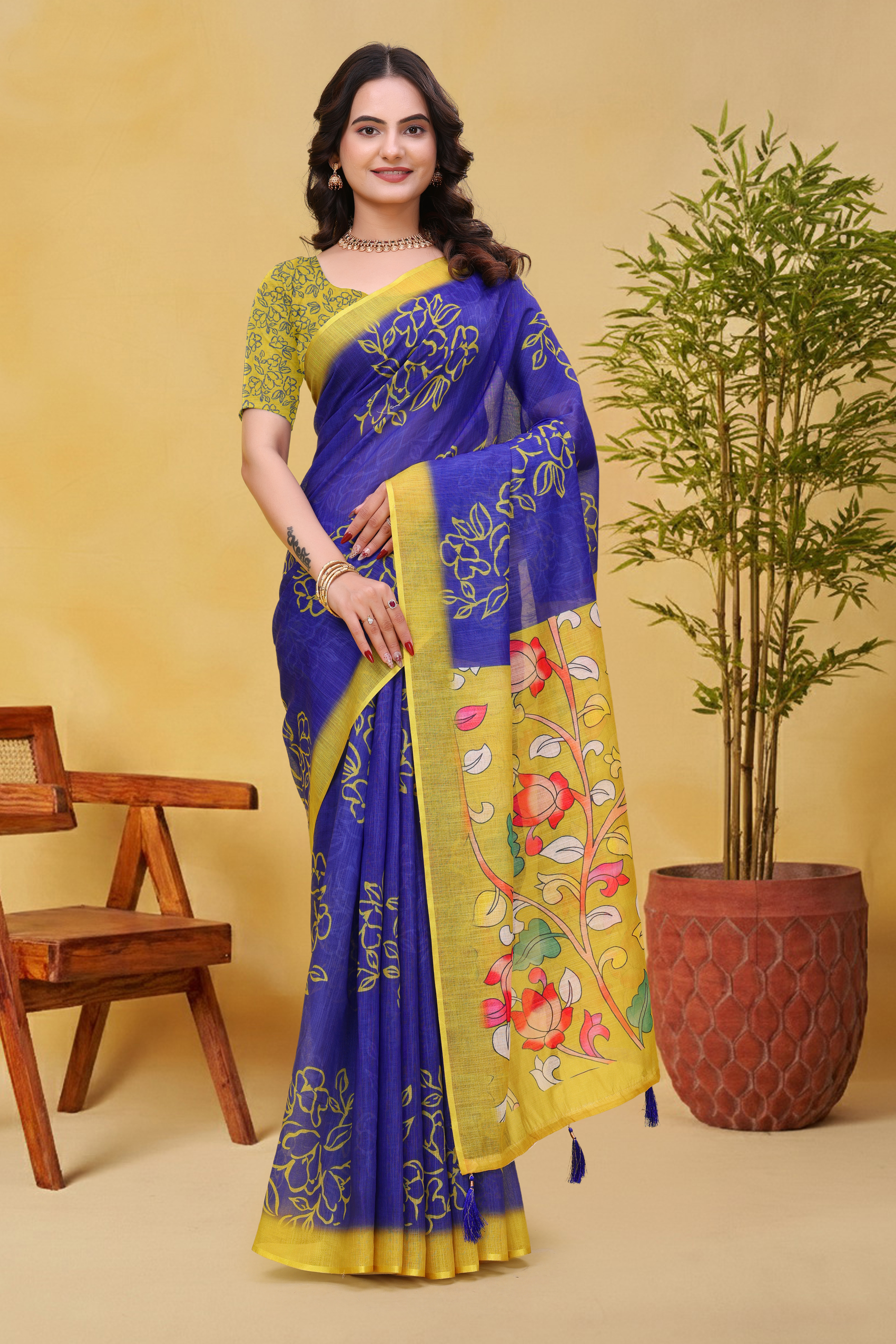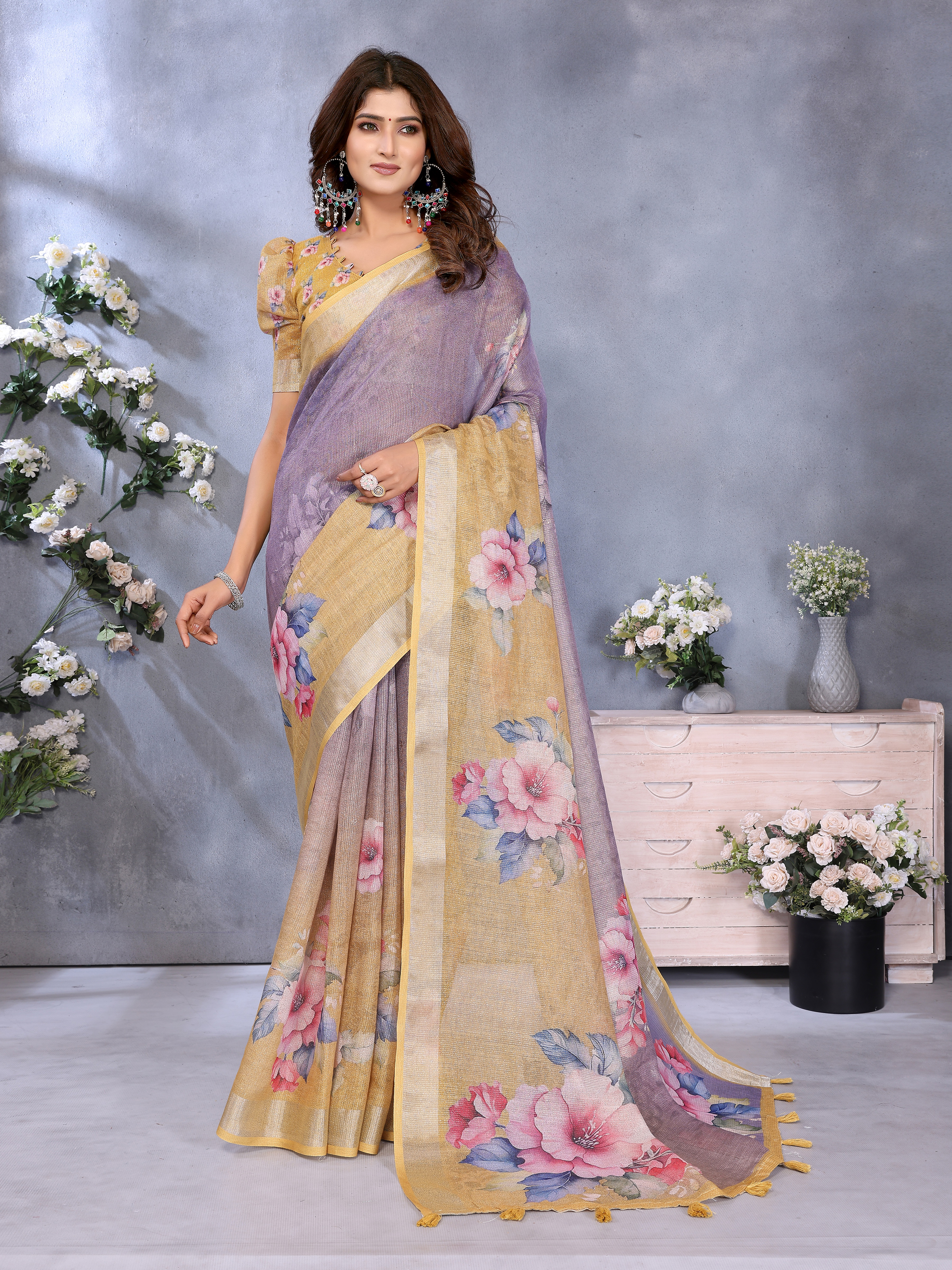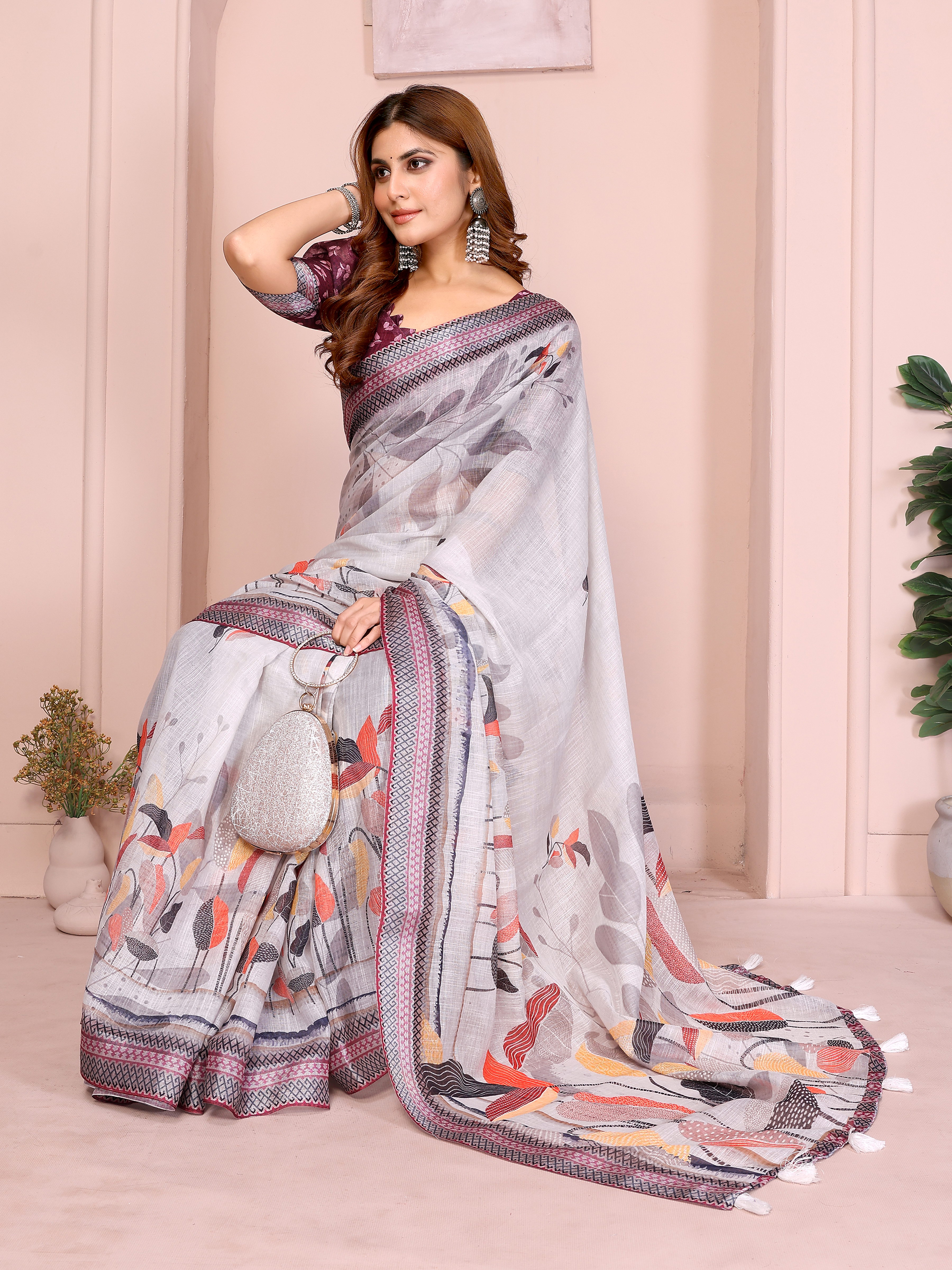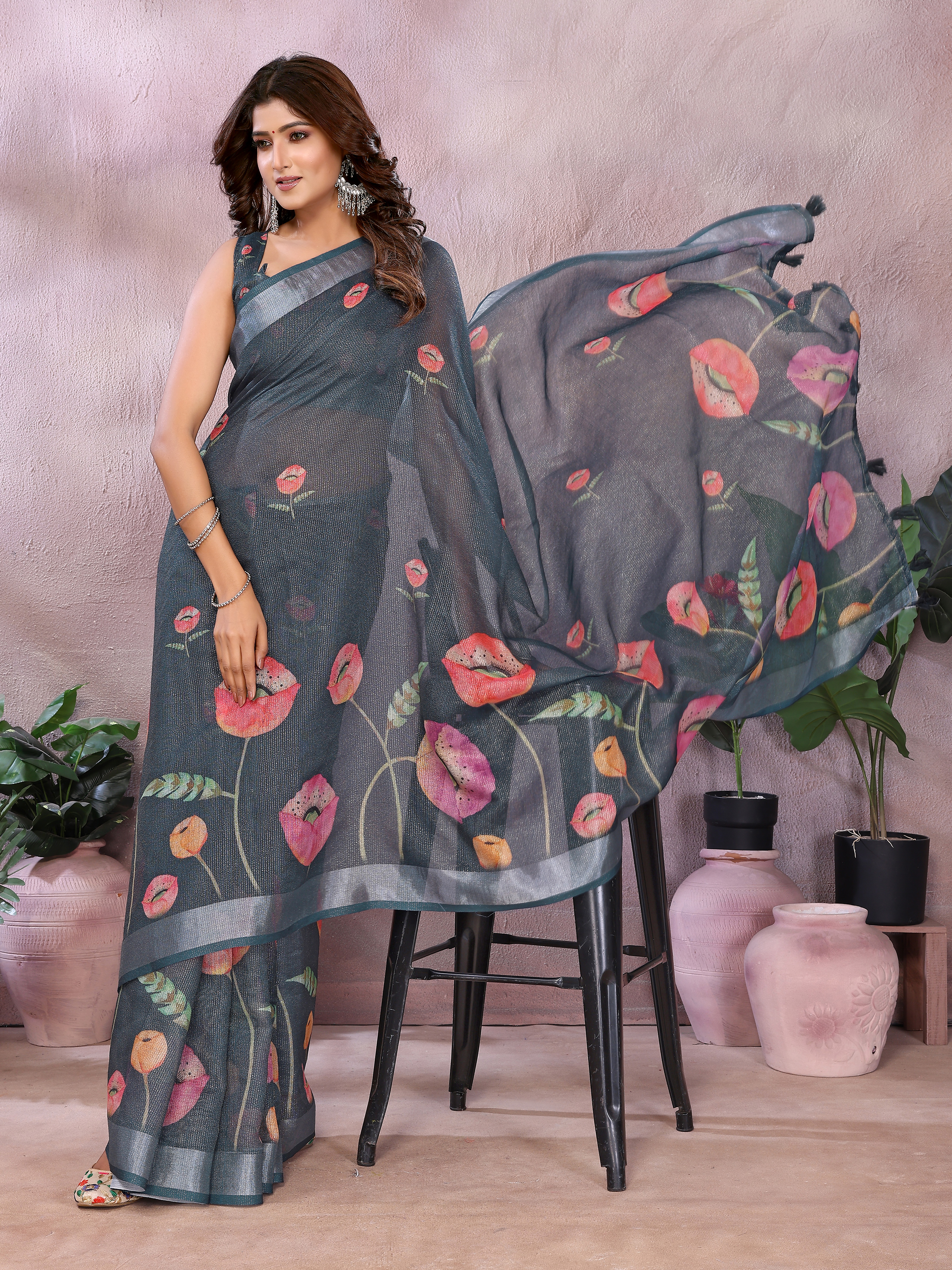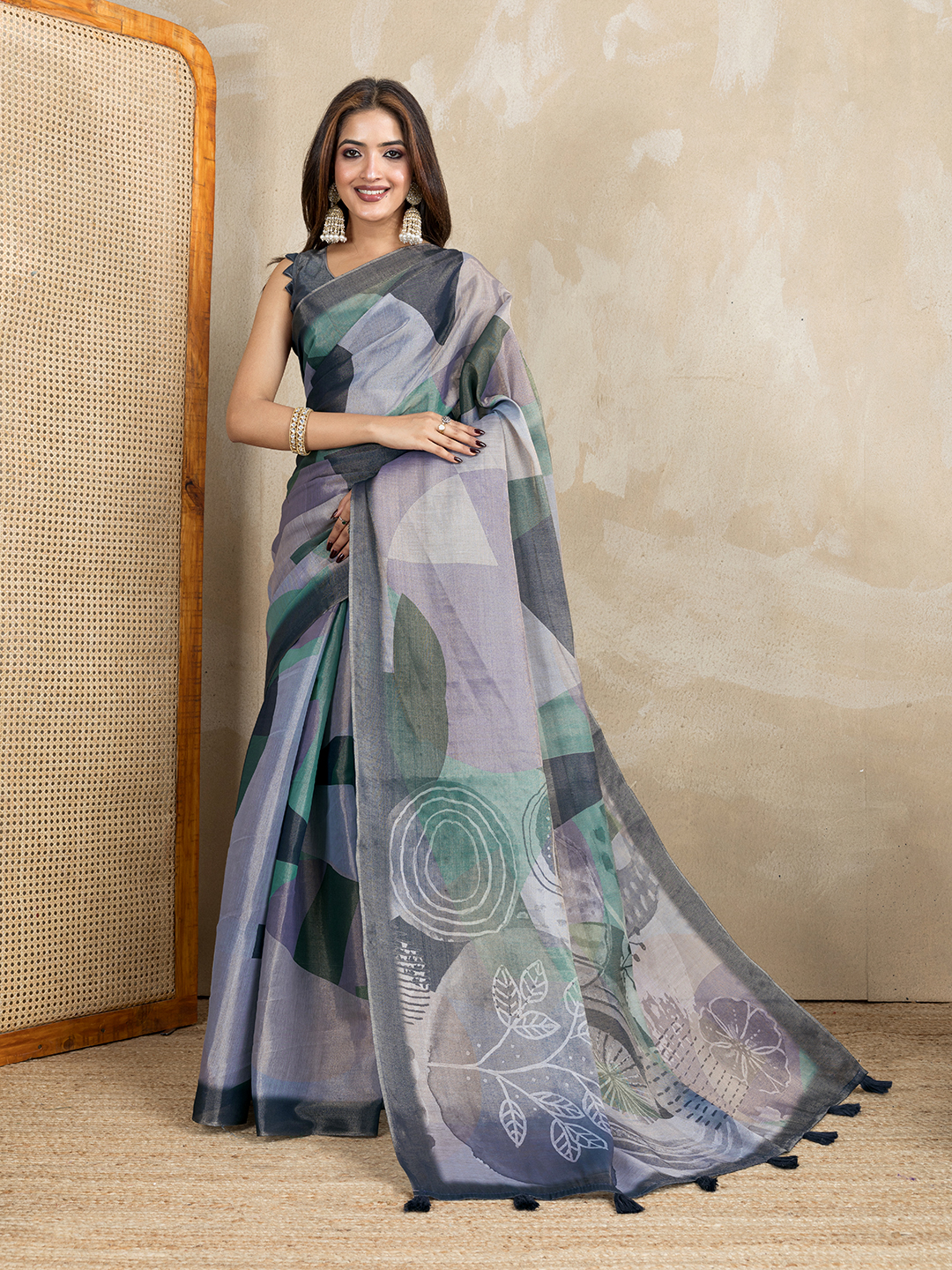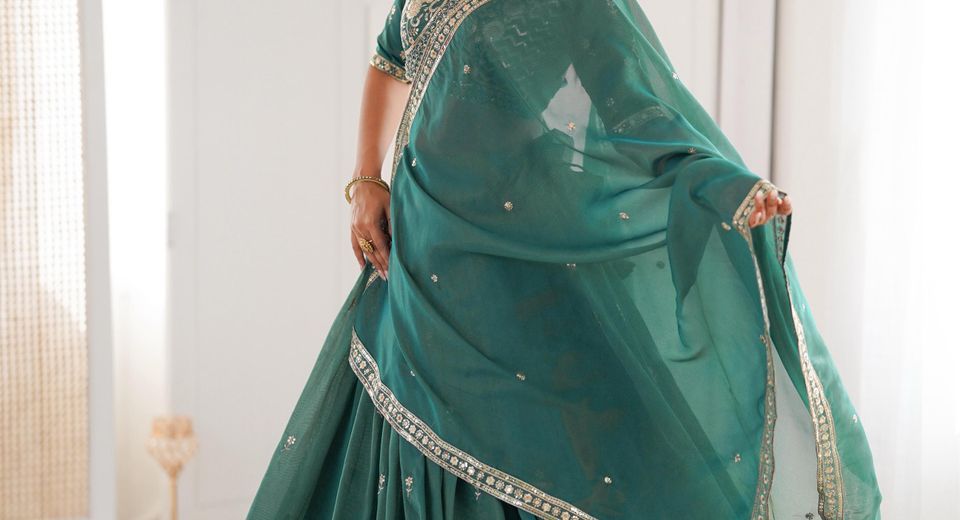
Lehenga waist tape keeps heavy skirts from stretching out when a waistband must carry layers of fabric, embroidery, sequins, lining, and sometimes a dupatta tucked into the waist. The small strip is sewn inside the upper edge of the skirt, where it reinforces the seam and helps the garment retain its shape. That detail matters most in bridal lehengas and heavily embellished wedding outfits worn for six to ten hours.
A beautiful lehenga can feel uncomfortable or begin to sag if the waistband relies only on a narrow facing, soft lining, or loosely woven outer fabric. Understanding waist tape helps you inspect a ready-made lehenga, explain your requirements to a tailor, and choose sensible alterations for a semi-stitched or fully stitched choli set.
What does waist tape do inside a lehenga?
Waist tape stabilises the top edge of a lehenga skirt and distributes the skirt's weight across a stronger internal band. The tape is usually a firm cotton, twill, grosgrain, or woven synthetic strip placed inside the waistband seam, rather than visible on the outside.
Heavy skirts create downward pull every time the wearer walks, sits, dances, or adjusts the dupatta. Embroidered panels and multiple gathered sections can concentrate that pull at a few seam points. A properly attached tape reduces strain on the outer waistband, keeps the waistline flatter, and gives hooks, eyes, drawstrings, or a zip a more stable base.
Waist tape doesn't make a lehenga permanently immune to wear. Waist measurements, fabric stretch, poor stitching, overloaded pockets, and incorrect hanging methods can still damage the garment. The tape works as structural reinforcement, not as a substitute for a correctly fitted waistband.
Where should the tape sit?
The tape should sit close to the upper waist seam, usually enclosed between the waistband and lining or stitched directly beneath the seam allowance. A tailor should secure the tape through the stable waistband area without catching decorative sequins or creating visible needle marks on the outer fabric.
A useful tape is firm enough to resist curling but flexible enough to follow the body. Very rigid plastic tape can dig into the waist, while a flimsy satin ribbon can wrinkle and provide little support. For a bridal lehenga with a wide flare, a 2.5 to 4 centimetre woven tape is often more practical than a narrow decorative ribbon, although the exact width depends on the waistband design.
Why do heavy lehenga skirts stretch or sag?
Heavy lehenga skirts stretch when their weight repeatedly pulls on a waistband or seam that lacks sufficient reinforcement. The risk increases with dense zari, sequins, thread embroidery, layered net, thick lining, and broad flare.
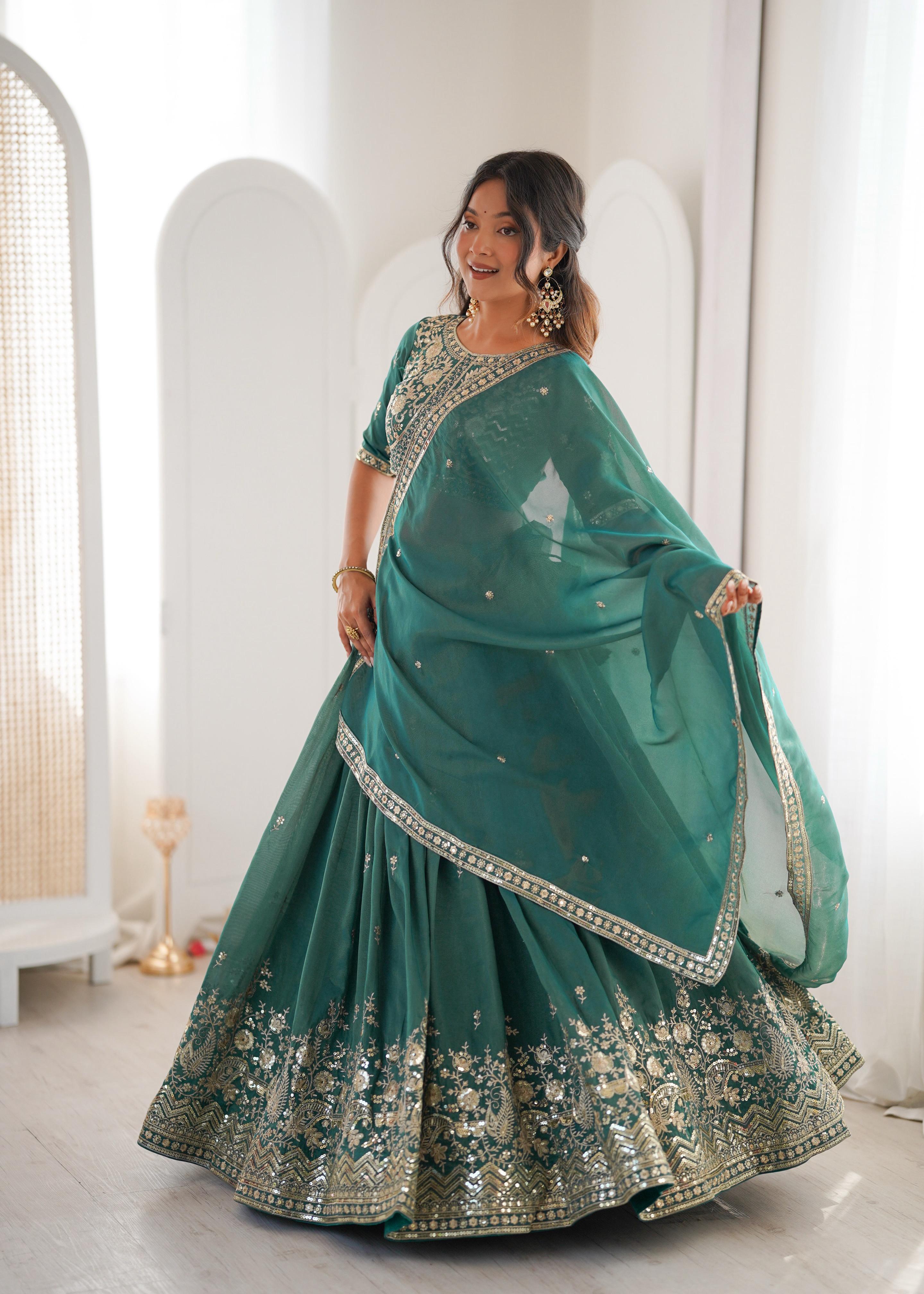
A lehenga with a 3 to 5 metre hem can weigh considerably more than a light festive skirt, especially after embroidery and lining are added. The waistband carries that mass while the wearer moves. A tight fit can make the problem worse because the waistband is already under tension before the skirt's weight is added.
Fabric structure also affects performance. Georgette has fluid movement and can allow a skirt to settle lower if the upper seam is weak. Chinon silk and layered net can create a soft, full fall that needs a stable inner waist. Organza has more body but may transmit stress sharply to seams if the skirt is pulled or folded carelessly. A product such as Green Chinon Silk Sequins Embroidered Lehenga Set needs support that respects both its embellishment and its relatively fluid drape.
Stretching can also result from wearing a skirt below the intended waist. If the garment hangs from the upper hip rather than the waist, the waistband may be pulled diagonally and the hooks may bear uneven pressure. Repeatedly pinning a heavy dupatta to one side can create a similar imbalance.
How can you check waist support before buying a lehenga?
Check the inside top edge, seam strength, closure area, and lining before buying a heavy lehenga. These four areas reveal more about long-term wear than surface sparkle alone.

- Inspect the waistband: Look for a firm inner band, clean topstitching, and a waistband that lies flat rather than collapsing into soft folds. A visible or enclosed waist tape is a positive sign, but neat stitching and stable construction matter equally.
- Test the closure: Gently hold the skirt on both sides of the hook, zip, or tie and apply light outward pressure. The closure should not pull away from the fabric or create a gap in the lining. Do not yank a delicate embellished skirt during inspection.
- Examine the seam allowance: A strong waist seam usually has an even seam allowance and secure overlocking or binding. Loose threads, skipped stitches, and exposed raw edges deserve attention before purchase.
- Check the lining: The lining should support the outer skirt without being dramatically shorter or tighter. A lining that pulls upward can drag the outer fabric and make the waistband feel unstable.
- Consider the weight: Ask whether the lehenga is fully stitched, semi-stitched, or adjustable. A Semi Stitched Lehenga Set offers alteration flexibility, but the final waistband still needs reinforcement after the size is fixed.
- Ask about alterations: Confirm whether a tailor can add tape, widen the waistband, shift the hooks, or replace a weak drawstring. Alteration access is especially important when shopping for bridal or designer styles.
For example, Pink Bridal Sequins Lehenga Set with Heavy Flare and Blue Floral Georgette Lehenga Set with Heavy Flare represent the kind of high-volume designs where waistband construction deserves careful inspection. A dramatic flare may look balanced in a photograph but feel very different when its full weight is suspended from the waist.
Lehenga waist tape keeps heavy skirts from stretching out: when should it be added?
Lehenga waist tape keeps heavy skirts from stretching out most effectively when it's added during construction or before a major size alteration. A tailor can then place the tape inside the seam, secure it evenly, and align it with the closure and lining.
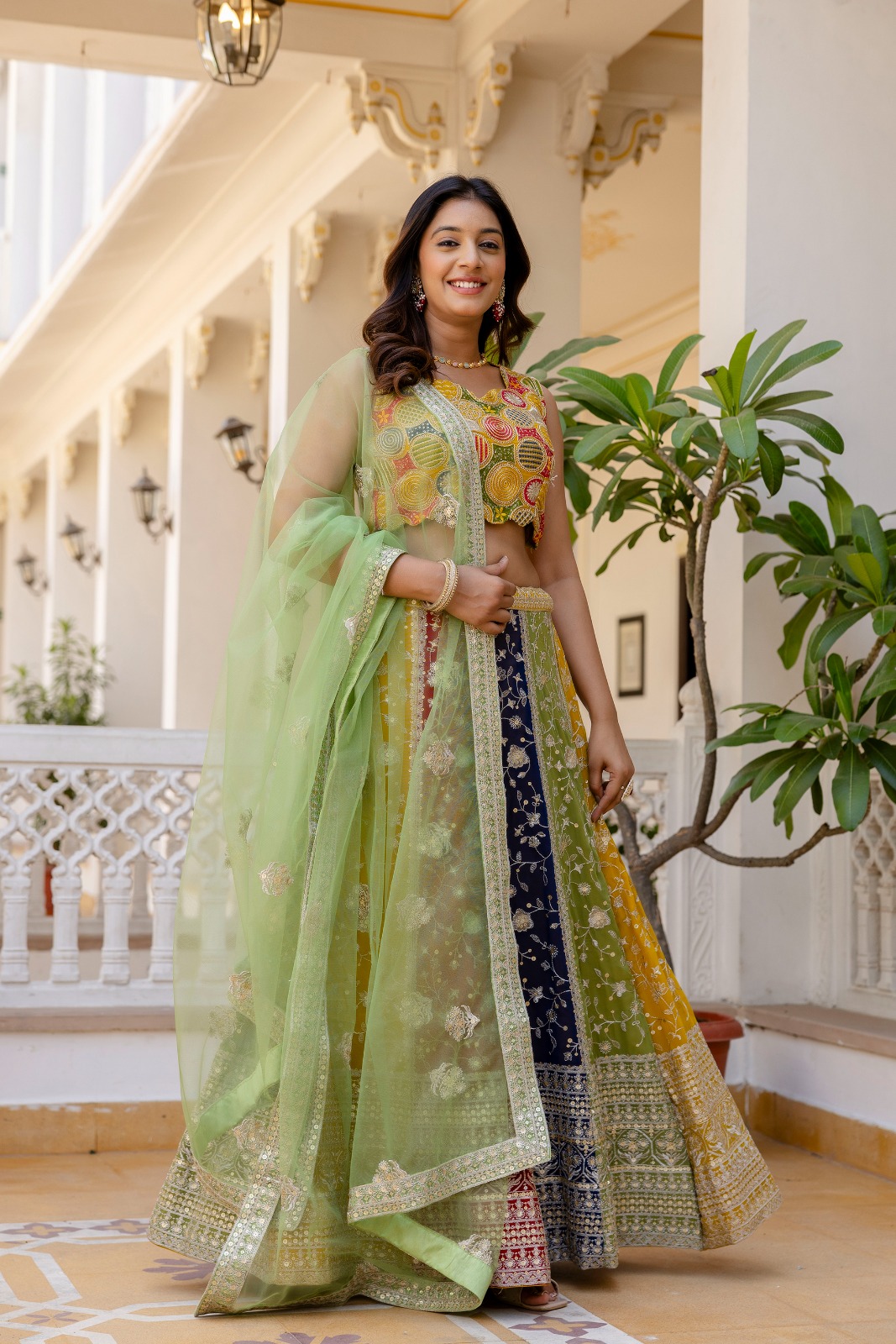
Adding tape is sensible when a ready-made lehenga has a heavy flare, a soft waistband, a long side zip, or a history of slipping during wear. It is also useful after reducing a semi-stitched skirt, because cutting and reshaping the waistband can remove the original reinforcement. A tailor should inspect the existing seam before simply sewing a second strip over it.
For a fully stitched choli shopping decision, ask whether the skirt has an internal waist stabiliser and whether the waist can be altered by approximately 2 to 4 centimetres without disturbing the embroidery. Fully stitched choli shopping is easier when the waist, lining, and closure are already finished, but the garment has less room for structural correction than a semi-stitched design.
Waist tape isn't always necessary for a lightweight cotton or minimally embellished lehenga. A narrow, light skirt may need only a clean waistband and suitable closure. Support becomes more important for bridal lehengas, layered wedding skirts, and designs with dense embellishment concentrated near the hem or panels.
Can a tailor add tape without opening the whole skirt?
A tailor can often add waist tape without opening the entire skirt, although the method depends on the waistband and lining construction. The tailor may open a short section near the inner seam, insert the tape, stitch it along the waist, and close the lining by hand or machine.
Careful work is essential around sequins and metallic embroidery. The tailor should avoid pressing directly on heat-sensitive embellishments and should use a fine needle appropriate for the lining and tape. A trial fitting after the tape is inserted confirms that the band supports the skirt without creating a hard ridge.
Which lehenga constructions benefit most from extra waist support?
Bridal, designer, and heavily embellished lehenga constructions benefit most from extra waist support because they place greater load on the upper seam. Support is particularly valuable when the skirt combines a wide flare with a fitted waist.

The Starfall Luxe Sequin Georgette Lehenga and Varnika Sequin Georgette Lehenga illustrate why georgette skirts should be assessed for both movement and internal stability. Sequins add weight across the surface, while georgette can remain fluid. The result needs a waistband that holds its shape without making the skirt stiff.
Organza creates a different fitting consideration. Multi Colour Organza Lehenga Choli with Digital Print, Cording Embroidery and Mukaish Work Dupatta has structured visual volume and several detailed components. A firm inner waist can prevent the skirt from collapsing at the top while preserving the crisp fall of organza.
A thread-embroidered silk skirt may be more stable than soft georgette but still become heavy around the panels. Designer Threadwork Silk Lehenga Choli Set with Dupatta should be assessed for the relationship between silk, lining, threadwork, and closure. The fabric name alone can't predict how much support the finished garment needs.
For younger wearers, a stable waistband also improves safety and comfort. Girls may move more actively at a wedding or family function, so a secure waist and correctly placed closure are more useful than an oversized skirt that requires constant pinning. Adjustable construction can help when the outfit is intended for more than one season, but the waistband should not be left loose enough to drag the skirt down.
How do colour and occasion affect the buying decision?
Colour and occasion guide styling, while waistband construction determines whether a heavy lehenga remains comfortable through the event. Buyers should evaluate both instead of choosing only by shade or embroidery.
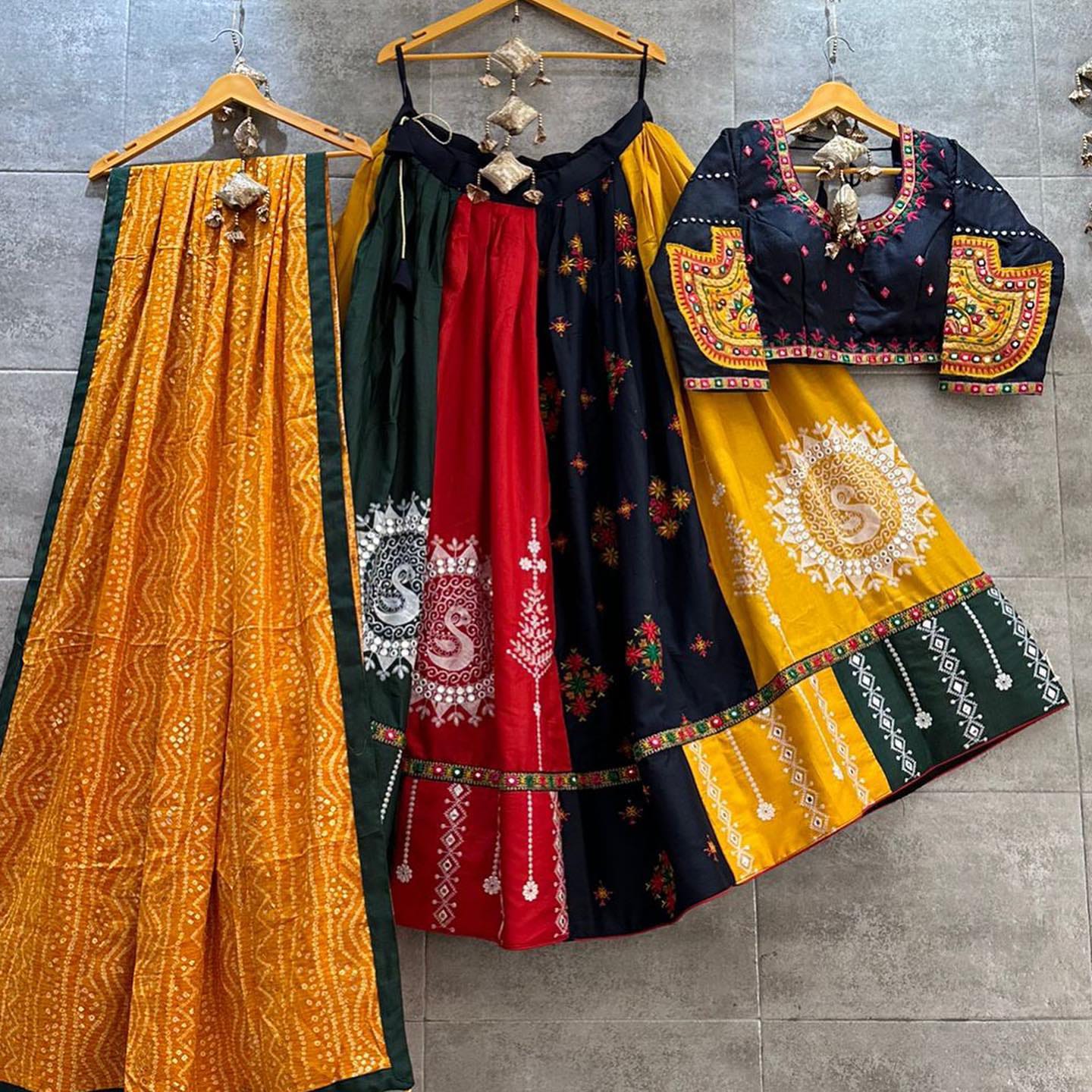
Mehendi Lehengas often use lively colour, movement-friendly flare, and detailed surfaces suitable for dancing and photographs. A wearer should check that the waistband remains secure while sitting on the floor, walking between functions, or carrying a phone and small essentials.
Yellow Lehengas and Green Lehengas are popular choices for Haldi ceremony and daytime wedding events, but bright colour doesn't indicate light weight. Sequins, layered lining, and dense threadwork can make a yellow or green skirt structurally demanding even when the colour feels summery.
A Ready Made Lehenga is convenient when the measurement chart matches the wearer closely. The buyer should compare the actual waist measurement with the garment's finished waist, then ask whether hooks or tape can be adjusted. A small mismatch can often be corrected; a waistband that's substantially too tight may place continuous stress on the seams.
The Semi Stitched Lehengas Collection can suit shoppers who want more control over the final waist and length. A tailor can position the waist tape after confirming the wearer's natural waist, blouse length, footwear height, and preferred amount of floor clearance.
How should a supported heavy lehenga be worn and stored?
A supported heavy lehenga lasts longer when it's worn with an even waist fit, stored without prolonged strain, and cleaned according to its embellishment. Waist tape reduces stress, but handling habits determine how much stress the garment receives.
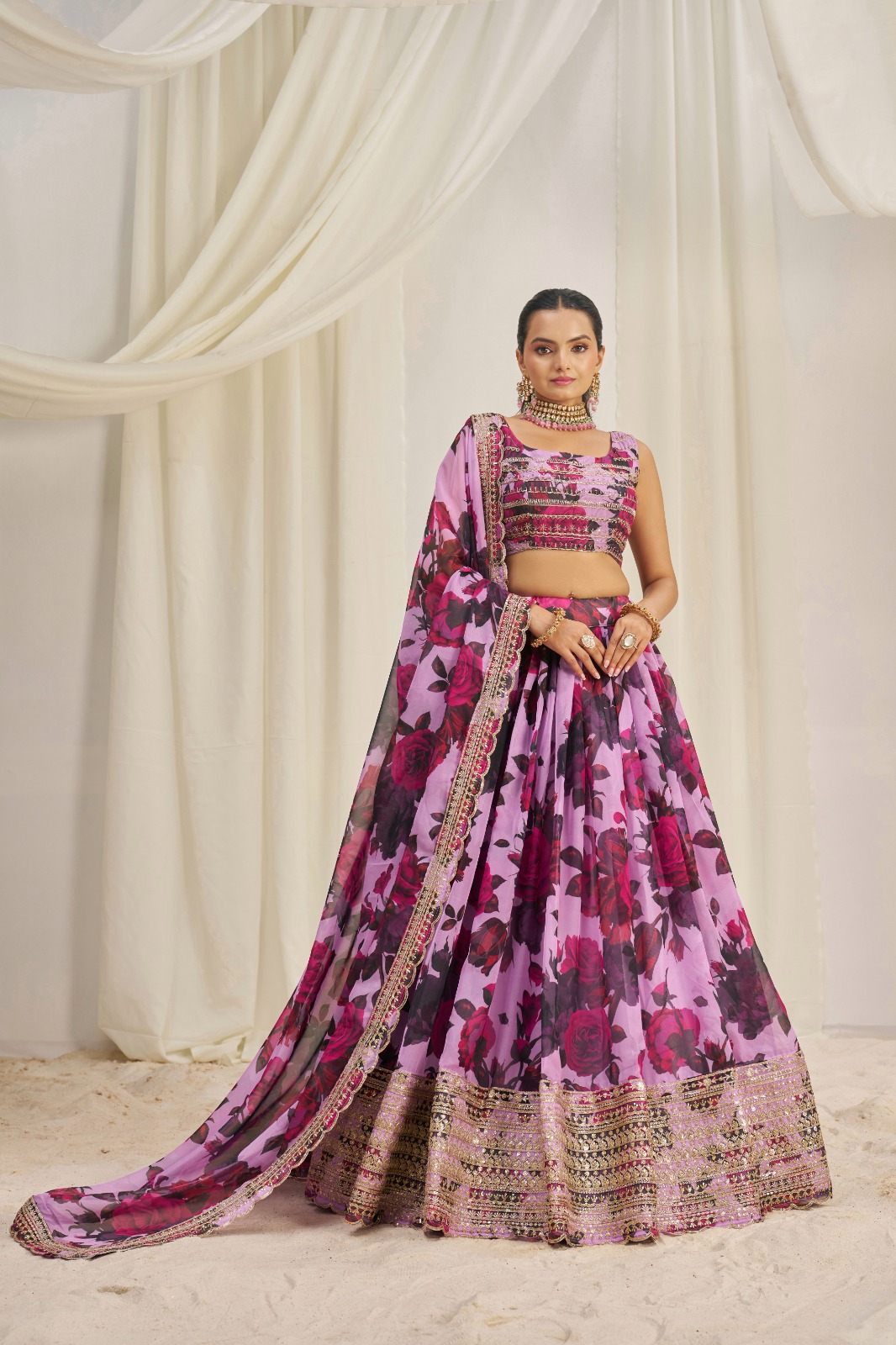
- Wear the correct waist position: Fasten the skirt at the intended waist rather than forcing it onto the hips. The waistband should feel secure without restricting breathing or leaving deep marks.
- Distribute accessories: Avoid hanging a heavy phone pouch, key chain, or multiple safety pins from one waistband point. Uneven weight can distort the seam.
- Support the skirt while dressing: Lift the skirt with both hands when stepping into it or sitting down. Pulling only from the side closure can strain hooks and tape.
- Remove temporary pins carefully: Open pins in the opposite direction from the fabric surface, especially around sequins, zari, and delicate georgette.
- Air before storing: After a wedding or reception, let the lehenga air in shade until perspiration and moisture have evaporated. Do not seal a damp garment in plastic.
- Store by weight: A very heavy skirt is often safer folded over acid-free tissue than hung for months from a narrow hanger. If hanging is necessary, use a broad padded hanger and support the waistband evenly.
- Choose professional cleaning: Embroidered silk, sequins, zari, organza, and mukaish work can react differently to water and solvents. Follow the care label and tell the cleaner about metallic or glued embellishments.
Before an important wedding, wear the complete outfit indoors for 30 to 45 minutes. Sit, walk, climb a few steps, and practise securing the dupatta. This rehearsal identifies pressure from the waistband, slipping closures, excessive length, or a blouse that restricts movement while there's still time for alteration.
What is the practical takeaway for shoppers?
The practical takeaway is to treat the inner waistband as a construction feature, not a hidden afterthought. Ask whether the lehenga has waist tape, a firm inner band, a stable lining, and a closure suited to the skirt's weight.
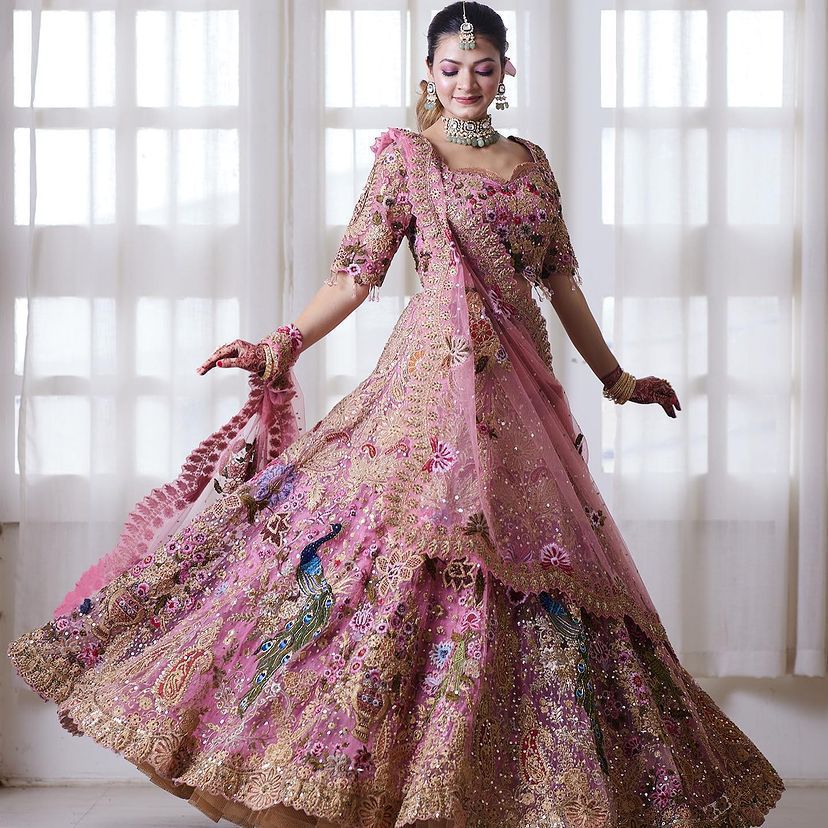
A good buying decision balances fabric, embellishment, finished measurements, occasion, alteration scope, and care requirements. Bridal shoppers should arrange a final fitting in the shoes and undergarments intended for the wedding. Ready-made shoppers should prioritise a secure waist that can be adjusted modestly rather than relying on a drawstring pulled to its limit.
Lehenga waist tape keeps heavy skirts from stretching out because reinforcement changes how weight travels through the garment. A small internal strip can't correct every fitting problem, but it can protect the waistband, improve comfort, and help a richly embellished lehenga retain its intended shape through many celebrations.
Common Questions About Supporting a Heavy Lehenga Waist
What is lehenga waist tape made from?
Lehenga waist tape is commonly made from firm cotton, twill, grosgrain, or another woven material that resists stretching. The best choice depends on the waistband, lining, embellishment, and desired comfort.
Can waist tape be added to a ready-made lehenga?
A tailor can often add waist tape to a ready-made lehenga by opening a small section of the inner waistband. The tailor should inspect the lining and closure first, especially when sequins, zari, or delicate georgette are present.
Does waist tape make a lehenga tighter?
Waist tape should stabilise the waistband without making the finished waist smaller. An incorrect insertion or overly rigid tape can create discomfort, so the garment should be fitted and tested after alteration.
Do semi-stitched lehengas need waist tape?
Semi-stitched lehengas can benefit from waist tape when the final skirt is heavy or widely flared. Adding reinforcement during custom stitching is usually easier than correcting a stretched waistband later.
How do I stop a heavy bridal lehenga from slipping?
Use the correct waist measurement, a stable inner waistband, secure hooks or ties, and a professional alteration if needed. Avoid relying on many safety pins or tightening a drawstring beyond a comfortable fit.
Should a heavy lehenga be hung or folded?
A heavy embellished lehenga is often safer folded over clean acid-free tissue for long-term storage because a narrow hanger can strain the waist. Short-term hanging is acceptable with a broad padded hanger that supports the waistband evenly.