
Lehenga Closures Should Hold the Waist Without Carrying the Full Skirt Weight is a fitting principle worth checking before any wedding purchase. A hook, zip, dori or drawstring should position the lehenga at the waist, while the waistband, inner lining and construction should distribute the skirt's flare. When one closure carries the entire load, the waist can gape, the zip can strain, and the blouse can appear wrongly proportioned after only a few hours of sitting, dancing and walking.
The distinction matters most for bridal lehengas, sequins-heavy sets and skirts with multiple layers of net, organza, georgette or can-can. A well-fitted lehenga feels anchored without feeling tight. The following checks explain how to assess a ready-made lehenga, what to ask during fully stitched choli shopping, and when a tailor should reinforce the garment.
Why Lehenga Closures Should Hold the Waist Without Carrying the Full Skirt Weight
Lehenga Closures Should Hold the Waist Without Carrying the Full Skirt Weight because the closure is a positioning mechanism, not a suspension cable. The waist edge keeps the skirt aligned with the body, but the waistband, lining, seams and inner support should share the downward pull created by the flare and embellishment.
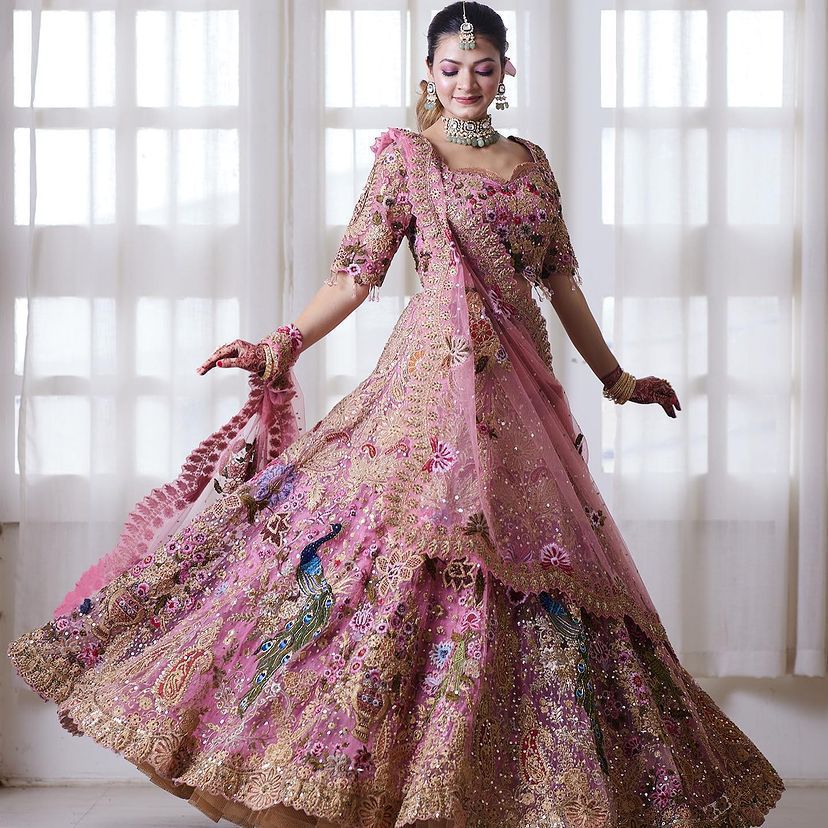
A skirt's weight increases with every additional layer and surface detail. Dense sequins, metallic zari, embroidered threadwork, broad borders, stiff net and a can-can underskirt all add load below the waist. A Pink Bridal Sequins Lehenga Set with Heavy Flare, for example, needs a stable waistband and a secure closure because a wide flare creates more movement when the wearer turns or sits.
Gravity pulls the skirt downward, while walking creates repeated forward and sideways movement. A single hook or a short zip absorbs that movement if the waistband is weak. The result may be a stretched stitch line, a separating zip or a gap at the back of the waist. A stronger design uses a firm waistband, a correctly placed closure, internal waist support and enough ease for breathing.
What should carry the skirt load?
The waistband and upper skirt structure should carry most of the skirt load, with the closure keeping the waistband closed and aligned. Reinforced waist seams, broad seam allowances, stable lining and an inner hook above or beside the zip can prevent stress from concentrating at one point.
A practical test is to hold the closed skirt by the waistband and inspect whether the seam remains flat. The test should not be performed by violently pulling the garment, but gentle support of the skirt's body can reveal whether the closure is bearing excessive tension. A tailor can add a waist stay, extra hooks or a stronger internal belt when the outer closure looks decorative rather than structural.
Which Lehenga Closure Works for Different Skirt Weights?
Hook-and-eye closures, zips, lacing and drawstrings each suit different levels of weight, adjustability and style, but a heavy lehenga usually benefits from two points of security rather than one. The best choice depends on the waistband construction, the wearer's measurements and whether the skirt is fully stitched or semi-stitched.
Hooks and eyes
Hooks and eyes provide reliable reinforcement when they're sewn into a firm waistband with closely spaced stitching. One hook can hold a light skirt in position, but a heavy bridal lehenga usually needs several hooks or a hook placed above a concealed zip. Metal hooks should be covered or positioned so they don't scratch the skin during long wear.
Hooks also allow a small amount of waist adjustment. A two- or three-position hook strip can accommodate normal differences in comfort between standing, eating and sitting. Hooks should not be used to force a skirt several centimetres smaller than the wearer's waist because excessive strain will distort the waistband.
Zips
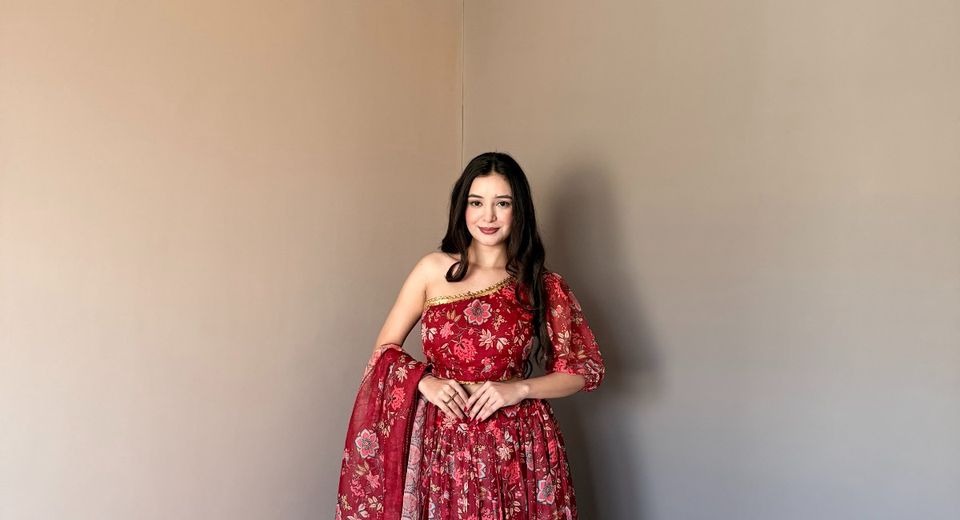
A zip gives a clean finish and fast dressing, but a zip should be supported by the waistband rather than expected to carry the entire skirt. A concealed side zip may work well for a lighter Red Floral Organza Lehenga Set with One Shoulder Blouse, while a centre-back zip needs a firm seam and an internal hook to prevent the slider from pulling downward.
Metal zips generally tolerate repeated movement better than fragile plastic zips, although the correct choice depends on the garment design. The zip should close smoothly without forcing the teeth together. Resistance at one point often signals uneven waist tension, bulky embroidery near the seam or an incorrect measurement.
Lacing and drawstrings
Lacing offers the greatest adjustment range for semi-stitched lehengas and changing body measurements. A broad panel with evenly spaced eyelets distributes tension better than a narrow strip pulled aggressively at the top. A drawstring can improve comfort, but a thin cord should not be the only support for a heavily embellished skirt.
When shopping for a Semi Stitched Lehengas Collection, check whether the lacing panel is attached to a stable inner waistband. Decorative dori ends are attractive, but the dori should tighten an already supported waist rather than substitute for structural reinforcement.
How Can You Test a Ready-Made Lehenga Before Buying?
You can test a ready-made lehenga by checking waist security, sitting comfort, closure tension and skirt drop in several positions. A standing mirror check alone can't reveal how the garment behaves after movement.
- Measure the body first. Record the natural waist, the point where the waistband will sit, and the fullest hip measurement. Use a soft tape without pulling it tight. A waist measurement taken after holding the stomach in will produce an unnecessarily small fit.
- Close the garment without force. The zip, hooks or lacing should meet smoothly. A closure that requires someone to pull the skirt together is already under stress.
- Raise both arms and walk. Arm movement changes the position of the blouse and can expose a waist gap. Walk for two minutes and turn slowly to see whether the waistband rolls or the skirt drags backward.
- Sit on a chair. Sitting reveals whether the waistband cuts into the abdomen, whether the zip presses against the spine and whether the flare bunches under the body. A wedding outfit must work beyond a standing photograph.
- Inspect the inside. Look for a clean waistband, secure seam finishing, a second fastening and a lining that reaches the waist. Loose threads near the closure deserve correction before an event.
- Check the hem position. The lehenga should clear the floor by roughly 1 to 2 centimetres when worn with the intended footwear, unless the design intentionally uses a floor-skimming hem. A skirt that's too long creates extra drag at the waist.
These checks are especially useful when shopping for a Readymade lehenga online or in a store. Product photographs rarely show whether the closure has an internal hook, how much seam allowance remains, or whether a heavy skirt is supported by a lining. Ask for the garment's finished waist measurement, closure type, lining composition and alteration allowance before placing an order.
How Do Fabric and Embellishment Change Waist Pressure?
Fabric, embellishment and flare alter waist pressure because each material moves differently and contributes a different amount of weight below the waistband. A light, crisp organza skirt may spread widely while remaining relatively easy to lift, whereas layered net with sequins can pull steadily downward throughout the day.
Georgette drapes softly and can reduce the feeling of stiffness, but a heavily embroidered georgette skirt still needs a supported waist. Chinon silk has a fluid fall and may require careful lining so the waistband doesn't twist. Net creates volume and friction between layers, which can make a skirt feel heavier during walking even when the fabric itself is light.
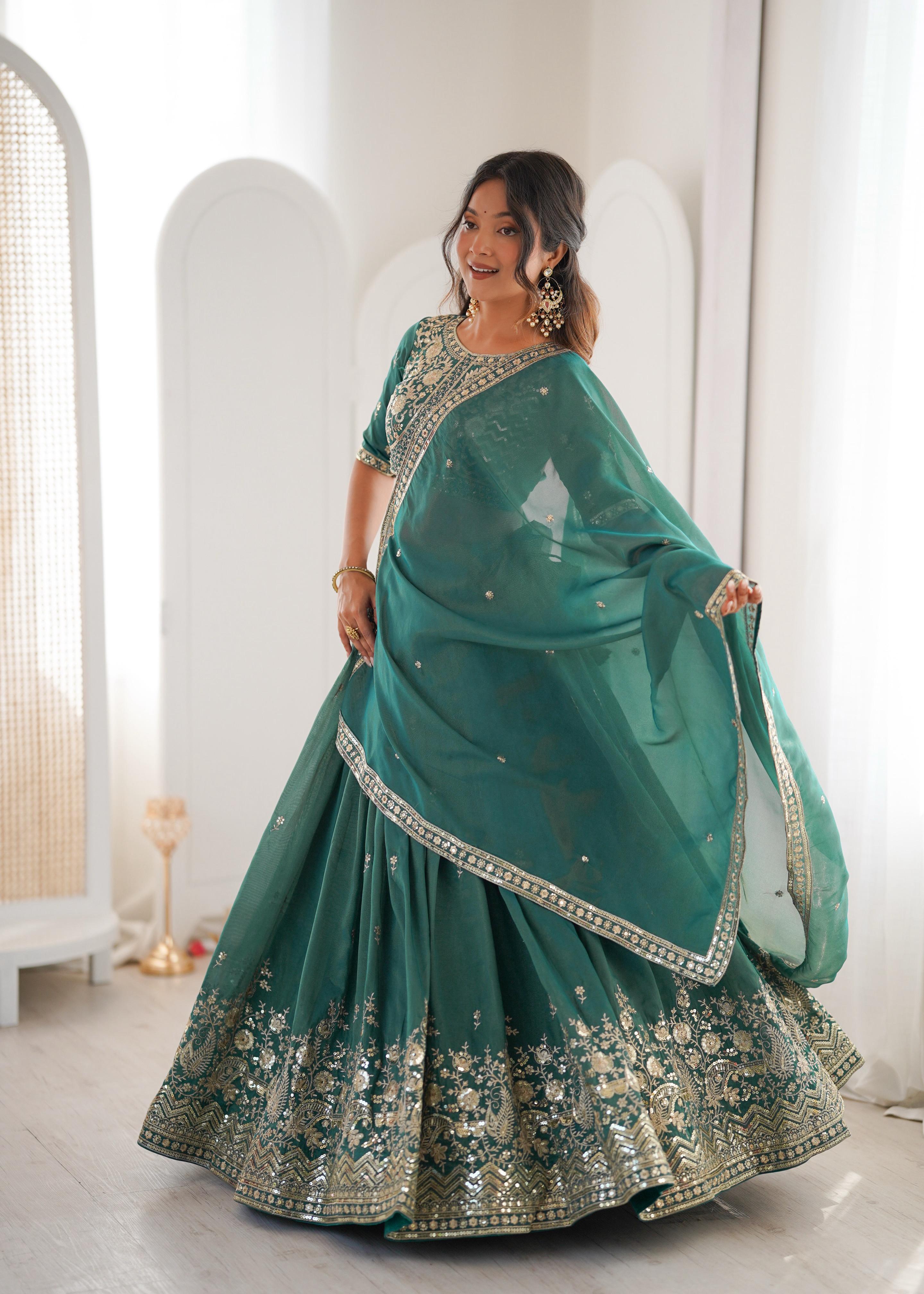
The Green Chinon Silk Sequins Embroidered Lehenga Set and the Red Butterfly Net Sequins Lehenga Set Wedding Wear illustrate why surface decoration and fabric structure should be assessed together. Sequins may be distributed across the skirt or concentrated in borders and panels. Concentrated decoration near the hem increases the downward pull, while dense decoration at the waist can make the closure bulky.
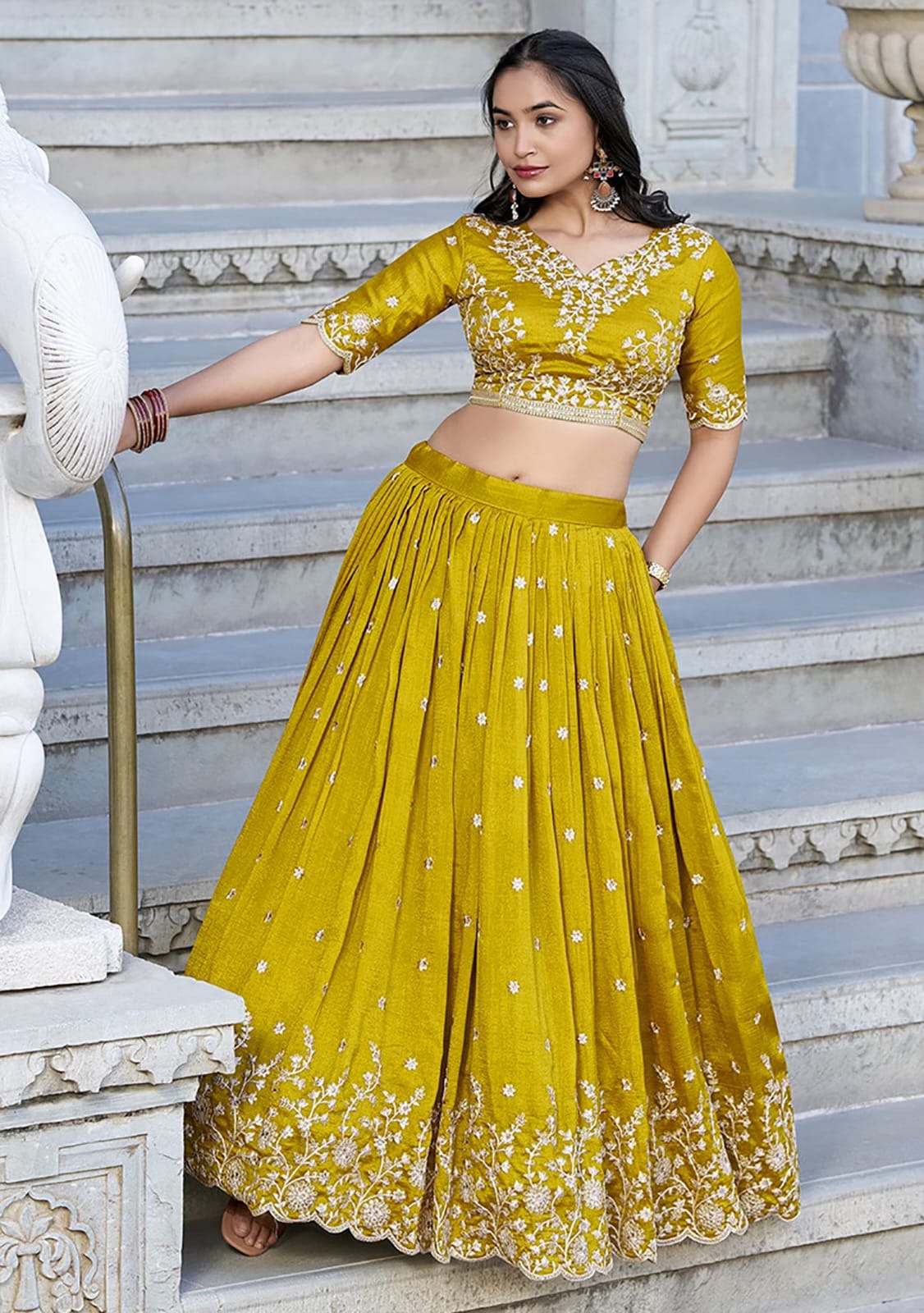
A Mustard Floral Threadwork Chinon Lehenga Choli for Women may need a different fitting approach from a multi-layer bridal skirt because threadwork, lining and flare affect movement in different ways. Buyers should ask whether the skirt includes a can-can layer, how many lining layers it has and whether the embroidery continues into the seam allowance.
What Makes a Heavy Bridal Lehenga Comfortable for Hours?
A heavy bridal lehenga becomes more comfortable when its waistband, blouse and inner support work as a coordinated system. Comfort doesn't come from making the waist extremely tight; comfort comes from preventing downward movement while preserving room for sitting, eating and breathing.
Match the choli and skirt fit
The choli should end at the intended waistline without pushing the skirt downward or exposing a gap when the wearer lifts her arms. A fully stitched choli should have enough ease across the bust and upper back to prevent the blouse from pulling against the lehenga closure. A tight choli can make a correctly fitted skirt feel uncomfortable because both garments compete for the same waist space.
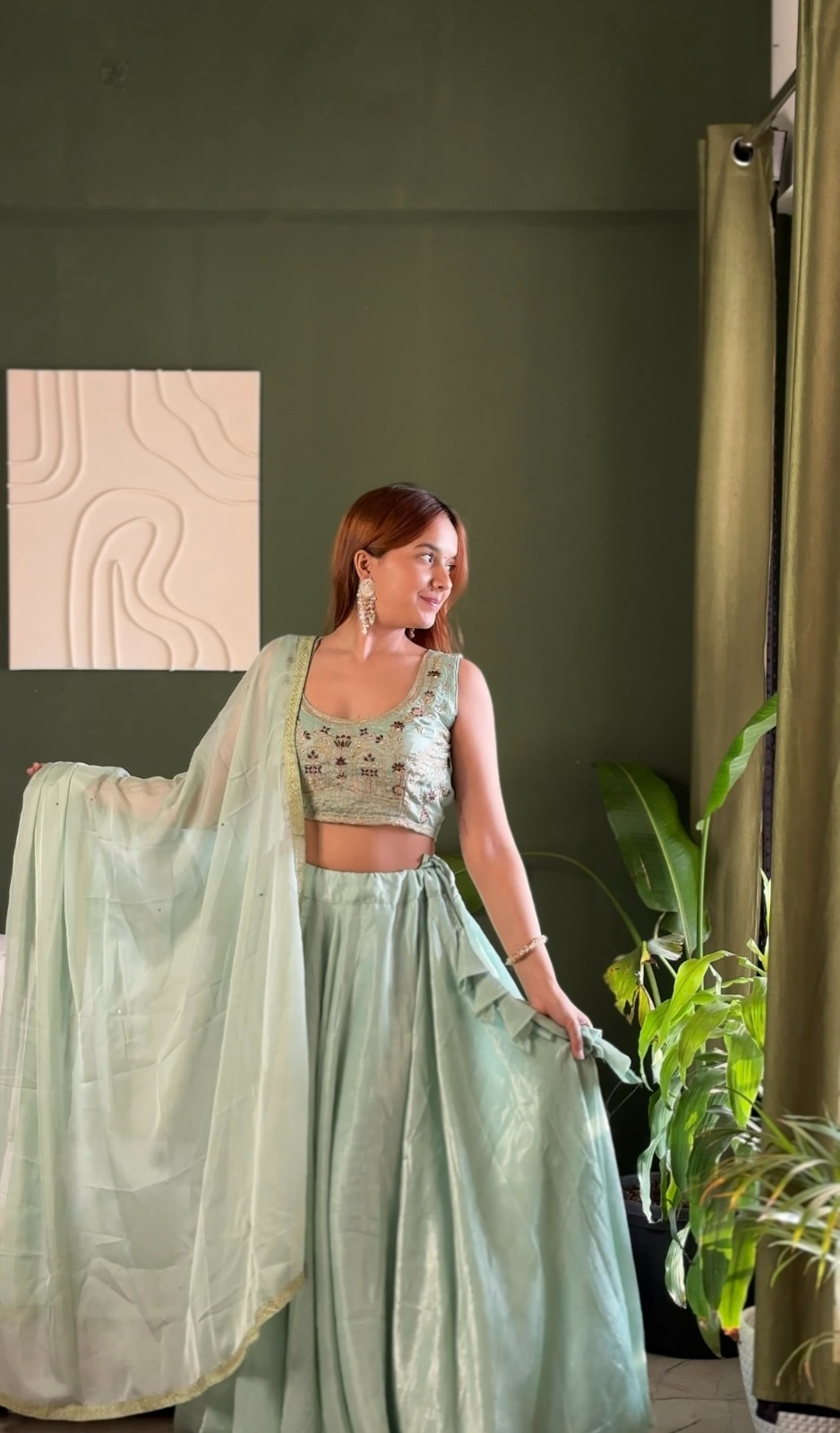
The Mint Embroidered Lehenga Set with Net Dupatta for Women demonstrates the importance of considering the complete set rather than the skirt alone. A net dupatta can be light, but its border and drape may tug at one shoulder or the blouse neckline. Shoulder placement, blouse support and waistband position should be tested together.
Use internal support discreetly
A waist stay is a narrow internal ribbon or tape sewn inside the waistband to reduce downward movement. A tailor can also add a firm inner belt, a wider facing or an extra hook-and-eye near the zip. These changes are usually less visible than tightening the outer waist and are more comfortable over several hours.
Heavy bridal wear may also benefit from a petticoat or underskirt that supports the flare independently. The underlayer should sit securely at the waist and remain smooth under the lehenga. An underskirt that slips can transfer its movement to the outer closure, so both waistbands need compatible measurements.
How Should You Choose a Lehenga for the Event?
You should choose a lehenga by matching closure support, fabric weight and movement requirements to the event rather than selecting colour alone. A Haldi ceremony, sangeet, wedding ceremony and reception place different demands on the garment.
Yellow Lehengas and Mehendi Lehengas often suit daytime celebrations where the wearer walks, sits on the floor or moves between guests. A lighter embroidered skirt with a secure hook-and-zip combination may be more practical than a very dense bridal skirt. Green Lehengas can work for Mehendi ceremonies, but a broad flare and sequins still require the same waist inspection as a red bridal design.
For a formal wedding, a skirt such as Blooming Georgette Sequins and Thread Embroidered Lehenga Set with Georgette Dupatta should be assessed for the combined weight of embroidery and dupatta. The dupatta should have a manageable border and secure styling points so it doesn't pull repeatedly at the blouse or waist.
A Varnika Sequin Georgette Lehenga may be suitable for a festive or reception wardrobe when the wearer wants movement and shine without the construction of a very broad bridal flare. The important comparison isn't simply "designer" versus "non-designer"; the useful comparison is closure support, lining, finished measurements and the amount of alteration possible.
For girls' lehengas, growth and movement deserve particular attention. A small adjustment allowance, comfortable elastic or well-designed lacing can be more useful than an aggressively fitted fixed waistband. Children should be able to sit, run briefly and raise their arms without the closure digging into the abdomen.
What Alterations Fix a Lehenga That Pulls at the Waist?
A tailor can fix a lehenga that pulls at the waist by reinforcing the waistband, adding a secondary fastening, correcting the waist measurement or reducing excess skirt drag. The correct alteration depends on where the strain appears.
- Strain at the zip: Add an internal hook-and-eye above the zip, strengthen the seam and check whether the waist is too small.
- Gaping at the back: Reduce the waist gradually through the side or back seams, then reposition the hook so the closure sits flat.
- Waistband rolling: Add a firmer facing, waist stay or compatible inner belt. Rolling can also indicate that the skirt is being worn above or below its intended waistline.
- Skirt dragging downward: Check the hem length, lining and underskirt. Removing unnecessary length can reduce leverage on the waistband.
- Uneven waist tension: Redistribute gathers or pleats before tightening the closure. A single tight section won't correct a skirt whose fullness is unevenly arranged.
Alterations should be completed at least 10 to 14 days before a major event when possible. The wearer should schedule a full-dress trial with the final blouse, footwear, dupatta and jewellery. A last-minute fitting performed only in a thin inner garment can miss pressure points created by the complete outfit.
What Should You Ask Before Buying a Lehenga Online?
Before buying a lehenga online, ask for finished garment measurements and construction details rather than relying only on the body-size chart. A body-size chart describes the intended wearer, while finished measurements reveal how the actual waistband and blouse are made.
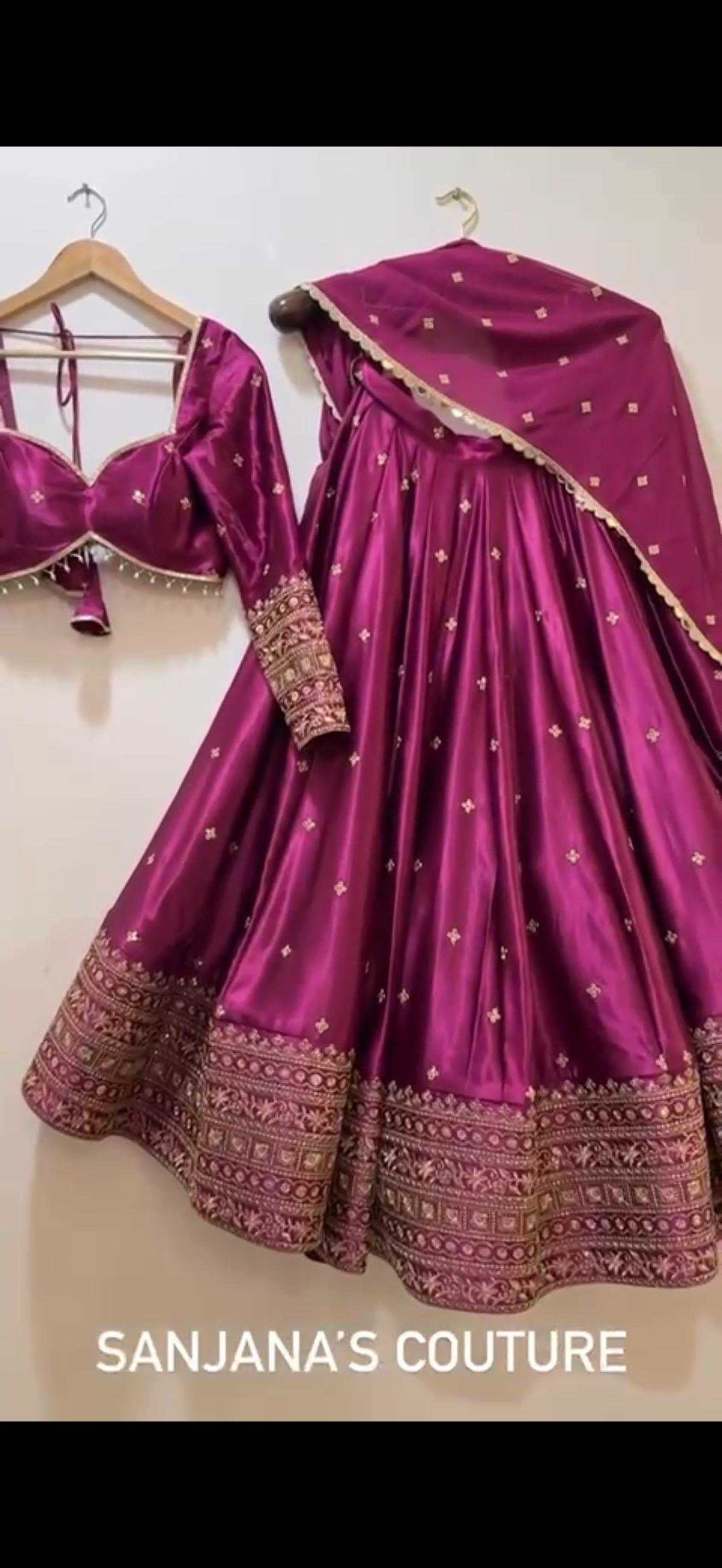
- What is the finished waist measurement when the closure is fully closed?
- Does the skirt have a zip, hooks, lacing, drawstring or a combination?
- Is there an internal hook or waist stay for a heavy flare?
- How many lining or net layers are included?
- Can the waist, blouse side seams and skirt length be altered?
- What footwear height was used to determine the displayed skirt length?
- Does the product description identify the fabric, such as organza, georgette, Chinon silk or net?
A Ready Made Lehenga is convenient when the measurements are close and the event is near, but convenience doesn't remove the need for a closure check. A Semi Stitched Lehengas Collection can offer more waist flexibility, although the final fit depends on skilled tailoring. Bridal shoppers should allow time for a trial because dense embroidery can limit how much a seam can be opened or closed.
Ultimately, a secure lehenga doesn't depend on one heroic hook or a tightly pulled dori. A stable waistband, suitable closure, supportive lining, correct length and coordinated blouse create a garment that stays in place without exhausting the waist. That construction matters as much for a simple festive set as it does for a heavily embellished wedding lehenga.
Common Questions About Secure and Comfortable Lehenga Closures
How tight should a lehenga waist be?
A lehenga waist should feel secure but allow normal breathing, sitting and eating. The waistband should not leave deep marks, and the closure should close without force or pulling the blouse downward.
Is a zip or hook better for a heavy bridal lehenga?
A combination of a sturdy zip and an internal hook is usually more secure than a zip alone for a heavy bridal lehenga. Hooks distribute some tension and help prevent the zip slider from carrying the skirt's full downward pull.
Can a ready-made lehenga be altered at the waist?
A ready-made lehenga can often be altered at the waist if the seams contain enough allowance and the embroidery does not block the alteration. Ask a tailor to inspect the inner construction before reducing or releasing the waistband.
Are drawstring lehengas suitable for wedding wear?
Drawstring lehengas can suit wedding wear when the drawstring is attached to a firm inner waistband and the skirt is not excessively heavy. A thin decorative cord should not be the only support for a sequined or multi-layered bridal skirt.
How can I stop a heavy lehenga from slipping?
A waist stay, reinforced waistband, internal hook and correctly fitted underskirt can reduce slipping. Checking the skirt length and removing unnecessary drag may help more than tightening the waist.
What should I check when shopping for a fully stitched choli and lehenga set?
Check the finished waist, closure type, blouse ease, lining, alteration allowance and the way the set behaves while walking and sitting. A fully stitched choli should not pull the lehenga downward or restrict arm movement.