

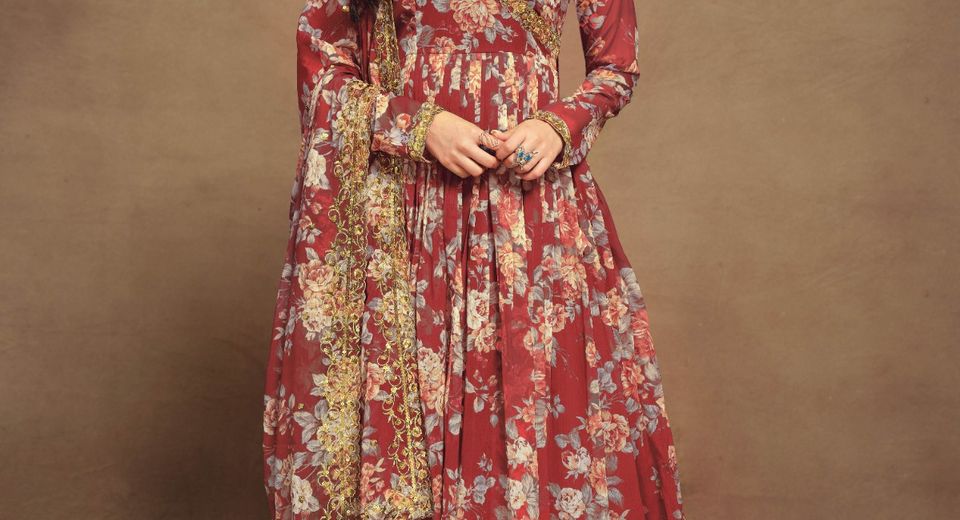
Kurtis for women with a fuller bust that create a more balanced silhouette are easier to choose when fit is judged by proportion rather than size alone. A comfortable shoulder, sufficient room across the bust, a smooth fall below the bust line and controlled visual detail can make a salwar suit look balanced without hiding your shape. Neckline depth, seam placement, fabric weight, print scale and dupatta draping all influence the result.
The goal isn't to make the bust appear smaller at any cost. The goal is to create a continuous line from shoulder to hem, prevent pulling across the chest and distribute visual interest across the complete outfit. The same principles work for straight kurtis, Anarkali suits, kurti-palazzo sets and three-piece salwar suits.
Kurtis for Women With A Fuller Bust That Create a More Balanced Silhouette: What should you look for?
Kurtis for women with a fuller bust that create a more balanced silhouette should fit securely at the shoulders and bust before falling comfortably through the waist and hips. Balance comes from the relationship between the upper body, waist, hip and hemline rather than from a single supposedly slimming feature.
Look for a kurti that lies flat across the bust when you stand, sit and raise your arms. Horizontal strain lines from the armhole towards the bust point indicate that the garment is too tight, even when the side seams technically close. Excess fabric pooling below the bust can indicate that the cut is too loose or that the bust shaping is positioned incorrectly.
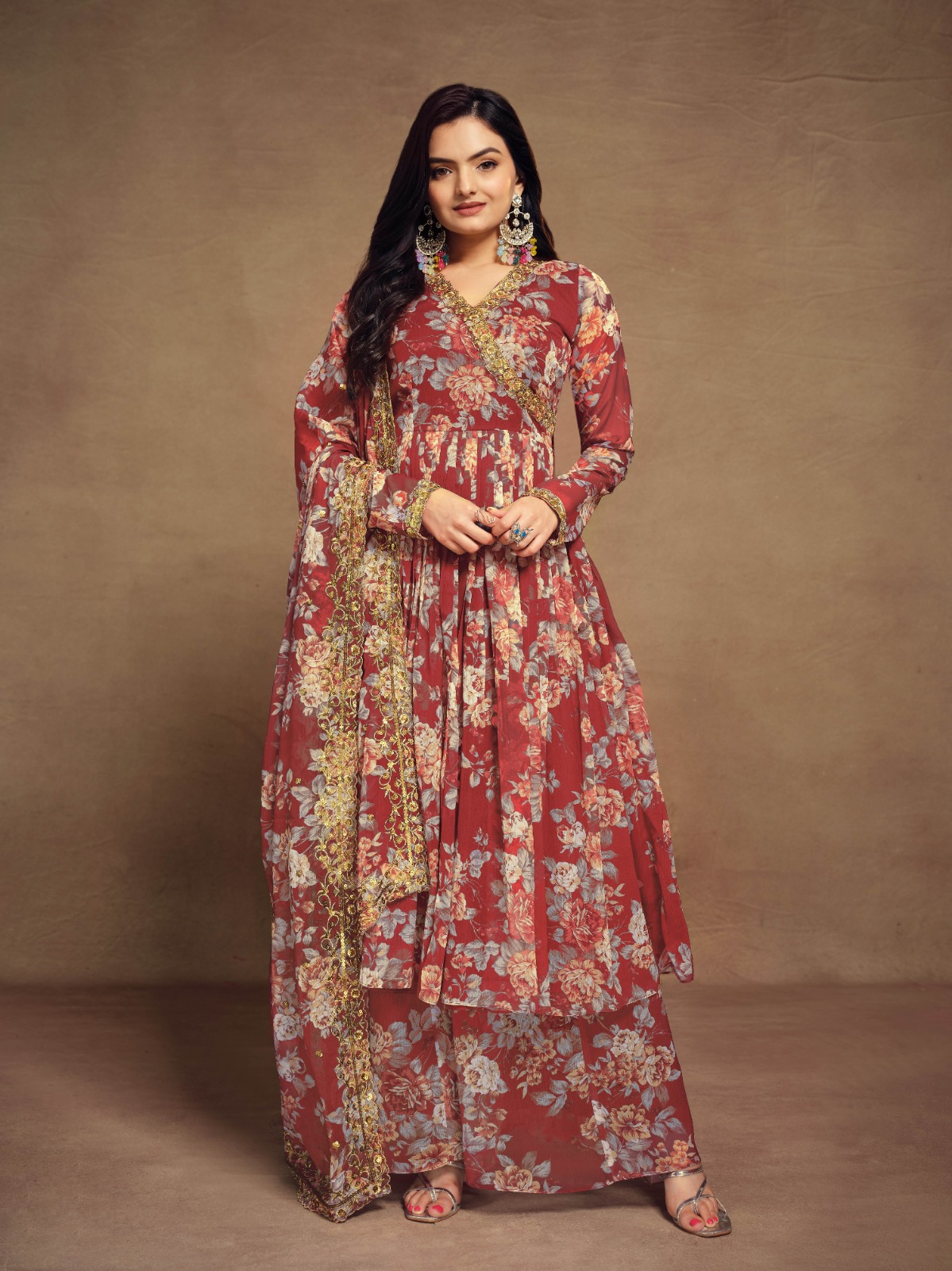
A useful visual formula combines moderate detail near the neckline, a clear vertical direction through the centre and enough volume from the waist to the hem. Straight pants or palazzos can extend the vertical line, while a dupatta worn in long, open panels can add length without adding bulk at the chest.
Finished garment measurements are more reliable than generic small, medium or large labels. Measure the fullest part of the bust while wearing the bra intended for the outfit, then compare that measurement with the kurti's finished bust measurement. A non-stretch garment with fitted sleeves may need approximately 3 to 5 inches of total ease, while a relaxed cotton style may need more.
Kurtis for Women With A Fuller Bust That Create a More Balanced Silhouette: Which necklines work?
V-necks, open U-necks and modest sweetheart necklines generally create an elongating effect because they introduce a vertical opening at the centre front. The most useful neckline is deep enough to guide the eye downward but secure enough to remain comfortable while walking, sitting and bending.
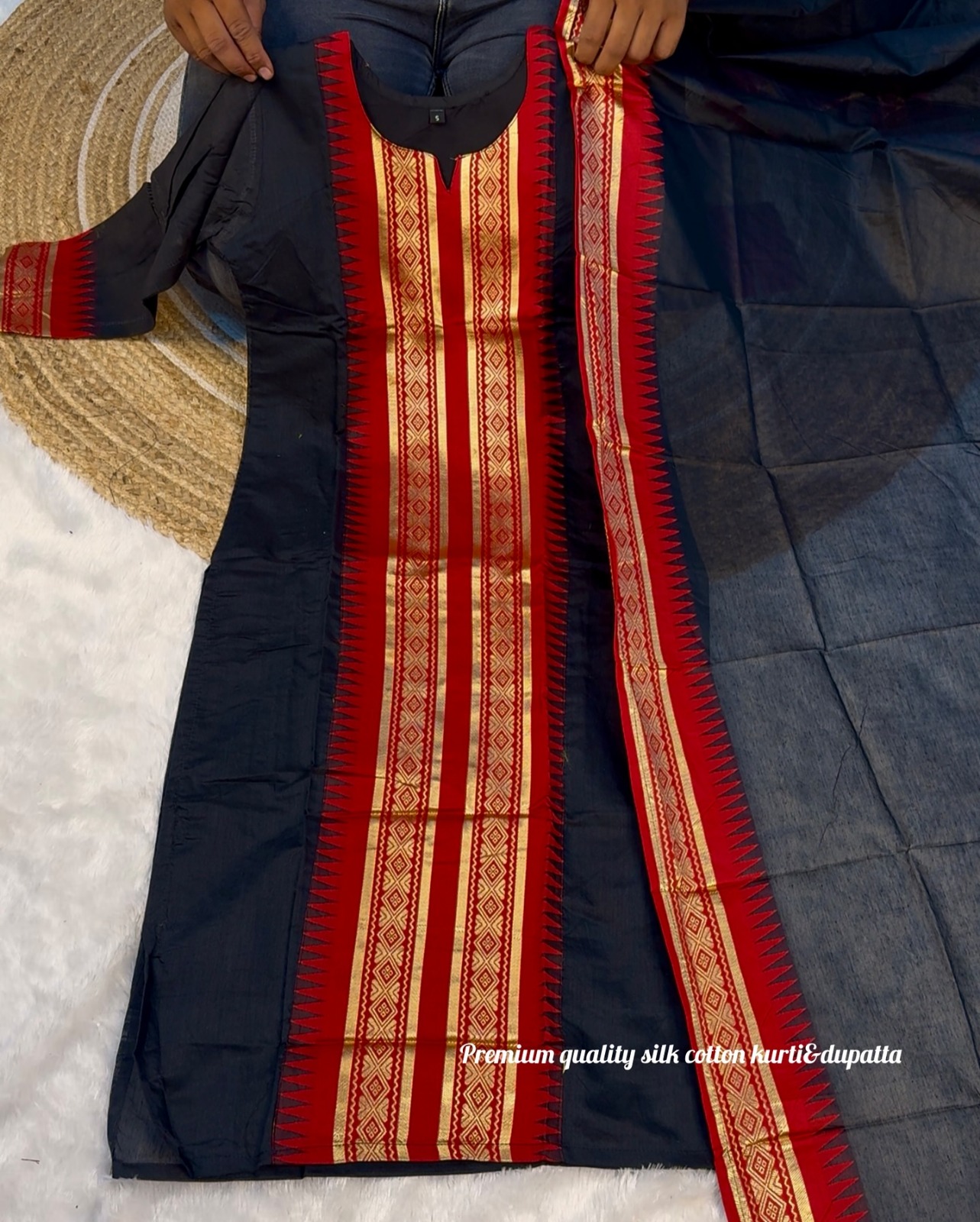
A V-neck doesn't need to be very deep to work. A moderate V that ends above the fullest part of the bust can create a longer centre line while preserving coverage. An open U-neck gives a softer effect, especially when the neckline isn't too high or tightly finished.
High crew necks and narrow boat necks can make the upper torso appear broader when paired with heavy embroidery or a contrasting border. These necklines are not automatically unsuitable, but they work better with a quieter front, a longer hemline and an open dupatta. A wider boat neck can expose more of the shoulder and move attention away from concentrated chest detail.
Square necklines can suit a fuller bust when the bodice is properly shaped and the corners are not crowded with large embellishment. A narrow keyhole should be checked for gaping, especially in lightweight chiffon or rayon. A discreet hook, snap or lining panel can help secure a neckline that shifts during movement.
Which neckline details should you inspect before buying?
Inspect the neckline opening, armhole depth and front placket together because these three areas determine comfort across the chest. A front button placket should lie flat, and a centre seam should not twist towards one side.
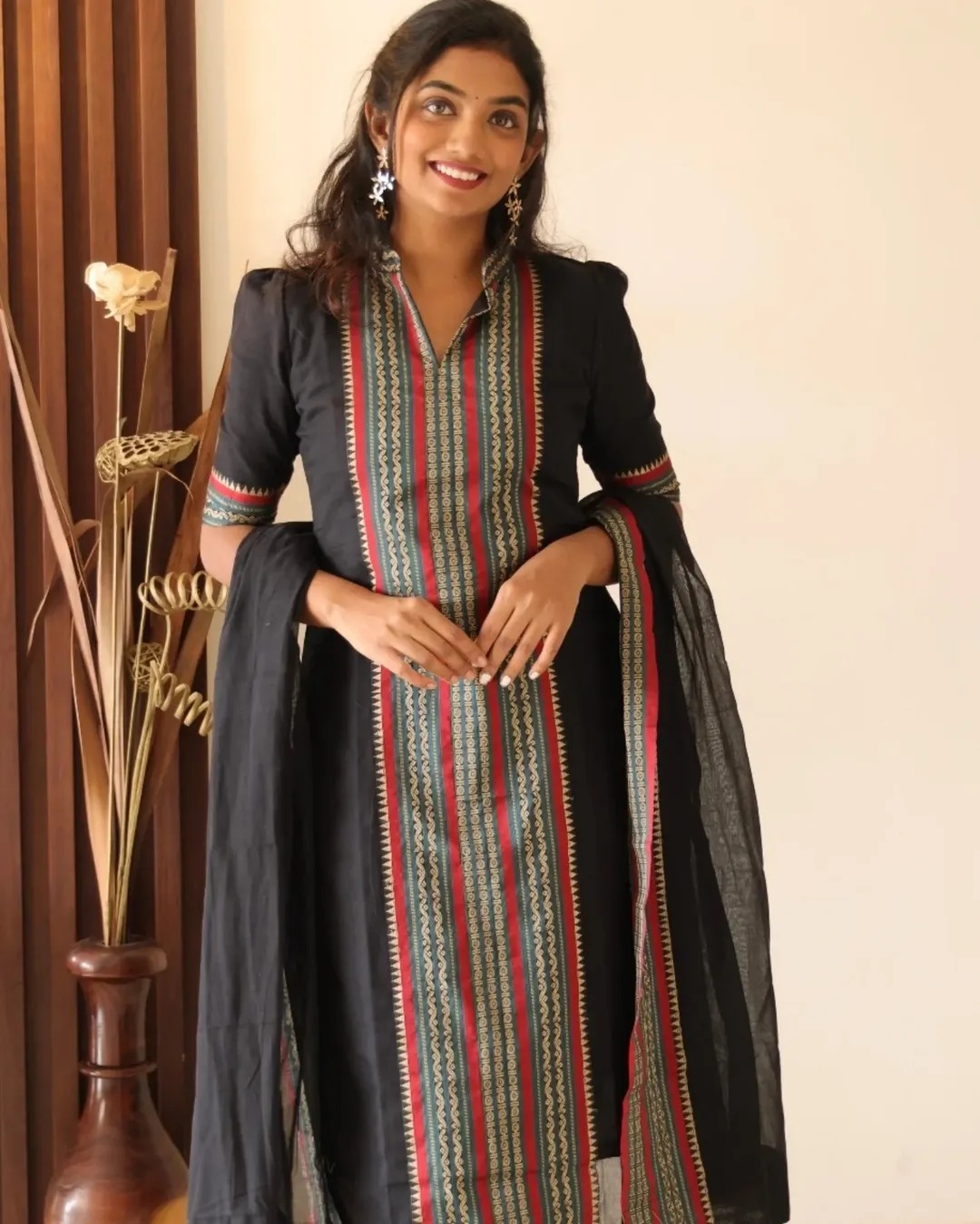
Embroidery placed as a narrow vertical motif below the neckline is usually easier to balance than a dense horizontal band across the bust. Kanchi Cotton Zari Woven Kurti Set with Traditional Dupatta shows how a defined woven border can act as an intentional focal point when the surrounding fabric remains visually calm.
Kurtis for Women With A Fuller Bust That Create a More Balanced Silhouette: Which fabrics fit best?
Medium-weight cotton, rayon, Chanderi silk and structured blends generally provide a smoother fall than very thin clingy fabrics or stiff materials that stand away from the body. Fabric choice should match the cut because fluid materials need sufficient ease, while crisp materials need careful shaping at the bust and armhole.
Cotton is practical for daily wear because it breathes well and usually holds a clean vertical line. Cotton can shrink after washing, so check the care label and allow for approximately 2 to 5 percent shrinkage when buying an unwashed cotton garment. Cream Printed Cotton Kurta Pant Dupatta Set for Women demonstrates how a breathable base can support a simple, low-bulk outfit.
Rayon drapes close to the body and can work well for a straight kurti or Anarkali when the garment isn't undersized at the bust. Rayon may lose shape when hung wet, so dry it flat or on a broad hanger according to the care instructions. Teal Embroidered Rayon Kurti Set and Rani Pink Embroidered Rayon Kurti Pant Dupatta Set show how a fluid fabric can carry colour and embroidery without requiring a stiff silhouette.
Chanderi has a light, slightly crisp character that can create definition without heavy padding or thick lining. Chanderi silk and Chanderi blends should be checked for transparency, particularly in pale shades. Cream Chanderi Silk Kurti Pant Dupatta Set for Women and Beige Kurta Set with Blue Chanderi Dupatta for Women demonstrate how a contrasting dupatta can create a long, clean frame.
Very clingy jersey, thin unlined chiffon and rigid synthetic fabric can each create separate fit problems. Clingy fabric follows every contour, thin chiffon may need careful layering, and rigid fabric can form a shelf at the bust instead of falling from it. A lining should end smoothly and should not finish exactly across the fullest part of the bust.
Kurtis for Women With A Fuller Bust That Create a More Balanced Silhouette: Which cuts and lengths help?
Straight-cut kurtis, gentle A-line shapes and controlled Anarkali silhouettes are usually versatile choices for a fuller bust. Each silhouette allows room below the bust while preserving a deliberate vertical line.
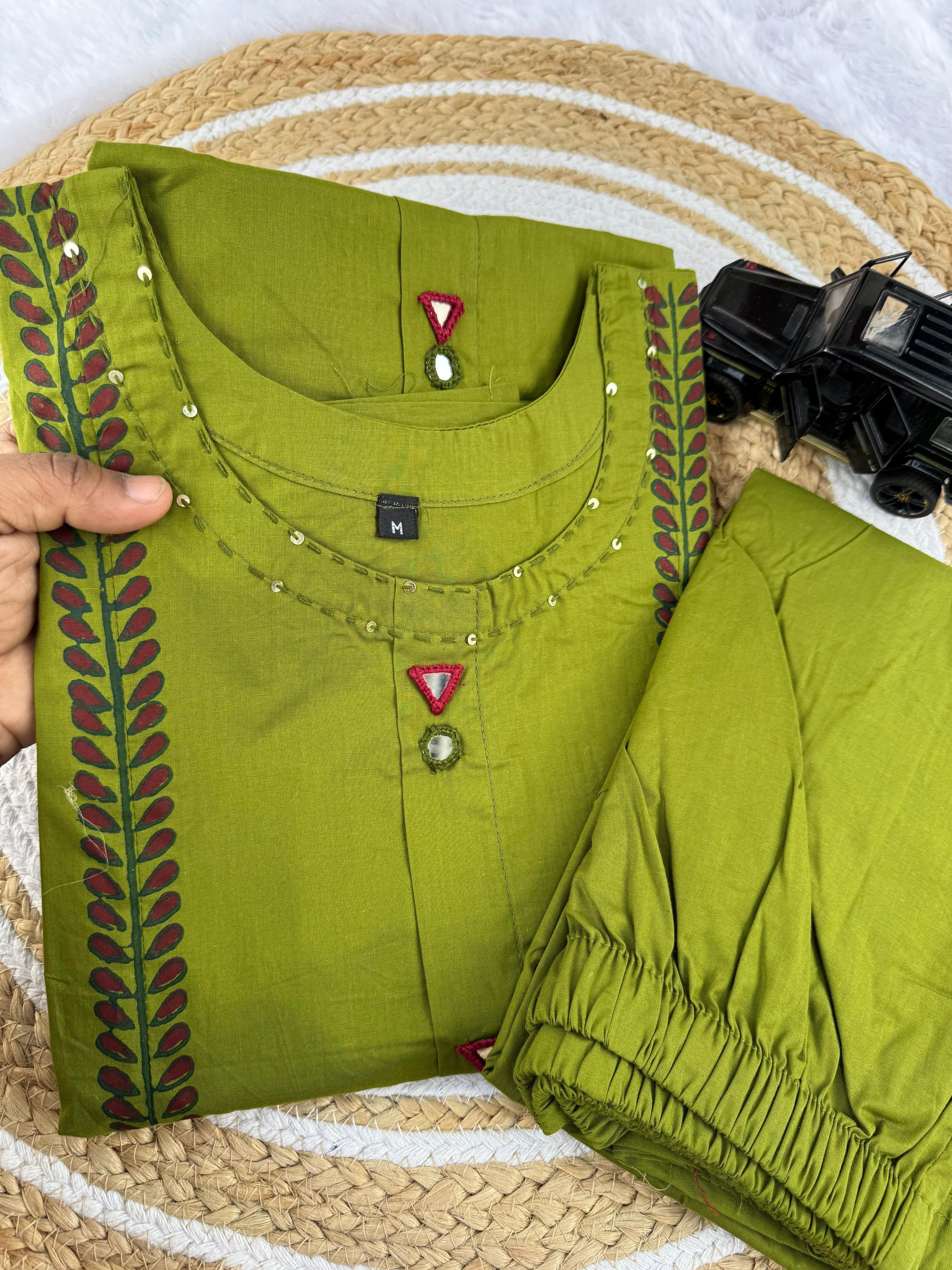
A straight kurti works when the side seams fall close to the body without pulling. A hem reaching the lower hip or mid-thigh can create a continuous line, depending on height and the chosen trousers. A hem ending at the widest part of the hip creates an abrupt horizontal break, while a slightly longer hem often works more smoothly with straight pants.
An A-line kurti should widen gradually from the bust or underbust rather than flare sharply from a high seam. A sudden flare can add volume to the upper torso. A gentle A-line paired with narrow straight pants or cigarette trousers creates contrast between the controlled upper line and the movement below.
An Anarkali can work especially well when the flare begins below the bust and the gathers are evenly distributed. Too many gathers placed directly over the bust increase volume where the outfit already has fullness. Women's Mustard Printed Anarkali Suit with Dupatta shows why print rhythm and the point of flare deserve as much attention as colour.
Peplum cuts, very short kurtis and broad empire seams require more consideration. A short hem can make the torso look compact, while a high empire seam can enlarge the bust visually when paired with gathers or contrast piping. These styles can still work when the seam is smooth, the fabric is controlled and the lower garment restores length.
How much ease should a fuller-bust kurti have?
A practical starting point is approximately 3 to 5 inches of total ease across the bust for a structured kurti, with more ease for a loose cotton or relaxed palazzo set. The correct amount depends on fabric stretch, lining, armhole shape and personal comfort.
Check the garment while sitting and lifting both arms because a kurti that fits only while standing may still be too small through the armhole or upper back. Side slits can improve movement, but side slits don't compensate for insufficient bust ease or a strained armhole.
Kurtis for Women With A Fuller Bust That Create a More Balanced Silhouette: How do prints and embroidery help?
Prints and embellishments affect proportion through scale, direction and placement. Small-to-medium motifs distributed across the kurti usually create a calmer result than one oversized motif centred directly over the bust.
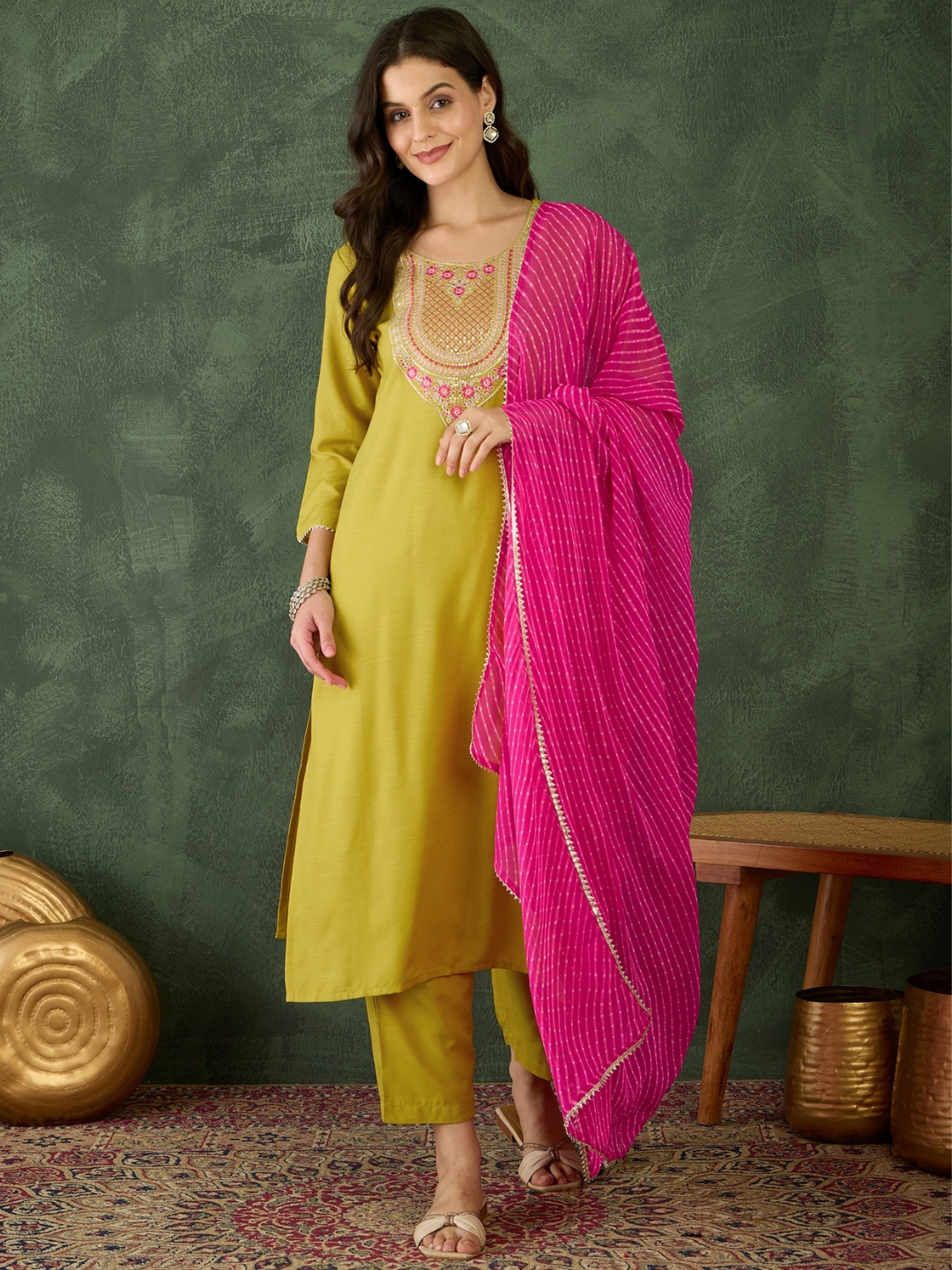
Vertical prints, narrow borders and elongated botanical motifs encourage the eye to travel from shoulder to hem. Diagonal motifs can add movement when the print doesn't stop abruptly at the bust. Dense horizontal stripes, wide yokes and heavy contrast bands across the chest can make the upper body look wider.
Dark colours are not the only way to create balance. A light kurti with a darker vertical dupatta, a tonal print or a deeper trouser can create a similar lengthening effect. Shop Floral Digital Printed Chiffon Kurti Palazzo Set with zari embroidery combines a fluid fabric with decorative detail, so the placement of zari embroidery and the openness of the dupatta matter more than colour alone.
Traditional textile-inspired prints can follow the same proportion rules. Kalamkari Print Salwar Suits often bring strong botanical or narrative motifs, while Gujarat Bandhej Salwar Suits and Odisha Sambalpuri Salwar Suits may use repeated patterns and border contrasts. Keep the lower garment and accessories quieter when the kurti already carries a large-scale print or prominent border.
Maharashtra Paithani Inspired Salwar Suits can bring rich border references into an outfit, while Punjab Patiala Salwar Suits naturally introduce volume through the lower garment. When the bottom half is fuller, keep the kurti's bust area clean and use a longer dupatta line to connect the two sections visually.
Kurtis for Women With A Fuller Bust That Create a More Balanced Silhouette: How should you drape the dupatta?
A dupatta creates the most balanced effect when it forms two long, open vertical lines or rests over one shoulder without a bulky fold across the chest. Dupatta placement can change the apparent width of the torso as much as the kurti itself.
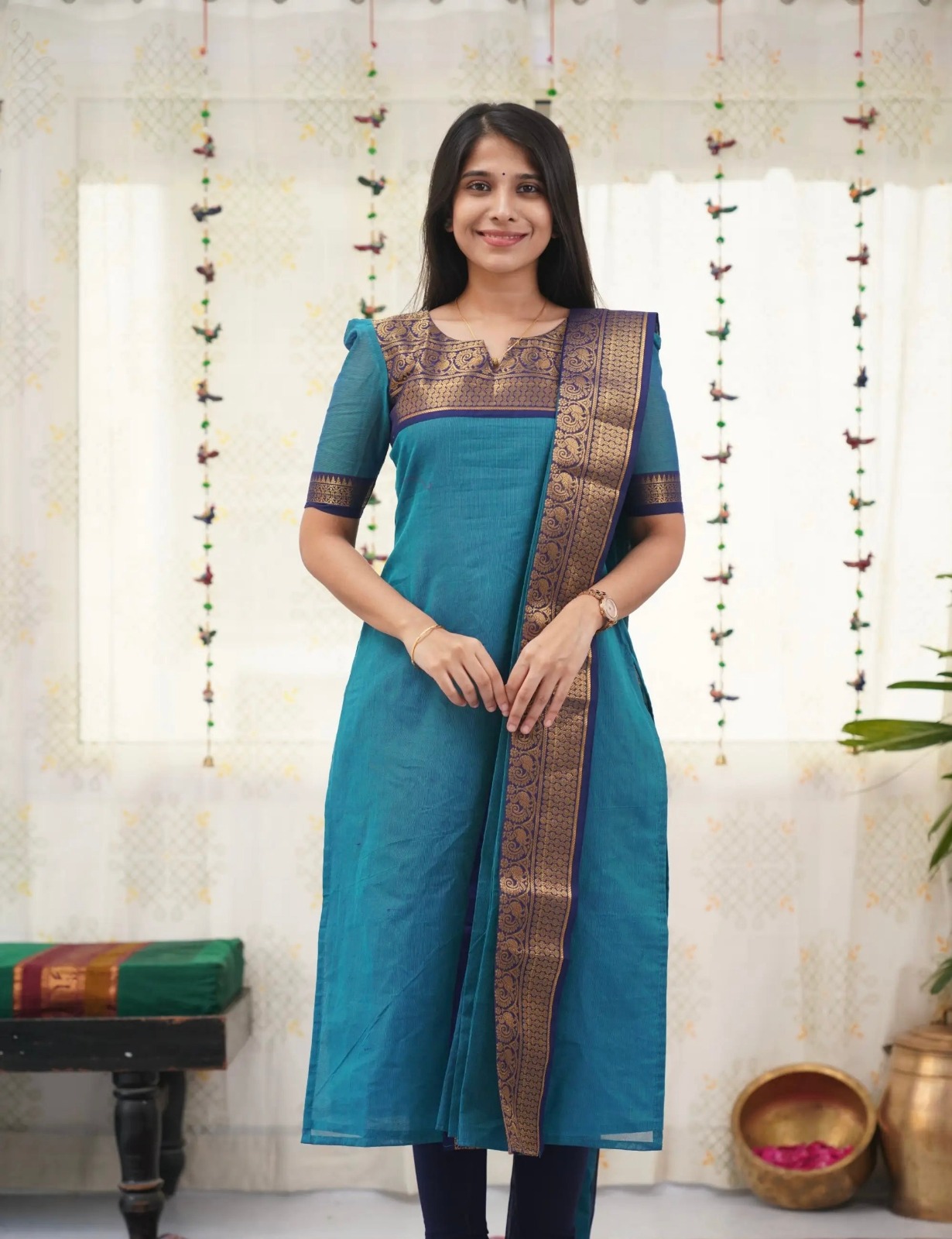
For a long vertical frame, place the dupatta over both shoulders and allow each side to fall near the outer edges of the torso. Keep the fabric relatively flat over the chest and avoid repeatedly bunching it at the neckline. A lightweight Chanderi dupatta can hold a neat line, while chiffon may need careful pinning to prevent slipping.
A one-shoulder drape works when the fabric falls in a long panel down the opposite side of the body. Pin the dupatta near the shoulder rather than directly over the fullest part of the bust. This arrangement gives definition without creating a thick horizontal layer.
Avoid placing a heavily embroidered border straight across the chest unless the kurti itself is very simple and the border is narrow. The same principle applies to a tightly wrapped dupatta: multiple folds add physical bulk and create a strong horizontal line.
Kurtis for Women With A Fuller Bust That Create a More Balanced Silhouette: What should you wear below the kurti?
Straight pants, cigarette trousers and moderately wide palazzos can all balance a fuller-bust kurti when their volume matches the upper garment. The best lower garment creates length or controlled movement rather than competing with a detailed chest area.
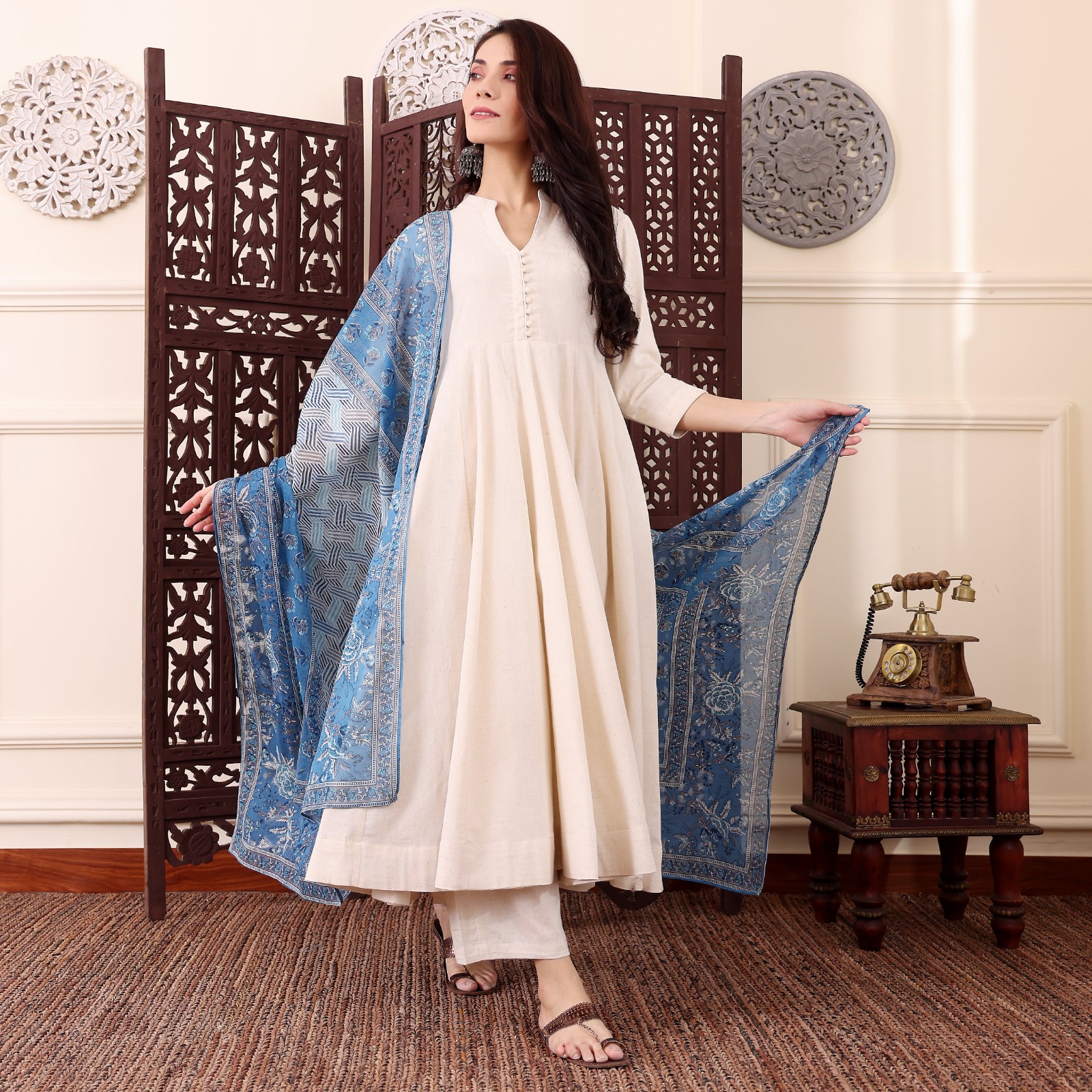
Straight pants create a clean column below a straight or gently A-line kurti. Cigarette trousers provide a sharper line with longer kurtis and can work well for office or daytime dressing. Palazzos add movement, but very wide palazzos are easier to balance with a kurti that falls below the hip and has restrained upper-body detail.
Patiala salwars and heavily pleated bottoms introduce additional volume around the hips and thighs. That volume can create pleasing proportion when the kurti is simple, the hem isn't too short and the dupatta is worn in a long vertical drape. A narrow, highly embellished kurti paired with a voluminous bottom can look visually divided, so repeat one colour or motif across the set.
Footwear also affects the final line. A low block heel, pointed flat or slightly raised sandal can add length without making the outfit impractical. Match the shoe's colour to the trouser or skin tone when a longer uninterrupted line is the priority.
Kurtis for Women With A Fuller Bust That Create a More Balanced Silhouette: How can you style them for different occasions?
Daily wear benefits from breathable fabric, moderate ease and low-maintenance construction, while festive dressing can support zari, Chanderi silk, embroidery and more structured draping. Occasion should guide the amount of surface detail, not override the need for a comfortable fit.
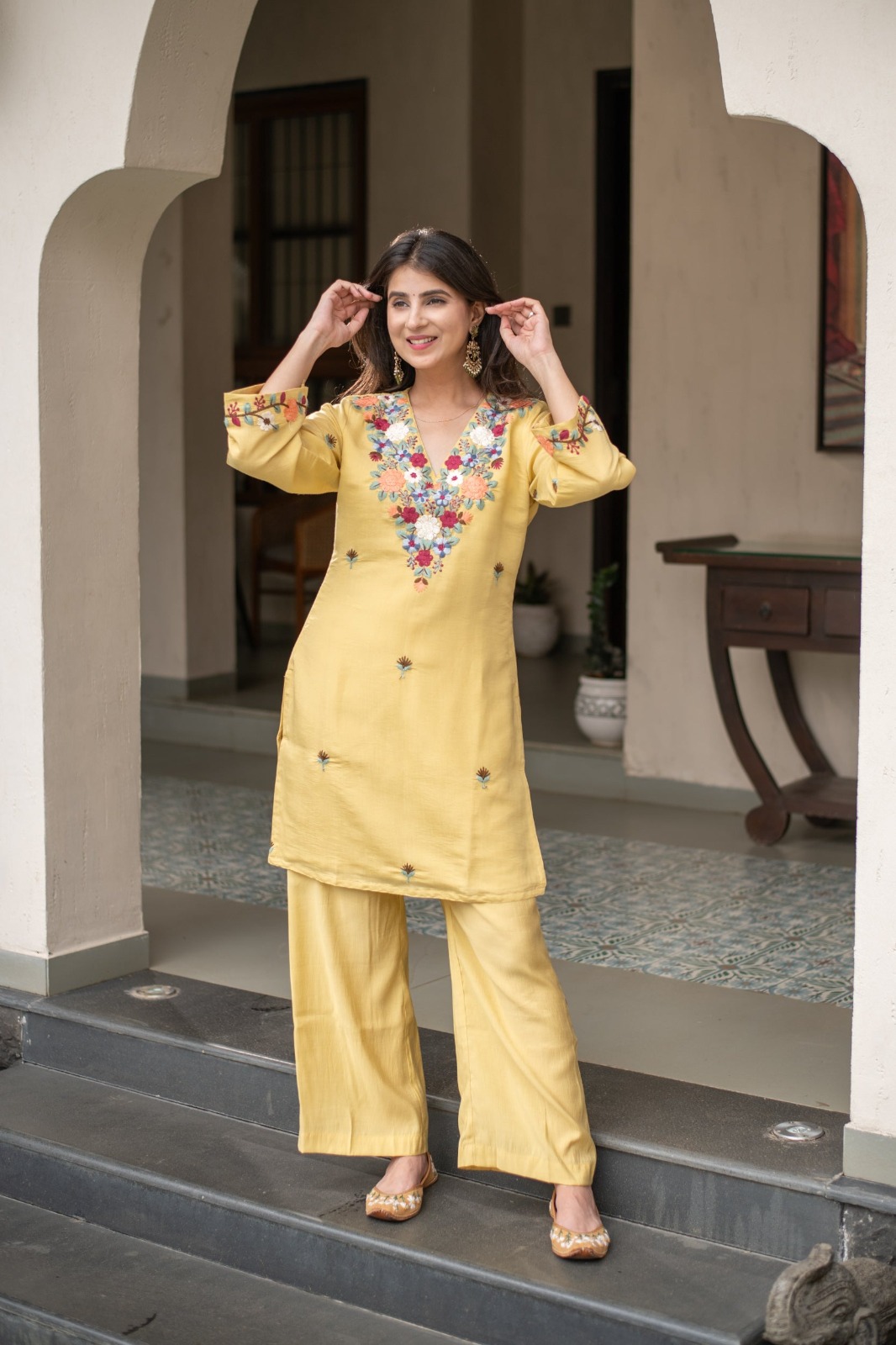
For office dressing, choose a straight cotton or rayon kurti, a moderate V-neck or U-neck, straight pants and a light dupatta worn open. Keep zari and contrast borders limited to the neckline, cuffs or hem rather than concentrating them across the bust.
For a daytime family gathering, a printed cotton or Chanderi kurta set can provide polish without excess weight. Cream Printed Cotton Kurta Pant Dupatta Set for Women and Beige Kurta Set with Blue Chanderi Dupatta for Women can be styled with small earrings and a simple sandal so the outfit retains a clean vertical direction.
For a festive evening, zari embroidery, a controlled Anarkali flare or a woven border can supply interest. Kanchi Cotton Zari Woven Kurti Set with Traditional Dupatta and Shop Floral Digital Printed Chiffon Kurti Palazzo Set with zari embroidery show two different ways to add occasion detail while keeping the overall silhouette intentional.
For a wedding-related event, inspect the lining, armhole and closure before choosing a heavily decorated style. A garment worn for four or five hours should allow you to sit, eat and move your arms comfortably. Comfortable ease is more valuable than a smaller label size.
Kurtis for Women With A Fuller Bust That Create a More Balanced Silhouette: What is the final fit checklist?
The final fit checklist is simple: check the bust, shoulder, armhole, neckline, side seam, hemline and dupatta placement before deciding that a style works. A balanced outfit should remain comfortable in motion, not only look smooth in a still photograph.
- Bust: Confirm that buttons, seams and fabric lie flat without pulling or gaping.
- Shoulders: Check that the shoulder seam ends at the natural shoulder point rather than dropping down the arm.
- Armholes: Raise both arms and sit down to test for pinching or restricted movement.
- Neckline: Bend forward and turn from side to side to check coverage and stability.
- Fabric: Hold pale Chanderi silk or chiffon against light to assess whether an additional layer is needed.
- Print: Check whether a border or large motif lands directly across the fullest part of the bust.
- Length: Compare the kurti hem with the widest part of the hip and the rise of the chosen trousers.
- Dupatta: Try the intended drape and make sure it doesn't create a thick horizontal band over the chest.
Small alterations can improve an otherwise good kurti. A tailor can adjust a side seam, add a discreet bust dart, secure a neckline, move a hook or shorten a sleeve. Alterations should preserve the garment's balance rather than remove all ease.
The most reliable choice combines accurate measurements with a deliberate visual line. When neckline, fabric, silhouette, print, lower garment and dupatta support one another, a fuller bust becomes one part of a well-proportioned outfit rather than the feature that dictates every decision.
Common Questions About Choosing Kurtis for a Fuller Bust
Which kurti neckline is best for a fuller bust?
A moderate V-neck, open U-neck or modest sweetheart neckline often works well because each creates a vertical opening at the centre front. The neckline should remain secure during movement and should not gape when you sit or bend.
Are Anarkali kurtis suitable for women with a fuller bust?
Anarkali kurtis can be suitable when the flare begins below the bust and the gathers are distributed evenly. Avoid heavy gathering directly across the chest because it can add unnecessary volume in that area.
How much bust ease should a kurti have?
A structured kurti often needs approximately 3 to 5 inches of total ease across the bust, while a relaxed cotton or palazzo style may need more. Finished garment measurements, fabric stretch and armhole shape should all be considered before choosing a size.
Do prints make a fuller bust look larger in a kurti?
Prints do not automatically make a fuller bust look larger. Large horizontal motifs, wide yokes and dense contrast bands across the chest can add visual width, while vertical motifs, tonal patterns and narrow borders can create a longer line.
How should a dupatta be draped with a fuller-bust kurti?
Wear the dupatta in long, open panels over both shoulders or let one side fall in a long vertical line. Avoid bulky folds and heavily bordered fabric placed directly across the fullest part of the bust.
Which lower garments balance a fuller-bust kurti?
Straight pants and cigarette trousers create a clean vertical column, while moderately wide palazzos add controlled movement. Very voluminous salwars work best with a simple, sufficiently long kurti and a long dupatta drape.


