
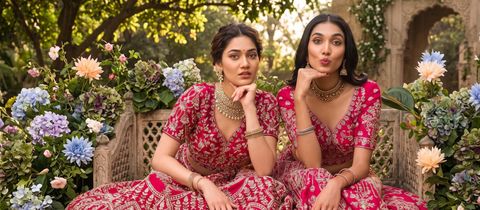
A long train ride, airport connection or road journey can expose every weakness in an outfit: fabric that traps heat, waistbands that dig in, dupattas that slip and hems that become difficult in crowded spaces. Kurtis for Long Travel Days That Stay Comfortable All Day work best when they combine breathable material, controlled volume, easy movement and simple maintenance. The right salwar suit can take you from an early departure to a late check-in without looking like sleepwear.
Travel comfort doesn't require abandoning Indian dressing. Cotton, khadi cotton, soft blends and relaxed kurta-pant silhouettes provide practical alternatives to stiff denim or heavily embellished festive clothing. A few considered choices, such as three-quarter sleeves, ankle-skimming trousers and a lightweight dupatta, can make a noticeable difference over eight to twelve hours.
Kurtis for Long Travel Days That Stay Comfortable All Day: What should you look for?
A travel-friendly kurti has breathable fabric, enough room across the shoulders and hips, a secure but flexible waistband, and details that don't snag during movement. These features matter more than a decorative neckline or dramatic flare when you'll be sitting, walking, lifting luggage and using public transport.
Start with the route rather than the photograph. An air-conditioned flight may call for a light layer, while a summer road trip through Rajasthan demands air circulation and sweat management. A train journey may involve climbing steps and storing bags, so a manageable hem and non-dangling accessories are useful.
- Fabric: Cotton, khadi cotton and cotton-rich weaves generally allow better airflow than dense synthetic fabric.
- Fit: A-line or straight cuts should skim the body without pulling at the bust, armhole or seat.
- Bottoms: Pants with a broad elasticated back or adjustable drawstring offer comfort during prolonged sitting.
- Hemline: A hem around the knee to mid-calf reduces contact with dirty floors while preserving movement.
- Surface detail: Flat prints and restrained handwork are easier to wear than raised sequins or sharp metal embellishment.
An effective test is to sit in the complete outfit for ten minutes before packing it. If the waistband rolls, the armhole cuts in or the dupatta needs repeated adjustment, the same problem will feel larger after several hours of travel.
Kurtis for Long Travel Days That Stay Comfortable All Day: Which fabrics work best?
Cotton is usually the most dependable fabric for long travel because it allows airflow and feels less clammy in warm weather. Khadi cotton adds a slightly textured handfeel and often releases body heat well, while lightweight Chanderi can work as a layer when the journey is mostly indoors or air-conditioned.
How should fabric match the climate?
Light cotton with a breathable weave suits humid destinations, while cotton and khadi cotton help reduce the sticky sensation that develops under synthetic fabric in dry heat. For cooler flights, a cotton kurti under a soft stole or open overshirt provides adjustable warmth without forcing you into a heavy outfit.
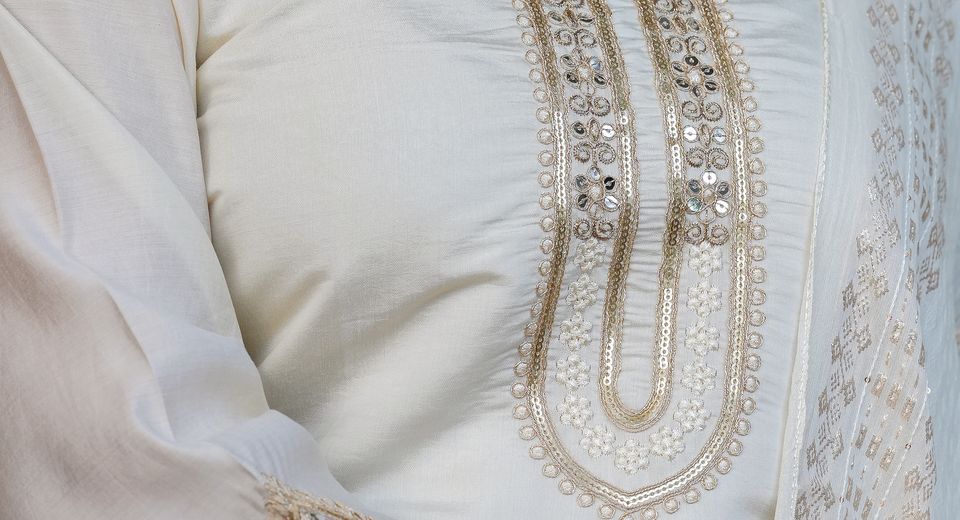
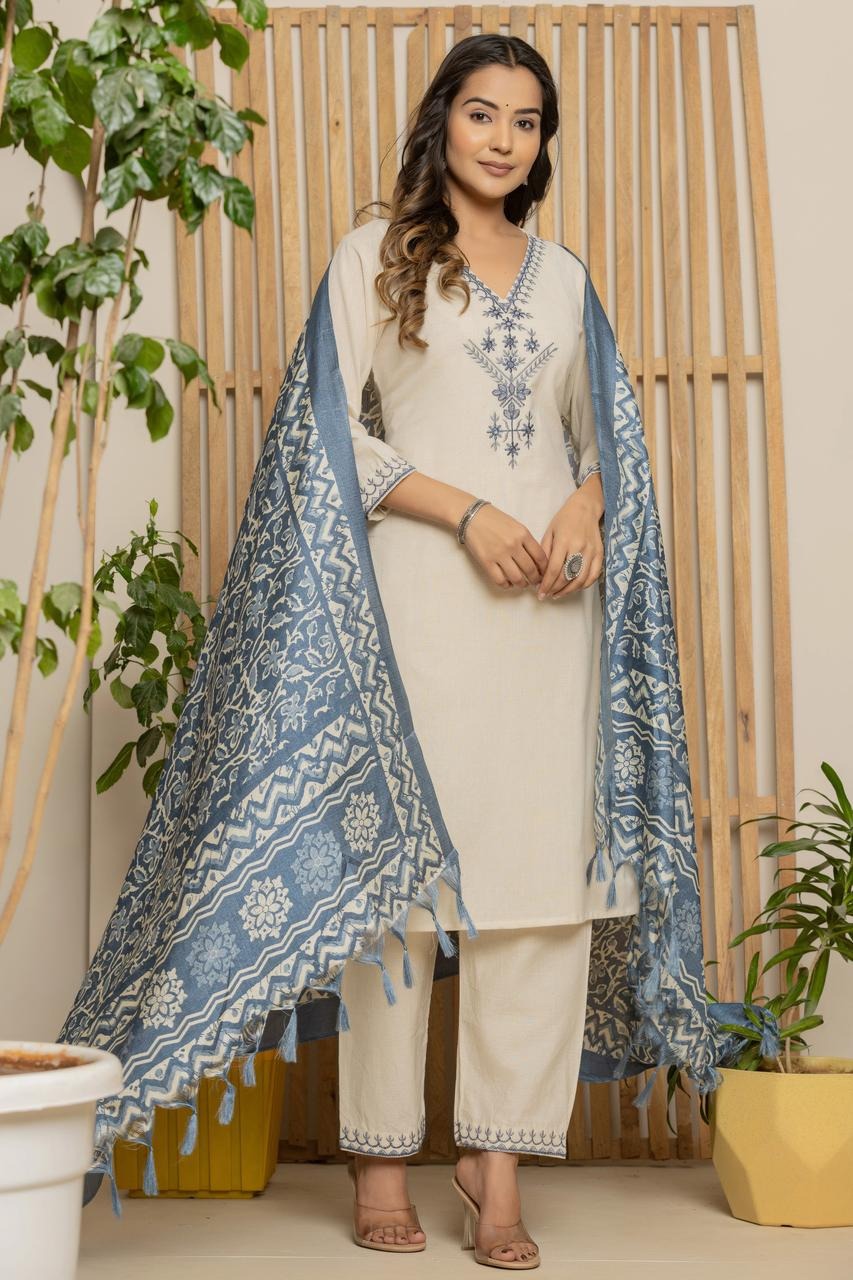
The Cream Khadi Cotton Straight Kurta Set with Dupatta illustrates why khadi cotton suits measured travel dressing. The straight shape is easy to sit in, and the fabric has enough visual texture to look finished without requiring elaborate accessories. A compact cotton stole can replace a more cumbersome dupatta when luggage space is limited.
The Grey Printed Cotton Kurti Pant Set for Women Daily Wear offers another useful direction for repeated wear. A printed cotton surface hides minor creasing better than a plain, high-shine fabric, while matching pants prevent the outfit from looking incomplete after a long journey.
Which fabrics need more planning?
Silk blends, dense zari, thick jacquard and heavily starched cotton can look elegant but may feel restrictive after several hours. Kanjeevaram silk, Banarasi silk and richly woven Paithani-inspired textiles are better reserved for celebrations or shorter transfers unless the itinerary involves limited walking and comfortable private transport.
Some decorative fabrics remain useful in small doses. The Yellow Jacquard Woven Kanchi Cotton Kurti Set can work for a short festive visit or a destination lunch, but a traveller should check the fabric weight and waistband comfort before choosing it for an entire day of transit. A lightweight inner layer can prevent textured fabric from rubbing against the skin.
Kurtis for Long Travel Days That Stay Comfortable All Day: Which silhouettes make movement easier?
A straight kurta with relaxed pants or a moderate A-line kurti with tapered trousers usually gives the best balance of movement and neatness for travel. Both silhouettes leave space around the thighs and knees without creating excess fabric that catches on luggage wheels, armrests or vehicle doors.
An A-line kurti is especially useful when sitting for long periods because the flare gives the hips and thighs room. The flare should begin below the bust or waist rather than becoming very wide from the shoulder; excessive volume can bunch under a seatbelt or occupy neighbouring space on a crowded train.
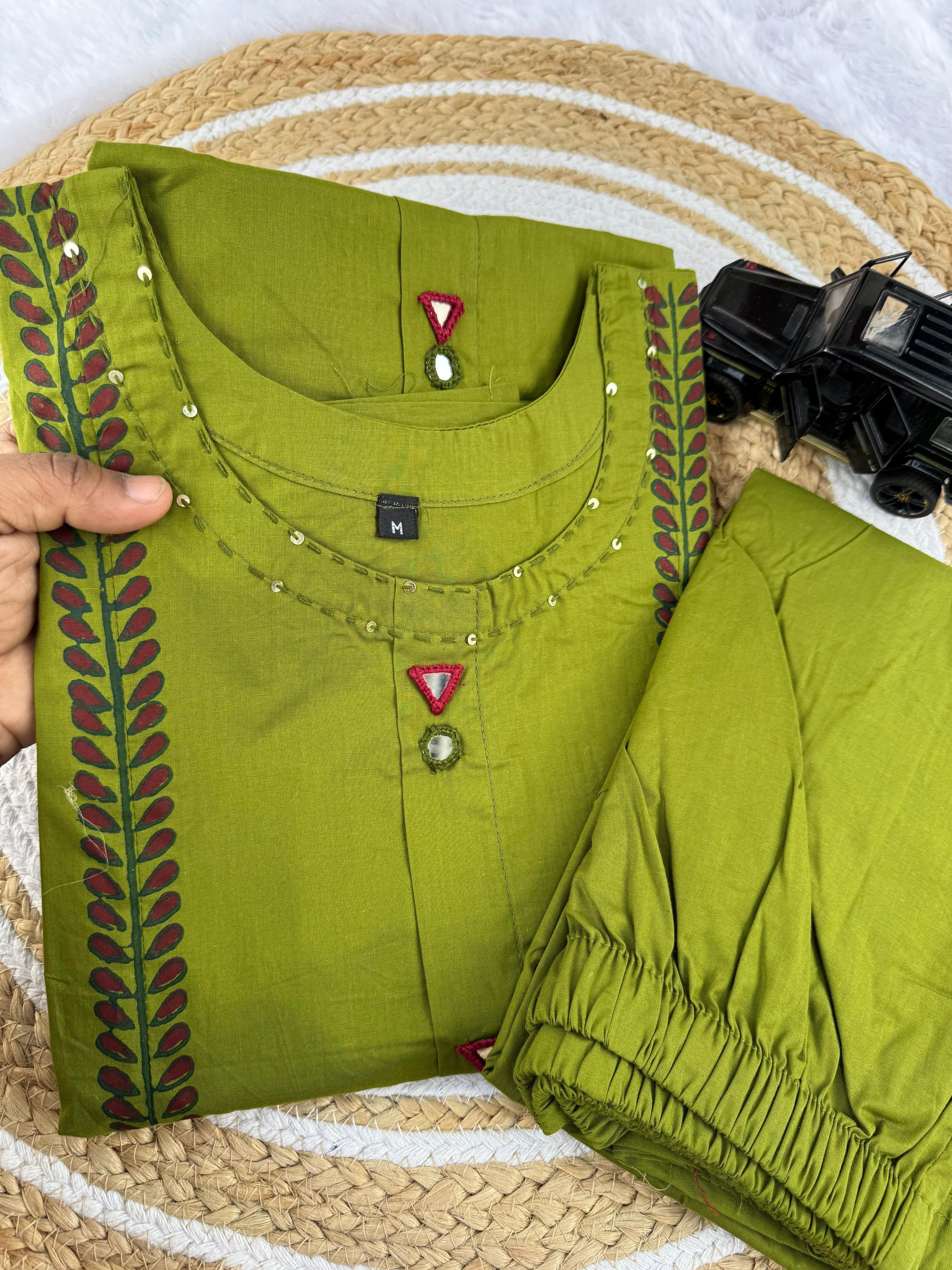
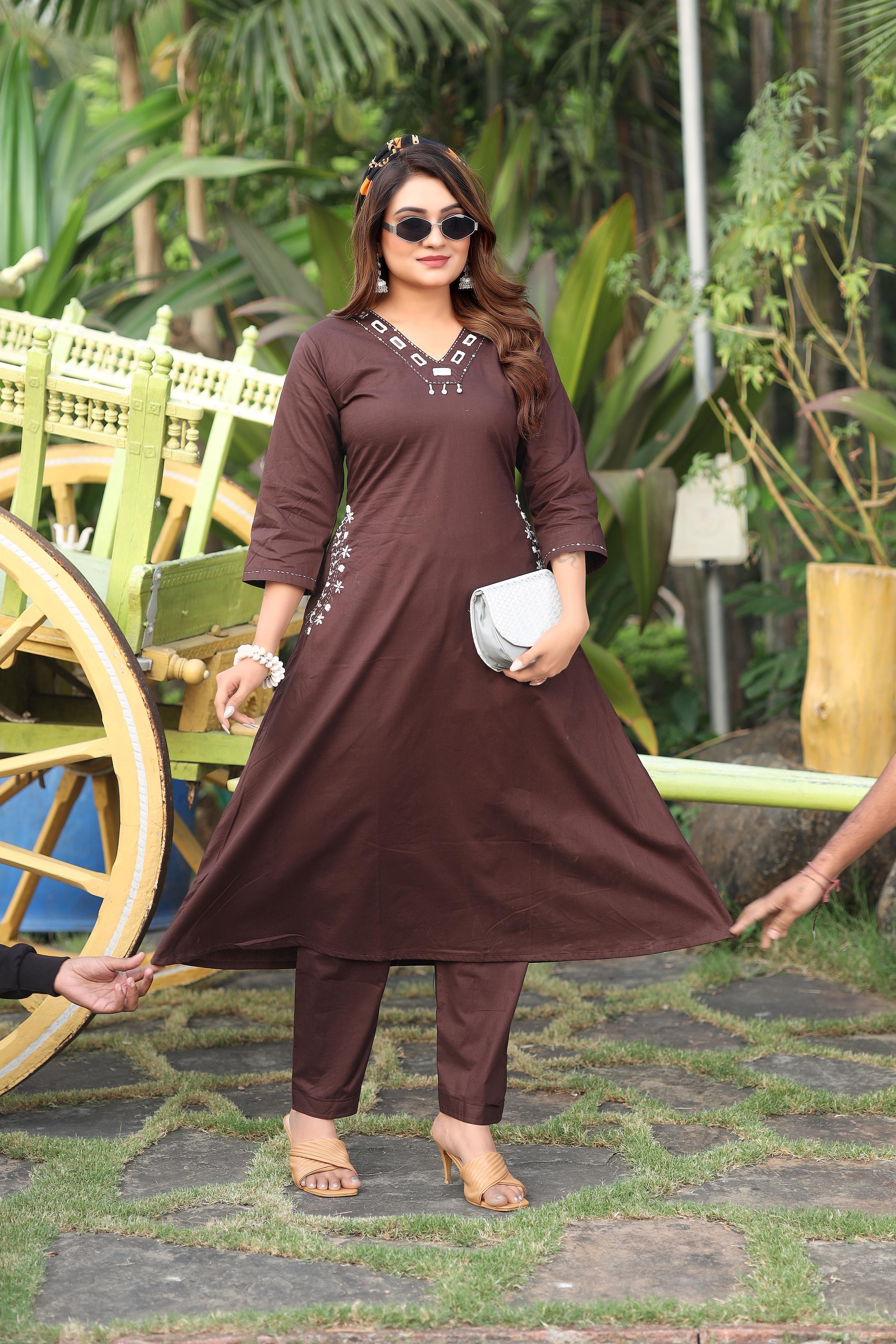
The Red Cotton A-Line Kurti Set with Mirror Work Design shows how a familiar casual silhouette can retain visual interest. Mirror work should be checked for flat finishing and secure stitching before a journey, because protruding elements can catch on bags or feel uncomfortable against a seatback.
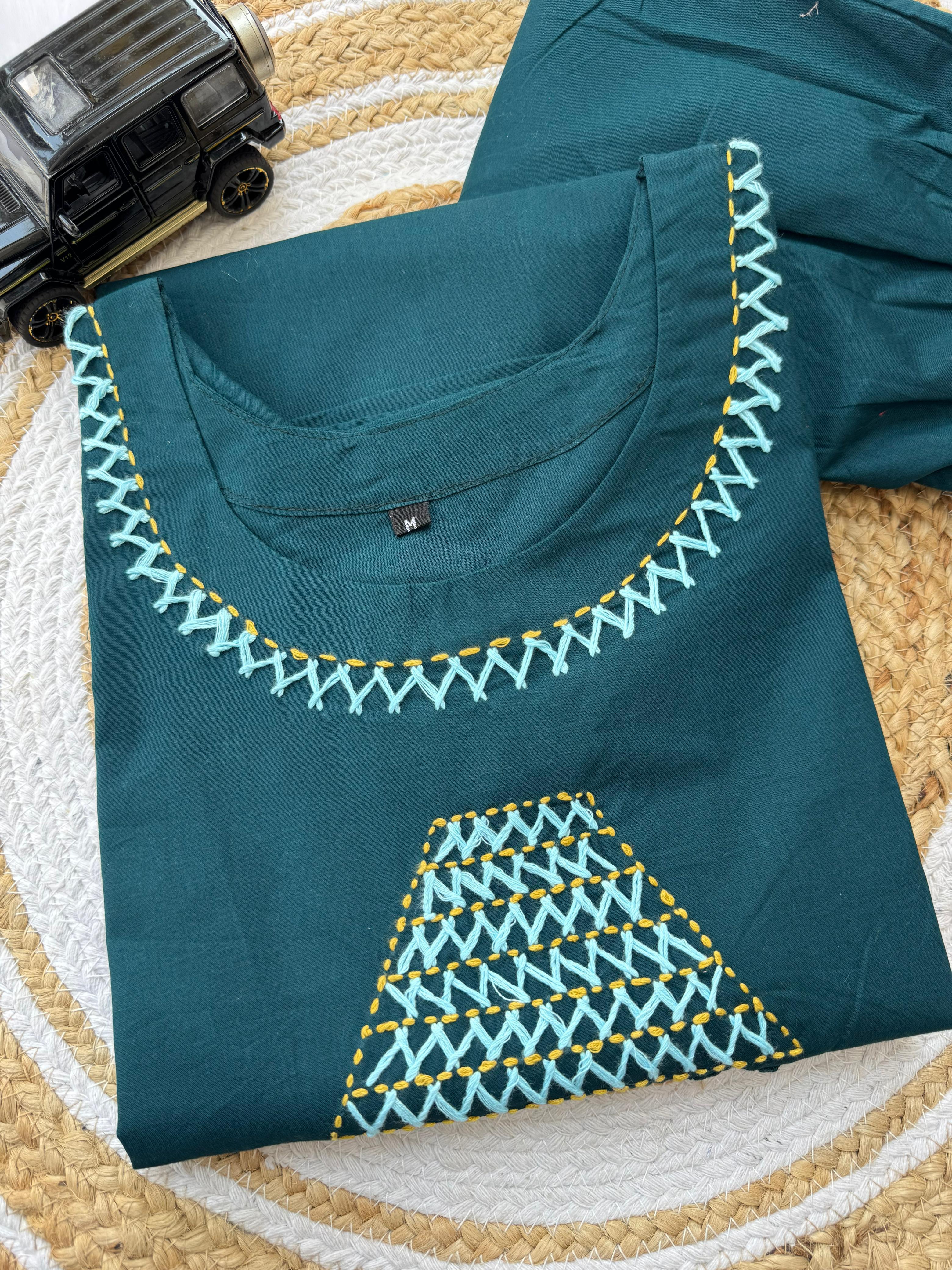
The Teal Cotton A-Line Kurti Pant Set with Handwork is similarly suited to travellers who want a coordinated outfit without styling multiple separates. A matching pant keeps the look composed if the dupatta is removed while boarding, eating or handling luggage.
- Choose straight pants that end at the ankle or slightly above the shoe rather than pooling near the floor.
- Prefer a moderate side slit that improves stride without opening too high when seated.
- Check that sleeve openings allow the arms to lift a cabin bag or reach an overhead rack.
- Avoid very long, trailing dupattas around escalators, bicycle seats and moving walkways.
- Use a smooth waistband under a seatbelt because bulky embroidery at the waist becomes uncomfortable quickly.
Kurtis for Long Travel Days That Stay Comfortable All Day: How should you dress for different journeys?
The journey type should determine the kurti's fabric weight, amount of embellishment and layering potential. A ten-hour bus ride has different practical demands from a two-hour flight followed by a formal dinner.
What works for flights and airport transfers?
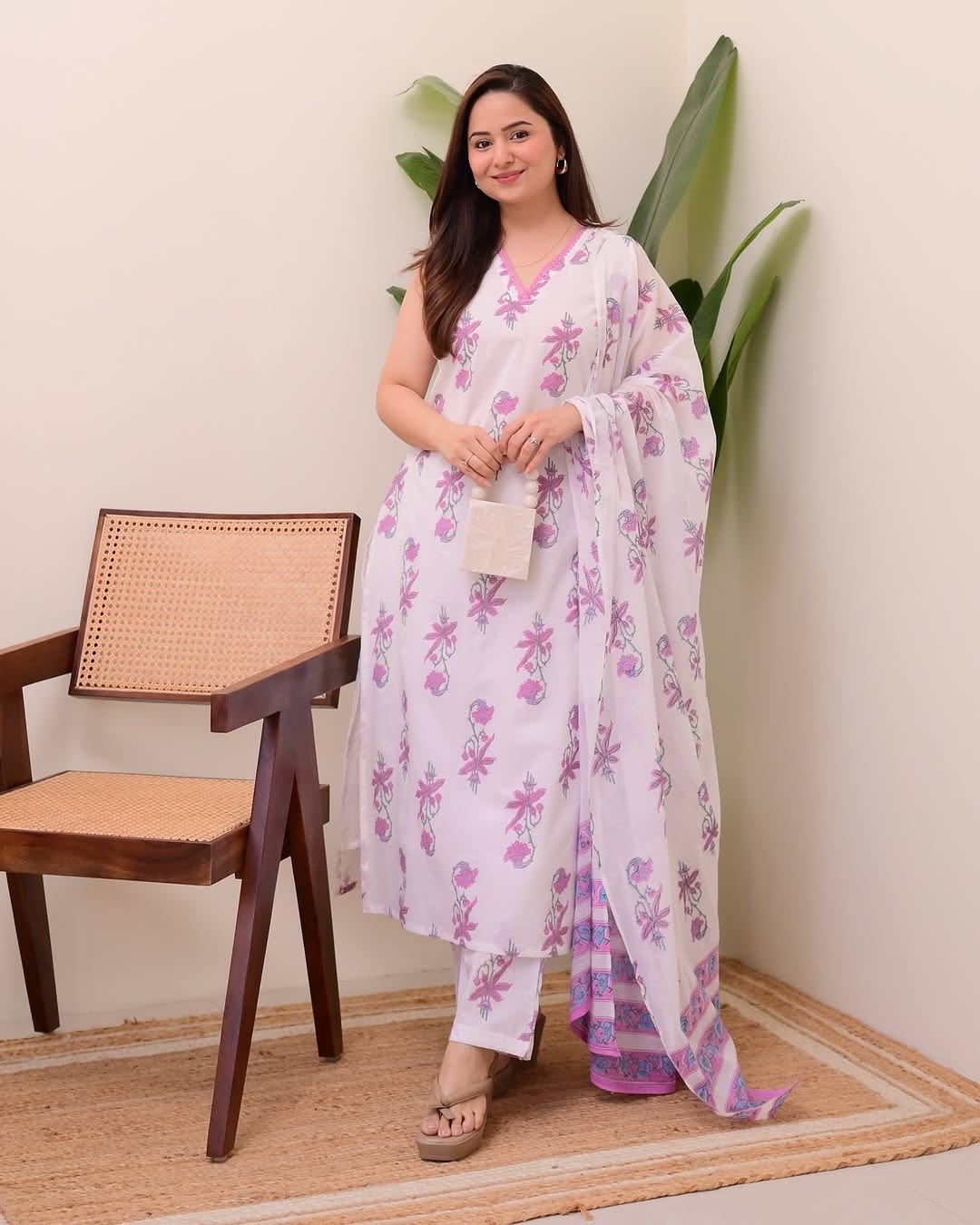
For air travel, choose a soft kurta-pant set with a waistband that doesn't press into the abdomen while seated. The Elegant Pink Print Daily Wear Kurta Set is a suitable example of a low-effort coordinated outfit: a printed surface adds polish, while a daily-wear construction is generally easier to fold and repeat.
Keep metal accessories minimal because belts, heavy bangles and prominent mirror work can slow security checks or become uncomfortable under a seatbelt. A lightweight stole is more adaptable than a bulky shawl when cabin temperatures change.
What works for train and road journeys?
Train and road travel call for secure hems, washable fabric and shoes that tolerate uneven surfaces. The Orange Ethnic Kurti Dupatta Set with Jacquard Work can suit a stopover or destination visit, but a traveller should pack the dupatta in a reachable compartment during transit so it doesn't drag through crowded platforms.
For journeys with frequent stops, the Designer Cotton A-Line Kurti Pant Set with Mirror Work gives a coordinated look that can move between casual sightseeing and a meal outside. Pack a plain cotton scarf separately if the original dupatta is decorative or delicate.
How can regional textiles influence destination dressing?
Warm heritage destinations pair well with breathable cotton and restrained prints, while cooler hill stations need a longer outer layer over the kurti. Kalamkari Print Salwar Suits bring narrative floral and figurative patterns, Maharashtra Paithani Inspired Salwar Suits reference jewel-toned woven traditions, and Punjab Phulkari Embroidered Salwar Suits add colourful threadwork to a travel wardrobe.
These regional references don't mean every travel outfit must be elaborate. A printed kurta inspired by Kalamkari can be worn with plain cotton pants, while Phulkari-style embroidery is best kept away from high-friction areas such as backpack straps.
Kurtis for Long Travel Days That Stay Comfortable All Day: Can pockets and dupattas improve comfort?
A travel-friendly dupatta should be lightweight, wide enough to sit securely on the shoulders and short enough to avoid dragging. Cotton voile, lightweight mulmul and soft modal blends are easier to control than very slippery satin or densely embellished fabric.
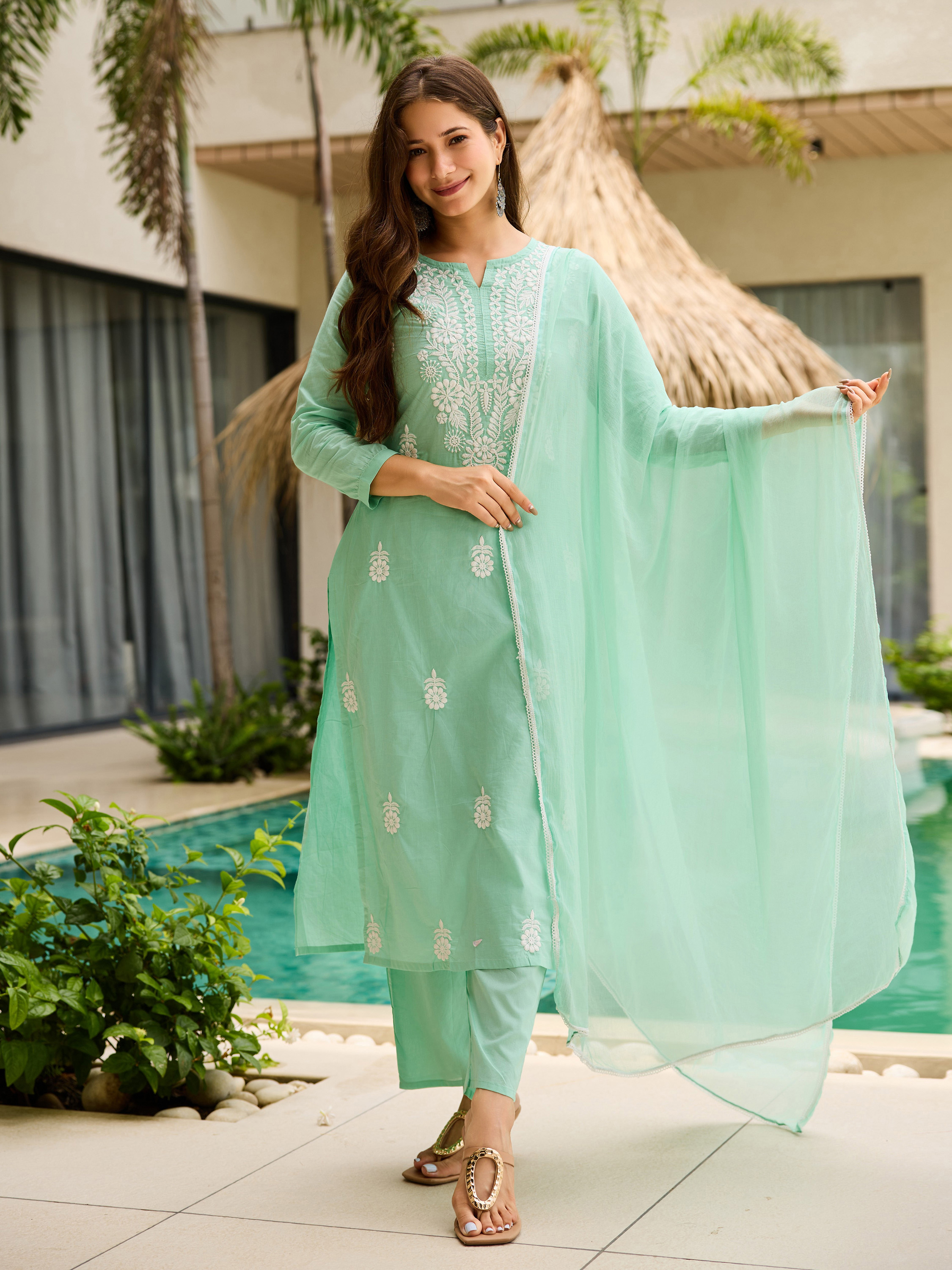
Fold the dupatta into a narrow rectangle before boarding and place it across the shoulders rather than leaving both ends loose. On a crowded journey, wearing the dupatta in a simple front loop or carrying it in a tote can prevent snagging. A small safety pin at the shoulder is useful when hands are occupied, but the pin should be placed where it can't press into the neck.
Pockets are valuable when they're deep enough for a phone, boarding pass or room key and positioned securely at the side seam. A pocket placed below the hip may pull the kurta out of shape when filled, so heavier objects should remain in a crossbody bag instead.
Waistbands deserve equal attention. A wide elasticated back distributes pressure more comfortably than a narrow elastic strip, while a drawstring allows minor adjustment after meals. Avoid tying the drawstring in a bulky knot directly under the seatbelt or at the centre of the back.
Kurtis for Long Travel Days That Stay Comfortable All Day: How should you pack and care for them?
Pack travel kurtis folded loosely in breathable cotton bags and place heavier items above rather than on top of delicate embroidery. Rolling lightweight cotton can reduce sharp fold lines, while a straight kurta with mirror work should be folded with tissue or a soft scarf between decorated surfaces.
Carry one spare top or kurta for journeys longer than eight hours, especially during hot weather or travel with children. A 2-3-1 packing formula works well for a short trip: two breathable kurta sets, three versatile inner garments or camisoles, and one lightweight layer that coordinates with both outfits.
Small stains should be treated quickly with cool water and a clean cloth rather than rubbed aggressively. Cotton garments can usually be hand-washed with mild detergent, but colour bleeding should be checked by dabbing a hidden seam before washing an entire printed or handworked set.
Dry cotton kurtis in shade when possible because prolonged direct sunlight can fade strong dyes and weaken some embellishments. Iron printed cotton on the reverse side at a moderate temperature, and place a pressing cloth between the iron and mirror work, zari or raised embroidery.
Kurtis for Long Travel Days That Stay Comfortable All Day: What should you check before buying?
A five-minute pre-purchase checklist can prevent most comfort problems: inspect the fabric weight, measure the garment rather than relying only on the size label, check the rise of the trousers, and examine the stitching around pockets, slits and embellishment.
- Measure the bust and hip: Allow enough ease for sitting and layering instead of choosing a close fit that only works while standing.
- Check the trouser rise: The waistband should remain comfortable when seated with knees bent.
- Review the care label: A garment requiring specialised cleaning may be inconvenient on a long trip.
- Inspect embellishment: Look for securely attached mirrors, threads and zari that won't catch on luggage.
- Consider drying time: Lightweight cotton is easier to wash and dry during a short stay than dense jacquard.
- Match the colour to the itinerary: Mid-tone prints and darker neutrals are practical for stations, buses and repeated wear.
Comfort is also personal. Some travellers prefer the airflow of a wider A-line, while others feel more secure in a straight kurta with tapered pants. The best choice is the outfit that allows uninterrupted sitting, walking, eating and carrying without repeated adjustments.
Common Questions About Kurtis for Comfortable Long-Distance Travel
Which fabric is most comfortable for a long travel day?
Cotton is usually the most comfortable choice because it is breathable, relatively easy to wash and suitable for warm Indian climates. Khadi cotton also works well, while dense synthetic fabric, heavy jacquard and thick embellishment may feel warmer or more restrictive after several hours.
Is an A-line kurti better than a straight kurta for travel?
An A-line kurti generally provides more room around the hips and thighs, while a straight kurta can feel neater and easier to layer. Both silhouettes work when the garment has sufficient ease and the hem does not interfere with walking or sitting.
What should I wear on a long train journey in India?
Choose a breathable cotton kurta-pant set with a moderate hem, secure pockets and a dupatta that can be folded away quickly. Avoid trailing fabric, heavy waist embroidery and accessories that may snag when climbing train steps or handling luggage.
How can I stop a dupatta from slipping while travelling?
Choose a lightweight dupatta with enough width to sit securely on the shoulders and pin one shoulder discreetly if necessary. Folding the dupatta into a narrow rectangle or wearing it in a simple front loop reduces loose ends around luggage and crowded spaces.
Are printed kurtis practical for long journeys?
Printed cotton kurtis are practical because prints can disguise minor creasing and coordinate easily with simple bottoms. Medium-scale prints and colourfast fabric are especially useful when the garment may be worn repeatedly during a trip.
How should I care for a cotton kurti during travel?
Treat small stains with cool water, wash cotton gently with mild detergent and dry the garment in shade when possible. Fold delicate mirror work or zari with a soft cloth between decorated surfaces, and iron printed cotton on the reverse side.


