

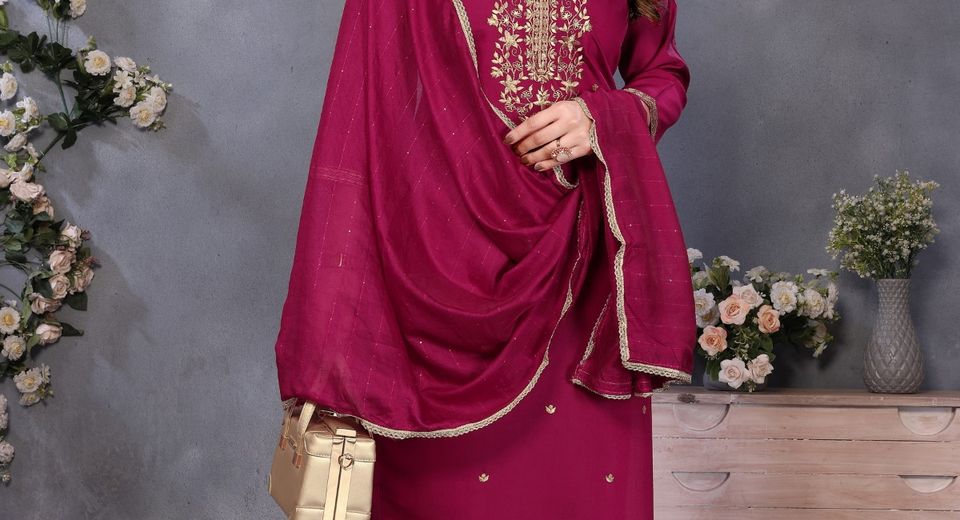
Kurtis for Apple-Shaped Bodies That Create a More Balanced Silhouette become easier to choose when you assess proportion rather than chase a supposedly perfect size. A fuller midsection, comparatively slimmer legs, or shoulders and hips that appear narrower than the waist can all fall under an apple-shaped proportion. The useful styling goal is gentle definition: create visual length, allow comfortable movement around the stomach, and add interest near the neckline, hem or lower half.
That approach doesn't require hiding your body or wearing only loose clothes. A well-cut salwar suit can skim the torso without clinging, establish a vertical line and let the fabric move away from the waist. Measurements, fabric weight, side openings, trouser volume and dupatta placement matter more than a label such as "slim fit" or "oversized."
Kurtis for Apple-Shaped Bodies That Create a More Balanced Silhouette: What makes a kurti flattering?
A flattering kurti for an apple-shaped body usually has a clean vertical fall, enough room at the waist and a hem that finishes at a deliberate point. A-line, lightly flared, straight and panelled silhouettes can all work when the garment doesn't pull across the fullest part of the torso.
Look at finished garment measurements instead of relying on a size number. Measure around the fullest part of the bust and stomach, then compare those numbers with the kurti's measurements. Leave approximately 7.5 to 12.5 centimetres of ease for a woven cotton kurti and 5 to 10 centimetres for a fluid fabric, depending on how relaxed you want the fit. Excessively tight fabric creates horizontal drag lines, while an extremely oversized shape can add unplanned width.
A side slit beginning below the widest point can improve walking comfort and preserve a long vertical line. A centre panel, princess seam or narrow contrast border can guide the eye from shoulder to hem. Gentle shaping at the bust or a controlled flare below the waist is generally more useful than a drawstring gathered directly over the stomach.
Kurtis for Apple-Shaped Bodies That Create a More Balanced Silhouette: Which cuts work best?
A-line and softly flared kurtis usually create the most balanced proportions because they add measured volume below the waist while keeping the upper half visually clean. Straight kurtis, empire-line styles and selected Anarkali silhouettes can also work when their length and flare are controlled.
Kurtis for Apple-Shaped Bodies That Create a More Balanced Silhouette in A-line cuts
An A-line kurti narrows visually near the shoulder and widens gradually toward the hem. The gradual shape avoids a sudden flare at the stomach and can make palazzos or narrow trousers look proportionate. A panelled kurti achieves a similar effect through seams or colour blocks, particularly when darker side panels are balanced with a lighter centre.
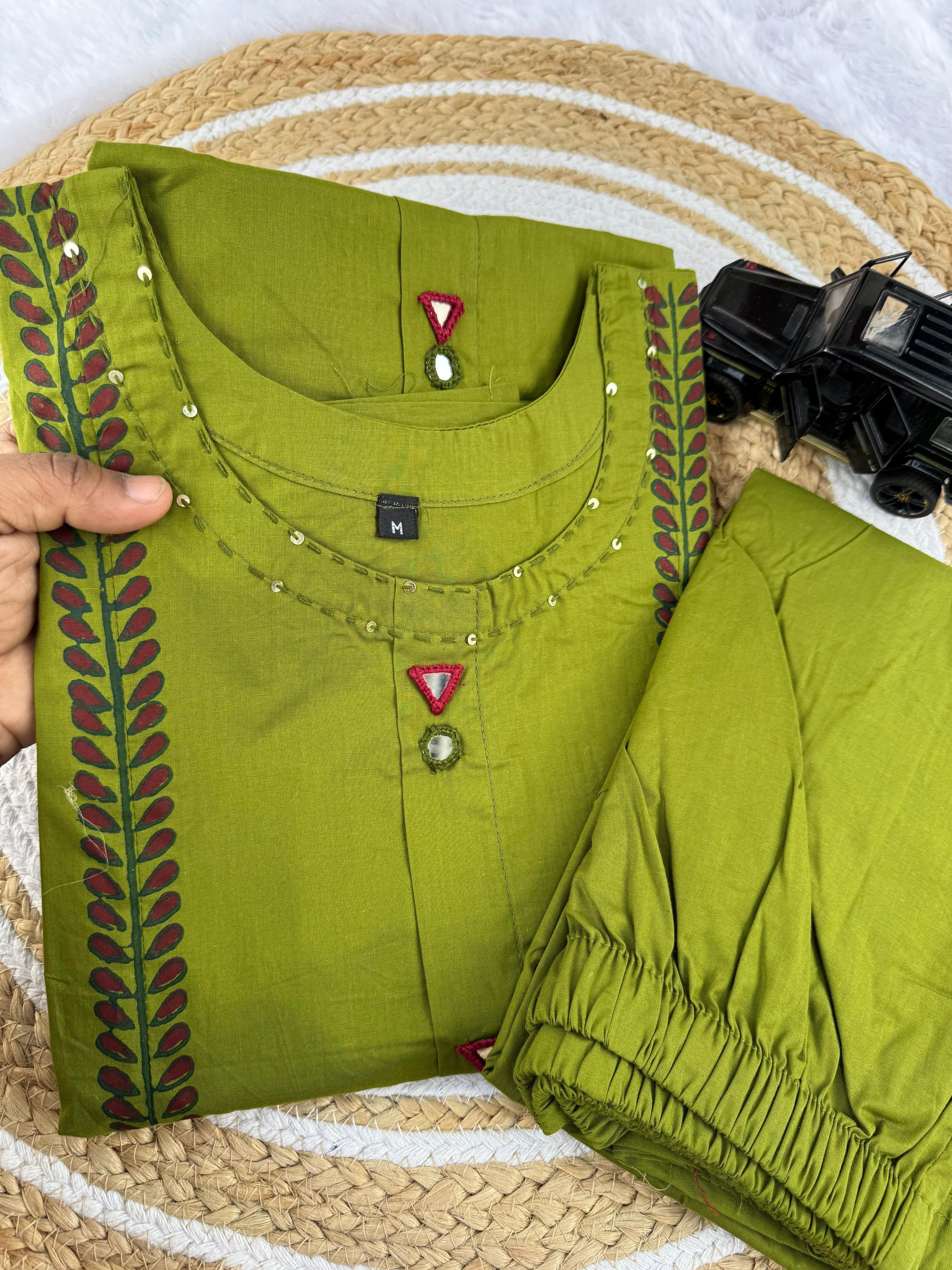
Designer Cotton A-Line Kurti Pant Set with Mirror Work demonstrates why an A-line shape suits practical daytime dressing. Mirror work should be positioned where you want attention, such as the upper chest or sleeve, rather than concentrated only at the waist. Brown Cotton A-Line Kurti Pant Set with Mirror Work offers another example of pairing a grounded colour with a gently widening cut.
Kurtis for Apple-Shaped Bodies That Create a More Balanced Silhouette in straight styles
A straight kurti gives a long, uncluttered line when the shoulder fits correctly and the hem isn't too short. Choose a straight silhouette with side slits, a narrow trouser or a modestly wide pant so the outfit doesn't become a single block of fabric. A lightly flared kurti is useful when you prefer more room across the stomach but don't want the dramatic volume of a full Anarkali.
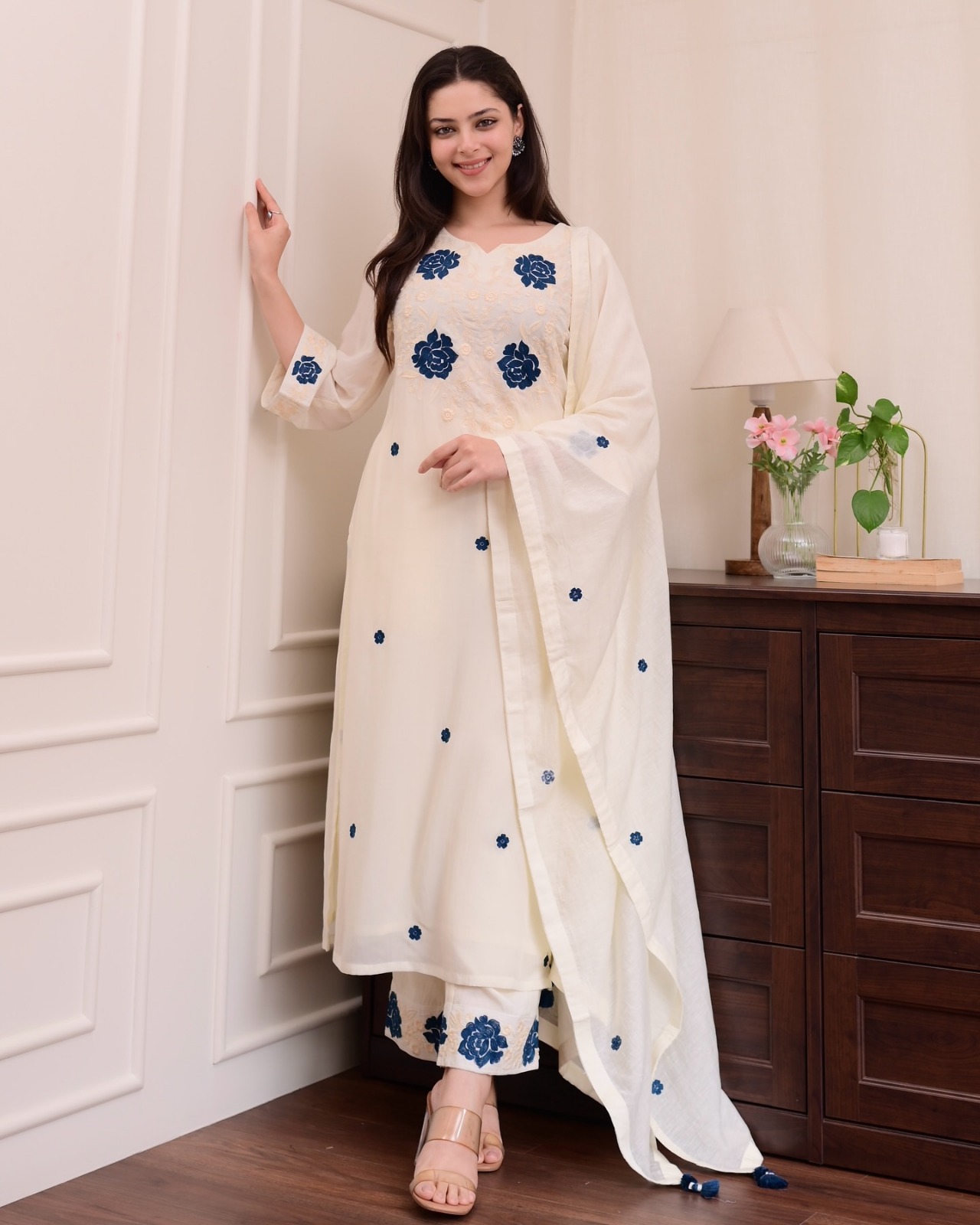
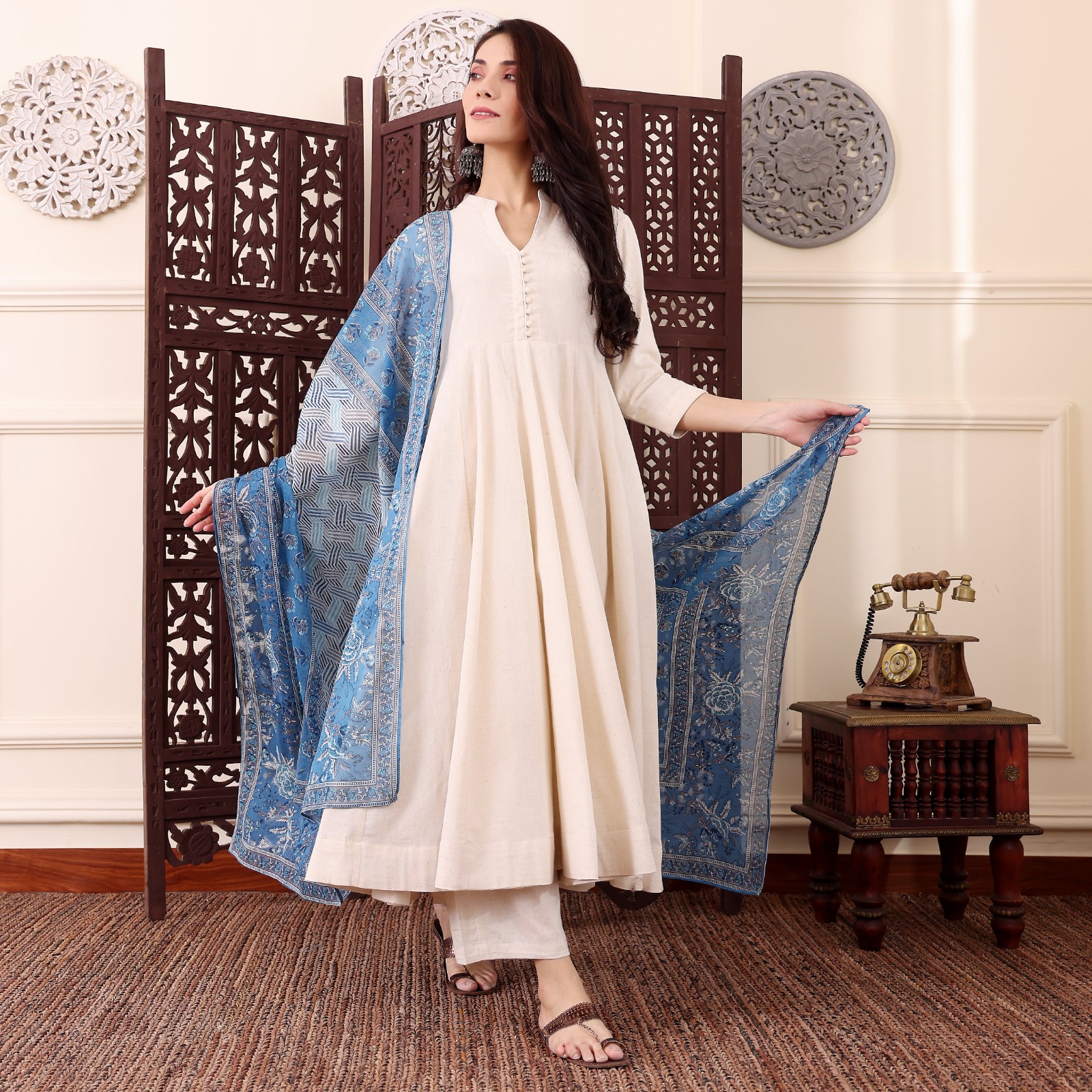
Designer Cream Straight Kurti Set with Dupatta can be styled with the dupatta worn in a long, narrow fall rather than bunched across the midsection. A cream base also gives you scope to create definition through a deeper-toned dupatta, earrings or footwear without relying on a tight waist.
Kurtis for Apple-Shaped Bodies That Create a More Balanced Silhouette with empire lines
An empire-line kurti places the seam or flare below the bust, so the fabric falls away from the midsection. The seam should sit smoothly under the bust rather than cut into it, and the flare should begin gradually. A very full Anarkali with heavy gathers at the upper torso can add volume, so reserve that treatment for lightweight fabrics or carefully placed panels.
Kurtis for Apple-Shaped Bodies That Create a More Balanced Silhouette: Which necklines and sleeves help?
V-necks, open round necks, keyhole necks and moderate scoop necks generally create length through the upper body, while three-quarter sleeves give the arm a defined endpoint. Hemlines that fall below the fullest hip area, often around mid-calf or just above the ankle, usually support a longer vertical impression.
A V-neck doesn't need to be deep to be effective; a 10 to 15 centimetre opening can create direction without compromising comfort or modesty. A split neckline or narrow placket provides a similar vertical effect. Broad boat necks can visually widen the shoulder line, which may be useful if the shoulders look narrow, but avoid combining a wide neckline with very wide sleeves and a bulky dupatta.
Three-quarter sleeves end around the forearm and keep the wrist visible, making them practical with bangles or a watch. Elbow-length sleeves with a small cuff can also work. Very short sleeves may leave the torso visually dominant, while oversized bell sleeves can add width beside the waist. If you choose bell sleeves, balance them with a cleaner body and a straight lower garment.
Neckline embellishment can direct attention upward without making the outfit look top-heavy. A narrow embroidered placket, small mirror-work cluster or contrasting piping is usually easier to balance than a wide horizontal yoke that spans the entire chest. Place large motifs above the bust or near the shoulder when the lower half of the outfit is intentionally simple.
Kurtis for Apple-Shaped Bodies That Create a More Balanced Silhouette: How should hemlines be chosen?
A hemline that extends below the widest hip area and leaves enough leg visible through a slit usually creates a more continuous vertical line. Mid-calf, ankle-grazing and lower-knee lengths can all work, provided the hem doesn't finish at the broadest part of the calf or sit awkwardly above the ankle.
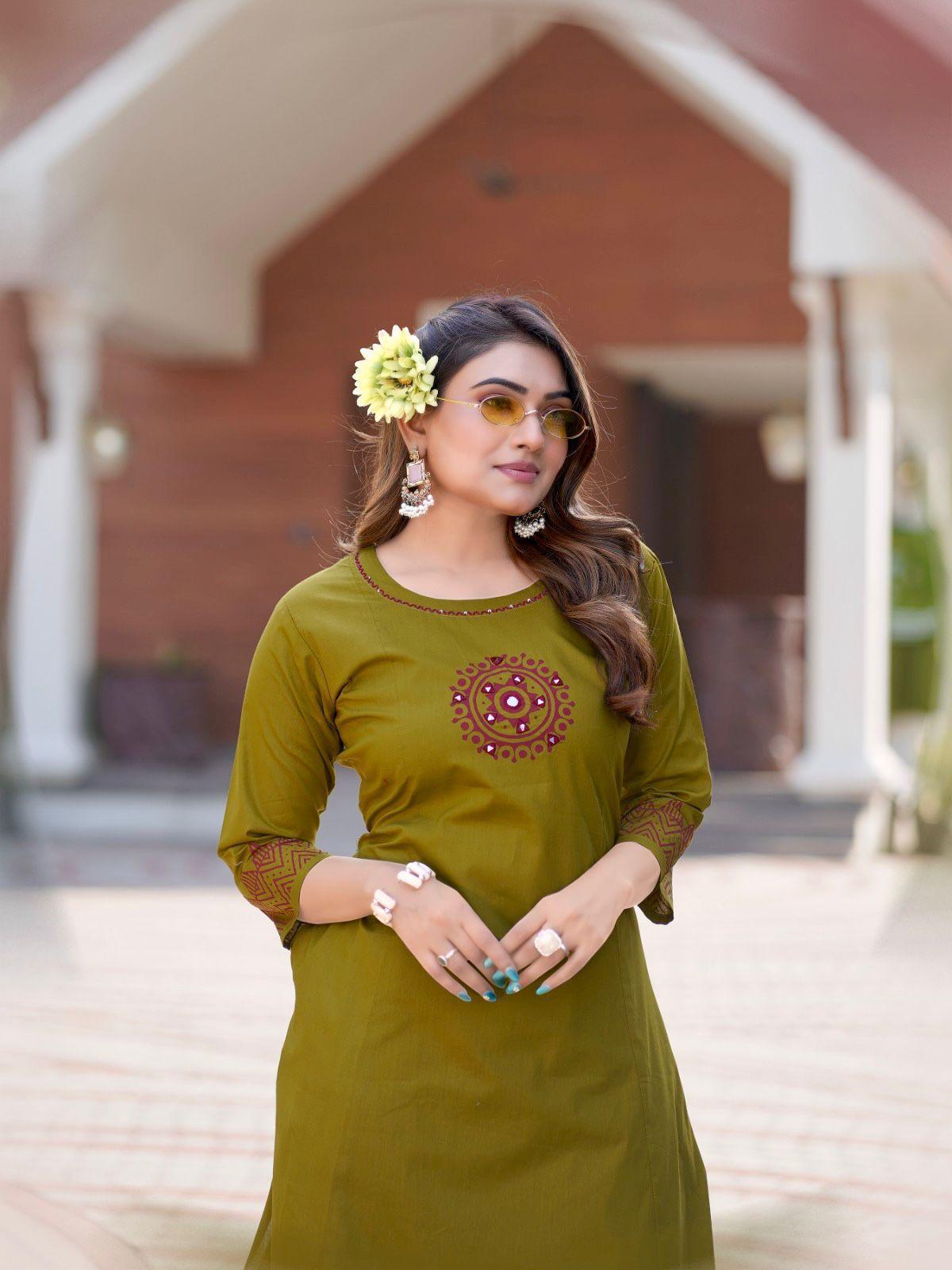
Hemline placement deserves a fitting check. A hem ending exactly at the widest part of the calf or hip can interrupt the line, especially when the border is broad. A narrow border at mid-calf, a rounded hem or a side-slit hem often moves more naturally. Try the kurti with the intended footwear before altering the length, because flat sandals and low heels change where the hem appears to finish.
Long kurtis work especially well with straight pants when the side opening begins below the stomach. A shorter kurti can work with a high-waisted palazzo or salwar when the fabric falls smoothly and the waistband doesn't create a visible horizontal ridge. The key test is movement: sit, walk and raise your arms before deciding that a particular length is comfortable.
Kurtis for Apple-Shaped Bodies That Create a More Balanced Silhouette: Which fabrics and prints help?
Medium-weight fabrics with a soft fall are usually the easiest fabrics to style because they skim the body without adding stiffness or revealing every contour. Cotton, cotton blends, Chanderi silk and fluid crunchy silk can each work when the lining, finish and ease match the garment's cut.
Purely stiff fabric can stand away from the stomach and create a boxy outline, while very thin fabric may cling or require a bulky lining. Cotton is dependable for warm weather, but heavily starched cotton needs careful fitting because it holds outward volume. Chanderi silk can create an elegant vertical fall, although a lining may be necessary for opacity. Cream Chanderi Silk Kurti Pant Dupatta Set for Women shows how a coordinated three-piece outfit can use fabric sheen without depending on a fitted waist.
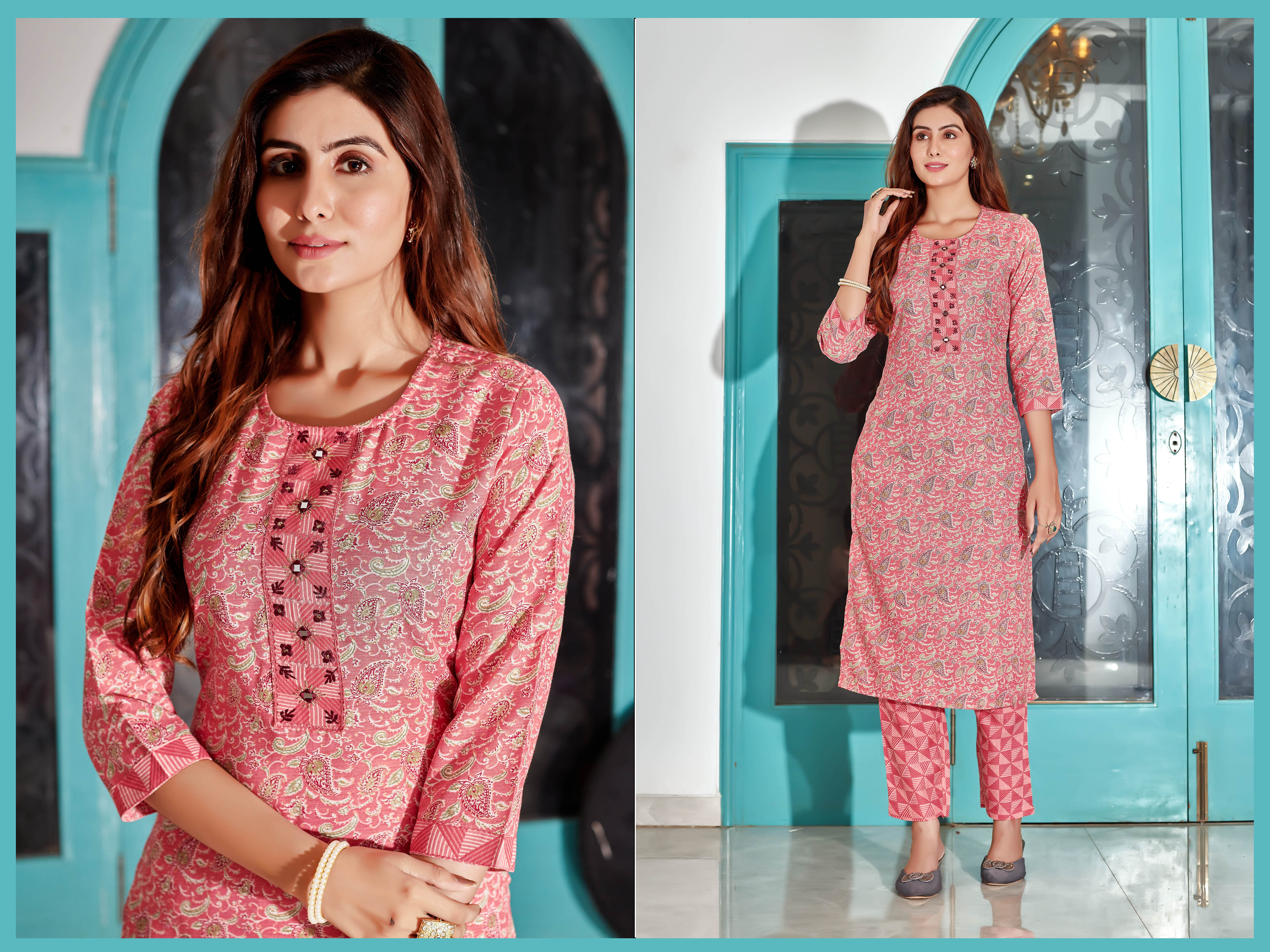
Peach Printed Cotton Kurti Pant Set for Women Casual is suited to a relaxed styling approach because a coordinated cotton kurti and pant reduce visual breaks. For daily wear, choose breathable cotton with enough ease across the stomach and avoid a lining that makes the garment rigid. A small or medium print can make repeated wear practical because accessories can change the outfit's emphasis.
Print scale should relate to the garment's area. Small-to-medium motifs spaced across the fabric tend to look orderly on a straight or A-line kurti. Vertical butis, narrow stripes and elongated floral stems reinforce length. Large motifs placed directly at the stomach can draw focus there, while very dense all-over prints can obscure the garment's construction and make the outfit look visually heavier.
Regional design references can add interest without complicated styling. Kalamkari Print Salwar Suits often provide narrative motifs and an earthy palette, while Odisha Sambalpuri Salwar Suits can introduce distinctive woven-inspired patterning. Maharashtra Paithani Inspired Salwar Suits bring jewel-toned borders and traditional colour relationships into the styling conversation. Use a solid lower garment or a quieter dupatta when the kurti already has a high-contrast print.
Kurtis for Apple-Shaped Bodies That Create a More Balanced Silhouette: How do bottoms and dupattas change proportion?
Bottoms and dupattas change the silhouette by controlling where visual width begins and how the eye travels down the outfit. A narrow-to-moderate palazzo, straight pant, cigarette pant or gently tapered salwar can all work when the kurti's hem and fabric weight are considered together.
A straight pant creates a clean continuation from a straight kurti. A palazzo adds movement below the waist and can balance a fuller upper body, but very wide palazzos paired with a wide-sleeved kurti may overwhelm the frame. Choose a palazzo with approximately 30 to 45 centimetres of hem circumference for a restrained shape, or select a wider version only when the kurti is relatively simple.
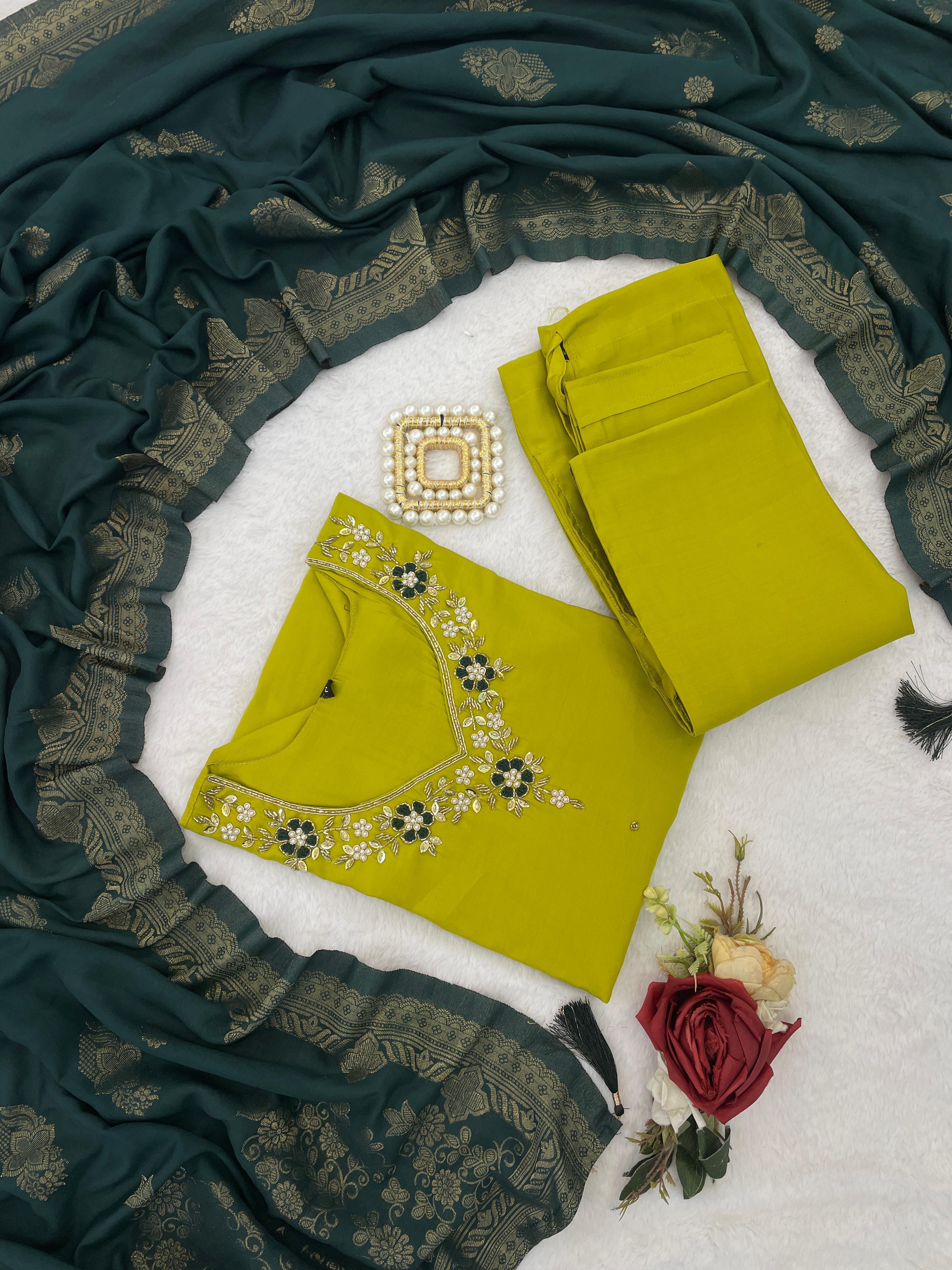
A salwar with controlled gathers can bring softness to a casual outfit, but heavy gathers at the waist may add unwanted bulk. A flat-front trouser, side-zip pant or elasticated waistband with a smooth front usually sits more neatly under a kurti. Mauve Crunchy Silk Embroidered Kurti Palazzo Set for Women works best when the palazzo's movement is allowed to remain the lower-half feature and the upper styling stays relatively clean.
A dupatta creates length when it's worn in a narrow vertical fall from one shoulder or draped diagonally across the body. Pinning both ends at the shoulders can form a long central panel, while a single-shoulder drape keeps the torso open. Avoid repeatedly wrapping a thick dupatta around the waist, because multiple horizontal layers can add width exactly where you're trying to maintain ease.
Contrast can be used strategically. A darker dupatta over a lighter kurti adds a framing effect, while a printed dupatta over a solid set brings attention toward the upper body and face. Beige Kurta Set with Blue Chanderi Dupatta for Women illustrates controlled contrast between a neutral base and a defined blue layer; let the dupatta fall long rather than bunching it at the stomach.
Ethnic design doesn't have to mean visual heaviness. Gujarat Bandhej Salwar Suits can be balanced with a plain lower garment, while Punjab Patiala Salwar Suits need a comparatively streamlined kurti if the Patiala gathers are generous. Refined Wine Ethnic Kurti Set with Dupatta can be styled with minimal jewellery and a long dupatta line so the rich colour remains the main point of interest.
Kurtis for Apple-Shaped Bodies That Create a More Balanced Silhouette: How should an outfit be assembled?
A balanced outfit usually combines one controlled volume element with two cleaner elements. For example, pair an A-line kurti with straight pants and a narrow dupatta, or pair a straight kurti with a moderate palazzo and a simple neckline.
For office or daytime wear, try a mid-calf A-line kurti, three-quarter sleeves, straight cotton pants and a lightweight dupatta pinned at one shoulder. For a family gathering, use a softly flared kurti with a V-neck, moderate palazzo and one statement earring style. For a festive look, allow zari, mirror work or Chanderi silk to provide interest while keeping the silhouette free from multiple bulky layers.
Accessories can complete the vertical direction. Long earrings, a pendant chain or a narrow stole-like dupatta draw attention toward the centre line. A structured handbag carried at the side is often less disruptive than a large cross-body bag resting across the stomach. Footwear with a pointed or almond-shaped front can also lengthen the lower line without requiring a high heel.
Before buying, check five points: shoulder seam position, bust and stomach ease, side-slit height, trouser waistband comfort and the dupatta's finished length. A kurti that looks attractive on a hanger may need alteration if the shoulder drops, the armhole pulls or the hem ends at an unhelpful point. Good proportion comes from the complete outfit, not from the kurti alone.
Common Questions About Kurtis for Apple-Shaped Bodies That Create a More Balanced Silhouette
Which kurti style is best for an apple-shaped body?
A-line and softly flared kurtis are usually the most versatile choices because they skim the midsection and add measured volume below the waist. Straight, empire-line and selected Anarkali styles can also work when the fit has enough ease and the flare is not concentrated at the stomach.
Are straight kurtis suitable for apple-shaped women?
Straight kurtis are suitable when the shoulder fits correctly, the body does not cling and the hem extends below the widest hip area. Side slits, a vertical neckline and straight or moderately tapered pants can preserve a long, uncluttered line.
Which neckline looks good on an apple-shaped body with a kurti?
V-necks, open round necks, keyhole necks and moderate scoop necks generally create a lengthening direction through the upper body. A narrow placket or split neckline can provide a similar effect without requiring a deep neckline.
Can apple-shaped women wear palazzo pants with kurtis?
Apple-shaped women can wear palazzo pants when the palazzo is balanced with a relatively clean kurti. Moderate width, a smooth waistband and a narrow or diagonal dupatta drape usually prevent the outfit from becoming visually bulky.
How should a dupatta be draped on an apple-shaped body?
A dupatta is usually most lengthening when it falls vertically from one shoulder or travels diagonally across the body. Avoid wrapping a thick dupatta repeatedly around the waist, because horizontal layers can add visual width around the midsection.
Which fabrics are comfortable and flattering for apple-shaped proportions?
Medium-weight cotton, cotton blends, Chanderi silk and fluid crunchy silk can all work when the garment has suitable ease and lining. Very stiff fabrics may create a boxy outline, while very thin fabrics can cling or require bulky lining.


