

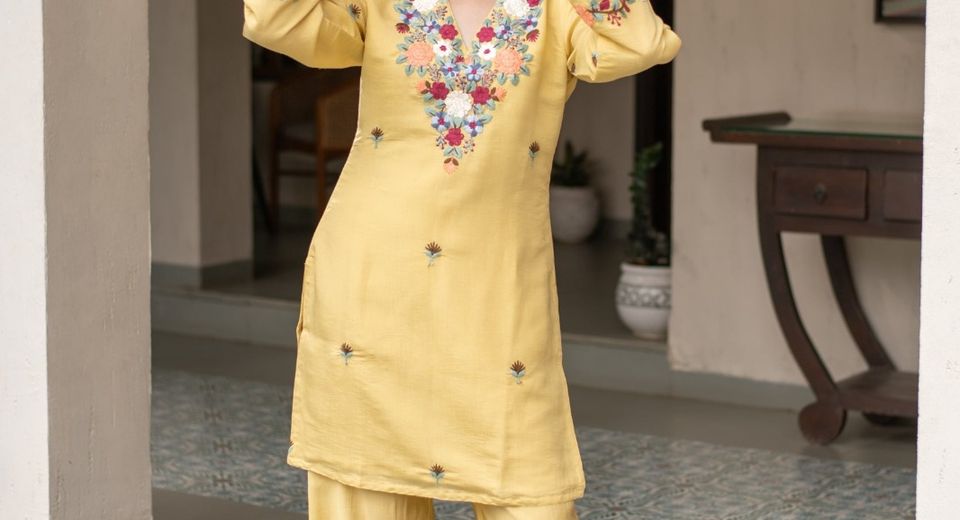
Kurti Shapes and Hemlines That Flatter Tall Women depend less on hiding height and more on controlling proportion. A tall frame gives you room to wear long straight kurtis, dramatic flares, broad borders and generous dupattas, but the wrong combination can make an outfit look vertically stretched. The useful questions are practical: where does the hem stop, where does the waist sit, how much volume does the lower half carry, and where does the eye pause?
A well-balanced salwar suit usually combines one long line with one interrupting detail. A long kurti can work with a contrasting dupatta; a flared silhouette can be grounded by a defined waist; wide palazzos can be paired with a cleaner upper half. The aim isn't to make a tall woman look shorter. The aim is to make the complete outfit look intentional from shoulder to ankle.
Why proportion matters more than height alone
Height alone doesn't determine the most flattering kurti length. Torso length, leg length, shoulder width, hip volume and the position of the natural waist all change how the same hemline appears.
A tall woman with a long torso may find a very short kurti visually top-heavy because the lower body dominates. A tall woman with long legs and a shorter torso may look balanced in a hip-length or mid-thigh kurti that shows more of the trouser line. A curvier frame often benefits from a hem that falls below the widest part of the hip, while a straighter frame can carry a sharper high-low or side-slit shape.
Use a mirror and mark three points before choosing a length: the widest part of the hip, the knee, and the narrowest point around the calf. Hems that stop exactly at the widest hip point can add visual width. Hems that finish directly at the knee can divide the leg abruptly. Hems around the lower calf create a long line, but they look most polished when the trouser or palazzo underneath doesn't bunch at the ankle.
Kurti Shapes and Hemlines That Flatter Tall Women
Which straight kurti length works best?
A straight kurti that falls between the knee and mid-calf is the most adaptable long-line option for tall women. A knee-length straight kurti shows the shape of cigarette pants or salwar trousers, while a mid-calf straight kurti creates a refined, column-like silhouette with narrow pants.
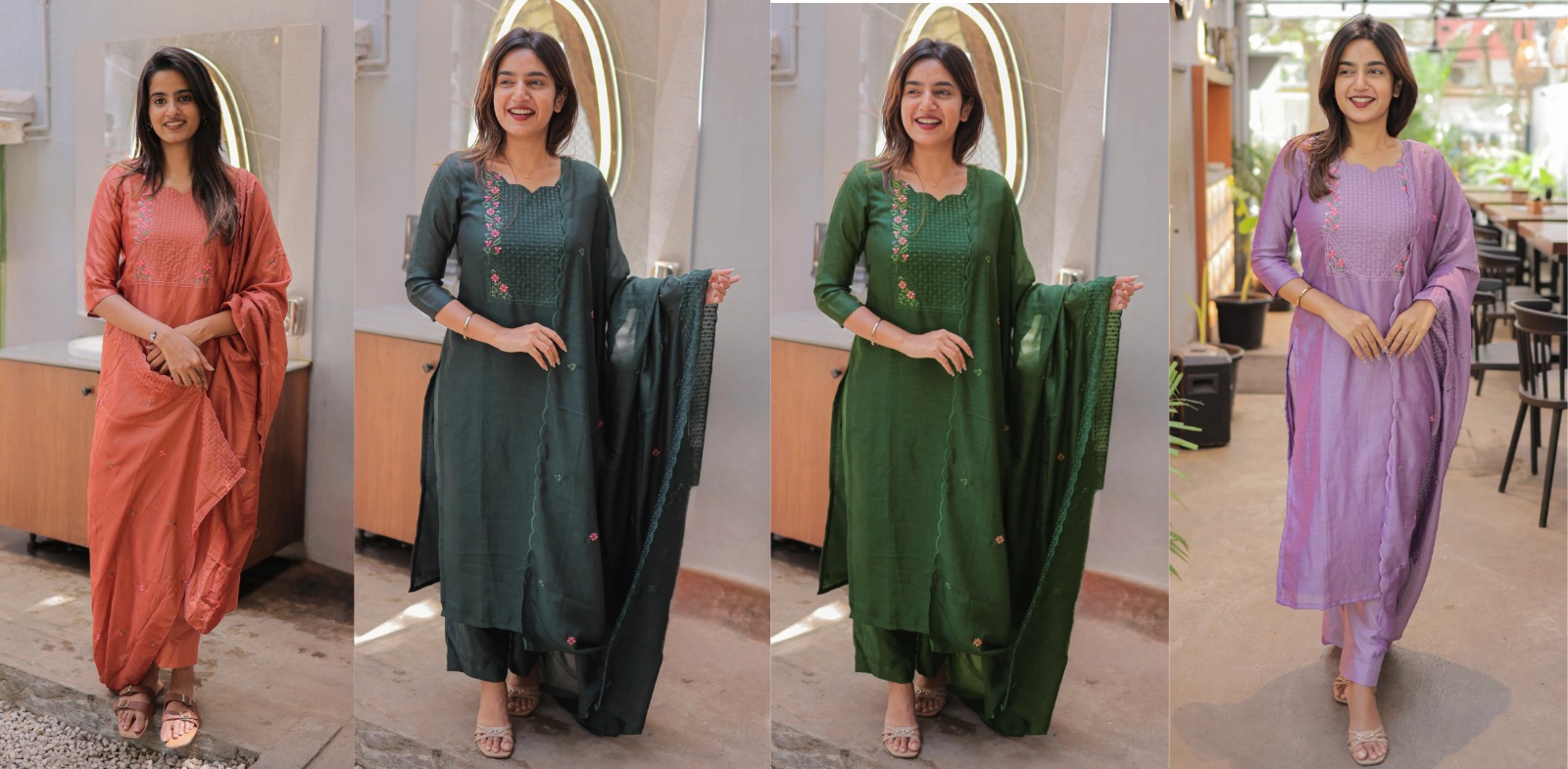
The straight shape suits fabrics that hold a clean vertical fall, including silk blends, rayon and cotton-linen constructions. Side slits beginning several inches above the knee prevent a long kurti from restricting walking and stop the hem from appearing stiff. A visible centre panel, vertical embroidery or a continuous print can reinforce the length without requiring a very narrow fit.
The Designer Cream Straight Kurti Set with Dupatta demonstrates why a simple straight silhouette can be useful in a tall wardrobe. A cream outfit has enough visual calm for the eye to follow the cut, while a dupatta introduces a second line across the body. For daytime dressing, pair a straight kurti with slim pants and let the dupatta fall from one shoulder rather than wrapping tightly around the torso.
When should a tall woman choose an Anarkali?
A tall woman can choose an Anarkali with a hem at the ankle or just above the ankle when the flare begins at the natural waist or slightly below the bust. The flare uses vertical height to create movement instead of making the outfit look oversized.
Look for an Anarkali with enough panels to spread evenly rather than a single bulky gather. A hem that skims the ankle works with low heels, juttis or dressy sandals; a floor-sweeping hem requires careful alteration so it doesn't catch under the foot. If the Anarkali has heavy zari or dense embroidery near the hem, keep the dupatta lighter or drape it vertically to prevent too much weight at the lower edge.
A tall woman with a fuller bust may prefer a V-neck, not because height requires it, but because the open neckline balances the flare below. A boat neck or square neck can work beautifully on a broad-shouldered frame when the sleeve and dupatta remain streamlined.
Can short kurtis work on a tall frame?
Short kurtis work on tall women when the hem ends below the widest part of the hip or when the lower garment deliberately supplies volume. A hip-length kurti with a full palazzo, sharara or Patiala trouser creates a clear two-part silhouette instead of looking accidentally undersized.
A cropped kurti ending around the upper thigh can also suit a tall woman with high-waisted trousers, provided the waist placement is intentional. Avoid pairing a very short, boxy kurti with low-rise, narrow trousers if the result creates an unusually long leg line and a compressed torso. The visual correction is simple: add a longer dupatta, a waist-defining seam or a trouser with moderate volume.
Choosing the right hemline for different salwar suit silhouettes
The lower garment should determine the kurti hemline as much as the kurti itself. A narrow pant needs a different upper proportion from a palazzo, while a Patiala salwar needs enough room above the knee to accommodate its pleats.
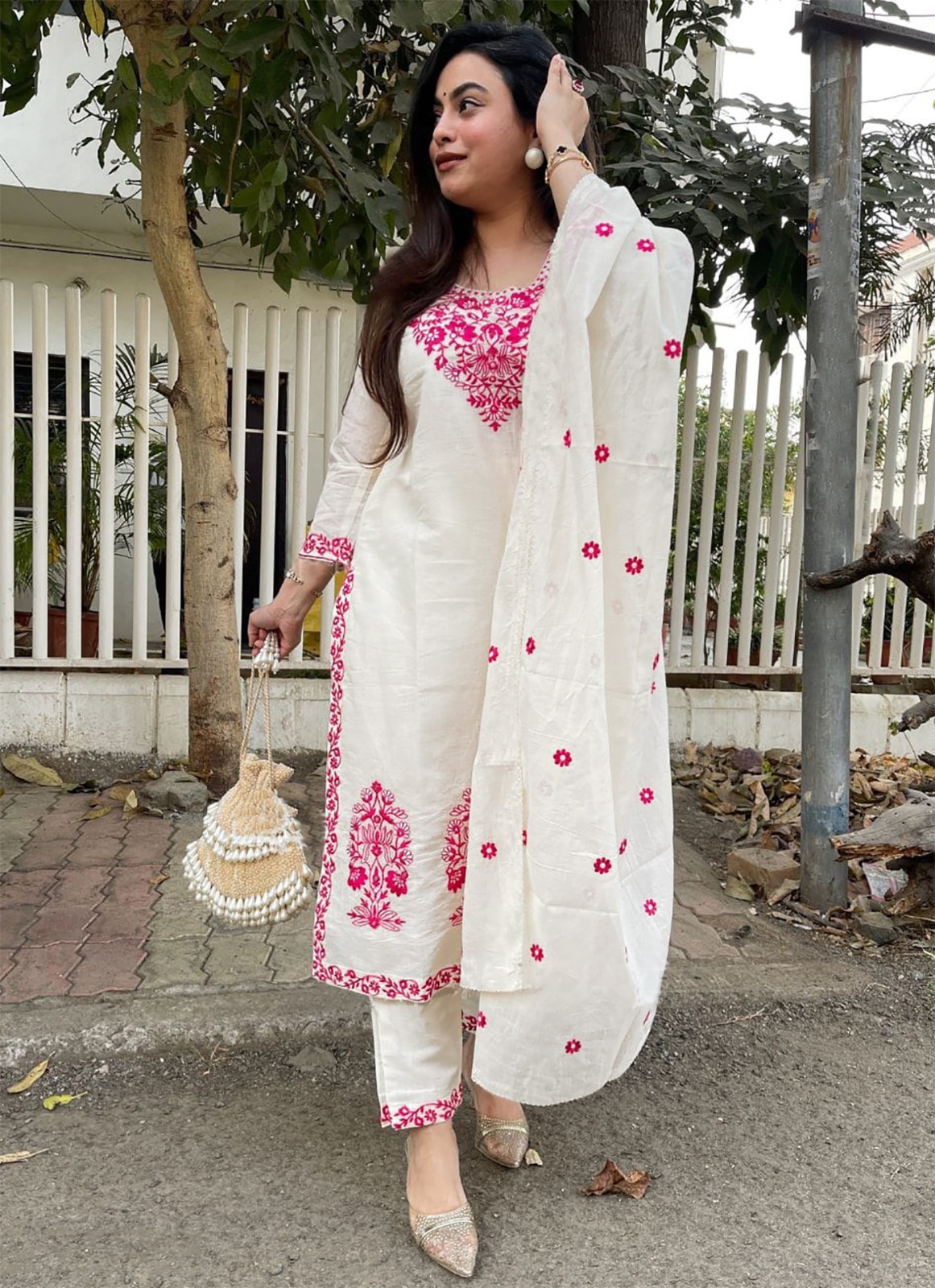
- Straight pants: Pair straight pants with a knee-length to mid-calf kurti. The narrow trouser keeps a long upper silhouette neat and suitable for office or daytime wear.
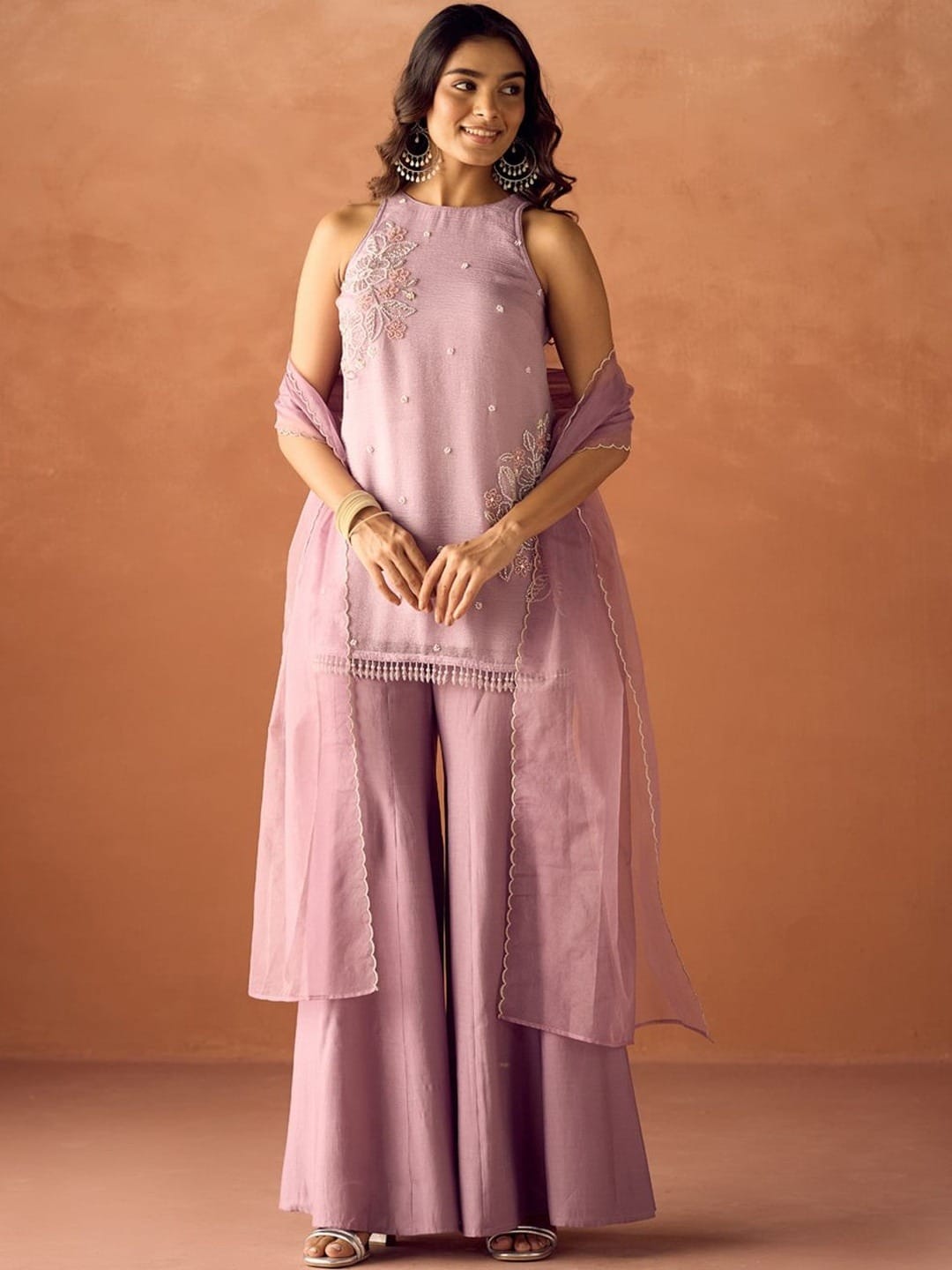
- Palazzo pants: Use a kurti that ends around the knee, mid-thigh or just below the knee. A very long, loose kurti over a wide palazzo can conceal the waist and make the outfit look heavier.
- Patiala salwar: Choose a shorter kurti that reaches the upper thigh or mid-thigh. The pleated volume needs visible space; a calf-length kurti can compete with the salwar and overwhelm the frame.
- Sharara trousers: A kurti finishing at the hip or upper thigh usually gives the flared trouser room to show. A longer straight kurti can work when the sharara flare is subtle and the fabric isn't bulky.
- Cigarette pants: A longer straight kurti creates an elegant column, especially when the hem falls below the knee and the pants end above the ankle bone.
The Mauve Crunchy Silk Embroidered Kurti Palazzo Set for Women shows the value of balancing a decorative upper half with a wide lower garment. The palazzo should remain visible from the hem down, so a kurti around the knee generally creates more definition than a full-length upper layer. A small heel or pointed jutti can keep the trouser break clean.
The Beige Embroidered Silk Kurti Pant Dupatta Set Women offers a different proportion because pants create less width than palazzos. A longer kurti can therefore work without making the lower half look crowded. Keep the dupatta either softly pleated over one shoulder or arranged in a narrow vertical fall for a polished finish.
How necklines, sleeves and waist placement change the result
Neckline, sleeve length and waist placement can shorten, lengthen or rebalance a tall frame even when the hem remains unchanged.
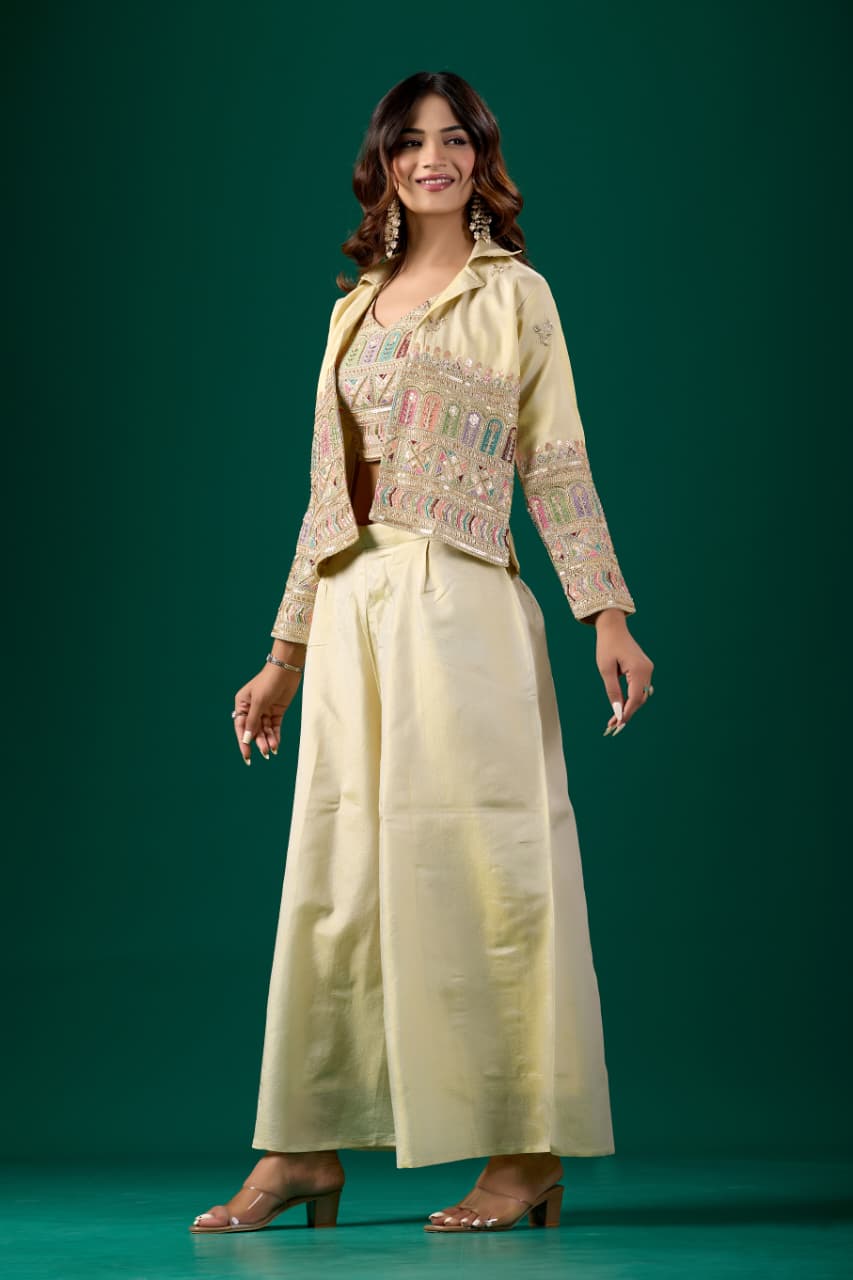
V-necks and open round necks create a downward line through the chest, while boat necks and broad square necks add horizontal width at the shoulders. A tall woman with narrow shoulders may enjoy a boat neck, elbow-length sleeve or contrast yoke. A tall woman with broad shoulders may prefer a V-neck, three-quarter sleeve and a dupatta that falls close to the body.
Three-quarter sleeves are especially versatile because they expose the wrist and create a visual break between the upper and lower arm. Full sleeves can look graceful on a long frame when the fabric is light, but a wide cuff or heavy embroidery can make the upper body appear too dense. Sleeveless kurtis can be balanced with a substantial dupatta, jacket layer or textured lower garment.
A waist seam at the natural waist gives a tall frame a clear centre. An empire line beginning below the bust lengthens the lower half and works well with Anarkali flares, but it can make a long torso appear even longer when combined with an ankle-length, unbroken print. A slightly dropped waist can add fashion-forward ease to a straight kurti, particularly when the hem ends above mid-calf.
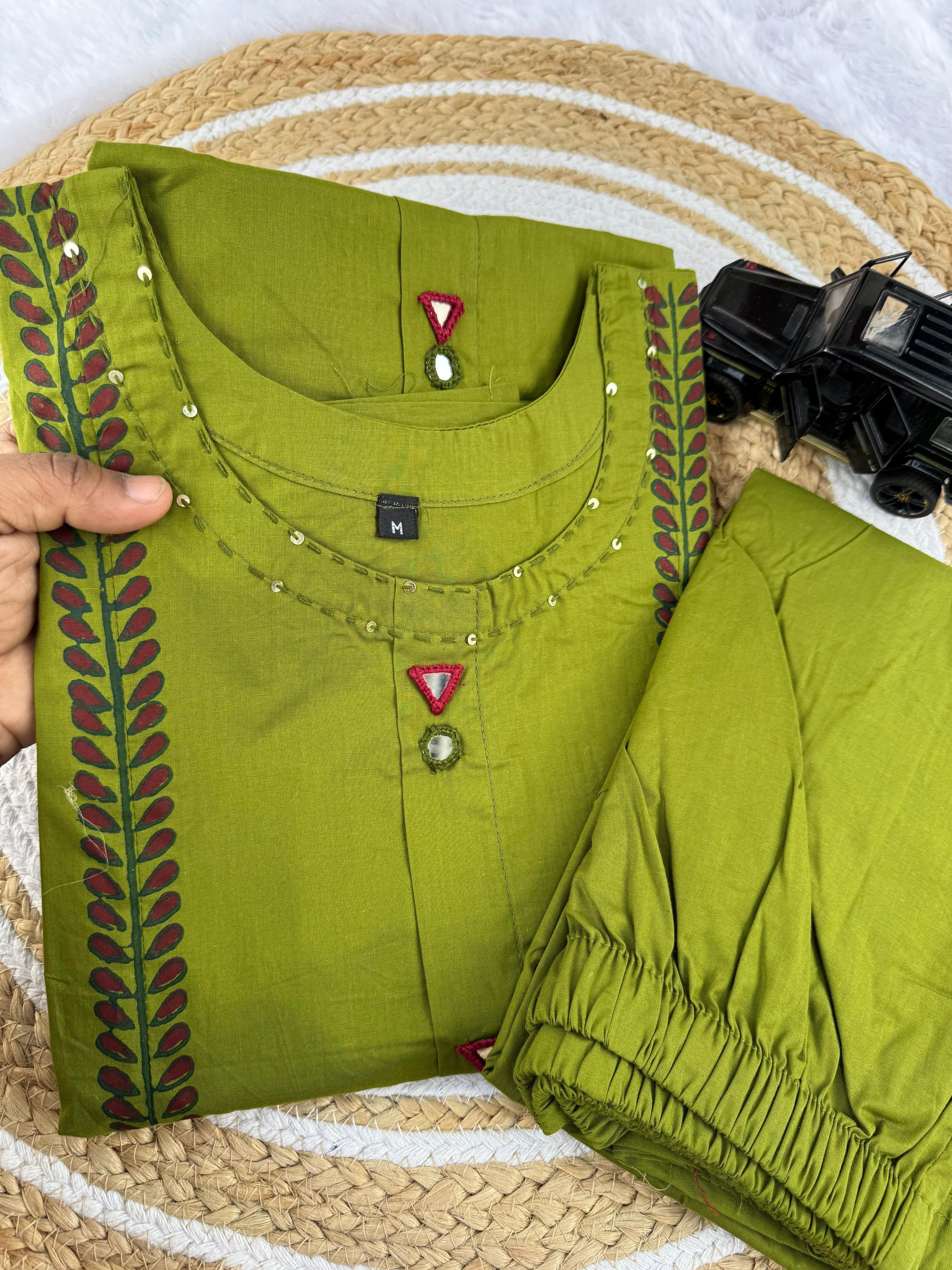
The Mustard Embroidered Kurti Pant Set for Women Festive uses a coordinated upper and lower palette, making the cut and seam placement especially important. A three-quarter sleeve, visible neckline and a dupatta folded into a narrower band can prevent a single-colour outfit from becoming visually uninterrupted.
Prints, borders and dupattas for a tall silhouette
Print scale and border placement help decide where the eye pauses on a tall body. Small all-over motifs create a continuous surface, while large motifs and horizontal borders introduce visual breaks.
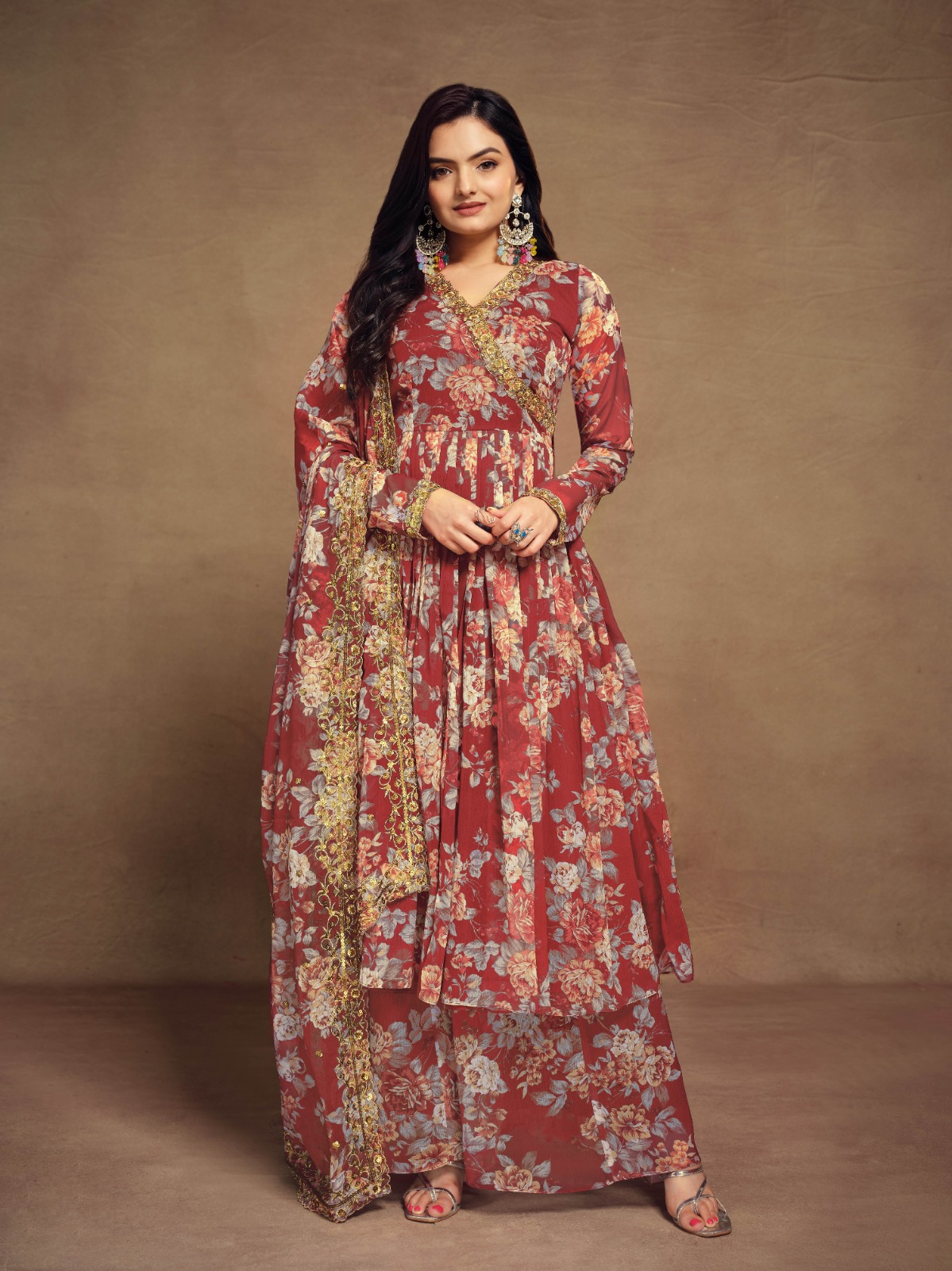
Traditional collections can be styled without treating height as a problem to correct. Kalamkari Print Salwar Suits can use the varied scale of floral and narrative motifs to break up a long line. Maharashtra Paithani Inspired Salwar Suits often benefit from showing a defined border at the dupatta or hem rather than hiding every decorative edge under a long layer. Gujarat Bandhej Salwar Suits can be paired with a plain or lightly detailed kurti when the dotted tie-dye pattern already supplies surface interest.
Odisha Sambalpuri Salwar Suits can create a strong horizontal pause through their traditional bands and contrast detailing. Punjab Patiala Salwar Suits naturally add lower-body volume, so a shorter, cleaner kurti usually produces better balance than a long, heavily embellished one.
A dupatta can either elongate or divide the outfit. A narrow vertical drape from one shoulder to below the hip reinforces length. A dupatta worn across the chest and arranged horizontally creates an useful break for a very long torso. A heavily bordered dupatta looks most deliberate when one border remains visible rather than being repeatedly folded into a thick strip.
The Kanchi Cotton Zari Woven Kurti Set with Traditional Dupatta illustrates how a woven or zari edge can become the outfit's visual anchor. Let the traditional dupatta border show at the shoulder or along one side, and keep the kurti hem simple enough that the look has one clear focal area instead of competing bands.
Fabric weight and colour can alter the apparent length
Lightweight fabrics tend to create movement and vertical fall, while heavier fabrics create more structure and visual mass. Fabric choice should follow the silhouette and weather as well as the desired proportion.
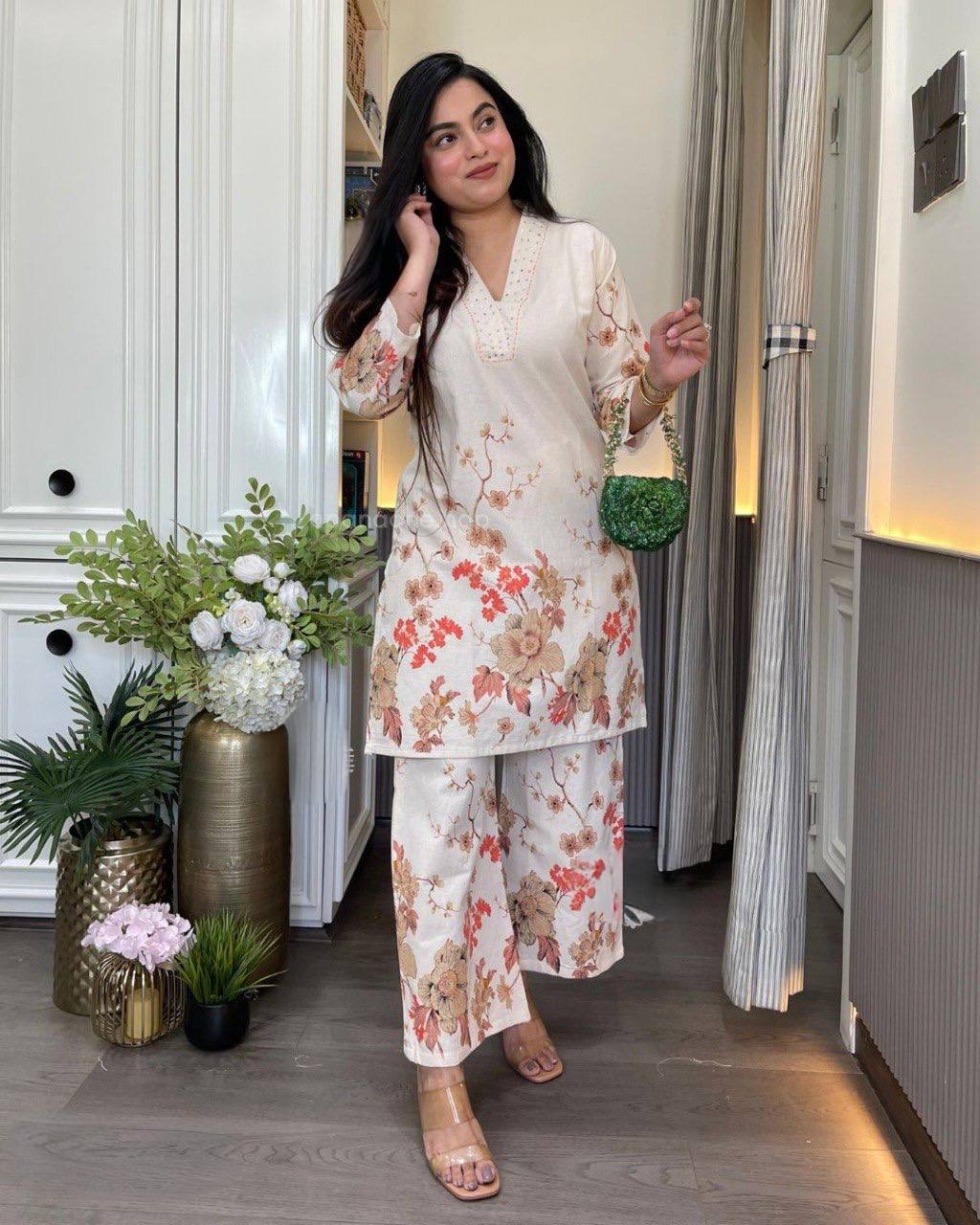
Cotton-linen fabric can look crisp and breathable in a straight co-ord, but it may hold a boxier shape at the hem. Silk blends and crunchy silk can support festive embroidery and a longer line, although a wide palazzo in a stiff fabric needs enough room to move. Rayon usually drapes close to the body and can soften a straight cut without adding bulk.
The Ivory Floral Linen Cotton Co-Ord Set for Women from Varnavi is an useful example of a light-coloured, relaxed outfit where texture and fabric structure do much of the styling work. A mid-thigh or knee-length upper layer can keep the co-ord from looking too elongated, while a clean sandal and a compact dupatta preserve its easy daytime character.
Monochrome dressing doesn't automatically overwhelm tall women. A single colour can look sophisticated when the outfit includes a contrasting border, different fabric textures or a visible waist seam. If a completely uninterrupted colour feels too long, introduce a contrasting dupatta, belt-like waistband, patterned trouser or shorter kurti hem.
Practical fitting checks before buying or altering
Four fitting checks reveal whether a kurti will flatter a tall frame: shoulder placement, bust ease, hem position and sleeve proportion.
- Check the shoulder seam: The seam should sit near the shoulder edge rather than dropping several centimetres down the arm, unless the garment is intentionally oversized.
- Check bust and armhole ease: Raise both arms and sit down. A long kurti that pulls across the bust or armhole will hang unevenly and may rise at the front.
- Check the hem in motion: Walk, turn and climb one step. A calf-length hem should not twist around the legs or catch on the footwear.
- Check the trouser break: Straight pants should finish cleanly near the ankle, while palazzos should fall from the widest point without pooling excessively on the floor.
- Check the dupatta length: A dupatta should reach at least the hip for a short kurti, while a very long dupatta may need a controlled drape with an ankle-length Anarkali.
The Rani Pink Embroidered Rayon Kurti Pant Dupatta Set is suited to testing these details because a coordinated three-piece outfit makes proportion easy to judge. Look at the entire set in a full-length mirror rather than assessing the kurti alone. A hem that seems long on a hanger may look balanced once the matching pants and dupatta are in place.
The Mustard Embroidered Kurti Pant Dupatta Set Women and the Ivory Floral Linen Cotton Co-Ord Set for Women from Varnavi also show why measurements matter more than labels such as "long" or "short." Compare the garment's finished length with your knee, calf and ankle positions, then decide whether the intended silhouette matches your usual footwear.
Simple outfit formulas for a tall woman's wardrobe
The most reliable outfit formulas use contrast in at least one area: length, width, texture, colour or drape.
- Long straight kurti formula: Wear a mid-calf straight kurti with cigarette pants, a three-quarter sleeve and a narrow shoulder drape. Add low heels or pointed flats for a clean daytime line.
- Festive Anarkali formula: Combine an ankle-skimming Anarkali with a lighter dupatta and modest jewellery near the neckline. Keep the footwear visible enough to prevent the hem from dragging.
- Palazzo formula: Pair a knee-length kurti with a wide palazzo and a dupatta worn over one shoulder. A defined neckline or waist seam keeps the loose lower half controlled.
- Patiala formula: Choose a hip-length or mid-thigh kurti with a higher neckline and let the pleated salwar provide the volume. A compact dupatta prevents the outfit from becoming bulky in three separate areas.
- Minimal co-ord formula: Use a knee-length or slightly shorter top with matching trousers, then add a contrasting bag, earrings or printed dupatta for a visible point of interruption.
For occasion dressing, the Beige Embroidered Silk Kurti Pant Dupatta Set Women and Designer Cream Straight Kurti Set with Dupatta can be adjusted through jewellery and drape rather than excessive layering. For a festive family gathering, the Rani Pink Embroidered Rayon Kurti Pant Dupatta Set can take a stronger earring and a structured dupatta fold, while a daytime version benefits from flatter footwear and fewer accessories.
The best hemline is the one that lets every part of the outfit contribute. A tall woman doesn't need to avoid ankle lengths, flares or long dupattas; she needs to keep the volume, waist and finishing points deliberate. Once those proportions are checked, kurti shopping becomes a matter of personal style rather than a search for rules about height.
Common Questions About Kurti Proportions for Tall Women
What is the best kurti length for tall women?
A kurti ending between the knee and mid-calf is the most versatile length for many tall women. The ideal point depends on torso and leg proportions, the lower garment and whether the silhouette is straight, flared or oversized.
Can tall women wear short kurtis with palazzo pants?
Yes, tall women can wear short kurtis with palazzo pants when the kurti ends around the hip or upper thigh and the waist placement looks intentional. The contrast between a shorter top and wide palazzo creates balance and allows the trouser shape to remain visible.
Are long Anarkali kurtis flattering on tall women?
Long Anarkali kurtis are flattering on tall women when the flare begins at the natural waist or slightly below the bust and the hem skims the ankle. A controlled flare, suitable footwear and a lighter dupatta prevent the outfit from becoming visually heavy.
Which salwar suit is best for a tall woman with a long torso?
A salwar suit with a defined waist seam, a slightly shorter kurti or a horizontal dupatta drape can balance a long torso. Palazzos and Patiala trousers also add useful lower-body volume when the upper half remains relatively clean.
Do vertical prints make tall women look too tall?
Vertical prints can lengthen the appearance, but they do not automatically look excessive on a tall woman. A contrasting border, horizontal dupatta drape, waist seam or moderate trouser volume can add enough visual interruption for a balanced result.
How should a tall woman style a long straight kurti?
Style a long straight kurti with narrow cigarette pants, clean ankle-length trousers or a controlled side slit. Use a three-quarter sleeve, a defined neckline and a narrow dupatta drape when you want the outfit to look streamlined rather than overly elongated.


